By Michael Nielsen, Editor & Publisher | 15+ Years in Diesel Repair
Last Updated: December 2025
📖 Estimated reading time: 18 minutes
Hidden air leaks in commercial trucks drain profits faster than most fleet managers realize. Undetected pneumatic system leaks cost the average heavy-duty truck over $15,000 annually through wasted fuel, accelerated component wear, and excessive compressor runtime. These invisible efficiency killers affect brake systems, suspension components, and auxiliary equipment throughout your fleet.
The financial impact extends beyond immediate fuel consumption. Air brake maintenance suffers when compressors cycle constantly to compensate for pressure loss. Extended compressor operation increases diesel consumption by forcing the engine to work harder, while component replacement schedules accelerate as valves, seals, and actuators deteriorate under stress from compromised compressed air system efficiency.
This guide provides fleet managers and diesel technicians with systematic approaches to detecting, diagnosing, and repairing pneumatic system leaks—transforming what many shops treat as routine nuisance repairs into strategic maintenance operations that protect your bottom line.
Key Takeaways
- Undetected air leaks cost commercial trucks $15,000+ annually through fuel waste and equipment damage
- Federal regulations permit maximum pressure drops of 2 PSI per minute for single vehicles and 3 PSI for combinations with brakes released
- Ultrasonic leak detectors identify problems in minutes that traditional methods miss entirely in noisy shop environments
- Compressor duty cycles exceeding 25% indicate significant system leakage requiring immediate investigation
- A systematic detection program combining visual, auditory, and electronic methods catches 95%+ of leak sources
- Preventive maintenance programs reduce maintenance-related downtime by approximately 20% compared to reactive approaches
The Hidden Cost of Air Leaks in Commercial Trucks
Fleet operators routinely overlook a silent profit killer that steadily erodes their bottom line through imperceptible pneumatic system failures. Compressed air waste from undetected leaks creates a cascading financial impact that extends across fuel costs, component wear, and operational efficiency. Most maintenance programs focus on visible problems while these invisible leaks drain thousands of dollars annually from each vehicle.
The direct relationship between air leaks and fuel consumption stems from the parasitic load placed on the engine. When a truck’s pneumatic system develops even a small 1/8-inch leak, the air compressor must cycle more frequently to maintain system pressure. This continuous operation draws power directly from the engine, typically adding 2-4% to total fuel consumption for vehicles with leaking systems.

The problem compounds in commercial trucks where complex pneumatic networks include brake systems, suspension controls, and auxiliary equipment. A truck losing 3-5 cubic feet per minute through various small leaks essentially wastes energy equivalent to running an additional electrical load continuously. This air compressor inefficiency multiplies across annual operating hours and fleet size.
According to Element Fleet Management research, vehicle downtime costs fleets an average of $448 to $760 per vehicle per day in lost productivity. When air brake system failures trigger roadside breakdowns or CVSA out-of-service orders, these costs compound rapidly with towing charges, emergency repairs, and delivery delays.
| Cost Category | Annual Impact per Truck | Primary Cause |
|---|---|---|
| Fuel Penalty | $2,800–$5,600 | Continuous compressor cycling |
| Component Replacement | $1,200–$2,400 | Accelerated compressor wear |
| Brake System Degradation | $800–$1,500 | Reduced system pressure |
| Inspection Violations | $500–$2,000 | Out-of-service orders |
| Labor and Diagnostics | $400–$900 | Repeated troubleshooting |
Fleet-wide implications multiply these individual vehicle costs exponentially. A 50-truck fleet experiencing typical leak rates faces combined annual losses between $290,000 and $620,000. These figures exclude the indirect costs of reduced vehicle availability and compromised safety performance that affect customer relationships and driver confidence.
Understanding Pneumatic Systems in Commercial Vehicles
Every commercial truck relies on a sophisticated pneumatic infrastructure that converts compressed air into reliable stopping power. These systems integrate multiple subsystems working simultaneously to deliver consistent braking performance across all wheel positions. Understanding the architecture of these air brake components provides the foundation for effective leak detection and prevention.
How Air Brake Systems Generate and Store Pressure
The air compressor generates system pressure by drawing power from the engine, typically producing between 100 and 150 PSI continuously during operation. This compressed air flows through the air dryer, which removes moisture before storage—a critical step that prevents freeze-ups in cold weather and reduces internal corrosion throughout the pneumatic network.
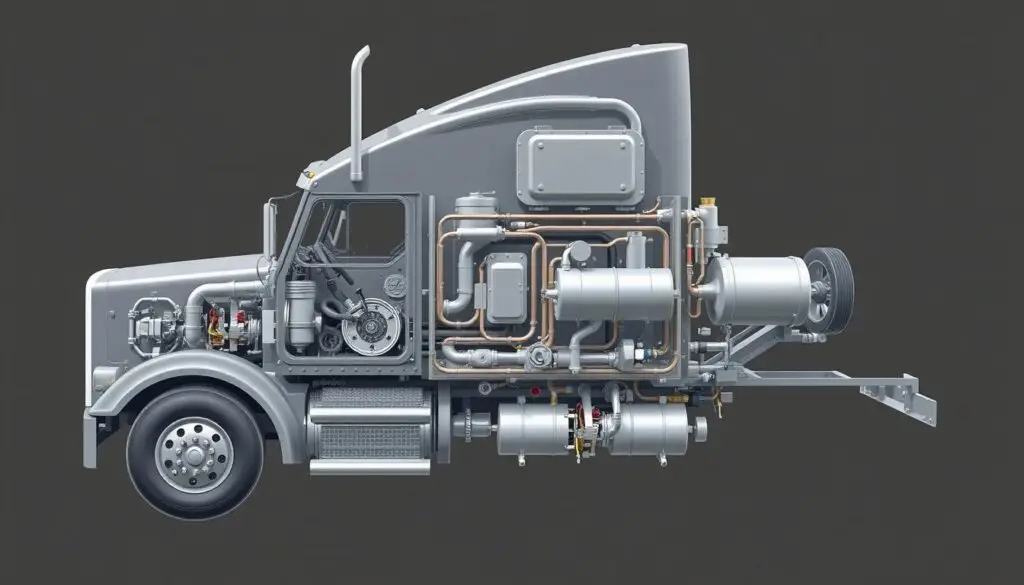
Primary and secondary air tanks store pressurized air as an energy reservoir for braking operations. These tanks typically hold between 12 and 18 gallons of compressed air, providing sufficient capacity for multiple brake applications even if the compressor fails. The dual-tank configuration ensures redundancy that federal safety standards require for critical braking systems.
The governor controls pressure regulation by cycling the compressor on and off based on system needs. According to FMVSS No. 121 requirements, compressor governor cut-in pressure for trucks must be 100 PSI or greater, while cut-out typically occurs near 125 PSI. This automatic cycling maintains optimal pressure without overworking the compressor or wasting fuel.
Pressure Management and System Cycling
Pneumatic system operation follows a precise pressure management cycle that maintains vehicle safety. Dual-circuit systems provide critical redundancy that prevents total brake failure—the primary circuit typically serves rear axle brakes while the secondary circuit operates front axle and trailer brakes. This separation ensures that air loss in one circuit maintains at least partial braking capability.
System integrity determines how quickly pressure builds and how consistently it applies across all brake positions. Even small leaks create pressure imbalances that affect brake timing and force distribution. One wheel position receiving pressure 0.5 seconds later than others creates dangerous handling characteristics that experienced drivers notice as “pulling” during hard stops.
A healthy system operates with the compressor running approximately 25% of operating time. When leaks exist, the compressor runs continuously or cycles every few minutes, dramatically shortening component lifespan and increasing fuel consumption beyond the direct parasitic load. Monitoring compressor duty cycle serves as one of the most reliable indicators of overall system health.
Common Sources of Pneumatic System Leaks
Air leaks in commercial vehicles develop at predictable failure points throughout the pneumatic system. Knowing these vulnerable connection points helps maintenance teams focus their detection efforts where problems most frequently arise. Environmental factors like road salt, temperature extremes, and constant vibration accelerate wear at critical junctions.
Brake Chamber and Diaphragm Deterioration
Brake chambers represent one of the most frequent sources of air brake leaks in commercial fleets. The brake chamber diaphragm endures constant pressure cycling and mechanical stress from every brake application. Over time, rubber compounds degrade from heat exposure, ozone attack, and contamination from moisture or oil in the air system.
Diaphragm failures typically begin at the edges where the membrane seals against the housing. Small cracks develop into larger tears that allow compressed air to escape continuously. Mounting interfaces between the chamber and its bracket also create leak pathways when vibration loosens hardware or corrosion damages sealing surfaces.
Tubing and Connection Point Failures
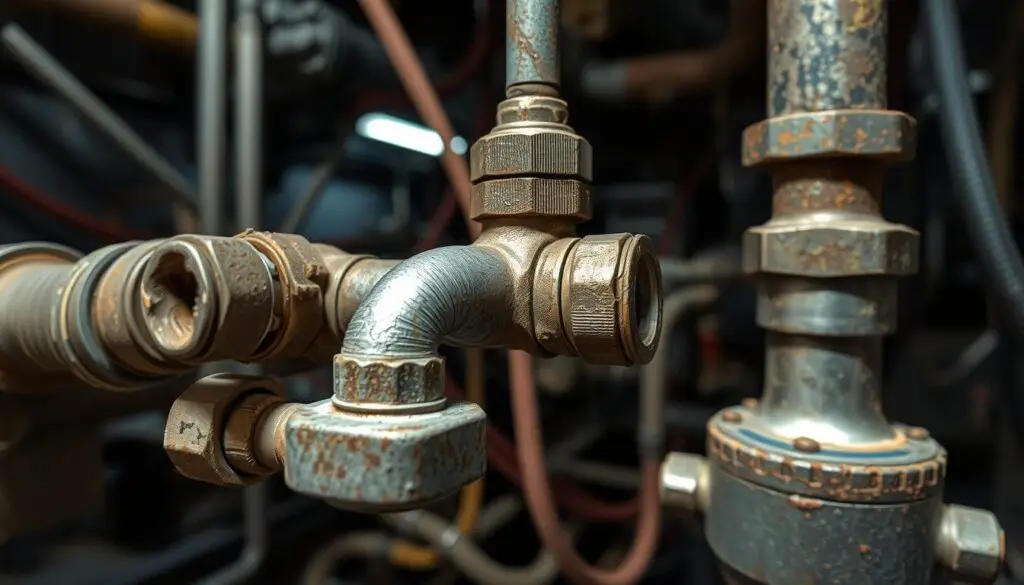
Compression fittings and push-to-connect assemblies create necessary connections throughout the pneumatic network. These connection points experience thermal cycling as temperatures fluctuate from winter cold to summer heat. Metal components expand and contract at different rates, gradually loosening threaded connections and compromising seal integrity.
Air line deterioration manifests differently depending on material type and location. Rubber hoses develop surface cracks that penetrate deeper over time, especially at bend points where flexing concentrates stress. Steel air lines face corrosion challenges—road salt exposure creates pinhole leaks in tubing, particularly where protective coatings wear away.
Push-to-connect fittings provide convenience but introduce specific failure modes. O-rings inside these fittings harden with age and lose their sealing ability. Surface imperfections on tubing—scratches from installation or wear from vibration—prevent proper O-ring seating, resulting in measurable air loss that gradually worsens.
Valve and Control Component Escape Points
Quick-release valves expedite brake release by venting air rapidly to atmosphere. Valve seat wear in these components allows air to escape continuously rather than only during brake release. Contamination from rust particles or dried moisture deposits prevents valve seats from sealing completely, creating persistent leaks that operators may hear as hissing sounds.
Relay valves amplify brake signal pressure to provide quick response at foundation brakes. Internal diaphragms in relay valves deteriorate from age and contamination. When these diaphragms develop cracks or tears, contaminated air bypasses filtration and damages precision sealing surfaces, accelerating wear throughout the valve network.
⚠️ Safety Warning
Never attempt to disassemble spring brake chambers without first caging the power spring according to manufacturer procedures. The sudden release of spring tension can cause severe injury. Always verify that no air pressure remains in either the service or spring chamber before proceeding with any brake chamber work.
Warning Signs Your Truck Has Air System Leaks
Your truck’s pneumatic system constantly communicates its health status through observable warning signs that demand immediate attention. Recognizing these indicators early prevents minor leaks from escalating into safety hazards and expensive repairs. Professional operators who understand these symptoms can address problems before they compromise braking performance.
Audible Indicators and Hissing Sounds
The most recognizable air leak symptoms come from audible indicators during walk-around inspections. A characteristic hissing sound near brake chambers, air lines, or fittings immediately identifies pressurized air escaping from the system. These sounds vary in intensity depending on leak severity and location.
Post-shutdown listening provides the best opportunity to hear leaks that operational noise conceals. After turning off the engine, wait 30-60 seconds for mechanical sounds to subside, then conduct a thorough auditory inspection around all pneumatic components. Many leaks inaudible during operation become clearly detectable in this quieter environment.
Pressure Loss Testing and Federal Standards
Quantitative pressure measurements provide definitive evidence of system pressure drop problems. Federal regulations under 49 CFR 570.57 establish clear benchmarks that separate normal system behavior from leak conditions requiring immediate repair.
For single vehicles with air brakes released, the maximum allowable air loss rate is 2 PSI per minute. Combination vehicles can lose up to 3 PSI per minute under the same conditions. With brakes applied (creating additional seal stress), single vehicles should not exceed 3 PSI loss per minute, while combinations are limited to 4 PSI per minute.
Key Recommendation
Any system exceeding federal pressure loss thresholds has leaks demanding immediate investigation and repair. A properly sealed pneumatic system should maintain pressure with minimal loss—well-maintained systems lose less than 1 PSI during static testing periods.
Compressor short cycling serves as another critical diagnostic indicator. When short cycling occurs—with the unit running almost continuously or cycling every few minutes—significant leakage exceeds the compressor’s capacity to maintain target pressure. Normal operation follows a predictable pattern where the compressor activates around 90-100 PSI and stops at 120-130 PSI.
Dashboard Warning Interpretation
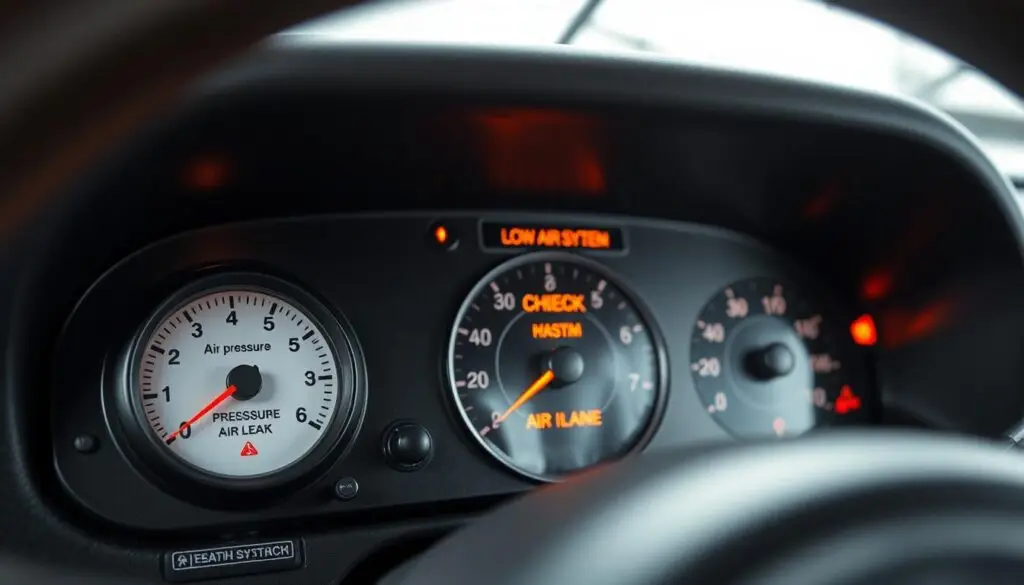
Modern commercial trucks provide electronic monitoring of pneumatic system health through pressure warning lights and audible alarms. The low air pressure warning typically activates when system pressure drops below 60 PSI for vehicles manufactured to FMVSS No. 121 standards. This threshold provides sufficient pressure for several brake applications before complete system failure.
When pressure warning lights illuminate during normal operation, the system has leaks severe enough that loss rate exceeds compressor capacity. This represents a critical safety condition requiring immediate attention. Intermittent warning activation during extended downhill grades (when drivers apply brakes repeatedly) but not during level highway driving suggests moderate leaks that become critical under high brake-application conditions.
Stay Current on Fleet Maintenance Best Practices
Get weekly insights on diesel maintenance, fleet management strategies, and regulatory updates delivered directly to your inbox.
Essential Tools for Pneumatic Leak Detection
The right leak detection equipment transforms the challenging task of finding compressed air leaks from guesswork into a precise, efficient operation. Professional technicians rely on a three-tier approach that combines advanced electronic sensors with traditional verification methods. This comprehensive toolkit ensures that no leak goes undetected, regardless of size or location within the pneumatic system.
Ultrasonic Detection Technology
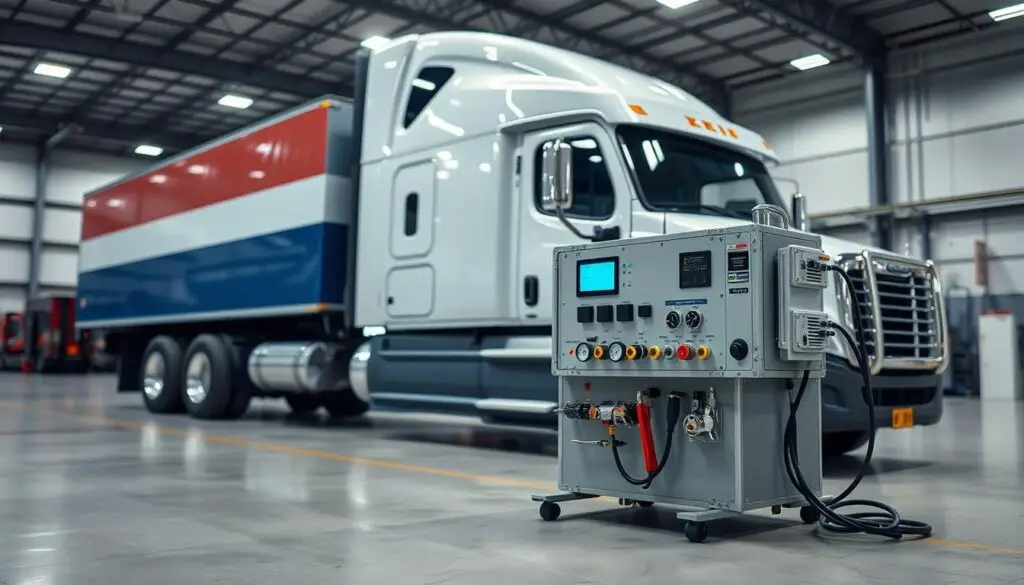
Ultrasonic leak detector systems represent the most significant advancement in pneumatic diagnostics over the past decade. These devices identify high-frequency sounds produced when pressurized air escapes through small openings, typically in the 25-100 kHz range. Human ears cannot detect these frequencies, meaning countless small leaks remain hidden during standard inspections.
Acoustic imaging tools like the Fluke ii900 use multiple microphones working together to capture leak sounds and display their exact locations visually in real-time. The visual interface eliminates the ambiguity of traditional listening methods where technicians must judge leak severity by sound intensity alone. These devices filter out background noise from running engines, air tools, and traffic to isolate the specific frequency signature of escaping compressed air.

The passive nature of acoustic leak detection offers critical advantages for fleet operations. The system requires no connection to pneumatic components and does not interrupt normal operations. Technicians can scan trucks while air systems remain under operating pressure, allowing detection during routine service intervals without additional downtime.
Pressure Testing Instruments
Calibrated air pressure gauges form the foundation of static pressure loss testing, measuring how quickly system pressure drops when the compressor stops running. These gauges must maintain accuracy within ±2 PSI to provide reliable diagnostic information that satisfies CVSA inspection standards.
Digital pressure recorders offer enhanced functionality for fleet operations requiring documented proof of system performance. These instruments log pressure readings over time, creating permanent records that demonstrate regulatory compliance during DOT inspections. The time-stamped data also helps maintenance managers identify gradual system degradation before complete failures occur.
Visual Confirmation Methods
The soap bubble test remains an indispensable verification tool despite advances in electronic leak detection equipment. This time-tested method uses commercially available leak detection solutions applied directly to suspected leak points. Bubble formation provides immediate, unmistakable visual confirmation of escaping air.
The soap bubble test excels at pinpointing exact leak locations after ultrasonic detection identifies a general problem area. Electronic sensors might indicate a leak somewhere along an air line assembly, but soap solution reveals whether the failure occurs at the compression fitting, mid-line crack, or component connection. This precision eliminates unnecessary disassembly and reduces repair time.
Step-by-Step Pneumatic System Leak Detection Process
Effective pneumatic system diagnostics require a methodical approach that moves from preparation through advanced testing. A structured leak detection procedure eliminates guesswork and ensures comprehensive coverage of every potential failure point.
Pre-Inspection System Pressurization
Proper preparation establishes the foundation for accurate leak identification. Start the engine and allow the air compressor to build system pressure to the normal operating range—most commercial truck air brake systems require pressure between 100 and 125 PSI for proper testing conditions. Monitor the dashboard gauges as pressure climbs toward the governor cut-out point.
Allow the system to stabilize for two to three minutes after cut-out occurs. This stabilization period ensures uniform pressure distribution throughout all circuits and components. Testing at full operating pressure reveals leaks that seal themselves at lower pressures—component geometry changes under pressure cause gaps and failures that remain hidden during low-pressure conditions.
Apply wheel chocks to all wheels before beginning any inspection work. Position chocks both in front of and behind the tires to prevent unexpected vehicle movement. Release the parking brake after securing wheels to pressurize service brake circuits that remain unpressurized when the parking brake is applied.
Visual and Auditory Inspection Sequence
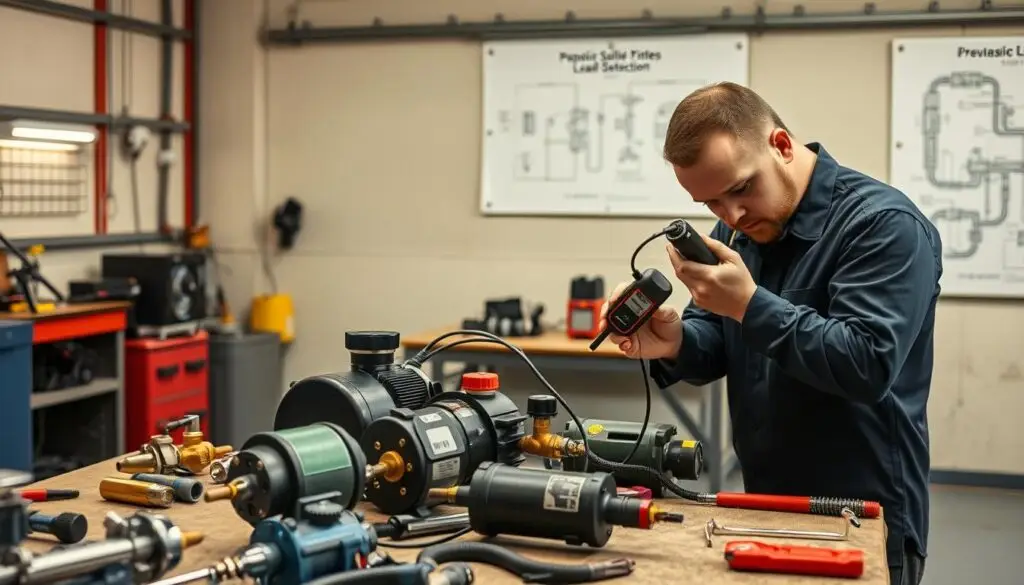
Follow a consistent inspection pattern for every vehicle in your fleet. Start at the cab and work toward the rear, examining components from top to bottom. This systematic approach prevents overlooked areas and ensures complete coverage of primary and secondary circuit components.
Train your eyes to recognize visual indicators that point to active or historic leaks. Corrosion staining around fittings indicates moisture from escaping air that has oxidized metal surfaces. Component discoloration often results from oil mist carried by leaking compressed air. Look for road debris damage to lines and protective coverings—stones and road hazards frequently puncture air lines or crack protective boots around moving components.
Position yourself close to each component while the system maintains operating pressure. Move methodically through the same pattern used during visual inspection with the engine off to eliminate mechanical noise masking leak sounds. Different leak sizes produce characteristic sounds—large leaks create obvious hissing, medium leaks generate whistling tones, and small leaks produce high-pitched sounds requiring close positioning to detect.
Electronic Testing Procedures
Begin ultrasonic scanning using a systematic pattern that mirrors your visual and auditory inspection routes. Adjust the frequency range to match expected leak signatures based on system pressure and component types. Most truck air systems produce ultrasonic frequencies between 20 kHz and 100 kHz when leaking.
Mark detected leaks immediately with tags or marking paint. Document leak location, intensity reading, and component identification. Photograph tagged components for maintenance records. This documentation allows comparison during future inspections to track deterioration patterns and verify repair effectiveness.
The HDJ Perspective
In our experience working with fleet maintenance operations across the country, the shops that achieve the best results with air leak detection treat it as a scheduled preventive maintenance item rather than a reactive troubleshooting task. The most successful programs dedicate 30-45 minutes monthly per vehicle to systematic pneumatic system evaluation—a modest investment that typically identifies 2-3 developing leaks before they cause roadside failures. This proactive approach transforms leak detection from a cost center into a profit-protection strategy.
Advanced Detection Methods
Beyond basic inspection techniques, advanced methodologies provide quantifiable data that helps fleet managers make informed repair decisions. These sophisticated approaches establish baseline performance metrics for tracking system health over time.
Pressure Decay Testing and CVSA Standards
The pressure decay test represents the gold standard for quantitative pneumatic system assessment. This method measures exactly how much pressure a system loses over a specific time period, providing concrete evidence of leak severity rather than subjective observations.
The standardized test procedure requires building air pressure until the governor cuts out the compressor. With the engine off and brakes released, technicians monitor pressure loss for exactly one minute. According to CVSA Operation Airbrake standards, air pressure is brought to 90-100 PSI before measuring pushrod stroke and evaluating air loss rates.
Meeting minimum standards doesn’t guarantee optimal system health. Properly maintained pneumatic systems typically lose less than 1 PSI during brake inspection compliance testing. Approaching maximum allowable limits signals progressive deterioration requiring immediate investigation—don’t wait until roadside inspection failure forces emergency repairs.
Thermal and Electronic Monitoring
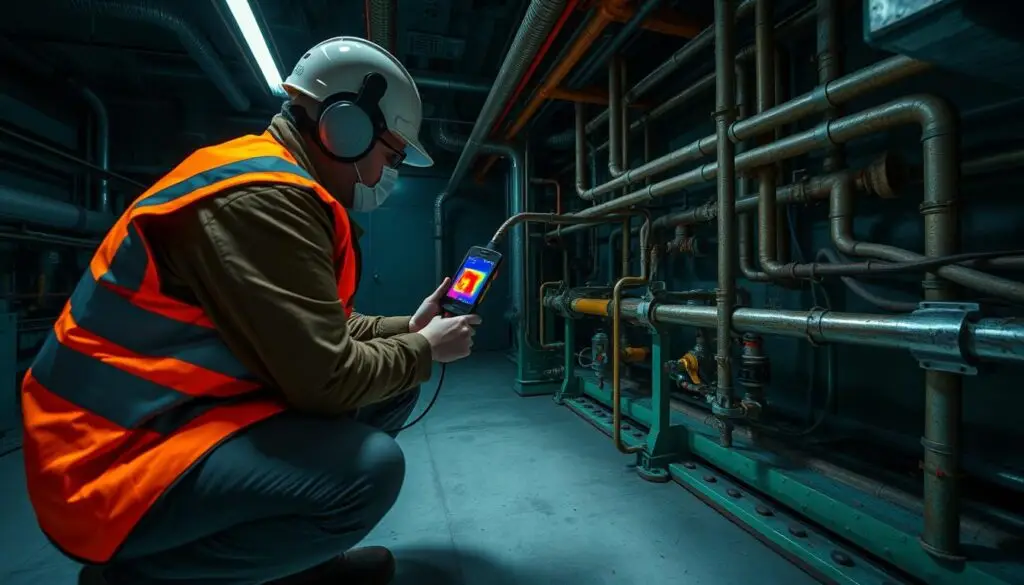
Infrared cameras detect temperature differentials created when compressed air expands through leak orifices. This adiabatic cooling effect produces measurable temperature drops at leak points. Thermal leak detection works particularly well for larger leaks with significant airflow rates and proves valuable for locating leaks in difficult-to-access areas.
Modern commercial vehicles increasingly feature permanent electronic monitoring systems integrated into pneumatic circuits. These installations provide continuous surveillance of air system performance with real-time pressure sensors generating alerts when system behavior deviates from normal operating patterns. Telematics integration extends these capabilities to remote fleet management platforms, enabling proactive notification about developing problems across entire fleets.
Repair Strategies for Common Air Leak Problems
Proper repair methods transform a leaking pneumatic system into a completely sealed unit that maintains pressure indefinitely. The key to lasting repairs lies in addressing root causes rather than symptoms—temporary fixes often lead to recurring failures that cost more in repeated labor and downtime than doing the job correctly the first time.
Fitting and Connection Repairs
Compression fittings represent the most common leak source in truck pneumatic systems, yet they’re also the easiest to repair correctly. Brass compression fittings typically require one-quarter to one-half turn past finger-tight to create a proper seal. Over-tightening actually damages the ferrule and creates leak paths rather than preventing them.
Push-to-connect fittings have specific service requirements that differ from traditional compression designs. The tube end must be cut square and deburred completely before insertion. Any burrs or angled cuts prevent the internal O-ring from sealing properly. Verify proper insertion depth by marking the tube before insertion and checking that it reaches the internal stop.
Thread sealants require careful selection for pneumatic applications. Avoid products designed for hydraulic systems, as many contain oils that contaminate air brake components. Use only sealants specifically rated for compressed air service that cure without releasing particles into the air stream.
Component Replacement Decisions
Deciding between component overhaul and replacement requires systematic evaluation of multiple factors. Component age serves as the primary consideration—overhauling a unit approaching its expected service life often proves wasteful when non-serviceable parts fail shortly after overhaul.
Labor costs frequently determine the most economical approach. A brake chamber overhaul might require two hours of skilled labor, while replacement takes thirty minutes. Calculate the total cost including parts, labor at your shop’s effective hourly rate, and equipment time. Replacement often costs less than overhaul when labor exceeds one hour.
Expected service life comparisons typically favor new components. A properly overhauled brake valve might last another 100,000 miles, while a new valve provides 300,000 miles of service. When the price difference is modest, the extended life of new components delivers better long-term value plus warranty protection against premature failure.
Share Your Air Brake Maintenance Expertise
Do you have specialized knowledge in pneumatic system diagnostics, fleet maintenance strategies, or brake system repair? HDJ readers benefit from real-world experience.
Preventive Maintenance Programs to Minimize Leaks
Building a robust preventive maintenance framework requires coordination between scheduled inspections, component tracking, and operator engagement. This proactive approach shifts fleet operations from reactive emergency repairs to systematic leak prevention that protects both equipment investment and operational efficiency.
Multi-Tiered Inspection Schedules
Establishing effective inspection schedules requires multiple assessment levels, each targeting different leak detection depths and time investments. Daily pre-trip inspections represent the first defense line—drivers should check for audible hissing sounds, dashboard warning activation, and excessive compressor cycling during system pressurization.
Weekly maintenance checks expand detection capabilities with static pressure loss testing and visual examination of accessible components. Technicians should perform standardized pressure drop assessments and inspect fitting connections, valve housings, and exposed air lines for deterioration signs.
Monthly comprehensive inspections incorporate ultrasonic leak detection surveys covering the entire pneumatic system. These detailed evaluations identify leaks in hidden locations—behind cab panels, under chassis components, and within complex valve assemblies—that escape casual observation. According to TMC fleet maintenance research, systematic inspection programs significantly reduce maintenance-related downtime.
Predictive Replacement Strategies
Effective component lifecycle management extends beyond reacting to failures by implementing strategic replacement before components reach critical deterioration. Brake chamber diaphragms typically warrant replacement every 3-5 years regardless of apparent condition, as rubber compounds degrade over time even without visible damage.
Compression fitting O-rings represent another wear-prone element requiring scheduled attention. These small sealing components experience continuous pressure cycling and temperature variation that gradually compromises sealing effectiveness. Replacing O-rings during routine service intervals costs minimal time and parts expense while preventing larger leak development.
Driver Engagement and Reporting
Drivers provide essential real-time observations that complement scheduled maintenance inspections. Training operators to recognize pneumatic system warning signs creates an additional monitoring layer that captures developing problems immediately. Operators should understand typical pressure buildup times, expected brake application feel, and normal compressor duty cycle patterns.
Implementing straightforward reporting mechanisms ensures driver observations reach maintenance personnel promptly. Creating accountability systems that generate responsive maintenance attention keeps operators engaged in the detection process, multiplying detection effectiveness across all operating hours.
Frequently Asked Questions
How do I know if my truck has an air leak?
The most reliable indicator is the static pressure loss test. With the engine off and system fully charged to 90-100 PSI, monitor your gauges for one minute with brakes released. Federal standards allow maximum 2 PSI loss for single vehicles or 3 PSI for combinations. Exceeding these limits confirms leakage requiring repair. Other symptoms include audible hissing near brake components, continuous compressor operation, and low-pressure warning light activation during normal driving. Compressor duty cycles exceeding 25% of operating time strongly indicate system leaks.
What causes air brake leaks in commercial trucks?
Brake chamber diaphragm deterioration represents the most common cause, as rubber compounds degrade from heat exposure, ozone, and moisture contamination over time. Connection point failures at compression fittings and push-to-connect assemblies rank second, caused by thermal cycling, vibration loosening, and O-ring hardening. Valve seat wear in quick-release and relay valves allows continuous air escape, while damaged air lines from road debris, corrosion, or heat exposure create leak paths. Glad hand seals on trailer connections deteriorate from repeated coupling and contamination.
How much does it cost to fix an air leak on a semi truck?
Repair costs vary significantly based on leak location and severity. Simple fitting tightening or seal replacement runs $50-150 including labor. Brake chamber diaphragm replacement typically costs $200-400 per chamber. Air line replacement averages $150-300 depending on length and accessibility. Valve replacements range from $300-800 depending on valve type. The real cost consideration is unrepaired leaks—fuel waste, accelerated component wear, and potential CVSA violations can cost over $15,000 annually per vehicle, making prompt repair economically essential.
Can I pass a DOT inspection with a small air leak?
It depends on the leak rate and location. DOT inspections follow CVSA standards that specify maximum allowable pressure loss rates—2 PSI per minute for single vehicles with brakes released, 3 PSI for combinations. Any audible leak at brake chambers or connections other than proper drain valves constitutes a violation. Leaks causing pressure drop exceeding these thresholds result in out-of-service orders requiring immediate repair before continued operation. Small leaks within acceptable limits technically pass inspection but indicate developing problems warranting attention.
How often should air brake systems be inspected for leaks?
A multi-tiered approach provides optimal coverage. Drivers should perform daily pre-trip checks including listening for hissing sounds and monitoring pressure buildup. Weekly technician inspections should include static pressure loss testing. Monthly comprehensive inspections using ultrasonic detection equipment identify developing problems before they cause failures. Annual detailed evaluations should assess overall system condition and component replacement timing. Fleets operating in harsh conditions—extreme temperatures, road salt exposure, or high-mileage applications—benefit from more frequent comprehensive evaluations.
Protecting Your Fleet Investment Through Systematic Leak Detection
Pneumatic system leaks represent one of the most significant yet addressable sources of operational waste in commercial trucking. The demonstrated fleet cost savings of $15,000 annually per truck make systematic leak detection programs among the highest-ROI preventive maintenance opportunities available to operators.
Modern detection technology has transformed the process. Ultrasonic equipment reduces inspection time from hours of soapy water application to under 60 minutes per vehicle while identifying leaks that traditional methods miss entirely. Combined with pressure testing protocols aligned with federal standards and CVSA inspection requirements, these tools enable maintenance teams to achieve near-zero leak rates across their fleets.
The path forward requires three immediate steps: conduct baseline leak detection audits on representative vehicles to quantify current leakage rates, calculate your facility-specific savings potential using documented cost formulas, and implement pilot detection programs that demonstrate tangible results within the first quarter. Professional fleet management demands treating leak detection investment as essential operational practice rather than optional maintenance—the convergence of safety improvements, regulatory compliance, and proven financial returns creates a compelling case for immediate program implementation.
Help Other Fleet Managers Find This Resource
If this air brake leak detection guide helped your maintenance operations, share it with colleagues who could benefit from systematic pneumatic system management strategies.