
By Michael Nielsen, Editor & Publisher | 15+ Years in Diesel Repair
Last Updated: December 2025
📖 Estimated reading time: 18 minutes
Choosing the right heavy duty hydraulic fluid can make or break your equipment’s performance and component lifespan. These specialized fluids transfer power throughout machinery by remaining non-compressible under extreme pressure while simultaneously serving as lubricants, coolants, and sealants that protect critical pump and motor components from premature wear.
Most fleet operations rely on mineral-based formulations, which account for approximately 99% of commercial hydraulic applications. Understanding viscosity classifications, ISO standards, and OEM requirements enables fleet managers and maintenance professionals to select fluids that maximize equipment reliability while controlling operating costs.
This guide provides the technical framework fleet operations need for confident hydraulic fluid selection based on system pressure ratings, operating temperatures, and application demands across construction, agriculture, and material handling equipment.
Key Takeaways
- Match viscosity to operating conditions: ISO VG 46 suits most general industrial applications; use ISO VG 32 for high-speed systems and ISO VG 68 for heavy-load equipment.
- Prioritize OEM specifications: Fluid selection must meet manufacturer requirements to maintain warranty coverage and ensure component compatibility.
- Contamination control is critical: Target ISO 4406 cleanliness codes of 18/16/13 or cleaner for systems with proportional valves; contamination causes 70-80% of hydraulic failures.
- Temperature range determines base oil choice: Mineral oils work for moderate conditions; synthetic formulations provide superior performance in extreme temperatures.
- Anti-wear additives matter: High-pressure systems above 3,000 psi require ZDDP or equivalent anti-wear protection to prevent pump damage.
Understanding Heavy Duty Hydraulic Fluid Requirements
Hydraulic fluids serve as the power transmission medium in heavy equipment systems. When force applies to the non-compressible liquid—typically from a piston within a cylinder—the oil transmits that force throughout the system, powering everything from excavator arms to forklift masts with precise control.
The non-compressible nature of hydraulic fluids is fundamental to their function. Unlike gases, these liquids transmit force instantly and efficiently, enabling precise control of heavy loads and rapid response times. Beyond power transmission, hydraulic fluids perform multiple essential functions simultaneously: lubricating pumps, motors, valves, and cylinders; transferring heat away from high-friction areas; creating hydraulic seals in clearance spaces; and transporting contaminants to filtration systems.
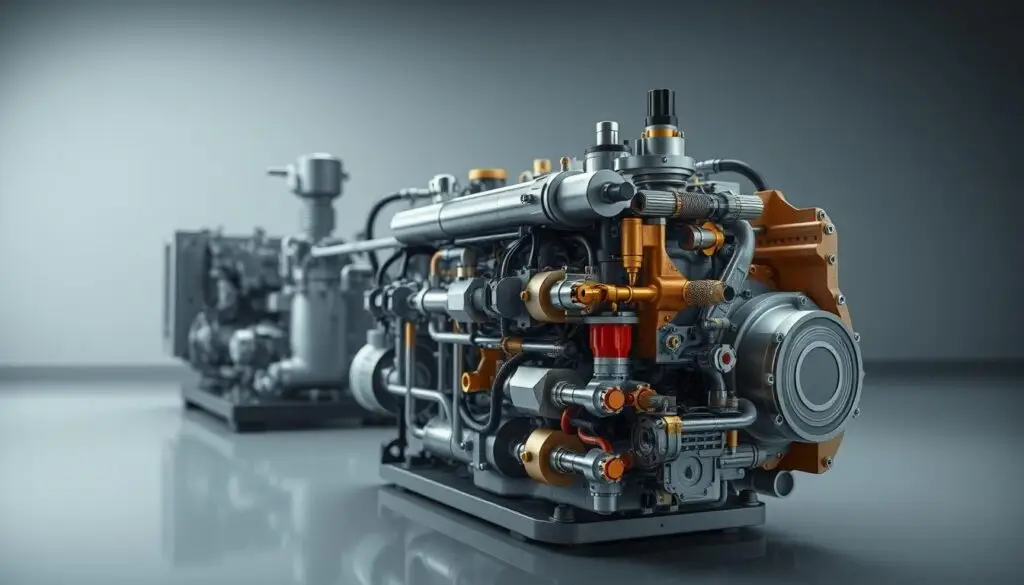
Modern hydraulic systems in construction and mining equipment operate at pressures exceeding 5,000 psi, placing exceptional demands on fluid formulations. The right industrial hydraulic oil delivers consistent performance across varying temperatures, pressures, and operating environments—and the consequences of improper selection are severe.
Critical Performance Characteristics
Viscosity at operating temperatures represents the most fundamental property for hydraulic fluid selection. The fluid must flow easily enough to avoid pump cavitation during startup while remaining thick enough to maintain lubrication films under load. Equipment typically operates across temperature ranges from -20°F to 200°F or wider, depending on geographic location and duty cycle.
A high viscosity index indicates the fluid maintains consistent thickness across temperature extremes. Industrial hydraulic oil with poor viscosity index becomes too thick when cold, causing sluggish operation and potential cavitation damage, then dangerously thin when hot, leading to accelerated wear from inadequate lubrication films.
| Performance Characteristic | Function | Consequence of Inadequacy |
|---|---|---|
| Oxidation Resistance | Prevents chemical breakdown from oxygen exposure and heat | Sludge formation, varnish deposits, shortened fluid life |
| Anti-Wear Properties | Protects metal surfaces in high-pressure contact zones | Accelerated pump wear, reduced component life |
| Rust and Corrosion Protection | Shields ferrous and non-ferrous metals from moisture | Internal corrosion, valve sticking, contamination |
| Foam Resistance | Prevents air entrainment and surface bubbles | Spongy operation, pump cavitation |
| Demulsibility | Allows rapid water separation | Reduced lubrication, accelerated wear |
Consequences of Improper Fluid Selection
The wrong fluid choice creates cascading problems throughout hydraulic systems. Accelerated component wear tops the list—when anti-wear properties prove inadequate, pumps experience rapid deterioration. High-pressure gear pumps and piston pumps show particular sensitivity, with replacement costs ranging from $2,000 to over $15,000 depending on equipment size.
Reduced system efficiency manifests as slower cycle times and diminished productivity. Incorrect viscosity creates excessive internal leakage past worn seals and clearances, forcing the system to work harder while generating additional heat that accelerates degradation.
70-80%
Estimated percentage of hydraulic system failures attributed to fluid contamination and improper fluid selection, according to industry research
Total cost of ownership increases substantially when fluids fail to meet system requirements. Beyond direct repair costs, businesses lose productivity during downtime, and emergency repairs typically cost 3-5 times more than planned maintenance. These consequences underscore why specification compliance represents an essential investment rather than an optional expense.
Hydraulic Fluid Viscosity Grades and Classification Systems
Viscosity grades and classification standards establish the technical framework for matching hydraulic fluids to equipment requirements. These standardized systems provide maintenance professionals with consistent specifications across manufacturers and applications, creating a common language for precise fluid selection.
ISO 3448 Standard for Industrial Fluids
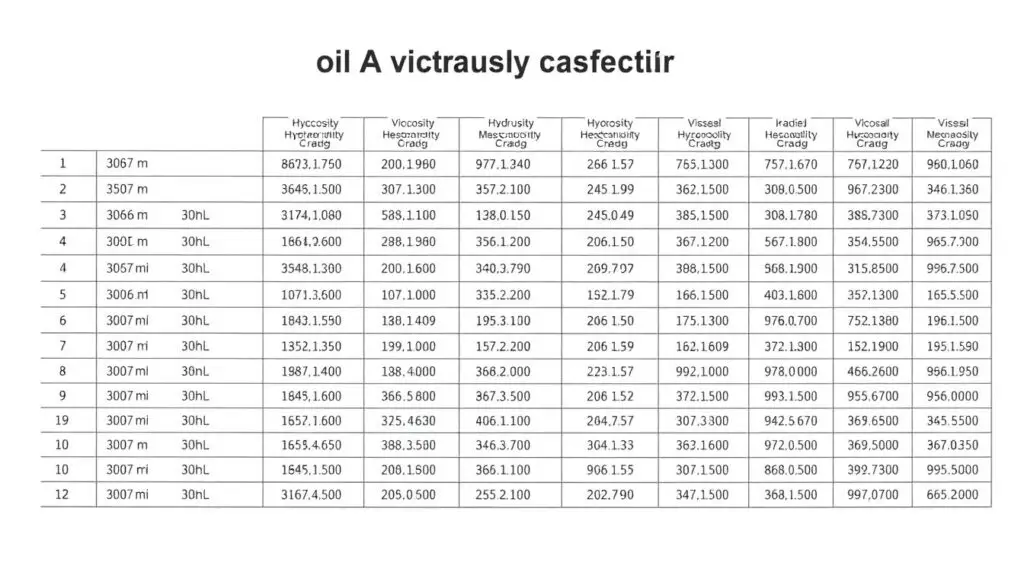
The ISO viscosity grade system represents the most widely adopted classification method for industrial hydraulic applications. This system classifies fluids based on kinematic viscosity measured at 40°C (104°F), with each ISO VG number indicating a specific viscosity range manufacturers must meet.
The numbering progression follows a logical pattern where each grade represents approximately a 50% increase in viscosity. ISO VG 32, for example, has a midpoint viscosity of 32 centistokes (cSt) at 40°C, with an acceptable range between 28.8 and 35.2 cSt.
| ISO VG Grade | Viscosity at 40°C (cSt) | Typical Applications |
|---|---|---|
| ISO VG 15 | 13.5-16.5 | Power steering, hydraulic brakes, low-temperature systems |
| ISO VG 32 | 28.8-35.2 | High-speed machine tools, numerically controlled equipment |
| ✓ ISO VG 46 | 41.4-50.6 | General industrial hydraulics, moderate pressure systems |
| ISO VG 68 | 61.2-74.8 | Heavy-duty systems, large load-carrying requirements |
| ISO VG 100 | 90-110 | Heavy machinery, high-pressure industrial equipment |
ISO VG 46 remains the most popular choice for general industrial hydraulics operating under moderate pressures and temperatures. Heavier grades like ISO VG 68 and 100 provide enhanced load-carrying capacity for systems with larger clearances or higher operating pressures.
SAE Classifications for Mobile Equipment
The Society of Automotive Engineers developed a separate classification system for mobile equipment hydraulics. SAE grades address the unique challenges faced by construction machinery, agricultural equipment, and other mobile applications encountering extreme temperature variations.
Multigrade hydraulic fluids carrying dual designations such as SAE 10W-30 contain viscosity index improvers that enable them to meet both low-temperature and high-temperature requirements. A SAE 10W-30 fluid provides cold-start protection of a 10W oil while maintaining operating viscosity of a 30-grade fluid at elevated temperatures. Mobile equipment manufacturers often specify SAE grades because these fluids accommodate wide temperature swings encountered in outdoor operations.
Viscosity Index as a Performance Indicator
The viscosity index quantifies how much a fluid’s viscosity changes with temperature fluctuations. Higher VI values indicate better viscosity stability across temperature ranges. Mineral-based hydraulic fluids typically exhibit VI values between 90 and 110, while synthetic formulations achieve values from 140 to over 400.
Most modern hydraulic systems benefit from High (80-110) or Very High (110+) VI fluids that reduce viscosity-related performance variations. However, achieving high VI values through polymer additives introduces trade-offs—VI improver molecules can experience mechanical shearing in high-pressure systems, gradually losing effectiveness.
Primary Hydraulic Fluid Specifications and Industry Standards
Multiple organizations worldwide have developed comprehensive standards for hydraulic fluids. ISO hydraulic fluid standards dominate international markets, while regional specifications like ASTM D6158 and DIN 51524 maintain strong influence in their respective territories.
ISO 11158 HM and HV Classifications
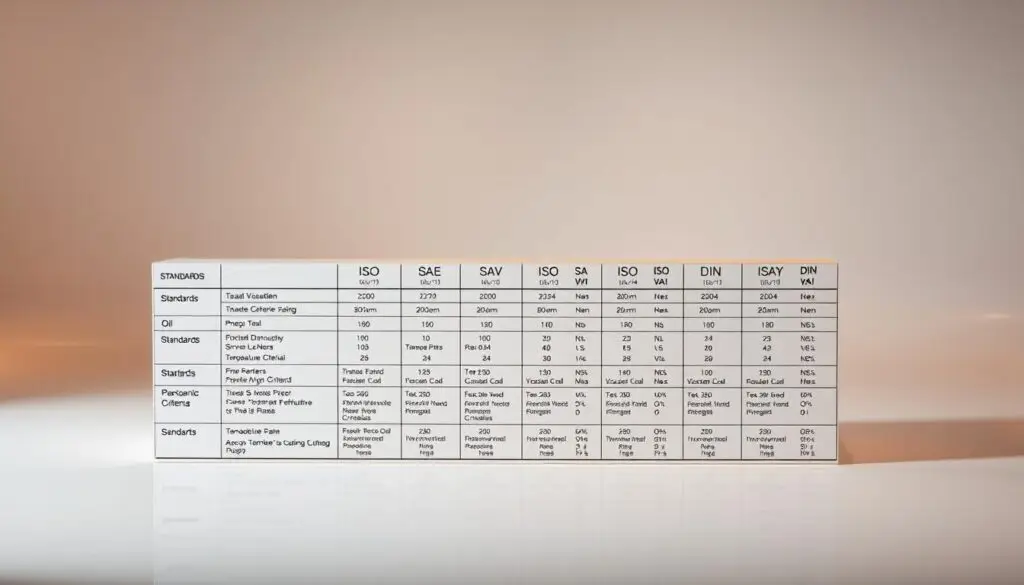
ISO 11158 represents the most widely recognized specification for mineral oil hydraulic fluids globally. The standard classifies fluids into distinct categories based on additive packages and performance characteristics:
HL fluids contain refined mineral oils with anti-oxidation and anti-rust properties, suitable for low-pressure systems in moderate conditions. HM fluids build upon HL specifications by adding improved anti-wear properties—most industrial systems require HM-grade fluids as a minimum. HV fluids represent high viscosity index hydraulic oils that maintain stable viscosity across wide temperature ranges, incorporating VI improvers beneficial for mobile equipment in variable climates.
ASTM D6158 and DIN 51524 Requirements
ASTM D6158 serves as the primary American specification for hydraulic fluids in mobile and industrial equipment. The standard establishes rigorous benchmarks for anti-wear properties, thermal stability, and oxidation resistance, with specific requirements verified through standardized pump testing protocols.
German DIN 51524 specifications maintain significant influence in European markets. Part 2 addresses HLP fluids with enhanced wear protection, while Part 3 covers HVLP fluids combining protective properties with high viscosity index characteristics. Many equipment manufacturers reference DIN specifications globally due to their rigorous nature.
| Standard | Classification | Primary Application |
|---|---|---|
| ISO 11158 | HM/HV | General industrial and mobile hydraulics |
| ASTM D6158 | Type HM | North American industrial equipment |
| DIN 51524 Part 2 | HLP | European industrial systems |
| DIN 51524 Part 3 | HVLP | Mobile equipment in variable climates |
OEM Specifications and Manufacturer Approvals
Equipment manufacturers frequently establish proprietary specifications exceeding generic industry standards. Major brands including Caterpillar, John Deere, Komatsu, and Volvo maintain formal approval processes, testing candidate fluids in laboratory settings and field trials before granting official approval.
Warranty considerations make OEM approvals particularly important—many manufacturers require approved fluids to maintain coverage. When selecting hydraulic fluids, review technical data sheets for specific OEM approvals. The hierarchy of specifications typically places OEM requirements above generic standards; when manufacturer specifications conflict with ISO or ASTM standards, follow OEM guidelines.
Stay Current with Heavy Duty Journal
Get expert maintenance insights, equipment guides, and industry updates delivered to your inbox. Join thousands of fleet professionals who rely on HDJ for actionable technical guidance.
Hydraulic Fluid Types and Base Oil Compositions
Base oil composition fundamentally determines hydraulic fluid characteristics, ranging from conventional mineral oils to advanced synthetic formulations. Each category offers distinct advantages and limitations based on chemical foundation, with cost considerations, performance specifications, and environmental regulations all influencing the selection process.
Mineral Oil-Based Hydraulic Fluids
Mineral hydraulic oil represents approximately 99% of commercially used hydraulic fluids across global industrial applications. These fluids derive from petroleum crude oil through various refining processes that determine their final performance characteristics.
The American Petroleum Institute classifies mineral base oils into three primary groups. Group I oils undergo solvent refining with viscosity index values between 80 and 120. Group II base oils experience hydrocracking producing improved oxidation resistance with VI typically 95-120. Group III oils undergo severe hydrocracking creating near-synthetic performance with VI exceeding 120.

Synthetic Hydraulic Fluids
Synthetic hydraulic fluid formulations utilize chemically engineered base stocks delivering superior performance in extreme operating conditions. Polyalphaolefin (PAO) base oils achieve viscosity index values between 130 and 150, providing exceptional stability across extreme temperature ranges with reduced volatility and extended fluid life.
The oxidation stability of synthetic fluids enables drain intervals two to four times longer than mineral-based alternatives. This extended service life reduces maintenance downtime and total cost of ownership despite higher initial fluid prices. Additional synthetic base stocks include polyol esters offering excellent lubricity and biodegradability for specialized applications.
Biodegradable and Fire-Resistant Options
Biodegradable hydraulic fluid formulations address environmental concerns where spills could contaminate soil or waterways. The EPA recommends readily biodegradable fluids in environmentally sensitive areas including forestry operations, marine equipment, and agricultural machinery near water sources. These formulations must meet OECD 301B criteria achieving at least 60% degradation within 28 days.
Fire-resistant hydraulic fluid formulations serve applications with extreme fire hazards including die casting, steel mills, and underground mining. Water-glycol (HFC) formulations provide excellent fire resistance through evaporative cooling, while phosphate ester (HFD-R) formulations offer exceptional fire resistance without water content, resisting ignition at temperatures exceeding 600°F.
Anti-Wear and Extreme Pressure Additive Systems
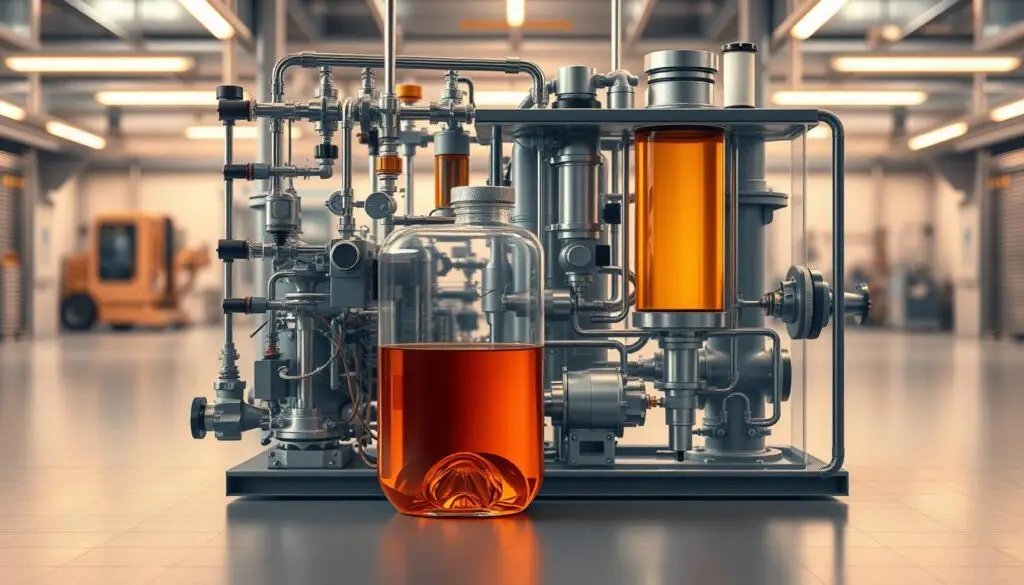
The performance of heavy-duty hydraulic systems depends critically on sophisticated additive packages protecting components from premature wear. These chemical formulations create protective barriers when fluid films become too thin to prevent direct metal-to-metal contact.
Zinc-Based Anti-Wear Technology
Zinc dialkyl dithiophosphate (ZDDP) represents the most widely used anti-wear additive in hydraulic fluid formulations. This organometallic compound provides dual functionality as both wear inhibitor and antioxidant, forming protective zinc phosphate and zinc sulfide films on metal surfaces under boundary lubrication conditions.
Typical ZDDP concentrations range from 0.1% to 0.15% zinc content by weight, providing excellent wear protection for high-pressure systems without adverse effects. ZDDP remains the proven technology for systems incorporating axial piston pumps operating above 3,000 psi.
Zinc-Free Formulations
Ashless anti-wear formulations eliminate zinc while maintaining or exceeding protection levels through organic phosphorus compounds and sulfur-phosphorus combinations. These advanced chemistries deliver exceptional thermal stability, superior filterability, and environmental advantages compared to traditional ZDDP.
Applications with tight clearances benefit particularly from zinc-free chemistry. High-precision servo valves and proportional controls operate more reliably when hydraulic fluids maintain excellent filterability through fine filters without restriction.
⚠️ Safety Warning
Never mix different hydraulic fluid types without verifying compatibility. Incompatible fluids can cause seal damage, additive precipitation, and accelerated component wear. Always flush systems completely when changing fluid types.
Operating Temperature and Contamination Control
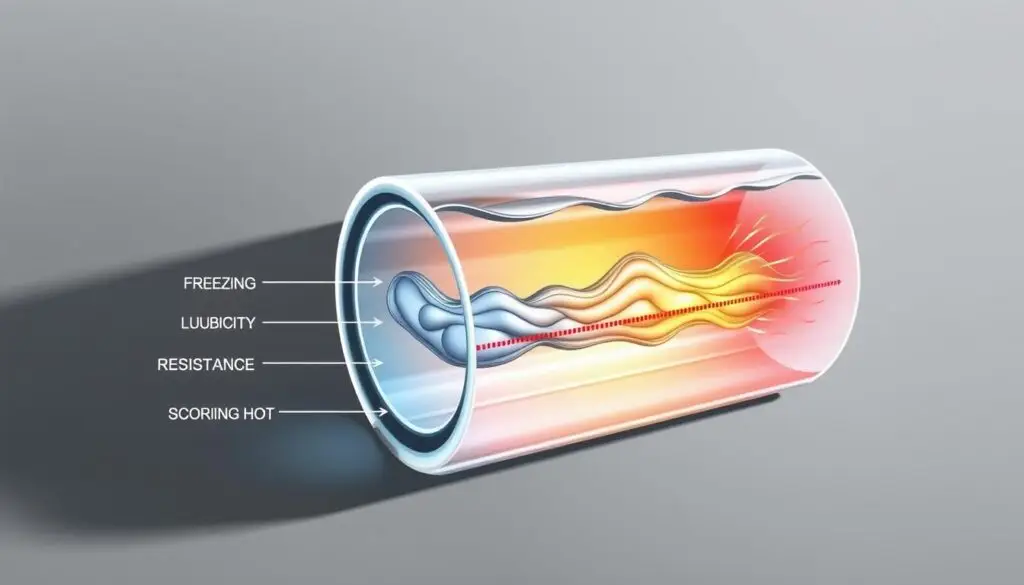
Operating temperature ranges define critical boundaries separating effective hydraulic fluid choices from inadequate ones. When temperatures exceed specified limits, hydraulic fluid performance deteriorates through viscosity changes, oxidation reactions, and structural breakdown. Equipment operating temperatures typically exceed ambient conditions due to mechanical friction, pump compression, and sustained load cycles.
Temperature Management
Pour point specifications measure the lowest temperature at which hydraulic fluid remains pourable and capable of flowing through system components. Fluids exceeding their pour point solidify or become too viscous to pump, resulting in startup failures and potential equipment damage. Cold cranking viscosity provides the most practical measurement for predicting actual startup performance in northern climates.
High-temperature oxidation stability determines fluid longevity under elevated operating conditions. Bulk oil temperatures above 60°C accelerate oxidation reactions producing acids, varnish, and sludge. The Arrhenius equation demonstrates that reaction rates double with every 10°C temperature rise—explaining why systems operating beyond recommended thermal limits experience rapid degradation.
ISO 4406 Cleanliness Standards
The ISO 4406 cleanliness code provides the international standard for reporting particulate contamination levels. This three-number format quantifies particle counts per milliliter at specific size ranges: particles larger than 4 microns, 6 microns, and 14 microns.
Target cleanliness levels vary based on system design and component sensitivity. General industrial systems typically target 20/18/15, while proportional valve systems require 18/16/13 for protection. Servo valve systems demand 16/14/11 or cleaner due to extremely tight clearances. Contamination beyond these levels accelerates wear dramatically—component life decreases exponentially as contamination rises above specified targets.
Quick Reference
- Servo Systems: Target 16/14/11 ISO cleanliness
- Proportional Valves: Target 18/16/13 ISO cleanliness
- General Industrial: Target 20/18/15 ISO cleanliness
- Water Content: Maintain below 200-500 ppm saturation point
Filtration Best Practices
Filtration efficiency specifications use beta ratios quantifying filter performance at specific particle sizes. A beta ratio of β75=75 indicates 75 particles upstream for every 1 particle downstream, representing 98.7% efficiency at that particle size. Higher beta ratios indicate superior performance and cleaner downstream fluid.
Multiple filtration points often prove necessary for meeting stringent cleanliness requirements. Combining return line filtration with kidney loop systems maintains ISO cleanliness standards even in demanding applications, providing continuous contamination removal while supporting normal system operation.
HDJ Perspective
In our experience working with fleet maintenance operations, the most common hydraulic failures trace back to two preventable issues: using the wrong viscosity grade for operating conditions and neglecting contamination control. The upfront cost difference between adequate and premium hydraulic fluids is negligible compared to a single pump replacement. Invest in proper fluid analysis programs and maintain strict cleanliness standards—your equipment’s longevity depends on it.
Industry-Specific Selection Guidelines
Heavy equipment across construction, agriculture, mining, and material handling sectors requires hydraulic fluids engineered for distinct operational demands. Each industry presents unique challenges directly influencing specification priorities and fluid selection criteria.
Construction and Mining Equipment
Construction hydraulic fluid faces some of the most challenging operating environments. Excavators, wheel loaders, bulldozers, and crane equipment routinely operate at pressures between 4,000 and 5,000 psi, demanding robust anti-wear protection. Temperature variations require high viscosity index formulations maintaining proper flow across seasonal extremes, with multigrade options like 10W or 15W providing year-round performance.
Mining operations present additional challenges including elevated ambient temperatures in deep mines increasing fire risk. Fire-resistant hydraulic fluids become mandatory in underground coal mining to protect workers and equipment. Synthetic base stocks often provide optimal solutions for the most demanding applications through exceptional thermal stability and extended drain intervals.
Agricultural Equipment
Agricultural hydraulic oil serves unique multifunctional requirements. Tractors, combines, and implements often utilize Universal Tractor Transmission Oil (UTTO) formulations serving hydraulic, transmission, and wet brake systems simultaneously. This multifunctionality demands careful specification balance to satisfy diverse lubrication needs.
Water contamination poses particular challenges in outdoor farming environments. Superior water separation and demulsibility characteristics prevent emulsion formation accelerating component wear. Biodegradable formulations based on vegetable oils or synthetic esters provide environmental protection in operations near waterways.
Material Handling Operations
Forklift hydraulic fluid operates under considerably different conditions than mobile construction equipment. Industrial forklifts typically function at moderate pressures with relatively consistent temperatures, allowing conventional anti-wear oils in ISO 32 or ISO 46 grades. Cold storage facilities require exceptional low-temperature pumpability—arctic-grade formulations maintain fluid mobility even at -40°F.
Food processing and pharmaceutical environments demand specialized specifications meeting FDA regulations for potential incidental food contact. Heavy-capacity forklifts handling extreme loads approach construction equipment specifications, benefiting from high-performance formulations despite their warehouse environment.
Share Your Hydraulic Maintenance Expertise
Are you a fleet manager or maintenance professional with hands-on experience in hydraulic system care? Heavy Duty Journal welcomes guest contributions from industry practitioners.
Fluid Testing and Condition Monitoring
Systematic evaluation through laboratory and field testing ensures hydraulic fluids deliver reliable protection throughout equipment lifecycles. Proper oil analysis programs safeguard equipment investments by identifying potential problems before catastrophic failures occur.
Essential Test Methods
ASTM test methods provide the technical foundation for measuring fluid properties and verifying specification compliance. ASTM D445 measures kinematic viscosity at controlled temperatures, guiding viscosity grade selection. ASTM D943 (TOST test) evaluates oxidation resistance by subjecting fluids to elevated temperatures with water and metal catalysts.
Anti-wear performance verification utilizes ASTM D2882, the Vickers vane pump wear test simulating actual pump conditions. This demanding test separates premium fluids from marginal performers by weighing pump components before and after testing.
Field Sampling Best Practices
Effective oil analysis requires consistent sampling protocols capturing representative fluid samples. Sample locations should be downstream from system components but before filtration elements. Equipment should run at normal operating temperature for at least 15 minutes before collection to ensure thorough mixing.
Trending analysis provides greater diagnostic value than single-point measurements. Tracking viscosity, particle counts, and acid number over time reveals degradation rates, enabling investigations before fluid condition impacts system performance. Sampling intervals depend on operating conditions—critical systems under severe conditions typically require sampling every 250 to 500 hours.
Frequently Asked Questions
What viscosity grade hydraulic oil should I use for my equipment?
The correct viscosity grade depends on your operating conditions and equipment manufacturer specifications. ISO VG 46 serves most general industrial applications operating at moderate temperatures and pressures. Use ISO VG 32 for high-speed systems requiring rapid response, and ISO VG 68 for heavy-load applications needing enhanced film strength. Always consult your equipment’s service manual first—OEM recommendations reflect tested compatibility with specific component tolerances. For mobile equipment operating in variable climates, consider multigrade formulations like SAE 10W-30 that maintain proper viscosity across temperature extremes.
How often should hydraulic fluid be changed?
Change intervals vary significantly based on operating conditions, fluid quality, and contamination control practices. Most manufacturers recommend intervals between 2,000 and 4,000 operating hours for quality mineral-based fluids under normal conditions. Severe duty applications with high temperatures, heavy contamination exposure, or continuous operation may require intervals as short as 1,000 hours. Synthetic fluids typically extend intervals 2-4 times longer than conventional oils. Rather than following fixed schedules, implement oil analysis programs monitoring viscosity, acid number, and particle counts to determine optimal change timing based on actual fluid condition.
Can I mix different brands or types of hydraulic fluid?
Mixing hydraulic fluids is generally not recommended and can cause serious problems. Different additive packages may be incompatible, potentially causing precipitation, seal damage, or reduced protection. Mixing mineral and synthetic fluids can compromise the performance characteristics of both. If you must change brands, flush the system thoroughly before adding new fluid. When topping off, use the same brand and type already in the system. If the existing fluid type is unknown, have it analyzed before adding anything—or drain completely and refill with fresh fluid of known specification.
What causes hydraulic fluid to turn dark or milky?
Dark fluid typically indicates oxidation and thermal degradation from high operating temperatures or extended service intervals. This darkening often accompanies increased acid number and varnish formation requiring immediate attention. Milky or cloudy fluid indicates water contamination—even 0.1% water can significantly reduce lubrication effectiveness and accelerate component wear. Sources include condensation from temperature cycling, seal leakage, and environmental exposure. Water-contaminated fluid should be changed or processed through water-removal filtration immediately, as water accelerates all degradation processes and promotes corrosion.
How do I know if my hydraulic fluid is compatible with system seals?
Verify compatibility by checking the fluid’s technical data sheet for elastomer compatibility testing results per ASTM D471 or ISO 6072. Quality hydraulic fluids are tested against common seal materials including nitrile (Buna-N), fluorocarbon (Viton), and polyurethane. Acceptable seal swell typically ranges 0-10% volume increase. When changing fluid types—particularly from mineral to synthetic or biodegradable formulations—consult both the fluid manufacturer and equipment OEM. Incompatible fluids cause seals to shrink (causing leaks) or swell excessively (causing binding and extrusion).
Protecting Your Hydraulic Investment
Proper heavy duty hydraulic fluid selection directly impacts equipment uptime, maintenance costs, and operational efficiency. The specification process requires careful evaluation of viscosity grades, industry standards, and operating conditions specific to your equipment fleet. Success begins with understanding your equipment’s operational parameters—temperature ranges, system pressures, and duty cycles dictate which specifications meet your needs.
Premium formulations often deliver lower total ownership costs through extended drain intervals and reduced component wear. Equipment downtime costs significantly more than fluid expenses, making specification compliance an essential investment rather than an optional expense. Working with experienced fluid suppliers provides application-specific guidance, while implementing condition monitoring programs verifies ongoing performance and identifies issues before failures occur.
Share This Guide With Your Team
Know a fleet manager or maintenance technician who could benefit from this hydraulic fluid selection guide? Help your colleagues make better specification decisions.


