
By Michael Nielsen, Editor & Publisher | 15+ Years in Diesel Repair
Last Updated: December 2025
📖 Estimated reading time: 18 minutes
Most hydraulic system failures start with something invisible to the naked eye. Tiny particles and water droplets circulating through your hydraulic fluid silently damage pumps, valves, and cylinders every operating hour. For fleet managers running excavators, loaders, and vocational equipment, the shocking reality is that proper hydraulic contamination control can multiply equipment life by ten times or more—turning a five-year pump into one that runs for decades.
Even brand-new hydraulic oil from major suppliers often contains particles visible under basic magnification. These contaminants begin their destructive work the moment that oil enters your Caterpillar excavator or Komatsu loader. Research shows that reducing contamination levels by just one ISO cleanliness code can double component life—a relationship that makes fluid management one of the highest-ROI maintenance investments available to heavy equipment operators.
Key Takeaways
- Exponential Life Extension: Clean hydraulic oil can extend system life by 10 to 50 times compared to contaminated fluid—a pump exposed to ISO 22/20/17 oil lasted 100 hours while the same pump with ISO 16/14/11 oil ran 5,000 hours.
- New Oil Reality: Fresh hydraulic oil typically arrives at ISO 19/17/15 or worse, requiring filtration before use to meet Caterpillar’s ISO 18/15 minimum specification.
- Invisible Threats: Particles under 5 microns cause up to 70% of component wear—smaller than red blood cells and impossible to see without magnification.
- Water’s Impact: Reducing water contamination from 1,000 ppm to 100 ppm extends bearing life approximately 4.5 times.
- ROI Potential: Fleets implementing contamination control programs report 45% maintenance cost reductions and $125,000+ annual savings per 25-machine fleet.
Understanding Hydraulic Contamination Control
Contamination silently destroys hydraulic systems every day across construction sites, fleet yards, and mining operations. Particles invisible to the naked eye create wear patterns that lead to catastrophic failures—often at the worst possible time. Understanding how contaminants enter your system and their effects helps prevent the costly downtime and emergency repairs that derail project schedules and maintenance budgets.
The Hidden Cost of Contaminated Hydraulic Fluid
The financial impact of hydraulic fluid contamination extends far beyond replacement parts. When microscopic particles circulate through pumps and valves, they create clearance changes that reduce efficiency before outright failure occurs. A system operating with contaminated fluid consumes more energy, generates excess heat, and experiences unpredictable breakdowns that disrupt operations.
Industry research consistently shows that particle contamination causes approximately 80% of mechanical wear in hydraulic systems. The contamination impact includes shortened component life, increased maintenance labor, lost productivity during unplanned shutdowns, and the premium costs of emergency repairs versus scheduled maintenance.
Why Even New Oil Isn’t Clean Enough
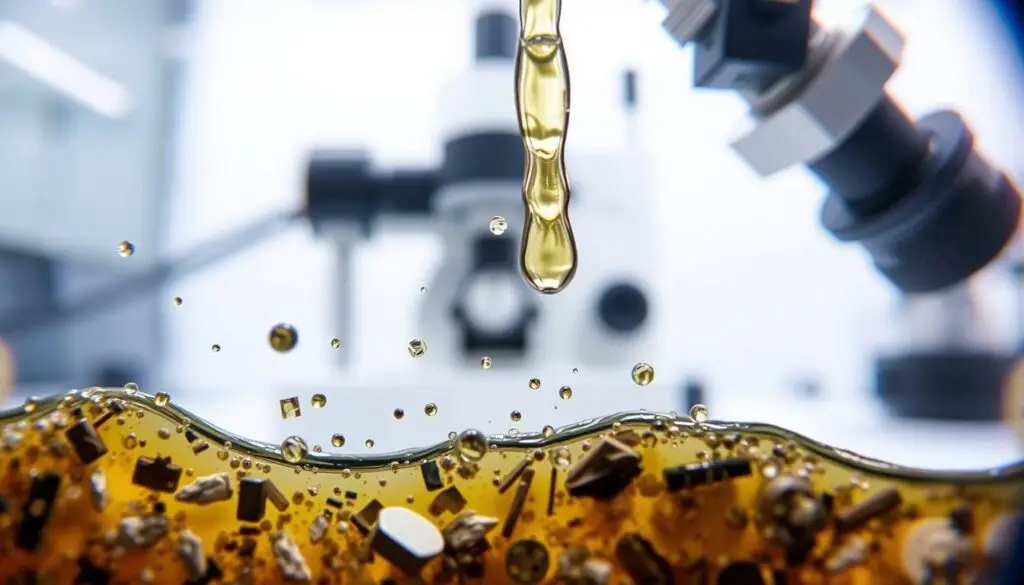
Many operators assume fresh hydraulic oil meets cleanliness standards suitable for modern equipment. This assumption costs fleets millions in premature failures. New oil cleanliness typically measures at ISO codes of 19/17/15 or worse—far too contaminated for today’s hydraulic components with their tight tolerances.
Oil passes through seven to nine custody changes from refinery to your equipment reservoir. Blending equipment introduces particles. Storage tanks collect atmospheric contaminants. Reused drums contain residual debris from previous contents. Bulk tanks expose oil to airborne particles, while unsealed containers allow moisture condensation during temperature swings. These custody transfers occur without filtration, allowing contaminants to accumulate at each stage.
Caterpillar specifies that new hydraulic oil should be filtered to achieve a cleanliness level of ISO 18/15 or better before entering their machines. Any oil removed during repairs must meet this same standard before reuse. This OEM requirement reflects the reality that modern hydraulic components demand cleaner fluid than what arrives in drums or bulk deliveries.
⚠️ Safety Warning
Hydraulic systems operate under extreme pressure—often exceeding 3,000 PSI. Never attempt to locate leaks using your hands. High-pressure fluid injection injuries require immediate emergency medical treatment. Always relieve system pressure before opening any hydraulic connections, and wear appropriate PPE when working around pressurized components.
The Disproportionate Impact on System Life
The relationship between cleanliness and component life isn’t linear—it’s exponential. For hydraulic piston pumps, fluid that’s 10 times cleaner can deliver 50 times longer service life. This disproportionality creates dramatic results in both directions, rewarding clean oil programs handsomely while punishing contamination severely.
| Oil Cleanliness Change | Impact on Component Life | Example Service Life |
|---|---|---|
| 10x cleaner | 50x longer life | 1 year → 50 years |
| 5x cleaner | 25x longer life | 1 year → 25 years |
| 2x dirtier | 80% life reduction | 5 years → 1 year |
| 5x dirtier | 96% life reduction | 5 years → 3 months |
When hydraulic fluid becomes twice as dirty, service life drops to 20% or less of expected values. This exponential relationship explains why systems fail prematurely despite regular oil changes—if the replacement fluid isn’t properly filtered, you’re essentially resetting the contamination clock without gaining the expected benefit.
The Science Behind Clean Hydraulic Oil and Extended Equipment Life
Research proves that oil cleanliness directly impacts equipment lifespan in dramatic ways. Laboratory studies and field data consistently demonstrate that reducing contamination levels can multiply component life by factors of 5 to 50 times. This relationship isn’t linear—small improvements in cleanliness yield disproportionately large gains in reliability and longevity.
Accelerated Life Testing Results
Accelerated life testing provides concrete data on how contamination affects different hydraulic components. These controlled experiments subject components to specific contamination levels while monitoring their performance degradation over thousands of hours.
Results from major hydraulic manufacturers demonstrate the stakes: a pump exposed to ISO 22/20/17 oil lasted just 100 hours in testing, while the identical pump running with ISO 16/14/11 oil operated for 5,000 hours. That’s a 50-fold increase in service life from what appears to be a modest improvement in fluid cleanliness—the difference between replacing a pump twice per year versus once per decade.
Component Sensitivity to Contamination
Different hydraulic components exhibit varying degrees of sensitivity to particle contamination based on their internal clearances. Servo valves prove most vulnerable, with clearances as tight as 1-4 microns—roughly the diameter of a bacterium. Piston pumps and gear pumps follow in sensitivity, while cylinders show somewhat greater tolerance.
| Component Type | Critical Clearance | Life Reduction Factor |
|---|---|---|
| Servo Valves | 1-4 microns | 10x from contamination |
| Piston Pumps | 5-40 microns | 7x from contamination |
| Gear Pumps | 0.5-5 microns | 5x from contamination |
| Cylinders | 50-250 microns | 2x from contamination |
The Multiplication Effect of Cleanliness
The cleanliness multiplication factor reveals exponential benefits rather than linear improvements. Each ISO code reduction typically doubles component life. Moving from ISO 22/20/17 to ISO 15/13/10 represents a seven-code improvement, potentially extending life by 128 times. This exponential relationship makes contamination control one of the most cost-effective reliability strategies available to fleet managers.
Particle Contamination: The Silent System Killer
Particle contamination acts as a silent destroyer within hydraulic systems, causing damage that often goes unnoticed until major failures occur. These microscopic invaders enter systems through various pathways: metal fines from component wear, airborne dust during maintenance activities, and residue from previous fluids. Even new oil straight from the supplier contains particles that exceed acceptable levels for modern hydraulic components.
How Particles Destroy Hydraulic Components
Microscopic particles wreak havoc on hydraulic components through several destructive mechanisms. As fluid flows through the system at high velocity and pressure, these contaminants act like liquid sandpaper, gradually eroding pump surfaces and valve seats with each pass through the circuit.
In servo valves, micron-sized particles wedge between the spool and bore, causing stick-slip motion that destroys precision control. Particles also accelerate seal degradation by creating microscopic channels that allow fluid bypass and pressure loss. Over time, these channels grow larger, leading to visible leaks that signal the seal is already severely compromised internally.

The Critical Size Range: Particles Under 5 Microns
The most damaging particles measure less than 5 microns—smaller than a red blood cell and completely invisible to the naked eye. These tiny contaminants perfectly match the clearances in modern hydraulic components, making them especially destructive. They slip past standard filtration systems and lodge in critical areas where they cause maximum damage.
Research shows that particles in the 2-5 micron range account for up to 70% of component wear in hydraulic systems. This finding explains why systems can fail catastrophically despite appearing clean to visual inspection—the most destructive particles are impossible to see without specialized equipment.
Stay Ahead of Equipment Failures
Get weekly insights on hydraulic system maintenance, contamination control strategies, and fleet reliability delivered to your inbox.
Real-World Impact on Pumps, Valves, and Bearings
In fleet applications, particle contamination dramatically reduces component life across all hydraulic systems. Gear pumps exposed to contaminated fluid show scoring patterns on gear faces within hours of operation. Proportional valves lose precision control as particles erode spool edges, creating internal leakage paths that compromise lift capacity and cycle times.
Rolling element bearings experience accelerated fatigue when micron-sized particles indent bearing races, initiating surface cracks that lead to catastrophic failure. A hydraulic system operating with fluid cleanliness at ISO 20/18/15 might see pump life reduced from 10,000 hours to just 1,000 hours—the difference between getting five years of service versus replacing major components annually.
Water Contamination and Its Devastating Effects
Water contamination poses one of the most serious threats to hydraulic systems, often causing irreversible damage that operators discover too late. Even small amounts of moisture can dramatically reduce equipment life and trigger a cascade of failures throughout your system.
The relationship between water content and bearing life demonstrates how critical moisture control becomes. Research from Pall Corporation published in Machinery Lubrication shows that reducing water contamination from 1,000 ppm to just 100 ppm extends bearing life approximately 4.5 times. This dramatic improvement underscores why monitoring and controlling moisture levels remains essential for protecting your hydraulic equipment investment.
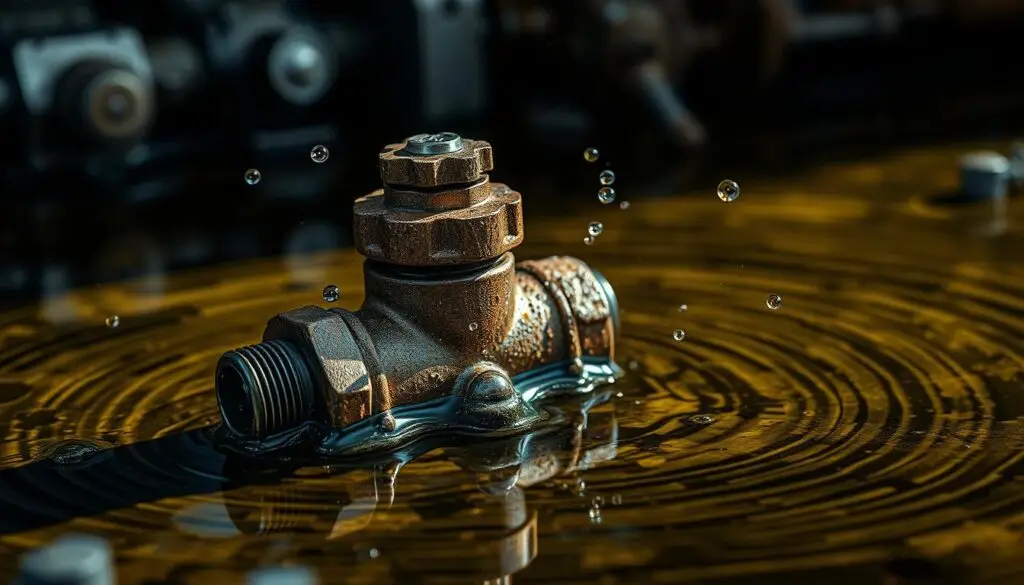
Water exists in hydraulic fluids in three distinct states, each presenting unique challenges. Dissolved water remains invisible, absorbed into the oil at the molecular level. Emulsified water forms tiny droplets suspended throughout the fluid, creating a cloudy appearance. Free water separates visibly from oil, settling at low points in the system.
The damage mechanisms from water contamination extend far beyond simple rust formation. Water reduces the oil’s pressure-viscosity coefficient, weakening the protective film between moving parts. This leads to metal-to-metal contact, accelerated wear, and premature component failure. Hydrogen embrittlement can cause bearing surfaces to crack under stress, while water-induced oxidation degrades the oil itself, creating acids and sludge that compound the damage.
| Water Level (ppm) | Saturation % | Expected Bearing Life |
|---|---|---|
| 25 | 25% | 100% (baseline) |
| 100 | 50% | 80% |
| 400 | 80% | 20% |
Temperature fluctuations in equipment and storage tanks create breathing cycles that draw humid air into systems, introducing water vapor continuously. Advanced moisture control technologies like desiccant breathers and nitrogen blanketing systems prevent this atmospheric water ingression while reservoir heaters help drive off existing moisture contamination.
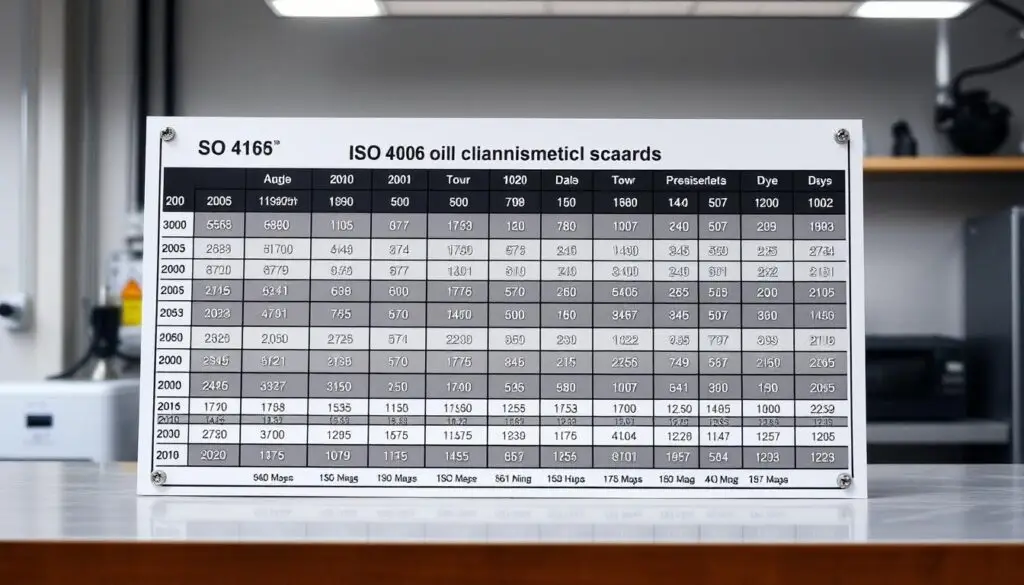
Oil Cleanliness Standards: ISO 4406 Explained
Managing particle contamination in hydraulic systems requires precise measurement standards that enable consistent communication between equipment manufacturers, fluid suppliers, and maintenance teams. The ISO 4406 classification system provides this universal language for rating fluid cleanliness, giving fleet managers clear targets for protecting expensive equipment.
Understanding ISO Cleanliness Codes
The ISO 4406 system uses three numbers separated by slashes, such as 18/16/13, to describe particle contamination levels. Each number represents particles in specific size ranges per milliliter of fluid. The first number counts particles 4 microns and larger. The second measures particles 6 microns and larger. The third tracks particles 14 microns and larger.
Lower numbers indicate cleaner oil. Critically, each code number represents double the particle count from the previous level—this is a logarithmic scale, not linear. Code 18 allows twice as many particles as code 17, which allows twice as many as code 16. This means a jump from ISO 16 to ISO 18 represents four times the contamination, not merely a slight increase.
Target Cleanliness Levels for Different Systems
Different hydraulic components require specific cleanliness codes for optimal performance and longevity. System sensitivity determines the appropriate target levels, with more precise components demanding cleaner fluid.
| System Type | Target ISO 4406 Code | Critical Components |
|---|---|---|
| Servo Valves | 15/13/10 | Precision spools, small clearances |
| Proportional Valves | 17/15/12 | Variable orifices, pilot controls |
| Gear Pumps | 18/16/13 | Gear teeth, bearings |
| Cylinders | 20/18/15 | Seals, rod surfaces |
Why New Oil Rarely Meets Standards
Testing consistently reveals that typical new oil shows cleanliness codes around 19/17/15 or worse—levels that exceed the tolerance of most hydraulic components. Refineries focus on chemical properties, not particle removal. Oil picks up contamination during blending, packaging, and transport through normal handling processes.
Pre-filtering new oil through proper filtration systems removes these contaminants before they damage sensitive components. This simple step—filtering all incoming fluid to your target ISO code—protects your investment in both the fluid and the equipment it serves.
The HDJ Perspective
The contamination control conversation in heavy equipment fleets has shifted dramatically over the past decade. What was once considered “good enough”—changing oil at manufacturer intervals and replacing filters on schedule—no longer protects modern hydraulic systems with their tighter clearances and higher operating pressures. Fleet managers who embrace proactive contamination control as a strategic investment rather than a maintenance expense consistently outperform those who treat it as optional. The exponential relationship between cleanliness and component life means that modest investments in better filtration, proper storage, and regular oil analysis deliver returns measured in multiples, not percentages.
Heavy Equipment Oil Analysis: Your Early Warning System
Heavy equipment oil analysis acts as the eyes and ears of your hydraulic system, detecting problems before catastrophic failures occur. This powerful diagnostic tool reveals contamination levels, wear patterns, and chemical changes that naked eyes can’t see—giving fleet managers weeks or months of warning before expensive breakdowns.
Modern fluid condition monitoring follows established testing protocols to ensure accuracy and repeatability. For critical hydraulic systems, comprehensive test packages evaluate multiple parameters: viscosity measurements at 40°C, water content analysis, ISO particle counting, dissolved metals detection, and acid number testing. These tests form the foundation of predictive maintenance programs that prevent failures rather than simply reacting to them.

Leading oil analysis laboratories employ chemists who interpret results beyond simple pass/fail criteria. These experts identify contamination trends and recommend corrective actions before equipment damage occurs. Predictive maintenance through regular oil sampling saves fleets substantial amounts in downtime costs—many facilities start with baseline analysis programs to establish normal conditions, then move to quarterly monitoring that tracks fluid health over time.
“Oil analysis is like a blood test for your equipment—it reveals problems you can’t see until it’s too late.”
— Industry Reliability Expert
Smart maintenance teams use heavy equipment oil analysis data to schedule service intervals based on actual conditions rather than arbitrary time periods. This approach maximizes equipment life while minimizing unnecessary fluid changes and disposal costs—sampling oil monthly or every 1,000 operating hours, whichever comes first, provides the visibility needed to catch problems early.
Advanced Hydraulic System Filtration Technologies
Modern hydraulic system filtration has evolved far beyond simple strainers and basic filters. Today’s advanced filtration technologies can dramatically extend equipment life by removing contaminants that standard filters miss. The right combination of filters and cleaning systems can achieve cleanliness levels that reduce wear rates by up to 90%.
High-Efficiency Beta-Rated Filters
Beta-rated filters represent the gold standard in hydraulic system filtration. A beta rating indicates how many particles a filter captures at a specific size—the higher the number, the better the efficiency. A β4000 filter rated at 5 microns removes 99.98% of particles 5 microns and larger. These high-efficiency filters typically operate in the 3 to 10 micron range, capturing the particles most damaging to hydraulic components.
Filter carts equipped with β4000-rated elements can clean oil during transfer from drums to storage tanks, achieving ISO 4406 target cleanliness levels in a single pass. This investment in transfer filtration pays for itself by protecting equipment from the contamination present in new oil.
Offline Kidney Loop Systems
Kidney loop systems work like dialysis machines for hydraulic oil. These offline filtration technologies continuously clean oil in storage tanks or reservoirs without interrupting equipment operation. By circulating oil through high-efficiency filters around the clock, kidney loops prevent water and particulate buildup that degrades oil quality over time.
Dedicated filter carts serve a similar purpose for smaller systems or mobile applications. Operators can connect these portable units during maintenance windows to polish oil to exceptional cleanliness levels. Many facilities combine water-blocking breathers with kidney loops to prevent airborne moisture and particles from entering tanks while simultaneously removing existing contamination.
Ion-Exchange Technology for Phosphate Esters
Phosphate ester fluids used in fire-resistant applications require specialized treatment beyond particle filtration. Ion-exchange filters use resin technology to remove acids, dissolved metals, and varnish precursors from these specialty fluids. By maintaining acid numbers at acceptable levels, these systems protect sensitive servo valves from contamination that causes sticking or sluggish response.
Engineered filtration systems combine particle removal with ion-exchange technology in a single unit. This dual approach removes both solid contaminants and chemical degradation products, extending fluid life by years while protecting critical components.
Share Your Contamination Control Expertise
Have you implemented a successful hydraulic maintenance program? Heavy Duty Journal welcomes contributions from fleet managers and maintenance professionals.
Temperature Control: The Overlooked Factor in System Life
While filtration gets most of the attention in hydraulic system maintenance, temperature control plays an equally critical role in extending equipment life. Many operators focus solely on keeping systems running without realizing that small temperature changes can dramatically impact component longevity and overall system performance.
The Viscosity-Temperature Relationship
Hydraulic oil viscosity changes significantly with temperature fluctuations. When oil heats up, it becomes thinner and loses its ability to maintain protective films between moving parts. This relationship directly affects bearing life and component wear rates—operating too hot thins the oil to the point where metal-to-metal contact occurs.
A bearing using ISO VG 68 oil operates optimally at 40°C with a viscosity that provides adequate lubrication. When operating temperature rises to 55°C, the oil thins to roughly half its original viscosity, reducing the protective film thickness and cutting bearing life to approximately 30% of its potential.
How 20 Degrees Cooler Means 5X Longer Life
The impact of viscosity management becomes clear when examining real-world data. Reducing system temperature by just 20°C can increase bearing life by five times. This dramatic improvement happens because cooler oil maintains better film thickness between components, reducing metal-to-metal contact and wear.
Temperature reduction from 55°C to 35°C raises oil viscosity and improves the service life factor from 0.3 to 1.7—a transformation that turns a one-year pump into a five-year pump simply by managing heat. This makes cooling system maintenance and heat exchanger efficiency critical components of any contamination control program.
Optimal Operating Temperature Ranges
Finding the right temperature balance requires careful consideration. Running too cool wastes energy and can cause poor lubrication during startup as thick oil struggles to flow. Running too hot accelerates oxidation and component wear. Most hydraulic systems perform best between 40-50°C, where oil maintains proper viscosity without excessive energy consumption or accelerated aging.
Contamination Prevention Best Practices
Protecting hydraulic systems from contamination starts the moment oil arrives at your facility. Every transfer point creates an opportunity for particles and water to enter your system. Implementing proper contamination prevention procedures can mean the difference between equipment running for decades or failing within months.
Filter new oil immediately upon delivery—never assume drums or bulk deliveries meet your cleanliness standards. Use dedicated filter carts during drum-to-storage transfer to bring incoming fluid to your target ISO code. Install water-blocking desiccant breathers on bulk tanks to prevent moisture from entering during temperature cycles. Replace open funnels with closed-system dispensing equipment to eliminate atmospheric exposure during transfer.
Common contamination sources often hide in plain sight. Dirty hoses introduce particles during transfers. Open containers collect airborne dust. Unsealed funnels allow moisture to enter systems during filling operations. Each exposure point compounds the problem, introducing contaminants that damage pumps, valves, and cylinders throughout the circuit.
Creating simple checklists ensures maintenance staff follow proper fluid handling procedures at every stage, from receiving to final system fill. FMCSA’s 49 CFR Part 396 requires systematic inspection, repair, and maintenance programs for commercial motor vehicles—extending this systematic approach to hydraulic fluid management provides similar benefits in equipment reliability and compliance documentation.
The Economics of Clean Oil: ROI and Cost Savings
Clean hydraulic oil isn’t just about equipment reliability—it’s a powerful investment that delivers measurable financial returns. Fleets implementing advanced contamination control systems are discovering that the initial investment pays for itself many times over through reduced maintenance costs, extended equipment life, and significant waste reduction.
Calculating Your Return on Investment
The ROI calculation for clean oil programs reveals impressive numbers when tracked systematically. Studies tracking industrial equipment over multiple years show substantial savings from contamination control—often measured in millions of dollars across a fleet when factoring in reduced lubricant maintenance costs and eliminated equipment failures.
Research published in Power & Motion confirms that maintaining higher cleanliness standards reduces costs associated with complete oil changes, component replacements, and other labor-intensive activities. Clean fluid means pumps don’t work as hard to overcome filter loading and pressure losses, reducing energy consumption while extending maintenance intervals.
Fleet-Level Savings
Real-world applications prove these aren’t just theoretical benefits. Fleets implementing comprehensive contamination control programs report substantial improvements: 95% reduction in varnish potential, fluid resistivity restored to specification, and filter replacement intervals extended by 5-10 times their previous frequency. Zero unplanned downtime from fluid-related failures becomes achievable rather than aspirational.
The combination of fewer failures, longer component life, and reduced maintenance labor delivers returns that compound over time. Training programs that teach proper fluid handling practices show particularly strong returns—some facilities document significant annual savings for every dollar invested in operator education.
Environmental Benefits and Waste Reduction
The environmental benefits match the financial gains. Clean oil programs eliminate the need for frequent oil changes, reducing disposal costs and regulatory compliance expenses. Waste reduction from proper contamination control can reach millions of pounds across a large fleet over time. Carbon footprint from oil production and transportation decreases. Environmental liability risks diminish. Storage and handling requirements shrink.
These environmental benefits translate directly into cost savings through reduced waste management fees and improved corporate sustainability metrics that many customers and partners now require.
Frequently Asked Questions
What are the most common sources of hydraulic fluid contamination?
Hydraulic fluid contamination originates from multiple sources including metal fines from component wear, dust and debris from blending and packaging processes, and moisture from atmospheric exposure. Storage tanks exposed to air, reused drums, and unsealed containers allow condensation and airborne particles to enter. Cross-contamination during transport occurs when containers aren’t thoroughly cleaned between uses. Even new oil straight from manufacturers contains visible particles at 10x magnification—testing typically shows cleanliness codes of ISO 19/17/15 or worse.
How much can contamination control extend equipment life?
Proper contamination control can extend hydraulic component life by 10 to 50 times compared to contaminated systems. The relationship is exponential, not linear: a pump exposed to ISO 22/20/17 oil lasted 100 hours in testing, while the identical pump running with ISO 16/14/11 oil operated for 5,000 hours. Each single-code improvement in ISO cleanliness typically doubles component life—a seven-code improvement can extend life by 128 times.
What ISO 4406 cleanliness level should I target for hydraulic systems?
Target cleanliness depends on your most sensitive component. Servo valves require ISO 15/13/10 or better due to extremely tight tolerances. Proportional valves perform best at 17/15/12. Standard hydraulic piston pumps need 18/16/13 or cleaner. Caterpillar specifies that new oil should be filtered to achieve ISO 18/15 before entering their machines. Always filter incoming oil to meet your target—new oil typically arrives at 19/17/15 or worse without pre-filtration.
How does water affect hydraulic system performance and life?
Water contamination dramatically reduces bearing life and accelerates system degradation. Reducing water content from 1,000 ppm to 100 ppm extends bearing life approximately 4.5 times. Water causes corrosion, impairs oil film strength, leads to hydrogen embrittlement of metal surfaces, and accelerates lubricant oxidation. Storage environments introduce water vapor through temperature-induced breathing cycles, making proper tank breathers essential for contamination prevention.
How often should I perform oil analysis on hydraulic systems?
For critical hydraulic systems, sample oil monthly or every 1,000 operating hours—whichever comes first. Establish baseline conditions with initial analysis, then monitor quarterly at minimum to track trends. Oil analysis should include viscosity measurement, water content testing, ISO particle counting, wear metals analysis, and acid number testing. This frequency provides enough data points to identify developing problems 4-8 weeks before failure occurs.
What’s the ROI on investing in contamination control programs?
Fleet contamination control programs typically deliver 300-500% ROI through prevented failures and optimized maintenance. A 25-machine construction fleet can expect $125,000+ annual savings through reduced failures, extended component life, and improved efficiency. Individual returns depend on equipment value, operating conditions, and current contamination levels—fleets with more contamination problems see faster payback on control investments.
Implementing Contamination Control for Your Fleet
Hydraulic contamination control stands as one of the most impactful investments for extending equipment life and boosting system reliability. The numbers tell a compelling story: keeping oil 10 times cleaner can extend component life by up to 50 times. This exponential relationship between cleanliness and longevity transforms routine maintenance from a cost center into a profit driver.
The path to cleaner systems starts with understanding that new oil arriving at ISO codes like 19/17/15 needs filtration down to 16/14/11 or better before use. Water removal proves equally critical—reducing water content from 1,000 ppm to just 100 ppm extends bearing life by 4.5 times. Temperature management adds another layer of protection, with every 20°C reduction in operating temperature multiplying component life by five times.
Modern filtration solutions make these goals achievable for any fleet size. High-efficiency beta-rated filters, offline kidney loop systems, and ion-exchange technology for specialty fluids create a comprehensive defense against contamination. When combined with regular oil analysis and proper handling procedures, these technologies deliver returns measured in multiples, not percentages.
The evidence is clear: clean oil isn’t just good practice—it’s the foundation of profitable, sustainable equipment operation that keeps your fleet running and your maintenance budget under control.
Share This With Your Team
Help other fleet managers and maintenance professionals understand the ROI of contamination control.