By Michael Nielsen, Editor & Publisher | 15+ Years in Diesel Repair
Last Updated: December 2025
📖 Estimated reading time: 18 minutes
Modern construction sites and mining operations push loader transmissions harder than ever before. Equipment operators need precise control, maximum fuel efficiency, and bulletproof reliability across temperature extremes and demanding duty cycles. Your choice between powershift and hydrostatic transmission systems directly affects daily productivity, operator fatigue, and long-term maintenance budgets.
Loader transmission problems can bring entire operations to a halt within minutes. Construction equipment powershift problems range from clutch pack failures to electronic control malfunctions, while hydrostatic systems face unique challenges with pump efficiency and heat management. Understanding these distinct failure modes helps fleet managers make informed purchasing decisions and develop proactive maintenance strategies that minimize costly downtime.
Today’s wheel loaders offer several transmission configurations to match specific job requirements. Gear-driven systems excel on steep slopes and rough terrain where consistent power delivery matters most. Power shuttle transmissions enable rapid direction changes without clutching during attachment work. Hydrostatic systems provide smooth, automatic-style operation for tasks requiring infinitely variable speeds. Each technology presents unique advantages that experienced equipment managers evaluate against their operational priorities.
Key Takeaways
- Transmission Selection Impact: Your choice directly affects loader productivity, fuel consumption, and operator comfort across all applications and environments.
- Powershift Advantages: Mechanical systems deliver 15-20% better fuel economy during transport and heavy pulling, with power transfer efficiency reaching 94-97% at optimal speeds.
- Hydrostatic Benefits: Infinitely variable speed control eliminates gear hunting and increases productivity 25-30% in applications requiring frequent direction changes.
- Fluid Maintenance Critical: Clean transmission fluid following OEM specifications like Caterpillar TO-4 extends component life by 50% or more regardless of transmission type.
- Electronic Diagnostics: Modern control systems store fault codes that significantly reduce troubleshooting time compared to manual testing methods.
- Total Cost Perspective: Initial purchase price tells only part of the story—evaluate maintenance intervals, repair costs, and productivity gains for true ownership costs.
- Application Matching: Operating conditions, operator skill levels, and specific job requirements should drive transmission selection over brand preferences.
Understanding Loader Transmission Systems and Common Failures
Modern wheel loaders rely on sophisticated transmission systems that have evolved dramatically from early manual gear designs. Today’s operators face unique challenges when diagnosing transmission issues in their equipment. Understanding how these systems work helps technicians perform effective loader drivetrain troubleshooting and reduces costly downtime that can exceed hundreds of dollars per hour on active job sites.
Evolution from Manual to Modern Transmission Technologies
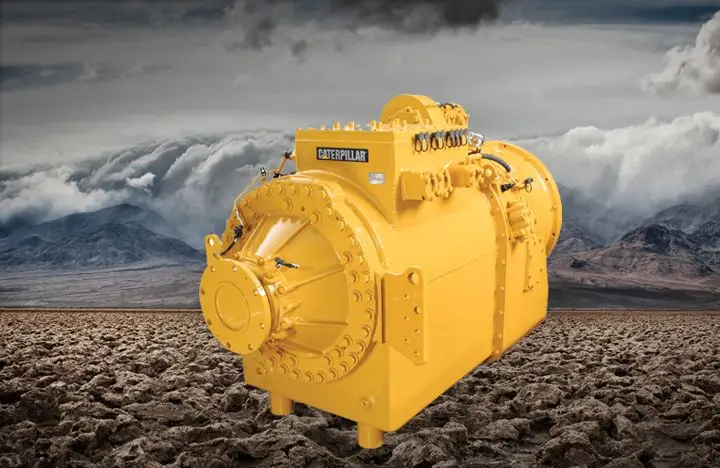
Early loaders used simple collar shift transmissions with metal forks engaging metal gears. These robust but inefficient systems gave way to powershift transmissions that allow gear changes without clutching or stopping. Caterpillar pioneered electronic powershift controls in the 1980s, revolutionizing operator efficiency and reducing training requirements for new equipment operators.
Synchro shift systems added synchronizer rings to collar shift designs, creating smoother shifts with reduced gear clash and wear. The progression toward fully automatic shifting improved productivity while decreasing operator fatigue during long shifts. Modern transmissions incorporate multiple electronic sensors and computer-controlled valve bodies that optimize shift timing based on real-time operating conditions.
Key Components in Heavy Equipment Drivetrains
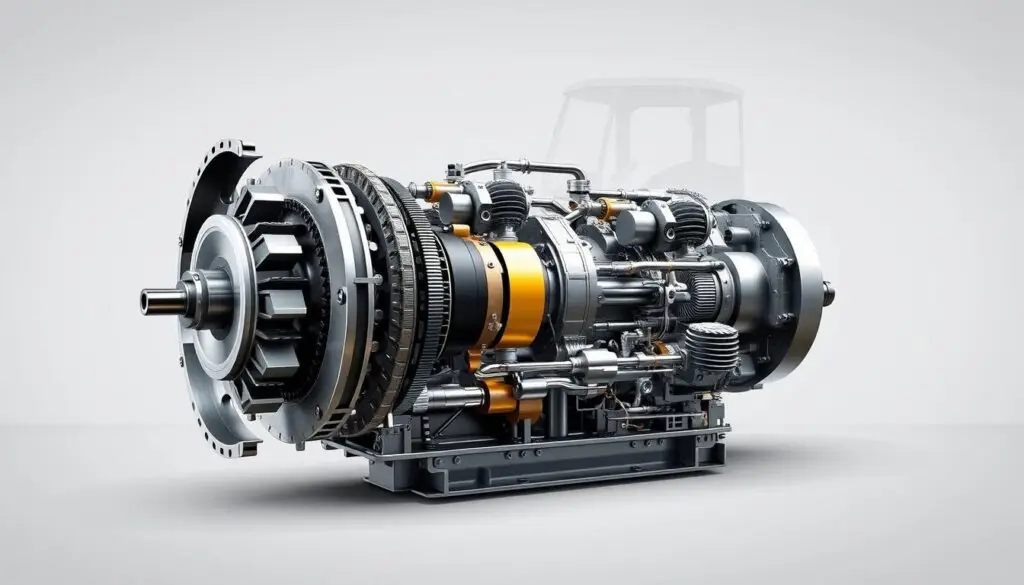
Modern loader transmissions contain several critical components that work together to transfer power efficiently from the engine to the wheels. Torque converters multiply engine power during initial movement and heavy bucket loads, providing the starting torque needed for aggressive digging operations. Multiple clutch packs enable seamless shifting between forward and reverse gears without power interruption.
Electronic control modules manage shift timing and pressure modulation, constantly adjusting to operating conditions. Hydraulic pumps in hydrostatic systems convert mechanical engine power to fluid power for smooth speed control. Planetary gear sets provide various speed ranges and torque multiplication, with different gear combinations optimized for specific tasks from heavy excavation to high-speed roading.
Impact of Transmission Choice on Productivity and Operating Costs
Selecting the right transmission configuration affects both immediate job site productivity and long-term expense tracking. Powershift systems excel in applications requiring frequent direction changes during truck loading cycles, where their mechanical efficiency translates to lower fuel consumption. Hydrostatic transmissions offer infinite speed control that proves invaluable for precision material handling and finish grading operations.
Experienced fleet managers evaluate transmission options against their specific duty cycles, operator skill levels, and maintenance capabilities. The wrong transmission choice can result in reduced productivity, higher fuel costs, increased operator fatigue, and premature component wear that escalates repair expenses over the equipment lifecycle.
How Powershift Transmissions Work in Construction Equipment
Powershift transmissions revolutionized heavy equipment operation by eliminating clutch pedals while providing seamless gear changes during operation. These advanced systems maintain constant power flow to the wheels even during shifts, maximizing productivity during loading cycles. Understanding their internal workings helps operators and technicians identify potential construction equipment powershift problems before they lead to unplanned downtime.
Clutch Pack Operation and Electronic Controls
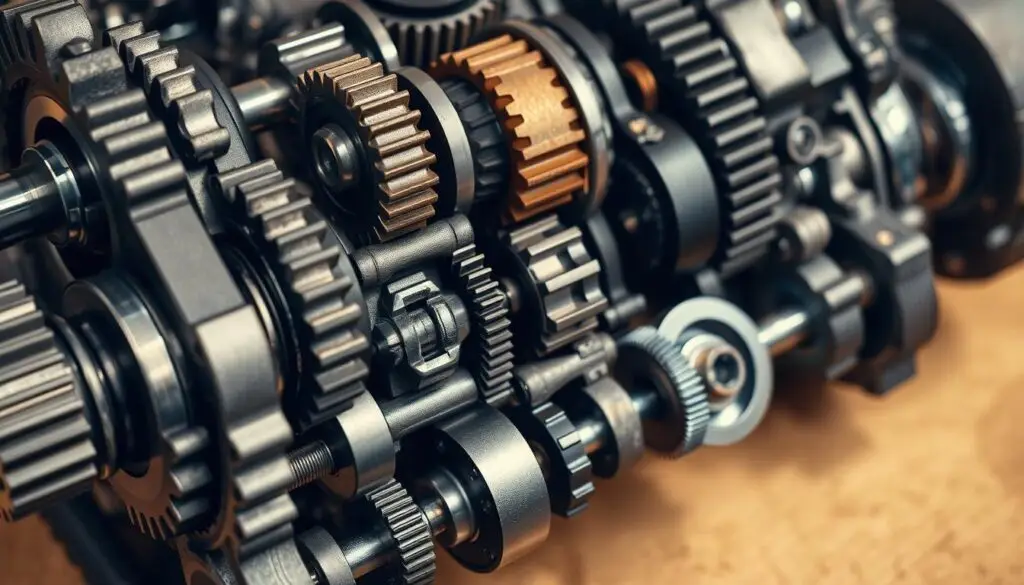
Inside a powershift transmission, multiple clutch packs work together to engage different gear combinations. Each clutch pack consists of friction discs and steel plates bathed in transmission fluid that must meet specific OEM requirements. SAE J306 standards define viscosity classifications for automotive gear lubricants used in these demanding applications.
Electronic control modules monitor operating conditions through multiple sensors and send precise signals to hydraulic valves. These valves direct pressurized fluid to specific clutch packs, creating smooth gear transitions without power interruption. The system maintains constant power flow to the wheels even during shifts, maximizing productivity during aggressive loading cycles.
Gear Selection Without Stopping Equipment
Operators can shift between forward and reverse gears while maintaining momentum—a critical advantage during truck loading operations where frequent direction changes occur every 30 to 45 seconds. The transmission uses hydraulic pressure to engage selected clutch packs instantly, allowing seamless transitions between gears without the jerky movements associated with manual clutching.
This capability increases productivity by reducing cycle times and minimizes wear on brake systems. Operators maintain better control over material handling without the fatigue caused by constant clutch engagement. In practice, most fleets find that powershift-equipped loaders complete 10-15% more loading cycles per hour compared to older manual transmission units.
Power Flow Through Multiple Speed Ranges
Modern powershift transmissions typically offer four to six forward speeds and three reverse speeds. Power flows from the engine through the torque converter to the transmission input shaft, where different clutch pack combinations create various gear ratios optimized for specific tasks.
| Speed Range | Typical Application | Power Transfer Efficiency |
|---|---|---|
| 1st-2nd Gear | Heavy digging and pushing operations | 85-90% |
| 3rd-4th Gear | Truck loading and material handling | 90-94% |
| 5th-6th Gear | Travel and roading between sites | 94-97% |
Regular heavy machinery transmission service ensures these complex systems continue operating efficiently across all speed ranges. Proper maintenance prevents clutch wear and maintains hydraulic pressure for smooth operation throughout demanding shifts.
Hydrostatic Transmission Technology in Modern Loaders
Hydrostatic transmissions have transformed how compact and mid-size loaders operate on job sites. These systems use hydraulic fluid pressure to transfer power from the engine to the wheels, creating a seamless driving experience without discrete gear steps. Unlike traditional gear-based systems, operators control speed with a single pedal—similar to driving an automatic vehicle but with infinitely variable speed adjustment.
This technology eliminates the need for clutching or manual gear shifting entirely. The fluid power system provides smooth speed control within its operating range, allowing operators to achieve any speed from zero to maximum without hunting between gears. Modern hydrostatic systems feature advanced electronic controls that manage pump displacement and motor operation while integrating with other machine functions.
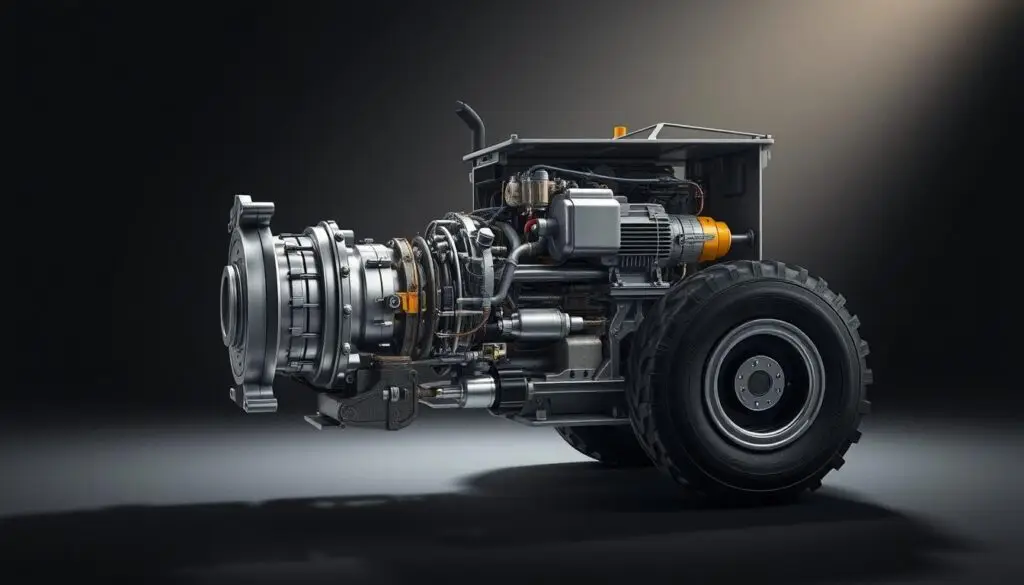
This smooth operation makes hydrostatic transmissions particularly valuable in compact loaders, utility equipment, and machines used for landscaping and light agricultural work. Danfoss hydrostatic wheel loader transmissions deliver continuously variable drive with uninterrupted power throughout the operating range, enabling improved controllability and smoother operation compared to stepped gear systems.
| Component | Function | Common Failure Points |
|---|---|---|
| Variable Displacement Pump | Converts engine power to hydraulic flow | Worn swash plates, seal failures |
| Hydraulic Motor | Converts hydraulic flow to wheel rotation | Internal leakage, bearing wear |
| Control Valve | Regulates flow direction and pressure | Sticking spools, contamination |
| Electronic Control Module | Manages system operation and diagnostics | Sensor failures, software glitches |
Understanding these components is essential for effective hydrostatic transmission diagnosis when loader transmission problems arise. Regular maintenance and proper operation ensure these sophisticated systems deliver reliable performance across thousands of operating hours.
Common Loader Transmission Problems and Symptoms
Identifying transmission problems early can save thousands of dollars in repairs and prevent unplanned downtime. Modern loaders face unique challenges based on their transmission type, and each system displays distinct warning signs when components begin failing. Regular loader drivetrain troubleshooting prevents costly downtime and extends equipment life significantly.
Power Loss and Slipping Issues
Power loss affects powershift and hydrostatic systems differently, requiring distinct diagnostic approaches. In powershift transmissions, worn clutch packs cause slipping between gears that becomes most noticeable under heavy loads. The machine struggles to maintain speed during bucket filling or pushing operations, often accompanied by increased transmission temperature.
Hydrostatic systems lose power when pump efficiency drops due to internal wear. This degradation happens gradually as internal components wear, with operators noticing reduced travel speed and slower implement response times. A 10% drop in flow rate typically indicates the need for pump rebuild or replacement.
Overheating and Fluid Contamination
Heat damages transmission components faster than any other factor in heavy equipment operation. Hydrostatic systems generate significant heat during operation, particularly under heavy loads in warm ambient conditions. Operating temperatures exceeding 180°F suggest inadequate cooling, restricted flow, or excessive internal friction requiring immediate attention.
50%+ Life Extension
Industry data shows clean transmission fluid meeting OEM specifications extends component life by 50% or more regardless of transmission type.
Contaminated fluid accelerates wear in pumps and motors exponentially. Heavy equipment transmission repair costs increase dramatically when operators ignore fluid maintenance requirements. Regular oil sampling and laboratory analysis catch problems before major failures occur, often identifying wear patterns months before catastrophic component failure.
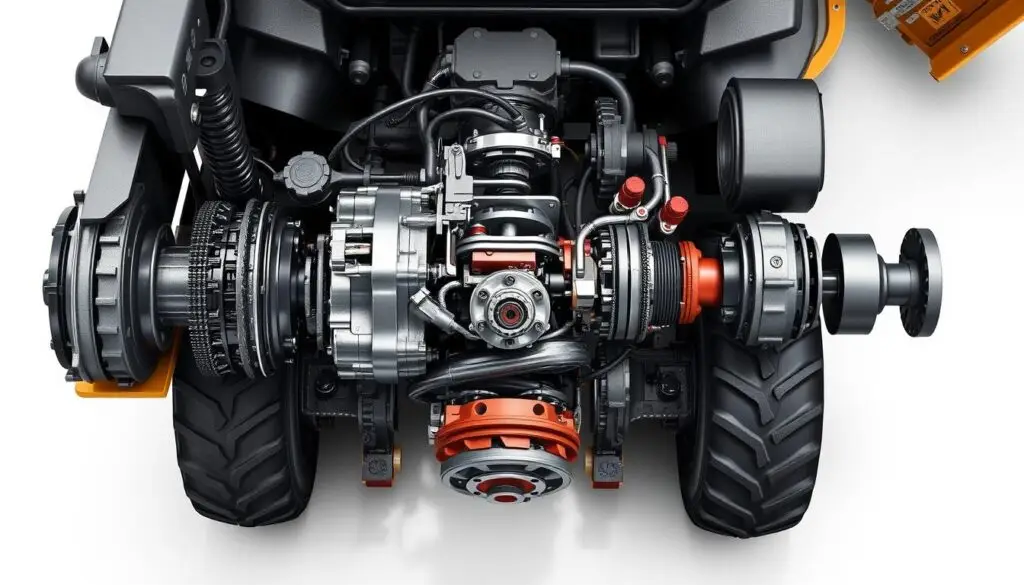
Electronic Control Malfunctions
Modern transmissions rely on electronic controls for smooth operation and optimal efficiency. Faulty sensors cause erratic shifting in powershift systems, while control modules can fail from moisture exposure or voltage spikes. Diagnostic codes help pinpoint electronic issues quickly, reducing troubleshooting time from hours to minutes in many cases.
Unusual Noises and Vibrations
Strange sounds indicate immediate attention needed regardless of transmission type. Hydrostatic transmissions produce high-pitched whining when components wear, with noise typically increasing with engine speed and load. Grinding noises suggest bearing failure in either transmission type, while abnormal vibrations point to misalignment or damaged gears.
| Symptom | Powershift Cause | Hydrostatic Cause |
|---|---|---|
| Slipping under load | Worn clutch packs or low pressure | Reduced pump efficiency |
| Overheating | Blocked cooler or low fluid | Excessive internal bypass |
| No movement | Broken input shaft or pump | Failed charge pump |
Stay Ahead of Transmission Problems
Get practical maintenance insights and diagnostic tips delivered to your inbox. Join fleet managers and diesel technicians who rely on Heavy Duty Journal for actionable equipment guidance.
Powershift System Diagnosis and Troubleshooting
Diagnosing construction equipment powershift problems requires systematic testing and advanced diagnostic tools. Early detection of transmission issues prevents costly breakdowns and extends equipment life substantially. Regular inspections and proper diagnostic procedures help technicians identify problems before they escalate into major failures requiring complete transmission overhaul.
Pressure Testing and Clutch Pack Inspection
Pressure testing reveals internal transmission health by measuring hydraulic pressures at key test ports throughout the system. Technicians connect calibrated pressure gauges to designated test ports and compare readings against manufacturer specifications. Normal operating pressures for most loaders range from 250 to 350 PSI, though exact specifications vary by manufacturer and model.
Low pressure readings indicate worn clutch packs, damaged seals, or pump problems requiring further investigation. Pressure testing during actual operation under load provides the most accurate diagnostic information for identifying marginal components.
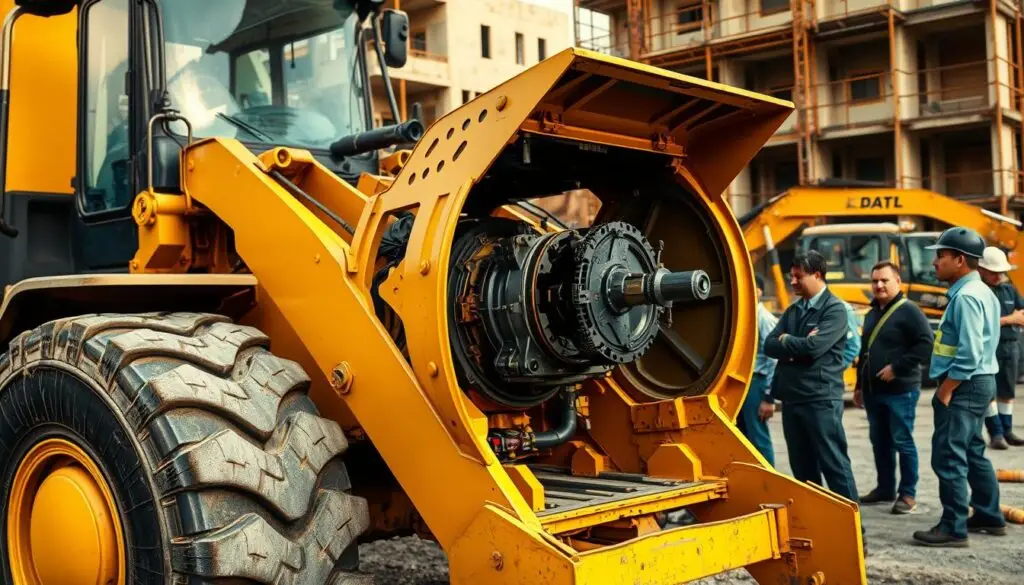
Clutch pack inspection involves removing transmission covers to examine friction discs and steel plates for wear patterns. Signs requiring attention include burnt or glazed friction surfaces indicating excessive heat exposure, warped steel plates from thermal cycling under heavy loads, excessive disc clearance beyond specifications, and metal particles in oil suggesting accelerated wear.
Electronic Diagnostic Procedures
Modern loaders use electronic control modules that store fault codes when transmission problems occur. Manufacturer diagnostic software connects to the equipment’s data port and displays real-time transmission data including solenoid operation, shift timing, clutch pressure, and temperature readings across multiple sensors.
Technicians analyze this data to identify failing sensors, wiring issues, or control module malfunctions. Electronic diagnostics significantly reduce troubleshooting time compared to manual testing methods, often pinpointing problems within minutes rather than hours of systematic component testing.
Identifying Wear Through Oil Analysis
Oil analysis provides valuable insights into internal transmission wear without requiring disassembly. Laboratory testing identifies metal particles by type and concentration, contamination levels, and fluid breakdown products. Heavy machinery transmission service programs use oil analysis to schedule preventive maintenance based on actual component condition rather than arbitrary time intervals.
Regular sampling every 250 operating hours catches problems early, potentially saving thousands in repair costs by identifying wear patterns before catastrophic failure. Trending analysis across multiple samples shows wear patterns developing over time, allowing proactive component replacement during scheduled maintenance windows.
Hydrostatic Transmission Diagnosis Methods
Hydrostatic transmissions demand specialized diagnostic approaches due to their unique hydraulic design. Unlike traditional gear-based systems, these transmissions rely on pressurized fluid flow between variable displacement pumps and hydraulic motors. Proper hydrostatic transmission diagnosis proves critical for identifying loader transmission problems before they escalate into expensive failures.
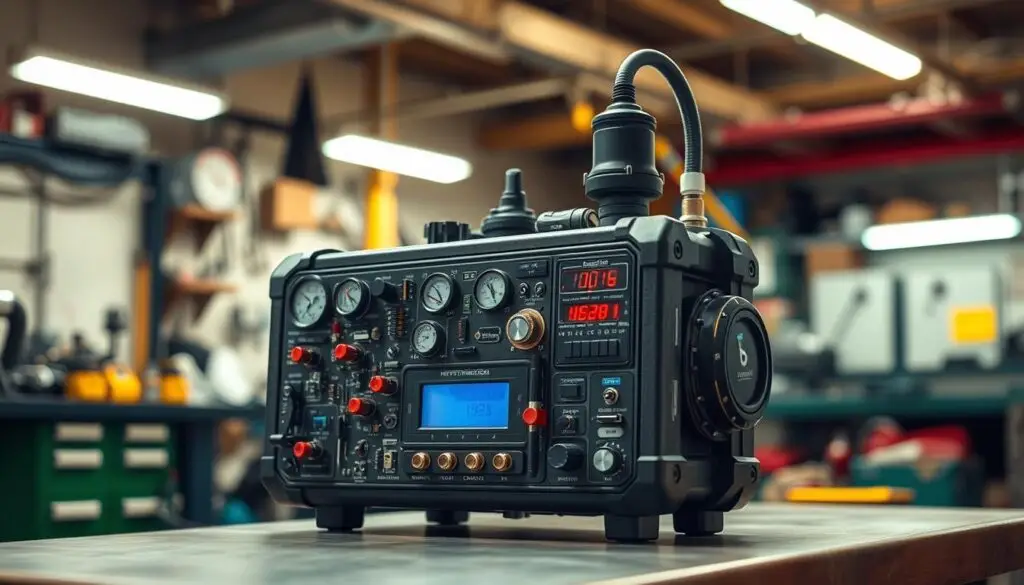
The foundation of effective diagnosis starts with hydraulic pressure testing at multiple system points. Technicians connect pressure gauges to test ports throughout the system, checking both main pump output and charge pump pressure. Normal charge pump readings typically fall between 200-300 PSI, while main system pressures vary based on load conditions and manufacturer specifications.
⚠️ Safety Warning
Hydraulic systems operate under extreme pressure that can cause serious injury. Always relieve system pressure before disconnecting lines, wear appropriate PPE, and follow OSHA 29 CFR 1926.602 safety requirements for material handling equipment maintenance.
Temperature monitoring provides vital clues about system health during operation. Operating temperatures exceeding 180°F suggest inadequate cooling, restricted flow, or excessive internal friction. Installing temperature sensors at strategic points helps track heat buildup patterns during different work cycles and load conditions.
Flow rate testing reveals pump efficiency and internal wear conditions that pressure testing alone cannot detect. Using a flow meter in the return line measures actual output against rated specifications under controlled conditions. Regular fluid analysis complements these tests by detecting metal particles, water contamination, and oxidation levels that signal developing problems.
Key diagnostic checkpoints include verifying relief valve settings with calibrated gauges to ensure proper system protection, monitoring case drain flow for excessive internal leakage in pumps and motors, testing response times during directional changes to identify control valve issues, and confirming proper charge pump operation under various load conditions.
The HDJ Perspective
The transmission debate between powershift and hydrostatic systems often misses a critical point: neither technology is universally superior. What matters is matching the transmission to your specific operation. We’ve seen fleets waste thousands choosing hydrostatic loaders for aggregate handling where powershift efficiency would have paid dividends, and vice versa with precision material handling operations. The smartest equipment managers we encounter start with their duty cycle analysis, then select transmission technology—not the other way around. With proper maintenance, both systems deliver reliable service for 10,000+ hours, but choosing wrong costs you money every single shift.
Heavy Equipment Transmission Repair Procedures
When your loader shows signs of transmission trouble, proper heavy equipment transmission repair techniques can restore peak performance and extend remaining service life. Each transmission type requires specific repair procedures and specialized knowledge to ensure reliable operation. Professional technicians follow established protocols to diagnose problems accurately and complete repairs efficiently.
Powershift Clutch Replacement Techniques
Powershift transmissions rely on multiple clutch packs that wear over time under normal operation. During clutch replacement, technicians must carefully disassemble the transmission housing and inspect each component against manufacturer specifications. The process requires precision measuring tools and strict attention to assembly procedures.
The procedure involves removing worn friction plates and steel plates in correct sequence, measuring clutch pack clearances with feeler gauges to ensure proper engagement, installing new clutch discs following the service manual, and adjusting spring tension to specifications for optimal pressure. Proper clutch installation prevents slippage and ensures smooth gear changes under heavy loads throughout the service interval.
Hydrostatic Pump and Motor Rebuilding
Hydrostatic systems require different repair approaches than mechanical transmissions. When loader drivetrain troubleshooting reveals pump or motor failure, technicians often replace entire units rather than attempting field rebuilds. This approach reduces downtime and ensures consistent performance compared to rebuilding worn components on site.
Complete unit replacement provides better long-term reliability than field rebuilds in most cases. However, some operations maintain exchange programs with specialized rebuild centers to reduce costs while maintaining quality standards and warranty coverage.
Filter Changes and Fluid System Maintenance
Regular filter replacement prevents the contamination that causes premature transmission failure. Caterpillar Machine Fluids Recommendations specify TO-4 fluids for powershift transmissions and most final drives, with proper viscosity selection critical for performance across temperature ranges.
Filter changes should occur at half the fluid change interval for maximum protection in demanding applications. Technicians inspect used filters for metal particles that indicate internal wear patterns, with particle type and concentration providing clues about which components are degrading.
Electronic Control Module Programming
Modern loaders use electronic controls that require calibration after major repairs. Technicians connect manufacturer diagnostic equipment to program shift points, pressure settings, and response characteristics for optimal performance. Proper programming ensures transmission operation matches the specific application requirements.
Control module updates may include software patches that address known issues or improve performance in specific operating conditions. Always use manufacturer-approved programming tools and current software versions to avoid system conflicts and warranty issues.
Share Your Transmission Expertise
Have you developed effective diagnostic procedures or repair techniques for loader transmissions? Heavy Duty Journal welcomes contributions from experienced technicians and fleet managers.
Performance Comparison: Powershift vs. Hydrostatic Under Load
When choosing between powershift and hydrostatic transmissions for wheel loaders, performance under actual operating loads becomes the determining factor. Each system offers distinct advantages depending on specific application requirements, duty cycles, and operator skill levels. Understanding these real-world differences helps fleet managers make informed equipment decisions.
Fuel Efficiency Across Operating Conditions
Powershift transmissions typically deliver better fuel economy during high-speed transport and sustained heavy pulling tasks. The direct mechanical connection between engine and wheels minimizes energy losses compared to hydraulic power transmission. During long hauls or when moving heavy loads across job sites, operators often see 15-20% better fuel consumption compared to hydrostatic systems performing similar work.
Hydrostatic transmissions consume more fuel due to inherent hydraulic losses but excel in stop-and-go operations. When working in tight spaces or performing precise movements requiring constant speed adjustments, the gear hunting required by powershift systems actually increases fuel usage compared to smooth hydrostatic control.
Speed Control and Operator Precision
The infinitely variable speed control of hydrostatic systems eliminates the constant gear changes that powershift operators must manage. Operators can maintain exact speeds without hunting between gears, which proves invaluable during finish grading or delicate material placement where precision matters more than raw power.
Powershift transmissions require skilled operators to manage gear changes smoothly under varying loads. While modern electronic controls have improved shift quality significantly, construction equipment powershift problems often arise from improper shifting techniques under load. Comprehensive operator training reduces these issues substantially.
Power Transfer Efficiency at Various Speeds
Mechanical transmissions achieve peak efficiency at specific RPM ranges matching optimal gear ratios. At maximum speed and load, powershift systems deliver up to 95% mechanical efficiency through their direct gear connections. Hydrostatic systems maintain consistent power across all speeds but typically operate at 80-85% efficiency due to inherent hydraulic losses in the pump-motor circuit.
The efficiency gap narrows considerably during low-speed operations where hydrostatic systems shine. Their ability to maintain full torque at any speed within the operating range makes them ideal for applications requiring precise control over power delivery.
Cost Analysis for Heavy Machinery Transmission Service
When comparing powershift and hydrostatic transmission costs, initial purchase price tells only part of the ownership story. Mechanical powershift systems typically cost $15,000 to $25,000 less than hydrostatic alternatives on comparable loader models. Yet this upfront savings gets offset by different maintenance requirements and operational expenses over the equipment’s productive life.
Regular heavy equipment transmission repair costs vary significantly between these systems based on component design and failure modes. Powershift transmissions need clutch pack replacements every 3,000 to 5,000 operating hours, with rebuild costs ranging from $2,500 to $4,500 depending on damage extent and parts required. Hydrostatic systems require pump or motor replacements at longer intervals of 6,000 to 8,000 hours, but unit costs run $5,000 to $8,000 per component.
Operating costs depend heavily on your specific application and duty cycle. Powershift transmissions deliver 15-20% better fuel economy during transport and sustained pulling operations. Hydrostatic systems consume more fuel but can increase productivity by 25-30% in applications requiring frequent direction changes and precise speed control.
Typical heavy machinery transmission service expenses include powershift filter changes at $150-250 every 500 hours, hydrostatic fluid changes at $300-450 every 1,000 hours including filters and labor, electronic control module repairs at $1,200-2,500 for either system type, and complete transmission overhauls at $8,000-12,000 for powershift versus $12,000-18,000 for hydrostatic units.
The right selection balances purchase price against long-term maintenance costs and productivity gains specific to your operation. Equipment financing programs help contractors match transmission choice with their budget constraints and anticipated workload requirements over the ownership period.
Frequently Asked Questions
What are the main differences between powershift and hydrostatic transmissions in loaders?
Powershift transmissions use clutch packs for clutchless shifting with push-button or lever controls, providing smooth operation at discrete speed settings. They excel for maintaining consistent speeds during transport and heavy pushing operations. Hydrostatic transmissions use fluid pressure to transfer power, offering infinitely variable speed control without any shifting required. Powershift systems deliver 15-20% better fuel efficiency under sustained loads, while hydrostatic systems increase productivity 25-30% in applications requiring frequent direction changes and precise control for material placement.
How do I diagnose construction equipment powershift problems?
Start with pressure testing to check clutch pack engagement pressures against manufacturer specifications, typically 250-350 PSI for most loaders. Inspect clutch plates for wear patterns including glazing, warping, or excessive clearance. Use electronic diagnostic tools to scan for fault codes stored in the control module that identify specific sensor or solenoid issues. Perform oil analysis to identify metal particles indicating internal component wear. Monitor for symptoms like slipping under load, delayed engagement, or inability to hold specific gears during operation.
What causes hydrostatic transmission overheating in heavy equipment?
Hydrostatic systems generate significant heat during normal operation, especially under heavy loads or in warm ambient conditions. Common causes include contaminated hydraulic fluid that increases internal friction, clogged filters restricting flow through the cooling circuit, worn pump or motor components creating excessive internal leakage, inadequate cooling system capacity or blocked cooler cores, and operating beyond the system’s designed capacity. Operating temperatures should remain below 180°F; higher readings require immediate investigation to prevent permanent component damage.
How often should I service my loader drivetrain components?
Powershift transmissions typically require fluid changes every 1,000-2,000 operating hours with clutch adjustments as wear develops. Hydrostatic transmissions need more frequent hydraulic fluid changes, usually every 500-1,000 hours due to their sensitivity to contamination. Filter changes should occur at half the fluid change interval for maximum protection. Regular fluid sampling every 250-500 hours identifies developing problems and can extend service intervals when analysis confirms acceptable fluid and component condition.
Which transmission type has lower long-term repair costs?
Neither system has universally lower repair costs—the answer depends on your specific application and maintenance practices. Powershift transmissions have lower initial costs but require clutch rebuilds every 3,000-5,000 hours at $2,500-4,500 each. Hydrostatic systems have higher purchase prices but longer intervals between major repairs, though pump and motor replacements run $5,000-8,000 per unit. Applications with frequent direction changes favor hydrostatic durability, while transport-heavy operations benefit from powershift efficiency and lower fuel costs.
Can I convert my loader from powershift to hydrostatic transmission?
Converting between transmission types is rarely practical or cost-effective for production equipment. The systems require different mounting configurations, control interfaces, cooling capacity, and often different engine output characteristics. Conversion costs typically exceed purchasing properly configured replacement equipment. It’s more economical to trade for equipment with the desired transmission type. Work with equipment dealers to match the right transmission configuration to your specific applications, operator skill levels, and budget requirements.
Making the Right Transmission Choice
Choosing between powershift and hydrostatic transmissions depends on your specific application requirements, operator capabilities, and total ownership cost priorities. High-speed transport operations requiring fuel efficiency work best with mechanical powershift systems, while applications demanding precise control and tight maneuverability benefit from hydrostatic technology.
Understanding common loader transmission problems helps operators make informed decisions about equipment selection and maintenance strategies. Operator skill levels play a significant role in transmission selection—mechanical systems require more training for smooth operation, while hydrostatic controls tend to be more intuitive for operators transitioning from automotive vehicles. Major manufacturers design their systems with different skill levels and applications in mind.
Regular hydrostatic transmission diagnosis and powershift maintenance prevents costly downtime and extends equipment life regardless of which technology you select. The future of loader transmissions includes exciting developments in electric drive systems and hybrid configurations that combine multiple technologies for optimized performance. Both mechanical and hydrostatic designs continue improving in efficiency, durability, and diagnostic capability.
Your equipment choice should match current operational needs while considering future requirements and resale value. The right transmission impacts daily performance, operating costs, and operator satisfaction for years to come. Proper maintenance and timely repairs maximize return on investment regardless of transmission type selected for your fleet.
Found This Comparison Helpful?
Share this transmission guide with equipment managers and technicians in your network. Practical insights help everyone make better equipment decisions.