By Michael Nielsen, Editor & Publisher | 15+ Years in Diesel Repair
Last Updated: December 2025
📖 Estimated reading time: 18 minutes
Starting a mobile diesel repair business represents one of the most accessible paths into commercial truck service ownership. Unlike brick-and-mortar shops requiring substantial real estate investments and extensive equipment buildouts, a mobile operation lets technicians leverage their diagnostic and repair skills with significantly lower startup costs—often $30,000 to $75,000 compared to $150,000 or more for a traditional facility.
The demand for mobile diesel service continues to grow as fleet operators prioritize uptime above almost everything else. When a Class 8 truck breaks down, the cost extends far beyond the repair itself. Fleet managers understand that every hour of unscheduled downtime translates directly to lost revenue, missed deliveries, and frustrated customers. A mobile diesel repair business puts you where the need is greatest—at the truck’s location—eliminating towing costs and minimizing the time between breakdown and repair completion.
This guide walks you through the essential steps for launching a successful mobile diesel repair business, from equipment investments and licensing requirements to pricing strategies and building a sustainable customer base. Whether you’re an experienced diesel technician ready to work for yourself or a shop owner looking to add mobile capabilities, understanding these fundamentals will help you build a profitable operation.
Key Takeaways
- Lower barrier to entry: Mobile diesel repair businesses typically require $30,000-$75,000 in startup capital versus $150,000+ for traditional shops.
- High demand market: Fleet downtime costs $448-$760 per vehicle per day, making rapid mobile response extremely valuable to customers.
- Profit potential: Mobile operations often achieve 15-25% profit margins due to lower overhead compared to fixed-location shops.
- Essential investments: Diagnostic equipment, a properly outfitted service truck, comprehensive insurance, and ASE certifications form the foundation of a credible operation.
- Licensing varies by state: California requires Automotive Repair Dealer registration while Texas has no statewide mechanic license requirement—research your specific state’s regulations.
Why Mobile Diesel Repair Services Are in Demand
The commercial trucking industry moves approximately 72% of domestic freight tonnage across the United States. That massive logistics network depends on trucks staying operational, making unplanned breakdowns extraordinarily expensive for fleet operators and owner-operators alike.
According to Element Fleet Management research published in Fleet Maintenance, downtime costs a fleet an average of $448 to $760 per vehicle per day. These figures account for lost productivity, driver wages, missed delivery penalties, and opportunity costs—not just the repair expense itself. For a fleet experiencing multiple breakdowns monthly, these costs compound rapidly.
$448 – $760
Average daily cost of truck downtime per vehicle (Element Fleet Management)
Mobile diesel repair services directly address this pain point by bringing the shop to the truck. When a driver experiences a breakdown at a shipper’s dock, a rest stop, or alongside the highway, a mobile technician can often complete repairs on-site within hours rather than the days it might take to arrange towing and compete for bay time at a busy shop.
This value proposition resonates particularly strongly with several customer segments. Regional fleets with tight delivery schedules cannot afford multi-day repair delays. Owner-operators whose income stops when their wheels stop rolling need fast turnaround. Construction companies operating equipment at remote job sites find mobile service essential. Even large fleets with in-house maintenance capabilities turn to mobile technicians when trucks break down away from their terminals.
Mobile Diesel Repair Business Startup Costs
The financial investment required to launch a mobile diesel repair business varies based on your service scope, equipment quality preferences, and geographic market. However, most successful operators find they need $30,000 to $75,000 to establish a credible, well-equipped operation.
Service Vehicle Investment
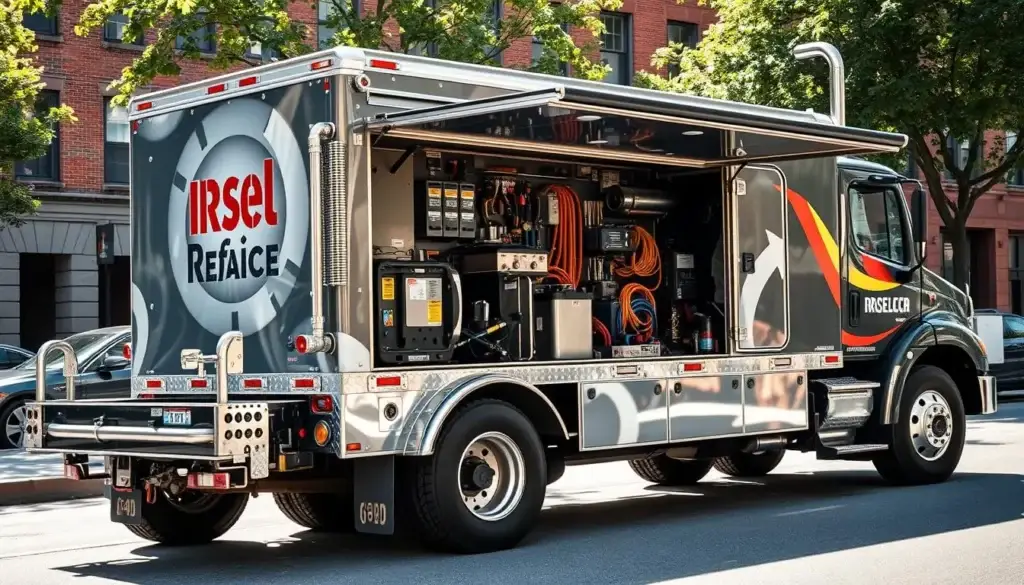
Your service truck serves as your rolling workshop, parts inventory, and professional image. Most mobile diesel technicians operate from either a heavy-duty pickup with an enclosed service body or a medium-duty truck with a walk-in utility body. Used service trucks in good condition typically cost $25,000 to $50,000, while new purpose-built units can exceed $80,000.
The ideal service vehicle should accommodate your diagnostic equipment, a comprehensive hand tool collection, air compressor, generator or inverter system, welding equipment, and a reasonable parts inventory. Weight capacity matters—a fully loaded service truck can easily exceed 10,000 pounds, making half-ton pickups inadequate for most operations.
Equipment and Tool Requirements
Diagnostic capabilities differentiate professional mobile diesel repair operations from basic roadside assistance. Modern commercial trucks require sophisticated scan tools to read fault codes, perform forced regenerations, reset aftertreatment systems, and conduct calibrations. Multi-brand diagnostic platforms like JPRO, Jaltest, or Cummins INSITE represent significant investments but prove essential for serving diverse fleets.
| Equipment Category | Estimated Cost Range | Priority Level |
|---|---|---|
| Multi-brand diagnostic software/hardware | $3,000 – $8,000 | Essential |
| Professional hand tool set | $5,000 – $15,000 | Essential |
| Air compressor (truck-mounted) | $1,500 – $3,500 | Essential |
| Generator/inverter system | $2,000 – $5,000 | Essential |
| Welder (MIG/TIG capable) | $1,000 – $3,000 | High |
| Portable lighting system | $500 – $1,500 | Essential |
| Impact tools (pneumatic/cordless) | $1,500 – $4,000 | Essential |
| Multimeter and electrical testing | $200 – $800 | Essential |
| Initial parts inventory | $3,000 – $8,000 | Essential |
Beyond diagnostic tools, you need comprehensive socket sets in both standard and metric sizes, torque wrenches calibrated for heavy-duty applications, pry bars, pullers, and specialty tools for common service procedures. Building a tool collection takes time, and many technicians continue adding equipment throughout their careers as they encounter new service challenges.
Parts Inventory Strategy
Carrying the right parts inventory separates efficient mobile operations from technicians who frequently leave jobs incomplete while waiting for parts delivery. Focus initially on high-failure, high-demand items: fuel filters, air filters, DEF filters, common sensors, belts, hoses, and electrical components. Study the truck populations in your service area to guide inventory decisions—if you’re serving predominantly Freightliner Cascadias with Detroit DD15 engines, stock accordingly.
Establish accounts with local parts distributors who offer same-day delivery. Many successful mobile technicians maintain relationships with multiple vendors to ensure parts availability regardless of which supplier has stock. Parts markup provides an important revenue stream, typically ranging from 25% to 50% above cost depending on the item and competitive conditions.
Licensing and Legal Requirements
Business licensing and regulatory compliance requirements vary significantly by state and sometimes by municipality. Understanding and meeting these obligations protects both your business and your customers while establishing professional credibility.

Business Entity Formation
Most mobile diesel repair operators establish a Limited Liability Company (LLC) to separate personal assets from business liabilities. This structure provides liability protection without the complexity of a corporation while allowing flexible tax treatment. File formation documents with your state’s Secretary of State office and obtain an Employer Identification Number (EIN) from the IRS for tax purposes.
Additionally, register for any applicable state and local business licenses. Many jurisdictions require a general business license regardless of industry, and some municipalities have specific requirements for mobile service businesses operating within their boundaries.
State-Specific Mechanic Licensing
Mechanic licensing requirements differ dramatically between states. According to NEXT Insurance’s state-by-state guide, California requires registration as an Automotive Repair Dealer with the Bureau of Automotive Repair, while Texas has no statewide mechanic license requirement—though local permits may still apply.
The California Bureau of Automotive Repair mandates that any business receiving compensation for repairing motor vehicles must register as an Automotive Repair Dealer. For mobile operations, each vehicle used for repairs must be registered separately. Eligibility typically requires being at least 18 years old, possessing a valid driver’s license, and demonstrating automotive repair experience.
Research your specific state’s requirements through the Secretary of State’s office or department of licensing. Even in states without mechanic licensing, you may need permits for hazardous waste handling, sales tax collection, or operating a commercial vehicle.
Professional Certifications
While not legally required in most states, ASE (Automotive Service Excellence) certification significantly enhances professional credibility. The T-series certifications for medium and heavy trucks demonstrate competency in areas including diesel engines, drive trains, brakes, electrical systems, and preventive maintenance inspection.
ASE certification requires passing rigorous examinations and demonstrating relevant work experience. Certified technicians must recertify every five years to maintain credentials, ensuring ongoing professional development. Many fleet customers specifically request ASE-certified technicians, making certification a competitive advantage worth pursuing.
Stay Current on Industry Requirements
Regulations, certification requirements, and best practices in commercial truck repair evolve constantly. Heavy Duty Journal delivers the updates diesel professionals need.
Insurance Requirements for Mobile Diesel Repair
Comprehensive insurance coverage protects your business from the substantial risks inherent in mobile repair operations. Operating without adequate coverage exposes personal assets to liability claims and can disqualify you from working with commercial fleet customers who require proof of insurance from vendors.
Essential Insurance Policies
General liability insurance covers third-party bodily injury and property damage claims. If a customer slips on spilled fluid at a job site or your work causes damage to surrounding property, general liability responds. Most mobile diesel repair operations carry $1 million to $2 million in general liability coverage.
Garagekeepers liability specifically covers damage to customer vehicles while in your care, custody, or control. If you’re performing repairs and inadvertently cause damage to the truck, garagekeepers coverage pays for repairs. This coverage proves essential because general liability typically excludes damage to property you’re working on.
Commercial auto insurance covers your service vehicle for liability and physical damage. Personal auto policies exclude vehicles used for commercial purposes, making dedicated commercial coverage mandatory. Ensure your policy reflects the actual use—if you’re carrying tools, parts, and equipment worth $50,000, your coverage limits should reflect that value.
Errors and omissions (professional liability) insurance protects against claims arising from faulty workmanship or professional mistakes. If a repair fails and causes consequential damage, this coverage helps pay for resulting claims.
Workers’ compensation is required in most states once you hire employees. Even as a sole proprietor, consider voluntary coverage to protect yourself from workplace injuries that personal health insurance might not fully address.
Insurance Cost Factors
Insurance premiums for mobile diesel repair businesses typically range from $3,000 to $8,000 annually depending on coverage limits, geographic location, claims history, and business size. Insurers experienced with the automotive repair industry often provide more competitive rates than general commercial carriers unfamiliar with the sector’s specific risks.
Pricing Your Mobile Diesel Repair Services
Establishing profitable pricing requires balancing competitive market rates against your actual costs, expertise level, and the premium value mobile service provides. Underpricing undermines profitability and positions your business as a low-quality alternative, while overpricing limits customer acquisition.
Labor Rate Structures
Mobile diesel repair labor rates vary significantly by region, ranging from $85 to $150 per hour in most markets. Urban areas with higher operating costs and greater fleet density typically support higher rates than rural regions. Research local competitors by calling shops and other mobile services to understand prevailing market rates.
Many mobile technicians charge a service call fee in addition to hourly labor, typically $50 to $150, covering travel time and expenses to reach the job site. This fee compensates for non-billable windshield time and helps ensure profitability on shorter jobs. Communicate service call fees clearly upfront to avoid customer disputes.
Consider premium rates for after-hours, weekend, and emergency service. Fleet operators expect to pay more for 2 AM breakdown response than for scheduled maintenance during business hours. After-hours premiums of 1.5x to 2x standard rates are common and readily accepted by customers facing urgent repair needs.
Parts Pricing and Markup
Parts markup provides a significant profit center for mobile repair businesses. Industry standard markups range from 25% to 50% above cost, with higher percentages on smaller, lower-cost items and lower percentages on expensive components. A $50 sensor might carry a 50% markup while a $2,000 turbocharger might warrant only 25%.
Transparency builds trust—provide itemized invoices showing parts and labor separately. Customers who understand what they’re paying for become repeat customers and referral sources. Avoid the temptation to hide excessive markups, as fleet managers often know component costs and will question unreasonable pricing.
Building Your Mobile Diesel Repair Customer Base
Sustainable business growth depends on acquiring customers efficiently and retaining them through excellent service. Mobile diesel repair businesses benefit from both active marketing efforts and the organic growth that quality work generates through referrals.
Target Customer Identification
Focus marketing efforts on customer segments most likely to need and value mobile service. Regional trucking fleets, construction companies, agricultural operations, bus companies, and municipalities all operate diesel equipment requiring maintenance and repair. Owner-operators represent another significant market segment, though they typically generate smaller individual transactions than fleet accounts.
Research businesses in your service area operating commercial diesel equipment. Industry directories, state DOT carrier registrations, and simple observation of trucks bearing local company names all provide prospect identification. Create a systematic approach to reaching out rather than waiting passively for business to arrive.
Fleet Account Development
Landing fleet maintenance contracts provides steady, predictable revenue that smooths the feast-or-famine cycle many service businesses experience. Approach fleet managers with a professional presentation emphasizing your response time capabilities, certifications, insurance coverage, and the cost savings mobile service delivers through reduced downtime.
Many fleets prefer establishing ongoing relationships with reliable service providers rather than shopping each repair. Offer competitive pricing on routine maintenance as an entry point, demonstrating your capabilities before pursuing higher-margin repair work. Some mobile technicians offer modest discounts to fleet accounts in exchange for guaranteed minimum monthly volume.
Marketing Channels
Digital presence matters increasingly for service businesses. A professional website with clear service descriptions, service area coverage, contact information, and customer testimonials establishes credibility. Google Business Profile optimization helps prospects find you when searching for mobile diesel repair in your area.
Networking within the trucking community generates valuable referrals. Attend industry events, join trucking associations, and build relationships with parts suppliers, truck dealers, and other non-competing service providers who can refer customers your way. The trucking community remains relationship-driven despite digital transformation—word of mouth from trusted sources carries significant weight.
The HDJ Perspective
The mobile diesel repair segment represents a structural shift in how commercial vehicle maintenance gets delivered, not merely a temporary trend. As fleets prioritize uptime optimization and driver retention, the ability to bring expert service directly to equipment locations becomes increasingly valuable. For skilled diesel technicians frustrated with shop politics or compensation ceilings, mobile service offers a path to business ownership with manageable risk. The technicians who succeed long-term will combine technical excellence with business acumen—understanding that diagnostic skill alone doesn’t build a sustainable operation. Customer communication, professional presentation, and consistent reliability matter as much as turning wrenches correctly.
Financing Your Mobile Diesel Repair Business
While mobile operations require less capital than traditional shops, most aspiring business owners still need external financing to cover startup costs. Several options exist depending on your credit profile, collateral availability, and timeline requirements.
SBA Loan Programs
The U.S. Small Business Administration guarantees loans made by approved lenders, reducing risk for banks and improving approval odds for qualified borrowers. SBA 7(a) loans offer flexibility for equipment, working capital, and other business purposes with terms up to 10 years and competitive interest rates. Microloans up to $50,000 serve businesses needing smaller amounts with faster approval timelines.
SBA loans require strong credit, typically 680 or higher, detailed business plans, and demonstrated ability to repay. The application process involves extensive documentation and can take 60-90 days from application to funding. Despite the complexity, SBA financing often provides the most favorable terms available to small business borrowers.
Equipment Financing
Equipment financing and leasing allow spreading major purchases over time while preserving cash for operations. Many diagnostic tool suppliers, truck dealers, and equipment vendors offer financing programs specifically structured for their products. Monthly payments may prove more manageable than large upfront expenditures, though total cost typically exceeds cash purchase prices.
Consider financing for major items like service vehicles and diagnostic systems while paying cash for tools and inventory. This hybrid approach balances cash flow management against total cost optimization.
Alternative Financing Options
Alternative lenders provide faster approval with less stringent requirements than traditional banks, though at higher interest rates. Lines of credit, equipment financing through specialized commercial lenders, and business credit cards all offer options for technicians unable to qualify for bank financing.
Personal savings and family investment represent common funding sources for many service business startups. Starting lean—perhaps with a used service truck and essential tools only—allows bootstrapping while building revenue to fund additional equipment purchases.
Share Your Mobile Repair Expertise
Heavy Duty Journal welcomes contributions from diesel professionals with field experience. If you’ve built a successful mobile operation, your insights could help others follow a similar path.
Profitability and Financial Management
Understanding the financial dynamics of mobile diesel repair helps set realistic expectations and guides operational decisions. Profitability depends on efficient service delivery, appropriate pricing, and disciplined cost management.
Revenue Potential
According to Fullbay’s industry analysis, diesel repair operations can achieve strong profitability when properly managed. Mobile operations often outperform fixed-location shops on profit margin percentage due to dramatically lower overhead—no rent, minimal utilities, and reduced staffing requirements. Single-technician mobile operations commonly generate $150,000 to $300,000 in annual revenue, with profit margins of 15% to 25% achievable for well-run businesses.
Revenue scales with billable hours, making efficient job completion and minimal windshield time critical success factors. A mobile technician billing 6-7 hours daily at $100/hour generates substantial revenue, but only if those hours actually get billed rather than lost to travel, parts chasing, or unbillable administrative tasks.
Cost Control Strategies
Fuel represents a significant variable cost for mobile operations, particularly for technicians covering large service territories. Route optimization, efficient scheduling, and strategic parts inventory management all help minimize non-billable driving. Some operators establish relationships with multiple parts suppliers across their territory to enable job-site parts pickup rather than returning to a central location.
Diagnostic software subscriptions, tool replacement, vehicle maintenance, and insurance represent ongoing costs requiring budget allocation. Many successful operators recommend maintaining a cash reserve equal to three to six months of operating expenses to weather slow periods or unexpected equipment failures.
Cash Flow Management
Cash flow challenges affect many service businesses, particularly those extending credit to fleet customers. Establish clear payment terms and enforce them consistently. Many mobile technicians require payment upon completion for non-account customers while offering net-15 or net-30 terms to established fleet accounts.
Credit card processing enables immediate payment collection, though processing fees of 2.5% to 3.5% reduce margins. Weigh the cost against improved cash flow and reduced collection effort. For larger fleet accounts, electronic ACH transfers often work well with minimal processing costs.
Common Services for Mobile Diesel Repair Operations
Successful mobile diesel repair businesses focus on services deliverable in field conditions without shop-based equipment. Understanding which repairs translate well to mobile service helps define your service offerings and customer expectations.
High-Value Mobile Services
Diagnostics and fault code troubleshooting represent ideal mobile service opportunities. Most commercial truck issues begin with a check engine light or derate condition—problems a skilled technician with proper diagnostic equipment can often resolve on-site. Aftertreatment system diagnostics, DPF regeneration forcing, DEF system troubleshooting, and EGR-related issues all commonly get addressed in the field.
Preventive maintenance services including oil changes, filter replacements, fluid top-offs, and safety inspections translate perfectly to mobile delivery. Many fleets prefer mobile PM service because it eliminates the productivity loss of bringing trucks to a shop during operating hours.
Brake system service—including brake adjustments, chamber replacement, air leak repairs, and ABS diagnostics—frequently gets performed roadside. Similarly, electrical troubleshooting, starter and alternator replacement, battery service, and lighting repairs suit mobile delivery well.
Minor mechanical repairs including belt and hose replacement, sensor swaps, fuel system component replacement, and cooling system service commonly fall within mobile capabilities. The key limitation involves repairs requiring heavy equipment like overhead cranes, presses, or machine shop operations.
Services Typically Requiring Shop Facilities
Major engine repairs, transmission overhauls, differential rebuilds, and frame work typically exceed mobile capabilities. When diagnosis reveals these needs, mobile technicians often provide assessment and refer customers to appropriate shop facilities—or coordinate towing if the vehicle cannot safely drive.
Building relationships with complementary brick-and-mortar shops creates a referral network benefiting all parties. You refer major repairs to them; they refer mobile-appropriate work to you. This cooperation expands service capabilities for customers while generating goodwill within the industry.
⚠️ Safety Warning
Mobile repairs present unique safety challenges compared to shop environments. Always secure vehicles properly before working underneath, maintain awareness of traffic in roadside situations, and follow proper lockout/tagout procedures when working on electrical systems. Keep appropriate PPE accessible including safety glasses, hearing protection, and gloves. Never compromise safety for speed, regardless of customer pressure to complete repairs quickly.
Frequently Asked Questions
How much does it cost to start a mobile diesel repair business?
Most mobile diesel repair businesses require $30,000 to $75,000 in startup capital. The primary investments include a service vehicle ($25,000-$50,000 used), diagnostic equipment ($3,000-$8,000), professional tools ($5,000-$15,000), initial parts inventory ($3,000-$8,000), and business formation and insurance costs ($3,000-$8,000). Technicians who already own tools can start at the lower end of this range, while those building from scratch typically need more capital. Some operators start lean and reinvest earnings to add equipment over time.
What certifications do I need for mobile diesel repair?
Certification requirements vary by state. Most states do not require specific mechanic licenses, though California requires Automotive Repair Dealer registration and Michigan mandates mechanic certification for certain repair categories. Regardless of legal requirements, ASE T-series certification (medium/heavy truck) significantly enhances professional credibility. Many fleet customers specifically request ASE-certified technicians, making certification a worthwhile investment even where not legally mandated.
How do I price mobile diesel repair services?
Mobile diesel repair labor rates typically range from $85 to $150 per hour depending on geographic market, with higher rates in urban areas. Most mobile technicians also charge a service call fee of $50 to $150 covering travel time and expenses. After-hours and emergency service commonly commands premium rates of 1.5x to 2x standard labor charges. Parts markup of 25% to 50% above cost provides additional profit margin. Research local competitors to ensure your pricing remains competitive while supporting profitability.
What insurance does a mobile diesel repair business need?
Essential insurance coverage includes general liability ($1-2 million), garagekeepers liability for customer vehicles in your care, commercial auto insurance for your service vehicle, and errors and omissions coverage for professional liability. Workers’ compensation becomes mandatory once you hire employees and may be advisable for sole proprietors as well. Total annual insurance costs typically range from $3,000 to $8,000 depending on coverage limits, location, and business size.
What services can a mobile diesel technician perform?
Mobile-appropriate services include diagnostics and fault code troubleshooting, aftertreatment system repairs, DPF regeneration, preventive maintenance, brake adjustments and component replacement, electrical troubleshooting, starter and alternator replacement, belt and hose service, and minor mechanical repairs. Services typically requiring shop facilities include major engine work, transmission overhauls, differential rebuilds, and repairs requiring heavy equipment like presses or overhead cranes.
Taking the Next Step Toward Mobile Diesel Repair Ownership
Launching a mobile diesel repair business combines technical expertise with entrepreneurial ambition. The opportunity exists because fleets genuinely need responsive, competent service delivered wherever their equipment operates. Technicians who build reliable operations meeting this need can achieve both financial success and professional satisfaction.
Start by honestly assessing your technical skills against the demands of independent field work. Strengthen any weak areas through training before launching. Develop a realistic business plan accounting for startup costs, operating expenses, and expected revenue ramp-up time. Secure appropriate financing without overleveraging your personal finances. Obtain necessary licenses, certifications, and insurance before accepting your first customer.
The mobile diesel repair market rewards competence, reliability, and professional communication. Build your reputation one satisfied customer at a time, and sustainable growth will follow.
Help Other Diesel Professionals Succeed
Know a technician considering mobile repair business ownership? Share this guide to help them evaluate the opportunity and prepare for success.