
By Michael Nielsen, Editor & Publisher | 15+ Years in Diesel Repair
Last Updated: December 2025
📖 Estimated reading time: 19 minutes
Heavy-duty towing and recovery operations represent one of the most challenging and specialized segments of the commercial vehicle service industry. When a loaded Class 8 tractor-trailer jackknifes on an interstate, a concrete mixer overturns at a construction site, or a motor coach breaks down on a mountain pass, the response requires equipment investments exceeding $500,000, highly trained operators, and safety protocols developed through decades of hard-won experience.
The heavy-duty towing sector serves as the backbone of freight movement continuity. Fleet managers depend on recovery specialists to restore operations quickly when incidents occur, understanding that every hour of delay compounds costs across the supply chain. For operators considering entry into this field—or fleet managers seeking to understand what differentiates professional recovery services—the equipment requirements, safety considerations, and business fundamentals deserve careful examination.
This guide covers the essential requirements for heavy-duty towing and recovery operations, from the substantial equipment investments required to the safety protocols that protect operators and the public. Whether you’re evaluating a career in commercial towing, expanding existing operations into the heavy-duty segment, or simply seeking to understand what quality recovery service entails, these fundamentals establish the foundation for success in one of the industry’s most demanding specialties.
Key Takeaways
- Significant capital requirements: Heavy-duty wreckers range from $100,000 to $500,000, while rotator units capable of complex recoveries can exceed $1 million.
- High-risk occupation: Tow operators face a fatality rate of 42.9 per 100,000 workers—nearly 15 times higher than the average for all private industries.
- Mandatory licensing: Operating heavy-duty towing equipment requires a Class A or Class B CDL, with specific requirements determined by gross combination weight ratings.
- Comprehensive certification: The Towing and Recovery Operator Certification Program (TROCP) Level 2 and Level 3 credentials establish professional competency standards recognized nationwide.
- Insurance complexity: Heavy-duty operations require commercial auto, on-hook coverage, garagekeepers liability, and general liability policies, with annual premiums often exceeding $10,000.
Understanding Heavy-Duty Towing Equipment Categories
Heavy-duty towing encompasses vehicles and equipment designed to handle commercial trucks, buses, construction equipment, and other large vehicles exceeding 17,000 pounds gross vehicle weight. The equipment investment required differs dramatically from light-duty towing operations serving passenger vehicles.
According to Miller Industries, the leading manufacturer of towing and recovery equipment, heavy-duty operations divide into two primary categories: integrated wreckers for standard towing and transport, and rotators for complex recovery scenarios requiring boom rotation and extended reach capabilities.
Heavy-Duty Integrated Wreckers
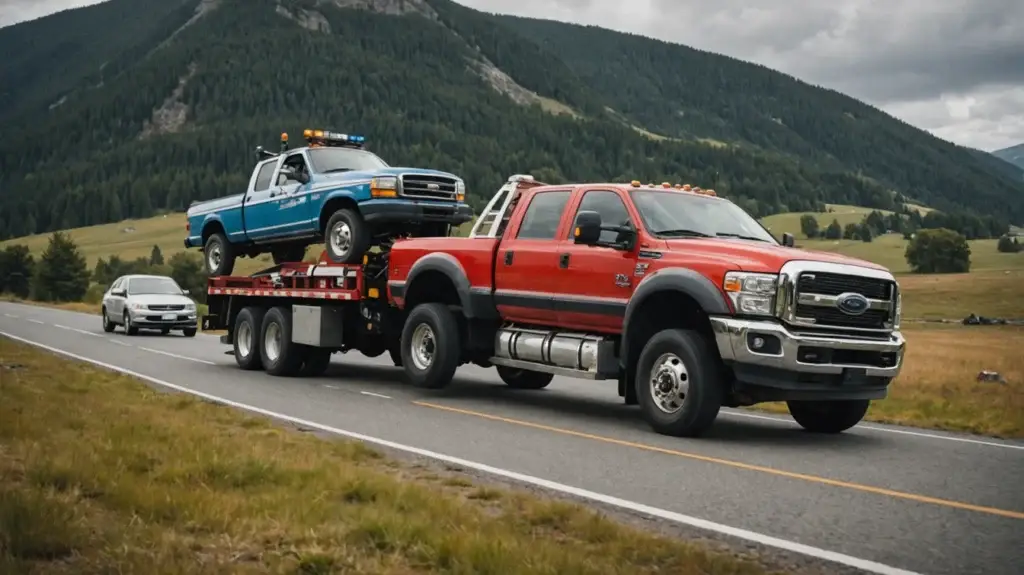
Integrated wreckers combine the towing chassis and recovery equipment into a single unit, with the wrecker body permanently mounted to a heavy-duty truck chassis. These units handle the majority of commercial vehicle towing and straightforward recoveries. Equipment capacities range from 25 tons for entry-level heavy-duty units to 60 tons for the largest integrated wreckers.
New heavy-duty integrated wreckers typically cost between $100,000 and $250,000 for the wrecker body and equipment, with total unit cost including chassis ranging from $200,000 to $400,000. Used equipment in serviceable condition starts around $75,000 for older units, though reliability concerns make newer equipment preferable for operations dependent on uptime.
Key specifications for integrated wreckers include boom structural rating (typically 25-60 tons), underlift tow rating for the vehicle transport system, and winch capacity. Most operations serving Class 8 trucks require a minimum 50-ton boom rating with dual 50,000-pound winches for adequate capability.
Rotator Recovery Units
Rotator wreckers represent the most capable—and expensive—equipment in the towing industry. These specialized units feature rotating booms that can swing 360 degrees, allowing operators to recover vehicles from positions impossible to reach with conventional equipment. A rotator can position its boom over the cab to work on the opposite side of the truck, reach down embankments, and manage complex recovery angles.
$500,000 – $1,300,000
Typical price range for new heavy-duty rotator units (body and chassis)
The Century M100, currently the largest rotator available, carries an MSRP of approximately $1,310,000 for the body and equipment alone—before chassis cost, options, and delivery. This 100-ton unit features a maximum boom height exceeding 53 feet and 65,000-pound planetary main winches. More common 50/60-ton rotators typically range from $400,000 to $700,000 complete.
Rotator ownership makes financial sense primarily for operations with sufficient recovery call volume or those serving markets where no other rotator capability exists. Many heavy-duty towing companies partner with rotator-equipped operators for complex recoveries rather than investing in equipment that may sit idle much of the time.
| Equipment Type | Typical Cost Range | Primary Applications |
|---|---|---|
| 25-35 Ton Integrated Wrecker | $150,000 – $300,000 | Medium-duty trucks, straight trucks, buses |
| 50-60 Ton Integrated Wrecker | $250,000 – $450,000 | Class 8 tractors, loaded combinations, heavy recoveries |
| 35-50 Ton Rotator | $400,000 – $600,000 | Complex recoveries, rollovers, off-road situations |
| 60-100 Ton Rotator | $600,000 – $1,300,000 | Major incidents, heavy construction equipment, crane work |
| Heavy-Duty Landoll/Lowboy | $80,000 – $200,000 | Equipment transport, non-running vehicle transport |
Operator Safety: The Industry’s Critical Challenge
Heavy-duty towing ranks among the most dangerous occupations in America. The work combines roadside exposure to high-speed traffic, operation of complex rigging and lifting equipment, and unpredictable recovery scenarios that change with every call. Understanding the risks—and the protocols designed to mitigate them—is fundamental to professional operations.
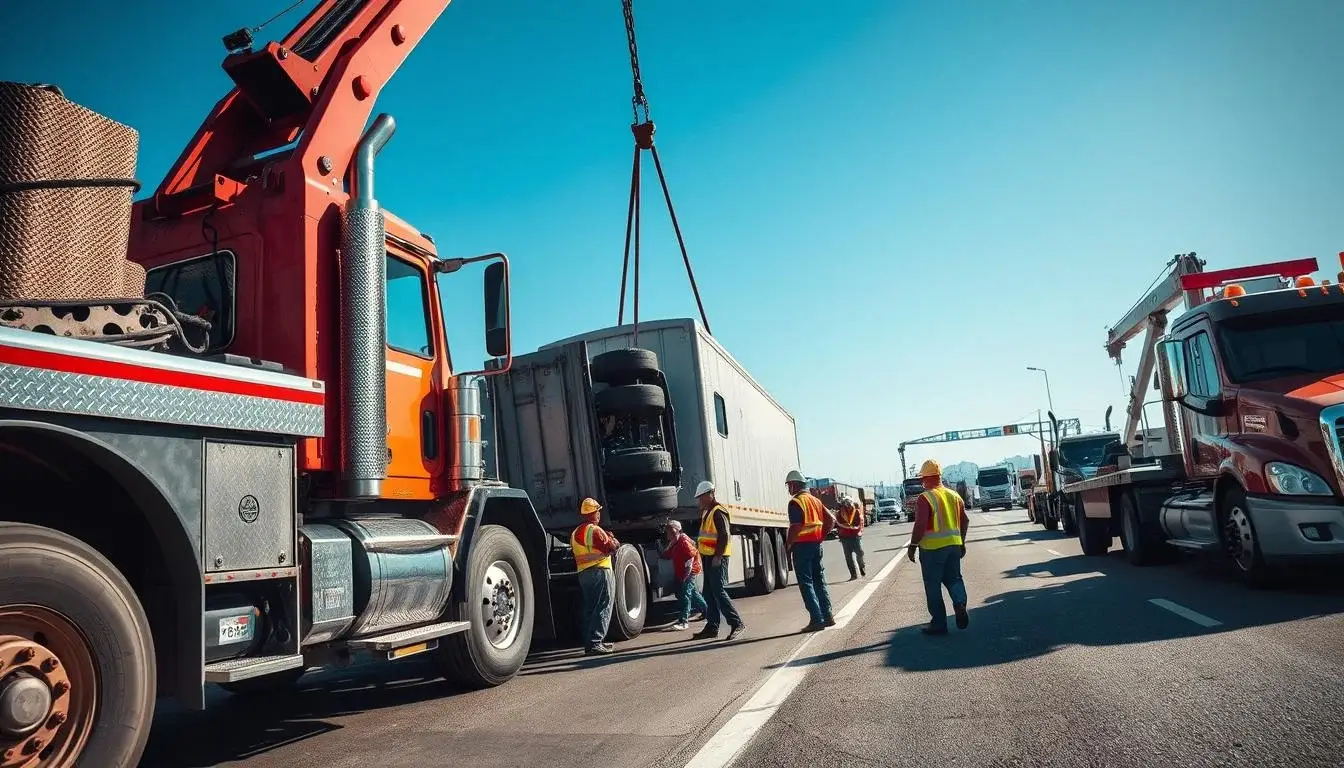
According to research from the National Institute for Occupational Safety and Health (NIOSH), motor vehicle towing workers face an on-the-job fatality rate of 42.9 deaths per 100,000 full-time equivalent workers. This rate exceeds the national average for all other private industries—2.9 per 100,000—by nearly 15 times. Between 2011 and 2016, NIOSH documented 191 towing industry fatalities and over 6,400 nonfatal injuries.
⚠️ Safety Warning
Approximately 37% of towing fatalities involve operators being struck by passing traffic. Establish positive traffic control before beginning any roadside operation. High-visibility Class 3 safety vests are mandatory, not optional. Position your wrecker to shield the work area whenever possible.
Traffic Exposure Risks
Being struck by passing vehicles represents the single largest cause of towing operator fatalities, accounting for approximately 37% of deaths according to OSHA investigation data. The AAA Foundation for Traffic Safety reports that an average of 24 emergency responders—including tow operators—are struck and killed while working roadside each year.
Move Over laws now exist in all 50 states, requiring motorists to change lanes or slow down when approaching emergency vehicles, including tow trucks. However, AAA Foundation research indicates nearly 23% of surveyed drivers remain unaware of these laws in their state, and compliance varies significantly by region and time of day.
Night operations present particularly elevated risks. Tow operator incidents increase by approximately 60% during nighttime hours due to reduced visibility, higher rates of impaired drivers, and operator fatigue. Professional operations implement enhanced lighting, additional traffic control measures, and when possible, delay non-emergency recoveries until daylight.
Equipment and Rigging Hazards
Beyond traffic exposure, contact with objects and equipment accounts for approximately 17% of towing fatalities. These incidents include being struck by cables under tension, caught between vehicles during hookup, crushed by rolling equipment, and injured during load shifts. Rigging under load operates under tremendous forces—a single failure can be catastrophic.
OSHA Standard 1926.251 establishes requirements for rigging equipment that apply to towing operations. Key requirements include permanent markings indicating manufacturer’s safe working load, pre-shift equipment inspection with immediate removal of defective components from service, and never exceeding recommended safe working loads. Professional operators document inspections and maintain rigging in manufacturer-specified condition.
Personal Protective Equipment Requirements
The Federal Highway Administration mandates that emergency workers near federal highways wear fluorescent safety vests in green, yellow, or orange. Class 3 high-visibility vests provide the maximum visibility and represent the industry standard for roadside operations. Beyond visibility gear, heavy-duty gloves protect operators from broken glass, sharp metal edges, and hot components common at accident scenes.
Eye protection becomes essential when working with cables under tension, cutting operations, or any task generating debris. Steel-toed boots rated for the weights involved in commercial vehicle recovery protect against crushing injuries during rigging operations. Hard hats may be required at certain recovery sites, particularly those involving construction equipment or overhead hazards.
Scene Management Protocols
Professional heavy-duty recovery operations implement structured scene management protocols that begin before the operator exits the cab. Initial assessment includes traffic flow evaluation, identification of hazards such as fuel spills or damaged cargo, and determination of equipment positioning that maximizes both work efficiency and traffic protection.
Establishing a work zone using cones, warning triangles, and the wrecker itself as a blocking vehicle creates separation between operators and traffic flow. Where terrain permits, positioning the wrecker upstream of the disabled vehicle—between traffic and the work area—provides additional protection. Communication with law enforcement at accident scenes helps coordinate traffic control responsibilities and ensures operators understand their authorized work boundaries.
The recovery plan itself should be developed before beginning physical work. Experienced operators assess vehicle position, damage extent, cargo considerations, and available anchor points before rigging. Rushing into complex recoveries without planning increases the likelihood of equipment damage, secondary incidents, and operator injury. The few minutes spent on assessment typically saves time overall while reducing risk substantially.
Stay Current on Safety Regulations
OSHA requirements, state regulations, and industry best practices evolve continuously. Heavy Duty Journal delivers the updates towing professionals need to protect their operators and maintain compliance.
Heavy-Duty Towing Equipment Maintenance
The reliability of heavy-duty towing equipment directly impacts both safety and profitability. Equipment failures during recovery operations create dangerous situations, damage customer vehicles, and destroy professional reputations. Preventive maintenance programs tailored to the unique demands of towing equipment protect these substantial investments while ensuring operational readiness.
Chassis and Drivetrain Maintenance
Heavy-duty wreckers operate under more severe conditions than most commercial vehicles. Stop-and-go driving patterns, extended idle time at recovery scenes, and operation under maximum load conditions accelerate wear on all chassis systems. Engine oil change intervals should reflect actual operating conditions rather than simply mileage—many towing operations use hour meters to track engine runtime more accurately than odometer readings.
Cooling system maintenance requires particular attention given the combination of heavy loads and extended idle periods that characterize recovery work. Coolant condition testing, pressure cap verification, and radiator inspection help prevent overheating failures that can strand operators with customers’ vehicles in tow. Transmission fluid condition and level checks should occur more frequently than standard recommendations given the stress of repeated heavy pulls.
Air brake systems require daily inspection and regular scheduled maintenance. Compressor output, air dryer function, brake adjustment, and air line condition all directly affect stopping capability with loaded combinations. The consequences of brake system failure while towing a Class 8 combination leave no margin for deferred maintenance.
Wrecker Equipment Maintenance
Recovery equipment maintenance extends well beyond the chassis. Winch systems require regular cable inspection for broken strands, kinking, and corrosion—damaged cables fail under load with potentially fatal consequences. Cable replacement should occur before visible damage reaches threshold levels, not after. Most manufacturers specify replacement criteria that conservative operators exceed rather than push.
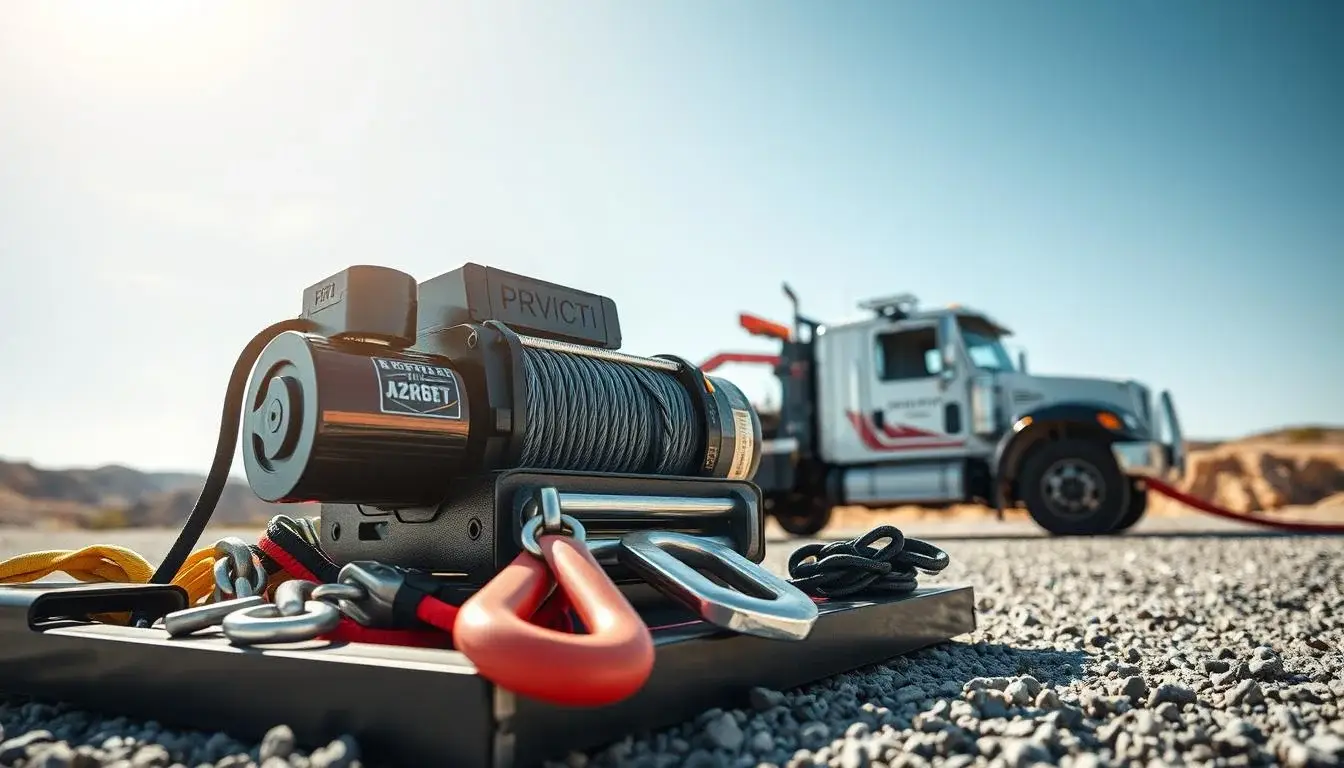
Boom and underlift hydraulic systems need fluid level checks, filter changes, and cylinder inspection according to manufacturer schedules. Hydraulic leaks indicate developing problems that worsen over time—addressing them promptly prevents the contamination and component damage that result from operating with low fluid levels or degraded fluid condition.
Outrigger systems that stabilize the wrecker during recovery operations require inspection for structural damage, proper pin engagement, and pad condition. An outrigger failure during a heavy pull can tip the wrecker, damaging equipment worth hundreds of thousands of dollars and potentially injuring operators or bystanders.
Licensing Requirements for Heavy-Duty Towing Operators
Operating heavy-duty towing equipment requires commercial driver licensing, with the specific class determined by the gross combination weight rating of the wrecker and towed vehicle. Federal requirements administered by the Federal Motor Carrier Safety Administration (FMCSA) establish baseline standards, while states may impose additional requirements.
CDL Class Requirements
A Class A CDL is required when the gross combination weight rating (GCWR) of the tow truck and towed vehicle exceeds 26,001 pounds and the towed vehicle alone exceeds 10,000 pounds GVWR. This covers virtually all heavy-duty towing scenarios involving Class 8 tractors and loaded combinations. The Class A license permits operation of any combination vehicle meeting these thresholds.
A Class B CDL applies when the tow truck itself has a GVWR exceeding 26,001 pounds but the towed vehicle does not exceed 10,000 pounds. This might apply to heavy wreckers transporting smaller equipment or deadheading without a tow. Class B holders can also operate Class C vehicles but cannot operate Class A combinations.
Important exemptions exist for initial movements of disabled vehicles. FMCSA guidance indicates that towing a disabled vehicle to the nearest appropriate repair or storage facility may not require a CDL if that movement constitutes the vehicle’s first relocation after becoming disabled. However, subsequent movements—such as transporting from storage to a repair facility—fall under standard CDL requirements.
Entry-Level Driver Training Requirements
Since February 2022, FMCSA requires completion of Entry-Level Driver Training (ELDT) from a registered training provider before applicants can take CDL skills tests. This applies to first-time Class A or Class B CDL applicants and those upgrading from Class B to Class A. Training must include both theory and behind-the-wheel components, with curriculum covering vehicle inspection, basic control skills, and on-road driving.
The FMCSA Training Provider Registry lists approved training programs. Heavy-duty towing employers should verify that new hires completed ELDT through registered providers, as non-compliant training does not satisfy the requirement regardless of quality.
Professional Certification Standards
Beyond licensing requirements, professional certification demonstrates competency in the specialized skills heavy-duty towing demands. The industry has consolidated around a unified certification program that establishes recognized standards nationwide.
Towing and Recovery Operator Certification Program (TROCP)
In 2021, WreckMaster and the Towing and Recovery Association of America (TRAA) merged their certification programs to create the Towing and Recovery Operator Certification Program (TROCP). This consolidation eliminated the previous situation where operators had to choose between competing credentials, creating a single recognized standard.
TROCP offers three primary certification levels for operators. Level 1 covers light-duty towing fundamentals. Level 2 addresses medium and heavy-duty towing, testing knowledge of vehicle chassis specifications, towing equipment ratings, traffic incident management, and workplace safety protocols. Level 3—the Heavy Recovery Specialist certification—validates competency for the most complex recovery scenarios.
Certification requires passing proctored examinations administered through towcert.com. Initial certification fees are $200 ($150 for TRAA members), and certifications expire every five years, requiring recertification to maintain credential validity. Many states and municipalities now require TROCP or equivalent certification for operators on police rotation lists or highway contracts.
Historical Context: FHWA Recognition
TRAA’s predecessor program, the National Driver Certification Program (NDCP), was developed in 1995 through collaboration with the Federal Highway Administration. It remains the only industry certification program recognized by FHWA. This federal recognition established the framework for state and municipal requirements that now commonly mandate professional certification for commercial towing operations.
The HDJ Perspective
Heavy-duty towing and recovery represents the ultimate test of the commercial vehicle service industry’s capabilities. The equipment investments rival those of entire repair shop buildouts, the safety stakes exceed any other trucking service segment, and the margin for error in complex recoveries approaches zero. Yet the industry’s consolidation around professional certification standards signals maturation—operators who pursue credentials differentiate themselves in a market where reputation determines which companies law enforcement and fleet managers call first. For those with the capital, training, and risk tolerance, heavy-duty recovery offers sustainable business models precisely because the barriers to entry discourage casual competition.
Insurance Requirements for Heavy-Duty Operations
Heavy-duty towing operations require comprehensive insurance coverage addressing the unique risks of handling valuable commercial vehicles and operating specialized equipment. Insurance costs typically exceed those of other commercial vehicle operations due to the high-value exposures involved.
Essential Coverage Types
Commercial auto insurance forms the foundation of towing insurance programs. Progressive Commercial reports the median monthly cost for tow truck insurance was $380 in 2024, with the average premium reaching $619 per month due to expensive outlier policies. Heavy-duty operations typically fall toward the higher end due to equipment values and increased liability exposures.
On-hook towing coverage protects customer vehicles while being transported. Standard commercial auto policies exclude damage to property in the insured’s care, custody, or control—meaning damage to a towed vehicle would not be covered without specific on-hook protection. This coverage responds to collision, theft, fire, and vandalism affecting vehicles being towed.
Garagekeepers liability insurance covers customer vehicles while stored on the towing company’s premises. If a vehicle awaiting owner pickup is damaged by fire, theft, or vandalism, garagekeepers coverage responds. Multiple storage locations require separate coverage for each facility.
General liability coverage addresses bodily injury and property damage claims arising from operations. If a third party is injured at a recovery scene or property is damaged during loading operations, general liability provides protection. Most commercial customers require $1 million to $2 million in coverage for vendors providing services to their fleets.
Workers’ Compensation Considerations
Given the hazardous nature of towing work, workers’ compensation insurance carries particular importance. Experience modification rates—reflecting an operation’s claims history relative to industry averages—significantly impact premium costs. Operations with strong safety records and effective injury prevention programs benefit from lower modification factors, while those with frequent claims see substantial premium increases.
The high injury rates in towing translate to elevated workers’ compensation costs industry-wide. Operations that invest in safety training, proper equipment maintenance, and rigorous protocols typically achieve better loss experience over time, creating competitive advantages through lower insurance costs.
Share Your Heavy-Duty Towing Expertise
Experienced recovery operators and towing business owners have insights that help the entire industry improve. Heavy Duty Journal welcomes contributions from towing professionals.
Business Operations and Revenue Streams
Heavy-duty towing businesses generate revenue through multiple service categories, each with different margin profiles and operational requirements. Successful operations typically diversify across several revenue streams rather than depending on any single source.
Primary Service Categories
Emergency towing and recovery generates the highest per-call revenue but operates unpredictably. Police-dispatched accident responses, breakdown calls from fleet managers, and roadside assistance network dispatches all fall into this category. Pricing varies significantly by market, with state-regulated rates applying to police rotation work in some jurisdictions.
Heavy-duty towing rates typically range from $500 to over $1,000 for basic tows, with rotator responses commanding $800 to $1,500 per hour or more. Complex recoveries—rollovers, off-road situations, cargo handling—are often priced on a time-and-materials basis, with total invoices for major incidents reaching five figures.
Fleet maintenance towing provides more predictable volume through contracts with trucking companies, municipalities, and other organizations operating commercial vehicle fleets. These arrangements typically specify response time requirements, pricing schedules, and service area coverage. Contract pricing generally falls below emergency rates but provides steady call volume that supports equipment and overhead costs.
Long-distance transport moves vehicles between locations—from auction to buyer, from breakdown point to home terminal, or from one facility to another. Pricing typically combines a base rate plus per-mile charges, with premiums for expedited service. This work requires DOT operating authority if crossing state lines, adding regulatory compliance requirements.
Storage fees generate revenue from vehicles held pending owner pickup, insurance settlement, or legal release. Daily storage rates vary by market but typically range from $35 to $75 for heavy-duty vehicles, with some jurisdictions imposing maximum rate limits. Storage income provides margin with minimal labor after initial vehicle placement.
Customer Relationships and Contract Development
Building sustainable heavy-duty towing operations requires developing relationships with key customer categories. Law enforcement agencies maintain rotation lists for accident response work—securing and maintaining rotation status requires meeting equipment, insurance, and response time standards that vary by jurisdiction.
Motor clubs and roadside assistance networks connect operators with high call volumes, though pricing pressures can squeeze margins. Insurance companies and fleet managers often maintain preferred vendor lists based on demonstrated capability, pricing, and service quality. Cultivating these relationships through consistent performance builds recurring revenue over time.
Regulatory Compliance Considerations
Heavy-duty towing operations face multiple regulatory requirements beyond basic business licensing. Understanding applicable regulations prevents costly violations and positions operations for commercial contracts that require compliance documentation.
Department of Transportation Requirements
Towing companies transporting vehicles across state lines may need USDOT operating authority depending on the nature of the transport. Emergency tows moving disabled vehicles to the nearest appropriate facility generally qualify for exemptions, but subsequent transport, auction vehicle movement, and other planned transportation typically require authority registration.
Drug and alcohol testing requirements apply to employees operating commercial motor vehicles requiring CDL licenses. Compliance includes pre-employment testing, random testing programs, post-accident testing when thresholds are met, and participation in the FMCSA Drug and Alcohol Clearinghouse. The Clearinghouse provides a database of drivers with drug and alcohol violations, and employers must query it before hiring and annually for current employees.
OSHA Compliance
OSHA maintains jurisdiction over workplace safety in towing operations, including loading and unloading activities, equipment maintenance, and storage yard operations. Reporting requirements mandate notification of work-related fatalities within eight hours and hospitalizations, amputations, or eye losses within 24 hours. Operations with more than 10 employees must maintain OSHA 300 logs documenting injuries and illnesses.
Standard 1926.251 covering rigging equipment applies to recovery operations using chains, cables, and straps. Equipment inspection, load rating compliance, and proper use procedures all fall under OSHA oversight. Documented training programs demonstrating employee competency help establish compliance in the event of incidents or inspections.
Frequently Asked Questions
How much does it cost to start a heavy-duty towing business?
Initial investment for a single heavy-duty wrecker operation typically ranges from $250,000 to $500,000, including a serviceable 50-ton integrated wrecker ($150,000-$300,000), insurance and bonds ($15,000-$30,000 annually), licensing and permits ($5,000-$15,000), tools and rigging equipment ($10,000-$25,000), and working capital for operations. Rotator capability adds $400,000 to over $1 million. Many operators begin with medium-duty equipment and expand into heavy-duty as they establish customer relationships and demonstrate capability.
What CDL do I need to operate a heavy-duty tow truck?
A Class A CDL is required when the gross combination weight rating of the tow truck and towed vehicle exceeds 26,001 pounds and the towed vehicle exceeds 10,000 pounds GVWR—which covers virtually all heavy-duty towing scenarios. Class B CDL suffices when the tow truck exceeds 26,001 pounds but the towed vehicle stays under 10,000 pounds. Since 2022, first-time CDL applicants must complete Entry-Level Driver Training from an FMCSA-registered provider before testing.
What certifications do heavy-duty tow operators need?
While certification requirements vary by jurisdiction, the industry-standard credential is the Towing and Recovery Operator Certification Program (TROCP) administered through WreckMaster and TRAA. Level 2 certification covers medium and heavy-duty towing, while Level 3 addresses complex heavy recovery operations. Many states and municipalities require TROCP or equivalent certification for police rotation lists and highway contracts. Certification requires passing proctored exams and renewing every five years.
Why is heavy-duty towing considered one of the most dangerous jobs?
NIOSH research documents a fatality rate of 42.9 deaths per 100,000 workers in motor vehicle towing—nearly 15 times higher than the average for all private industries. The primary hazard is being struck by passing vehicles while working roadside, accounting for approximately 37% of fatalities. Additional risks include contact with rigging equipment under tension, being caught between vehicles during hookup, and injuries from equipment failures during complex recoveries. Night operations increase incident rates by roughly 60%.
How much can a heavy-duty towing business earn?
Revenue varies substantially based on market density, equipment capability, and contract relationships. A single heavy-duty wrecker with consistent call volume can generate $300,000 to $500,000 annually in gross revenue. Rotator-equipped operations serving major highway corridors may exceed $1 million. Net margins typically range from 10% to 25% after equipment costs, insurance, labor, and overhead. Storage income, fleet contracts, and long-distance transport provide revenue diversification beyond emergency response calls.
Building a Sustainable Heavy-Duty Towing Operation
Success in heavy-duty towing and recovery requires balancing substantial capital investment against operational risks that exceed most other commercial vehicle service segments. The operators who build sustainable businesses combine professional-grade equipment, rigorous safety protocols, comprehensive training programs, and strategic customer relationship development.
For fleet managers and commercial vehicle operators, understanding what distinguishes professional heavy-duty recovery services informs vendor selection decisions that directly impact downtime costs when incidents occur. The investment a towing company makes in equipment, training, and safety reflects the quality of service fleets can expect when they need it most. In an industry where response capability and operational competency literally save lives and restore freight movement, those distinctions matter.
Share This Resource
Know someone considering a career in heavy-duty towing or expanding into commercial recovery services? This guide covers the fundamentals they need to evaluate the opportunity.


