
By Michael Nielsen, Editor & Publisher | 15+ Years in Diesel Repair
Last Updated: January 2026
📖 Estimated reading time: 18 minutes
The commercial trucking industry enters 2026 navigating one of the most challenging freight environments in decades. Fleet managers at carriers like Schneider, J.B. Hunt, and Werner Enterprises face a convergence of compressed margins, new Section 232 tariffs on heavy-duty equipment, and EPA Phase 3 emissions standards that reshape purchasing decisions through 2032. Understanding these trucking industry trends separates fleets that survive from those that thrive.
According to ATRI’s 2025 Operational Costs of Trucking report, the average cost of operating a truck reached $2.26 per mile in 2024. When fuel is excluded, marginal costs climbed to a record $1.779 per mile—the highest non-fuel operating costs ever recorded. For fleet operators already managing recession-level freight rates, every efficiency gain and technology investment now carries heightened significance.
This comprehensive guide examines the forces reshaping heavy-duty trucking: from fleet management technology driving operational efficiency to regulatory compliance strategies that protect your bottom line. Whether you manage a 10-truck operation or oversee 500+ assets, the insights here will help you navigate the freight outlook for 2026 and position your fleet for the recovery ahead.
Key Takeaways
- Non-fuel operating costs hit record highs: ATRI reports $1.779 per mile in 2024, up 3.6% year-over-year, squeezing carrier profitability across all sectors.
- Section 232 tariffs now apply to trucks: 25% tariff on Class 3-8 vehicles and parts effective November 2025, with USMCA-compliant imports subject to non-U.S. content valuation.
- EPA Phase 3 standards begin MY 2027: New greenhouse gas emissions standards phase in through 2032, affecting equipment purchasing and fleet replacement cycles.
- Driver shortage projected at 160,000+ by 2030: Large carriers face 90%+ annual turnover while 180,000+ drivers have been disqualified via FMCSA Clearinghouse since 2020.
- Diesel technician crisis intensifies: 65.5% of shops understaffed in 2025 with 19.3% of positions unfilled, costing fleets $850+ daily per out-of-service truck.
- Insurance costs surge 36% over 8 years: Commercial auto premiums up 8.8% in Q2 2025, with nuclear verdicts driving $30 billion in added claim costs since 2012.
- Capacity correction accelerating: C.H. Robinson projects market return to historical norms by early 2026 as carrier attrition continues.
- Specialized freight segments command premiums: Refrigerated, tanker, and flatbed operations outperform dry van rates by 30-70%, creating opportunities for strategic diversification.
Current State of the Heavy-Duty Trucking Market
The trucking industry heads into 2026 with cautious stabilization but continued uncertainty, shaped by weak freight fundamentals, tariff-driven cost pressures, and regulatory ambiguity. According to ACT Research’s 2026 industry outlook, while the sharp contraction phase of 2023 has passed, the industry remains in an extended correction cycle characterized by soft demand and compressed margins.
Truckload fleet margins fell below 2% across most sectors in 2024, with the truckload segment averaging a negative 2.3% operating margin for the year. This profitability pressure directly impacts equipment purchasing decisions. Ken Vieth from ACT Research notes that carriers typically purchase new equipment when profits are strong—current market conditions reflect the opposite reality.
Market Demand and Economic Headwinds
Freight rates continue struggling at recession-level pricing as the industry grapples with excess capacity. The combination of oversupply and weak demand creates a challenging environment for fleet operators nationwide. According to C.H. Robinson’s market analysis, the U.S. trucking market remains in an elongated state of carrier oversupply, though projections indicate a return to historical supply-demand balance by early 2026 if current carrier exit rates continue.
The freight recession persists as various sectors show uneven growth patterns. Real consumer spending growth hovered around 1% per quarter through late 2025, with freight-intensive segments including manufacturing, housing, and goods-oriented retail underperforming broader economic activity. Tariff-driven import fluctuations created artificial demand spikes followed by sharp corrections, further complicating capacity planning.
$2.26 per mile
Average trucking operational cost in 2024 — ATRI 2025 Operational Costs Report
Carrier Profitability and Investment Challenges
Investment returns fail to meet minimum thresholds needed for equipment replacement cycles. ATRI’s analysis documents numerous operational impacts from the ongoing freight recession: truck capacity dropped 2.2% as carriers sold equipment, empty miles rose to 16.7%, and the driver-to-truck ratio fell to 0.93 as fleets parked assets. Many carriers reduced non-driver staff by 6.8% as a cost-management strategy.
Despite these headwinds, some operational metrics improved. Average truck age decreased, average dwell time per stop improved, and mileage between breakdowns increased to 38,249 miles—evidence of effective preventive maintenance programs even in challenging conditions.
| Performance Metric | 2023 Average | 2024 Result | Industry Target |
|---|---|---|---|
| Operating Cost per Mile | $2.27 | $2.26 | $2.10 |
| Non-Fuel Costs per Mile | $1.72 | $1.779 | $1.55 |
| Truckload Operating Margin | -1.8% | -2.3% | 8.5% |
| Miles Between Breakdowns | 37,700 | 38,249 | 40,000+ |
Section 232 Tariffs and Equipment Cost Impacts
The trucking industry faces mounting pressure from new Section 232 tariffs that took effect November 1, 2025. These import tariffs place a 25% levy on medium- and heavy-duty trucks (Classes 3-8) and key truck parts including engines, transmissions, tires, and chassis. A separate 10% tariff applies to buses, including school, transit, and motor coaches.
For USMCA-qualifying vehicles from Canada or Mexico, the 25% duty applies only to the non-U.S. content value. However, until the Department of Commerce and Customs and Border Protection establish valuation methodologies, determining compliant content remains complex for fleet purchasing managers.
Equipment Purchasing Implications
Current market conditions reveal significant fleet investment challenges across the industry. The combination of higher equipment costs and weak freight rates creates a difficult purchasing environment. According to the White House fact sheet on Section 232 tariffs, manufacturers assembling trucks domestically can apply for an import adjustment offset equal to 3.75% of the aggregate value of U.S.-assembled vehicles through October 2030.
Fleet managers are extending equipment lifecycles and exploring alternative financing options in response. Many companies delay purchases or turn to the used truck market despite higher maintenance risks. Class 8 production slowed through late 2025 as OEMs lowered build rates in response to weaker orders and elevated inventories.
| Equipment Type | Pre-Tariff Cost | Post-Tariff Est. | Increase |
|---|---|---|---|
| Class 8 Sleeper Cab | $165,000 | $185,000+ | 12-15% |
| Day Cab Tractor | $135,000 | $150,000+ | 10-14% |
| Medium-Duty Box Truck | $85,000 | $97,000+ | 13-16% |
| Refrigerated Trailer | $75,000 | $82,000+ | 9-12% |
EPA Phase 3 Emissions Standards and Fleet Planning
The Environmental Protection Agency’s Phase 3 greenhouse gas emissions standards represent another significant variable in fleet planning through 2032. According to EPA’s final rule announced March 2024, the new standards apply to heavy-duty vocational vehicles and tractors beginning model year 2027, with progressively stricter requirements phasing in through MY 2032.
The Phase 3 standards are technology-neutral and performance-based, allowing each manufacturer to choose emission control technologies best suited to their operations and customer needs. However, the standards carry significant cost implications: compared to Phase 2, MY 2027 medium heavy-duty vocational standards increase stringency by 13%, while light heavy-duty vocational standards increase by 17%.
Compliance Timeline and Fleet Impacts
Fleet operators must understand the phased implementation schedule to plan equipment purchases strategically. According to Cummins’ analysis of Phase 3 requirements, day cab tractor standards begin MY 2028 with an 8% increase in stringency over Phase 2 requirements. Heavy heavy-duty vocational standards begin MY 2029 with a 13% increase, and sleeper cab tractor standards begin MY 2030 with a 6% increase.
By MY 2032, the Phase 3 program projects the following stringency increases over Phase 2: light heavy-duty vocational at 60%, medium heavy-duty vocational at 40%, day cabs at 40%, heavy heavy-duty vocational at 30%, and sleeper cabs at 25%. These requirements will significantly influence total cost of ownership calculations for new equipment purchases.

Driver Shortage and Retention Strategies
The truck driver shortage remains one of the industry’s most persistent challenges, with workforce gaps expected to widen through the decade. The American Trucking Associations projects the driver shortage will reach 160,000 to 175,000 by 2030 as retirements outpace new entrants. In Q3 2025, the shortage widened by nearly 18,000 to reach a total gap of approximately 87,000 licensed operators.
The average age of truck drivers hovers around 46-49 years, significantly older than other industries. This aging demographic means a substantial portion of the current workforce approaches retirement, while federal regulations requiring drivers to be 21 for interstate commerce limit the pipeline of younger replacements entering the profession.
Turnover Rates and Retention Challenges
Large truckload carriers continue experiencing annual turnover rates exceeding 90%, creating a perpetual cycle of recruitment and training costs. According to industry research, this churn stems from multiple factors: long hours away from home, unpredictable schedules, health challenges from sedentary work, and compensation that often fails to match the job’s demands.
The FMCSA’s Drug and Alcohol Clearinghouse has disqualified more than 180,000 drivers since 2020, further tightening the available labor pool. Not all disqualified drivers return to the industry after completing return-to-duty requirements, creating permanent capacity losses that compound the demographic challenges.
90%+
Annual turnover rate at large truckload carriers — retention remains the industry’s core workforce challenge
Effective Driver Retention Strategies
Carriers successfully reducing turnover focus on several key initiatives. Competitive compensation packages now include sign-on bonuses, performance incentives, and comprehensive benefits. However, pay increases alone rarely solve retention problems unless accompanied by predictable home time, fair dispatch practices, and well-maintained equipment.
Regional and local driving positions have grown significantly as e-commerce reshapes distribution networks. These roles offer daily home time and predictable schedules, attracting drivers away from long-haul operations even when over-the-road positions offer higher nominal per-mile rates. Fleets expanding regional operations or implementing relay systems that bring drivers home more frequently report stronger retention metrics.
Driver-facing technology investments signal carrier commitment to workforce wellbeing. Modern amenities including APU systems, quality sleeper berths, and in-cab connectivity improve quality of life during extended trips. Carriers treating drivers as valued professionals rather than interchangeable assets build loyalty that translates to lower turnover costs.
Diesel Technician Shortage: Fleet Maintenance Crisis
Beyond driver recruitment challenges, fleets face an equally severe shortage of qualified diesel technicians. According to ATRI’s August 2025 research on the diesel technician shortage, 65.5% of trucking shops were understaffed in 2025, with an average of 19.3% of technician positions unfilled across the industry.
The maintenance workforce crisis stems from multiple factors converging simultaneously. Over 50% of current diesel technicians are over 45 years old, with approximately 110,000 expected to retire by 2030. Technical schools graduate fewer than 50,000 technicians annually against industry demand exceeding 258,000 new diesel and automotive techs needed to fill positions.
Training Gaps and Qualification Challenges
Most new technicians (61.8%) enter the diesel maintenance career without any formal training, requiring an average of 357 training hours and $8,211 in trainee wages before becoming productive. Even among graduates from formal programs, more than 30% remain unqualified in 20 core skill areas according to shop supervisors surveyed by ATRI.
The upfront cost of tools presents a significant barrier for entry-level technicians, often requiring investments of $10,000 or more before reaching full productivity. Combined with starting wages that lag other skilled trades, these financial hurdles discourage potential candidates from pursuing diesel maintenance careers.
| Technician Shortage Metric | 2025 Data | Impact |
|---|---|---|
| Shops Understaffed | 65.5% | Extended repair times |
| Positions Unfilled (avg) | 19.3% | Reduced capacity |
| Entry Without Training | 61.8% | Higher training costs |
| Downtime Cost per Truck | $850+/day | Direct revenue loss |
Addressing the Maintenance Workforce Gap
Fleets combat technician shortages through partnerships with technical schools, apprenticeship programs, and aggressive retention strategies. ATRI research found that in certain vital technical areas, each additional hour of guided training improved technician qualification rates by more than 16%, underscoring the value of targeted learning investments.
Recruiting women represents a largely untapped opportunity, as female technicians remain significantly underrepresented in diesel maintenance. Companies creating inclusive workplaces through mentorship programs, equitable pay, and visible role models report stronger recruitment outcomes from this expanded talent pool.
Insurance Cost Pressures and Risk Management
Commercial auto insurance represents one of trucking’s fastest-growing cost centers, with premiums outpacing other operational expenses. According to The Council of Insurance Agents & Brokers data reported by Trucking Dive, commercial auto premiums increased 8.8% sequentially in Q2 2025, with some carriers experiencing rate jumps of 20% to 29%.
The trucking industry faces unique insurance challenges driven by the serious nature of accidents involving heavy commercial vehicles. ATRI data shows trucking auto liability premiums rose 36% per mile over the past eight years, even as truck crash rates declined during the same period. This disconnect reflects broader market dynamics beyond individual carrier safety records.
Nuclear Verdicts and Social Inflation
Nuclear verdicts—jury awards exceeding $10 million—have become increasingly common in trucking litigation. According to the Insurance Information Institute, the culmination of social inflation and nuclear verdicts has contributed to a $30 billion surge in commercial auto claim costs since 2012. Trucking verdicts have increased by more than 50% annually for the past decade, with nuclear verdicts in the sector doubling during this timeframe.
Major carriers feel these pressures acutely. J.B. Hunt’s annual insurance costs exceeded $300 million in recent years, up from $165 million in 2021. This cost escalation affects carriers of all sizes, with owner-operators now budgeting $11,000 to $17,000 annually for primary liability and cargo coverage.
$30 billion
Increase in commercial auto claim costs since 2012 due to nuclear verdicts and social inflation
Strategies to Reduce Insurance Costs
Fleets can pursue several evidence-based strategies to manage insurance expenses. Clean driving records save 20% to 40% on premiums, making safety program investments financially justified beyond accident prevention. Enrolling drivers in defensive driving courses, implementing pre-trip inspection protocols, and using ELD data to coach hard braking and speeding behaviors demonstrates risk management commitment to underwriters.
Technology investments increasingly influence premium calculations. AI dashcam systems that document driver behavior and provide exculpatory evidence during litigation help protect carriers from fraudulent claims. Some insurers offer discounts for camera installations, and the footage often proves invaluable during claims disputes.
Bundling coverages with single carriers typically saves 10% to 20% on overall insurance costs. Combining commercial auto, general liability, and cargo coverage creates administrative simplicity while demonstrating stability that underwriters reward. Starting the renewal process 90 to 120 days before expiration allows time for proper shopping and negotiation rather than accepting rushed quotes.
The HDJ Perspective
The convergence of EPA Phase 3 standards, Section 232 tariffs, and a prolonged freight recession creates a planning environment unlike anything most fleet managers have experienced. However, this moment also presents strategic opportunities for well-positioned operators. Carriers that invest now in technology infrastructure—particularly integrated telematics and safety systems—will emerge from this downturn with operational advantages that competitors cannot quickly replicate. The fleets extending equipment lifecycles due to current conditions should prioritize predictive maintenance programs that maximize asset utilization without compromising safety. Meanwhile, specialized freight segments offer profit premiums that can subsidize technology investments and position carriers for growth when market conditions improve. The operators who treat this period as a time to build competitive moats rather than merely survive will define the next era of trucking success.
Emerging Market Segments and Profit Opportunities
While the general freight market struggles, several specialized segments offer meaningful profit opportunities for carriers willing to invest in appropriate equipment and training. Each sector presents distinct advantages for operators seeking stable revenue streams beyond commodity dry van freight.
Refrigerated Transport Growth
Refrigerated transport experiences sustained expansion driven by fresh food delivery and pharmaceutical distribution. Temperature-controlled trailers command premium rates, often exceeding standard dry van prices by 20-30%. The growth in online grocery shopping and temperature-sensitive pharmaceutical logistics fuels demand for cold chain capabilities.
Companies like Kroger, CVS, and major pharmaceutical distributors require carriers with sophisticated temperature monitoring systems and compliance documentation. Carriers investing in real-time reefer monitoring technology gain competitive advantages in securing these contracts.
Flatbed Operations
Construction materials and industrial equipment move on flatbed trailers with rates typically exceeding $3.00 per mile. The specialized skills required for securing oversized loads create barriers to entry that protect margins for qualified carriers. Infrastructure projects, data center construction, and utility work generate consistent demand even during broader freight downturns.
Tanker Trucking Opportunities
Tanker operations in both energy and agricultural sectors offer some of the industry’s highest per-mile compensation. These specialized vehicles transport petroleum products, chemicals, and liquid fertilizers, often with long-term contracts providing revenue predictability. The hazmat endorsement requirements and specialized equipment investments create market protection for established operators.
| Segment | Rate per Mile | Primary Cargo | Key Customers |
|---|---|---|---|
| Dry Van | $2.00 – $2.50 | Retail goods | Walmart, Target, Amazon |
| Refrigerated | $2.60 – $3.25 | Food, pharmaceuticals | Kroger, CVS, Pfizer |
| Flatbed | $3.00 – $3.75 | Steel, lumber, equipment | U.S. Steel, Caterpillar |
| Tanker | $3.50 – $4.25 | Fuel, chemicals | ExxonMobil, Dow |
Free Professional Fleet Tools
Cost calculators, fault code lookup, maintenance planners, and more—built for owner-operators, fleet managers, and diesel techs. No signup required.
Fleet Management Technology and Operational Efficiency
Modern fleet management solutions provide the digital infrastructure that keeps trucks moving efficiently while maintaining regulatory compliance. In an environment of compressed margins, technology investments that reduce costs or prevent violations deliver measurable returns.
GPS tracking systems do far more than show vehicle locations on a map. They reveal patterns in driver behavior, identify fuel waste, and pinpoint unnecessary idle time. When a driver takes an inefficient route or makes unauthorized stops, managers receive instant alerts. This real-time visibility helps small and mid-sized fleets compete with larger carriers by maximizing every mile driven.

Integrated fleet management platforms combine ELD compliance, GPS tracking, automated IFTA reporting, and safety monitoring into unified dashboards. Instead of juggling separate systems for each function, fleet managers access consolidated data through single interfaces. This integration reduces paperwork errors that lead to compliance violations and costly fines.
ELD Compliance and Hours of Service Management
Electronic logging devices have transformed how fleets track driver activity and maintain compliance with Department of Transportation regulations. According to FMCSA guidance, the ELD rule applies to most motor carriers and drivers currently required to maintain records of duty status, encompassing commercial buses and trucks as well as Canada- and Mexico-domiciled drivers. The Commercial Vehicle Safety Alliance maintains current ELD exemptions, including provisions for short-haul drivers and rental vehicles.
FMCSA reports that hours-of-service violations have fallen sharply since the ELD rollout, demonstrating these devices’ effectiveness in ensuring drivers get required rest. ELD systems alert drivers before they exceed legal limits, preventing costly violations that can reach $16,000 per incident for the most serious offenses.
Automated IFTA Reporting
The International Fuel Tax Agreement requires carriers to track fuel purchases and mileage across state lines. Manual calculations consume valuable administrative time and often lead to errors that trigger audits. Modern ELD systems automatically capture this data, generating accurate IFTA reports that save fleet managers significant hours each quarter while reducing compliance risk.

Hours of Service Monitoring
Real-time HOS monitoring helps dispatchers reassign loads when drivers approach maximum hours, preventing both violations and unsafe driving conditions. Modern systems provide countdown timers showing available driving time, break requirements, and weekly limits for each driver in the fleet.
| HOS Rule | Maximum Time | Typical ELD Alert |
|---|---|---|
| Daily Driving | 11 hours | 30 minutes before limit |
| On-Duty Period | 14 hours | 1 hour before limit |
| Weekly Driving (7-day) | 60 hours | 5 hours before limit |
| Weekly Driving (8-day) | 70 hours | 5 hours before limit |
Temperature Monitoring and Cold Chain Excellence
The refrigerated trucking sector faces increasing pressure to maintain precise temperature control throughout delivery routes. Modern cold chain management relies on advanced technology to protect valuable cargo from spoilage while meeting strict regulatory requirements. Fleet operators investing in reliable monitoring systems gain competitive advantages in securing contracts with major food distributors and pharmaceutical companies.
Real-time temperature monitoring sensors transmit data continuously, allowing dispatchers to identify problems before cargo damage occurs. When temperatures drift outside safe ranges, instant alerts reach drivers and managers through mobile applications. This rapid response capability saves thousands of dollars in rejected loads and protects carrier reputations.
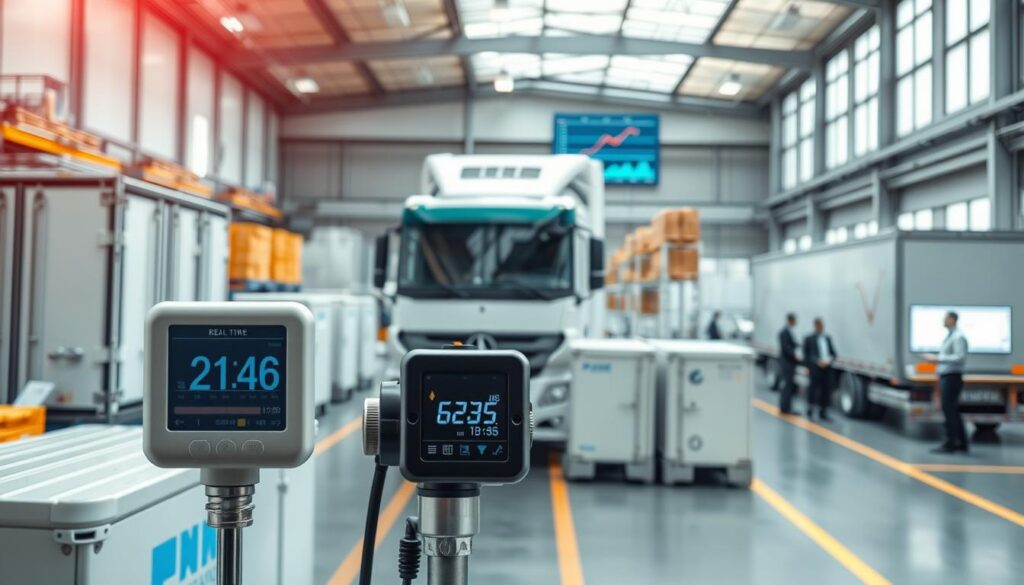
Pharmaceutical transport demands the strictest environmental controls in trucking. Vaccines, insulin, and biologics require temperatures maintained between 35°F and 46°F without fluctuation. A single temperature breach can destroy millions of dollars worth of medicine. Advanced monitoring platforms now offer dual-zone tracking for trailers carrying different products at varying temperatures.
Food safety compliance continues to tighten under FDA regulations. The Food Safety Modernization Act requires carriers to document temperature controls throughout transit. Digital monitoring systems create tamper-proof records that satisfy inspector requirements and protect carriers during audits.
AI-Powered Safety Systems and Driver Monitoring
Fleet safety technology has transformed how trucking companies protect drivers and assets. AI dashcams and driver monitoring systems work together to prevent accidents before they happen, analyzing road conditions, fatigue indicators, and potential hazards in real-time.
Today’s intelligent dashcams detect lane departures, following distances, and sudden braking events automatically. Industry data suggests fleets using advanced camera systems see accident rates drop by 20% or more within the first year of deployment. The cameras identify risky situations and alert drivers through audio warnings, enabling immediate behavior correction.

Driver Behavior Analysis and Coaching
Driver monitoring systems track key performance indicators including hard braking, rapid acceleration, and cornering speed. Each driver receives safety scores highlighting areas for improvement. Fleet managers use these scores to identify drivers needing additional training while recognizing top performers. Structured coaching programs based on objective data improve safety outcomes across entire fleets.
Live Video for Incident Management
Real-time video streaming capabilities allow dispatchers to view road conditions and driver status instantly. When incidents occur, managers access footage immediately to determine fault and protect drivers from false claims. Quick access to video evidence helps trucking companies reduce insurance costs and legal exposure significantly.
Intermodal Operations and Port Logistics
Intermodal trucking and drayage operations have become increasingly critical as e-commerce and international trade expand. These short-haul services connecting ocean ports, rail terminals, and distribution centers require precise timing and coordination capabilities.
Managing port drayage requires carriers to navigate complex scheduling systems at major facilities. Terminal operators typically provide narrow pickup windows, and missing appointments means lost time and revenue. Weather delays, equipment shortages, and port congestion create daily obstacles for operations teams.
Online retail giants drive unprecedented demand for intermodal services. Their distribution networks rely on efficient container movements from ports to inland fulfillment centers within tight timeframes. This demand creates opportunities for carriers specializing in port logistics and short-distance container movements.
| Service Type | Average Distance | Growth Rate 2024-2026 |
|---|---|---|
| Port Drayage | 25-75 miles | 10-12% annually |
| Rail Ramp Services | 50-150 miles | 7-9% annually |
| Distribution Center Shuttles | 100-200 miles | 12-15% annually |
Modern tracking technology enables precise coordination between trucks, trains, and ships. GPS systems provide visibility into container locations, helping dispatchers adjust schedules when delays occur. Real-time updates allow coordination teams to redirect drivers to alternative terminals or adjust pickup times based on actual vessel arrival data, reducing empty miles and improving asset utilization.
Hotshot Trucking and Expedited Services
The hotshot trucking sector serves industries requiring urgent freight delivery for time-sensitive materials and equipment. Small businesses and independent operators find substantial opportunities in this fast-paced segment where speed and reliability command premium rates.
Oil fields and construction sites generate constant demand for expedited services. Equipment breakdowns cost these operations thousands of dollars per hour in lost productivity. Hotshot trucking fills critical gaps by delivering replacement parts, tools, and materials within hours rather than days.
Independent drivers discover numerous advantages in expedited markets compared to traditional long-haul trucking. These include faster payment cycles (often within 7-14 days), local and regional routes allowing drivers to stay closer to home, lower startup costs with smaller trucks and trailers, and direct relationships with customers needing urgent delivery.
Success in expedited freight depends on efficient route planning and rapid response times. Modern GPS systems and load boards help drivers identify profitable runs and minimize empty miles. Small fleets gain competitive advantages through real-time communication with shippers and strategic positioning near high-demand areas.
Capacity Outlook and Rate Recovery Timing
The path to freight market recovery depends heavily on the pace of capacity reduction. C.H. Robinson’s market analysis indicates that if current carrier exit rates continue, the market should return to historical supply-demand equilibrium by early 2026.
FMCSA data shows monthly operating authority revocations have exceeded newly authorized carriers since late 2022. This attrition primarily affects owner-operators and very small fleets. However, ATRI reports that even larger fleets decreased capacity by an average of 2.2% in 2024, indicating the contraction extends beyond marginal operators.
Rate recovery is increasingly tied to policy outcomes and macroeconomic factors beyond freight fundamentals. ACT Research projects meaningful freight and rate recovery unlikely until the second half of 2026 at earliest. Carriers positioned to weather extended soft conditions while maintaining service quality will capture disproportionate market share when conditions improve.
Private fleets continue gaining share at the expense of for-hire carriers, benefiting from superior routing control and improved service stability. This structural shift adds competitive pressure that will persist even as market conditions normalize.
Frequently Asked Questions
What are the current freight market conditions affecting trucking profitability in 2026?
The freight market enters 2026 in an extended correction cycle with carrier profitability under severe pressure. ATRI reports that truckload carriers averaged a negative 2.3% operating margin in 2024, while non-fuel costs reached record highs of $1.779 per mile. Overcapacity continues to suppress rates, though capacity contraction is accelerating as carriers exit the market. Most analysts expect gradual stabilization through 2026, with meaningful rate recovery potentially beginning in the second half of the year as supply-demand dynamics improve.
How do the new Section 232 tariffs impact truck purchasing decisions?
The 25% Section 232 tariff on medium- and heavy-duty trucks and parts, effective November 2025, significantly increases equipment acquisition costs. For USMCA-qualifying vehicles from Canada or Mexico, the tariff applies only to non-U.S. content value. U.S. manufacturers can apply for an import adjustment offset of 3.75% of assembled vehicle value through October 2030. Fleet managers are responding by extending equipment lifecycles, exploring used truck markets, and timing purchases strategically around tariff provisions and regulatory deadlines.
What fleet management technologies provide the best ROI in the current market?
Integrated telematics platforms combining ELD compliance, GPS tracking, IFTA automation, and safety monitoring deliver measurable returns through violation prevention, fuel savings, and reduced administrative burden. AI-powered dashcam systems reduce accident rates and insurance costs. Temperature monitoring for reefer operations protects high-value cargo and qualifies carriers for premium contracts. The key is selecting platforms that consolidate functions into unified interfaces, reducing complexity while improving data-driven decision making.
How will EPA Phase 3 emissions standards affect equipment purchases through 2032?
EPA Phase 3 standards phase in beginning MY 2027 for light and medium heavy-duty vocational vehicles, with progressively stricter requirements through MY 2032. Day cab tractors face new standards starting MY 2028, heavy heavy-duty vocational in MY 2029, and sleeper cabs in MY 2030. By MY 2032, stringency increases range from 25% to 60% above Phase 2 levels depending on vehicle category. The standards are technology-neutral, allowing manufacturers flexibility in compliance approaches, but will increase new equipment costs and influence total cost of ownership calculations.
Which trucking segments offer the highest profit potential during the freight recession?
Specialized freight segments consistently outperform dry van markets. Refrigerated transport commands rates 20-30% above dry van due to temperature control requirements and pharmaceutical logistics demand. Flatbed operations exceed $3.00 per mile given specialized securement skills required. Tanker trucking offers some of the highest per-mile compensation in the industry, often with stable long-term contracts. These segments require additional equipment investment and training but provide margin protection when general freight rates are compressed.
How severe is the truck driver shortage and what’s driving it?
The driver shortage reached approximately 87,000 in Q3 2025 and is projected to grow to 160,000 or more by 2030. Key factors include an aging workforce averaging 46-49 years old, federal regulations requiring drivers to be 21 for interstate commerce, and annual turnover rates exceeding 90% at large truckload carriers. The FMCSA Drug and Alcohol Clearinghouse has disqualified over 180,000 drivers since 2020. Successful retention strategies focus on predictable home time, competitive pay with benefits, quality equipment, and regional route options rather than long-haul assignments.
What is causing the diesel technician shortage and how does it affect fleet operations?
ATRI research shows 65.5% of trucking shops were understaffed in 2025, with an average of 19.3% of technician positions unfilled. Over 50% of current diesel technicians are over 45 and expected to retire by 2030, while technical schools graduate fewer than 50,000 technicians annually against demand exceeding 258,000. Most new hires (61.8%) enter without formal training, requiring an average of 357 hours of training and $8,211 in trainee wages. Fleet impacts include extended repair times, downtime costs exceeding $850 per day per out-of-service truck, and increased competition for qualified maintenance staff.
Why are trucking insurance costs increasing so rapidly?
Commercial auto insurance premiums rose 8.8% in Q2 2025, continuing a multi-year trend. ATRI reports trucking auto liability premiums increased 36% per mile over eight years despite declining crash rates. Nuclear verdicts—jury awards exceeding $10 million—have become more common, with trucking verdicts increasing over 50% annually for the past decade. The Insurance Information Institute attributes $30 billion in additional commercial auto claim costs since 2012 to social inflation and nuclear verdicts. Owner-operators now budget $11,000 to $17,000 annually for coverage, while major carriers like J.B. Hunt pay over $300 million annually.
What strategies help reduce commercial trucking insurance premiums?
Fleets can reduce insurance costs through several approaches: maintaining clean driving records (saving 20-40%), implementing formal safety programs with defensive driving courses, installing AI dashcams that document driver behavior and provide evidence during claims, raising deductibles strategically (saving 15-25% on physical damage), and bundling coverages with single carriers (saving 10-20%). Starting renewal shopping 90-120 days before expiration allows proper comparison. Carriers with documented safety programs, telematics data, and low claims history position themselves as lower-risk accounts that underwriters reward with better rates.
Positioning Your Fleet for Recovery
The trucking industry future holds strong potential for carriers willing to adapt strategically during this challenging period. From refrigerated transport serving major retailers to flatbed operations supporting infrastructure projects, each specialized market segment offers unique profit opportunities that can offset general freight weakness.
Fleet success in 2026 centers on balancing operational efficiency with smart investments. Leading carriers demonstrate that fleet management technology adoption pays dividends through reduced costs, improved safety scores, and better customer service. Electronic logging devices, temperature monitoring systems, and AI-powered dashcams have become essential tools rather than optional upgrades for competitive operations.
The commercial vehicle outlook remains positive for fleets that navigate regulatory changes effectively while building operational capabilities competitors cannot easily replicate. EPA Phase 3 standards and Section 232 tariffs will continue shaping equipment decisions through 2032 and beyond. Carriers focusing on compliance excellence, technology integration, and strategic niche selection position themselves for sustainable growth when market conditions improve—as they inevitably will.
Share These Insights With Your Team
If this analysis helps inform your fleet strategy, your colleagues in the industry will benefit from it too. Share with fellow fleet managers and shop owners navigating these challenging market conditions.