By Michael Nielsen, Editor & Publisher | 15+ Years in Diesel Repair
Last Updated: February 2026
📖 Estimated reading time: 24 minutes
Running a small trucking business today means navigating strict federal regulations while keeping costs under control. Electronic logging device software has become essential for staying compliant with Department of Transportation mandates, yet many fleet owners still view these systems as just another expensive requirement. That perspective misses the bigger picture.
Modern ELD software for small fleets delivers far more than basic compliance tracking. These platforms have evolved into comprehensive management tools that monitor driver behavior, automate vehicle inspections, and optimize fuel usage. The right solution pays for itself through reduced violations, improved efficiency, and better resource allocation across every truck in your operation.
Small carriers face unique challenges competing against larger enterprises with dedicated compliance teams. Fleet management software provides automated hours of service tracking, digital DVIR workflows, and real-time safety alerts that transform small fleet operations from reactive firefighting to proactive management. This guide explores how the right electronic logging solution reduces administrative burden, prevents costly violations, and improves your bottom line.
Key Takeaways
- Beyond compliance: Electronic logging devices now function as comprehensive fleet management platforms covering HOS tracking, vehicle inspections, fuel optimization, and driver coaching.
- Violation prevention pays off: FMCSA penalties range from $1,000 to $11,000+ per offense, and poor CSA scores increase insurance premiums by 5-15% or more.
- Measurable ROI: A typical five-truck fleet saves $40,000+ annually through reduced administrative time, fuel optimization, and avoided violations against approximately $3,000 in total costs.
- Digital inspection workflows: DVIR software replaces paper forms with mobile workflows that create searchable records and ensure defects receive prompt maintenance attention.
- Enterprise capabilities at small fleet prices: Modern platforms scale from 1 to 50+ vehicles, giving small carriers the same operational visibility larger competitors rely on.
- Implementation matters: A structured 4-6 week rollout with phased driver training achieves higher adoption rates and fewer compliance errors than rushed deployments.
Understanding ELD Software and Federal Compliance Requirements
The intersection of technology and federal transportation law has created requirements that every small fleet operator must navigate. Electronic logging device software emerged as a regulatory response to persistent Hours of Service violations and inaccurate paper logbooks. For small fleets, understanding these systems goes beyond simple compliance — it means protecting your business from costly violations while gaining operational visibility you never had with paper logs.
What Is Electronic Logging Device Software?
Electronic logging device software connects directly to your vehicle’s engine control module to automatically capture driving data. This connection records engine hours, vehicle movement, miles driven, and precise location information without driver intervention. The system monitors when your truck starts, moves, and stops, creating an unalterable record of activity that satisfies federal auditors.
The technology distinguishes itself from basic GPS tracking systems. While GPS tells you where a vehicle is, ELD software tells you how long drivers have been working and whether they’re approaching their legal limits. Two categories of solutions exist in the marketplace: basic compliance devices that meet minimum regulatory requirements and comprehensive fleet management platforms that include ELD functionality alongside dispatch tools, maintenance scheduling, fuel monitoring, and performance analytics.

The engine control module integration creates tamper-proof records that drivers cannot manually adjust once the vehicle is in motion. This automatic recording eliminates the manual logbook errors that previously triggered DOT audit violations and roadside penalties. Modern systems sync data to cloud servers in real-time, letting fleet managers access current driver status from any internet-connected device.
The ELD Mandate and Its Impact on Small Fleets
The ELD mandate took effect in December 2017, fundamentally changing how commercial carriers operate. The Federal Motor Carrier Safety Administration implemented this rule under 49 CFR Part 395, requiring most commercial drivers to use electronic logging devices instead of paper logs. Congress authorized the mandate after studies showed that electronic monitoring reduced Hours of Service violations by 50% compared to paper logs.
Small fleets felt immediate operational impacts. The transition from paper logs to digital systems required hardware purchases, software subscriptions, and driver training programs. Many owner-operators and small carriers initially viewed the requirement as burdensome, particularly given implementation costs on tight margins.
Specific exemptions apply to certain operations. Drivers operating under the short-haul exception — staying within 150 air-miles of their starting location and returning within 14 hours — don’t need ELDs. Vehicles manufactured before model year 2000 also qualify for exemption, as do drivers using time cards who meet short-haul criteria. Those continuing to use paper logs after the compliance deadline face violations during roadside inspections, including out-of-service orders that prevent drivers from continuing their routes.
Digital logs streamline roadside inspections significantly. Officers access records through standardized data transfer protocols, reducing detention time from 30-45 minutes to under 10 minutes in most cases. State-specific regulations add complexity beyond federal requirements. California’s Clean Truck Check program, for example, requires additional reporting for vehicles operating at ports and intermodal facilities.
FMCSA Compliance Standards You Must Meet
The Federal Motor Carrier Safety Administration established precise technical specifications that all ELD systems must satisfy. FMCSA compliance begins with Hours of Service regulations that limit driving time to prevent fatigue-related accidents. Property-carrying drivers cannot exceed 11 hours of driving after 10 consecutive hours off duty and must stay within a 14-hour on-duty window.
Your ELD must automatically record date, time, and location information at specific intervals, along with engine hours, vehicle miles, driver identification, co-driver status, duty status changes, and malfunction indicators. Technical specifications require ELD devices to synchronize with Coordinated Universal Time with accuracy within 10 minutes of UTC for the device’s entire service life.
Data transfer protocols enable roadside compliance checks through three required methods: wireless web services transfer, USB or Bluetooth connection, or email transmission. Your system must support all three methods to meet federal standards. Carriers must retain ELD records for six months, and every ELD must appear on the FMCSA’s registered device list. Self-certified devices that don’t meet technical specifications result in violations during audits.
The compliance framework includes malfunction reporting obligations. When devices experience connectivity failures or data corruption, drivers must note malfunctions and reconstruct records using backup methods. Automated hours of service tracking through certified ELD systems eliminates the manual calculation errors that previously caused compliance problems, alerting drivers when they approach available hour limits before violations occur.
Why Small Fleets Need Dedicated ELD Solutions
For small fleet owners, the decision to implement ELD software extends beyond meeting FMCSA requirements. Modern ELD solutions address critical business challenges that directly impact profitability, operational efficiency, and long-term sustainability. The trucking industry continues to evolve rapidly, with technology adoption separating successful operations from those struggling to compete.
The Unique Challenges Facing Small Fleet Operators
Small fleet operators navigate a distinct set of operational hurdles that larger carriers rarely encounter. Limited administrative staff means owners often juggle multiple roles — dispatcher, accountant, compliance manager, and recruiter — all while trying to grow their business. Driver retention adds another layer of difficulty, as quality drivers have numerous employment options and increasingly expect technology that simplifies their workday.
Competitive pricing pressures force small operations to maximize every dollar. When larger carriers leverage economies of scale, smaller fleets must find efficiency gains through smarter management practices. Asset utilization becomes critical — every truck must generate revenue consistently without excessive downtime. The administrative burden of paper logs consumes valuable time that could be spent on business development, and manual record-keeping makes data analysis nearly impossible.
Cost Implications of Non-Compliance and Violations
The financial consequences of compliance violations create serious risks for small fleet businesses. Federal penalties for ELD violations start at $1,000 per offense and can escalate to $11,000 or more for serious infractions. A single out-of-service order can cost thousands in lost revenue and damaged customer relationships.
$1,000 – $11,000+ per violation
FMCSA penalty range for ELD and Hours of Service infractions — Federal Motor Carrier Safety Administration
CSA scores deteriorate with each violation, triggering a cascade of negative consequences. Insurance companies review these scores during policy renewals, often increasing premiums by 5-15% or more for fleets with poor compliance records. Shippers and brokers increasingly scrutinize carrier safety ratings before awarding contracts, and a damaged CSA profile limits business opportunities while forcing fleet operators to accept lower-paying freight.
| Cost Category | Financial Impact | Frequency Risk |
|---|---|---|
| Initial violation fines | $1,000 – $11,000+ per incident | Per roadside inspection |
| Out-of-service orders | Lost revenue + towing/storage fees | Immediate upon discovery |
| Insurance premium increases | 5-15%+ for poor CSA scores | Annual policy renewal |
| Audit response costs | $5,000 – $15,000 in admin expenses | Triggered by violation patterns |
| Lost contract opportunities | Unmeasurable but substantial | Ongoing competitive impact |
Competitive Advantages Through Technology Adoption
Fleet technology adoption transforms small carriers from reactive compliance managers to proactive business strategists. Modern ELD platforms provide real-time visibility that large shippers and brokers now require for contract eligibility, directly increasing access to premium freight lanes and higher-paying loads.
Customer service improves dramatically with accurate ETA updates. Automated tracking eliminates phone tag between dispatchers, drivers, and customers. Operational efficiency gains compound over time through data-driven decisions — optimized fuel consumption with idle time tracking and route optimization can save 7-14% on fuel costs. For a small fleet spending $200,000 annually on fuel, that represents $14,000 to $28,000 in direct savings.
Maintenance scheduling becomes predictive rather than reactive, with ELD systems tracking vehicle usage patterns and alerting managers before small issues become expensive breakdowns. Driver productivity increases when administrative tasks are automated, and electronic logs eliminate paperwork disputes while streamlining payroll processing. Small fleets that implement comprehensive ELD solutions position themselves as modern, professional operations — an advantage in driver recruitment, customer acquisition, and partnership opportunities with larger carriers.
Essential ELD Features for Small Fleet Operations
When evaluating ELD solutions, small fleet operators must focus on features that deliver immediate operational value and long-term compliance protection. The right combination of capabilities transforms your electronic logging system from a simple compliance tool into a comprehensive management platform. Not all ELD platforms offer the same sophistication or user experience, and small fleets require software that balances powerful capabilities with straightforward implementation.
Automatic Hours of Service Tracking and Alerts
The foundation of any effective ELD platform is robust HOS tracking that eliminates manual logging errors and keeps drivers compliant. Modern systems automatically record duty status changes by connecting directly to your vehicle’s engine control module. This seamless integration captures driving time, on-duty periods, off-duty status, and sleeper berth time without driver intervention.
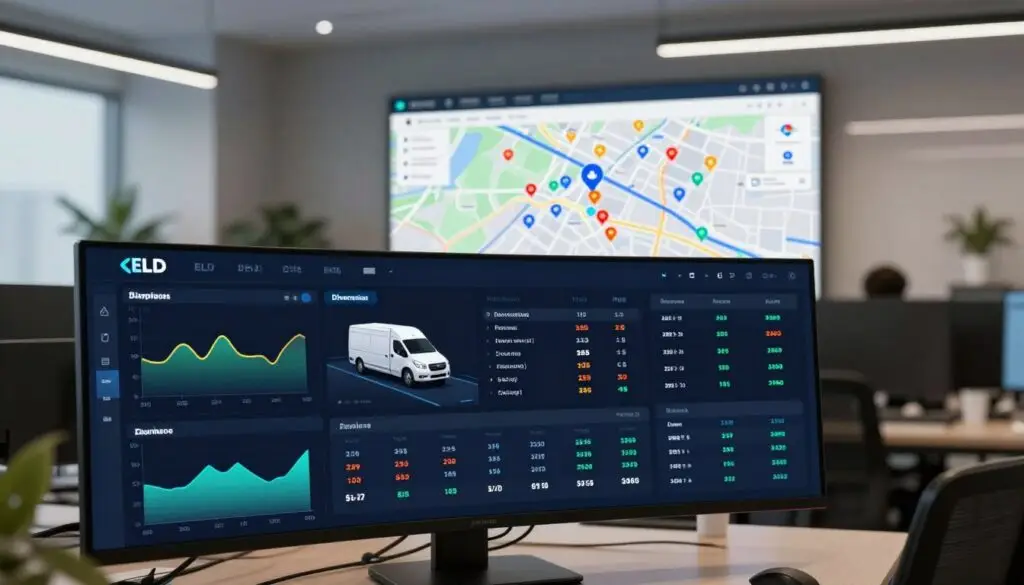
Leading platforms provide real-time countdown timers showing available driving and on-duty hours, pre-violation warnings that alert drivers 30 minutes before reaching limits, and multiple ruleset support for property-carrying, passenger-carrying, and Canadian regulations. Cross-border ELD compliance with auto-record driving hours across U.S. and Canadian jurisdictions prevents the manual log adjustments that create compliance headaches for fleets running international routes. The best systems detect driving events and record them accurately through AI-powered technology without requiring any driver interaction.
Real-Time GPS and Vehicle Location Monitoring
GPS fleet tracking capabilities extend far beyond compliance requirements to provide operational advantages that directly impact your bottom line. Real-time location visibility enables better dispatch decisions, improves customer service through accurate arrival estimates, and enhances security through geofencing capabilities that notify you when vehicles enter or exit designated zones.
Modern GPS tracking systems update vehicle positions every few seconds, creating a live map of your entire fleet. Dispatchers can identify the nearest available vehicle for urgent pickups, provide customers with precise ETAs based on actual location data, and detect unauthorized after-hours vehicle movement. Historical route playback supports performance analysis and dispute resolution, while stop detection automatically logs delivery and pickup locations. Some insurance providers offer premium discounts for fleets using GPS tracking systems.
DVIR and Vehicle Maintenance Management
Digital vehicle inspection reporting streamlines one of the most time-consuming compliance requirements while improving maintenance oversight. DVIR software replaces paper inspection forms with mobile workflows that drivers complete on tablets or smartphones, creating searchable records that eliminate lost paperwork and ensure defects receive prompt attention.
Effective DVIR software guides drivers through pre-trip and post-trip inspections with customizable checklists tailored to specific vehicle types. Drivers photograph defects directly in the app, providing maintenance teams with visual documentation. The system automatically routes inspection reports to management and maintains the complete audit trail required during CVSA inspection procedures. Beyond basic inspection reporting, comprehensive maintenance management tracks mileage and engine hours to trigger maintenance reminders based on manufacturer recommendations.
Driver Communication, Reporting, and Analytics
Integrated driver communication tools reduce phone distractions while improving information flow between drivers and dispatch. Instead of calling drivers behind the wheel, dispatchers send messages through the ELD app that drivers read during their next stop. The system supports load assignments, pickup instructions, delivery confirmations, and route changes with read receipts confirming message delivery.
Comprehensive fleet reporting transforms raw operational data into actionable insights. Customizable dashboards display compliance metrics, fuel consumption, idle time, harsh driving events, and overall fleet performance at a glance. Advanced analytics identify vehicles with excessive idle time, highlight harsh braking or acceleration events, and compare driver performance across your team. This data-driven approach reveals improvement opportunities that directly impact profitability — turning your ELD from a compliance recorder into a strategic management tool.
Cost Benefits and ROI for Small Fleets
Every dollar invested in ELD technology generates multiple streams of cost reduction that directly strengthen your bottom line. Small fleet operators who implement electronic logging solutions typically see measurable savings within the first quarter of operation. The financial benefits extend across every operational area, from administrative time to fuel consumption to regulatory compliance.
Reducing Paperwork and Administrative Overhead
Manual logbook management consumes significant administrative resources that most small fleet owners underestimate. A typical fleet manager spends approximately two hours daily reviewing logbooks from just five drivers, translating to 520 hours annually dedicated solely to log verification. ELD software automates this entire process, reducing review time to approximately 15 minutes daily.
| Process | Annual Hours | Cost at $25/hr |
|---|---|---|
| Manual log review (5 trucks) | 520 hours | $13,000 |
| Automated ELD review (5 trucks) | 65 hours | $1,625 |
| Net administrative savings | 455 hours | $11,375 annually |
Beyond time savings, automated systems eliminate transcription errors that require correction documentation. Electronic logs capture data accurately from the first entry, eliminating the correction cycle entirely. This administrative efficiency frees office staff to focus on revenue-generating activities like dispatch optimization and business development.
Fuel Savings Through Route Optimization
Fuel represents the second-largest expense for most small fleets, typically consuming 20-30% of total operating costs. According to Department of Energy data, excessive idling costs between $0.84 and $1.60 per hour per vehicle. A truck idling just two hours daily wastes approximately $1,000 annually in unnecessary fuel consumption.
GPS-enabled ELD systems provide route analysis that identifies inefficient paths, excessive mileage, and unauthorized detours. Driver behavior monitoring reveals additional fuel waste: harsh acceleration events reduce fuel economy by 15-30% during city driving, and speeding above 65 mph decreases MPG by 7-14%. Industry data demonstrates that fleets implementing fuel optimization strategies through ELD technology achieve 7-14% reductions in overall fuel costs.
For a five-truck fleet averaging 100,000 miles annually at 6 MPG and $3.50 per gallon, even a conservative 10% fuel reduction generates $29,167 in annual savings. That calculation: 500,000 total miles at 6 MPG equals 83,333 gallons, costing $291,667 annually. A 10% reduction saves $29,167 — or $5,833 per vehicle.
Calculating Your Return on Investment
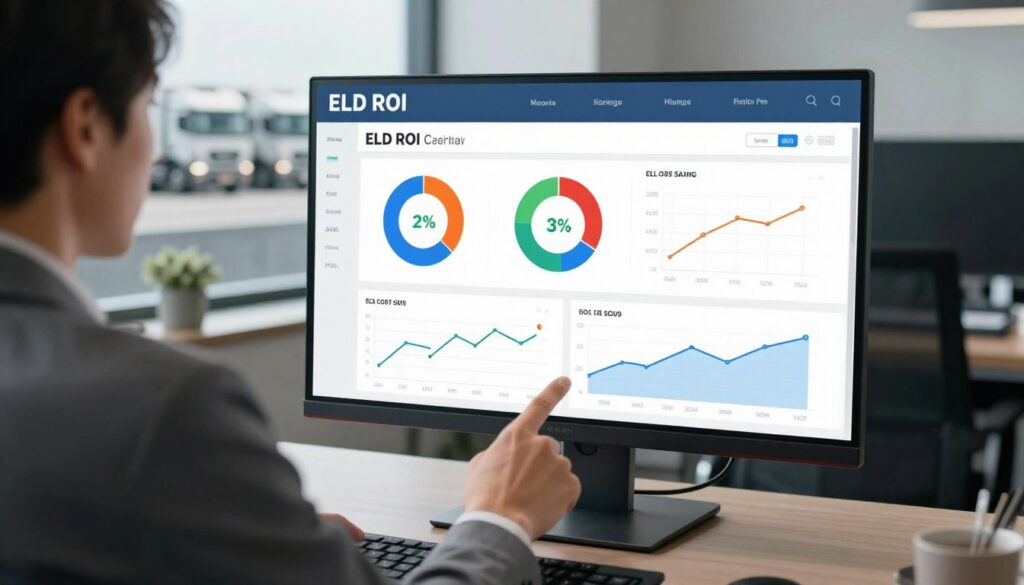
Determining ELD ROI requires comparing total implementation costs against cumulative annual savings. This framework uses actual numbers from a typical five-truck operation:
| Category | Investment | Annual Savings |
|---|---|---|
| ELD Hardware (5 × $250) | $1,250 one-time | — |
| Software Subscription (5 × $30/mo) | $1,800 annually | — |
| Administrative efficiency | — | $11,375 |
| Fuel optimization | — | $29,167 |
| Violation prevention + insurance | — | $6,000 |
| First-Year Totals | $3,050 | $46,542 |
Net first-year benefit equals $43,492, representing a payback period of less than one month. Even using conservative estimates with 50% lower savings projections, the payback period extends to only 3-4 months. ELD ROI ranks among the highest of any fleet technology investment, and the financial case strengthens with each operational quarter as cumulative benefits compound.
The HDJ Perspective
The ELD market has matured significantly since the 2017 mandate, and that maturity works in small fleet operators’ favor. Early adopters dealt with buggy software, limited features, and steep learning curves. Today’s platforms offer reliability and depth that would have seemed unrealistic five years ago — at price points that continue to drop as competition intensifies. The real question for small fleet owners is no longer whether to invest in ELD technology, but how quickly they can leverage the data these systems produce to make smarter operational decisions. Fleets that treat ELD software as a strategic asset rather than a compliance checkbox consistently outperform those that don’t, regardless of fleet size.
Top ELD Software Solutions for Small Fleet Businesses
Several leading ELD providers have developed platforms specifically addressing the needs and budgets of small fleet operations. Selecting the right solution starts with understanding what your fleet truly needs beyond basic compliance. A systematic evaluation balances operational requirements, driver acceptance, financial considerations, and the support infrastructure that keeps your system running smoothly.
Assessing Your Operational Needs First
Your fleet management needs assessment begins with documenting your current operational reality. A three-truck local delivery operation has fundamentally different requirements than a fifteen-vehicle cross-country hauling company. Start by cataloging your fleet characteristics: long-haul routes spanning multiple states versus short-haul regional deliveries, cargo specialization, and growth projections over the next two to three years.
Essential functions for most small fleets include automatic HOS tracking with violation warnings, real-time GPS location visibility, DVIR functionality for inspections, IFTA fuel tax reporting for multi-state operations, and basic compliance reporting. Advanced features like predictive maintenance alerts or driver behavior scoring provide value but may not justify premium pricing for smaller operations. Your current technology infrastructure also influences compatibility requirements — assess whether you need integration with existing dispatch software, accounting systems, or fuel card programs.
Comparing Leading ELD Platforms
The following comparison examines four industry-leading platforms, each offering distinct advantages depending on fleet size, budget, and operational complexity.
Motive (formerly KeepTruckin) has established itself as a comprehensive solution for growing small fleets, combining AI-powered automated HOS tracking with electronic DVIRs, integrated dashcams for safety scoring, and fuel card integration for automated expense tracking. The user-friendly driver app connects to the vehicle’s ECM and records all relevant data automatically with built-in cellular connectivity. Motive works exceptionally well for operations seeking comprehensive features in one scalable platform, from 5 vehicles to 50+.
Samsara brings enterprise-grade capabilities to smaller operations with second-by-second GPS tracking, integrated HD dashcams with AI-powered event detection, built-in Wi-Fi hotspot functionality, and automated maintenance scheduling. Monthly costs run higher than basic solutions, and typical contracts span three years. Samsara excels for safety-focused operations prioritizing video telematics and ambitious growth plans.
Geotab Drive stands out for its open platform architecture and customization options. Cross-border compliance automatically records driving hours across 100+ rulesets covering U.S., Canadian, and Mexican jurisdictions. The open platform allows integration with thousands of third-party applications, and advanced analytics offer customizable dashboards for fuel efficiency, idle time, and utilization tracking. Geotab serves small fleets requiring cross-border operations and data-driven customization.
Garmin eLog combines ELD compliance with integrated commercial navigation designed specifically for trucks, considering height, weight, and hazmat routing restrictions. Portable device options provide flexibility for mixed fleets, and plug-and-play installation requires minimal technical expertise. Pricing includes one-time hardware costs with lower monthly subscription fees and no long-term contract requirement. Garmin works perfectly for owner-operators and very small fleets of 1-5 vehicles prioritizing simplicity.
| Platform | Starting Price | Key Strength | Ideal Fleet Size |
|---|---|---|---|
| Motive | Mid-range monthly | Comprehensive AI-powered features | 5 – 50+ vehicles |
| Samsara | Premium monthly | Video telematics and safety | 10 – 100+ vehicles |
| Geotab Drive | Competitive monthly | Customization and analytics | 5 – 75+ vehicles |
| Garmin eLog | Lower monthly fees | Integrated navigation simplicity | 1 – 10 vehicles |
Understanding Pricing Models and Hidden Costs
The total cost of ownership includes multiple components that providers sometimes obscure. Hardware costs range from $0 to $300 per vehicle, with free hardware promotions often tied to long-term contracts or higher monthly fees. Monthly subscriptions typically run $20 to $45 per vehicle, with activation fees of $0 to $75 per device and additional user licenses at $10 to $30 per office user.
Contract length significantly impacts pricing flexibility. Month-to-month arrangements cost 20-30% more per vehicle than annual commitments, while multi-year contracts provide the lowest per-unit pricing but reduce flexibility. Calculate the total first-year cost and ongoing annual expenses, including hardware amortization, monthly subscriptions, and estimated support needs. The cheapest advertised option frequently becomes the most expensive when hidden costs emerge after implementation.
Evaluating Support and Driver Acceptance
The most feature-rich ELD system fails if drivers refuse to use it correctly. Driver acceptance directly determines compliance quality and data accuracy. Test platforms yourself by changing duty status, logging inspections, and reviewing daily logs — the process should feel intuitive with minimal clicks. Check mobile app store ratings from actual drivers, paying attention to comments about stability, battery drain, GPS accuracy, and ease of editing logs.
Evaluate technical support availability carefully. When your driver encounters a malfunction at 2 AM in a remote location, waiting until business hours creates compliance violations. Ask providers about average response times for critical issues, and request references from fleets similar to yours. For small fleets without in-house IT resources, investing in superior support prevents expensive downtime and compliance gaps.
Free Professional Fleet Tools
Cost calculators, fault code lookup, maintenance planners, and more—built for owner-operators, fleet managers, and diesel techs. No signup required.
Implementation Process and Driver Adoption Strategies
The implementation phase determines whether your ELD investment delivers value or creates frustration. A systematic approach balances technical requirements with human factors to ensure smooth technology adoption. Small fleets that rush deployment often face driver resistance, compliance errors, and wasted resources that undermine the benefits these systems provide.
Developing a Structured Rollout Timeline
Planning your ELD rollout requires a phased approach beginning 30 to 45 days before full enforcement. Most small fleets benefit from a six-week deployment window that allows adequate testing and training without excessive delay.
| Timeline | Phase | Key Activities |
|---|---|---|
| Days 1-7 | Vendor Selection | Finalize contract, order hardware, review documentation |
| Days 8-14 | Initial Testing | Install test device, verify connectivity and data accuracy |
| Days 15-21 | Office Training | Dashboard orientation, reporting setup, compliance monitoring |
| Days 22-35 | Driver Training | Hands-on sessions, practice exercises, peer mentor designation |
| Days 36-45 | Parallel Operations | Run ELD alongside paper logs, verify accuracy, address issues |
| Day 46+ | Full Deployment | Discontinue paper logs, monitor compliance, ongoing support |
During weeks three and four, prioritize office staff orientation on dashboard functions and reporting capabilities before drivers begin using the system. Your administrative team needs confidence navigating the platform to answer driver questions and troubleshoot issues effectively during the transition.
Building Driver Training and Overcoming Resistance
Driver training represents the most critical factor in successful technology adoption. Schedule hands-on training sessions in small groups of three to five drivers using actual vehicles whenever possible. Each session should cover logging in, recording duty status changes, handling inspections, and submitting timecards. Create laminated quick-reference guides for common tasks that drivers keep in their vehicles.
Designate tech-savvy drivers as peer mentors who provide support during the transition. Provide practice time before enforcement begins so drivers make mistakes without compliance consequences, and schedule follow-up training two weeks after initial deployment to address emerging questions.
Addressing driver resistance requires transparent communication. Many drivers express privacy fears about constant monitoring — clarify that location tracking occurs during duty status changes, not continuously. Some perceive ELD systems as micromanagement tools, so explain that electronic logs actually provide more accurate records that defend drivers during inspections and disputes. For technology-anxious drivers, emphasize the system’s simplicity and ongoing support availability.
Run parallel systems for seven to ten days during the transition, with drivers maintaining both paper logs and electronic records simultaneously. This overlap verifies ELD accuracy and builds driver confidence. Set a firm cutover date and communicate clear expectations to your entire team, emphasizing that paper logs will no longer be accepted after that point.
Integration, Challenges, and Maximizing Your ELD Investment
The true potential of ELD technology emerges when data flows automatically between your compliance devices and core business systems, and when your team develops systematic approaches to leveraging that data. Small fleets that connect their ELD platforms with dispatch, accounting, and maintenance tools — while implementing disciplined review practices — extract significantly more value than those treating ELD as a standalone compliance device.
Connecting ELD Data with Business Systems
Integration between ELD systems and dispatch software creates powerful operational advantages. Real-time visibility into driver HOS availability enables intelligent load assignment that maximizes productivity while maintaining compliance. Dispatchers instantly see which drivers have available hours rather than making phone calls or checking paper logs. Open platform architectures enable small fleets to integrate with thousands of third-party applications, creating customized solutions without vendor lock-in.
Automated data flow between ELD systems and accounting platforms eliminates hours of manual data entry each week. Driver compensation accuracy improves when payroll calculations use actual hours and mileage from ELD records. IFTA fuel tax reporting becomes dramatically simpler with integrated systems that automatically categorize miles by jurisdiction and calculate fuel tax obligations.
Integration with maintenance management systems enables proactive vehicle care based on actual usage. Automated maintenance scheduling triggers service appointments based on precise mileage and engine hours. Diagnostic trouble code monitoring provides early warning of developing mechanical issues, and vehicle utilization tracking helps optimize asset deployment and inform right-sizing decisions.
Solving Common Technical and Compliance Challenges
Connectivity issues represent one of the most common ELD concerns, especially for fleets operating in rural areas. Modern ELD devices store information locally when cellular connections drop, then automatically sync when connectivity returns. Choosing providers with robust network infrastructure makes a significant difference in data transmission reliability.
Quick Troubleshooting Reference
- No connection: Verify OBD-II connector is secure, restart device by unplugging for 30 seconds
- App issues: Confirm driver app is updated to latest version, check cellular signal strength
- Data gaps: Device stores data locally during signal loss and syncs automatically when connectivity returns
- Device malfunction: Note malfunction per FMCSA rules, reconstruct logs for current day plus previous 7 days
- Extended outage: Continue operations up to 8 days while arranging repairs, maintain paper logs
Log accuracy directly impacts compliance standing and CSA scores. Establish clear procedures for reviewing and approving driver edit requests, including legitimate reasons like personal conveyance, yard moves, and correcting duty status errors. The edit audit trail is mandatory under federal regulations, and excessive editing from specific drivers suggests deeper issues requiring targeted coaching rather than blanket approvals.
Understanding HOS exceptions requires precise documentation. The adverse driving conditions exception provides 2 additional driving hours when weather or road emergencies occur after trip departure. Short-haul exemptions apply to operations within 150 air-miles with return to base. Personal conveyance and yard moves require specific annotations explaining purpose and authorization. Per OOIDA resources on ELD and HOS compliance, drivers should maintain laminated quick-reference guides for each exception type to ensure consistent documentation.
Best Practices for Ongoing Fleet Optimization
Establishing structured routines for data review separates high-performing fleets from those merely collecting information. Daily review of previous day’s logs takes just 15-20 minutes but prevents small issues from compounding. Weekly analysis of HOS utilization reveals underutilized assets or drivers consistently approaching their limits. Monthly safety reviews examining harsh driving events and speeding incidents should involve drivers directly, turning data into coaching conversations.
| Review Frequency | Key Metric | Target | Action Threshold |
|---|---|---|---|
| Daily | Log completion rate | 98-100% | Below 95% — immediate follow-up |
| Weekly | Average hours per driver | 60-65 hours | Below 50 or above 68 — rebalance loads |
| Monthly | Violations per 1,000 miles | Less than 0.5 | Above 1.0 — driver intervention needed |
| Monthly | Idle time percentage | 3-5% | Above 8% — excessive fuel waste |
| Quarterly | Fuel efficiency by vehicle | 6.5-7.5 MPG | 20%+ deviation from fleet average |
Set up automated alerts for drivers approaching HOS limits at appropriate thresholds. Notifications at 1 hour and 30 minutes before violations give drivers time to find safe parking. These alerts should reach both drivers and dispatch simultaneously, enabling coordinated responses that prevent violations while maintaining delivery commitments.
Keeping software updated and FMCSA certified protects your compliance standing. Using outdated or decertified ELD software exposes your fleet to the same penalties as not using ELD at all. Establish procedures for monitoring certification status quarterly on the FMCSA registered device list, and apply software updates within 48 hours of release. According to ATRI’s operational costs research, technology management ranks among the fastest-growing cost categories for carriers, making proactive system maintenance essential for controlling expenses.
Frequently Asked Questions
Are electronic logging devices required for small fleets?
Yes. The FMCSA ELD mandate under 49 CFR Part 395 requires most commercial motor vehicle drivers to use certified electronic logging devices instead of paper logs. Specific exemptions apply to drivers operating under the short-haul exception (within 150 air-miles of their starting location, returning within 14 hours), vehicles manufactured before model year 2000, and drivers using time cards who meet short-haul criteria. All other commercial carriers, regardless of fleet size, must comply or face penalties starting at $1,000 per offense.
How much does ELD software cost for a small fleet?
ELD costs for small fleets typically include hardware ($0-$300 per vehicle) and monthly software subscriptions ($20-$45 per vehicle). Additional costs may include activation fees ($0-$75 per device) and premium support packages ($5-$20 per vehicle monthly). For a five-truck operation, expect total first-year costs between $2,400 and $6,000 depending on the platform and feature package. Many providers offer lower per-unit pricing with annual or multi-year commitments, though month-to-month arrangements cost 20-30% more but provide switching flexibility.
What features should small fleets prioritize in ELD software?
Small fleets should prioritize automatic Hours of Service tracking with pre-violation alerts, real-time GPS fleet tracking for dispatch coordination, digital DVIR functionality for vehicle inspections, and IFTA fuel tax reporting for multi-state operations. Driver-friendly interfaces reduce training time and improve adoption rates. Integration capabilities with existing dispatch, accounting, and maintenance systems add long-term value, and growth scalability matters if you plan to expand your fleet within the next two to three years.
What happens if my ELD loses cellular connectivity on the road?
Modern ELD devices store compliance data locally when cellular connections drop, then automatically sync with cloud servers when connectivity returns. Your drivers remain compliant during signal loss because the device continues recording engine hours, vehicle movement, and duty status changes. If a complete device malfunction occurs, FMCSA regulations require drivers to note the malfunction and reconstruct logs manually for the current day plus the previous seven days. Operations can continue for up to eight days while arranging repairs.
How long does it take to implement ELD software in a small fleet?
Most small fleets complete full ELD implementation within four to six weeks using a phased approach. The first two weeks cover vendor selection, hardware ordering, and initial device testing on one vehicle. Weeks three and four focus on office staff training on dashboard functions and reporting. The final phase includes hands-on driver training and a seven to ten day parallel operation period where drivers maintain both paper logs and electronic records simultaneously to verify accuracy before full cutover.
Can ELD software really save money for a small fleet operation?
Yes. A typical five-truck fleet can expect annual savings of $11,000 or more in reduced administrative time, $14,000 to $29,000 in fuel optimization through idle time reduction and route analysis, and $6,000 or more in avoided violation penalties and improved insurance rates. Against total annual costs of approximately $1,800 to $3,000 for software subscriptions, the investment typically pays for itself within the first one to three months. These figures become more significant as fleet size increases.
Take Control of Your Small Fleet’s Compliance and Profitability
ELD software has transformed from a compliance requirement into a strategic asset for small fleet operations. The operators who recognize this shift gain measurable advantages in efficiency, cost control, and market competitiveness. Your decision to implement the right electronic logging solution directly impacts your bottom line and positions your business for sustainable growth in an increasingly technology-driven industry.
Start by assessing your specific operational needs and requesting demonstrations from top-rated providers. Talk with peer fleets about their experiences, and prioritize platforms that your drivers will actually embrace. The market offers more solutions designed specifically for small fleet budgets than ever before — and the cost of delaying technology adoption now exceeds the implementation investment by a wide margin.
Help a Fellow Fleet Operator
Know a small fleet owner still running paper logs or struggling with their ELD choice? Share this guide to help them make a confident, informed decision.