By Michael Nielsen, Editor & Publisher | 15+ Years in Diesel Repair
Last Updated: December 2025
📖 Estimated reading time: 22 minutes
Scaling a mobile diesel repair business into new territories represents one of the most significant growth opportunities in the commercial trucking industry today. With 65.5% of diesel repair shops reporting understaffing in 2025 and an average position vacancy rate of 19.3% according to ATRI’s research on the diesel technician shortage, fleet operators face growing challenges finding qualified maintenance support when and where they need it. This gap creates substantial opportunities for mobile service providers positioned to capture underserved markets through strategic territorial expansion.
The economics favor mobile operations. Towing a disabled Class 8 truck costs $10,000 to $50,000 depending on distance and damage—expenses fleet managers desperately want to avoid. Every hour a commercial vehicle sits idle costs between $448 and $760 per day in lost productivity and fixed costs that continue regardless of whether wheels are turning. Mobile diesel repair eliminates towing fees while minimizing the downtime that directly impacts fleet profitability.
However, territorial expansion demands more than purchasing additional service trucks and hiring staff. It requires systematic planning, calculated investment, and operational excellence at every phase. This guide provides the strategic framework for scaling your mobile diesel repair service while maintaining the quality and profitability that built your reputation.
Key Takeaways
- Validate operational readiness: Assess current service capacity, territory performance metrics, and financial reserves before committing to expansion.
- Target underserved corridors: Focus on transportation hubs, industrial zones, and rural freight corridors where mobile service provides distinct advantages over traditional shops.
- Phase your rollout: Sequential expansion through soft launch, full-service rollout, and optimization phases minimizes risk while building organizational capability.
- Invest in technician recruitment: Mobile operations require technicians with both technical proficiency and customer service skills—budget for comprehensive training programs.
- Deploy integrated technology: Route optimization, GPS tracking, and digital invoicing systems are essential infrastructure for managing multi-territory operations efficiently.
- Maintain capital reserves: Budget 6-12 months of operational expenses for new territories before they reach profitability.
Assessing Your Current Mobile Diesel Repair Operations
Expanding your service territory without first evaluating your existing operations is like building on an unstable foundation. Before investing resources into new markets, you need to understand exactly where your business stands today. A thorough operational efficiency assessment reveals whether your current infrastructure can support growth or if expansion would compromise service quality.
This evaluation goes beyond simple financial statements. You must examine every aspect of your mobile diesel repair business, from technician productivity to parts inventory management. The insights you gain determine not only if you should expand, but how and when expansion makes strategic sense.
Evaluating Service Capacity and Available Resources
Your mobile repair service capacity determines how many additional customers you can realistically serve. Start by analyzing your current fleet of service vehicles and their condition. Count how many fully equipped mobile units you operate and assess whether they meet the demands of your existing territory.
Evaluate your technician workforce next. How many qualified diesel mechanics do you currently employ? Calculate the average number of service calls each technician completes per day. This baseline data shows whether your team operates at full capacity or has room to handle increased volume. The Bureau of Labor Statistics reports approximately 319,900 diesel service technician positions nationwide, with about 26,500 openings projected annually—competition for qualified talent remains fierce.
Your parts inventory system plays a critical role in service efficiency. Review how quickly you can access common diesel components and specialized parts. Identify any recurring supply chain bottlenecks that slow down repair times. Strong mobile repair service capacity requires both skilled labor and reliable access to necessary parts.
Financial resources must be examined honestly. Look at your current cash flow, available credit lines, and capital reserves. Expansion requires upfront investment before generating returns, so you need sufficient financial cushion to sustain operations during the growth phase.
Analyzing Current Territory Performance Metrics
Territory performance metrics provide objective data about what’s working in your current service area. These numbers reveal patterns that inform smart expansion decisions. Without tracking key indicators, you’re essentially guessing about your readiness to grow.
Start by calculating your average response time from service call to on-site arrival. Fast response times indicate efficient routing and adequate technician coverage. Compare this metric across different zones within your current territory to identify high-performing and underperforming areas.
Revenue per service area tells you which geographic zones generate the most income. Break down your territory into smaller segments and track monthly revenue for each. This analysis helps you understand which types of locations—industrial parks, transportation corridors, or agricultural regions—offer the best returns.
| Performance Metric | Measurement Method | Target Benchmark | Expansion Readiness Indicator |
|---|---|---|---|
| Average Response Time | Time from call to on-site arrival | Under 90 minutes | Consistently meeting target across all zones |
| Service Completion Rate | Repairs completed on first visit | Above 85% | High first-time fix rate indicates strong preparation |
| Customer Retention Rate | Repeat customers over 12-month period | 70% or higher | Strong loyalty suggests scalable service model |
| Profit Margin Per Call | Net profit after all service costs | Minimum 25% | Healthy margins support expansion investment |
Customer satisfaction scores and retention rates are equally important. High repeat business percentages indicate strong service quality and customer relationships. Low retention in specific areas may signal operational problems that need correction before expansion.
Identifying Operational Strengths and Limitations
Every mobile diesel repair business has distinct strengths and weaknesses. Recognizing both is essential for an accurate operational efficiency assessment. Your competitive advantages should be amplified in new territories, while limitations must be addressed before expansion.
Start by identifying what your business does exceptionally well. Perhaps your team specializes in heavy-duty truck transmissions or excels at emergency breakdown services. Maybe you’ve built strong relationships with fleet managers or have expertise with specific diesel engine brands like Cummins, Detroit Diesel, or PACCAR engines. These strengths become your expansion selling points.
Examine your dispatch and scheduling systems critically. Can your current software handle double or triple the service call volume? Many small mobile repair operations rely on basic scheduling that breaks down under increased demand. Parts inventory management often reveals significant limitations as well—frequent delays waiting for components or excessive inventory that ties up capital both indicate systems requiring improvement before scaling.
Consider your management capacity honestly. Can the current leadership team effectively oversee operations across multiple territories? Expansion often fails because owners spread themselves too thin. You may need to develop additional management infrastructure before growing your service area.
Conducting Comprehensive Market Research for Territory Expansion
Data-driven market research forms the foundation of strategic territory expansion. Before investing resources into new service areas, you must understand where genuine demand exists and how competition shapes the market landscape. Effective diesel repair market research reveals not just where trucks travel, but where service gaps create the most profitable opportunities.
The advantage of mobile operations extends beyond traditional shop boundaries. Your service vehicles can cover wider geographic areas, including smaller towns and rural corridors that fixed locations cannot economically serve. This flexibility means your expansion strategy should consider all areas within reasonable driving distance, not just major metropolitan centers.
Identifying High-Demand Geographic Areas
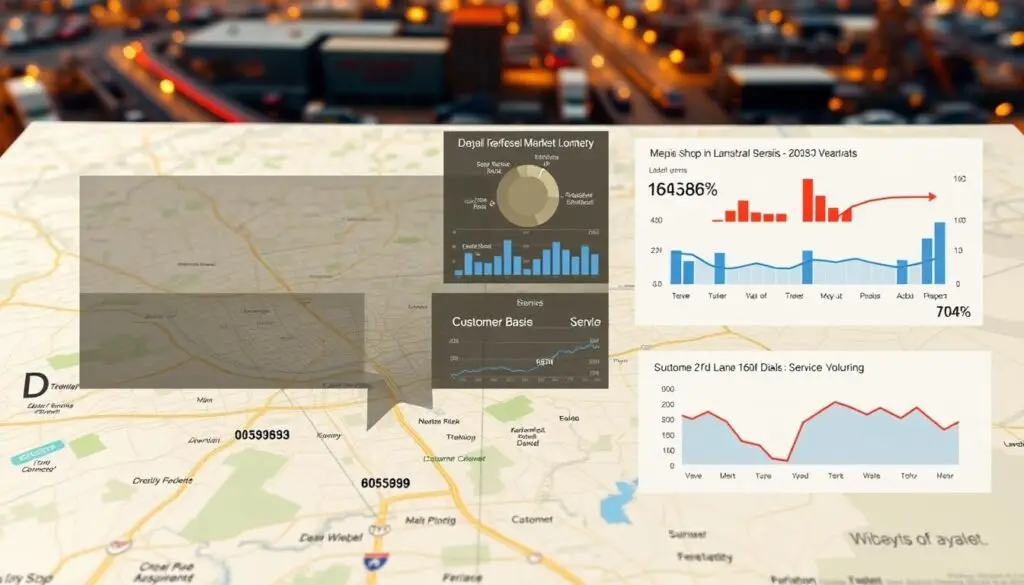
Geographic targeting starts with mapping diesel vehicle activity across potential service territories. State departments of motor vehicles publish commercial vehicle registration data that shows exactly where fleets operate. Transportation agencies track truck traffic volumes on major routes, revealing which corridors experience the heaviest commercial vehicle use.
Highway freight data provides additional insights into transportation corridor opportunities. Interstate exits with high commercial vehicle counts indicate areas where breakdowns occur frequently. Weigh stations and inspection points mark locations where mechanical issues often surface, creating immediate demand for mobile repair services.
Climate patterns significantly influence service demand in different regions. Southern California’s Grapevine pass experiences extreme summer heat that causes overheating and cooling system failures. Northern territories face frozen fuel lines and cold-weather starting problems during winter months. Understanding these seasonal demand variations helps you allocate resources effectively throughout the year.
Small towns along major freight corridors often represent underserved markets. These communities may lack traditional diesel repair facilities but experience consistent truck traffic. Mobile services fill this gap perfectly, offering convenient roadside assistance where fixed shops cannot operate profitably.
Industrial Zones, Distribution Centers, and Transportation Hubs
Manufacturing districts concentrate heavy equipment and commercial vehicles in defined geographic areas. Warehouse and distribution centers maintain delivery fleets that require regular maintenance and emergency repairs. Construction zones utilize diesel-powered machinery that needs immediate service to avoid costly project delays.
Agricultural regions present substantial opportunities for mobile diesel repair expansion. Farm equipment operators need quick response times during critical planting and harvest seasons. The concentration of tractors, combines, and irrigation pumps creates consistent demand for specialized diesel services.
Interstate interchanges serve as natural gathering points for commercial vehicles. Truck stops, rest areas, and weigh stations mark locations where mechanical failures commonly occur. Mobile repair services positioned near these hubs can respond to breakdowns within minutes rather than hours.
Port facilities and rail yards maintain extensive diesel equipment fleets. Container handling equipment, yard trucks, and cargo-moving machinery all require specialized maintenance. These facilities value mobile repair partners who minimize equipment downtime by bringing services directly to the work site.
$448–$760/day
Average cost of truck downtime per vehicle, according to fleet maintenance research from Ryder and Platform Science
Analyzing Competitor Presence and Market Gaps
Competitive analysis requires mapping existing service providers across potential territories. Identify both traditional fixed-location shops and competing mobile operations. Online directories, industry associations, and commercial vehicle forums reveal who currently serves each market.
Market saturation varies significantly between urban and rural areas. Cities may host numerous traditional repair facilities but lack mobile services. Rural corridors between major metropolitan areas often show the opposite pattern—few fixed shops but strong demand for on-site repairs.
Evaluate competitor capabilities beyond simple presence. Some mobile operators specialize in light-duty work and cannot handle heavy trucks. Others focus exclusively on emergency repairs without offering preventive maintenance. These specialization gaps create opportunities for businesses that provide comprehensive services.
| Market Condition | Opportunity Level | Strategic Approach | Risk Factors |
|---|---|---|---|
| ✓ High demand, few mobile providers | Excellent | Rapid expansion with competitive pricing | Low initial competition risk |
| Saturated fixed shops, no mobile services | Very Good | Differentiate on convenience and response time | Customer education required |
| Multiple mobile competitors present | Moderate | Specialize in niche services or superior quality | Price competition pressure |
| Low commercial vehicle density | Poor | Avoid unless adjacent to better territories | Insufficient demand volume |
Understanding Regional Fleet Demographics and Needs
Fleet demographics analysis examines what types of equipment dominate potential territories. Long-haul trucking companies require different services than local delivery fleets. Construction equipment operators have distinct needs compared to agricultural machinery owners. Each segment demands specialized knowledge and equipment.
Research fleet sizes and vehicle ages in target territories. Older equipment requires more frequent repairs but may have owners with limited maintenance budgets. Newer fleets need preventive maintenance and warranty-compliant services. Understanding this demographic mix shapes your service offerings and pricing strategies.
Regulatory environments differ across territories and affect service requirements. California’s strict emissions standards under CARB regulations create demand for specialized diagnostics and repairs. States with rigorous commercial vehicle inspections generate consistent preventive maintenance work. Understanding these regional requirements positions you as a knowledgeable, compliant service provider.
Developing a Strategic Expansion Plan
The difference between thriving expansion and business strain lies in methodical diesel service strategic planning. A comprehensive expansion roadmap balances growth ambitions with realistic operational capabilities and financial resources. Without structured planning, mobile diesel repair businesses risk overextending their teams, depleting capital reserves, and damaging the service quality that built their reputation.
Successful territory expansion requires three interconnected components: clear objectives with defined timelines, data-driven territory prioritization, and a disciplined rollout approach. Each element builds upon thorough market research while accounting for your current operational capacity.

Setting Realistic Growth Objectives and Timelines
Establishing measurable, time-bound growth objectives prevents the common pitfall of aggressive expansion that strains resources. Your objectives should specify exactly what success looks like—whether that means adding one adjacent territory within six months or expanding into three new service areas over two years. Vague aspirations like “grow the business” provide no actionable direction or accountability.
Effective expansion objectives address multiple dimensions of growth. Set specific targets for new customer acquisition rates in each territory, such as securing 15-20 commercial fleet accounts within the first quarter. Define revenue goals per territory that reflect realistic market penetration rates rather than optimistic projections. Establish profitability timelines that acknowledge the financial reality: new territories rarely generate positive returns immediately.
Conservative timelines consistently outperform aggressive schedules in sustainable business building. Rushing expansion to capture perceived opportunities often leads to quality degradation, overwhelmed technicians, and dissatisfied customers who damage your reputation through negative reviews.
Financial Reserve Requirements
Maintain capital reserves covering 6-12 months of operational expenses for new territories before they reach profitability. This safety net protects your core business during the inevitable adjustment period when expenses exceed revenue. Without adequate reserves, temporary setbacks can force premature territory abandonment or compromise service quality across all locations.
Prioritizing Target Territories Based on Potential
Not all expansion opportunities deliver equal returns, making market prioritization essential for strategic resource allocation. A systematic evaluation framework removes emotional decision-making and identifies territories with the highest probability of success.
Develop a weighted scoring system that evaluates each potential territory across multiple criteria. Market demand intensity should carry significant weight—territories with high concentrations of diesel-dependent businesses and underserved repair needs offer faster paths to profitability. Assess competitive intensity to identify markets where you can differentiate your mobile service rather than entering saturated battlegrounds.
Geographic proximity to existing operations affects both startup costs and operational efficiency. Territories adjacent to your current service area reduce travel time, allow shared infrastructure usage, and enable flexible technician deployment during transition periods.
Creating a Phased Rollout Strategy
Sequential expansion through a disciplined phased approach builds organizational capability while minimizing risk exposure. Attempting to launch multiple new territories simultaneously divides attention, strains resources, and prevents the focused execution that ensures quality service delivery.
Begin with territories offering natural advantages—typically areas adjacent to existing operations where your brand may already have recognition from word-of-mouth referrals. Structure each territory launch through distinct operational phases:
The soft launch phase (60-90 days) introduces limited services to test market response, refine logistics, and establish initial customer relationships without full resource commitment. Focus on learning rather than aggressive growth during this pilot period.
The full-service rollout phase (4-6 months) activates complete service offerings and marketing initiatives after validating operational feasibility. Focus on customer acquisition, service delivery excellence, and building market presence. Track performance metrics closely to identify issues before they become entrenched problems.
An optimization period (3-6 months) follows, dedicating effort to refining operations based on real-world experience. Adjust scheduling systems, inventory positioning, and service protocols to maximize efficiency. Only after achieving operational stability and meeting profitability targets should you initiate the next expansion phase.
Stay Ahead of Industry Changes
Fleet maintenance strategies, regulatory updates, and market opportunities evolve constantly. Get actionable insights delivered to your inbox.
Building the Infrastructure for Multi-Territory Operations
Infrastructure development represents the most capital-intensive phase of expansion but determines whether your new territories succeed or struggle. The mobile repair infrastructure you establish before entering new markets directly impacts service quality, response times, and operational profitability.
Successful expansion requires coordinating multiple infrastructure components simultaneously. Your service vehicles must arrive fully equipped, your staging locations need operational readiness, and your inventory systems should provide real-time visibility across all territories.
Acquiring Additional Service Vehicles and Specialized Equipment
Service vehicle acquisition represents your largest single infrastructure investment. The type of work your technicians will perform in new territories determines vehicle specifications and mobile repair equipment needs. Comprehensive roadside emergency services require substantially different capabilities than preventive maintenance operations.
Trucks designed for full-service emergency response must accommodate extensive diagnostic tools, heavy-lift equipment including cranes and hoists, commercial-grade generators, high-torque impact wrenches, heavy-duty jacks, and complete shop tool sets. These vehicles typically use box truck configurations or large commercial vans that provide enclosed workspace protection and organized storage systems.
Preventive maintenance-focused operations can utilize lighter vehicle platforms without sacrificing service quality. Extended cab pickups or standard cargo vans equipped with hand tool sets, oil evacuation systems, and fluid displacement tanks handle routine PM work efficiently. These vehicles offer better fuel economy and easier maneuverability in urban environments.
| Vehicle Type | Primary Applications | Equipment Investment | Typical Range Coverage |
|---|---|---|---|
| Custom Box Truck | Full diagnostic and major repairs | $75,000 – $150,000 | 100-150 mile radius |
| Commercial Van | Emergency service and medium repairs | $45,000 – $85,000 | 75-100 mile radius |
| Extended Cab Pickup | Preventive maintenance and minor repairs | $35,000 – $60,000 | 50-75 mile radius |
Essential mobile repair equipment categories include complete socket sets ranging from standard to deep well configurations, specialized brake and suspension tools, advanced diagnostic scan tools compatible with multiple truck manufacturers, pneumatic impact guns, retractable air hose reels, portable air compressors with adequate CFM ratings, and hydraulic pumps for various applications.
Establishing Strategic Staging Locations
Satellite service locations reduce non-billable drive time and fuel costs while dramatically improving customer response times in distant territories. When technicians start their shifts closer to service areas rather than driving from your main facility, you gain productive hours that translate directly into additional revenue capacity.
These staging locations range from simple arrangements to developed facilities depending on territory needs. Basic setups might involve secure parking agreements with complementary businesses, storage containers for parts inventory, and minimal administrative infrastructure. More developed satellite bases include climate-controlled parts storage, basic office space, restroom facilities for field staff, and vehicle maintenance areas.
Identify optimal satellite locations by analyzing call density patterns, travel time from your main facility, and concentration of customer accounts. Territories requiring more than 45 minutes travel time from your base benefit significantly from local staging. Partner with existing businesses that have secure parking and storage availability, such as truck stops, equipment dealers, or industrial properties with excess capacity.
Implementing Advanced Inventory Management Systems
Managing parts across multiple territories and service vehicles creates operational complexity that manual tracking methods cannot handle effectively. Advanced inventory management systems provide the visibility and control necessary for efficient multi-territory operations. These systems prevent scenarios where technicians arrive at service calls without required components while minimizing excessive parts inventory that ties up working capital.
Technology solutions providing real-time visibility into parts inventory across all service vehicles enable smarter dispatch decisions and improved first-time fix rates. Modern systems use barcode scanning or RFID technology to track parts movements from warehouse to vehicle to installation. Cloud-based platforms synchronize data across all territories automatically, and automated reorder triggers maintain optimal stock levels without manual monitoring.
Hiring and Training Qualified Technicians for New Territories
The success of your territorial expansion hinges on recruiting and developing exceptional mobile diesel technicians. Without qualified professionals who can deliver consistent service across new markets, even the most strategic expansion plans will fail. Your technicians represent your brand at every customer interaction, making diesel technician hiring the cornerstone of sustainable growth.
Mobile diesel repair demands a unique professional profile that differs substantially from traditional shop-based mechanics. These technicians must operate as independent service professionals who manage repairs, customer relationships, and administrative tasks simultaneously.

Recruiting Experienced Diesel Mechanics with Mobile Expertise
The transition from shop environment to mobile service requires specific attributes that not every skilled technician possesses. Self-motivation, adaptability, and customer service orientation matter as much as technical competency. Great shop technicians aren’t automatically great mobile technicians—the lifestyle and working conditions differ significantly.
Mobile technicians must work independently without immediate supervisory oversight or peer consultation. They face unpredictable repair scenarios, transitioning seamlessly from wheel-end repairs to aftertreatment service to electrical diagnostics. Unlike shop mechanics who may specialize in specific systems, mobile professionals need well-rounded technical proficiency across multiple repair types.
⚠️ Talent Shortage Reality
ATRI research shows 65.5% of diesel repair shops were understaffed in 2025, with an average vacancy rate of 19.3%. The shortage contributes to approximately $2.4 billion in lost revenue annually across the trucking industry due to underutilized vehicles and deferred repairs.
Your mobile mechanic recruitment strategy should emphasize competitive compensation packages that reflect specialized mobile work. The median annual wage for diesel service technicians reached $60,640 in May 2024, with increases warranted as technicians establish themselves in mobile operations. Highlight career growth opportunities and the independence that mobile work provides as significant job satisfaction factors.
Leverage existing technician networks for referrals, as current mobile mechanics understand the unique demands and can recommend suitable candidates. Consider recruiting from traditional shops and transitioning promising mechanics to mobile roles through comprehensive training.
Developing Territory-Specific Training Programs
Technical diesel repair skills represent only one component of mobile technician competency. Comprehensive technician training programs must address the full spectrum of responsibilities that mobile professionals handle independently. Some successful operations implement 16-week training academies to onboard new technicians and ensure they can work effectively in isolation while maintaining focus and customer service standards.
Your training curriculum should cover customer interaction and communication since mobile techs represent your company directly without service managers as intermediaries. Technicians need skills in explaining repairs to customers, providing accurate time estimates, and managing expectations professionally.
Mobile-specific diagnostic approaches require different methodologies than shop-based troubleshooting. Technicians work with limited equipment compared to full shop resources, necessitating creative problem-solving and thorough preliminary diagnostics. Training should emphasize efficient parts and inventory management to prevent return trips for forgotten components.
Safety protocols for roadside repairs deserve substantial training attention. Traffic management, proper vehicle positioning, weather considerations, and personal safety in unfamiliar locations require specific preparation. Territory-specific training should address particular equipment types, common failure modes, and environmental conditions prevalent in each service area.
The HDJ Perspective
The diesel technician shortage isn’t a temporary market fluctuation—it’s a structural challenge that will shape the industry for years. Mobile repair operations that invest heavily in recruitment partnerships with technical schools, comprehensive training programs, and competitive retention packages will gain lasting competitive advantages. The 2025 ATRI data showing shops partnering with training programs experience lower turnover and vacancy rates confirms what we’ve observed: treating technician development as a core business function rather than a hiring problem produces measurably better outcomes.
Creating Competitive Incentive Structures for Remote Teams
Retention of qualified mobile technicians requires compensation strategies that acknowledge the demanding nature of remote diesel repair work. Base salary plus performance incentives creates financial stability while motivating excellence. Per-job bonuses for complex repairs, customer satisfaction rewards based on feedback scores, and efficiency incentives for completing calls within target timeframes all contribute to competitive total compensation.
Career path visibility prevents the perception that mobile positions represent dead-end opportunities. Show technicians how they can advance into lead technician roles, training positions, or operational management. Equipment quality and vehicle maintenance standards indirectly impact retention as well—technicians who work from well-maintained service vehicles with proper tools feel valued and can perform efficiently.
Implementing Technology Solutions for Extended Coverage
The success of territorial expansion in mobile diesel repair hinges directly on your ability to deploy integrated technology platforms that coordinate dispersed operations. Without robust mobile service technology, managing technicians across multiple territories becomes an administrative nightmare that drains profitability and frustrates customers.
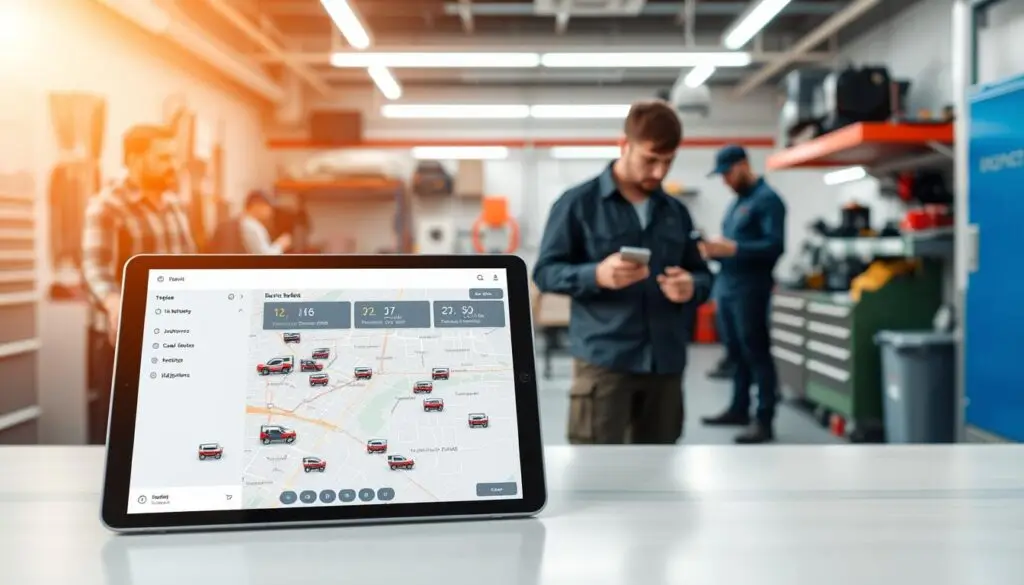
Efficient Routing and Real-Time Vehicle Tracking
Expansion across larger geographic areas makes route optimization systems essential to maintaining profitability. Route optimization software analyzes multiple variables simultaneously to determine the most efficient dispatch decisions and travel sequences. These variables include current technician locations, service call priorities, estimated job durations, traffic conditions, and customer time windows.
The result is minimized fuel costs and response times while maximizing billable hours for each technician. GPS tracking solutions provide real-time visibility into your entire fleet’s locations, enabling dynamic rerouting when urgent calls arise. This technology also generates accurate arrival time estimates that you can share with customers, significantly improving service transparency.
Comprehensive Scheduling and Customer Relationship Platforms
Managing growing customer databases across multiple territories requires robust CRM and scheduling systems. These platforms track detailed service histories and equipment specifications for each customer, ensuring technicians arrive prepared with the right knowledge and parts. Scheduling software efficiently manages preventive maintenance appointments while balancing emergency repair demands.
The analytics generated by these systems provide valuable insights into customer retention rates, service frequency patterns, and revenue per customer across different territories. For businesses managing both emergency repairs and scheduled maintenance services, sophisticated scheduling platforms prevent double-booking while ensuring appropriate skill-matching between technicians and job requirements.
Streamlined Payment Processing and Invoice Management
Mobile operations require seamless financial transactions in the field, making digital invoicing solutions indispensable. Digital invoicing systems allow technicians to generate professional invoices immediately upon job completion, eliminating delays that plague traditional paper-based billing. Mobile card readers and payment apps enable technicians to process credit card and ACH payments on-site, providing customers with instant digital receipts.
The financial data integrates directly into your accounting systems without manual data entry, reducing errors and administrative overhead. Accelerated payment collection dramatically improves cash flow, which is particularly important during expansion when capital demands are high.
Share Your Multi-Territory Expertise
Have you successfully scaled your mobile diesel repair operation across multiple territories? Your insights on infrastructure, staffing, or technology implementation could help other operators avoid costly mistakes.
Marketing Your Services in New Geographic Areas
Breaking into new territories without a focused marketing strategy leaves expensive service capacity underutilized and delays profitability. Your expansion investment in vehicles, equipment, and technicians generates returns only when customers know you exist and trust your capabilities.
Generic, company-wide marketing campaigns rarely produce optimal results in territorial expansion. Each new service area represents a distinct market with unique competitive dynamics, customer preferences, and communication channels.

Developing Localized Marketing Campaigns
Successful customer acquisition strategies begin with treating each expansion territory as its own market requiring customized messaging. Localized campaigns that reference specific geographic areas, address regional pain points, and demonstrate authentic local presence generate significantly stronger response rates than generic advertising.
Creating location-specific website pages optimized for each territory served establishes your digital presence. These pages should include detailed service area descriptions, response time commitments for specific zones, and local contact information that reinforces your accessibility.
Local SEO optimization ensures your business appears prominently when fleet managers and drivers search for “diesel repair near me” or “mobile truck mechanic [city name]” during breakdown emergencies. Critical tactics include claiming and optimizing Google My Business listings for each service area with accurate service radius definitions, and building local citations in business directories relevant to each territory.
Industry-specific directories connect you directly with commercial vehicle operators. Essential listings include NTTR Directory, 4RoadService, and Truckers Assist—platforms where stranded drivers actively search for roadside assistance.
Direct Outreach to Fleet Managers and Transportation Companies
Fleet operators represent the most valuable customer segment because they provide consistent, recurring business. Effective fleet manager outreach requires proactive B2B marketing rather than waiting for inbound inquiries.
Begin by identifying major employers in new territories with commercial vehicle fleets. Research logistics companies, construction firms, utility providers, and municipal operations that maintain diesel-powered equipment. Develop value propositions specifically addressing fleet concerns: predictable response times, comprehensive preventive maintenance programs, transparent pricing structures, and consistent service quality across their entire fleet.
Attending local transportation and logistics industry events provides direct access to decision-makers. Trade shows, industry association meetings, and regional trucking conferences offer networking opportunities that email campaigns cannot replicate.
Building Strategic Partnerships with Local Businesses
Strategic partnerships accelerate market entry by leveraging established relationships that complementary businesses have already built. Truck stops and fuel stations represent ideal partnership opportunities—drivers experiencing mechanical issues often seek recommendations from fuel station attendants.
Towing companies handle situations requiring both roadside assistance and mechanical repairs. Partnership agreements create seamless service delivery where towing operators bring disabled vehicles to safe locations while you provide on-site repairs. Logistics facilities including distribution centers and freight terminals often seek preferred provider arrangements, providing steady business volume.
Navigating Legal and Regulatory Requirements Across Territories
Understanding and fulfilling regulatory compliance obligations across different jurisdictions stands as one of the most critical aspects of territorial expansion. The legal framework governing mobile diesel repair services varies dramatically from state to state and even between counties within the same state.
Securing Required Business Permits and Registrations
Business licensing for diesel repair operations across multiple territories demands careful attention to varying local requirements. Some states require only a single state-level business registration, while others mandate separate licenses for each county or municipality where you conduct business.
Your licensing checklist should begin with fundamental federal requirements. An Employer Identification Number (EIN) from the IRS is essential for any business with employees or operating as a corporation or partnership. State and local requirements vary significantly—general business licenses, reseller’s permits for parts sales, and specialized contractor licenses may all be required depending on jurisdiction.
Small business development centers and local chambers of commerce provide valuable guidance, often at no cost. Consulting with business attorneys who specialize in multi-jurisdiction operations provides additional protection.
Protecting Your Expansion with Appropriate Coverage
Insurance coverage expansion requires careful planning as your service territory grows. The insurance needs for mobile diesel repair operations differ substantially from fixed-location businesses, and territorial expansion amplifies these unique exposures.
General liability insurance forms the foundation of your coverage portfolio, with minimum coverage of $1 million per occurrence standard for commercial operations. Commercial auto insurance protects your service vehicles and potentially covers customer vehicles being worked on—standard personal auto policies exclude business use. Workers’ compensation insurance is required in most states once you hire employees, with requirements and premium rates varying significantly by state.
Garage keeper’s liability insurance protects customer vehicles in your care, custody, or control. Many fleet managers require proof of adequate garage keeper’s coverage before authorizing service work on their equipment.
Meeting Environmental and Workplace Safety Standards
Environmental and safety regulations affect every aspect of mobile diesel repair operations. Proper handling and disposal of waste oil, coolants, antifreeze, and other fluids represents a critical environmental obligation—establish relationships with registered waste haulers and maintain proper documentation.
EPA Section 609 certification is required for technicians servicing mobile air conditioning systems. OSHA requirements for workplace safety apply even in mobile settings—proper safety equipment including high-visibility clothing, traffic control devices, and personal protective equipment isn’t optional.
Managing the Financial Aspects of Territory Growth
The financial dimension of territory expansion can determine whether your growth strategy succeeds or fails. Many mobile diesel repair businesses underestimate the capital requirements and cash flow challenges that come with expanding into new markets.
Calculating Expansion Costs and ROI Projections
Comprehensive financial planning starts with identifying every cost associated with territorial expansion. Major capital expenditures include service vehicle acquisition or lease costs, vehicle upfitting with specialized equipment, diagnostic tools, and initial parts inventory for the new territory.
Technology infrastructure investments shouldn’t be underestimated—dispatch systems, GPS tracking, customer management platforms, and mobile payment solutions all require implementation. Ongoing operational expenses create continuous financial obligations including additional technician salaries, fuel costs, increased insurance premiums, continuous parts replenishment, marketing campaigns, and administrative overhead.
Calculating ROI requires realistic revenue projections. Start by estimating customer acquisition rates based on your market research findings. Calculate your average revenue per customer and per service call in existing territories as a baseline. Determine profit margins after accounting for all direct costs and identify the breakeven point where new territory revenue covers all associated expenses.
Securing Financing Options for Growth Initiatives
Few businesses can fund significant territorial expansion from operating cash flow alone. Traditional bank loans offer established financing paths—term loans work well for equipment purchases, while lines of credit supply working capital flexibility. SBA loan programs provide favorable terms with lower down payment requirements and longer repayment periods.
Equipment financing through vehicle manufacturers or specialized lenders preserves other credit lines for operational needs. Evaluate each financing option’s total cost including interest, fees, and any equity dilution to match funding sources to specific expansion needs.
Establishing Competitive Pricing Strategies for New Markets
Your pricing strategy directly impacts both market penetration speed and long-term profitability. Cost-plus pricing calculates all expenses and adds your target profit margin, ensuring profitability but potentially pricing you out of competitive markets. Value-based pricing sets rates according to customer value received—when you minimize downtime for commercial fleets, the value delivered far exceeds your service cost.
Structure pricing differently for various service types. Emergency breakdown services justify premium pricing because customers face immediate operational losses. Scheduled preventive maintenance operates in more price-competitive environments. Fleet contracts provide revenue stability and predictable scheduling, while transactional pricing offers higher per-service margins but less predictable revenue.
Monitoring Performance and Optimizing Your Expansion Strategy
Successfully expanding your mobile diesel repair service requires ongoing performance analysis. Territorial expansion is not a “set and forget” initiative but demands continuous monitoring, evaluation, and refinement. The difference between expansion success and failure often lies in how quickly you identify problems and capitalize on opportunities.
Essential Metrics That Drive Expansion Success
KPI tracking across multiple territories requires a comprehensive dashboard providing visibility into three critical performance areas: operational efficiency, financial performance, and customer satisfaction.
Operational KPIs form the foundation of performance monitoring. Average response time from initial customer call to technician arrival directly impacts customer satisfaction and competitive positioning. First-time fix rate—the percentage of repairs completed without return visits—indicates both technician skill levels and parts inventory effectiveness. Technician utilization rate compares billable hours against total working hours, revealing scheduling efficiency.
Financial KPIs determine whether expansion delivers acceptable returns. Revenue per territory identifies which geographic areas generate highest income. Profit margin analysis by territory and job type reveals where your business earns money versus where it generates activity without profitability. Customer acquisition cost in each territory shows marketing efficiency.
Customer-related KPIs measure relationship strength and brand reputation development. Customer retention rate shows what percentage of clients return for additional services. Net Promoter Score or satisfaction ratings quantify customer loyalty and willingness to recommend your business.
Translating Data Into Operational Improvements
Data-driven optimization transforms monitoring insights into concrete operational improvements. Territory boundary adjustments based on actual demand patterns and travel times improve efficiency—initial expansion plans reflect assumptions that real-world operations may prove inaccurate.
Reallocating technicians between territories addresses workload imbalances that emerge as markets develop. Modifying parts stocking strategies based on actual repair patterns in each territory reduces downtime and improves first-time fix rates. Refining marketing approaches based on customer acquisition costs and conversion rates by channel optimizes promotional spending.
Establish regular review cycles—monthly for operational metrics, quarterly for strategic assessments—that examine performance trends rather than isolated data points. Document what changes you implement, the reasoning behind adjustments, and results achieved to build institutional knowledge for future expansion efforts.
Frequently Asked Questions
How much does it cost to expand a mobile diesel repair business into a new territory?
Expansion costs vary significantly based on your service model. A fully equipped mobile service truck for comprehensive emergency repairs typically requires $75,000 to $150,000 in vehicle and equipment investment. Preventive maintenance-focused operations can start with $35,000 to $60,000. Beyond vehicles, budget for satellite staging facilities ($500-$1,500 monthly), parts inventory ($15,000-$40,000 initial stocking), marketing campaigns ($2,000-$5,000 monthly during launch), and working capital reserves covering 6-12 months of operational expenses before the territory reaches profitability.
What performance metrics should I track when expanding my mobile diesel repair service?
Track operational, financial, and customer satisfaction KPIs across each territory. Operational metrics include average response time (target under 90 minutes), first-time fix rate (target above 85%), and technician utilization rate (target 70% or higher billable hours). Financial metrics include revenue per territory, profit margin per service call (target minimum 25%), and customer acquisition cost. Customer metrics include retention rate (target 70% or higher), Net Promoter Score, and repeat business percentage. Compare these metrics across territories to identify high-performing and underperforming areas requiring attention.
How do I find qualified diesel technicians for new service territories?
Mobile diesel repair requires technicians with both technical proficiency and strong soft skills for independent field work. Leverage existing technician networks for referrals, as current mobile mechanics understand the unique demands and can recommend suitable candidates. Partner with local diesel technology programs at community colleges and vocational schools—ATRI research shows shops that recruit from training programs experience lower turnover and vacancy rates. Consider recruiting experienced shop technicians and transitioning them through comprehensive training programs. Competitive compensation starting around the national median of $60,640 for diesel service technicians, combined with performance incentives and career advancement opportunities, helps attract qualified candidates.
What licenses and insurance do I need to operate mobile diesel repair in multiple states?
Multi-state mobile operations require careful attention to varying jurisdictional requirements. At minimum, you need an EIN from the IRS, general business licenses or tax certificates from each city or county where you operate, and reseller’s permits for parts sales. Insurance requirements include general liability (minimum $1 million per occurrence), commercial auto coverage for all service vehicles, workers’ compensation in states where you have employees, and garage keeper’s liability for customer vehicles in your care. Many fleet managers require proof of insurance before authorizing service work. EPA Section 609 certification is required for any technicians servicing mobile air conditioning systems.
How long does it take for a new territory to become profitable?
Most mobile diesel repair territories require 6-18 months to reach profitability, depending on market conditions, competition, and marketing investment. A phased approach improves success rates: soft launch (60-90 days) tests market response and refines logistics; full-service rollout (4-6 months) focuses on customer acquisition and building market presence; optimization (3-6 months) fine-tunes operations based on real-world performance data. Maintain capital reserves covering 6-12 months of operational expenses before expansion. Territories adjacent to existing operations typically reach profitability faster due to brand recognition spillover and shared infrastructure efficiencies.
Moving Forward with Strategic Expansion
Mobile diesel repair territory expansion represents a significant opportunity for established service providers ready to scale their operations. The industry faces a persistent technician shortage while demand continues rising, creating favorable conditions for businesses that expand methodically and maintain service excellence.
Successful territorial growth depends on executing a disciplined strategy. This means conducting thorough market research before entering new areas, investing in proper infrastructure and technology, recruiting qualified technicians, and maintaining operational excellence across all service zones. Businesses that rush expansion without adequate preparation often struggle with quality issues and financial strain.
The mobile diesel repair sector offers compelling fundamentals. Lower overhead costs compared to fixed-location shops, combined with high customer demand for on-site service, create strong profitability potential. Fleet operators increasingly rely on mobile technicians to minimize downtime and keep their operations running efficiently.
Businesses that have achieved operational excellence in their current territories should evaluate expansion opportunities seriously. The combination of proven business models, underserved markets, and strong industry fundamentals creates an environment where strategic growth can deliver substantial returns for those willing to plan carefully and execute effectively.
Share This Guide With Your Network
Know other mobile diesel repair operators considering expansion? This comprehensive guide covers the strategic framework, infrastructure requirements, and operational best practices for scaling into new territories.