By Michael Nielsen, Editor & Publisher | 15+ Years in Diesel Repair
Last Updated: December 2025
📖 Estimated reading time: 22 minutes
Modern heavy-duty diesel engines convert roughly 39% of their fuel energy into usable power, according to research from the International Council on Clean Transportation. This efficiency depends entirely on reliable injection delivery. Today’s common rail fuel systems operate at pressures between 23,000 and 26,000 psi, with some reaching 36,000 psi during demanding conditions.
These extreme operating environments make the high-pressure fuel pump one of the most vulnerable components in contemporary diesel powerplants. When diesel injection pump problems develop, operators notice hard starting, power loss, excessive smoke, rough idling, or unexpected stalling. Early detection prevents catastrophic damage and reduces costly fleet downtime.
This comprehensive guide walks fleet managers, diesel technicians, and equipment operators through fuel system diagnostics from initial symptoms to repair decisions. Contamination—particularly water and particulate matter—causes most premature component failure. Understanding these risks helps protect your investment and maintain peak performance.
Key Takeaways
- Extreme operating pressures: Modern common rail systems operate at 23,000-36,000 psi, creating tremendous stress on precision components with tolerances measured in five-place decimals.
- Contamination is the primary enemy: Water and particulate matter cause the majority of premature pump failures—fuel quality management is your most effective preventive measure.
- Progressive symptom recognition saves money: Hard starting, rough idle, and power loss in early stages escalate to stalling and no-start conditions if ignored.
- Systematic diagnosis prevents misdiagnosis: Many technicians replace pumps unnecessarily when injector leakage, sensor faults, or metering valve issues are the actual root cause.
- Safety is non-negotiable: High-pressure fuel can penetrate skin and cause severe injection injuries—proper depressurization and PPE are mandatory before any diagnostic work.
How High-Pressure Common Rail Fuel Systems Work
High-pressure common rail fuel injection systems represent a fundamental shift in diesel engine technology, requiring technicians to understand complex electronic and hydraulic interactions. These systems have become standard equipment in heavy-duty applications from manufacturers like Cummins, Detroit Diesel, and Caterpillar since the early 2000s. The transition from older mechanical systems to electronically controlled common rail systems has dramatically increased both performance capabilities and diagnostic complexity.
The engine control module (ECM) serves as the central command unit for modern diesel fuel delivery. It continuously monitors and adjusts rail pressure, fuel metering, injection timing, and engine speed based on sensor inputs and operating conditions. This electronic oversight allows for precision that mechanical systems simply cannot achieve.
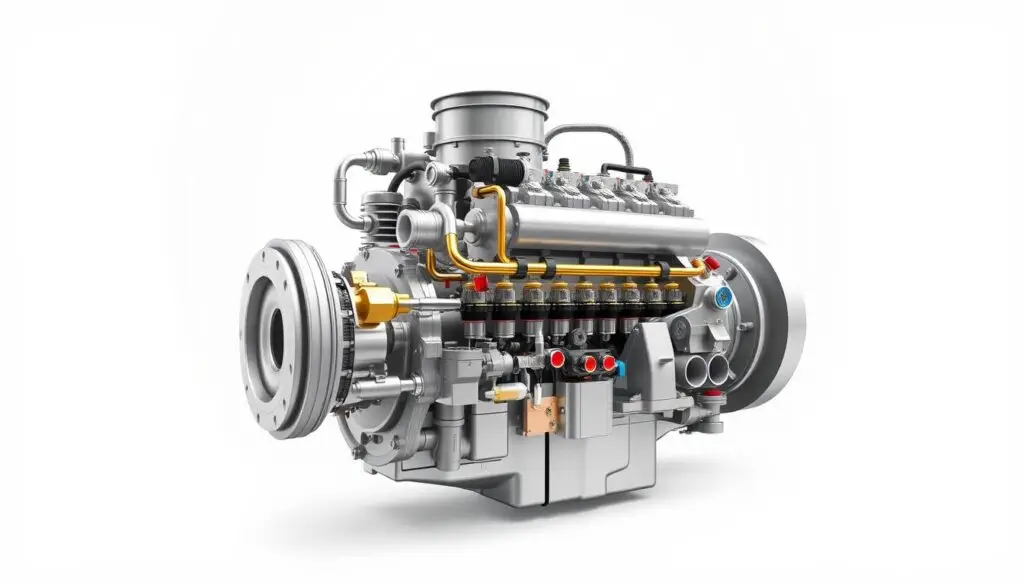
The system operates through a carefully orchestrated multi-stage process. A low-pressure lift pump draws fuel from the tank and delivers it at approximately 10 psi to the high-pressure pump assembly. The inlet metering valve—also called the fuel control actuator or fuel-rail pressure regulator—represents a critical control point. The ECM commands this valve to regulate the volume of fuel entering the high-pressure pumping elements.
From the high-pressure pump, fuel flows into the common rail accumulator where it maintains constant pressure. This pressurized fuel remains available to all injectors simultaneously, allowing for extremely precise injection timing and duration. Modern common-rail diesel injectors can fire two or three times per engine cycle, which doubles or triples the mechanical wear compared to previous generations.
Critical Differences: Common Rail vs. Pump-Line-Nozzle Systems
Understanding the contrast between modern common rail and older Pump-Line-Nozzle (PLN) systems helps technicians appreciate why diagnostic approaches must adapt to current technology. PLN systems operated at roughly half the pressure of modern engines and used much larger fuel passages with greater tolerance for contamination.
| System Characteristic | Common Rail (HPCR) | Pump-Line-Nozzle (PLN) |
|---|---|---|
| Maximum Operating Pressure | 25,000+ psi | 12,000-15,000 psi |
| Injection Events Per Cycle | 2-3 injections | 1 injection |
| Pressure Control Method | Electronic inlet metering valve | Mechanical governor |
| Response Time | Millisecond precision | Mechanical delay |
The Role of the High-Pressure Fuel Pump
The high-pressure fuel pump—commonly a CP3 or CP4 design in popular applications—serves as the heart of the entire fuel delivery system. This pump receives fuel from the inlet metering valve at controlled supply pressure and uses reciprocating plungers to generate the extreme pressures required for proper atomization. The plungers are driven directly by the engine’s camshaft, linking pump output to engine speed.
Pump function depends on maintaining precise tolerances between internal components while operating under tremendous mechanical stress. These pumps must produce consistent output across widely varying engine speeds and load conditions. At idle, the pump operates at relatively low speeds with minimal demand, but under full throttle at highway speeds, it must deliver maximum volume at peak pressure.
The pump relies on diesel fuel itself for both lubrication and cooling. This dependence creates vulnerability to fuel quality issues and contamination. When fuel quality degrades or contaminants enter the system, the pump experiences accelerated wear that can quickly progress to complete failure.
Recognizing Warning Signs of Diesel Fuel Pump Problems
Heavy-duty diesel engines communicate distress through specific symptoms when the high-pressure fuel pump begins to fail. These warning signals progress from subtle performance changes to critical system failures. Recognizing early indicators allows operators to address issues before complete pump failure causes expensive downtime or engine damage.
The deterioration pattern typically follows a predictable sequence. Initial symptoms might seem minor or intermittent. However, these early signs indicate internal wear that will only worsen with continued operation.
Early Stage Symptoms
The first indicators often appear during routine operation. Drivers may notice subtle changes in engine behavior that seem inconsistent or temperature-dependent. These early warnings provide the best opportunity for cost-effective intervention.
Hard starting represents one of the most common early symptoms. A healthy high-pressure pump builds rail pressure quickly during cranking. When internal components wear, the pump struggles to generate sufficient pressure for proper fuel atomization. Cold morning starts that previously took 2-3 seconds may gradually extend to 8-10 seconds—this progressive change indicates increasing internal pump leakage.
Rough idle and power loss symptoms become evident as wear advances. Inconsistent fuel delivery creates uneven combustion across cylinders, manifesting as noticeable vibration through the cab. The vehicle may hesitate when you press the throttle, and uphill performance suffers compared to previous capabilities.
Progressive Performance Issues
As pump wear advances, symptoms become more consistent and measurable. Fleet managers often notice fuel economy declining by 10-15% before other symptoms become obvious. Tracking fuel consumption provides quantifiable evidence of pump degradation—a vehicle that previously achieved 6.5 MPG may drop to 5.5 MPG with no other operational changes.
Exhaust smoke color provides valuable diagnostic information. Black smoke indicates excessive fuel delivery that cannot burn completely, possibly from a stuck pressure relief valve or failed control actuator. White smoke suggests insufficient atomization due to low rail pressure—fuel enters the cylinders but doesn’t burn efficiently because droplet size remains too large.
Critical Failure Indicators
Late-stage symptoms demand immediate attention. Engine stalling creates dangerous situations—the engine may die unexpectedly while driving, leaving you without power steering or brake assist. No-start conditions represent total pump failure where diagnostic scanners show rail pressure remaining near zero during cranking.
Unusual noises from the pump location signal imminent catastrophic failure. Grinding indicates bearing deterioration, squealing suggests seal failure, and metallic knocking points to plunger seizure or broken internal parts. Any unusual noise emanating from the high-pressure pump requires immediate engine shutdown.
| Symptom Category | Primary Indicators | Recommended Action |
|---|---|---|
| Early Stage | Extended cranking, rough idle, hesitation | Schedule diagnostic evaluation within 2-4 weeks |
| Progressive Issues | Reduced MPG, exhaust smoke, power loss | Perform pressure testing within 1 week |
| Critical Failure | Stalling, no-start, unusual noises | Immediate shutdown and professional repair |
Root Causes of High-Pressure Fuel Pump Failure
Identifying why high-pressure fuel pumps fail starts with recognizing that fuel quality issues, mechanical wear, and electronic malfunctions often work together to compromise system integrity. The interconnected nature of diesel fuel systems means that a single contamination event can trigger multiple failure modes simultaneously.
“Fuel, fuel and fuel. The primary concern is too much emulsified water in the fuel system.”
— Todd Emmert, Machine Shop Manager, Scheid Diesel
Contaminated Fuel and Debris Damage
Fuel contamination represents the single most common cause of high-pressure pump failures in heavy-duty diesel applications. Foreign materials act like grinding compound on precision components designed to tolerances measured in five-place decimals. What appears as minor contamination to the naked eye becomes catastrophic at the microscopic level where fuel pumps operate.

Water in diesel fuel creates multiple failure mechanisms. Moisture enters through condensation in partially filled tanks, compromised storage tank seals, and rainwater infiltration around fuel cap seals. Biodiesel components in standard No. 2 diesel are hygroscopic—they naturally attract and hold water molecules from the atmosphere. This tendency becomes more pronounced in humid climates or when fuel sits in storage for extended periods.
Water impedes lubricity by preventing the fuel film that normally protects moving parts. Direct metal-on-metal contact occurs on pump plungers, drive cams, and injector valve seats. Water also creates a distinctive golden or bronze-colored residue on fuel system components from corrosion reactions.
Solid contaminants create abrasive conditions that rapidly degrade pump internals. Rust particles from corroded fuel tanks are extremely hard and angular, making them particularly destructive. Biological contamination grows at the fuel-water interface in tanks containing free water, forming acidic byproducts and sticky biomass that clogs filters.
Inadequate Lubrication and Fuel Quality Issues
Ultra-low sulfur diesel (ULSD) regulations dramatically reduced sulfur content from 500 parts per million to 15 parts per million. While this change benefits air quality and allows modern emissions control devices to function, it removed natural lubricity that sulfur compounds provided. The high-pressure pump relies entirely on diesel fuel for lubrication—there is no external lubricant supply.
ULSD formulations require lubricity additives to compensate for lost protection. Fuel refiners typically add these compounds during production, but additive quality and concentration vary between suppliers. The High Frequency Reciprocating Rig (HFRR) test measures lubricity—diesel fuel should produce a wear scar below 520 microns for adequate pump protection.
Aftermarket fuel additives offer both benefits and potential risks. Quality lubricity improvers restore protective film, while cetane boosters improve combustion characteristics. However, incorrect additive selection or excessive dosing can cause seal swelling or deposits. Fleet operators should verify additive compatibility with their specific fuel injection system before implementing treatment programs.
Mechanical Wear and Electronic Control Failures
Physical deterioration of pump components progresses through predictable stages as operating hours accumulate. The reciprocating motion of pump plungers combined with extreme pressures creates constant mechanical stress. Initial wear appears as polishing on plunger surfaces. As wear continues, grooves and scoring develop that provide channels for internal leakage reducing pressure output.
Advanced plunger and barrel wear manifests as reduced rail pressure, especially at higher engine speeds when fuel flow demands peak. The pump may maintain adequate pressure at idle but fail to build sufficient pressure under load.
Electronic control system malfunctions prevent proper pump operation even when mechanical components remain sound. The inlet metering valve controls fuel flow into the pump—coil failures, stuck valve components, or wiring problems cause either excessive or insufficient pressure. Fuel rail pressure sensors provide critical feedback, and sensor drift or failure causes the control system to miscalculate required pump output. Wiring harness issues create intermittent problems that prove difficult to diagnose.
Stay Current on Diesel Diagnostics
Fuel system technology and diagnostic techniques evolve constantly. HDJ delivers practical technical content for fleet managers and diesel technicians every week.
Pre-Diagnostic Safety Protocols
The extreme pressures present in common rail diesel systems create hazards that require professional-level safety awareness. Common rail systems operate at pressures between 23,000 to 26,000 psi—some reach even higher. At these levels, diesel fuel becomes a dangerous substance capable of penetrating skin and causing severe injection injuries.
⚠️ Safety Warning
High-pressure fuel leaks create invisible, high-velocity jets that can slice through tissue. Never assume a system is safe based solely on time since the engine was last running—residual pressure can remain for hours. Always wear appropriate PPE including ANSI-rated face shields, chemical-resistant gloves, and protective coveralls before approaching any high-pressure fuel system.
Depressurizing the Fuel System
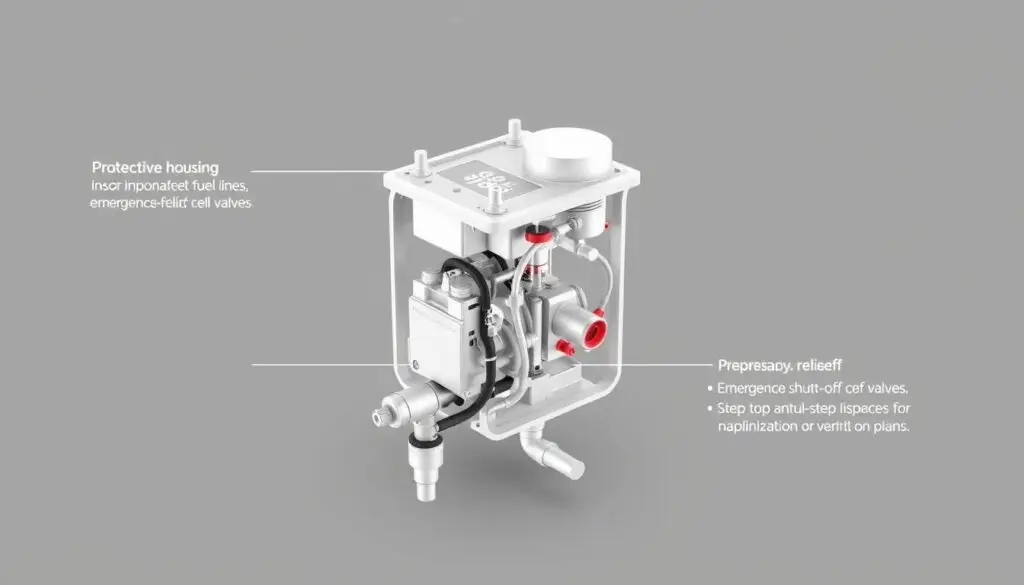
Fuel system depressurization represents the most critical safety procedure before diagnostic work. Systems retain dangerous pressure levels for hours or even days after engine shutdown. The depressurization process varies significantly between manufacturers—always consult the service manual for specific procedures.
Begin by disconnecting the battery negative terminal to prevent accidental engine starting or pump activation. Follow the manufacturer-specified pressure relief method precisely. When initially loosening fuel connections, wear full PPE and position yourself away from potential spray paths. Slightly crack fittings while watching for fuel spray—if any appears, immediately retighten and repeat depressurization procedures.
Work Area Preparation
Diesel fuel vapors are heavier than air and accumulate in low areas. Adequate ventilation is essential—position fans to carry vapors away from the work area. Eliminate all ignition sources including open flames, welding equipment, and spark-producing electrical tools.
Establish proper fuel containment before loosening any connections. Place drip pans under all work areas and use absorbent materials designed for petroleum products. Dispose of contaminated materials according to EPA hazardous waste regulations.
Essential Diagnostic Tools and Equipment
Professional technicians rely on a comprehensive toolkit to pinpoint high-pressure fuel pump failures accurately. The complexity of modern common rail systems requires sophisticated electronics and precision mechanical instruments.

Electronic Diagnostic Scanners
A quality diesel diagnostic scanner serves as your primary window into the fuel system’s electronic brain. These tools read trouble codes, display live data streams, and perform active tests on system components.
Manufacturer-specific tools provide the deepest system access. Cummins INSITE offers complete control over Cummins engines with bidirectional testing capabilities. Detroit Diesel Diagnostic Link (DDDL) serves the same purpose for Detroit engines, while Cat Electronic Technician provides comprehensive diagnostics for Caterpillar powerplants. These OEM tools enable injector cutout tests, fuel pressure regulation testing, and precise calibration verification.
Professional-grade aftermarket tools offer excellent functionality at more accessible price points. Quality scan tools must support J1939 and J1708/J1587 communication protocols for heavy-duty diesel applications. The key requirement is live data streaming capability—monitoring actual versus commanded fuel pressure in real-time reveals problems that static code readings miss.
Fuel Pressure Testing Equipment
Electronic scanners show what the computer thinks is happening. Physical pressure measurements reveal what’s actually occurring in the fuel system. This combination confirms whether sensor readings match reality.
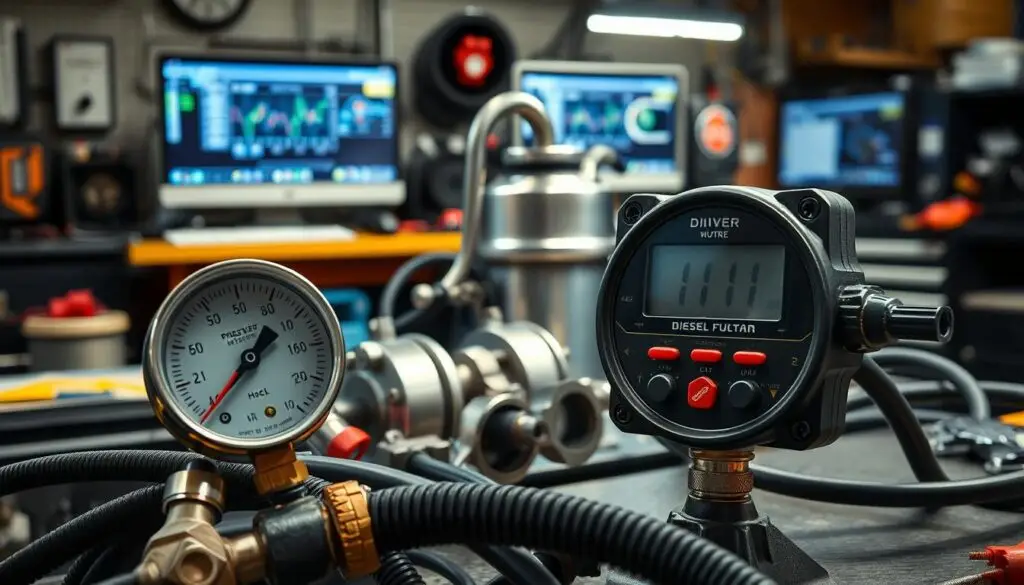
A proper fuel pressure gauge for diesel diagnostics must handle minimum ratings of 3,000 bar (43,500 psi). Standard automotive gauges designed for gasoline systems will fail catastrophically at these pressures. Equally important is a complete adapter set—different manufacturers use various test port configurations and thread sizes.
Digital pressure transducers offer significant advantages over mechanical gauges. They provide continuous electrical output that computers can record and analyze, capturing rapid pressure fluctuations that mechanical gauge needles cannot follow. Data logging enables detailed analysis under various operating conditions.
Common Diagnostic Trouble Codes
Several DTCs point directly to high-pressure fuel pump issues. Code P0087 indicates fuel rail pressure below commanded value—pump failure, supply restriction, or excessive return flow. Code P0088 signals pressure too high, suggesting a stuck relief valve or failed control actuator. P0191 indicates the fuel rail pressure sensor performing erratically. P0093 means a large fuel leak is detected, while P1093 signals fuel system pressure error during cranking. P2293 specifically indicates fuel pressure regulator performance problems.
The HDJ Perspective
The shift to common rail technology has fundamentally changed what it means to diagnose fuel system problems. Twenty years ago, a seasoned diesel mechanic could identify most injection issues by sound, smell, and visual inspection alone. Today’s 26,000+ psi systems demand a different approach—one that balances traditional hands-on skills with electronic diagnostic proficiency. The technicians who thrive in modern fleet shops are those who understand that a scan tool reading is just the starting point, not the diagnosis. They know when to trust the data and when to dig deeper with pressure gauges, flow measurements, and visual inspection. Most importantly, they’ve learned that the most expensive repair is the wrong one—systematic diagnosis may take more time upfront, but it prevents the costly cycle of replacing parts that weren’t actually failed.
Step-by-Step Diagnostic Procedures
Systematic diagnosis follows proven protocols that identify problems efficiently. Beginning with visual checks and progressing to advanced measurements ensures no potential failure point gets overlooked.
Initial Visual Inspection
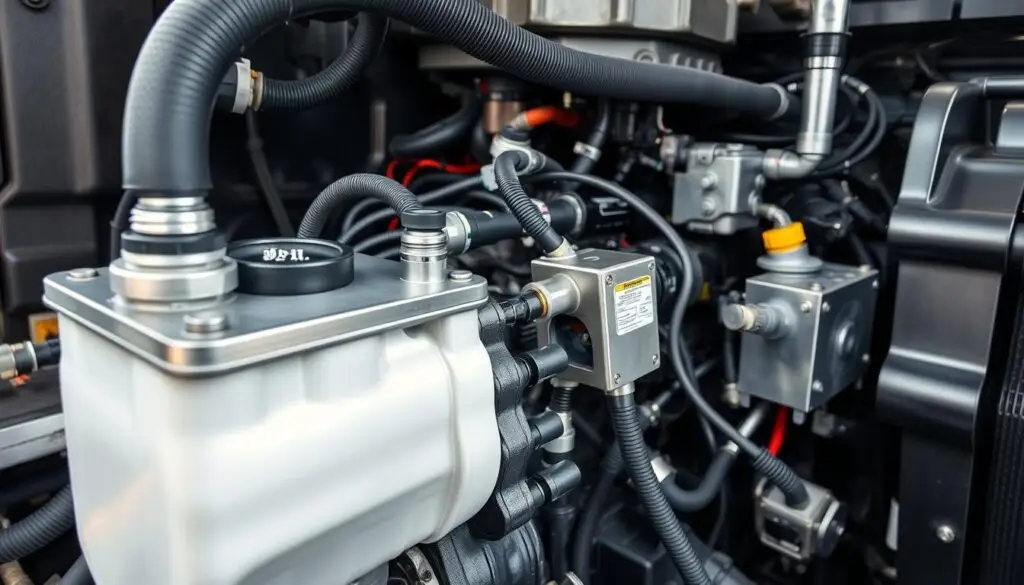
Begin with thorough visual examination before connecting any testing equipment. Look for fuel leaks around the high-pressure pump—even small wet spots or staining signal problems. Examine all connection points where fuel lines attach to the pump and rail. Check injector bases for fuel seepage appearing as dark staining.
Inspect electrical connections to the inlet metering valve and fuel rail pressure sensor. Corrosion in these connectors creates resistance affecting sensor readings and control signals. Check wiring harnesses near hot exhaust components for physical damage or oil contamination inside connectors.
Examine the fuel-water separator for accumulated water. Trace the entire fuel path from tank to pump looking for collapsed or kinked supply lines. Replace fuel filters if the last change date is unknown or if filters appear darkened and saturated.
Reading Diagnostic Trouble Codes
Checking diagnostic trouble codes should be the first electronic test performed. Modern diesel engines store fault codes providing valuable clues about fuel system problems. The injection balance rate displayed by scan tools indicates cylinder performance during cranking, showing crank-speed values on each piston’s downstroke.
When several codes appear simultaneously, logical analysis determines which fault occurred first. The initial failure triggers secondary codes as other systems respond. Clearing all codes and attempting restart often reveals which code returns first. Review freeze frame data to see engine conditions when each fault occurred.
Fuel Pressure Testing Sequence
Physical pressure testing provides concrete data about pump performance that confirms or disputes scan tool readings. Professional pressure gauges rated for diesel common rail systems are essential—digital transducers connected to scan tools provide real-time graphing.
Testing during cranking establishes whether the pump generates pressure at all. Disable fuel injection and crank the engine while monitoring pressure buildup. Most common rail systems should build at least 250 bar within several seconds. Failure to build pressure indicates severe pump wear or drive coupling failure.
Start the engine and compare actual fuel rail pressure to commanded pressure. At idle, these values should match within 50 bar. Increase engine speed to 1,000 RPM, then 1,500 RPM, and 2,000 RPM while recording pressure at each point. Document how quickly pressure responds when you snap the throttle open—healthy pumps increase pressure immediately.
Pump Volume and Flow Rate Testing
Measuring actual fuel volume confirms whether output capacity meets specifications. Remove the high-pressure discharge line from the pump, attach a suitable hose, and collect fuel in a graduated cylinder during testing.
Check injector return line flow by routing it into a graduated cylinder. Crank the engine for ten seconds and measure collected volume. At cranking speeds around 150 RPM, collected amount should reach approximately 70 ml. Excessive return flow from injectors—more than 20 cc per minute during operation—indicates worn high-pressure seals and forces the pump to work harder while system pressure remains low.
Share Your Fuel System Diagnostic Experience
HDJ readers benefit from real-world technician insights. If you’ve developed effective diagnostic procedures or solved challenging fuel system problems, consider contributing to the conversation.
Advanced Testing and Verification Methods
Precision testing separates suspected component failures from actual defects. These sophisticated procedures provide measurable data confirming exactly which components have failed and why.
Fuel Metering Valve Testing
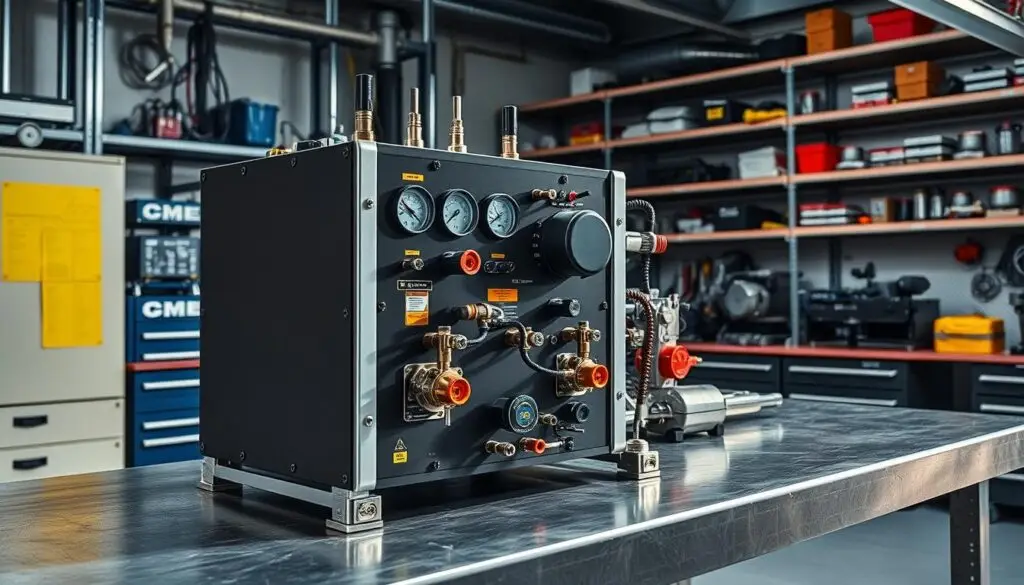
The fuel metering valve controls how much diesel enters the high-pressure pump. When this valve fails, the entire fuel delivery system operates incorrectly regardless of pump condition.
Use a digital multimeter to measure resistance across valve coil terminals. Most designs specify resistance between 2 and 8 ohms—values outside this range indicate coil failure. Check for proper voltage supply from the ECM. Modern scan tools offer bidirectional control functions to command the metering valve through its full operating range while monitoring system response.
Monitor fuel pressure while cycling the actuator between minimum and maximum positions. Pressure should respond immediately to commanded changes. Delayed response or no pressure change indicates mechanical seizure or internal contamination despite correct electrical readings.
Bench Testing the High-Pressure Pump
Removing the pump for bench testing provides the gold standard for definitive diagnosis. Professional test equipment delivers precise performance measurements impossible to obtain while the pump remains installed.
Mark pump timing position before removal to ensure correct reinstallation alignment. Clean external surfaces thoroughly and inspect the drive coupling for unusual wear patterns. Check for metal particles in the pump inlet—these reveal upstream filtration problems that must be corrected.
Professional test stand procedures measure actual fuel output volume at various simulated engine speeds. Compare measured output against manufacturer specifications. Leak-down testing establishes full system pressure, stops pump operation, and monitors how quickly pressure decreases—rapid loss confirms internal wear or seal failure.
Fuel Rail Pressure Sensor Verification
Inaccurate pressure sensor readings create common misdiagnosis scenarios where technicians suspect pump failure when the actual problem involves faulty sensors. Measure sensor voltage output at various pressure levels—common rail sensors typically output between 0.5 and 4.5 volts proportional to pressure.
Install a calibrated mechanical pressure gauge at the fuel rail test port and compare readings to sensor voltage output simultaneously. Discrepancies exceeding 5% indicate sensor failure rather than actual pressure problems.
Making Repair Versus Replacement Decisions
Once you’ve identified pump failure through systematic diagnostics, determining the most cost-effective path forward requires balancing technical factors, financial considerations, and operational requirements.
Assessing Damage Severity
Thorough evaluation determines whether repair makes technical and financial sense. Examine plungers and barrels for scoring, pitting, or dimensional wear beyond service limits. Check seals and O-rings for hardening, cracking, or deformation. If internal components show moderate wear confined to easily replaceable parts, repair becomes economically viable. Extensive wear typically makes replacement more cost-effective—the decision point occurs when repair costs exceed 60-70% of replacement costs.
Determining whether contamination caused the failure is critical before proceeding. Examine failed components for characteristic damage patterns. Address contamination sources before installing any pump—repaired or new—to prevent repeat failure.
Cost-Benefit Analysis
The total cost equation includes parts, labor hours, and operational downtime. Parts costs vary significantly: repair components typically cost $300-$800, remanufactured pumps range from $600-$1,600, and new units run $1,500-$4,000 depending on application.
Downtime costs often exceed direct repair costs for commercial operations. A truck sitting idle costs $500-$1,500 per day in lost revenue. This reality makes faster solutions more economically attractive even if parts costs are higher.
| Pump Option | Typical Price Range | Warranty Period | Best Application |
|---|---|---|---|
| New OEM Pump | $1,500 – $4,000 | 2-3 years | Critical applications, maximum reliability |
| Quality Remanufactured | $600 – $1,600 | 1-2 years | Standard applications, proven suppliers |
| Component Repair | $300 – $800 + labor | 90 days – 1 year | Minor failures, newer pumps with limited wear |
Preventive Measures After Repair
Protecting your investment requires proper installation and ongoing maintenance. Thoroughly flush the entire fuel system before installing a replacement pump—this removes contaminants that caused the original failure.
Replace fuel filters at manufacturer-recommended intervals, typically every 10,000-15,000 miles. Drain water separators at every fuel stop or daily in commercial operations. Test fuel quality periodically, especially when filling from unfamiliar sources. Use appropriate fuel additives to maintain lubricity—industry professionals recommend products from manufacturers who understand how pumps function and wear.
Frequently Asked Questions
What are the first signs of diesel fuel pump failure?
The earliest indicators typically include extended cranking times before the engine fires, especially during cold starts. A healthy pump builds rail pressure within 2-3 seconds, while a deteriorating pump may require 8-10 seconds or longer. Rough idling with noticeable cab vibration and hesitation during acceleration often accompany these starting issues. Tracking these symptoms over time reveals progressive deterioration that warrants diagnostic evaluation before complete failure occurs.
How often should fleet vehicles have fuel system inspections?
Most fleet maintenance programs should include fuel system evaluation during routine PM services, typically every 15,000-25,000 miles depending on operating conditions. This includes checking fuel filter condition, draining water separators, and monitoring fuel pressure readings through scan tool data. Trucks operating in dusty environments, using variable fuel sources, or hauling heavy loads may benefit from more frequent inspections. Document fuel economy trends as declining MPG often signals fuel system issues before other symptoms appear.
Can contaminated fuel damage a new high-pressure pump immediately?
Yes, severe contamination can damage precision pump components within hours of installation. Water in the fuel system attacks pump surfaces through corrosion and displaces the lubricating fuel film, while particulate matter acts as abrasive grinding compound. This is why thorough fuel system flushing before installing any replacement pump is critical. Installing a new pump into a contaminated system virtually guarantees premature failure and wasted investment.
What’s the difference between P0087 and P0088 diagnostic codes?
Code P0087 indicates fuel rail pressure below commanded value—the system cannot build enough pressure to meet demand. Common causes include pump failure, supply restrictions, clogged filters, or excessive injector return flow. Code P0088 signals the opposite problem: fuel rail pressure too high. This typically results from a stuck pressure relief valve, failed inlet metering valve in the closed position, or sensor malfunction. Both codes require systematic diagnosis since multiple components can trigger either condition.
Is it safe to continue driving with fuel pump symptoms?
Early-stage symptoms like slightly extended cranking or occasional rough idle generally allow limited continued operation while you schedule diagnostic evaluation. However, progressive symptoms including noticeable power loss, frequent stalling, or unusual pump noises warrant immediate attention. Critical symptoms—engine dying while driving or complete no-start conditions—require towing to prevent further damage. Continuing to operate with severe fuel pump issues can contaminate the entire fuel system with metal debris, dramatically increasing repair costs.
Protecting Your Fleet’s Fuel System Investment
Heavy-duty diesel engines depend on precise fuel delivery to achieve their 39% energy conversion efficiency. Modern common rail systems operating at pressures exceeding 23,000 psi demand respect for both their capabilities and their vulnerabilities. The diagnostic approach outlined in this guide follows a logical progression—from symptom observation through electronic diagnostics and pressure testing to component verification when needed.
Fuel quality management represents the most effective strategy to prevent diesel fuel pump failures. Water and particulates cause the majority of premature pump failures, making regular filter changes, water separator maintenance, and quality fuel sourcing fundamental to fleet reliability. When failures do occur, systematic diagnosis prevents the costly cycle of replacing components that weren’t actually failed.
For commercial operations, prevention costs far less than repair. Purchase fuel from reputable suppliers, keep tanks at least quarter-full to minimize condensation, use quality additives to maintain lubricity in ULSD, and respond promptly to early warning signs. Complex fuel system repairs require qualified technicians with proper training and tools—the investment in accurate diagnosis pays dividends through reduced downtime and avoided repeat failures.
Help Fellow Fleet Professionals
If this diagnostic guide helped clarify fuel system troubleshooting for your operation, share it with your maintenance team and industry colleagues.