
By Michael Nielsen, Editor & Publisher | 15+ Years in Diesel Repair
Last Updated: December 2025
📖 Estimated reading time: 22 minutes
When your heavy-duty diesel suddenly loses power, enters derate mode, or displays warning lights, you’re likely facing an SCR-related issue that can bring fleet operations to a halt. Modern diesel vehicles depend on advanced emissions control technology to meet federal standards, and understanding SCR system troubleshooting is essential for fleet managers and technicians who need to minimize downtime and control repair costs.
This comprehensive guide delivers systematic diagnostic procedures for identifying and resolving issues with your exhaust treatment components. Whether you’re performing DEF system troubleshooting on the shop floor or trying to get a derated truck back on the road, you’ll find proven solutions that experienced technicians rely on daily.
Key Takeaways
- Diagnose upstream first: Always resolve base engine, EGR, fuel system, turbocharger, DOC, and DPF issues before troubleshooting the SCR system.
- DEF quality is critical: Poor fluid quality causes more system failures than mechanical breakdowns—test concentration monthly using a refractometer.
- Use OEM sensors: Aftermarket NOx sensors frequently cause false fault codes; genuine sensors return specific ID numbers (791293237 upstream, 541003308 downstream).
- Understand derate progression: Systems implement staged power reduction from 55 mph limits down to 5 mph “limp mode” when faults persist.
- Systematic testing saves money: Verify electrical circuits and sensor readings before replacing expensive components.
How Selective Catalytic Reduction Technology Works
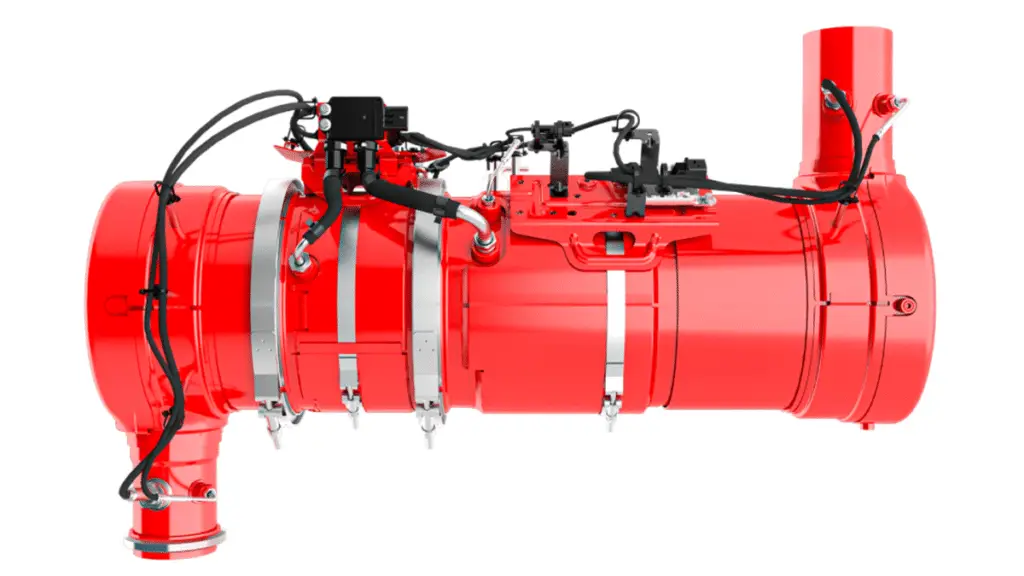
Selective Catalytic Reduction represents an active emissions control system that specifically targets nitrogen oxide pollutants in diesel exhaust. Since the EPA mandated stricter emissions standards in 2010, SCR technology has become the industry standard for heavy-duty diesel vehicles. The system treats exhaust gases after they leave the combustion chamber but before they exit the tailpipe.
The conversion process begins when diesel exhaust fluid enters exhaust gases at temperatures between 400°F and 1200°F. DEF—a solution of 32.5% high-purity urea and 67.5% deionized water—undergoes thermal decomposition, breaking down into ammonia and carbon dioxide. This ammonia then reacts with nitrogen oxides over the catalyst surface, producing elemental nitrogen and water vapor.
The system achieves optimal NOx reduction above 500°F, with conversion rates exceeding 90% under ideal conditions. Cold starts and low-load operation present challenges because exhaust temperatures may fall below the effective operating range.
Key SCR System Components
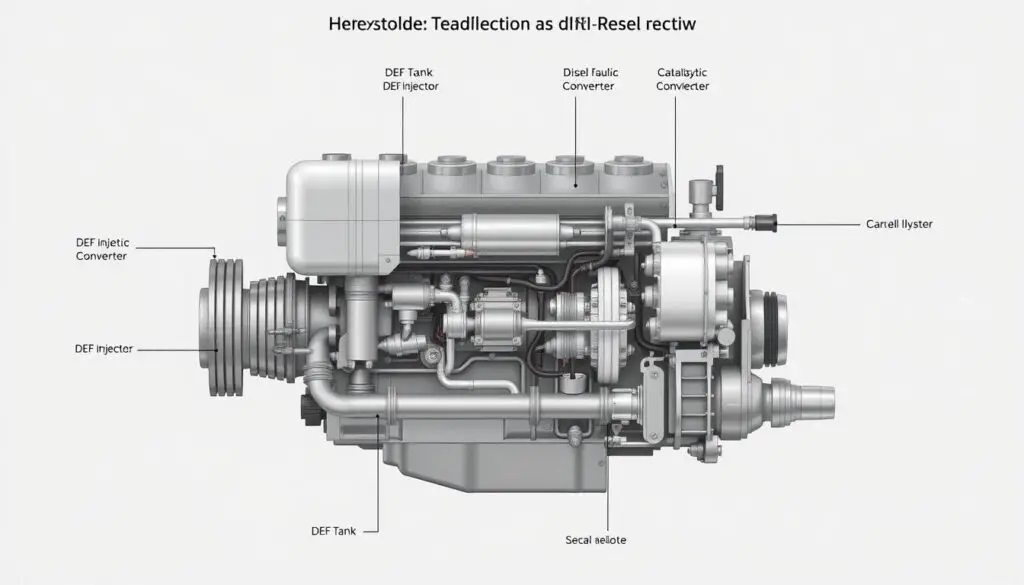
The aftertreatment system comprises multiple integrated components that must work together for consistent NOx reduction. Understanding these components helps identify potential failure points during troubleshooting:
DEF Tank and Delivery System: The storage tank holds fluid separate from the diesel fuel system. Most tanks include heating elements because DEF freezes at 12°F. Tank capacities typically range from 5 to 22 gallons depending on vehicle size. The delivery system includes a supply pump operating at 70-100 PSI, supply and return lines with freeze protection, precision dosing module, filter assembly, and level sensor. OEM manufacturers like Cummins provide detailed specifications for their specific system configurations.
SCR Catalyst Module: This houses the coated substrate where NOx reduction occurs. The module mounts between the diesel particulate filter and tailpipe, withstanding extreme temperatures, vibration, and corrosive exhaust gases. Upstream and downstream NOx sensors bracket the module to measure conversion efficiency.
Control Module and Sensors: The ECU manages all SCR operations, receiving inputs from NOx sensors, temperature sensors, DEF quality sensor, and pressure sensors. The system adjusts injection rates based on engine load, exhaust temperature, and real-time NOx measurements.
Recognizing SCR Malfunction Symptoms
SCR system malfunctions manifest through progressive warning indicators that escalate in severity. Catching these symptoms early prevents expensive repairs and keeps your diesel vehicle operating at peak efficiency.
Warning Lights and Performance Issues
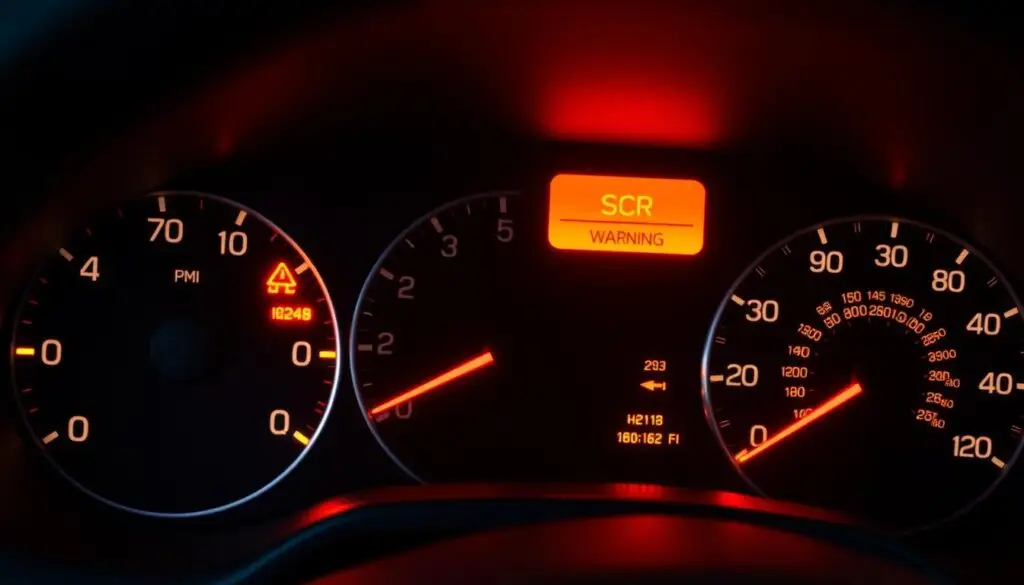
The dashboard serves as your first alert system for SCR problems. Most systems use color-coded alerts: amber lights signal non-critical issues requiring attention soon, while red warnings demand immediate action. The Malfunction Indicator Light illuminates in specific patterns—a steady amber light usually indicates minor issues like sensor drift, while a flashing MIL signals active problems affecting vehicle performance.
DEF level warnings typically begin when fluid drops below 10% capacity. At approximately 5% capacity, many systems display countdown messages showing estimated miles until inducement begins. A “poor DEF quality” message indicates contamination or degraded fluid.
Performance symptoms include hesitation during acceleration, reduced pulling power on grades, lower top speed capability, rough idle, and increased fuel consumption. A sharp ammonia odor from the tailpipe signals DEF injection issues—normal operation should produce minimal odor.
Engine Derate Conditions
When the ECM detects serious emission system failures, it implements inducements or derates that intentionally limit performance to encourage repairs. Derate implementation follows a progressive strategy:
| Derate Level | Restriction | Typical Trigger |
|---|---|---|
| 25% torque reduction | Noticeable power loss on acceleration and grades | Initial fault detection, low DEF warning ignored |
| 50% torque reduction | Severe limitation, struggles with normal driving | Multiple drive cycles with unresolved faults |
| 55 mph speed limit | Maximum speed restriction | Persistent efficiency codes or sensor failures |
| 5 mph “limp mode” | Essentially prevents normal operation | Empty DEF tank, severely contaminated fluid, critical sensor failure |
The 5 mph limitation typically activates after multiple warnings go unheeded or when critical component failures occur. Operators cannot override this limitation—the vehicle can only move to a safe location or repair facility.
Primary Causes of SCR System Failures
Multiple factors contribute to SCR system malfunctions, often developing gradually and interacting to create cascading failures. Identifying the root cause requires understanding how different components affect overall system performance.
DEF Quality and Contamination Issues
Poor fluid quality represents the leading cause of preventable SCR malfunctions across all diesel vehicle types. DEF stored above 86°F begins breaking down within six months, losing effectiveness. Temperature fluctuations accelerate degradation—DEF frozen and thawed repeatedly develops inconsistent concentrations.
Diesel fuel accidentally added to DEF tanks creates the most severe contamination scenario. Even small amounts cause immediate injector failure and catalyst damage requiring complete system replacement. Water intrusion through damaged tank caps dilutes urea concentration and promotes bacterial growth. Dirt and debris introduced during refilling accumulate in the tank and restrict fluid flow.
⚠️ Safety Warning
Never add diesel fuel, anti-freeze, alcohol, or any additives to the DEF tank. Cross-contamination destroys the entire SCR system, often requiring replacement of tank, pump, lines, injector, sensors, and potentially the catalyst—costing thousands in repairs.
Sensor Degradation and Failure
Sensor failures account for approximately 30% of all SCR-related diagnostic trouble codes. NOx sensors measure emission levels in harsh exhaust environments with extreme temperatures and corrosive gases. Carbon deposits accumulate on the sensor’s ceramic element from incomplete combustion, oil consumption, and DPF regeneration byproducts.
Temperature sensors experience constant thermal cycling between ambient and 1,000°F exhaust temperatures. Sensor drift typically occurs gradually over 100,000 to 150,000 miles. When sensors drift by as little as 20°F, the system overdoses or underdoses DEF, reducing efficiency and potentially damaging the catalyst.
Electrical and Software Problems
Electrical faults create intermittent issues that prove difficult to diagnose consistently. Connector corrosion causes high resistance connections that drop voltage below sensor operating ranges. Chafed wire insulation from vibration creates intermittent short circuits. CAN bus communication errors between the ECM and SCR control module generate multiple unrelated fault codes.
Software calibration must match installed hardware exactly. Mismatched software causes incorrect DEF dosing and sensor interpretation errors. Outdated calibrations fail to accommodate normal component wear—manufacturers release updated software to address known issues and improve performance.
Stay Ahead of Emissions System Issues
Get the latest diesel diagnostics tips, regulatory updates, and fleet maintenance strategies delivered to your inbox. Join thousands of diesel professionals who rely on HDJ for practical, shop-tested information.
Understanding SCR Diagnostic Trouble Codes
Diagnostic trouble codes provide the roadmap to identifying and resolving underlying issues. Understanding how to read and interpret these emission system codes represents the critical first step in successful troubleshooting.
Common P20XX Series Codes
The P20XX series encompasses primary SCR-related faults. These standardized codes address specific components and functions:
P2200-P2209 NOx Sensor Codes: These identify problems with nitrogen oxide sensors. P2200-13 indicates an open circuit (wiring damage or sensor failure). P2201-64 signals a plausibility failure where readings don’t match expected values. P2203-00 identifies high voltage in the circuit.
P20BA-P20BD DEF Heater Codes: These diagnose heating system failures that prevent cold-weather operation. P20BA indicates a malfunction in the heater control circuit. P20BD addresses heater performance issues where the system fails to achieve target temperatures.
P20E8 and P20EE Reductant System Codes: The P20EE code—”SCR NOx Catalyst Efficiency Below Threshold”—is one of the most common SCR faults. This indicates the system isn’t achieving required conversion rates, potentially due to catalyst degradation, insufficient DEF dosing, contaminated fluid, or faulty sensors.
Manufacturer-Specific Code Variations
Heavy-duty manufacturers implement proprietary diagnostic protocols alongside standard OBD-II codes. Detroit Diesel uses SPN codes combined with FMI designations. For example, SPN 3361 relates to DEF dosing unit faults with various FMI codes indicating different failure modes. SPN 3364 addresses DEF quality sensor issues.
Cummins engines employ their own fault code system providing detailed information about component failures. Paccar MX-13 engines integrate either Bosch or Continental SCR systems, each with manufacturer-specific definitions. Professional-grade scan tools capable of reading these proprietary protocols are necessary for complete diagnosis.
The HDJ Perspective
The evolution of emissions diagnostics has created a two-tier reality in diesel repair. Shops with OEM-level scan tools and trained technicians resolve SCR issues efficiently, while those relying on generic code readers often fall into costly trial-and-error parts replacement. As emissions systems grow more sophisticated with each regulatory phase, investing in proper diagnostic capability isn’t optional—it’s the difference between profitable repairs and losing money on every aftertreatment job. Fleet managers should evaluate their service providers’ diagnostic capabilities before committing to major SCR repairs.
DEF System Component Failures
The DEF delivery system contains multiple components that can fail and trigger SCR errors. Understanding component-level problems helps technicians identify root causes rather than simply replacing parts.
Tank, Pump, and Line Problems
The tank assembly houses the supply pump, level sensors, heating elements, and venting systems. The supply pump must maintain 87-102 PSI for proper system operation. Pump motors deteriorate from continuous operation and fluid contamination—excessive noise indicates bearing failure or gear damage.
Proper venting prevents vacuum formation inside the tank. Blocked vent filters from road debris, ice accumulation, or dirt cause tank collapse or pump cavitation. Visual inspection of vent filters often reveals the cause of irregular pump operation.
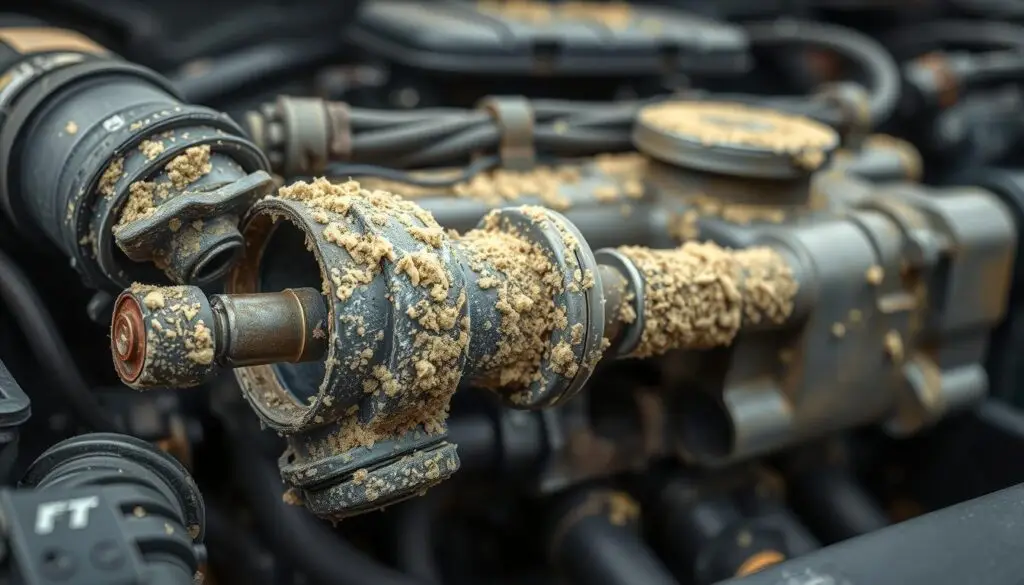
DEF crystallization occurs when residual fluid evaporates after engine shutdown. This progressively narrows internal passages over multiple thermal cycles. Complete blockage occurs as crystals accumulate. Freeze-thaw cycles also damage lines—DEF expands approximately 7% during freezing, cracking rigid lines and weakening quick-connect fittings.
DEF Injector Issues
The injector operates in extreme exhaust environments exceeding 700°F. Nozzle clogging results from poor DEF quality and thermal decomposition. White or tan deposits around nozzle tips indicate crystallization; black, hardened material suggests carbon buildup.
Detroit Diesel’s DEF Quantity Test measures dispensed volume to verify nozzle function. Proper operation dispenses 108-132 mL during the test cycle. Results outside this range confirm blockage or injector problems. Electrical solenoid failures occur when thermal stress burns out coil windings or deposits cause plungers to stick.
Heater System Failures
Heating elements maintain fluid temperature above 12°F to prevent crystallization. The system includes tank heaters, line heaters, and injector heaters that operate independently based on temperature sensor feedback. Heater circuit testing verifies proper voltage supply—measure resistance across heater terminals to confirm element continuity. Infinite resistance indicates burned-out heating coils.
Line heater failures manifest as localized freezing between tank and injector. Infrared temperature measurement identifies cold sections along heated lines, confirming heater malfunction locations.
Share Your SCR Diagnostic Expertise
Do you have field-tested solutions for challenging aftertreatment problems? Heavy Duty Journal welcomes contributions from experienced diesel technicians and fleet maintenance professionals. Your real-world insights help thousands of readers solve tough diagnostic puzzles.
SCR Sensor Diagnostics and Testing
Testing sensors within the SCR system requires methodical procedures to identify failures before they escalate into costly repairs. Modern control modules rely completely on sensor feedback for dosing calculations and performance monitoring.
NOx Sensor Testing Procedures
Technicians must verify sensor authenticity before conducting diagnostic tests. Premium diagnostic tools display sensor identification numbers confirming genuine OEM components. Genuine upstream sensors return ID 791293237; downstream sensors show 541003308.
Physical inspection reveals counterfeit sensors through labeling differences, font inconsistencies, connector quality variations, and tip design differences. Aftermarket sensors frequently cause false fault codes and erratic system behavior—many experienced technicians refuse to install them after repeat failures.
Upstream sensor testing measures raw engine-out emissions under various load conditions. The sensor should react within two seconds of throttle adjustments. Downstream sensors evaluate post-catalyst emissions—properly functioning systems demonstrate at least 90% NOx reduction at normal operating temperatures.
Comprehensive voltage testing examines heater circuit operation (typically 12V PWM), signal output (0-5V depending on NOx concentration), and ground connections (less than 0.1V drop).
DEF Quality and Temperature Sensor Evaluation
The DEF quality sensor measures fluid concentration using conductivity or ultrasonic principles. Testing requires a refractometer to verify actual concentration independently—compare readings against sensor values in diagnostic software. Discrepancies exceeding 2% indicate sensor degradation or contamination.
Temperature sensors throughout the system monitor exhaust gas temperatures, DEF tank conditions, and catalyst bed temperatures. Testing confirms resistance values match manufacturer temperature-resistance curves. Typical exhaust temperature sensor values: 3,000-4,000 ohms at 68°F ambient; 200-400 ohms at 400°F high load.
Step-by-Step SCR Troubleshooting Process
Effective troubleshooting demands a logical sequence that prevents wasted time and unnecessary component replacement. According to Volvo’s diagnostic protocols, technicians must first diagnose and correct any failures in upstream components—base engine operation, EGR system, fuel delivery, turbocharger performance, DOC, and DPF—before proceeding with SCR troubleshooting.
Initial Visual Inspection
Begin before connecting any scan tool. Examine the entire DEF system for crystalline deposits—blue-white crystals concentrated around connection points, fittings, and mounting locations indicate leaks. Check ground beneath the vehicle after overnight parking. Inspect wiring harnesses for heat damage, chafing, rodent damage, and moisture intrusion. Verify the DEF tank cap seal integrity and vent system function.
Diagnostic Code Analysis
Connect professional-grade equipment capable of accessing manufacturer-specific information. Access live data streams, freeze frame data, active tests, bidirectional controls, and component adaptation values. Detroit Diesel protocols recommend comparing DEF pressure and DEF air pressure readings to barometric pressure—if readings fall within 4 PSI of ambient pressure, sensors function correctly.
Document all fault codes in three categories: active codes requiring immediate attention, pending codes indicating developing or intermittent problems, and historical codes showing past faults. Note freeze frame data for each code—engine speed, coolant temperature, exhaust temperature, and sensor readings at fault detection provide crucial diagnostic context.
Component and Circuit Testing
With fault codes documented, proceed to targeted testing. For NOx sensors, measure heater resistance across pins 3 and 4 (typically 2-8 ohms). Temperature sensors use negative temperature coefficient thermistors—resistance decreases as temperature increases. Always disconnect sensors before resistance testing to protect control modules.
Pressure testing verifies pump output and system integrity. DEF systems operate at 87-102 PSI during normal operation. Monitor pressure rise time and maximum pressure achieved. Slow pressure rise indicates pump wear or air leaks; pressure below specifications confirms pump failure.
Test ground circuits using voltage drop method—with component operating, voltage between component ground terminal and battery negative should measure less than 0.1V. Higher readings indicate excessive resistance requiring inspection and cleaning of ground points.
DEF Quality Problems and Solutions
Understanding and managing DEF quality issues prevents costly repairs and keeps your vehicle compliant with emission standards. Proper identification, storage, and handling practices eliminate the majority of preventable SCR malfunctions.
Identifying Contaminated DEF
Pure DEF appears completely clear, resembling distilled water. Yellowing indicates extended heat exposure or age-related breakdown. Cloudiness reveals bacterial growth or crystallization. Floating particles indicate tank contamination with dirt, rust, or foreign material.
For quantitative verification, use a refractometer (Volvo model 88890105 recommended) measuring urea concentration. DEF meeting ISO 22241 specifications should measure 32.5% ±0.5%. Litmus paper testing (Volvo model 88890110) verifies pH remains within specification at 9.0-9.5.
Proper Storage and Handling
Store DEF between 12°F and 86°F for maximum shelf life of one to two years. Extended exposure above 86°F reduces usable life to six months or less. Use only DEF-rated containers—never repurpose diesel, gasoline, or water containers. Dedicated transfer equipment prevents cross-contamination. Keep containers sealed except during active dispensing.
System Flushing Procedures
When contaminated DEF has circulated through your system, complete flushing becomes necessary. Drain the tank completely, pump out supply and return lines using scan tool diagnostic functions, flush the dosing module with clean DEF or deionized water, and replace the DEF filter. Use warm water (140-160°F) to dissolve crystallization—never exceed 140°F to protect seals and sensors.
Repair Procedures for Common SCR Issues
Successful repairs combine careful component replacement with thorough initialization processes. Following manufacturer-specified procedures protects warranty coverage and eliminates repeat failures.
Sensor Replacement
Allow exhaust components to cool completely before beginning—temperatures exceed 900°F during operation. Apply penetrating oil to corroded sensor threads and allow 15-20 minutes before removal. Use proper sensor sockets that engage the hexagonal portion without damaging electrical connectors.
If the NOx1 sensor fails evaluation, replace the inlet sensor only. Warranty coverage requires one of three specific codes: P20EE-00, P103C-00, or P207F-00. Thread new sensors carefully by hand for the first several turns. Apply anti-seize to threads while keeping compound away from sensing elements. Torque to 40-45 lb-ft depending on manufacturer.
New sensors require initialization through scan tool commands that perform heater verification and signal range testing. Failure to complete relearn procedures results in continued fault codes despite successful replacement.
DEF Injector Replacement
Depressurize the system through scan tool function or by disconnecting the battery for 10 minutes. Extract the old injector carefully, preventing crystalline deposits from falling into the catalyst—cover the opening immediately with a clean shop towel. Clean the mounting surface thoroughly and position a new gasket before installing the replacement.
Follow proper torque sequence (typically 15-20 lb-ft) in a criss-cross pattern. Reconnect DEF lines with new O-rings lubricated with clean DEF. Execute injector quantity adaptation tests using scan tool to ensure proper dosing.
Software Updates
ECM programming addresses calibration issues causing SCR malfunctions without physical component failure. Flashing requires stable battery voltage throughout—connect a charger maintaining 13.5-14V before initiating updates. Verify the correct calibration file matches vehicle specifications. Maintain uninterrupted communication throughout the 20-45 minute process—disconnecting cables during updates damages the ECM.
Preventive Maintenance for SCR Systems
Regular preventive maintenance dramatically reduces unexpected failures and extends component longevity. Industry organizations like ATA’s Technology & Maintenance Council (TMC) publish recommended practices that help fleets establish effective maintenance schedules. A well-planned program catches developing problems before complete system breakdowns.
Regular DEF Quality Checks
Test DEF concentration monthly or every 10,000 miles using a refractometer. Bulk storage tanks need quarterly testing. Record results to track patterns—declining concentration indicates storage problems or supplier quality issues. Perform visual inspection at every refill, checking for cloudiness, discoloration, or particles.
Scheduled Component Inspections
Clean or inspect NOx sensors every 75,000-100,000 miles for standard highway driving, or every 50,000 miles for severe-duty applications. Replace DEF filters according to manufacturer recommendations, typically every 100,000 miles. Monitor pressure differential across filters using diagnostic scan tools—excessive pressure drop indicates restriction requiring replacement regardless of mileage.
Winter Preparation
Keep DEF tanks at least half full during winter for better heating efficiency. Test all heating circuits before cold weather using scan tool commands—activate tank, line, and injector heaters individually while monitoring current draw. Verify tank insulation remains intact. Frozen systems prevent operation until complete thawing (8-12 hours even in heated facilities), making pre-winter verification essential.
When to Seek Professional Diagnostic Help
Some SCR problems exceed standard diagnostic equipment capabilities. Intermittent electrical problems require advanced techniques including thermal imaging, oscilloscope analysis, and wiggle testing. CAN bus communication errors demand manufacturer-specific knowledge and specialized scan tools.
When diagnostic codes return immediately after repairs, deeper problems exist—possibly multiple simultaneous failures or systemic issues requiring comprehensive analysis. If a truck has received both NOx sensors within the past three months, this indicates a deeper problem requiring specialized diagnosis.
Warranty considerations become critical with expensive components like SCR catalysts. Manufacturer warranties typically cover SCR catalysts for five years or 100,000 miles on heavy-duty applications, but specific fault codes determine eligibility. Proper documentation of failure descriptions, diagnostic results, photos, and service records is essential for successful claims.
Frequently Asked Questions
What does the P20EE code mean and how do I fix it?
Code P20EE indicates “SCR NOx Catalyst Efficiency Below Threshold,” meaning the system isn’t achieving required NOx conversion rates. Causes include catalyst degradation, insufficient DEF dosing from clogged injectors, contaminated or expired DEF, failed NOx sensors providing inaccurate readings, or exhaust leaks. Proper diagnosis requires testing DEF quality with a refractometer, verifying NOx sensor accuracy, performing injector quantity tests, and confirming catalyst temperature reaches optimal ranges. Address the confirmed root cause rather than simply replacing the catalyst.
Can I drive with the SCR system bypassed or deleted?
Disconnecting or bypassing SCR systems violates EPA regulations under the Clean Air Act, with civil penalties reaching $5,500 per violation for individuals and $48,000 per vehicle for commercial operations. Modern ECMs detect tampering through comprehensive self-diagnostics, triggering maximum derate conditions that limit engine power to 5 mph. Insurance companies may deny coverage for tampered vehicles, and they fail emissions inspections in states with testing programs. Any shop offering “delete services” violates federal law and faces enforcement actions.
Why does my truck consume more DEF than normal?
Excessive DEF consumption indicates injector malfunctions causing over-dosing, leaks in the tank or supply lines, failed quality sensors providing incorrect readings, or upstream engine problems increasing NOx output. Typical consumption ranges from 2-3% of diesel fuel consumption. Rates exceeding 5% warrant investigation. Check for crystalline deposits indicating leaks, verify injector quantity with scan tool testing, and inspect for upstream issues like excessive oil consumption or turbocharger leaks that increase engine-out emissions.
How often should NOx sensors be replaced?
NOx sensor lifespan varies with operating conditions. Upstream sensors typically last 150,000-250,000 miles on highway applications; downstream sensors often exceed 300,000 miles. Severe-duty applications may require replacement as early as 100,000 miles. Replace sensors when diagnostic testing confirms failure, signal drift exceeds calibration limits, or response time degrades. Preventive replacement based solely on mileage without confirmed failure wastes money—always verify actual sensor condition before replacement.
What happens if I run out of DEF while driving?
Modern SCR systems implement progressive inducement strategies when DEF runs low. Initial warnings appear below 10% capacity. As levels decrease, speed limitations begin—first restricting maximum speed to 55 mph. When DEF reaches empty, severe power derate occurs upon the next engine restart, limiting speed to approximately 5 mph. This “limp mode” continues until DEF is added and the system properly reset. Some systems require scan tool procedures to clear inducement conditions even after refilling.
Taking Control of SCR System Performance
Effective SCR system troubleshooting directly impacts your vehicle’s operational efficiency and diesel emission compliance. The systematic diagnostic approach outlined in this guide—from proper upstream component verification through targeted sensor testing and DEF quality management—gives you confidence to handle common problems while recognizing when professional assistance becomes necessary.
Your commitment to regular preventive maintenance, quality DEF, and prompt attention to warning indicators ensures regulatory compliance while maximizing fuel economy and component lifespan. As emissions systems grow more sophisticated, the shops and fleets that invest in proper diagnostic capability and technician training will maintain the competitive advantage of reliable, efficient operations.
Help a Fellow Diesel Professional
If this troubleshooting guide helped you diagnose an SCR issue or avoid an unnecessary repair, share it with your network. Every fleet manager and technician dealing with emissions system problems benefits from practical, shop-tested information.