By Michael Nielsen, Editor & Publisher | 15+ Years in Diesel Repair
Last Updated: April 2026
📖 Estimated reading time: 18 minutes
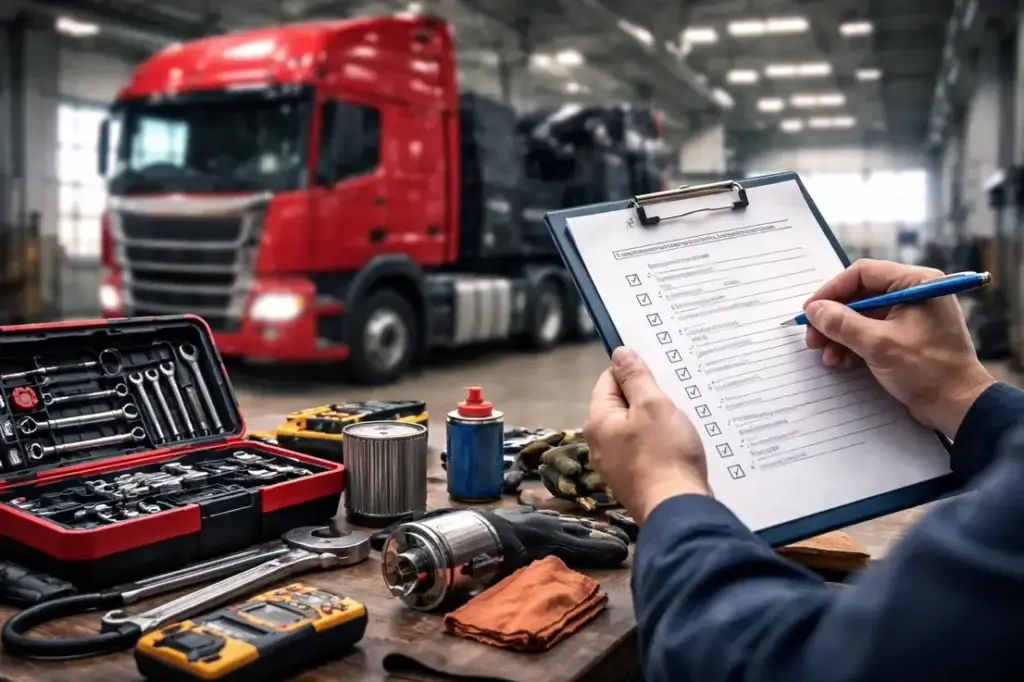
Step up to a seasoned heavy equipment field technician’s service truck and you’ll find something that looks nothing like the polished tool displays in trade magazine ads. What you’ll actually find is a carefully curated, hard-won collection of heavy equipment diesel repair tools assembled over years of diagnosing failures in the rain, swapping injectors in muddy fields, and chasing electrical faults on excavators in the middle of a job site. Every tool in that truck earned its spot. This guide breaks down what experienced diesel field techs actually carry — from the foundation hand tools they reach for on every call to the OEM diagnostic software that modern equipment demands — and why a field service kit looks fundamentally different from what you’d find in a shop bay.Key Takeaways
- Field tech toolkits differ fundamentally from shop kits: Self-sufficiency, portability, and multi-platform coverage define what goes in a service truck — not just what’s most convenient in a climate-controlled bay.
- OEM diagnostic software is non-negotiable: Universal scan tools alone can’t handle DPF regenerations, ECM programming, or advanced active tests on modern heavy equipment. OEM platforms are a recurring operational cost, not a one-time purchase.
- Hydraulic system tools are a distinct category: Field techs working on off-highway equipment carry hydraulic pressure gauges, flow meters, and porta-power units that truck-only techs often skip — and they need them on most job sites.
- Tool investment is cumulative: Complete field tech hand tool kits typically run $4,000–$15,000+, built up over years. Diagnostic software and specialty tooling add significantly more to the total investment.
- Battery-powered platforms have changed field work: Cordless 18V–60V tool ecosystems have reduced reliance on compressed air in the field without sacrificing performance for the majority of fastener and impact work.
What Separates a Field Tech’s Toolkit from the Shop
The gap between a shop diesel technician and a heavy equipment field technician isn’t just geography — it’s a fundamentally different approach to tool investment. A shop tech works in a fixed environment where the air compressor is plumbed in, the lift is right there, and the parts room is twenty feet away. When a specialty tool is needed, the solution is usually a quick walk to the tool crib. When something isn’t stocked, there’s a parts counter nearby or a next-morning delivery option.A field tech on a heavy equipment job site has none of that. When a track excavator throws a fault code on a pipeline project at 7 AM, or a motor grader loses hydraulic pressure mid-grade on a highway job, the field tech is the entire repair facility — tools, diagnostics, parts knowledge, and problem-solving ability loaded into one service vehicle. That reality shapes every tool purchasing decision a field tech makes, from the size range of combination wrenches to whether the diagnostic laptop is a Panasonic Toughbook or a consumer-grade unit.According to the U.S. Bureau of Labor Statistics, employment of heavy vehicle and mobile equipment service technicians is projected to grow 6 percent through 2034, with more experienced technicians increasingly specializing in field service as equipment becomes more electronically sophisticated. That specialization comes with tool expectations that differ sharply from what’s expected in entry-level shop positions.Field techs build their kits around three core priorities: versatility (the ability to work across multiple equipment makes and models without returning to a shop), portability (tools that travel safely and remain immediately accessible in a service body), and self-sufficiency (the ability to complete diagnoses and repairs on-site without calling for backup). That framework explains nearly every choice in a well-built field tech’s kit — and why the kit keeps growing throughout a career.Foundation Hand Tools: The Core of Any Field Kit
No diagnostic laptop or specialty tool replaces a solid hand tool foundation. For heavy equipment diesel work, that foundation looks heavier and more complete than what an automotive tech carries. Equipment fasteners run larger — wheel bolts, hydraulic fitting nuts, and structural hardware regularly require 1 1/4-inch through 2-inch wrench capacity — and the torque demands of diesel components mean cheap tools fail when you need them most.Wrenches
Combination wrenches in both SAE and metric are mandatory for multi-platform coverage. For heavy equipment, that means running combinations from 5/16 up through 2 inches on the SAE side, and 6mm through 36mm or larger on metric. Four-way angle wrenches are widely recommended by experienced heavy equipment techs for hydraulic line work — their geometry lets you apply torque in tight quarters where a standard combination wrench can’t get purchase. An 18-inch pipe wrench handles hydraulic cylinder teardowns and line work, and a quality adjustable wrench (full-range, not a lightweight version) belongs in the set as backup for oversized hardware and field-fabricated repairs.Crowfoot wrench sets deserve particular attention. When a torque wrench won’t physically fit into a confined space, crowfoots let you apply calibrated torque to otherwise inaccessible fasteners — a necessity for engine head bolts, transmission components, and hydraulic fittings buried in tight engine bays on compact equipment. Running without crowfoots means guessing on torque for some of the most critical fasteners on a diesel engine.Sockets and Ratchets
Socket coverage for heavy equipment spans multiple drive sizes. A 3/8-inch drive set covers lighter general work. A 1/2-inch drive impact socket set in 6-point configuration — SAE and metric — handles the majority of heavy fastener work with impact tools without rounding hardware. A 3/4-inch drive set addresses larger fasteners on drivetrain components, track hardware, and structural connections. Field techs working on undercarriages and final drives sometimes carry 1-inch drive sockets for the most demanding applications, though employers often supply the largest sizes as shop-provided specialty tooling.Ratchet selection matters as much as socket coverage. Long-handle and flex-head ratchets reach deep into engine bays at angles that destroy standard ratchet heads over time. Wobble sockets — which combine a standard socket with built-in flex — eliminate the need for multiple extension-and-swivel combinations in tight access points. Extensions in 3-inch, 6-inch, and 10-inch lengths for both 3/8 and 1/2-inch drives round out a functional ratchet kit that covers the majority of access situations on heavy equipment.Pliers, Screwdrivers, Pry Bars, and Hammers
A complete pliers set covers needle-nose, adjustable, slip-joint, and locking varieties. Hose clamp pliers specifically address the radiator and coolant hose service that’s a common field call on both construction and agricultural diesel equipment. Wire crimpers and strippers handle the electrical repair work that inevitably accompanies modern equipment diagnostics — a field tech who can’t repair a damaged harness connector is dependent on an electrician or a tow for what should be a 30-minute fix.Screwdrivers span flat-blade and Phillips in multiple sizes, plus Torx bits (T25 through T55 covers most equipment applications) and hex/Allen sets in both metric and SAE. Heavy-duty pry bars in multiple lengths are essential for component separation, gasket removal, and the controlled persuasion that comes with working on equipment that’s spent years exposed to dirt, water, and corrosion. A brass dead-blow hammer delivers force without damaging precision surfaces — critical when working near hydraulic components and fuel system hardware where a steel hammer strike can ruin a sealing surface.$4,000 – $15,000+
Estimated cost of a comprehensive diesel technician hand tool set in 2025, depending on brand quality and specialty coverage. Field technicians typically invest at the higher end due to the broader kit required for multi-platform field service without shop backup.
Power Tools Built for Field Diesel Work
Power tools for heavy equipment field service operate under constraints that don’t exist in a shop. Compressed air may not be available. Shore power is rarely an option on a construction or pipeline job site. The service truck’s generator may need to remain available for welding or diagnostic equipment during a repair. That reality has driven most experienced field techs toward modern cordless battery platforms as the primary power tool backbone, with pneumatic tools retained for specific high-torque applications.Cordless Impact Wrenches and Drills
High-torque cordless impact wrenches in 3/8-inch and 1/2-inch drive form the backbone of the cordless kit. Modern 18V–20V impact wrenches now deliver torque output that competes with mid-range air impacts — sufficient for the majority of fastener work on heavy equipment without requiring a compressor. For larger hardware, a 3/4-inch or 1-inch cordless impact wrench handles wheel nuts, track bolts, and drivetrain hardware that smaller cordless units can’t reliably break loose.Brushless motor technology has extended battery runtime significantly compared to earlier cordless generations, and battery platform compatibility — where impacts, drills, grinders, and work lights all share the same battery packs — makes a cordless system economically practical for field techs building around a single tool ecosystem. This shared-platform approach is now standard practice among field technicians who need to carry multiple tools without carrying multiple chargers and battery types.Air Tools and Compressors
Despite the cordless shift, air tools retain a specific place in the field kit. A 1/2-inch air impact provides high-torque burst capability for seized fasteners that cordless tools can’t break free, and air ratchets speed up repetitive bolt removal on covers, panels, and access points. A service-body-mounted or under-hood compressor provides compressed air for inflation, cleaning, and pneumatic tool operation when the service truck is running. Air chisels and cut-off tools address rusted hardware and corroded brackets that manual tools and cordless units won’t handle effectively.Grease Guns and Fluid Service Tools
Heavy equipment lubrication requirements are extensive. Excavators, loaders, and motor graders can have dozens of grease zerks requiring regular service, and in field conditions that often means the zerks are buried behind guards or structural members that a standard pistol-grip grease gun can’t reach. High-pressure grease guns with remote coupler hoses — either pneumatic or heavy-duty cordless battery-powered — access these recessed fittings efficiently. Oil dispensing equipment, transfer pumps, and sealed spouts handle fluid service for engine oil, hydraulic fluid, and gear lubricants without contaminating the fluids or creating spill hazards on a job site where cleanup responsibility falls on the tech.⚠️ Safety Warning
Hydraulic systems on heavy equipment commonly operate at 3,000–5,000 PSI. Never work on pressurized hydraulic lines, cylinders, or fittings without first relieving system pressure completely using the OEM-specified depressurization procedure. Hydraulic injection injuries — where high-pressure fluid penetrates skin — are medical emergencies requiring immediate surgical intervention. Always wear heavy leather gloves and safety glasses when working near pressurized hydraulic systems, and use a piece of cardboard (never your hand) to locate hydraulic leaks under pressure.
Diagnostic and Electronic Tools: The Modern Tech’s Edge
Modern heavy equipment is governed by sophisticated electronic systems — engine control modules, hydraulic control units, transmission controllers, and integrated telematics — that communicate through standardized and proprietary protocols. Field technicians who work without proper diagnostic equipment are limited to symptom chasing. Those with a complete diagnostic kit can read fault codes, monitor live data streams, command active component tests, and reprogram parameters in the field — abilities that define the difference between a one-trip repair and multiple return visits.OEM Diagnostic Software Platforms
OEM-specific diagnostic software is the most important — and often most expensive — item in a modern field tech’s kit. Each major equipment and engine manufacturer maintains its own diagnostic platform: Cummins Insite for Cummins engine families, Detroit Diesel DiagnosticLink for DD-series engines, Caterpillar Electronic Technician (ET) for Cat engines and equipment, Volvo and Mack Premium Tech Tool (PTT), PACCAR’s ServiceRanger for Kenworth and Peterbilt equipment, and International’s ServiceMaxx for Navistar-powered equipment.These OEM platforms communicate with equipment ECMs using the J1939 standard — the SAE’s controller area network protocol for commercial vehicles and heavy equipment, defined under SAE J1939 — while older equipment may communicate via J1708/J1587 protocols requiring different adapter cables. A field tech servicing multiple equipment brands needs licensing for each relevant OEM platform, along with the hardware adapters that bridge the diagnostic laptop to each equipment type’s diagnostic port. Budget for OEM software subscriptions as ongoing annual operational costs; many manufacturers require annual renewals and the cost is unavoidable for a tech working on current equipment.Ruggedized Diagnostic Laptops
The diagnostic laptop is not an area to economize on. Panasonic Toughbook series laptops have become the de facto industry standard for field diesel diagnostics because of their MIL-SPEC drop resistance, sealed keyboards, sealed display hinges, and ability to operate across the temperature extremes that destroy consumer laptops. A field tech running a standard laptop in the environment of a construction job site — dust, vibration, direct sun exposure, moisture — will replace it far more often than the higher initial investment in a ruggedized unit would cost.Software organization on the diagnostic laptop matters as much as the hardware platform. Field techs typically maintain separate software installations or dedicated profiles for each OEM platform, along with subscription access to OEM service documentation, wiring diagrams, and parts catalogs. The laptop functions as the complete technical reference library as much as the diagnostic interface — a tech without access to wiring diagrams on-site is guessing on circuit routing, which adds hours to electrical diagnosis.Multimeter and Electrical Test Equipment
A quality digital multimeter with auto-ranging capability is the electrical system’s most fundamental diagnostic instrument. Field techs working on heavy equipment need meters capable of measuring AC and DC voltage, current, resistance, continuity, and duty cycle — the last being critical for diagnosing the PWM-controlled solenoids and pressure sensors common on modern hydraulic and fuel systems. Industrial-grade meters handle the higher voltage and amperage environments of heavy equipment without damage to the instrument.An electrical pin and connector test kit — containing the male and female probe adapters that match each common connector type on the equipment lines being serviced — prevents diagnostic wiring damage and enables back-probe testing without destroying connector seals. A power probe or circuit tester supplements the multimeter for quickly isolating shorts and ground faults without building test circuits from scratch on each call.Stay Current on Heavy Equipment Diesel Service
Diagnostic techniques, tool innovations, and field repair best practices — delivered free to diesel technicians and fleet managers who need to stay ahead of the technology.
Hydraulic System Tools: A Field Tech’s Specialty
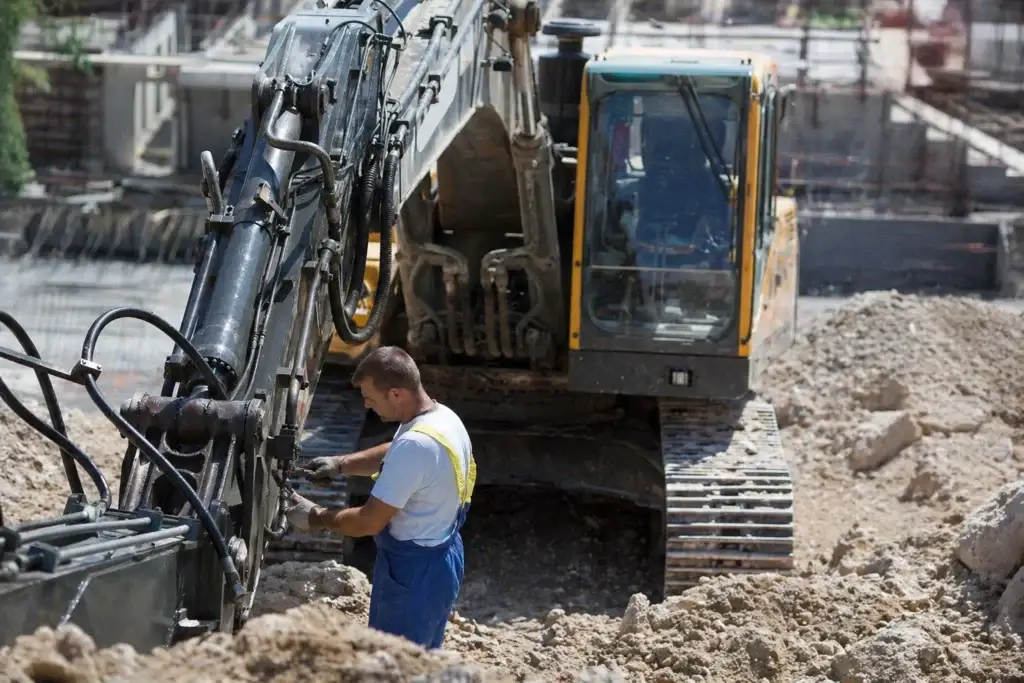
Heavy equipment diesel repair tools include an entire category that truck-focused technicians rarely encounter: hydraulic system diagnostics and service. Excavators, wheel loaders, motor graders, cranes, and most other heavy equipment rely on hydraulic systems for movement, implement control, and power transmission. Hydraulic failures account for a major share of heavy equipment field service calls, and diagnosing them accurately requires a dedicated set of tools beyond what a diesel engine tech’s standard kit provides.Hydraulic Pressure Test Equipment
Hydraulic pressure gauge sets with appropriate fittings for the equipment being serviced allow field techs to measure system pressure at pump outlets, relief valve ports, and actuator circuits. Direct pressure measurement is essential for determining whether a hydraulic problem originates at the pump, a control valve, or a downstream cylinder or motor. Test fittings and adapters must match the hydraulic system’s port configuration — typically SAE O-ring boss or ORFS (O-ring face seal) on modern equipment — so a comprehensive adapter kit is part of the pressure test investment.For more advanced hydraulic diagnostics, a hydraulic flow meter measures both flow rate (in gallons per minute) and pressure simultaneously, enabling techs to calculate pump efficiency and identify internal bypassing that pressure testing alone won’t reveal. Field-capable flow meters rated to 50 GPM or higher cover most heavy equipment applications. A tech who can measure pump output directly can distinguish between a worn pump, a stuck relief valve, and a bypassing control valve — three very different repairs with very different cost implications for the equipment owner.Hydraulic Hose Service Tools
Hose failures — fittings separating from hoses, crimps failing under repeated pressure cycles, hoses abraded through by contact with structural members — generate a substantial share of heavy equipment field calls. Field techs who carry portable hose crimping equipment can fabricate replacement hoses on-site from standard hose and fitting stock, eliminating the wait for a hydraulic shop to produce a custom hose. Portable crimpers suitable for field use handle the most common hose sizes on construction and agricultural equipment.A hydraulic plug and cap kit — the set of plugs and caps that seal open hydraulic ports during component disassembly — is small, inexpensive, and absolutely critical. Hydraulic fluid contamination is one of the leading causes of pump and valve damage on heavy equipment. A field tech who works without proper port sealing during service creates future failures in the equipment they’re repairing, which is both a quality issue and a liability issue.Porta-Power and Hydraulic Pressing Equipment
A hydraulic porta-power unit — a portable hydraulic ram and foot-pump system — handles pressing, spreading, and straightening tasks in the field that would otherwise require a shop press or a tow to a dealer. Removing and installing bushings, pressing bearings, and correcting bent structural components all become possible with a porta-power kit on-site. Sets with multiple ram sizes and a selection of spread and press adapters cover the widest range of applications encountered on heavy equipment undercarriages, linkages, and pin joints.| Tool Category | Field Priority | Key Items to Carry | Notes |
|---|---|---|---|
| Hand Tools | Essential | SAE & metric wrenches 5/16″–2″, 6-pt impact sockets 3/8″–1″ drive, crowfoots, 4-way angle wrenches | Quality matters most here — budget for professional-grade brands with lifetime warranties |
| Power Tools | Essential | 3/8″ & 1/2″ cordless impacts, 3/4″ or 1″ cordless impact for large fasteners, pneumatic grease gun | Build around a single battery platform for pack compatibility |
| Diagnostic | Essential | Ruggedized laptop with OEM software (Insite, Cat ET, DiagnosticLink, PTT), RP1210 adapters, multimeter, pin test kit | OEM software subscriptions are recurring annual costs |
| Hydraulic | High — off-highway | Pressure gauge set with ORFS/SAE adapters, flow meter (50+ GPM), porta-power, hose crimper, plug & cap kit | Less critical for on-highway-only techs; essential for heavy equipment service |
| Diesel-Specific | High | Diesel compression tester (0–600 PSI+), injector return flow kit, fuel pressure test kit, DEF refractometer, manometer | Adapter sets for glow plug bores, injector ports required for multi-platform coverage |
| Precision/Measuring | Moderate–High | Torque wrenches (3 ranges), dial indicator with mag base, feeler gauges, digital calipers, borescope | Store in protective cases; these tools are precision instruments, not general-use equipment |
Diesel-Specific Tools: Engines, Fuel Systems, and Emissions
Beyond the general mechanical and hydraulic tools that all heavy equipment techs carry, a dedicated subset of heavy equipment diesel repair tools addresses the specific systems that define diesel engine service: compression, fuel injection, and aftertreatment. These tools often see less daily use than hand tools or impacts, but when they’re needed, nothing else substitutes.Diesel Compression Testers
Compression testing remains one of the most fundamental diesel engine diagnostic procedures, revealing piston ring wear, valve seating problems, and head gasket failures before symptoms escalate to complete engine failure. Diesel compression testers operate at significantly higher pressure ranges than gasoline engine testers — typically 0–600 PSI or higher — to capture the compression ratios that diesel engines require for reliable combustion. Adapter sets that thread into glow plug bores, injector ports, and cylinder head test ports cover the multiple access configurations across different engine families, making a universal adapter kit a necessity for techs who service multiple makes.Electronic compression testers with digital readouts provide more consistent and readable results than gauge-only versions, particularly when testing engines that require remote cranking from a diagnostic laptop or external switch. These digital units can store compression readings per cylinder for comparison, simplifying the documentation of cylinder-to-cylinder variation and providing a baseline reference for future service visits.Fuel System Diagnostic Tools
Common rail fuel injection systems operate at pressures from 20,000 to over 30,000 PSI — pressures that make both proper tooling and strict procedure adherence non-negotiable. Fuel pressure test kits with the appropriate adapters for the rail systems on a tech’s primary equipment lines enable direct pressure measurement at the high-pressure rail and injector supply circuits. Low fuel rail pressure focuses the diagnosis on the fuel supply side (lift pump, filter, supply line restrictions) rather than the high-pressure pump or injectors themselves — a distinction that saves hours of unnecessary teardown.Injector return flow test kits measure the back-leak from each injector under operating conditions, identifying injectors that are bypassing excessive fuel internally — a condition that reduces rail pressure and causes hard starting, rough running, or power loss without triggering straightforward fault codes. Per TMC Recommended Practice guidelines, systematic diagnostic procedures like return flow testing — rather than parts-replacement guessing — define the standard for professional diesel repair quality. Identifying a specific failing injector through flow testing saves significant labor compared to replacing all injectors on a costly multi-cylinder engine.DPF and Aftertreatment Service Tools
Diesel particulate filter and aftertreatment system service has become a major component of heavy equipment maintenance as EPA Tier 4 Final emission standards extended DPF requirements across the off-highway equipment sector. Field techs need the ability to perform manual DPF regeneration through their OEM diagnostic software, check DEF quality and urea concentration (a refractometer quickly verifies that DEF meets the 32.5% urea solution requirement), and inspect NOx sensor and DEF doser function directly.A portable manometer tests DPF pressure differential sensors to verify that high differential pressure readings correspond to actual filter loading rather than a failed sensor or blocked sample line. A tech who can confirm sensor validity in the field prevents the unnecessary removal and shipping of an expensive DPF filter for cleaning when the real problem is a $40 pressure sensor. That diagnostic capability — distinguishing between a failed component and a failed monitoring device — is the type of problem-solving that fleet managers and equipment owners remember when they need a field tech for the next breakdown.The HDJ Perspective
The heavy equipment field service model is evolving faster than most technicians realize. Equipment that once required dealer-level tooling is now serviceable in the field with proper OEM software and ruggedized diagnostic hardware — but only for techs who invest in keeping their diagnostic platforms current. The technicians who will command the highest earning potential over the next decade aren’t just the ones with the most hand tools. They’re the ones who’ve built a complete diagnostic ecosystem: OEM software for every engine family they service, ruggedized diagnostic hardware that survives field conditions, and the hydraulic testing capability to diagnose the full powertrain and fluid power systems that define modern heavy equipment. The field tech who can diagnose, program, and complete a full repair on-site — without trucking equipment to a dealer — is the one fleet managers keep on speed dial.
Precision and Measuring Tools: The Difference Between a Guess and a Repair
Engine assembly, component inspection, and clearance verification require precision measuring instruments that field techs often carry in dedicated protective cases to shield them from the harsh conditions of job site work. These tools bridge the gap between a diagnosis and a confident, warranty-worthy repair — and their accuracy depends entirely on how well they’re stored and maintained in a field environment.Torque Wrenches
Accurate torque application is critical for diesel engine assembly. Improperly torqued fasteners cause head gasket failures, stretched rod bolts, and loose hydraulic fittings that become field failures weeks after the repair. A field tech’s torque wrench set typically covers at least three ranges: a 3/8-inch drive unit for small fasteners (0–80 ft-lbs), a 1/2-inch drive for general engine and drivetrain work (25–250 ft-lbs), and a 3/4-inch drive for major structural hardware. Clicker-style torque wrenches remain the most common field choice for durability and straightforward use, though electronic torque wrenches with digital angle measurement provide the additional accuracy that torque-to-yield fastener applications require — a specification common on modern cylinder head bolts and connecting rod hardware. The Technology & Maintenance Council recommends annual calibration of torque wrenches, or recalibration after any suspected overloading event, to ensure ongoing accuracy.Measuring and Inspection Tools
Feeler gauges in both metric and SAE measure valve clearances, bearing clearances, and gap specifications on fuel system components. Dial indicators with magnetic bases enable run-out measurement on rotating components — checking crankshaft end play, flywheel run-out, and driveshaft alignment in ways that visual inspection cannot accomplish. Digital calipers provide fast, accurate measurement of component dimensions, wear limits, and clearances during inspection and assembly. A bore gauge set enables cylinder bore diameter and taper measurement for engine condition assessment without pulling an engine to a machine shop for inspection — a capability that turns a field estimate into an objective finding backed by specification data.Inspection mirrors, telescoping mirrors, and flexible-head LED inspection lights extend visual access into engine bays, undercarriages, and hydraulic system components that are physically impossible to see directly. A borescope with a flexible camera probe takes that capability significantly further — allowing internal inspection of cylinders, DPF filter cores, hydraulic reservoirs, and confined passages without disassembly. Borescopes have become increasingly affordable over the past several years, and their ability to directly observe internal component condition makes them a strong field investment for techs who work on major engine and hydraulic system repairs.Free Professional Fleet Tools
Cost calculators, fault code lookup, maintenance planners, and more — built for owner-operators, fleet managers, and diesel techs. No signup required.
Service Vehicle Setup: Your Rolling Workshop
A field tech’s tool performance depends as much on organization and storage as it does on tool quality. Heavy equipment diesel repair tools that can’t be located quickly, or that arrive at a job site damaged because they were rattling loose in a bin during transport, are a liability rather than an asset. The service truck itself is a tool that deserves the same planning and investment as the equipment inside it.Service Body and Storage Configuration
The standard setup for a heavy equipment field tech runs a one-ton pickup or medium-duty truck chassis with a purpose-built service body. These bodies offer multiple sealed, lockable compartments configured for specific tool categories — hand tools accessible from one side, hydraulic and specialty tools on the other, with the truck bed or enclosed body section housing larger equipment. Aluminum construction reduces payload weight while resisting the corrosion that constant exposure to equipment fluids, mud, and weather causes on steel alternatives.Drawer systems installed inside service body compartments maximize storage density and keep tools organized without the tech having to unpack a pile to find a specific socket size. Magnetic strips mounted at eye level hold frequently used wrenches for immediate access. Spring clips secure pry bars and hammers so they don’t migrate during transit. The operating principle that experienced field techs consistently apply is positioning the most frequently used tools nearest the primary access point — reaching a daily-use tool shouldn’t require more than a few steps or a single compartment door.Power Systems for Field Operations
Reliable field power determines what repairs a tech can complete on-site without hauling equipment to a shop or waiting for external support. A portable or truck-mounted generator provides the AC power needed to run diagnostic laptops, battery chargers, work lights, and compressors at locations without shore power. For operations that include welding — structural repairs, hydraulic fitting installation, mounting modifications — a welder-generator combination unit delivers both welding capability and generator output from a single piece of equipment, reducing the payload weight and the number of systems requiring fuel management.Power inverters connected to the truck’s electrical system (with appropriate amperage capacity and fuse protection) handle lighter loads: running a diagnostic laptop, charging cordless tool battery packs, and powering LED work light arrays. Many experienced field techs install dedicated auxiliary battery banks with automatic charging from the truck’s alternator, providing reserve power capacity without drawing down the starting batteries when the truck engine isn’t running — a critical consideration during extended diagnostic sessions on a disabled machine.Safety Gear: The Tools That Protect the Tech
No coverage of heavy equipment diesel repair tools is complete without addressing the personal protective equipment and safety gear that this work environment demands. Heavy equipment field service involves high-pressure hydraulic systems operating above 3,000 PSI, common rail fuel systems at 20,000 PSI or higher, high-amperage electrical systems, diesel fuel and DEF handling, and work at height on elevated equipment — each creating specific injury hazards that PPE must address directly.Eye protection is the minimum baseline: safety glasses with side shields for general work, and a full face shield for any operation involving pressurized systems, grinding, or chemical handling. Hearing protection — foam earplugs or rated muffs appropriate for the noise environments at construction and mining sites — addresses the cumulative hearing damage that is an occupational hazard for technicians working around running diesel equipment. Heavy leather gloves protect against hydraulic injection hazards, cuts, and the thermal burns common when working near exhaust and cooling systems that remain hot after shutdown. Steel-toed, slip-resistant boots (ANSI-rated) and high-visibility vests ensure the field tech is both physically protected and visible on active job sites where equipment is moving nearby.Lockout/tagout equipment — personal padlocks, hasps, and warning tags — is required under OSHA’s hazardous energy control standards whenever servicing involves the risk of unexpected energization, equipment startup, or release of stored energy that could cause injury. For heavy equipment, that applies to hydraulic accumulators, raised implements, electrical systems, and any load-bearing component held in position by a system under pressure. Under 29 CFR 1910.147, lockout/tagout procedures are a legal compliance requirement for covered servicing operations — not optional field practice. A well-equipped field tech carries their own lockout kit and never relies on job site equipment that may not be present, adequate, or properly maintained.The Commercial Vehicle Safety Alliance’s out-of-service criteria for commercial vehicles and equipment reflect the same underlying principle that drives field tech safety gear investment: missing safety components — whether on equipment or on the person servicing it — create consequences that far outweigh the cost of having them in place. A first aid kit, a fire extinguisher, and a clean water source for emergency eye washing round out the basic safety kit for any field tech operating independently on remote job sites.Building Your Tool Investment Strategy
No first-year field tech arrives with a complete kit. The practical approach that experienced diesel technicians consistently recommend is building in layers: establish the hand tool foundation first, invest in diagnostic capability early because it generates the fastest and most visible return on investment, and add specialty tools as specific repair demands justify each purchase. Buying specialty tools speculatively — before the work that requires them materializes — ties up capital in equipment that sits in the truck unused for months.High-use hand tools deserve the highest quality investment because they’re also the tools that fail most often under sustained heavy use. Professional-grade hand tools from established manufacturers carry lifetime warranties that make the higher initial price a long-term economic argument — a tool replaced once under warranty costs far less than a lower-priced tool replaced three times out of pocket. Specialty tools, by contrast, can often be sourced from quality aftermarket suppliers without sacrificing the precision a specific repair requires, and used specialty tools in good condition represent a legitimate cost management strategy for low-frequency items.Diagnostic software licensing requires its own budget line as a recurring annual operational expense. OEM platform subscriptions require renewal, and field techs who let subscriptions lapse find themselves unable to perform the ECM programming, active tests, and calibration procedures that modern equipment service demands. Understanding the total cost of ownership for a diagnostic setup — hardware, software licensing for each OEM platform, adapter cables, and annual renewals — before the initial purchase prevents the discovery of ongoing costs that weren’t anticipated in the original investment decision.Employer tool programs can significantly offset investment for employed field techs. Many construction equipment dealers, fleet operations, and equipment rental companies provide OEM diagnostic software, specialty tooling, and larger power equipment as company assets — while expecting technicians to supply their own hand tools. A clear conversation about what the employer supplies before the first tool purchase prevents duplicate investment and clarifies where the tech’s own tool budget should focus. For independent field techs and mobile service operators, the full tool investment is a business expense that pays for itself in the difference between jobs that can be completed on-site and those that require a tow and a dealer visit.Frequently Asked Questions
What scan tools do heavy equipment diesel field technicians use?
Heavy equipment field technicians typically rely on OEM-specific diagnostic software — Cummins Insite, Detroit Diesel DiagnosticLink, Caterpillar ET, and Volvo/Mack PTT — installed on ruggedized laptops. Panasonic Toughbooks are the industry standard for field durability in harsh conditions. Multi-brand universal scan tools offer broader equipment coverage but generally lack the depth needed for parameter programming, forced DPF regenerations, and active component testing. Most experienced field techs carry both: an OEM laptop for their primary equipment lines and a universal tool for initial fault reads. The RP1210-compatible diagnostic adapter cable bridges the laptop to the equipment’s diagnostic port via J1939 or J1708 protocols depending on equipment age and manufacturer.How much does a complete field diesel technician tool set cost?
A comprehensive diesel technician hand tool set ranges from $4,000 to $15,000 or more in 2025, depending on brand quality, scope, and specialty tool coverage. Field technicians typically invest at the higher end of that range because they carry a broader kit than shop-based techs — one that handles multiple equipment makes without shop backup. Diagnostic laptops with OEM software packages can add $2,000–$8,000 depending on which programs are licensed and whether ruggedized hardware is required. Most field techs build their collections over time, prioritizing hand tools and diagnostics first, then adding specialty tools as specific repair needs justify each purchase. Some employers offer tool allowances or reimbursement programs to offset the upfront investment.What is the difference between a field tech’s toolkit and a shop tech’s toolkit?
Shop technicians work in a fixed environment with hydraulic lifts, bench-mounted presses, large plumbed-in air compressors, and a parts room nearby. Field technicians must carry everything they need in a service vehicle, which requires prioritizing versatility, portability, and self-sufficiency above all else. Field techs carry more cordless battery-powered tools since compressed air access is limited on remote job sites, along with portable hydraulic test equipment, generator or inverter power sources, and a broader hand tool selection to cover multiple equipment makes and models. Weatherproof storage and organized truck layout take on much greater importance in a field kit than in a shop environment where tools stay in place.What power supply do field diesel technicians use on job sites?
Most heavy equipment field technicians draw from one or a combination of three power sources: a truck-mounted generator, a power inverter connected to the service truck’s electrical system, and a portable compressor for pneumatic tools. For welding and high-demand repair work, a welder/generator combination unit delivers both welding amperage and 10,000 or more watts of auxiliary power simultaneously. For lighter loads — diagnostic laptops, LED work lights, and battery chargers — a 2,000–3,000 watt inverter drawing from the truck’s alternator or an auxiliary battery bank is usually sufficient. Cordless battery platforms in the 18V–60V range have significantly reduced field techs’ dependence on external power sources for most impact and hand tool work, making cordless-first kits practical and cost-effective for field service.Do heavy equipment diesel field techs need OEM-specific diagnostic software?
For serious diagnostic and programming work on modern heavy equipment, OEM-specific software is essential. Universal scan tools can read and clear basic J1939 fault codes, but they typically cannot perform active tests, force DPF regenerations, reprogram ECM parameters, or calibrate replacement components after installation. Cummins Insite, Caterpillar ET, Detroit DiagnosticLink, and similar OEM platforms provide full diagnostic depth that the equipment’s electronic systems are designed to support. Field techs servicing a mixed fleet generally need licensing for several OEM platforms simultaneously. Subscription costs vary by manufacturer, and many require annual renewals — these software costs belong in an ongoing operational budget, not treated as a one-time purchase.Understanding what heavy equipment diesel repair tools belong in a field kit — and why each one earned its spot — is the difference between a technician who resolves field failures efficiently and one who makes multiple trips or calls for backup. The kit described here reflects what experienced field techs actually carry: hand tools built for the fastener demands of heavy equipment, diagnostic capability matched to the electronic sophistication of current machines, hydraulic testing tools that address the fluid power systems unique to off-highway equipment, and safety gear that keeps the tech working. Build it systematically, invest in quality where high-use tools justify it, and let the specific equipment lines and customer base guide what comes next.Working in Heavy Equipment Field Service? Share This Guide.
If this breakdown of field tech tooling was useful, share it with your shop, your fleet team, or a tech who’s building out their first service truck — getting the kit right from the start saves real money and real downtime.