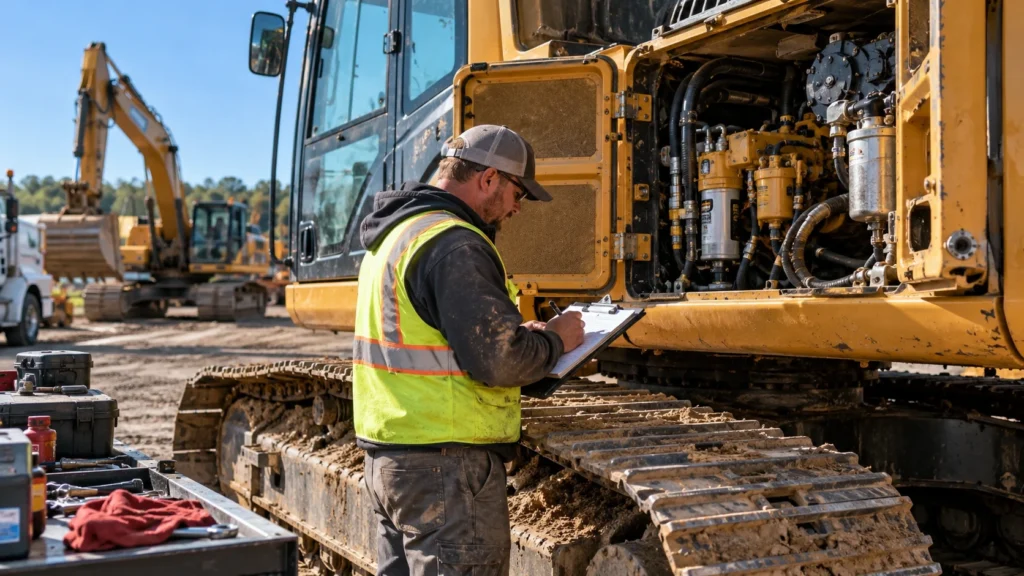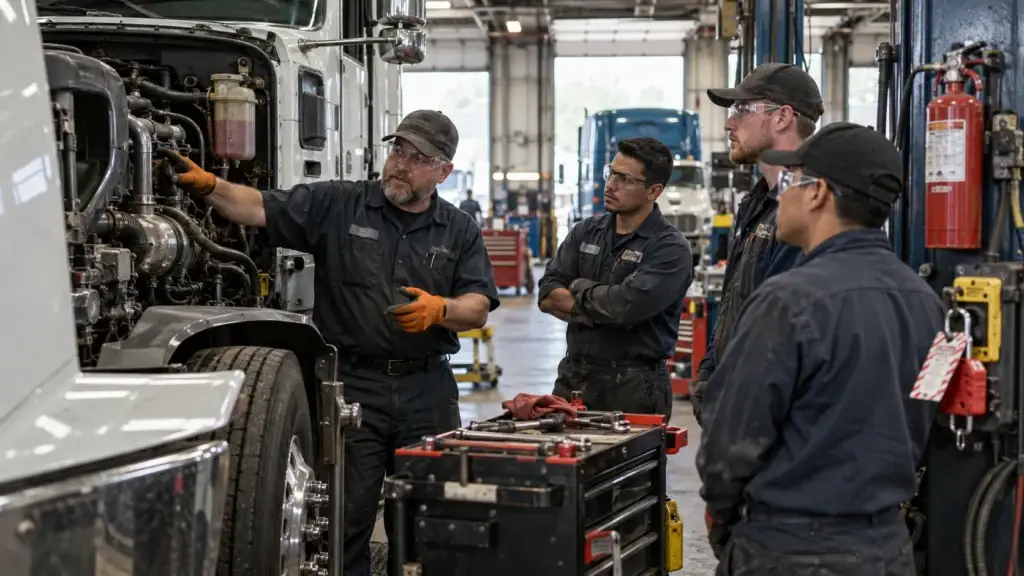
shop safety training requirements

OSHA Compliance Training for Heavy-Duty Repair Shops

Table of Contents
    Add a header to begin generating the table of contents

    Since 1970, the Occupational Safety and Health Administration has established critical standards to protect workers in industrial environments. OSHA compliance training isn’t just a regulatory obligation—it’s a business imperative that prevents injuries, reduces liability, and maintains operational continuity. Heavy-duty repair facilities face unique hazards every day, from diesel equipment and flammable materials to welding operations and heavy machinery.

    The financial consequences of non-compliance are severe. OSHA penalties for serious violations can reach $16,131 per infraction, while unplanned downtime costs facilities between $450 and $760 per truck daily. These numbers don’t account for injured workers, lost productivity, or potential operational shutdowns.

    Workplace safety regulations exist to create protective frameworks for employees operating in high-risk conditions. Understanding and implementing proper protocols transforms compliance from an administrative burden into a strategic advantage. This comprehensive guide outlines essential shop safety training requirements for heavy-duty facilities, covering hazard communication, emergency response, equipment operation, and regulatory standards that keep your workforce protected and your operations running smoothly.

    Last Updated: November 2025

    Key Takeaways

    • Regulatory Framework: OSHA has mandated worker protection standards since 1970, with serious violation fines reaching $16,131 per incident and willful violations up to $161,323.
    • Industry-Specific Hazards: Heavy-duty facilities face multiple daily hazards including heavy equipment, flammable substances, and welding operations requiring specialized training protocols.
    • Financial Impact: Unplanned downtime from accidents costs between $450-$760 per truck daily, while comprehensive safety programs reduce insurance premiums and equipment damage.
    • Training Categories: Compliance programs must address hazard communication, PPE requirements, machine guarding, lockout/tagout procedures, and emergency response protocols.
    • Documentation Requirements: Employers must maintain training records for 3-30 years depending on exposure type, with specific certification elements required for OSHA inspections.

    Understanding OSHA’s Role in Heavy-Duty Workshop Safety

    Federal workplace safety regulations governing heavy-duty workshops trace their origins to landmark legislation passed over five decades ago. The regulatory framework that shapes modern workshop operations emerged from congressional action designed to address widespread workplace injuries and fatalities. Today, this comprehensive system of occupational safety standards directly impacts how heavy-duty shops conduct daily operations, train employees, and maintain safe working environments.

    Heavy-duty workshop owners operate within a structured regulatory environment that balances federal oversight with practical implementation. The system establishes minimum safety requirements while providing enforcement mechanisms to ensure compliance. Understanding this regulatory foundation helps shop operators navigate their legal obligations and create genuinely safe workplaces.

    The Occupational Safety and Health Act Foundation

    Congress passed the Occupational Safety and Health Act in 1970 to address a crisis of workplace injuries and deaths across American industries. This landmark legislation created a federal agency with broad authority to prevent dangerous working conditions and eliminate or diminish occupational injury, illness, and death. The Act established both the regulatory framework and the enforcement mechanisms that continue to govern workplace safety today.

    The legislation gave birth to the Occupational Safety and Health Administration, an agency within the Department of Labor. OSHA’s mission extends beyond simple rule-making to encompass five core functions: setting and enforcing protective workplace standards, providing outreach and education programs, establishing partnerships with employers and workers, and ensuring state-level program consistency.

    The Act specifically requires employers to meet safety compliance obligations outlined in OSHA Standards. These regulations cover everything from machine guarding to hazardous chemical exposure. Heavy-duty workshop operations fall squarely within OSHA’s jurisdiction, subjecting them to extensive safety requirements designed for industrial environments.

    OSHA general industry standards workplace safety

    OSHA General Industry Standards establish comprehensive safety requirements for heavy-duty repair facilities nationwide.

    The foundational principle of the Act centers on employer responsibility. Every covered employer must provide a workplace free from recognized hazards that cause or are likely to cause death or serious physical harm. This “General Duty Clause” applies even when no specific OSHA standard addresses a particular hazard.

    OSHA’s Enforcement Authority in Heavy-Duty Operations

    OSHA exercises substantial enforcement authority through workplace inspections, citations, and financial penalties. The agency conducts inspections based on several priority categories, with imminent danger situations receiving immediate attention. Fatal accidents and worker complaints also trigger inspection protocols that can significantly impact shop operations.

    Compliance safety and health officers possess the authority to enter workplaces without advance notice. During inspections, these officials examine physical conditions, review documentation, and interview employees. Heavy-duty workshops must maintain records demonstrating workplace safety compliance with applicable standards, and inspectors will scrutinize these materials during visits.

    The citation process follows a structured approach when violations are discovered. OSHA classifies violations into several categories: willful violations occur when employers knowingly disregard safety requirements, carrying penalties up to $156,259 per violation; serious violations involve substantial probability of death or serious physical harm, with penalties reaching $15,625 per violation; other-than-serious violations have direct relationship to job safety but probably would not cause death or serious harm; and repeat violations apply when employers receive citations for substantially similar conditions, with penalties up to $156,259.

    These penalty structures create powerful financial incentives for maintaining compliant operations. Heavy-duty shops facing citations must respond within specified timeframes and implement corrective actions. Failure to abate violations can result in additional daily penalties until compliance is achieved.

    General Industry vs. Construction Standards

    A critical distinction exists between General Industry Standards and Construction Standards that often confuses workshop operators. General Industry Standards are codified in 29 CFR 1910, while Construction Standards appear in 29 CFR 1926. This distinction significantly impacts which regulations apply to specific shop activities and training requirements.

    Heavy-duty repair shops typically fall under General Industry regulations when performing maintenance, repair, and service operations. These facilities must comply with OSHA general industry standards covering machine guarding, hazard communication, lockout/tagout procedures, and personal protective equipment. The regulations address ongoing operational activities rather than project-based construction work.

    However, shops performing construction-related activities may become subject to Construction Standards. Activities such as building modifications, structural repairs, or installation of new equipment systems can trigger construction regulations. The determining factor centers on whether the work constitutes construction, alteration, or repair of a structure.

    Regulatory AspectGeneral Industry Standards (29 CFR 1910)Construction Standards (29 CFR 1926)
    Primary ApplicationOngoing manufacturing, repair, and service operations in fixed facilitiesConstruction, alteration, demolition, and project-based work
    Heavy-Duty Shop ActivitiesVehicle maintenance, equipment repair, routine service operations, parts fabricationShop building construction, structural modifications, major equipment installation
    Training FocusEquipment operation, hazard communication, machine guarding, lockout/tagoutFall protection, scaffolding, excavation, crane operation, construction equipment

    State-level programs add another layer of complexity to the regulatory landscape. California’s requirements are found in Title 8, including Construction Safety Orders in Subchapter 4 and General Industry Safety Orders in Subchapter 7. State plan jurisdictions like California, Washington, and Michigan may have additional or more stringent requirements than federal OSHA standards.

    Understanding which standards apply requires careful analysis of specific work activities. Shop owners should evaluate each operation to determine the appropriate regulatory framework. This determination affects training requirements, safety equipment specifications, and documentation practices essential for workplace safety compliance.

    Mandatory Shop Safety Training Requirements Under OSHA Regulations

    Compliance with OSHA training mandates begins with understanding which standards apply to your heavy-duty shop and when employee safety training must occur. Federal regulations establish specific training obligations that employers cannot defer or delegate without maintaining proper oversight. These requirements create a structured framework for protecting workers from recognized hazards while ensuring operations meet legal standards.

    The training landscape encompasses both broad industry-wide requirements and specialized certifications for specific equipment or hazards. Employers must navigate multiple regulatory sections to build comprehensive safety programs. Documentation of all training activities becomes essential evidence of compliance during inspections.

    Navigating the General Industry Standards Framework

    The Code of Federal Regulations Title 29, Part 1910 contains the General Industry Standards that govern most heavy-duty shop operations. This comprehensive regulatory framework spans hundreds of pages organized into lettered subparts addressing distinct safety categories. Understanding this structure helps employers identify which authorized employee training requirements apply to their specific operations.

    Several subparts hold particular relevance for heavy-duty workshops. Subpart H covers hazardous materials handling, storage, and communication requirements. Subpart I establishes PPE assessment and training mandates. Subpart J addresses workplace conditions including ventilation and noise exposure. Subpart O contains critical requirements for equipment operation safety, while Subpart S specifies standards for electrical work and equipment maintenance.

    employee safety training requirements chart

    Employee safety training requirements vary by work activity and equipment type, requiring systematic tracking to maintain compliance.

    California regulations supplement federal standards with additional specificity regarding supervisory responsibilities. State requirements under Section 3203(a)(7)(F) mandate that supervisors receive training on their safety oversight duties. This creates layered compliance obligations where both federal and state standards must be satisfied.

    Initial Training Obligations for New Employees

    New employees must complete comprehensive employee safety training before beginning work that involves exposure to workplace hazards. This initial training cannot occur simultaneously with hazardous work—it must precede any such exposure. Employers who allow untrained workers to operate equipment or handle materials violate fundamental OSHA requirements.

    The orientation process must cover the facility’s Injury and Illness Prevention Program or equivalent safety management system. Workers need specific instruction on hazards present in their assigned work areas. Generic safety talks do not satisfy regulatory requirements when employees face particular dangers like chemical exposure, machinery operation, or elevated work positions.

    Task-specific safety procedures form the core of initial employee safety training. An employee assigned to operate a power press must understand point-of-operation hazards, guarding systems, and emergency stop procedures. A worker handling solvents needs instruction on vapor hazards, proper ventilation, spill response, and personal protective equipment use.

    Documentation requirements take effect immediately. Employers must record the training date, topics covered, trainer identity, and employee acknowledgment. California regulations specify that this documentation should demonstrate the training adequately addressed the hazards the employee will encounter.

    Periodic Refresher Training Requirements

    OSHA standards impose varying refresher training intervals depending on the specific hazard category. Annual retraining applies to several critical areas including hazardous materials handling, bloodborne pathogen exposure, and powered industrial truck operation. Employers cannot extend these intervals even when employees demonstrate consistent safe performance.

    Some training requirements operate on different schedules. Respiratory protection programs may require quarterly fit testing. Certain equipment certifications remain valid for three years before renewal. The variability creates compliance challenges that demand careful tracking systems.

    Event-triggered retraining represents an often-overlooked obligation. When procedures change, all affected employees need updated authorized employee training before implementing new methods. Equipment modifications require retraining on altered safety features. An accident or near-miss incident may indicate that existing training proved inadequate, triggering immediate retraining requirements.

    Performance-based retraining becomes mandatory when supervisors observe unsafe work practices. An employee who bypasses machine guards or misuses personal protective equipment demonstrates insufficient understanding. Employers must provide corrective training and document both the observed deficiency and the remedial instruction.

    Understanding Competent Person Designation and Responsibilities

    OSHA regulations frequently require employers to designate a “competent person” for specific activities and hazards. This designation carries legal significance beyond simple job titles. A competent person possesses demonstrated knowledge, training, and authority to identify hazards and implement corrective measures immediately.

    The competent person training requirement appears throughout multiple standards. Excavation operations require a competent person to inspect trenches daily. Scaffold erection demands competent person oversight. Fall protection systems need competent person evaluation before use. Each designation requires specific technical knowledge relevant to that hazard category.

    Employers must formally designate these individuals and ensure they receive appropriate preparation. The designation cannot be informal or assumed—it requires explicit appointment. Competent persons need both theoretical knowledge and practical experience to fulfill their regulatory role effectively.

    Designation LevelKnowledge RequirementAuthority Level
    Competent PersonHazard identification and correction methods through training and experienceImmediate authority to eliminate hazards and stop work
    Qualified PersonTechnical knowledge from education, training, or experience with specialized skillsTechnical decision-making within specialty area
    Authorized EmployeeTask-specific training for assigned dutiesPermission to perform specific operations under supervision

    The distinction between competent persons, qualified persons, and authorized employees creates confusion in many workplaces. A qualified person possesses technical expertise in a specialty area like electrical systems or structural engineering. An authorized employee has received permission and training to perform specific tasks but may lack broader hazard recognition capabilities.

    Competent person responsibilities extend beyond personal task completion. These individuals must actively monitor work areas, recognize developing hazards, and take prompt corrective action. They serve as the employer’s on-site safety representative with both technical knowledge and organizational authority.

    Hazard Communication Standard Training (HazCom 2012)

    Heavy-duty workshops handle numerous hazardous chemicals—from brake cleaners to welding gases—requiring employers to implement comprehensive hazard communication training programs that meet OSHA’s updated 2012 standards. The Hazard Communication Standard (29 CFR 1910.1200) ranks among the most frequently cited OSHA regulations during workplace inspections. This standard protects employees by ensuring they understand the chemical hazards present in their work environment and know how to protect themselves from exposure.

    Employers must maintain a written hazard communication program that details how the facility implements chemical safety protocols. This program serves as the foundation for all chemical safety training activities. Every employee who may be exposed to hazardous chemicals during normal work conditions or foreseeable emergencies must receive proper instruction.

    The 2012 update aligned OSHA’s requirements with the Globally Harmonized System of Classification and Labelling of Chemicals. This international standard creates consistency in hazard classification and communication across different countries and industries. Training must occur at initial assignment and whenever new chemical hazards are introduced into the workplace.

    hazard communication training materials and chemical safety data sheets

    Proper hazard communication training ensures employees can identify chemical hazards and access critical safety information through data sheets.

    Safety Data Sheets Management and Access

    Safety data sheets training begins with understanding how employers must organize and provide access to critical chemical information. OSHA requires facilities to maintain a current SDS for every hazardous chemical present in the workplace. These documents contain detailed information about chemical composition, physical and health hazards, protective measures, and emergency response procedures.

    Employees must have immediate access to safety data sheets during all work shifts when they are in their work areas. This means SDS cannot be locked in a manager’s office or stored in locations that require special permission to access. Many shops use physical three-ring binders placed in central locations throughout the facility where workers can quickly reference them.

    Electronic SDS systems have become increasingly popular in modern heavy-duty shops. These digital platforms allow workers to access chemical information via computers, tablets, or smartphones. However, employers must ensure that electronic systems remain accessible during power outages or equipment failures.

    The SDS library must be updated whenever new chemicals arrive or existing product formulations change. Employers should designate a specific person responsible for maintaining the SDS collection and verifying that all chemicals in use have corresponding documentation.

    Chemical Container Labeling Requirements

    Proper container labeling forms a critical component of chemical safety training programs in heavy-duty shops. Every container of hazardous chemicals must display a label with specific information elements. Original manufacturer containers arrive with compliant labels, but shops must maintain these labels in readable condition throughout the product’s use.

    GHS-compliant labels include six mandatory elements: product identifier, signal word (Danger or Warning), hazard statements, precautionary statements, pictograms, and supplier identification. These standardized elements ensure consistent communication regardless of the chemical’s manufacturer or origin.

    Secondary container labeling presents a common compliance challenge during OSHA inspections. When employees transfer chemicals from original containers into spray bottles, smaller containers, or portable dispensers, these secondary containers require proper labels. The label must identify the chemical contents and include appropriate hazard warnings that alert workers to potential dangers.

    Shops frequently transfer brake cleaner, penetrating oil, or degreasing solvents into spray bottles for convenient application. Each of these containers needs labeling that identifies what’s inside and the associated hazards. Unlabeled spray bottles or containers marked only “cleaner” violate OSHA requirements and create serious safety risks.

    GHS Pictogram and Symbol Recognition

    The Globally Harmonized System uses nine standardized pictograms to communicate chemical hazards visually. These diamond-shaped symbols with red borders and black images appear on chemical labels and safety data sheets. Employees must recognize these pictograms and understand what hazards they represent as part of their hazard communication training.

    Heavy-duty shops commonly encounter several specific pictograms during daily operations. The flame pictogram indicates flammable materials like brake cleaner, paint thinners, and solvents. The exclamation mark warns of health hazards such as skin irritation or eye damage. The corrosion symbol identifies materials that cause skin burns or material damage, including battery acid and strong cleaners.

    The gas cylinder pictogram marks compressed gases used in welding operations, tire inflation, and pneumatic tools. The health hazard pictogram (showing a person’s torso with a star burst) indicates serious health effects including respiratory sensitization, carcinogenicity, or reproductive toxicity.

    PictogramHazard CategoryCommon Shop Examples
    FlameFlammable MaterialsBrake cleaner, paint thinner, acetone, gasoline
    Exclamation MarkAcute Toxicity/IrritantDegreasers, glass cleaners, some adhesives
    CorrosionCorrosive to Metals/SkinBattery acid, rust removers, strong alkaline cleaners
    Gas CylinderCompressed GasesWelding gases, compressed air, refrigerants

    Training must ensure employees can identify each pictogram and understand the corresponding protective measures required. Visual recognition alone isn’t sufficient—workers need to know what actions to take when they see specific symbols on chemical containers.

    Employee Information and Training Elements

    OSHA mandates specific content elements for chemical safety training programs in heavy-duty shops. The training must be comprehensive, understandable, and effective at communicating hazard information to all employees. Generic awareness videos or brief safety talks typically fail to meet the standard’s requirements.

    Training must cover four essential areas. First, employees need information about the physical and health hazards of chemicals present in their work areas. This includes understanding acute effects like burns or dizziness and chronic effects such as respiratory disease or cancer from long-term exposure.

    Second, workers must learn the protective measures they can take to minimize exposure and protect themselves. This includes proper personal protective equipment selection and use, engineering controls like ventilation systems, and safe work practices specific to the chemicals they handle.

    Third, employees need instruction on how to read and interpret chemical labels and safety data sheets. Many workers have never used an SDS before employment, so training must explain the document’s organization, where to find critical information, and how to apply that information to their specific tasks.

    Fourth, training must inform employees about the location and availability of the facility’s written hazard communication program. Workers should know where to access the program document, the SDS library, and who to contact with questions about chemical hazards.

    Stay Ahead of Industry Trends

    Get expert insights, equipment reviews, and operational strategies delivered weekly.

    Subscribe to Our Newsletter

    Personal Protective Equipment Training Protocols

    OSHA’s comprehensive personal protective equipment standards require employers to implement systematic training programs that extend far beyond simply handing out equipment. Under 29 CFR 1910 Subpart I, heavy-duty shop operators must develop detailed PPE training requirements that address hazard identification, proper selection, correct usage, and ongoing maintenance. These regulations establish a clear framework where training becomes the critical link between equipment availability and actual worker protection.

    The foundation of effective PPE programs rests on understanding that protective gear serves as the final barrier against workplace injuries. California regulation 3380(c) reinforces federal standards by mandating that employers document every step of their training process. Workers must demonstrate competency in using safety equipment before performing hazardous tasks.

    PPE training requirements workplace assessment

    Workplace hazard assessments form the foundation for determining appropriate PPE requirements for each job task.

    Conducting Comprehensive Hazard Evaluations

    Every PPE program begins with a thorough workplace hazard assessment that identifies specific risks present in heavy-duty shop environments. Employers must conduct systematic walk-throughs of all work areas to document impact hazards, penetration risks, chemical exposure dangers, heat and cold extremes, harmful dust, light radiation, and other threats that necessitate protective equipment.

    The hazard evaluation must be certified in writing, including the workplace evaluated, the person conducting the assessment, and the completion date. This documentation serves as the official record demonstrating compliance with personal protective equipment standards. Assessments must be updated whenever workplace conditions change, new equipment is introduced, or different processes are implemented.

    Based on the workplace hazard assessment results, employers determine which types of protective gear workers need for specific tasks. General shop work typically requires hard hats, gloves, steel-toe boots, and high-visibility vests. Specialized operations demand additional protection such as goggles or face shields for grinding and welding operations.

    Equipment Selection and Proper Fitting Procedures

    Once hazards are identified, training must address proper selection, use, and fit of each piece of safety equipment. Employees need to understand which PPE is necessary for their specific tasks, how to correctly don and doff equipment, and how to achieve proper fit that ensures maximum protection. This becomes particularly critical for respirators, safety glasses, and hearing protection where improper fit dramatically reduces effectiveness.

    Heavy-duty shop environments present unique fitting challenges that training must address. Workers who wear prescription glasses need compatible eye protection that accommodates their corrective lenses. Employees with facial hair face restrictions on respirator use since beards and mustaches prevent proper sealing.

    Respiratory protection demands especially rigorous training protocols. Paint booths, welding fumes, and dusty environments require formal respiratory programs including fit testing, medical clearance, and comprehensive training. Workers must understand how to check seals, recognize when cartridges need replacement, and store respirators properly to maintain their protective capabilities.

    Ongoing Maintenance and Inspection Standards

    PPE training requirements extend beyond initial use to include maintenance, storage, and inspection procedures that employees must master. Workers need instruction on inspecting equipment before each use, recognizing damage or wear that requires replacement, cleaning and sanitizing reusable equipment, and storing protective gear properly to prevent contamination or damage.

    Pre-use inspection protocols vary by equipment type but share common elements. Hard hats must be checked for cracks, dents, or deterioration of the suspension system. Safety glasses need examination for scratched lenses that reduce visibility. Gloves require inspection for tears, punctures, or chemical degradation.

    Cleaning and sanitization procedures prevent cross-contamination and extend equipment life. Reusable respirators need disinfection after each use, particularly when shared among multiple workers. Safety glasses require regular cleaning to maintain optical clarity. Hearing protection devices need periodic washing to remove accumulated dirt and oils.

    Storage practices significantly impact equipment longevity and performance. Respirators must be stored in clean, dry locations away from direct sunlight and extreme temperatures. Safety glasses need protective cases that prevent scratching during storage. Proper storage prevents premature equipment failure and ensures protective gear remains ready for immediate use.

    Clarifying Employer and Employee Obligations

    Personal protective equipment standards establish clear divisions between employer responsibilities and employee obligations. Employers must provide appropriate PPE at no cost to workers, maintain equipment in sanitary and reliable condition, and ensure proper use through training and enforcement. The prohibition on charging employees for required safety equipment remains absolute except in very limited circumstances involving employee negligence or misuse.

    Employee responsibilities include using PPE properly according to training, maintaining equipment in sanitary condition through regular cleaning, reporting damaged or defective equipment promptly, and following all PPE-related workplace rules and procedures. Workers cannot modify safety equipment without authorization, as alterations may compromise protective capabilities.

    Training must occur initially when employees are hired, whenever workplace changes make previous training obsolete, when PPE types change, or when employee performance indicates lack of understanding. This ongoing education ensures workers remain current on proper protective equipment use as conditions evolve.

    Machine Guarding and Equipment Operation Training

    OSHA’s machine guarding standards under 29 CFR 1910 Subpart O establish comprehensive requirements that protect employees from dangerous moving parts during equipment operation. These regulations recognize that unguarded machinery components cause some of the most severe workplace injuries, including amputations, crushing injuries, and fatalities. Employers must implement rigorous machine safety training programs that address both physical safeguarding systems and safe operating procedures for all heavy-duty equipment.

    machine safety training for equipment operators

    Equipment operators must demonstrate competency in machine operation and safety systems before receiving authorization for independent work.

    Point of Operation Guarding Requirements

    The point of operation represents the area where work is actually performed on material—where cutting, shaping, boring, or forming takes place. This zone presents extreme hazards as employees’ hands, fingers, and other body parts may come dangerously close to moving blades, dies, rollers, or punches. OSHA mandates that employers provide guards or devices that prevent operator access to these danger zones during machine cycles.

    Training on point of operation guarding must cover the various types of protective devices appropriate for specific equipment. Barrier guards physically prevent access to the danger zone through fixed enclosures or adjustable barriers. Two-hand control devices require simultaneous activation by both hands, keeping them away from the point of operation. Electronic safety devices, including light curtains and presence-sensing systems, automatically stop machine motion when an employee enters the protected area.

    Employees must understand the critical importance of never removing, bypassing, or defeating guards during operation. Even momentary guard removal to clear a jam or retrieve material can result in catastrophic injuries.

    Power Transmission Apparatus Protection

    Power transmission apparatus includes belts, chains, gears, shafts, pulleys, sprockets, and flywheels that transmit energy from motors to the working parts of machinery. These components operate at high speeds and create powerful pinch points, entanglement hazards, and impact dangers. OSHA standards under 29 CFR 1910.219 specifically address the guarding requirements for mechanical power transmission equipment throughout the workplace.

    Unlike point of operation hazards, power transmission components may be located away from where employees normally interact with machines. However, they still present serious risks during operation, maintenance, cleaning, and adjustment activities. Training must emphasize that guards on power transmission apparatus serve a different protective function than point of operation guards and require equal respect and maintenance.

    Employees need comprehensive instruction on the specific hazards associated with different transmission components. Rotating shafts can catch loose clothing, gloves, jewelry, or hair, pulling workers into machinery with devastating results. Belt and chain drives create nip points where material gets drawn between moving and stationary parts. Gears present crushing hazards as teeth mesh together with tremendous force.

    Authorized Operator Certification Processes

    OSHA requires that employers formally designate specific employees as authorized operators for each piece of heavy-duty equipment. This certification process ensures that only trained, competent individuals operate dangerous machinery. The authorized operator requirements protect both the operators themselves and other workers in the vicinity of equipment operation.

    Equipment operation certification begins with comprehensive formal instruction covering the machine’s capabilities, controls, safety features, and operational limitations. Instructors must have thorough knowledge of the specific equipment and applicable safety standards. The training should address the manufacturer’s operating manual requirements, workplace-specific procedures, and relevant OSHA regulations.

    Following formal instruction, candidates must complete practical training under the direct supervision of experienced operators or trainers. This hands-on component allows trainees to develop operational skills while receiving immediate feedback and correction. Supervisors must observe multiple operation cycles and various work scenarios before recommending certification.

    The final certification step involves a formal evaluation process where candidates demonstrate their competency. Evaluators assess both knowledge (through written or oral testing) and practical skills (through observed operation). Only after successful completion of all components can an employee receive authorized operator status for that specific equipment type.

    Lockout/Tagout Procedures and Compliance Training

    Hazardous energy control protocols protect workers from some of the deadliest risks in heavy-duty shops, making LOTO compliance procedures essential training. According to OSHA estimates, proper lockout tagout training prevents approximately 120 fatalities and 50,000 injuries each year across American workplaces. These procedures become mandatory whenever servicing and maintenance activities could expose employees to unexpected equipment startup or energy releases.

    The lockout/tagout standard applies to all forms of energy that pose risks during maintenance operations. Workshop managers must ensure comprehensive training covers every potential hazard before employees begin servicing equipment.

    lockout tagout training procedures for hazardous energy control

    Lockout/tagout procedures require systematic energy isolation and verification to protect maintenance technicians from hazardous energy releases.

    The Control of Hazardous Energy Standard

    OSHA’s Control of Hazardous Energy Standard appears in 29 CFR 1910.147 and establishes the foundation for all lockout/tagout requirements. This regulation mandates specific procedures whenever machines or equipment could unexpectedly start up or release stored energy during servicing. California maintains parallel requirements under regulation 3314, which provides additional state-level enforcement authority.

    The standard covers multiple energy types that require control during maintenance activities. These include electrical, mechanical, hydraulic, pneumatic, chemical, thermal, and gravitational energy sources. Each energy type presents unique hazards that demand specific isolation techniques and verification procedures.

    Understanding when hazardous energy control procedures apply remains critical for compliance. The standard requires lockout/tagout during servicing and maintenance operations where unexpected startup could cause injury. However, minor tool changes and adjustments during normal production operations may fall under limited exceptions, provided specific conditions are met.

    Employers must develop written energy control procedures for each piece of equipment. These documented procedures form the basis of all training programs and establish clear protocols that authorized employees must follow without deviation.

    Training Requirements for Different Employee Categories

    OSHA distinguishes between three employee categories, each requiring different training depths and content. This classification system ensures workers receive appropriate instruction based on their interaction with locked-out equipment. Employers must carefully evaluate which category applies to each worker and provide corresponding training.

    Authorized employees perform lockout/tagout procedures and receive the most comprehensive training. Their instruction must cover recognition of hazardous energy sources, the type and magnitude of energy in the workplace, and the methods necessary for energy isolation and control. These workers learn to apply locks, tags, and blocking devices correctly and verify complete energy isolation before beginning work.

    Affected employees operate machines that may be locked out by others but do not perform lockout/tagout themselves. Their training focuses on recognizing when procedures are being implemented and understanding the absolute prohibition against attempting to restart or re-energize equipment.

    Other employees work in areas where lockout/tagout procedures may be used but do not operate or service the affected equipment. These workers receive instructional training about the procedures and the critical prohibition against removing locks or tags placed by authorized employees.

    Employee CategoryTraining FocusCertification Required
    Authorized EmployeesEnergy source identification, isolation methods, verification testingYes, with documented competency
    Affected EmployeesProcedure recognition, restart prohibition, communication protocolsYes, with acknowledgment of understanding
    Other EmployeesLock/tag recognition, removal prohibition, reporting requirementsYes, with documented awareness training

    Step-by-Step Energy Isolation and Verification

    Effective lockout tagout training must cover the complete sequence of energy control procedures. Authorized employees learn a systematic approach that leaves no room for error or shortcuts. Each step builds upon the previous one to create multiple layers of protection.

    The energy isolation process follows a specific sequence that workers must execute consistently: preparation involves identifying all energy sources and determining shutdown methods before beginning work; notification informs all affected employees that servicing will occur; shutdown uses normal stopping procedures to turn off machinery; isolation operates energy-isolating devices to disconnect all power sources; lockout/tagout application applies locks and tags using individually assigned locks; stored energy control releases all residual energy; and verification tests equipment controls to confirm complete isolation.

    Complex equipment with multiple energy sources requires additional precautions. Workers must identify every electrical panel, valve, switch, and disconnect that could supply energy to the work area. Missing even one energy source could result in fatal injuries during maintenance activities.

    Group lockout procedures become necessary when multiple employees service the same equipment simultaneously. Each worker must apply their own personal lock to the lockout device, ensuring no one can restore energy while any employee remains at risk.

    Verification testing represents the final critical step before beginning maintenance work. Authorized employees attempt to operate equipment controls after applying lockout/tagout devices to confirm complete energy isolation.

    Mandatory Annual Updates and Inspection Protocols

    LOTO compliance procedures require ongoing verification through annual retraining and periodic inspections. These requirements ensure procedures remain effective and employees maintain competency over time. Employers cannot treat lockout/tagout as one-time training and must commit to continuous oversight.

    Retraining becomes mandatory under specific circumstances: at least annually for all authorized and affected employees; when changes occur in job assignments; when equipment or processes change; when periodic inspections reveal inadequacies; and when employers have reason to believe employees lack the required understanding.

    Periodic inspections must occur at least annually for each energy control procedure. An authorized employee other than those who normally perform the procedure being inspected must conduct these reviews. This requirement ensures objective evaluation and prevents complacency from routine familiarity.

    Powered Industrial Truck Operator Certification

    Forklift certification requirements extend beyond simple classroom instruction, requiring employers to implement comprehensive training programs that combine formal education with hands-on practical experience. OSHA’s powered industrial truck standard (29 CFR 1910.178) establishes one of the most frequently cited workplace safety regulations, mandating that all operators receive proper certification before operating forklifts, pallet jacks, order pickers, and similar equipment without direct supervision.

    Employers must ensure that every forklift operator completes both components of powered industrial truck training before authorization to operate equipment independently. The certification process protects workers from serious injuries and prevents costly equipment damage while maintaining compliance with federal and state safety regulations.

    powered industrial truck training certification process

    Forklift certification requires both formal instruction and hands-on practical training in the actual work environment before operator authorization.

    Formal Instruction and Practical Training Components

    Powered industrial truck training must include two distinct and equally important components that work together to create competent operators. Online-only or classroom-only training does not satisfy OSHA requirements and leaves employers vulnerable to citations and penalties during inspections.

    The formal instruction component may be delivered through various methods including lectures, group discussions, interactive computer-based learning, video presentations, or written instructional materials. Topics must cover operating instructions specific to manufacturer guidelines, critical differences between trucks and automobiles, truck controls and instrumentation, vehicle capacity ratings, stability principles, inspection procedures, and operating limitations.

    The practical training component requires hands-on experience in the actual work environment. Demonstrations performed by qualified trainers must precede operator practice, allowing trainees to observe proper techniques before attempting operations themselves. Practical exercises must occur in the same workplace where operators will eventually work independently.

    Trainees must demonstrate proficiency in all operational aspects under direct supervision. The practical component addresses real-world challenges that cannot be replicated in classroom settings, including narrow aisle navigation, load placement at height, and interaction with other workers and equipment.

    Operator Evaluation and Certification Process

    The certification process requires formal evaluation before any employee receives authorization to operate powered industrial trucks without supervision. This evaluation goes beyond simple observation and demands systematic assessment of operator competency across all required skills.

    Qualified trainers must conduct the evaluation by directly observing operators performing specific maneuvers in the actual working environment. The trainer observes vehicle operation, load handling, safety awareness, and adherence to workplace-specific procedures.

    Operators must successfully demonstrate competencies including pre-operational inspection completion, safe startup and shutdown procedures, controlled acceleration and stopping, steering precision, load pickup and placement, proper use of warning devices, safe operation on ramps, interaction with pedestrians, emergency response procedures, and safe parking.

    Upon successful completion, the employer must certify in writing that each operator has been trained and evaluated. These forklift certification requirements mandate specific documentation elements including the operator’s name, dates of training and evaluation, and the identity of the person conducting the training.

    Refresher Training Triggers and Requirements

    Initial certification does not provide lifetime authorization to operate powered industrial trucks. OSHA regulations establish specific circumstances that trigger mandatory refresher training to address performance deficiencies and changing conditions.

    Refresher training becomes required when operators demonstrate unsafe operation through any observable behavior. A single instance of unsafe operation mandates immediate refresher training before the operator can resume independent equipment use.

    Situations that automatically trigger refresher training include involvement in any accident or near-miss incident, receipt of an evaluation revealing unsafe practices, assignment to operate a different type of truck, changes in workplace conditions, introduction of new equipment, and modifications to facility layout.

    Refresher training must address the specific deficiency or change that triggered the requirement. A comprehensive program is unnecessary when addressing a specific issue, but the training must thoroughly cover the relevant topic.

    Share Your Expertise

    Join Heavy Duty Journal as a guest author and reach thousands of industry decision-makers.

    Become a Guest Author

    Emergency Response and Workplace First Aid Training

    When accidents happen in heavy-duty shops, properly trained employees can mean the difference between minor incidents and catastrophic outcomes. Emergency response training prepares workers to act quickly and effectively during fires, medical emergencies, chemical spills, and other critical situations. OSHA regulations establish clear requirements for emergency preparedness that protect both employees and operations.

    Heavy-duty workshop environments present unique emergency response challenges due to heavy machinery, hazardous materials, and high-noise conditions. Comprehensive emergency preparedness programs address evacuation procedures, fire suppression, medical response, and communication protocols.

    Emergency Action Plan Development and Training

    OSHA standard 29 CFR 1910.38 requires employers to develop and implement an emergency action plan that addresses potential workplace emergencies. This regulation mandates specific components that every plan must include. Employers must provide training when the plan is initially developed and whenever the plan changes.

    An effective emergency action plan must outline procedures for reporting fires and emergencies, designate primary and secondary evacuation routes, identify procedures for employees who perform critical shutdown operations, and establish methods for accounting for all employees after evacuation.

    Written emergency action plans are mandatory for employers with more than 10 employees. Smaller operations may communicate their plans orally, though written documentation provides better consistency. The plan must identify by name or job title the persons employees can contact for information about the emergency action plan.

    Training ensures employees understand evacuation routes, alarm systems, and designated assembly areas. Heavy-duty shops face particular challenges during evacuations due to high noise levels from equipment operation. Employers must implement visual alarm systems or other effective notification methods that cut through ambient noise.

    Fire Prevention, Extinguisher Use, and Evacuation

    Fire safety training constitutes a critical component of emergency preparedness in heavy-duty workshops where flammable liquids, combustible materials, and ignition sources coexist. OSHA standard 29 CFR 1910.39 requires employers to develop fire prevention plans. Training must occur initially and whenever new fire hazards are introduced to the workplace.

    Employers must decide whether to implement an evacuation-only policy or train designated employees in portable fire extinguisher use. Under an evacuation-only approach, all employees immediately leave upon discovering fire without attempting suppression. This policy requires no extinguisher training but depends entirely on professional fire department response.

    When employers designate employees to use fire extinguishers, fire safety training becomes mandatory. This training must occur upon initial assignment and annually thereafter. The instruction covers general fire hazards in the workplace, specific hazards employees may encounter, and proper fire hazard recognition techniques.

    Employees must learn to select the appropriate extinguisher for different fire classes: Class A fires involve ordinary combustibles like wood and paper; Class B fires involve flammable liquids including gasoline and solvents; Class C fires involve energized electrical equipment; Class D fires involve combustible metals; and Class K fires involve cooking oils.

    Hands-on practice with actual fire extinguishers remains essential for building employee confidence. Training emphasizes the PASS technique: Pull the pin, Aim at the base of the fire, Squeeze the handle, and Sweep from side to side. Employees must also understand the limitations of portable extinguishers and recognize when fires exceed their suppression capabilities.

    First Aid, CPR, and Bloodborne Pathogen Training

    OSHA requires adequate first aid provisions in all workplaces, with specific first aid training requirements based on proximity to medical facilities. When no infirmary, clinic, or hospital exists in near proximity to the workplace, employers must ensure that designated persons receive adequate training to render first aid. Regulatory guidance defines “near proximity” as 3-4 minutes for emergency medical response.

    Acceptable first aid and CPR training programs must meet specific content requirements. Instruction should cover recognition of medical emergencies, appropriate response procedures, and proper use of first aid equipment. CPR training includes chest compressions, rescue breathing, and automated external defibrillator operation.

    Bloodborne pathogen training addresses a critical yet often overlooked hazard in heavy-duty shops. OSHA standard 29 CFR 1910.1030 requires training for all employees with potential occupational exposure to blood or other potentially infectious materials.

    Heavy-duty shop employees face bloodborne pathogen exposure when administering first aid to injured coworkers or cleaning up accident scenes. Even minor cuts can expose responders to infectious diseases including hepatitis B, hepatitis C, and HIV.

    Bloodborne pathogen training must cover universal precautions that treat all blood as potentially infectious, engineering controls such as sharps disposal containers, work practice controls including proper handwashing, personal protective equipment selection, hepatitis B vaccination availability, post-exposure evaluation procedures, and hazard communication elements.

    Documentation, Recordkeeping, and Compliance Verification

    When OSHA compliance officers arrive at heavy-duty shops, the first items they request are training records, injury logs, and hazard assessments. These documents serve as tangible proof that employers have fulfilled their safety obligations and implemented required training programs. Without proper safety training documentation, even the most comprehensive safety programs cannot withstand regulatory scrutiny.

    Shops with more than 10 employees face additional documentation requirements, including maintaining OSHA 300 injury and illness logs. Digital storage systems have become increasingly valuable, allowing instant record retrieval during inspections.

    How Long Must Training Records Be Kept?

    Different OSHA standards establish specific training records retention periods that vary based on the type of training and potential employee exposure. General safety training records must typically be maintained for at least three years from the date of training. However, records containing employee exposure information require retention for the duration of employment plus 30 years.

    Specific OSHA standards impose distinct retention requirements that employers must follow. Powered industrial truck training certifications must remain on file and include the operator’s name, training dates, evaluation dates, and the trainer’s identity. Respiratory protection fit test records stay current until the next fit test is conducted. Hazardous materials training documentation should be kept for at least three years after completion.

    Training TypeRetention PeriodRequired Information
    General Safety Training3 years minimumEmployee name, date, topics covered, trainer identity
    Exposure RecordsEmployment duration + 30 yearsEmployee name, exposure data, medical records, training dates
    Forklift CertificationDuration of employmentOperator name, training dates, evaluation results, trainer name

    What Information Must Training Documentation Include?

    OSHA recordkeeping requirements specify that training records must contain sufficient detail to demonstrate regulatory compliance during inspections. Generic statements like “safety training conducted” fail to meet these standards. Documentation must provide concrete evidence of what was taught and how employees demonstrated understanding.

    At minimum, compliant safety training documentation must include the name of each employee trained and the trainer’s name and qualifications. Training dates must be clearly recorded, along with specific topics covered in enough detail to show that all required elements were addressed. The method of training should also be documented.

    Assessment or evaluation results demonstrating employee understanding represent a critical component. Employee acknowledgment or signature confirming participation creates a verifiable record.

    Employers should create standardized training documentation forms that efficiently capture all required elements. These forms serve as templates that ensure consistency across different training sessions and trainers.

    How Do Shops Maintain OSHA 300 Injury Logs?

    Employers with more than 10 employees in most industries must maintain workplace injury documentation using standardized OSHA forms. The OSHA recordkeeping requirements mandate three specific forms: Form 300 (Log of Work-Related Injuries and Illnesses), Form 300A (Summary), and Form 301 (Injury and Illness Incident Report).

    Recording criteria determine which workplace incidents require documentation. Work-related injuries involving medical treatment beyond first aid must be recorded. Incidents resulting in days away from work, restricted work duties, or job transfers also require recording. Loss of consciousness cases and significant injuries diagnosed by healthcare professionals need documentation regardless of treatment received.

    The annual summary (Form 300A) must be posted in a visible location from February 1 through April 30 of the following year. This posting requirement ensures employees can review workplace injury trends.

    Conclusion

    Heavy-duty shops face a critical decision regarding workplace safety compliance. Reactive approaches that barely meet minimum standards create ongoing risk and miss significant business opportunities. Comprehensive OSHA compliance training programs protect workers while delivering measurable financial returns.

    Shops implementing systematic heavy-duty shop safety programs recover costs through multiple channels. Insurance premiums decrease as incident rates drop. Equipment damage declines when properly trained technicians follow established protocols. Employee retention improves in safer work environments, reducing costly turnover.

    Digital compliance platforms transform administrative burden into competitive advantage. Modern systems save 1-2 administrative hours per technician daily, reclaiming $5,000-$15,000 monthly in billable time. Automated checklists prevent missed inspections before they become violations. Integration with telematics systems reduces breakdowns by up to 70 percent, maximizing bay utilization.

    Shop owners should conduct comprehensive gap analyses to identify training deficiencies. Prioritize high-risk areas for immediate attention. Establish systematic training schedules covering all required topics. Implement documentation systems that create defensible records during regulatory audits.

    Regulatory requirements continue expanding, making scalable compliance infrastructure essential. Workplace safety compliance represents both moral responsibility to protect workers and business necessity for operational continuity in the demanding heavy-duty repair industry.

    Frequently Asked Questions

    What are the financial penalties for OSHA violations in heavy-duty repair shops?

    OSHA penalties for serious violations currently reach $16,131 per violation, while willful or repeated violations can escalate to $161,323 per incident. Failure-to-abate violations accumulate daily penalties of $16,131 beyond the abatement date. Heavy-duty shops face additional costs from equipment downtime, which can exceed $760 daily per affected truck when operations are disrupted by citations or injury investigations. State plans like Cal/OSHA may impose more stringent requirements and higher penalty structures than federal standards. Beyond direct fines, shops experience increased insurance premiums, potential loss of contracts requiring safety certifications, and reputational damage that impacts customer relationships.

    Do heavy-duty repair shops fall under General Industry or Construction OSHA standards?

    Heavy-duty repair shops typically operate under General Industry Standards (29 CFR 1910) for routine maintenance, repair, and servicing operations. However, shops performing construction-related activities such as structural modifications, facility expansion, or major equipment installation become subject to Construction Standards (29 CFR 1926) for those specific activities. The determining factor is the nature of the work—ongoing operations versus project-based construction activities. Mixed operations require compliance with whichever standard provides greater worker protection. Shop owners should consult OSHA’s compliance directives or state consultation services when work activities blur regulatory boundaries.

    How often must employees receive refresher safety training under OSHA regulations?

    Refresher training intervals vary by specific hazard and OSHA standard. Annual refresher training is mandatory for hazardous materials (HazCom), bloodborne pathogens, and certain respiratory protection programs. California requires powered industrial truck operator re-evaluation every three years. Lockout/tagout procedures require annual inspections and retraining when deficiencies are identified. Event-triggered retraining becomes necessary when procedures change, new equipment is introduced, or employee performance indicates knowledge gaps. Employers should establish systematic tracking to ensure timely refresher training across all required areas.

    What is the difference between a competent person, qualified person, and authorized employee under OSHA?

    A competent person is capable of identifying existing and predictable hazards and has authorization to take prompt corrective measures to eliminate them. A qualified person possesses a recognized degree, certificate, or professional standing, or has extensive knowledge and experience to solve problems relating to specific work. An authorized employee is specifically designated to perform certain tasks or operate specific equipment. In lockout/tagout contexts, authorized employees perform energy isolation, competent persons conduct periodic inspections, and qualified persons maintain electrical systems. A single individual may hold multiple designations with appropriate training.

    Are online-only safety training courses acceptable for OSHA compliance?

    Online training acceptability depends on the specific OSHA standard. For knowledge-based training such as Hazard Communication, bloodborne pathogens awareness, or emergency action plans, comprehensive online courses can satisfy formal instruction requirements if they include verification of employee understanding. However, for hands-on skills training such as powered industrial truck operation, fire extinguisher use, or lockout/tagout procedures, online training alone is insufficient. These standards explicitly require practical training components where employees demonstrate competency in actual workplace conditions under qualified trainer observation. Effective programs typically combine online formal instruction with workplace-specific practical training and competency verification.

    How long must employers retain safety training documentation?

    Training record retention periods vary by OSHA standard. General safety training records should be retained for three years from the training date. Exposure-related training records (hazardous materials, noise, respiratory protection) must be maintained for the duration of employment plus 30 years. Powered industrial truck certifications must be retained for the duration of operator employment and include operator name, training dates, evaluation dates, and trainer identity. Respiratory protection fit test records must be kept until the next fit test is administered. Lockout/tagout annual inspection records must be retained for one year. Systematic recordkeeping should clearly identify retention requirements by training topic.

    Share This With Your Heavy-Duty Network

    Help fleet managers and diesel technicians discover valuable insights by sharing this article.

    Leave a Comment

    Your email address will not be published. Required fields are marked *

    Sponsored

    Emergency Breakdown?

    Find Certified Repair Shops Near You

    24/7 Mobile Service
    Verified Facilities
    Nationwide Coverage
    Find Repair Shops Now →

    Trusted by thousands of fleet operators