

By Michael Nielsen, Editor & Publisher | 15+ Years in Diesel Repair
Last Updated: January 2026
📖 Estimated reading time: 22 minutes
The commercial vehicle industry stands at a critical crossroads in 2025. Traditional management methods built on experience and intuition are giving way to data-driven decision-making that transforms how businesses operate. Fleet analytics software has evolved from a nice-to-have tool into an essential platform for competitive success in heavy-duty operations.
Every truck on the road generates valuable business intelligence. Fault codes, mileage logs, fuel consumption patterns, and maintenance records create a detailed picture of operational health. When this information gets centralized and analyzed properly, hidden patterns emerge that prevent costly breakdowns and optimize performance across your entire fleet.
The transformation happening across heavy-duty operations combines traditional expertise with predictive capabilities. Grease and grit still matter, but they work better alongside sophisticated fleet data analysis. This approach identifies which components fail at specific mileage points and under particular conditions—intelligence that manual oversight simply cannot match.
Operations directors and business owners who embrace this shift gain measurable advantages. Improved uptime, reduced emergency repairs, and enhanced profitability become achievable goals rather than wishful thinking. The competitive landscape demands this evolution toward smarter, more responsive management practices.
Key Takeaways
- Data transforms operations: Modern commercial vehicle management requires analytics-driven strategies to remain competitive in 2025’s challenging market
- Predictive maintenance delivers ROI: Analytics platforms reduce maintenance costs by 20% and unexpected breakdowns by up to 50% through early intervention
- Integration matters: Centralized data analysis reveals patterns that predict component failures and connects with ERP, CMMS, and fuel card systems
- Compliance simplified: Purpose-built platforms streamline FMCSA ELD requirements and DOT audit documentation
- Payback within months: Most fleets achieve ROI within six to twelve months through combined fuel savings, reduced downtime, and administrative efficiency
1. What Makes Fleet Analytics Software Essential for Heavy-Duty Operations
Fleet analytics software has emerged as the cornerstone technology for heavy-duty operations seeking to maximize efficiency and profitability. The complexity of managing commercial vehicles demands more than traditional tracking methods. Modern fleet managers need comprehensive visibility across every aspect of their operations to make informed decisions that impact their bottom line.
The transportation industry continues to face rising operational costs, tighter regulatory requirements, and increasing customer expectations. Analytics platforms provide the data-driven insights necessary to navigate these challenges successfully. According to the American Transportation Research Institute’s 2024 operational costs analysis, marginal costs per mile for trucking reached record levels, making cost visibility more critical than ever.
Defining Modern Fleet Analytics Solutions
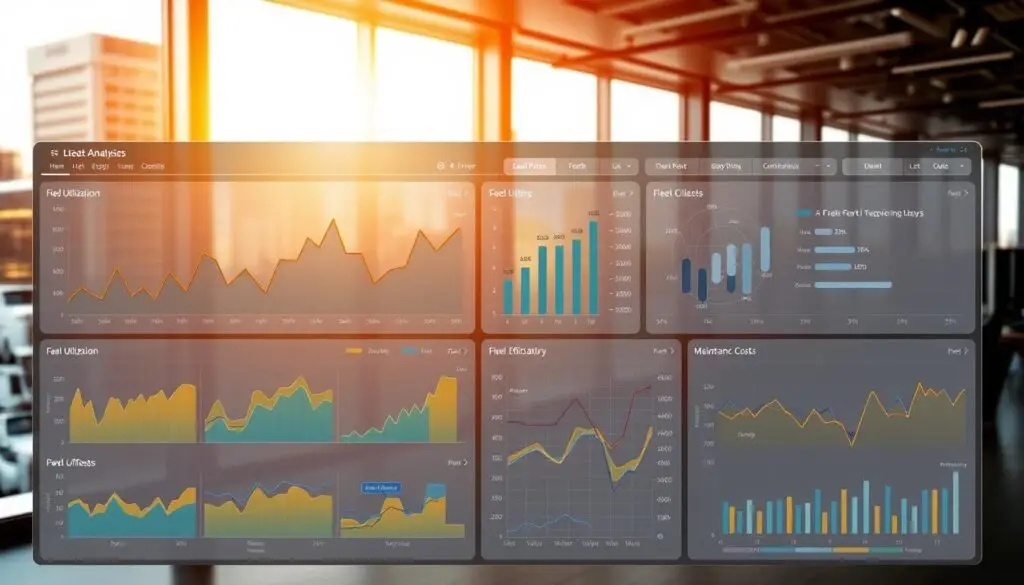
Today’s analytics platforms extend far beyond basic GPS monitoring. These comprehensive systems integrate telematics data, engine diagnostics, maintenance records, and operational metrics into unified dashboards. Real-time tracking combines with historical analysis to deliver actionable intelligence about every vehicle in your fleet.
Modern solutions capture information from multiple sources simultaneously. They process this data to reveal patterns, trends, and opportunities that remain invisible to manual oversight methods. This 360-degree fleet visibility empowers managers to optimize every aspect of their operations.
The Shift from Reactive to Predictive Fleet Management
Predictive maintenance represents the most significant advancement in fleet management technology. Instead of waiting for breakdowns, analytics platforms identify potential issues before they cause costly downtime. Machine learning algorithms analyze historical data patterns to forecast component failures with remarkable accuracy.
This transformation delivers measurable results. Industry studies show that predictive maintenance reduces maintenance costs by 15-20% while minimizing unscheduled downtime by up to 50%. The shift requires a cultural change toward foresight and efficiency rather than crisis response.
| Management Approach | Response Time | Cost Impact | Downtime Prevention |
|---|---|---|---|
| Reactive Maintenance | After breakdown occurs | High emergency repair costs | Minimal – addresses failures only |
| Scheduled Maintenance | Fixed intervals | Moderate – some unnecessary work | Partial – misses early failures |
| ✓ Predictive Analytics | Before issues develop | Optimized – prevents major failures | Maximum – forecasts problems |
Industry-Specific Requirements for Heavy-Duty Vehicles
Commercial trucks, construction equipment, and specialized heavy-duty vehicles operate under demanding conditions that standard fleet management cannot adequately address. These assets accumulate high mileage and engine hours while facing severe-duty cycles that accelerate wear patterns.
Heavy-duty operations must comply with stringent DOT regulations and maintain detailed records for audits. The Federal Motor Carrier Safety Administration’s inspection and maintenance requirements under 49 CFR Part 396 mandate systematic record-keeping that purpose-built analytics platforms are designed to handle. They account for regulatory environments specific to the transportation industry while delivering insights relevant to heavy-duty performance challenges.
2. Core Features and Capabilities of Advanced Analytics Platforms
Modern fleet analytics systems provide capabilities that extend far beyond simple vehicle tracking. These platforms combine multiple data sources to deliver actionable insights that impact every aspect of heavy-duty operations. Understanding these core features helps fleet managers identify which capabilities align with their operational priorities and business objectives.
Real-Time GPS Tracking and Geofencing
Contemporary telematics solutions deliver continuous location visibility for every vehicle in your fleet. GPS tracking enables dispatchers to monitor asset locations, verify job completion, and respond quickly to customer inquiries about delivery status.
Geofencing capabilities create virtual boundaries around specific locations such as customer sites, fueling stations, or restricted areas. When vehicles cross these boundaries, the system triggers automated alerts that enhance security and operational efficiency. This functionality proves critical for compliance verification and unauthorized vehicle use prevention.
Predictive Maintenance and Diagnostics
Advanced analytics platforms continuously monitor vehicle health through engine performance metrics and operational data. Machine learning algorithms analyze these patterns to predict component failures before they cause costly breakdowns.
Automated alerts notify maintenance teams of upcoming service needs based on actual wear patterns rather than generic schedules. This data-driven approach reduces unexpected downtime and extends vehicle lifespan through timely interventions.
Driver Behavior Monitoring and Scoring
Analytics systems track critical behaviors including harsh braking, rapid acceleration, excessive idling, and speeding events. These metrics directly impact fuel consumption, vehicle wear, and safety outcomes across your fleet.
Driver monitoring produces scoring systems that identify coaching opportunities and support incentive programs. Fleet managers use these insights to reduce accident rates and improve overall operational performance while maintaining CSA compliance scores.
Fuel Management and Route Optimization
Comprehensive fuel management capabilities can reduce fleet fuel costs by 10-15% through consumption tracking and anomaly detection. The system calculates miles-per-gallon metrics that flag efficiency issues and integrates with fuel card programs for automatic data import.
Route optimization analyzes traffic patterns, delivery windows, and vehicle capacity to minimize unnecessary mileage. This functionality directly addresses one of the largest operating expenses in heavy-duty operations while improving on-time delivery performance.
| Platform Capability | Primary Benefits | Data Sources | Impact Metrics |
|---|---|---|---|
| GPS Tracking | Location visibility, dispatch efficiency | Satellite positioning, cellular networks | Response time reduction, asset utilization |
| Predictive Maintenance | Breakdown prevention, service optimization | Engine diagnostics, sensor data, history | Downtime reduction up to 30% |
| Driver Monitoring | Safety improvement, coaching opportunities | Accelerometer data, speed sensors | Accident reduction, insurance savings |
| Fuel Management | Cost reduction, consumption tracking | Fuel card integration, tank sensors | 10-15% fuel cost savings |
3. Critical Data Types and Metrics in Fleet Analytics
Every heavy-duty vehicle operates as a rolling data center, producing insights that directly impact profitability. Modern trucks generate continuous streams of information that reveal operational patterns, maintenance needs, and cost-saving opportunities. The challenge lies in understanding which data matters most and how to transform raw numbers into actionable intelligence that improves fleet performance.
Fleet managers who master data collection gain competitive advantages their rivals cannot match. The difference between reactive operations and proactive management depends entirely on capturing the right information at the right time.
Vehicle Telematics and CAN Bus Data
The Controller Area Network (CAN) bus serves as the nervous system of modern heavy-duty vehicles. This digital communication protocol connects electronic control units throughout the truck, transmitting hundreds of data points every second. Vehicle telematics systems tap into this network to capture critical information including speed, RPM, throttle position, brake application, and transmission status.
Fleet operators gain access to operational parameters that were invisible just a decade ago. The SAE J1939 standard defines communication protocols for heavy-duty vehicles, enabling telematics systems to capture standardized diagnostic data across different manufacturers. This continuous data stream enables managers to monitor vehicle health remotely and identify performance variations across the entire fleet.
Engine Diagnostics and Sensor Readings
Modern vehicle diagnostics systems capture fault codes and sensor readings before drivers notice performance issues. IoT sensors throughout the engine monitor oil pressure, coolant temperature, DEF levels, and emission system status. These readings provide early warnings that prevent catastrophic failures and reduce roadside breakdowns.
Telematics platforms pull engine diagnostics in real-time, automatically generating work orders before trucks arrive at the shop. This proactive approach transforms maintenance from reactive firefighting into scheduled, cost-effective service intervals.
$448–$760/day
Average cost of unplanned vehicle downtime — Source: Element Fleet Management Research
Operational Performance Indicators
Business-critical metrics reveal which assets generate profit and which drain resources. Fleet managers must track utilization rates, cost per mile, maintenance expenses per vehicle, and downtime percentages. These operational indicators expose inefficiencies that remain hidden without systematic cost tracking.
Real-world case studies show fleets identifying vehicles with dramatically different fuel efficiency—12 MPG versus 22 MPG in similar trucks—costing thousands annually in excess fuel consumption that goes undetected without proper tracking. Performance data enables managers to benchmark individual vehicles against fleet averages, identifying underperforming assets that require intervention or replacement.
Driver Activity and Hours of Service Data
Comprehensive analytics platforms integrate driver behavior data with vehicle performance information. Daily vehicle inspection reports (DVIRs), pre-trip and post-trip documentation, and Hours of Service (HOS) compliance records create complete operational visibility. This integration ensures regulatory compliance with FMCSA requirements under 49 CFR Part 395 while identifying coaching opportunities.
Driver activity monitoring captures acceleration patterns, braking intensity, cornering speeds, and idle time. These behaviors directly impact fuel consumption, maintenance costs, and safety outcomes. When combined with vehicle diagnostics, managers gain unprecedented insight into how operator habits affect equipment longevity and operational expenses.
4. Measuring ROI and Business Impact of Fleet Analytics
Fleet analytics investments transform raw operational data into substantial cost savings and productivity improvements that directly impact profitability. Heavy-duty fleet operators need concrete financial justification when evaluating analytics platforms. The business intelligence generated by these systems creates measurable returns across multiple operational categories, from fuel consumption to maintenance scheduling efficiency.
Understanding the complete financial picture requires examining both immediate cost reductions and long-term strategic advantages. Fleet managers who implement comprehensive analytics programs typically achieve payback within six to twelve months. The combination of reduced expenses and increased revenue-generating capacity creates compelling ROI calculations that justify the initial investment.
Operational Cost Reductions
Predictive maintenance delivers some of the most significant direct cost savings for heavy-duty fleets. Industry studies show maintenance costs decrease by approximately 20% when analytics identify issues during scheduled service rather than expensive roadside emergencies. Breakdowns drop by up to 50% through early intervention strategies that prevent minor problems from escalating into major failures.
Fuel efficiency monitoring reveals hidden expenses that drain profitability over time. One fleet manager discovered two vehicles achieving only 12 miles per gallon while similar trucks delivered 22 MPG. This discrepancy cost thousands of dollars annually per vehicle before analytics identified the performance gap.
Automated maintenance scheduling prevents costly component failures that cascade into larger system damage. Parts replaced during routine service cost significantly less than components destroyed by catastrophic failure. The systematic approach enabled by analytics software eliminates guesswork from preventive maintenance programs.
Enhanced Operational Efficiency
Digital systems enable shops to complete work orders 30% faster than manual processes. Technicians spend less time on paperwork and more time turning wrenches. Improved utilization rates directly increase the number of vehicles serviced daily.
Administrative automation reduces clerical workload while eliminating revenue leakage from unbilled parts or labor. Immediate invoicing improves cash flow by shortening payment cycles. Route optimization reduces unnecessary mileage, maximizing vehicle utilization across the fleet.
Reduced downtime translates directly into increased revenue-generating capacity. Vehicles spending more time on productive routes deliver better returns on capital investment. Modern platforms pay for themselves within months by reducing waste and maximizing operational output.
Risk Management and Insurance Benefits
Driver behavior monitoring and vehicle maintenance compliance reduce accident rates across fleets implementing comprehensive analytics programs. Some operators report double-digit percentage reductions in incidents after deployment. Lower crash frequency improves CSA scores and minimizes liability exposure.
Insurance carriers recognize the risk reduction benefits of fleet analytics. Many providers offer premium discounts for fleets demonstrating active monitoring and safety management. The combined savings from fewer claims and reduced premiums contribute significantly to overall financial impact.
Investment Return Framework
Calculating total cost of ownership requires balancing subscription fees, hardware costs, and implementation expenses against tangible operational benefits. Cloud-based solutions typically cost a few hundred dollars monthly while delivering substantial returns through multiple channels.
| Cost Category | Baseline Annual Cost | Post-Analytics Cost | Annual Savings |
|---|---|---|---|
| Maintenance Expenses | $125,000 | $100,000 | $25,000 |
| Fuel Consumption | $200,000 | $180,000 | $20,000 |
| Administrative Labor | $45,000 | $35,000 | $10,000 |
| Insurance Premiums | $80,000 | $72,000 | $8,000 |
| Total First-Year Savings | $450,000 | $387,000 | $63,000 |
This ROI calculation framework demonstrates how combined productivity gains and cost savings typically exceed software investment within the first twelve months. Fleet operations achieving these results position themselves for sustained competitive advantage through data-driven decision-making and continuous operational improvement.
5. Leading Fleet Analytics Software Platforms in 2025
The 2025 market offers diverse fleet analytics platforms, each designed with specific operational priorities and fleet profiles in mind. Understanding these differences helps fleet managers match technology capabilities with their operational requirements. No single platform serves every heavy-duty operation equally well, making informed selection critical to achieving fleet optimization goals.
The platforms reviewed here represent the most established fleet analytics software solutions serving heavy-duty operations. Each brings proven track records, substantial customer bases, and ongoing development commitments that ensure long-term viability.
Samsara Fleet Management
Platform Strengths and Features
Samsara delivers AI-powered dash cam integration that sets it apart in the fleet analytics software landscape. The platform combines real-time GPS tracking with advanced driver safety features through an intuitive interface that reduces training time. Its seamless ELD compliance capabilities address federal requirements while providing comprehensive visibility into fleet operations.
The system excels at automated maintenance alerts based on engine diagnostics and usage patterns. Digital vehicle inspections streamline pre-trip and post-trip reporting, creating audit-ready documentation automatically.
Ideal Fleet Profiles
Samsara works best for mid-to-large fleets operating 50 or more vehicles where video telematics justify the investment. Organizations prioritizing sophisticated safety programs find the dash cam intelligence particularly valuable. Companies seeking modern, user-friendly interfaces with strong mobile app functionality appreciate Samsara’s design philosophy.
Geotab Drive
Platform Strengths and Features
Geotab’s massive third-party integration ecosystem through its Marketplace creates unmatched flexibility for fleet optimization initiatives. The platform provides engineering-grade telematics with extensive data analytics capabilities that appeal to technically sophisticated operations. Its open API architecture enables custom integrations that other platforms cannot easily replicate.
The system delivers predictive maintenance alerts based on comprehensive CAN bus data analysis. Geotab processes more vehicle data points than competing solutions, offering deeper insights for organizations that value data depth over interface simplicity.
Ideal Fleet Profiles
Geotab suits technically sophisticated operations requiring custom integrations with existing business systems. Fleets with diverse vehicle types benefit from its flexible configuration options. Organizations prioritizing comprehensive data access and analytical capabilities over out-of-the-box simplicity find Geotab’s approach aligned with their needs.
Verizon Connect Reveal
Platform Strengths and Features
Verizon Connect offers comprehensive asset tracking backed by telecommunications infrastructure reliability. The platform provides strong field service optimization tools alongside traditional fleet management capabilities. Its customer support network extends across North America, providing local assistance when technical issues arise.
The system includes robust compliance documentation features and automated maintenance alerts that reduce unexpected breakdowns. Integration with Verizon’s network services creates connectivity advantages in remote operational areas.
Ideal Fleet Profiles
Verizon Connect serves field service operations, utility fleets, and organizations requiring proven enterprise-grade stability. Companies valuing responsive customer support and established vendor relationships benefit from Verizon’s business infrastructure. Operations in areas with challenging connectivity appreciate the telecommunications backbone supporting the platform.
Fleet Complete
Platform Strengths and Features
Fleet Complete balances comprehensive features with usability, making advanced fleet optimization accessible to smaller operations. The platform offers competitive pricing without sacrificing essential capabilities like ELD compliance and predictive maintenance alerts. Its particular strength in Canadian and international markets provides advantages for cross-border operations.
The system delivers full-featured solutions including driver behavior monitoring, fuel management, and compliance tools without enterprise complexity. Mobile accessibility ensures managers stay connected to fleet operations from any location.
Ideal Fleet Profiles
Fleet Complete works well for small-to-mid-sized fleets seeking comprehensive functionality without overwhelming complexity. Organizations operating in Canada or requiring cross-border capabilities benefit from its international focus. Companies prioritizing cost-effectiveness while maintaining essential features find Fleet Complete’s value proposition compelling.
Motive (formerly KeepTruckin)
Platform Strengths and Features
Motive specializes in trucking and logistics operations with ELD compliance built specifically for DOT-regulated carriers. The platform provides a driver-friendly mobile experience that improves adoption rates across driver populations. Integrated dashcam and load management features create a unified solution for over-the-road operations.
The system streamlines Hours of Service documentation while providing fleet managers with comprehensive visibility into compliance status. Its focus on the trucking industry creates purpose-built features that general fleet platforms often lack.
Ideal Fleet Profiles
Motive excels for over-the-road trucking companies and logistics operations requiring Hours of Service compliance. Carrier fleets prioritizing driver adoption benefit from the platform’s mobile-first design philosophy. Organizations where regulatory compliance represents a primary concern find Motive’s specialized approach advantageous for maintaining audit readiness.
The HDJ Perspective
After years of watching fleet technology evolve, one pattern stands out: the operations that succeed with analytics platforms are those that match their selection to their actual operational complexity. A 30-truck regional fleet doesn’t need Geotab’s engineering-grade data depth any more than a 500-vehicle enterprise operation should compromise on integration capabilities. The best platform is the one your team will actually use consistently—not the one with the longest feature list. Start with your three biggest operational pain points, and let those drive your evaluation criteria rather than getting distracted by capabilities you may never deploy.
6. Strategic Implementation for Heavy-Duty Fleet Operations
A methodical approach to fleet implementation separates successful analytics initiatives from costly technology investments that fail to deliver results. Heavy-duty operations require careful planning that addresses current capabilities, organizational readiness, and realistic deployment timelines. Without proper groundwork, even the most sophisticated platforms underperform or face user resistance that derails adoption.
The difference between smooth rollouts and problematic deployments often comes down to strategic preparation rather than software selection. Organizations that invest time upfront in assessment, planning, and change management consistently achieve faster time-to-value and higher user satisfaction.
Conducting a Fleet Analytics Readiness Assessment
Before committing to specific platforms, conduct a comprehensive evaluation of your existing infrastructure and operational processes. This readiness assessment identifies compatibility requirements, data quality issues, and technology gaps that could complicate fleet implementation.
Start by documenting current pain points that analytics should address. Are you struggling with unexpected maintenance costs, compliance violations, or poor fuel efficiency visibility? Prioritize must-have features that directly solve these problems versus nice-to-have capabilities that add complexity without immediate value. This distinction prevents feature bloat and keeps implementation focused on measurable operational improvements.

Developing a Phased Deployment Plan
Successful implementations avoid “big bang” approaches that overwhelm users and strain resources. Instead, roll out functionality incrementally, starting with core capabilities before advancing to sophisticated analytics features.
Small fleets should expect deployment within days, while mid-market operations with 50-500 vehicles typically require 2-4 weeks with dedicated onboarding support. Begin with digital inspections and basic maintenance scheduling to build user confidence and demonstrate early wins.
Once your team masters fundamentals, expand to predictive maintenance, route optimization, and complex integrations. This phased approach allows you to validate data accuracy and adjust configurations based on real-world feedback before scaling across your entire fleet.
Driver Training and Organizational Change Management
Technology alone doesn’t guarantee success—people determine whether analytics platforms deliver value or collect dust. Address driver concerns through transparent communication about how the system benefits their daily work, not just management oversight.
Effective change management starts with identifying champion drivers who model adoption and influence peers positively. Provide hands-on training that matches learning styles, allowing drivers to practice with the system before full deployment.
Match system complexity to your team’s technical capabilities. If drivers struggle with basic smartphone navigation, sophisticated dashboards won’t work regardless of feature quality. Create feedback loops that allow frontline users to influence system configuration and feel ownership over the technology.
Setting Performance Benchmarks and KPIs
Establish baseline performance metrics before implementation to measure actual improvement. Document current maintenance costs, vehicle downtime frequency, fuel efficiency averages, and compliance incident rates.
Define 2-3 specific success criteria that demonstrate value within 90 days. These performance metrics create accountability and justify continued investment in analytics capabilities. Review progress monthly against your benchmarks, adjusting strategies when results fall short of expectations. Clear KPIs transform abstract technology investments into concrete operational improvements that stakeholders can understand and support.
| Implementation Phase | Timeline | Key Activities | Success Indicators |
|---|---|---|---|
| Readiness Assessment | 1-2 weeks | Infrastructure evaluation, pain point documentation | Clear requirements list, stakeholder alignment |
| Initial Deployment | 3-14 days | Core feature rollout, driver training, hardware install | 80%+ user adoption, minimal support tickets |
| Expansion Phase | 30-60 days | Advanced features, system integration, optimization | Measurable KPI improvements, positive feedback |
| Optimization | Ongoing | Performance monitoring, configuration refinement | Sustained improvements, reduced costs |
7. Integration with Fleet Management Ecosystems
The true value of fleet analytics emerges when data flows freely across your entire technology ecosystem. Modern heavy-duty operations rely on multiple specialized systems working together. Fleet integration capabilities determine whether your analytics platform becomes a powerful operational hub or an isolated data silo.
Leading platforms connect seamlessly with existing business infrastructure. This connectivity eliminates duplicate data entry and ensures consistent information across departments. The result is faster decision-making and more accurate operational insights.
Connecting with ERP and Financial Systems
Enterprise resource planning platforms like QuickBooks, SAP, Oracle, and Microsoft Dynamics form the financial backbone of mid-market operations. Direct integration between fleet analytics and ERP systems automatically transfers fuel costs, maintenance expenses, and operational data into accounting records.
This data exchange streamlines accounts payable processes for maintenance vendors. Cost allocation to specific jobs or departments happens automatically. Financial teams gain visibility into true total cost of ownership for each vehicle without manual report compilation.

Maintenance Management System Integration
Computerized maintenance management systems benefit tremendously from telematics connectivity. Fleet analytics platforms share vehicle health data, fault codes, and recommended service intervals with CMMS platforms. In return, they receive completed work order details, parts consumption records, and labor hours.
This bidirectional communication creates comprehensive maintenance histories. Predictive algorithms learn from actual repair outcomes rather than theoretical schedules. Service recommendations become increasingly accurate as the system analyzes patterns across your specific fleet operations.
Third-Party Application Connectivity
Specialized tools enhance fleet operations when properly connected. Fuel card programs automatically import transaction data for reconciliation. Route optimization software compares planned versus actual routes for continuous improvement.
Integration capabilities matter especially for industry-specific applications. Construction fleets need load management connections. Field service operations require dispatching system compatibility. Mid-market fleets typically connect with accounting, telematics, fuel cards, procurement systems, and various operational tools.
API Architecture and Data Exchange Standards
Robust Application Programming Interfaces separate adaptable platforms from restrictive systems. Well-documented API connectivity enables custom integrations with specialized business tools. This architecture supports emerging technologies and future-proofs your analytics investment.
Closed systems that force proprietary hardware choices create vendor lock-in. They restrict operational flexibility and limit system interoperability. Open architectures with comprehensive APIs provide long-term adaptability. Your platform should pull in live telematics alerts, auto-generate service recommendations, and centralize digital records across multiple data sources.
Free Professional Fleet Tools
Cost calculators, fault code lookup, maintenance planners, and more—built for owner-operators, fleet managers, and diesel techs. No signup required.
8. Data Security, Privacy, and Regulatory Compliance
Fleet operators face dual imperatives in 2025: safeguarding valuable operational intelligence while demonstrating complete DOT compliance readiness. Analytics platforms collect sensitive information ranging from vehicle locations to customer routes, creating significant security obligations. At the same time, federal transportation regulations demand meticulous documentation and instant audit response capabilities.
Protecting Your Fleet’s Digital Assets
Robust data security measures form the foundation of responsible fleet analytics implementation. Your platform should employ encrypted data transmission protocols that protect information during transfer between vehicles and cloud servers. Secure storage with redundancy ensures business continuity even during system failures.
Role-based access controls limit data visibility to authorized personnel only. A dispatcher doesn’t need access to financial records, and office staff shouldn’t view all driver performance metrics. Regular security audits identify vulnerabilities before attackers exploit them.
Look for vendors with SOC 2 and ISO 27001 certifications that demonstrate commitment to industry-standard protection protocols. These credentials matter especially as ransomware attacks increasingly target transportation operations.
Meeting Federal ELD Requirements
FMCSA Electronic Logging Device standards mandate specific technical capabilities for commercial vehicle hours-of-service tracking. Your analytics platform must record driving time automatically, transfer data during roadside inspections, and include driver harassment safeguards.
Regulatory compliance extends beyond basic tracking. The system should prevent unauthorized data editing while allowing necessary corrections through documented processes. Certification requirements ensure your ELD functionality meets federal specifications outlined in the FMCSA’s ELD implementation guidance.
⚠️ Compliance Warning
DOT auditors can impose fines starting at $500 per documentation violation. Vehicle out-of-service orders and negative CSA score impacts affect insurance rates and customer contracts. Ensure your analytics platform maintains audit-ready records for all required documentation categories.
Preparing for Department of Transportation Audits
DOT auditors expect immediate production of comprehensive documentation. Violations result in fines, vehicle out-of-service orders, and negative CSA score impacts that affect insurance rates and customer contracts.
Required records include daily vehicle inspection reports with dates, times, and signatures; maintenance records showing what was done, when, by whom, and at what cost; driver qualification files with current medical certifications; Hours of Service compliance documentation; and annual inspection certificates.
Digital systems that make compliance documentation the default process eliminate gaps that trigger penalties. When trucks sit idle due to documentation failures, you lose revenue every single day.
Balancing Oversight with Employee Rights
Effective privacy protection policies respect driver privacy while maintaining legitimate business oversight. GPS tracking serves operational purposes like route optimization and safety verification, not inappropriate surveillance.
Establish clear data governance protocols that define appropriate use of monitoring technologies. Video systems should focus on safety events rather than constant recording. Behavior scoring should tie directly to coaching opportunities, not punitive actions.
Transparent communication about what data you collect, how you use it, and who can access it builds driver trust. Data retention policies should meet regulatory requirements without excessive storage of personal information.
9. Navigating Implementation Challenges and Solutions
Converting fleet analytics software from purchase to productive use requires navigating several critical obstacles. Heavy-duty operations face unique implementation challenges that can derail system deployment without proper planning. Understanding these roadblocks and applying proven solutions ensures successful user adoption across your fleet.
Addressing Driver Resistance and Buy-In
Driver resistance represents the most significant barrier to user adoption. Many drivers perceive analytics systems as surveillance tools designed to catch mistakes rather than improve operations. This mindset creates opposition that undermines even the most advanced technology.
Transparent communication about data usage builds trust. Explain how analytics protect drivers by documenting proper procedures, providing evidence during accident investigations, and ensuring vehicles receive necessary maintenance. Focus messaging on safety benefits rather than monitoring aspects.
Involve driver representatives in system selection and configuration. Identify respected drivers as champions who model positive adoption. Create feedback loops where drivers see their input influences system usage. Coaching approaches focused on improvement outperform punitive strategies that create adversarial relationships.
Ensuring Data Quality and Accuracy
Garbage-in-garbage-out principles apply directly to fleet analytics. Inaccurate odometer readings, missed inspections, and incomplete work orders corrupt data accuracy. This erosion undermines confidence in system recommendations and reporting.
Implement validation rules that flag obviously incorrect entries. Automated telematics data collection eliminates manual entry errors. Regular data audits identify inconsistencies before they compound. Clear accountability for data accuracy among all users maintains system integrity.
Managing Hardware Installation Logistics
Telematics device installation presents practical challenges. Scheduling vehicle downtime without disrupting operations requires careful coordination. Diverse vehicle types need different mounting approaches and installation procedures.
Qualified technicians ensure proper installation that prevents connectivity problems. Phased rollouts minimize operational impact while maintaining service levels. Installation costs should include proper training for maintenance staff on device troubleshooting.
Resolving Connectivity and Network Issues
Commercial vehicles operate in areas with poor cellular coverage regularly. Mobile apps must provide robust offline functionality that syncs data when connectivity returns. Connectivity gaps delay data transmission and create frustration when users expect immediate updates.
Select systems with proven offline capabilities. Configure data prioritization so critical information transmits first when connections resume. Test connectivity performance in actual operating territories before full system deployment.
| Challenge Category | Common Problems | Proven Solutions | Success Metrics |
|---|---|---|---|
| Driver Resistance | Surveillance concerns, low adoption | Transparent communication, coaching approach | 90%+ active user rate within 60 days |
| Data Quality | Inaccurate entries, incomplete records | Validation rules, automated collection | Less than 2% error rate in core metrics |
| Hardware Installation | Vehicle downtime, installation errors | Phased rollouts, qualified technicians | Completion within planned timeline |
| Connectivity Issues | Data gaps, sync delays | Offline functionality, data prioritization | 99%+ data capture rate |
10. Future Trends Shaping Fleet Analytics Technology
Heavy-duty fleet managers must prepare for a technological revolution that will transform analytics from reactive reporting tools into intelligent decision-making systems. The convergence of artificial intelligence, electric powertrains, and advanced connectivity creates unprecedented opportunities for operational optimization. These emerging technologies represent more than incremental improvements—they fundamentally reshape what becomes possible in fleet management.
The shift toward predictive analytics enables fleet operators to anticipate challenges before they materialize. This proactive approach reduces costs and enhances safety across all operational dimensions. Understanding these technological trajectories helps organizations make informed investment decisions today.
Artificial Intelligence and Machine Learning Applications
Advanced machine learning algorithms now move beyond simple rule-based alerts to sophisticated pattern recognition capabilities. These systems identify subtle correlations between operating conditions, maintenance history, and failure modes that human analysts would never detect. AI fleet management platforms trained on millions of vehicle-hours predict component failures with remarkable accuracy.
The technology recommends optimal service intervals customized to individual vehicle usage patterns rather than generic schedules. Machine learning models continuously improve predictions as they process additional data from fleet operations. This evolution represents the progression from descriptive analytics through diagnostic analysis to truly predictive analytics and eventually prescriptive recommendations.
These intelligent systems can reduce breakdowns by up to 50% while optimizing parts inventory through accurate demand forecasting. The cultural shift toward foresight and efficiency transforms maintenance from cost center to competitive advantage.
Electric and Alternative Fuel Vehicle Analytics
The heavy-duty industry’s transition toward electric powertrains, hydrogen fuel cells, and alternative fuels creates entirely new analytics requirements. Electric vehicle fleet management demands battery health monitoring, degradation tracking, and charging infrastructure optimization distinct from traditional diesel operations. Range prediction under varying load and environmental conditions becomes critical for route planning.
Analytics platforms must now support electric motor diagnostics, inverter performance monitoring, and thermal management system analysis. Electric vehicle fleet operators require total cost of ownership comparisons between different powertrain technologies. As early adopters deploy electric trucks, software vendors rapidly evolve their platforms to address these fundamentally different analytical needs. The Alternative Fuels Data Center provides resources on battery technology and electric vehicle integration considerations.
Advanced Computer Vision and Dash Cam Intelligence
AI-powered video analysis transforms dash cams from passive recording devices into active safety systems. Computer vision technology detects distracted driving, identifies following distance violations, and recognizes pedestrians and cyclists in blind spots. These systems assess road conditions in real-time and monitor driver fatigue through facial recognition algorithms.
The technology creates proactive intervention opportunities before incidents occur rather than simply documenting accidents after they happen. Computer vision applications reduce collision rates by providing immediate feedback to drivers and alerting fleet managers to high-risk behaviors. This shift from reactive documentation to preventive safety represents a fundamental advancement in fleet risk management.
Edge Computing for Real-Time Decision Making
Processing data directly on vehicle hardware rather than transmitting everything to cloud servers enables instantaneous responses. Edge computing reduces bandwidth requirements, maintains functionality during connectivity loss, and supports latency-sensitive applications where milliseconds matter. Collision avoidance systems cannot tolerate cloud processing delays.
This architectural evolution makes advanced features practical in real-world commercial vehicle environments. Edge devices perform initial analysis locally and transmit only relevant insights to central systems. The approach optimizes network utilization while enabling sophisticated onboard intelligence that operates independently of constant connectivity.
11. Choosing the Right Analytics Solution for Your Fleet
Fleet managers face dozens of analytics vendors competing for attention, but successful solution evaluation begins with internal assessment rather than external sales pitches. Before scheduling demonstrations, your team must identify what problems need solving and which capabilities will deliver measurable business value. This disciplined approach prevents the common mistake of selecting feature-rich platforms that overwhelm users without addressing core operational challenges.
Defining Your Requirements and Must-Have Features
Start your vendor selection process by documenting the three most pressing pain points affecting your operations. These might include missed maintenance causing unexpected breakdowns, DOT compliance concerns creating audit anxiety, or lack of cost visibility preventing budget control. Create a requirements checklist that separates must-have features from nice-to-have capabilities.
Small fleets operating 5-50 vehicles need simplicity with minimal IT support required. Setup should take days, not weeks, with intuitive interfaces that drivers and managers can master quickly. Mid-market operations handling 50-500 vehicles can manage moderate complexity if the business value justifies longer learning curves.
Match system sophistication to your team’s technical capabilities. A solution evaluation should consider whether your staff can configure dashboards, generate reports, and troubleshoot basic issues independently. Define 2-3 specific success metrics that will prove the investment delivers results within six months.
Key Recommendation
Start your evaluation by documenting your three biggest operational pain points—not by reviewing vendor feature lists. The best platform solves your specific problems, not theoretical ones. If you can’t articulate clear success criteria before demos begin, you’re not ready to evaluate solutions.
Navigating the Vendor Assessment Journey
Conduct demonstrations focused on your specific workflows rather than generic feature tours. Request customer references from operations similar in size and industry to yours. Evaluate vendor stability by researching company history, financial backing, and market reputation.
Watch for red flags during vendor selection discussions. Sales approaches emphasizing features before understanding your problems signal misalignment. Opaque pricing structures requiring extensive negotiation suggest hidden costs. Pressure tactics pushing immediate commitment indicate vendors prioritizing contracts over customer success.
Calculating Complete Financial Impact
Understanding total cost of ownership requires looking beyond monthly subscription fees. Include hardware costs for telematics devices, installation expenses, training time, and internal resources for system configuration. Factor in ongoing support fees and potential integration costs with existing systems.
Build ROI calculations comparing these comprehensive costs against quantified benefits. Measure potential savings in reduced maintenance expenses, improved fuel efficiency, decreased downtime, and administrative time recovery. Conservative estimates based on industry benchmarks provide realistic expectations for payback periods.
Planning for Future Fleet Growth
Scalability considerations protect your technology investment as operations evolve. If planning fleet expansion, systems must handle increasing vehicle counts without performance degradation or prohibitive pricing jumps. Consider whether the platform supports diverse asset types if you anticipate adding new vehicle categories or service lines.
Evaluate integration capabilities through open APIs that allow connections with emerging tools. This flexibility prevents the need to replace core systems when adopting new technologies. Growth-ready solutions adapt to changing requirements rather than constraining future possibilities.
Frequently Asked Questions
What is fleet analytics software and why do heavy-duty operations need it?
Fleet analytics software is a comprehensive platform that collects, processes, and analyzes data from commercial vehicles to improve operational efficiency, reduce costs, and prevent breakdowns. Heavy-duty operations need these systems because modern trucks generate continuous streams of diagnostic data, fault codes, and performance metrics that manual oversight cannot effectively monitor. Analytics platforms transform this raw data into actionable intelligence, enabling predictive maintenance that reduces unexpected downtime by up to 50% and maintenance costs by 15-20%. Without analytics capabilities, fleet managers operate blind to patterns that reveal component wear, fuel waste, and compliance risks across their vehicle populations.
How much can fleet analytics software reduce operating costs?
Fleet analytics software typically delivers measurable cost reductions across multiple categories. Predictive maintenance reduces repair costs by approximately 20% by identifying issues during scheduled service rather than expensive emergency repairs. Fuel management features can reduce fleet fuel costs by 10-15% through consumption tracking and efficiency optimization. Administrative automation enables shops to complete work orders 30% faster, reducing labor overhead. Insurance carriers often provide premium discounts for fleets demonstrating active safety monitoring. Most fleets achieve payback on their analytics investment within six to twelve months through combined productivity gains and cost savings across these categories.
What features should fleet managers prioritize when selecting analytics software?
Fleet managers should prioritize features that address their most pressing operational challenges rather than pursuing the longest feature list. Essential capabilities include real-time GPS tracking for asset visibility, predictive maintenance alerts based on engine diagnostics and CAN bus data, ELD compliance functionality meeting FMCSA requirements, and fuel management with consumption tracking. Integration capabilities with existing ERP and maintenance systems prevent data silos that undermine analytics value. Small fleets should prioritize simplicity and minimal IT requirements, while mid-market operations can manage more sophisticated analytics if business value justifies the additional complexity. Define 2-3 specific success metrics before evaluating platforms.
How long does fleet analytics software implementation typically take?
Implementation timelines vary based on fleet size and complexity. Small fleets operating 5-50 vehicles should expect deployment within days with dedicated onboarding support. Mid-market operations handling 50-500 vehicles typically require 2-4 weeks for phased deployment that minimizes operational disruption. Successful implementations avoid “big bang” approaches that overwhelm users. Instead, roll out core capabilities like digital inspections and basic maintenance scheduling first to build confidence and demonstrate early wins. Once your team masters fundamentals, expand to predictive maintenance, route optimization, and complex integrations. This phased approach allows data validation and configuration adjustments based on real-world feedback.
What data security and compliance requirements apply to fleet analytics systems?
Fleet analytics platforms must meet both data security and regulatory compliance requirements. Security measures should include encrypted data transmission, secure cloud storage with redundancy, and role-based access controls limiting data visibility to authorized personnel. Look for vendors with SOC 2 and ISO 27001 certifications demonstrating commitment to industry-standard protection protocols. For compliance, ELD functionality must meet FMCSA Electronic Logging Device standards under 49 CFR Part 395, including automatic driving time recording, roadside inspection data transfer capability, and driver harassment safeguards. DOT audits require immediate production of inspection reports, maintenance records, driver qualification files, and HOS documentation.
Which fleet analytics platforms work best for heavy-duty trucking operations?
The best platform depends on your operational priorities and fleet size. Samsara excels for mid-to-large fleets prioritizing AI-powered dash cam integration and driver safety programs through its intuitive interface. Geotab suits technically sophisticated operations requiring extensive customization through open APIs and third-party integrations via its Marketplace ecosystem. Motive specializes in over-the-road trucking with purpose-built ELD compliance and HOS documentation features designed for DOT-regulated carriers. Fleet Complete offers comprehensive functionality at competitive pricing for small-to-mid-sized fleets, particularly those with Canadian or cross-border operations. Verizon Connect serves field service operations and utility fleets requiring enterprise-grade stability backed by telecommunications infrastructure.
Transforming Fleet Operations Through Strategic Analytics Adoption
Fleet analytics software represents a fundamental shift in how operations make decisions. The move from reactive problem-solving to proactive optimization changes everything about maintenance, compliance, and performance management for heavy-duty fleets.
Independent operators and mid-sized fleets prove that analytics success isn’t reserved for enterprise operations with massive IT budgets. Businesses across construction, logistics, and field service sectors implement these systems to predict failures, reduce downtime, and optimize maintenance spending. Starting with core capabilities like digital inspections delivers immediate value while building foundations for sophisticated analytics as teams develop stronger capabilities.
Selecting the right platform requires honest assessment of operational requirements and technical capabilities. Solutions must balance functionality with usability at your specific scale. The key lies in matching software features to actual business needs rather than getting distracted by capabilities you may never deploy.
The competitive landscape increasingly favors operations that leverage data intelligently. Fleets mastering analytics run leaner, respond faster, and deliver superior reliability compared to those relying primarily on instinct. Data-driven decisions create measurable advantages in maintenance costs, vehicle uptime, and driver safety that compound over time.
As artificial intelligence and machine learning capabilities advance, early adopters position themselves to capitalize on emerging innovations. Building data foundations and organizational capabilities today enables continuous improvement in an evolving transportation technology landscape. Operations that embrace fleet analytics software don’t just improve current performance—they establish the infrastructure for sustained competitive advantage through proven, data-backed decisions that build lasting operational excellence.
Found This Guide Valuable?
Share this comprehensive fleet analytics resource with colleagues and fellow fleet professionals who could benefit from these insights.