
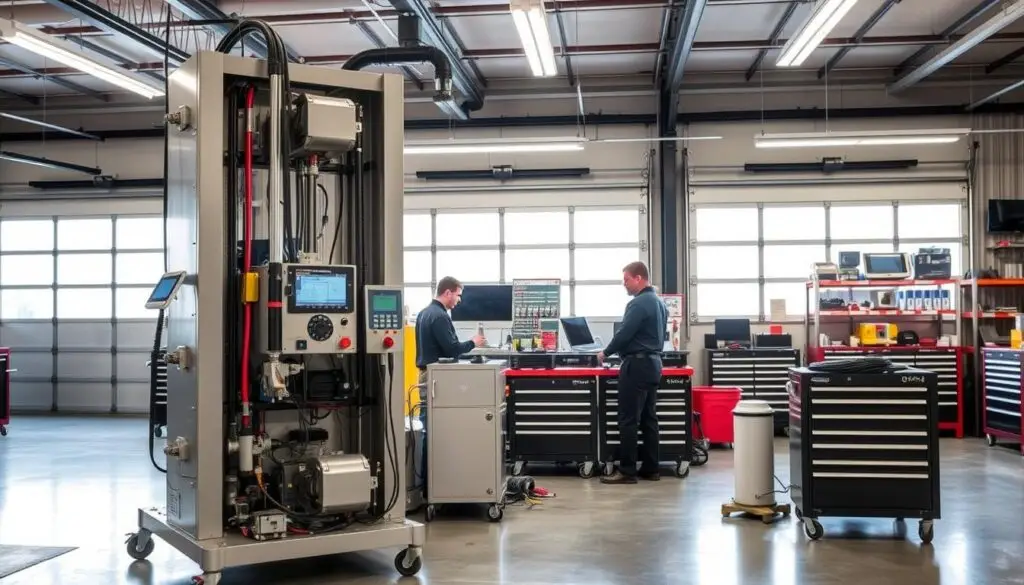
Heavy-duty vehicle emissions testing has become a critical competency for diesel repair shops seeking to expand their service offerings and capture recurring revenue from fleet customers. As federal and state regulations continue to tighten, shop owners who understand testing requirements, invest in proper equipment, and train their technicians accordingly position themselves as indispensable partners for commercial fleet operators. This comprehensive guide examines the regulatory framework, equipment requirements, facility considerations, and business opportunities that define successful emissions testing operations in the commercial trucking sector.
Last Updated: November 2025
Key Takeaways
- Federal foundation: EPA regulations for diesel engines became fully mandatory in 2010, with Phase 3 greenhouse gas standards taking effect in phases from 2027 through 2032.
- State variations matter: California’s Clean Truck Check program represents the most comprehensive framework, while other states enforce varied requirements based on regional air quality needs.
- Equipment investment: Basic opacity testing capabilities require $15,000-$30,000, while full-service facilities may invest $75,000-$150,000 for comprehensive testing infrastructure.
- Technician credentials: State inspector licensing, manufacturer-specific training, and ASE certifications differentiate shops competing for fleet business.
- Revenue opportunity: Testing fees range from $75-$200 per vehicle, with additional diagnostic and repair revenue from identified compliance issues.
- Compliance is ongoing: Shops must maintain annual equipment calibration, track regulatory updates, and preserve testing records for three to seven years.
The Business Case for Heavy-Duty Vehicle Emissions Testing
Environmental regulations governing commercial truck emissions have evolved into a cornerstone of operational legitimacy for the transportation industry. What began as basic inspections has transformed into sophisticated compliance programs that directly impact a company’s ability to compete and operate legally. Shop owners who understand this shift can position themselves at the center of a rapidly expanding service market.
The data tells a compelling story about the effectiveness of current standards. The EPA projects that by 2030, nitrogen oxide emissions from heavy-duty vehicles will decrease by 2.6 million tons annually, with particulate matter dropping by 110,000 tons per year. Additional reductions include significant decreases in benzene, toxic air pollutants, and hydrocarbons. These improvements represent cleaner air in communities along major trucking routes and fewer respiratory complications for residents.
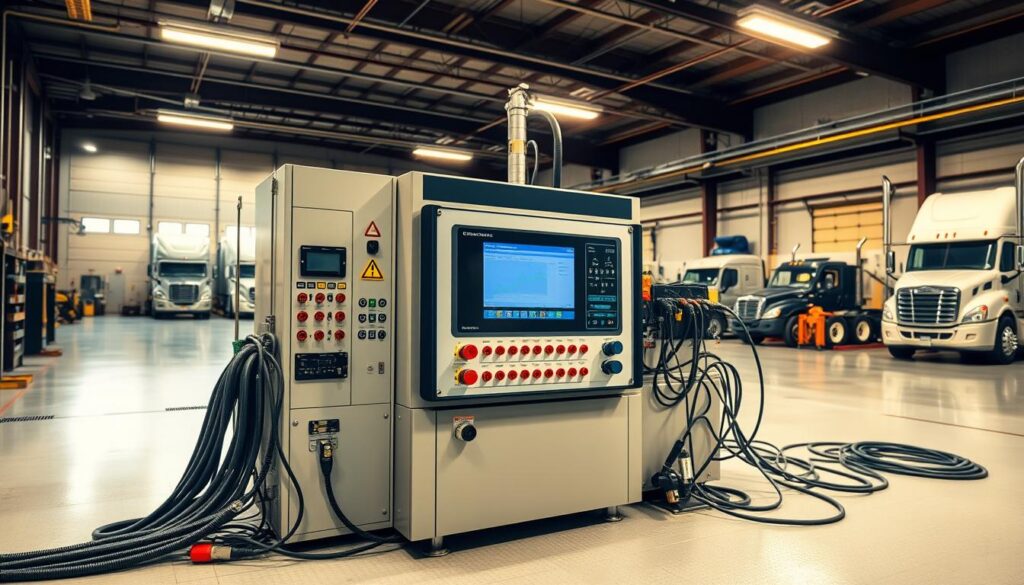
Fleet emissions testing now extends beyond environmental protection into core business operations. Corporate sustainability initiatives demand documented proof of environmental responsibility from transportation partners. This pressure creates consistent demand for certified testing services that verify compliance and provide the documentation fleet managers need for their own reporting requirements.
The evolution of commercial truck regulations has changed how testing affects daily operations across the industry. Test results now influence vehicle resale values, insurance premium calculations, and even operating authority eligibility. A failed test can ground a truck and disrupt delivery schedules, making reliable testing services invaluable to customers facing tight deadlines and regulatory scrutiny.
For shop owners, this regulatory landscape translates directly to opportunity. Fleet operators and owner-operators need accessible, trustworthy testing facilities to maintain their licenses and competitive standing. Shops equipped to provide these services tap into a market driven by regulatory necessity rather than discretionary spending—customers must test their vehicles regardless of economic conditions.
Federal Emissions Testing Framework for Heavy-Duty Vehicles
Every shop owner entering the emissions testing market needs to understand the federal requirements that form the backbone of compliance nationwide. The Environmental Protection Agency sets minimum standards that all states must follow or exceed. These regulations provide the legal foundation for testing operations and equipment investments, making federal compliance the starting point for any testing program.
The framework traces back to 1974 when the first emission limits appeared. Since then, the EPA has published progressively stricter standards to reduce pollution from commercial vehicles. By 2010, manufacturers had to ensure 100% of new model year engines complied with all federal limits, establishing the baseline that testing facilities evaluate against today.
EPA Heavy-Duty Engine and Vehicle Standards
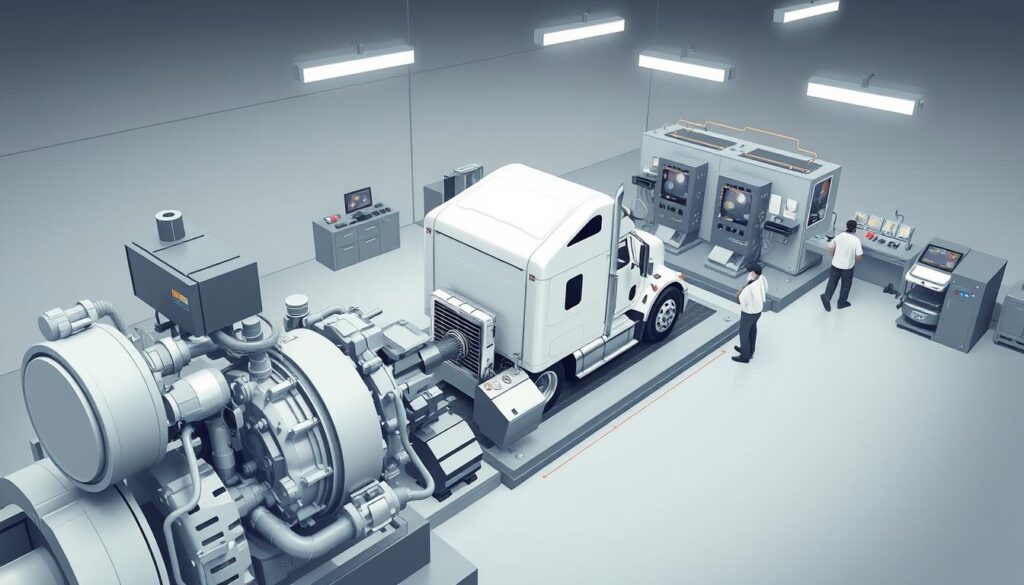
Current EPA standards require compression-ignition engines to meet the 2007 regulatory thresholds that were phased in over three years. These standards target four primary pollutants with specific concentration limits: nitrogen oxides, particulate matter, hydrocarbons, and carbon monoxide. Different limits apply to various vehicle weight classes, creating a matrix of requirements that testing facilities must understand.
Nitrogen oxides represent the most challenging emissions to control in diesel engines and receive the most regulatory attention. Particulate matter standards require advanced filtration systems on modern trucks, including diesel particulate filters that must function properly for vehicles to pass testing. The interplay between these emission control systems creates diagnostic complexity that trained technicians must navigate.
The regulations under 40 CFR Part 1066 describe the calculations for determining emission rates. These calculations use signals recorded before, during, and after testing to measure distance-specific emissions of each regulated pollutant. Understanding these protocols helps shop owners select appropriate equipment and train technicians on proper testing procedures.
Clean Air Act Enforcement Provisions
The Clean Air Act provides the legal authority for emissions enforcement at federal and state levels. Violations can result in substantial penalties for vehicle owners and operators who fail to maintain proper emissions performance. State authorities receive enforcement mechanisms to ensure testing facilities operate correctly and maintain accurate records.
Shops conducting emissions tests must understand their liability exposure under this framework. Improper testing procedures or falsified results carry serious legal consequences under federal law. Penalties can reach tens of thousands of dollars per violation, making proper training and documentation essential for protecting both the business and its customers.
Federal Testing Protocols and Procedures
Modern testing protocols require three distinct evaluation methods for engines from model year 2007 and newer. The transient engine dynamometer cycle simulates real-world driving conditions with varying speeds and loads, measuring emissions during acceleration, deceleration, and steady-state operation. This comprehensive approach ensures vehicles perform acceptably across their normal operating range.
The Not-To-Exceed standards assess performance during actual road conditions. These requirements began in 1998 to prevent manufacturers from optimizing engines solely for laboratory tests while allowing excess emissions during normal operation. The Supplemental Emission Test evaluates steady-state emissions across multiple operating points to verify consistent performance.
Shop equipment must accommodate multiple testing methodologies to serve the full range of customer vehicles. Understanding these protocols helps owners select the right tools and develop training programs that prepare technicians for the work they will actually perform.
California’s Comprehensive Heavy-Duty Emissions Testing Programs
California’s approach to testing represents the most comprehensive regulatory framework in the United States. The state has consistently pioneered environmental standards that eventually shape federal policy and influence regulations adopted by other states. In 1987, California established particulate matter rules when no federal PM standards existed, and the state continues to set the pace for emissions regulation.
The California Air Resources Board pushes boundaries beyond federal requirements through programs like the Optional Low NOX Standard, which offers three progressive levels of increasingly strict nitrogen oxide limits. These standards create new benchmarks that manufacturers and fleet operators must navigate through comprehensive testing programs administered by certified facilities.
Clean Truck Check Program Requirements
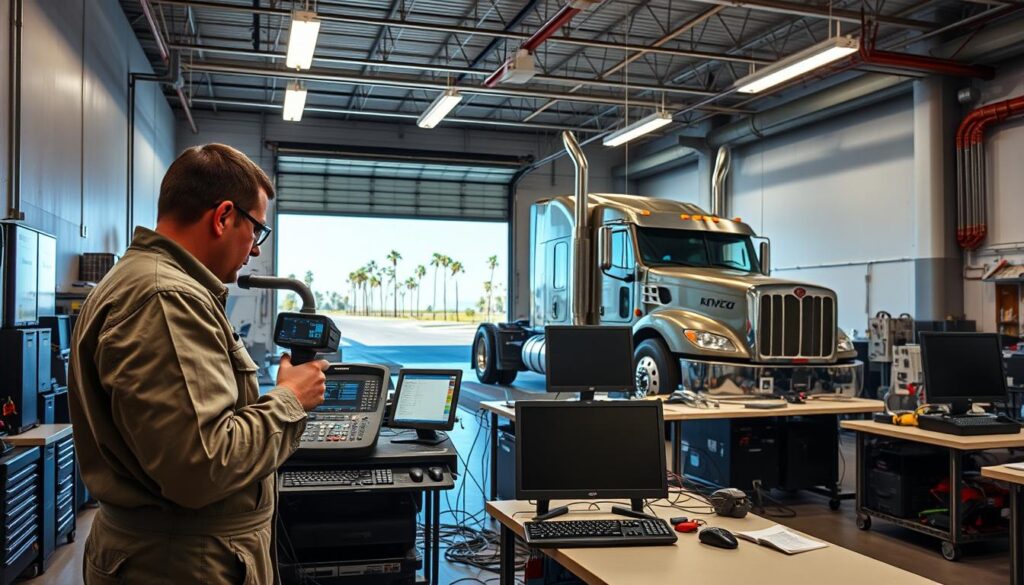
The Clean Truck Check program (formerly known as the Heavy-Duty Vehicle Inspection and Maintenance regulation) establishes rigorous testing requirements for diesel-powered commercial vehicles. The program, which began implementation in January 2023, applies to nearly all diesel, alternative fuel, and hybrid vehicles with a gross vehicle weight rating over 14,000 pounds operating on California roads—even if registered in other states.
Testing stations must document all inspection results electronically and submit data directly to CARB through approved reporting systems. Fleet operators receive compliance certificates upon successful completion, which must remain current for continued operation. Vehicles flagged through roadside emissions monitoring devices receive notices requiring testing within specified timeframes.
The program combines periodic vehicle testing requirements with other emissions monitoring techniques and expanded enforcement strategies. Inspections evaluate both opacity levels and onboard diagnostic system performance to ensure compliance with state standards. This dual approach catches both visible smoke issues and electronic system malfunctions that may not produce obvious symptoms.
Smoke Density Testing and Opacity Standards
California’s smoke inspection requirements target visible emissions through snap-acceleration opacity testing. This program requires heavy-duty diesel vehicles to undergo periodic smoke inspections using calibrated opacity meters that measure smoke density as a percentage. The state threshold stands at 40% opacity for 1991 and newer model year vehicles, with 55% applying to older equipment.
Inspection procedures follow strict snap-acceleration protocols that simulate real-world driving conditions. Technicians conduct multiple test cycles to ensure consistent readings, with vehicles exceeding opacity limits requiring repairs and retesting before returning to service on California roadways. The consistency requirements help ensure testing accuracy and prevent false passes.
Facility Certification Requirements
The California Bureau of Automotive Repair oversees certification for testing stations. Facilities must meet stringent infrastructure standards, including proper ventilation systems, calibrated testing equipment, and trained personnel. Shops must invest in SAE-compliant opacity meters and J1939-compatible diagnostic scan tools to qualify for certification status.
Application processes include facility inspections, equipment verification, and technician credential reviews. Once certified, stations must maintain annual calibration schedules and participate in ongoing quality assurance programs. This certification opens significant revenue opportunities, particularly for shops serving interstate fleets and operators from other states who need California-compliant testing services.
Penalty Structure and Enforcement
California enforces compliance through substantial financial penalties affecting both vehicle operators and testing facilities. Penalties for operating non-compliant vehicles range from $300 to $1,000 per violation, with repeat offenses triggering escalating fines. Fleet operators face additional consequences including potential suspension of operating authority and ineligibility for state contracts.
Testing stations that falsify inspection results or operate without proper certification face penalties exceeding $5,000 per incident. CARB maintains aggressive enforcement through roadside inspections and facility audits. The penalty structure incentivizes proactive compliance rather than reactive repairs after violations occur, creating steady demand for testing services from operators seeking to avoid problems.
State-by-State Emissions Testing Requirements
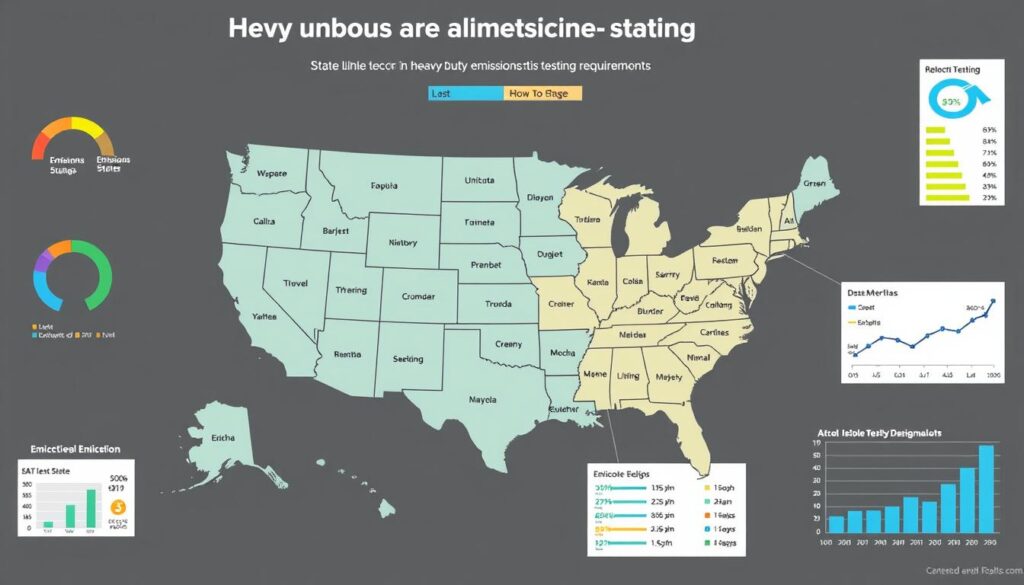
Regional standards create distinct testing requirements that vary significantly depending on where your shop operates and where your customers travel. Understanding these variations helps determine which equipment investments make sense for your business and which certifications your technicians need. The complexity of multi-state compliance means successful shops must think beyond their home jurisdiction to serve customers who operate across multiple states.
Some states mandate annual inspections for all heavy-duty vehicles, while others focus testing only on older models or specific vehicle classes. Newer vehicles often receive exemptions from frequent checks due to advanced emission control technology and cleaner performance profiles. These variations create both challenges and opportunities for shops willing to navigate the regulatory landscape.
Northeast and Mid-Atlantic Programs
The Northeast corridor maintains some of America’s strictest programs due to population density and air quality concerns. New York’s Heavy-Duty Diesel Vehicle Inspection and Maintenance Program targets vehicles over 8,500 pounds operating within designated inspection areas. Annual testing focuses on opacity measurements that determine visible smoke emissions under acceleration conditions.
Vehicles registered in the New York metropolitan area face the most stringent requirements. Testing stations must maintain specific equipment calibrations and submit electronic reports to state databases within 24 hours of each inspection. New Jersey requires similar annual inspections for diesel vehicles over 8,500 pounds, with Connecticut implementing inspection requirements for commercial vehicles operating primarily in non-attainment areas.
Western States Beyond California
Colorado’s program focuses on the Denver metropolitan area and surrounding non-attainment zones. The program requires annual opacity testing for diesel vehicles over 14,000 pounds, with testing frequency depending on vehicle model year and registration location. Newer vehicles sometimes qualify for biennial inspections, while older equipment faces annual testing requirements.
Nevada implements heavy-duty testing primarily in the Las Vegas and Reno metropolitan areas. Oregon’s program targets the Portland region with annual inspection requirements for commercial diesel vehicles. Both states maintain reciprocity agreements with California that affect interstate operators traveling through multiple jurisdictions, creating documentation requirements that extend beyond simple pass/fail determinations.
Markets Without Mandatory Testing
Many states maintain no mandatory heavy-duty emissions testing, creating opportunities for shops to offer voluntary inspection services. Fleet operators increasingly request pre-emptive testing to ensure their vehicles will pass inspections when traveling to regulated states. This proactive approach helps customers avoid roadside violations and costly delays in states with mandatory programs.
Shops in non-regulated states can gain competitive advantages by providing testing that helps customers prepare for interstate commerce. Understanding requirements across the nation positions your business as a comprehensive service provider for regional and long-haul operators who need reliable testing regardless of where they register their vehicles.
| State/Region | Testing Frequency | Vehicle Weight Threshold | Primary Focus |
|---|---|---|---|
| California | Semi-annual/Annual | 14,000+ pounds GVWR | OBD and opacity testing |
| New York | Annual | 8,500+ pounds | Opacity measurement |
| Colorado | Annual/Biennial | 14,000+ pounds | Snap-acceleration opacity |
| New Jersey | Annual | 8,500+ pounds | Smoke density testing |
Essential Equipment for Heavy-Duty Emissions Testing
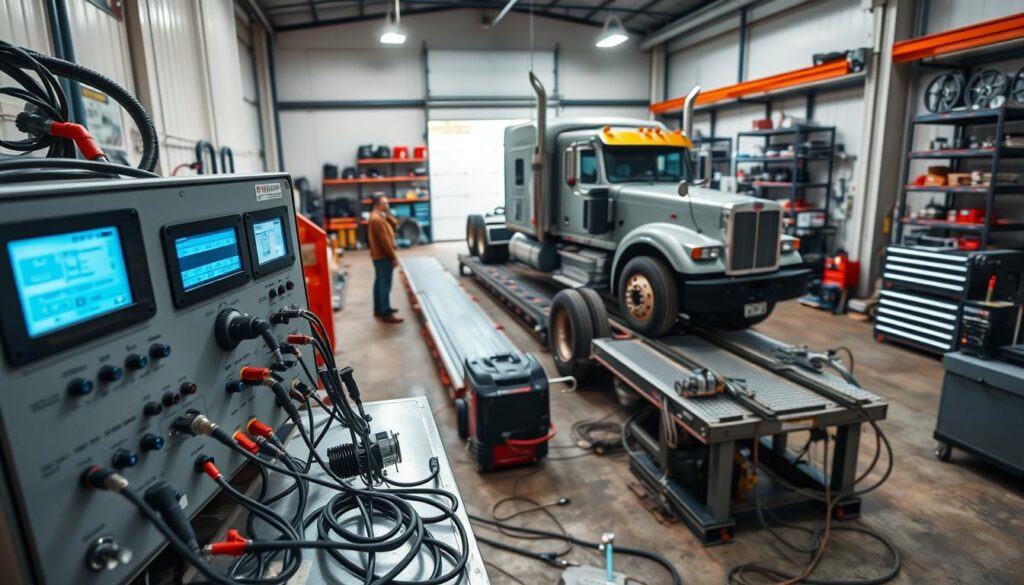
The equipment infrastructure for testing encompasses four distinct technology categories, each serving essential compliance and diagnostic functions. Shops cannot simply purchase isolated tools and expect to offer comprehensive services. Instead, testing equipment must function as an integrated system that captures measurement data, interprets vehicle diagnostics, and generates regulatory documentation.
Licensed facilities invest in specialized instruments that meet strict accuracy standards established by state and federal authorities. This equipment ecosystem allows technicians to conduct complete assessments satisfying legal requirements while providing fleet operators with detailed emissions performance data they need for their own compliance records.
Opacity Meters for Smoke Density Measurement
Diesel emission tests fundamentally rely on opacity meter technology that measures the density of visible smoke in exhaust streams. These instruments quantify how much light passes through exhaust gases, expressing results as a percentage that indicates smoke thickness. The opacity measurement directly correlates with particulate matter emissions, providing a real-time assessment of combustion efficiency and exhaust filtration system performance.
Inspectors use opacity meters to check whether smoke density falls within acceptable regulatory limits, typically set at 20-40% opacity depending on state requirements. Readings above these thresholds trigger automatic test failures. The technology remains central to testing because it effectively identifies malfunctioning diesel particulate filters and exhaust gas recirculation systems without requiring complex gas sampling procedures.
OBD Diagnostic Scan Tools
Diagnostic tools designed for heavy-duty applications serve a fundamentally different purpose than opacity measurement. These scan tools connect directly to vehicle computer systems to retrieve emission-related fault codes, monitor readiness status, and verify that emission control systems function correctly. The loaded-mode dynamometer-based test runs trucks on rollers simulating driving conditions while measuring emissions output under load.
Heavy-duty OBD protocols differ significantly from light-duty passenger vehicle systems. Commercial vehicles use SAE J1939 and J1708/J1587 communication standards that require specialized diagnostic interfaces. Generic consumer-grade scan tools cannot access the data streams from Class 8 trucks and medium-duty commercial vehicles, making purpose-built diagnostic equipment mandatory for professional testing operations.
Exhaust Gas Analyzers
While opacity meters measure visible smoke, exhaust gas analyzer equipment quantifies specific pollutant concentrations including nitrogen oxides, carbon monoxide, hydrocarbons, and carbon dioxide. These instruments sample exhaust gases and use electrochemical or infrared sensors to measure individual compound levels. The technology provides comprehensive emissions assessment that complements opacity testing.
Gas analysis equipment proves particularly valuable for diagnosing emission problems that don’t produce visible smoke. A properly functioning diesel particulate filter might pass opacity testing while still generating excessive nitrogen oxide emissions from a failed selective catalytic reduction system. The exhaust gas analyzer identifies these specific failures that opacity measurement alone cannot detect.
Documentation and Reporting Systems
Testing facilities require robust reporting systems that document test results, generate compliance certificates, and maintain records for regulatory audits. This software infrastructure captures data from measurement instruments and diagnostic tools, organizing information according to state reporting requirements. Many jurisdictions mandate electronic transmission of test results directly to regulatory databases.
Record retention requirements typically mandate preserving test data for three to seven years, depending on state regulations. Modern reporting systems automate this documentation process, reducing administrative burden while ensuring shops maintain the detailed records necessary for certification renewal and regulatory inspections.
Stay Current on Emissions Regulations
Federal and state emissions requirements continue evolving with Phase 3 standards approaching. Get weekly updates on regulatory changes, equipment advances, and compliance strategies delivered to your inbox.
Selecting the Right Opacity Meter
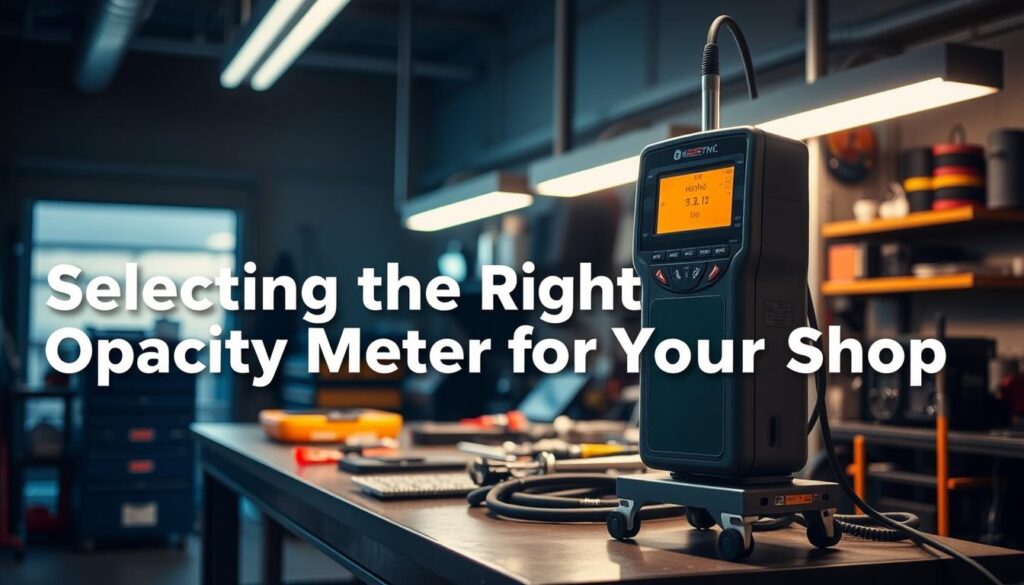
Opacity meters represent the most significant equipment investment for shops entering the testing business. Your selection directly affects testing accuracy, regulatory compliance, and customer service capabilities. Understanding measurement technologies and compliance standards helps you choose equipment that meets both state requirements and business goals.
Full-Flow vs. Partial-Flow Systems
A full-flow opacity meter measures smoke density across the entire exhaust stream as gases exit the tailpipe. This approach provides the most representative measurement of total smoke output because it captures emissions from the complete exhaust volume. Full-flow systems deliver consistent results but require more installation space and higher initial investment. Most state inspection programs accept full-flow measurements as the standard approach for compliance testing.
A partial-flow smoke meter extracts a sample from the exhaust stream for analysis in a separate measurement chamber. These systems offer greater portability and lower equipment costs while maintaining acceptable accuracy for regulatory purposes. Partial-flow systems work well for mobile testing services and shops with limited bay space. However, some states specify which measurement approach they accept for official inspections, so verify requirements before purchasing.
Compliance Standards
The SAE J1667 standard defines performance requirements for opacity measurement systems used in heavy-duty vehicle testing. This specification establishes calibration procedures, measurement accuracy tolerances, and equipment verification protocols. State regulations typically require that testing equipment meets SAE J1667 certification. Non-compliant equipment will not satisfy regulatory requirements regardless of measurement capabilities.
ISO 11614 provides international standards for smoke meter performance and calibration. Understanding both standards ensures your equipment investment meets current and future compliance needs as regulations continue evolving.
Equipment Options by Application
Three industry-leading approaches address different operational requirements and business models. Fixed-location systems like the Wager 6500 operate as full-flow equipment with proven durability across multiple testing environments. State inspection programs widely accept these models, making them safe choices for regulatory compliance work.
Laboratory-grade partial-flow systems such as the AVL DiSmoke 4000 deliver exceptional accuracy in compact configurations. These sophisticated analyzers suit shops prioritizing measurement precision and space efficiency. Advanced sensor technology provides fast response times and minimal maintenance requirements while integrating with shop management software for automated record-keeping.
Portable analyzers enable mobile testing services and field diagnostics. This equipment category opens revenue opportunities beyond fixed-location testing, allowing shops to serve customers at fleet facilities and terminal locations. Battery power and wireless connectivity allow testing wherever vehicles operate.
| System Type | Primary Advantage | Investment Range | Best Application |
|---|---|---|---|
| Full-Flow Fixed | Wide regulatory acceptance | $8,500-$11,000 | Fixed inspection stations |
| Partial-Flow Lab-Grade | Laboratory accuracy | $12,000-$15,500 | High-volume facilities |
| Portable Partial-Flow | Mobile testing capability | $18,000-$22,000 | Fleet service operations |
Heavy-Duty Diagnostic Scan Tools for Emissions Work
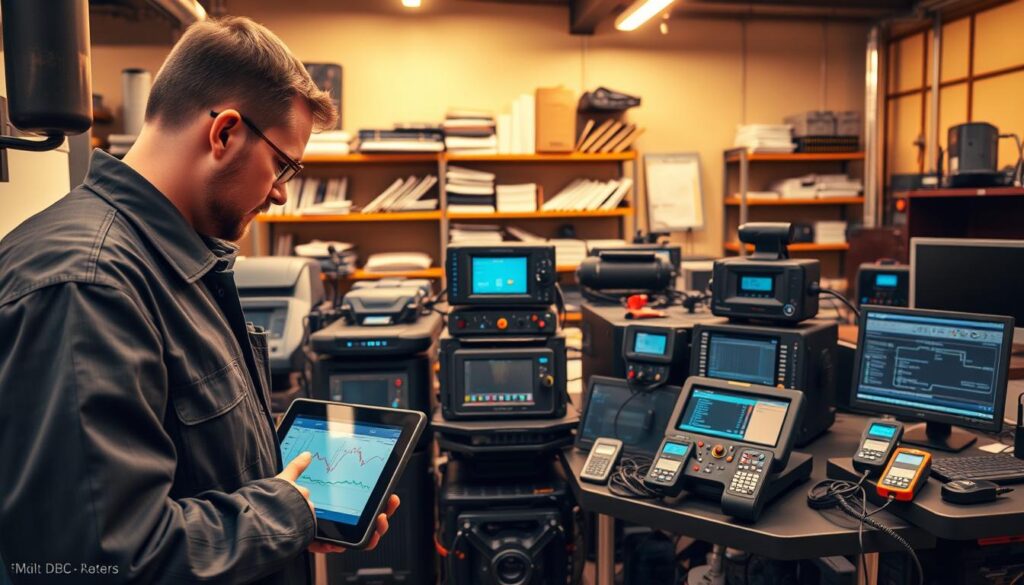
Accessing emission-related data in heavy-duty vehicles demands professional-grade scan tools capable of interpreting multiple communication protocols used across different vehicle generations. OBD systems can quickly determine emission problems by linking to the vehicle’s computer, interpreting data from various sensors. This capability saves considerable effort compared to manual inspection methods while ensuring regulatory compliance.
Communication Protocol Requirements
The SAE J1939 protocol represents the modern CAN-based communication standard used in heavy-duty vehicles manufactured from approximately 2001 forward. This high-speed network enables rapid data exchange between vehicle computers and diagnostic equipment. The J1708/J1587 protocols serve legacy vehicles built before the CAN transition. Comprehensive emissions testing requires scan tools supporting both protocol families since many shops encounter older vehicles still subject to testing requirements.
These protocols enable technicians to access emission-related diagnostic trouble codes, monitor readiness status indicating whether emission control systems have completed self-tests, and retrieve freeze frame data showing engine conditions when faults occurred. Real-time data streams from oxygen sensors, NOX sensors, and other emission-critical components provide essential diagnostic information for identifying root causes of failures.
Essential Scan Tool Capabilities
Professional diagnostic equipment must include bi-directional controls that enable technicians to command emission control system tests. Inspectors check EGR systems and DPF to ensure they function properly, as these systems must work correctly for harmful emissions to remain within acceptable limits. Comprehensive coverage of engine manufacturers beyond a single brand distinguishes quality equipment from basic OBD readers.
Software update capabilities keep pace with evolving emission control strategies and emerging diagnostic procedures. Additional essential features include detailed parameter viewing, component activation testing, and comprehensive fault code libraries specific to emission systems across multiple manufacturers.
Platform Options
Hardware interfaces like the Nexiq USB Link 3 with RP1210 drivers provide broad vehicle coverage and reliable connectivity. These adapters support both SAE J1939 and legacy J1708/J1587 protocols, making them suitable for mixed-age fleet testing. The RP1210 driver architecture enables compatibility with multiple diagnostic software platforms, allowing shops to choose software solutions that best match their specific testing needs.
Integrated suites like Noregon JPRO combine sophisticated software with compatible hardware interfaces for in-depth emission system analysis. These platforms provide comprehensive fault code information with detailed repair procedures specific to emission-related failures. Advanced features include emission readiness monitoring, parameter reset capabilities, and guided diagnostics that help technicians efficiently identify root causes.
Shop Infrastructure and Facility Requirements
Proper shop infrastructure forms the foundation for accurate and safe emissions testing procedures. Licensed inspection facilities must meet specific requirements to ensure compliance with state regulations. Your physical workspace needs careful planning beyond just purchasing equipment, with particular attention to space, ventilation, and safety systems.
Space Planning for Large Vehicles
Testing bay configuration presents unique challenges when accommodating heavy-duty vehicles. Your facility needs minimum ceiling heights of 14 to 16 feet to handle tall box trucks and tractor-trailers comfortably. Bay widths should measure at least 14 feet to accommodate dually rear wheels and wide mirrors without risk of damage during positioning.
Floor load ratings become critical when working with vehicles exceeding 80,000 pounds gross weight. Standard concrete slabs must support these heavy loads without cracking or settling. Most shops can conduct required opacity testing with portable equipment in standard service bays rather than investing in dedicated dynamometer installations, but floor capacity remains essential regardless of equipment choices.
Drive-through bay designs offer significant advantages for emissions testing operations. They allow vehicles to enter and exit without backing up, reducing time per test and improving workflow efficiency for high-volume operations.
Ventilation Systems
Ventilation systems represent the most critical safety component in testing facility requirements. Technicians run diesel engines at various loads while measuring exhaust output, creating potential exposure to harmful emissions. Inadequate ventilation can quickly lead to dangerous carbon monoxide levels that threaten worker health and safety.
Direct exhaust extraction systems capture tailpipe emissions at the source before they enter your shop environment. These systems use flexible hoses that connect directly to vehicle exhaust pipes, removing the majority of harmful gases immediately. General ventilation rates must achieve a minimum of 4 to 6 air changes per hour for facilities conducting regular emissions testing. Some jurisdictions require continuous air quality monitoring to protect worker health and maintain compliance with OSHA standards for diesel shop environments.
Electrical and Utility Requirements
Electrical requirements for testing equipment demand proper planning during facility setup. Opacity meters, diagnostic scan tools, and data management systems need dedicated circuits to prevent interference from other shop equipment. Most testing stations require at least 240-volt, 30-amp service for comprehensive operations.
Adequate amperage supports simultaneous operation of multiple systems without tripping breakers or causing voltage drops. Sensitive diagnostic equipment can malfunction or produce inaccurate readings when power quality issues occur. Compressed air supply serves multiple purposes, with a minimum of 90 PSI and adequate CFM capacity ensuring reliable performance of pneumatic tools and some testing equipment components.
Technician Certification and Training Programs
Emissions testing demands more than sophisticated equipment—it requires technicians with specialized training and state-approved credentials. Licensed facilities employ certified technicians who understand the complex details of diesel-powered engines and emission systems. Professional technicians apply highly developed diagnostic equipment to identify emissions problems before they become major compliance issues.
The investment in training delivers immediate returns through expanded service capabilities and enhanced diagnostic expertise. Heavy-duty technicians can certify as emissions specialists to help keep fleets in compliance. Comprehensive training covers exhaust systems as well as current knowledge on emission standards, giving fleets and repair shops an advantage by having qualified emissions technicians on staff.
State Inspector Licensing
Most jurisdictions require individuals rather than just facilities to obtain inspector certification through a combination of training, examination, and background checks. The specific licensing process varies significantly from state to state. Some states require only basic training for opacity testing while others mandate comprehensive certification covering all aspects of emissions testing and diesel engine operation.
Initial certification typically involves completing state-approved coursework followed by a written examination demonstrating knowledge of testing procedures and regulatory requirements. Many states also require practical demonstrations of equipment operation. Background checks ensure inspectors have no history of fraud or regulatory violations that could compromise testing integrity.
Maintaining credentials requires continuing education to stay current with evolving standards and testing protocols. Most states mandate annual or biennial renewal that includes documented training hours and payment of renewal fees. Failure to maintain active certification can result in immediate suspension of testing privileges and potential facility penalties.
ASE Certifications for Diesel Technicians
The ASE certification program offers several relevant credentials for technicians performing emissions work. The Electronic Diesel Engine Diagnosis Specialist certification (L2) identifies technicians who possess knowledge of skills necessary to diagnose sophisticated diesel engine performance problems on medium and heavy-duty trucks. This advanced certification requires prior certification in both diesel engines and electrical/electronic systems.
The Medium/Heavy Truck series (T1-T8) covers comprehensive diesel technician competencies, with T2 focusing specifically on diesel engines including emission control systems. Technicians seeking master status must pass multiple tests demonstrating broad competency across vehicle systems. ASE certifications require retesting every five years to ensure technicians maintain current knowledge as technology and regulations evolve.
Manufacturer-Specific Training
Engine manufacturers like Cummins, Detroit Diesel, Caterpillar, and PACCAR offer specialized training programs that deepen technicians’ understanding of specific emission control strategies. These programs cover proprietary diagnostic procedures and emission control technologies unique to each manufacturer’s engine families. Technicians who service specific fleet customers benefit tremendously from manufacturer training relevant to those fleets.
Manufacturer programs typically offer tiered certification levels from basic to master technician status. Advanced levels cover complex diagnostic scenarios and the latest emission control technologies like selective catalytic reduction systems and diesel particulate filters. Shops serving diverse commercial fleets often invest in multiple manufacturer certifications to provide comprehensive service capabilities across their customer base.
Investment Analysis for Emissions Testing Capabilities
The decision to add emissions testing capabilities requires careful analysis of both upfront costs and long-term revenue opportunities. Shop owners must evaluate investment requirements against projected income to determine business viability. Licensed inspection facilities maintain flexibility in pricing structure, with costs varying between facilities based on their service offerings and regional market conditions.
Initial Equipment and Setup Costs
Establishing emissions testing services demands significant capital investment in specialized equipment and facility modifications. The total equipment costs depend heavily on the scope of services your shop intends to offer. State-specific requirements also influence the budget considerably based on mandatory equipment specifications.
Basic opacity testing capabilities represent the minimum investment for entering the market. An entry-level package typically includes a quality opacity meter, basic diagnostic scan tool, and necessary calibration equipment. Shops choosing new equipment should budget $15,000 to $30,000 for complete setup. Refurbished instruments reduce initial costs but may require more frequent maintenance.
Full-service facilities require substantially higher investment to accommodate diverse customer requirements. Comprehensive setup includes premium opacity measurement systems and advanced diagnostic platforms with multi-manufacturer coverage. Additional needs include gas analysis equipment for detailed emissions measurement, complete data management infrastructure for reporting compliance, and facility modifications for proper ventilation and safety. Turnkey operations typically require investments between $75,000 and $150,000.
Ongoing Operational Costs
Ongoing operational costs significantly impact long-term profitability. Most states require equipment calibration at least annually to maintain certification. Calibration expenses typically range from $1,500 to $3,000 per year depending on equipment complexity. Additional recurring costs include preventive maintenance, software subscriptions for updates and regulatory compliance, certification renewals for both facilities and technicians, and consumable supplies. Budgeting $3,000 to $6,000 annually for these expenses ensures uninterrupted testing operations.
Revenue Projections
Projecting realistic revenue requires analyzing local market rates and anticipated test volumes. Heavy-duty vehicle testing typically commands fees between $75 and $200 per test depending on complexity and regional pricing standards. Additional revenue opportunities include diagnostic work that testing often reveals, creating upsell potential beyond the basic testing fee.
Shops in markets with sufficient testing demand typically achieve payback periods of 18 to 36 months. Fleet operator relationships accelerate revenue growth through consistent testing volume and predictable scheduling. Shops should research local market fees when developing financial projections, as regional variations can significantly affect revenue assumptions.
HDJ Perspective
The emissions testing market represents one of the few truly recession-resistant opportunities in diesel service. When economic conditions tighten, fleet operators may defer discretionary maintenance, but they cannot defer compliance testing without risking operating authority. Shops that establish testing capabilities now—before Phase 3 standards create even greater demand—position themselves as essential partners for commercial customers facing increasingly complex regulatory requirements. The investment payback math only improves as standards tighten.
Maintaining Compliance with Evolving Standards
Staying compliant with emissions testing regulations requires more than initial setup—it demands a systematic approach to tracking regulatory changes and maintaining equipment standards. The testing landscape continues to evolve as agencies refine requirements based on environmental goals and technological advances. Shops that implement compliance maintenance protocols position themselves to adapt quickly while avoiding penalties and service interruptions.
Understanding Phase 3 Greenhouse Gas Requirements
The EPA Phase 3 standards represent the most significant regulatory development affecting heavy-duty emissions testing in recent years. These greenhouse gas standards take effect in phases from 2027 through 2032, fundamentally changing testing requirements and equipment specifications. Shops must begin preparing now to handle the advanced emission control technologies these standards will require on newer vehicles.
Phase 3 standards differ substantially from current requirements in their scope and stringency. The regulations address not only traditional pollutants but also carbon dioxide emissions and fuel efficiency metrics. Testing equipment that meets today’s standards may need upgrades or replacement to accurately measure the parameters Phase 3 vehicles will require.
Tracking Regulatory Changes
Staying informed about updates requires establishing reliable information channels with state environmental agencies. Most state agencies operate notification systems that alert registered stakeholders about proposed and final rule changes. Subscribing to these systems ensures shops receive advance notice of requirements affecting their testing capabilities and certification status.
Industry associations provide valuable tracking services for regulatory developments across multiple jurisdictions. Shops serving customers in several states benefit from association membership that consolidates regulatory information. Equipment suppliers also offer update services that connect regulation changes to specific equipment requirements, helping shops plan necessary upgrades before deadlines arrive.
Equipment Calibration Protocols
Equipment calibration schedules maintain the accuracy and regulatory acceptance that testing depends on. Most states require annual calibration by certified laboratories using traceable standards. Documentation from these calibrations must remain available during inspections or audits to verify equipment accuracy at the time tests were performed.
Maintaining calibration ahead of expiration dates prevents service interruptions that affect revenue and customer relationships. Shops should schedule calibration appointments 30 to 60 days before expiration to account for equipment shipping time and laboratory processing. Backup equipment becomes essential when primary testing tools undergo calibration, ensuring continuous service availability for customers who cannot wait.
Record Retention Requirements
Record keeping creates extensive documentation requirements that vary by state but generally include retention periods of three to seven years. Test records must capture complete vehicle information, test results, technician identification, and equipment calibration status. Customer vehicle data, technician certifications, equipment maintenance logs, and calibration certificates all require organized storage for regulatory audit production.
Digital record-keeping systems facilitate compliance while protecting against data loss from physical damage or deterioration. Cloud-based platforms offer automatic backup, searchable databases, and quick retrieval during audits. These systems also generate compliance reports demonstrating adherence to record retention and reporting requirements.
Building an Emissions Testing Business
Emissions testing capabilities represent more than compliance infrastructure—they form a foundation for sustainable business expansion. Shops that develop strategic marketing approaches transform regulatory requirements into profitable service lines. The commercial vehicle sector’s compliance demands create consistent revenue opportunities for service providers positioned to meet fleet needs.
Professional diesel shops differentiate themselves by promoting certified capabilities that address both testing and repair requirements. Fleet operators prioritize service providers who minimize vehicle downtime while maintaining compliance documentation. This dual focus on efficiency and regulatory adherence drives business growth when shops structure their offerings appropriately.
Marketing to Fleet Operators
Reaching fleet decision-makers requires emphasizing credentials that demonstrate regulatory compliance capabilities. Certification from state authorities and equipment manufacturer approvals provide credibility that resonates with fleet managers responsible for maintaining operating licenses.
Effective marketing highlights three core advantages: scheduling flexibility that accommodates fleet operational requirements and minimizes disruption, comprehensive service packages addressing testing, diagnostics, and necessary repairs in single appointments, and volume pricing structures that reward ongoing business while maintaining profitable margins.
Fleet operators value service providers who understand the operational pressures of commercial transportation. Promoting same-day testing availability and express service options addresses the industry’s focus on maximizing vehicle utilization rates. Learn more about developing fleet service contracts that create recurring revenue from testing relationships.
Building Fleet Partnerships
Successful fleet partnerships develop through relationship-focused approaches rather than transactional interactions. Dedicated account management creates continuity that fleet managers appreciate when coordinating maintenance across multiple vehicles. Proactive communication strengthens customer relationships significantly through advance notifications of upcoming test due dates based on vehicle service records.
Detailed testing reports identifying potential problems before compliance failures occur add tangible value beyond basic pass/fail determinations. Preferred pricing arrangements reward customer loyalty while providing revenue stability. Contract-based relationships with established fleets generate more predictable income than walk-in traffic and justify investments in specialized equipment.
Mobile Testing Services
Mobile testing brings equipment directly to customer locations, particularly appealing to fleet operators managing vehicle downtime carefully. This service model requires specialized considerations but offers competitive advantages in commercial markets where customers cannot easily bring vehicles to fixed locations.
Equipment requirements for mobile operations include portable opacity meters meeting SAE J1667 standards and commercial-grade diagnostic scan tools supporting J1939 protocols. Service vehicles need proper equipment mounting systems, adequate electrical capacity, and compressed air supplies for testing procedures. Pricing strategies must account for travel time and equipment transport while remaining competitive with fixed-location alternatives. Efficient routing systems that schedule multiple tests in geographic clusters improve profitability by reducing travel expenses relative to billable service time.
Share Your Emissions Testing Expertise
Have you built a successful emissions testing operation? Are you navigating state certification requirements or developing fleet relationships? Heavy Duty Journal welcomes contributions from shop owners and technicians with real-world testing experience.
Frequently Asked Questions
What equipment do I need to start offering heavy-duty emissions testing?
The minimum equipment for basic opacity testing includes an SAE J1667-compliant opacity meter, a heavy-duty OBD diagnostic scan tool supporting J1939 and J1708/J1587 protocols, calibration verification equipment, and data management software for record keeping and report generation. Entry-level packages with new equipment typically cost $15,000 to $30,000. Full-service facilities adding exhaust gas analyzers, multiple opacity meter configurations, and comprehensive diagnostic platforms may invest $75,000 to $150,000. Beyond equipment, you’ll need state-specific facility certification, proper ventilation systems, and trained technicians with appropriate credentials. Contact your state environmental agency for specific equipment requirements before purchasing.
How often must emissions testing equipment be calibrated?
Most states require annual calibration of opacity meters and gas analyzers by certified laboratories using NIST-traceable standards. Some jurisdictions mandate more frequent verification checks, such as quarterly span gas checks between annual calibrations. Calibration documentation must be readily available during testing operations and retained for the duration specified by your state’s record retention requirements, typically three to seven years. Schedule calibration appointments 30-60 days before expiration to account for shipping and laboratory processing time. Operating with expired calibration can result in facility certification suspension and penalties for tests conducted during non-compliant periods.
Do California emissions requirements apply to trucks from other states?
Yes, California’s Clean Truck Check program applies to nearly all diesel, alternative fuel, and hybrid vehicles with gross vehicle weight ratings over 14,000 pounds operating on California roads—regardless of where the vehicle is registered. Out-of-state vehicles must comply with the same testing and reporting requirements as California-registered trucks. Fleet operators planning California routes should verify their vehicles meet compliance requirements before dispatch. The program includes provisions for out-of-state testing through approved facilities, but vehicles must demonstrate compliance through California’s reporting system. Penalties for non-compliance apply equally to out-of-state operators and can include DMV registration holds for California-registered vehicles and roadside citations for all vehicles.
What certifications do technicians need for emissions testing work?
Requirements vary by state, but most jurisdictions require technicians to hold state-issued inspector credentials obtained through approved training programs and examinations. Beyond state licensing, ASE certifications demonstrate competency that differentiates shops in competitive markets. The L2 Electronic Diesel Engine Diagnosis Specialist certification is particularly relevant for emissions work, though it requires prior certification in diesel engines (T2, H2, or S2) and electrical/electronic systems. Manufacturer-specific training from engine makers like Cummins, Detroit Diesel, and PACCAR provides valuable diagnostic expertise for their specific emission control systems. Certification maintenance requires continuing education and periodic retesting to stay current with evolving technology and regulations.
How will EPA Phase 3 standards affect emissions testing requirements?
The Phase 3 greenhouse gas standards take effect in phases from model year 2027 through 2032, introducing new testing requirements for vehicles built to these standards. The regulations address greenhouse gas emissions and fuel efficiency metrics beyond traditional criteria pollutants, potentially requiring additional testing capabilities and equipment upgrades. Shops should monitor EPA announcements and begin planning for equipment investments as specific testing protocol requirements become finalized. The transition period provides time to prepare, but shops waiting until implementation may face equipment availability issues as demand increases. Current testing equipment will remain valid for pre-Phase 3 vehicles, but comprehensive service capabilities will require updates to serve the full range of customer vehicles.
What records must emissions testing facilities maintain?
Testing facilities must maintain comprehensive records including complete test results with vehicle identification information, technician credentials and identification for each test performed, equipment calibration certificates and verification documentation, facility certification and renewal documentation, and any failed test records with subsequent retest results. Retention periods typically range from three to seven years depending on state requirements. Records must be readily retrievable for regulatory audits, often within 24-48 hours of request. Digital record-keeping systems with automatic backup capabilities help ensure compliance while protecting against data loss. Some states require electronic submission of test results within specified timeframes, making integrated software systems increasingly essential for compliant operations.
Conclusion
Heavy-duty vehicle emissions testing represents a significant opportunity for diesel repair shops willing to invest in proper equipment, training, and facility infrastructure. As federal Phase 3 standards approach implementation and states continue strengthening their enforcement programs, the demand for qualified testing facilities will only increase. Shop owners who establish testing capabilities now position themselves as essential partners for fleet operators facing increasingly complex regulatory requirements.
The investment math favors prepared shops. Equipment costs ranging from $15,000 for basic capabilities to $150,000 for comprehensive facilities typically achieve payback within 18-36 months through testing fees of $75-$200 per vehicle. Beyond direct testing revenue, the diagnostic work revealed during compliance inspections creates additional repair opportunities that strengthen customer relationships and improve profitability.
Success in this market requires more than equipment purchases. Technician training, facility certification, and systematic approaches to regulatory compliance all contribute to building sustainable testing operations. Shops that master these elements transform mandatory compliance requirements into competitive advantages that generate recurring revenue regardless of economic conditions. The commercial trucking industry needs emissions testing services—the question is whether your shop will be positioned to provide them.
Start by researching your state’s specific requirements and the regulatory landscape in markets your customers serve. Contact equipment suppliers for detailed proposals and develop implementation timelines that account for facility modifications, equipment installation, and technician training. The heavy-duty service market rewards shops that prepare for emissions testing demands before regulations make capabilities mandatory. Early adopters gain competitive positioning that strengthens customer relationships and opens new revenue streams in an increasingly regulated industry.
Share This Guide With Your Team
Planning to add emissions testing capabilities to your shop? Share this comprehensive guide with your technicians and business partners to align on requirements and opportunities.


