
By Michael Nielsen, Editor & Publisher | 15+ Years in Diesel Repair
Last Updated: December 2025
📖 Estimated reading time: 14 minutes
Fuel rail pressure sensor symptoms can sideline your truck faster than almost any other fuel system failure. This $40-120 component monitors pressures exceeding 2,000 PSI in modern direct injection engines, and when it fails, your powertrain control module makes fuel delivery decisions based on faulty data. The result is rough idle, reduced power, 15-25% fuel economy losses, and potential damage to expensive catalytic converters and oxygen sensors.
Fleet managers face tough decisions when fuel pressure codes appear. Misdiagnosis wastes money on unnecessary fuel pump replacements, while delayed repairs risk secondary damage that far exceeds the cost of a simple sensor swap. Understanding the diagnostic process separates efficient shops from those throwing parts at problems.
This guide delivers professional-grade diagnostic procedures for identifying fuel rail pressure sensor failure in Powerstroke, Duramax, and Cummins applications. You’ll learn systematic testing methods that distinguish sensor problems from fuel pump weakness, pressure regulator failures, and wiring issues—ensuring accurate repairs the first time.
Key Takeaways
- Cost vs. damage equation: A $40-120 sensor failure can trigger thousands in secondary damage to catalytic converters and oxygen sensors if left unaddressed.
- Diagnostic codes P0190-P0194: These codes indicate specific circuit conditions—general malfunction, range/performance issues, low input, high input, or intermittent signals.
- Mechanical gauge verification: Always compare sensor readings against an independent pressure gauge to distinguish sensor failure from actual fuel system problems.
- Common symptoms pattern: Hard starting, rough idle, hesitation during acceleration, reduced power, and 15-25% fuel economy losses indicate potential sensor failure.
- Electrical testing sequence: Verify 5-volt reference, ground integrity, and signal output before condemning the sensor—wiring problems account for 40% of fuel pressure codes.
- Sensor lifespan: Normal wear affects sensors between 80,000-120,000 miles, but contamination, heat, and vibration can cause premature failure.
Understanding Fuel Rail Pressure Sensor Operation
The fuel rail pressure sensor serves as the primary feedback device for your engine’s fuel delivery system. This electronic component measures pressure inside the fuel rail and transmits that data to the powertrain control module, which calculates injector pulse width based on current fuel pressure conditions.
Modern diesel engines equipped with high-pressure common rail (HPCR) systems operate at dramatically higher pressures than older mechanical injection designs. While traditional port injection systems maintain 40-60 PSI, direct injection systems in Class 6-8 trucks routinely operate between 500 PSI at idle and 2,500+ PSI under full load. The sensor must track these rapid pressure fluctuations in real time.
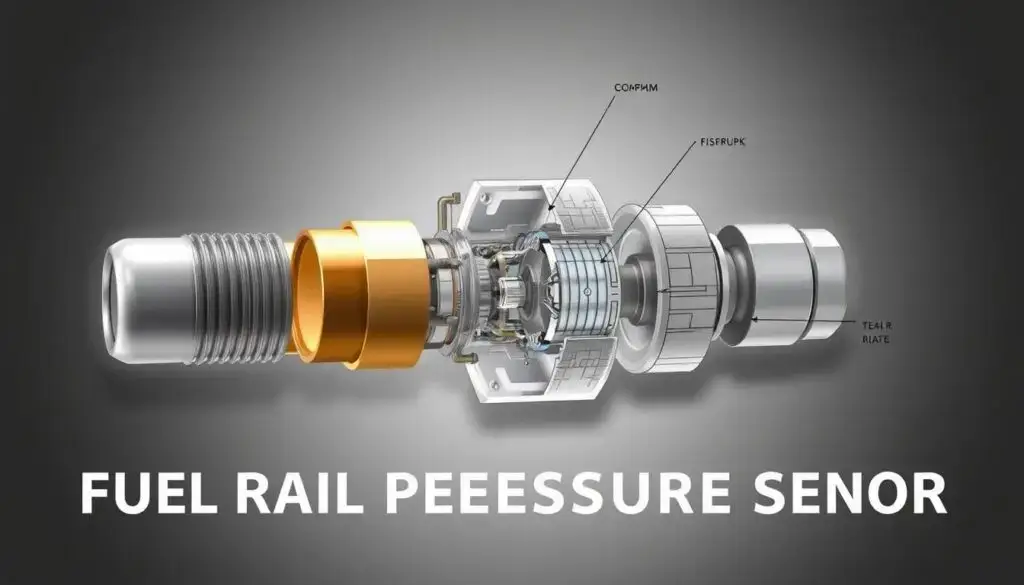
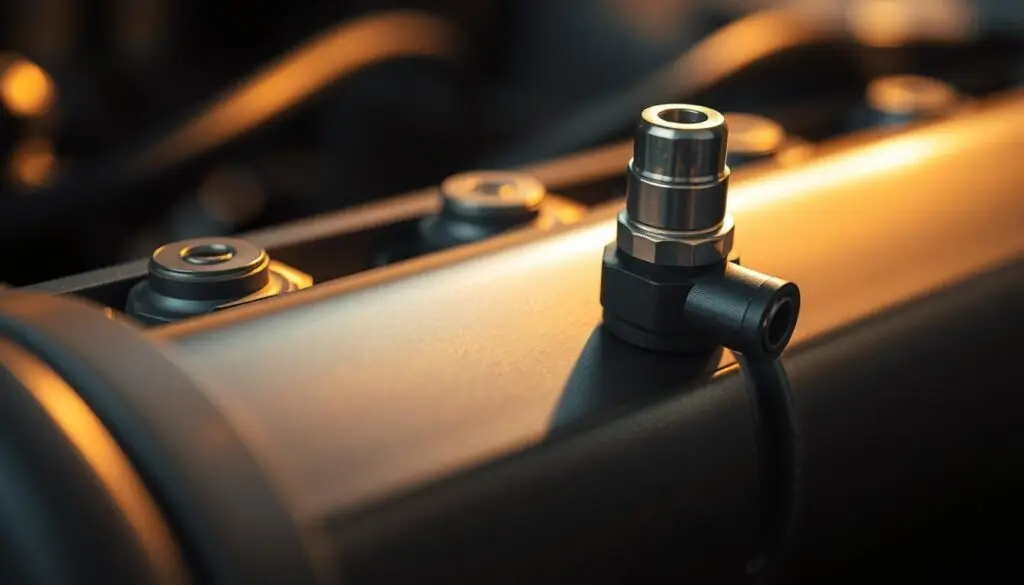
The sensor construction includes a threaded brass or stainless steel body that screws directly into the fuel rail. Inside sits a semiconductor element using piezoelectric or strain gauge technology to convert mechanical pressure into voltage signals. A protective diaphragm separates this element from direct fuel contact while allowing pressure transmission. The three-wire electrical connector carries reference voltage (typically 5 volts), signal output, and ground.
How the PCM Uses Pressure Data
Fuel delivery volume depends on two factors: injector opening time and fuel pressure. The PCM receives pressure readings dozens of times per second and compares them against programmed fuel pressure maps for various operating conditions. When sensor readings match expected values, the system calculates correct injector pulse widths for optimal air-fuel ratios.
If the sensor reports incorrect pressure, the PCM calculates wrong injector pulse widths regardless of actual fuel system condition. This explains why a simple sensor failure creates dramatic drivability problems—the engine runs too rich or too lean based on faulty data rather than real pressure conditions.
Heavy-duty diesel engines communicate sensor data using the SAE J1939 communication protocol, which standardizes how electronic control units exchange information across the vehicle network. This protocol enables diagnostic tools to read live fuel pressure data and identify abnormal sensor behavior during troubleshooting.
Recognizing Fuel Pressure Sensor Symptoms
Fuel rail pressure sensor failure produces distinct warning signs that develop either gradually as the sensor degrades or suddenly during complete failure. Understanding these symptom patterns allows accurate identification before secondary damage occurs.
Starting and Idle Problems
Extended cranking time represents one of the earliest symptoms drivers notice. When the sensor sends incorrect pressure readings during engine start-up, the PCM calculates improper fuel quantities for the cranking phase. Cold starts become particularly problematic when precise fuel delivery is critical.
A sensor reporting falsely high pressure causes the PCM to reduce injector pulse width, creating a lean fuel condition that starves the engine. Conversely, sensors reporting artificially low pressure flood the engine with excessive fuel that can foul spark plugs and contaminate the exhaust system.
Once running, rough idle quality becomes immediately apparent. The idle speed fluctuates noticeably as the PCM constantly adjusts fuel delivery in response to erratic sensor readings. Some vehicles exhibit such severe instability that drivers must maintain light throttle pressure to prevent stalling, especially during transitions between idle and acceleration.
Power Loss and Acceleration Hesitation
Acceleration hesitation indicates serious fuel delivery problems under load. When you press the accelerator, fuel pressure should increase proportionally to meet higher injector demand. A malfunctioning sensor prevents the PCM from recognizing this increased pressure requirement.
Drivers typically describe this symptom as the engine “falling on its face” when throttle is applied. Instead of smooth power delivery, you experience significant delay or stumbling before acceleration occurs. This creates dangerous situations when merging into traffic or climbing grades.
Power loss becomes especially pronounced during highway driving or climbing. The engine lacks necessary fuel enrichment to maintain speed under sustained load. You may find yourself pressing the accelerator nearly to the floor just to maintain speeds that were previously effortless.
Check Engine Light and Diagnostic Codes
Fuel pressure sensor diagnostic trouble codes follow standardized definitions established by ASE certification standards and OBD-II protocols. The PCM sets specific codes when sensor voltage falls outside programmed parameters:
| Code | Description | Voltage Condition | Common Causes |
|---|---|---|---|
| P0190 | Circuit Malfunction | Outside 0.5-4.5V range | Intermittent wiring, connector corrosion |
| P0191 | Range/Performance | Valid voltage, incorrect pressure | Sensor calibration drift, mechanical issues |
| P0192 | Low Input Signal | Below 0.3-0.5V | Short to ground, sensor internal failure |
| P0193 | High Input Signal | Above 4.5-4.8V | Open ground circuit, short to power |
| P0194 | Intermittent Signal | Fluctuating abnormally | Loose connectors, broken wire strands |
Many vehicles enter limp mode when severe sensor failures occur. This protective strategy limits engine RPM to approximately 2,500-3,000 and restricts power output to prevent damage from incorrect fuel delivery. The PCM may also disable variable valve timing, turbocharger boost control, and transmission shift patterns.
Fuel Economy and Exhaust Symptoms
Fuel economy degradation provides measurable evidence of sensor malfunction. Sensors reporting artificially low pressure trick the PCM into delivering excessive fuel, creating economy losses ranging from 15-25% compared to normal operation.
Visible black smoke from the exhaust indicates severely rich fuel mixtures. This unburned fuel exits the combustion chamber as carbon particulates. The opposite condition—lean mixtures from sensors reporting artificially high pressure—elevates combustion temperatures and stresses the catalytic converter with excessive oxygen content.
Common Causes of Sensor Failure
Understanding why fuel rail pressure sensors fail helps prevent repeat problems and guides root cause diagnosis. While normal wear affects sensors between 80,000-120,000 miles, environmental factors and operating conditions often cause premature failure.
Electrical and Environmental Factors
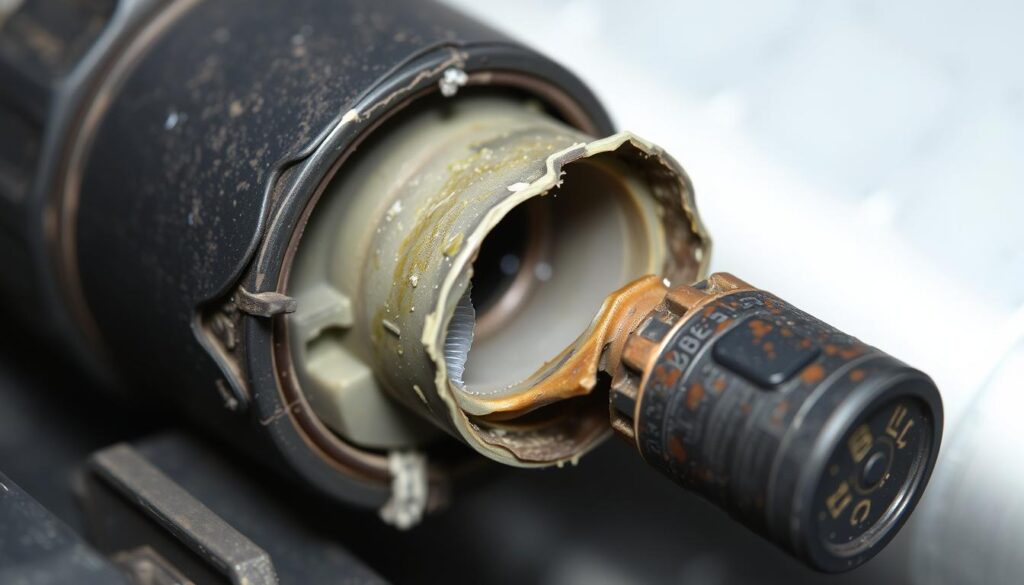
The three-pin electrical connector represents the most vulnerable point in the sensor system. Temperature extremes, vibration, and humidity attack these critical connections. Moisture penetration creates greenish oxidation on copper terminals, increasing electrical resistance and causing voltage drops that the PCM misinterprets as pressure changes.
The semiconductor pressure-sensing element experiences gradual calibration drift over extended service. Repeated exposure to pressure cycles, temperature extremes, and mechanical stress causes microscopic changes in the semiconductor material. This drift typically develops slowly, creating gradually worsening drivability problems rather than sudden failure.
Fuel Quality and Contamination
Contaminated fuel creates mechanical damage to internal sensor components. Water in fuel tanks generates corrosion on metal sensing elements and electrical contacts. Solid debris particles lodge against the sensing diaphragm, preventing accurate pressure measurement and potentially causing permanent deformation.
Diesel fuel systems face greater vulnerability to contamination than gasoline systems due to naturally higher particle content and moisture levels. The higher operating pressures in diesel direct injection systems also increase stress on contaminated sensors. According to TMC fleet maintenance research, power plant expenses including fuel system components account for over 36% of total maintenance costs.
Heat and Vibration Stress
Sensors mounted near turbochargers, exhaust manifolds, or other high-temperature components experience accelerated aging. Heat degrades semiconductor materials, plastic housings, and seal compounds faster than normal operating temperatures allow.
Constant engine vibration fatigues internal electrical connections and mounting threads. Microscopic cracks develop in solder joints, creating intermittent electrical contact that produces unpredictable sensor behavior. Vibration also loosens the sensor’s threaded connection, allowing fuel seepage and pressure measurement errors.
Stay Current on Diesel Diagnostics
Heavy Duty Journal delivers technical insights on fuel system diagnostics, engine troubleshooting, and fleet maintenance strategies directly to your inbox.
Diagnostic Tools and Safety Equipment
Proper fuel rail pressure sensor diagnosis requires specific tools that enable systematic testing rather than guesswork. Working without appropriate equipment leads to unnecessary parts replacement and potentially dangerous situations with pressurized fuel systems.
⚠️ Safety Warning
Fuel system pressure can exceed 2,500 PSI in direct injection applications. Always relieve system pressure before disconnecting fuel lines or sensors. Wear safety glasses and nitrile gloves resistant to fuel chemicals. Keep an ABC-rated fire extinguisher within arm’s reach. Follow OSHA flammable liquid handling requirements when working on fuel systems.
Essential Diagnostic Equipment
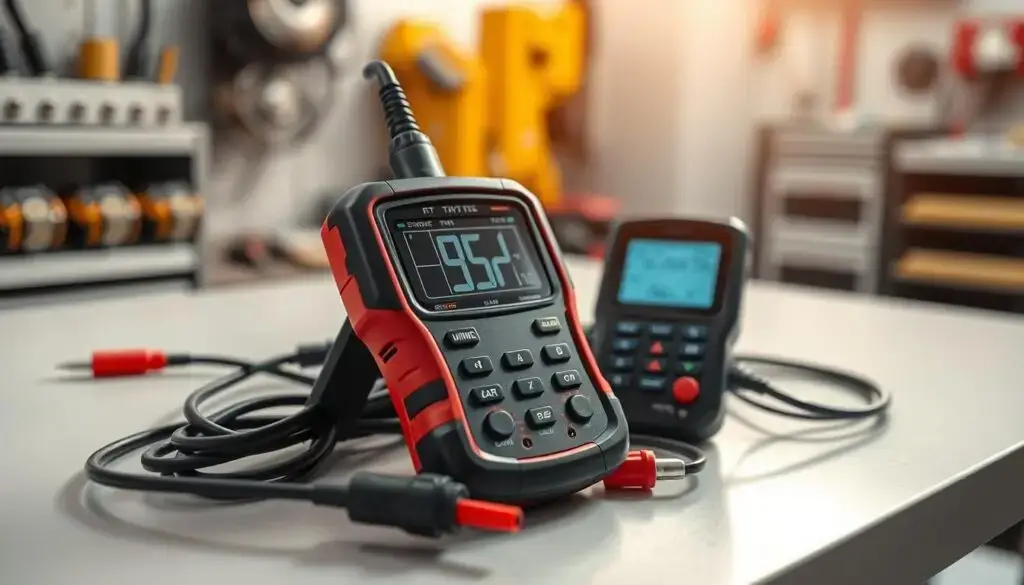
A professional-quality OBD-II scanner with live data streaming capability displays real-time voltage output as engine conditions change. Basic code readers retrieve fault codes but cannot reveal intermittent problems that static testing misses. Advanced scan tools offer graphing functions that plot sensor voltage over time, exposing erratic behavior and signal dropouts.
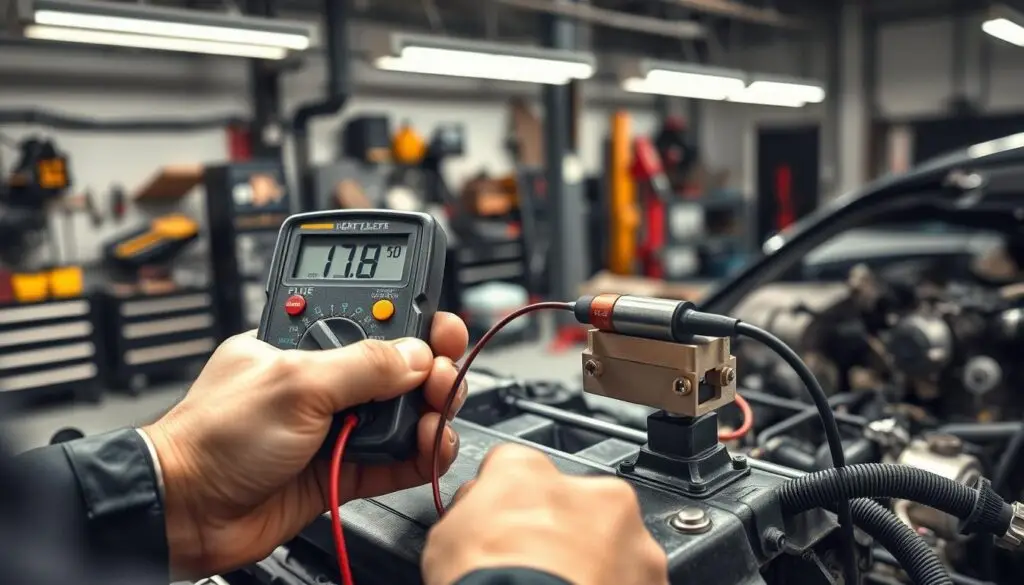
An automotive-grade digital multimeter measures DC voltage for sensor output testing and resistance for checking internal values and wiring continuity. Auto-ranging models simplify testing by automatically selecting appropriate measurement scales. Look for MIN/MAX recording functions that capture intermittent voltage spikes during test drives.
A mechanical fuel pressure gauge provides independent measurement that doesn’t rely on the suspect sensor or vehicle electronics. This analog reference distinguishes between sensor failures and actual fuel system pressure problems. Quality gauge kits include adapters for different fuel system connections and pressure ranges appropriate for both traditional and high-pressure direct injection applications.
Visual Inspection Procedures
Systematic physical examination frequently uncovers problems that electrical testing alone might miss. This hands-on assessment takes 10-15 minutes but can save hours of unnecessary testing.
Locating the Sensor
The sensor typically mounts directly on the fuel rail opposite the pressure control valve. Engine configuration significantly affects accessibility. Inline configurations offer easy top-side access, while V-configuration engines may require additional disassembly. Turbocharged applications often position sensors on high-pressure rails near the injection pump.
For example, the L5P Duramax positions the sensor on the passenger-side fuel rail beneath the EGR cooler. Cummins engines often mount sensors near the high-pressure injection pump rather than at the injector rail. Always consult vehicle-specific service information for exact positioning.
Connector and Wiring Inspection
Carefully disconnect the sensor electrical connector by releasing the locking tab. Examine both sensor-side and harness-side terminals for corrosion deposits (green or white material), bent or pushed-back pins, moisture intrusion, damaged housing, and worn locking tabs.
The weather sealing boot should remain intact without cracks or tears. Trace the wiring harness back toward the engine control module, checking for proper routing, secure clips, and protection from hot exhaust components or sharp edges. Damaged wire insulation exposing copper conductors indicates potential short circuits.
Fuel Leak Assessment
Examine the sensor body and mounting threads for fuel staining, strong fuel odor, visible seepage, or residue on the fuel rail. Physical damage to the sensor body mandates replacement even if electrical tests pass. The mounting threads should appear clean and undamaged—cross-threaded sensors prevent proper sealing and cause pressure measurement errors.
Electrical Circuit Testing
Proper electrical testing separates sensor failures from wiring problems quickly and definitively. This diagnostic phase examines the complete electrical pathway from PCM through wiring harness to the sensor itself. Electrical issues account for approximately 40% of fuel rail pressure sensor problems.
Reference Voltage Test
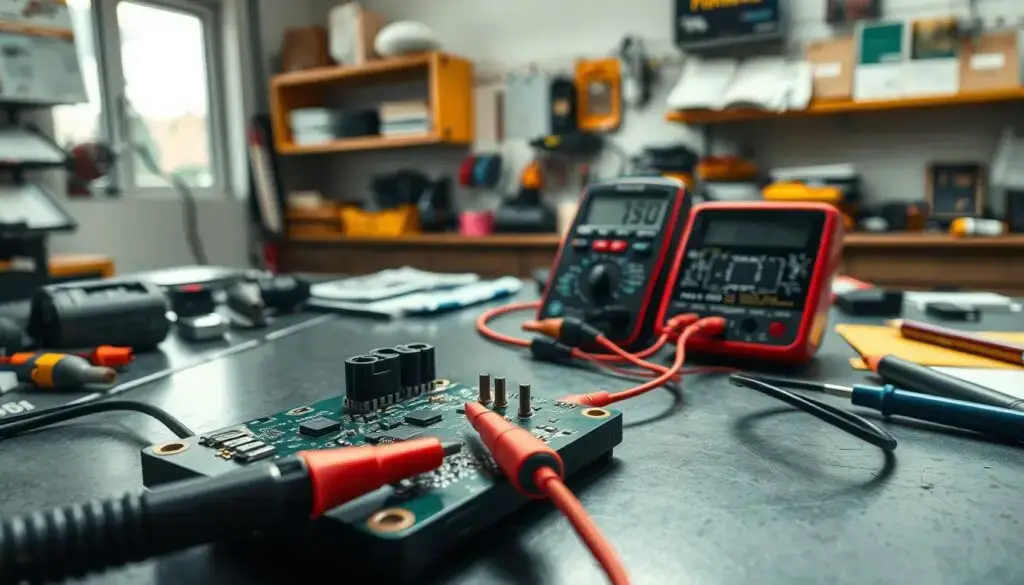
Most fuel rail pressure sensors receive a 5-volt reference signal from the engine control module. With the sensor disconnected and ignition on (engine off), measure voltage between the reference terminal (typically center wire) and a known good ground. Readings should display 4.5-5.0 volts. Values below 4.5 volts indicate PCM power supply or voltage regulator problems.
Ground Circuit Verification
Set your multimeter to resistance and measure between the sensor ground terminal and battery negative post. Acceptable ground circuit resistance measures less than 0.5 ohms. Higher readings indicate corrosion, loose terminals, or broken ground wires. Perform a voltage drop test with the engine running—any reading above 0.1 volts indicates excessive ground circuit resistance.
Signal Voltage Output Testing
With the sensor reconnected and engine running at normal operating temperature, backprobe the signal wire. At idle, expect 1.2-1.5 volts. During snap acceleration, voltage should climb to 3.5-4.0 volts. Steady cruise typically shows 2.0-2.8 volts. Sensors displaying flat voltage that doesn’t change with throttle position have failed internally. Erratic voltage jumping randomly indicates electrical interference or sensor degradation.
The HDJ Perspective
In practice, most shops skip the systematic electrical testing and jump straight to sensor replacement—a costly shortcut when the real problem lives in corroded connectors or damaged wiring. The 15 minutes spent verifying reference voltage, ground integrity, and signal output prevents comebacks that erode customer trust and shop profitability. Fleet managers particularly benefit from understanding this diagnostic sequence because it enables meaningful conversations with service providers and helps identify shops that diagnose systematically versus those throwing parts at problems.
Mechanical Pressure Verification
When diagnostic trouble codes point to fuel pressure problems, a mechanical gauge delivers independent verification that eliminates guesswork. This testing method provides objective measurements independent of the vehicle’s electronic systems.
Gauge Installation and Safety
Begin by relieving fuel system pressure completely. Remove the fuel pump fuse and crank the engine until it stalls from fuel starvation. Continue cranking several additional seconds to purge residual pressure. Even after relief procedures, expect some fuel spillage when disconnecting lines.
Locate the appropriate connection point—many fuel rails include test ports with Schrader valves. High-pressure direct injection systems require specialized adapters rated for pressures exceeding 3,000 PSI. Secure all connections with appropriate wrenches; hand-tightening alone will not prevent dangerous leaks under pressure.
Baseline Pressure Readings
With the gauge installed, restore fuel pump power and cycle the ignition to the “on” position without starting. Record static pressure with key on, engine off. Port injection systems typically show 55-65 PSI static pressure, while direct injection systems display 500+ PSI at rest.
Start the engine and record idle pressure. Properly functioning systems maintain pressure within 5 PSI of static reading. The pressure needle should remain rock-steady without fluctuations. Wavering or dropping pressure indicates fuel pump weakness or pressure regulator problems.
Comparing Mechanical and Electronic Readings
With both mechanical gauge and scan tool monitoring simultaneously, calculate expected sensor voltage based on mechanical pressure using calibration data from service information. If mechanical gauge shows correct pressure while sensor reports incorrect values, the sensor requires replacement. When both readings match but remain outside specifications, the problem lies within the fuel pump or supply system.
Perform test drives while monitoring both readings during hard acceleration, highway cruising, and engine braking. Sensors showing accurate readings at idle but failing to track pressure changes under acceleration are faulty despite passing static testing.
Differential Diagnosis Techniques
Accurate fuel system troubleshooting requires systematic methods that distinguish sensor failures from mechanical fuel system problems. Many technicians mistakenly replace functional sensors when problems originate elsewhere.
Sensor vs. Fuel Pump Diagnosis
Fuel pump weakness produces consistent symptoms that worsen progressively as the pump deteriorates. Low power remains present under all conditions, and mechanical gauge readings confirm genuinely low pressure. Sensor failures create distinctly different patterns—problems appear intermittently and vary with specific operating conditions, while mechanical gauge shows correct pressure.
Apply this diagnostic rule: when mechanical gauge confirms adequate pressure but sensor reads low, replace the sensor. When both mechanical gauge and sensor read low, investigate the fuel pump.
Pressure Regulator Assessment
Regulators stuck closed cause excessive pressure (75+ PSI in systems specified for 55-65 PSI), triggering rich mixture codes and P0088 “fuel pressure too high.” Regulators stuck open produce low pressure similar to weak pumps, but pressure remains stable rather than continuing to drop during extended testing.
Electronic pressure regulators controlled by the PCM require bidirectional control testing. Command pressure changes with scan tool controls while observing whether actual pressure responds appropriately. Unresponsive pressure during commanded changes confirms regulator mechanical failure.
Intermittent Wiring Diagnosis
Intermittent electrical problems create the most challenging diagnostic situations. The wiggle test involves manipulating wiring harnesses while monitoring live sensor data—sudden voltage changes or dropouts during manipulation pinpoint problem areas.
Thermal testing uses heat guns and freeze spray to identify temperature-sensitive connections. Apply heat to connectors and wiring while monitoring signal stability, then follow with freeze spray. Connections that fail at specific temperatures require replacement.
Share Your Diagnostic Expertise
Heavy Duty Journal welcomes contributions from experienced diesel technicians and fleet maintenance professionals. Share your diagnostic insights with our community of practitioners.
Interpreting Diagnostic Trouble Codes
Understanding specific fuel pressure codes transforms guesswork into targeted diagnosis. Each code provides valuable clues about whether you’re dealing with wiring problems, sensor internal failures, or actual mechanical fuel system issues.
Code-Specific Diagnosis
P0190 indicates general circuit malfunction without specifying whether voltage runs too high, too low, or intermittent. This code often appears alongside more specific codes, providing a general alert that requires further investigation. When appearing alone, it typically indicates intermittent problems triggered by temperature changes, vibration, or moisture.
P0191 signals that sensor voltage stays within valid ranges but doesn’t correlate correctly with expected fuel pressure. This code suggests sensor calibration drift or actual mechanical fuel system problems. Comparing sensor readings against mechanical gauge measurements determines whether the sensor is inaccurate or actual fuel pressure is abnormal.
P0192 indicates low input with sensor voltage dropping below 0.3-0.5 volts, pointing toward sensor internal short to ground, damaged wiring shorted to ground, or complete sensor failure. P0193 indicates high input exceeding 4.5-4.8 volts, with common causes including sensor internal short to reference voltage, damaged wiring shorted to power, or open ground circuit.
P0194 presents unique challenges because it indicates intermittent problems that occur sporadically. Corroded connectors represent the most common cause—oxidation creates high resistance connections that make and break contact with vehicle vibration.
Using Freeze Frame Data
Freeze frame data captured when fault codes set provides critical context. This snapshot records engine RPM, vehicle speed, coolant temperature, and calculated load when the failure occurred. High RPM freeze frames during P0193 suggest vibration-related intermittent connections. Cold temperature freeze frames during P0192 point toward moisture-related connector corrosion.
Compare multiple freeze frames if the same code has set repeatedly. Identical conditions across occurrences suggest sensor internal failure at specific operating points. Varying conditions indicate intermittent wiring problems triggered by different factors.
Frequently Asked Questions
Can I drive with a bad fuel rail pressure sensor?
Driving with a failed fuel rail pressure sensor is possible but not recommended. The vehicle may enter limp mode, limiting speed and power to protect against damage from incorrect fuel delivery. Continued operation risks damage to catalytic converters and oxygen sensors from improper air-fuel mixtures. The sensor’s low replacement cost ($40-120 plus labor) makes prompt repair far more economical than risking secondary damage that can cost thousands.
How do I test a fuel rail pressure sensor with a multimeter?
Disconnect the sensor connector and measure reference voltage between the center terminal and ground with key on, engine off—expect 4.5-5.0 volts. Check ground circuit resistance between ground terminal and battery negative (should be less than 0.5 ohms). With sensor reconnected and engine running, backprobe the signal wire to measure output voltage: expect 1.2-1.5 volts at idle, rising to 3.5-4.0 volts during acceleration. Flat or erratic voltage indicates sensor failure.
What causes fuel rail pressure sensor failure?
Common causes include electrical connector corrosion from moisture intrusion, internal semiconductor element degradation over time, fuel contamination from water or debris, excessive heat exposure near turbochargers or exhaust manifolds, and vibration stress that fatigues electrical connections. Normal wear affects sensors between 80,000-120,000 miles, but environmental factors can cause premature failure as early as 30,000-50,000 miles.
How do I distinguish sensor failure from fuel pump problems?
Install a mechanical pressure gauge independent of the vehicle’s electronics. If mechanical gauge shows correct pressure while the sensor reports incorrect values to the PCM, the sensor has failed. If both mechanical gauge and sensor readings are low, investigate the fuel pump and supply system. Fuel pump weakness produces consistent symptoms that worsen progressively, while sensor failures often appear intermittently and vary with operating conditions.
Where is the fuel rail pressure sensor located?
The sensor typically mounts directly on the fuel rail, usually opposite the pressure control valve. Location varies by engine configuration—inline engines offer easy top-side access, while V-configuration engines may require additional component removal. Turbocharged diesels often position sensors near the high-pressure injection pump. The Cummins QuickServe technical portal and other OEM resources provide specific locations for each engine application.
Taking Action on Fuel Pressure Problems
Proper fuel rail pressure sensor diagnosis starts with systematic testing rather than guesswork. The procedures outlined in this guide separate actual sensor failures from wiring problems, fuel pump weakness, and pressure regulator issues—ensuring accurate repairs that avoid costly comebacks.
When replacement becomes necessary, choose OEM or premium aftermarket sensors from trusted diesel truck parts suppliers. Economy sensors may save money initially but often fail prematurely. Follow manufacturer torque specifications during installation to prevent leaks or damage, and verify proper operation before returning the vehicle to service.
Preventive maintenance reduces most sensor problems. Purchase fuel from reputable stations to avoid contamination, replace fuel filters according to schedule, keep electrical connections clean, and schedule fuel system cleaning every 30,000-50,000 miles. The diagnostic knowledge you’ve gained enables confident troubleshooting that protects both vehicle reliability and shop profitability.
Found This Guide Useful?
Share this diagnostic resource with fellow technicians and fleet managers who could benefit from systematic fuel pressure troubleshooting procedures.