Foundation brake temperature management represents a critical safety factor in commercial vehicle operations. Understanding operating temperature ranges, recognizing dangerous heat thresholds, and implementing proper thermal control strategies prevents brake fade and catastrophic failure. This comprehensive guide examines the science behind brake heat generation and delivers proven solutions for maintaining safe operating conditions.
During normal highway driving, foundation brake temperatures typically range between 200°F and 400°F. Under moderate braking conditions, temperatures briefly spike to 500-600°F before cooling between applications. However, extended grade descents or heavy stop-and-go operations can push brake systems beyond 700-800°F, entering the danger zone where friction materials begin to decompose and brake fade occurs.
When brake temperatures exceed approximately 900-1000°F, permanent component damage becomes inevitable. Cast iron drums warp and crack under thermal stress. Friction material binding agents decompose, creating glazed surfaces that cannot be restored. Wheel seals fail, contaminating brake linings and causing bearing seizure. These cascading failures explain why thermal management stands as the foundation of commercial vehicle brake safety.
Last Updated: November 2025
Key Takeaways
- Normal Operating Range: Foundation brakes typically operate between 200-400°F during routine driving, with acceptable brief spikes to 500-600°F
- Fade Threshold: Brake fade begins at 600-800°F when friction material binding agents start decomposing, with severity depending on lining formulation
- Critical Damage Point: Permanent component damage occurs above 900-1000°F, causing drum warping, cracking, and irreversible friction material degradation
- Primary Heat Sources: Extended downgrades, maximum weight operations, and frequent stop-and-go driving create the highest thermal stress on brake systems
- Prevention Strategy: Engine braking combined with proper gear selection and intermittent brake application prevents dangerous temperature accumulation
- Monitoring Importance: Regular temperature checks using infrared thermometers or thermal imaging identify developing problems before catastrophic failure occurs
Understanding Foundation Brake Systems and Heat Generation
Foundation brakes installed at each wheel position convert vehicle kinetic energy into thermal energy through friction. This energy transformation process generates substantial heat that must be safely managed to maintain stopping effectiveness. The mechanical components that accomplish this conversion operate within specific thermal limitations that determine both performance and longevity.
Every time a commercial vehicle decelerates, the foundation brake system performs a complex thermodynamic process. Friction between brake linings and drum surfaces creates the resistance needed to slow wheel rotation, but this friction generates heat as an inevitable byproduct. Understanding how these components interact reveals why certain operating conditions create dangerous temperature levels.
Foundation Brake Assembly Components
S-cam brakes represent the most common foundation brake design in heavy-duty commercial vehicles. The brake drum assembly mounts directly to each axle end, with the wheel bolted to the drum’s exterior surface. All braking components operate inside this protective drum housing, creating an enclosed system that affects heat dissipation characteristics.
The air brake activation sequence begins when compressed air enters the brake chamber after the driver applies the brake pedal. Air pressure forces the pushrod outward, moving the slack adjuster attached to the brake camshaft. The slack adjuster rotation twists the camshaft, turning the S-shaped cam positioned between the brake shoes.
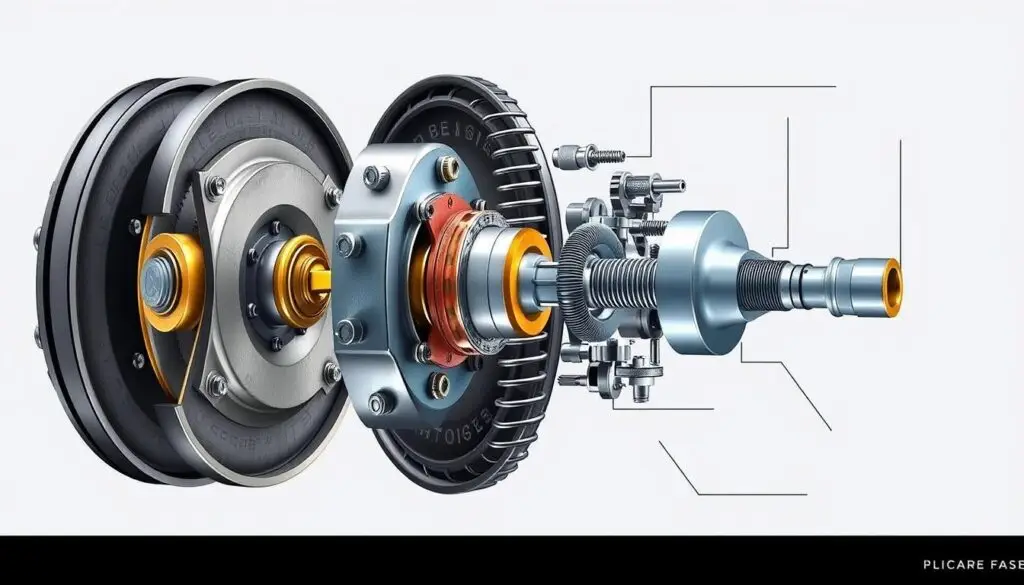
S-cam brake assembly showing the mechanical sequence that forces brake shoes against drum surfaces during application
As the S-cam rotates, its profile forces brake shoes apart, pressing brake linings firmly against the spinning drum’s interior surface. This contact creates the friction needed for deceleration. When the driver releases the brake pedal, air pressure escapes and return springs immediately pull brake shoes away from the drum, allowing free wheel rotation.
| Component | Primary Function | Heat Exposure Level |
|---|---|---|
| Brake Drum | Rotating friction surface and heat sink | Direct and continuous |
| Brake Shoes | Support structure for friction material | Direct and continuous |
| Brake Linings | Create friction against drum surface | Extreme and direct |
| S-Cam | Forces brake shoes outward for application | Moderate through conduction |
Friction Converting Motion Into Heat
The fundamental principle behind foundation brake operation involves converting kinetic energy into thermal energy through friction. A loaded commercial vehicle traveling at highway speeds possesses enormous kinetic energy that must be eliminated to achieve a stop. Friction material serves as the conversion mechanism for this energy transformation.
When brake linings press against the brake drum, resulting friction opposes the drum’s rotation and slows wheel movement. The physical process of rubbing two surfaces together generates substantial heat as a direct byproduct. One hundred percent of the vehicle’s kinetic energy converts directly into thermal energy during every braking event.
An 80,000-pound truck traveling at 60 mph contains massive amounts of kinetic energy. All of this energy must transform into heat within the foundation brake components to bring the vehicle to a complete stop. The friction material composition determines how efficiently this energy conversion occurs while managing the resulting temperature rise.
Expected Temperature Ranges During Operation
Foundation brakes operate within specific temperature ranges under normal driving conditions. Understanding these baseline temperatures helps identify when thermal overload conditions develop. Normal operating temperatures typically range between 200°F and 400°F during routine highway driving and city operations.
During moderate braking events, temperatures briefly spike higher than baseline levels. Foundation brake components may reach 500°F to 600°F during these temporary increases. These short-duration temperature spikes remain within acceptable limits as long as adequate cooling time exists between braking applications.
The brake drum acts as a heat sink that absorbs thermal energy from brake shoes and linings. Airflow around the drum helps dissipate this accumulated heat back into the atmosphere. Proper cooling requires sufficient time between braking events for temperature reduction to occur.
| Operating Condition | Temperature Range | Duration | Risk Level |
|---|---|---|---|
| Normal Highway Driving | 200°F – 300°F | Continuous | Safe |
| City Stop-and-Go Traffic | 300°F – 400°F | Intermittent | Safe |
| Moderate Braking Event | 500°F – 600°F | Brief spike | Acceptable |
| Extended Downgrade Braking | 600°F – 800°F+ | Sustained | Dangerous |
The Science Behind Foundation Brake Temperature
Understanding how brakes generate and manage heat requires examining the core scientific processes at work. Foundation brake systems perform complex energy transformations every time a vehicle slows or stops. The components are engineered to handle tremendous thermal loads, but they operate within specific physical limitations that determine their effectiveness and safety.
The relationship between vehicle motion and brake heat follows precise thermodynamic principles. These scientific fundamentals explain why certain driving conditions create dangerous temperature levels while others remain manageable. Recognizing these patterns helps drivers and fleet managers prevent thermal overload before it compromises braking performance.
Converting Motion Into Heat Energy
The kinetic energy conversion process represents the primary function of foundation brake systems. When brakes are applied, friction between lining material and drum surface transforms vehicle motion directly into thermal energy. This conversion follows a mathematical relationship where kinetic energy equals one-half the vehicle’s mass multiplied by velocity squared.
This physics formula reveals critical insights about brake heat generation. Doubling vehicle speed creates four times more heat energy that must be absorbed and dissipated. A commercial vehicle traveling at 60 mph generates sixteen times more heat during braking than the same vehicle stopping from 15 mph.
Vehicle weight equally affects kinetic energy conversion demands placed on brakes. A loaded tractor-trailer carries exponentially more kinetic energy than an empty vehicle traveling at identical speeds. Every pound of cargo translates directly into additional thermal energy that brake drums must handle during deceleration.
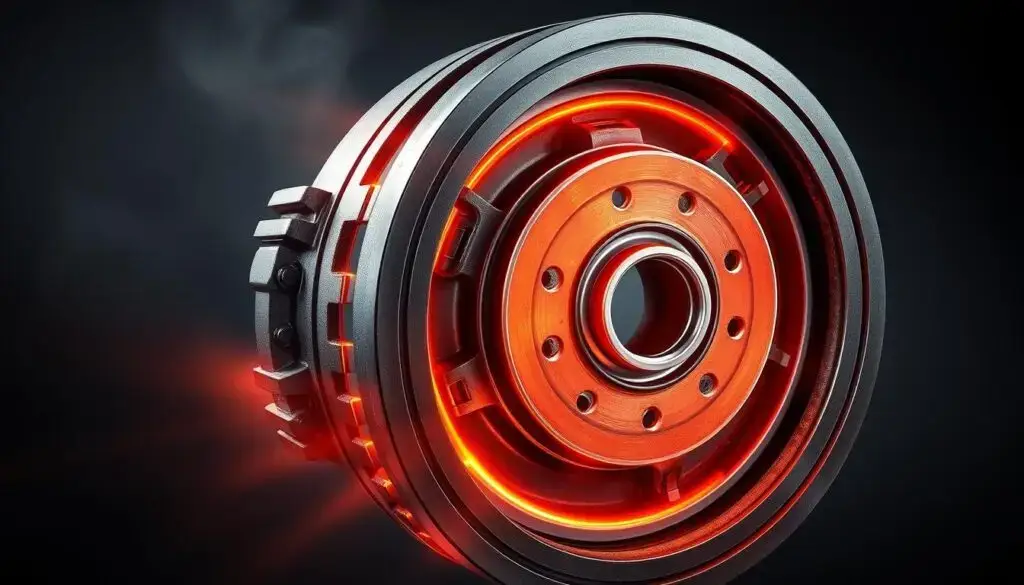
Heat dissipation mechanisms in brake drums including conduction, convection, and radiation working simultaneously to remove thermal energy
Foundation brake systems possess finite thermal capacity that determines how much heat they can absorb before performance degradation occurs. Once this capacity is exceeded, friction materials begin losing effectiveness. The system becomes overwhelmed, unable to convert additional kinetic energy efficiently or safely.
How Brake Drums Release Heat
Brake components shed accumulated heat through three distinct mechanisms working simultaneously. Conduction moves thermal energy through metal components, transferring heat from friction surfaces to surrounding brake hardware. The cast iron composition of drums provides excellent thermal conductivity properties that facilitate this internal heat transfer.
Convection represents the primary heat dissipation pathway for foundation brakes during operation. Air flowing around and through brake assemblies carries thermal energy away from heated surfaces. This cooling process depends heavily on vehicle speed, ambient temperature, and design characteristics that allow air circulation around brake components.
Radiation contributes to heat dissipation through infrared energy emission from hot brake surfaces. At elevated brake drum temperatures, glowing metal surfaces release significant thermal energy through electromagnetic radiation. This mechanism becomes increasingly important as component temperatures rise above 500°F.
Drum-type foundation brakes face inherent heat dissipation challenges compared to disc brake systems. The enclosed drum design restricts air circulation around friction surfaces, slowing convective cooling. This structural limitation makes temperature management more critical for vehicles equipped with drum brakes, particularly during extended braking operations.
| Heat Transfer Method | Effectiveness in Drums | Primary Factors |
|---|---|---|
| Conduction | Moderate | Material composition, component contact |
| Convection | Limited by enclosure | Air flow, vehicle speed, drum ventilation |
| Radiation | Increases with temperature | Surface area, emissivity, temperature differential |
Variables That Accelerate Heat Accumulation
Multiple operational factors influence how quickly foundation brakes reach dangerous temperature thresholds. Vehicle weight and load represent the most significant variable, as heavier vehicles require more braking force and generate proportionally more heat. A fully loaded commercial vehicle can generate three to four times the thermal energy of an empty vehicle during equivalent braking events.
Speed directly impacts thermal load through the squared velocity component in kinetic energy calculations. Highway speeds create substantially more heat per stop than urban driving. Braking frequency and duration determine whether brake systems have adequate cooling time between applications to dissipate accumulated heat effectively.
Grade percentage and length create the most challenging thermal management scenarios. Descending mountain grades requires continuous or frequent brake application over extended periods. This operational condition prevents adequate cooling between applications, allowing temperatures to climb steadily toward critical failure thresholds.
Environmental factors including ambient temperature and altitude affect brake system thermal capacity. Hot weather reduces the temperature differential available for convective cooling. High altitude decreases air density, reducing convective heat transfer efficiency by up to 15 percent compared to sea level conditions.
What is Brake Fade and Why It Occurs
Brake fade occurs when heat generation surpasses dissipation capacity, causing temporary but complete loss of braking effectiveness. This dangerous condition develops when thermal energy produced by friction becomes greater than the brake system’s ability to release it into surrounding air. Foundation brake components, particularly friction linings and drum surfaces, simply get too hot to maintain normal stopping capability.
When brake temperatures climb to extreme levels, the physical and chemical properties of friction materials change in hazardous ways. Drivers apply maximum pedal force but experience minimal deceleration. This represents one of the most frightening scenarios in commercial vehicle operation, where brake performance degradation can happen suddenly and without warning.
How Friction Materials Break Down Under Heat
Mechanical fade happens directly at the contact point between brake lining and drum surface. This process involves actual friction material experiencing chemical decomposition under extreme temperatures. The phenomenon represents the most common form of brake fade in foundation brake systems.
Brake lining friction material consists of various compounds held together by phenolic resins. These resins act as binding agents that keep friction particles unified and bonded to the backing plate. Under normal braking conditions, these materials work perfectly to grip the iron drum and generate necessary stopping force.
When brakes overheat beyond approximately 600-800°F, these phenolic resins reach their decomposition temperature. The resin begins breaking down through a process called outgassing, where burning material releases superheated gases. These gases create a microscopic cushion between lining and drum surface.
Infrared temperature monitoring reveals heat patterns that indicate developing brake fade conditions before complete failure occurs
This gas layer dramatically reduces the friction coefficient at the braking interface. Instead of solid-to-solid contact that generates stopping power, lining essentially floats on a layer of gas. The result is catastrophic reduction in braking effectiveness even though mechanical components remain intact. The primary symptom of mechanical fade is a very hard or firm brake pedal with inadequate stopping power.
Temperature Limits for Different Brake Linings
Not all friction materials respond identically to thermal stress. Various lining formulations have significantly different temperature thresholds before brake fade begins. Understanding these limits helps fleet managers select appropriate materials for specific operational demands.
Organic friction linings, containing aramid fibers and organic compounds, typically begin experiencing fade at relatively modest temperatures. These materials start showing stopping power loss at temperatures between 400-600°F. While organic linings offer quiet operation and low dust production, their thermal limitations make them unsuitable for severe-duty applications.
Semi-metallic brake linings incorporate metal particles into friction compounds for improved heat resistance. These materials maintain effective friction coefficient values up to approximately 600-800°F before outgassing becomes problematic. Semi-metallic formulations represent the most common choice for standard commercial vehicle applications.
Premium metallic and ceramic friction materials offer the highest temperature resistance. These advanced compounds can maintain braking effectiveness at temperatures reaching 800-1000°F or higher before experiencing significant fade. Heavy-duty applications, mountain operations, and vehicles with high gross weights benefit from these high-performance materials.
| Lining Material Type | Fade Temperature Range | Typical Applications |
|---|---|---|
| Organic Compound | 400-600°F | Light-duty vehicles, urban delivery |
| Semi-Metallic | 600-800°F | Standard commercial trucks |
| Premium Metallic | 800-1000°F | Heavy-duty, mountain operations |
| Ceramic Composite | 1000°F+ | Severe-duty applications |
Safety Consequences and Stopping Distance Changes
The impact of brake fade on vehicle safety cannot be overstated. This condition represents an immediate life-threatening situation that requires emergency response procedures. Partial brake fade can double or even triple normal stopping distances. A commercial vehicle that typically requires 300 feet to stop from 60 mph might need 600-900 feet when experiencing moderate fade.
Complete brake fade results in total loss of braking control. The vehicle becomes essentially uncontrollable, relying only on engine compression braking and auxiliary retarding systems. In worst-case scenarios, drivers face the terrifying reality of having no effective means to slow or stop the vehicle.
Brake performance degradation during fade events typically occurs in predictable high-heat situations. Extended downhill grades represent the most common scenario, where continuous brake application generates more heat than can be dissipated. Repeated heavy stops from high speeds also create conditions conducive to fade development.
Prevention through proper thermal management remains the only reliable strategy. Once fade occurs, drivers have limited options beyond finding a safe place to stop and allowing complete cooling. The relationship between stopping power loss and brake temperature follows a sharp curve rather than gradual slope, meaning transition from adequate to inadequate braking can happen suddenly.
Stay Ahead of Industry Trends
Get expert insights, equipment reviews, and operational strategies delivered to your inbox weekly.
Critical Temperature Points That Lead to Brake Failure
Every brake component has a breaking point where excessive temperature causes permanent damage that no amount of cooling can reverse. Understanding these critical temperature thresholds helps drivers and fleet managers prevent dangerous situations before they develop. When foundation brakes exceed specific heat levels, the damage becomes irreversible and requires immediate component replacement.
According to Federal Motor Carrier Safety Administration research, braking problems account for nearly 30 percent of large truck accidents. Many of these incidents trace directly back to thermal damage that operators failed to recognize or address in time.
When Friction Materials Break Down
Brake lining materials begin experiencing permanent degradation when sustained temperatures climb above 800 to 900 degrees Fahrenheit. At these extreme heat levels, binding resins that hold friction compounds together start to carbonize and lose their engineered properties. This chemical transformation changes the material’s fundamental structure.
Even after brakes cool completely, friction materials exposed to these temperatures cannot return to original performance specifications. The lining surface becomes glazed and hardened, creating a smooth finish that dramatically reduces friction effectiveness. Technicians can easily identify this condition by distinctive red powder residue that appears after excessive heat exposure.
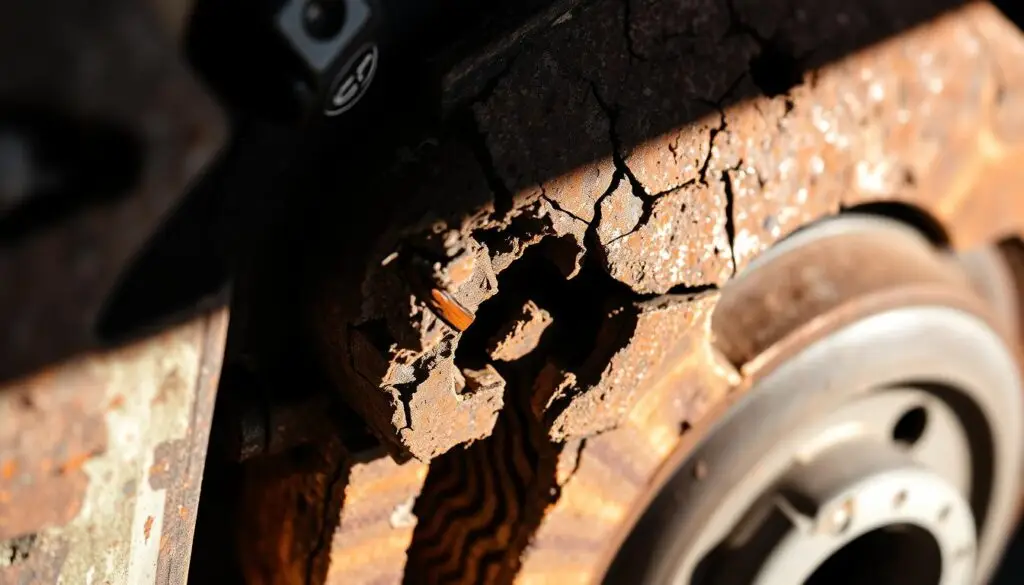
Visual indicators of thermal damage including discoloration, cracking, and red powder residue signaling permanent component degradation
How Drums Warp and Develop Cracks
Brake drums face serious structural threats when temperatures exceed 900 to 1000 degrees Fahrenheit. Cast iron drums expand during heating and contract during cooling, creating internal mechanical stresses throughout the component. Uneven heating patterns make this problem significantly worse, causing two primary forms of brake component damage: warping and cracking.
Warping represents dimensional distortion where drums lose circular shape and develop high and low spots. Drum cracking occurs when internal stresses exceed material structural limits. Federal inspection standards require immediate removal of drums with cracks longer than half the width of the friction area.
These cracks compromise structural integrity and can lead to catastrophic failure without warning. Warped drums create uneven lining contact, causing vibration, reduced effectiveness, and accelerated wear patterns. The heat that drums can withstand without damage depends heavily on how hard and how long operators apply brakes.
Destruction of Seals and Bearings
Extreme brake temperatures above 500 to 600 degrees Fahrenheit at the hub area destroy wheel seals and contaminate bearing grease. Heat conducts through drum assemblies to adjacent components that lack thermal protection. Wheel seals designed for normal ambient temperatures cannot survive sustained elevated heat exposure.
When seals fail from thermal damage, grease leaks from bearing assemblies and contaminates brake linings. The loss of lubrication causes bearings to overheat and seize. This progression creates a cascade effect where one thermal failure triggers multiple component breakdowns, representing serious safety risks beyond simple brake failure.
Monitoring Foundation Brake Temperature Effectively
Fleet operators and drivers who systematically track brake temperatures gain critical insights that prevent costly failures before they occur. Temperature monitoring provides essential data needed to identify thermal problems early, adjust driving techniques, and schedule preventive maintenance. Multiple monitoring approaches exist, ranging from advanced technological solutions to traditional manual methods.
The choice of monitoring method depends on fleet size, budget constraints, and operational requirements. Large fleets benefit from comprehensive systems that provide continuous data across entire vehicle populations. Smaller operations often achieve excellent results with portable inspection tools and trained personnel.
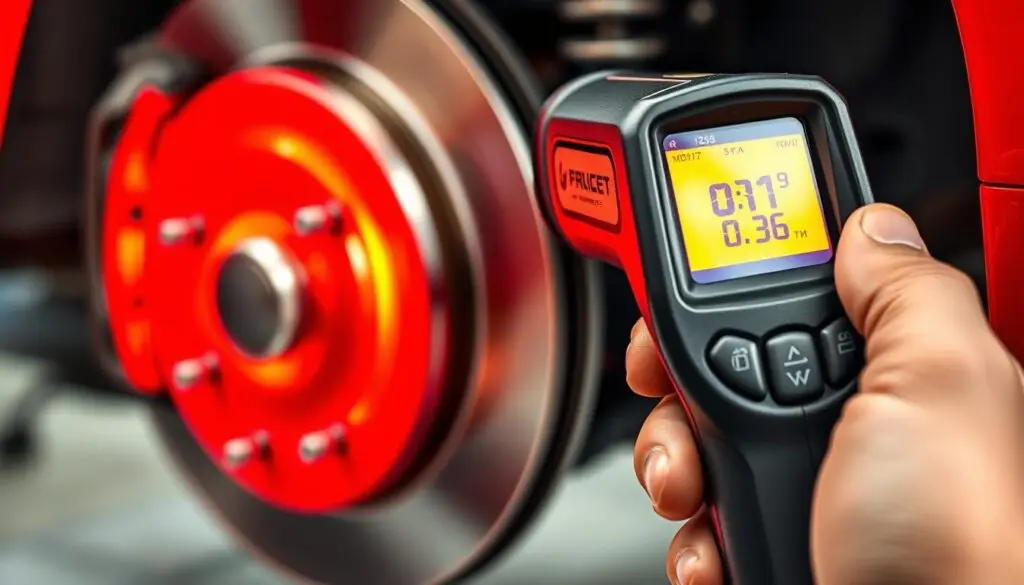
Technician using infrared thermometer to measure brake drum surface temperature during post-trip inspection
Infrared Temperature Measurement Tools
Handheld infrared thermometer devices represent the most accessible and cost-effective temperature monitoring solution for commercial vehicle operations. These non-contact tools allow technicians and drivers to measure brake drum surface temperatures quickly during post-trip inspections, after descending grades, or whenever overheating is suspected. Accuracy depends on proper measurement technique and understanding the technology’s limitations.
Correct infrared thermometer usage requires aiming at the drum’s friction surface rather than the hub or rim area. Cast iron surfaces require emissivity settings between 0.85 and 0.95 for accurate readings. Technicians should take measurements at multiple points around the drum circumference to detect uneven heating patterns that indicate dragging brakes or misadjusted components.
Establishing baseline temperature values during normal operations provides reference points for comparison. Typical safe readings after moderate braking range from 200°F to 400°F. Readings above 500°F indicate excessive heat requiring immediate investigation and corrective action.
Thermal Imaging Systems for Fleet Applications
Advanced thermal imaging cameras provide comprehensive heat pattern visualization across entire brake assemblies. These systems reveal temperature variations invisible to standard infrared thermometers, identifying developing problems before they escalate to failures. Progressive fleets incorporate thermal imaging into systematic brake inspection protocols to enhance preventive maintenance effectiveness.
Thermal cameras display color-coded heat maps showing temperature distribution across drums, rotors, and surrounding components. Uneven heating patterns indicate specific mechanical problems such as seized slide pins, contaminated friction material, or failing wheel bearings. Early detection through thermal imaging prevents catastrophic failures and reduces repair costs.
Onboard Temperature Monitoring Sensors
Emerging wireless brake temperature sensors continuously monitor temperatures during vehicle operation, transmitting real-time data to cab displays or telematics systems. These advanced systems alert drivers to rising temperatures immediately, enabling corrective action such as reducing speed, selecting lower gears, or stopping to allow cooling. Real-time temperature monitoring prevents thermal overload by providing actionable information before damage occurs.
Modern sensor technologies attach directly to brake assemblies using heat-resistant mounting hardware. Wireless transmission eliminates complex wiring while providing continuous data streams to onboard computers. Drivers receive visual and audible warnings when temperatures exceed predetermined thresholds based on manufacturer specifications.
Manual Inspection Techniques
Traditional manual methods remain valuable when electronic monitoring tools are unavailable or as supplementary verification techniques. The hand-proximity test involves carefully approaching brake drums without direct contact to sense radiated heat. Experienced technicians gauge approximate temperature levels by the intensity of heat felt at various distances from brake assemblies.
Visual indicators provide additional temperature assessment clues during brake inspection procedures. Heat shimmer visible around brake assemblies indicates elevated temperatures exceeding 400°F. Discoloration of brake drums ranging from light brown to blue or purple suggests repeated exposure to excessive temperatures requiring investigation.
| Monitoring Method | Key Advantages | Primary Applications |
|---|---|---|
| Infrared Thermometer | Portable, affordable, instant readings | Post-trip inspections, spot checks |
| Thermal Imaging Camera | Complete heat pattern visualization | Comprehensive fleet inspections |
| Onboard Sensors | Real-time alerts, automatic data logging | High-value vehicles, mountain operations |
| Manual Inspection | No equipment required, always available | Remote locations, backup verification |
High-Risk Operating Conditions for Thermal Overload
Foundation brake thermal overload doesn’t happen randomly—specific operating conditions consistently create elevated risk situations that every driver must understand. These brake overheating conditions share common characteristics: they demand sustained or repeated braking that overwhelms the system’s ability to dissipate heat effectively. Recognizing these high-risk operations before temperatures reach critical levels is essential for maintaining safe vehicle control.
Prolonged Grade Descents and Continuous Brake Application
Mountain passes and extended downhill braking situations create the most dangerous thermal environment for foundation brakes. When descending steep grades, gravity continuously converts potential energy into kinetic energy that brakes must absorb as heat. A fully loaded commercial vehicle descending a 6 percent grade descent for ten miles generates thermal energy equivalent to several thousand horsepower operating continuously.
The critical problem with extended grades is that brakes receive no cooling intervals between applications. Unlike level-ground braking where applications are brief and separated by recovery time, downhill braking demands constant energy absorption. This continuous thermal load quickly pushes brake temperatures beyond safe operating ranges.

Grade warning sign indicating steep descent requiring lower gear selection and thermal management strategy
Riding the brakes—maintaining constant light pedal pressure throughout a descent—represents the worst possible technique for thermal management. This practice creates steady heat accumulation without any opportunity for cooling. Brake temperatures climb relentlessly until friction materials reach their thermal degradation point and fade occurs.
Maximum Weight Operations and Repetitive Stopping
Operating commercial vehicles at or near gross vehicle weight rating multiplies the kinetic energy that brakes must convert to heat during each stopping event. Physics dictates that doubling vehicle weight doubles the energy requiring dissipation, but the brake system remains the same size. A fully loaded combination vehicle generates several times more braking heat than identical vehicles operating empty.
Frequent stop-and-go operations compound the weight problem by eliminating cooling time between brake applications. Urban delivery routes, congested traffic conditions, and dock-to-dock operations create cumulative heat buildup that prevents temperatures from returning to safe levels. Each subsequent brake application starts from an already-elevated temperature baseline.
Environmental Conditions That Compromise Cooling
External environmental factors significantly impact brake system ability to dissipate heat effectively. High ambient temperatures reduce the temperature differential that drives convective cooling—the primary mechanism for removing heat from brake components. When outside air temperature reaches 90°F or above, cooling efficiency drops substantially compared to moderate conditions.
Desert environments present multiple challenges beyond simple heat. Dust and fine particles reduce air circulation around brake drums and rotors, creating an insulating effect that traps heat. Weather factors interact with operational demands to create compounded risk. Descending mountain grades during hot summer months with heavy loads combines multiple risk factors simultaneously.
| Operating Condition | Primary Thermal Risk | Cooling Limitation |
|---|---|---|
| 6% grade over 5+ miles | Continuous energy absorption | No recovery intervals |
| Maximum GVWR operations | Multiplied kinetic energy | Same brake capacity |
| Stop-and-go urban delivery | Cumulative heat buildup | Insufficient cool-down time |
| High ambient temperature | Reduced cooling efficiency | Decreased temperature differential |
Proven Thermal Management Strategies
Effective thermal management goes beyond monitoring—it demands proactive techniques that minimize heat generation in the first place. Professional drivers who understand and apply these strategies significantly reduce foundation brake temperatures during operation. The best approach combines multiple techniques rather than relying on a single method.

Auxiliary braking systems including exhaust brake and compression release brake provide non-friction retarding force
Using Your Engine and Auxiliary Systems for Speed Control
Engine braking serves as the primary thermal management tool for commercial vehicle operations. This technique uses the engine’s internal resistance to control vehicle speed without applying foundation brakes. When the transmission shifts to a lower gear during descent, the drivetrain forces the engine to rotate at higher RPM, creating resistance that opposes vehicle acceleration.
The engine’s internal compression and friction create resistance that controls speed naturally while removing thermal load entirely from the brake system. Foundation brake temperatures can actually decrease during proper engine braking application. The fundamental principle is simple: let your engine control the speed, not your brakes.
Auxiliary braking systems enhance engine braking effectiveness significantly. These systems include exhaust brakes, compression release engine brakes, transmission retarders, and driveline retarders. Each type provides non-friction braking force that supplements natural engine compression. Modern auxiliary braking systems can provide 200-600 horsepower of retarding force, dramatically reducing or eliminating foundation brake thermal load during extended grades.
Selecting the Right Gear Before Descent
Proper gear selection represents the foundation of grade management and brake cooling strategy. Select the same gear for descent that would be required to climb the grade, and make this selection before beginning the downhill section. This principle prevents thermal overload by controlling speed from the start.
For steep grades of 6 percent or greater, gear selection typically limits speed to 15-30 mph depending on grade severity and vehicle weight. These lower speeds reduce kinetic energy that would otherwise convert to heat in the brake system. Starting a descent in too high a gear creates dangerous situations where attempting to downshift after speed has increased becomes difficult or impossible.
Many experienced drivers follow this guideline: if you wouldn’t attempt to climb the grade in your current gear, you shouldn’t descend in that gear either. This conservative approach provides a safety margin that prevents thermal emergencies.
Applying Brakes in Short, Controlled Cycles
When foundation brakes become necessary, the application technique determines thermal outcomes. Snub braking provides the most effective intermittent brake application method for temperature control. This technique involves applying foundation brakes firmly to reduce speed by 5-10 mph, then completely releasing brakes to allow brake cooling.
Repeat this cycle to maintain safe speed throughout the descent. The firm application provides effective deceleration, while complete release creates cooling intervals. This contrasts sharply with riding the brakes—continuous light application that causes steady heat accumulation without cooling intervals.
The critical element is complete brake release between applications. Even brief cooling intervals of 10-20 seconds allow heat dissipation that prevents temperature escalation. Airflow across drums and rotors during these intervals removes accumulated thermal energy more effectively than any other cooling mechanism.
Understanding When Brakes Need Rest
Foundation brakes require specific brake cooling periods to restore maximum effectiveness after thermal loading. After moderate braking events, foundation brakes need 30-60 seconds of cooling before full effectiveness returns. After severe braking or high-temperature events, much longer cooling periods become necessary.
Brakes that have experienced significant fade may require 30-45 minutes of complete rest for safe operation. Pulling off the roadway to allow brake cooling is not merely good practice—it’s an operational necessity when temperatures approach or exceed safe limits. Professional drivers recognize warning signs including reduced braking effectiveness, unusual odors, or visible smoke from wheel ends.
During cooling periods, avoid applying parking brakes on overheated foundation brakes. The sustained contact can cause permanent damage to friction materials and drums. Instead, use wheel chocks to secure the vehicle while allowing maximum airflow around brake components. Minutes spent cooling brakes prevent hours of downtime and potential catastrophic failure.
Preventive Maintenance for Temperature Control
Regular maintenance keeps foundation brakes operating within safe temperature ranges while preventing costly failures and dangerous brake fade. Properly maintained brake systems dissipate heat efficiently and respond predictably under all operating conditions. A systematic preventive maintenance program addresses root causes of excessive heat generation before they compromise stopping power.
Well-maintained brakes generate less heat during normal operation because all components function at designed efficiency levels. Degraded or worn components require greater pedal application and longer brake engagement times to achieve the same stopping force, dramatically increasing thermal energy buildup.
Inspection Procedures and Adjustment Protocols
Brake inspection intervals should align with vehicle usage patterns and manufacturer recommendations. High-mileage operations and severe-service applications require more frequent brake maintenance than standard delivery routes. The most common deficiency found during roadside inspections involves improper brake adjustment.
To check slack adjuster movement, park the vehicle on level ground and chock wheels securely. Release parking brakes to allow free movement of slack adjusters. Wearing protective gloves, pull firmly on each accessible slack adjuster where the pushrod attaches to it. If a slack adjuster moves more than one inch at the pushrod attachment point, the brake requires immediate adjustment.
All vehicles manufactured since 1994 come equipped with automatic slack adjusters. These devices self-adjust during full brake applications under normal operating conditions. However, automatic adjusters still require regular inspection to verify proper function. Manual adjustment of automatic slack adjusters typically masks underlying mechanical problems rather than solving adjustment issues.
Lining Material Selection and Replacement Standards
Friction material replacement decisions directly impact brake temperature management and overall system performance. Different operational profiles require specific lining compounds engineered for those conditions. Severe service applications demand premium friction materials with enhanced temperature resistance.
Operations involving frequent stops, heavy loads, or mountainous terrain generate significantly more thermal energy than standard highway driving. Standard friction materials may experience premature fade under these demanding conditions. Premium compounds maintain consistent friction coefficients across wider temperature ranges.
Friction material replacement becomes mandatory when linings wear to less than 1/4 inch thickness. This minimum thickness ensures adequate heat absorption capacity and structural integrity. Thinner linings cannot dissipate heat effectively and risk catastrophic failure under heavy braking. Replace brake linings immediately if they show material that is loose, cracked, or separating from backing plates, contamination with oil or grease, or signs of previous thermal damage.
Drum and Rotor Evaluation Criteria
Drum and rotor condition assessment forms a critical component of any preventive maintenance program. These components must maintain specific dimensional tolerances and structural integrity to function safely. Damaged drums and rotors create uneven heating patterns that accelerate wear and increase failure risk.
Measure drum diameter at multiple points around the friction surface using precision gauges. Drums exceeding maximum diameter specifications must be replaced immediately. Oversized drums reduce braking effectiveness and alter shoe-to-drum contact patterns. Inspect all brake drums and rotors carefully for crack formation.
According to CVSA inspection standards, any crack extending more than half the width of the friction area requires immediate component replacement. Additional inspection points include hard spots appearing as darkened areas on friction surfaces, heat checking manifesting as fine network cracks, deep scoring or grooves that reduce effective contact area, and uneven wear patterns indicating alignment issues.
Hardware Components and Mounting Systems
Brake hardware and mounting system integrity directly affects thermal management through its impact on proper brake operation. Worn or damaged hardware components cause dragging brakes that generate continuous heat even without pedal application. Failed hardware also creates uneven brake application across the axle.
When one brake fails to engage properly, functioning brakes on other wheel positions must work harder to compensate. This increased workload generates excessive heat in properly functioning components. Inspect critical hardware elements during each brake maintenance interval including return springs for tension and damage, anchor pins and bushings for wear, brake chambers for leaks, caliper slide pins for binding, and mounting brackets for cracks or loose fasteners.
Warning Signs of Brake Overheating
Identifying thermal distress in foundation brake systems requires knowledge of specific visual, olfactory, and performance indicators that signal dangerous temperature levels. Early recognition of brake overheating symptoms enables drivers and maintenance personnel to intervene before conditions progress to brake fade or catastrophic component failure.
Recognition of thermal warning indicators creates opportunities for corrective action. Stopping to allow cooling, reducing vehicle speed, or selecting lower gears can prevent progression from manageable heat buildup to dangerous brake fade. Multiple categories of indicators provide early warning of thermal problems.
Observable Thermal Indicators
During vehicle operation, several visual inspection cues reveal elevated brake temperatures before critical damage occurs. Heat shimmer or visible waves in the air around brake drums indicate surface temperatures exceeding 400 to 500 degrees Fahrenheit. This atmospheric distortion becomes visible in daylight conditions and represents early-stage overheating.
Drum surface discoloration provides clear evidence of thermal stress. Blue, purple, or brown tinting on metal surfaces indicates temperatures have reached 700 to 800 degrees or higher. These color changes result from heat-induced oxidation of the metal surface. Red or rust-colored powder residue on drums, wheels, and surrounding areas signals severe thermal conditions.
Additional brake overheating symptoms visible during inspection include visible smoke or vapor emanating from wheel ends, distortion or warping visible in drum components, glazed or hardened lining surfaces with shiny appearance, charred or cracked lining material, uneven wear patterns suggesting dragging brakes, and cracked or heat-checked drum surfaces displaying thermal stress damage patterns.
Olfactory and Combustion Warning Signals
The distinctive acrid smell of overheated brake lining material provides early warning before visible brake smoke appears. Drivers often describe this odor as similar to burning chemicals, burning wood, or hot tar. This smell indicates friction material temperatures have reached levels where organic binders and resins begin to decompose.
Driver training should emphasize immediate recognition of this characteristic odor. When detected, operators should check brake temperatures using infrared thermometers if available and implement cooling procedures immediately. Visible brake smoke represents an advanced overheating condition requiring urgent response.
The progression of olfactory warning signs follows a predictable pattern. Faint chemical smell indicates early thermal stress, strong persistent odor signals significant overheating, and visible smoke with intense odor represents critical thermal conditions demanding immediate action. Continuing operation without allowing cooling periods risks progression to brake fade or even brake fire in extreme cases.
Functional Performance Degradation Signals
Changes in brake system performance provide critical brake fade indicators that warn of developing thermal problems. Increased pedal pressure required to achieve normal deceleration represents an early functional warning sign. Drivers familiar with their vehicle’s normal brake feel can detect these subtle changes before complete fade develops.
Longer stopping distances for equivalent brake application indicate reduced friction coefficient from thermal effects. A hard, firm pedal feel combined with inadequate stopping power signals mechanical fade from lining outgassing. As friction materials overheat, they release gases that create a thin barrier between lining and drum surfaces.
Additional functional brake fade indicators include vehicle pulling to one side during braking indicating uneven brake temperatures, unusual vibration during brake application suggesting warped drums, spongy or soft pedal feel that develops during extended brake use, and reduced brake response requiring deeper pedal travel for equivalent stopping.
| Warning Sign Category | Specific Indicators | Urgency Level |
|---|---|---|
| Visual – Early Stage | Heat shimmer, minor discoloration | Moderate |
| Visual – Advanced | Blue/purple tinting, red powder residue | High |
| Olfactory | Acrid smell, chemical burning odor | High |
| Smoke/Combustion | Visible smoke from wheel ends | Critical |
Operational Best Practices for Drivers
Driver best practices form the foundation of successful brake temperature management across all operating conditions. Proper operational techniques prevent thermal overload before it becomes a critical safety issue. Professional drivers who understand and consistently apply these procedures significantly reduce the risk of brake fade and failure.
Daily Inspection Protocols
A thorough pre-trip inspection identifies potential thermal management problems before they become operational hazards. Focus your inspection on components that directly affect heat generation and dissipation. Begin brake system examination by checking slack adjuster clearance. Push the slack adjuster at the connection point to verify it moves no more than one inch.
Verify adequate air system pressure before operating any vehicle with dual air brakes. Allow time for the air compressor to build up a minimum of 100 psi pressure in both primary and secondary systems. Pay close attention to the low air pressure warning light and buzzer during your pre-trip inspection.
Inspect all visible brake components for signs of previous overheating. Look for discoloration on drums or mounting hardware, unusual odors near wheel assemblies, damaged or degraded friction materials, fluid leaks around hydraulic components, and cracked or warped brake drums. Test brake application and release to ensure proper function.
Grade Descent Management
Downhill driving techniques require careful planning and disciplined execution to prevent thermal overload. Proper grade management protects foundation brakes from excessive heat accumulation. Before beginning any grade descent, complete these essential preparations: reduce speed to a safe level for conditions, select the same gear you would need to climb the grade before starting down, test brakes to verify proper operation, and activate engine brake or auxiliary retarders to maximum setting.
During grade descent, maintain steady speed using engine braking and retarders as your primary speed control. Apply foundation brakes only when you need additional speed reduction. Master the snub braking technique for effective thermal management. Apply brakes firmly enough to feel definite deceleration, reduce speed 5-10 mph below your target speed, then completely release brakes to allow cooling.
Monitor brake temperature continuously if your vehicle includes temperature sensors. Watch for brake fade warning signs including reduced effectiveness, unusual odors, or visible smoke from wheel assemblies. Complete brake release between applications is essential for cooling.
Responding to Thermal Emergencies
Emergency procedures for brake overheating require immediate action to prevent catastrophic failure. If you experience brake fade during operation, execute these steps without delay: remain calm and maintain vehicle control, pump the brake pedal firmly and repeatedly, downshift immediately to the lowest possible gear, and carefully apply the parking brake using progressive steady pressure.
Look for safe stopping locations while executing these procedures including emergency truck escape ramps designed for brake failure situations, uphill turnoffs that use gravity to reduce speed, clear areas away from traffic flow, and wide shoulders with adequate space. Activate hazard lights immediately and sound your horn to warn other vehicles.
After stopping, follow brake cooling procedures without exception. Do not attempt to drive again until brakes have cooled for a minimum of 30-45 minutes. Let brakes cool naturally without water or other cooling attempts that can cause additional damage. Understand that after any fade event, your brakes are not safe for operation until inspected by a professional.
Share Your Expertise
Join Heavy Duty Journal as a guest author and reach thousands of industry decision-makers.
Industry Standards and Compliance Requirements
Federal law establishes comprehensive standards governing brake performance, maintenance, and inspection protocols for commercial vehicles. These brake regulations create enforceable safety requirements that directly address thermal management and operational reliability. Understanding brake compliance obligations helps fleet operators maintain legal operations while protecting drivers and the public.
Federal Motor Carrier Safety Administration Performance Standards
FMCSA regulations establish minimum requirements for commercial motor vehicle brake systems that operators must maintain at all times. These DOT requirements address system functionality, warning mechanisms, and stopping capabilities. All vehicles equipped with air brake systems must have functional low air pressure warning devices. The warning signal must activate when system pressure drops between 55 and 75 psi.
Anti-lock braking systems became mandatory equipment for newer commercial vehicles. Truck tractors manufactured on or after March 1, 1997, and other air brake vehicles built after March 1, 1998, must include ABS technology. Federal Motor Vehicle Safety Standard 121 establishes stopping distance requirements for commercial vehicles. A loaded combination vehicle must stop from 60 mph within 250 feet under controlled test conditions.
Commercial Vehicle Safety Alliance Roadside Inspection Standards
CVSA inspection protocols identify specific brake system deficiencies that require immediate vehicle removal from service. Inspectors use standardized criteria during roadside checks and annual inspections to assess brake condition. Out-of-adjustment brakes represent the most frequently identified defect during CVSA inspection procedures.
Slack adjusters showing more than one inch of movement or pushrod stroke exceeding manufacturer specifications indicate improper adjustment. Friction material thickness requirements protect against sudden lining failure during operation. Brake linings measuring less than 1/4 inch at the thinnest point require replacement.
| Inspection Category | Out-of-Service Criteria | Thermal Impact |
|---|---|---|
| Brake Adjustment | Pushrod stroke exceeds specifications | Excessive heat generation from incomplete drum contact |
| Lining Thickness | Less than 1/4 inch at thinnest point | Rapid temperature rise due to reduced thermal mass |
| Drum Condition | Cracks exceeding half friction area width | Compromised heat dissipation from structural damage |
Conclusion
Effective brake safety depends on controlling heat buildup in foundation brake systems. The strategies outlined in this guide provide a comprehensive thermal management summary that addresses every aspect of brake performance. From understanding critical temperature thresholds to implementing proven cooling techniques, each element plays a vital role in preventing brake fade and failure.
The brake maintenance importance cannot be overstated. Regular inspections, proper adjustments, and timely component replacement keep foundation brakes operating within safe temperature limits. Fleet managers must establish robust maintenance protocols that prioritize thermal protection. Maintenance technicians should focus on friction material condition, drum integrity, and proper brake adjustment during every service interval.
Drivers serve as the first line of defense through safe braking practices. Proper gear selection on grades, effective use of engine brakes, and snub braking techniques prevent dangerous temperature buildup. Pre-trip inspections and awareness of warning signs allow operators to identify potential problems before they become critical failures.
Commercial vehicle operations demand excellence in thermal management. Fleet operators should review current procedures and strengthen weak areas. Training programs must emphasize the connection between driving technique and brake temperature control. By combining engineering knowledge, systematic maintenance, and disciplined operational practices, transportation professionals can prevent brake fade, ensure regulatory compliance, and protect lives on America’s roadways.
Frequently Asked Questions
What is the normal operating temperature range for foundation brakes?
Foundation brakes typically operate between 200-400°F during normal driving conditions, with brief spikes to 500-600°F during moderate braking events. Understanding these baseline temperature ranges is essential for recognizing when temperatures exceed safe limits and thermal management intervention becomes necessary. Temperatures consistently above 500°F or approaching 600-700°F indicate excessive heat that requires immediate attention through cooling, gear selection changes, or activation of engine braking systems.
At what temperature does brake fade typically occur?
Brake fade begins when foundation brake temperatures exceed approximately 600-800°F, depending on the friction material formulation. At these elevated temperatures, the phenolic resins binding friction compounds begin decomposing through outgassing, creating a microscopic gas barrier between lining and drum surface that dramatically reduces the coefficient of friction. Organic linings typically fade at 400-600°F, semi-metallic compounds at 600-800°F, and premium metallic or ceramic formulations at 800-1000°F or higher.
How can I check my foundation brake temperature without special equipment?
Without specialized temperature measurement tools, drivers and technicians can use the hand-proximity test—carefully approaching the brake drum without direct contact to sense radiated heat. If substantial heat can be felt from several inches away, the drum temperature likely exceeds 400-500°F. Additional manual indicators include observing for visible heat shimmer around brake assemblies and checking for the distinctive acrid odor of overheated friction material. However, for accurate temperature assessment, infrared thermometers provide non-contact measurement and should be standard equipment for professional fleet operations.
What is snub braking and why is it important for temperature management?
Snub braking is an intermittent brake application technique essential for preventing thermal overload during extended descents. The method involves applying foundation brakes firmly to reduce speed by 5-10 mph, then completely releasing brakes to allow cooling, and repeating this cycle to maintain safe speed. This technique contrasts with riding the brakes (continuous light application), which causes steady heat accumulation without cooling intervals. Complete brake release between applications is essential—even brief cooling intervals allow heat dissipation through convection and radiation that prevents dangerous temperature escalation.
How long should I wait for brakes to cool after heavy use?
Cooling time requirements depend on the severity of thermal loading. After moderate braking events, foundation brakes require 30-60 seconds of cooling before maximum effectiveness is restored. However, after severe braking or high-temperature events (temperatures approaching or exceeding 700-800°F), 30-45 minutes of complete rest may be necessary for safe operation. During this cooling period, the vehicle should remain stationary with brakes released to allow heat dissipation through all mechanisms—conduction, convection, and radiation.
What causes foundation brakes to overheat?
Foundation brake overheating results from heat generation exceeding the system’s dissipation capacity. Primary causes include: extended downhill grades where continuous braking converts gravitational potential energy to thermal energy without cooling intervals; heavy loads that multiply the kinetic energy requiring conversion to heat during each braking event; frequent stop-and-go operations creating cumulative heat buildup; out-of-adjustment brakes requiring excessive pedal application; improper gear selection forcing reliance on foundation brakes rather than engine braking; high ambient temperatures reducing convective cooling; and dragging brakes from mechanical problems causing continuous contact even without pedal application.
What are the visual signs that my brakes have overheated?
Visual indicators of brake overheating include: heat shimmer or waves visible in air around brake drums (indicating surface temperatures exceeding 400-500°F); discoloration of drum surfaces showing blue, purple, or brown heat tinting (temperatures above 700-800°F); red or rust-colored powder residue on drums and wheels (iron oxide dust from extreme oxidation at temperatures above 800-900°F); visible smoke or vapor emanating from wheel ends; glazed or hardened lining surfaces with shiny appearance; charred or cracked lining material; and cracked or heat-checked drum surfaces showing thermal stress damage.
How does engine braking help prevent foundation brake overheating?
Engine braking provides non-friction retarding force that removes thermal load entirely from foundation brake systems. When the transmission is placed in a lower gear during descent, the drivetrain forces the engine to rotate at higher RPM, and the engine’s internal compression and friction create resistance that opposes vehicle acceleration, controlling speed without foundation brake application. Auxiliary retarders (exhaust brakes, compression release engine brakes, transmission retarders, and driveline retarders) can provide 200-600 horsepower of additional retarding force, dramatically reducing or eliminating foundation brake thermal load.
What gear should I select when descending a steep grade?
The fundamental principle for grade descent gear selection is: select the same gear for descent that would be required to climb the grade, and make this selection before beginning the descent. For steep grades (6 percent or greater), this typically means gears that limit speed to 15-30 mph depending on grade severity and vehicle weight. This gear selection ensures adequate engine braking to control vehicle speed without excessive foundation brake use. Starting a descent in too high a gear and attempting to downshift after speed has increased is difficult or impossible due to RPM mismatch.
How often should foundation brakes be inspected for proper adjustment?
Foundation brake adjustment should be checked during every pre-trip inspection and verified during systematic preventive maintenance at intervals specified by the fleet’s maintenance program (typically every 30-90 days or per manufacturer recommendations). To check adjustment: with the vehicle parked on level ground, wheels chocked, and parking brakes released, pull firmly on each accessible slack adjuster where the pushrod attaches—movement exceeding approximately one inch indicates the brake requires attention. Vehicles equipped with automatic slack adjusters (standard since 1994) should self-adjust during normal operation.
What temperature causes permanent damage to brake linings?
Friction materials begin permanent degradation at sustained temperatures above 800-900°F, with binding resins carbonizing and friction compounds losing their engineered properties. Even if brakes cool down after such extreme heating, the lining material has been permanently altered and must be replaced—it cannot return to original performance specifications. Visual evidence of this permanent thermal damage includes glazed surfaces with shiny appearance, charring and carbonization, cracking, and distinctive red powder residue that technicians recognize as iron oxide from severe thermal oxidation.
Can brake drums crack from overheating, and what happens if they do?
Yes, brake drums experience thermal stress when temperatures exceed 900-1000°F, particularly during rapid heating and cooling cycles. Cast iron drums expand when heated and contract when cooled; uneven heating creates internal stresses that cause warping (dimensional distortion) and cracking. According to inspection standards, drums with cracks exceeding half the friction area width must be removed from service immediately due to catastrophic failure risk. Cracked drums can experience complete fracture and separation during operation, resulting in total loss of braking at that wheel position.
What should I do if I experience brake fade while driving?
If brake fade occurs, immediately implement emergency procedures: remain calm and maintain vehicle control; pump the brake pedal (may temporarily restore some braking); downshift immediately to the lowest possible gear to maximize engine braking; carefully and progressively apply the parking brake to provide additional retarding force; look for escape routes such as emergency truck ramps or uphill turnoffs; activate hazard lights and sound your horn; and safely exit the roadway as soon as possible. After stopping, do not attempt to drive until brakes have cooled for minimum 30-45 minutes, and have the brake system professionally inspected before returning to service.
Are there regulations governing foundation brake temperature and performance?
While FMCSA regulations do not specify maximum brake operating temperatures, they establish performance requirements that cannot be met when brakes are thermally overloaded. Key regulations include: brake systems must provide adequate stopping power to meet FMVSS 121 requirements (loaded combination vehicles must stop from 60 mph within 250 feet); vehicles with air brakes must have low air pressure warning devices that activate at 55-75 psi; and brake system components must meet CVSA inspection criteria including proper adjustment, adequate lining thickness (minimum 1/4 inch), no contamination, and no cracks exceeding specifications.
How does vehicle weight affect foundation brake temperature?
Vehicle weight directly and exponentially affects brake thermal loading because kinetic energy increases linearly with mass (kinetic energy = 1/2 mass × velocity²). A fully loaded combination vehicle operating at gross vehicle weight rating generates several times more braking heat than the same vehicle empty. Foundation brake systems are designed for a vehicle’s base weight; adding cargo or towing trailers dramatically increases thermal demands beyond original design parameters. This means thermal management strategies adequate for empty vehicles become insufficient when loaded—heavier loads require earlier gear selection, lower descent speeds, more frequent cooling intervals, and more conservative brake application techniques.
What is the difference between foundation brakes and auxiliary retarders?
Foundation brakes are the primary friction-based braking mechanism at each wheel (typically S-cam drum brakes or disc brakes) that convert kinetic energy to thermal energy through friction between brake linings and drums or rotors. Auxiliary retarders are supplemental systems that provide non-friction braking force without generating heat in foundation brake components. Retarder types include: exhaust brakes (restrict engine exhaust flow creating backpressure), compression release engine brakes (release compressed air at top of compression stroke), transmission retarders (use hydraulic resistance within transmission), and driveline retarders (electromagnetic or hydraulic units on driveline).
Why is riding the brakes dangerous for temperature management?
Riding the brakes—maintaining continuous light pedal pressure during descents—is the worst technique for brake temperature management because it causes steady heat accumulation without cooling intervals. When brakes remain in constant contact with the drum, heat generation is continuous while heat dissipation occurs at a fixed rate determined by air circulation and temperature differential. This sustained application quickly elevates temperatures into the danger zone (600-800°F and beyond) where brake fade occurs. In contrast, snub braking (firm application to reduce speed, then complete release to allow cooling) provides cooling intervals that allow heat dissipation through convection and radiation.
How can I tell if my brake drums are warped from heat?
Warped brake drums exhibit several operational and inspection indicators: pulsation or vibration felt through the brake pedal during application (caused by uneven drum surface contact as the wheel rotates); pulling to one side during braking (if warping is uneven between left and right wheels); uneven lining wear patterns during inspection (heavy contact areas alternate with light contact areas around the circumference); visible distortion when measuring drum diameter at multiple points around the circumference (measurements vary beyond specifications); and blue, purple, or brown heat discoloration in irregular patterns indicating uneven thermal exposure.
What role does ambient temperature play in brake overheating risk?
High ambient temperatures reduce brake cooling efficiency by decreasing the temperature differential that drives convective heat dissipation. Heat transfer through convection depends on the temperature difference between the hot brake surface and surrounding air—the greater this differential, the more effectively heat dissipates. When operating in high ambient temperatures (90°F and above), brake drums at 400°F have only a 310°F differential compared to 360°F differential in 40°F ambient conditions, representing approximately 14 percent reduction in thermal gradient driving cooling. This reduced cooling capacity means brakes reach critical temperatures more quickly during identical braking events.
Should automatic slack adjusters ever be manually adjusted?
Automatic slack adjusters should not require manual adjustment during normal operation—they are designed to self-adjust during brake applications and maintain proper clearance automatically. If an automatic slack adjuster is found out of adjustment during inspection, this typically indicates an underlying mechanical problem rather than simple adjustment need, including: worn or damaged adjuster mechanism; incorrect adjuster installation; excessive wear in brake components (camshaft bushings, cam rollers, anchor pins); or foundation brake problems preventing proper operation. Manual adjustment addresses the symptom but not the cause, and the brake will quickly return to out-of-adjustment condition.
Share This With Your Heavy-Duty Network
Help fellow fleet managers, diesel technicians, and trucking professionals discover valuable industry insights. Share this article with your network.