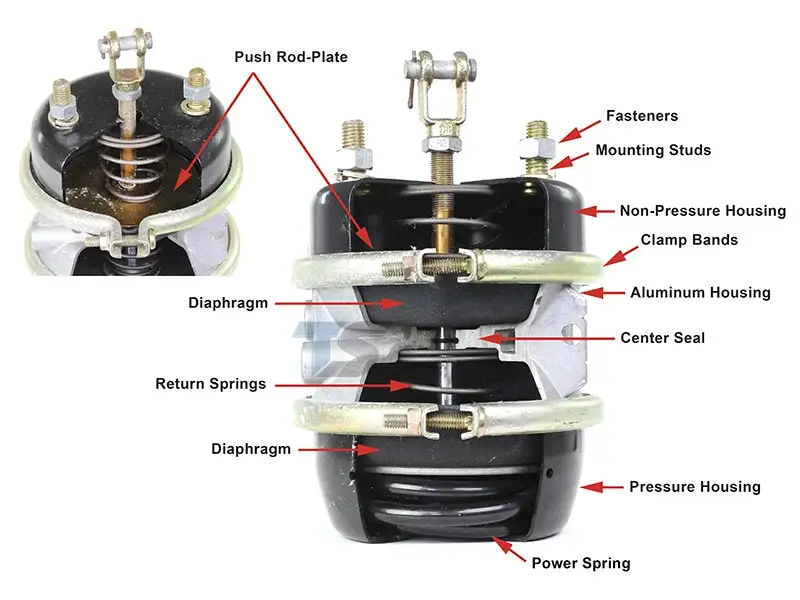
Every commercial vehicle operating on American highways relies on a critical safety component that converts compressed air into mechanical stopping force—the air brake chamber. When these essential components fail, the consequences can range from costly downtime to catastrophic brake failure. Understanding proper air brake chamber replacement procedures ensures fleet managers, diesel technicians, and owner-operators maintain safe, DOT-compliant vehicles while minimizing operational disruptions.
Air brake chambers serve as the muscle of commercial vehicle braking systems, transforming compressed air pressure into the mechanical force that activates brake shoes or pads. These robust components must withstand extreme temperatures, road salt, moisture, and millions of pressure cycles throughout their service life. Recognizing early warning signs of chamber failure and knowing proper replacement procedures prevents unexpected breakdowns and maintains fleet safety.
This comprehensive guide covers identification of failing chambers, selection of correct replacement parts, safety-critical installation procedures, and maintenance practices that extend chamber life. Whether managing a fleet operation or maintaining a single truck, mastering these procedures ensures reliable braking performance and regulatory compliance.
Last Updated: November 2025
Key Takeaways
- Critical Safety: Spring brake chambers contain 1,200-1,400 pounds of force requiring proper caging procedures before any disassembly work.
- Early Detection: Air leaks, excessive pushrod stroke, and visible corrosion signal chamber replacement needs before complete failure occurs.
- Proper Sizing: Installing incorrect chamber sizes causes DOT violations and dangerous braking imbalances across axles.
- Testing Requirements: Post-installation verification including leak testing and stroke measurement ensures safe operation.
- Preventive Value: Regular inspections and moisture control extend chamber life from 3-5 years to 7-10 years.
Understanding Air Brake Chamber Function and Critical Warning Signs
Air brake chambers operate through a remarkably simple yet effective pneumatic principle. When drivers press the brake pedal, compressed air flows from storage tanks through a network of lines and valves into the chamber housing. Inside, a flexible rubber diaphragm responds to this pressure by pushing against a pressure plate, which drives a pushrod forward to activate the slack adjuster and rotate the brake camshaft.
Modern commercial vehicles typically employ combination brake chambers on rear axles, integrating both service and spring brake functions in a single unit. The service section provides normal braking when air pressure is applied, while the spring section contains a powerful mechanical spring held compressed by air pressure. This dual-function design ensures vehicles can stop during normal operation and remain securely parked when air pressure is released.
According to Federal Motor Carrier Safety Administration regulations, brake chambers must maintain specific stroke measurements based on their size designation. Type 30 chambers, commonly used on heavy trucks, allow maximum stroke of 2.0 inches for standard configurations or 2.5 inches for long-stroke variants. Exceeding these specifications constitutes an out-of-service violation during roadside inspections.
Identifying Chamber Failure Before Breakdown
Fleet maintenance professionals report that air leaks provide the earliest detectable warning of developing chamber problems. Even small leaks waste compressor capacity and gradually reduce system pressure, compromising both service and parking brake effectiveness. A characteristic hissing sound during brake application or release indicates seal deterioration requiring immediate attention.
Visual inspection reveals physical damage that compromises chamber integrity. Cracks in the metal housing, particularly around mounting bolt holes or air ports, allow moisture infiltration that accelerates internal corrosion. Surface rust appearing as reddish-brown discoloration may seem cosmetic initially, but deeper corrosion weakens the chamber structure and leads to catastrophic failure under pressure.
Pushrod stroke measurement provides quantifiable evidence of chamber condition and brake adjustment status. Excessive stroke—beyond manufacturer specifications for the installed chamber size—indicates either worn brake components or internal chamber problems. TMC Recommended Practice RP-609B emphasizes that stroke exceeding 75% of maximum allowable measurement warrants immediate adjustment or component replacement.
Performance degradation manifests as reduced braking power, longer stopping distances, or uneven brake application causing vehicle pull. These symptoms often develop gradually, making them easy to overlook until they compromise safety. Drivers trained to recognize these changes provide valuable early warning of chamber problems before complete failure occurs.
Chamber Types and Specifications for Proper Replacement
Selecting the correct replacement chamber requires understanding the three primary configurations used in commercial vehicles. Standard service chambers, found primarily on front axles and older trailers, contain only a service diaphragm that responds to air pressure from the brake pedal. These simpler units cost less but provide no parking brake capability.
Spring brake chambers incorporate a powerful mechanical spring that provides parking brake function and emergency stopping capability if air pressure fails. The spring section operates inversely to normal braking—air pressure releases the spring, while loss of pressure allows automatic brake application. This fail-safe design prevents runaway vehicles during air system failures.
Combination brake chambers, standard on modern commercial vehicles, integrate both service and spring brake functions in a single housing. These units simplify installation, reduce potential leak points, and ensure proper alignment between service and parking brake components. A Type 30/30 designation indicates matching 30-square-inch effective areas for both service and spring sections.
| Chamber Type | Effective Area | Max Stroke | Common Application |
|---|---|---|---|
| Type 20 | 20 sq in | 2.0″ (2.5″ long) | Light trucks, front axles |
| Type 24 | 24 sq in | 2.0″ (2.5″ long) | Medium trucks, trailers |
| Type 30 | 30 sq in | 2.0″ (2.5″ long) | Heavy trucks, drive axles |
| Type 36 | 36 sq in | 2.25″ (3.0″ long) | Severe-duty applications |
Matching OEM Specifications Prevents Violations
Installing incorrect chamber sizes creates dangerous braking imbalances and triggers DOT violations during inspections. The chamber size directly affects braking force generated at each wheel—a Type 20 chamber produces 40% less force than a Type 30 at identical air pressure. This imbalance causes premature wear, reduced stopping capability, and potential loss of vehicle control during emergency braking.
Vehicle manufacturers specify chamber sizes based on axle weight ratings, brake component dimensions, and overall vehicle design. These specifications appear on the brake system data plate, typically located in the engine compartment or driver’s door jamb. Always verify replacement chambers match these original equipment specifications exactly.
Long-stroke chambers provide extended pushrod travel compared to standard-stroke versions, accommodating thicker brake linings or compensating for increased drum diameter from machining. A 30/36 designation indicates a Type 30 service chamber paired with a larger Type 36 spring brake providing longer stroke capability. Using standard-stroke chambers where long-stroke units are required results in insufficient brake force and regulatory violations.
Stay Ahead of Industry Trends
Get expert insights, equipment reviews, and operational strategies delivered weekly to your inbox.
Critical Safety Procedures for Spring Brake Chambers
Spring brake chambers contain mechanical springs under tremendous force—approximately 1,200 to 1,400 pounds—that can cause catastrophic injury if released unexpectedly. This force equals the weight of a small car concentrated in a compact space, capable of crushing limbs or causing fatal injuries. Understanding and following proper safety procedures isn’t optional; it’s essential for survival when working with these components.
The caging procedure mechanically restrains the spring before any disassembly begins. Caging bolts, either supplied with replacement chambers or purchased separately, thread through designated holes in the spring brake housing to compress and secure the spring against the pressure plate. This mechanical restraint must remain in place throughout the entire removal process.
ASE-certified master technician Robert Martinez, who has trained diesel technicians for over 20 years, emphasizes: “I’ve seen experienced mechanics seriously injured by assuming a chamber was safe without proper caging. That spring doesn’t care about your experience level—it will deploy with lethal force if given the opportunity.”
Before beginning any brake chamber work, the vehicle must be properly secured on level ground with heavy-duty wheel chocks rated for commercial vehicle weight. The air system requires complete depressurization through systematic draining of all reservoirs. Simply checking that gauges read zero isn’t sufficient—residual pressure can remain trapped in chambers even after tank draining.
Systematic Air System Depressurization
Proper air system draining follows a specific sequence to ensure complete pressure removal. First, build system pressure to normal operating levels (120-125 psi) by running the engine until the governor cuts out. This step ensures all components are at known pressure levels before draining begins.
After shutting off the engine, make repeated brake pedal applications to exhaust air from all circuits. Continue pumping until no air releases and pressure gauges show steady decline with each application. Open manual drain valves on primary, secondary, and wet tanks, allowing several minutes for complete drainage. According to California DMV CDL manual guidelines, if your vehicle doesn’t have automatic air tank drains, you must drain tanks at the end of each working day to remove moisture and oil that could cause brake failure.
Even after gauges read zero, make additional brake applications to release trapped air in chambers and lines. This redundant verification prevents unexpected component movement when connections are broken. Professional technicians often wait an additional period after draining to ensure any slow leaks have fully exhausted system pressure.
Step-by-Step Chamber Replacement Procedures
Successful air brake chamber replacement requires methodical attention to each connection point and adjustment. Begin by photographing the existing installation from multiple angles, documenting air line routing, pushrod orientation, and chamber position relative to the mounting bracket. These reference images prove invaluable during reassembly, particularly when multiple chambers require replacement.
Disconnect air supply lines using appropriate wrenches while supporting the chamber to prevent thread damage. Service chambers typically have one line, while combination units feature separate service and spring brake connections. Inspect fitting threads for damage or corrosion that might compromise sealing with the new chamber. Cap or plug open lines immediately to prevent contamination.
The pushrod connection to the slack adjuster requires careful handling to preserve brake adjustment settings. Remove the cotter pin securing the clevis pin—never reuse old cotter pins as they weaken when bent. Support the slack adjuster before removing the clevis pin to prevent sudden movement. Measure and record pushrod length from the clevis hole center to the chamber mounting face for initial adjustment of the replacement chamber.
Precision Installation Ensures Reliability
Position the new chamber against the mounting bracket, ensuring natural alignment without forcing. The pushrod must align properly with the slack adjuster to prevent binding during operation. Install mounting bolts with lock washers, starting all fasteners by hand to avoid cross-threading. Tighten bolts in a cross pattern to manufacturer torque specifications—typically 30-60 ft-lbs depending on size.
Adjust the new pushrod to match the recorded length from the original chamber. Most pushrods thread into the chamber housing for length adjustment, with a jam nut securing the setting. This initial adjustment provides a baseline for final brake adjustment through the slack adjuster. Connect the pushrod to the slack adjuster using the clevis pin and a new cotter pin, ensuring free pivoting movement without excessive play.
Air line connections require proper torque to prevent leaks without damaging chamber ports. Hand-thread fittings initially, ensuring smooth engagement before applying wrenches. Typical torque specifications range from 10-15 ft-lbs for standard NPT fittings. Over-tightening cracks aluminum chamber housings, requiring complete replacement. Recent testing by Commercial Vehicle Safety Alliance found that 23% of air brake violations involve improper connections or leaks.
Post-Installation Testing and Adjustment
Comprehensive testing after installation verifies safe operation before returning the vehicle to service. Begin by pressurizing the air system and conducting thorough leak detection using soap solution applied to all connections, fittings, and chamber seams. Any bubble formation indicates leaks requiring immediate correction through proper tightening or component replacement.
Pushrod stroke measurement confirms proper brake adjustment and chamber function. Apply 90-100 psi to the service line while measuring pushrod travel from released to applied positions. Compare measurements to manufacturer specifications—excessive stroke indicates adjustment needs through the slack adjuster, while insufficient stroke suggests potential brake drag.
Functional testing includes repeated brake applications to verify smooth, consistent operation without hesitation or unusual sounds. Spring brake function requires exhausting air pressure to confirm automatic application and secure holding power. A controlled low-speed test drive in a safe area reveals any pulling, uneven application, or performance issues requiring correction.
Share Your Expertise
Join Heavy Duty Journal as a guest author and reach thousands of industry decision-makers with your technical knowledge.
Preventive Maintenance Maximizes Chamber Service Life
Implementing comprehensive preventive maintenance programs extends brake chamber life from typical 3-5 year replacement cycles to 7-10 years for well-maintained units. Regular inspections during pre-trip checks identify developing problems before they compromise safety or trigger violations. Document inspection findings to track chamber condition over time and predict replacement needs.
Moisture control ranks among the most critical factors affecting chamber longevity. Water in compressed air corrodes chambers internally where damage remains hidden until failure occurs. Properly functioning air dryers remove moisture before it enters the brake system. Replace desiccant cartridges according to manufacturer intervals—typically annually or every 100,000 miles. Drain air tanks daily, even with automatic drain valves, and watch for excessive water discharge indicating dryer problems.
Corrosion prevention through regular cleaning removes road salt and contaminants that accelerate deterioration. Vehicles operating in coastal areas or regions using winter road treatments require more frequent attention. Apply protective coatings to exposed metal surfaces after cleaning, paying particular attention to mounting brackets and fasteners where corrosion commonly initiates.
Maintaining proper brake adjustment reduces mechanical stress on chambers and extends service life. Excessive pushrod stroke forces chambers to work beyond design parameters, accelerating diaphragm wear and seal deterioration. Automatic slack adjusters should maintain proper adjustment without manual intervention, but require periodic verification. Manual adjusters need quarterly inspection and adjustment to compensate for brake lining wear.
Conclusion
Air brake chamber replacement represents a critical maintenance task that directly impacts commercial vehicle safety and regulatory compliance. Understanding warning signs, following proper safety procedures, and implementing preventive maintenance practices ensures reliable braking performance while maximizing component service life. Whether performed by fleet technicians or contracted to professionals, this essential service requires methodical attention to specifications, safety protocols, and post-installation verification.
The investment in quality replacement chambers and proper installation procedures pays dividends through extended service intervals, reduced downtime, and maintained DOT compliance. Fleet managers and owner-operators who prioritize brake system maintenance protect their drivers, cargo, and business operations from the consequences of brake failure. Regular inspection, timely replacement, and comprehensive testing create the foundation for safe commercial vehicle operation on America’s highways.
Frequently Asked Questions
What are the most critical safety precautions when replacing spring brake chambers?
Spring brake chambers contain mechanical springs under 1,200-1,400 pounds of force that will violently extend if released improperly, potentially causing fatal injuries. Always use proper caging bolts to mechanically restrain the spring before any disassembly. Insert the caging bolt through designated holes and thread it completely to compress the spring against the pressure plate. Additionally, completely depressurize the air system by draining all tanks and making repeated brake applications until gauges read zero. Never attempt removal without proper caging tools or if you’re uncertain about procedures—seek professional assistance immediately.
How do I determine the correct replacement chamber size for my vehicle?
Chamber selection requires exact matching of original equipment specifications found on your vehicle’s brake data plate (typically in the engine compartment or door jamb) or stamped on the existing chamber housing. Chambers are designated by effective diaphragm area in square inches (Type 20, 24, 30, 36) with standard or long-stroke variants. Installing incorrect sizes causes dangerous braking imbalances and DOT violations. A Type 30/30 indicates matching 30-square-inch chambers for service and spring sections, while 30/36 pairs a Type 30 service with larger Type 36 spring brake for longer stroke applications.
What tools and equipment are essential for safe chamber replacement?
Essential tools include a complete socket set (9/16″ to 1″ sizes), combination wrenches, calibrated torque wrench (capable of 10-60 ft-lbs), brake adjustment tools, and critically, proper caging bolts for spring brake chambers. Safety equipment includes safety glasses, heavy-duty gloves, steel-toed boots, wheel chocks rated for commercial vehicle weight, and jack stands if wheel removal is necessary. Additional supplies include penetrating oil for seized fasteners, soap solution for leak testing, and anti-seize compound for installation. Never attempt replacement without proper caging tools for spring brakes.
How long should air brake chambers typically last before requiring replacement?
Well-maintained brake chambers typically last 5-7 years or 500,000-700,000 miles under normal operating conditions. However, service life varies significantly based on environmental exposure, maintenance practices, and duty cycles. Chambers in coastal areas or regions using road salt may require replacement in 3-4 years due to accelerated corrosion. Conversely, chambers receiving regular cleaning, proper moisture control through functioning air dryers, and consistent brake adjustment can exceed 10 years of service. Fleet studies show preventive maintenance can double chamber life compared to reactive replacement strategies.
What are the early warning signs that indicate chamber replacement is needed?
The earliest indicator is typically air leaks producing hissing sounds during brake application or release, often detectable before visual damage appears. Physical signs include visible cracks in the housing, rust or corrosion (especially around mounting bolts or air ports), bent pushrods, or moisture/oil residue indicating diaphragm failure. Performance symptoms manifest as reduced braking power, longer stopping distances, vehicle pulling during braking, or excessive pushrod stroke beyond manufacturer specifications. Any of these conditions warrant immediate inspection and likely replacement to maintain safety and DOT compliance.
Can I replace brake chambers myself or should I hire a professional?
Chamber replacement is within reach of mechanically inclined individuals with proper tools and strict adherence to safety procedures. First-time replacements typically require 2-4 hours versus 30-60 minutes for experienced technicians. However, seek professional service if you’re uncomfortable with spring brake caging procedures, lack proper tools, encounter seized components or damaged brackets, work with ABS-equipped vehicles requiring diagnostic tools, or if insurance/lease agreements mandate certified technician service. Professional installation typically costs $200-500 per chamber including parts and labor but ensures proper installation and documentation.
Share This With Your Heavy-Duty Network
Help fleet managers and diesel technicians discover valuable insights by sharing this article.