
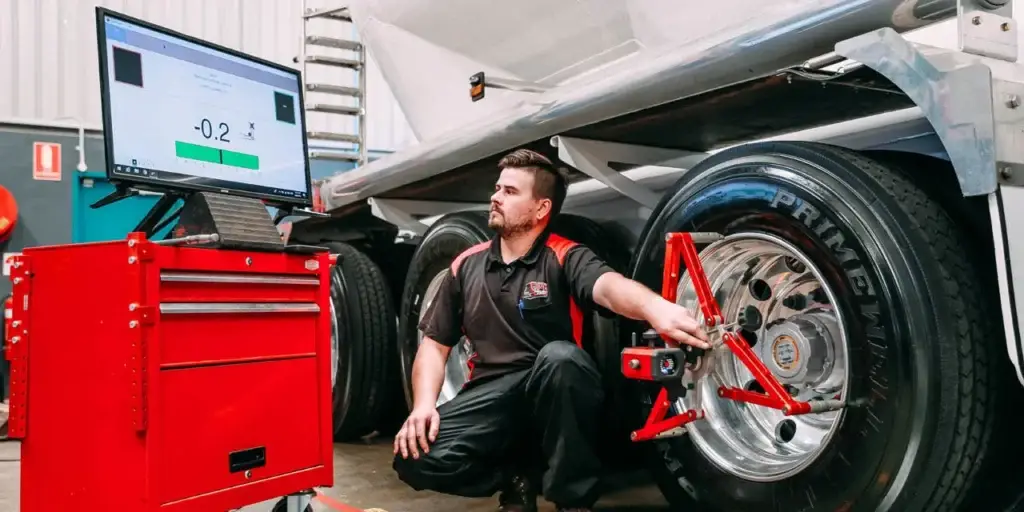
Commercial vehicle suspension systems demand precise alignment to maintain safety, minimize operating costs, and maximize component longevity. Heavy duty truck suspension alignment involves comprehensive adjustment of multiple interconnected components that position wheels relative to the vehicle frame. This technical process extends beyond basic wheel alignment to encompass the entire suspension geometry, from kingpins and bushings to control arms and axle positioning.
Fleet managers and owner-operators face mounting pressure to reduce operational expenses while maintaining DOT compliance and driver safety standards. Research from the Technology & Maintenance Council (TMC) indicates that proper suspension alignment can extend tire life by 25-50% and improve fuel economy by 1-3%. For a single Class 8 truck traveling 100,000 miles annually, these improvements translate to approximately $4,740 in combined annual savings from reduced tire replacement and fuel consumption.
This comprehensive guide examines the complete suspension alignment process for commercial vehicles, from initial diagnostic inspection through final quality verification. You’ll discover how modern alignment technology ensures precision adjustments, what specific warning signs indicate alignment issues, and how to calculate the true return on investment for preventive alignment programs. Whether managing a large fleet or operating as an independent owner-operator, understanding suspension alignment fundamentals helps protect your equipment investment and optimize operational efficiency.
Last Updated: November 2025
Key Takeaways
- Cost-Benefit Analysis: Professional alignment services ranging from $150-700 deliver ROI through 25-50% tire life extension and 1-3% fuel economy improvement.
- Service Intervals: Industry experts recommend alignment checks every 10,000 kilometers (6,200 miles) or when handling characteristics change.
- Technology Impact: Modern computerized and 3D imaging systems measure angles within 0.01 degrees, ensuring manufacturer specification compliance.
- Component Integration: Suspension alignment addresses the complete system including kingpins, bushings, control arms, and frame integrity.
- Fleet Savings: A 50-truck fleet implementing systematic alignment programs can realize $100,000+ in annual operational savings.
Understanding Heavy Duty Truck Suspension Alignment Fundamentals
Commercial truck suspension alignment represents a critical maintenance discipline that directly impacts vehicle safety, operational costs, and equipment longevity. Unlike passenger vehicles, heavy duty trucks operate under extreme loads and conditions that create unique alignment challenges. The complexity of multi-axle configurations, air suspension systems, and specialized hauling equipment demands comprehensive understanding of suspension geometry principles.
The distinction between basic wheel alignment and complete suspension alignment proves particularly important for commercial applications. While wheel alignment focuses on tire angle adjustments, suspension alignment encompasses the entire mechanical system connecting wheels to the vehicle frame. This holistic approach addresses root causes rather than symptoms, ensuring long-term stability and performance.
According to Federal Motor Carrier Safety Administration (FMCSA) regulations, commercial vehicles must maintain specific alignment tolerances to ensure safe operation. These requirements reflect the critical relationship between proper alignment and vehicle control, particularly when hauling 80,000-pound loads at highway speeds.
Critical Suspension Components and Their Alignment Roles
Heavy duty truck suspension systems incorporate specialized components designed to withstand millions of miles of commercial service. Each element plays a specific role in maintaining proper wheel positioning and load distribution. Understanding these relationships helps technicians and fleet managers identify potential problems before they escalate into costly failures.
Kingpins serve as the primary pivot mechanism for steer axles, allowing precise wheel movement while maintaining vertical alignment stability. These hardened steel components experience tremendous lateral forces during turning maneuvers. When kingpin bushings deteriorate or excessive play develops, the entire steering geometry becomes compromised, accelerating tire wear and reducing directional control.
Control arms and radius rods position axles relative to the frame while accommodating suspension movement over road irregularities. These structural members must maintain precise dimensional stability despite constant flexing and load variations. Bent or damaged control arms create alignment angles that cannot be corrected through standard adjustment procedures, requiring component replacement before accurate alignment becomes possible.
| Component | Function | Failure Impact |
|---|---|---|
| Kingpins | Steering pivot point | Wandering, tire shoulder wear |
| Bushings | Vibration dampening | Alignment drift, handling instability |
| Tie Rods | Toe angle control | Tire feathering, steering play |
| Springs/Shocks | Load support | Ride height changes, dynamic misalignment |
Alignment Angle Specifications and Their Effects
Three fundamental alignment angles determine how commercial truck tires contact the road surface and wear over time. Each angle serves a specific purpose in vehicle dynamics, with manufacturer specifications varying based on application, load capacity, and operating conditions. Professional technicians must understand these relationships to achieve optimal results.
Camber angle describes the inward or outward tilt of tires when viewed from the front of the vehicle. Most heavy duty trucks specify neutral to slightly positive camber (0 to +1.5 degrees) to compensate for load-induced frame flexing. Incorrect camber causes accelerated shoulder wear on one side of the tire tread, reducing tire life by up to 30% according to data from major tire manufacturers.
Caster angle affects steering stability and returnability by tilting the steering axis forward or backward when viewed from the side. Positive caster settings between +2 and +8 degrees provide the self-centering forces that help maintain directional stability at highway speeds. Insufficient caster makes steering feel light and unstable, while excessive caster increases steering effort and causes premature component wear.
Toe angle represents the most critical adjustment affecting tire wear, with even minor deviations causing rapid tread deterioration. Measured in fractions of inches or degrees, toe determines whether tires point inward (toe-in) or outward (toe-out) when viewed from above. Industry studies indicate that 1/8-inch of toe misalignment can reduce tire life by 25% within 50,000 miles of operation.
Recognizing Suspension Alignment Problems Before Component Failure
Early identification of alignment issues prevents cascading component failures and minimizes total repair costs. Professional drivers and maintenance technicians rely on specific indicators that signal developing problems. These warning signs manifest through tire wear patterns, handling characteristics, and driver feedback that experienced operators learn to recognize.
The American Trucking Associations’ Technology & Maintenance Council recommends systematic inspection protocols that identify alignment problems during routine maintenance intervals. Their research demonstrates that proactive alignment correction reduces unscheduled roadside breakdowns by 35% while extending overall component service life.
Modern fleet management systems increasingly incorporate alignment monitoring into predictive maintenance programs. By tracking tire wear rates, fuel consumption patterns, and driver reports, these systems identify vehicles requiring alignment service before problems become critical.
Tire Wear Patterns as Diagnostic Indicators
Commercial truck tires provide the most visible evidence of suspension alignment condition through distinctive wear patterns. Each pattern indicates specific alignment problems, helping technicians diagnose issues before beginning adjustment procedures. Understanding these patterns enables fleet managers to schedule preventive maintenance rather than reactive repairs.
Feathering across the tire tread creates a sawtooth pattern where rubber ribs feel smooth from one direction but sharp from the opposite. This condition primarily results from incorrect toe settings that cause tires to scrub sideways while rolling forward. Advanced feathering can produce audible tire noise and vibration that drivers often mistake for balance problems.
Cupping or scalloping appears as repetitive high and low spots around the tire circumference, typically indicating worn shock absorbers combined with alignment issues. This irregular wear pattern accelerates rapidly once established, potentially destroying an otherwise serviceable tire within 10,000 miles. The Technology & Maintenance Council estimates that cupping-related tire replacements cost the trucking industry over $500 million annually.
Edge wear concentrated on either the inner or outer tire shoulder signals camber misalignment or excessive cornering forces. While some edge wear occurs naturally from normal operation, asymmetric patterns indicate alignment problems requiring correction. Fleet data shows that proper camber adjustment can extend tire shoulder life by 40% compared to misaligned vehicles.
Vehicle Handling Symptoms and Driver Reports
Professional drivers develop intimate familiarity with their equipment’s handling characteristics, making them valuable sources of alignment diagnostic information. Systematic collection and analysis of driver feedback helps identify alignment issues before they manifest as component failures or accidents.
Steering pull represents one of the most commonly reported alignment symptoms, occurring when vehicles consistently drift toward one side on level road surfaces. This condition forces drivers to maintain constant steering correction, leading to fatigue and reduced attention to other driving tasks. Research by the National Safety Council links driver fatigue from vehicle handling issues to a 15% increase in accident probability.
Off-center steering wheel position during straight-line travel provides immediate visual confirmation of alignment problems. When the steering wheel sits crooked while the vehicle tracks straight, thrust angle misalignment typically exists between front and rear axles. This condition, known as dog-tracking, increases tire scrub and reduces fuel economy by forcing the vehicle to travel at a slight angle.
Stay Ahead of Industry Trends
Get expert insights, equipment reviews, and operational strategies delivered weekly.
Subscribe to Heavy Duty JournalProfessional Alignment Process and Technology Applications
Modern suspension alignment combines sophisticated measurement technology with systematic adjustment procedures to achieve manufacturer specifications. The process requires specialized equipment designed specifically for commercial vehicles, as passenger car alignment systems lack the capacity and precision necessary for heavy duty applications.
Professional alignment facilities invest substantial capital in equipment and training to service commercial trucks effectively. According to industry surveys, a properly equipped heavy duty alignment bay represents a $75,000 to $150,000 investment, reflecting the complexity of modern commercial vehicle suspension systems.
Computerized Measurement and Diagnostic Systems
State-of-the-art alignment systems utilize multiple sensors or cameras to capture precise three-dimensional measurements of wheel positions and suspension angles. These computerized platforms compare actual measurements against manufacturer specifications stored in comprehensive databases covering thousands of vehicle configurations.
Real-time measurement feedback allows technicians to observe adjustment effects immediately, ensuring accuracy throughout the correction process. Modern systems can detect angular variations as small as 0.01 degrees, providing the precision necessary for optimal tire wear and fuel economy. This level of accuracy proves particularly important for multi-axle vehicles where small errors compound across multiple wheel positions.
Advanced diagnostic capabilities extend beyond basic angle measurements to identify worn components affecting alignment stability. Sensor data reveals excessive play in bushings, ball joints, and kingpins that visual inspection might miss. This comprehensive assessment prevents alignment corrections that won’t hold due to underlying component wear.
Documentation capabilities provide complete records of pre-adjustment and post-adjustment measurements, creating valuable maintenance history for fleet managers. These reports support warranty claims, demonstrate regulatory compliance, and help identify recurring problems that might indicate operational issues or route-specific challenges.
Laser and 3D Imaging Technology Advantages
Laser alignment systems offer particular benefits for high-volume commercial operations requiring rapid assessment capabilities. These systems project precision reference beams that measure wheel positions without physical sensor attachment, reducing setup time significantly. Fleet maintenance facilities report completing basic alignment checks in as little as 10 minutes using laser technology.
Three-dimensional imaging represents the latest advancement in alignment technology, creating comprehensive geometric models of entire suspension systems. High-resolution cameras capture target positions from multiple angles simultaneously, building detailed representations of component relationships. This holistic view proves invaluable for diagnosing complex problems in sophisticated multi-axle configurations.
The visual nature of 3D systems helps technicians and customers understand alignment conditions more intuitively than numerical readouts alone. Color-coded displays highlight out-of-specification measurements, while before-and-after comparisons demonstrate the value of completed work. This transparency builds customer confidence and supports premium pricing for quality alignment services.
Cost Analysis and Return on Investment Calculations
Understanding the complete financial impact of suspension alignment requires analyzing both direct service costs and indirect operational benefits. While alignment services represent immediate expenses, the long-term savings from extended component life and improved efficiency create compelling return on investment for commercial operators.
Industry data from the American Trucking Associations’ Technology & Maintenance Council demonstrates that systematic alignment programs reduce total vehicle operating costs by 8-12% through combined savings across multiple expense categories.
Service Pricing Structure and Variables
Commercial truck alignment pricing varies significantly based on vehicle configuration, service complexity, and geographic location. Standard two-axle alignment typically ranges from $150 to $400, with costs scaling upward for additional axles and specialized services. Multi-axle vehicles requiring comprehensive alignment across three or more axles generally incur costs between $400 and $700.
Labor rates for certified commercial vehicle technicians range from $100 to $150 per hour, with alignment services requiring 1.5 to 5 hours depending on vehicle complexity and component condition. Additional diagnostic services such as kingpin inspection ($75-150), thrust angle measurement ($100-250), and frame alignment verification ($200-500) may be necessary for complete service.
Component replacement discovered during alignment inspection adds substantial cost but proves essential for maintaining alignment stability. Common replacement items include bushings ($50-200 each), tie rod ends ($75-250), ball joints ($100-300), and control arms ($150-400). Attempting alignment without addressing worn components wastes money since adjustments won’t hold under normal operating conditions.
Quantifying Operational Savings and Benefits
The financial benefits of proper alignment extend across multiple operational categories, creating cumulative savings that dwarf initial service costs. Fleet operators tracking alignment-related metrics report average annual savings of $3,000 to $5,000 per vehicle through reduced tire replacement, improved fuel economy, and decreased component wear.
Tire life extension represents the most immediate and measurable benefit of proper alignment. With commercial truck tires costing $400 to $600 each and complete sets ranging from $7,000 to $10,000, even modest life extension produces substantial savings. TMC studies indicate that proper alignment extends tire life by 25% to 50%, potentially saving $2,500 annually per vehicle in tire costs alone.
Fuel economy improvements of 1% to 3% from reduced rolling resistance translate to significant savings given current diesel prices. A Class 8 truck traveling 100,000 miles annually at 6 miles per gallon consumes approximately 16,667 gallons of fuel. At $3.50 per gallon, a 2% efficiency improvement saves $1,167 annually, with fleet-wide savings multiplying accordingly.
“We’ve documented 32% reduction in tire replacement costs and 2.3% fuel economy improvement since implementing quarterly alignment checks across our 200-truck fleet. The program pays for itself within four months.”
— Michael Rodriguez, Fleet Maintenance Director, TransWest Logistics
Establishing Effective Fleet Alignment Programs
Successful fleet alignment programs require systematic approaches that balance service frequency with operational demands. Leading fleet operators develop comprehensive strategies incorporating scheduled maintenance, driver training, and performance monitoring to maximize alignment benefits while minimizing vehicle downtime.
The North American Council for Freight Efficiency recommends alignment checks at 50,000 to 60,000-mile intervals for linehaul applications, with more frequent service for vehicles operating in severe conditions. Regional and vocational trucks encountering rough roads, construction sites, or frequent tight maneuvering may require quarterly alignment verification.
Preventive Maintenance Integration Strategies
Incorporating alignment checks into existing preventive maintenance schedules ensures consistent service without disrupting operations. Many fleets coordinate alignment service with scheduled tire rotations, brake inspections, or oil changes, maximizing maintenance efficiency while minimizing separate shop visits.
Driver pre-trip and post-trip inspection protocols should include alignment indicators such as steering wheel position, vehicle pull, and unusual tire wear patterns. Training drivers to recognize and report these symptoms enables early problem identification before component damage occurs. Digital inspection systems facilitate immediate reporting and tracking of alignment-related observations.
Predictive maintenance technologies increasingly incorporate alignment monitoring through tire pressure monitoring systems, vehicle telematics, and automated wear measurement tools. These systems identify developing problems before drivers notice symptoms, enabling proactive service scheduling that prevents roadside breakdowns.
Vendor Selection and Service Quality Standards
Selecting qualified alignment service providers proves critical for achieving consistent results across fleet operations. Evaluation criteria should include technician certifications, equipment capabilities, warranty provisions, and documentation standards. ASE-certified technicians with specific commercial vehicle training demonstrate the expertise necessary for complex suspension systems.
Service level agreements with alignment providers should specify measurement tolerances, adjustment procedures, and documentation requirements. Quality providers offer comprehensive warranties covering both labor and adjustments for specified periods or mileage. Standard warranties typically cover 12 months or 12,000 miles, with some providers offering extended coverage for fleet accounts.
Mobile alignment services provide valuable alternatives for large fleets, bringing sophisticated equipment directly to fleet yards. While commanding premium pricing, mobile services eliminate transportation costs and minimize vehicle downtime. Several national providers offer scheduled mobile service programs with guaranteed response times and priority scheduling.
Share Your Expertise
Join Heavy Duty Journal as a guest author and reach thousands of industry decision-makers.
Become a Guest AuthorAdvanced Alignment Considerations for Specialized Applications
Specialized trucking applications present unique alignment challenges requiring modified approaches and specifications. Vehicles operating in severe service conditions, carrying unusual loads, or equipped with non-standard suspensions demand customized alignment strategies that standard procedures may not address adequately.
Technical guidance from the Society of Automotive Engineers (SAE) provides framework specifications for specialized alignment applications, though experienced technicians often develop application-specific modifications based on operational experience.
Multi-Axle and Tandem Configuration Requirements
Trucks equipped with tandem drive axles or additional tag/pusher axles require sophisticated alignment procedures ensuring all axles track properly together. The geometric relationship between multiple axles proves more critical than individual angle specifications, as minor misalignment between axles creates severe tire scrubbing and handling problems.
Thrust angle measurement and correction becomes paramount for multi-axle vehicles to prevent dog-tracking conditions where the vehicle travels at an angle relative to its direction of travel. This condition accelerates tire wear, reduces fuel economy, and creates unsafe handling characteristics, particularly during emergency maneuvers or adverse weather conditions.
Load distribution considerations affect optimal alignment specifications for vehicles with variable axle loading. Dump trucks, concrete mixers, and other vocational applications experience significant weight transfer between loaded and empty conditions. Progressive fleets maintain separate alignment specifications for loaded and unloaded states, optimizing performance across all operating conditions.
Frame and Structural Integrity Assessment
Commercial vehicle frames endure tremendous stress from payload forces, road impacts, and operational demands that can gradually distort structural geometry. Frame misalignment prevents achieving proper suspension alignment regardless of adjustment attempts, requiring comprehensive structural assessment before alignment service.
Professional alignment facilities employ specialized frame measurement equipment to verify dimensional accuracy against manufacturer specifications. Laser reference systems or computerized measuring platforms identify bent frame rails, twisted cross members, or damaged suspension mounting points affecting alignment capability.
Frame straightening services may be necessary for vehicles with structural damage from accidents or severe operational stress. While expensive, frame correction often proves more economical than continued tire replacement and component wear from chronic misalignment. Insurance coverage may apply for accident-related frame damage, though wear-related distortion typically falls under maintenance expenses.
Future Developments in Alignment Technology
Emerging technologies promise to revolutionize commercial vehicle alignment through automated systems, predictive analytics, and integrated vehicle design improvements. Industry leaders invest heavily in research and development aimed at reducing alignment-related maintenance costs while improving safety and efficiency.
Autonomous vehicle development drives advancement in self-monitoring and self-adjusting suspension systems that maintain optimal alignment without manual intervention. While full automation remains years away for commercial trucking, intermediate technologies already provide enhanced monitoring and diagnostic capabilities.
Predictive Analytics and Artificial Intelligence Applications
Machine learning algorithms analyzing vast databases of alignment measurements, tire wear patterns, and component failure rates identify predictive indicators of developing problems. These systems recommend service intervals customized to specific vehicles based on operational patterns, load characteristics, and historical maintenance data.
Artificial intelligence applications extend to automated alignment adjustment systems that optimize settings based on real-time operating conditions. Adaptive suspension systems already adjust ride height and damping characteristics; future iterations may include dynamic alignment modification responding to load distribution, road conditions, and wear patterns.
Integration with fleet management platforms enables centralized monitoring and scheduling of alignment services across entire operations. Predictive maintenance systems generate automatic work orders when alignment indicators exceed predetermined thresholds, ensuring timely service before component damage occurs.
Equipment Advances and Service Delivery Innovation
Next-generation alignment equipment incorporates augmented reality displays, artificial intelligence diagnostics, and automated adjustment mechanisms that reduce service time while improving accuracy. Wireless sensor systems eliminate cumbersome cables, while cloud-based specification databases ensure technicians always access current manufacturer recommendations.
Remote diagnostic capabilities enable alignment specialists to evaluate vehicles without physical presence, supporting distributed fleet operations and reducing transportation requirements. Technicians can review measurement data, recommend services, and even guide on-site personnel through adjustment procedures via video consultation.
Service delivery models continue evolving with subscription-based alignment programs, performance guarantees, and integrated maintenance partnerships. These arrangements shift focus from transactional services to outcome-based relationships where providers share responsibility for fleet performance metrics.
Conclusion
Heavy duty truck suspension alignment represents a critical investment in fleet safety, efficiency, and profitability. The comprehensive benefits extending from proper alignment—including 25-50% tire life extension, 1-3% fuel economy improvement, and enhanced vehicle safety—create compelling returns that multiply across fleet operations. Professional alignment services utilizing advanced computerized, laser, and 3D imaging technologies ensure the precision necessary for modern commercial vehicles operating under demanding conditions.
Successful alignment programs require systematic approaches incorporating scheduled maintenance intervals, qualified service providers, and comprehensive documentation. Fleet operators implementing proactive alignment strategies report annual savings of $3,000 to $5,000 per vehicle through reduced tire costs, improved fuel efficiency, and decreased component wear. For a 50-truck fleet, these benefits can exceed $100,000 annually, demonstrating substantial return on investment for preventive maintenance programs.
The evolution of alignment technology continues advancing with predictive analytics, artificial intelligence applications, and innovative service delivery models. These developments promise even greater efficiency and cost savings for commercial operators willing to embrace modern maintenance strategies. As the trucking industry faces increasing pressure to reduce operational costs while maintaining safety standards, professional suspension alignment emerges as a proven strategy for achieving both objectives simultaneously.
Share This With Your Heavy-Duty Network
Help fleet managers and diesel technicians discover valuable insights by sharing this article.
Frequently Asked Questions
How often should heavy duty trucks receive suspension alignment service?
Industry experts recommend alignment checks every 10,000 kilometers (approximately 6,200 miles) for standard highway applications. Vocational trucks operating in severe conditions may require quarterly inspections. Additional alignment service should occur after suspension component replacement, tire installation, or any incident potentially affecting suspension geometry such as pothole impacts or curb strikes.
What’s the typical cost range for commercial truck alignment services?
Standard two-axle alignment ranges from $150-400, with steer axle service costing $150-300 and drive axle alignment adding $200-400. Multi-axle configurations requiring three or more axle alignment typically cost $400-700. Additional services including thrust angle correction ($100-250), frame alignment verification ($200-500), and component replacement will increase total costs based on specific vehicle needs.
Can misalignment actually impact fuel economy significantly?
Misalignment creates measurable rolling resistance that reduces fuel efficiency by 1-3%. For a Class 8 truck consuming 16,667 gallons annually at $3.50 per gallon ($58,000 fuel expense), a 2% improvement saves approximately $1,160 per vehicle yearly. Fleet-wide savings multiply accordingly, with 50-truck operations potentially saving $60,000 annually through proper alignment maintenance.
What equipment technology provides the most accurate alignment measurements?
Modern computerized systems measure angles within 0.01 degrees precision, while 3D imaging technology creates comprehensive geometric models of entire suspension systems. Laser alignment offers rapid assessment capabilities, completing basic checks in 10 minutes. Each technology serves specific applications, with professional shops typically employing multiple systems for optimal service delivery.
How can fleet managers identify vehicles needing alignment service?
Key indicators include uneven tire wear patterns (feathering, edge wear, cupping), vehicle pulling to one side, off-center steering wheel during straight travel, steering vibration, and driver reports of handling changes. Systematic tire pressure monitoring and wear measurement programs help identify developing problems before component damage occurs.
What happens if alignment is attempted with worn suspension components?
Attempting alignment with damaged components wastes time and money since adjustments won’t maintain stability under operating loads. Professional technicians inspect bushings, ball joints, tie rods, and control arms before beginning alignment. Component replacement costs range from $50-200 for bushings to $150-400 for control arms, plus associated labor charges.