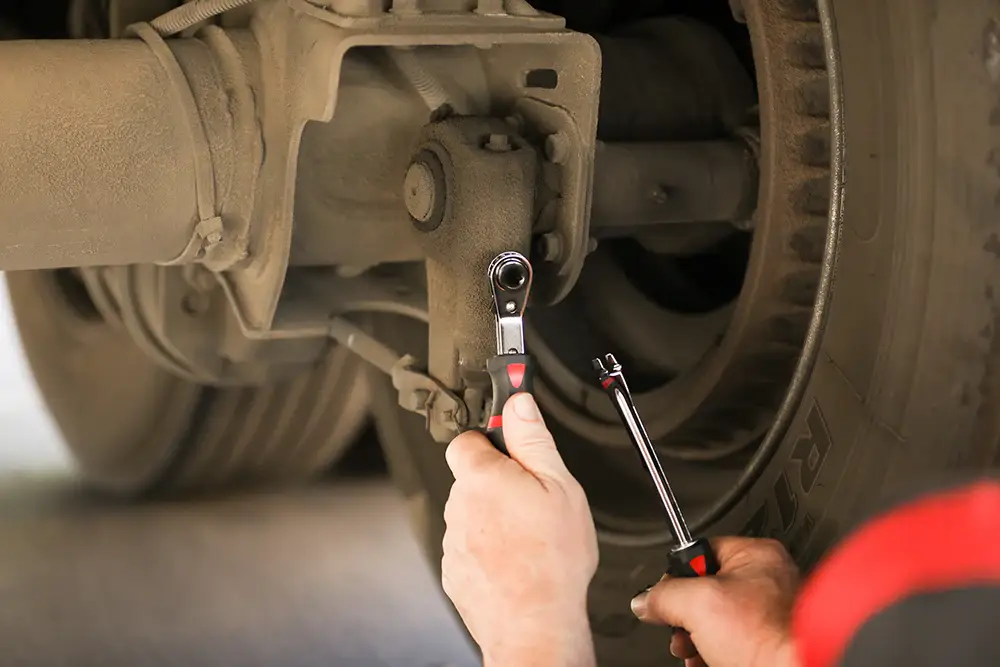
By Michael Nielsen, Editor & Publisher | 15+ Years in Diesel Repair
Last Updated: December 2025
📖 Estimated reading time: 18 minutes
Automatic slack adjuster failure can sideline a perfectly good truck or trailer in minutes. When these self-adjusting components stop doing their job, push rod stroke climbs beyond safe limits, brake balance deteriorates, and CVSA inspectors start writing citations. This guide walks fleet managers, diesel technicians, and shop owners through proven diagnosis methods, proper stroke measurement techniques, and replacement criteria that align with FMVSS 121 compliance standards.
You’ll learn how to measure push rod stroke at 90 psi using the industry-standard A-to-B method, interpret brake chamber stroke limits for both standard and long-stroke designs, and perform the ASA function test that separates adjuster failures from foundation brake problems. Whether you’re managing urban transit buses or long-haul tractor-trailers, understanding ASA diagnosis protects uptime and keeps equipment inspection-ready.
Key Takeaways
- Systematic diagnosis: Use consistent ASA testing methods to maintain air brake safety and meet FMVSS 121 compliance standards
- Accurate measurement: Measure push rod stroke at 90 psi using the A-to-B method and verify free stroke falls within 3/8 to 5/8 inch per manufacturer specifications
- Know your limits: Compare findings to published brake chamber stroke limits for standard and long-stroke chamber types before making service decisions
- Function testing: Apply the 15 ft-lb torque threshold test and verify clockwise hex rotation to distinguish adjuster failures from foundation brake issues
- Replacement criteria: When indicators confirm automatic slack adjuster failure, proceed with complete ASA replacement to restore brake balance and stopping force
What an Automatic Slack Adjuster Does and Why It Matters for Air Brake Safety
On modern commercial vehicles, an automatic slack adjuster maintains precise brake timing and predictable stopping response. Through continuous automatic adjustment, the unit compensates for lining wear in S-cam brake systems so stopping power remains consistent across all axles. The primary goal is straightforward: maintain correct brake shoe-to-drum clearance and keep push rod travel within published limits that support balanced, straight-line stops.
Major manufacturers including Meritor, Bendix, Haldex, and Gunite engineer these mechanisms to work seamlessly with air chambers and spring brakes, preserving stable brake geometry throughout the service life of friction materials. When the system functions properly, the brake adjustment indicator on the exposed push rod enables quick visual checks for drivers conducting pre-trip inspections and roadside enforcement personnel.
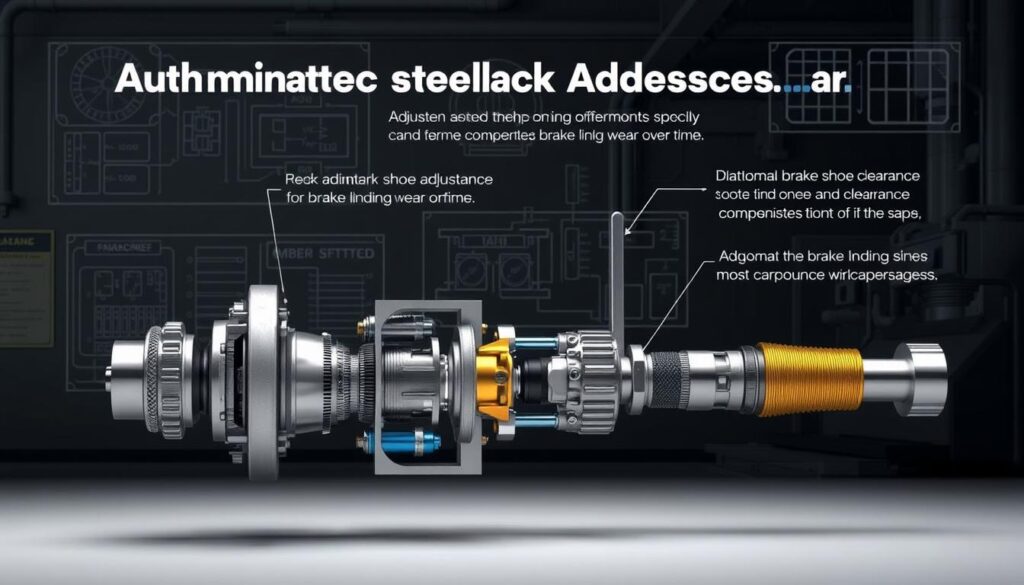
Regular ASA inspection helps identify wear patterns before they trigger out-of-service violations
How ASAs maintain brake shoe-to-drum clearance
Each application of the service brakes rotates the camshaft through the S-cam profile. As brake linings wear down through normal use, the cam must rotate through a greater arc to bring the shoes into contact with the drum surface. ASA operation responds to this increased rotation in small indexed steps, automatically adjusting the linkage length so brake shoe-to-drum clearance remains within a narrow operational window.
This controlled clearance also protects brake system components from premature failure. Stable cam rotation minimizes heat generation from brake drag and prevents the long-stroke condition that significantly reduces available stopping force. On fleets that standardize S-cam brake configurations across multiple vehicle platforms, this steady clearance baseline helps maintain axle-to-axle balance throughout the entire service life of shoes and drums.
Application versus release stroke adjustment designs
Two fundamental design philosophies dominate the automatic slack adjuster market. Some units perform their indexing function during the application stroke, engaging an internal pawl mechanism as brake application force builds. Other designs calibrate during the release stroke, utilizing the return motion of brake components to make fine corrections to the adjustment setting.
According to Bendix technical guidance, regardless of adjustment timing design, the brake adjustment indicator remains the primary visual cue for rapid field checks. On vehicles equipped with S-cam brakes, clearly marked visual references on the push rod help technicians determine at a glance whether stroke travel has drifted beyond acceptable targets.
Regulatory requirement since October 20, 1994
Federal motor vehicle safety standards mandate these systems on air-braked commercial vehicles. FMVSS 121 S5.1.8 requires automatic brake adjustment systems and a visible stroke indicator on exposed push rods to enable practical inspection procedures at roadside enforcement stops and in maintenance facilities. Under FMCSR 393.53, motor carriers must maintain this equipment in operative condition as originally installed by the vehicle manufacturer.
These federal mandates reflect fundamental brake system physics rather than administrative paperwork requirements. By enforcing stable brake shoe-to-drum clearance and consistent push rod travel across all wheel positions, fleets protect stopping distance performance, preserve brake balance between axles, and significantly reduce the risk of out-of-service findings during CVSA Level I inspections.
Understanding Automatic Slack Adjuster Failure Modes
Automatic slack adjusters should maintain push rod movement within safe operational limits throughout their service life, but real-world fleet operations expose these components to harsh conditions that cause internal mechanisms to age, seize, and wear prematurely. When these failure modes take hold, available stopping power diminishes and the risk of roadside enforcement action climbs dramatically.
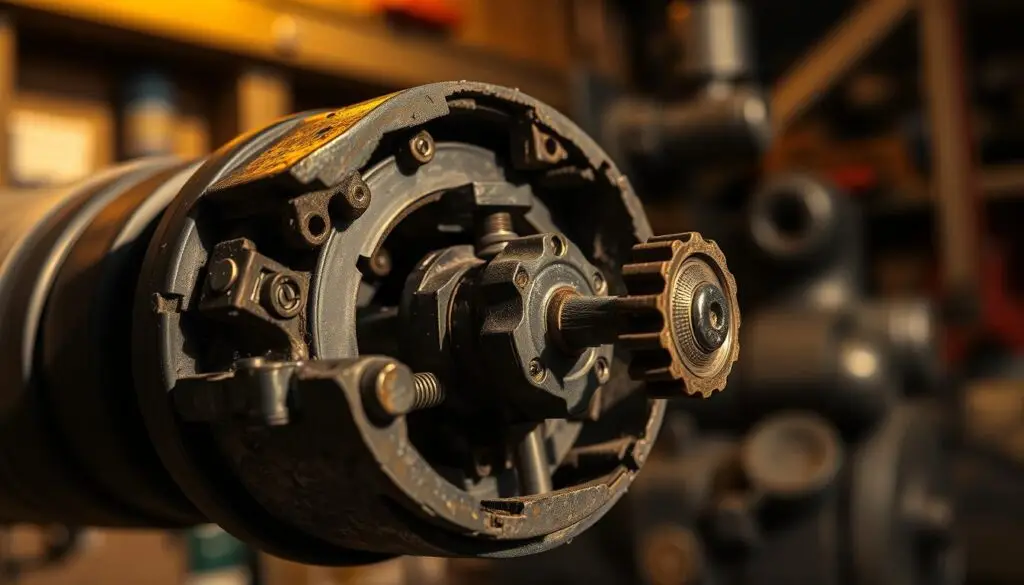
Seized ASA mechanisms and housing damage are leading causes of out-of-service violations
Common failure modes: seized mechanism, worn clevis and bushings, housing damage
A frequently encountered cause of adjustment system failure is a seized ASA resulting from internal corrosion or inadequate lubrication, which completely stops the automatic adjustment function. Technicians routinely discover worn clevis bushings and ovaled mounting holes that introduce excessive slack into the brake linkage system. Visible cracks or impact damage on the adjuster housing often appear alongside torn protective boots, missing retaining hardware, or worn clevis pins.
Technical guidance from manufacturers including Gunite and Haldex identifies insufficient internal torque, incorrectly installed control arms, and bottomed adjuster mechanisms as critical warning signs during inspection procedures. These conditions permit brake stroke to increase progressively even when brake lining thickness and drum condition appear serviceable during visual examination.
Symptoms: excessive push rod stroke, dragging brakes, brake imbalance
Early warning indicators include excessive stroke that gradually creeps past published chamber limits during applied pressure checks at the wheel end. If free stroke measurements drop below minimum specifications, excessive heat builds up in the brake assembly and causes continuous brake drag after pedal release. Uneven wheel-end adjustment across an axle or between vehicle sides leads to noticeable brake imbalance during service brake applications.
Vehicle operators frequently report longer brake pedal travel and a tendency for the vehicle to pull to one side under hard braking events. During pre-trip inspections or roadside checks, enforcement personnel often identify stroke indicators positioned beyond their reference marks or colored zones, clearly signaling loss of adjustment control in the slack adjuster mechanism.
Risks: reduced braking efficiency, out-of-service citations, crash involvement
When total available stopping force deteriorates below design specifications, reduced braking efficiency substantially raises crash risk in congested traffic conditions and on steep highway grades. During CVSA inspections, excessive stroke measurements routinely trigger immediate out-of-service decisions and unplanned downtime that disrupts delivery schedules. Attempting to address the root cause through repeated manual adjustments merely masks underlying component defects.
Accident investigation reviews conducted by the National Transportation Safety Board have documented direct links between multiple brake system defects and severe crash outcomes on commercial vehicles. Ignoring clear indicators such as ASA housing damage, worn clevis bushings, or completely seized adjuster mechanisms substantially increases fleet exposure to enforcement fines, emergency repair costs, and worst-case highway safety scenarios.
Safety and Compliance Essentials Before You Diagnose or Replace
Before beginning any work on an automatic slack adjuster, establish a safe working environment that respects both facility safety policies and federal regulatory requirements. Implement clear procedures that prevent vehicle movement, contain hazardous dust, and keep your maintenance team focused on brake dust safety protocols.
⚠️ Safety Warning
Spring brake caging procedures should only be performed by trained maintenance personnel familiar with the hazards of compressed springs under high preload. Always verify complete air system discharge and implement electrical lockout before beginning brake service work.
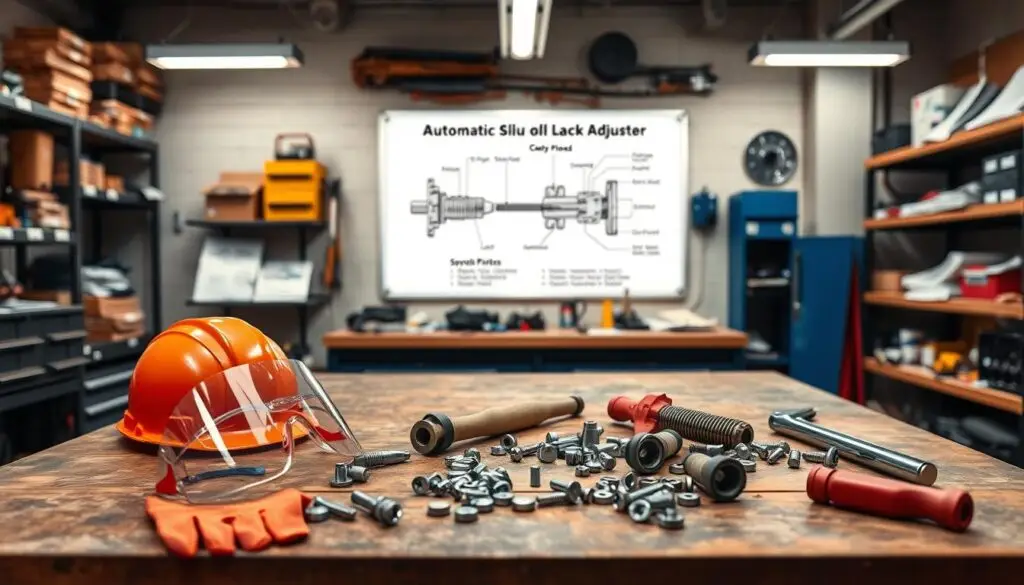
Proper vehicle restraint and lockout procedures are essential before any brake system work
Lock-out, chock wheels, and caging spring brakes when required
De-energize the vehicle electrical system completely and secure the unit so it cannot move under any circumstances. Position wheel chocks on solid, level ground at correct angles against tire contact patches on both sides of the axle being serviced. When specific repair procedures demand it, perform spring brake caging according to the brake chamber manufacturer’s documented procedure to maintain control over stored mechanical spring forces during component removal and installation.
Combine the electrical lockout procedure with properly positioned wheel chocks to create equipment restraint redundancy that resists transmission vibration and gradual air system pressure loss during extended diagnostic testing sequences.
Asbestos and non-asbestos dust precautions
Follow comprehensive dust control guidance from brake system manufacturers and align facility practices with OSHA asbestos exposure limits for occupational environments. Use only HEPA-filtered vacuum equipment and approved wet-washing methods when cleaning brake components; never use compressed air streams or dry brushing techniques that generate airborne particulate matter.
Require technicians to wear NIOSH-approved respirators rated for the specific dust exposure hazard, and manage all brake component waste materials according to Environmental Protection Agency regulations and applicable state waste disposal rules.
Never rely on manual adjustment to fix excessive stroke
Excessive push rod stroke measurements indicate an underlying root cause failure rather than a simple adjustment setting error. Treat any manual manipulation of the adjuster hex as a critical warning flag, because temporary manual corrections can mask serious failures in the slack adjuster mechanism, the air chamber actuator, or foundation brake components that will continue to deteriorate.
Technical guidance from Meritor and Gunite consistently emphasizes that properly functioning automatic adjustment systems do not require frequent manual intervention. If stroke measurements continue increasing after proper spring brake caging procedures and verification with secure wheel chocks in position, conduct thorough investigation of component wear patterns, ASA installation angle accuracy, or air system leakage before making any adjustment to the hex fitting.
| Safety Control | What To Use | Why It Matters |
|---|---|---|
| Vehicle Restraint | Wheel chocks and electrical lockout | Prevents vehicle roll-away during inspection |
| Brake Force Containment | Spring brake caging when required | Controls mechanical spring force for safe access |
| Dust Control | HEPA vacuum, wet-wash, approved wipes | Reduces airborne fibers and brake particulates |
| Technical Guidance | OEM service documentation | Supports consistent brake dust safety practices |
Pre-Diagnostic Visual Checks That Catch Foundation Brake Issues First
Begin diagnostic procedures with a methodical visual inspection that prioritizes a complete foundation brake inspection before attributing problems to the automatic slack adjuster. A high-quality LED work light helps identify early stress cracks, thermal checking, and missing retaining hardware that can hide in wheel-end shadows and difficult viewing angles.

Foundation brake inspection reveals wear patterns that often mimic ASA failure symptoms
Inspect drums, shoes and linings, cams, rollers, bushings, return springs
Carefully examine brake drums for heat spotting, scoring patterns, or dimensional distortion, then evaluate brake shoes and friction linings for taper wear, oil contamination, or loose mounting hardware. Verify that S-cam components sit square in their mounting positions and rotate freely without binding, and confirm the cam head washer remains intact and properly seated.
Check brake shoe rollers for flat spots that indicate restricted rotation and verify each roller spins freely on its mounting pin. Inspect cam bushings and seals for excessive radial play or grease contamination washout, and verify shoe return springs and anchor pin hardware are present, properly seated, and show no signs of stress cracking or permanent deformation.
Check clevis, clevis bushings, pins, and rubber boot condition
At the air chamber mounting interface, carefully evaluate clevis pin wear patterns and inspect mounting holes for ovaling or elongation that signals worn bushings requiring replacement. Rotate the clevis pin manually to detect binding or notchy movement, and note any side-to-side looseness that indicates excessive bushing wear allowing uncontrolled linkage movement.
Examine the slack adjuster’s protective rubber cover for tears, cuts, or missing sections that could permit abrasive road grit and corrosive moisture infiltration. Verify the complete linkage assembly remains straight and properly aligned with the air chamber mounting bracket to prevent side-loading forces that accelerate bushing wear and cause premature component failure.
Confirm no structural damage to the ASA housing or missing quarter-inch pin
Inspect the adjuster body casting for stress cracks, impact dents, or pulled mounting bosses, and verify the control arm or anchor arm retaining hardware remains secure with proper torque. A missing quarter-inch pin at the clevis-to-adjuster linkage connection will completely prevent automatic adjustment function regardless of internal mechanism condition.
Additionally examine nearby mounting brackets and brake spider components for hole elongation or surface wear that can present symptoms similar to adjuster malfunction. Worn anchor points and loose mounting hardware alter brake geometry and prevent the ASA from making proper corrections even when the internal mechanism functions correctly.
Stay Ahead of Industry Trends
Get expert insights on brake system maintenance, equipment reviews, and operational strategies delivered to your inbox weekly.
How to Measure Push Rod Stroke and Free Stroke the Right Way
Accurate push rod stroke measurement protects stopping power and simplifies inspection documentation. Use consistent terminology matching manufacturer specifications from Gunite and Meritor so measurement results remain comparable and easy to track across your entire fleet over multiple service intervals.
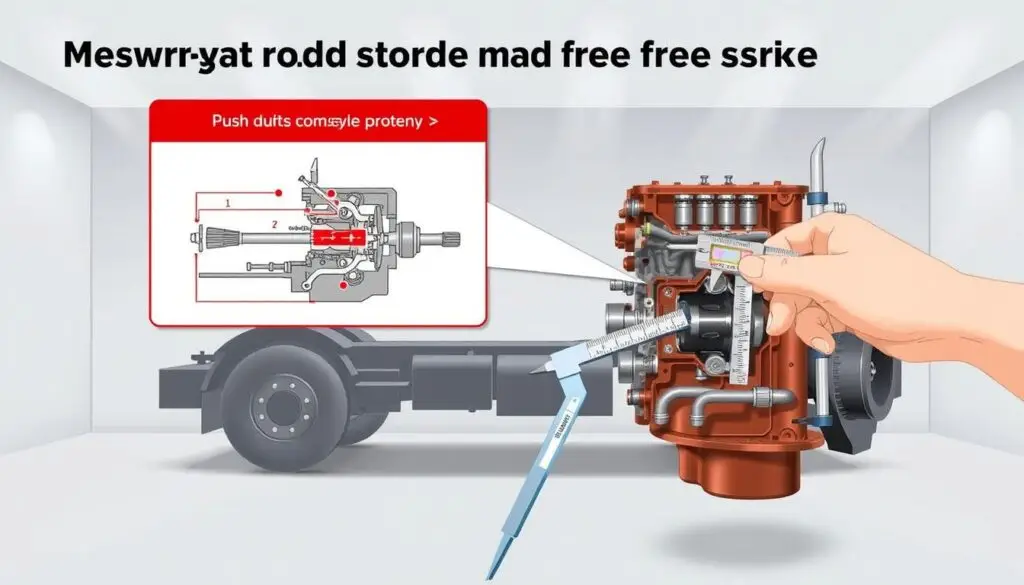
The A-to-B measurement method provides consistent, repeatable stroke data for fleet records
Push rod stroke test at 90 psi: A-to-B measurement method
Start measurement procedures with the service brakes fully released and record dimension A from the brake chamber mounting face to the centerline of the large clevis pin. Apply a firm 90 psi service brake application using regulated shop air, allow the push rod to reach full travel extension, and record dimension B to the identical reference point. The A-to-B method defines applied stroke as dimension B minus dimension A, providing a clear numerical baseline for comparison against published standard and long-stroke chamber limits.
Repeat the measurement sequence to confirm consistency and verify proper gauge calibration. Consistent repeated readings indicate reliable measurement technique and proper equipment setup; significant variations between successive measurements suggest potential issues with air pressure regulation, gauge accuracy, or measurement reference point placement that require correction before recording official inspection data.
Free stroke specification: three-eighths to five-eighths inch
With service brakes in the fully released position, record the initial chamber face-to-pin measurement, then manually lever the slack adjuster arm only until brake shoes make light contact with the drum surface. The measured difference between these two positions represents free stroke. Industry engineering specifications define acceptable free stroke as three-eighths to five-eighths inch to properly balance running clearance against rapid brake response characteristics.
Measurement readings below three-eighths inch indicate minimal brake clearance and create risk of thermal damage from continuous light drag. Free stroke values exceeding five-eighths inch require immediate ASA function testing and careful review of installation mounting geometry to identify the root cause of excessive clearance.
Interpreting results: good free stroke but long applied stroke indicates foundation brake problems
Normal free stroke measurements paired with excessive A-to-B travel clearly indicate problems beyond the automatic slack adjuster mechanism. This diagnostic pattern typically traces to worn camshaft bushings, fatigued return springs, ovaled clevis bushings, or poor friction material contact with drum surfaces caused by glazing or thermal cracking.
Document each 90 psi application measurement alongside the corresponding push rod stroke value so performance trending becomes straightforward over time. When free stroke remains within specification range but applied stroke numbers stay persistently elevated, focus diagnostic efforts on foundation brake components before making any judgment about slack adjuster condition or function.
Brake Chamber Stroke Limits: Standard vs. Long-Stroke Reference
Understanding published brake chamber stroke limits protects vehicle stopping power and simplifies roadside inspection procedures. Reference the stroke specifications supplied by established manufacturers including Gunite and MGM Brakes, and always verify the specific chamber style designation before comparing measured values to published data.
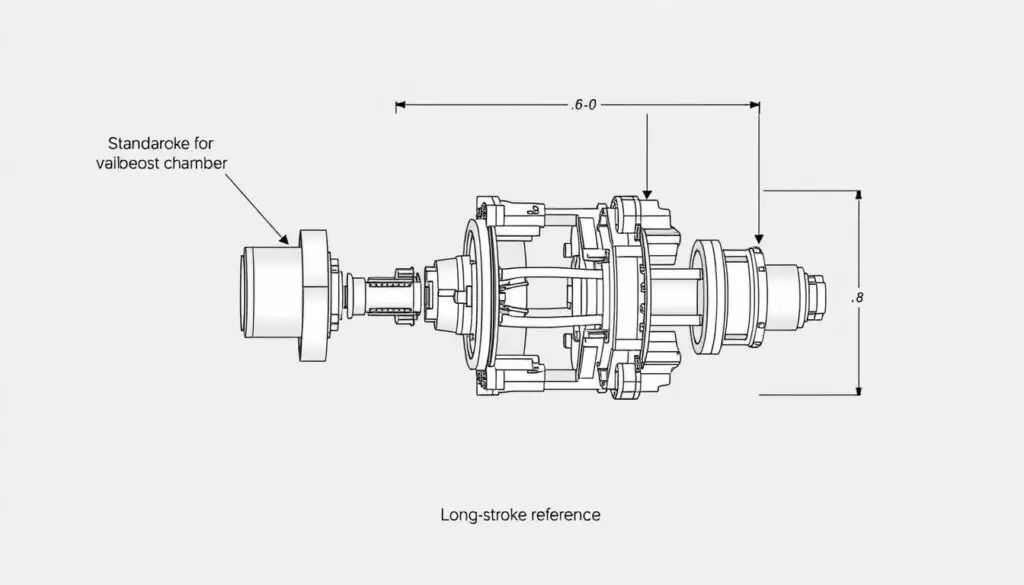
Chamber type identification and stroke limits are critical for accurate compliance checks
Standard clamp type examples and maximum adjusted strokes
Standard clamp-type brake chambers across the Type 9 through Type 36 classification range follow consistent specifications. Type 9 and Type 12 chambers carry a 1.75-inch rating with a maximum adjusted stroke of 1-3/8 inches. Type 16 chambers feature a 2.25-inch rating with a 1-3/4 inch maximum, which matches the maximum specification for Type 20 and Type 24 chambers also rated at 2.25 inches.
For larger brake chamber sizes commonly found on heavy-haul applications, Type 30 chambers carry a 2.50-inch rating with a 2-inch maximum adjusted stroke specification, while Type 36 chambers reach a 3.00-inch rating with a 2-1/4 inch maximum stroke limit. When Type 36 chambers are installed on a vehicle, the corresponding slack adjuster length should measure less than 6 inches to prevent adverse brake geometry issues that compromise adjustment accuracy.
Long-stroke chamber identifiers and maximum strokes
Long-stroke brake chambers operate under different stroke limit specifications and feature distinctive square air port bosses that enable quick visual identification in the field. Type 16 long-stroke chambers carry a 2.50-inch rating with a 2-inch maximum adjusted stroke. Type 20 and Type 24 long-stroke configurations follow identical specifications with a 2.50-inch rating and 2-inch maximum stroke limit.
Extended long-stroke options include Type 24 asterisk and Type 30 asterisk designations, both rated at 3.00 inches with a 2-1/2 inch maximum adjusted stroke specification. According to CVSA inspection guidance, always confirm chamber type by examining casting marks and identification tag details before recording any stroke measurements in service records.
Using stroke alert indicators and visual identifier grooves correctly
Most modern brake chambers include factory-installed stroke alert indicators that provide immediate visual warning when push rod travel meets or exceeds the published maximum specification. These indicators may appear as red or orange warning marks, or utilize progressive green-yellow-red color band systems. These visual warning devices tie directly to the applicable brake chamber stroke limits and help vehicle operators identify excessive travel during routine pre-trip inspection procedures.
On many push rod designs, a machined visual identifier groove aligns precisely with the chamber mounting face when service brakes are in the fully released position. Use this visual identifier groove as your zero reference point during measurement procedures, then evaluate total travel distance against the proper limit specification for the specific chamber model within the Type 9 through Type 36 classification range.
The HDJ Perspective
In our observation of fleet maintenance operations, the shops that consistently avoid brake-related out-of-service violations share one common trait: they treat ASA diagnosis as a systematic process rather than a quick visual check. The technicians who take time to measure both free stroke and applied stroke, document chamber types accurately, and complete the full function test before making replacement decisions consistently outperform shops that rely on “feel” or cursory inspections. As advanced driver assistance systems become more prevalent, maintaining precise brake adjustment becomes even more critical—stability control and collision mitigation technologies depend on predictable brake response that only properly functioning automatic slack adjusters can deliver.
ASA Function Test and When Replacement Is Mandatory
The ASA function test verifies whether the automatic adjustment mechanism continues to self-correct under normal brake application loads. Experienced technicians rely on distinct tactile cues at the hex wrench, audible sounds from the internal pawl mechanism, and visible movement at the hex extension to accurately separate true adjuster failures from underlying foundation brake component issues that present similar symptoms.
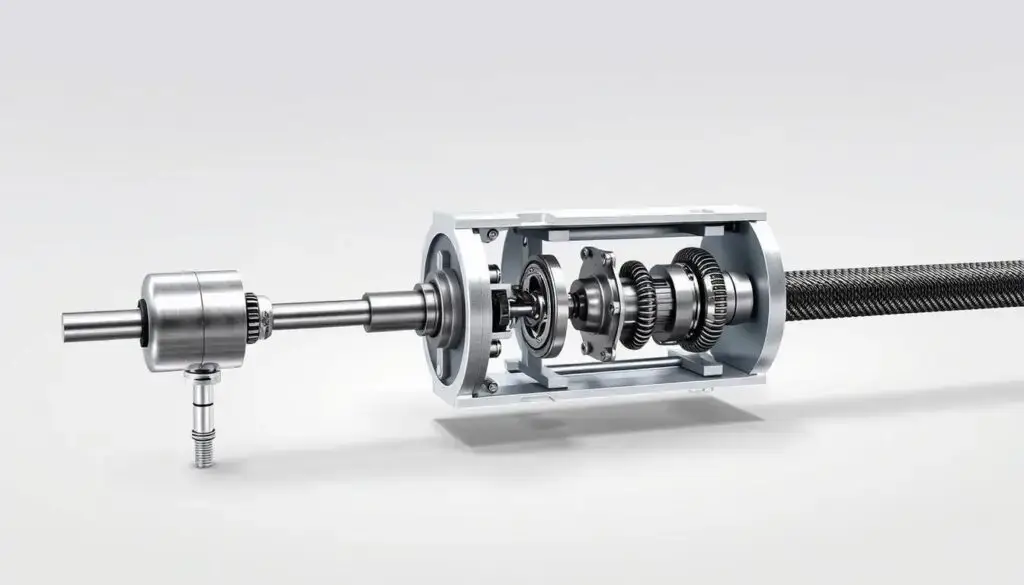
Function testing with torque verification distinguishes ASA failure from foundation brake wear
Counterclockwise three-quarter-turn test and confirming clockwise hex rotation
Place a seven-sixteenths-inch hex socket on the adjuster extension fitting and rotate approximately three-quarters of a turn in the counterclockwise direction. A properly functioning mechanism produces a distinct ratcheting sound as the internal pawl indexes across gear teeth during this manual rotation test.
Mark the hex extension with a paint pen or chalk, then make several complete service brake applications using normal air system pressure. The reference mark should advance in small incremental steps showing clockwise rotation movement, confirming the adjuster mechanism actively responds to brake applications by making automatic corrections to maintain proper stroke.
Minimum 15 ft-lb torque threshold on the hex extension
Apply a calibrated torque wrench to the identical seven-sixteenths-inch hex extension in the counterclockwise direction and slowly increase applied force. The adjuster internal mechanism should resist rotation with at least 15 ft-lb of measured torque. Torque measurements below this threshold indicate loss of internal mechanism control and signal the need for complete adjuster replacement.
Adjuster units that meet or exceed the 15 ft-lb torque specification while simultaneously demonstrating consistent clockwise rotation during brake applications typically pass the ASA function test. This test result pattern redirects diagnostic focus toward other brake system hardware as the probable source of excessive stroke measurements rather than adjuster mechanism failure.
Decision tree: replace ASA versus repair foundation brake issues
If the hex extension does not demonstrate clockwise rotation during normal service brake applications, or if measured counterclockwise torque falls below the 15 ft-lb threshold, the replacement criteria for the automatic slack adjuster are definitively met. Do not attempt field disassembly or internal adjustment of the adjuster housing; complete assembly replacement represents the only approved service procedure.
If rotation pattern remains steady and torque measurement meets specification, shift diagnostic attention to foundation brake components including cam bushings, brake shoe rollers, clevis pins and bushings, return spring condition, and drum surface integrity. Correct identified foundation brake defects according to manufacturer specifications, then repeat the complete ASA function test sequence to confirm overall brake system health before returning the vehicle to service.
Top Installation Errors That Cause Repeat Out-of-Adjustment Conditions
Persistent out-of-adjustment conditions frequently trace back to installation geometry errors rather than component quality issues. The geometric triangle formed by the camshaft centerline, clevis pin location, and adjusting link attachment point must precisely match the original equipment manufacturer’s design template. Correct ASA installation angle maintains the adjustment mechanism within its designed rotational sweep range so it can properly index on every valid service brake application.
Never assume linkage positioning is adequate simply because it appears visually acceptable during casual inspection. Use the template method documented in Meritor service literature or employ the Brake System Alignment Procedure gauge to verify actual installation angle on the specific vehicle chassis. If measured angle falls outside specification windows, the adjuster may over-correct, under-correct, or completely fail to make any adjustment regardless of internal mechanism condition.
Incorrect installation angle and the need for OEM templates
When the adjustment arm sits positioned outside the manufacturer’s specified angular window, the internal pawl mechanism and drive gear experience incorrect lever effects that compromise adjustment accuracy. This skewed ASA installation angle reduces effective link travel and can mask underlying defects elsewhere in the brake system. The template method provides rapid pass-fail verification and ensures the adjusting link remains properly aligned with camshaft rotation patterns.
Wrong push rod length: too short or too long prevents proper auto-adjustment
Brake chambers typically ship from manufacturers with overlong push rods that require field cutting to match specific vehicle applications. Incorrect push rod length represents a leading root cause of missed automatic adjustments in fleet operations. Push rods cut too short may cause the adjustment arm to contact axle bracket structures, trap the linkage assembly, or create bottoming conditions inside the adjuster mechanism that hold the push rod in a partially applied state and completely block automatic correction function.
Mismatched chamber type and ASA model; overlooked anchor or control arm wear
Component compatibility directly impacts adjustment system performance. Reference Meritor color coding systems on product labels to correctly match the slack adjuster model to the specific brake chamber size designation and type classification. A component mismatch alters mechanical leverage ratios and delays or completely defeats ratchet indexing action. On Haldex-equipped systems, carefully inspect the S-ABA control arm and mounting bracket for slot wear patterns or bushing play; excessive motion at the anchor point location bleeds off the minute movements the adjuster mechanism requires to advance the adjustment setting.
Share Your Brake System Expertise
Have you developed diagnostic techniques or discovered installation best practices that improve ASA reliability? Join Heavy Duty Journal as a guest author and share your field experience with thousands of fleet professionals.
Step-by-Step Brake Adjustment After Lining and Drum Service
Following lining and drum replacement procedures, establish the slack adjuster setting with precision so the brake system returns to stable running clearance and the automatic mechanism can maintain proper adjustment throughout the service interval. Use regulated shop air supply, appropriate hand tools, and follow axle manufacturer specifications throughout the procedure.
Proper backing off procedure and confirming running clearance
If the brake chamber incorporates spring brake function, begin procedures with manual caging according to manufacturer instructions to safely control stored spring force. Rotate the slack adjuster mechanism until brake shoes make firm contact with the drum surface, then apply a backing off procedure of one-half turn counterclockwise to establish consistent running clearance. Listen carefully for the characteristic ratcheting sound from the internal mechanism, and verify the camshaft has rotated completely so shoe rollers achieve full release position before finalizing the adjustment setting.
Reinstall the brake drum, torque all mounting hardware to published specifications, and manually rotate the complete wheel end assembly. Light whisper contact during initial rotation that quickly fades confirms proper initial running clearance establishment. If noticeable drag persists or the wheel end will not rotate freely by hand, repeat the backing off procedure in small one-eighth turn increments until acceptable clearance is achieved.
Readjusting after service and rechecking push rod stroke at 90 psi
After completing the lining and drum replacement work, cycle the service brakes through several complete applications and reset the adjuster to contact point, then back off one-half turn again to verify setting accuracy. Perform a complete push rod measurement check using the A-to-B method and execute a final 90 psi verification procedure. Compare the measured applied stroke value to the brake chamber’s published specification limit for either standard or long-stroke type configuration.
Release spring brake caging mechanisms only after stroke values are confirmed within acceptable limits. A clean 90 psi verification result that falls clearly inside published specifications, combined with smooth wheel end rotation characteristics, confirms that running clearance is properly established and the automatic adjustment mechanism can maintain correct settings throughout normal service operation.
Preventive Maintenance and Lubrication to Avoid ASA Failures
Consistent preventive care keeps automatic slack adjusters functioning reliably and maintains fleet regulatory compliance. Implement structured ASA preventive maintenance protocols to identify component wear early, verify stroke measurements remain within limits, and protect adjustment mechanisms between major service intervals.
Monthly inspection checklist: stroke, components, damage
Follow manufacturer technical guidance for monthly stroke verification checks or implement inspections at every 8,000-mile service interval, whichever occurs first. Conduct thorough visual inspection of drums, brake shoes and friction linings, camshafts, brake shoe rollers, camshaft bushings, and return spring assemblies only after brake components have cooled to ambient room temperature. Compare measured chamber stroke values to the appropriate standard or long-stroke specification chart for the installed brake chamber type.
Verify the ASA housing shows no stress cracks or missing fastener hardware, and confirm the quarter-inch clevis pin remains installed and properly retained. Evaluate the clevis assembly, clevis bushings, and mounting pins for wear patterns, and inspect the protective boot for tears or damage that could permit contamination entry. Document any evidence of surface corrosion, bent control arm assemblies, or loose mounting hardware.
Semiannual lubrication: NLGI 1 or 2 grease, temperature range, no moly
At six-month intervals or 50,000-mile service points, align lubrication procedures with published manufacturer maintenance recommendations. Apply lubrication to the ASA through the grease fitting using only NLGI Grade 1 or Grade 2 grease products rated for operation across the negative 40°F to positive 250°F temperature range. Use clean grease gun couplers and wipe fittings before connection to prevent contamination introduction into the precision adjustment mechanism.
Select only lubricant products specifically labeled as containing no molybdenum disulfide additives. Molybdenum-based compounds alter internal friction characteristics inside the adjuster mechanism and can disrupt proper indexing function. Record the service date, vehicle mileage, and specific product identification in maintenance records to support warranty claim requirements and fleet audit documentation needs.
Service practices: do not disassemble; replace damaged or low-torque units
Execute complete automatic slack adjuster replacement if the unit fails function testing procedures, exhibits housing structural damage, lacks the required clevis pin, or cannot meet the minimum counterclockwise torque threshold specification. Field disassembly of adjuster mechanisms is specifically prohibited by all major manufacturers; factory calibration settings and internal torque specifications cannot be accurately duplicated using standard shop floor equipment and procedures.
| Task | Interval | Specification | Action if Out of Spec |
|---|---|---|---|
| Chamber Stroke | Monthly or 8,000 miles | Within published limits | Investigate foundation brakes; replace ASA if function test fails |
| Component Inspection | Monthly | No cracks, wear-through, or binding | Repair or replace worn hardware |
| ASA Housing | Monthly | Intact housing; clevis pin installed | Replace ASA if damaged or pin missing |
| Lubrication | Six months or 50,000 miles | NLGI 1 or 2; -40°F to 250°F; no moly | Relube with correct grease; replace if degraded |
Frequently Asked Questions
What is an automatic slack adjuster and how does it maintain brake adjustment?
An automatic slack adjuster is a self-adjusting lever mechanism on S-cam brake systems that continuously compensates for friction lining wear to maintain push rod stroke within published specifications. It automatically preserves proper shoe-to-drum clearance so stopping power and brake balance remain consistent throughout the lining service life. According to Meritor and Gunite technical documentation, a correctly functioning ASA should not require manual adjustment interventions during normal vehicle service intervals.
How do I measure push rod stroke using the A-to-B method?
With service brakes in fully released position, measure distance from the brake chamber mounting face to the centerline of the large clevis pin and record this as dimension A. Apply a controlled 90 psi service brake application to achieve maximum travel extension, then remeasure to the identical reference point and record as dimension B. The applied stroke equals dimension B minus dimension A, providing the baseline measurement for comparison against published standard or long-stroke chamber specifications.
What torque threshold indicates ASA replacement is needed?
The hex extension must resist at least 15 ft-lb of applied torque when rotated in the counterclockwise direction using a calibrated torque wrench. If measured torque falls below this 15 ft-lb threshold specification, the automatic slack adjuster has failed internal mechanism criteria and requires immediate complete assembly replacement. Do not attempt any field disassembly or internal adjustment of adjuster mechanisms regardless of measured torque values.
Should I manually adjust an automatic slack adjuster to fix excessive stroke?
No, manual adjustment should never serve as a solution for excessive stroke measurements. Technical guidance from manufacturers explicitly states that properly functioning automatic slack adjusters should not require manual readjustment interventions during normal service operations. Excessive stroke measurements indicate underlying issues with the slack adjuster mechanism, air chamber actuator, or foundation brake components that will continue to deteriorate. Manual manipulation of the adjuster hex can temporarily mask serious defects and inevitably leads to repeat out-of-adjustment conditions.
What lubrication should I use for automatic slack adjusters?
Execute lubrication procedures at six-month intervals or 50,000-mile service points using exclusively NLGI Grade 1 or Grade 2 grease products rated for negative 40°F to positive 250°F operating temperature range. Never use greases containing molybdenum disulfide additives as these compounds impair internal friction element function and disrupt proper adjustment indexing. Document lubrication service dates, vehicle mileage, and specific product identification in permanent maintenance records.
Protecting Fleet Uptime Through Systematic ASA Diagnosis
Air brake safety depends fundamentally on accurate automatic slack adjuster diagnostics, sound foundation brake components, and strict compliance with FMVSS 121 regulatory standards. The 90 psi push rod stroke measurement method combined with free stroke verification within the three-eighths to five-eighths inch range provides the technical foundation for reliable diagnostic conclusions. When stroke measurement results exceed published CVSA limits, treat the finding as a critical safety flag requiring immediate corrective action rather than a minor maintenance note.
Field investigation evidence documented by air brake system experts demonstrates how incorrect installation angles, mismatched brake chambers and slack adjusters, or improper push rod lengths can completely defeat the adjuster’s automatic correction capability. Rely exclusively on original equipment manufacturer geometry templates to establish correct installation angles, and thoroughly verify anchor arm and control arm structural condition before releasing vehicles to revenue service. Through disciplined ASA diagnostic practices and rigorous adherence to replacement best practices, commercial fleets can effectively protect revenue uptime, consistently meet CVSA stroke limit requirements, and maintain full regulatory compliance with federal air brake system standards.
Share This With Your Heavy-Duty Network
Help fellow fleet managers, diesel technicians, and trucking professionals discover these proven ASA diagnostic methods. Share this guide with your professional network.