

By Michael Nielsen, Editor & Publisher | 15+ Years in Diesel Repair
Last Updated: February 2026
📖 Estimated reading time: 24 minutes
The shop foreman responsibilities in a modern fleet maintenance facility extend far beyond basic supervision. This position serves as the critical link between front-line diesel technicians and upper management, requiring a rare combination of diagnostic expertise, people management skills, and operational savvy. Whether you’re running a 10-bay municipal fleet shop or a 50-technician private carrier operation, the foreman sets the tone for everything from repair quality to team morale.
Success in fleet shop foreman duties demands proficiency across multiple domains simultaneously. These professionals coordinate daily repair workflows, enforce safety standards, manage preventive maintenance programs, and make resource allocation decisions that directly impact fleet availability. The best foremen understand that their decisions create ripple effects—a poorly prioritized work order today becomes a roadside breakdown tomorrow.
This comprehensive guide covers the leadership competencies, technical requirements, and operational skills that define excellence in this role. You’ll find practical frameworks for everything from work order prioritization to technician development, drawn from real-world fleet maintenance operations.
Key Takeaways
- Dual expertise required: Effective shop foremen balance deep technical knowledge of vehicle systems with leadership skills including conflict resolution, team motivation, and strategic decision-making.
- Work order prioritization drives fleet uptime: Structured frameworks based on mission criticality, safety implications, and parts availability prevent costly downtime cascades.
- Safety compliance is non-delegable: OSHA and EPA accountability rests directly with the foreman—consistent enforcement protects technicians and the organization.
- Technician development reduces turnover costs: Systematic training programs, apprenticeship coordination, and ASE certification support build teams that competitors cannot easily replicate.
- Communication across departments multiplies impact: Foremen who translate technical realities into business language gain organizational influence and secure the resources their shops need.
- Continuous learning is survival: Telematics, ADAS calibration, alternative fuel systems, and connected vehicle platforms are reshaping what foremen must know to lead effectively.
Understanding the Shop Foreman Role in Fleet Operations
Within fleet operations, the shop foreman serves as the operational backbone connecting daily maintenance activities with long-term organizational goals. This position bridges the gap between hands-on technician work and executive decision-making. The foreman translates strategic objectives into practical workflows that keep commercial vehicles running safely and efficiently.
Fleet maintenance management depends on this role to maintain seamless communication across multiple departments. The foreman coordinates with parts suppliers, communicates repair progress to fleet managers, and ensures technicians have the resources they need. This central position requires balancing immediate repair demands with preventive maintenance schedules and budget constraints.
Strategic Positioning Within the Organization
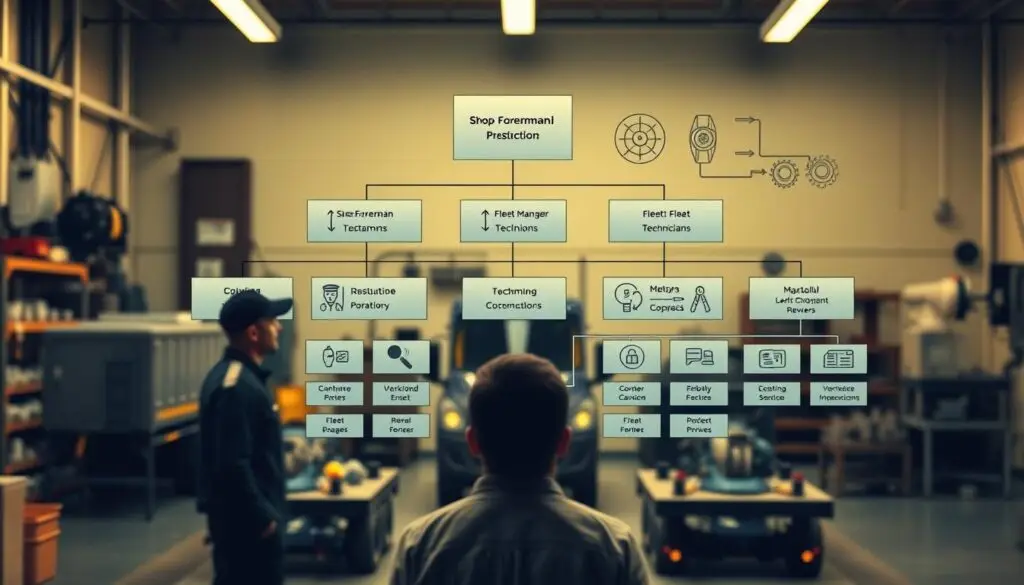
The shop foreman occupies a unique position in the organizational hierarchy that demands both technical expertise and management acumen. Unlike purely administrative roles, this position requires intimate knowledge of vehicle systems combined with the ability to manage people and processes. The foreman must understand what happens under the hood while simultaneously coordinating workforce schedules and reporting metrics to upper management.
This strategic positioning means the foreman interfaces with multiple organizational layers daily. Direct technician supervision forms the foundation of the role, but responsibilities extend upward to fleet managers and operations directors. The foreman participates in planning meetings where maintenance budgets are discussed and service intervals are adjusted based on fleet performance data.
Vehicle maintenance oversight becomes strategic when the foreman identifies patterns affecting fleet-wide operations. Recurring issues with specific vehicle models might prompt recommendations for different purchasing decisions. Seasonal maintenance trends help shape staffing plans and inventory management strategies. The foreman’s input directly influences equipment purchases, preventive maintenance schedule adjustments, training program development, and vendor selection strategies.
Decision-Making Authority and Accountability
Understanding the scope of authority is crucial for effective performance. Shop foremen typically possess decision-making power over daily operational matters, including work assignment distribution, minor equipment purchases, and overtime authorization. This autonomy allows rapid response to changing priorities without waiting for approval on routine decisions.
However, authority comes with clearly defined accountability. Foremen are responsible for meeting maintenance schedules, controlling labor costs, and maintaining OSHA safety compliance standards throughout the facility. They must ensure that technician supervision includes proper training documentation and that all work meets quality standards before vehicles return to service.
The extent of authority varies based on organizational size and structure. In smaller fleets, foremen might have broader autonomy including direct hiring decisions and vendor negotiations. Larger organizations typically implement more structured approval processes where foremen make recommendations requiring management sign-off for major expenditures or policy changes.
Effective foremen recognize when situations require escalation to higher management. Major safety incidents, significant budget overruns, or personnel issues involving policy violations demand appropriate communication up the chain of command. This balance between empowerment and escalation defines successful fleet maintenance leadership at the supervisory level.
Core Fleet Shop Foreman Duties
A shop foreman’s core duties form the operational foundation of any successful fleet maintenance program. These responsibilities encompass everything from managing daily maintenance activities to overseeing comprehensive vehicle service strategies. Foremen must balance immediate operational demands with long-term maintenance objectives while ensuring every repair meets established quality standards.
Daily Operational Management
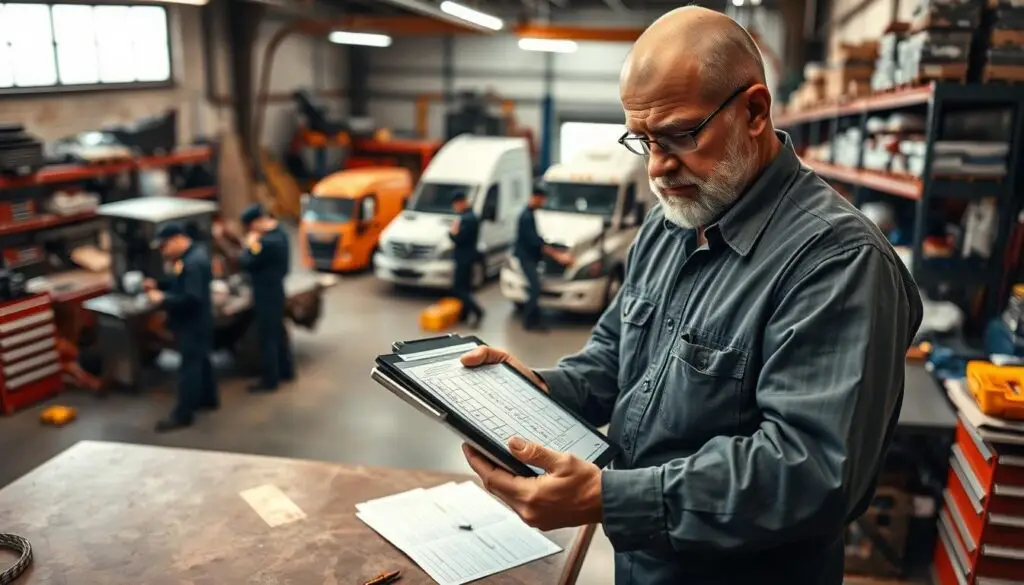
Effective daily operations begin the moment the shop opens. Foremen conduct morning briefings to review priorities, assign technicians to specific projects, and address any overnight developments affecting the schedule. Throughout the day, they monitor progress on active repairs and respond to emerging issues through regular shop floor walkthroughs—observing work quality, identifying bottlenecks, and providing technical guidance when technicians encounter complex problems.
End-of-day procedures are equally important. Foremen review completed work orders, verify documentation accuracy, and plan the following day’s activities based on pending repairs and incoming service requests. This continuous cycle of planning, executing, and reviewing creates the consistency that separates well-run shops from chaotic ones.
Work Order Prioritization
Work order management represents one of the foreman’s most critical decision-making responsibilities. Every incoming service request must be evaluated based on vehicle criticality, operational impact, and repair urgency. A Class 8 truck supporting time-sensitive freight receives different priority treatment than a utility vehicle in a general transportation pool.
| Priority Factor | Assessment Criteria | Impact on Scheduling |
|---|---|---|
| Mission Criticality | Emergency vehicles, revenue-generating equipment, mission-essential units | Immediate priority—displaces scheduled work |
| Safety Systems | Brakes, steering, tires, lighting, coupling devices | Front of queue regardless of other factors |
| Operational Impact | Downtime effects on fleet availability and revenue | High-impact units scheduled ahead of low-utilization assets |
| Repair Complexity | Time estimates, required certifications, diagnostic difficulty | Must fit available technician capacity and bay availability |
| Parts Availability | Component lead times, stock levels, vendor delivery schedules | Delayed if critical parts unavailable—avoids tying up bay space |
Assigning work to technicians requires matching tasks with individual skills and certifications. Foremen consider each technician’s diagnostic abilities, specialized training, current workload, and learning opportunities. A complex aftertreatment system diagnosis goes to an experienced technician, while routine brake adjustments might be assigned to a developing team member under appropriate supervision. This balanced approach maintains productivity while supporting professional growth across the team.
Resource Allocation and Inventory Control
Inventory control directly affects maintenance efficiency and cost management. Foremen must ensure commonly needed parts remain in stock without tying up excessive capital in slow-moving inventory. This balance requires understanding usage patterns, supplier lead times, and the costs associated with both stockouts and overstocking.
Effective foremen maintain minimum and maximum stock levels for high-turnover items like filters, fluids, brake components, and belts. They establish reorder points that account for lead times and usage variability. Resource allocation extends beyond parts to include diagnostic equipment, specialized tools, and lift bay scheduling—preventing conflicts that create idle technician time.
Preventive Maintenance Program Oversight
Preventive maintenance scheduling represents the foreman’s most powerful tool for minimizing unexpected breakdowns. Foremen implement manufacturer-recommended service intervals while adjusting timing based on actual vehicle usage, operating conditions, and historical performance data. A vehicle operating in severe-duty conditions—high ambient temperatures, frequent stop-and-go, heavy loads—may require more frequent service than one in normal duty cycles.
The scheduling process begins with establishing service intervals for each vehicle in the fleet. Foremen create calendars that spread preventive services throughout the year to avoid capacity peaks and coordinate with fleet managers to schedule services during low-demand periods. Advanced fleet maintenance management software helps track upcoming services using multiple triggers including mileage, engine hours, calendar time, and fuel consumption. Per TMC Recommended Practices, standardized maintenance intervals should account for both OEM specifications and real-world operating conditions specific to each fleet’s duty cycle.
$448–$760 per vehicle per day
Average fleet downtime cost, according to industry research—making preventive maintenance programs one of the highest-ROI investments a shop foreman manages.
Repair Documentation and Record Keeping
Accurate repair documentation serves multiple critical purposes. Service records provide vehicle history for diagnostic reference, support warranty claims, demonstrate regulatory compliance under 49 CFR Part 396 inspection and maintenance requirements, and inform decisions about vehicle retention or replacement. Foremen ensure technicians document all work completely and accurately.
Comprehensive work orders capture the initial complaint with detailed symptom descriptions, diagnostic procedures performed and test results, parts replaced with numbers and quantities, labor hours invested, and final test results confirming repair effectiveness. Foremen review completed documentation before closing work orders, verifying that all relevant information is recorded and charges align with actual work performed.
Digital maintenance management systems have transformed record keeping from paper files to searchable databases. Foremen use these systems to track vehicle history, generate reports, analyze trends, and demonstrate compliance during audits. Record retention follows both company policies and regulatory requirements—foremen must understand which documents require preservation, for how long, and in what format.
Essential Leadership Skills for Shop Foremen
The transition from skilled technician to successful shop foreman demands mastery of leadership competencies that technical training alone cannot provide. While diagnostic expertise provides the foundation, leadership skills determine whether operations run smoothly or descend into reactive firefighting. These capabilities enable foremen to guide teams through complex challenges while maintaining both productivity and morale.

Making Critical Decisions Under Pressure
Fleet maintenance environments present constant pressure situations requiring immediate judgment. Equipment failures occur simultaneously, technicians call in unexpectedly, and critical parts arrive damaged or delayed. Foremen must evaluate competing priorities and allocate limited resources effectively—often making consequential calls with incomplete information.
Strong decision-making relies on structured analytical frameworks rather than gut reactions. Experienced foremen assess each situation using consistent criteria: operational impact, safety implications, resource availability, and downstream consequences. They gather relevant information quickly, consult subject matter experts when appropriate, and commit to decisions with confidence. The best foremen also develop pattern recognition through years of experience, identifying similarities between current challenges and past situations.
Sound judgment requires acknowledging uncertainty and planning for contingencies. Foremen who communicate their decision rationale to the team build trust and credibility. Explaining tradeoffs transparently helps technicians understand why certain repairs take priority during resource-constrained periods.
Building Engaged and Productive Teams
Technical proficiency alone does not guarantee team performance. Shop foremen must actively cultivate workplace environments where skilled professionals feel valued and motivated. Team engagement strategies directly impact productivity, quality, and retention rates across the maintenance operation.
Effective motivation begins with clear communication of expectations and performance standards. Technicians perform best when they understand how their contributions support broader organizational goals. Recognition systems—both formal programs and informal acknowledgment of quality work—reinforce desired behaviors and maintain morale during demanding periods.
Equitable work distribution ensures no technician consistently receives the most difficult or undesirable assignments. Professional development opportunities signal genuine investment in employee growth and career advancement. Collaborative problem-solving involves technicians in process improvements and decision-making when appropriate. Transparent communication about shop performance, challenges, and organizational changes builds the trust that holds teams together under pressure.
Navigating Interpersonal Challenges
High-pressure maintenance environments inevitably generate interpersonal friction. Personality conflicts emerge, performance disputes arise, and disagreements about repair approaches surface regularly. Conflict management capabilities determine whether these situations escalate or resolve constructively.
Effective foremen address conflicts early, before minor disagreements damage team cohesion. They create space for involved parties to express concerns, actively listen to all perspectives, and identify underlying issues rather than surface symptoms. Structured resolution frameworks provide consistent processes—clear expectations for professional behavior, proper documentation of serious incidents, and fair application of workplace policies regardless of individual relationships.
Sometimes conflicts stem from legitimate workplace concerns requiring systematic solutions. Performance issues may reflect inadequate training, unclear expectations, or flawed processes rather than individual shortcomings. Foremen who investigate root causes often discover opportunities for operational improvements that prevent future disputes. The most effective approach addresses behavior problems directly but respectfully, focusing on specific actions rather than personal characteristics.
Technical Knowledge and Expertise Requirements
Modern fleet operations demand shop foremen who possess deep technical understanding across multiple vehicle systems. The complexity of today’s commercial vehicles—with integrated electronics, sophisticated aftertreatment systems, and advanced driver assistance technologies—requires supervisors to maintain diagnostic expertise spanning both traditional mechanical systems and cutting-edge digital platforms.
A foreman’s credibility depends on demonstrating comprehensive vehicle systems knowledge when challenges arise. Technicians respect leaders who can quickly assess diagnostic approaches and provide guidance during complex repairs. This expertise doesn’t mean performing every repair personally, but possessing the depth to evaluate whether problems are correctly identified and solutions are cost-effective.
Mastering Vehicle Systems and Diagnostics
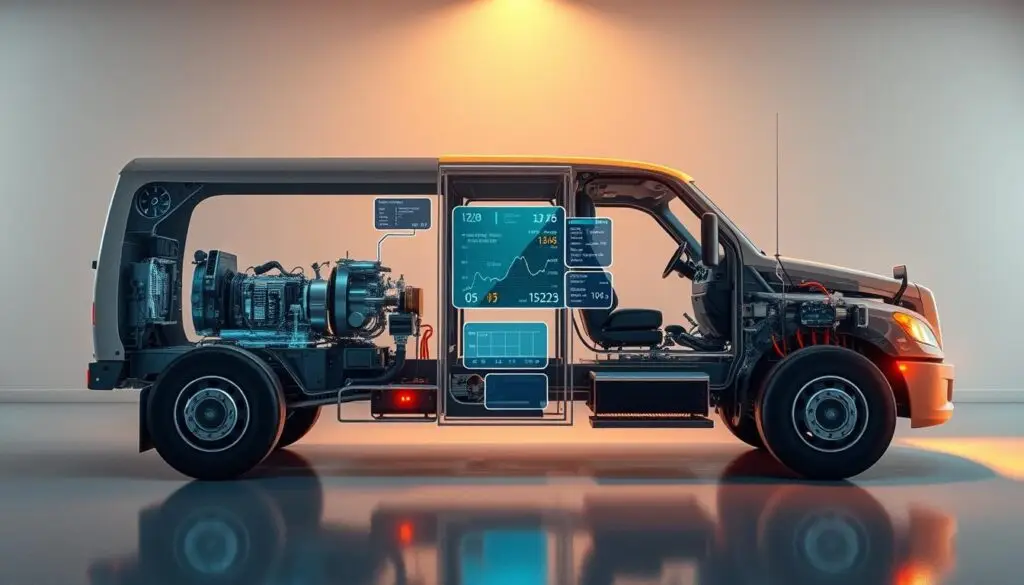
Comprehensive technical proficiency encompasses multiple interconnected systems within fleet vehicles. Shop foremen must understand powertrain components—engines, transmissions, and drivetrain assemblies—along with electrical architectures that have grown increasingly complex with modern multiplexed vehicle networks using protocols like SAE J1939.
Hydraulic and pneumatic systems represent another critical area. Air brake systems governed by 49 CFR Part 393 require particular attention given their direct safety implications. Foremen must understand adjustment procedures, component interactions, and diagnostic approaches for these safety-critical systems.
Emissions control systems demand specialized knowledge in today’s regulatory environment. Foremen must understand diesel exhaust fluid systems, diesel particulate filters, selective catalytic reduction, and exhaust gas recirculation components. Per Cummins and Detroit Diesel service documentation, aftertreatment system diagnostics require systematic approaches that account for the interrelationship between engine calibration, sensor inputs, and exhaust component condition. Environmental compliance depends on proper diagnosis and repair of these sophisticated technologies.
The ability to interpret technical blueprints, wiring diagrams, and service schematics separates competent foremen from exceptional ones. These documents provide the roadmap for complex repairs and system modifications, and foremen who can quickly decode technical documentation minimize diagnostic time and reduce repair errors across their teams.
Navigating Advanced Fleet Technologies
The landscape of fleet technology continues evolving rapidly. Telematics systems now provide real-time data about vehicle performance, driver behavior, and maintenance needs. Shop foremen must understand how to interpret this data stream and integrate it into maintenance planning and predictive failure analysis.
Advanced driver assistance systems (ADAS) present significant technical challenges for fleet maintenance. Collision avoidance, lane departure warning, and automatic emergency braking systems require specialized calibration equipment and training after many common repairs—including windshield replacement and wheel alignment. Foremen must understand which repairs trigger recalibration requirements and coordinate the necessary resources.
Alternative fuel technologies are also transforming fleet operations. Electric vehicles, hybrid powertrains, and compressed natural gas systems require fundamentally different maintenance approaches and safety protocols—including high-voltage isolation procedures that demand specific technician certifications. Connected vehicle platforms with over-the-air updates, remote diagnostics, and predictive maintenance algorithms are changing how proactive shops approach preventive care.
The HDJ Perspective
The shop foreman role is being reshaped faster than most job descriptions acknowledge. Five years ago, a foreman who understood diesels and could manage people had the essentials covered. Today, the same foreman needs to navigate telematics dashboards, coordinate ADAS recalibrations, and plan for electric vehicle integration—all while the industry faces a persistent technician shortage that makes retention as important as recruitment. The foremen who thrive will be the ones who view continuous learning not as an obligation but as the only viable strategy for staying relevant. The shops they lead will reflect that mindset.
Maintaining Relevance Through Continuous Education
Staying current with evolving technology requires an ongoing commitment to professional development. Technical obsolescence poses a real risk to a foreman’s authority and effectiveness. The half-life of technical knowledge in commercial vehicle technology continues to shrink as innovation accelerates across engine platforms, electronics, and alternative powertrains.
ASE certification maintenance demonstrates professional commitment and validates technical competency. The Bureau of Labor Statistics notes that certification is increasingly required for advancement in automotive and diesel service careers, and many fleet operators now mandate ASE credentials for supervisory positions. Manufacturer training programs provide direct access to the latest repair procedures and diagnostic techniques as OEMs regularly update service methodologies.
Technical service bulletins represent critical information sources that successful foremen monitor consistently. These bulletins identify known issues, revised repair procedures, and updated specifications. Missing a relevant TSB can result in repeated failures, customer dissatisfaction, and unnecessary expenses. Professional associations like the American Trucking Associations and state fleet management organizations offer conferences, webinars, and publications that keep foremen connected to industry trends and emerging best practices.
Team Management and Staff Development
Investing in people creates the competitive advantage that separates exceptional fleet operations from merely functional ones. The shop foreman’s role in staff development extends far beyond supervising daily tasks—it encompasses building a team of skilled professionals who can adapt to evolving technologies and maintain the highest service standards.
Hiring and Onboarding New Technicians
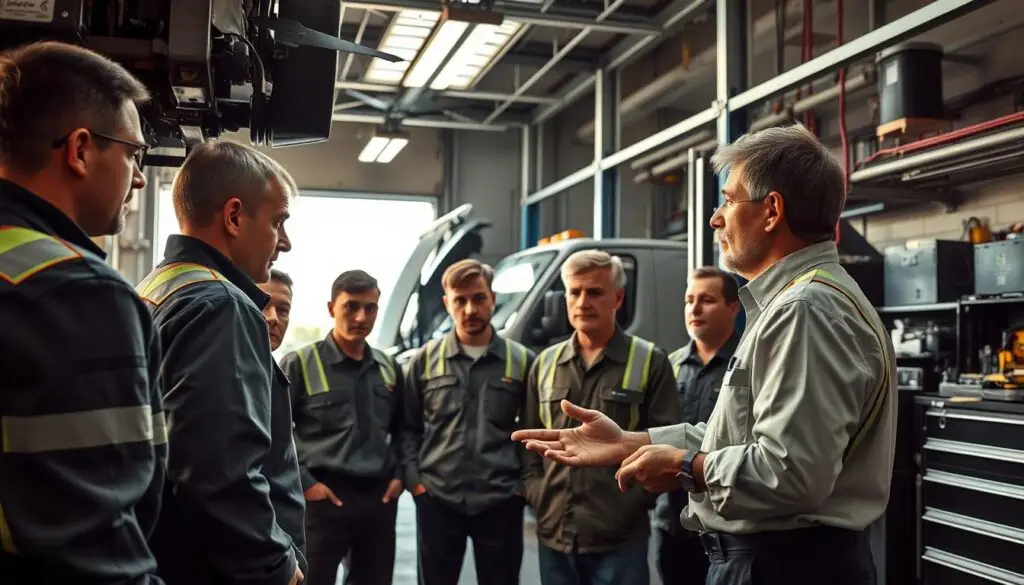
The foundation of any high-performing maintenance team starts with strategic recruitment. Shop foremen must clearly define position requirements that align with both current operational needs and future technological demands. Strong hiring practices include evaluating candidates through practical diagnostic scenarios and hands-on repair tasks—assessments that reveal problem-solving abilities paper qualifications cannot demonstrate. Involving senior technicians in the evaluation process provides multiple perspectives on candidate fit.
Once hired, new technicians require structured onboarding that integrates them into shop culture quickly. The first 90 days prove critical for both retention and productivity. Effective onboarding establishes clear performance expectations, introduces safety protocols, and assigns experienced mentors who guide newcomers through shop-specific procedures, equipment, and the fleet’s vehicle types.
Performance Evaluation and Feedback Systems
Measuring technician performance requires both objective metrics and qualitative assessments. Waiting for annual reviews creates missed opportunities for improvement and development. Regular coaching conversations—weekly or bi-weekly—address strengths and development areas constructively before small issues become performance problems.
| Performance Metric | Measurement Method | Target Standard | Review Frequency |
|---|---|---|---|
| Repair Quality | Comeback rate tracking | Less than 5% rework | Monthly |
| Diagnostic Accuracy | First-time fix percentage | 85% or higher | Quarterly |
| Efficiency | Labor hours vs. estimates | Within 10% variance | Weekly |
| Safety Compliance | Incident reports and audits | Zero preventable incidents | Continuous |
| Teamwork | Peer feedback and observation | Consistently positive | Quarterly |
Documentation of performance evaluation results protects both the organization and the technician. Detailed records support promotion decisions, identify training needs, and provide evidence for disciplinary actions when necessary.
Training Programs and Apprenticeship Coordination
Continuous fleet technician training maintains team competency as vehicle technology evolves. Shop foremen must create learning opportunities that progress from foundational skills to advanced specializations. This commitment to staff development reduces turnover costs and builds institutional knowledge that competitors cannot easily replicate.
Formal training includes manufacturer-specific programs, diagnostic equipment certification courses, and technical workshops. Informal development occurs through job shadowing, cross-training on different vehicle systems, and collaborative problem-solving on complex repairs. Foremen should identify individual learning needs through performance data and direct observation—targeting development that leverages natural strengths while addressing skill gaps.
Structured apprenticeship programs provide pathways for less experienced technicians to develop mastery under expert guidance. The foreman coordinates these learning relationships by matching apprentices with mentors whose technical strengths align with organizational needs. Entry-level technicians begin with routine maintenance tasks and basic diagnostics, advancing to more complex repairs under supervision as competency develops. Attending accredited vocational programs or community college diesel technology courses provides apprentices with foundational knowledge that accelerates on-the-job learning.
ASE certification represents the recognized industry standard for validating technical expertise. Foremen should identify which certifications benefit the operation based on fleet composition—the T-series for medium/heavy truck, H-series for transit bus, or S-series for school bus operations. Facilitating certification through study time, covered testing fees, and achievement bonuses demonstrates organizational commitment while enhancing service capabilities.
Scheduling and Workflow Optimization
Strategic scheduling and workflow management separate exceptional shop foremen from adequate supervisors, determining whether fleet operations run smoothly or face constant disruption. Mastering workflow optimization ensures maximum fleet availability while maintaining team productivity and morale—and it requires both technical competence and sophisticated organizational skills.

Balancing Workload Distribution
Distributing work equitably across the technician team requires careful consideration beyond simple task allocation. Skilled foremen account for varying expertise levels, certification requirements, individual strengths, and developmental opportunities when creating daily assignments. Preventing burnout through reasonable workload distribution protects both employee wellbeing and long-term operational effectiveness.
Effective workload management strategies include skill-based assignment systems matching technician expertise with job complexity, rotation schedules providing exposure to diverse repair types, peak period planning for seasonal variations, absence contingency plans maintaining productivity during vacations or unexpected absences, and fairness metrics tracking task distribution to ensure equitable patterns over time.
Managing Emergency Repairs and Downtime
Responding effectively when critical vehicles fail unexpectedly represents one of the most challenging aspects of fleet maintenance leadership. Emergency repairs demand rapid triage, resource reallocation, and clear communication protocols that minimize fleet disruption while maintaining safety and quality standards.
“The difference between chaos and controlled response during emergency breakdowns lies in preparation, not improvisation.”
— Common fleet maintenance principle
Experienced foremen develop contingency plans before emergencies occur—maintaining relationships with emergency parts suppliers, identifying external repair resources for overflow capacity, and creating flexible scheduling systems that absorb disruptions. When emergencies hit, the response follows a structured sequence: assess vehicle criticality and operational impact, reallocate technician assignments without completely disrupting planned maintenance, manage overtime strategically to control labor costs, maintain quality standards despite time pressure, and communicate realistic timelines to fleet managers and operators.
Documentation of emergency repairs provides valuable data for identifying recurring problems. Foremen who track breakdown patterns can implement preventive measures that reduce emergency frequency over time—turning reactive responses into proactive prevention.
Free Professional Fleet Tools
Cost calculators, fault code lookup, maintenance planners, and more—built for owner-operators, fleet managers, and diesel techs. No signup required.
Coordinating with Fleet Managers and Operators
Successful workflow optimization extends beyond the shop floor to include coordination with vehicle users and operational managers. This collaboration requires clear processes for gathering maintenance requests, communicating repair timelines, and negotiating vehicle availability windows.
| Coordination Area | Foreman Responsibility | Communication Method | Frequency |
|---|---|---|---|
| Maintenance Requests | Review and prioritize incoming work orders | Digital work order system with status updates | Real-time |
| Repair Timelines | Provide accurate completion estimates | Direct communication with fleet managers | Upon assignment and status changes |
| Vehicle Availability | Coordinate scheduled downtime with operations | Weekly planning meetings | Weekly with monthly forecasting |
| Delay Notifications | Communicate problems and revised timelines | Immediate phone or email alerts | As issues arise |
Gathering accurate information about vehicle problems from operators ensures efficient diagnosis. Foremen develop intake systems capturing detailed problem descriptions while filtering out irrelevant information. Managing expectations when delays occur requires honest communication—explaining technical realities in accessible language helps fleet managers understand why certain repairs need extended timelines, building trust that facilitates realistic operational planning.
Safety Compliance and Quality Control
Shop foremen must master the dual mandate of ensuring workplace safety while maintaining uncompromising quality standards across all repair operations. These are not administrative tasks to delegate—they are core leadership functions demanding constant vigilance and personal accountability. The consequences of inadequate oversight extend far beyond regulatory fines to include injured employees, failed repairs, and cascading operational disruptions that undermine team morale and organizational credibility.
⚠️ Safety Warning
Vehicle lift and jack failures cause severe injuries and fatalities across the repair industry every year. Foremen must verify that technicians follow manufacturer specifications for lift points and capacity ratings without exception. Lockout/tagout procedures for equipment with stored energy are equally non-negotiable—a single shortcut can result in catastrophic injury when equipment unexpectedly activates.
OSHA Regulations and Environmental Compliance
OSHA standards establish the minimum acceptable conditions for automotive repair facilities, and shop foremen bear direct legal responsibility for consistent enforcement. Key safety requirements demanding daily attention include proper vehicle lift operation, hazardous material handling and disposal for solvents, lubricants, and batteries, absolute personal protective equipment enforcement, lockout/tagout compliance for stored-energy equipment, and adequate ventilation for welding and painting operations.
Environmental compliance adds another layer of responsibility. EPA regulations govern waste streams generated by fleet maintenance activities, including used oil, antifreeze, and parts washing solvents. Refrigerant handling during air conditioning service requires EPA Section 608/609 certification and specialized recovery equipment. Battery disposal and recycling programs prevent lead contamination. Leading fleet operations exceed minimum environmental requirements by implementing waste reduction initiatives and sustainable practices that demonstrate corporate responsibility.
Quality Assurance and Inspection Protocols
Systematic quality assurance prevents defective repairs from reaching the field while building technician accountability. Shop foremen implement structured inspection processes verifying work meets manufacturer specifications and industry standards. These procedures protect against warranty disputes and comeback repairs that consume resources without generating revenue.
| Inspection Stage | Primary Focus | Responsible Party | Documentation |
|---|---|---|---|
| Pre-Repair | Condition assessment and scope definition | Assigned Technician | Digital photos and written notes |
| In-Process | Procedure compliance verification | Shop Foreman | Checkpoint signatures |
| Post-Repair | Functional testing and spec validation | Quality Control Inspector | Test results and measurements |
| Final Release | Completeness and cleanliness check | Shop Foreman | Release authorization signature |
Quality standards must be clearly defined, consistently communicated, and uniformly enforced. Foremen who tolerate substandard work from high-volume technicians while holding others accountable create team resentment and quality variation. Every repair should meet the same standard regardless of who performed it or the operational pressures involved.
Comprehensive warranty documentation protects fleet operations during claim disputes with parts suppliers and manufacturers. Foremen ensure technicians record part numbers, failure modes, and diagnostic procedures supporting warranty recovery. Warranty-eligible repairs require identification before parts ordering to capture available cost recovery. Quality standards that minimize comeback repairs simultaneously reduce liability exposure and improve operational efficiency.
Communication and Cross-Functional Problem-Solving
Shop foremen who master interpersonal communication create operational advantages extending far beyond the shop floor. Communication skills transform technical expertise into organizational influence, enabling foremen to coordinate resources, resolve conflicts, and drive maintenance excellence across every department they touch.
Working Across Department Lines
Interdepartmental coordination requires foremen to build productive partnerships with procurement, operations, safety, and finance teams. Each relationship demands tailored communication approaches respecting departmental objectives while advancing maintenance goals. Effective foremen maintain regular contact with parts procurement to ensure critical inventory availability, coordinate with operations managers to balance maintenance windows against deployment pressures, partner with safety departments on incident investigation and corrective actions, and provide finance teams with accurate budget forecasts and expenditure justifications.
Managing External Vendor Partnerships
Vendor management and supplier relations directly impact parts quality, cost control, and service continuity. Foremen negotiate pricing, evaluate product performance, and resolve quality issues with external partners. Skilled foremen develop preferred supplier networks based on reliability, quality, and responsiveness—maintaining open communication channels for urgent parts needs, warranty claims, and technical consultations.
Specialized repair vendors handle services beyond internal capabilities, such as transmission rebuilds, frame work, or advanced electronics diagnostics. Foremen must clearly communicate work requirements, verify vendor qualifications, and monitor service quality. These partnerships expand the shop’s effective capacity without requiring additional in-house expertise or equipment investments. The CVSA out-of-service criteria provide a useful framework for prioritizing which external repairs demand the most rigorous vendor qualification standards.
Keeping Leadership Informed
Management reporting bridges the gap between shop-floor operations and executive decision-making. Foremen must distill complex technical information into clear summaries enabling leadership to assess performance, allocate resources, and make strategic decisions. Regular performance reporting covers fleet availability rates, maintenance cost per mile, schedule adherence, and safety incident statistics—presented with context explaining trends and identifying the factors driving performance changes.
Presenting technical information to non-technical audiences requires translation. Rather than discussing “turbocharger actuator failures,” skilled foremen explain “engine performance issues requiring component replacement to prevent vehicle downtime.” When requesting additional technicians, equipment, or budget increases, foremen support proposals with data showing how investments will improve fleet availability, reduce operating costs, or enhance safety outcomes.
Problem-solving abilities enhance all communication functions by enabling foremen to present solutions alongside problems. Rather than simply reporting issues, exceptional foremen analyze root causes, identify alternatives, and recommend courses of action. This proactive approach positions foremen as strategic partners rather than operational reporters, increasing their organizational influence and effectiveness.
Frequently Asked Questions
What does a shop foreman do in fleet maintenance?
A shop foreman manages daily maintenance operations in a fleet repair facility. Core responsibilities include assigning work orders to technicians based on skill level and urgency, overseeing preventive maintenance schedules, managing parts inventory, enforcing safety and quality standards, and coordinating vehicle availability with fleet managers. The role bridges hands-on technical work and executive decision-making, requiring both diagnostic expertise and people management skills. Foremen also handle performance evaluations, training coordination, budget tracking, and regulatory compliance including OSHA and EPA standards.
What qualifications do you need to become a shop foreman?
Most shop foreman positions require several years of hands-on experience as a fleet or diesel technician, combined with demonstrated leadership ability. ASE certification is increasingly mandatory for supervisory roles, with T-series certifications being particularly relevant for medium and heavy truck operations. Additional qualifications include proficiency with fleet maintenance management software, understanding of OSHA safety regulations and EPA environmental compliance, strong communication skills for interdepartmental coordination, and the ability to interpret technical documentation including wiring diagrams and service schematics. Many foremen advance through apprenticeship programs before moving into supervisory positions.
How does a shop foreman prioritize repair work orders?
Shop foremen prioritize work orders using a structured framework based on multiple factors. Vehicle mission criticality comes first—emergency response vehicles and revenue-generating equipment take top priority. Safety-related repairs move to the front regardless of other considerations. Operational impact on fleet availability, repair complexity and estimated completion time, and parts availability also influence scheduling decisions. Foremen match tasks to technician skills and certifications while balancing workload distribution across the team to prevent burnout and support professional development.
What safety responsibilities does a fleet shop foreman have?
Fleet shop foremen bear direct legal responsibility for OSHA compliance and workplace safety enforcement. Key responsibilities include verifying proper vehicle lift and jack operation according to manufacturer specifications, enforcing personal protective equipment requirements without exception, ensuring correct hazardous material handling and disposal, maintaining lockout/tagout procedures for equipment with stored energy, and monitoring ventilation systems for welding and painting operations. Foremen also manage EPA environmental compliance including refrigerant handling certification, waste oil disposal, and parts washing solvent management under applicable federal and state regulations.
How do shop foremen develop and retain skilled technicians?
Effective shop foremen use a systematic approach to staff development beginning with strategic recruitment and structured onboarding during the critical first 90 days. Ongoing development includes formal manufacturer training programs, ASE certification support with study time and fee coverage, structured apprenticeship programs with clear progression milestones, and cross-training across different vehicle systems. Regular performance evaluations track metrics including comeback rates, diagnostic accuracy, efficiency, and safety compliance. Foremen maintain engagement through equitable work distribution, professional development opportunities, recognition of quality work, and transparent communication about shop performance.
What is the difference between a shop foreman and a fleet manager?
A shop foreman directly supervises technicians and manages daily repair operations on the shop floor, including work order assignments, quality control inspections, and hands-on technical guidance. A fleet manager oversees the broader operational picture including vehicle procurement, deployment scheduling, route planning, and total cost of ownership analysis. The foreman reports to the fleet manager and translates strategic maintenance objectives into practical daily workflows. While fleet managers focus on business outcomes like cost per mile and fleet availability rates, foremen focus on execution—ensuring repairs are completed correctly, safely, and on schedule.
Building a Career in Fleet Maintenance Leadership
Mastering shop foreman responsibilities requires dedication across technical, leadership, and operational competencies simultaneously. This position demands professionals who can diagnose a complex aftertreatment fault code in the morning and mediate a team conflict in the afternoon—all while keeping the preventive maintenance schedule on track and the parts budget in line.
The foremen who thrive treat leadership development as an ongoing commitment rather than a destination. Modern fleet operations evolve constantly with new vehicle technologies, regulatory requirements, and management methodologies. Staying current through training programs, ASE certifications, industry associations, and hands-on experience with emerging systems is what separates the indispensable shop leaders from the ones struggling to keep up.
Fleet operations depend on these skilled professionals to manage complex technical challenges while building teams capable of meeting tomorrow’s demands. Start by identifying your strongest competency area from this guide, then focus deliberate development effort on your biggest gap. Excellence in this role emerges through consistent practice, mentorship, and the willingness to keep learning long after you’ve earned the title.
Help a Fellow Fleet Professional
Know a technician stepping into a foreman role or a supervisor looking to sharpen their skills? Share this guide with your network.


