By Michael Nielsen, Editor & Publisher | 15+ Years in Diesel Repair
Last Updated: February 2026
📖 Estimated reading time: 23 minutes
Running a successful diesel repair shop requires more than skilled technicians and quality parts. The difference between thriving operations and struggling businesses often comes down to how well you measure and manage your workforce. A diesel mechanic evaluation system transforms guesswork into data-driven decisions that boost profitability and customer satisfaction.
Shop owners across the United States face a common challenge: identifying which team members drive success and which need additional support. Without standardized performance metrics, you’re essentially navigating without a compass. These measurement tools provide clear visibility into repair quality, efficiency, and safety compliance across your entire operation.
Implementing a comprehensive performance management system creates accountability while highlighting opportunities for professional development. When you establish technician performance metrics, you build a foundation for operational excellence that helps reduce equipment downtime, control labor costs, and protect your shop’s reputation in an increasingly competitive marketplace.
Key Takeaways
- Structured evaluation systems directly impact shop profitability and customer retention rates through measurable KPIs.
- Four essential KPIs form the foundation: repair completion rate, average repair time, first-time fix rate, and billable hours percentage.
- Safety and compliance metrics should carry 20-25% of total evaluation weight to reinforce OSHA compliance and reduce liability.
- Standardized templates (annual reviews, quarterly check-ins, 90-day evaluations) ensure consistent, legally defensible assessments.
- Data-driven reviews reduce turnover by creating transparent development pathways that keep experienced technicians engaged.
- Supervisor training on cognitive biases and evidence-based rating practices is essential for fair, effective evaluations.
Why Diesel Mechanic Performance Reviews Matter
Many shop owners view performance reviews as paperwork, but they’re actually powerful mechanisms that drive profitability and team excellence. In the diesel repair industry, where technician expertise directly impacts revenue and customer satisfaction, structured evaluations become essential business intelligence tools that provide concrete data transforming how shops operate, develop talent, and protect their business interests.

Impact on Shop Productivity and Profitability
Structured performance evaluations reveal patterns that directly affect your bottom line. When you track technician metrics consistently, you discover which mechanics complete jobs efficiently and which struggle with specific repair types. This visibility allows you to assign work strategically, maximizing shop throughput while reducing bottlenecks.
High-performing technicians generate more billable hours per week. By identifying top performers through regular reviews, managers can analyze their methods and share best practices across the team. This knowledge transfer elevates overall shop performance without additional labor costs.
Comeback rates provide another critical profitability indicator. When performance reviews track first-time fix rates, you identify technicians who consistently deliver quality work versus those requiring additional supervision. Reducing comebacks by just 10% can increase monthly revenue by thousands of dollars while improving customer retention.
15-20% Higher Productivity
Reported by shops using systematic performance measurement versus informal observations, per TMC fleet maintenance benchmarking data
Employee Development and Retention Benefits
The diesel industry faces severe technician shortages, making employee retention a critical competitive advantage. According to the Bureau of Labor Statistics, demand for diesel service technicians continues growing while the qualified workforce shrinks. Regular performance reviews create career pathways that keep experienced mechanics engaged and motivated.
Technician development becomes systematic rather than random when evaluations identify specific skill gaps. Instead of generic training programs, shops can provide targeted education that addresses individual weaknesses. This personalized approach accelerates skill acquisition and demonstrates genuine investment in employee growth.
Consider the financial impact of turnover. Replacing an experienced diesel mechanic costs between $8,000 and $15,000 when accounting for recruitment, training, and lost productivity. Performance reviews that facilitate development and recognition reduce turnover rates by creating an environment where technicians feel valued. Shops with formal development programs report approximately 40% lower turnover than those without structured career advancement systems.
Legal and Documentation Requirements
Performance documentation serves as essential legal protection for diesel repair facilities. When employment decisions become necessary—whether promotions, disciplinary actions, or terminations—detailed records provide defensible documentation that withstands legal scrutiny. Without this paper trail, shops become vulnerable to wrongful termination claims and discrimination lawsuits.
Labor regulations require employers to demonstrate fairness and consistency in employment practices. Regular reviews create timestamped records showing that decisions were based on objective criteria rather than personal bias. This documentation also supports wage and hour compliance by tracking billable hours, efficiency rates, and productivity metrics that verify technician classifications align with actual job duties.
Beyond legal protection, proper documentation supports insurance and liability management. When warranty claims or customer complaints arise, detailed evaluations demonstrate that your shop maintains quality standards and provides appropriate supervision. Creating standardized evaluation templates ensures consistency across all reviews while making the process more efficient for managers.
Essential KPIs for Diesel Mechanic Evaluations
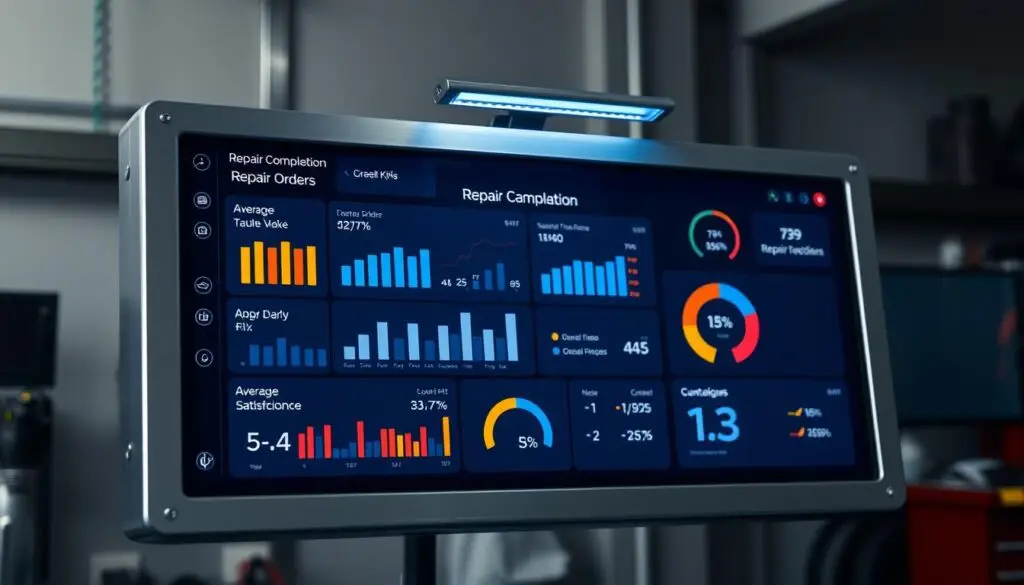
Measuring diesel mechanic performance requires focusing on the right key performance indicators that reveal true productivity. These KPIs transform raw data into actionable insights about technician effectiveness. The foundation of any evaluation system rests on quantifiable measurements rather than gut feelings, because even small efficiency gaps can significantly impact profitability.
Repair Completion Rate
The repair completion rate measures the percentage of assigned jobs a technician finishes within a specific timeframe. To calculate it accurately, divide completed jobs by total assigned jobs and multiply by 100. A technician who completes 47 out of 50 assigned repairs achieves a 94% completion rate.
Industry benchmarks vary based on shop type and job complexity. Fleet maintenance facilities often expect 90-95% completion rates because jobs follow predictable patterns. Heavy equipment repair shops may accept 80-85% rates due to unexpected complications with aging machinery. Smart evaluation systems account for job complexity by assigning weights to different repair types.
Average Repair Time per Job
Average repair time directly measures technician efficiency by comparing actual hours spent against standard labor time guides. Most shops reference Mitchell, AllData, or Motor estimates when establishing baseline expectations. A mechanic who spends 40 hours completing 10 jobs with a combined standard time of 35 hours operates at 114% of book time, indicating either a slower work pace or challenging repair conditions.
Understanding this metric requires balancing speed against quality. Technicians who consistently finish well below book time may rush through critical steps. Those significantly above standard times might need additional training or better diagnostic tools. Effective tracking compares individual performance against both standard times and shop averages to set realistic improvement targets.
First-Time Fix Rate
The first-time fix rate stands as perhaps the most critical indicator of true technician competence. This metric measures the percentage of vehicles that do not return with the same problem after initial repair. Calculate it by tracking comeback visits within 30 days, dividing successful repairs by total repairs, and multiplying by 100.
Industry benchmarks for excellent performers range from 90-95% across most diesel repair environments. Rates below 80% signal serious concerns about diagnostic accuracy or workmanship quality that demand immediate intervention. This metric provides insights that repair speed alone cannot reveal—a mechanic who works quickly but generates frequent comebacks costs the shop more than a slower but thorough technician.
Billable Hours Percentage
Billable hours percentage measures the ratio between hours a technician is paid for versus hours that generate customer revenue. A mechanic who bills 32 hours out of a 40-hour work week achieves 80% billable hours. Realistic targets typically range from 75-85% in well-run shops with good parts availability and workflow management.
Percentages below 70% often indicate systemic shop problems rather than individual technician issues. Poor parts inventory, inadequate tooling, or workflow bottlenecks drag down these numbers across entire teams. Fair evaluation systems account for shop-level factors like parts delays and mandatory safety meetings when assessing individual performance.
| KPI Metric | Calculation Method | Excellent Range | Acceptable Range |
|---|---|---|---|
| Repair Completion Rate | (Completed Jobs ÷ Assigned Jobs) × 100 | 90-95% | 80-89% |
| Average Repair Time | Total Hours ÷ Jobs vs. Book Time | 95-105% of standard | 105-115% of standard |
| First-Time Fix Rate | (Successful Repairs ÷ Total Repairs) × 100 | 90-95% | 85-89% |
| Billable Hours Percentage | (Billable Hours ÷ Total Hours) × 100 | 80-85% | 75-79% |
Technician Performance Metrics Beyond Productivity
Beyond counting hours and completed repairs, diesel shops must evaluate the quality behind each service. Speed matters, but accuracy determines whether customers return with satisfaction or complaints. The most valuable technicians combine efficiency with precision, solving problems correctly the first time.
Measuring Diagnostic Skills and Problem-Solving Ability
The foundation of excellent diesel repair work lies in accurate problem identification. Technicians who correctly diagnose issues on the first attempt save significant time and resources. Tracking diagnostic accuracy involves comparing initial assessments against actual repairs completed—service advisors should document the preliminary diagnosis before work begins, then supervisors review whether the original diagnosis matched the root cause.
Several data sources help measure diagnostic precision: the ratio of diagnostic time to actual repair time, accuracy of initial cost estimates compared to final invoices, quality control inspection results, and warranty claim reviews for misdiagnosed problems. Industry benchmarks suggest skilled diesel technicians should achieve 85-90% accuracy rates on initial problem identification.
Tracking Proper Tool and Equipment Usage
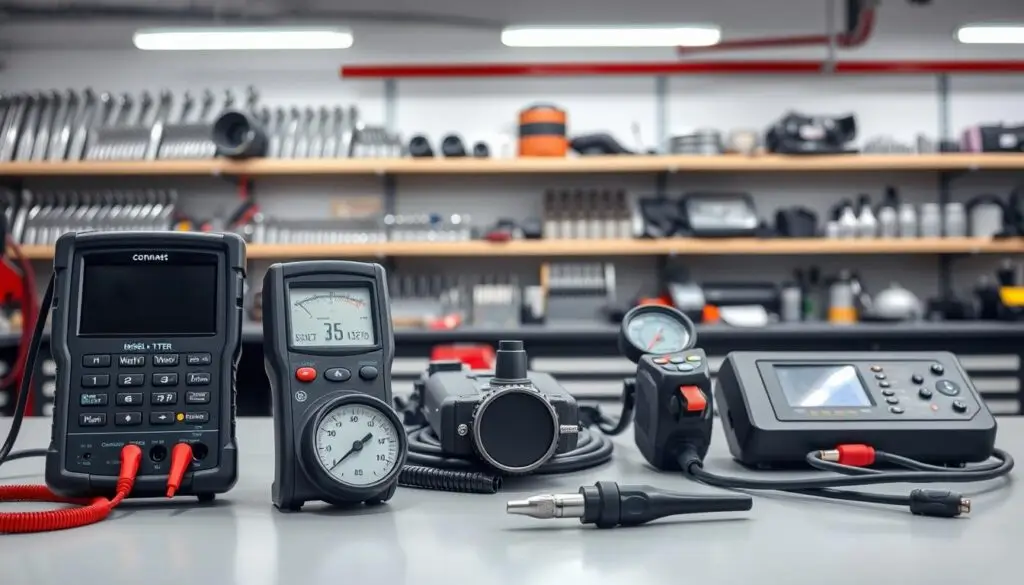
Modern diesel diagnostics require sophisticated equipment representing substantial capital investments. Technicians who reach for scan tools, multimeters, and pressure testers before replacing components demonstrate professional methodology. Parts-swapping approaches waste time and money compared to systematic diagnostic procedures.
Shops can track equipment utilization by monitoring checkout logs for specialized diagnostic tools, reviewing how often technicians access diagnostic equipment relative to their job assignments, and examining whether they complete required calibrations on tools they use regularly. Training records provide additional insight—technicians who complete manufacturer certification programs typically demonstrate higher equipment utilization rates.
Evaluating Parts Ordering Efficiency
Getting the right parts on the first order significantly affects job completion times and customer satisfaction. Record how often technicians order incorrect parts requiring returns, document instances where additional components become necessary after initial orders, and calculate the average time between parts identification and successful installation.
Experienced diesel mechanics develop valuable knowledge about sourcing obsolete or specialty components. Their ability to identify alternative suppliers or cross-reference part numbers saves critical downtime. Establishing a target of 95% first-time ordering accuracy provides a realistic standard that directly correlates with reduced customer wait times.
Analyzing Comeback Rates and Quality Issues
Jobs returning for the same or related problems within 30 days indicate potential quality concerns. However, distinguishing between technician errors and unrelated new failures requires careful analysis. A comeback occurs when a customer returns specifically because the original repair did not resolve the problem—unrelated failures on different systems should not count against the technician.
Industry standards suggest comeback rates should remain below 5% of total jobs completed. Technicians exceeding this threshold require additional training or closer supervision, while those maintaining rates under 3% demonstrate exceptional workmanship. Regular comeback reviews help identify whether patterns represent systemic shop issues or individual performance problems.
| Performance Metric | Target Range | Data Source |
|---|---|---|
| Diagnostic Accuracy Rate | 85-90% | Service records, QC inspections |
| Equipment Utilization Score | 80-95% | Tool checkout logs, observations |
| Parts Ordering Accuracy | 95%+ | Parts department records |
| Comeback Percentage | Under 5% | Customer service records |
| Rework Hours | Under 3% of billable | Time tracking, payroll records |
Quality and Workmanship Standards
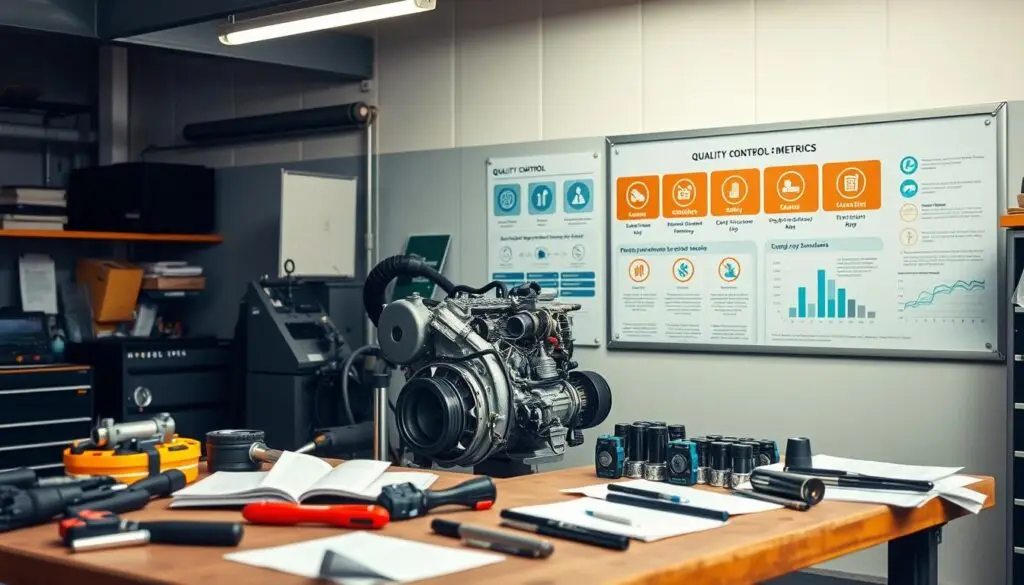
The difference between exceptional diesel repair facilities and average shops lies in their commitment to measurable quality standards. These benchmarks determine whether vehicles leave your bay fixed correctly the first time or return with comebacks that damage your reputation. Implementing clear quality control metrics creates accountability while protecting your business from costly warranty claims.
Inspection Checklist Compliance
Multi-point inspection processes separate professional diesel shops from facilities that simply address immediate problems. Diesel-specific inspection items must include fluid conditions, belt wear patterns, brake system components, exhaust integrity, electrical connections, and cooling system health. Technicians should document findings for every checkpoint rather than skipping steps to save time.
Track inspection completion percentages by reviewing repair orders against your standard checklist. Aim for 95% or higher compliance among experienced technicians. Audit random repair orders monthly to verify thoroughness—look for detailed notes about component conditions, measurements, and specific recommendations rather than generic checkmarks.
Warranty Claim Frequency
Warranty work resulting from technician errors directly impacts shop profitability and customer confidence. Calculate warranty claims as a percentage of total jobs completed per technician, separating technician-caused issues from legitimate parts failures. Industry benchmarks suggest warranty rates should remain below 2-3% for experienced diesel mechanics on standard repairs.
Track both the number of warranty claims and their financial impact. Some comebacks require minor adjustments while others demand complete job redos. Weight serious warranty work more heavily in performance evaluations because major errors cost significantly more than minor oversights.
Technical Bulletin Adherence and Documentation Quality
Manufacturer technical service bulletins provide critical updates on repair procedures, known issues, and improved diagnostic approaches. Establish systems ensuring technicians access relevant bulletins before starting complex repairs. Monitor whether mechanics apply updated procedures during recalls and diagnostic challenges—non-compliance often indicates technicians aren’t checking for available guidance.
Thorough technical documentation protects your shop legally, facilitates warranty processing, and helps future technicians working on the same vehicles. Evaluate repair order notes for completeness and clarity. Excellent documentation includes diagnostic trouble codes found, test results with specific values, parts with complete numbers, and procedures followed. Rate documentation on a consistent scale during reviews and sample repair orders weekly to provide feedback before poor habits become ingrained.
| Quality Metric | Target Benchmark | Review Frequency |
|---|---|---|
| Inspection Compliance | 95% or higher | Monthly audit |
| Warranty Claim Rate | Below 2-3% | Quarterly review |
| TSB Adherence | 100% on critical updates | Per job verification |
| Documentation Quality | 4.0/5.0 average or higher | Weekly sampling |
Safety and Compliance Metrics
No technician skill or productivity level can justify compromising workplace safety standards. Safety performance serves as a critical component of diesel mechanic evaluations because unsafe practices put lives at risk and expose businesses to significant liability. Diesel repair environments present unique hazards—technicians work with high-pressure fuel systems, heavy components weighing hundreds of pounds, powerful hydraulic equipment, and hazardous chemicals daily.

Individual Safety Performance Tracking
Start by documenting each technician’s safety record including near-miss reports, recordable incidents, lost-time injuries, and safety observations. Near-miss reporting deserves special attention because it demonstrates awareness and helps prevent future accidents. Create a scoring system that emphasizes proactive safety behaviors alongside incident tracking—award points for completing safety training, conducting pre-shift equipment inspections, and submitting safety improvement suggestions.
Many successful diesel shops assign 20-25% of the total evaluation score to safety metrics. This proportion communicates that safety ranks equally with technical competency and productivity. Diesel-specific safety considerations include proper procedures when working under raised vehicles, safe handling of high-pressure fuel and hydraulic systems, battery disconnect protocols before electrical work, lockout/tagout compliance, and proper ventilation when running engines indoors.
⚠️ Safety Warning
The OSHA General Duty Clause, Section 5(a)(1), requires employers to provide a workplace free from recognized hazards causing or likely to cause death or serious physical harm. Individual technician safety practices directly determine your shop’s compliance status.
Regulatory and Environmental Compliance
Evaluating OSHA compliance at the individual technician level protects your business from regulatory penalties and citations. Key areas include lockout/tagout procedures (a frequent citation area), confined space protocols for work in fuel tanks or under vehicles in pits, respiratory protection when grinding or working with solvents, and hazard communication standards requiring technicians to understand Safety Data Sheets.
Individual technician practices also directly impact environmental compliance. EPA regulations and state environmental rules govern how mechanics handle waste materials, refrigerants, solvents, and fluids, with penalties that can exceed $50,000 per violation according to the EPA enforcement program. Evaluate how each mechanic manages used oil disposal, refrigerant recovery procedures, parts washer operation, and spill response compliance.
Daily Safety Practices and Work Area Standards
Consistent PPE usage prevents injuries that sideline skilled technicians and increase workers’ compensation costs. Conduct random spot checks throughout evaluation periods rather than announced inspections to reveal actual compliance. Document both compliant practices and violations with specific dates and circumstances.
Work area organization directly impacts safety and efficiency. Evaluate whether technicians maintain clean, organized workspaces that minimize trip hazards. Specific criteria should include tools returned to storage at end of shift, spills cleaned immediately, walking paths kept clear of parts and equipment, waste properly sorted into designated containers, and equipment properly shut down when not in use.
| Compliance Area | Evaluation Criteria | Review Frequency |
|---|---|---|
| Lockout/Tagout | Proper energy isolation followed 100% | Monthly observation |
| Confined Space Entry | Testing completed, permits signed | Per occurrence |
| Hazard Communication | Can identify chemicals, locate SDS | Quarterly assessment |
| PPE Compliance | Correct selection and consistent use | Random spot checks |
The HDJ Perspective
After 15 years working with diesel repair operations, one pattern stands out clearly: shops that treat performance reviews as development tools rather than punishment mechanisms consistently outperform those that don’t measure at all. The industry’s technician shortage makes this even more critical. You can’t afford to lose good mechanics because they don’t feel valued, and you can’t afford to keep underperformers because you never documented the problems. The shops winning right now are the ones using objective data to have honest, constructive conversations—then backing those conversations with training investments and clear advancement pathways.
Customer Satisfaction and Communication Skills
Every diesel mechanic serves as a brand ambassador whose communication skills directly influence customer loyalty and shop reputation. In an era where online reviews significantly impact shop selection decisions, evaluating customer-facing abilities has become essential. Satisfied customers return for future services, refer others, and leave positive reviews that directly impact profitability.
Customer Feedback Scores
Post-service surveys sent via email or text message provide direct feedback on specific repair experiences. Ask customers to rate satisfaction with work quality, communication clarity, and professionalism. Net Promoter Score methodology asks one key question: “How likely are you to recommend this technician to others?” Calculate individual technician NPS by subtracting detractors from promoters.
Setting realistic benchmarks requires acknowledging that diesel repair customers often face expensive, unexpected breakdowns that challenge satisfaction regardless of service quality. Compare technician scores against shop averages rather than absolute targets, and track trends over time to reveal improvement or decline patterns more accurately than single-point measurements.
Communication Effectiveness and Professional Conduct
Evaluating how well technicians explain technical issues requires multiple assessment methods. Manager observation during customer interactions provides direct insight, while survey questions like “Did the technician clearly explain what was wrong?” provide quantifiable data. Key competencies include building rapport quickly, setting realistic expectations about timelines and costs, responding patiently to questions, and maintaining composure when explaining expensive repairs.
Professional conduct encompasses appearance, vehicle treatment, and interpersonal demeanor. Respectful treatment of customer vehicles—using seat covers, avoiding eating in customer trucks, returning vehicles cleaner than received—demonstrates care that customers notice. Proactive communication about delays or complications builds trust even when delivering unwanted news. Technicians who immediately inform service advisors when repairs take longer than estimated help manage customer expectations effectively.
Free Professional Fleet Tools
Cost calculators, fault code lookup, maintenance planners, and more—built for owner-operators, fleet managers, and diesel techs. No signup required.
Ready-to-Use Evaluation Templates for Diesel Mechanics
Standardized evaluation templates provide diesel shop managers with structured frameworks for consistent assessments. These templates eliminate guesswork and ensure every technician receives fair, comprehensive evaluations based on objective criteria. The following frameworks can be customized for truck repair facilities, agricultural equipment services, bus maintenance operations, and marine diesel applications.

Annual Performance Review Template
The comprehensive annual evaluation captures twelve months of performance data across technical competencies, productivity, quality, safety, and professional development. Use a five-tier rating system: Outstanding (consistently exceeds expectations), Exceeds Expectations (regularly surpasses requirements), Meets Expectations (fulfills all job requirements), Below Expectations (gaps require improvement), and Unsatisfactory (fails minimum standards).
The technical skills assessment evaluates proficiency across core diesel competencies including fuel system diagnostics, electrical and electronic controls, air induction and turbocharger service, emissions control systems, drivetrain components, brake systems, and computerized diagnostic tool proficiency. Reference actual diagnostic success rates from shop management software and document current ASE certifications and manufacturer-specific credentials.
The productivity section incorporates quantitative KPIs including billable hours percentage, repair completion rate, first-time fix rate, and efficiency ratio. Show year-over-year trends and compare the mechanic’s performance against shop averages. The professional development component documents training completed and establishes SMART goals—instead of “improve diagnostics,” write “complete advanced electrical diagnostics course and achieve 90% first-time fix rate on electrical issues by Q3.”
| Performance Factor | Weight | Evaluation Criteria |
|---|---|---|
| Technical Skills | 35% | System knowledge, diagnostic ability, repair quality, certifications |
| Productivity | 30% | Billable hours, completion rate, efficiency ratio, first-time fix rate |
| Quality & Safety | 20% | Comeback rate, inspection compliance, safety record, PPE usage |
| Professional Conduct | 15% | Communication, teamwork, customer interaction, attendance |
Quarterly Check-In Template
Frequent feedback prevents surprises during annual reviews. The quarterly check-in provides a streamlined evaluation taking 15-20 minutes that focuses on four areas: recent accomplishments worth recognizing, current challenges affecting performance, progress toward annual goals, and immediate development needs. If a mechanic’s billable hours have dropped for two consecutive months, the quarterly session provides an opportunity to discuss reasons and solutions rather than waiting for the annual review.
90-Day New Hire Evaluation Template
The probationary period requires specialized templates assessing learning aptitude, cultural fit, fundamental competency, and integration potential. Key areas include ability to follow shop procedures, willingness to ask questions, demonstration of core technical competencies, attendance during the probationary period, interaction with team members, and adherence to safety standards.
The 90-day evaluation should include clear recommendations: continue employment with full status, extend probation with specific improvement requirements, or terminate. Gather feedback from multiple team members for a 360-degree perspective that reveals patterns not visible to the direct supervisor alone.
Skill-Specific Competency Checklist
The detailed competency checklist serves multiple purposes throughout a mechanic’s career—use it during hiring to assess capabilities, during onboarding to identify training needs, and periodically to track development. Rate each task on a four-level proficiency scale: Novice (requires supervision), Competent (performs independently), Proficient (consistent high-quality with troubleshooting ability), and Expert (mastery with ability to train others).
Specific tasks to evaluate include cylinder head removal and installation, injector testing, turbocharger diagnosis, DEF system service, DPF regeneration procedures, ECM programming, electrical diagnosis using multimeter and scan tools, air brake system diagnosis, transmission and differential service, hydraulic troubleshooting, and preventive maintenance inspections. This format helps visualize skill distribution across your workforce, revealing vulnerabilities if only one or two technicians have expertise in critical areas like emissions systems. TMC’s Recommended Practices provide additional guidance on standardizing competency assessments across fleet maintenance operations.
Implementing an Effective Review System
Many diesel shops measure the right things but still struggle because implementation determines success more than measurement selection. The difference between data collection and actual performance improvement lies in how systematically you establish and maintain your evaluation system.
Setting Clear Performance Standards
Technicians cannot meet expectations they don’t understand. Performance standards should differentiate between experience tiers. An apprentice might be expected to complete basic PM within standard labor times while maintaining a 90% first-time fix rate. A journeyman typically handles complex diagnostics with 95% accuracy and completes jobs at or below book time. Master technicians serve as mentors while maintaining the highest quality standards.
Create written expectations for each position that include minimum acceptable performance levels, target ranges representing competent work, excellence benchmarks identifying top performers, shop-specific factors, and timeline expectations for certification achievement. Communicate these standards during onboarding and revisit them regularly.
“The greatest management principle in the world is that the things that get measured and rewarded get done.”
— Michael LeBoeuf, Business Author
Establishing Review Frequency and Timing
Consistency matters more than perfection. Align annual reviews with wage adjustment cycles to connect performance with compensation decisions directly. Schedule quarterly check-ins at consistent intervals rather than only when problems emerge. Avoid conducting reviews during peak seasonal workloads, and separate performance discussions from disciplinary actions to maintain the developmental focus.
Formal reviews provide structure, but ongoing informal feedback creates the context that makes annual evaluations meaningful. Supervisors should provide immediate feedback on both exceptional work and performance concerns rather than saving everything for the annual review session.
Training Supervisors on Fair Evaluations
Many shop foremen and service managers lack formal training in conducting effective reviews, having risen to supervisory positions based on technical expertise rather than management skills. Understanding cognitive biases helps supervisors conduct fairer evaluations. Recency bias causes overweighting recent events while forgetting earlier performance. Halo and horns effects occur when one characteristic overly influences all ratings. Comparison bias leads to rating technicians against each other rather than established standards.
Supervisors should separate performance from personality by focusing on what technicians do rather than who they are. A review stating “completed diagnostics accurately 94% of the time” provides actionable feedback, while “has a good attitude” offers little guidance. The Society for Human Resource Management (SHRM) offers frameworks for structuring evidence-based performance discussions that reduce bias in evaluations.
Integrating Digital Tracking Tools
Technology transforms performance management from administrative burden to strategic advantage. Comprehensive shop management systems integrate KPI tracking with scheduling, invoicing, and workflow management. Look for solutions that provide real-time dashboards displaying individual and shop-wide performance against targets, making metrics visible to both management and technicians.
Digital tracking advantages include objectivity through automated data collection, trend visibility through historical data analysis, reduced administrative burden through automated reporting, transparency allowing technicians to access their own performance data, and consistency ensuring identical measurement methods across all mechanics. Technology serves performance management but doesn’t replace human judgment—a technician with declining efficiency might be mentoring apprentices or handling an unusually complex repair mix.
Common Challenges in Diesel Mechanic Performance Reviews
Even carefully designed evaluation systems encounter obstacles that can reduce their effectiveness. Recognizing common difficulties and addressing them systematically prevents these issues from undermining your entire evaluation process.
Addressing Subjectivity and Bias
Subjectivity represents one of the most significant threats to fair evaluations. A likable mechanic might receive inflated ratings despite mediocre performance, while a difficult personality could result in unfairly harsh scores despite strong technical skills. Negative incidents tend to be more memorable than positive ones, causing supervisors to unload complaints during reviews while forgetting months of solid work.
To increase objectivity, gather input from multiple supervisors, base assessments on recorded data, require specific examples for each rating category, and conduct calibration sessions where supervisors discuss ratings to ensure consistency. Regular documentation throughout the review period prevents recency bias from distorting assessments.
Balancing Speed and Quality Metrics
An inherent tension exists between productivity pressure and quality standards. The key is weighting these competing metrics appropriately. A technician completing jobs quickly but generating frequent rework creates more problems than solutions. Monitor both speed and quality metrics together during reviews—a declining first-time fix rate alongside improving completion times signals a problematic trend requiring immediate attention.
Recommended KPI Weighting for Balanced Evaluations
Weight first-time fix rate at 30%, average repair time at 25%, customer satisfaction at 25%, and billable hours percentage at 20%. This distribution prioritizes quality outcomes while still rewarding efficient work. Adjust weights based on your shop’s specific challenges—facilities struggling with comebacks may increase the first-time fix weight temporarily.
Managing Performance During Technician Shortages
The current reality facing most diesel repair operations involves severe staffing shortages creating pressure to overlook performance deficiencies. According to the American Transportation Research Institute’s Critical Issues report, the driver and technician workforce shortage remains among the industry’s top concerns. Abandoning accountability ultimately worsens staffing problems—poor performers with no consequences have no incentive to improve, while high performers become resentful.
Use performance data strategically to prioritize training investments during shortage periods. Focus development resources on technicians showing potential for improvement. Prevent burnout among top performers carrying disproportionate workloads by recognizing their contributions explicitly and compensating them appropriately. According to CVSA out-of-service criteria, maintaining quality standards isn’t just good business—shops that let standards slip risk vehicles being placed out of service during roadside inspections, compounding both safety and financial consequences.
Frequently Asked Questions
How often should diesel mechanic performance reviews be conducted?
Most successful diesel shops conduct comprehensive annual reviews supplemented by quarterly check-ins. Annual reviews capture twelve months of performance data across technical skills, productivity, quality, and safety metrics. Quarterly sessions take 15-20 minutes and focus on recent accomplishments, current challenges, progress toward annual goals, and immediate training needs. New hires should receive a formal 90-day probationary evaluation. This rhythm provides enough data points for meaningful assessment without creating review fatigue for supervisors or technicians.
What are the most important KPIs for evaluating diesel technicians?
The four essential KPIs are repair completion rate (target 90-95%), average repair time compared to book time (target 95-105% of standard), first-time fix rate (target 90-95%), and billable hours percentage (target 80-85%). These metrics should be tracked together because each reveals different aspects of technician performance. Weight first-time fix rate heavily because it directly impacts customer satisfaction and warranty costs. A mechanic who works quickly but generates frequent comebacks costs the shop more than a slower but thorough technician.
What is a good first-time fix rate for diesel mechanics?
Industry benchmarks for excellent first-time fix rates range from 90-95% across most diesel repair environments. Rates between 85-89% are considered acceptable, while anything below 80% signals serious concerns about diagnostic accuracy or workmanship quality that require immediate intervention through additional training or supervision. Calculate this metric by tracking comeback visits within 30 days after initial repair—divide successful repairs by total repairs and multiply by 100.
How do performance reviews help with technician retention?
Performance reviews reduce turnover by creating clear career pathways based on objective metrics, increasing job satisfaction. Replacing an experienced diesel mechanic costs between $8,000 and $15,000 when accounting for recruitment, training, and lost productivity. Regular evaluations address the top reasons mechanics leave jobs: feeling underappreciated and lacking clear expectations. Shops with formal development programs report approximately 40% lower turnover than those without structured advancement systems.
What should a 90-day new hire evaluation include for diesel mechanics?
A 90-day probationary evaluation should assess learning aptitude, cultural fit, fundamental competency demonstration, and integration potential. Key areas include ability to follow shop procedures, willingness to ask questions and seek guidance, demonstration of core technical competencies, attendance and punctuality, interaction with team members, and adherence to safety standards. The evaluation should include clear recommendations: continue employment with full status, extend probation with specific improvement requirements, or terminate employment. Gather feedback from multiple team members for a comprehensive 360-degree perspective.
Building a Performance-Driven Diesel Shop Culture
Effective diesel mechanic performance evaluations transform how shops operate and compete. The combination of measurable KPIs, structured templates, and consistent implementation creates transparency benefiting technicians and management alike. Start with the most critical metrics for your operation—select three to five key performance indicators that align with your shop’s immediate challenges, then build from there as your team becomes comfortable with the process.
Involving technicians in developing evaluation criteria builds buy-in and ensures metrics reflect real-world shop conditions. The investment in robust performance management pays dividends through increased productivity, higher quality repairs, improved customer satisfaction, and better retention. Shops facing technological changes, workforce shortages, and rising customer expectations need systematic approaches to develop talent. The diesel mechanics who receive regular feedback, clear development opportunities, and fair recognition become your most valuable competitive asset.
Help Fellow Shop Owners Build Better Teams
Know a shop manager or fleet supervisor who could benefit from structured performance evaluations? Share this guide to help the industry raise its standards.