By Michael Nielsen, Editor & Publisher | 15+ Years in Diesel Repair
Last Updated: December 2025
📖 Estimated reading time: 22 minutes
The 2027 EPA heavy-duty emissions standards represent the most significant regulatory transformation for commercial fleets in nearly two decades. Starting with model year 2027, new federal regulations require nitrogen oxide limits of 0.035 grams per brake horsepower-hour—an 82.5% reduction from current requirements that rivals the complexity of the 2007-2010 diesel particulate filter transition.
Fleet managers, owner-operators, and diesel technicians must prepare now for requirements that fundamentally change vehicle purchasing decisions, maintenance protocols, and total cost of ownership calculations. California’s Air Resources Board has aligned its Omnibus regulation to match federal requirements by 2027, creating nationwide consistency for manufacturers and operators alike.
This comprehensive guide provides the actionable intelligence fleet professionals need to navigate compliance deadlines, understand technology solutions, and develop strategic plans before the transition window closes.
Key Takeaways
- NOx limits drop 82.5%: New federal standard of 0.035 g/bhp·hr takes effect for model year 2027 vehicles nationwide.
- Extended useful life requirements: Heavy heavy-duty engines must maintain emissions compliance for 650,000 miles—up from 435,000 miles.
- New testing protocols: Low Load Cycle and Moving Average Window testing replace Not-to-Exceed methods, capturing real-world urban driving emissions.
- Fleet planning timeline: Begin strategic vehicle replacement planning 18-24 months before acquisitions to secure allocations and favorable pricing.
- Technology investments: Expect $8,000-$15,000 incremental vehicle costs and 25-50% higher DEF consumption rates.
- State variations persist: California and CARB-following states began stricter standards in 2024—verify applicable requirements by operating jurisdiction.
Understanding the 2027 EPA Heavy-Duty Emissions Standards
Heavy-duty emissions standards have evolved through multiple technological generations since federal regulators first addressed vehicle pollution in the 1970s. Each regulatory phase challenged manufacturers to develop new solutions while maintaining the reliability and performance commercial operations demand.
The journey toward cleaner heavy-duty vehicles reflects broader environmental priorities and technological innovation. Understanding this progression provides essential context for evaluating current requirements and planning fleet investments accordingly.
Historical Context of Diesel Emissions Regulation
The first federal emission standards for heavy-duty engines took effect in 1974, establishing limits of 40 g/bhp·hr for carbon monoxide and 16 g/bhp·hr for combined hydrocarbons and nitrogen oxides. These initial requirements represented only the beginning of regulatory evolution spanning five decades.
Throughout the 1980s and 1990s, diesel emissions regulations progressively tightened as scientific understanding of air quality impacts expanded. The 1991 regulation set particulate matter limits at 0.25 g/bhp·hr, dropping to 0.10 g/bhp·hr by 1994. NOx standards reached 4.0 g/bhp·hr by 1998, relying primarily on engine design modifications rather than exhaust aftertreatment.
The regulatory landscape shifted fundamentally in the 2000s with advanced aftertreatment requirements. The 2007 regulations mandated particulate matter levels of just 0.01 g/bhp·hr, necessitating diesel particulate filters on virtually all new heavy-duty engines. The current 2010-era standards established a NOx limit of 0.20 g/bhp·hr, requiring selective catalytic reduction systems for compliance.
| Year Effective | NOx Limit (g/bhp·hr) | PM Limit (g/bhp·hr) | Primary Technology Driver |
|---|---|---|---|
| 1974 | 16.0 (HC+NOx) | No standard | Engine design modifications |
| 1998 | 4.0 | 0.10 | Advanced fuel injection systems |
| 2007 | 0.20 | 0.01 | Diesel particulate filters introduced |
| 2010 | 0.20 | 0.01 | Selective catalytic reduction required |
| 2027 | 0.035 | 0.005 | Enhanced SCR and low-load optimization |
Key Differences from Current Standards
The 2027 EPA standards introduce changes extending far beyond numerical emission limits. While the NOx reduction from 0.20 to 0.035 g/bhp·hr represents an 82.5% decrease, the regulatory approach itself has fundamentally evolved to address real-world performance gaps identified in current-generation vehicles.
Testing methodology represents one of the most significant departures. The new standards incorporate the Low Load Cycle (LLC), specifically designed to capture emissions during urban driving conditions that current certification procedures largely overlook. This addresses situations where vehicles operate at lower speeds and loads—precisely where NOx emissions under current regulations often exceed laboratory certification levels.
The replacement of Not-to-Exceed (NTE) requirements with Moving Average Window (MAW) testing protocols marks another critical shift. MAW testing evaluates emissions across continuous driving segments rather than discrete high-load events, providing more comprehensive assessment of in-use performance.
Particulate matter limits also tighten, decreasing to 0.005 g/bhp·hr from 0.01 g/bhp·hr—a 50% reduction. While numerically significant, the more stringent testing protocols may prove more challenging for manufacturers than the numerical change alone suggests.
Specific Emissions Requirements Under the New Standards
Fleet compliance requirements center on three primary pollutant categories: nitrogen oxides, particulate matter, and greenhouse gases. The EPA Phase 3 greenhouse gas standards work alongside criteria pollutant requirements to create dual compliance obligations. Understanding these exact thresholds is essential for operators planning equipment purchases and replacement schedules.
Nitrogen Oxide Reduction Targets by Vehicle Class
The most significant change involves nitrogen oxide emissions, which must drop to 0.035 grams per brake horsepower-hour over the Federal Test Procedure cycle. This represents an 82.5% reduction from the current standard of 0.20 g/bhp-hr, requiring fundamental advances in combustion technology and exhaust treatment systems.
Different vehicle classifications face varying implementation requirements based on their typical duty cycles. Heavy heavy-duty engines serving Class 7 and Class 8 trucks receive the most stringent durability requirements, maintaining emissions compliance for 650,000 miles of operation.
| Vehicle Category | Previous NOx Standard | 2027 NOx Standard | Reduction |
|---|---|---|---|
| Class 2b-5 (Medium-Duty) | 0.20 g/bhp-hr | 0.050 g/bhp-hr | 75% |
| Class 6-7 (Heavy-Duty) | 0.20 g/bhp-hr | 0.040 g/bhp-hr | 80% |
| Class 8 (Heavy Heavy-Duty) | 0.20 g/bhp-hr | 0.035 g/bhp-hr | 82.5% |
Updated Testing Protocols and Certification
Traditional certification relied heavily on controlled laboratory conditions that failed to capture actual operating scenarios. The new emissions testing protocols address this limitation through comprehensive real-world validation using portable emissions measurement systems.
The Low Load Cycle specifically targets urban delivery operations and congested traffic situations. These scenarios produce higher emissions than highway cruising, yet previous standards inadequately addressed them. The LLC ensures engines maintain low NOx output during frequent acceleration and deceleration patterns typical of city driving.
Moving Average Windows methodology replaces the previous Not-to-Exceed testing approach. This system uses two operational bins to evaluate emissions across the full power range. Bin 1 covers idle and very low load conditions, while Bin 2 addresses higher power operations encountered during highway driving and grade climbing.
Critical Compliance Deadlines and Implementation Timeline
The EPA heavy-duty emissions standards roll out through a carefully structured timeline creating specific decision points for fleet operators. Understanding these compliance deadlines is essential for strategic vehicle acquisition planning and capital budgeting.
Initial Implementation: CARB States Lead the Way
California’s Air Resources Board Omnibus regulation already began affecting heavy-duty engines in model year 2024 with a 0.050 g/bhp·hr NOx standard—a 75% reduction from previous federal requirements. This applies to vehicles sold in California and states adopting CARB standards.
Several states delayed their implementation timelines to 2026, including Oregon and Massachusetts. This created temporary relief for fleet operators in those jurisdictions but added complexity to multi-state fleet planning. Operators purchasing vehicles in 2026 must verify which standards apply in their operating regions.
Model Year 2027: Nationwide Implementation
Model year 2027 marks the critical nationwide implementation date when EPA’s 0.035 g/bhp·hr NOx standard becomes mandatory for all new heavy-duty engines sold in the United States. This creates uniform federal requirements simplifying compliance for fleet operators managing vehicles across multiple jurisdictions.
| Model Year | Federal EPA Standard | California CARB Standard | CARB-Following States |
|---|---|---|---|
| 2024 | 0.20 g/bhp·hr NOx | 0.050 g/bhp·hr NOx | Varies by state adoption |
| 2026 | 0.20 g/bhp·hr NOx | 0.050 g/bhp·hr NOx | Oregon, Massachusetts implement |
| 2027 | 0.035 g/bhp·hr NOx | 0.035 g/bhp·hr (harmonized) | 0.035 g/bhp·hr (harmonized) |
Stay Ahead of Emissions Compliance Changes
The regulatory landscape continues evolving rapidly. Get weekly updates on compliance deadlines, technology developments, and fleet management strategies delivered to your inbox.
Vehicle Categories Subject to Regulation
Understanding which vehicles fall under the 2027 EPA heavy-duty emissions standards is essential for fleet managers navigating compliance. The regulations cover both compression-ignition (diesel) and spark-ignition (gasoline) engines used in onroad commercial applications.
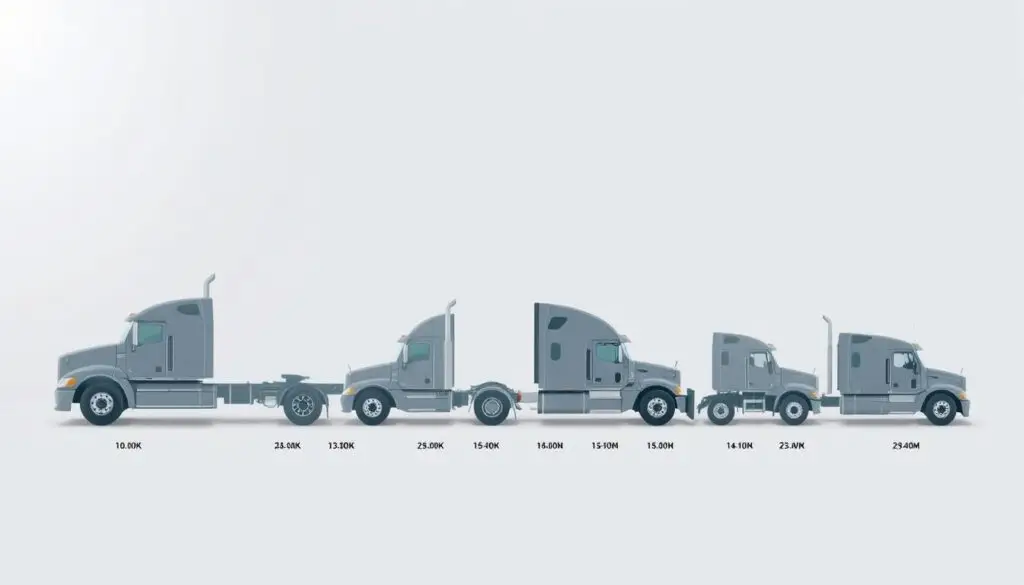
Medium-Duty Trucks: Classes 2b Through 5
Medium-duty trucks encompass weight Classes 2b through 5, with GVWR ranging from 8,501 to 19,500 pounds. This category includes delivery vans, utility trucks, and box trucks commonly used for urban and suburban operations. These vehicles face particularly stringent requirements due to frequent operation in populated areas.
The Low Load Cycle testing requirements significantly impact this segment. Medium-duty trucks typically experience substantial stop-and-go driving patterns, making low-load emissions control critical for overall environmental performance.
Heavy-Duty Trucks: Classes 6 Through 8
Heavy-duty trucks in Classes 6 through 8 represent the backbone of American freight transportation. Class 8 trucks—above 33,000 pounds GVWR—encompass tractor-trailers, dump trucks, and heavy equipment haulers forming the core of intercity freight movement.
Long-haul operators will see the greatest impact from NOx reduction targets during highway cruise conditions. Regional delivery fleets face challenges balancing emissions performance during both highway segments and urban delivery routes with frequent stops.
Vocational Vehicles and Specialty Applications
Vocational vehicles present unique compliance challenges due to diverse operating patterns. Refuse trucks, concrete mixers, dump trucks, and utility bucket trucks often involve extended power take-off operation, frequent low-speed maneuvering, and high auxiliary power demands.
The new standards account for these operational realities through testing protocols that better represent real-world duty cycles beyond traditional over-the-road patterns.
Emissions Control Technologies for 2027 Compliance
Meeting the stringent 2027 NOx and particulate matter limits demands sophisticated emissions control systems going far beyond current capabilities. Fleet operators must understand available technology pathways to achieve compliance while maintaining operational efficiency.
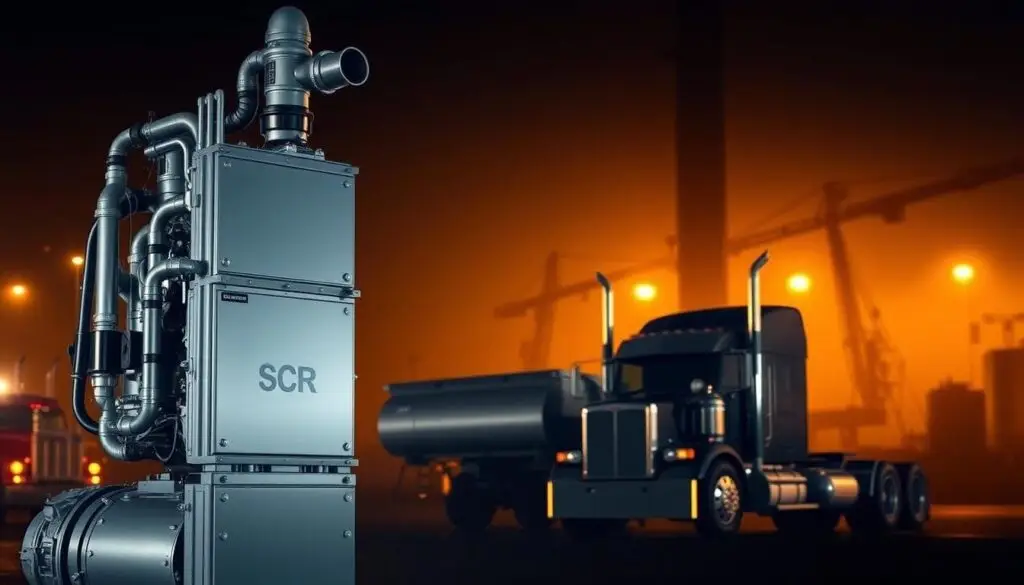
Advanced Aftertreatment Systems
Aftertreatment systems represent the primary compliance pathway for diesel-powered heavy-duty vehicles. These sophisticated emissions control systems capture and convert harmful pollutants after leaving the engine combustion chamber.
Modern aftertreatment systems integrate multiple components working in sequence. Enhanced systems for 2027 compliance require larger physical volumes—typically 40% to 60% additional catalyst material compared to current designs—to achieve required NOx conversion efficiency exceeding 95%.
Next-Generation SCR Technology
Selective catalytic reduction technology represents the critical component for achieving the 0.035 g/bhp·hr NOx standard. Next-generation designs employ larger catalyst volumes, dual-SCR configurations, and sophisticated diesel exhaust fluid dosing strategies.
Dual-SCR configurations position a second catalyst downstream of the diesel particulate filter, improving low-temperature NOx conversion by allowing the second catalyst to operate in a more favorable thermal environment.
4-6% DEF Consumption
Expected DEF usage relative to diesel fuel for 2027-compliant systems—up from current 2-3% rates
DEF consumption will increase significantly with more aggressive SCR strategies. Current systems use approximately 2% to 3% DEF relative to diesel fuel consumption. Enhanced 2027-compliant systems may require 4% to 6% DEF consumption rates. Fleet operators must plan for larger DEF tank capacities and more frequent refilling.
Alternative Powertrains and Zero-Emission Options
Fleet operators seeking alternatives to diesel propulsion have multiple options providing different compliance pathways. Natural gas engines offer inherently lower NOx emissions, typically achieving 50% to 90% reductions compared to diesel baseline.
Battery electric trucks eliminate tailpipe emissions completely, making them ideal for urban delivery routes, port drayage, and applications in air quality non-attainment areas. Current battery electric trucks serve routes under 200 miles effectively, with improving technology extending range capabilities annually.
| Technology | NOx Reduction | Best Applications | Primary Challenges |
|---|---|---|---|
| Enhanced Diesel Aftertreatment | Meets 0.035 g/bhp·hr | All duty cycles | Higher DEF consumption, complexity |
| Compressed Natural Gas | 50-90% lower than diesel | Regional haul, refuse, transit | Reduced range, fueling infrastructure |
| Battery Electric | Zero tailpipe emissions | Urban delivery, drayage | Range limitations, charging time |
| Hydrogen Fuel Cell | Zero tailpipe emissions | Long-haul, heavy-duty | Limited availability, infrastructure |
The HDJ Perspective
The 2027 emissions transition represents both a regulatory challenge and a strategic opportunity for forward-thinking fleet operators. In our experience covering this industry, fleets that treated the 2007-2010 DPF transition as a technology upgrade rather than a compliance burden gained competitive advantages that persisted for years. The same opportunity exists now. Operators who build strategic relationships with OEMs, develop infrastructure ahead of deadlines, and train their technicians early will navigate this transition more smoothly than those who wait until the last minute. The $8,000-$15,000 incremental vehicle cost will be offset over time by extended useful life requirements, improved fuel efficiency, and enhanced resale values. Start planning now—the fleets that thrive through 2027 will be those that treated compliance as investment, not expense.
Financial Implications for Fleet Operations
The economic realities of meeting 2027 standards extend far beyond initial vehicle purchase price. Fleet operators must evaluate a comprehensive range of financial factors impacting bottom lines for years to come.

Vehicle Acquisition Cost Increases
Industry analysts estimate incremental price increases ranging from $8,000 to $15,000 per vehicle compared to current models. These higher costs reflect advanced aftertreatment systems, sophisticated engine controls, and extensive engineering development required to meet new standards.
Over-the-road tractors typically see higher incremental costs due to complex duty cycles and extended useful life requirements. Manufacturers will amortize research and development expenses across production volumes, meaning early adopters may face higher costs until production scales increase.
Maintenance and Operational Costs
Maintenance expenses and consumable costs will increase as vehicles employ more sophisticated emissions control systems. Fleet operators should anticipate DEF consumption increases of 25% to 50% compared to current vehicles, translating directly to higher procurement costs.
Diesel particulate filter cleaning intervals may shorten due to increased regeneration cycles. SCR catalyst systems grow larger to meet stricter standards, resulting in higher replacement costs when components reach end of life. Diagnostic complexity increases significantly, requiring specialized training and equipment.
Total Cost of Ownership Considerations
Effective fleet management demands comprehensive view of all expenses over the vehicle’s operational lifespan. Total cost of ownership analysis integrates purchase price, fuel consumption, maintenance expenses, and residual value into a single financial framework.
Residual values present an important consideration. Vehicles meeting the latest standards typically command higher resale prices, partially offsetting higher acquisition costs. Market demand for compliant used vehicles remains strong, particularly in states with strict emission requirements.
Federal and State Incentive Programs
Financial assistance programs can substantially reduce net compliance costs for proactive fleet operators. The EPA’s Diesel Emissions Reduction Act (DERA) program provides grants for diesel engine retrofits and replacements. State-level clean truck incentive programs offer rebates covering 25% to 50% of incremental costs for qualifying vehicles.
California’s Hybrid and Zero-Emission Truck and Bus Voucher Incentive Project offers point-of-sale vouchers directly reducing purchase prices. Other states have established similar programs. Fleet operators should monitor program announcements and submit applications early in funding cycles.
Share Your 2027 Compliance Experience
Are you a fleet manager or diesel technician preparing for the 2027 transition? HDJ welcomes industry professionals to share their compliance strategies, technology evaluations, and lessons learned with our readership.
Developing a Strategic Fleet Compliance Plan
Fleet operators must approach compliance as comprehensive business transformation rather than simple regulatory checkbox. A well-constructed strategic plan provides the roadmap for navigating complex requirements while maintaining operational continuity and financial stability.

Conducting Comprehensive Fleet Assessment
The foundation of effective compliance strategy starts with detailed inventory of current fleet composition. Document vehicle ages, engine model years, current emissions certifications, and remaining useful life projections for each asset. Analyze operational characteristics including annual mileage patterns, duty cycle intensity, and geographic deployment.
Identify vehicles operating in states that have adopted California Air Resources Board standards. These jurisdictions often implement stricter requirements on earlier timelines. Companies should categorize their fleet by operating jurisdiction and prioritize compliance planning for vehicles in states with aggressive implementation schedules.
Creating Phased Replacement Schedules
A methodical replacement schedule aligns compliance needs with capital availability and operational demands. This phased approach prevents financial strain of wholesale fleet replacement while ensuring timely compliance across all regulatory jurisdictions.
Priority should be given to vehicles operating in CARB states where regulations began affecting 2024 model year purchases. The replacement schedule should coordinate major fleet renewals to capture volume pricing advantages and secure manufacturer incentives.
Establishing Manufacturer Partnerships
Strategic relationships with vehicle manufacturers and dealer networks provide competitive advantages during the transition. Early engagement secures access to technical expertise, advance information on product specifications, and potential allocation priority when supply constraints limit initial production availability.
Multi-year acquisition agreements offer cost certainty and delivery assurance. These structured arrangements lock in pricing parameters, establish delivery schedules, and provide budget predictability for capital planning purposes.
State-Level Regulations Beyond Federal Standards
Beyond federal EPA standards, fleet operators face increasingly fragmented regulatory environment shaped by aggressive state-level initiatives. Multiple states have implemented clean truck regulations significantly exceeding federal requirements.
California Advanced Clean Trucks Regulation
California’s Advanced Clean Trucks regulation compels truck manufacturers to sell specific percentages of zero-emission vehicles annually, with percentages increasing progressively through 2035. By 2036, manufacturers face 100% ZEV sales requirements for all covered vehicle classes.
The Advanced Clean Fleets regulation establishes different requirements based on fleet size and type. High-priority fleets with 50 or more trucks or $50 million or more in annual revenue face ZEV-only purchase mandates starting in 2024 or must follow percentage requirements under the Milestone Provision.
CARB-Following States
Ten states beyond California have adopted the Advanced Clean Trucks regulation at various implementation stages: Oregon, Washington, Vermont, New Jersey, Colorado, New Mexico, Rhode Island, Maryland, New York, and Massachusetts. Each state has established its own effective dates, creating patchwork implementation schedules.
Most large fleet operators are adopting standardization strategies—building specifications around California and CARB-following state requirements—as the long-term trend toward stricter state-level regulations appears irreversible.
Frequently Asked Questions
When do the 2027 EPA heavy-duty emissions standards take effect?
Model year 2027 marks nationwide implementation when EPA’s 0.035 g/bhp·hr NOx standard becomes mandatory for all new heavy-duty engines sold in the United States. However, California and CARB-following states began implementing stricter standards with the Omnibus regulation in model year 2024. Fleet operators in California, Oregon, Washington, New York, Massachusetts, and other CARB-following states already face compliance obligations. Planning should begin 18-24 months before vehicle acquisitions to secure allocations and favorable pricing.
How much will 2027-compliant vehicles cost compared to current models?
Industry analysts estimate incremental price increases of $8,000-$15,000 per vehicle for enhanced aftertreatment systems and advanced engine controls. Operational costs will also increase, with DEF consumption rising 25-50% compared to current vehicles. However, federal and state incentive programs—including EPA’s DERA grants and state clean truck rebates covering 25-50% of incremental costs—can substantially offset these expenses. Extended useful life requirements (650,000 miles) and higher resale values for compliant vehicles improve long-term total cost of ownership.
What technology changes will 2027-compliant trucks require?
Manufacturers will implement next-generation selective catalytic reduction systems with 40-60% larger catalyst volumes and potentially dual-SCR configurations. Enhanced diesel particulate filters must achieve 99.95% or greater filtration efficiency. The Low Load Cycle testing requirements mean aftertreatment systems must maintain effectiveness during urban stop-and-go driving, not just highway operation. Some manufacturers are introducing technologies like heated aftertreatment elements and 48-volt electrical subsystems to keep SCR catalysts effective at idle and low loads.
What are the specific NOx emission limits under the 2027 standards?
The 2027 standards require nitrogen oxide emissions of 0.035 g/bhp·hr over the Federal Test Procedure cycle—an 82.5% reduction from the current 0.20 g/bhp·hr standard. Additional requirements include 0.050 g/bhp·hr during the Low Load Cycle and 5 g/hr at idle (reduced from 10 g/hr in earlier model years). Medium-duty vehicles face 0.050 g/bhp·hr FTP limits, while Class 6-7 trucks must meet 0.040 g/bhp·hr. The most stringent 0.035 g/bhp·hr limit applies to Class 8 heavy heavy-duty engines.
How should multi-state fleet operators manage varying compliance requirements?
Multi-state operators face complex compliance management requiring tracking systems monitoring vehicle registration states, operating territories, and applicable requirements by jurisdiction. Two primary strategies exist: standardization (adopting most stringent CARB requirements fleet-wide for maximum flexibility) or optimization (specifying vehicles by jurisdiction to minimize costs while accepting reduced fleet fungibility). Most large national fleets are moving toward standardization as administrative burden and operational constraints of managing multiple specifications typically outweigh cost savings.
What infrastructure investments will fleets need for 2027 compliance?
Diesel fleets require expanded DEF storage capacity to accommodate 25-50% increased consumption, quality control measures to prevent contamination, and diagnostic tools compatible with new emissions systems. Maintenance facility upgrades should include technician training on advanced aftertreatment technologies. Fleets incorporating electric vehicles need charging infrastructure including electrical service upgrades, energy management systems, and potentially on-site energy storage to manage demand charges. Plan infrastructure investments 6-12 months before vehicle delivery timelines.
Preparing for the 2027 Emissions Transition
The 2027 EPA heavy-duty emissions standards represent a pivotal shift in commercial transportation requiring immediate attention and strategic planning. Fleet operators who conduct thorough assessments, engage equipment suppliers early, and develop detailed capital budgets will navigate this transition more effectively than those who wait.
The convergence of criteria pollutant standards and greenhouse gas requirements creates a complex compliance landscape demanding coordination across operations, maintenance, and finance departments. Starting preparation now provides critical advantages including access to manufacturer allocations, favorable pricing, and sufficient time for infrastructure development and technician training.
The trajectory points toward continued regulatory tightening and accelerated zero-emission technology adoption. Compliance in 2027 serves as a starting point rather than final destination. Fleet operators embracing these changes position themselves for competitive advantage through improved sustainability performance, enhanced operational efficiency, and stronger customer relationships in an increasingly environmentally conscious marketplace.
Help Fellow Fleet Professionals Prepare
Know a fleet manager, owner-operator, or diesel shop navigating the 2027 transition? Share this guide to help them build their compliance strategy.