By Michael Nielsen, Editor & Publisher | 15+ Years in Diesel Repair
Last Updated: December 2025
📖 Estimated reading time: 25 minutes
Heavy-duty diesel engines power the backbone of American commerce, from coast-to-coast freight haulers to construction equipment and agricultural machinery. Diesel EGR valve cleaning ranks among the most critical maintenance tasks for protecting these significant investments and maximizing engine lifespan. The exhaust gas recirculation system redirects a portion of exhaust gases back into the combustion chamber, reducing nitrogen oxide emissions by up to 50% in modern powerplants—but this environmental benefit comes with a maintenance challenge: carbon accumulation.
This comprehensive guide provides fleet managers, diesel technicians, and owner-operators with everything needed to maintain emission control components effectively. You’ll discover diagnostic procedures, proven maintenance strategies, and cost-saving preventive measures that protect your investment while ensuring regulatory compliance.
Key Takeaways
- EGR system function: Reduces harmful NOx emissions by up to 50% through combustion temperature management
- Carbon buildup warning signs: Rough idle, power loss, black smoke, and diagnostic codes P0401 or P0402 indicate cleaning is needed
- Recommended intervals: Clean diesel EGR valves every 25,000-40,000 miles depending on operating conditions
- Cost savings: DIY cleaning costs $15-$40 versus $150-$400 for professional service
- Safety first: Allow engines to cool 2-3 hours before service and use chemical-resistant gloves during cleaning
- Complete system approach: Clean EGR passages and intake manifold alongside the valve for lasting results
Understanding the EGR Valve in Heavy-Duty Diesel Engines
The diesel EGR valve operates as a critical bridge between environmental regulations and engine performance. Unlike gasoline engines, diesel powerplants generate significantly higher combustion temperatures and produce more particulate matter, making exhaust gas recirculation technology essential for meeting modern emission standards.
Understanding how your diesel engine manages emissions begins with knowing the EGR valve’s fundamental purpose. This component serves within a complex system designed to reduce harmful pollutants while maintaining power output for demanding fleet applications.

How Exhaust Gas Recirculation Works
An EGR valve functions as a controlled gateway that redirects a portion of exhaust gases back into the engine’s intake manifold. Fresh air entering the combustion chamber contains approximately 21% oxygen, which supports high-temperature burning. When exhaust gases mix with incoming air, they dilute the oxygen concentration and act as a thermal buffer.
This dilution effect lowers peak combustion temperatures by 200 to 400 degrees Fahrenheit. The cooler burning process directly impacts the formation of nitrogen oxides, which only develop in extreme heat conditions. Lower temperatures mean dramatically reduced NOx emissions without sacrificing engine efficiency.
The engine control module orchestrates valve operation based on real-time data from multiple sensors monitoring engine load, coolant temperature, throttle position, and exhaust conditions. Modern systems adjust valve opening hundreds of times per minute, ensuring maximum emission reduction while maintaining responsive performance. The valve remains closed during cold starts and high-load situations when maximum power is required.
| Valve Type | Operation Method | Control Precision | Common Applications |
|---|---|---|---|
| Mechanical EGR | Vacuum/backpressure diaphragm | Limited adjustment range | Pre-2005 diesel engines |
| Electronic EGR | Stepper motor controlled by ECU | Infinitely variable positioning | 2005+ diesel engines |
| Hybrid Systems | Electronic control with pneumatic actuation | Moderate precision | Mid-range commercial diesels |
Emission Standards Driving EGR Technology
Environmental regulations have driven rapid evolution in EGR system design. The EPA’s heavy-duty vehicle emission standards have become progressively tighter with each passing decade, requiring modern diesel engines to produce dramatically lower NOx emissions compared to pre-2004 models.
Nitrogen oxides contribute to ground-level ozone formation and respiratory health problems. The diesel EGR valve serves as the first line of defense against these harmful pollutants. By reducing combustion temperatures, the valve prevents NOx formation at its source—a more effective approach than attempting to filter or neutralize NOx after combustion occurs.
Electronic EGR valves provide the precision necessary to meet current emission standards. These advanced systems modulate exhaust gas flow with remarkable accuracy, delivering consistent emission control across all operating conditions from idle to full throttle. Manufacturers now integrate EGR systems with Selective Catalytic Reduction and Diesel Particulate Filters to create comprehensive emission solutions, though the EGR system remains the primary method for controlling NOx emissions during combustion.
Why Diesel EGR Systems Accumulate Carbon Faster
Diesel engines experience accelerated carbon accumulation within their EGR systems compared to gasoline engines. This phenomenon stems from fundamental differences in diesel combustion characteristics. Diesel fuel burns through compression ignition rather than spark ignition, generating significantly higher levels of soot and particulate matter that hot exhaust gases carry directly through the EGR valve.
The temperature differential between hot exhaust gases and cooler valve components creates ideal conditions for carbon deposit formation. As gases cool during recirculation, carbon particles solidify and adhere to metal surfaces, building into thick, hardened layers over time. Several specific factors accelerate this buildup in diesel applications:
- Oil vapor contamination from crankcase ventilation systems routes oil mist into the intake, creating sticky residues that trap carbon particles
- Fuel quality variations with higher sulfur content leave behind carbon-forming residues
- Short trip driving patterns prevent engines from reaching optimal temperatures needed to burn off deposits naturally
- Particulate matter concentration in diesel combustion produces 10 to 100 times more particulate matter than gasoline engines
The EGR cooler compounds carbon buildup problems. This component reduces exhaust gas temperature before recirculation, improving emission control effectiveness but promoting faster carbon accumulation as particles solidify more readily on cooler surfaces. Heavy-duty diesel engines operating in urban delivery or construction applications face the most severe challenges, as constant cycling between idle and moderate load conditions maximizes carbon formation while minimizing natural deposit burning.
Recognizing EGR Valve Problems in Your Diesel Fleet
A failing EGR valve rarely happens overnight—instead, it announces its deterioration through several telltale indicators. Fleet managers and diesel technicians who recognize these symptoms early can prevent minor issues from becoming expensive repairs. Carbon buildup gradually restricts valve movement, creating a cascade of performance problems affecting everything from fuel economy to emissions compliance.
Catching EGR valve issues in their early stages requires attention to changes in how your diesel engine operates. The symptoms below represent the most common indicators that your EGR system needs immediate attention.

Power Loss and Acceleration Issues
Reduced engine power represents one of the most noticeable signs of EGR valve malfunction. Drivers typically first notice this during highway driving or when hauling heavy loads. The engine feels sluggish and struggles to reach higher speeds, even with the accelerator fully depressed.
This power loss occurs because carbon-clogged passages prevent proper exhaust gas recirculation. The engine control module cannot achieve the precise air-fuel mixture required for optimal combustion. Your diesel engine compensates by adjusting fuel delivery, but this correction cannot fully restore normal performance when the EGR system is compromised. Acceleration problems become particularly apparent when merging onto highways or climbing steep grades.
Increased Fuel Consumption and Black Smoke
A malfunctioning EGR valve forces your engine to consume more fuel than necessary. The engine control system detects disrupted recirculation and attempts to compensate by enriching the fuel mixture. This compensation strategy maintains some level of performance but significantly reduces fuel efficiency.
Increased fuel consumption often appears alongside black smoke emissions. Diesel engines produce this characteristic dark smoke when burning fuel incompletely. The excess fuel injected to compensate for EGR problems doesn’t fully combust, creating visible soot particles in the exhaust stream. When the valve sticks open, excessive exhaust gas enters the combustion chamber, diluting the air-fuel mixture and requiring additional fuel. When it sticks closed, combustion temperatures rise, forcing the engine to work harder.
Check Engine Light and Diagnostic Codes
The check engine light in diesel vehicles often represents the first electronic warning of EGR valve problems. Modern diesel engines continuously monitor EGR system performance through multiple sensors. When sensor readings fall outside acceptable parameters, the engine control module illuminates the warning light and stores diagnostic trouble codes.
Two specific codes most commonly indicate EGR valve issues: P0401 signals insufficient EGR flow, while P0402 indicates excessive EGR flow. P0401 typically appears when carbon deposits restrict valve movement or block passages. P0402 suggests the valve is stuck open or failing to close completely. Ignoring these codes can lead to failed emissions tests, as a malfunctioning EGR valve directly impacts emission levels that may cause vehicles to exceed allowable limits for nitrogen oxides.
Rough Idle and Engine Stalling
Engine vibration and rough idle operation typically appear as the earliest physical symptoms of EGR valve problems. At idle, even small disruptions in air-fuel mixture create noticeable vibrations throughout the vehicle. The engine may shake more than normal or produce an irregular rhythm instead of a smooth, consistent idle.
Stalling represents a more severe manifestation of the same problem. When coming to a stop, the engine may suddenly die as if someone turned off the ignition. This happens when the EGR valve allows too much exhaust gas into the intake during deceleration, effectively smothering combustion. These symptoms worsen during city driving compared to highway operation, as stop-and-go traffic requires constant transitions between idle and acceleration, repeatedly stressing the compromised EGR system.
$500-$1,500
Estimated lifetime savings from proper EGR maintenance versus reactive repairs
Tools and Materials for Diesel EGR Valve Cleaning
The difference between a professional-quality EGR cleaning and a frustrating experience comes down to preparation and having the right equipment. Diesel engines demand specialized tools because carbon buildup in these systems is significantly more stubborn than gasoline engine deposits. Gathering everything before starting prevents mid-project delays and ensures safe, efficient work.

Essential Hand Tools
A complete socket wrench set forms the foundation of your tool collection for EGR valve removal. You’ll need both shallow and deep sockets in sizes ranging from 8mm to 19mm, as different manufacturers use various bolt sizes for EGR mounting. Deep sockets prove essential when accessing recessed bolts in tight engine compartments.
Combination wrenches provide backup access when sockets won’t fit in confined spaces. A quality ratcheting wrench set speeds up work considerably in areas with limited swing radius. Torque wrenches become critical during reinstallation, as EGR valve bolts typically require specific torque values between 15-25 ft-lbs to prevent gasket leaks without damaging aluminum mounting surfaces.
Additional hand tools include flathead and Phillips screwdrivers for hose clamps and electrical connectors, needle-nose pliers for accessing spring clips, wire brushes with brass bristles (never steel, which scratches valve surfaces), plastic scrapers for careful carbon removal, and extension bars with universal joints for reaching awkward bolt locations.
Safety Equipment Requirements
Chemical-resistant nitrile gloves protect your hands from aggressive cleaning solvents that can cause chemical burns and skin irritation. Thicker mechanics’ gloves provide better protection during the actual cleaning process than disposable options. Safety glasses or face shields prevent chemical splashes from reaching your eyes—diesel carbon cleaning solutions contain powerful solvents that cause severe eye irritation.
Protective clothing rounds out your safety gear. Wear old long-sleeved shirts and pants, as EGR cleaner products leave permanent marks on fabric. Work in a well-ventilated area and keep a fire extinguisher nearby as an additional safety measure.
⚠️ Safety Warning
According to OSHA guidelines, diesel exhaust contains hazardous components including carbon monoxide and particulates. Work in well-ventilated areas, never run engines indoors without exhaust extraction, and allow complete engine cooling before service to prevent burns.
Cleaning Solutions and Chemicals
Specialized carbon cleaner sprays designed specifically for diesel EGR systems penetrate deposits that regular cleaners can’t touch. Products like Wynn’s EGR Cleaner, CRC EGR Valve Cleaner, and JLM Air Intake and EGR Spray contain powerful solvents formulated to dissolve diesel carbon without damaging aluminum valve bodies.
Soaking solutions provide the most thorough cleaning for heavily carboned valves. Fill a shallow pan with diesel EGR cleaner and submerge the valve completely for 30 minutes to several hours depending on buildup severity. The extended contact time allows solvents to penetrate deep into carbon layers, making subsequent mechanical cleaning much easier. Brake cleaner serves as an excellent final rinse after initial carbon removal, leaving no residue that could affect valve operation.
Replacement Parts and Gaskets
Replace EGR valve gaskets during every removal, regardless of old gasket condition. Gaskets compress during initial installation and cannot seal properly when reused. OEM gaskets from your diesel manufacturer provide the best fit and reliability, though quality aftermarket gaskets from brands like Fel-Pro or Victor Reinz work well at lower cost.
Order replacement gaskets before starting work. Some diesel engines use O-rings instead of flat gaskets—verify which sealing method your engine uses. Consider ordering backup replacement parts for components that might fail during disassembly, including vacuum line connectors that become brittle with age, electrical connector clips that may break during removal, and mounting bolts if existing bolts show corrosion.
Stay Current on Diesel Maintenance Best Practices
Get weekly insights on emission system maintenance, regulatory updates, and fleet optimization strategies delivered to your inbox.
Preparing Your Diesel Engine for EGR Service
Taking time to properly prepare your diesel engine prevents costly mistakes and potential injuries during EGR valve service. Before starting any work, consult your vehicle’s service manual for manufacturer-specific guidance on location, removal procedures, and recommended cleaning methods.

Safety Precautions and Engine Cooling
Engine cooling safety represents the most critical aspect of EGR valve service. Diesel engines retain heat much longer than gasoline engines because of their higher compression ratios and robust construction. The engine block, exhaust manifold, and cooling system components remain dangerously hot for extended periods after shutdown.
Wait at least two to three hours after the engine stops running before beginning any work. This cooling period allows all components to reach safe handling temperatures. Never attempt to work on a hot diesel engine—the risk of severe burns from metal components, pressurized coolant, or exhaust system parts makes this precaution non-negotiable.
Disconnect the negative terminal of your battery before touching any electrical components. This simple step prevents electrical shorts, protects sensitive electronic control modules, and eliminates the risk of accidental starter engagement. Allow electronic systems to fully power down for five to ten minutes after battery disconnection.
Locating the EGR Valve on Common Diesel Platforms
The EGR valve location varies significantly across different diesel engine platforms. Understanding where to find this component on your specific engine saves time and prevents damage to surrounding parts. Each major diesel engine family has characteristic mounting locations and access considerations.
On Ford Power Stroke engines, the EGR valve typically mounts on the passenger side near the oil cooler assembly. The 6.0L, 6.4L, and 6.7L versions place the valve in similar locations but with slightly different mounting brackets. Access often requires removing the engine cover and air intake components.
Dodge Cummins locations vary between the 5.9L and 6.7L versions. On 5.9L engines, the EGR valve sits on the intake side near the front of the engine. The 6.7L Cummins uses a different design with the valve positioned closer to the turbocharger on the driver’s side. Cummins engines feature robust EGR coolers integrated with the valve assembly.
Chevrolet Duramax EGR valves generally position on the driver’s side near the turbocharger and exhaust manifold. LB7, LLY, LBZ, LMM, and LML versions maintain similar positioning with minor variations in mounting hardware. Heat shields often surround the valve due to its proximity to hot exhaust components.
| Engine Platform | Primary Location | Key Features | Access Difficulty |
|---|---|---|---|
| Ford Power Stroke 6.0L-6.7L | Passenger side near oil cooler | Vertical mount, coolant lines | Moderate |
| Dodge Cummins 5.9L | Intake side, front of engine | Rectangular, integrated cooler | Easy to moderate |
| Dodge Cummins 6.7L | Driver’s side near turbo | Electronic actuator | Moderate |
| Chevrolet Duramax LB7-LML | Driver’s side above intake | Cylindrical body, separate cooler | Moderate |
Disconnecting Electrical Connections and Lines
Proper disconnection of electrical connections prevents damage to fragile sensors and ensures correct reassembly. Modern diesel EGR valves use electronic position sensors and actuators requiring careful handling. These connectors feature locking tabs that must be released before removal.
Photograph all electrical connections before disconnecting anything. Use your smartphone to capture multiple angles showing wire routing, connector orientation, and attachment points. These photos serve as invaluable references during reassembly. Use proper connector removal tools rather than forcing clips with screwdrivers, and label vacuum lines with masking tape or numbered tags as you remove them.
Step-by-Step Diesel EGR Valve Cleaning Process
Cleaning your diesel EGR valve involves several critical stages, each requiring precision and patience to restore full functionality. This comprehensive procedure takes you through every phase from removal to reinstallation. The entire process typically requires two to four hours for most diesel engines.
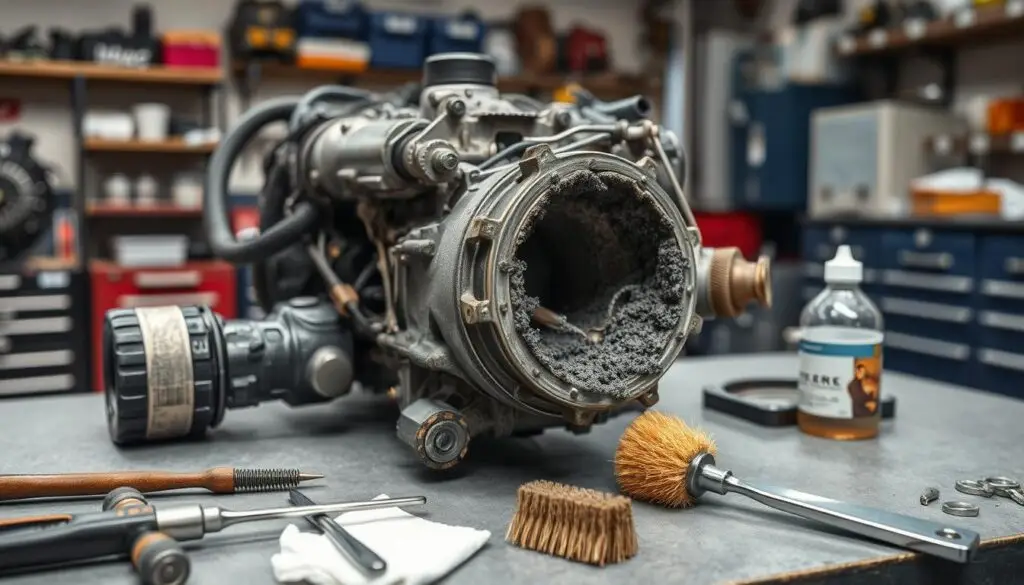
Removing the EGR Valve
Start the removal process with the engine completely cold. Working with hot components risks burns and can cause thermal stress to fasteners. Verify that your battery disconnect has remained in place throughout the cooling period.
Locate all fasteners securing the EGR valve to your engine block or intake manifold. Most diesel applications use three to five bolts arranged in a circular pattern. Follow a crisscross pattern when loosening multiple bolts—this technique prevents warping the valve mounting flange or damaging the mating surface. Loosen each bolt approximately two turns before moving to the next one in the sequence.
For seized fasteners, apply penetrating oil and allow at least 30 minutes for penetration. Products containing acetone and transmission fluid prove particularly effective on stubborn diesel engine hardware. If a bolt breaks despite careful efforts, use screw extractors designed for hardened steel.
Inspecting for Damage and Wear
Thorough inspection identifies problems that cleaning alone cannot resolve. This critical evaluation determines whether your valve can be successfully restored or requires replacement. Clean off loose surface carbon with a soft brush before detailed examination.
Examine the pintle—the moving component that controls exhaust gas flow—for scoring, pitting, or excessive carbon accumulation. Run your finger along the pintle shaft to feel for rough spots or grooves. Inspect the valve seat where the pintle creates a seal in the closed position, looking for erosion, pitting, or warping that prevents proper sealing.
Test pintle movement by gently pushing the shaft through its full range of motion. It should move smoothly without binding or excessive play. Carbon deposits thicker than one-eighth inch on the pintle suggest severe neglect that may have already damaged the underlying metal.
Cleaning the Valve Body and Pintle
The actual cleaning process requires choosing the appropriate method based on carbon buildup severity. Light accumulation responds well to spray cleaners and brushing, while heavy deposits demand soaking techniques. Work in a well-ventilated area when using chemical cleaners.
For valves with thick carbon deposits, pour EGR cleaner into a container and submerge the valve completely. Allow 15 to 20 minutes for moderate buildup, or up to two hours for heavily carboned valves. Check progress periodically by removing the valve and testing whether deposits have softened.
After chemical treatment, use brass wire brushes to scrub away loosened deposits in circular motions. Dental picks and specialized carbon removal tools reach into passages and crevices. Work carefully around the pintle and valve seat to avoid damaging these precision surfaces. Remove all traces of carbon from threaded holes where bolts attach.
Rinse the valve thoroughly with brake cleaner after mechanical cleaning. This final flush removes loosened particles from internal passages. Dry completely using compressed air, ensuring no moisture remains in electrical components.
| Cleaning Method | Best Application | Time Required | Effectiveness |
|---|---|---|---|
| Spray Cleaner Only | Light surface deposits | 20-30 minutes | Good for maintenance |
| Soaking Method | Heavy carbon buildup | 1-2 hours | Excellent for severe deposits |
| Mechanical Brushing | Moderate buildup | 30-45 minutes | Very good with proper technique |
| Combined Approach | All deposit levels | 1.5-2.5 hours | Optimal for complete restoration |
Cleaning EGR Passages and Intake Manifold
Comprehensive passage cleaning prevents rapid recontamination of your freshly cleaned valve. Carbon accumulation in intake manifold ports and connecting passages will immediately dirty a clean valve upon startup. This often-neglected step proves essential for lasting results.
Inspect the intake manifold port where the EGR valve mounts. Use a flashlight to examine internal passages for carbon deposits. Spray EGR cleaner directly into manifold passages, allowing chemical penetration for several minutes. Insert appropriately sized brushes to scrub away loosened deposits. Remove all dislodged carbon particles using a shop vacuum—carbon debris left in passages will contaminate engine oil if it enters combustion chambers.
Reinstallation and Proper Torque
Replace EGR valve gaskets during every removal, regardless of old gasket condition. Clean mounting surfaces on both the valve and intake manifold to bare metal using a gasket scraper. Position the new gasket over mounting studs or align it with bolt holes, verifying that gasket holes align perfectly with passages before placing the valve.
Most diesel EGR valve mounting bolts require 15 to 25 foot-pounds of torque. Tighten bolts in a crisscross pattern, making multiple passes with increasing torque: first pass at 50% of specification, second pass at 75%, and final pass at 100%. This technique prevents gasket crushing and ensures uniform sealing.
Reconnect all electrical connections and vacuum lines according to your installation photographs. Press connectors firmly until you feel or hear them click into locked position. Perform a final visual inspection before starting the engine.
Testing and Verifying EGR Valve Function
The success of your EGR valve cleaning depends entirely on thorough testing procedures that confirm proper valve function and system operation. Comprehensive verification involves three distinct testing phases, each confirming different aspects of valve operation.

Pre-Installation Bench Testing
Bench testing the cleaned valve before reinstallation saves significant time and effort. This preliminary test identifies problems while the valve remains easily accessible. Start by examining the valve pintle for smooth, unrestricted movement throughout its full range of motion—any resistance indicates incomplete carbon removal or mechanical damage.
Test electrical continuity of the solenoid windings using a multimeter set to measure resistance. Most diesel EGR valves show resistance readings between 10 and 30 ohms when functioning properly. Readings outside this range indicate electrical problems that cleaning cannot resolve. Inspect all valve passages under bright light to confirm complete carbon removal.
Post-Installation Diagnostic Testing
After reinstalling the cleaned valve, connect your diagnostic scan tool and retrieve any stored trouble codes before starting the engine. Start the engine and allow it to reach normal operating temperature—cold engines do not activate EGR systems. Monitor coolant temperature until it reaches at least 180°F before proceeding with active tests.
Use your scan tool’s active testing function to command the EGR valve open and closed while monitoring system response. The valve should respond within 1-2 seconds of the command. Professional diagnostic tools provide real-time data streams showing commanded versus actual valve position. Discrepancies greater than 10% indicate problems requiring investigation.
Perform error code clearing only after confirming proper valve operation through active testing. Simply clearing codes without addressing underlying problems causes their immediate return. The scan tool should show “ready” status for all emission monitors after successful code clearing.
Road Testing for Performance Verification
Road testing under real-world driving conditions provides the final confirmation of successful valve cleaning. Begin your test drive on low-traffic roads where you can safely monitor both vehicle performance and scan tool data. Drive through varied load conditions including idle, steady cruise, moderate acceleration, and deceleration.
Monitor short-term fuel trims during the test drive. Values within ±5% indicate the engine control module successfully compensates for restored EGR function. Fuel trims exceeding ±10% suggest air metering problems or vacuum leaks. Observe exhaust smoke characteristics throughout the drive cycle—properly functioning EGR systems eliminate visible black smoke during acceleration.
Complete at least 20 minutes of varied driving to allow the engine control module to complete its adaptive learning process. Verify that the check engine light remains off for at least 50 miles of varied driving after testing.
The HDJ Perspective
In our experience working with fleet maintenance teams across the industry, proactive EGR valve maintenance consistently delivers better ROI than reactive repairs. We’ve seen operations reduce emission system failures by 60% simply by implementing 30,000-mile cleaning intervals. The trend toward tighter EPA standards through 2027 and beyond means emission system reliability will only become more critical for fleet compliance. Investing in proper diagnostic tools and technician training today positions your operation for long-term success as regulations continue evolving.
Preventive Maintenance Strategies for Diesel EGR Systems
Proper preventive maintenance protocols transform EGR system care from reactive repairs to proactive protection. Implementing a structured maintenance approach reduces carbon deposit formation and extends the intervals between intensive cleaning procedures.

Recommended Cleaning Intervals
Diesel engines require more frequent EGR valve maintenance than their gasoline counterparts due to increased soot generation. Most diesel vehicles benefit from EGR system inspection and cleaning every 25,000 to 40,000 miles under normal operating conditions. Vehicles experiencing DPF regeneration issues or operating in severe-duty applications may require service as frequently as every 20,000 to 30,000 miles.
Driving conditions play the largest role in determining maintenance schedules. City driving with frequent stops accelerates carbon accumulation compared to highway operation. Cold weather operation increases contamination rates because engines run richer during warmup cycles. Extended idling periods allow deposits to form without the cleaning effect of sustained combustion temperatures.
| Operating Condition | Recommended Interval | Primary Risk Factor |
|---|---|---|
| Highway driving (moderate climate) | 40,000-50,000 miles | Lower soot from sustained operation |
| Mixed city/highway driving | 25,000-35,000 miles | Moderate buildup from varied conditions |
| Primarily city driving | 20,000-30,000 miles | Increased deposits from stop-and-go traffic |
| Severe duty (towing, extreme temps) | 15,000-25,000 miles | Accelerated contamination |
Fuel Quality and Additives
Fuel quality directly impacts carbon deposit prevention and overall EGR maintenance requirements. Selecting premium fuel from reputable suppliers and incorporating appropriate additives significantly reduces contamination rates. Detergent packages keep fuel injectors clean, promoting complete combustion and reducing soot formation.
Cetane boosters raise the combustion quality of diesel fuel, resulting in cleaner exhaust emissions. These additives reduce ignition delay and promote smoother combustion cycles. Ultra-low sulfur diesel fuel, with sulfur content less than 15 parts per million, reduces sulfuric acid formation in the exhaust stream and minimizes corrosive deposits.
Supporting Maintenance Practices
Comprehensive engine maintenance practices directly influence EGR system health. Regular oil changes using proper diesel-rated oils prevent excessive crankcase pressure and blow-by contamination. Worn or incorrect oil allows more vapor to enter the intake system through the crankcase ventilation circuit, accelerating valve deposits.
Air filter replacement maintains proper air-fuel ratios and combustion efficiency. Restricted air filters cause rich running conditions that increase soot production. Crankcase ventilation system maintenance prevents oil vapor from contaminating intake air—many diesel engines feature oil separators or catch cans requiring periodic draining.
Regular highway driving provides natural cleaning benefits for diesel EGR systems. Sustained operation at consistent higher RPMs generates sufficient exhaust heat to burn off incipient carbon deposits before they harden. Incorporating monthly 20 to 30 minute highway drives helps maintain system cleanliness between scheduled maintenance intervals.
Share Your Diesel Maintenance Expertise
Are you a fleet manager or diesel technician with insights on emission system maintenance? We’re always looking for industry professionals to share their knowledge with our readers.
Professional Service vs. DIY EGR Valve Cleaning
Understanding when to attempt DIY cleaning versus seeking professional service can save money while avoiding costly mistakes. This decision impacts not only your wallet but also the long-term performance of your diesel engine.
When DIY Cleaning Makes Sense
Several factors indicate that DIY cleaning might be the right choice for your situation. Older diesel engines with mechanically actuated EGR valves typically offer straightforward access and simple operation. These systems don’t require specialized diagnostic equipment for proper function.
You should consider tackling the job yourself if you have basic mechanical aptitude and access to common hand tools. Prior experience with automotive maintenance demonstrates the foundational skills needed. Moderate carbon buildup caught early responds well to DIY cleaning efforts. The advantages include significant cost savings—you avoid labor charges that typically range from $100 to $300 at professional shops.
DIY efforts do require time investment ranging from 2 to 4 hours for experienced technicians. First-time attempts may require 6 to 8 hours as you familiarize yourself with component locations and procedures.
When Professional Service Is Required
Modern diesel engines manufactured after 2010 often feature electronically controlled EGR systems integrated with complex engine management strategies. These systems coordinate with variable geometry turbochargers, exhaust back-pressure sensors, and diesel particulate filters to optimize performance and emissions.
Professional diagnostic equipment becomes essential for these vehicles. Factory-level scan tools can perform active tests, monitor real-time sensor data, and execute calibration procedures after service that generic OBD-II scanners cannot match. Electronic actuators in modern EGR valves require specific relearning procedures after cleaning or replacement.
Severely damaged or worn valves may have reached the end of their service life. Cracked valve bodies, damaged pintle shafts, or failed electrical connections require replacement rather than cleaning. Experienced technicians recognize these conditions immediately.
Cost Comparison Analysis
DIY cleaning costs typically run $15-$40 including cleaners, supplies, and replacement gaskets. Professional service ranges from $150-$400 including diagnosis, thorough cleaning, new gaskets, and post-service testing. If you lack basic tools, add socket sets, wrenches, and screwdrivers to your initial investment.
Vehicles under manufacturer powertrain warranty face special considerations. Most manufacturer warranties require emission system maintenance be performed by authorized service centers using approved procedures. Improper DIY service that causes subsequent damage typically voids warranty protection for related components—a financial risk potentially reaching thousands of dollars on modern diesel engines.
Frequently Asked Questions
How often should I clean my diesel EGR valve?
Most diesel vehicles benefit from EGR valve cleaning every 25,000 to 40,000 miles under normal operating conditions. However, your specific interval depends on driving patterns and conditions. City driving with frequent stops accelerates carbon buildup compared to highway operation. Vehicles used primarily for short trips, cold-weather operation, or severe-duty applications like towing may require cleaning as frequently as every 15,000 to 25,000 miles. Monitor for symptoms like rough idle, power loss, or check engine lights to determine if earlier service is needed. Many fleet managers schedule EGR service alongside other preventive maintenance to minimize downtime.
Can I clean my EGR valve without removing it from the engine?
While some aerosol EGR cleaners claim to work without removal, thorough cleaning requires removing the valve for best results. Without removal, you cannot inspect the valve pintle and seat for damage, access all carbon-affected surfaces, clean the EGR passages and intake manifold ports, or verify complete carbon removal before reinstallation. Non-removal cleaning methods may help with light maintenance but cannot address moderate to heavy carbon buildup. For diesel engines with their heavier carbon accumulation, removal and manual cleaning remains the most effective approach to restore full EGR system function.
What causes excessive carbon buildup in diesel EGR systems?
Diesel engines experience faster EGR carbon accumulation than gasoline engines due to several inherent factors. Diesel combustion through compression ignition generates significantly more soot and particulate matter. Oil vapor from crankcase ventilation mixes with exhaust gases to create sticky deposits. Short trip driving prevents engines from reaching temperatures needed to burn off deposits naturally. Poor fuel quality with higher sulfur content leaves additional residues. The EGR cooler accelerates buildup by cooling exhaust gases, causing particles to solidify on cooler surfaces. Extended idling and stop-and-go city driving maximize carbon formation while minimizing natural cleaning from sustained high-temperature operation.
What diagnostic codes indicate EGR valve problems?
The two most common EGR-related diagnostic trouble codes are P0401 and P0402. Code P0401 indicates insufficient EGR flow, typically appearing when carbon deposits restrict valve movement or block passages, preventing adequate exhaust gas recirculation. Code P0402 indicates excessive EGR flow, suggesting the valve is stuck open or cannot close completely due to carbon deposits on the pintle or valve seat. Other related codes include P0403 for circuit malfunction, P0404 for range/performance issues, and P0405/P0406 for EGR sensor problems. Multiple codes may appear simultaneously with severe EGR issues. A professional diagnostic scan tool provides the most accurate code interpretation and can perform active testing to pinpoint the specific failure.
Will cleaning my EGR valve improve fuel economy?
Yes, cleaning a carbon-fouled EGR valve typically improves fuel economy because it restores proper air-fuel mixture control. When the EGR valve malfunctions due to carbon buildup, the engine control module compensates by adjusting fuel delivery—usually by enriching the mixture. This compensation maintains some performance but reduces efficiency. A stuck-open valve dilutes the air-fuel mixture excessively, requiring additional fuel. A stuck-closed valve increases combustion temperatures, forcing the engine to work harder. After cleaning, most diesel owners report fuel economy improvements of 2-5%, though results vary based on how severely the valve was affected and overall engine condition.
Take Action on Your Diesel EGR Maintenance
Regular diesel EGR valve cleaning ranks among the smartest investments you can make in diesel engine care. Cleaning every 30,000 miles can extend valve life by 100,000 miles or more, translating to $500-$1,500 in savings over your vehicle’s lifetime. Early symptom recognition prevents the cascade of problems that result from neglected emission control maintenance.
Quality matters at every step of the process. Use diesel-specific cleaning products, install correct gaskets, and follow manufacturer torque specifications. Modern diagnostic tools give you the power to identify issues early and verify repairs effectively. Combined with quality fuel, regular oil changes, and proper air filter maintenance, your EGR system operates within a comprehensive approach to diesel engine care.
Whether you choose DIY cleaning or professional service, the guidance in this resource equips you to maintain optimal performance, meet environmental standards, and protect your diesel engine investment for years to come. Don’t wait for symptoms to become expensive problems—schedule your next EGR inspection today.
Share This EGR Maintenance Guide
Know a fleet manager or diesel technician who could benefit from this comprehensive guide? Share it with your professional network.