
By Michael Nielsen, Editor & Publisher | 15+ Years in Diesel Repair
Last Updated: December 2025
📖 Estimated reading time: 22 minutes
Your diesel engine’s Exhaust Gas Recirculation system operates under extreme stress, facing temperatures exceeding 1370°F daily while redirecting exhaust gases back into the combustion chamber to reduce nitrogen oxide emissions. When this critical emissions control component begins to fail, EGR valve symptoms in diesel engines emerge quickly—rough idling, black exhaust smoke, power loss, and increased fuel consumption that demand immediate attention from fleet managers and owner-operators.
Early recognition of these warning signs protects your bottom line. Carbon buildup and soot accumulation develop faster in diesel applications than gasoline engines, and left unchecked, EGR problems cascade into damage affecting turbochargers, DPF systems, and intake manifolds. With the EPA’s heavy-duty emissions standards requiring increasingly stringent NOx control, proper EGR function isn’t optional—it’s both a performance requirement and a compliance necessity that directly impacts CSA scores and operational uptime.
Key Takeaways
- Primary warning signs: Check engine light, rough idle, black exhaust smoke, and 15-30% fuel economy reduction indicate EGR valve failure requiring diagnosis.
- Diagnostic codes P0400-P0408: These specific fault codes identify EGR flow problems, stuck valves, and circuit malfunctions—essential for targeted repairs.
- Cost comparison: Professional EGR valve cleaning costs $200-400 versus $400-800 for complete replacement; heavy-duty diesel applications often exceed $1,500.
- Failure timeline: Most diesel EGR valves fail between 80,000-120,000 miles, though preventive maintenance can extend lifespan to 150,000+ miles.
- Fleet impact: A stuck EGR valve reduces engine efficiency by 20-40% and can trigger out-of-service violations during roadside inspections.
How the EGR Valve Works in Diesel Engines
The EGR valve controls exhaust gas flow back into the engine’s intake manifold, diluting the incoming air-fuel mixture with inert gases. This recirculation process reduces oxygen concentration and lowers combustion temperatures by approximately 150°C—critical because nitrogen becomes reactive above 1370°C, and since nearly 80% of air is nitrogen, controlling combustion heat prevents harmful NOx formation.
The valve operates between fully open and fully closed positions, adjusting based on engine demands. At idle and low speeds, the valve opens up to 90% capacity for maximum exhaust gas recirculation. During full acceleration, it closes completely to allow maximum oxygen intake for power generation. Modern diesel engines use two primary configurations: high-pressure systems that divert exhaust before the DPF, and low-pressure systems that extract cleaner gases after the particulate filter.
Vacuum-Operated vs. Electronic EGR Valves
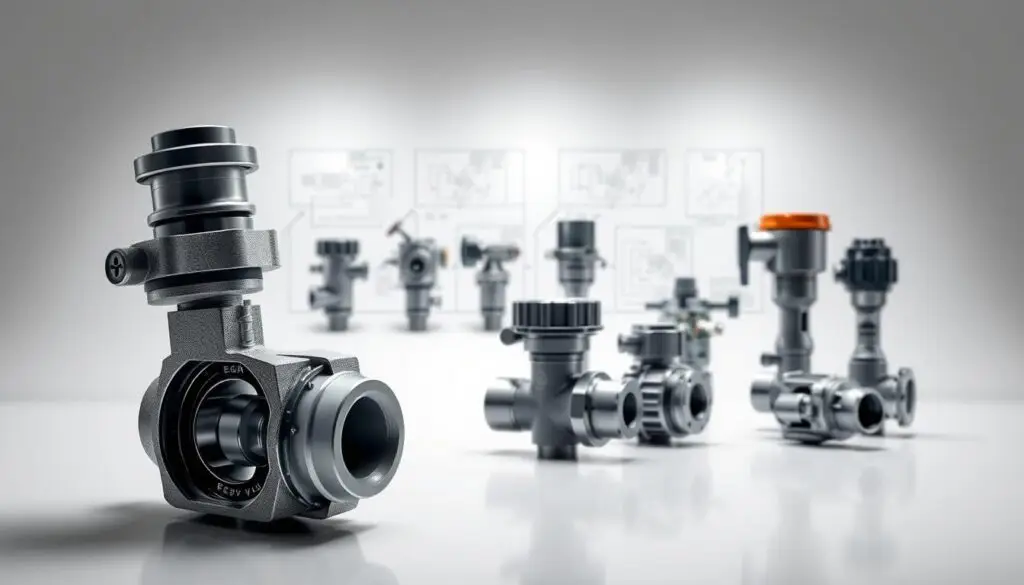
Older diesel trucks manufactured before 2005 commonly feature vacuum-operated designs that use a vacuum solenoid and diaphragm to control valve position. When the engine control unit signals the solenoid, vacuum pressure moves the diaphragm, opening the valve against spring pressure. These mechanical systems offer simplicity but lack precise control.
Electronic EGR valves—standard in virtually all diesel vehicles manufactured after 2010—deliver precise control through direct motor actuation with position feedback. Solenoid or stepper motors receive pulse-width modulated signals from the ECU, while position sensors continuously monitor valve location and report back for closed-loop control. This ensures accurate positioning regardless of carbon buildup or mechanical resistance.
| Characteristic | Diesel EGR Systems | Gasoline EGR Systems |
|---|---|---|
| Exhaust Soot Content | High particulate concentration requiring frequent cleaning | Minimal soot with cleaner exhaust |
| Intake Vacuum Source | Requires vacuum pump or venturi valve | Natural manifold vacuum available |
| Operating Temperature | Higher exhaust temps increase thermal stress | Lower temperatures reduce wear |
| Recirculation Rate | Up to 50% at certain conditions | Typically 5-15% maximum |
Primary EGR Valve Failure Symptoms in Diesel Engines
When an EGR valve begins to fail, diesel engines exhibit several unmistakable symptoms that worsen progressively. The severity depends on whether the valve sticks open, closed, or operates intermittently. Multiple warning signs typically appear together rather than in isolation, helping differentiate EGR problems from other engine issues with similar presentations.
Rough Idling and Engine Instability
One of the earliest indicators appears when your diesel sits at idle. The engine feels unstable, producing noticeable vibrations through the steering wheel and cabin. When an EGR valve sticks open, it allows continuous exhaust gas flow into the combustion chamber at inappropriate times, disrupting the air-fuel mixture balance.
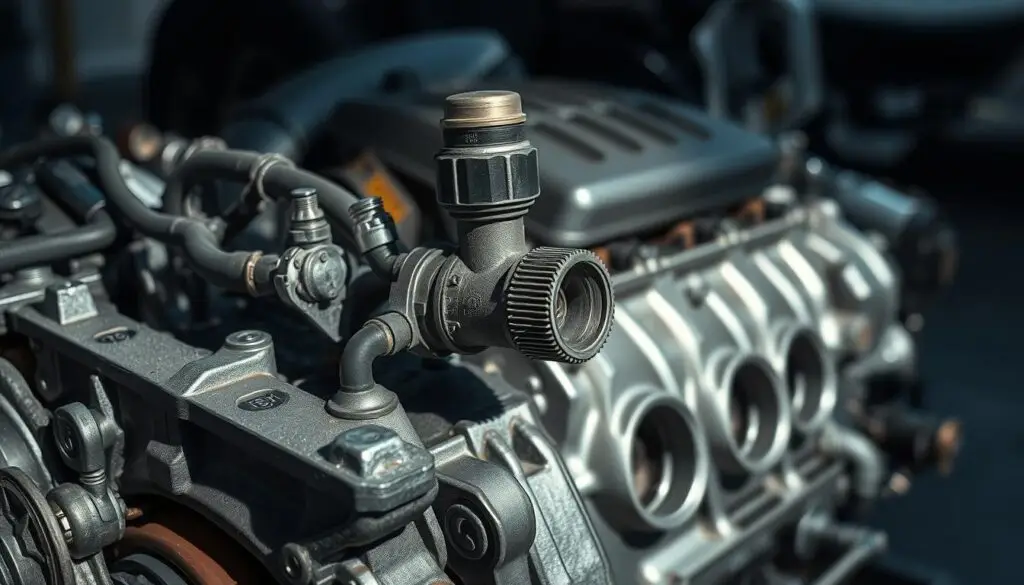
Drivers often notice tachometer needle bouncing between readings—typical fluctuations range from 100 to 200 RPM as the engine computer attempts compensation. Cold weather conditions exacerbate the problem because the engine management system expects minimal EGR flow during warm-up, but a stuck-open valve continues feeding exhaust gases. Physical vibrations often intensify when accessories like air conditioning or headlights place additional electrical load on the engine.
Increased Fuel Consumption
A failing EGR valve significantly impacts fuel efficiency, with most diesel vehicles experiencing a 15-30% reduction in fuel economy. For commercial operations, this translates to substantial additional monthly fuel expenses. Poor combustion efficiency forces the engine to burn more fuel maintaining power output, and the engine computer’s compensating adjustments rarely restore optimal efficiency.
15-30%
Average fuel economy reduction from EGR valve malfunction in diesel engines
Black Smoke from Exhaust
Visible black smoke emissions provide obvious evidence of EGR problems. This dark smoke consists of unburned carbon particles from incomplete combustion. When the EGR system malfunctions, fuel molecules don’t fully oxidize during the power stroke, creating conditions that produce excessive soot.
The smoke appears most prominently during acceleration, when increased fuel delivery combines with improper exhaust gas recirculation to prevent complete combustion. Soot accumulation around the exhaust pipe opening indicates chronic combustion problems, and excessive soot production overwhelms downstream emissions control devices including the diesel particulate filter.
Check Engine Light and Diagnostic Codes
Modern diesel engines monitor EGR performance through multiple sensors detecting abnormal operation. The engine control module compares actual EGR flow against expected values, triggering warning lights and storing diagnostic trouble codes when significant deviations occur. Understanding these codes helps technicians quickly identify whether problems involve mechanical valve sticking, electrical circuit issues, or sensor malfunctions.
| Fault Code | Description | Common Causes |
|---|---|---|
| P0400 | EGR Flow Malfunction | Complete system failure, disconnected vacuum lines, failed solenoid |
| P0401 | Insufficient EGR Flow | Stuck-closed valve, carbon-clogged passages, faulty position sensor |
| P0402 | Excessive EGR Flow | Stuck-open valve, failed vacuum regulator, damaged gaskets |
| P0403-P0408 | Circuit/Sensor Faults | Wiring problems, failed sensors, connector corrosion |
Advanced Warning Signs of EGR Problems
When EGR problems escalate, drivers experience performance issues signaling significant system deterioration. A stuck EGR valve creates cascading effects throughout the diesel engine system, with each failure mode—open, closed, or intermittent—producing different symptoms.

Power Loss During Acceleration
Drivers typically describe their vehicle as feeling “flat” or “suffocated” when attempting to accelerate. A stuck-open EGR valve allows continuous oxygen-depleted exhaust gas flow into the intake manifold, effectively reducing fresh air available for combustion. Engine efficiency can drop 20-40% in severe cases, making vehicles unsafe for highway driving conditions.
The turbocharger EGR relationship plays a critical role here. When the EGR valve fails, turbocharger efficiency suffers as it works harder to compensate for poor intake air quality. Carbon buildup from EGR failures can migrate into turbocharger components, damaging bearings and turbine blades—creating repair costs beyond the EGR valve itself.
⚠️ Safety Warning
Sluggish throttle response from EGR valve failure creates dangerous driving conditions. Highway merging becomes particularly hazardous when drivers cannot accurately predict acceleration capability. If you experience delayed throttle response, schedule professional diagnosis immediately.
Engine Stalling and Hesitation
Intermittent stalling represents severe progression of diesel EGR valve problems. The engine may unexpectedly lose power during deceleration or when coming to a complete stop. A stuck EGR valve operating erratically confuses the engine management system, causing misfires or complete stalling when the air-fuel ratio becomes incorrect.
Abnormal Engine Noises
Pre-ignition knock occurs when a stuck-closed EGR valve allows combustion temperatures to rise excessively. Without exhaust gas dilution, cylinder temperatures exceed safe limits, causing fuel to ignite prematurely and producing a sharp metallic knocking sound. Conversely, a stuck-open valve creates misfire-related rattling from unstable combustion—a rougher, irregular sound different from pre-ignition knock.
| Failure Mode | Power Impact | Sound Characteristic | Risk Level |
|---|---|---|---|
| Stuck Open | 20-40% reduction | Rough rattling, misfire sounds | High – unsafe highway driving |
| Stuck Closed | 10-15% reduction | Sharp metallic knocking | Critical – engine damage risk |
| Intermittent | Variable 15-30% | Irregular idle, clicking | Severe – unpredictable behavior |
| Cooler Failure | 10-20% reduction | Hissing, steam sounds | Critical – catastrophic damage potential |
Common Causes of EGR Valve Failure
Most EGR valve failures stem from preventable issues developing gradually over thousands of miles. Understanding root causes helps vehicle owners take corrective action before complete system breakdown. Multiple factors typically contribute rather than a single isolated cause.
Carbon Buildup and Soot Accumulation
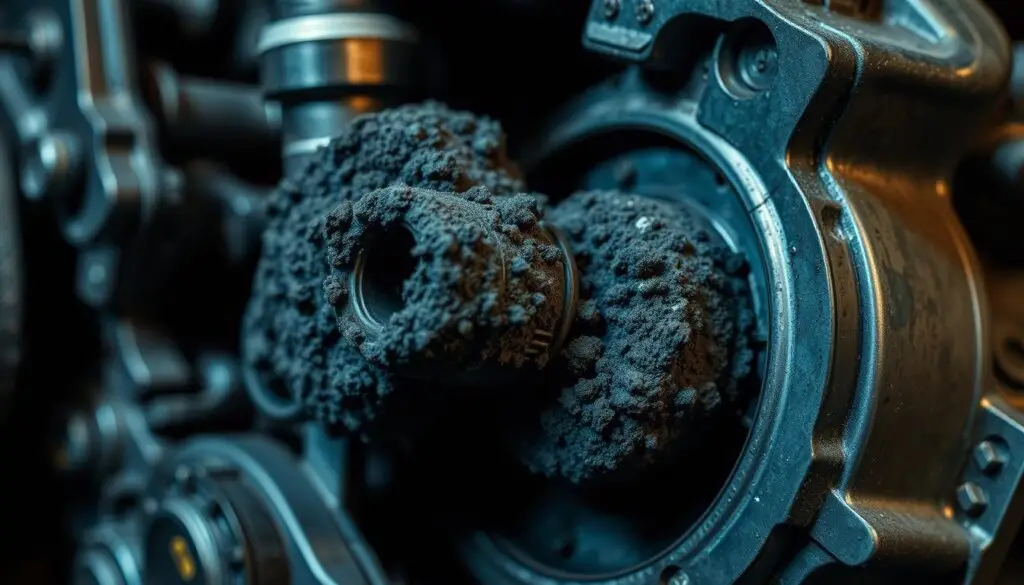
The primary culprit behind EGR failures involves exhaust particulate matter depositing on cooler surfaces throughout the system. Diesel combustion naturally produces high soot levels, and when hot exhaust gases recirculate through the EGR valve, carbon particles settle and harden into thick layers. These deposits gradually restrict flow passages and jam the valve’s plunger mechanism.
Carbon combines with oil vapor from crankcase ventilation to create sticky sludge that accelerates blockage. The EGR cooler, intake manifold, and valve seat are particularly vulnerable. Urban driving patterns and frequent short trips dramatically accelerate carbon accumulation because engines never reach full operating temperature to burn off deposits naturally. Highway driving at sustained speeds helps keep systems cleaner through higher exhaust temperatures.
Mechanical Wear and Electrical Failures
Valve stems wear against guides over time, creating excessive clearance affecting sealing. Spring tension weakens after years of compression cycles. Diaphragms in vacuum-operated valves develop cracks from age-related deterioration, becoming brittle after exposure to heat cycles.
Electronic EGR valves depend on sensors, solenoids, and wiring harnesses that fail independently from mechanical issues. Solenoid coils burn out from constant duty cycles and heat exposure. Corroded connectors develop high resistance preventing adequate current flow. Position sensor drift causes mismatches between commanded and actual EGR flow rates.
Fuel Quality Impact
Low-grade diesel containing higher sulfur content produces significantly more particulate matter during combustion, accelerating EGR degradation. Inadequate detergent additives in budget fuels fail to prevent injector deposits affecting spray patterns, creating incomplete combustion with higher particulate emissions.
Premium diesel fuels from reputable stations contain enhanced additive packages specifically designed to reduce deposits throughout the engine and exhaust systems. TOP TIER diesel fuel from major brands formulates detergent packages that actively combat carbon buildup affecting EGR passages.
Stay Current on Diesel Maintenance Best Practices
Get weekly insights on emissions system maintenance, regulatory updates, and fleet management strategies delivered directly to your inbox.
Step-by-Step EGR Valve Diagnostic Process
Proper EGR valve testing follows a logical sequence that identifies issues quickly while avoiding unnecessary part replacement. This systematic workflow combines visual observations, electronic fault code analysis, and hands-on functional tests that technicians and experienced fleet maintenance personnel can implement.

Visual Inspection
Begin with thorough visual examination when the engine is off and cool. Look for external signs of coolant leaks around the EGR cooler—greenish staining or crusty white deposits indicate problems. Check electrical connectors for corrosion or loose connections, and examine the area around the EGR valve for carbon deposits or exhaust gas leaks.
Remove the EGR valve to assess internal carbon accumulation. Light brown or tan deposits indicate normal operation; thick black crusty buildup signals severe restriction. Use a flashlight to examine the valve opening and pintle shaft—carbon preventing complete valve closure causes rough idle and poor performance.
OBD-II Diagnostic Scanning
Connect an OBD-II scanner to retrieve both active and pending codes. Pending codes indicate intermittent problems that haven’t triggered the check engine light yet. Review freeze frame data capturing engine operating conditions when faults occurred—RPM, coolant temperature, load percentage, and vehicle speed help determine whether problems occur during specific driving conditions.
A scan tool with bidirectional capability allows commanding the EGR valve open and closed while logging response data. This active testing confirms whether the valve responds to ECU commands. Monitor EGR valve position sensor readings while commanding different opening percentages—feedback should match commanded position within a few percentage points. Large discrepancies indicate sensor failure or mechanical problems.
Functional Testing
Apply vacuum directly to the EGR valve using a hand vacuum pump while the engine idles. Apply 10-15 inches of mercury vacuum slowly—the engine should run rough or stall as the valve opens. Hold vacuum steady; a properly sealed valve maintains vacuum without significant drop for at least 30 seconds. Rapid vacuum loss indicates torn diaphragm or internal valve leak requiring replacement.
For electronic valves, activate the solenoid with a scan tool and check vacuum at the connecting pipe end. Command the EGR open and closed at idle while monitoring MAF and MAP sensor response for expected changes. A properly functioning system shows immediate changes in manifold pressure and mass airflow when the valve opens.
The HDJ Perspective
In our experience working with fleet maintenance managers across the industry, EGR problems often get misdiagnosed as turbocharger issues or fuel system faults because symptoms overlap significantly. The most efficient shops we’ve observed follow a systematic protocol: verify the complaint, pull codes, perform functional tests, then make repair decisions. Skipping diagnostic steps to save time almost always costs more in unnecessary part replacement and repeat visits. For fleets running Class 8 trucks with high-mileage Cummins or Detroit engines, we recommend budgeting for proactive EGR cleaning at 60,000-80,000 mile intervals—the $200-400 preventive cost consistently proves cheaper than emergency repairs that exceed $1,500 and sideline trucks during peak season.
Professional Diagnostic Methods
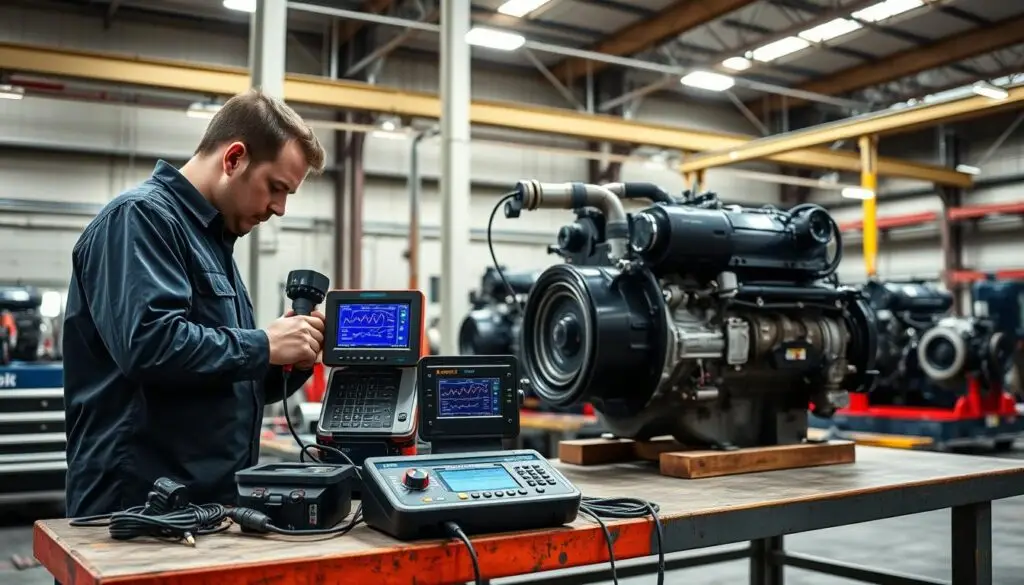
When standard inspection falls short, professional-grade diagnostic equipment provides definitive answers. These advanced tools eliminate guesswork that might otherwise lead to unnecessary parts replacement.
Smoke Testing for Leaks
Smoke testing introduces visible, non-toxic smoke into the intake system under slight pressure. Any leaks in EGR passages, intake manifold gaskets, or connection points become immediately visible as smoke emerges. This method excels at finding small vacuum leaks causing EGR malfunction but remaining invisible during visual inspection.
Heavy smoke from a single point suggests major gasket failure or cracked component. Light smoke from multiple areas indicates aging seals throughout the system needing replacement. Pay special attention to EGR cooler areas where coolant passages meet exhaust gas pathways—these high-stress zones frequently develop leaks.
Backpressure Testing
Backpressure testing identifies restricted exhaust systems preventing proper EGR function. Normal diesel engines show 1-3 PSI at idle and 3-5 PSI at 2000 RPM. Readings above these thresholds indicate abnormal exhaust flow resistance from clogged EGR passages, restricted DPF, or exhaust system blockages.
Install a pressure gauge in the exhaust system upstream of suspected restriction points—typically through oxygen sensor ports. Record readings at idle, 1500 RPM, 2000 RPM, and under moderate acceleration. Compare values against manufacturer specifications to determine whether exhaust restrictions exceed acceptable limits.
Share Your EGR Diagnostic Experience
Have you developed effective EGR maintenance protocols or diagnostic shortcuts for your fleet? Heavy Duty Journal welcomes technical contributions from experienced diesel technicians and fleet managers.
EGR Valve Repair and Replacement Options
Understanding available repair and replacement options helps make informed decisions balancing cost with long-term reliability. The choice between cleaning and replacement depends on damage extent, underlying cause, and budget considerations.
Professional Cleaning
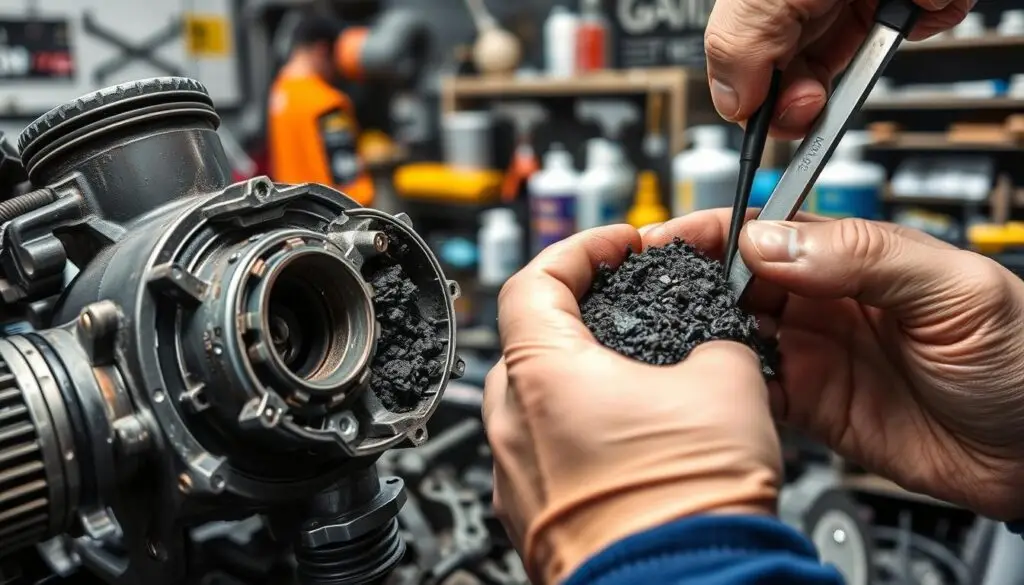
EGR valve cleaning represents the most cost-effective solution for carbon-related failures, typically costing $200-400 and taking 3-5 hours. Professional technicians remove the valve, apply specialized cleaning solutions to dissolve carbon deposits, and inspect all components before reinstallation. The process works effectively in 80-90% of cases where valves haven’t suffered mechanical damage.
Ultrasonic cleaning provides superior results compared to manual scrubbing. High-frequency sound waves create microscopic bubbles that break apart stubborn buildup in intricate internal passages that brushes cannot reach. This thorough approach extends valve service life and improves overall performance.
When Replacement Is Necessary
Replacement becomes necessary when internal valve mechanisms have failed—torn diaphragms, bent valve stems, broken internal springs, or solenoid coil burnout cannot be repaired through cleaning. EGR valve replacement costs range from $400-800 for standard applications including parts and labor, though heavy-duty diesel trucks often exceed $1,500 depending on accessibility and model complexity.
Choosing between OEM and aftermarket valves affects initial cost and long-term reliability. OEM parts guarantee fit and function for specific vehicles at 20-40% higher cost. Quality aftermarket options from reputable manufacturers meet or exceed OEM specifications at lower prices but require careful compatibility verification.
| Factor | OEM Parts | Quality Aftermarket |
|---|---|---|
| Cost Range | $250-$450 | $150-$300 |
| Warranty Coverage | 12-24 months | 12 months typical |
| Compatibility | 100% guaranteed fit | Verified for specific models |
Preventive Maintenance for EGR System Longevity
Smart preventive EGR maintenance can add 50,000+ miles to system operational life while dramatically reducing unexpected breakdown risk. Most fleet operations spend $200-300 annually on proactive care—preventing emergency repairs easily exceeding $1,500.
Recommended Maintenance Schedule
Establish inspection milestones based on usage patterns. Vehicles used primarily for short trips accumulate carbon deposits faster than those driven regularly on highways. Professional mechanics recommend visual EGR system inspection every 30,000 miles or annually, comprehensive system inspection during coolant service, and proactive cleaning before complete failure occurs.
Time cleaning based on specific driving patterns: city driving and short trips warrant EGR valve cleaning every 60,000-80,000 miles, while highway driving can extend intervals to 100,000 miles. Always clean intake manifold passages during any EGR valve service to ensure complete system efficiency. According to 49 CFR 396.9 vehicle inspection requirements, vehicles with mechanical conditions likely to cause accidents or breakdowns can be placed out of service, making preventive maintenance essential for compliance.
Fuel Quality and Additives
Premium fuel from reputable stations contains enhanced detergent packages actively combating deposits throughout the engine. Supplementing quality fuel with targeted additives provides additional protection—detergent additives clean fuel system components, cetane boosters improve combustion efficiency and reduce soot formation, and lubricity additives protect fuel injection systems ensuring proper spray patterns.
Treat your fuel system every 3,000-5,000 miles for optimal results. Consistent additive use costs $10-20 per treatment but provides measurable protection against costly repairs. Ultra-Low Sulfur Diesel (ULSD), mandatory since 2006 at less than 15 ppm sulfur, significantly reduces sulfuric acid formation that previously attacked EGR components.
Frequently Asked Questions
How do I know if my diesel EGR valve is failing?
The most common indicators include rough idling with noticeable engine vibration, visible black smoke during acceleration, reduced fuel economy (typically 15-30% worse), and illuminated check engine lights with P0400-series diagnostic codes. You may also notice sluggish throttle response, engine stalling at stops, or metallic knocking sounds. Multiple symptoms appearing together strongly suggest EGR system failure requiring professional diagnosis before continuing operation.
Can I drive with a bad EGR valve?
While technically possible for short distances, driving with a failing EGR valve risks progressive engine damage, failed emissions testing, and potential roadside inspection violations. A stuck-open valve reduces engine efficiency by 20-40%, while a stuck-closed valve causes excessive combustion temperatures that damage pistons, valves, and turbocharger components. The longer you delay repairs, the more likely secondary damage will multiply your total repair costs significantly.
How much does EGR valve replacement cost for heavy-duty diesel trucks?
Light-duty diesel pickups typically see replacement costs between $400-800 including parts and labor. Heavy-duty Class 8 trucks with engines like Cummins ISX or Detroit DD15 often exceed $1,500-2,000 due to higher part costs and complex accessibility requiring significant disassembly. Professional cleaning costs $200-400 and resolves 80-90% of carbon-related failures, making it the cost-effective first option when mechanical damage hasn’t occurred.
How often should diesel EGR valves be cleaned?
Cleaning intervals depend on driving patterns. City driving and frequent short trips warrant EGR valve cleaning every 60,000-80,000 miles because engines rarely reach temperatures needed to burn off carbon deposits naturally. Highway driving at sustained speeds can extend intervals to 100,000 miles. Some manufacturers, including Cummins, specify 67,500-mile cleaning intervals for optimal performance—following these recommendations prevents most EGR-related issues that surface after 70,000 miles.
What causes EGR valves to fail faster in diesel engines?
Diesel engines produce significantly higher soot content than gasoline engines due to compression ignition characteristics. This carbon-rich exhaust environment accelerates valve fouling when combined with oil vapor from crankcase ventilation systems. Low-quality fuel lacking adequate detergent additives worsens the problem by creating incomplete combustion with higher particulate emissions. Short-trip driving patterns that prevent engines from reaching full operating temperature allow carbon deposits to accumulate without burning off naturally.
Protecting Your Fleet from EGR-Related Downtime
Recognizing EGR valve failure symptoms early protects your diesel engine from costly secondary damage while maintaining operational efficiency. The warning signs—rough idling, black smoke, power loss, and increased fuel consumption—typically appear between 80,000 and 150,000 miles and demand prompt attention before problems cascade into turbocharger failures, DPF damage, or engine overheating.
Accurate EGR system diagnosis prevents unnecessary parts replacement that wastes both time and money. The symptoms of diesel EGR problems overlap significantly with turbocharger issues and fuel system faults, making systematic testing essential. Professional diagnostics costing $100-150 consistently save thousands in misdiagnosed repairs while getting trucks back on the road faster.
For fleet operations prioritizing uptime and compliance, preventive maintenance delivers the best return on investment. Quality fuel, regular cleaning services at appropriate intervals, and attention to early warning signs extend EGR system life while keeping your equipment operating efficiently within FMCSA CSA compliance requirements.
Share This EGR Diagnostic Guide
Help other fleet managers and diesel technicians identify EGR problems early and prevent costly repairs. Share this comprehensive diagnostic guide with your professional network.