
By Michael Nielsen, Editor & Publisher | 15+ Years in Diesel Repair
Last Updated: February 2026
📖 Estimated reading time: 33 minutes
Fleet maintenance operations face a critical workforce crisis that threatens their ability to keep vehicles on the road. According to a 2018 Randall-Reilly survey of more than 800 trucking technicians, 56% have worked for at least two maintenance or repair businesses in the past five years. The American Truck Dealers 2024 Dealer Workforce Study reveals an even more alarming statistic: entry-level positions experience a 44% annual turnover rate.
This constant staff departure creates severe operational challenges across the industry. ATRI research indicates that 65.5% of shops were understaffed in 2025, with an average of 19.3% of positions unfilled. More than 70% of maintenance professionals cite pay and benefits as their primary reason for leaving employers. Perhaps most concerning, 44% of current diesel mechanics are actively considering alternative employment.
This guide provides evidence-based diesel technician retention strategies drawn from successful fleet operations. You’ll discover how companies like Affinity Truck Center, Summit Truck Group, and Inland Truck Parts and Service have tackled fleet mechanic turnover through comprehensive approaches. These technician shortage solutions address compensation, workplace culture, career development, and work-life balance to build workforce stability.
Key Takeaways
- More than half of diesel mechanics change employers at least twice within five years, with entry-level staff experiencing 44% annual departure rates
- Nearly two-thirds of maintenance facilities operate with significant understaffing, averaging 19.3% of positions unfilled
- Compensation and benefits drive 70% of employment decisions among maintenance professionals
- Structured apprenticeship programs reduce turnover by 58.2% compared to industry averages
- Workplace culture and management relationships often impact retention more than compensation alone
- Successful retention requires integrated strategies addressing pay, culture, career growth, and work-life balance
Understanding the True Cost of Diesel Technician Turnover
When a skilled diesel technician walks out the door, your shop’s profitability takes an immediate hit. The financial consequences ripple through every aspect of your fleet maintenance staffing operations, from recruitment expenses to lost productivity. Most shop managers recognize turnover as expensive, but few understand the complete scope of these costs.
The burden extends far beyond posting job advertisements and conducting interviews. Each departing technician represents months of investment in training, mentorship, and skill development that simply vanishes. For fleet operations already struggling with thin profit margins, these losses can mean the difference between a thriving shop and one that barely stays afloat.
Implementing effective employee retention strategies starts with quantifying exactly what turnover costs your operation. Only then can you make informed decisions about where to invest in keeping your best technicians on the team.

Direct Financial Impacts of Losing Technicians
The immediate expenses associated with losing a diesel technician begin accumulating the moment they submit their resignation. Recruitment costs alone can reach several thousand dollars per position, encompassing job board fees, advertising expenses, and the time managers spend reviewing applications.
Interview processes consume valuable hours from multiple staff members. Shop supervisors, senior technicians, and human resources personnel all dedicate time to screening candidates, conducting interviews, and performing background checks. These hours represent productive work that doesn’t happen while the hiring process unfolds.
The most substantial direct cost comes from training new hires. Research shows that most technicians—61.8% of the workforce—enter the diesel tech recruitment pipeline without any formal training. Bringing these individuals to competency requires an average of 357 training hours and $8,211 in trainee wages.
Even technicians who complete formal training programs present challenges. More than 30% of training program graduates lack proficiency in 20 core skill areas according to diesel shops nationwide. This qualification gap means additional training investment beyond the initial onboarding period.
| Cost Category | Average Expense | Time Investment | Frequency |
|---|---|---|---|
| Recruitment and Advertising | $1,200 – $2,500 | 15-20 hours | One-time per hire |
| Interview Process | $800 – $1,400 | 10-15 hours | One-time per hire |
| Training Wages | $8,211 | 357 hours | Per new technician |
| Administrative Processing | $500 – $800 | 8-12 hours | One-time per hire |
| Equipment and Uniforms | $600 – $1,200 | 2-3 hours | Per new technician |
These direct costs multiply with each turnover event. A shop experiencing multiple departures in a single year can easily see recruitment and training expenses exceed $50,000 or more. This represents capital that could otherwise fund equipment upgrades, facility improvements, or competitive compensation packages.
Indirect Costs: Productivity Loss and Service Delays
The hidden expenses of technician turnover often exceed the direct financial impacts. Productivity losses begin immediately when an experienced technician departs, as remaining staff must absorb additional workload while maintaining quality standards.
Shop productivity drops significantly during training periods. Senior technicians who mentor new hires cannot focus entirely on their regular repair work. This dual responsibility reduces overall output and extends service timelines for customers.
Overtime expenses escalate rapidly when fleet maintenance staffing levels drop below optimal levels. Remaining technicians work additional hours to prevent service backlogs, increasing labor costs by 50% or more for those overtime hours. Prolonged overtime schedules also contribute to fatigue, mistakes, and potential safety incidents.
2-3x Annual Salary
Total replacement cost when factoring in productivity losses, overtime, and service disruptions
Service quality suffers when inexperienced technicians handle complex repairs. Comeback rates increase, meaning vehicles return to the shop for the same issue multiple times. Each comeback represents wasted labor, parts, and customer goodwill.
Customer dissatisfaction grows when wait times extend due to understaffing. Fleet clients operating on tight schedules cannot afford lengthy vehicle downtime. When your shop cannot meet service timelines consistently, customers begin exploring alternative maintenance providers.
Team morale takes a substantial hit during high-turnover periods. Watching talented colleagues repeatedly leave creates anxiety among remaining staff members. They wonder whether they should also seek opportunities elsewhere, potentially triggering additional departures.
The cumulative impact of these indirect costs can reach two to three times the direct replacement expenses. A technician earning $60,000 annually might actually cost your operation $120,000 to $180,000 when factoring in all productivity losses, training demands, and service disruptions.
Industry Turnover Benchmarks for Fleet Maintenance
Understanding how your shop’s turnover compares to industry standards provides critical context for evaluating your employee retention strategies. The American Truck Dealers 2024 study revealed an annualized turnover rate of 44% for entry-level and trainee technicians. This staggering figure means nearly half of new hires leave within their first year.
The broader industry faces severe understaffing challenges. Currently, 65.5% of diesel shops nationwide report operating below optimal technician capacity. This widespread shortage creates intense competition for qualified candidates, driving up compensation demands and making diesel tech recruitment increasingly difficult.
Geographic location significantly impacts hiring challenges and turnover rates. Some states produce sufficient technician graduates to meet local demand, while others face critical shortages. South Dakota graduates 9.4% of their technician workforce annually through formal training programs. In contrast, North Carolina graduates only 0.3% of their needed workforce each year.
These geographic disparities affect your ability to recruit qualified candidates. Shops operating in states with robust training programs have access to larger talent pools. Operations in states with minimal training infrastructure must invest more heavily in developing inexperienced hires or offer premium compensation to attract candidates willing to relocate.
Comparing your turnover rate against these benchmarks helps determine whether your situation requires immediate intervention. A shop experiencing 25% annual turnover performs better than the industry average but still loses one-quarter of its workforce each year. Even this “better than average” rate represents substantial financial losses that justify investment in retention initiatives.
Shops with turnover rates exceeding 50% annually face crisis-level challenges. At this rate, your operation spends more time training new technicians than performing productive repair work. The continuous disruption prevents your team from developing the cohesion and efficiency that drive profitability.
The data clearly demonstrates that technician turnover represents one of the most significant financial challenges facing fleet maintenance operations today. Reducing turnover by even 10-15 percentage points can save tens of thousands of dollars annually while improving service quality, customer satisfaction, and team stability.
Offering Competitive Compensation and Benefits Packages
Fleet maintenance shops face a straightforward reality: technicians leave for better pay, and no amount of workplace perks can compensate for below-market compensation. More than 70% of diesel technicians identify pay and benefits as their primary factor when abandoning a job or choosing a new one. Specifically, 72% of technicians cite pay as the top reason for making employment changes.
This data reveals that diesel technician retention begins with your compensation strategy. Technicians understand their market value and can easily find higher-paying positions. Creating technician compensation packages that compete effectively requires ongoing analysis, creative incentive structures, and comprehensive benefits that address both immediate and long-term financial security.
Staying Competitive Through Regular Market Analysis
Average annual compensation for diesel technicians grew by 39.8% over the last decade to $57,362 in 2024 according to Bureau of Labor Statistics occupational data. However, this growth hasn’t kept pace with competing industries. The 2024 ATD Dealership Workforce Study reported an average annual wage of $73,959 for 2023, revealing significant variation across market segments.
Nearly 60% of heavy truck technicians reported making at least $50,000 annually. Among these professionals, 38% surpass $60,000 and 5% claim to pull in more than $100,000 per year. These figures establish baseline expectations that technicians bring to compensation discussions.
The competitive challenge becomes clear when examining industry comparisons. Independent repair shops, passenger transit operations, and rental/leasing services each pay technicians between $1,500-$4,000 more per year than trucking companies. Wholesalers and dealers pay approximately $7,000 more annually.

Conducting quarterly or semi-annual market salary analysis prevents compensation from falling behind competitors. Fleet managers should utilize multiple data sources for accurate benchmarking: industry salary surveys from organizations like TMC and ATA, local competitor intelligence through job postings and recruitment data, direct technician feedback during performance reviews, regional cost-of-living adjustments for multi-location operations, and specialized role compensation for diagnostics experts and master technicians.
Proactive salary adjustments prove more cost-effective than reactive counter-offers. When technicians announce their departure, retention attempts typically fail because the decision process already concluded. Regular market adjustments demonstrate ongoing commitment rather than desperate last-minute appeals.
Building Effective Performance-Based Incentive Programs
Performance incentives for technicians create direct connections between productivity and earnings. This approach resonates particularly well with hourly technicians, who constitute more than 85% of the diesel tech workforce. Three successful company models demonstrate different approaches to performance-based compensation.
Summit Truck Group conducts bi-annual performance reviews that give technicians the potential to earn multiple raises per year. This frequent evaluation cycle allows top performers to advance their compensation quickly rather than waiting for annual reviews. Technicians receive clear performance metrics tied to quality, efficiency, and safety standards.
Truck Equipment Inc. developed a quarterly “Give Yourself a Raise” bonus program focusing on margins and labor efficiencies. This program helps technicians understand how their individual contributions impact shop profitability and their personal compensation. Departmental performance metrics include labor efficiency ratios comparing billed hours to actual hours, first-time fix rates and comeback percentages, parts markup contributions and warranty recovery, and customer satisfaction scores.
Affinity Truck Center pays bonuses based on technician efficiency—the more hours billed, the more earned. This straightforward model rewards productivity while maintaining quality standards. Technicians can track their efficiency rates daily, creating transparency and motivation.
Performance incentives for techs work best when paired with achievable benchmarks. Setting targets too high creates frustration, while overly simple goals fail to motivate improvement. Successful programs balance challenge with attainability, typically setting efficiency targets between 85-95% for experienced technicians.
| Company | Incentive Structure | Review Frequency | Key Metrics |
|---|---|---|---|
| Summit Truck Group | Multiple annual raises | Bi-annual reviews | Quality, efficiency, safety |
| Truck Equipment Inc. | Quarterly bonus program | Quarterly assessments | Labor efficiency, margins |
| Affinity Truck Center | Efficiency-based bonuses | Ongoing tracking | Billable hours, productivity |
Comprehensive Benefits Beyond Base Salary
While salary remains paramount for diesel technician retention, comprehensive benefits packages significantly enhance long-term commitment. Quality health insurance stands as the second most important benefit consideration for technicians and their families. Rising healthcare costs make employer-sponsored insurance increasingly valuable.
Complete technician compensation packages should include multiple benefit categories. Dental and vision coverage addresses preventive care needs that technicians value. Many shops overlook these benefits, creating differentiation opportunities for retention-focused employers.
Retirement planning benefits demonstrate long-term investment in employees. 401(k) matching programs provide immediate value while encouraging financial planning. Employer matches of 3-6% create substantial retirement savings over a technician’s career. Some organizations offer employee stock ownership plans (ESOPs) like those implemented by Inland Truck Parts and Service.
Additional benefits that strengthen retention include life insurance and disability coverage for family security, flexible spending accounts for medical and dependent care, employee assistance programs for mental health and counseling, wellness programs with gym memberships or health screenings, and paid parental leave for family bonding.
Technicians increasingly evaluate total compensation rather than base salary alone. A position offering $2,000 less annually but including comprehensive benefits often represents superior value. Clear communication about benefit value helps technicians understand their complete compensation picture.
Strategic Sign-On and Retention Payment Programs
One-time payments serve strategic purposes in competitive hiring markets and milestone recognition. Sign-on bonuses attract skilled technicians when multiple employers compete for limited talent. These bonuses typically range from $1,000-$5,000 depending on experience level and market conditions.
Retention bonuses paid at anniversary milestones encourage long-term commitment. Common structures include payments at one-year, three-year, and five-year anniversaries. These payments acknowledge loyalty while creating financial incentives to remain through specific timeframes. Retention payments often increase with tenure, rewarding experienced technicians who provide mentorship and institutional knowledge.
Educational support programs remove financial barriers while building skilled workforces. McCoy Freightliner’s tuition reimbursement program pays 100% of educational expenses for students maintaining a B average who commit to two years post-graduation. This approach develops dedicated technicians while filling pipeline needs.
Tool purchase assistance programs help entry-level technicians overcome significant startup costs. Professional tool collections can cost $5,000-$15,000, creating financial hardship for new technicians. Assistance programs include tool allowances of $500-$1,500 for new hires, interest-free tool loans repaid through payroll deductions, tool replacement programs for damaged or stolen equipment, and specialty tool libraries for expensive diagnostic equipment.
These payment strategies work best when structured with clear expectations and documentation. Repayment clauses for early departures protect employer investments while remaining fair to technicians. Typical structures require repayment on a sliding scale, with obligations decreasing monthly over the commitment period.
Combining competitive base pay with performance incentives, comprehensive benefits, and strategic one-time payments creates powerful diesel technician retention. This holistic approach addresses immediate financial needs, rewards excellence, and provides long-term security that keeps skilled technicians engaged and committed to your operation.
Creating a Positive and Safe Workshop Environment
Your shop’s daily work environment influences technician retention more than many fleet managers realize. The physical and cultural conditions where diesel technicians spend their shifts directly impact job satisfaction and their decision to stay or leave. According to George Arrants, vice president at ASE Education Foundation, understanding the root cause of turnover is essential for effective fleet shop management.
“If you have a high turnover rate, the problem may not be money. It may be your culture instead.”
— George Arrants, Vice President, ASE Education Foundation
Technicians consistently report that workplace environment factors weigh heavily in their employment decisions. Research shows that shop culture improvement often delivers better retention results than compensation increases alone. The work environment for diesel techs encompasses everything from physical facility conditions to interpersonal dynamics and safety standards.
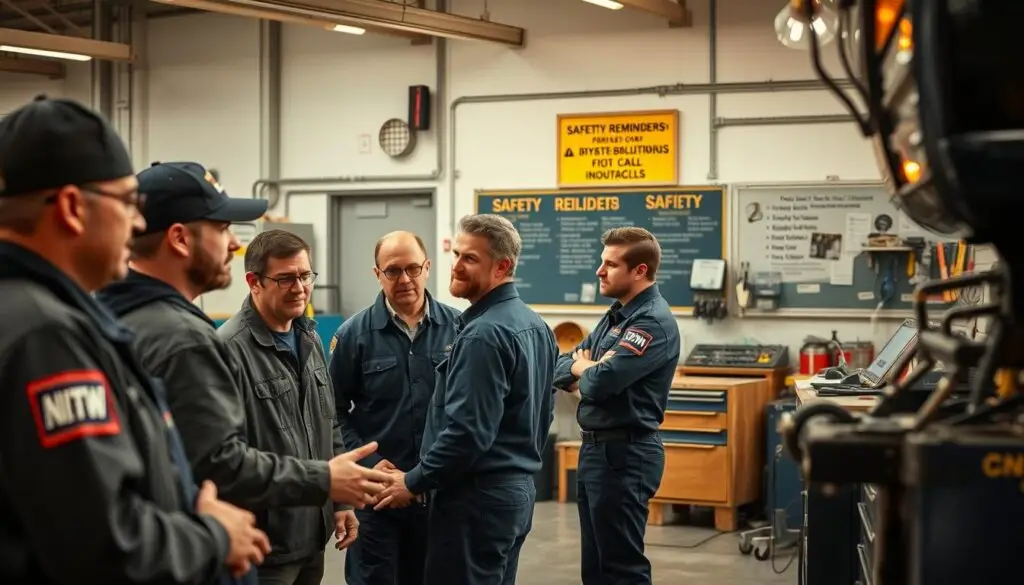
Clean, Organized Facilities Matter More Than You Think
Diesel technicians spend entire shifts inside your facility. The condition of that workspace sends a clear message about how much you value their contributions. Clean, well-maintained facilities demonstrate respect and professionalism that technicians notice every single day.
Fleet shops have a competitive advantage over construction and agriculture sectors. Technicians consistently report that trucking offers cleaner shops and more controlled work environments compared to these industries. Smart fleet shop management leverages this strength during recruitment and retention efforts.
Several facility elements directly impact technician satisfaction and productivity: proper lighting systems that reduce eye strain and improve diagnostic accuracy, climate control with adequate heating in winter and cooling in summer months, organized tool storage with clearly designated locations for equipment, well-marked work areas that create logical workflow patterns, functional ventilation systems that remove exhaust fumes and improve air quality, and clean restrooms and break rooms that provide comfortable spaces during downtime.
Companies like Inland Truck Parts and Service invest in state-of-the-art facilities specifically to create environments where technicians feel pride in their workplace. President Greg Klein emphasizes the importance of culture in retention strategies: “I think the other thing that goes together with [pay] is to create a culture where [employees] feel they are a part of something.”
Regular facility maintenance prevents the gradual decline that makes shops feel neglected. Schedule weekly cleaning protocols and monthly deep-cleaning sessions. Address maintenance issues promptly rather than allowing problems to accumulate.
Safety Protocols That Protect Your Most Valuable Assets
Technicians need assurance that their physical wellbeing comes first. Robust safety standards and OSHA compliance requirements for truck and vehicle servicing create trust between management and technicians. This trust directly influences whether skilled workers choose to stay long-term.
Safety investments accomplish two critical objectives simultaneously. They reduce workplace injuries and associated costs while signaling to technicians that management genuinely values their wellbeing. This perception significantly impacts retention decisions.
Essential safety elements for any professional fleet shop include rigorous OSHA standards adherence with documented compliance procedures, regular safety training sessions and weekly toolbox talks on specific hazards, personal protective equipment provided at no cost to technicians, functional safety equipment including eyewash stations and readily accessible first aid supplies, clear incident reporting systems that encourage transparency without fear of retaliation, and a safety-first culture where concerns receive immediate attention from management.
Creating this safety-focused environment requires more than just equipment purchases. Fleet shop management must actively demonstrate that safety concerns will never be dismissed or minimized. Technicians watch how management responds when someone raises a safety issue.
One technician from the Randall-Reilly survey captured this sentiment: “How much do they value my position? How much do they value their technicians? Being appreciated and valued is really important.”
Hold monthly safety committee meetings where technicians participate in identifying hazards and developing solutions. This involvement creates ownership and reinforces that safety represents a shared responsibility rather than just management directives.
Building Teams Where Professionals Want to Work
The interpersonal dynamics within your shop define the daily work experience for every technician. Research consistently shows that people leave poor management, not jobs. This reality makes team culture a retention factor that rivals compensation in importance.
Another technician from the Randall-Reilly survey expressed this fundamental truth: “The biggest factor for me is the person I work for. People don’t quit jobs, they leave poor management.”
Texas Truck Direct provides an excellent example of intentional shop culture improvement. Vice President of Operations Christy Cozby explains how their service department leadership actively cultivates positive team environments: “Guy [Robertson], who runs our service department, has really pushed a team environment… If you can maintain a positive environment, it makes it much easier to come into work every day.”
Effective team collaboration requires specific, actionable strategies that fleet shop management can implement immediately. Consider these proven tactics for fostering collaboration: regular team meetings where technicians contribute input on shop operations and workflow improvements, cross-training opportunities that build mutual respect for different specializations and skill levels, collaborative problem-solving for complex repairs that leverage collective expertise, open-door management policies that make leadership accessible and approachable, and zero-tolerance approach to workplace harassment, bullying, or toxic behavior.
One technician highlighted the importance of working alongside competent professionals: “I would love to actually be able to work around other professionals that know and understand the industry and make work flow easier.”
This feedback reveals that hiring decisions should evaluate both technical skills and cultural fit. A highly skilled technician who creates interpersonal friction damages team dynamics and drives retention problems. Assess professional attitude and collaborative capabilities during the interview process.
Create communication channels that allow technicians to voice concerns before frustrations escalate. Weekly one-on-one check-ins with team members provide opportunities to address small issues before they become reasons for resignation. Document these conversations and follow through on commitments made during discussions.
Recognition programs reinforce positive behaviors and contributions. Publicly acknowledge technicians who exemplify collaborative attitudes and professional conduct. This recognition costs nothing but powerfully reinforces the team-oriented culture you’re building.
Investing in Modern Tools and Diagnostic Equipment
Equipment quality represents one of the most underestimated factors affecting fleet maintenance staffing stability. While compensation and benefits typically dominate retention discussions, the daily reality technicians face with their tools shapes job satisfaction more profoundly than many managers realize. Outdated diagnostic systems, inadequate lifts, and insufficient specialized equipment create cumulative frustration that gradually transforms talented technicians into active job seekers.
Greg Klein of Inland Truck Parts and Service articulates this connection clearly: “We want to be perceived as a first-class operation, and we believe people want to be proud of where they work.” The company’s commitment extends beyond words to tangible shop equipment investment including state-of-the-art service facilities and a corporate training center with four full-time trainers. This approach recognizes that technician resources directly reflect organizational values and priorities.
Providing Advanced Diagnostic Technology and Software
Modern diesel vehicles incorporate electronic control systems that require sophisticated diagnostic capabilities far beyond traditional mechanical troubleshooting. Technicians equipped with outdated or inadequate diagnostic tools experience daily frustration that accumulates into genuine job dissatisfaction. The complexity of emissions systems, advanced safety features, and electronic engine management demands investment in comprehensive diagnostic technology.
Research reveals that 10% of heavy truck technicians rank access to latest technologies as their primary job consideration. This places advanced equipment ahead of traditional factors like geographic location and even benefits packages for certain technically-oriented professionals.
Essential diagnostic technology investments include current-generation diagnostic software with manufacturer-supported regular updates ensuring compatibility with newest vehicle models, comprehensive scan tools capable of reading all vehicle systems including engine, transmission, ABS, and body control modules, electronic service information subscriptions providing immediate access to manufacturer repair procedures, wiring diagrams, and technical service bulletins, and specialized diagnostic equipment for emissions testing, electronic control validation, and advanced driver assistance system calibration.
For technically skilled professionals, having proper diagnostic equipment represents both practical necessity and professional pride. Technicians recognize when organizations prioritize their effectiveness through technology investment, creating powerful retention incentives that transcend compensation alone.
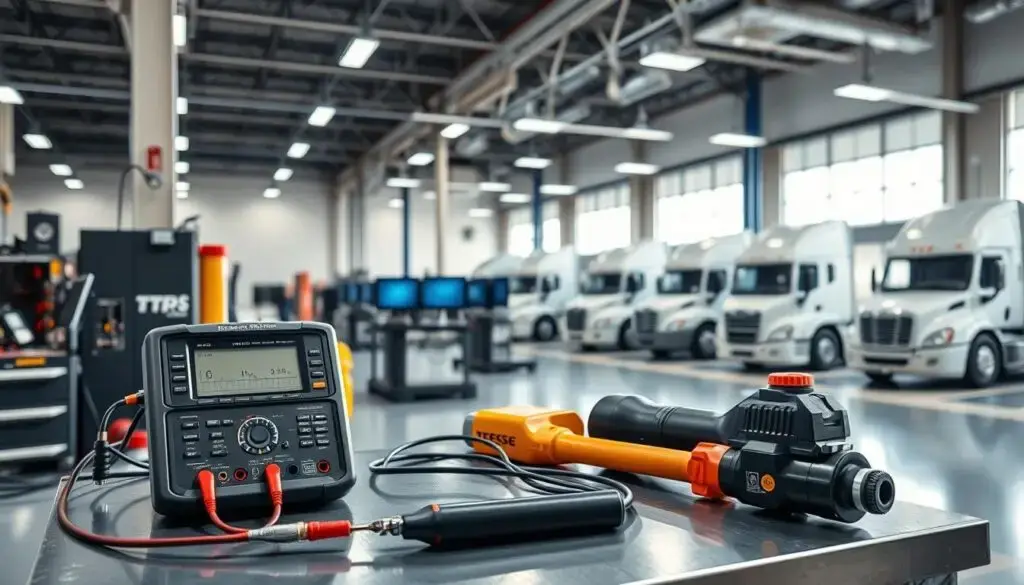
Upgrading Lifts, Tools, and Shop Equipment
Beyond diagnostic technology, the foundational infrastructure technicians rely on daily directly impacts both safety and efficiency. Vehicle lifts, pneumatic systems, lighting, and specialized tools form the physical environment where technicians spend their entire workday. Inadequate infrastructure communicates organizational priorities more clearly than any mission statement.
Chris Sterwerf, CFO and COO for Fairfield Auto & Truck Service, emphasizes the recruitment and retention impact of proper tool support: “Whether you’re recruiting or trying to keep technicians, you have to do things that make your business attractive. I think something as simple as tools can go a long way. The cost of tools is a barrier to entry for a lot of young technicians today… I don’t want techs trying to use the wrong tools for the job. That just causes more issues for everyone.”
Critical infrastructure investments for fleet maintenance staffing stability include modern vehicle lifts with adequate capacity for heavy commercial vehicles and proper safety certifications, comprehensive shop-provided specialized tools including transmission jacks, engine hoists, and heavy-duty pullers that individual technicians cannot reasonably purchase, properly maintained pneumatic and hydraulic systems delivering consistent pressure throughout the facility, adequate work area lighting including task lighting for detailed inspection and repair work, and clean, functional equipment with regular maintenance schedules preventing breakdowns during critical repairs.
While traditional shop culture expects technicians to provide personal hand tools, forward-thinking organizations invest in expensive specialized equipment rather than creating financial barriers for skilled workers. This approach balances professional expectations with practical accessibility, particularly for younger technicians entering the field.
The HDJ Perspective
The fleet maintenance industry stands at a crossroads. Shops that continue treating technician retention as purely a compensation issue will find themselves in perpetual hiring cycles. The most successful operations we’ve observed combine fair pay with genuine investment in workplace culture, equipment, and career development. This isn’t about choosing between compensation and culture—it’s about recognizing that modern technicians evaluate employers holistically. The shops winning the talent war understand that a technician’s decision to stay involves dozens of daily experiences that either build loyalty or erode it.
Reducing Technician Frustration Through Proper Resources
The connection between equipment quality and retention becomes clearest when examining daily technician experiences. Every instance of waiting for shared tools, working around malfunctioning equipment, or improvising solutions due to inadequate resources creates frustration. These individual moments accumulate into broader dissatisfaction that eventually drives talented technicians toward better-equipped competitors.
Survey data reveals that 29% of technicians cite tool acquisition costs as their primary career barrier. This financial obstacle prevents capable individuals from entering the profession while creating ongoing strain for those already working. Organizations that address this barrier through shop-provided tool programs, tool allowances, or graduated purchase assistance simultaneously remove entry obstacles and demonstrate commitment to technician success.
Sterwerf’s concern about safety deserves particular attention. Technicians using inappropriate tools due to financial constraints create risks extending beyond individual workers to vehicles, customers, and business liability. Proper technician resources eliminate these safety compromises while improving repair quality and efficiency.
| Equipment Category | Retention Impact | Priority | ROI Timeline |
|---|---|---|---|
| Advanced diagnostic software | High – affects daily effectiveness | Immediate | 6-12 months |
| Modern vehicle lifts | High – demonstrates commitment | High | 12-24 months |
| Specialized tools library | Medium-High – removes barriers | Medium | 12-18 months |
| Service information subscriptions | Medium – supports accurate repairs | High | 3-6 months |
Strategic shop equipment investment creates multiple retention advantages simultaneously. Technicians experience reduced daily frustration, improved safety, enhanced effectiveness, and clear evidence that management values their professional success. These factors combine to differentiate forward-thinking fleet operations from competitors still relying on outdated facilities and inadequate technician resources.
Organizations hesitant about equipment investment costs should consider the alternative expense of continuous technician turnover. The cost of replacing even one experienced diesel technician typically exceeds the investment in comprehensive diagnostic technology or specialized tools. When equipment investment prevents multiple departures annually, the financial justification becomes overwhelming.
Most importantly, equipment quality reflects organizational culture and values in ways that recruitment marketing cannot replicate. Technicians touring prospective employers immediately assess facility conditions, equipment quality, and available technology. First impressions formed during facility tours often determine whether candidates accept offers or continue searching for better-equipped operations.
Developing Clear Career Advancement Pathways
The difference between technicians who stay five years versus five months often hinges on career development opportunities. Today’s diesel technicians view their employment as more than just a job. They seek visible paths forward that demonstrate their professional growth potential.
Younger workers entering fleet maintenance shops expect transparency about advancement. Without clear progression opportunities, talented technicians quickly feel trapped. This perception drives them toward competitors who better communicate growth potential.
Homer Hogg, director of technical service for TA/Petro, captured this reality: “That’s very clear with the generation we see coming into the business today. If you don’t show them your opportunities, it is easy for them to think they are stuck in one environment.”
Implementing comprehensive technician career development systems addresses this challenge directly. Fleet shops that establish structured advancement frameworks experience significantly better retention. These systems transform vague promises of “future opportunities” into concrete, achievable milestones.
Building Transparent Classification Systems and Advancement Standards
Successful retention strategies start with clearly defined technician levels. A structured classification system removes ambiguity from the promotion process. Technicians understand exactly what achievements unlock the next level.
Most effective fleet operations implement six-tier classification structures. These typically include Technician Trainee, Level I Technician, Level II Technician, Senior Technician, Master Technician, and Specialist Technician designations. Each tier comes with specific requirements and corresponding compensation ranges.
The key is documentation of objective advancement criteria. Subjective evaluations breed resentment and perceptions of favoritism. Instead, base promotions on measurable factors: number and type of ASE medium/heavy truck certifications earned, technical competencies demonstrated through skills assessments, productivity metrics including repair order completion rates, quality scores measured through comeback percentages, and minimum time-in-position requirements for each level.
This transparency eliminates the “stuck” feeling that drives turnover. Technicians see a roadmap rather than a dead end. They control their advancement through skill development rather than hoping for managerial favor.

Expanding Beyond Technical Tracks Into Leadership Roles
Not every talented technician aspires to become a master diagnostician. Some individuals possess natural leadership abilities that benefit the entire operation. Recognizing this diversity strengthens retention across different personality types.
Progressive fleet shops create parallel advancement tracks that value leadership alongside technical expertise. Positions like Lead Technician, Shop Foreman, Training Coordinator, and Service Manager provide genuine career progression. These roles offer increased compensation and responsibility appropriate to their expanded scope.
The critical distinction is authenticity. Adding supervisory duties without corresponding pay increases breeds resentment rather than loyalty. True leadership opportunities include formal authority over scheduling and work assignments, participation in hiring and personnel decisions, budget input for shop improvements and equipment purchases, and compensation increases reflecting expanded responsibilities.
This approach recognizes that leadership skills represent valuable expertise. Shops retain talented individuals who might otherwise leave for management positions elsewhere. It also creates internal promotion pipelines that reduce external hiring costs.
Investing in Education and Professional Certification
Financial support for continuing education demonstrates concrete commitment to technician career development. Words about “valuing growth” ring hollow without accompanying investment. Leading fleet operations back promises with substantial educational programs.
Inland Truck Parts and Service maintains a corporate training center staffed with four full-time trainers. This facility offers more than two dozen courses annually, providing convenient access to skill development. Technicians advance their capabilities without leaving the organization.
Summit Truck Group invests in Navistar’s national technical education program. Their commitment includes providing equipment, tools, and scholarships for participating technicians. This partnership delivers manufacturer-certified training while demonstrating employer investment.
McCoy Freightliner introduced a comprehensive tuition reimbursement program for interns and part-time associates. The program pays 100% of educational expenses for students maintaining a B average. The commitment requirement is two years with the dealership after graduation.
These technician training programs serve dual purposes. They develop more capable technicians who deliver superior service quality. Simultaneously, they demonstrate organizational investment in individual futures, fostering loyalty and commitment.
ASE certification support represents particularly valuable investment. These industry-recognized credentials validate technical competency. Covering certification exam fees, providing study materials, and offering paid time for testing removes financial barriers. Technicians appreciate employers who facilitate professional credentialing.
Free Professional Fleet Tools
Cost calculators, fault code lookup, maintenance planners, and more—built for owner-operators, fleet managers, and diesel techs. No signup required.
Implementing Structured Mentorship for New Technicians
Apprenticeship programs deliver remarkable retention improvements supported by compelling data. Technicians who complete structured apprenticeships experience 58.2% lower turnover rates compared to overall averages. The numbers are striking: 6.9% turnover versus 16.5% industry average.
Affinity Truck Center operates a comprehensive two-year apprenticeship program. New technician hires are paired with veteran mentors who guide their development. Chris Paris, Affinity’s service manager, noted the program’s reception among experienced staff: “Our guys welcomed the challenge as something new and exciting.”
Bob Blanchard, Affinity’s training manager, identified an unexpected benefit. Senior technicians derive professional satisfaction from developing the next generation: “It’s a huge sense of pride for existing technicians to see their apprentices graduate up into the business.”
This dual benefit makes mentorship particularly powerful. Junior technicians receive personalized guidance, realistic job expectations, and integration into shop culture. They’re less likely to experience the shock that drives early-tenure departures.
Senior technicians gain recognition for their expertise and leadership capabilities. The mentorship role provides fresh engagement with their profession. It combats the monotony that sometimes afflicts long-tenured employees.
Effective apprenticeship programs include structured components: formal matching process between mentors and apprentices based on specialties and personalities, defined curriculum covering progressive technical competencies, regular check-ins with training coordinators to address challenges, recognition ceremonies celebrating apprenticeship completion, and compensation increases tied to apprenticeship milestones.
These programs transform retention by addressing fundamental human needs. Technicians want to see progress in their capabilities and careers. When organizations provide visible pathways forward through transparent classifications, leadership opportunities, educational investment, and structured mentorship, they answer the question every employee asks: “What’s my future here?”
Fleet shops that implement comprehensive technician training programs and apprenticeship programs particularly resonate with Millennial and Generation Z workers. These demographics view career stagnation as unacceptable. Providing clear advancement answers their core employment question, transforming potential flight risks into long-term assets.
Proven Strategies to Reduce Technician Turnover Through Work-Life Balance
Balancing operational demands with technician personal needs represents one of the most cost-effective retention strategies available. As workforce demographics shift toward younger generations, work-life balance for mechanics has become a decisive factor in employment decisions. Fleet shops that acknowledge this reality and implement supportive policies gain significant competitive advantages in attracting and retaining skilled diesel technicians.
The traditional approach of rigid schedules and unlimited overtime expectations no longer aligns with modern workforce values. Today’s technicians compare potential employers not just on hourly rates but on how employment accommodates their personal lives and family responsibilities. Fleet maintenance shops that adapt to these expectations reduce turnover while building stronger, more loyal teams.
“Millennials have grown up in a rules environment. They didn’t go outside to play. They went to practice. They were taught best practices their whole life, so they’re demanding best practices from your company.”
— Jim Pancero, Professional Sales Adviser, Heavy Duty Aftermarket Week 2018
Flexible Scheduling Models That Work
Implementing flexible scheduling options challenges traditional approaches but delivers remarkable retention results. Many fleet shops discover that technician scheduling flexibility costs nothing to implement yet produces substantial employee satisfaction. The key lies in identifying which scheduling models align with both operational needs and technician preferences.
Compressed workweek schedules allow technicians to work four 10-hour days instead of five 8-hour days. This arrangement provides three-day weekends that dramatically enhance quality of life. Technicians gain additional time for family activities, personal projects, or simply rest and recovery without sacrificing income.
Staggered shift starts accommodate diverse personal circumstances. Some technicians prefer early starts to avoid traffic or handle afternoon family responsibilities. Others function better with later start times that align with their natural rhythms or allow morning school drop-offs.
Pancero’s insight reveals an important truth about Millennials and younger technicians. They often prefer non-traditional schedules and willingly work longer days, nights, or weekends when it provides personal life flexibility. This contradicts assumptions that all employees want standard business hours.

Rotating weekend coverage ensures the burden distributes fairly rather than falling consistently on junior staff. Transparent rotation schedules allow technicians to plan personal activities months in advance. This approach prevents resentment while maintaining necessary weekend service capabilities.
Shift-swapping systems with clear policies empower technicians to manage unexpected personal needs. Written guidelines establish boundaries while allowing colleagues to trade shifts for appointments, family events, or emergencies. This flexibility demonstrates trust and builds team cooperation.
Research confirms that flexible technician scheduling represents an underutilized retention tool. Fleet shops often overlook these options, assuming productivity requires rigid adherence to traditional schedules. The reality shows that accommodating personal preferences actually increases productivity through improved morale and reduced absenteeism.
Managing Overtime and Preventing Burnout
Chronic understaffing creates a dangerous pattern where excessive overtime initially seems beneficial. Technicians welcome additional income, and management appreciates the coverage. However, sustained overtime inevitably leads to exhaustion, declining work quality, safety incidents, and ultimately turnover.
Effective strategies to prevent technician burnout begin with monitoring individual overtime hours. Tracking systems identify when specific technicians carry disproportionate burdens. This awareness allows managers to redistribute workload before fatigue becomes a serious problem.
Mandatory time off after periods of heavy overtime protects technicians from themselves. Many dedicated professionals will work continuously if allowed, not recognizing burnout symptoms until damage occurs. Enforced recovery periods maintain long-term performance and health.
Adequate staffing levels eliminate chronic overtime by design. While occasional overtime handles unexpected situations, systematic overtime indicates insufficient staff. Fleet shops must recognize that while overtime provides short-term coverage, it represents an unsustainable long-term staffing strategy that drives away valuable technicians.
ATRI’s operational costs research identifies cycling responsibilities and moving technicians off undesirable shifts like permanent third shift as highly effective retention techniques. Variety in work assignments and schedules prevents the monotony and fatigue that contribute to turnover. The research also found that dissatisfaction with management interactions and lack of work variety were significant indicators of technicians seeking new employment.
Competitive Paid Time Off Policies
Providing adequate paid time off and personal days directly impacts retention rates. Time away from work isn’t a luxury—it’s essential for long-term performance and job satisfaction. Fleet shops competing for skilled technicians must offer PTO packages that match or exceed industry standards.
Comprehensive PTO policies include several components that work together: vacation time that increases with tenure rewards loyalty and provides long-term employees with enhanced benefits reflecting their value to the organization, separate sick leave ensures technicians don’t work while ill, reducing safety incidents and preventing illness spread throughout the shop, personal days allow handling life events, appointments, and emergencies without depleting vacation time meant for actual rest and recreation, and competitive holiday schedules acknowledge that technicians compare fleet maintenance opportunities against other industries when evaluating total compensation.
Technicians evaluating job offers consider total compensation packages, not just hourly rates. Inadequate PTO policies drive skilled professionals toward competitors offering better work-life integration. Fleet shops that view generous time off as an expense rather than an investment miss the retention benefits.
Industry comparisons reveal an advantage for fleet maintenance. Technicians recognize that trucking offers better hours compared to construction and agriculture industries, where seasonal demands create extreme schedule unpredictability. Fleet shops should emphasize this comparative advantage while ensuring their policies truly deliver on the promise.
Accommodating Family and Personal Circumstances
Supporting family and personal needs addresses life circumstances that profoundly impact job satisfaction. Technicians with families face ongoing scheduling challenges around school events, childcare, and family emergencies. Fleet shops that respond with flexibility rather than rigid policies build extraordinary loyalty.
Creating workplace cultures where requesting time for family events isn’t career-limiting requires intentional management approach. Some organizations inadvertently penalize technicians who prioritize family, creating resentment and driving talented people toward more understanding employers.
Benefits like dependent care assistance provide tangible support that helps technicians manage family responsibilities. These programs demonstrate organizational commitment to employee wellbeing beyond just words. Similarly, understanding that life events such as new children, eldercare responsibilities, or personal health issues require temporary flexibility pays long-term dividends.
Work-life balance for mechanics ultimately means recognizing that technicians are complete people with lives, families, and obligations beyond their employment. While fleet shops must maintain service levels, demonstrating flexibility and understanding during personal challenges builds loyalty that extends far beyond the immediate situation.
The most successful retention strategies acknowledge this fundamental truth: career satisfaction depends not only on what happens during work hours but on how employment accommodates the full spectrum of human life. Fleet shops implementing comprehensive work-life balance strategies address quality-of-life factors that increasingly drive employment decisions, particularly among younger technicians who reject the notion that career success requires sacrificing personal wellbeing, family relationships, and life outside work.
Improving Your Hiring and Onboarding Process
Many fleet shops focus on retention after problems emerge, but the most successful organizations prevent turnover by perfecting their technician hiring process. The decisions you make during recruitment and the quality of a technician’s first 90 days dramatically influence whether they stay for years or leave within months. George Arrants, vice president at ASE Education Foundation, identifies the root problem clearly:
“Particularly when it comes to entry-level technicians, misaligned expectations or failure to onboard and mentor techs well when they are starting out can be root causes. Always look in the mirror first.”
— George Arrants, Vice President, ASE Education Foundation
This insight reveals that new hire retention challenges often stem from internal processes rather than external labor market factors. By strengthening your approach to hiring and integration, you address turnover at its source.
Assessing Cultural Alignment During the Interview Process
Technical skills alone don’t predict whether a diesel technician will thrive in your shop for the long term. Cultural fit matters just as much as diagnostic ability or mechanical knowledge. A technically proficient technician who clashes with your shop’s values or work style will likely leave or create team friction.
Start by discussing your shop’s values and work environment expectations during interviews. Be specific about what collaboration looks like in your facility, how your team communicates about challenges, and what behaviors you reward. This transparency helps candidates self-select based on whether your culture matches their preferences.
Involve current technicians in your interview process to evaluate peer compatibility. They can assess whether a candidate will mesh well with the existing team dynamics. Their perspectives often reveal compatibility issues that managers might miss during formal interviews.
Ask behavioral questions that reveal attitudes toward teamwork, communication, and problem-solving. Questions like “Tell me about a time you disagreed with a coworker about a repair approach” or “How do you handle situations where you need help with an unfamiliar system?” provide insight into work style and interpersonal skills.
Consider conducting working interviews or comprehensive shop tours that allow candidates to experience your actual work environment. Chris Paris, service manager at Affinity Truck Center, emphasizes authenticity in this process: “A technician student should experience a service provider’s workplace like it actually is—not some fictionalized or idealized version.”
Cultural fit works in both directions. You must identify candidates who will thrive in your specific environment, while candidates must determine if your shop culture aligns with their values. This mutual assessment prevents mismatches that lead to early turnover.

Communicating Honest Job Realities From the Beginning
Misaligned expectations represent one of the leading causes of early technician departures. When new hires discover that daily reality differs significantly from what they were told during recruitment, dissatisfaction and turnover follow quickly. Honesty during hiring prevents this costly problem.
Communicate realistic expectations about typical work assignments for new technicians. Entry-level technicians often spend considerable time on oil changes, preventive maintenance inspections, and basic repairs before advancing to complex diagnostics. Clarify this progression rather than suggesting immediate access to the most challenging work.
Discuss the physical demands openly, including standing for extended periods, lifting heavy components, and working in various environmental conditions. Many technicians leave because they underestimated these physical realities. Address actual schedule expectations upfront, including any weekend work, evening shifts, or on-call requirements. Surprises about scheduling create immediate resentment.
Explain the time required to develop proficiency and advance through technician levels in your organization. Some candidates expect rapid advancement that may not align with your shop’s actual progression timeline. Setting realistic advancement expectations prevents frustration when promotions don’t happen as quickly as imagined.
Present both the challenging and rewarding aspects of diesel technician careers. Paris’s approach at Affinity Truck Center exemplifies this honesty: “We want our apprentices to be able to make an educated decision about if they want to do this as a career or not.”
While honest expectation-setting may eliminate some candidates, it prevents the higher cost of hiring technicians who leave within months upon discovering the reality doesn’t match promises. Better to lose a candidate during hiring than a new employee after 90 days of training investment.
Implementing Comprehensive Integration Programs
Structured onboarding and training programs set new technicians up for success by providing clear guidance, support systems, and progressive skill development. These onboarding best practices dramatically improve new hire retention by reducing the confusion and isolation that often drive early departures.
Affinity Truck Center’s approach demonstrates effective integration. Both interns and apprentices receive introductions throughout facilities early in their programs and briefings on different departmental responsibilities. Paris explains the value: “We try to give them a little bit of insight about what it would be like to work here.”
This comprehensive introduction provides context for how their work fits into broader operations. Technicians who understand the bigger picture feel more connected to organizational success.
Essential onboarding elements include documented orientation processes covering company policies, safety procedures, and workplace expectations. Written documentation ensures consistency and provides reference materials new technicians can review as needed. Structured introductions to team members and key personnel prevent the awkwardness of not knowing who to approach with questions.
Assign mentors or buddies who serve as go-to resources for questions. Paris recognizes why this matters: “We’ve found that some techs coming out of school can be a little scared at first, a little shy about asking questions. The [apprenticeship] program has helped with that. It gives them someone they can go to so they aren’t asking questions in front of everyone.”
Creating safe channels for seeking guidance without fear of appearing incompetent encourages learning rather than hiding mistakes. New technicians who feel comfortable asking questions develop skills faster and make fewer costly errors.
Implement progressive work assignments that build confidence and skills systematically. Starting new technicians on your most complex diagnostics overwhelms them and damages confidence. Begin with foundational tasks and gradually increase complexity as competence grows.
Monitoring Early Integration Through Regular Conversations
Onboarding extends well beyond the first week. The critical first 90 days represent the period when many new technicians decide whether to stay or leave. Formal check-in sessions during this period demonstrate investment in their success and provide early warning of retention risks.
Implement structured check-in conversations at 30, 60, and 90 days that allow new technicians to voice concerns, ask questions, and provide feedback on their experience. These conversations should cover whether initial expectations matched reality, what’s going well, what challenges they’re facing, and what additional support would help them succeed.
Solicit specific feedback about the onboarding process itself. Ask what information or resources would have been helpful that they didn’t receive. This feedback improves your program for future hires while showing current technicians that their input matters.
Address problems or concerns immediately before they escalate into resignation decisions. A technician who mentions difficulty with a particular supervisor or confusion about certain procedures gives you the opportunity to intervene. Waiting until exit interviews to learn about these issues comes too late.
Celebrate early successes and progress during these check-ins. Recognizing improvements and achievements builds confidence and reinforces that the technician is developing appropriately. New hires often focus on what they don’t know yet rather than appreciating what they’ve learned.
Adjust support or training based on individual needs revealed during these conversations. Some technicians may need additional mentoring in technical areas, while others might benefit from more exposure to customer interaction or administrative processes. Customizing the onboarding experience to individual needs maximizes development.
| Onboarding Phase | Key Activities | Success Metrics | Common Pitfalls |
|---|---|---|---|
| Pre-Arrival | Welcome materials, paperwork, assign mentor | Equipment ready, mentor briefed | Scrambling on Day 1 |
| Week 1 | Facility tour, introductions, safety training | Knows key people, understands safety | Information overload |
| Days 8-30 | Progressive assignments, mentor check-ins | Completing basic tasks independently | Expecting independence too soon |
| Days 31-90 | Increasing responsibility, formal reviews | Growing confidence, commitment to stay | Missing signs of dissatisfaction |
This structured approach to onboarding transforms the technician hiring process from a transactional event into a comprehensive integration experience. By assessing cultural fit during interviews, setting transparent and realistic expectations, providing structured support systems, and maintaining engagement through regular check-ins, you dramatically reduce early turnover.
The investment in rigorous hiring and onboarding processes pays substantial returns. When technicians leave within their first year, you receive minimal return on training investment. Preventing these early departures through superior onboarding best practices represents one of the highest-impact retention strategies available to fleet maintenance operations.
Building a Culture of Recognition and Appreciation
Beyond competitive pay and modern equipment, diesel technicians consistently cite feeling appreciated and valued as the deciding factor in whether they stay with an employer. Research from Randall-Reilly’s industry survey reveals that psychological and emotional workplace factors often determine retention outcomes more powerfully than compensation alone. One surveyed technician stated clearly: “How much do they value my position? How much do they value their technicians? Being appreciated and valued is really important.”
The data demonstrates that dissatisfaction with interactions with management ranks among the greatest indicators of which technicians actively search for new employment. Another technician explained: “The biggest factor for me is the person I work for. People don’t quit jobs, they leave poor management.” This sentiment appeared repeatedly throughout survey responses, highlighting that management relationships and recognition culture directly impact turnover rates.
Building comprehensive recognition systems addresses fundamental human needs for respect, voice, and meaning that sometimes supersede even financial considerations. Fleet shops that implement structured employee recognition programs create environments where technicians feel valued daily, not just during annual reviews.
Regular Performance Recognition Programs
Technicians need consistent acknowledgment of quality work rather than feedback limited only to problems or mistakes. Many fleet shops inadvertently create negative recognition patterns by addressing only failures while ignoring daily excellence. Performance recognition programs correct this imbalance by systematically highlighting exceptional work.
Formal employee-of-the-month or quarter programs provide structured recognition opportunities. These programs should highlight specific achievements such as particularly challenging repairs, difficult diagnostic successes, or exceptional customer service. Selection criteria must be transparent and fair, rotating recognition across different skill areas to ensure all technicians have equal opportunity for acknowledgment.
Spot recognition delivers immediate acknowledgment for specific accomplishments. When a technician solves a complex problem, completes a project ahead of schedule, or receives positive customer feedback, immediate verbal praise from supervisors reinforces positive behaviors. Written commendations for personnel files provide documentation supporting future advancement and raises while creating permanent records of excellence.
Team-based recognition celebrates collective accomplishments on major projects or challenging repairs requiring collaboration. One surveyed technician expressed frustration: “I would love to actually be able to work around other professionals that know and understand the industry and make work flow easier.” Recognizing team achievements reinforces the collaborative culture technicians desire.
The critical insight about employee recognition programs is that effectiveness derives from consistency and sincerity rather than expense. Public acknowledgment in team meetings, simple certificates, or small gift cards deliver significant psychological benefit. The act of recognition itself, particularly from management and peers, matters most.
Celebrating Milestones and Achievements
Marking significant events in technicians’ careers and lives reinforces that organizations notice and value individual contributions. Charlie Nichols, general manager for TAG Truck Center-Calvert City, observed: “These days, young people want to know their career has meaning and purpose. They want their job to have an impact and to make a difference.” Celebrating achievements demonstrates that contributions matter.
Work anniversaries deserve recognition that increases with tenure. First-year celebrations acknowledge successful completion of the challenging initial period. Five-year, ten-year, and longer milestones warrant more substantial recognition reflecting accumulated contribution and institutional knowledge. These celebrations can include plaques, additional paid time off, or increased benefits.
ASE certifications and technical achievements represent significant professional accomplishments. When technicians invest time and effort to expand their skills, fleet shops should publicly acknowledge these achievements. Announcing certifications in team meetings, posting accomplishments on shop bulletin boards, and providing modest bonuses reinforce that the organization values continuous professional development.
Personal milestones including marriages, new children, or home purchases create opportunities for workplace communities to share in technicians’ lives beyond work. Simple cards signed by team members or small gifts demonstrate genuine interest in technicians as complete individuals rather than merely production units.
Shop-wide achievements such as safety milestones, customer satisfaction goals, or operational targets warrant collective celebrations. Team lunches, casual dress days, or afternoon celebrations mark shared successes. These events need not be elaborate; even simple acknowledgments with pizza lunches demonstrate that management notices collective excellence and shares credit appropriately.
Soliciting and Acting on Technician Feedback
Giving technicians genuine voice in shop operations demonstrates respect and creates ownership in workplace improvement. Research indicates that interactions with management show statistically significant differences in satisfaction ratings between technicians intending to remain and those seeking other opportunities. Technician feedback systems create structured channels for this critical communication.
Anonymous suggestion systems allow technicians to raise concerns or propose improvements without fear of retaliation. Physical suggestion boxes or digital platforms enable candid feedback about policies, procedures, equipment needs, or management practices. The anonymity removes barriers that might prevent honest communication through direct channels.
Periodic employee satisfaction surveys provide structured data about workplace conditions, management effectiveness, and employee morale. Well-designed surveys cover compensation satisfaction, work-life balance, management relationships, career development opportunities, and overall job satisfaction. Survey results guide strategic improvements addressing systemic issues rather than individual complaints.
Regular one-on-one conversations between technicians and management create opportunities for personalized feedback exchange. Monthly or quarterly check-ins allow managers to understand individual concerns, career aspirations, and workplace frustrations before they escalate to resignation decisions. These conversations demonstrate that individual technician experiences matter to leadership.
The critical element determining whether technician feedback systems succeed or fail is visible action on input received. Soliciting feedback creates expectations that organizations must meet through demonstrable changes. Management must communicate what modifications result from technician suggestions, explain rationales when suggestions cannot be implemented, and close feedback loops so technicians see their voices generate real impact.
Exit interviews when technicians do leave provide valuable intelligence about contributing factors. Understanding why valued employees depart enables shops to address systemic issues preventing future losses. Questions should cover compensation satisfaction, management relationships, work environment, career development opportunities, and specific factors triggering the departure decision.
| Recognition Type | Implementation | Frequency | Primary Benefit |
|---|---|---|---|
| Employee of Month/Quarter | Formal selection with transparent criteria | Monthly/Quarterly | Highlights exceptional performance |
| Spot Recognition | Immediate verbal praise plus written note | As earned | Reinforces positive behaviors |
| Milestone Celebrations | Work anniversaries, certifications acknowledged | As they occur | Demonstrates long-term investment |
| Feedback Action Reports | Communication showing implemented changes | Monthly/Quarterly | Proves voices influence decisions |
Creating Open Communication Channels with Management
The survey data revealed technicians’ explicit feedback that “people don’t quit jobs, they leave poor management,” emphasizing that management accessibility and communication style profoundly impact retention. Technical expertise alone doesn’t qualify someone for effective management; leadership capabilities require intentional development and ongoing practice.
Open-door policies signal that technicians can approach management without fear of retaliation or dismissal. These policies must be genuine rather than merely stated. When technicians raise concerns, managers must respond constructively even when feedback addresses management shortcomings. Defensive reactions or subtle retaliation destroys trust and silences future communication.
Regular shop meetings facilitate information flow in both directions. Management shares business conditions, upcoming challenges, customer feedback, and organizational successes. Technicians raise operational concerns, suggest improvements, and ask questions about policies or decisions. These meetings create predictable forums for shop management communication that prevents information vacuums breeding rumors and uncertainty.
Management visibility in the shop rather than isolation in offices demonstrates engagement with daily realities technicians face. Managers who regularly walk the floor, observe work in progress, and engage in informal conversations build relationships impossible to establish through emails or formal meetings alone. This visibility also enables managers to identify and address problems before they escalate.
Transparency about business conditions helps technicians understand context for decisions affecting them. When shops face difficult periods, honest communication about challenges builds trust more effectively than artificial optimism. When business thrives, sharing success and credit reinforces that technician contributions drive organizational performance.
Training for managers and supervisors in effective communication, conflict resolution, and leadership skills addresses the reality that promoting skilled technicians into supervisory roles doesn’t automatically convey management capabilities. Formal leadership development covering difficult conversations, performance feedback, team motivation, and emotional intelligence equips supervisors to manage people effectively, not just technical operations.
The research showing that interactions with management, interactions with colleagues, interesting work, and pay incentives for additional certifications had statistically significant differences between technicians intending to remain and those seeking opportunities underscores that management relationships rank among the most powerful retention factors. Fleet shops that invest in developing effective leaders, creating accessible communication channels, and building genuine recognition cultures address the psychological and emotional workplace dimensions technicians explicitly identify as determining whether they stay or leave.
Recognition and appreciation systems need not require substantial financial investment. The fundamental elements—consistent acknowledgment, milestone celebrations, genuine feedback solicitation with visible action, and accessible management communication—primarily demand intentional effort and cultural commitment. Fleet shops that build these systems create workplace environments where technicians feel valued daily, directly addressing the appreciation factors that research identifies as critical retention determinants.
Frequently Asked Questions
What is the average turnover rate for diesel technicians?
Entry-level diesel technicians experience a 44% annual turnover rate according to the American Truck Dealers 2024 Workforce Study. This means nearly half of new hires leave within their first year. The broader industry average hovers around 16.5% for all experience levels. However, shops with structured apprenticeship programs can reduce turnover to approximately 6.9%, representing a 58.2% improvement over industry averages. Factors driving high turnover include compensation dissatisfaction (cited by 70%+ of technicians), poor management relationships, and lack of visible career advancement opportunities.
How much does it cost to replace a diesel technician?
Direct replacement costs include $1,200-$2,500 in recruitment and advertising expenses, $800-$1,400 for the interview process, and $8,211 in training wages over approximately 357 hours. Equipment and uniforms add another $600-$1,200. However, indirect costs often exceed direct expenses significantly. When factoring in productivity losses during training periods, overtime expenses for remaining staff, service quality impacts leading to customer dissatisfaction, and team morale effects, total replacement costs typically reach two to three times a technician’s annual salary. A technician earning $60,000 annually may cost $120,000-$180,000 to replace when accounting for all factors.
What percentage of diesel shops are understaffed?
ATRI research indicates that 65.5% of diesel shops operated understaffed in 2025, with an average of 19.3% of positions unfilled across the industry. This widespread shortage creates intense competition for qualified candidates, driving up compensation demands and making recruitment increasingly difficult. Geographic location significantly impacts staffing challenges—some states like South Dakota graduate 9.4% of their technician workforce annually through formal training programs, while others like North Carolina produce only 0.3%. Shops in states with robust technical training infrastructure have access to larger talent pools and typically experience less severe understaffing.
What benefits do diesel technicians value most?
More than 70% of diesel technicians cite pay and benefits as their primary job consideration. Quality health insurance ranks as the second most important benefit after base salary, reflecting rising healthcare costs and family concerns. Effective benefits packages include 401(k) matching programs (typically 3-6% employer match), dental and vision coverage, life insurance and disability protection, flexible spending accounts for medical and dependent care expenses, tool purchase assistance programs to reduce financial barriers, and tuition reimbursement for continuing education. Work-life balance factors including flexible scheduling options and adequate paid time off also significantly influence retention, particularly among younger technicians who prioritize personal time alongside compensation.
How do apprenticeship programs reduce technician turnover?
Technicians who complete structured apprenticeship programs experience 58.2% lower turnover rates compared to industry averages—6.9% versus 16.5%. Effective programs typically span 1-2 years and pair new technician hires with veteran mentors who guide their development. Junior technicians receive personalized guidance, realistic job expectations, and gradual integration into shop culture, reducing the expectation mismatch that drives early departures. Senior technicians serving as mentors gain recognition for their expertise and professional satisfaction from developing the next generation, which combats monotony that sometimes affects long-tenured employees. Successful programs include formal matching processes, defined curriculum covering progressive competencies, regular check-ins with training coordinators, and compensation increases tied to apprenticeship milestones.
What role does workplace culture play in technician retention?
According to ASE Education Foundation Vice President George Arrants, high turnover may stem from culture rather than compensation. Research shows that dissatisfaction with management interactions strongly correlates with technicians seeking new employment. Clean, well-maintained facilities signal respect for technicians and create professional pride. Robust safety protocols build trust between management and staff. Collaborative team environments where technicians can voice concerns and contribute to operational decisions significantly impact job satisfaction. Creating open communication channels, implementing genuine recognition programs, and ensuring managers respond constructively to feedback often delivers better retention results than compensation increases alone—particularly when pay is already market-competitive.
Taking Action on Diesel Technician Retention
The diesel technician shortage continues to challenge fleet operations nationwide. ATRI research confirms that 65.5% of shops operate understaffed, with 19.3% of positions remaining unfilled. This crisis demands immediate, strategic action from fleet managers and shop owners committed to building stable, skilled teams.
Effective fleet maintenance retention strategies require a comprehensive approach addressing compensation, workplace culture, career development, and work-life balance simultaneously. More than 70% of technicians cite pay and benefits as their top consideration when choosing employers—but as George Arrants from ASE Education Foundation emphasizes, high turnover may indicate cultural problems rather than compensation gaps.
The data proves that targeted interventions deliver measurable results. Shops with apprenticeship programs achieve 58.2% lower turnover rates compared to industry averages. Transparent career advancement pathways, modern diagnostic equipment, flexible scheduling options, and genuine recognition programs each contribute to environments where skilled technicians choose to build long-term careers.
Start by assessing your current practices against the strategies outlined in this guide. Identify your specific gaps—whether compensation benchmarking, onboarding structure, equipment investment, or management communication—and prioritize improvements that address your greatest retention risks. Every positive change moves your shop closer to building the stable, skilled workforce that drives operational excellence and customer satisfaction.
Share These Strategies With Your Team
Know a fleet manager or shop owner struggling with technician turnover? Share this guide to help them build more stable, productive teams.


