

By Michael Nielsen, Editor & Publisher | 15+ Years in Diesel Repair
Last Updated: February 2026
📖 Estimated reading time: 23 minutes
The skilled workforce shortage is the biggest challenge facing diesel shop owners today. Finding qualified mechanics has become harder as demand continues to outpace supply across the country, and experienced workers are retiring faster than younger technicians can replace them. For shop owners navigating this crisis, investing in diesel technician training programs isn’t optional—it’s the difference between growing your operation and watching bays sit empty.
This comprehensive guide examines every aspect of professional diesel training options available to shop owners today. You’ll discover how to evaluate formal education choices, build effective in-house development systems, create strategic partnerships with training institutions, and implement retention strategies that protect your investment. Whether you’re hiring entry-level graduates or developing your existing team, these strategies will strengthen your competitive position in today’s tight labor market.
Key Takeaways
- Workforce gap is critical: Industry demand could reach 28,300 new diesel technician positions while government projections estimate only 13,800, creating a gap of nearly 15,000 unfilled roles by 2028.
- Training delivers measurable ROI: Certified technicians achieve 92-95% diagnostic accuracy compared to 70-75% for untrained counterparts, directly reducing comebacks and increasing billable hours.
- Four proven training pathways exist: Community colleges, vocational trade schools, manufacturer-sponsored programs, and registered apprenticeships each serve different workforce development strategies.
- Significant funding offsets costs: State workforce grants, federal tax credits, and employer education benefit structures can reduce training investment costs by 25-75%.
- Retention protects your investment: Clear career progression paths, competitive compensation packages, and positive shop culture keep trained technicians from leaving for competitors.
- Partnerships create recruiting pipelines: Building relationships with technical schools and serving on advisory committees gives your shop first access to top graduating talent.
Why Investing in Diesel Technician Training Matters for Your Shop
Building a skilled workforce through structured training programs delivers measurable returns that extend far beyond technical competency. The diesel repair industry faces unprecedented workforce challenges that directly affect service capacity, revenue potential, and competitive positioning. Shop owners who recognize training as a strategic investment rather than an operational expense position themselves to capture market share while competitors struggle to keep bays staffed.
Shops that commit resources to technician training see improved diagnostic accuracy, faster repair times, and stronger customer loyalty. These advantages compound over time, creating sustainable competitive advantages that protect your business from market volatility.
The Workforce Gap Affecting Diesel Shops
The diesel repair industry confronts a severe technician shortage that threatens service capacity nationwide. The Bureau of Labor Statistics projected growth from 281,300 heavy-duty technicians in 2019 to 290,800 by 2029. However, actual market demand could reach 28,300 new positions between 2018 and 2028, while government projections estimate only 13,800—a gap representing nearly 15,000 unfilled positions across the industry.
~15,000 Unfilled Positions
Gap between projected industry demand (~28,300) and estimated workforce growth (~13,800) through 2028 — Bureau of Labor Statistics / industry analysis
Demographic trends drive this crisis at both ends of the experience spectrum. Experienced technicians from the baby boomer generation are retiring at accelerating rates, taking decades of specialized knowledge with them. Meanwhile, fewer younger workers are entering the skilled trades to replace departing veterans.
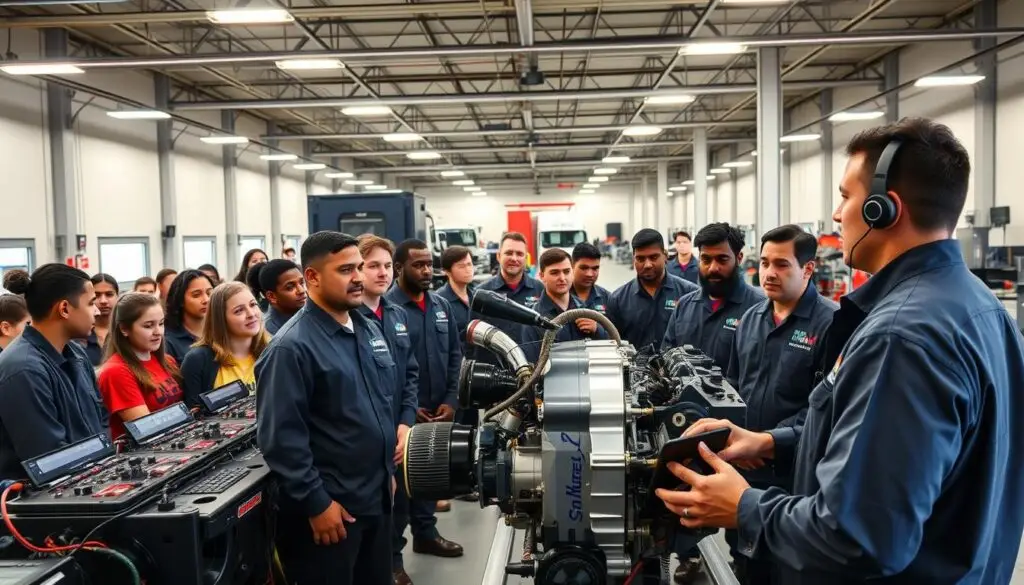
This shortage creates immediate operational consequences for shop owners. Service bays sit empty despite customer demand. Repair orders accumulate faster than available staff can process them. Wait times extend beyond acceptable customer tolerance levels, and overworked technicians experience higher stress levels leading to quality issues and safety concerns. The good news? The industry proved remarkably stable during recent economic disruptions, with heavy-duty mechanics classified as essential workers throughout the pandemic.
Forward-thinking shop owners view this crisis as an opportunity to differentiate their businesses. By developing skilled diesel mechanics through structured training, these shops build workforce capacity that competitors cannot match.
Financial Returns From Trained Technicians
The training investment ROI becomes evident across multiple performance metrics that directly impact profitability. Certified technicians complete diagnostic procedures faster and more accurately than untrained counterparts, translating to higher billable hours per day and improved shop capacity utilization.
Industry compensation data shows the average salary for heavy-duty diesel technicians reaches approximately $52,000 annually, with median hourly wages around $22.76. Shops can justify premium labor rates when customers know certified professionals handle their equipment. Productivity bonuses amplify these figures—many shops pay additional compensation when technicians perform above 100% efficiency ratings, a threshold trained technicians consistently achieve.
| Performance Metric | Trained Technician | Untrained Technician | Impact on Shop |
|---|---|---|---|
| Diagnostic Accuracy | 92-95% | 70-75% | Fewer comebacks, higher satisfaction |
| Efficiency Rating | 105-120% | 75-85% | More billable hours per day |
| Supervision Required | Minimal | Extensive | Reduced management overhead |
| Customer Confidence | High | Moderate | Improved retention and referrals |
ASE certification provides tangible business development advantages that strengthen your market position. Customers recognize ASE credentials as proof of technical mastery, building trust that translates to loyalty and word-of-mouth referrals. The certification advantage extends to commercial fleet accounts that require documented technician qualifications—many large fleet operators specify ASE-certified shops in their vendor requirements. Without certified technicians, you cannot compete for these high-value contracts.
Recruitment Advantages Through Training Commitment
Shops that invest in training programs become magnets for quality candidates seeking career growth opportunities. Today’s job seekers research potential employers thoroughly, looking for companies that demonstrate commitment to employee development. Your training programs signal that commitment more powerfully than any recruitment advertisement.
Training commitment also improves talent retention by creating career progression pathways that keep ambitious technicians engaged. Employees who see clear development opportunities remain with employers longer, reducing turnover costs that average thousands of dollars per position. This stability builds institutional knowledge and team cohesion that enhance overall shop performance.
Technical school partnerships amplify these recruitment advantages by providing direct access to graduating students. When instructors recommend your shop based on your training commitment, you receive pre-qualified candidates before competitors even know they’re available.
Diesel Technician Training Programs Available Today
Today’s diesel technology education ecosystem includes several proven pathways, each offering distinct advantages for shop owners seeking to develop skilled technicians. Understanding these options helps you identify the best talent sources for your shop’s specific needs. The four primary pathways differ in duration, cost, specialization, and how quickly graduates can contribute to your operations.
Two-Year Colleges and Technical Institutes
Community college diesel programs provide comprehensive foundational education through associate degree programs and shorter certificate options. Most programs receive approval from the ASE Education Foundation, ensuring curriculum meets industry standards for both theoretical principles and practical applications of diesel systems.
The structure balances classroom instruction with hands-on training, with students spending approximately 40-60% of their time working directly with diesel engines, transmissions, and diagnostic equipment. Federal financial aid availability—including grants, loans, and work-study programs—makes these programs accessible to a broader range of students, creating larger talent pools for shop owners to recruit from. Many community colleges maintain partnerships with local shops and dealerships, creating direct recruiting pipelines for employers who engage with these institutions.
Specialized Vocational and Trade Schools
Vocational trade schools offer accelerated, focused training specifically designed for diesel technology careers. These intensive programs typically range from 9 to 18 months, with students dedicating themselves full-time to diesel education—often exceeding 30 hours weekly of hands-on work with actual equipment.
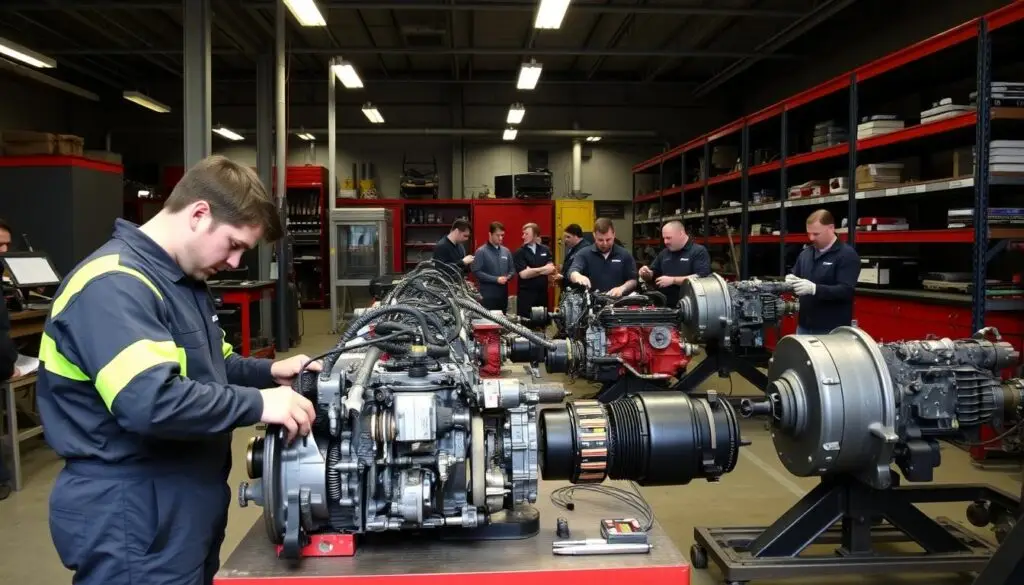
The curriculum focuses exclusively on diesel systems rather than broader automotive topics. Students gain deep expertise in heavy-duty trucks, diesel engines, hydraulics, and electronic control systems without spending time on unrelated subjects. State-of-the-art facilities and equipment distinguish quality trade schools—top programs invest heavily in current technology, providing students access to the same diagnostic tools they’ll use in professional shops.
Leading schools report placement rates between 80-100% within three to six months of completion. When evaluating these options, shop owners should consider the trade-off between speed and breadth—graduates enter the workforce quickly but may need additional on-the-job training for specialized systems your shop services.
Brand-Specific Manufacturer Programs
Manufacturer-sponsored training programs create direct pathways between education and employment. Programs such as Toyota T-TEN, Ford ASSET, GM ASEP, Honda PACT, and BMW STEP combine classroom instruction with paid work experience at authorized dealerships. These programs typically span 12 to 24 months, with students alternating between attending classes at partner schools and working at dealerships.
The curriculum emphasizes brand-specific systems and technologies, developing expertise in particular manufacturer diagnostic procedures, proprietary systems, and warranty protocols. Program selectivity ensures high-quality candidates—manufacturer-sponsored apprenticeships typically require applications, interviews, and demonstrated mechanical aptitude before acceptance.
Formal Registered Apprenticeships
Registered apprenticeships represent the most traditional pathway for developing diesel technicians. The U.S. Department of Labor registers and oversees these programs, ensuring they meet established standards for hours, curriculum, and progressive skill development over three to four years.
Apprentices earn wages while learning, starting at a percentage of journeyman pay and increasing as competencies develop. This “earn while you learn” model attracts candidates who cannot afford to forgo income for full-time schooling. Shop owners who sponsor apprentices gain significant advantages—you can train technicians specifically in your shop’s procedures, equipment, and culture from the beginning.
| Training Pathway | Duration | Primary Advantage | Best Suited For |
|---|---|---|---|
| Community College | 1-2 years | Comprehensive education with financial aid | Well-rounded entry-level technicians |
| Vocational Trade School | 9-18 months | Intensive, diesel-focused training | Quick workforce additions with strong fundamentals |
| Manufacturer-Sponsored | 12-24 months | Brand-specific expertise with paid experience | Shops specializing in particular OEMs |
| Registered Apprenticeship | 3-4 years | Customized on-the-job training with wages | Shops developing tailored team members |
Each pathway serves different workforce development strategies. Your shop’s size, specialization, and growth timeline determine which training sources provide the best return on your recruiting and development investment.
Critical Certifications and Accreditation Standards
Industry-recognized credentials separate qualified diesel technicians from those with basic mechanical skills. Certifications provide standardized proof of competency that customers trust and insurance companies often require. For shop owners, understanding the certification landscape directly impacts hiring decisions, service capabilities, and the premium rates you can charge.
The Gold Standard: ASE Diesel Credentials
The National Institute for Automotive Service Excellence has set the benchmark for technician competency since 1972, offering over 50 different tests covering every aspect of vehicle service and repair. ASE certification requires real-world experience combined with proven knowledge—technicians need at least two years of hands-on work experience before sitting for exams. Alternatively, one year of experience plus a diploma from an accredited training program qualifies candidates.
The diesel-specific test series covers critical areas: T2 (diesel engines), T3 (drive train), T4 (brakes), T5 (suspension and steering), T6 (electrical/electronic systems), T7 (HVAC), and T8 (preventive maintenance inspection). Achieving ASE Master Technician status—the pinnacle of certification achievement—requires passing all tests T1 through T8. Every certification expires after five years, requiring recertification through retesting or approved continuing education.
| Certification Level | Experience Required | Tests Needed | Validity |
|---|---|---|---|
| Individual ASE | 2 years (or 1 year + diploma) | 1 specialty test | 5 years |
| ASE Master Technician | 2 years (or 1 year + diploma) | All 8 tests (T1-T8) | 5 years (all current) |
| ASE Student | None (enrolled in program) | 1 specialty test | 2 years |
Shops with ASE-certified staff can advertise ASE Blue Seal recognition, building customer confidence and justifying premium labor rates. Many fleet managers specifically seek ASE-certified shops for maintenance contracts, making certification a gateway to steady, high-value revenue streams.
Program Quality Through ASE Education Foundation Standards
When evaluating training programs for your hiring pipeline, ASE Education Foundation accreditation (formerly NATEF) serves as your quality benchmark. This organization evaluates and certifies automotive training programs across the country, ensuring they meet rigorous industry standards for curriculum, equipment, and instructor qualifications.
Accredited programs undergo comprehensive evaluation every five years. Reviewers assess curriculum alignment with industry needs, instructor credentials, training equipment quality, and facility safety standards. Graduates from accredited programs can pursue ASE credentials with just one year of experience instead of two—getting qualified technicians productive in your shop faster. Many accredited programs integrate ASE test preparation directly into their curriculum.
For shop owners building recruiting relationships, prioritize schools with ASE Education Foundation accreditation. These partnerships typically yield graduates who need less remedial training and adapt to shop procedures more quickly. Accredited programs maintain advisory committees where industry professionals guide curriculum development—serving on these committees gives you direct input into the skills graduates bring to your shop.
Brand Expertise: Manufacturer Certifications
Beyond general diesel certification, manufacturer-specific credentials position your shop as a specialist in high-demand equipment categories. Cummins, Detroit Diesel, and Caterpillar each offer comprehensive training and certification programs through their regional training centers and online platforms. These credentials prove your technicians understand unique systems, diagnostic procedures, and repair protocols for specific engine families.
According to Cummins service documentation, their tiered certification program covers electronic engine controls, fuel systems, and emissions systems specific to Cummins products. Detroit Diesel provides training through its Detroit Connect platform, emphasizing electronic diagnostics and the DDDL system for DD13, DD15, and DD16 engines. Caterpillar’s program covers both on-highway and off-highway diesel applications including engine systems, hydraulics, and machine-specific diagnostics.
The combined approach works best for most shops: start with ASE certification as your foundation for general competency, then add manufacturer certifications based on the fleet composition in your market. A technician with ASE T2 diesel engine certification plus Cummins or Detroit Diesel credentials represents a powerful combination of broad expertise and specialized knowledge.
How to Evaluate Training Programs for Your Team’s Needs
Not all diesel technician training programs deliver equal value, making systematic evaluation essential for smart investment decisions. Your program selection directly impacts technician performance, retention rates, and your shop’s ability to service increasingly complex diesel equipment.
Evaluating Modern Diesel Technology Curriculum
Today’s diesel technicians work with sophisticated electronic systems that didn’t exist a decade ago. Curriculum evaluation should focus on whether programs address computerized diagnostics, emissions control systems, hybrid powertrains, and advanced driver assistance systems integration. Programs that emphasize only mechanical fundamentals leave graduates unprepared for modern repair challenges.

Request course catalogs and review specific class descriptions. Look for dedicated coursework in electronic fuel injection systems, diesel particulate filter diagnostics, selective catalytic reduction technology, and engine control module programming. Ask program administrators how frequently they review and revise course content—schools with active industry connections typically update their diesel technology curriculum every 12-18 months to reflect technological advances.
Investigate whether certification preparation is integrated throughout the curriculum or added as an afterthought. Quality programs structure coursework around ASE task lists, ensuring graduates can pass certification exams without extensive additional preparation.
Training Facility and Equipment Standards
Physical facility quality directly predicts how well training translates to actual shop performance. Schedule facility tours at prospective schools to assess training environments firsthand. Quality training requires students to spend 30 or more hours weekly on hands-on activities—not just observing demonstrations or watching videos.
| Evaluation Factor | Quality Indicator | Warning Sign |
|---|---|---|
| Hands-On Training | 30+ hours weekly practical work | Primarily lecture-based with limited labs |
| Equipment Age | Current-generation diagnostic tools | Outdated, discontinued equipment |
| Student Ratio | Max 8-10 students per instructor | Large groups, insufficient attention |
| Manufacturer Variety | Equipment from multiple brands | Single-brand focus limiting exposure |
Graduate Success Metrics and Placement Data
Program outcomes provide the most reliable indicator of training quality. Request graduation rates and on-time completion statistics—programs with completion rates below 70% often indicate curriculum problems, inadequate student support, or poor candidate screening.
Job placement rates reveal industry confidence in program graduates. Schools achieving 80-100% placement within three to six months demonstrate strong employer relationships and job-ready training outcomes. Contact employers who regularly hire from specific programs to gather firsthand feedback about graduate preparedness and common skill gaps. This direct employer input often reveals strengths and weaknesses that statistics alone don’t capture.
The HDJ Perspective
The shops that win the technician recruiting battle aren’t necessarily offering the highest wages—they’re building reputations as places where careers are made. We’ve watched this play out across the industry for years: a shop that partners with a local community college, serves on their advisory board, hosts two interns each semester, and offers tuition reimbursement creates a self-sustaining talent pipeline their competitors can’t replicate. The upfront investment in training relationships feels slow, but it compounds dramatically. Three years from now, that shop has a waiting list of qualified applicants while the shop across town is still posting the same help-wanted ad.
Understanding Costs and Funding Options for Training
Financial planning separates successful training initiatives from failed attempts. Shop owners face multiple expenses when developing their technician workforce, from direct tuition fees to indirect productivity losses during the learning curve. However, numerous funding mechanisms exist to offset these investments, including government programs, tax advantages, and strategic benefit structures.
Breaking Down Training Program Costs by Type
Training costs vary dramatically depending on the educational pathway you choose. Community college programs represent the most affordable formal education option, with in-state students typically paying between $3,000 and $15,000 for complete associate degree programs. Federal student aid programs including grants, loans, and work-study reduce barriers to entry for students pursuing these programs.
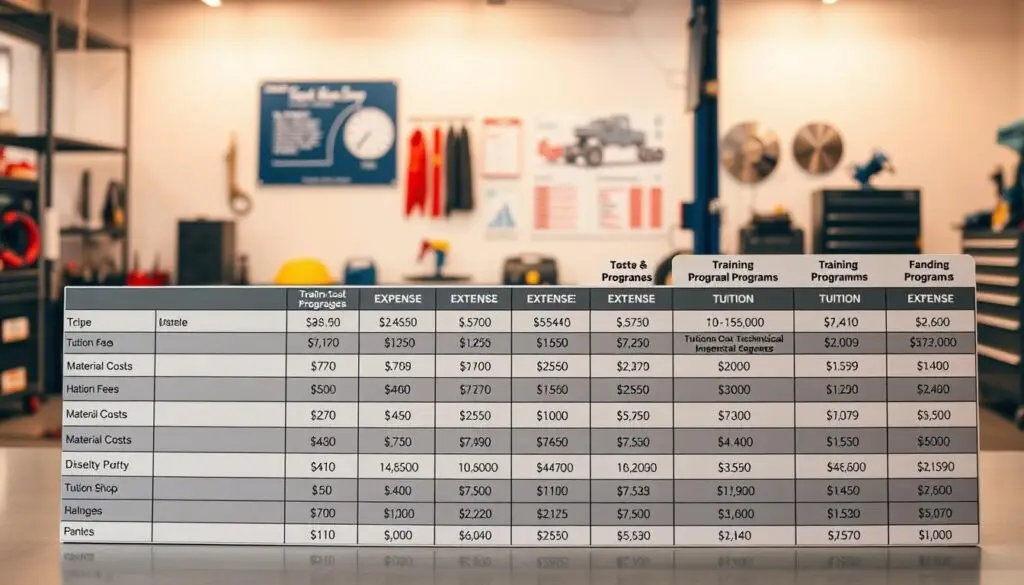
Technical and trade schools charge higher tuition but offer focused, accelerated training. Expect to invest $15,000 to $40,000 for diesel-specific programs lasting 6 to 18 months. Beyond base tuition, additional expenses add up quickly: professional tool sets ($2,000-$5,000), books and materials ($500-$1,500 per year), certification exam fees ($50-$150 per ASE test), safety equipment ($200-$500), and program lab fees ($300-$1,000 annually).
Manufacturer-sponsored programs often provide tuition support or full scholarships in exchange for work commitments, shifting your investment from tuition to guaranteed employment periods. Registered apprenticeships involve different financial considerations—while tuition remains minimal, you pay wages during the training period when apprentices work at reduced productivity. Factor in compensation ranging from 50-75% of journeyman wages over the three to four-year apprenticeship duration.
| Program Type | Duration | Tuition Range | Additional Costs |
|---|---|---|---|
| Community College | 2 years | $3,000-$15,000 | $3,000-$7,000 |
| Trade School | 6-18 months | $15,000-$40,000 | $2,500-$6,500 |
| Apprenticeship | 3-4 years | $0-$2,000 | $60,000-$120,000 (wages) |
| Manufacturer Program | Varies | $0-$10,000 | $2,000-$5,000 |
Structuring Employer-Sponsored Education Benefits
Employer-sponsored training programs serve dual purposes as recruitment incentives and retention mechanisms. Most successful programs offer $2,000 to $5,000 annually for approved coursework, with some shops providing up to $8,000 for employees pursuing associate degrees or advanced certifications.
Effective tuition assistance programs include clear eligibility requirements (typically 6-12 months minimum employment), grade performance standards (C or better for reimbursement), pre-qualified institution lists, service commitments of one to two years after completing funded education, and prorated repayment terms if employees leave before fulfilling service obligations. Consider offering higher reimbursement percentages (75-100%) for critical certifications like ASE credentials that directly impact your service capabilities.
Grants, Tax Credits, and Public Funding
Federal and state governments recognize the diesel technician shortage as an economic priority. State workforce development boards administer the largest pool of available training funds, with most states operating sector partnership programs targeting industries experiencing critical skill shortages. Grant amounts typically range from $2,000 to $6,000 per trainee. The Workforce Innovation and Opportunity Act (WIOA) funds training for eligible job seekers, with workforce boards covering tuition costs for qualified candidates you hire.
Tax law provides multiple mechanisms for recovering training costs. Most training expenses qualify as ordinary business deductions—tuition reimbursements, certification exam fees, and training materials reduce your taxable income dollar-for-dollar. The Work Opportunity Tax Credit (WOTC) provides additional benefits when hiring veterans, individuals with disabilities, and people from economically disadvantaged backgrounds, with credits ranging from $2,400 to $9,600 per eligible employee.
Section 127 of the tax code allows you to provide up to $5,250 annually in tax-free educational assistance to each employee, creating significant value for both parties. Equipment purchases for training purposes may qualify for Section 179 immediate expensing—for shops investing $15,000 to $20,000 in training equipment, this can reduce current tax liability by $3,000 to $5,000. Partner with your local workforce development board early in your planning process, as board staff can identify applicable programs and guide you through applications.
Free Professional Fleet Tools
Cost calculators, fault code lookup, maintenance planners, and more—built for owner-operators, fleet managers, and diesel techs. No signup required.
Creating Effective In-House Training Systems
The best diesel shops understand that training doesn’t end when new hires complete formal programs—it accelerates through structured on-the-job learning. While external certifications provide essential foundational knowledge, the real transformation happens inside your shop where technicians learn your specific processes, equipment, and quality standards.
The timeline for technician development follows a predictable pattern when supported by effective in-house programs. A dedicated junior technician can generally handle most preventive maintenance work within a year. Full competency across all repair types typically requires three to five years of progressive responsibility. But becoming a master technician is a lifetime of work—you simply can’t surge experience, and the industry constantly evolves with new technology requiring continuous learning.
Building Mentorship Frameworks That Work
Mentorship programs succeed or fail based on structure and accountability. The most effective shops create deliberate pairing systems that match junior technicians with experienced mentors based on complementary skills, compatible personalities, and aligned schedules. Start by establishing clear expectations for both mentors and mentees in writing, and schedule regular 30-minute weekly check-ins separate from daily work activities.
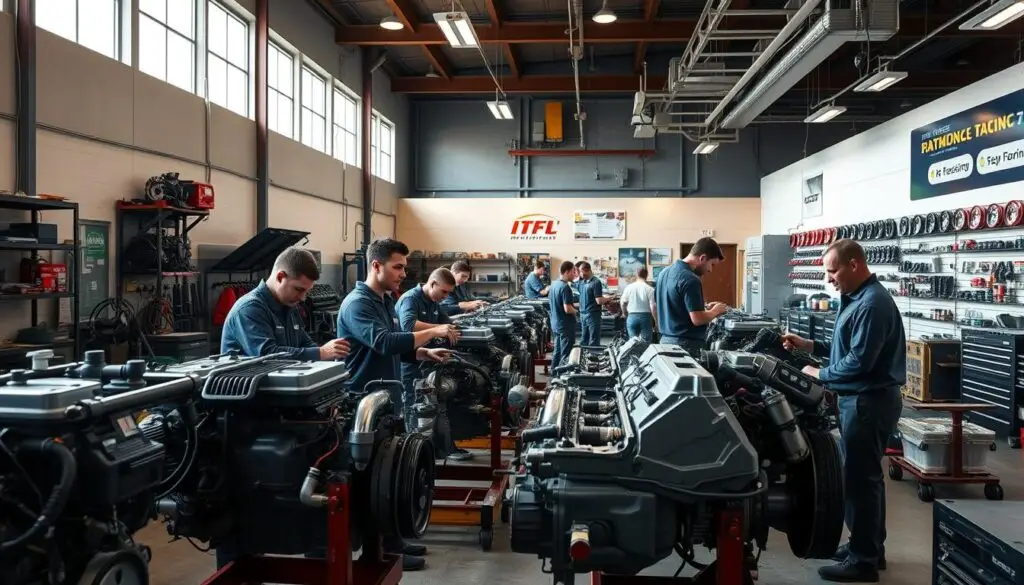
Create skills progression checklists that document specific competencies and when technicians demonstrate them. These checklists give junior techs visible progress markers, help mentors identify knowledge gaps, and provide objective criteria for advancement decisions.
| Development Stage | Timeline | Primary Responsibilities | Mentorship Focus |
|---|---|---|---|
| Entry Level | 0-6 months | Shop maintenance, basic inspections | Safety, tool usage, documentation |
| Junior Technician | 6-18 months | PM, fluid services, brakes, basic diag | Systematic diagnostics, time management |
| Technician | 2-5 years | Complex repairs, electrical, engine work | Advanced diagnostics, efficiency |
| Senior Technician | 5+ years | Difficult diag, specialty systems, QA | Leadership, knowledge sharing |
Documentation and Daily Integration
Training documentation transforms individual expertise into organizational assets. When your best technician retires, documented procedures ensure their knowledge remains accessible. Start documenting your shop’s most common procedures first—create step-by-step standard operating procedures for routine services with photos, torque specifications, and quality checkpoints. Keep documentation practical and accessible in binders or on shared digital drives.
Develop technical bulletins for recurring problems or unique diagnostic approaches your team discovers. When a technician solves a difficult issue, document the symptoms, diagnostic steps, and solution. These bulletins become searchable references that prevent duplicate troubleshooting efforts.
Every shop owner faces the same challenge: maintaining productivity while investing time in development. Schedule training during predictable slower periods when possible. Some shops designate one bay as the training bay where learning takes priority. Others reserve Friday afternoons for training projects under close supervision. Build training time into job estimates and capacity planning—this honest accounting prevents the false economy of “free” training that actually costs money through extended job times. Your in-house training systems become competitive advantages that attract ambitious technicians seeking career development rather than just another job.
Building Strategic Partnerships with Training Institutions
The most successful diesel shops don’t wait for graduates to apply—they cultivate relationships with training programs long before students enter the job market. Schools with strong industry connections achieve job placement rates of 80-100% within three to six months of graduation, and your shop can become the preferred destination for top graduates.
Establishing Recruiting Pipelines
Start by identifying programs within your geographic area that produce diesel technician graduates. Contact program directors or career services coordinators to introduce your shop. Participate in career fairs, host facility tours, and offer employment information sessions on campus. Bring current technicians who graduated from the same program to share their experiences and answer student questions.

Consistent engagement builds your reputation among instructors who influence student employment decisions. When faculty members view your shop as a quality employer, they direct top performers toward your opportunities before those students entertain other offers. Industry organizations like the Technology & Maintenance Council publish recommended practices for technician development that can help structure these recruiting relationships effectively.
Internships, Advisory Committees, and Equipment Contributions
Design internship programs that provide meaningful learning experiences aligned with student coursework. Assign specific projects, establish clear learning objectives, and convert successful interns into full-time hires—shops with well-structured internship programs often see 60-80% conversion rates to permanent positions.
Serving on program advisory committees positions you to influence curriculum development while building relationships with school leadership. Committee responsibilities include reviewing student performance data, discussing emerging technology trends, and recommending equipment or certification additions. This involvement ensures graduates possess relevant skills for your specific needs.
When your shop upgrades diagnostic tools or lifts, consider donating functional older units to local programs. Schools often operate with limited budgets and welcome equipment contributions. Volunteer as a guest instructor to share real-world expertise—these teaching opportunities expose you to promising students you can recruit for internships or permanent positions.
Retention Strategies After Training Investment
Retaining trained diesel technicians is the final piece of the training investment puzzle that transforms costs into long-term profitability. Your shop only recoups development expenses when skilled professionals remain long enough to contribute their expertise. Without deliberate retention strategies, you risk losing trained staff to competitors who benefit from your investment.
Compensation and Career Progression
Compensation remains the foundation of any retention effort. Industry data shows heavy-duty diesel technicians earn an average of approximately $52,000 annually, with median hourly wages around $22.76, though figures vary significantly by region, experience, and certification status. Certified mechanics typically command higher wages, and many successful shops implement performance-based bonuses rewarding efficiency above 100%.
Total compensation extends beyond base wages. Health benefits, retirement contributions, paid time off, and tool allowances significantly influence retention decisions. Compensation transparency builds trust—when technicians understand how skill development and certification achievement increase their earning potential, they invest in long-term growth with your organization.
Defined advancement pathways give technicians a clear vision of their future. Establish distinct levels—apprentice, junior technician, technician, senior technician, master technician, lead, and shop foreman—with specific skill requirements, certification benchmarks, and corresponding pay increases. Career progression doesn’t always mean management; create opportunities for lateral development and specialization in systems like transmissions, electrical diagnostics, or specific OEM platforms.
“Go to your local shop, tell them you want to learn, and see what happens.”
— Veteran diesel industry professional, on the value of hands-on career entry
Continuing Education and Shop Culture
Continued investment in employee development improves retention despite concerns that training makes technicians more marketable to competitors. Research consistently shows that employees receiving ongoing education support report higher job satisfaction and loyalty. Support ASE recertification through exam fee coverage and paid study time. Provide access to manufacturer training programs as diesel technology advances—new engine management systems, emissions controls, and diagnostic technologies require continuing education.
Shop culture encompasses the daily experience of working in your facility—communication style, respect levels, recognition practices, and overall work environment. Respectful communication starts at the top. Listen to technician input on process improvements, equipment needs, and scheduling concerns. Recognize achievements beyond productivity metrics—celebrate certification completions, safety records, and problem-solving innovations.
Provide the diagnostic equipment, specialty tools, and shop resources technicians need to work efficiently. When employees must constantly improvise due to inadequate equipment, it signals that management doesn’t value their professional needs. Solicit regular feedback and address concerns proactively before they escalate into resignation decisions. Skilled technicians who feel valued, respected, and supported will choose to remain even when competitors offer slightly higher wages.
Frequently Asked Questions
How long does it take to become a certified diesel technician?
Training timelines vary by pathway. Community college associate degree programs typically require two years, while vocational trade schools offer accelerated programs lasting 9 to 18 months. Registered apprenticeships provide the most thorough development over three to four years. After completing formal training, technicians need at least one to two years of hands-on experience before qualifying for ASE certification exams. Most industry professionals estimate that reaching full diagnostic competency across all major systems takes three to five years of progressive experience, and becoming a true master technician is a career-long pursuit.
What certifications should diesel technicians pursue first?
ASE certification in diesel engines (Test T2) provides the strongest foundation for career advancement. This credential demonstrates competency in fuel systems, air induction, exhaust systems, and engine diagnostics that apply across all manufacturer platforms. After earning T2 certification, technicians should pursue additional ASE tests based on their shop’s service mix, working toward ASE Master Technician status by completing tests T1 through T8. Adding manufacturer-specific certifications from Cummins, Detroit Diesel, or Caterpillar then positions technicians for specialized fleet contracts and warranty work authorization.
How much does diesel technician training cost?
Training costs range widely depending on the pathway selected. Community college programs cost $3,000 to $15,000 for in-state students completing associate degrees. Vocational trade schools charge $15,000 to $40,000 for accelerated diesel-specific programs. Registered apprenticeships involve minimal tuition but require employer wage investment during the training period. Additional expenses including professional tool sets, textbooks, certification exam fees, and safety equipment can add $3,000 to $7,000 beyond base tuition costs regardless of which program pathway you select.
What funding sources help offset diesel technician training expenses?
Multiple funding mechanisms reduce training costs for both individual technicians and shop owners. Federal financial aid covers community college tuition through grants and loans. State workforce development boards administer incumbent worker training grants typically ranging from $2,000 to $6,000 per trainee. The Department of Labor’s on-the-job training reimbursements cover 50% of wages during training periods for new hires. The Work Opportunity Tax Credit provides $2,400 to $9,600 per eligible employee. Section 127 of the tax code allows employers to provide $5,250 in tax-free educational assistance annually per employee.
How can shop owners build effective in-house training programs?
Effective in-house training starts with formal mentorship frameworks that pair junior technicians with experienced professionals. Establish written expectations for both mentors and mentees, schedule weekly check-in meetings, and create skills progression checklists that document specific competencies as they’re demonstrated. Build training time into job estimates and capacity planning rather than treating it as an afterthought. Document your shop’s most common procedures with step-by-step instructions, photos, and quality checkpoints to preserve institutional knowledge and ensure consistency across your team.
What is the current job outlook for diesel technicians?
The diesel technician job market shows strong demand with a significant workforce gap. Bureau of Labor Statistics data projected growth from approximately 281,300 heavy-duty technicians to 290,800 by 2029, but actual industry demand could substantially exceed those government estimates. The gap between available positions and qualified candidates creates excellent job security and competitive compensation opportunities. Heavy-duty mechanics maintained essential worker status during the pandemic, demonstrating the diesel repair industry’s fundamental stability regardless of broader economic conditions.
Take Action on Your Diesel Training Strategy
The current technician shortage creates real opportunities for shop owners who invest in diesel technician training now. Start by auditing your workforce development approach—review your relationships with local training institutions, examine your mentorship systems, and assess whether your compensation reflects market realities. Whether you partner with a technical college, formalize your apprenticeship program, or enhance your retention strategies, each step strengthens your ability to attract, develop, and keep the skilled professionals your shop needs to grow.
Help a Fellow Shop Owner or Tech
Know someone building their diesel career or struggling to find qualified technicians? Share this guide—the strategies here can help shops and techs across the industry.


