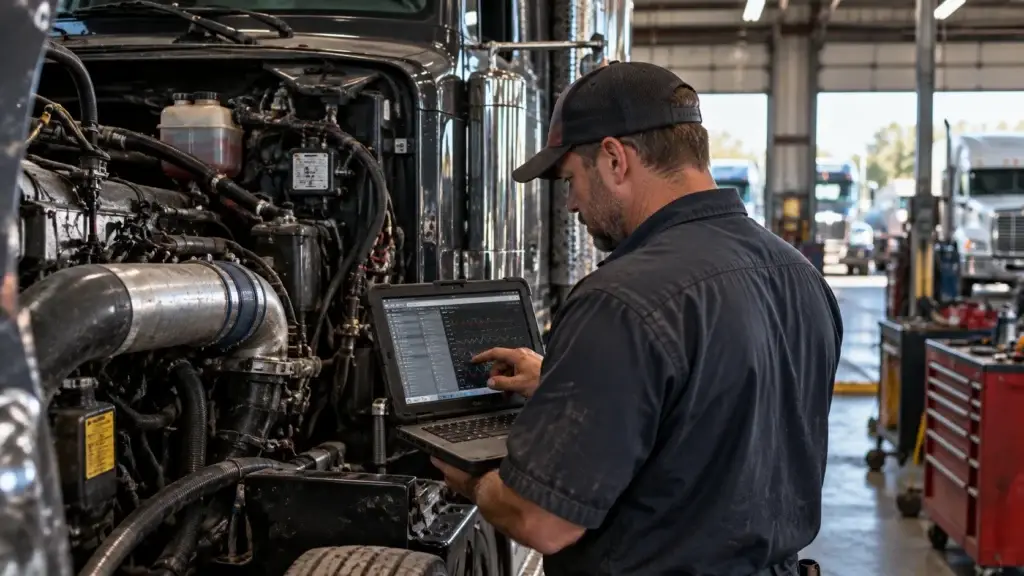
diesel DTC codes

Diesel Engine Diagnostic Trouble Codes: Complete Guide

Table of Contents
    Add a header to begin generating the table of contents

    Modern diesel engines rely on sophisticated electronic systems to monitor performance and emissions. The Engine Control Module constantly tracks hundreds of sensors and components. When something goes wrong, it alerts you immediately.

    These alerts come in the form of diesel engine diagnostic trouble codes, commonly known as DTCs. They’re not random numbers but systematic identifiers that pinpoint specific problems affecting your vehicle. Understanding these alerts is crucial for truck owners and fleet managers alike.

    This comprehensive guide will teach you how to retrieve and interpret these alerts using diagnostic tools. You’ll learn the five-character code structure and discover common issues specific to heavy-duty vehicles. We’ll cover proper troubleshooting procedures for emission control systems like DPF, DEF, and SCR.

    Mastering this skill reduces downtime and prevents costly repairs. Whether that check engine light just appeared or you’re managing an entire fleet, you’ll gain the knowledge to diagnose problems accurately and efficiently.

    Key Takeaways

    • Engine Control Modules generate diagnostic alerts: Modern diesel engines automatically detect system abnormalities and create standardized codes for troubleshooting
    • Understanding codes reduces repair costs: Quick diagnosis helps you identify problems early and minimize expensive downtime
    • Standardized OBD-II system since 1996: All vehicles manufactured after 1996 use consistent reporting standards for easier diagnostics
    • Diesel engines require specialized knowledge: Unique emission control systems like DPF and SCR need specific troubleshooting approaches
    • Five-character code structure enables precision: Each position in the code reveals specific information about the system and malfunction type
    • Proper procedures minimize downtime: Systematic diagnostic approaches improve maintenance efficiency and prevent recurring failures

    What Are Diesel Engine Diagnostic Trouble Codes?

    When your diesel engine encounters a problem, it doesn’t stay silent. The system generates a diagnostic trouble code that acts as your vehicle’s way of communicating specific malfunctions detected by the onboard computer system. The Engine Control Module continuously monitors hundreds of sensor readings and system parameters, comparing them against predetermined acceptable ranges.

    Diagnostic trouble codes consist of five characters that identify the exact nature and location of a problem. The first character indicates which system category is affected, while the remaining four characters pinpoint the specific malfunction. When an engine fault code becomes active, your dashboard warning light illuminates to alert you that attention is needed.

    diesel engine fault codes display on diagnostic scanner

    These codes don’t just appear randomly. The ECM generates them only when sensor readings fall outside normal operating parameters or when it detects actual component failures. This automatic documentation creates a diagnostic trail that helps technicians identify problems quickly and accurately.

    The Purpose and Function of DTC Systems

    The DTC system serves multiple critical functions in modern diesel vehicles. First and foremost, it acts as an early warning mechanism that catches problems before they escalate into catastrophic failures. By alerting you to minor issues early, the system helps prevent expensive repairs and dangerous breakdowns.

    Beyond warning functions, DTCs create a permanent record of malfunctions. This historical data helps technicians identify intermittent problems that might not be present during inspection. The codes also prioritize repairs by indicating which issues pose immediate safety risks versus those that can wait for scheduled maintenance.

    Emissions compliance represents another vital purpose. The Environmental Protection Agency mandates that diesel vehicles monitor emission control systems and alert operators when those systems fail. DTCs ensure your diesel engine meets federal air quality standards throughout its operational life.

    Key functions of DTC systems include:

    • Real-time monitoring of fuel injection, turbocharger operation, and exhaust treatment systems
    • Documentation of fault history with timestamps and operating conditions when codes were set
    • Guidance for diagnostic procedures that reduce troubleshooting time and repair costs
    • Protection against engine damage through limp mode activation when severe problems occur
    • Regulatory compliance tracking for emissions-related components and systems

    Key Differences Between Gasoline and Diesel Engine Codes

    While both gasoline and diesel engines use the OBD-II standardized framework, significant differences exist in the codes they generate. Diesel engines incorporate systems completely absent in gasoline vehicles, creating unique diagnostic requirements.

    The diesel particulate filter system generates codes specific to soot accumulation and regeneration cycles. These codes have no equivalent in gasoline engines. Similarly, diesel exhaust fluid injection systems and selective catalytic reduction components produce their own specialized fault codes.

    Fuel system codes differ dramatically between engine types. Diesel engines operate with high-pressure common rail systems that can exceed 30,000 PSI. This creates unique failure modes and corresponding diagnostic codes not seen in gasoline applications.

    Turbocharger codes appear more frequently in diesel applications because nearly all modern diesel engines use forced induction as standard equipment. Boost pressure monitoring and variable geometry turbocharger position codes are routine in diesel diagnostics but less common in gasoline vehicles.

    Manufacturer-specific codes add another layer of complexity. Heavy-duty diesel trucks from Cummins, Detroit Diesel, and Caterpillar use proprietary codes beyond generic OBD-II standards. These manufacturer codes provide more detailed information about specialized components and systems unique to each brand.

    Understanding Check Engine Light Triggers and Severity Levels

    Not all check engine light codes indicate the same level of urgency. The onboard diagnostic system classifies problems into different severity categories, each triggering specific warning responses on your dashboard.

    An amber or yellow check engine light typically signals a non-critical issue that requires attention within a reasonable timeframe. These codes might indicate a minor sensor malfunction or an emissions system component operating outside ideal parameters. Your vehicle remains safe to drive, but you should schedule diagnostic service soon.

    A red warning light or flashing check engine indicator demands immediate action. These signals appear when the ECM detects conditions that could cause severe engine damage if you continue operating the vehicle. Common triggers include extreme overheating, critical fuel system failures, or complete loss of oil pressure.

    Limp mode activation represents the most serious response to diagnostic trouble codes. When the ECM determines that continued normal operation poses a safety risk or could destroy engine components, it automatically limits power output and vehicle speed. You’ll notice significantly reduced performance and a persistent warning light.

    Additional warning symbols may accompany check engine lights:

    • DEF system warning indicating low diesel exhaust fluid levels or injection system problems
    • DPF regeneration indicator showing that the particulate filter requires cleaning
    • Glow plug warning specific to diesel cold-start systems
    • Water in fuel alert warning of contamination that could damage high-pressure injection components

    Understanding these severity levels helps you make informed decisions about when to seek immediate repairs versus scheduling routine maintenance. Some codes clear automatically after the problem resolves, while others require manual clearing with diagnostic equipment even after successful repairs.

    How Diesel Engine Diagnostic Systems Work

    Behind every diagnostic trouble code stands a comprehensive monitoring system designed to protect your diesel engine from damage. Modern diesel engines depend on electronic controls that process information from dozens of sensors simultaneously. The Engine Control Module serves as the central computer, making hundreds of calculations every second to keep your engine running efficiently.

    This sophisticated network continuously adjusts fuel injection timing, turbocharger boost levels, and emission control operations. When something goes wrong, the system doesn’t just alert you—it records exactly what happened and when. Understanding how these components work together helps you interpret codes more accurately and fix problems faster.

    The Engine Control Module and Its Monitoring Functions

    The ECM acts as your diesel engine’s brain, governing all major operations through constant sensor data analysis. This powerful computer processes inputs hundreds of times per second from sensors monitoring everything from fuel pressure to exhaust temperature. It compares these real-time readings against expected values programmed into its memory.

    When actual sensor readings deviate from expected parameters beyond acceptable tolerance thresholds, the ECM generates a diagnostic trouble code. But it doesn’t stop there. The system also captures freeze-frame data that shows exact engine conditions at the moment the fault occurred. This snapshot includes critical information such as engine RPM, coolant temperature, load percentage, and fuel pressure.

    The ECM makes real-time adjustments to optimize performance while protecting engine components from damage. It controls fuel injection timing with microsecond precision, adjusts EGR valve position to manage emissions, and modulates turbocharger boost pressure based on load demands. These continuous adjustments happen so quickly that drivers never notice the thousands of small corrections occurring during normal operation.

    Modern ECMs also track long-term trends in sensor data to predict potential failures before they occur. This predictive capability allows the system to set pending codes that warn of developing problems, giving you time to address issues before they cause breakdowns.

    Critical Sensors in Modern Diesel Engines

    Diesel engines rely on an extensive sensor network to monitor every critical system and component. These sensors feed constant information streams to the ECM, enabling precise control and rapid fault detection. The most important sensors fall into three main categories that directly impact engine performance, efficiency, and emissions compliance.

    Each sensor type serves a specific monitoring function that helps scanner codes pinpoint exact failure locations. Understanding what these sensors do and where they’re located makes troubleshooting much more effective when codes appear.

    diesel scanner codes monitoring sensor network

    Fuel system sensors are essential for maintaining proper injection pressure in common rail diesel systems, where fuel pressure can exceed 30,000 PSI. The fuel rail pressure sensor constantly monitors whether the high-pressure pump maintains correct pressure for optimal combustion. If pressure drops too low, you’ll experience power loss and excessive smoke.

    Fuel temperature sensors prevent system damage from overheating, which can cause fuel vaporization and pump cavitation. These sensors also help the ECM adjust injection timing based on fuel density changes that occur with temperature fluctuations. Cold fuel requires different injection parameters than hot fuel to maintain proper combustion characteristics.

    When fuel pressure sensors fail or read incorrectly, the ECM cannot properly control injection events. This results in codes related to fuel rail pressure deviation, which can indicate sensor failure, pump problems, or injector leakage.

    Exhaust Gas and Emission Sensors

    Emission sensors monitor exhaust composition and temperature to ensure your diesel meets regulatory standards while protecting emission control components. Oxygen sensors measure remaining oxygen in exhaust gases, helping the ECM fine-tune air-fuel ratios. NOx sensors detect nitrogen oxide levels, which are critical for Selective Catalytic Reduction system operation.

    Exhaust temperature sensors serve multiple functions throughout the exhaust system. Sensors before the Diesel Particulate Filter monitor temperatures needed to initiate regeneration cycles that burn off accumulated soot. Downstream sensors verify that regeneration reaches temperatures high enough to complete the cleaning process effectively.

    Differential pressure sensors measure restriction across the DPF by comparing pressure before and after the filter. As soot accumulates, pressure difference increases, triggering regeneration when thresholds are exceeded. These sensors are critical for preventing filter damage from excessive soot loading that could cause catastrophic failure.

    Turbocharger and Boost Sensors

    Turbocharger monitoring sensors ensure your engine receives proper air delivery for efficient combustion and maximum power output. The manifold absolute pressure sensor measures boost pressure entering the engine, allowing the ECM to verify that the turbocharger produces requested boost levels. If actual boost doesn’t match commanded boost, the system generates underboost or overboost codes.

    Intake air temperature sensors work alongside pressure sensors to calculate actual air mass entering combustion chambers. The ECM uses this data to determine precise fuel quantities for optimal air-fuel ratios across all operating conditions.

    Variable geometry turbochargers include position sensors that monitor actuator movement controlling vane angles. These sensors ensure the turbocharger responds correctly to ECM commands for different load and speed conditions. When position sensors fail, you’ll experience poor throttle response and reduced power output.

    OBD-II Standards and Diesel-Specific Protocols

    The On-Board Diagnostics II system represents the universal diagnostic protocol mandated for light-duty vehicles manufactured after 1996. All OBD-II codes follow a standardized five-character format that makes code interpretation consistent across different manufacturers. This standardization allows generic scan tools to read basic codes from virtually any diesel vehicle equipped with an OBD-II port.

    OBD-II protocols define specific communication standards that diagnostic tools use to retrieve stored codes, view live sensor data, and perform system tests. The system monitors emission-related components and stores codes when malfunctions could increase emissions beyond acceptable limits. Generic OBD-II scanners work well for basic code reading, but they may not access manufacturer-specific data or advanced system parameters.

    Heavy-duty diesel trucks use a different protocol called J1939, which was developed specifically for commercial vehicle applications by SAE International. Unlike the five-character OBD-II format, J1939 codes consist of four distinct components that provide more detailed diagnostic information. These components include the Suspect Parameter Number, Failure Mode Identifier, Occurrence Counter, and SPN Conversion Method.

    The SPN identifies which specific parameter or component has failed, using a numerical code that can reference hundreds of different systems and sensors. The FMI describes exactly how the component failed—whether from electrical problems, mechanical issues, or out-of-range conditions. This combination provides technicians with precise diagnostic information that speeds up troubleshooting significantly.

    Understanding which protocol your diesel engine uses determines what type of scan tool you’ll need for comprehensive diagnostics. Light-duty diesel trucks, SUVs, and vans typically use OBD-II standards, while heavy-duty commercial trucks require J1939-compatible scan tools. Some modern scan tools support both protocols, making them versatile for shops that service multiple vehicle types.

    The protocol difference also affects how scanner codes appear on diagnostic equipment. OBD-II codes display in the familiar P0XXX format, while J1939 codes show as separate SPN and FMI values that require different interpretation methods. Professional technicians working on heavy-duty equipment must understand both systems to diagnose problems accurately across different vehicle classes.

    How to Read Diesel DTC Codes

    Accessing error codes correctly transforms complex engine problems into manageable repair tasks. The process requires proper diagnostic tools and systematic procedures to extract accurate information from your engine’s control systems. While modern diesel engines generate thousands of possible fault codes, learning the correct retrieval methods ensures you get complete diagnostic data rather than partial information from dashboard displays or electronic logging devices.

    Proper code reading is the foundation of effective troubleshooting. In-cab displays often show abbreviated warnings that don’t reveal the complete diagnostic picture. Understanding how to access full diagnostic information separates successful repairs from frustrating guesswork.

    Using an OBD-II Scanner to Retrieve Codes

    An OBD-II scanner is the primary tool for accessing DTC codes from your vehicle’s Engine Control Module. These scanners communicate directly with the ECM to retrieve both current faults and historical data. Professional-grade tools provide more detailed information than basic code readers, including freeze-frame data that shows exact engine conditions when the fault occurred.

    The diagnostic port is typically a 16-pin connector located under the dashboard near the steering column in light-duty diesel trucks. Heavy-duty commercial vehicles may have the port mounted in different locations, such as behind side panels or in the sleeper cab area. Consult your vehicle’s service manual if the port location isn’t immediately visible.

    diesel diagnostic trouble codes scanner connection

    Proper scanner connection ensures reliable communication with the vehicle’s diagnostic systems. Follow these essential steps for correct connection:

    • Turn the ignition to the on position without starting the engine to power up the vehicle’s electrical systems
    • Locate the diagnostic port and inspect it for debris or damaged pins that could interfere with connection
    • Firmly plug the scanner connector into the port, ensuring all pins make solid contact
    • Wait for the scanner to power up and establish communication with the ECM, which typically takes 5-15 seconds
    • Verify successful connection by confirming the scanner displays vehicle information such as make, model, and VIN

    Poor connection causes communication errors that prevent code retrieval. If your scanner fails to connect, check the port for corrosion and verify the ignition is in the correct position. Some vehicles require the engine to be running for full diagnostic access.

    Navigating Scanner Menus

    Scanner menu systems vary by manufacturer, but most follow similar navigation patterns. Understanding these menus helps you access the specific diagnostic information you need.

    Start by selecting Read Codes or Scan for DTCs from the main menu. The scanner will interrogate all control modules in the vehicle, which may take 30-60 seconds depending on system complexity. Most scanners allow you to view codes by specific module or display all detected faults at once.

    Advanced scanners provide additional menu options including live data streams, freeze-frame data, and readiness monitors. Freeze-frame data is particularly valuable because it captures engine parameters at the exact moment the fault occurred. This information includes RPM, load, temperature, fuel pressure, and other critical values that help identify the root cause.

    Review both active codes and stored codes during your scan. Active codes represent current problems, while stored codes indicate past issues that may have self-resolved but remain in ECM memory for diagnostic reference.

    Reading Codes Through Dashboard Sequences

    Some diesel vehicles offer built-in code reading capabilities through dashboard key sequences. This method provides basic error codes without external diagnostic tools, though the information is limited compared to proper scan tools.

    Common dashboard code retrieval methods include:

    1. Key turn patterns: Turn the ignition on-off-on-off-on in rapid succession without starting the engine
    2. Button combinations: Press and hold specific buttons on the instrument cluster while turning the ignition on
    3. Menu navigation: Some newer vehicles display codes through the driver information center menu system

    When codes appear on the dashboard, they typically flash as a series of blinks or display as alphanumeric characters. Write down all codes before they cycle off the display. This method works for quick checks but doesn’t provide freeze-frame data or detailed fault descriptions that professional diagnostics require.

    Understanding Active, Pending, and Stored Codes

    Diesel diagnostic systems categorize codes into three distinct types based on fault status and detection frequency. Recognizing these categories helps prioritize repairs and understand problem severity.

    Active codes represent currently detected faults that are triggering warning lights on your dashboard. These codes indicate problems occurring right now that require immediate attention. The check engine light remains illuminated as long as active codes are present. Active faults affect engine performance, emissions compliance, or both.

    Pending codes indicate intermittent problems detected once but not yet confirmed by multiple detection cycles. The ECM sets a pending code when a fault occurs but doesn’t immediately trigger the check engine light. If the same fault is detected during a second drive cycle, the code becomes active and illuminates warning lights. Pending codes help identify developing problems before they become critical.

    Stored codes are historical faults that have self-corrected but remain in ECM memory for diagnostic reference. These codes don’t trigger warning lights because the problem is no longer active. However, stored codes provide valuable diagnostic history that helps technicians identify recurring issues or patterns. The ECM typically retains stored codes through 40-80 warm-up cycles before automatically clearing them.

    Understanding DTC codes across these categories reveals whether problems are current, developing, or resolved. This information guides diagnostic strategy and repair prioritization.

    When and How to Clear Diagnostic Codes

    Clearing diagnostic codes requires careful consideration and proper timing. Never clear codes until the underlying problem is diagnosed and repaired, as premature clearing erases valuable diagnostic information and makes intermittent problems harder to trace.

    Proper code clearing procedures include:

    • Diagnose first: Thoroughly investigate the root cause before clearing any codes
    • Complete repairs: Fix the identified problem and verify the repair quality
    • Clear codes through the scanner: Use the Clear Codes or Erase DTCs function in your diagnostic tool
    • Perform a test drive: Operate the vehicle through various conditions to verify the code doesn’t return
    • Check readiness monitors: Ensure emission system monitors complete their self-tests after code clearing

    Some technicians attempt to clear codes by disconnecting the battery, but this method is not recommended. Battery disconnection clears all ECM memory including fuel trims, learned values, and radio presets. This creates additional problems and doesn’t properly reset diagnostic systems.

    After clearing codes, monitor the vehicle carefully during the first few drive cycles. If the code returns immediately, the repair was unsuccessful or the diagnosis was incomplete. Codes that return after extended operation may indicate intermittent problems that require more detailed investigation.

    Note that when a fault code is active, you cannot simply reset or clear it. The code will return immediately. The diagnostic system continuously monitors engine parameters and will re-detect the fault condition. You must find the root cause and correct the problem before clearing codes produces lasting results.

    Understanding Diesel DTC Code Formats and Structure

    Understanding the structure behind diagnostic trouble codes transforms random letters and numbers into actionable maintenance intelligence. When your scan tool displays a code like P0087, each character carries specific meaning that helps you pinpoint the exact problem. This standardized format makes it possible for mechanics across different shops and vehicle brands to communicate effectively about engine issues.

    The beauty of OBD-II codes lies in their universal design. Whether you’re working on a Ford Power Stroke, a Dodge Cummins, or a Chevrolet Duramax, the basic structure remains consistent. This standardization emerged from the need to create a common diagnostic language across the automotive industry.

    Learning to read these codes gives you immediate insight into which system is affected and how serious the problem might be. Even before looking up the full definition, the code structure tells you whether the issue involves the engine, transmission, or another critical component.

    Decoding the Five-Character Code System

    Every diagnostic code contains exactly five characters that follow a specific pattern. The first character is always a letter, while the remaining four are numbers. This combination creates thousands of possible codes that cover virtually every monitored component and condition in modern diesel engines.

    The systematic approach means you can break down any code into understandable pieces. Take the code P0420 as an example. Each position reveals something different about the problem. Understanding this structure turns what looks like cryptic computer language into clear diagnostic information.

    diesel powertrain fault codes structure diagram

    The opening letter identifies which major system triggered the code. This first character acts as the broadest category identifier, immediately directing your diagnostic efforts to the right area of the vehicle.

    P-codes indicate powertrain issues affecting the engine, transmission, or fuel system components. These are the most common codes in diesel diagnostics because they monitor the systems that generate power and propel the vehicle. Most diesel-specific problems fall into this category.

    C-codes relate to chassis systems including ABS brakes, suspension control, and steering systems. While less common in typical diesel engine diagnostics, these codes become important when dealing with integrated vehicle systems.

    B-codes involve body systems like climate control, power windows, and interior electronics. These rarely affect engine performance but may appear during comprehensive vehicle scans.

    U-codes indicate network communication problems between control modules. These codes often point to wiring issues or module failures that prevent proper data transmission across the vehicle’s computer network.

    Second Character: Generic vs. Manufacturer Code

    The second position distinguishes between standardized and proprietary codes. This single digit tells you whether the code definition applies universally or requires manufacturer-specific information.

    A zero indicates a generic code that follows SAE J2012 standards. These codes have the same meaning across all vehicle makes and models. Any OBD-II scanner can read and interpret these codes accurately, regardless of the vehicle manufacturer.

    Numbers 1, 2, or 3 indicate manufacturer-specific codes unique to particular brands. Ford, Dodge/Ram, and Chevrolet each have proprietary codes for their diesel engines that may not appear in generic code databases. These codes often relate to specialized emission control systems or fuel injection technologies unique to each manufacturer.

    Remaining Characters: Specific Fault Information

    The third digit identifies the subsystem where the problem exists. This narrows down the diagnostic focus to a specific functional area within the broader system identified by the first character.

    • 1-2: Fuel or air metering systems—critical for diesel engines
    • 3: Ignition systems—less relevant for compression-ignition diesels
    • 4: Emissions control systems—increasingly important with modern diesel emissions equipment
    • 5: Vehicle speed and idle control systems
    • 6: Computer and output circuit malfunctions
    • 7-8: Transmission-related issues

    The fourth and fifth characters together form a two-digit number between 00 and 99. This specific fault index pinpoints the exact component, sensor, or condition that triggered the code. For example, in code P0087, the 87 specifically identifies fuel rail pressure being too low.

    The standardized OBD-II code structure ensures that diagnostic information remains consistent and accessible across different vehicle platforms, enabling efficient troubleshooting and repair.

    Character PositionInformation TypeExample ValuesDiesel Relevance
    First (Letter)System CategoryP, C, B, UP-codes dominate diesel diagnostics
    Second (Number)Code Type0 = Generic, 1-3 = ManufacturerBoth types common in modern diesels
    Third (Number)Subsystem1-2 = Fuel/Air, 4 = EmissionsCritical for diesel emission systems
    Fourth & FifthSpecific Fault00-99Identifies exact component or condition

    Powertrain Codes (P0xxx and P2xxx Series)

    Powertrain fault codes represent the majority of diagnostic trouble codes you’ll encounter during diesel engine maintenance. The P0xxx series contains the original generic codes established when OBD-II standards were first implemented in the 1990s. These codes cover fundamental engine systems including fuel delivery, air intake, and basic emission controls.

    The P2xxx series was added later to accommodate new technologies and expanded monitoring capabilities. As diesel engines evolved with more sophisticated emission control systems, additional standardized codes became necessary. Both series follow the same structural rules, with the P2xxx codes simply extending the available code range.

    Common diesel-specific codes in these series include P0087 for fuel rail pressure issues, P0401 for EGR flow problems, and P2002 for diesel particulate filter efficiency concerns. These codes directly relate to the unique characteristics of compression-ignition engines and their emission control requirements.

    The distinction between P0xxx and P2xxx doesn’t indicate severity or importance. Instead, it reflects the chronological development of OBD-II standards. Newer emission technologies required additional code assignments, leading to the expanded P2xxx range for modern diesel systems.

    Manufacturer-Specific Codes for Ford, Dodge, and Chevrolet Diesels

    Each major diesel truck manufacturer uses proprietary codes to monitor systems unique to their engines. These manufacturer-specific powertrain fault codes begin with P1, P2, or P3 as the first two characters, distinguishing them from generic codes. Understanding these brand-specific codes requires access to manufacturer service information or advanced scan tools with proprietary databases.

    Ford Power Stroke engines utilize P1xxx codes for their unique fuel injection systems and turbocharger controls. Codes like P1211 relate to the injection control pressure system specific to HEUI systems found in 7.3L and 6.0L Power Stroke engines. Later 6.7L Power Stroke models have different proprietary codes for their common-rail fuel systems.

    Dodge and Ram Cummins engines feature manufacturer codes that address their distinctive fuel injection technology and emission systems. The 5.9L and 6.7L Cummins engines use codes specific to their high-pressure common-rail fuel systems and variable geometry turbochargers. Ram trucks also have unique codes for their integrated exhaust brake systems.

    Chevrolet and GMC Duramax engines employ GM-specific codes for their Bosch common-rail fuel injection and advanced emission controls. The LB7, LLY, LBZ, LMM, and LML Duramax variants each have slightly different proprietary codes reflecting their evolutionary improvements. Codes addressing the unique NOx sensor configurations and DEF injection systems are particularly important for newer models.

    Professional diesel technicians often invest in manufacturer-specific scan tools or software subscriptions to access the complete database of these proprietary codes. Generic OBD-II scanners may display the code number but lack the detailed definitions and diagnostic procedures needed for proper repair. This makes understanding OBD-II codes more complex when dealing with manufacturer-specific issues that go beyond standardized monitoring requirements.

    Common Diesel Engine Trouble Codes and Their Meanings

    Diesel engines generate thousands of potential diagnostic codes, but a small group accounts for the majority of real-world problems. Understanding these common trouble codes helps you identify issues quickly and accurately. Most diesel owners will encounter fewer than twenty codes throughout their vehicle’s lifetime, making it practical to learn the most frequent offenders.

    This section breaks down the most prevalent engine fault codes by system. Each code includes its designation, what it means, typical symptoms, and common causes. Recognizing these patterns enables faster troubleshooting and more informed conversations with mechanics.

    Fuel System Fault Codes

    Fuel system codes represent some of the most common diagnostic trouble codes in diesel engines. Modern common-rail systems operate at extreme pressures between 20,000 and 30,000 PSI. Even minor leaks or component wear can trigger these codes and cause significant performance issues.

    P0087: Fuel Rail Pressure Too Low

    This code indicates the fuel rail pressure has fallen below the expected range. The Engine Control Module constantly monitors fuel pressure to maintain optimal injection timing and fuel atomization.

    Common symptoms include:

    • Hard starting, especially when cold
    • Loss of power under acceleration
    • Rough idle or engine stalling
    • Black smoke from the exhaust
    • Poor fuel economy

    The most frequent causes involve a failing high-pressure fuel pump, clogged fuel filter, or leaking fuel lines. A malfunctioning fuel pressure sensor can also trigger this code without actual pressure problems. Check fuel filters first, as this represents the easiest and least expensive fix.

    P0093: Fuel System Leak Detected

    Unlike P0087, this code specifically indicates the ECM has detected an actual fuel leak through pressure drop monitoring. The system recognizes that fuel pressure decreases faster than normal usage would explain.

    This code requires immediate attention. External leaks may be visible at injector connections, fuel rail fittings, or high-pressure lines. Internal leaks often occur at worn injector seals or damaged fuel rail pressure relief valves. Diesel fuel leaking under high pressure creates safety hazards and environmental concerns.

    P0192: Fuel Rail Pressure Sensor Circuit Low

    This code points to an electrical problem with the fuel pressure sensor circuit rather than actual pressure issues. The ECM receives a signal that falls outside the expected voltage range.

    Potential causes include damaged sensor wiring, corroded electrical connections, or a failing pressure sensor itself. The fuel rail pressure may be completely normal despite this code appearing. Always test the actual fuel pressure with a mechanical gauge before replacing expensive fuel system components.

    Turbocharger and Boost Pressure Codes

    Turbocharger-related codes frequently appear in diesel engines due to the extreme operating conditions and complex control systems. Modern variable geometry turbochargers use electronic actuators that can malfunction, while boost leaks remain common across all turbo types.

    P0046: Turbocharger Boost Control Solenoid Circuit

    This engine fault code indicates an electrical problem with the turbocharger boost control system. It typically involves the wastegate solenoid on fixed-geometry turbos or the VGT actuator on variable geometry systems.

    The code represents a circuit fault rather than mechanical turbocharger failure. Common causes include broken wiring, corroded connectors, or a failed solenoid coil. The turbocharger itself usually functions normally, though the ECM cannot properly control boost pressure.

    Symptoms may be subtle, as the turbocharger often defaults to a fixed position. You might notice reduced power or the ECM limiting engine RPM as a protective measure.

    P0299: Turbocharger Underboost Condition

    P0299 signals that the turbocharger fails to generate adequate boost pressure. This represents one of the most noticeable engine fault codes due to significant power loss, especially under load or acceleration.

    Primary causes include:

    • Boost leaks in intercooler piping or connections
    • Carbon buildup restricting VGT vanes
    • Stuck or damaged wastegate
    • Failing turbocharger bearings
    • Exhaust restrictions preventing proper turbine spin

    Start diagnostics by inspecting all intercooler connections and charge air piping for cracks or loose clamps. Carbon accumulation in variable geometry mechanisms represents a common issue in diesel engines with extended oil change intervals.

    Exhaust Gas Recirculation System Codes

    EGR system codes appear frequently in diesel engines due to carbon buildup from soot-laden exhaust gases. The EGR valve recirculates exhaust back into the combustion chamber to reduce nitrogen oxide emissions, but this system accumulates deposits over time.

    P0400: EGR Flow Malfunction

    This general EGR code indicates the ECM detected abnormal exhaust gas recirculation. The system cannot determine whether flow is excessive or insufficient, only that it deviates from expected parameters.

    P0400 often accompanies more specific EGR codes like P0401 or P0402. It may indicate multiple EGR issues or problems with the EGR position sensor. The code sometimes appears with clogged EGR coolers or failed differential pressure sensors.

    P0401: EGR Flow Insufficient

    P0401 represents the most common EGR-related code in diesel engines. It indicates the EGR system cannot recirculate enough exhaust gas to meet emissions requirements.

    Carbon deposits blocking EGR passages or a stuck valve cause this code in the majority of cases. The EGR valve may be physically stuck closed, or passages leading to and from the valve become restricted. Heavy soot buildup in the intake manifold can also prevent proper flow.

    Typical symptoms include:

    • Slight loss of power at specific RPM ranges
    • Increased NOx emissions during testing
    • Rough idle in some cases

    Cleaning the EGR valve and intake passages often resolves this code without component replacement. Professional EGR cleaning services use specialized chemicals and equipment to remove stubborn carbon deposits.

    P0402: EGR Flow Excessive

    This code indicates too much exhaust gas recirculates into the intake system. An EGR valve stuck in the open position or a failed position sensor typically causes P0402.

    Excessive EGR flow reduces available oxygen for combustion, leading to rough running, increased smoke, and reduced power. The engine may be difficult to start when cold. Unlike insufficient flow, excessive flow creates immediately noticeable drivability problems.

    Diesel Exhaust Fluid and Selective Catalytic Reduction Codes

    DEF and SCR codes appear exclusively on 2010 and newer diesel engines equipped with selective catalytic reduction systems. These emissions codes can trigger engine derate or prevent starting if ignored, making them critical to address promptly.

    P20EE: SCR NOx Catalyst Efficiency Below Threshold

    This code signals the SCR catalyst fails to reduce nitrogen oxide emissions adequately. The system monitors NOx levels before and after the SCR catalyst to verify proper operation.

    Poor DEF quality or contamination causes P20EE in many cases. Using incorrect fluid, diluted DEF, or contaminated diesel exhaust fluid prevents proper chemical reactions. The SCR catalyst itself may have failed due to heat damage or contamination.

    Always use fresh, high-quality DEF from reputable suppliers to prevent this issue. DEF degrades over time and with heat exposure, losing effectiveness even before expiration dates. The fluid must meet ISO 22241 standards for proper SCR operation.

    P202F: Reductant System Performance

    P202F represents a broader reductant system performance problem. It indicates issues with DEF delivery, dosing accuracy, or system functionality beyond just catalyst efficiency.

    Common causes include clogged DEF injectors, failed DEF pumps, or air in the DEF lines. The DEF tank level sensor may provide incorrect readings, or the dosing module could malfunction. This code often requires professional diagnosis with manufacturer-specific scan tools.

    P2BAC: DEF Heater Control Circuit

    This code appears frequently in cold climates where DEF freezes at 12°F. The DEF heater prevents freezing and ensures proper fluid flow.

    A failed heater element, broken wiring, or blown fuse causes P2BAC. The DEF system cannot function without proper heating in freezing conditions. This code may prevent the vehicle from starting in extreme cold or trigger countdown timers that eventually limit engine speed.

    Diesel Particulate Filter and Emission Codes

    DPF codes represent serious concerns that require immediate attention. Ignoring these common trouble codes can result in costly repairs, forced engine derate, or complete shutdown to prevent damage.

    common diesel trouble codes diagnostic reference

    P2002: DPF Efficiency Below Threshold

    This code indicates the diesel particulate filter fails to trap soot particles effectively. The filter may be damaged, or the regeneration process fails to burn accumulated soot properly.

    Frequent short trips that prevent complete regeneration cycles often cause this code. The DPF requires sustained highway driving or forced regeneration to burn off trapped soot. Failed regeneration attempts over time reduce filter efficiency and eventually trigger P2002.

    P2463: DPF Restriction – Soot Accumulation

    P2463 represents the most serious DPF code, indicating excessive soot accumulation that restricts exhaust flow. This code demands immediate action to prevent engine damage or forced shutdown.

    Warning signs include:

    • Significant power loss
    • Increased exhaust back pressure
    • Higher exhaust gas temperatures
    • Engine derate warnings
    • DPF regeneration indicator constantly illuminated

    The vehicle may require forced regeneration using a diagnostic scan tool. Severely clogged filters need professional cleaning or replacement. Continuing to drive with P2463 active can damage the turbocharger, exhaust valves, and other components due to excessive back pressure.

    P244A: DPF Differential Pressure Too Low

    Unlike restriction codes, P244A indicates the pressure difference across the DPF measures lower than expected. This suggests sensor failure or actual filter damage allowing exhaust to bypass the filter media.

    A damaged or melted DPF substrate can cause this code. Failed regeneration attempts sometimes overheat the filter, causing internal damage. The differential pressure sensor itself may have failed, providing false readings to the ECM.

    Sensor-Related Codes in Diesel Engines

    Sensor codes indicate problems with the input devices that provide data to the ECM. These engine fault codes prevent the computer from receiving accurate information needed for proper engine control.

    P0180: Fuel Temperature Sensor A Circuit

    This code signals a problem with the fuel temperature sensor circuit. The ECM uses fuel temperature data to adjust injection timing and compensate for fuel density changes.

    Sensor circuit codes typically result from damaged wiring, corroded connections, or internal sensor failure. The sensor itself costs relatively little, but diagnosis requires testing the circuit with a multimeter to determine whether the sensor or wiring needs replacement.

    P0236: Turbocharger Boost Sensor A Circuit Range

    P0236 indicates the boost pressure sensor provides readings outside the expected range. This prevents accurate boost control and can cause performance issues or trigger limp mode.

    The manifold absolute pressure sensor or boost pressure sensor may have failed. Vacuum leaks affecting the sensor can also cause this code. Some vehicles use the same sensor for multiple functions, so this code may affect more than just boost control.

    P0335: Crankshaft Position Sensor A Circuit

    The crankshaft position sensor provides critical data about engine speed and piston position. P0335 indicates a circuit problem that prevents the ECM from receiving this essential information.

    This code often causes no-start conditions or intermittent stalling. The sensor may have failed completely, or damaged wiring creates an intermittent connection. The reluctor wheel on the crankshaft can also become damaged, preventing proper sensor operation even with a functional sensor.

    Immediate diagnostic steps include:

    1. Inspect sensor wiring for damage or chafing
    2. Check sensor mounting and air gap specifications
    3. Test sensor resistance with a multimeter
    4. Examine reluctor wheel for damage or debris
    5. Verify proper sensor installation depth

    Understanding these common trouble codes provides a foundation for effective diagnostics. Each code points toward specific systems and components, narrowing the troubleshooting process. Accurate code interpretation combined with systematic testing procedures leads to efficient repairs and minimizes diagnostic time.

    Essential Diagnostic Tools for Reading Diesel Codes

    The diagnostic tool you choose directly impacts your ability to accurately read scanner codes and resolve engine problems efficiently. While all scanning equipment can retrieve basic fault codes, the depth of information and diagnostic capabilities vary dramatically between tool types. Your selection should depend on the vehicle class you’re working with, the complexity of diagnostics you plan to perform, and your budget constraints.

    Professional mechanics and DIY enthusiasts alike need to understand that not all diagnostic equipment provides equal access to diesel engine systems. In-cab displays and electronic logging devices are not designed for proper diagnostics. These systems may show check engine lights but cannot provide the detailed fault code information needed for accurate troubleshooting.

    Proper diagnostic scan tools connect directly to your vehicle’s diagnostic port and communicate with the Engine Control Module. This connection allows you to retrieve comprehensive fault data that simple display screens cannot access.

    diesel scanner codes diagnostic tools

    Basic OBD-II Scanners vs. Advanced Diesel Scan Tools

    Basic OBD-II scanners represent the entry point for diesel diagnostics. These tools typically cost between $100 and $300. They can read generic P-codes that follow standardized OBD-II protocols. For DIY diagnostics on light-duty diesel trucks like Ford F-250/350, Ram 2500/3500, and Silverado/Sierra 2500/3500HD, these scanners provide adequate functionality.

    These entry-level tools allow you to retrieve scanner codes, clear fault codes from memory, and view basic freeze-frame data. Freeze-frame data captures engine parameters at the moment a fault occurred. This information helps identify the conditions that triggered the diagnostic trouble code.

    However, basic scanners have significant limitations. They cannot access manufacturer-specific codes that go beyond generic OBD-II standards. You won’t be able to perform bi-directional controls like commanding a DPF regeneration cycle. Advanced live data parameters specific to diesel fuel injection, turbocharger control, and emission systems remain inaccessible.

    Advanced diesel scan tools cost between $500 and $3,000 or more. These professional-grade devices offer comprehensive diagnostic capabilities. They read both generic and manufacturer-specific scanner codes. You gain access to extensive live data streaming that displays dozens of parameters simultaneously.

    Advanced tools provide critical bi-directional control functions that allow you to test components actively. You can command injector tests, activate relays, cycle valves, and force regeneration procedures. Guided diagnostics with troubleshooting flowcharts walk you through systematic diagnostic procedures. Many advanced tools also perform calibrations and adaptations after component replacement.

    Manufacturer-Specific Diagnostic Software and Interfaces

    Manufacturer-specific software provides the deepest level of diagnostic access to diesel engines. These factory-level tools communicate using proprietary protocols that generic scanners cannot interpret. They’re essential for complex diagnostics and programming functions.

    Professional technicians rely on these systems to diagnose heavy-duty truck DTC codes that don’t appear on generic scanners. The software connects through specialized interfaces that translate between your computer and the vehicle’s communication network.

    Ford IDS and Cummins Insite

    Ford Integrated Diagnostic System serves as the factory-level diagnostic tool for all Ford Power Stroke diesel engines. This system provides complete access to every module in Ford diesel trucks. You can read all fault codes, including Ford-specific codes that begin with manufacturer identifiers.

    IDS offers programming capabilities that allow you to update ECM software and perform module configurations. The guided diagnostics feature provides step-by-step troubleshooting procedures based on specific fault codes. This functionality reduces diagnostic time significantly compared to manual troubleshooting methods.

    Cummins Insite represents the essential diagnostic software for Cummins diesel engines found in Ram trucks and many commercial vehicles. This platform delivers comprehensive fault code guidance with detailed explanations and probable causes. Data monitoring displays real-time engine parameters in customizable layouts.

    Insite enables critical service routines including forced DPF regeneration when automatic regeneration fails. You can access complete engine history showing past faults, regeneration cycles, and operating conditions. The calibration information section displays current engine programming and allows updates when necessary.

    Dodge Witech and Dearborn Protocol Adapters

    Dodge Witech functions as the Chrysler and Ram factory diagnostic system. This software provides full access to all Chrysler diesel platforms. You can diagnose heavy-duty truck DTC codes specific to Ram commercial vehicles. The system includes module programming, guided diagnostics, and complete vehicle configuration capabilities.

    Witech interfaces directly with Ram’s proprietary communication protocols. This access reveals fault codes and live data that generic tools cannot retrieve. The software includes service procedures and technical service bulletins integrated into the diagnostic workflow.

    Dearborn Protocol Adapters serve as communication bridges between laptop computers and vehicle diagnostic systems. These interfaces support multiple protocols including J1939, which is standard on heavy-duty diesel trucks. The adapters allow manufacturer software to communicate with vehicle networks.

    Different adapter models support various protocol combinations. Professional shops often maintain multiple adapters to ensure compatibility across different vehicle makes and model years. The adapter quality directly affects communication reliability and diagnostic speed.

    Professional-Grade Tools for Heavy-Duty Trucks

    Class 7 and Class 8 commercial vehicles require specialized equipment that extends beyond consumer-grade OBD-II scanners. These heavy-duty applications demand tools capable of communicating through both OBD-II and J1939 protocols. The J1939 standard governs communications in commercial truck and heavy equipment networks.

    Heavy-duty multibrand scan tools can diagnose engines from Caterpillar, Detroit Diesel, Paccar, International, and other commercial manufacturers. These tools read heavy-duty truck DTC codes across multiple platforms. This versatility makes them invaluable for fleet maintenance operations that service various truck brands.

    Professional diesel diagnostic equipment includes several essential capabilities:

    • Support for J1939, J1708, and manufacturer-specific protocols
    • Extensive parameter monitoring with customizable data screens
    • Bi-directional controls for component testing across multiple systems
    • Built-in service procedures and maintenance reminders
    • Data logging for intermittent fault diagnosis

    Caterpillar Electronic Technician provides comprehensive diagnostics for Cat diesel engines. Detroit Diesel Diagnostic Link serves Detroit engines with similar functionality. Paccar Davie software handles Kenworth and Peterbilt trucks equipped with Paccar engines.

    Most professional shops invest in multiple manufacturer-specific tools because no single scanner provides complete coverage across all heavy-duty diesel brands. Each manufacturer implements proprietary systems that require dedicated software. This reality represents a significant investment for independent repair facilities.

    Some professional-grade tools offer partial coverage across multiple brands. However, they typically cannot perform programming functions or access the deepest diagnostic levels. For comprehensive heavy-duty truck DTC codes diagnosis, manufacturer-specific tools remain necessary.

    The choice between universal multibrand tools and manufacturer-specific software depends on your service volume and vehicle mix. Shops servicing primarily one brand benefit from investing in that manufacturer’s diagnostic system. Facilities handling diverse fleets need broader coverage despite the higher total equipment cost.

    Proper diagnostic tools ensure accurate fault code retrieval and effective troubleshooting. The initial investment in quality scanning equipment pays dividends through reduced diagnostic time and improved repair accuracy. Choosing appropriate tools for your specific diesel diagnostic needs represents a critical business decision for any repair operation.

    Troubleshooting Common Diesel Engine Diagnostic Trouble Codes

    When DTC codes appear, successful repair depends on methodical investigation rather than guessing at component replacement. Simply retrieving a code provides only the starting point for diagnosis. Multiple component failures can trigger identical codes, and misdiagnosis leads to unnecessary expenses and repeated breakdowns.

    Proper troubleshooting requires combining scan tool data with hands-on testing procedures. The code indicates which system triggered the fault, but physical inspections and measurements confirm the actual failed component. This systematic approach prevents the common mistake of replacing parts that test perfectly fine.

    Each diagnostic trouble code points toward specific failure patterns based on operating conditions and manufacturer service data. Real-world experience with common failure points helps narrow the investigation quickly. The following procedures provide proven troubleshooting steps for the most frequently encountered diesel engine codes.

    Diagnosing and Repairing Fuel System Issues

    Fuel system problems represent the most common cause of diagnostic trouble codes for diesel engines. Low fuel pressure, restricted flow, and injector failures create drivability issues and trigger multiple codes. Systematic testing identifies whether the high-pressure pump, filters, supply lines, or injectors caused the fault.

    Testing Fuel Pressure and Injector Performance

    Accurate fuel pressure testing requires a mechanical gauge connected to the fuel rail test port. Common rail diesel systems operate at extremely high pressures, typically between 23,000 and 26,000 PSI at idle. These specifications vary by manufacturer and model year, so always consult service manual data.

    Low pressure readings indicate several possible failures. A weak high-pressure pump cannot generate sufficient pressure under load. Restricted fuel filters reduce flow to the pump inlet. Air intrusion in supply lines causes pressure fluctuations and poor performance.

    Leaking injector return circuits allow fuel to bypass the rail instead of reaching combustion chambers. Advanced scan tools perform cylinder contribution tests that measure each injector’s performance. These tests identify weak or failed injectors by comparing power output when individual injectors activate.

    Injector cutout tests disable one cylinder at a time while monitoring engine response. Minimal RPM change when cutting out a cylinder indicates that injector contributes little power. This diagnostic procedure pinpoints failed units without removing components.

    Replacing Fuel Filters and Checking for Air Leaks

    Fuel filter replacement should be the first diagnostic step for any fuel-related code. Diesel fuel filters require replacement every 10,000 to 15,000 miles depending on fuel quality and operating conditions. Restricted filters cause low pressure symptoms identical to pump failure.

    Air leak detection requires pressurizing the low-pressure fuel system while watching for bubbles or pressure drops. Use a hand primer pump or shop air with a pressure regulator to introduce 5-10 PSI into the system. Inspect all connections, O-rings, and hose clamps for leaks.

    Common air entry points include:

    • Filter housing O-rings and drain valves
    • Fuel line quick-connect fittings
    • Primer pump seals and check valves
    • Water separator drain plugs
    • Fuel tank pickup tube connections

    Addressing Turbocharger and Boost Problems

    Underboost conditions trigger codes like P0299 and cause significant power loss. Boost system problems originate from physical leaks, mechanical failures, or electronic control issues. Visual inspection combined with pressure testing reveals most turbocharger-related faults.

    Inspecting Boost Hoses and Intercooler Connections

    Begin with thorough visual inspection of all boost hoses for cracks, soft spots, or separation at clamps. Rubber hoses deteriorate over time, especially in hot engine compartments. Silicone performance hoses provide better durability but still require inspection.

    Check the intercooler for external damage or oil accumulation. Oil inside the intercooler indicates turbocharger seal failure, requiring turbo replacement or rebuild. Bent cooling fins or impact damage restricts airflow and reduces boost pressure.

    Pressure testing identifies leaks that visual inspection misses. Connect a regulated air supply to the intake system and pressurize to 15-20 PSI. Listen for hissing sounds and spray soapy water on connections to reveal bubble formation at leak points.

    Intake manifold gaskets commonly fail on high-mileage engines. These internal leaks don’t show external symptoms but cause significant boost loss. Pressure testing while monitoring with a scan tool helps locate these hidden failures.

    Testing Wastegate and VGT Actuators

    Variable geometry turbochargers use electronic actuators to control vane position. These actuators can be commanded through advanced scan tools to verify proper movement. Watch for smooth, complete travel through the full range of motion.

    Carbon buildup represents the most common cause of sticky VGT operation. Exhaust gases deposit carbon on the moving vanes, restricting their movement. Early stages cause sluggish response, while severe buildup locks vanes in one position.

    Manual cleaning requires removing the turbocharger and carefully cleaning vanes with appropriate solvents. Some technicians use intake cleaner sprays as preventive maintenance, though results vary. Severely carboned units need complete removal for thorough cleaning or replacement.

    Wastegate actuators on fixed-geometry turbos can be tested by applying vacuum to the actuator arm. The wastegate should open smoothly at the specified vacuum level, typically 8-12 inches of mercury. Sticking or failed actuators cause overboost or underboost conditions.

    EGR System Cleaning and Component Replacement

    Exhaust gas recirculation systems accumulate carbon deposits that interfere with proper operation. Codes like P0401 indicate insufficient EGR flow, usually caused by stuck valves or blocked passages. Cleaning restores function in most cases without expensive component replacement.

    Cleaning EGR Valves and Coolers

    Remove the EGR valve from the engine and clean it with dedicated EGR cleaner or carburetor cleaner spray. Soak heavily carboned valves in cleaning solution for several hours to dissolve stubborn deposits. Wire brushes help remove thick buildup but avoid damaging valve seats or pintle surfaces.

    Intake manifolds often require removal to access heavily carboned EGR passages. Carbon accumulation blocks the passages that carry exhaust gases to the intake. These restrictions prevent proper EGR flow even when the valve operates correctly.

    EGR coolers can be tested for restriction and internal leaks. Blocked coolers restrict exhaust gas flow and trigger insufficient flow codes. Internal coolant leaks contaminate the intake system and cause white smoke or coolant consumption.

    Professional cleaning services use chemical tanks or bead blasting to restore coolers to like-new condition. Replacement becomes necessary when coolers develop leaks or experience physical damage. Always replace gaskets and O-rings during EGR service to prevent vacuum leaks.

    Replacing EGR Position Sensors

    EGR position sensors monitor valve movement and provide feedback to the engine control module. Failed sensors trigger position correlation codes even when mechanical components function properly. Testing with a multimeter verifies proper resistance values throughout the valve’s range of motion.

    Most position sensors use potentiometer designs that wear over time. Electrical resistance should change smoothly as the valve moves. Erratic readings or open circuits indicate sensor failure requiring replacement.

    DEF System Troubleshooting and Repairs

    Diesel exhaust fluid systems have become increasingly common on 2010 and newer trucks. These emission control systems use DEF injection to reduce NOx emissions through selective catalytic reduction. System failures trigger warning lights and can limit engine power or prevent starting.

    Checking DEF Quality and Levels

    DEF quality must meet ISO 22241 standards for proper system operation. Contaminated or degraded DEF causes injector clogging and sensor failures. Fresh DEF should be clear and colorless, while contaminated fluid appears cloudy or discolored.

    DEF crystallizes when exposed to air or high temperatures. These crystals clog injectors and block supply lines. Always use fresh DEF from sealed containers and avoid overfilling the tank, which causes spillage and crystallization around the filler neck.

    DEF level sensors commonly fail and trigger false low-level warnings. Scan tools display actual DEF level percentage, helping verify whether warnings indicate true low levels or sensor faults. Failed sensors require replacement to restore proper system operation.

    Replacing DEF Injectors and Heaters

    DEF injectors spray fluid into the exhaust stream ahead of the SCR catalyst. These injectors clog from poor DEF quality or crystallization. Failed injectors prevent proper emission control and trigger system fault codes.

    Testing injector operation requires scan tools that command injection cycles while monitoring exhaust temperatures and NOx sensor readings. Properly functioning injectors show immediate temperature increases and NOx reduction. No response indicates clogged or electrically failed injectors.

    DEF heaters frequently fail in cold climates. These heaters prevent freezing and ensure proper fluid flow during winter operation. Failed heaters cause system faults when ambient temperatures drop below freezing. Replacement restores cold-weather functionality.

    DPF Regeneration Procedures and Filter Cleaning

    Diesel particulate filters trap soot from exhaust gases to reduce emissions. Accumulated soot must be burned off through regeneration cycles. Failed regeneration causes filter plugging, power loss, and eventually prevents engine operation.

    Performing Forced Regeneration

    Forced regeneration through scan tool commands provides both preventive maintenance and diagnostic procedures. This process requires specific operating conditions for successful completion. Coolant temperature must reach normal operating range, and fuel level should exceed one-quarter tank.

    No other active fault codes can be present during regeneration attempts. The engine control module will not initiate regeneration if other systems show problems. Clear unrelated codes and verify all systems operate normally before starting the regeneration procedure.

    Regeneration takes 30 to 45 minutes with exhaust temperatures exceeding 1000°F. Park the vehicle outdoors away from flammable materials. Monitor scan tool data throughout the process to ensure proper temperature rise and soot level reduction.

    Unsuccessful regeneration indicates the filter is too heavily loaded for in-place cleaning. Excessive soot accumulation prevents sufficient temperature rise to burn off deposits. Professional cleaning or filter replacement becomes necessary at this point.

    Professional DPF Cleaning Services

    Specialized equipment bakes out accumulated ash that regeneration cannot remove. Professional cleaning services remove the DPF from the vehicle and place it in thermal cleaning ovens. These ovens reach temperatures high enough to oxidize all organic material and ash deposits.

    Cleaning services also inspect filter substrate for cracks or melted sections. Physical damage requires complete filter replacement since cleaning cannot repair structural failures. Ash accumulation is normal over time and does not indicate system problems.

    Complete replacement becomes necessary when filter substrate shows damage or cleaning fails to restore proper flow capacity. New DPF units are expensive but provide the only solution for damaged filters. Always address the root cause of excessive soot loading before installing new filters to prevent premature failure.

    Preventing Diesel Engine Diagnostic Trouble Codes Through Maintenance

    A well-maintained diesel engine rarely triggers diagnostic trouble codes, making prevention the smartest investment for long-term reliability. Most check engine light codes result from deferred maintenance rather than actual component failures. Taking a proactive approach saves thousands in repair costs and eliminates unexpected breakdowns.

    Preventive maintenance costs a fraction of what you’ll spend on emergency repairs. Many error codes can be avoided entirely through systematic care and attention to critical systems. The difference between a reliable diesel engine and one plagued with problems often comes down to consistent maintenance practices.

    Smart diesel owners incorporate routine scanning into their maintenance schedule. This allows you to detect early issues before they trigger a check engine light. Some codes get stored in the background without immediately alerting you, but ignoring them leads to larger problems down the road.

    Regular Fuel System Maintenance and Filter Changes

    The fuel system serves as the foundation of diesel engine reliability. Proper fuel system care prevents the majority of fuel-related diagnostic codes. Neglecting fuel filters and injector maintenance causes expensive failures that could have been easily avoided.

    Fuel filters should be replaced every 10,000 to 15,000 miles under normal conditions. If you operate in dusty environments or use fuel of questionable quality, change them more frequently. Both primary and secondary filters need replacement at the same time for optimal protection.

    Water contamination causes serious damage to fuel injectors and system components. Check fuel filter housings regularly for water accumulation and drain them as needed. Water in diesel fuel leads to corrosion and injector failure that triggers multiple diagnostic codes.

    Fuel injectors benefit from periodic cleaning to maintain proper spray patterns. Consider using quality fuel additives or professional cleaning services every 60,000 to 100,000 miles. Carbon buildup on injector tips causes incomplete combustion and poor engine performance.

    Preventive maintenance is not an expense—it’s an investment in reliability that pays dividends through extended component life and reduced downtime.

    High-pressure fuel pumps have finite service lives, typically lasting 150,000 to 200,000 miles. Monitor fuel pressure through regular testing before catastrophic failure occurs. Replacing a pump proactively costs far less than dealing with the aftermath of a sudden failure.

    Emission System Care and Regeneration Cycles

    Modern emission systems require specific care to function properly and avoid triggering check engine light codes. Understanding regeneration cycles and emission system requirements keeps your engine running clean. Many emission-related codes stem from improper operation rather than component failure.

    Never shut off your engine during active DPF regeneration. This is one of the most common causes of DPF-related diagnostic codes. When regeneration begins, allow it to complete fully before turning off the engine.

    Extended idling loads the diesel particulate filter without providing sufficient heat for regeneration. Minimize unnecessary idling to reduce soot accumulation. If your work requires idling, plan for regular highway driving to compensate.

    • Drive on highways for 30+ minutes regularly to promote passive regeneration
    • Watch for regeneration indicators and allow cycles to complete
    • Avoid short trips that don’t allow the exhaust system to reach operating temperature
    • Schedule forced regenerations if warning messages appear

    EGR systems accumulate carbon deposits over time that restrict flow and trigger codes. Inspect and clean EGR systems every 50,000 to 75,000 miles before buildup becomes severe. Preventive cleaning costs much less than replacing damaged EGR components.

    DEF tank management requires attention to prevent system problems. Never let the DEF tank run completely empty, as this introduces air into the system. Air intrusion requires professional purging procedures and can trigger engine derate functions that limit power.

    Using Quality Diesel Fuel and Diesel Exhaust Fluid

    Fuel and DEF quality directly impact the frequency of error codes. Using premium products from reputable sources protects expensive fuel injection and emission control systems. The money saved by using cheap fuel or DEF often gets spent many times over on repairs.

    Purchase ultra-low sulfur diesel from established stations with high fuel turnover. Fresh fuel from busy stations contains fewer contaminants and reduces injector deposits. Stale fuel from low-volume stations causes more problems than most drivers realize.

    Modern diesel fuel has lower natural lubricity than older formulations. Quality fuel additives containing detergents and lubricity improvers provide essential protection for high-pressure fuel systems. These additives cost pennies per gallon but protect components worth thousands.

    Fuel ComponentStorage GuidelinesQuality Indicators
    Diesel FuelUse within 6 months, avoid long-term storageULSD from high-turnover stations, clear appearance
    Diesel Exhaust FluidStore below 86°F, use within 1 yearISO 22241 certified, sealed containers
    Fuel AdditivesFollow manufacturer expiration datesDetergents, lubricity improvers, anti-gel properties

    DEF has a shelf life of approximately one year and degrades faster in hot conditions. Store DEF in cool locations below 86°F to maintain effectiveness. Heat exposure causes DEF to break down and lose its ability to reduce NOx emissions.

    Never put anything except DEF in the DEF tank. Contamination causes expensive SCR system damage that insurance typically won’t cover. Even small amounts of diesel fuel, water, or other fluids ruin DEF system components.

    Purchase DEF from established truck stops or automotive suppliers rather than discount sources. ISO 22241-compliant DEF ensures proper concentration and purity. Questionable DEF from unknown sources may not meet specifications despite lower prices.

    Scheduled Sensor Inspections and Replacements

    Sensors don’t last forever, and aging sensors cause many diagnostic trouble codes. Understanding sensor lifespans and replacement intervals prevents roadside failures. Proactive sensor replacement during scheduled maintenance saves time and money.

    Electrical connector corrosion causes more sensor-related codes than actual sensor failures. Inspect all sensor connectors during regular maintenance for signs of corrosion or damage. Apply dielectric grease to protect connections from moisture and oxidation.

    Common sensors with predictable replacement intervals include oxygen sensors and NOx sensors. These typically last 100,000 to 150,000 miles before accuracy degrades. Replacing them proactively prevents emission system problems and failed inspections.

    1. Oxygen sensors: Replace every 100,000-150,000 miles
    2. NOx sensors: Monitor and replace at similar intervals
    3. Mass airflow sensors: Clean regularly, replace if readings drift
    4. Coolant temperature sensors: Replace if engine exhibits temperature-related issues
    5. Boost pressure sensors: Test during turbocharger inspections

    Follow proper torque specifications when installing threaded sensors. Over-tightening damages sensor threads and mounting points. Under-tightening causes vacuum leaks and inaccurate readings that trigger codes.

    Consider replacing age-related sensors during major service intervals like timing belt changes. This prevents future failures and eliminates the need for duplicate labor. Technicians can replace multiple sensors efficiently when the engine is already partially disassembled.

    Telematics systems offer real-time engine health monitoring for fleet operators. These systems detect developing problems before they cause breakdowns. Integration with maintenance management software helps schedule preventive service at optimal intervals.

    Investing in technician training pays dividends through better diagnostics and fewer repeat repairs. Well-trained technicians recognize patterns and address root causes rather than just clearing codes. This expertise reduces long-term maintenance costs significantly.

    Conclusion

    Understanding diesel engine diagnostic trouble codes transforms how you approach vehicle maintenance and repair. These codes serve as the primary communication between your engine’s electronic systems and the diagnostic process. Each code provides a starting point for investigation, guiding you toward specific components or systems that require attention. The ability to read and interpret these signals correctly means faster repairs, reduced downtime, and prevention of secondary damage that occurs when problems go unaddressed.

    Common trouble codes related to fuel systems, emissions, and sensors appear regularly across different makes and models. Recognizing these patterns helps you develop troubleshooting skills that apply to various diesel engines. Investing in proper diagnostic tools—whether basic OBD-II scanners or manufacturer-specific software—gives you the capability to monitor your vehicles proactively. Scanning for stored codes before warning lights appear reveals developing issues that can be resolved during scheduled maintenance rather than roadside emergencies.

    Effective diagnosis combines code information with systematic testing and practical experience. Codes point toward problems but rarely tell the complete story. Your knowledge of diesel systems, access to service documentation, and methodical approach to verification determine repair success. This skill set proves invaluable for fleet managers making maintenance decisions, owner-operators managing costs, and technicians ensuring accurate repairs. Mastering diesel engine diagnostic trouble codes keeps your vehicles running reliably while protecting your investment through informed maintenance practices.

    Share Your Expertise

    Join Heavy Duty Journal as a guest author and reach thousands of industry decision-makers.

    Become a Guest Author

    Frequently Asked Questions

    What does DTC stand for and why is it important for diesel engines?

    DTC stands for Diagnostic Trouble Code—a standardized alphanumeric code automatically generated by your diesel engine’s Engine Control Module when it detects system abnormalities or sensor readings outside predetermined parameters. These codes are critically important because they serve as your engine’s communication system, translating complex electronic diagnostics into identifiable problems. For diesel engines specifically, DTCs are essential for monitoring the intricate emission control systems including the diesel particulate filter, diesel exhaust fluid injection, selective catalytic reduction, and high-pressure fuel systems that operate at pressures exceeding 30,000 PSI. Understanding DTCs allows you to identify problems before they escalate into major failures, maintain compliance with Environmental Protection Agency regulations, reduce costly downtime, and make informed repair decisions whether you operate a single truck or manage an entire commercial fleet.

    Can I use a regular OBD-II scanner on my diesel truck or do I need special equipment?

    You can use a standard OBD-II scanner on light-duty diesel trucks like the Ford F-250/350, Ram 2500/3500, and Chevrolet Silverado/Sierra 2500/3500HD to read generic powertrain codes and basic freeze-frame data. However, basic scanners have significant limitations—they cannot access manufacturer-specific codes unique to Ford Power Stroke, Cummins, or Duramax engines, perform bi-directional controls like commanding forced DPF regeneration, or display advanced live data parameters specific to diesel systems. For comprehensive diagnostics, you’ll need advanced diesel-specific scan tools or manufacturer software such as Ford IDS, Cummins Insite, or Dodge Witech. Heavy-duty commercial trucks often require specialized equipment supporting J1939 protocol rather than standard OBD-II. The appropriate tool depends on your diagnostic needs: basic OBD-II scanners work for simple code reading, while professional diagnostics and system testing require manufacturer-specific or professional-grade multibrand scan tools.

    What is the difference between active codes, pending codes, and stored codes?

    Active codes represent currently detected faults that are triggering your check engine light right now—these indicate problems actively affecting engine operation that require immediate diagnostic attention. Pending codes indicate intermittent problems that the ECM has detected once but hasn’t confirmed through multiple detection cycles yet; these serve as early warnings of developing issues that may become active codes if the condition persists. Stored codes are historical faults that have self-corrected or were repaired in the past but remain in the ECM’s memory for diagnostic reference—these codes don’t trigger warning lights but provide valuable information about previous problems and recurring issues. When diagnosing diesel engines, reviewing all three code types provides the complete picture: active codes show current failures, pending codes reveal intermittent problems that might only occur under specific conditions, and stored codes help identify patterns suggesting underlying issues that haven’t been permanently resolved.

    Why does my diesel truck keep getting the same DTC even after I clear it?

    When a diagnostic trouble code returns immediately after clearing, it indicates that the underlying problem causing the code hasn’t been properly diagnosed or repaired—clearing codes only erases the code from ECM memory, it doesn’t fix the actual malfunction. The ECM continuously monitors all sensors and systems, so when the same fault condition is detected again, the code will regenerate and the check engine light will return. This pattern is common when repairs address symptoms rather than root causes, when incorrect parts are installed, when intermittent electrical connections aren’t properly repaired, or when multiple related failures exist but only one component was replaced. Proper diagnostic procedure requires systematic testing to identify why the code is setting before clearing it—this includes verifying sensor operation with multimeters, checking wiring harnesses for corrosion or damage, testing actual system performance rather than just replacing parts based on code descriptions, and reviewing freeze-frame data to understand conditions present when the fault occurred. Never clear codes until you’ve completed thorough diagnosis and proper repairs.

    What does a P0087 code mean on my diesel engine and how serious is it?

    P0087 indicates low fuel rail pressure—one of the most common and significant diesel engine codes because modern common-rail systems operate at extremely high pressures (20,000-30,000 PSI) and proper pressure is absolutely critical for engine performance. When you see P0087, your diesel engine isn’t receiving adequate fuel pressure for optimal combustion, resulting in symptoms including hard starting, significant loss of power especially under load, rough idle, excessive black smoke from the exhaust, and poor fuel economy. Common causes include a failing high-pressure fuel pump, restricted fuel filter (often the first thing to check), air intrusion in fuel supply lines, leaking fuel injector return circuits, or a faulty fuel pressure regulator. This code requires prompt attention because continued operation with low fuel pressure can cause additional damage to expensive fuel injection components, lead to incomplete combustion that loads the DPF with excessive soot, and potentially leave you stranded. Start diagnosis by replacing fuel filters, then test actual fuel pressure with a mechanical gauge connected to the fuel rail test port to compare against manufacturer specifications (typically 23,000-26,000 PSI at idle, varying by engine).

    How do I know if my DPF needs regeneration or if it’s permanently clogged?

    Your diesel particulate filter status can be determined through specific diagnostic codes and physical testing procedures. Normal DPF function involves automatic passive regeneration during highway driving and occasional active regeneration cycles you may notice as slightly elevated exhaust temperature and fan operation. Warning signs of regeneration issues include code P2002 (DPF efficiency below threshold), which indicates improper regeneration, and the more serious P2463 (excessive soot accumulation/restriction), which demands immediate attention to prevent engine derate or shutdown protection. To determine DPF condition, advanced scan tools can display actual soot load percentage and differential pressure readings across the filter—readings consistently above 80-90% after attempted regeneration suggest the filter isn’t cleaning properly. A forced regeneration through scan tool commands provides definitive testing: this procedure takes 30-45 minutes with exhaust temperatures exceeding 1000°F, requires specific conditions including adequate fuel level and coolant temperature, and must be performed with the vehicle stationary in a well-ventilated area. If forced regeneration successfully reduces soot load to below 20-30%, the DPF is functional. If regeneration fails to reduce soot load or differential pressure remains excessive, the filter requires professional cleaning with specialized equipment that bakes out accumulated ash, or complete replacement if the ceramic substrate is cracked or melted—permanent damage that cannot be repaired.

    What are manufacturer-specific codes and how are they different from generic OBD-II codes?

    Manufacturer-specific codes are diagnostic trouble codes unique to particular vehicle brands that address proprietary systems, components, or calibrations not covered by standardized OBD-II definitions. While generic OBD-II codes (identified by “0” as the second character, like P0401) are standardized across all manufacturers and defined by SAE J2012 standards, manufacturer-specific codes (identified by “1,” “2,” or “3” as the second character, like P1093) are created by Ford, Dodge/Ram, Chevrolet, and other manufacturers to monitor brand-specific technologies. For diesel engines, manufacturer codes are particularly important because each brand uses different fuel injection systems, turbocharger designs, and emission control strategies. For example, Ford Power Stroke engines use P1xxx codes for Ford-proprietary systems, Dodge Ram trucks with Cummins engines have unique codes specific to Cummins fuel injection and emission technologies, and Chevrolet Duramax engines utilize GM-specific codes. These manufacturer codes often provide more detailed diagnostic information than generic codes but require brand-specific service information, manufacturer diagnostic software, or advanced scan tools with comprehensive manufacturer databases to properly interpret and diagnose. Basic OBD-II scanners may retrieve manufacturer-specific codes but often cannot display their definitions or provide troubleshooting guidance.

    Can I drive my diesel truck with the check engine light on or will it damage the engine?

    Whether you can safely drive with an illuminated check engine light depends entirely on the severity level indicated by the warning system and the specific diagnostic trouble code stored. An amber or yellow check engine light typically indicates non-critical issues that require attention soon but don’t pose immediate danger—you can generally drive to a service facility for diagnosis, though extended operation may cause secondary damage or reduced fuel economy. However, a red warning light, flashing check engine light, or warning messages like “Engine Power Reduced” or “Service Engine Soon” accompanied by noticeable performance loss demand immediate action—these indicate serious problems that can cause catastrophic engine damage if ignored. Certain critical codes trigger “limp mode” where the ECM restricts engine power and speed to protect components from damage. Codes related to low oil pressure, high coolant temperature, severe fuel system leaks, or turbocharger failures require immediate shutdown to prevent engine destruction. DEF system codes in 2010+ diesel engines can trigger progressive engine derates that eventually limit speed to 5 mph, forcing service attention. The safest approach is always to retrieve and identify the actual diagnostic trouble code immediately when any warning light appears—this takes minutes with a scan tool and allows you to make informed decisions about whether the vehicle can be safely driven or requires immediate repair to prevent further damage and costly breakdowns.

    Why do diesel engines have more emission-related codes than gasoline engines?

    Diesel engines generate significantly more emission-related diagnostic trouble codes because they face much stricter particulate matter and nitrogen oxide (NOx) emissions regulations than gasoline engines, requiring substantially more complex emission control systems to meet Environmental Protection Agency standards. Unlike gasoline engines that primarily control emissions through catalytic converters and oxygen sensors, modern diesel engines utilize multiple sophisticated systems including diesel particulate filters that physically trap soot particles, diesel exhaust fluid injection systems that spray urea solution into the exhaust stream, selective catalytic reduction catalysts that chemically convert NOx into harmless nitrogen and water, NOx sensors that monitor emission reduction efficiency, differential pressure sensors that measure DPF restriction, multiple temperature sensors critical for regeneration processes, and complex EGR systems that recirculate exhaust gases. Each of these components has associated sensors, actuators, and control systems that generate specific codes when malfunctions occur. Additionally, diesel emission systems require active management—DPF regeneration cycles must occur regularly, DEF must be continuously available and properly heated in cold weather, and SCR catalysts must maintain specific temperature ranges. This complexity means more potential failure points and consequently more diagnostic trouble codes specific to diesel emission compliance, particularly in 2007+ engines with DPF systems and 2010+ engines with SCR/DEF systems mandated by increasingly stringent emissions regulations.

    How often should I scan my diesel truck for codes even when the check engine light isn’t on?

    Proactive scanning for stored and pending codes—even without an illuminated check engine light—is an excellent preventive maintenance practice that should be performed every 3,000-5,000 miles or during routine oil changes. This proactive approach identifies developing problems before they trigger warning lights or cause performance issues, allowing you to address concerns during scheduled maintenance rather than dealing with unexpected breakdowns. Many diagnostic trouble codes are stored in ECM memory after single-occurrence faults that self-correct but indicate deteriorating components or intermittent electrical issues that will eventually become active problems. Pending codes are particularly valuable early warnings—these show that the ECM has detected abnormal conditions once but hasn’t confirmed them through multiple detection cycles yet. By catching these early-stage faults, you can replace aging sensors before they fail completely, clean EGR systems before carbon buildup causes restriction codes, address minor fuel system air leaks before they damage injection components, and identify intermittent electrical connections before they strand you roadside. For commercial fleet operations, weekly or bi-weekly scanning is industry best practice to minimize unexpected downtime. Advanced scan tools that display component data and system status beyond just codes provide even greater preventive value—monitoring actual DPF soot load percentages, fuel pressure trends, DEF quality readings, and sensor voltage patterns helps predict component failures before they occur, making proactive code scanning an essential diagnostic habit for maximizing diesel engine reliability and longevity.

    What should I do first when my diesel check engine light comes on?

    When your diesel check engine light illuminates, the first and most important step is to immediately retrieve the diagnostic trouble code using an OBD-II scanner—this takes only minutes and provides essential information for determining appropriate action. Do not continue driving for extended periods without knowing the code because some faults can cause progressive damage if ignored. Connect your scanner to the diagnostic port (typically located under the dashboard near the steering column), turn the ignition to “on” without starting the engine, and select “Read Codes” to retrieve all active codes along with freeze-frame data showing exact conditions when the fault occurred. Once you have the code, assess the severity: if you notice significant performance loss, unusual noises, excessive smoke, or if the light is red or flashing, stop driving immediately and arrange for towing to prevent catastrophic engine damage. For amber check engine lights without performance symptoms, you can typically drive to a service facility, but avoid heavy loads, extended high-speed operation, or towing until diagnosis is complete. Check obvious items first—verify adequate DEF level if you have a 2010+ truck with SCR systems, ensure your fuel cap is properly tightened (loose caps can trigger emission codes), and note any recent maintenance or fuel quality changes that might relate to the code. Record the code and freeze-frame data before clearing or attempting repairs, as this information is invaluable for proper diagnosis. Never simply clear the code without addressing the underlying problem—the code will return if the fault persists, and you’ll lose diagnostic information that could identify intermittent issues.

    Is it normal for my diesel truck to regenerate the DPF frequently, and what causes this?

    Diesel particulate filter regeneration frequency varies significantly based on driving patterns, with normal regeneration occurring every 300-500 miles under typical mixed driving conditions, but this can change dramatically depending on your specific usage. Frequent regeneration—occurring every 100-200 miles or even more often—indicates that your DPF is accumulating soot faster than normal, which has several common causes. Extended idling is the primary cause of excessive soot loading because the engine runs at low temperatures without sufficient exhaust heat to promote passive regeneration, while producing continuous soot that loads the filter. Frequent short trips where the engine never reaches full operating temperature similarly prevent passive regeneration and accelerate active regeneration cycles. Stop-and-go city driving produces more particulate matter than highway driving while providing less opportunity for the high exhaust temperatures that enable passive regeneration. Other causes include failing fuel injectors with poor spray patterns causing incomplete combustion and excessive soot production, EGR system problems introducing excessive carbon into the combustion process, turbocharger issues reducing combustion efficiency, and using poor-quality diesel fuel. If regeneration cycles become excessively frequent despite primarily highway driving, underlying engine problems need diagnosis—healthy diesel engines doing regular highway driving should experience mostly passive regeneration with minimal active regeneration intervention. To reduce regeneration frequency, incorporate regular highway driving sessions of 30+ minutes at consistent speeds above 45 mph, minimize extended idling periods, address any active trouble codes affecting combustion efficiency, maintain proper fuel injection system operation, and use high-quality ULSD fuel from reputable suppliers with fuel additives containing detergents that reduce soot formation.

    What’s the difference between OBD-II codes and J1939 codes in heavy-duty diesel trucks?

    OBD-II and J1939 represent fundamentally different diagnostic protocols used in different classes of vehicles, and understanding this distinction is essential for proper heavy-duty diesel diagnostics. OBD-II (On-Board Diagnostics, Second Generation) is the standardized diagnostic protocol mandated by the Environmental Protection Agency for all light-duty vehicles sold in the United States since 1996, using the familiar five-character code format (like P0087) that begins with a letter identifying the system, followed by four digits identifying the specific fault. OBD-II codes are retrieved through the standard 16-pin diagnostic connector and work with consumer-grade scan tools. In contrast, J1939 is the communication protocol developed by SAE International specifically for heavy-duty vehicles including Class 7-8 commercial trucks, using a completely different code structure based on Suspect Parameter Numbers (SPNs) that identify which component or system has failed, and Failure Mode Identifiers (FMIs) that describe how the component failed. For example, instead of “P0087,” a J1939 system might display “SPN 157, FMI 1” indicating low fuel pressure with a specific failure mode. Heavy-duty diesel engines from Cummins, Detroit Diesel, Caterpillar, Paccar, and International in commercial trucks typically use J1939 protocol and require specialized diagnostic tools and manufacturer software for proper code reading and system diagnosis. Some medium-duty trucks occupy a middle ground, supporting both OBD-II for regulatory compliance and J1939 for comprehensive diagnostics. Understanding which protocol your vehicle uses determines what diagnostic equipment you need and how to properly interpret the codes retrieved.

    Can bad diesel fuel cause diagnostic trouble codes, and how can I prevent fuel-related codes?

    Poor-quality diesel fuel is a frequent and often underestimated cause of numerous diagnostic trouble codes affecting multiple engine systems, making fuel quality management essential for preventing code-related problems. Contaminated or degraded diesel fuel directly causes codes including P0087 (low fuel rail pressure) when water or debris restricts flow, P0093 (fuel system leak) when contaminants damage seals, various injector-related codes when deposits interfere with spray patterns, and DPF codes when poor combustion from bad fuel produces excessive soot. Water contamination is particularly damaging—water in diesel fuel causes fuel system corrosion, damages high-pressure pumps and injectors that rely on diesel’s lubricating properties, and promotes biological growth that creates slime blocking filters. Biological contamination from algae and bacteria growing in stored fuel creates acidic byproducts that corrode fuel systems and generate debris. Fuel degradation from extended storage causes gum and varnish formation that clogs filters and injectors. Low-quality fuel with inadequate cetane rating causes rough combustion, excessive smoke, and emission system problems. To prevent fuel-related codes, exclusively purchase ultra-low sulfur diesel (ULSD) from high-volume truck stops and major brand stations where fuel turnover prevents degradation and contamination. Regularly drain water separators—even small amounts of water cause problems. Change fuel filters at recommended intervals (10,000-15,000 miles) or more frequently when fuel quality is questionable. Use quality diesel fuel additives containing detergents, cetane improvers, and lubricity agents, especially important because ULSD has lower natural lubricity than older diesel formulations. Never purchase diesel from questionable sources or stations with infrequent turnover. For stored fuel, use biocide additives and fuel stabilizers, and rotate stock within 6-12 months. Installing additional fuel filtration provides extra protection for expensive high-pressure injection systems. These preventive measures eliminate fuel quality as a variable when diagnostic codes appear, ensuring that any codes that do occur point to actual component problems rather than contamination issues.

    Why is my DEF system triggering codes even though the tank shows it’s full?

    DEF system codes despite adequate fluid level typically indicate problems beyond simple low-level conditions, as the diesel exhaust fluid system involves multiple components beyond just fluid quantity. Common codes like P20EE (SCR efficiency below threshold) or P202F (reductant system performance) can trigger even with a full DEF tank due to several specific issues. DEF quality problems are frequent causes—contaminated DEF (from refilling with improper fluids, diesel fuel accidentally added to DEF tank, or degraded DEF from age or heat exposure) prevents proper SCR catalyst operation and triggers efficiency codes. DEF crystallization from exposure to air causes injector clogging that prevents proper fluid delivery despite adequate tank level. Failed DEF quality sensors incorrectly report that fluid doesn’t meet ISO 22241 specifications even when quality is acceptable. DEF heater failures in cold climates prevent the system from bringing frozen DEF to operating temperature, making it unavailable for injection. Malfunctioning DEF injectors can be clogged with crystallized deposits, mechanically failed, or electrically faulty, preventing fluid delivery to the exhaust stream. DEF pump failures prevent pressurizing the system even when fluid is present. Air intrusion from running the DEF tank completely empty requires professional purging procedures to restore proper operation. SCR catalyst contamination or deterioration from previous use of contaminated DEF reduces conversion efficiency even with proper current fluid. To diagnose DEF codes, verify DEF quality by testing with refractometer (proper concentration is 32.5% urea, 67.5% deionized water) or purchasing fresh DEF from reputable sources, check for diagnostic codes specifically identifying which DEF system component has failed, use advanced scan tools to command DEF injector operation and verify proper response, inspect DEF tank cap and verify it’s properly sealed (wrong cap allows air entry causing crystallization), and never ignore DEF codes because extended operation triggers progressive engine derates that eventually limit vehicle speed to 5 mph, forcing compliance with emissions regulations through operational restriction.

    Share This Article

    Share this post with your network and help other industry professionals stay informed.

    Leave a Comment

    Your email address will not be published. Required fields are marked *

    Sponsored

    Emergency Breakdown?

    Find Certified Repair Shops Near You

    24/7 Mobile Service
    Verified Facilities
    Nationwide Coverage
    Find Repair Shops Now →

    Trusted by thousands of fleet operators