By Michael Nielsen, Editor & Publisher | 15+ Years in Diesel Repair
Last Updated: January 2026
📖 Estimated reading time: 18 minutes
Choosing the right diesel compression tester separates accurate diagnostics from expensive guesswork. Professional mechanics working with heavy-duty vehicles need equipment that measures up to 1,000 PSI with precision, includes the correct adapter configurations, and delivers reliable readings across thousands of test cycles. Yet quality varies significantly across manufacturers, and brand recognition alone no longer guarantees superior performance.
The market has changed dramatically in recent years. Manufacturing consolidation means multiple respected brands often source identical components from the same factories. A professional-grade compression test kit typically costs $250-$300, reflecting precision engineering and durability standards that justify the investment. This guide provides the technical specifications, product evaluations, and selection criteria you need to choose equipment that will serve your diagnostic needs for years.
Key Takeaways
- Pressure capacity matters: Professional diesel compression testers must measure 0-1,000 PSI to handle light-duty through heavy-duty applications accurately.
- Adapter compatibility prevents failures: Verify thread pitch specifications (M10x1.0, M12x1.25, M14x1.25) match your specific fleet engines before purchasing.
- Quality varies widely: Some premium-branded kits contain identical components to budget alternatives—inspect physical construction rather than relying on brand reputation.
- Calibration documentation separates professional from consumer grade: Request traceable calibration certificates to ensure measurement accuracy for diagnostic decisions.
- Early detection delivers ROI: A $300 compression tester investment prevents $8,000-$20,000 catastrophic engine failures through early problem identification.
Why Accurate Compression Testing Is Critical for Diesel Engines
Unlike gasoline engines that use spark plugs for ignition, diesel engines rely entirely on compression-generated heat to ignite fuel. This fundamental difference makes cylinder compression the single most important factor determining whether a diesel engine runs efficiently or fails completely. Measuring cylinder pressure accurately reveals internal engine conditions that remain invisible during standard visual inspections.
Professional mechanics and fleet managers depend on compression data to make informed decisions about maintenance schedules and repair priorities. Without reliable testing equipment, diagnosing diesel engine problems becomes expensive guesswork rather than systematic analysis based on measurable data.
How Compression Affects Diesel Engine Performance
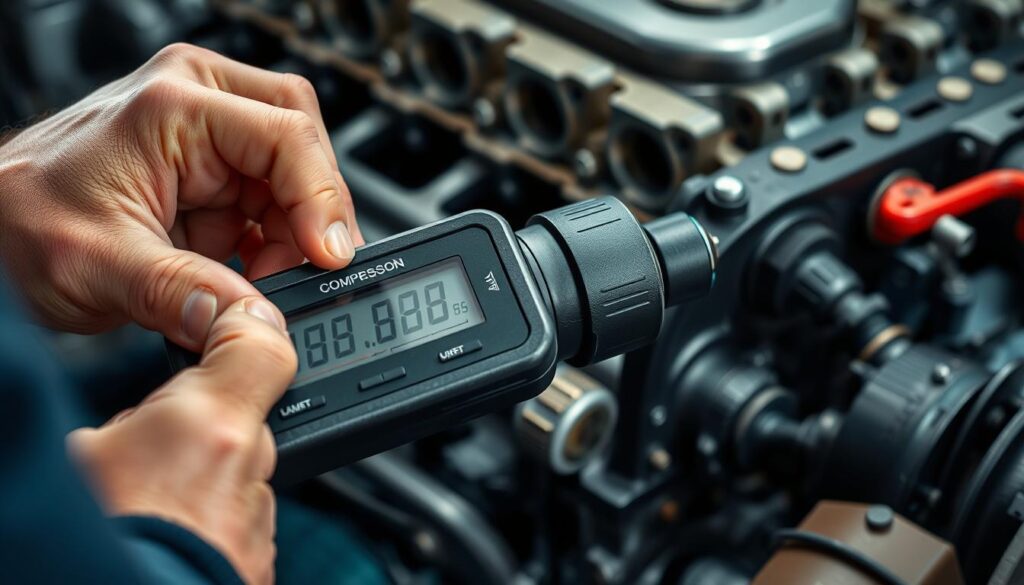
Compression ratios directly control combustion efficiency in every diesel engine cycle. When cylinders maintain proper pressure levels between 275 and 400 PSI at cranking speed, fuel burns completely and power output reaches manufacturer specifications. Variations outside this range immediately compromise performance across multiple operational parameters.
Lower compression pressures reduce the heat generated during the compression stroke. This insufficient heat prevents complete fuel atomization and combustion, resulting in decreased power output, reduced fuel economy, and increased emissions that may violate environmental compliance standards. Temperature plays a critical role—cold weather magnifies compression problems because diesel fuel requires more heat to vaporize and ignite properly.
Higher-than-normal compression readings also indicate serious problems. Excessive pressure often signals carbon buildup on piston tops or valve faces, creating hot spots that can cause pre-ignition and eventual component failure.
Warning Signs That Indicate Compression Problems
Hard starting represents the most common symptom of declining engine compression. When cylinder pressures fall below specification, the engine cranks longer than normal before firing. This problem becomes especially pronounced during cold weather conditions when higher compression pressures are essential for reliable ignition.
Excessive smoke provides visible evidence of compression-related combustion issues. White smoke indicates unburned fuel escaping through the exhaust system, while blue smoke signals oil entering the combustion chamber through worn piston rings or valve seals. Both conditions directly relate to inadequate cylinder sealing.
Performance degradation under load reveals compression problems that may not appear during idle conditions. Operators notice significant power loss when accelerating or climbing grades, inability to maintain highway speeds with normal throttle input, excessive black smoke during acceleration, and engines struggling to maintain RPM under working loads. Fuel consumption increases often accompany compression loss as engines compensate by injecting more fuel to maintain power output.
$8,000 – $20,000+
Typical cost of catastrophic diesel engine failure requiring full rebuild or replacement—preventable through early compression testing
Financial Impact of Preventive Diagnostics
Investing in quality compression testing equipment delivers substantial financial returns through early problem detection. A professional-grade compression tester costing approximately $300 represents one of the most cost-effective diagnostic tools available to shops and fleet maintenance departments.
Early detection of compression problems prevents catastrophic engine failures. Identifying worn piston rings during routine testing allows for planned maintenance scheduling—addressing the issue proactively costs between $1,500 and $3,000 for ring replacement. Ignoring the warning signs leads to complete engine failure requiring full rebuilds costing $8,000 to $15,000 or replacement engines exceeding $20,000.
Head gasket failures detected through compression testing save similar amounts. A blown head gasket caught early costs $800 to $1,500 to repair. Delayed diagnosis allows coolant contamination of engine oil and potential crankshaft bearing damage, pushing total repair costs above $5,000. Fleet operators achieve additional savings through improved maintenance scheduling—regular compression testing data reveals gradual performance degradation trends, enabling repairs during planned downtime rather than unexpected breakdowns during critical operations.
Technical Specifications Every Diesel Compression Tester Must Have
Professional diesel diagnostics demand equipment built to exacting specifications that address the unique pressure requirements of compression ignition engines. The difference between functional diagnostic equipment and inadequate tools comes down to measurable technical criteria. Diesel engines generate significantly higher compression than gasoline counterparts, creating distinct measurement challenges that render gasoline-focused testers useless.
Pressure Measurement Capacity Across Engine Categories
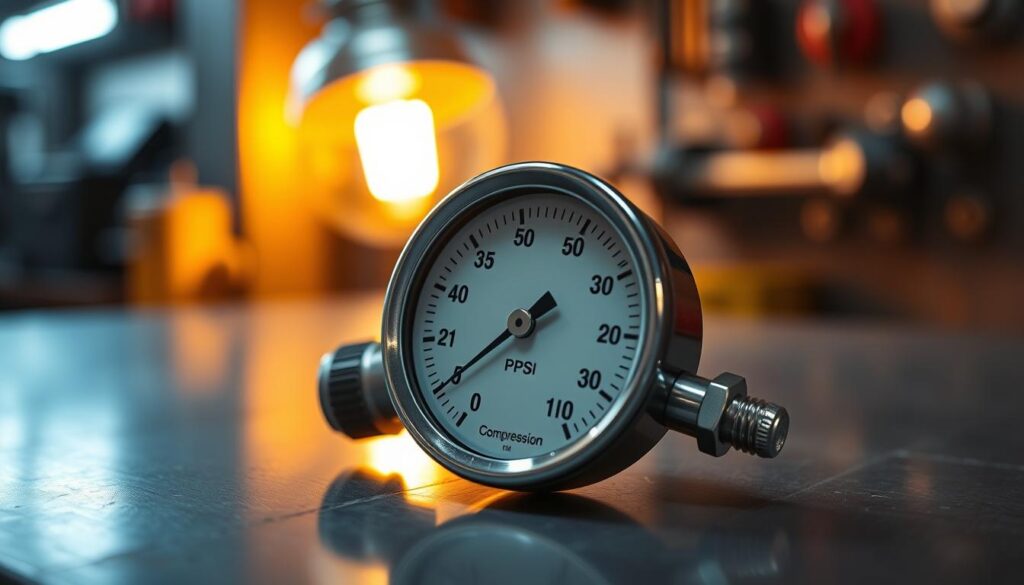
The PSI gauge range determines whether your compression tester can handle the engine cylinder pressure levels your applications generate. Light-duty diesel passenger vehicles typically produce compression readings between 300-400 PSI during cranking. Medium-duty commercial applications push these numbers higher, with diesel trucks operating in commercial service generating compression readings between 400-600 PSI under normal conditions.
Heavy-duty industrial equipment and agricultural machinery can exceed 600 PSI, with some applications reaching the 1,000 PSI threshold. A compression tester with a maximum capacity of only 500 PSI becomes inadequate for these applications and risks gauge damage when exposed to actual diesel compression pressures.
| Engine Category | Typical PSI Range | Common Applications | Required Gauge Capacity |
|---|---|---|---|
| Light-Duty Diesel | 300-400 PSI | Passenger vehicles, compact SUVs | 0-600 PSI minimum |
| Medium-Duty Commercial | 400-600 PSI | Delivery trucks, work vans, RVs | 0-800 PSI minimum |
| Heavy-Duty Industrial | 600-1,000 PSI | Semi-trucks, farm equipment, generators | 0-1,000 PSI required |
Precision Standards and Verification Protocols
Gauge accuracy ratings determine the reliability of your diagnostic conclusions. Professional-grade instruments maintain ±2% accuracy across their full measurement range. This precision level ensures that a reading of 500 PSI reflects actual engine cylinder pressure between 490-510 PSI, providing sufficient accuracy for diagnostic decisions. Calibration certification documentation separates verified equipment from uncertified alternatives—manufacturers should provide traceable calibration standards that confirm accuracy specifications.
Dual-scale PSI gauge systems offer practical advantages beyond basic measurement. Gauges displaying both PSI and bar accommodate international equipment specifications without conversion calculations. Liquid-filled gauge construction provides superior performance in demanding environments—the liquid dampens needle oscillation during testing, delivering stable readings despite engine vibration while protecting internal mechanisms from temperature fluctuations.
Connection Hardware and Thread Configurations
The compression tester adapter determines whether your equipment can physically connect to specific engine applications. Diesel engines utilize various thread pitch configurations based on manufacturer specifications and model years. Common thread pitch specifications include M10x1.0 found in European light-duty diesels, M12x1.25 standard for many diesel truck applications, M14x1.25 for heavy-duty applications including Mitsubishi and Volvo engines, and various imperial sizes in older American diesel equipment.
Swivel-end coupler design on each adapter provides critical functionality beyond simple connection. The swivel mechanism allows the adapter to seat properly against the glow plug or injector port without forcing the gauge body into awkward positions, preventing cross-threading and enabling proper sealing under pressure. Chrome plating on adapter threads extends service life in corrosive environments and facilitates thread cleaning.
Pressure Line Specifications and Construction Details
Hose construction directly impacts measurement accuracy and equipment longevity. Reinforced rubber construction with steel braiding maintains pressure integrity during testing, preventing the expansion that creates false readings. When engine cylinder pressure reaches 800 PSI, inferior hose materials expand slightly, absorbing pressure that should register on the gauge.
A functional minimum hose length of 14.5-24 inches provides sufficient reach to position the gauge where technicians can observe readings while maintaining safe distance from moving components. Quick-connect fittings at both the adapter interface and gauge connection reduce testing time without sacrificing accuracy, establishing secure leak-free connections in seconds compared to threaded alternatives requiring multiple rotations.
Critical Features That Separate Professional From Consumer Grade Tools
Quality compression testing equipment separates itself from budget alternatives through four essential features that impact diagnostic accuracy and operational efficiency. These distinctions justify price differences ranging from $50 entry-level kits to $300+ professional systems.

Precision Measurement Capabilities
Professional-grade compression testing equipment incorporates dual-scale measurement systems displaying both PSI and bar readings simultaneously. This feature addresses real-world scenarios where mechanics service imported vehicles with metric specifications or reference international repair manuals. Single-scale gauges found on consumer models force technicians to perform mental conversions or consult reference charts, introducing potential errors and slowing diagnostic workflow.
The measurement precision itself differs significantly between grades. Professional gauges typically offer accuracy within ±2% of full scale, while consumer models may vary by ±5% or more. This difference becomes critical when diagnosing marginal compression issues where a few PSI determines whether an engine requires immediate repair or remains serviceable.
Efficient Pressure Release Mechanisms
Quick-release pressure valve technology distinguishes quality automotive diagnostic tools from budget alternatives through operational efficiency. Professional testers incorporate reliable pressure release mechanisms that allow rapid testing of multiple cylinders without complete disassembly—technicians reset the gauge between cylinders in seconds rather than minutes.
This feature dramatically impacts workflow efficiency during comprehensive engine diagnostics. Testing a six-cylinder engine with a quick-release system takes approximately 15 minutes versus 30+ minutes with equipment requiring hose disconnection between each test. User experiences reveal that some imported testers lack properly functioning release valves—these valves either fail to seal completely after releasing pressure or become stuck after minimal use.
Protective Transport Systems and Quality Assurance
Impact-resistant storage solutions protect precision instruments during transport and storage while preventing adapter loss. Professional compression testing equipment ships in blow-molded cases with custom foam inserts that secure each component. These cases differ substantially from generic cardboard packaging common with consumer-grade tools—rigid construction shields gauges from impact damage during vehicle-to-vehicle transport.
Manufacturer certification and warranty terms separate reputable equipment from questionable alternatives. Professional-grade tools include minimum one-year warranties, calibration certificates, and documented quality control procedures. Calibration documentation proves each gauge meets accuracy standards before leaving the factory, becoming essential for shops requiring documented tool accuracy for warranty claims or legal disputes.
| Feature Category | Professional Grade | Consumer Grade | Impact on Performance |
|---|---|---|---|
| Measurement Display | Dual-scale (PSI/bar) | Single-scale only | Eliminates conversion errors |
| Pressure Release | Quick-release valve | Manual disconnection | Reduces testing time 50% |
| Storage System | Blow-molded case | Cardboard box | Prevents damage and loss |
| Warranty Coverage | 1-3 years certified | 90 days or none | Ensures long-term reliability |
| Gauge Accuracy | ±1-2% full scale | ±3-5% or unspecified | Critical for marginal diagnoses |
Understanding Different Categories of Compression Testing Equipment
Compression testing equipment falls into distinct categories that determine measurement capabilities, durability, and value for specific applications. The right diesel compression test set depends on your diagnostic requirements, frequency of use, and the variety of engines you service.
Analog Gauge Systems Versus Digital Display Technology
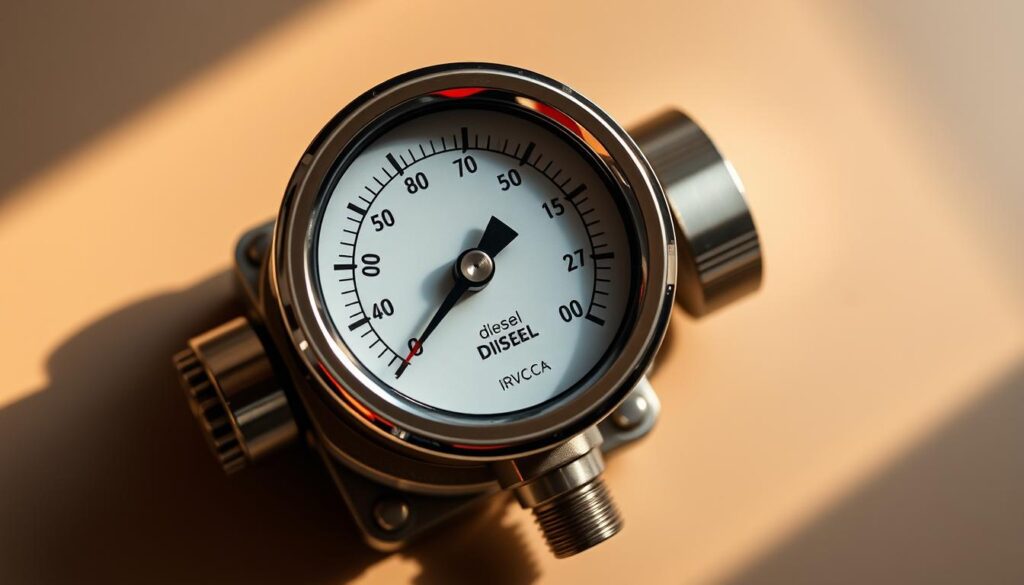
The choice between analog and digital pressure gauges represents a fundamental decision in compression testing equipment. Liquid-filled analog gauges with 2-1/2 inch or larger faces provide instant visual reference without requiring batteries or electronic components. The fluid damping protects internal mechanisms from vibration damage during testing, maintaining compression gauge accuracy even after years of heavy use.
Professional-grade analog systems resist temperature extremes, oil contamination, and physical impact better than electronic alternatives. The simplicity of mechanical construction means fewer potential failure points. Digital display technology offers advantages in specific situations—electronic gauges provide precise numerical readouts to 0.1 PSI accuracy, eliminating interpretation errors from analog needle positions. Many digital systems include memory functions storing test results for cylinder-to-cylinder comparison.
However, digital compression testers require battery power and additional calibration attention. Electronic components are more vulnerable to moisture, extreme temperatures, and electromagnetic interference, with initial costs running 30-50% higher than comparable analog systems. For diesel applications measuring up to 1,000 PSI, the proven reliability of liquid-filled analog gauges remains the professional standard.
Complete Master Kits Versus Specialized Single-Use Tools
Complete master kits typically include 15-20 adapter pieces designed for gasoline and diesel engines across multiple vehicle types, handling passenger cars, light trucks, heavy-duty diesels, agricultural equipment, and marine applications. Quality professional master kits range from $200-$400 but eliminate the need for multiple specialized tools. Advantages include thread pitch compatibility for domestic, European, and Asian diesel engines, glow plug and injector port adapters for direct and indirect injection systems, and organized storage cases preventing adapter loss.
Specialized single-use tools focus exclusively on diesel applications with 5-6 carefully selected adapters, measuring the full 1,000 PSI range without unnecessary gasoline engine components. Quality specialized sets cost $120-$180, offering excellent value for dedicated diesel mechanics or fleet maintenance operations. The common purchasing mistake involves selecting incomplete economy kits that appear cost-effective but lack critical adapters for specific applications.
The HDJ Perspective
The compression tester market reveals an uncomfortable truth about tool pricing: brand premiums don’t always correlate with quality. We’ve examined equipment from recognized names containing components visually identical to budget alternatives—rough thread finishing, similar gauge assemblies, comparable hose construction. The smart buying strategy focuses on verifiable specifications over brand recognition: confirmed PSI capacity, calibration documentation, adapter thread compatibility with your specific fleet, and warranty terms that indicate manufacturer confidence. A mid-range kit at $180-$250 from a manufacturer providing calibration certificates often outperforms a $300 branded kit that relies on name recognition rather than documented quality standards.
Professional Workshop Grade Versus Entry-Level Models
Build quality, accuracy tolerances, and expected service life create distinct equipment grades justifying significant price variations.
| Specification | Entry-Level ($50-$90) | Mid-Grade ($120-$200) | Professional ($250-$450) |
|---|---|---|---|
| Gauge Construction | Dry bourdon tube, 2″ face | Glycerin-filled, 2-1/2″ face | Silicone-filled, 3″ face, shock-resistant |
| Accuracy Tolerance | ±3% full scale | ±2% full scale | ±1% with calibration cert |
| Hose Specifications | 18″ rubber, standard fitting | 24″ reinforced, brass fittings | 36″ braided steel, quick-connect |
| Expected Service Life | 2-3 years occasional use | 5-7 years regular use | 10+ years daily professional use |
Professional workshop grade equipment features chrome-vanadium steel adapters with precision-machined threads that maintain seal integrity through thousands of test cycles. The cost-per-use calculation clearly favors professional grade equipment for commercial applications—a $400 professional system used 200 times annually for 10 years costs $0.20 per test, while a $75 entry-level kit requiring replacement every 3 years with 50 annual uses costs $0.50 per test while delivering inferior accuracy.
Best Diesel Compression Tester Options for Professional Use
Four leading diesel compression testers stand out for their combination of accuracy, durability, and practical features. These tools represent different approaches to professional diagnostics, each with distinct advantages for specific workshop needs.
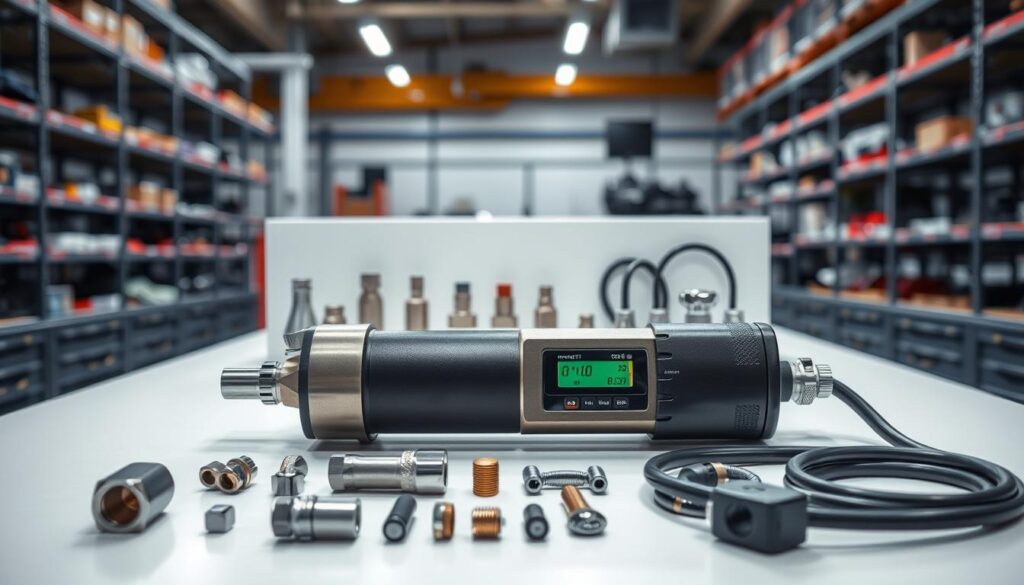
OTC 5605 Professional Compression Tester Kit
The OTC 5605 represents an established brand offering in the mid-to-upper price range, typically around $250. This compression test kit includes multiple adapters and a carrying case designed for professional workshop environments. However, recent user experiences reveal quality control concerns warranting careful examination—field reports indicate some units exhibit components nearly identical to lower-grade import products, with rough thread finishing on fittings that may require deburring.
Key Features: 0-1000 PSI dual-scale gauge, 8-piece adapter set, 24-inch flexible high-pressure hose, one-year manufacturer warranty, blow-molded plastic case with foam insert. Comprehensive adapter selection for multiple engine types, but component quality may not justify the premium price point in all production batches.
Mityvac MV5530 Diesel Compression Test Set
Mityvac designed the MV5530 specifically for diesel applications, focusing on the unique requirements of compression ignition engines. This diesel compression tester includes adapters compatible with common manufacturers including Mitsubishi, Volvo, and Kubota applications. The gauge accuracy and construction quality reflect Mityvac’s diagnostic tool specialization.
Key Features: 0-1000 PSI with 10 PSI increments, glycerin-filled gauge for vibration dampening, 6 diesel-specific adapters with precision threads, 30-inch reinforced rubber hose with quick-disconnect, factory calibrated with certificate included. Purpose-built for diesel engine testing requirements with quality thread machining, though the smaller adapter selection may require additional purchases for specialty equipment.
Lang Tools 161 Heavy-Duty Diesel Engine Compression Tester
Lang Tools built the 161 model specifically for heavy-duty diesel applications in commercial trucks, agricultural equipment, and industrial machinery. The gauge assembly and fittings emphasize durability over portability, making it ideal for stationary workshop use where weight matters less than rugged construction.
Key Features: 0-1000 PSI with reinforced gauge mechanism, all-metal gauge housing with impact protection, 7-piece heavy-duty adapter collection, 36-inch steel-braided pressure hose, professional-grade pressure relief valve. Exceptional build quality for commercial workshop environments, though the premium pricing and heavier weight may be excessive for light-duty applications.
Actron CP7827 Diesel Compression Testing System
The Actron CP7827 positions itself as an entry-level professional compression test kit suitable for general repair shops servicing both gasoline and diesel engines. The price point makes it accessible for shops building their diagnostic tool inventory without requiring specialized heavy-duty equipment.
Key Features: 0-1000 PSI analog gauge, 10-piece combination adapter set, 20-inch standard pressure hose, 90-day limited warranty, plastic carrying case. Competitive pricing and dual-purpose design, but lower build quality compared to specialized diesel testers means gauge accuracy may drift with frequent use.
Brand Analysis and Market Positioning in 2026
Professional compression testers carry various brand names, but manufacturing consolidation has transformed how buyers should evaluate quality. The diesel compression testing market reveals that multiple respected brands often source identical components from the same factories—brand recognition alone no longer guarantees superior performance or reliability.
Industry Leader Reputation and Compliance Standards
Established brands like OTC, Mityvac, Lang Tools, and Actron maintain market positions through decades of presence in professional workshops. However, historical reputation doesn’t automatically translate to current product superiority—manufacturing partnerships have created situations where premium-branded kits contain the same internal components as budget alternatives.
Compliance certifications provide more reliable quality indicators than brand names. ISO 9001 quality management certification demonstrates that manufacturers follow consistent production standards. Look for manufacturers providing calibration certificates with each purchase—these documents verify gauges meet accuracy specifications at the time of sale. Without this documentation, even expensive tools may deliver unreliable readings.
Value Assessment and Technical Support Networks
User experiences reveal that premium pricing doesn’t guarantee proportional quality increases. Reports indicate some $250 compression testing equipment kits appear virtually identical to alternatives costing $100 less, with components, gauge mechanisms, and adapter quality showing minimal differences despite significant price gaps. The optimal value typically exists in the $200-$280 range for professional applications.
Long-term value extends beyond initial purchase price to include ongoing support infrastructure. Manufacturers with established US-based customer service provide crucial assistance when calibration questions or technical issues arise. Replacement part availability determines whether a professional compression tester remains functional for years or becomes disposable after minor damage—proprietary adapter designs from obscure manufacturers create situations where a single lost fitting renders an entire kit useless.
Calibration services separate professional-grade manufacturers from consumer-oriented brands. Leading companies offer annual recalibration services, typically costing $40-$75, that maintain measurement accuracy throughout the tool’s lifespan. Warranty terms reveal manufacturer confidence—lifetime warranties on gauge mechanisms and three-year comprehensive coverage indicate companies standing behind their construction quality.
Free Professional Fleet Tools
Cost calculators, fault code lookup, maintenance planners, and more—built for owner-operators, fleet managers, and diesel techs. No signup required.
Proper Testing Procedures for Accurate Diagnostic Results
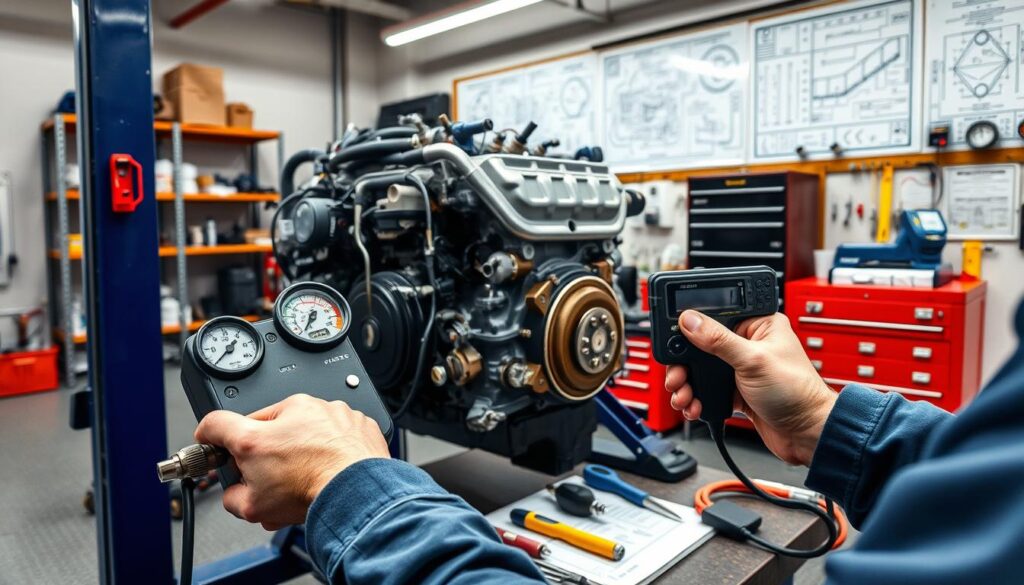
Diesel engine diagnostics require methodical compression testing techniques to deliver reliable, actionable data. The difference between useful information and misleading readings often comes down to proper procedure execution. Professional technicians understand that compression testing identifies problems such as worn piston rings, valve issues, and head gasket leaks by measuring cylinder pressure under controlled conditions.
Engine Preparation and Safety Protocols
Proper preparation creates the foundation for accurate engine compression testing. The engine must reach normal operating temperature before testing begins—cold engines produce artificially low readings that do not reflect actual compression characteristics. Disable the fuel system completely to prevent fuel washing during the cranking process, which dilutes cylinder wall lubrication and produces falsely low readings.
⚠️ Safety Warning
Always wear safety glasses during compression testing to protect against debris ejection from cylinder openings. Ensure adequate ventilation in the work area. Diesel fuel systems maintain residual pressure that can cause fuel spray during component removal—release fuel pressure according to service manual specifications before loosening any fuel system connections.
Remove all glow plugs or injectors depending on your testing method and engine configuration—glow plug removal provides easier access and less risk on most light-duty diesels, while heavy-duty engines typically require injector removal for direct cylinder access. Battery voltage must remain above 12.4 volts to maintain consistent cranking speed throughout the test sequence, as low voltage causes inconsistent cranking speed producing unreliable compression readings.
Systematic Testing Methodology
Consistency across all cylinders ensures valid comparative data for diagnostic analysis. Begin by selecting the appropriate adapter for your specific cylinder configuration. Thread the adapter carefully into the glow plug or injector port until properly seated—never force adapters into cylinder openings. Cross-threading damages expensive cylinder heads and renders test results meaningless. Hand-tighten adapters until snug, then add one-quarter turn with a wrench for proper sealing.
Connect the compression tester hose to the installed adapter and verify secure attachment. Have an assistant crank the engine while you observe the gauge needle movement, continuing for five to six compression strokes or until the needle stabilizes at maximum pressure. Most gauges reach peak pressure within four seconds of cranking on healthy engines. Record the pressure reading immediately after stabilization, noting both the exact pressure value and cylinder number. Maintain identical cranking duration for each cylinder to ensure comparable results.
Reading and Analyzing Compression Data
Understanding what compression numbers mean separates data collection from actual diesel engine diagnostics. Automotive diesel engines typically produce compression readings between 300 and 400 PSI under normal conditions, with heavy-duty truck engines often exceeding 400 PSI due to higher compression ratios. Individual cylinder readings matter less than cylinder-to-cylinder variation patterns—all cylinders should read within 10-15% of each other for healthy engine compression.
Low compression in all cylinders simultaneously points to worn piston rings or valve timing issues—this pattern develops gradually as engines accumulate mileage. Low compression in two adjacent cylinders typically indicates head gasket failure between those cylinders, as the gasket breach allows pressure to escape. Single-cylinder low compression suggests valve damage, piston damage, or severe cylinder wall scoring in that specific cylinder. According to SAE technical standards, comparing readings against manufacturer specifications for your specific engine model ensures accurate problem identification.
| Compression Pattern | PSI Reading Range | Probable Cause | Diagnostic Action |
|---|---|---|---|
| All cylinders low | 200-250 PSI | Worn piston rings or timing issues | Perform leak-down test to confirm |
| Adjacent cylinders low | 150-200 PSI affected | Head gasket failure between cylinders | Inspect coolant for combustion gases |
| Single cylinder low | Below 250 PSI one cylinder | Valve or piston damage | Remove head for visual inspection |
| Normal variation | 320-380 PSI all cylinders | Healthy engine compression | No further action required |
Critical Purchasing Errors to Avoid
Understanding common purchasing pitfalls prevents the frustration of owning equipment that fails when you need it most. Three specific errors account for the majority of wasted investment and diagnostic failures technicians experience—often discovered only after encountering specific engine applications that expose equipment shortcomings.
Incompatible Adapter Configurations
The most common purchasing mistake involves assuming extensive adapter collections provide universal compatibility. Many comprehensive-appearing kits include 15-20 adapters, but closer examination reveals most serve gasoline engine applications. The compression tester adapter selection for diesel engines requires specific thread pitches and lengths that generic assortments frequently omit.
Professionals working with Mitsubishi, Volvo, and Kubota diesel engines face particular challenges. Mitsubishi applications typically require M10x1.0 threads with extended reach configurations, Volvo heavy-duty engines demand M12x1.5 adapters with specific sealing washer designs, and Kubota equipment uses M10x1.25 thread specifications with shorter reach requirements. Verify specific adapter thread pitches before purchase, requesting detailed specification sheets rather than relying on vague compatibility claims.
Insufficient Gauge Capacity
Many available compression testers feature maximum ranges between 300 and 500 PSI, which suffice for gasoline engine diagnostics but fail completely for diesel applications. A PSI gauge with insufficient capacity cannot accurately measure the 450-600 PSI compressions typical in modern diesel engines—equipment rated below the 1,000 PSI professional threshold may experience gauge damage when exposed to actual diesel compression pressures.
The financial impact extends beyond equipment replacement. Inadequate gauge capacity prevents accurate diagnosis of compression variations between cylinders—a gauge operating near its maximum range cannot distinguish between acceptable compression of 480 PSI and problematic compression of 450 PSI, making precise diagnostics impossible.
Absent Calibration Documentation
Professional-grade testing equipment should include documentation establishing calibration traceability and accuracy verification from initial manufacture. Equipment lacking such documentation may deliver inaccurate readings from first use, regardless of how precise the gauge appears. Calibration certifications provide specific accuracy guarantees across the entire measurement range. According to ASTM calibration standards, proper calibration documentation becomes essential for professional operations where diagnostic accuracy affects liability and customer billing.
Reputable manufacturers provide calibration certificates documenting testing procedures and measurement standards. Request calibration documentation before finalizing purchases—if suppliers cannot provide proper certification, consider alternative sources meeting professional standards.
Frequently Asked Questions
What PSI range should a diesel compression tester have?
Professional diesel compression testers should measure up to 1,000 PSI to handle all diesel applications accurately. Light-duty diesels produce 300-400 PSI, medium-duty commercial vehicles reach 400-600 PSI, and heavy-duty industrial equipment can exceed 600 PSI. A 0-1,000 PSI gauge ensures compatibility across passenger vehicles, commercial trucks, agricultural equipment, and generators without maxing out the gauge and risking inaccurate readings or damage to the instrument.
How do I know if my diesel engine has low compression?
Common symptoms of low diesel compression include hard starting especially in cold weather, excessive white or blue exhaust smoke, noticeable power loss under load, increased fuel consumption, and abnormal engine knocking or rattling. These symptoms often appear gradually as components wear. Compression testing reveals the actual cylinder pressure readings, allowing technicians to identify whether problems exist and which specific cylinders are affected before recommending repairs.
What is normal compression for a diesel engine?
Healthy diesel engines typically produce compression readings between 275-400 PSI at cranking speed for automotive applications, with heavy-duty truck engines often exceeding 400 PSI due to higher compression ratios. All cylinders should read within 10-15% of each other. Readings below manufacturer specifications or significant variation between cylinders indicate problems requiring further diagnosis. Always reference OEM service manual specifications for your specific engine model, as requirements vary by manufacturer and application.
Do I need different adapters for different diesel engines?
Yes, diesel engines use various thread pitch configurations requiring matching adapters. Common specifications include M10x1.0 for European light-duty diesels, M12x1.25 for medium-duty commercial vehicles, and M14x1.25 for heavy-duty applications including Mitsubishi and Volvo engines. Kubota equipment uses M10x1.25 threads. Professional-grade kits include multiple adapters for comprehensive coverage—verifying adapter compatibility before purchase prevents inability to test specific engines in your fleet.
How often should compression testing be performed on fleet vehicles?
Fleet maintenance programs typically incorporate compression testing at major service intervals—commonly every 100,000 to 150,000 miles—or when performance symptoms appear. Regular testing establishes baseline readings for trend analysis, enabling maintenance managers to identify gradual degradation before catastrophic failures occur. Testing should also be performed when investigating hard starting, smoke conditions, power loss, or unusual fuel consumption increases that suggest internal engine problems.
What causes compression loss in diesel engines?
Compression loss results from worn piston rings allowing blowby, valve damage or carbon buildup preventing proper sealing, head gasket failure between cylinders or to coolant passages, cracked cylinder heads, and scored cylinder walls. Low compression in all cylinders typically indicates ring wear, while two adjacent low cylinders suggests head gasket failure. Single-cylinder problems usually point to valve or piston damage in that specific cylinder requiring targeted inspection and repair.
Making the Right Compression Tester Investment
Selecting the right diesel compression tester requires balancing technical specifications against real-world application needs. A professional compression tester should deliver consistent 0-1,000 PSI readings, include verified adapter compatibility for your specific fleet engines, and provide documented calibration certificates. These factors matter more than brand recognition or premium pricing—market analysis reveals many compression test kits share identical internal components despite significant price differences.
Your investment in quality testing equipment pays dividends through faster problem identification, reduced diagnostic time, and improved customer satisfaction. Match your diesel compression tester specifications to your specific engine types, verify manufacturer support availability, and maintain realistic performance expectations based on documented specifications rather than marketing claims. This approach ensures optimal value while building the diagnostic foundation necessary for professional service excellence in today’s demanding fleet maintenance environment.
Found This Guide Helpful?
Share it with fellow fleet managers and diesel technicians who could benefit from making better equipment decisions.