Commercial vehicle operators face mounting pressure to control transportation budgets. Heavy-duty truck tires represent one of the largest expense categories, often ranking as the second or third highest cost after fuel and labor. Most companies treat this as a maintenance issue rather than a strategic opportunity.
The financial impact is substantial. Research shows that proper fleet tire management can reduce operating expenses by 5-15% annually. These savings extend beyond purchase prices to include fuel efficiency gains, reduced downtime, and extended service life.
Smart operators recognize that comprehensive programs deliver measurable results. The difference between cost-efficient operations and those that waste resources comes down to systematic approaches. Six interconnected strategies form the foundation of effective programs: pressure monitoring systems, rotation and alignment protocols, retreading utilization, digital tracking software, optimized product selection, and driver education initiatives.
Key Takeaways
- Cost Impact: Strategic fleet tire management reduces operating expenses by 5-15% annually through integrated approaches
- Total Investment: Tire expenses account for 8-15% of fleet operating budgets when including all related costs
- System Approach: Six core strategies work together—pressure monitoring, rotation protocols, retreading, digital tracking, product selection, and driver training
- Immediate Returns: Proper tire inflation alone delivers 2-3% fuel efficiency improvements with 6-18 month payback periods
- Lifecycle Value: Quality casings supporting multiple retreads reduce cost per mile by 25% compared to single-use tires
The Financial Impact of Tire Costs on Fleet Operations
Understanding the true cost of tires extends beyond the initial purchase price to encompass a complex network of related expenses that impact every aspect of fleet operations. For fleet managers focused on budget control, tire expenditures represent a substantial line item that demands strategic attention and proactive oversight.
The challenge lies not just in managing obvious costs but in recognizing how tire-related decisions create cascading effects throughout the organization. Every choice about tire selection, maintenance protocols, and replacement timing influences operational efficiency in ways that aren’t always immediately visible on budget reports.
Direct and Indirect Tire Expenditures
Commercial fleet tires consistently rank among the top three operating expenses for heavy-duty transportation companies. Industry research demonstrates that tire costs typically account for 8-15% of total operating budgets when all related expenses are properly calculated.
The actual cost structure extends far beyond the sticker price of new tires. Fleet managers must account for mounting and balancing services, valve stem replacements, disposal fees for worn casings, and the administrative overhead of tracking and managing tire inventory across multiple vehicles and locations.
Labor costs represent another significant component. Each tire service event requires technician time, vehicle downtime, and coordination that pulls resources away from revenue-generating activities. When a truck sits in the maintenance bay for tire work, the opportunity cost includes not just the service expenses but the lost productivity of that asset.
| Cost Component | Percentage of Total | Annual Cost (per vehicle) | Reduction Potential |
|---|---|---|---|
| Tire Purchase/Replacement | 55-65% | $4,400-$5,200 | 20-30% through retreading |
| Mounting & Balancing | 8-12% | $640-$960 | 5-10% through vendor partnerships |
| Fuel Efficiency Impact | 15-20% | $1,200-$1,600 | 15-25% through proper inflation |
| Downtime & Labor | 10-15% | $800-$1,200 | 30-40% through preventive programs |
Retreading programs offer compelling economics that forward-thinking fleets leverage to control replacement costs. A quality retread can extend tire mileage by approximately 120,000 miles at roughly one-third the cost of purchasing new tires. For a fleet operating 100 trucks, this single strategy can generate annual savings exceeding $150,000 while maintaining safety and performance standards.
Hidden Costs of Reactive Tire Management
The hidden costs of inadequate fleet tire management create financial drains that compound over time and often escape notice in standard budget reviews. These expenses emerge gradually through reduced fuel economy, accelerated wear patterns, and unexpected failures that disrupt operations and erode profitability.
Improper tire inflation stands as the most prevalent and costly oversight in fleet operations. Data from transportation research indicates that underinflation by just 1 PSI reduces fuel efficiency by approximately 0.2%. When a fleet allows tires to operate 10 PSI below specification, fuel economy deteriorates by 2% across affected vehicles.
For a heavy-duty truck consuming 20,000 gallons annually, this neglect translates to 400 additional gallons and roughly $1,200 in unnecessary fuel costs per vehicle each year.
Neglected rotation schedules accelerate uneven wear patterns that force premature replacement of commercial fleet tires. Tires on steering axles typically wear 15-20% faster than drive or trailer positions due to increased stress and turning forces. Without systematic rotation protocols, fleets sacrifice 25-30% of potential tire life, converting what should be a 250,000-mile tire into one that must be replaced at 175,000 miles.
Safety risks and liability exposure escalate when tire management becomes reactive rather than preventive. Tire-related failures on highways create dangerous situations that can result in accidents, cargo damage, and legal consequences. The financial impact of a single incident often exceeds the cost of implementing comprehensive tire management programs across an entire fleet.
Vehicle component damage represents another concealed expense of poor tire maintenance. Underinflated or misaligned tires generate abnormal stress on suspension systems, wheel bearings, and brake components. These secondary failures increase maintenance costs and vehicle downtime while shortening the service life of expensive chassis components that can cost thousands of dollars to replace.
Regulatory compliance issues emerge when tire conditions fall below Department of Transportation standards. Violations discovered during roadside inspections result in fines, out-of-service orders, and CSA score impacts that affect insurance rates and customer relationships. The cumulative cost of compliance failures significantly exceeds the investment required for proactive tire monitoring and maintenance programs.
Building a Foundation for Effective Tire Programs
Understanding the core principles of tire lifecycle management establishes the groundwork for implementing strategies that reduce operating expenses across your entire fleet. Before investing in specific cost-saving initiatives, fleet managers must build a solid foundation that supports consistent preventive maintenance and accurate performance tracking.
A structured approach to tire care delivers predictable results that improve both safety and profitability. The components discussed in this section work together to create a system where every tire receives proper attention throughout its service life.
Essential Elements That Drive Program Success
Successful tire management programs share common characteristics that distinguish them from ad-hoc maintenance approaches. These integrated components create a framework where data, processes, and people work together toward shared objectives.
The first critical element involves centralized data management systems that track every tire from purchase through disposal. This comprehensive record-keeping captures acquisition dates, mounting positions, pressure readings, tread measurements, repair history, and removal reasons. Modern fleets use digital platforms that make this information accessible across maintenance facilities.
Standardized inspection protocols ensure consistent evaluation across all vehicles regardless of location or technician. Daily pre-trip inspections performed by drivers identify obvious issues like low pressure, visible damage, or objects lodged in treads. Monthly technical inspections conducted by trained maintenance personnel provide deeper assessment of tread wear patterns, sidewall condition, and potential mechanical issues affecting tire performance.
Clearly defined maintenance intervals based on both mileage and calendar time prevent premature wear while maximizing tire lifespan. These schedules specify when to perform rotations, alignments, and pressure adjustments. The intervals vary by vehicle type, duty cycle, and operating conditions, but the discipline of following predetermined schedules separates effective programs from reactive ones.
Established vendor relationships provide reliable service access and competitive pricing that independent negotiations cannot match. Strategic partnerships with tire suppliers and service providers create preferred pricing structures, priority service availability, and technical support when unusual issues arise.
Driver engagement programs transform tire care into a shared responsibility rather than solely a maintenance department function. When drivers understand how their actions affect tire longevity and receive feedback on tire-related performance, they become active participants in cost control.
Performance Standards and Industry Benchmarks
Fleet performance metrics provide objective measures for evaluating tire program effectiveness and identifying improvement opportunities. Industry benchmarks establish realistic expectations while accounting for the significant variables that affect actual performance.
Federal DOT regulations establish minimum safety standards that all commercial vehicles must meet. Steer axle tires require at least 4/32-inch tread depth, while drive and trailer positions need minimum 2/32-inch depth. However, fleet safety experts recommend maintaining tread depth above 6/32 inches for optimal traction in wet or snowy weather and to preserve casing quality for retreading.
Tire pressure specifications typically range from 28 to 36 PSI for commercial vehicles, with exact requirements varying by tire size, load rating, and manufacturer recommendations. Temperature changes affect pressure by approximately 1 PSI for every 10°F fluctuation, making seasonal adjustments necessary for optimal performance.
| Performance Metric | Steer Position | Drive Position | Trailer Position |
|---|---|---|---|
| Expected Tire Life (miles) | 150,000-180,000 | 120,000-150,000 | 200,000-250,000 |
| Removal Mileage Range | 135,000-200,000 | 100,000-175,000 | 180,000-280,000 |
| Cost Per Mile (cents) | 3.5-4.5 | 2.8-3.8 | 2.2-3.0 |
| Optimal Retread Ratio | 0-1 retreads | 2-3 retreads | 2-3 retreads |
Cost-per-mile calculations provide the most comprehensive performance indicator because they account for purchase price, maintenance expenses, and actual service life. Fleets achieving results in the lower range of these benchmarks demonstrate effective tire lifecycle management.
Strategy 1: Implement Regular Tire Pressure Monitoring
Every PSI of pressure deviation from manufacturer specifications quietly drains thousands of dollars from fleet budgets annually. Tire pressure monitoring forms the cornerstone of cost-effective fleet operations, delivering measurable improvements in both fuel consumption and tire longevity. This strategy requires minimal investment compared to the substantial returns it generates across every vehicle in your operation.
Temperature fluctuations, normal air permeation, and slow leaks constantly challenge proper tire inflation. A systematic approach to monitoring and maintaining correct pressure levels protects your bottom line while enhancing safety and performance.
The Cost Impact of Underinflated and Overinflated Tires
Underinflated tires create a cascade of expensive problems that compound over time. Research demonstrates that each 1 PSI below the recommended level reduces fuel efficiency by 0.2%, which translates directly to higher operating costs. The mechanical explanation centers on increased rolling resistance as the tire sidewalls flex excessively during rotation.
Heat buildup accelerates when tires run underinflated. This excessive temperature degrades the internal tire structure, weakening the casing and reducing the tire’s serviceable life by 15-25%. Irregular wear patterns emerge across the tire shoulders, forcing premature replacement even when the center tread remains adequate.
Consider a 100-vehicle fleet where each truck averages 100,000 miles annually at 6 miles per gallon. If tires consistently run 5 PSI low, the resulting 1% fuel efficiency loss costs the fleet approximately $50,000 to $75,000 annually in additional fuel expenses alone.
Overinflation presents different but equally costly challenges. Excessive pressure reduces the tire contact patch, concentrating wear on the center tread area. This accelerated center wear shortens tire life while compromising traction and ride quality.
Manual vs. Automated Pressure Monitoring Systems
Fleet managers face a fundamental choice between manual checking protocols and automated monitoring technology. Each approach offers distinct advantages depending on fleet size, operational patterns, and available resources.
Manual pressure checks require minimal capital investment. A quality tire pressure gauge costs under $100, and the process involves systematic measurement during routine inspections. However, this approach depends entirely on consistent driver compliance and provides no visibility between scheduled checks.
The limitations become apparent when pressure loss occurs between inspections. A tire losing 2-3 PSI daily due to a slow leak operates underinflated for days before detection. This gap exposes the fleet to unnecessary fuel waste and tire damage.
Automated monitoring eliminates these blind spots through continuous pressure surveillance. TPMS systems track inflation levels in real-time, immediately alerting managers when pressure falls outside acceptable parameters. This instant notification enables rapid response before significant damage or efficiency losses occur.
The investment comparison favors automation for larger fleets. While TPMS systems require upfront capital ranging from $50 to $200 per tire position, the continuous monitoring capability typically generates returns within 6-18 months through improved fuel efficiency and extended tire life.
Stay Ahead of Industry Trends
Get expert insights, equipment reviews, and operational strategies delivered to your inbox weekly.
TPMS Technology Options for Heavy-Duty Fleets
Modern tire pressure monitoring systems offer varied technology approaches suited to different fleet requirements. Understanding these options helps managers select the most appropriate solution for their operational context.
| System Type | Technology | Cost Range | Key Advantages |
|---|---|---|---|
| Cap-Based Sensors | External valve cap with LED indicators | $10-$30 per tire | Simple installation, visual alerts, no power requirements |
| Valve-Stem Integrated | Sensors mounted inside valve stem | $50-$100 per tire | Wireless transmission, real-time data, mobile app integration |
| Fleet Management Platform | Advanced sensors with telematics integration | $100-$200 per tire | Central monitoring, historical data, predictive alerts, temperature tracking |
Cap-based systems provide entry-level monitoring through color-coded visual indicators. Drivers can identify low pressure during walk-around inspections without specialized equipment. These solutions work well for smaller fleets or operations beginning their pressure management journey.
Valve-stem integrated sensors represent the middle tier of TPMS systems. These devices transmit pressure data wirelessly to cab-mounted displays or mobile applications. Fleet managers receive alerts when pressure deviates from preset thresholds, enabling proactive maintenance scheduling.
Enterprise-level platforms integrate tire pressure monitoring with broader fleet management systems. These sophisticated solutions track pressure trends over time, correlate data with fuel consumption patterns, and generate predictive alerts before problems emerge.
Setting Up Pressure Check Schedules
Consistent monitoring protocols form the backbone of effective tire pressure management. A structured schedule ensures comprehensive coverage while avoiding redundant effort.
Daily pre-trip inspections should include visual tire assessment. Drivers examine each tire for obvious deflation, visible damage, or irregular wear patterns. This quick check takes less than five minutes but catches severe pressure loss immediately.
Weekly detailed measurements provide the next monitoring layer. Maintenance personnel measure each tire’s pressure using calibrated gauges when tires are cold. Recording these measurements creates a baseline for identifying slow leaks or persistent pressure drift.
Monthly comprehensive inspections extend beyond pressure measurement:
- Valve stem condition assessment for cracks, damage, or air leaks
- Tread depth measurement at multiple points across the tire
- Sidewall examination for cuts, bulges, or weathering
- Wheel mounting hardware inspection for proper torque
- Pressure adjustment to manufacturer specifications accounting for load and temperature
Temperature considerations affect accuracy. Ambient temperature changes cause pressure fluctuations of approximately 1 PSI per 10°F variation. Measuring tire pressure when tires are cold, typically before the vehicle operates for the day, provides the most accurate readings.
Expected Savings from Proper Inflation Management
Rigorous tire pressure monitoring delivers quantifiable financial benefits across multiple cost categories. Fuel efficiency improvements of 2-3% represent the most immediate return. For fleets consuming significant fuel volumes, this percentage translates to substantial annual savings.
A mid-sized fleet operating 50 trucks averaging 100,000 miles annually at 6.5 MPG consumes approximately 769,000 gallons of fuel yearly. At $3.50 per gallon, a 2.5% fuel efficiency gain from proper tire inflation saves nearly $67,000 annually.
Tire lifespan extension provides the second major benefit. Maintaining correct pressure increases tire longevity by 15-25% compared to chronically underinflated conditions. If the fleet replaces 400 tires annually at $400 per tire, a 20% lifespan increase reduces annual tire purchases by 80 units, saving $32,000.
Combined savings from fuel efficiency and extended tire life total approximately $99,000 for this 50-truck example. Even accounting for TPMS system investment of $40,000, the payback period remains under six months.
Strategy 2: Establish Tire Rotation and Alignment Programs
Establishing disciplined rotation and alignment maintenance delivers measurable returns by distributing wear evenly across all tire positions. This systematic approach prevents premature tire removal while other positions retain substantial tread depth. Fleet operators who implement comprehensive rotation schedules consistently reduce total tire expenditures by thousands of dollars annually.
How Rotation Extends Tire Life Across Your Fleet
Different axle positions impose distinct wear characteristics on tires throughout their service life. Steer axles experience higher cornering forces that accelerate shoulder wear. Drive axles transmit power that creates unique tread degradation patterns.
Trailer positions generally encounter more uniform wear conditions compared to tractor axles. When tires remain in fixed positions, certain units reach minimum tread depth while others retain significant usable life. This imbalance forces early removal of worn tires alongside premature retirement of tires in less demanding positions.
Systematic tire rotation redistributes these wear patterns across multiple tire positions. By moving tires between high-wear and low-wear locations, fleet managers prevent any single tire from reaching replacement criteria prematurely.

Industry data demonstrates that properly executed rotation programs extend total tire life by 20-30% compared to fixed-position operation. For a fleet operating 100 power units, this translates to savings exceeding $50,000 annually in reduced tire replacement costs.
Optimal Rotation Intervals for Heavy-Duty Trucks
Heavy-duty applications require tire rotation every 25,000-50,000 miles depending on operational demands. Regional haul operations with frequent starts and stops benefit from rotations at the shorter interval. Line-haul operations with primarily highway miles can extend rotation intervals toward the upper range.
Severe-duty applications demand more frequent attention to tire wear patterns. Vocational trucks operating in construction, logging, or off-road environments should rotate tires every 25,000 miles maximum. These demanding conditions accelerate uneven wear that rotation programs must counteract.
Effective maintenance scheduling integrates rotation intervals with other preventive maintenance activities. Coordinating rotations with oil changes or brake inspections minimizes vehicle downtime. This approach reduces labor costs while ensuring consistent rotation compliance across the fleet.
Position-Based Rotation Patterns
Tandem-axle tractors follow specific movement sequences to optimize wear distribution. The most common pattern moves steer tires to trailer positions, forward drive axle tires to steer positions, and rear drive axle tires to forward drive positions. Trailer tires complete the cycle by moving to rear drive axle positions.
Tri-axle configurations require modified rotation patterns that account for additional axle positions. The center axle typically experiences lower loading than forward and rear positions. Rotation sequences must balance high-load and low-load positions to achieve even wear across all six drive tires.
| Truck Configuration | Rotation Pattern | Recommended Interval | Expected Life Extension |
|---|---|---|---|
| Tandem Tractor | Steer → Trailer → Rear Drive → Forward Drive → Steer | 30,000-40,000 miles | 25-30% |
| Tri-Axle Truck | Steer → Rear Drive → Center Drive → Forward Drive → Steer | 25,000-35,000 miles | 20-25% |
| Severe Duty Vocational | Position-specific based on wear analysis | 20,000-25,000 miles | 15-20% |
| Line Haul Operations | Standard tandem pattern with extended intervals | 40,000-50,000 miles | 25-30% |
Alignment Impact on Tire Wear
Proper wheel alignment maintains correct vehicle geometry that prevents accelerated tire degradation. Misalignment in toe, camber, or caster angles creates distinctive tire wear patterns that drastically reduce service life. Severe misalignment can cut useful tire mileage by 25-50% before reaching minimum tread depth.
Toe misalignment causes feathering across the tread surface where one edge of each tread block wears faster than the opposite edge. This condition rapidly consumes tread depth and creates noise as the tire rolls. Correction requires immediate alignment adjustment to prevent further damage.
Camber misalignment produces shoulder wear on either the inside or outside edge of the tire. Excessive positive camber wears the outside shoulder while negative camber degrades the inside shoulder. These conditions often result from suspension component wear or frame damage from impacts.
Fleet managers should schedule alignment checks every 50,000 miles or whenever irregular wear appears during inspections. Immediate alignment evaluation is necessary after curb strikes, pothole impacts, or any collision affecting suspension components. Proactive alignment maintenance prevents the expensive consequence of premature tire replacement.
Strategy 3: Utilize Tire Retreading and Recapping
Strategic implementation of tire retreading programs offers fleet managers a proven pathway to reduce operating expenses without compromising safety standards. This approach extends tire mileage by approximately 120,000 miles per casing while costing just over one-third the price of new tires.
When executed properly with quality casings and reputable retreading operations, this strategy represents the single largest opportunity for immediate tire cost savings in most heavy-duty fleets.
Economics of Retreading vs. New Tire Purchase
The financial case for tire retreading becomes compelling when examining the total lifecycle costs. Retreaded tires typically cost 30-40% of comparable new tire prices while delivering 80-90% of new tire mileage when properly applied to suitable casings.
A typical heavy-duty fleet using strategic retreading on drive and trailer positions can reduce annual tire costs by $800-1,200 per vehicle. For a 50-truck fleet, this translates to $40,000-60,000 in annual savings without reducing operational capacity or safety margins.
The economics improve further when considering multiple retreading cycles. Quality casings can often support two or even three retread applications before retirement. This extends the total investment value significantly beyond single-use tire purchases.
| Cost Factor | New Tire | First Retread | Second Retread |
|---|---|---|---|
| Purchase Price | $450-550 | $150-200 | $150-200 |
| Expected Mileage | 120,000-150,000 | 100,000-120,000 | 80,000-100,000 |
| Cost Per Mile | $0.0037 | $0.0017 | $0.0020 |
| Total Lifecycle Mileage | 120,000-150,000 | 220,000-270,000 | 300,000-370,000 |
“Retreading isn’t just about cost savings—it’s about maximizing the value of your initial tire investment through strategic lifecycle management.”
— Industry Fleet Management Expert
Common misconceptions about retreaded tire safety and performance continue to limit adoption in some fleets. Industry data demonstrates that quality retreads perform comparably to new tires in real-world applications. Tire failures correlate more strongly with maintenance practices than with new versus retreaded status.
Identifying Retreadable Tire Casings
Not all removed tires qualify as retread candidates. Successful tire recapping programs depend on systematic evaluation processes that identify casings with sufficient structural integrity to justify retreading investment. Proper casing management begins at tire removal and continues through inspection protocols.
Several factors determine retread suitability. The casing must retain adequate structural integrity without belt separation, sidewall damage, or excessive wear that compromises the foundation for new tread application. Tires removed at appropriate mileage intervals before casing degradation show the highest retread success rates.
Fleet operators should establish clear criteria for drivers and maintenance personnel regarding tire removal timing. Removing tires at 4/32″ remaining tread depth optimizes casing condition for retreading while maintaining safe operation until removal.
Casing Inspection Criteria
Professional casing inspection follows systematic evaluation protocols that assess multiple structural parameters. These inspections determine which casings merit the retreading investment and which should be retired from service.
Critical inspection parameters include:
- Remaining casing thickness must be adequate to support buffing and new tread application without compromising structural integrity
- Steel belts must show no separation, rust penetration, or structural compromise that would lead to premature failure
- The tire crown must be free from impact breaks, weather checking, or irregular wear patterns that indicate underlying damage
- Sidewalls must be free from cuts, snags, weathering damage, or stress cracks that compromise casing strength
- Documentation of prior retreading cycles helps determine remaining lifecycle potential
Advanced inspection technologies including shearography and ultrasonic testing can detect internal casing defects not visible during visual inspection. These technologies improve retread quality by identifying compromised casings before retreading investment.
Managing a Mixed Fleet of New and Retreaded Tires
Most heavy-duty fleets operate with mixed populations of new and retreaded tires strategically positioned based on application requirements and safety considerations. This approach optimizes tire cost savings while maintaining appropriate safety margins across all vehicle positions.
Industry best practices recommend specific applications for each tire type. New tires typically serve steer axle positions where maximum traction and responsive handling remain critical for vehicle control. Drive and trailer positions accommodate retreaded tires effectively, as these positions experience less demanding steering and control requirements.
Position-specific strategies include:
- Steer positions: New tires exclusively to maintain maximum control and safety margins
- Drive positions: First-generation retreads on casings with excellent structural integrity
- Trailer positions: First and second-generation retreads appropriate based on casing condition and service requirements
Comprehensive marking systems enable effective tracking throughout the tire lifecycle. Marking each tire with identification codes at initial installation, during rotations, and at retreading allows precise history tracking.
Strategy 4: Invest in Tire Management Software and Tracking Systems
Technology integration represents the fourth critical strategy for reducing tire-related expenses in commercial fleets. The complexity of managing hundreds or thousands of individual tires across multiple vehicles, service locations, and lifecycle stages overwhelms manual tracking methods.
Tire management software transforms tire programs from reactive maintenance activities into strategic asset management initiatives that deliver measurable cost savings.
Digital Solutions for Modern Fleet Operations
The shift from manual tracking to digital tire tracking addresses fundamental challenges in fleet tire management. Each tire in a commercial fleet progresses through multiple life stages including initial installation, regular rotations, repairs, removals, retreading, and eventual disposal. Legacy systems struggle to maintain accurate records across these transitions.
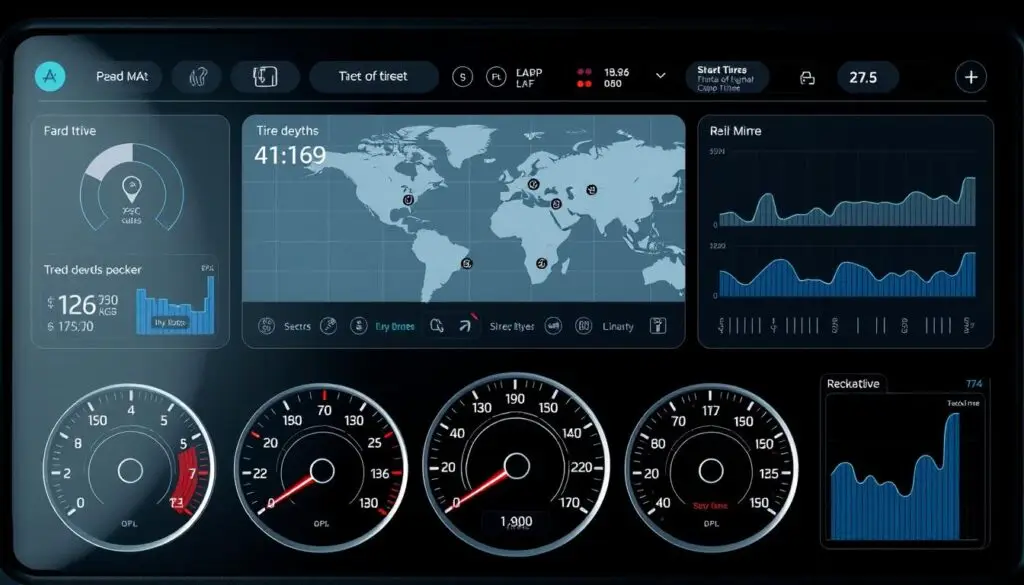
Modern tire management software platforms capture data automatically at each service touchpoint. Service technicians scan tire identifiers using mobile devices, recording pressure readings, tread depth measurements, and visual inspection results. This information flows directly into central databases without manual transcription.
The visibility these systems provide transforms operational capabilities. Fleet managers access real-time dashboards showing tire status across their entire operation. They identify vehicles approaching maintenance intervals, track tire inventory levels, and spot performance trends that indicate systemic issues.
“Companies that implement comprehensive tire management systems typically reduce tire-related costs by 15-25% within the first year through improved maintenance compliance and extended tire life.”
— Fleet Technology Consultant
Key Features to Look for in Tire Management Platforms
Fleet managers evaluating tire management software should prioritize specific capabilities that deliver operational value. The most effective solutions combine real-time monitoring, predictive analytics, and detailed cost tracking in integrated platforms.
Real-Time Monitoring Capabilities
Integration with Tire Pressure Monitoring Systems represents a fundamental requirement for modern platforms. Real-time pressure and temperature data from wireless sensors flows continuously into tire management software, creating instant visibility into tire conditions across the fleet.
Automated alerting functionality distinguishes advanced platforms from basic tracking systems. When pressure readings fall below or rise above specified thresholds, the software generates immediate notifications to maintenance personnel and fleet managers.
Temperature monitoring provides additional safety benefits. Abnormally high tire temperatures often indicate developing problems such as improper inflation, overloading, or brake issues. Early detection prevents blowouts and extends tire life by addressing root causes promptly.
Predictive Maintenance Alerts
Advanced predictive maintenance capabilities separate sophisticated platforms from simple record-keeping systems. These solutions analyze historical patterns to forecast when individual tires will require service interventions. Machine learning algorithms process data including mileage accumulation, wear rates, pressure trends, and seasonal factors to generate accurate predictions.
The software schedules tire rotations based on actual wear patterns rather than fixed mileage intervals. This data-driven approach optimizes rotation timing, ensuring even wear without excessive service events.
Replacement forecasting helps fleet managers plan purchasing activities and budget allocation. The software projects when tires will reach removal criteria based on current wear rates, enabling advance procurement that takes advantage of favorable pricing opportunities.
Cost Analysis and Reporting Tools
Comprehensive financial tracking capabilities transform tire data into actionable business intelligence. Effective platforms calculate cost-per-mile metrics for individual tires, tire positions, and entire vehicles. These calculations incorporate purchase prices, mounting costs, maintenance expenses, and pro-rated values for retreading and disposal.
Tire analytics dashboards present performance comparisons across multiple dimensions. Fleet managers evaluate different tire brands, compare vendor pricing and service quality, and assess how various vehicle applications affect tire longevity.
Budget forecasting features use historical data and predictive models to project future tire expenses. These projections help financial planners allocate resources accurately and identify opportunities for additional cost reductions.
Strategy 5: Optimize Tire Selection and Purchasing
Effective tire purchasing strategy begins with understanding that the cheapest option rarely delivers the lowest total cost. The decisions made during procurement affect fleet expenses for the next three to five years. Smart tire selection combined with strategic vendor relationships creates savings that multiply across entire operations.
Fleet managers who treat tire purchasing as a strategic function rather than a simple transaction reduce costs by 12-18% annually. This approach requires analyzing performance data, standardizing on proven products, and leveraging purchasing power.
Matching Tire Specifications to Vehicle Applications
Application-appropriate tire selection represents one of the highest-return decisions in fleet management. A tire designed for long-haul highway service performs poorly in regional delivery applications. Similarly, tires optimized for vocational work waste money when used for over-the-road operations.
Tire selection processes should evaluate several critical specification factors. Load rating requirements must provide adequate capacity with appropriate safety margins. Tread design must match primary operating surfaces and weather conditions.
Compound formulations balance wear life against traction requirements. Softer compounds deliver better grip but wear faster. Harder compounds extend service life but may sacrifice wet-weather performance.
Consider these key factors when matching tire specifications to operations:
- Calculate actual loads including cargo, fuel, and equipment to ensure adequate ratings
- Highway, regional, urban, or off-road environments require different tread patterns
- Temperature ranges and precipitation levels affect compound selection
- Casing quality determines how many lifecycles operations will achieve
- Low rolling resistance designs reduce fuel consumption by 3-5%
Strategic Vendor Relationships and Bulk Purchasing
Volume purchasing leverage delivers substantial savings that individual transactions cannot match. Fleets that consolidate tire purchases with fewer suppliers negotiate better pricing, service terms, and support. Strategic vendor relationships transform procurement from transactional to partnership-based.
Establishing multi-year contracts locks in favorable pricing and protects against market volatility. These agreements provide budget predictability while securing preferential treatment during supply shortages.
Standardizing on high-performing brands based on real-world results simplifies inventory management. Fewer SKUs reduce carrying costs and minimize the risk of wrong-tire installation. Standardization also strengthens negotiating positions with preferred suppliers.
National Account Programs
National account programs offer significant advantages to fleets meeting minimum volume thresholds. Major tire manufacturers and distributors structure these programs to reward large customers with preferential treatment. Typical benefits include 8-15% cost reductions compared to transactional pricing.
These programs provide streamlined billing across all locations, eliminating the administrative burden of managing multiple vendor accounts. Standardized service protocols ensure consistent quality whether trucks need service in California or Connecticut.
National accounts often include performance guarantees that protect investments. If specified tire models fail to achieve promised mileage under normal operating conditions, suppliers credit the difference. This risk-sharing arrangement aligns manufacturer and fleet interests.
Balancing Upfront Costs with Total Cost of Ownership
Total cost of ownership provides the framework for valid comparison between tire options with different purchase prices. This calculation methodology accounts for acquisition costs, expected lifespan, fuel efficiency characteristics, and retreadability.
Consider a comparison between two steer tire options. Tire A costs $425 and delivers 120,000 miles before removal. Tire B costs $490 but achieves 150,000 miles with superior fuel efficiency. Simple math shows Tire B delivers better value despite the higher upfront cost.
| Cost Factor | Economy Tire | Premium Tire | Difference |
|---|---|---|---|
| Initial Purchase Price | $385 | $465 | +$80 |
| Expected Original Mileage | 110,000 miles | 145,000 miles | +35,000 miles |
| Number of Retreads | 2 cycles | 3 cycles | +1 cycle |
| Total Lifecycle Mileage | 290,000 miles | 415,000 miles | +125,000 miles |
| Cost Per Mile | $0.0238 | $0.0179 | -$0.0059 |
This comparison demonstrates how procurement decisions based solely on purchase price optimization often increase total tire expenses. The premium option delivers 25% lower cost per mile despite costing 21% more initially. Across a 100-truck fleet, this difference saves $73,000 annually.
Strategy 6: Train Drivers on Tire-Conscious Driving Habits
Behind every successful tire management program stands a team of trained drivers who understand how their daily habits directly impact tire costs. Even the most advanced monitoring systems and maintenance protocols cannot overcome the destructive effects of poor driving habits that accelerate tire wear and increase fleet operating expenses.
Research demonstrates that fleets with comprehensive driver training programs achieve 20-35% longer tire longevity compared to operations where driver behavior goes unmanaged. This translates to annual savings of $300-500 per vehicle in tire costs alone.
How Driving Behavior Affects Tire Longevity
The mechanical relationship between driver behavior and tire wear follows predictable patterns that fleet managers can address through targeted education. Aggressive acceleration applies excessive torque that spins drive tires and ablates tread rubber. This slippage generates heat and removes material from the contact patch at accelerated rates.
Hard braking creates flat-spotting and accelerated wear, particularly on steer tires. Emergency stops subject tire compounds to extreme forces that create localized wear patterns and compromise structural integrity.
Excessive speed generates heat that degrades tire compounds and internal structures. Driving at 70 mph uses 15% more fuel than 50 mph, while 80 mph consumes 25% more than 70 mph. These elevated speeds also increase tire operating temperatures beyond design specifications, leading to accelerated compound degradation and reduced service life.
Aggressive cornering scrubs tire shoulders and creates irregular wear patterns that require early tire removal. The lateral forces applied during sharp turns at high speeds exceed the tire’s designed load capacity, causing premature shoulder wear and compromising vehicle stability.
Essential Training Topics for Driver Education
Effective driver training for tire conservation requires comprehensive curriculum development that addresses multiple operational aspects. Fleet safety programs should integrate tire care into broader vehicle operation education rather than treating it as an isolated topic.
The most successful training initiatives combine classroom instruction with practical demonstration and ongoing reinforcement. New hire onboarding should include dedicated tire care components, with regular refreshers incorporated into safety meeting agendas throughout the year.
Proper Acceleration and Braking Techniques
Gradual throttle application brings vehicles up to speed without tire slippage or excessive wear. Drivers should apply steady, progressive pressure that allows tires to grip the road surface without spinning. This technique preserves tread rubber and extends tire service life significantly.
Anticipatory braking uses engine retarding and gradual brake application rather than emergency stops. Training should emphasize reading traffic patterns ahead and beginning deceleration early. This approach reduces brake temperatures, minimizes tire flat-spotting, and improves fuel efficiency.
Appropriate following distances reduce panic braking frequency and allow for smooth speed adjustments. Maintaining 4-6 seconds of following distance at highway speeds provides adequate reaction time for gradual speed changes that preserve both tire and brake system integrity.
Pre-Trip Tire Inspection Procedures
Visual inspection for damage, cuts, and embedded objects should occur during every pre-trip check. Drivers must examine each tire’s sidewalls, tread surface, and valve stems for visible abnormalities. Any observed damage requires immediate documentation and maintenance notification.
Basic pressure assessment using tire thumpers or pressure gauges helps identify underinflation before it causes damage. While automated tire pressure monitoring systems provide continuous data, driver-conducted checks serve as important backup verification and build awareness of proper tire condition.
Verification of valve cap presence prevents debris contamination and slow leaks. Missing valve caps expose core mechanisms to dirt and moisture that can cause pressure loss. Drivers should report missing caps immediately and carry replacement caps for field installation.
Creating Accountability Through Performance Metrics
Performance measurement systems transform driver training from theoretical education into practical behavioral change. Fleets should track tire-related costs by driver or vehicle assignment to identify patterns and opportunities for targeted intervention.
Regular feedback showing individual performance relative to fleet averages creates healthy competition and recognition opportunities. Monthly reports comparing each driver’s tire costs per mile against fleet benchmarks highlight both problem areas and exemplary performance.
Recognition and reward programs for drivers who achieve superior tire life results reinforce positive behaviors. Incentive structures might include bonus payments, recognition at company meetings, or preferential route assignments for drivers who consistently demonstrate excellent tire care practices.
| Training Component | Implementation Method | Measurement Metric | Expected Improvement |
|---|---|---|---|
| Acceleration Control | Classroom instruction with simulator practice | Fuel consumption rate per mile | 10-15% reduction in drive tire wear |
| Braking Techniques | On-road coaching with telematics feedback | Hard braking events per 1,000 miles | 20-25% longer steer tire life |
| Speed Management | Policy enforcement with GPS monitoring | Average operating speed vs. posted limits | 8-12% improvement in fuel economy |
| Pre-Trip Inspections | Digital checklists with photo documentation | Inspection completion rate and quality | 30-40% reduction in roadside tire failures |
Fleets that integrate tire-conscious driving habits into their operational culture achieve measurable cost reductions that compound over time. The investment in comprehensive driver training programs typically generates returns within six months through reduced tire replacement frequency, lower fuel consumption, and decreased maintenance expenses.
Measuring ROI from Your Fleet Tire Management Program
Effective tire programs depend on establishing clear metrics that connect operational activities to bottom-line results. Without a systematic measurement framework, fleet managers cannot demonstrate value to leadership or identify opportunities for improvement.
Establishing a comprehensive measurement system transforms fleet tire management from a reactive maintenance function into a strategic advantage. Fleet performance metrics provide the evidence needed to justify program investments and secure budget approval for advanced technologies and training initiatives.
Essential Metrics Every Fleet Manager Should Monitor
The foundation of any tire management measurement program begins with selecting the right tire KPIs to track consistently over time. These indicators provide early warning of developing problems and validate the effectiveness of improvement initiatives.
Average tire removal mileage represents the most fundamental tire KPI for assessing program health. This metric should be segmented by tire position—steer, drive, and trailer—as each location experiences different wear patterns and service life expectations.
The percentage of tires removed for wear versus damage or failure reveals management effectiveness. Higher wear-removal percentages indicate that preventive maintenance programs successfully protect tire investments. When damage removals exceed 20-25% of total removals, the fleet likely faces issues with road hazards, underinflation, or operational practices that require attention.
Retread ratio shows the proportion of retreaded versus new tire purchases across the fleet. Most well-managed operations maintain retread ratios between 40% and 60% depending on application severity.
Tire-related vehicle downtime measured in hours directly impacts revenue generation and customer service. This metric captures both roadside failures and scheduled maintenance delays. Fleets with comprehensive preventive programs typically maintain tire-related downtime below 0.5 hours per vehicle per month.
| Performance Indicator | Target Range | Warning Threshold | Primary Improvement Lever |
|---|---|---|---|
| Steer Tire Removal Mileage | 125,000-150,000 miles | Below 100,000 miles | Pressure management, alignment |
| Drive Tire Removal Mileage | 175,000-225,000 miles | Below 150,000 miles | Rotation, driver training |
| Wear-Based Removal Percentage | 75-85% | Below 70% | Preventive maintenance frequency |
| Retread Ratio | 40-60% | Below 30% or above 70% | Casing inspection, purchasing strategy |
The Mathematics Behind Total Tire Expenses
Calculating cost per mile provides the single most valuable metric for evaluating tire program performance. This calculation consolidates all tire-related expenses into a standardized figure that enables meaningful comparisons across time periods, vehicle types, and operational strategies.
The comprehensive cost per mile calculation includes multiple expense categories that many fleets initially overlook. New tire purchases represent the most obvious component, but complete analysis must also incorporate retreading costs, mounting and balancing fees, disposal charges, and alignment services.
Fleet managers should use this formula for accurate cost per mile calculation:
- Total Tire Costs = New tire purchases + Retreading expenses + Mounting/balancing + Disposal fees + Alignment services + TPMS maintenance + Software costs + Allocated labor
- Cost Per Mile = Total Tire Costs ÷ Total Fleet Miles During Measurement Period
- Variance Analysis = Current Period CPM – Baseline Period CPM
Monthly calculation with quarterly detailed analysis provides the optimal measurement frequency for most fleets. Monthly tracking identifies emerging trends quickly while quarterly reviews allow for deeper investigation of variance drivers.
Comparing Your Performance Against Industry Peers
Fleet benchmarking provides essential context for evaluating whether tire program performance meets reasonable expectations. Understanding how similar operations perform helps identify both achievement gaps and competitive advantages.
Representative cost per mile ranges vary significantly by fleet application and operating environment. Line-haul trucking operations typically achieve tire costs between $0.025 and $0.035 per mile, while regional delivery fleets with frequent stops and urban operation often experience costs between $0.035 and $0.050 per mile.
Regional differences create substantial variation in baseline expectations. Fleets operating in northern climates face winter tire requirements and road condition challenges that increase costs. Western mountain operations experience brake and tire wear patterns distinct from flatland routes.
Multiple sources provide application-specific fleet benchmarking data that enables meaningful comparison. Industry associations like the American Trucking Associations publish annual operating cost surveys with detailed tire expense breakdowns. Tire manufacturers maintain benchmarking programs that compare customer performance against similar fleet profiles.
“Benchmarking is valuable, but the most important competition is with yourself. Fleets that focus on beating their own previous year’s performance typically achieve better results than those obsessed with matching industry leaders.”
— Fleet Operations Consultant
The most valuable comparisons occur against the fleet’s own historical performance rather than external benchmarks. A fleet currently performing at the 60th percentile relative to industry standards should focus on continuous improvement toward the 70th percentile rather than becoming discouraged by not reaching top-quartile performance immediately.
Conclusion
Effective fleet tire management requires commitment to systematic execution across all six strategies. Pressure monitoring, rotation schedules, retreading programs, software solutions, strategic purchasing, and driver training work together to create measurable financial impact.
Fleets implementing comprehensive tire cost reduction strategies achieve 15-30% reductions in tire-related operating expenses. The financial returns typically reach 300-500% ROI within the first year for operations transitioning from reactive to proactive management approaches.
Success depends on several critical factors. Senior leadership must prioritize tire care as a strategic initiative. Data collection systems provide visibility into performance metrics. Clearly defined processes ensure consistent execution across every vehicle. Technology adoption automates routine tasks while generating actionable insights.
Fleet efficiency optimization through tire management requires upfront investment in systems and training. The returns justify these expenditures through extended tire life, improved fuel economy, reduced downtime, and lower total cost of ownership.
Start by assessing current practices against the strategies outlined. Identify gaps offering the greatest improvement potential. Develop a phased implementation plan addressing high-priority opportunities first. This systematic approach transforms fleet tire management from a cost center into a competitive advantage.
Share Your Expertise
Join Heavy Duty Journal as a guest author and reach thousands of industry decision-makers.
Frequently Asked Questions
What percentage of total fleet operating costs do tires typically represent?
For a typical heavy-duty fleet, tire costs represent approximately 8-15% of the total operating budget when including all related expenses such as purchase, maintenance, mounting and balancing, disposal fees, and vehicle downtime during tire service. This makes tires consistently the second or third largest operational expense category after fuel and labor, which is why strategic tire management delivers such substantial impact on fleet profitability.
How much fuel economy can I lose from underinflated tires?
Just 10 PSI underinflation can reduce fuel economy by approximately 2%, which translates to significant expense across an entire fleet. For a 100-vehicle fleet averaging 100,000 miles annually, maintaining proper inflation can save $50,000-75,000 in fuel costs alone. Beyond fuel consumption, underinflation causes excessive heat buildup that degrades tire structure and creates irregular wear patterns that dramatically shorten tire lifespan.
How often should heavy-duty trucks have their tires rotated?
Heavy-duty trucks should have tire rotations performed every 25,000-50,000 miles depending on vehicle application and operating conditions. Severe-duty applications warrant more frequent intervals at the lower end of this range. Properly executed rotation programs can extend total tire life by 20-30% compared to running tires in fixed positions until removal, as rotation distributes wear patterns across multiple tires and prevents any single tire from reaching wear-out criteria prematurely.
Are retreaded tires as safe and reliable as new tires?
Yes, when properly manufactured and applied, quality retreaded tires perform comparably to new tires. Industry data demonstrates that tire failures correlate more strongly with maintenance practices than with new versus retreaded status. Retreaded tires cost 30-40% of comparable new tire prices while delivering 80-90% of new tire mileage when properly applied. The key is working with reputable retreading operations that follow rigorous inspection, preparation, and quality control protocols.
Which tire positions are best suited for retreaded tires?
Drive axle and trailer positions are optimal applications for quality retreaded tires, as these positions generally experience more predictable wear patterns and less severe operating conditions than steer axles. Most fleets use new tires on steer positions to ensure maximum reliability in the most critical location, while retreads on drive and trailer positions deliver excellent performance at substantially lower cost. This strategic positioning allows fleets to achieve optimal retread ratios typically ranging from 40-60% retreads across the entire tire population.
What return on investment can I expect from implementing tire pressure monitoring systems?
Fleets implementing rigorous pressure monitoring—whether through disciplined manual checking protocols or automated Tire Pressure Monitoring Systems—typically see 2-3% fuel economy improvement and 15-25% increase in tire lifespan. The payback period ranges from 6-18 months depending on fleet size and existing pressure management practices. For larger fleets, automated TPMS provides continuous monitoring with real-time alerts that enable immediate intervention, delivering greater returns than manual checking which cannot detect pressure loss between scheduled inspections.
How can I tell if a vehicle needs an alignment check?
Several indicators suggest that a vehicle requires alignment evaluation: irregular or accelerated tire wear patterns (particularly uneven shoulder wear, feathering, or one-sided wear), vehicle pulling to one side during operation, steering wheel off-center when traveling straight, or after any incident involving curb strikes, pothole impacts, or front-end collisions. Proactively, alignment should be checked every 50,000 miles and any time tires are rotated or replaced. Improper alignment can reduce tire life by 25-50% in severe cases, making timely correction essential to tire longevity.
What criteria determine whether a tire casing qualifies for retreading?
Not all removed tires qualify as retread candidates. Acceptable casings must meet several criteria: sufficient remaining casing thickness to withstand the retreading process, absence of belt separation or structural damage that compromises integrity, removal at proper mileage before excessive casing degradation occurs, sound crown condition without deep penetrations or repairs in critical areas, and intact sidewalls without cuts, cracks, or weather damage. Reputable retreading operations conduct thorough inspections using visual examination, equipment-based testing, and experienced technician evaluation.
What essential capabilities should I look for in tire management software?
Effective tire management platforms should provide several core capabilities: real-time monitoring integration with TPMS that continuously tracks pressure and temperature with automated alerting, predictive maintenance analytics that forecast when individual tires will require rotation or replacement based on historical patterns, comprehensive cost analysis and reporting including cost-per-mile calculations by tire position and vehicle, complete lifecycle tracking from acquisition through disposal for every tire, vendor performance comparisons, and customizable dashboards that provide visibility into tire program performance.
How much can driver training actually impact tire costs?
The impact of driver behavior on tire longevity is substantial and often underestimated. Fleets with trained, conscientious drivers achieve 20-35% longer tire life compared to fleets where driving behavior goes unmanaged, representing annual savings of $300-500 per vehicle in tire costs alone. Destructive behaviors including aggressive acceleration that spins tires, hard braking that creates flat-spotting, excessive speed that generates degrading heat, and aggressive cornering that scrubs tire shoulders all dramatically accelerate tire wear.
What is the most important metric for evaluating tire program performance?
Total tire cost per mile is the single most important metric for evaluating tire program effectiveness. This calculation includes all tire-related expenses—new tire purchases, retreading costs, mounting and balancing, disposal fees, alignment services, pressure monitoring system costs, and allocated shares of management software and staff time—divided by total fleet miles during the measurement period. This comprehensive metric enables valid comparison between different tire brands, validates program improvement investments, and identifies cost reduction opportunities.
Should I prioritize the lowest purchase price when buying tires?
No, procurement decisions based solely on lowest purchase price typically increase rather than decrease total tire expenses. The critical evaluation framework is total cost of ownership, which considers purchase price, expected lifespan, fuel efficiency characteristics, and retreadability. For example, a tire with 15% higher acquisition cost but 25% longer life and one additional retread cycle delivers substantially better value than a cheaper alternative with shorter service life.
Do I need to implement all six strategies simultaneously, or can I phase them in?
While the six strategies work synergistically and deliver maximum value when implemented as an integrated system, phased implementation is both practical and recommended for most fleets. Conduct an honest assessment of current tire management practices against the strategies presented, identify the gaps offering greatest improvement potential based on the specific situation, and develop a phased implementation plan that addresses the highest-priority opportunities first. Many fleets begin with pressure monitoring and driver training as foundational elements that deliver immediate returns.
What documentation should I maintain for an effective tire program?
Comprehensive tire programs require systematic documentation across multiple categories: complete tire lifecycle records tracking each tire from acquisition through disposal including all rotations, repairs, and retreading, rotation logs documenting dates, mileage, and tire positions for each service event, photographic wear pattern documentation to identify vehicles requiring alignment attention, pressure check records showing dates, measurements, and corrections made, alignment service records with before-and-after specifications, vendor service documentation including costs and work performed, and removal records indicating reason for tire takeoff and remaining tread depth.
Share This Article
Share this post with your network and help other industry professionals stay informed.