By Michael Nielsen, Editor & Publisher | 15+ Years in Diesel Repair
Last Updated: December 2025
📖 Estimated reading time: 18 minutes
The used truck market in 2025 presents distinct opportunities for fleet operators and owner-operators navigating complex equipment purchasing decisions. With Class 8 retail pricing averaging approximately $54,160 according to ACT Research data, understanding current pricing dynamics can yield savings of thousands of dollars on each acquisition. Market conditions have stabilized following several years of volatility, creating favorable conditions for informed buyers.
Commercial truck values fluctuate based on regional demand, emissions compliance requirements, and supply chain factors. Whether managing a regional fleet or running an independent hauling operation, making informed purchase decisions requires analyzing multiple variables beyond the sticker price. This comprehensive analysis examines used truck market trends, providing data-driven insights on pricing patterns, resale value retention, and strategic timing for equipment acquisition.
Key Takeaways
- Market Stabilization: Class 8 used truck transactions reached approximately 185,000 units in Q1 2025, up 7% year-over-year with depreciation returning to historically typical rates of 2% monthly
- Regional Price Gaps: California and West Coast markets command $10,000-$20,000 premiums for CARB-compliant units compared to Midwest pricing
- Strategic Timing: Winter purchases (January-February) can yield 10-15% savings compared to peak demand periods, with quarter-end windows offering additional 5-8% advantages
- Mileage Thresholds: Units below 250,000 miles qualify for conventional financing; value declines accelerate significantly beyond 500,000 miles
- Total Cost Focus: Financing terms, emissions compliance costs, and total cost of ownership calculations often outweigh initial purchase price considerations
Current State of the Used Truck Market in 2025
The pre-owned truck inventory landscape in 2025 demonstrates distinct patterns that differentiate this year from historical market cycles. The secondary market for commercial trucks has entered a stabilization phase following several years of post-pandemic volatility, with buyers and sellers navigating conditions shaped by improved supply chains, steady freight demand, and normalized production schedules from major manufacturers.
According to preliminary ACT Research data, the used truck market recorded approximately 185,000 Class 7-8 vehicle transactions during the first quarter of 2025, representing a modest 7% increase compared to the same period in 2024. Fleet truck sales account for roughly 62% of total market volume, with large carriers systematically cycling equipment at predetermined intervals. The remaining 38% comes from owner-operator sales, small business liquidations, and lease returns.
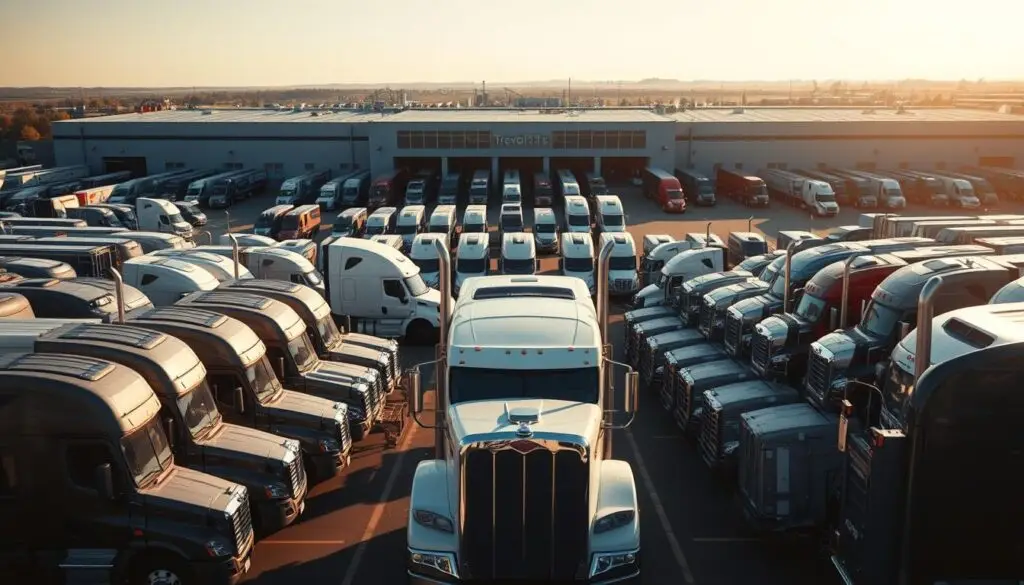
Inventory availability has normalized significantly, with current dealer stock levels at approximately 47,000 units nationwide for Class 7-8 trucks. This represents a 19% increase from the previous year and approaches historical average inventory ratios. Regional concentrations align with major freight corridors, with the Midwest maintaining the highest per-capita inventory due to agricultural and manufacturing transportation needs.
| Region | Available Inventory | Avg Days on Market | YoY Change |
|---|---|---|---|
| Midwest | 14,200 | 32 days | +22% |
| Southeast | 11,800 | 28 days | +18% |
| West Coast | 9,400 | 35 days | +15% |
| Northeast | 7,100 | 41 days | +12% |
Fleet operators and owner-operators demonstrate distinctly different purchasing behaviors in the current market. Large fleet buyers prioritize standardized specifications, warranty coverage, and volume discounts when acquiring equipment. Owner-operators focus heavily on total cost of ownership calculations and immediate operational reliability. Current conditions favor buyers with flexible timing who can wait for optimal opportunities rather than purchasing under immediate operational pressure.
Key Pricing Trends in Heavy-Duty Truck Values
Pricing intelligence separates successful truck buyers from overpayers, with thousands of dollars at stake depending on class specifications and regional market conditions. The 2025 market demonstrates clear valuation patterns reflecting equipment age, usage intensity, and geographic demand variations that experienced buyers leverage for competitive advantage.
Average Price Points by Truck Class
Class 8 heavy-duty tractors command the highest values in the used equipment market. Three to five-year-old over-the-road tractors typically range from $55,000 to $95,000 depending on mileage and specifications. Day cab configurations generally price $8,000 to $12,000 lower than sleeper equivalents due to more limited application flexibility. Trucks equipped with premium powertrains from Cummins, Detroit Diesel, or PACCAR command premiums of $5,000 to $10,000 over standard configurations.

Class 7 medium-heavy trucks occupy a distinct pricing segment, typically ranging from $35,000 to $65,000 for three to six-year-old units. These trucks serve delivery, utility, and municipal applications where Class 8 capabilities exceed operational requirements, creating strong demand from e-commerce expansion and last-mile delivery growth.
$54,160
Average retail price for used Class 8 trucks, October 2025 — ACT Research
Depreciation Patterns and Value Retention
New trucks experience their steepest value decline during the first 12 to 18 months of service, typically losing 25% to 35% of original MSRP. Depreciation rates stabilize after the third year, with annual value declines moderating to 8% to 12% for well-maintained units. Five-year-old Class 8 tractors with 400,000 to 500,000 miles typically retain 35% to 45% of their original purchase price.
The three to seven-year window represents the sweet spot for used truck transactions. These units have absorbed the steepest depreciation but still offer substantial service life remaining. Seven-year-old units approach a valuation plateau where depreciation slows considerably, typically retaining 20% to 30% of original value regardless of additional mileage accumulation.
J.D. Power market analysis confirms that 2025 depreciation has returned to historically typical rates. Four to six-year-old sleepers now depreciate at approximately 2% monthly, compared to the 4-8% monthly depreciation rates experienced during the 2022-2023 market correction period.
Regional Price Variations
Identical trucks command vastly different prices depending on geographic location, with variations often exceeding $15,000 between high and low-cost markets. California, Washington, and Oregon consistently demonstrate the highest used truck prices in the continental United States. Three-year-old Class 8 tractors routinely command $8,000 to $15,000 more than equivalent Midwest units.
Stringent California Air Resources Board (CARB) regulations create equipment shortages by restricting which trucks can legally operate within the state. This regulatory scarcity drives pricing upward for compliant units, with premiums reaching $10,000 to $20,000 for EPA 2010 and newer engines that meet California’s truck and bus regulation requirements.
States throughout the Midwest and South offer more favorable acquisition costs for buyers willing to transport equipment. Greater inventory availability and less stringent emissions requirements create competitive pricing pressure. Buyers can typically save $10,000 to $18,000 on comparable units compared to Western markets, though they must factor transportation costs and verify equipment will meet their operational jurisdiction requirements.
Stay Ahead of Market Shifts
Get weekly pricing analysis, equipment reviews, and fleet management strategies from industry experts.
Critical Factors Influencing Used Truck Prices
Multiple interconnected factors determine why two seemingly identical heavy-duty trucks can carry significantly different price tags in today’s marketplace. Beyond basic considerations like age and visual condition, commercial vehicle pricing reflects technical specifications, operational history, and regulatory compliance requirements that affect both immediate usability and long-term ownership costs.
Mileage Benchmarks and Valuation Impact
Accumulated miles serve as one of the most significant indicators of remaining equipment lifespan and value. The first major threshold occurs at approximately 250,000 miles, where units below this mark typically qualify for conventional financing and attract the broadest buyer pool. Lenders view these trucks as presenting acceptable collateral risk.
The second critical benchmark arrives at 500,000 miles, where depreciation curves steepen considerably and financing becomes more restrictive. Beyond 750,000 miles, valuations drop sharply as major component failures—including in-frame overhauls, transmission rebuilds, and aftertreatment system replacements—become statistically probable based on component lifecycle data.
The type of miles accumulated matters as much as the total count. Highway miles from over-the-road operations generate less component wear than urban delivery miles with constant acceleration, braking, and idling. A truck with 500,000 highway miles may present better value than one with 350,000 city delivery miles that stressed engines, transmissions, and brake systems more severely through stop-and-go operation.
Documentation and Certification Value
Complete maintenance records represent one of the most valuable assets accompanying used equipment. Buyers gain confidence from documented service intervals, component replacements, and systematic preventive care programs. Trucks with comprehensive history files typically command premium valuations of 5-10% compared to equivalent units lacking documentation.
Certified pre-owned programs from manufacturers and major dealership networks provide structured assurance that justifies higher prices through reduced buyer risk. Multi-point inspections, reconditioning services, and limited warranty coverage address common concerns about used equipment condition. The investment in certified pre-owned programs typically adds 8-12% to purchase prices but delivers measurable value through reduced maintenance expenses, improved uptime, and enhanced financing terms.
Emissions Compliance and Technology Requirements
Regulatory compliance creates distinct value tiers within the used truck marketplace. Engine technology generations reflect Environmental Protection Agency mandates that fundamentally altered diesel powertrains over the past two decades.
| Engine Era | Technology Features | Market Position | Price Premium |
|---|---|---|---|
| Pre-2007 | No aftertreatment systems | Budget segment, declining demand | Baseline |
| 2007-2009 | DPF, early EGR systems | Value tier with reliability concerns | 5-10% below 2010+ |
| 2010-2013 | SCR with DEF systems | Mainstream acceptance, California minimum | 15-20% above pre-2007 |
| 2014-Current | Refined SCR, improved efficiency | Premium segment | 25-35% above pre-2007 |
Advanced technology packages increasingly influence valuations beyond emissions compliance. Automated manual transmissions deliver fuel savings of 2-5% and reduce driver fatigue, making them highly desirable in the used market. Units equipped with these systems command 10-15% premiums over manual transmission equivalents. Collision mitigation systems, adaptive cruise control, and lane departure warnings represent safety technologies that enhance equipment value as insurance companies offer premium discounts for these features.
⚠️ CARB Compliance Alert
As of January 2023, all diesel trucks over 26,000 pounds GVWR must have 2010 or newer engines to operate legally in California. The Clean Truck Check program, effective October 2024, requires periodic emissions compliance testing for vehicles over 14,000 pounds GVWR operating in the state, including out-of-state vehicles.
Brand Reputation and Performance Records
Manufacturer reputation creates pricing hierarchies that persist throughout equipment lifecycles. Historical reliability data influences buyer confidence and willingness to pay premium prices. Manufacturers with established records for million-mile engine performance and minimal unscheduled maintenance enjoy strong resale positioning that translates to lower total cost of ownership for buyers.
Parts availability represents a crucial consideration affecting long-term ownership costs. Brands with extensive dealer networks and readily available components minimize downtime when repairs become necessary. Warranty transferability and remaining coverage periods add tangible value to used equipment purchases, particularly for trucks still within original warranty windows.
Resale Values by Truck Category
Different heavy-duty truck categories maintain distinct resale value patterns based on application-specific factors and industry demand cycles. Understanding these segment-specific dynamics helps buyers identify optimal opportunities and sellers position equipment appropriately for maximum return.
Over-the-Road Tractors
Class 8 tractors represent the largest segment of the used truck market, with pricing most sensitive to freight market conditions. Sleeper-equipped units designed for cross-country hauling typically command 15 to 25 percent premiums over comparable day cab models due to their versatility and broader buyer appeal. Over-the-road tractor pricing fluctuates more dramatically than any other segment during freight market cycles.
Day cab tractors used in regional and local operations demonstrate more stable pricing patterns than their sleeper counterparts. Their values correlate with regional economic activity rather than national freight trends, creating geographic price variations exceeding 30 percent between strong and weak markets. Fleets operating in manufacturing-heavy regions typically find stronger day cab demand.
Medium-Duty and Vocational Equipment
Class 7 trucks in the 26,000 to 33,000-pound gross vehicle weight range serve diverse applications that insulate them from the volatility affecting heavier equipment. Delivery-configured trucks with box bodies and liftgates experience particularly strong secondary market demand driven by e-commerce growth. A well-maintained 2020 Class 7 delivery truck with documented service history typically retains approximately 65 to 70 percent of original value, outperforming most Class 8 tractors.
Vocational truck pricing for dump trucks, aggregate haulers, and heavy construction equipment follows infrastructure spending and building activity cycles more than general freight conditions. Tri-axle dump trucks with 20-cubic-yard bodies command significant premiums over tandem-axle configurations due to payload advantages. Specialized vocational equipment with purpose-built configurations like aerial devices or tank bodies maintains particularly strong retention approaching 55-70% due to limited supply and high replacement costs.
| Truck Category | Typical Age Range | Value Retention | Primary Demand Driver |
|---|---|---|---|
| Class 8 Sleeper Tractor | 3-5 years | 45-60% | Freight market conditions |
| Class 8 Day Cab | 3-5 years | 50-65% | Regional economic activity |
| Class 7 Delivery | 3-5 years | 65-70% | E-commerce growth |
| Vocational Specialty | 5-7 years | 55-70% | High replacement costs |
Economic Factors Affecting the Market
Beyond the physical condition and specifications of individual units, several industry-wide economic factors exert powerful influence over used heavy-duty truck values in 2025. Understanding these broader forces helps buyers and sellers anticipate market shifts and identify optimal timing for transactions.
Freight Market Conditions
Freight market conditions directly determine how carriers approach equipment acquisition and disposal decisions. When spot market rates climb and contract pricing strengthens, carriers experience improved profitability that enables fleet expansion and equipment upgrades. This increased demand supports used truck values. Conversely, weak freight markets force carriers to contract operations and reduce capacity, flooding the secondary market with surplus equipment and depressing prices.

The Cass Freight Index and other shipping volume indicators provide advance signals of equipment demand shifts that inform timing decisions. Regional freight patterns also influence local market pricing, with corridors experiencing robust manufacturing activity or growing e-commerce distribution maintaining stronger equipment demand than areas dependent on declining industries.
Lending Rates and Production Capacity
Interest rates fundamentally affect equipment affordability and buyer qualification across all market segments. Rising commercial lending rates reduce the pool of qualified buyers and lower the equipment price buyers can afford at any given monthly payment level. When rates decline, expanded buyer pools support stronger values and more competitive bidding for quality equipment.
Commercial truck financing rates in 2025 typically range from 7.5% to 12% depending on borrower creditworthiness, equipment age, and lender programs. These rates significantly impact monthly payment calculations and total cost of ownership over typical 3-6 year financing terms.
The availability of new equipment directly impacts demand for used alternatives. Extended delivery timelines drive buyers to the used market who cannot wait months for new truck delivery. When manufacturers operate at or near capacity limits, order backlogs extend and used equipment values strengthen as buyers compete for immediately available inventory.
The HDJ Perspective
The 2025 used truck market rewards preparation and patience. Buyers who develop relationships with multiple dealers, monitor auction results consistently, and maintain pre-approved financing position themselves to act quickly when optimal opportunities emerge. The current stabilization period offers better negotiating conditions than the volatile 2021-2023 market, but competition for well-documented, low-mileage equipment remains intense. Fleet managers achieving the best acquisition outcomes treat equipment purchasing as an ongoing strategic function rather than a reactive response to immediate capacity needs.
Optimal Purchase Timing Strategies
The used truck market follows distinct seasonal rhythms that create predictable pricing opportunities throughout the calendar year. Market data reveals price variations of 8-15% between peak and off-peak seasons for comparable equipment, representing significant savings for buyers with flexibility.

Winter and Early Spring Advantages
Winter months consistently represent the best time to buy trucks based on decades of market data. Cold weather significantly reduces buyer activity as harsh conditions limit equipment inspections and test drives. Construction activity slows considerably, reducing demand for vocational trucks and creating particularly sharp price reductions for dump trucks and specialized equipment during January and February.
February through early April typically offers the strongest combination of selection and pricing leverage. Buyers can conduct thorough inspections as weather improves while still benefiting from reduced competition and motivated sellers eager to clear winter inventory accumulation. This window often delivers 10-15% savings compared to peak summer pricing.
Quarter-End and Year-End Opportunities
Calendar quarter ends generate particular urgency as dealers push to meet volume targets and qualify for manufacturer incentives. March 31, June 30, September 30, and December 31 represent critical dates when dealerships offer enhanced incentives to close transactions. Year-end represents the most significant opportunity, as inventory reduction directly improves financial statements and reduces tax liability on unsold assets.
| Purchase Timing | Price Advantage | Primary Benefit |
|---|---|---|
| January-February | 10-15% below peak | Lowest annual prices with strong selection |
| Quarter-End Windows | 5-8% below average | Dealership incentives and sales urgency |
| November-December | 8-12% below peak | Year-end clearance and tax planning |
Tax Planning and Auction Cycles
Section 179 expensing provisions allow businesses to deduct the full purchase price of qualifying equipment during the tax year when placed in service. For 2025, businesses can deduct up to $1,250,000 in qualifying equipment purchases, with the deduction phasing out dollar-for-dollar after $3,130,000 in total equipment spending. Heavy-duty trucks over 14,000 pounds GVWR typically qualify for full Section 179 treatment without the SUV limitations that apply to lighter vehicles.
This creates strategic opportunities for buyers who coordinate acquisitions with tax planning objectives, though year-end buying surges can actually increase prices during otherwise favorable periods as demand concentrates. Savvy buyers often complete purchases in late November or early December to benefit from both tax advantages and before peak year-end demand materializes.
Public auction channels provide substantial acquisition opportunities when large equipment volumes enter the market simultaneously. Spring and fall represent peak auction seasons as fleet operators align disposals with replacement cycles. Monitoring auction results through J.D. Power Valuation Services reveals seasonal patterns and valuation benchmarks that inform strategic purchasing decisions.
Top Brands Holding Strong Resale Value
Not all Class 8 trucks depreciate at the same rate. Certain manufacturers have built reputations for producing trucks that command premium prices years after their initial purchase, stemming from factors including parts availability, technician familiarity, reliability track records, and buyer confidence in long-term operational performance.
Market Leaders and Premium Brands
The Freightliner Cascadia continues to set the standard for market share dominance, accounting for more than one-third of all new Class 8 tractor sales. Parts availability remains exceptional across North America through the extensive Daimler dealer network, and technicians know these trucks inside and out. Three to five-year-old Cascadias equipped with Detroit engines and automated transmissions command strong premiums over competing models despite higher initial depreciation rates.
PACCAR’s Kenworth and Peterbilt brands occupy the premium segment with distinct resale advantages. Kenworth T680 models typically show 32-36% depreciation over three years, while Peterbilt 579 counterparts run 33-37%—both significantly outperforming market averages. The T680 continues to attract buyers seeking fuel efficiency combined with durability, while Peterbilt market value remains robust due to build quality reputation and extensive customization options.
| Premium Model | 3-Year Depreciation | Key Value Driver |
|---|---|---|
| ✓ Kenworth T680 | 32-36% | Fuel efficiency, driver comfort, PACCAR support |
| Peterbilt 579 | 33-37% | Build quality, brand loyalty |
| Freightliner Cascadia | 38-42% | Parts availability, market adoption |
| Volvo VNL | 36-40% | Integrated powertrain, safety technology |
Volvo VNL models leverage European engineering heritage to attract buyers prioritizing fuel efficiency and safety technology. Value retention for Volvo trucks has improved substantially over the past decade as North American market share has grown and dealer networks expanded throughout the country.
For vocational applications, Mack Anthem trucks excel where durability matters most in demanding duty cycles. Western Star 5700XE models occupy specialized niches where robust construction commands substantial premiums for logging operations, heavy haul transport, and severe off-highway applications.
Share Your Equipment Buying Experience
Help other fleet professionals navigate the used truck market. Share your acquisition strategies and lessons learned with the HDJ community.
Strategic Buying Recommendations
Making informed purchasing decisions requires understanding the advantages and limitations of different buying channels and financing options. Successful buyers combine thorough evaluation processes with smart financial structuring to maximize equipment value and minimize operational risk throughout the ownership period.
Purchase Channel Selection
Digital truck marketplaces have transformed equipment acquisition by providing nationwide inventory visibility and competitive pricing transparency. Online purchases offer significant price advantages since sellers avoid dealer markup and facility overhead costs. However, evaluating equipment without physical inspection introduces substantial risk that requires mitigation through comprehensive documentation review and third-party inspections.
Traditional used truck dealerships provide physical inspection access, test driving capability, certified pre-owned programs, and simplified paperwork handling. They often maintain relationships with lenders that expedite financing approvals and offer competitive rates. The optimal channel depends on buyer experience level, mechanical expertise, geographic constraints, and risk tolerance.
Pre-Purchase Inspection Essentials
Thorough evaluation before purchase prevents costly surprises that can transform apparent bargains into financial disasters. Professional inspections typically cost between $300 and $800 but can prevent purchasing equipment with thousands in hidden damage or deferred maintenance.
Quick Reference: Critical Inspection Areas
- Engine: Compression testing, oil analysis, coolant condition
- Transmission: Shift quality under load, fluid condition, clutch wear
- Frame: Crack inspection, repair evidence, alignment verification
- Brakes: Lining thickness, drum/rotor condition, air system integrity
- Emissions: DPF condition, DEF system operation, sensor functionality
Documentation review complements physical inspection by revealing ownership history and maintenance patterns. Request complete maintenance records, conduct title searches to verify clean ownership, and obtain vehicle history reports identifying accident involvement or odometer discrepancies. For trucks operating in California, verify CARB compliance status through the TRUCRS system before purchase.
Financing and Total Cost Analysis
Equipment loans from banks, credit unions, and specialized truck financing companies typically require 10-20% down payments with terms extending three to six years. Interest rates in 2025 range from 7.5% to 12% depending on borrower creditworthiness, equipment age, and lender programs. Pre-approval before shopping strengthens negotiating position and accelerates closing.
Cash purchases eliminate interest expense and provide immediate equity but require substantial capital deployment that may affect business liquidity. Leasing preserves working capital and provides fully deductible monthly payments but typically costs more over extended ownership periods and may include mileage restrictions that penalize heavy usage.
Buyers should model scenarios across three to five-year ownership periods to determine true cost differences between financing approaches. These calculations should account for acquisition costs, financing expenses, insurance, fuel consumption based on equipment specifications, anticipated maintenance, residual value projections, and tax treatment impacts including Section 179 deduction eligibility.
Extended warranty options and service contracts reduce downtime risk and budget uncertainty for buyers without in-house maintenance capabilities. Comprehensive warranty programs covering major component repairs typically cost $2,500 to $6,000 annually depending on coverage scope and equipment value. The decision depends on equipment age, application intensity, internal maintenance resources, and risk tolerance.
Frequently Asked Questions
What is the average price for a used Class 8 truck in 2025?
Used Class 8 truck pricing in 2025 varies significantly by age, mileage, and specifications. Three to five-year-old over-the-road sleeper tractors typically range from $55,000 to $95,000. Day cab configurations generally price $8,000 to $12,000 lower than sleeper equivalents. According to ACT Research, the average retail price for used Class 8 trucks reached approximately $54,160 in late 2025, though premium specifications with Cummins, Detroit Diesel, or PACCAR engines can command an additional $5,000 to $10,000.
When is the best time to buy a used semi truck?
Winter months consistently represent the optimal time to purchase used trucks based on market data spanning multiple cycles. January through early April typically offers the strongest combination of inventory selection and pricing leverage, with potential savings of 10-15% below peak summer prices. Quarter-end periods (March 31, June 30, September 30, December 31) also generate dealer urgency to meet volume targets, creating additional negotiation opportunities of 5-8% below average pricing.
How fast do commercial trucks depreciate?
New Class 8 trucks experience their steepest value decline during the first 12 to 18 months, typically losing 25% to 35% of original MSRP. Depreciation rates stabilize after year three, moderating to 8% to 12% annually for well-maintained units. Five-year-old Class 8 tractors with 400,000 to 500,000 miles typically retain 35% to 45% of original purchase price. The 2025 market shows depreciation returning to historically typical levels of approximately 2% monthly after the elevated rates of 2022-2023.
What mileage is too high for a used semi truck?
Mileage thresholds significantly impact used truck values and financing availability. Units below 250,000 miles typically qualify for conventional financing and attract the broadest buyer pool. The 500,000-mile mark represents a critical threshold where depreciation curves steepen and financing becomes more restrictive. Beyond 750,000 miles, valuations drop sharply as major component failures become statistically probable. The type of accumulated miles also matters significantly—highway miles generate less wear than urban delivery miles with constant stop-and-go operation.
Which truck brands hold their value best?
PACCAR brands (Kenworth and Peterbilt) consistently command the strongest resale values in the Class 8 market. The Kenworth T680 typically shows 32-36% depreciation over three years, while the Peterbilt 579 runs 33-37%. Freightliner Cascadia models depreciate 38-42% over the same period but benefit from exceptional parts availability and widespread technician familiarity. Volvo VNL models have shown improved value retention as their North American market presence has expanded, typically running 36-40% over three years.
Do California emissions regulations affect used truck prices?
Yes, California Air Resources Board (CARB) regulations significantly impact used truck pricing nationwide. Trucks operating in California must have 2010 or newer engines to operate legally, creating equipment shortages that drive compliant unit prices $10,000 to $20,000 higher than equivalent trucks in less regulated markets. The Clean Truck Check program, effective in 2024-2025, requires periodic emissions compliance testing for vehicles over 14,000 pounds GVWR operating in California, adding ongoing compliance costs that affect total ownership calculations for both in-state and out-of-state operators running California routes.
Making Informed Equipment Decisions in 2025
The used truck market in 2025 presents favorable conditions for buyers who understand pricing dynamics, timing strategies, and the factors that differentiate valuable equipment from apparent bargains with hidden costs. Success depends on balancing multiple factors rather than focusing solely on acquisition price.
Equipment buyers should evaluate heavy-duty truck prices through a comprehensive lens that considers mileage thresholds, maintenance documentation, emissions compliance status, and manufacturer reputation for long-term reliability. Regional price variations create meaningful differences across major freight corridors, presenting opportunities for buyers willing to expand their search radius and factor transportation costs into total acquisition calculations.
Strategic timing through seasonal patterns, quarter-end incentives, and fleet disposal cycles creates predictable windows for better pricing that prepared buyers can exploit. Thorough pre-purchase inspections and total cost of ownership analysis protect investments by identifying hidden issues before they become expensive surprises. The used truck market will continue evolving throughout 2025 as economic conditions, regulatory requirements, and freight demand shift, but buyers who apply disciplined evaluation methods and negotiate from informed positions will achieve favorable outcomes regardless of broader market conditions.
Share This Analysis
Help other fleet professionals and owner-operators make smarter equipment decisions. Share this market analysis with your network.