
By Michael Nielsen, Editor & Publisher | 15+ Years in Diesel Repair
Last Updated: January 2026
📖 Estimated reading time: 27 minutes
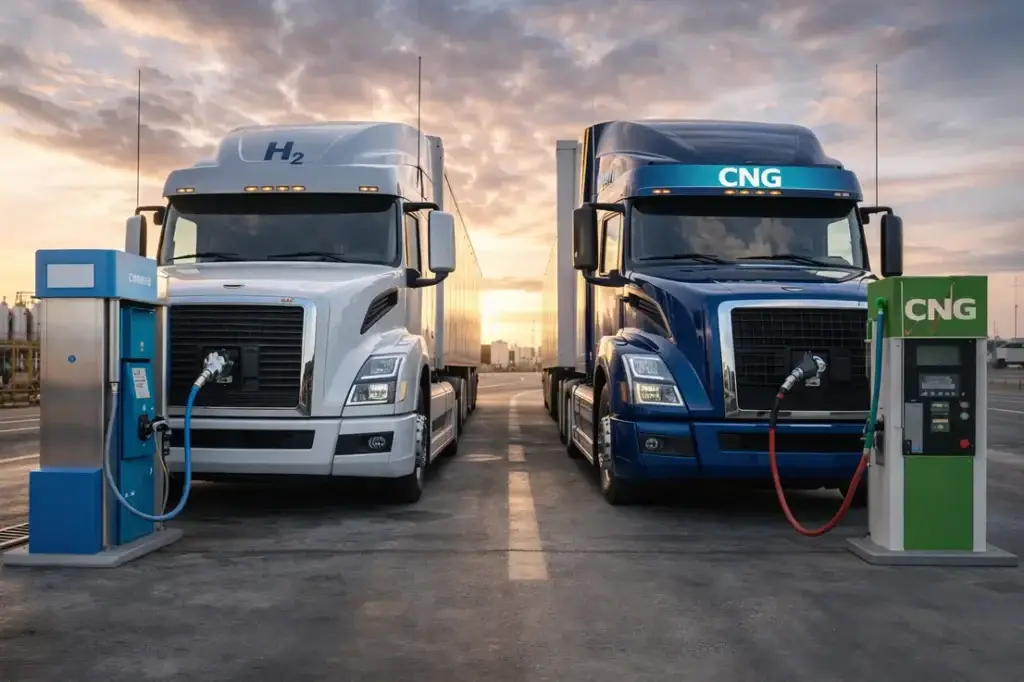
Heavy-duty vehicles account for roughly one-third of all greenhouse gas emissions from road transport in America, placing intense pressure on fleet operators to evaluate hydrogen fuel cell trucks versus natural gas trucks for their decarbonization strategies. Both technologies offer distinct pathways to reduce emissions while maintaining profitability, but choosing between these heavy-duty alternative fuels requires understanding the complete financial picture across vehicle acquisition, infrastructure investment, and operational costs.
This analysis examines the total cost of ownership for both hydrogen and natural gas trucking technologies. Fleet managers will find data-driven insights on ROI modeling, regulatory compliance benefits, and real-world implementation costs. The right choice depends on fleet size, route characteristics, and available infrastructure in your region—understanding these trade-offs positions your operation for success regardless of which technology you select.
Key Takeaways
- Current cost advantage: Natural gas delivers 30-40% fuel savings over diesel today, while hydrogen costs 160-200% more—though hydrogen prices are projected to reach $3-5/kg by 2030.
- Infrastructure investment: CNG stations cost $500K-$1.5M versus $2-4M for hydrogen, with 1,000+ CNG stations nationwide compared to fewer than 60 hydrogen stations.
- Vehicle premiums: Natural gas trucks command $30,000-$50,000 premiums over diesel; hydrogen trucks currently cost $400,000-$500,000 but are projected to drop to 1.4-1.6x diesel pricing by 2030.
- Operational parity: Both technologies maintain 10-20 minute refueling times and comparable maintenance costs to diesel operations.
- Regulatory trajectory: California’s Advanced Clean Trucks mandate requires increasing zero-emission vehicle sales through 2035—hydrogen qualifies as ZEV while natural gas does not.
- Fleet size economics: Small fleets favor natural gas for accessibility; large fleets can justify hydrogen infrastructure investments when combined with available incentives.
The State of Alternative Fuel Trucking in the United States
America’s freight transportation landscape is undergoing fundamental transformation as clean energy technologies gain traction in commercial trucking operations. Fleet managers nationwide are evaluating alternative fuel adoption strategies that balance environmental responsibility with economic viability. The transition from diesel powertrains to cleaner alternatives represents both an opportunity and a challenge for the logistics industry.
The momentum behind zero-emission vehicles continues to build as regulatory frameworks tighten and corporate sustainability commitments intensify. Understanding the current market position of hydrogen and natural gas technologies provides essential context for cost comparisons.

Current Market Adoption Rates
Natural gas trucks have established a significant foothold in North American commercial fleets, with approximately 175,000 natural gas vehicles currently operating across various transportation sectors. The waste management industry leads adoption rates, with major haulers converting substantial portions of their fleets to compressed natural gas technology. Transit agencies and regional delivery operations have similarly embraced natural gas as a proven diesel alternative.
Hydrogen fuel cell trucking remains in early commercial deployment stages. Current estimates place operational hydrogen trucks in the United States at fewer than 500 units, primarily concentrated in California pilot programs. European market projections suggest significant growth potential, with industry analysts forecasting approximately 100,000 hydrogen trucks operating in European markets by 2030—representing less than 2% of the total fleet but indicating growing manufacturer confidence in the technology.
Production scale expectations point toward annual manufacturing capacity reaching 10,000 hydrogen trucks by decade’s end. This scaling will prove critical for reducing per-unit costs and establishing hydrogen as a viable option for fleet decarbonization efforts.
Federal and State Incentive Programs
Government support mechanisms play a decisive role in offsetting the higher acquisition costs of alternative fuel vehicles. Multiple federal and state programs provide substantial financial assistance to fleets transitioning away from diesel power. These clean truck incentives directly impact the total cost calculations that determine adoption feasibility.
The Alternative Fuel Infrastructure Tax Credit offers federal support for refueling infrastructure development, providing tax credits covering up to 30% of installation costs for qualifying natural gas and hydrogen fueling stations. Fleet operators can leverage this incentive to reduce the substantial infrastructure investment required for alternative fuel operations.
California’s Hybrid and Zero-Emission Truck and Bus Voucher Incentive Project (HVIP) represents one of the most generous state-level programs, providing point-of-sale vouchers ranging from $120,000 to $240,000 per heavy-duty zero-emission truck. These vouchers significantly reduce the purchase price premium associated with hydrogen fuel cell vehicles.
| Incentive Program | Program Type | Maximum Benefit | Eligible Technologies |
|---|---|---|---|
| Federal Alt Fuel Infrastructure Tax Credit | Tax Credit | 30% of costs up to $30,000 | Hydrogen, CNG, LNG stations |
| California HVIP | Purchase Voucher | $240,000 per vehicle | Zero-emission trucks including hydrogen |
| EPA Clean Diesel Grant | Direct Grant | Up to $500,000 per project | Natural gas conversions and replacements |
| DOE Clean Cities Program | Grant/Technical Assistance | Varies by project | All alternative fuels and infrastructure |
| New York Truck Voucher Incentive | Purchase Voucher | $185,000 per vehicle | Battery electric and hydrogen fuel cell |
Industry Drivers for Clean Energy Transition
Multiple converging forces compel trucking companies to seriously evaluate zero-emission vehicles and alternative fuel technologies. Regulatory compliance represents the most immediate driver, as emissions standards continue tightening at both federal and state levels. California’s Advanced Clean Trucks regulation mandates that manufacturers sell increasing percentages of zero-emission trucks beginning in 2024.
Corporate sustainability commitments from major shippers create powerful market pressure for clean logistics solutions. Companies including Amazon, Walmart, IKEA, and Anheuser-Busch have pledged to achieve carbon-neutral operations within specified timeframes. These commitments translate into contractual requirements for carriers to demonstrate emissions reductions.
Economic considerations extend beyond regulatory compliance. Fleet operators recognize that alternative fuel adoption strategies position them competitively for future market conditions. Early adopters gain operational experience and technical expertise that will prove valuable as clean energy transitions accelerate. Infrastructure availability concerns represent the primary barrier limiting faster adoption rates—natural gas benefits from approximately 1,600 public CNG stations nationwide, while hydrogen infrastructure remains concentrated in California with fewer than 60 operational stations.
Hydrogen Fuel Cell Technology for Heavy-Duty Trucks
Fuel cell technology has evolved from experimental concept to commercial reality in the heavy-duty trucking segment, with multiple manufacturers now offering production vehicles designed for long-haul applications. Unlike battery-electric vehicles that store energy in heavy battery packs, hydrogen fuel cell trucks generate electricity onboard through a chemical reaction between hydrogen and oxygen. This fundamental difference enables these vehicles to achieve operational ranges of 1,000 to 1,500 kilometers while maintaining payload capacities comparable to diesel trucks.
The commercial viability of hydrogen fuel cell trucks has been demonstrated through real-world operations in Switzerland and Germany, where fleets have accumulated millions of kilometers under diverse operating conditions. These deployments have validated the technology’s reliability for heavy-duty applications exceeding 12 tons, particularly on long-haul routes where battery weight penalties and extended charging times create operational challenges. Fleet operators benefit from refueling times of approximately 15 minutes, matching the convenience of conventional diesel operations.
How Hydrogen Fuel Cells Work in Trucking Applications
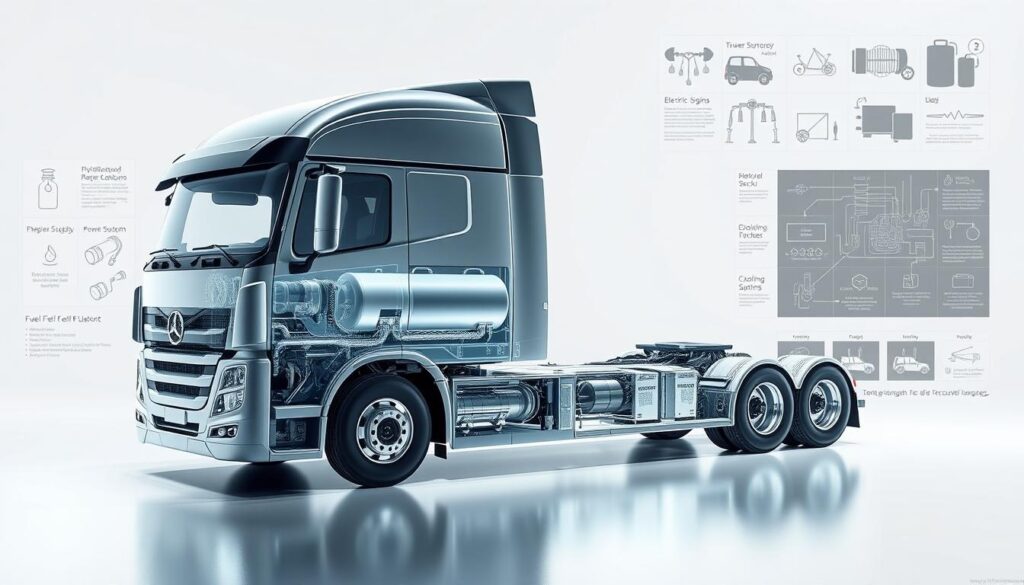
The core of fuel cell technology relies on an electrochemical process that converts hydrogen into electricity without combustion. Hydrogen stored in high-pressure tanks flows into the fuel cell stack, where it encounters a catalyst-coated membrane. At the anode, hydrogen molecules split into protons and electrons, initiating the power generation sequence.
The electrons travel through an external circuit, creating the electrical current that powers the truck’s electric motors and charges a small buffer battery. Meanwhile, protons pass through the polymer electrolyte membrane to the cathode, where they combine with oxygen from the air and the returning electrons. This reaction produces only water vapor and heat as byproducts, achieving zero tailpipe emissions during operation.
For trucking applications, this system delivers several operational advantages over battery-electric alternatives. The energy density of compressed hydrogen allows fuel cell trucks to carry sufficient fuel for extended range without the weight penalty of large battery packs. A typical hydrogen fuel cell truck carries 30 to 80 kilograms of hydrogen, providing energy equivalent to approximately 100 to 270 gallons of diesel fuel.
15 Minutes
Typical hydrogen fuel cell truck refueling time—matching diesel convenience while battery-electric trucks require 90+ minutes for substantial charge replenishment
Green Hydrogen vs Blue Hydrogen vs Gray Hydrogen
The environmental benefits and operational costs of hydrogen fuel cell trucks depend fundamentally on the production method used to generate the hydrogen fuel. The industry categorizes hydrogen by color codes that indicate the production process and associated carbon emissions. Understanding these distinctions is essential for accurate total cost of ownership calculations and environmental impact assessments.
Gray hydrogen represents the current dominant production method, accounting for approximately 95% of global hydrogen production. This process uses steam methane reformation to extract hydrogen from natural gas without capturing the resulting carbon dioxide emissions. Gray hydrogen currently costs between $1.00 and $2.00 per kilogram at scale, making it the least expensive option. However, producing one kilogram of gray hydrogen generates approximately 9 to 12 kilograms of carbon dioxide, significantly undermining the zero-emission benefits of fuel cell vehicles.
Blue hydrogen employs the same natural gas reformation process but incorporates carbon capture and storage technology to sequester 85% to 95% of the CO2 emissions. This production method reduces lifecycle emissions substantially while maintaining relatively moderate costs of $2.00 to $3.00 per kilogram. Blue hydrogen serves as a transitional solution that delivers meaningful emissions reductions without requiring entirely new production infrastructure.
Green hydrogen production represents the ultimate zero-emission solution, using electrolysis powered by renewable electricity to split water molecules into hydrogen and oxygen. This process generates no carbon emissions when powered by wind, solar, or hydroelectric energy. Current green hydrogen costs range from $5.00 to $8.00 per kilogram, though projections indicate prices could drop to $1.40 to $2.30 per kilogram by 2030 as renewable energy costs decline and electrolyzer technology improves.
Current Hydrogen Truck Manufacturers and Models
Several hydrogen truck manufacturers have progressed beyond prototype development to deliver commercial vehicles operating in revenue service. These production models demonstrate the maturity of FCEV heavy-duty technology and provide concrete options for fleet operators evaluating alternative fuel transitions.
The Hyundai XCIENT Fuel Cell leads the industry in operational experience, with vehicles deployed in commercial service since 2020. Swiss fleet operators have accumulated over 5 million kilometers with XCIENT trucks, validating the technology’s reliability for real-world logistics operations. The vehicle features a dual fuel cell system with combined output of 190 kilowatts, paired with a 350-kilowatt electric motor. XCIENT’s hydrogen storage system consists of seven high-pressure tanks holding approximately 32 kilograms of hydrogen at 350 bar pressure, providing an operational range of 400 to 500 kilometers under typical payload conditions.
The Nikola Tre FCEV targets the North American long-haul market with specifications designed to match Class 8 diesel performance expectations. The vehicle incorporates fuel cell technology from Bosch paired with Nikola’s proprietary integration and hydrogen storage systems. Nikola’s design emphasizes extended range capability, with hydrogen storage capacity targeting 1,000 kilometers between refueling stops.
Kenworth’s T680 FCEV brings established truck platform credibility to hydrogen fuel cell technology through integration of Toyota’s proven fuel cell systems. This collaboration combines Kenworth’s expertise in heavy-duty truck design with Toyota’s two decades of automotive fuel cell development. The T680 FCEV incorporates four Toyota Mirai fuel cell modules generating 320 kilowatts of continuous power, with hydrogen storage capacity of approximately 60 kilograms enabling a projected range of 500 to 800 kilometers.
Compressed Natural Gas and Renewable Natural Gas Technologies
While hydrogen captures headlines as the fuel of tomorrow, natural gas engines deliver proven performance today with established infrastructure and competitive economics. Natural gas technologies represent the most commercially mature alternative to diesel in heavy-duty trucking, with thousands of vehicles operating across North America. Fleet operators can choose between two distinct approaches: dedicated natural gas engines or dual-fuel retrofit systems that complement existing diesel powertrains.
Engine Technology and Performance Validation
Two primary engine configurations dominate the natural gas trucking landscape. Dedicated natural gas engines utilize spark ignition designed specifically for natural gas combustion, delivering optimal efficiency and the lowest emissions profile. These purpose-built powertrains operate exclusively on compressed natural gas or renewable natural gas.
The alternative approach employs dual-fuel retrofit systems that enable existing diesel engines to substitute a portion of diesel with natural gas through sequential in-cylinder injection. KAG Canada’s commercial deployment provides compelling validation of dual-fuel technology. Over 3.5 years of operation, their fleet achieved 40.2% diesel displacement with compressed natural gas. This substitution translated directly to an 18% reduction in fuel operating costs while simultaneously delivering a 13% decrease in lifecycle CO2 emissions.
The performance data reveals no engine degradation or increased maintenance requirements throughout the operational period. CNG trucks equipped with dual-fuel systems maintained payload capacity and operational schedules identical to conventional diesel counterparts.
Renewable natural gas represents a significant advancement beyond conventional compressed natural gas. Biomethane produced from organic waste sources—including landfills, wastewater treatment facilities, and agricultural operations—can be processed to pipeline quality and used in identical equipment. RNG trucking achieves carbon-negative lifecycle emissions in many applications because it captures methane that would otherwise enter the atmosphere.
Differences Between Compressed and Liquefied Natural Gas
The LNG vs CNG decision fundamentally shapes infrastructure investment and operational planning. Each format offers distinct advantages that align with specific fleet applications and duty cycles.
Compressed natural gas is stored at approximately 3,600 pounds per square inch in ambient temperature cylinders. The compression process requires less complex equipment, making CNG refueling stations more affordable to install and operate. This format suits regional hauling and return-to-base operations where vehicles refuel at centralized company facilities overnight. CNG fuel capacity typically provides 300-400 miles of range depending on tank configuration and vehicle efficiency. The weight of high-pressure storage cylinders reduces payload capacity by 1,000-2,000 pounds compared to diesel equivalents.
Liquefied natural gas undergoes cryogenic cooling to -260°F, reducing volume by approximately 600 times compared to gaseous state. This dramatic energy density increase enables ranges exceeding 500 miles, making LNG viable for long-haul applications. However, the cryogenic infrastructure requires specialized insulated tanks, transfer equipment, and handling protocols. LNG stations demand significantly higher capital investment—often three to five times the cost of equivalent CNG facilities.
Leading Natural Gas Truck Options
Three major manufacturers offer proven natural gas platforms that demonstrate the technology’s commercial maturity. The Freightliner Cascadia Natural Gas brings alternative fuel capability to North America’s best-selling heavy-duty truck platform, powered by the Cummins Westport ISX12N natural gas engine delivering 320-400 horsepower with up to 1,450 lb-ft of torque.
The Kenworth T880 CNG targets vocational applications that demand durability in demanding conditions, serving construction, heavy haul, and municipal applications. The Peterbilt 579 Natural Gas combines aerodynamic highway efficiency with clean fuel technology, targeting long-haul and regional applications where fuel economy directly impacts profitability.
| Model | Engine Options | Horsepower Range | Primary Application |
|---|---|---|---|
| Freightliner Cascadia Natural Gas | Cummins Westport ISX12N | 320-400 HP | Regional and long-haul freight |
| Kenworth T880 CNG | Cummins Westport L9N | 320 HP | Vocational and heavy-duty construction |
| Peterbilt 579 Natural Gas | Cummins Westport ISX12N | 320-400 HP | Highway freight and regional delivery |
Fuel Cost Comparison: Hydrogen vs Natural Gas
The economic viability of alternative fuel technologies depends primarily on one factor: the ongoing cost of putting fuel in the tank. For trucking operations that consume thousands of gallons monthly, even small differences in fuel cost comparison can translate into hundreds of thousands of dollars over a fleet’s lifetime. This financial reality makes understanding current and projected alternative fuel economics essential for informed decision-making.
Current Price Per Kilogram of Hydrogen
Hydrogen fuel cost at the pump currently ranges from $8 to $10 per kilogram across most US markets. This retail price reflects multiple cost layers including production, compression, storage, transportation, and dispensing margins. Each kilogram of hydrogen contains approximately the same energy content as one gallon of diesel, making direct cost comparisons straightforward.
Production costs for green hydrogen through electrolysis currently average around $6 per kilogram. The additional $2-4 added to reach retail prices covers infrastructure expenses and profit margins. These costs position hydrogen at a significant premium compared to conventional diesel, which typically sells for $4-5 per gallon.
CNG and RNG Price Per Diesel Gallon Equivalent
Natural gas fuel prices use the diesel gallon equivalent metric to enable accurate cost comparisons. One DGE contains the same energy content as a gallon of diesel fuel. This standardization allows fleet operators to directly compare operational costs across fuel types without complex energy conversion calculations.
Compressed natural gas currently costs between $2.50 and $3.50 per DGE across most US markets. This represents a substantial 30-40% savings compared to diesel at $4-5 per gallon. Renewable natural gas commands a premium over conventional CNG, typically costing an additional $0.50 to $1.50 per DGE due to higher production expenses. However, this premium often gets offset by valuable environmental credits, particularly in California’s Low Carbon Fuel Standard program.
| Fuel Type | Current Price Range | Cost vs Diesel | Energy Equivalent |
|---|---|---|---|
| Hydrogen (H2) | $8-10 per kg | 160-200% premium | 1 kg ≈ 1 gallon diesel |
| Compressed Natural Gas | $2.50-3.50 per DGE | 30-40% savings | 1 DGE = 1 gallon diesel |
| Renewable Natural Gas | $3.00-5.00 per DGE | 0-40% savings | 1 DGE = 1 gallon diesel |
| Diesel (baseline) | $4.00-5.00 per gallon | Baseline comparison | 1 gallon standard |
Long-Term Price Projections Through 2030
Hydrogen cost projections show dramatic price declines over the next decade. Industry analysts forecast production costs dropping to $1.40-2.30 per kilogram by 2030. These reductions stem from declining electrolyzer costs, cheaper renewable electricity, and economies of scale as production volumes increase.
Retail hydrogen prices should reach $3-5 per kilogram at the pump by 2030. This represents a 50-60% reduction from current pricing. At these levels, hydrogen approaches cost competitiveness with diesel, particularly when factoring in potential carbon pricing and regulatory compliance costs for conventional fuels.
Natural gas prices are expected to remain relatively stable through 2030. Conventional CNG should stay in the $2.50-4.00 per DGE range, with modest increases reflecting inflation and infrastructure improvements. The convergence of hydrogen and diesel pricing by 2030 fundamentally changes the alternative fuel economics equation—fleet operators making infrastructure investments today must consider this shifting cost landscape.
Vehicle Acquisition and Conversion Costs
Fleet managers face substantial upfront investments when transitioning to hydrogen or natural gas technologies. The initial truck purchase costs represent the most significant financial barrier preventing widespread alternative fuel adoption across the trucking industry.
Current Market Prices for Hydrogen Fuel Cell Trucks
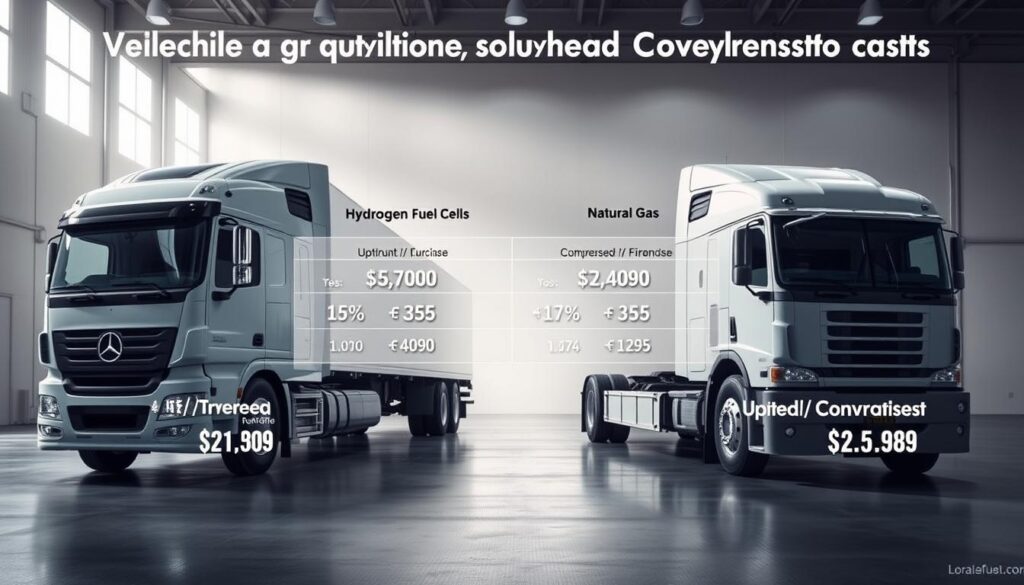
Hydrogen truck prices currently represent the highest capital cost among alternative fuel options. Factory-direct hydrogen fuel cell vehicles today range from $400,000 to $500,000 or more, depending on specifications and production volumes. This translates to approximately 2.5 to 3.5 times the cost of diesel equivalents.
Several expensive components drive these elevated costs. The fuel cell stack alone accounts for $50,000 to $100,000 of the total price. High-pressure hydrogen storage tanks add another $30,000 to $50,000 per vehicle. Low production volumes prevent manufacturers from achieving economies of scale.
The pricing outlook shows significant improvement by 2030. Industry projections indicate hydrogen truck prices will decline to approximately 1.4 to 1.6 times diesel costs, or roughly $240,000 to $300,000 per vehicle. This reduction stems from volume manufacturing reducing fuel cell stack costs, improved power density allowing smaller fuel cell systems, and hydrogen storage tank technology advancements.
Natural Gas Vehicle Purchase and Retrofit Options
Natural gas trucks present more accessible economics compared to hydrogen alternatives. Factory-built dedicated CNG trucks typically command a $30,000 to $50,000 premium over diesel equivalents, representing approximately 20 to 30 percent more than conventional options.
Retrofit dual-fuel systems provide another pathway for fleet acquisition. Technologies like the IFS Multi-Fuel system can convert existing diesel trucks for $40,000 to $60,000 per vehicle. A unique advantage of retrofit systems involves transferability between vehicles—the IFS Multi-Fuel technology can be removed from retiring trucks and reinstalled on newer vehicles, amortizing costs across multiple vehicles throughout the system’s lifespan.
The HDJ Perspective
The alternative fuel decision isn’t binary—the smartest fleet operators are building hybrid strategies that leverage both technologies for different operational segments. We’re seeing regional delivery fleets adopt CNG for predictable routes where infrastructure exists, while reserving hydrogen evaluations for long-haul corridors as that infrastructure develops. The key insight: don’t let regulatory timelines force premature infrastructure investments. California’s zero-emission mandates apply to new vehicle purchases, not existing fleet replacement, giving operators time to pilot technologies before full commitment.
Infrastructure Investment Requirements
Infrastructure investment represents the single largest barrier to widespread alternative fuel adoption in the trucking industry. The capital required to build refueling networks varies dramatically between hydrogen and natural gas options. Fleet operators must understand these costs before committing to alternative fuel technologies.

Hydrogen Refueling Station Costs and Availability
Current hydrogen refueling infrastructure capable of serving heavy-duty trucks requires substantial capital outlays. A single station with 700-bar compression, storage, and dispensing equipment costs between $2 million and $4 million. These stations must deliver hydrogen at flow rates of 5-10 kilograms per minute to achieve the 15-minute refueling times needed for trucks carrying 40-80 kilogram tanks.
The United States currently operates approximately 50 retail hydrogen stations, with the majority concentrated in California. Very few of these stations have the capacity to serve heavy-duty trucks, creating a significant infrastructure gap for commercial fleet adoption.
Industry projections indicate more favorable economics ahead. Capital expenditure per hydrogen station is expected to drop by 50% by 2030 through standardization and manufacturing volume increases. Capacity advantages favor hydrogen infrastructure for high-volume operations—a two-dispenser hydrogen station could service 200 trucks daily, compared to one battery electric truck per hour for fast charging.
Natural Gas Fueling Infrastructure Expenses
Natural gas infrastructure presents significantly lower barriers to entry than hydrogen alternatives. CNG fueling stations cost $500,000 to $1.5 million depending on capacity and configuration. This represents one-quarter to one-half the capital requirement of hydrogen facilities, making natural gas more accessible for fleet operators with limited budgets.
The United States currently operates approximately 1,000 publicly accessible CNG fueling stations, according to the DOE Alternative Fuels Data Center station locator. Many private fleet facilities have also installed natural gas infrastructure for dedicated use. Station concentration aligns with major freight corridors and metropolitan areas—California, Texas, and other high-traffic states maintain the densest CNG fueling station networks.
Two distinct dispensing approaches serve different operational needs. Fast-fill CNG stations mimic the traditional diesel fueling experience, completing fills in 5-15 minutes but requiring higher infrastructure investment costs. Time-fill systems offer a lower-cost alternative for return-to-base operations, connecting to parked vehicles overnight through low-flow fueling connections.
| Infrastructure Element | Hydrogen Stations | CNG Stations | Advantage |
|---|---|---|---|
| Capital Cost Per Station | $2-4 million | $500,000-$1.5 million | Natural Gas (3-4x lower) |
| Current U.S. Stations | ~50 (limited truck capacity) | ~1,000 public + private fleets | Natural Gas (20x more) |
| Daily Truck Capacity | 200 trucks (2 dispensers) | 80-150 trucks (fast-fill) | Hydrogen (higher throughput) |
| Refueling Time | 15 minutes | 5-15 minutes (fast-fill) | Comparable |
| Projected Cost Reduction by 2030 | 50% decrease expected | 10-15% decrease expected | Hydrogen (greater improvement) |
Operational Efficiency and Maintenance Costs
The practical success of hydrogen and natural gas trucks depends on factors that affect every mile driven and every load delivered. Purchase price represents only the beginning of the financial equation—truck operational efficiency determines whether alternative fuel vehicles can maintain the demanding schedules that commercial fleets require.
Distance Capabilities and Weight Trade-offs
Hydrogen fuel cell trucks deliver operational ranges between 1,000 and 1,500 kilometers on a single refueling. This performance matches traditional diesel trucks and enables similar routing patterns. Compressed natural gas trucks typically operate within a 300 to 600 kilometer range, suiting regional delivery routes and return-to-base operations. Liquefied natural gas trucks extend range to 800 to 1,200 kilometers, approaching diesel performance levels and supporting longer hauls.
Payload capacity directly affects revenue per trip. Every kilogram dedicated to the power system reduces available cargo weight. Hydrogen fuel cell systems plus storage tanks typically weigh 1,000 to 1,500 kilograms less than equivalent battery packs, preserving earning potential. CNG storage tanks add approximately 500 to 1,200 kilograms depending on desired range. LNG systems typically add 600 to 900 kilograms to vehicle weight.
Refueling Time and Operational Downtime
Time spent refueling directly impacts fleet productivity. Hydrogen trucks require approximately 15 minutes for complete refueling, closely matching diesel refueling times. Natural gas fast-fill stations provide comparable convenience, with CNG and LNG trucks completing refueling in 10 to 20 minutes depending on tank size and station capacity.
Battery electric trucks present a contrasting scenario—even with high-power DC fast charging, BEV trucks require 90 minutes or more for substantial charge replenishment. This time difference translates into economic impact: reduced downtime means more revenue-generating miles per vehicle per day.
Maintenance Requirements and Service Costs
Long-term maintenance costs significantly influence total ownership expenses. Both hydrogen and natural gas systems benefit from regenerative braking, which reduces brake wear substantially compared to traditional friction braking.
Fuel cell stacks are engineered for 20,000 to 30,000 hours of service life, translating to approximately 15 to 20 years of typical truck operation. Current maintenance costs for hydrogen trucks average $0.10 to $0.15 per mile, with industry projections estimating future costs between $0.06 and $0.10 per mile as technology matures.
Dedicated natural gas engines follow established maintenance protocols. Oil change intervals typically extend to 25,000 to 30,000 miles—the cleaner combustion of natural gas produces less engine contamination compared to diesel fuel. Natural gas truck maintenance typically costs $0.08 to $0.12 per mile, proving competitive with diesel maintenance expenses.
Free Professional Fleet Tools
Cost calculators, fault code lookup, maintenance planners, and more—built for owner-operators, fleet managers, and diesel techs. No signup required.
Environmental Impact and Regulatory Compliance
Emissions reductions from hydrogen and natural gas trucks translate directly into regulatory compliance advantages and tangible financial benefits through environmental credit programs. The environmental performance of alternative fuel technologies has become a primary driver for fleet adoption as regulatory requirements tighten across federal and state jurisdictions.
Lifecycle Emissions Analysis Across Fuel Technologies
Comprehensive truck emissions reduction comparisons require lifecycle analysis that accounts for fuel production, distribution, and combustion. According to EPA transportation greenhouse gas data, heavy-duty vehicles contribute significantly to overall transportation emissions despite representing a small fraction of vehicles on the road. Hydrogen fuel cell trucks powered by green hydrogen produce zero tailpipe emissions and achieve lifecycle emissions of 10-20 grams CO2-equivalent per megajoule when renewable electricity powers the electrolysis process. This represents an 85-95% reduction compared to diesel fuel at approximately 94 gCO2e/MJ.
Natural gas trucks using conventional compressed natural gas achieve 15-20% lifecycle emissions reduction. Real-world data from the KAG Canada natural gas retrofit system demonstrated 13.2% lifecycle CO2 reduction using conventional CNG. Renewable natural gas from waste sources delivers substantially greater environmental benefits, achieving 60-80% reduction and potentially carbon-negative emissions.
California’s Advanced Regulatory Framework
California has established the most comprehensive clean truck rules in the nation through multiple complementary regulations. The Advanced Clean Trucks regulation requires manufacturers to sell increasing percentages of zero-emission vehicles beginning with model year 2024, escalating to 40% of Class 7-8 tractor sales by 2032 and 75% by 2035.
The Advanced Clean Fleets regulation requires certain high-priority fleets to purchase only zero-emission vehicles starting in 2024-2025. Understanding which technologies qualify under different CARB standards proves essential for compliance planning—hydrogen fuel cell trucks meet zero-emission vehicle requirements across all California regulations, while natural gas trucks qualify as near-zero emission vehicles but generally do not satisfy ZEV mandates.
Revenue Opportunities Through Environmental Credit Programs
Environmental credit programs transform emissions reductions into revenue streams that substantially improve alternative fuel economics. California’s Low Carbon Fuel Standard generates tradeable credits based on lifecycle carbon intensity reductions, with current LCFS credit prices ranging from $100-200 per metric ton of CO2 reduction.
Hydrogen fuel cell trucks can generate $15,000-25,000 annually in LCFS credits per vehicle depending on hydrogen production pathway and annual mileage. Natural gas trucks earn $3,000-8,000 annually in credits depending on whether conventional CNG or renewable natural gas powers the vehicle. These credit revenues directly offset higher fuel costs and accelerate return on investment timelines.
Total Cost of Ownership and ROI Analysis
Fleet managers need comprehensive TCO analysis to determine which alternative fuel delivers the best long-term return on investment. Moving beyond initial purchase prices and fuel costs, total cost of ownership encompasses every financial element across the vehicle lifecycle. According to ATRI’s Operational Costs of Trucking research, fuel represents the largest variable expense for most trucking operations—making fuel technology decisions critical to long-term profitability.
Five-Year and Ten-Year TCO Models
For a Class 8 tractor operating 100,000 miles annually, the five-year total operating cost comparison reveals significant differences between fuel technologies. The diesel baseline totals approximately $575,000 over 500,000 miles, translating to $1.15 per mile. This figure includes vehicle acquisition, fuel, maintenance, insurance, and compliance costs.
Natural gas technology delivers immediate economic advantages. The same vehicle operating on CNG or RNG costs between $520,000 and $540,000 over five years, representing $1.04 to $1.08 cost per mile—a 6-9% reduction in total cost of ownership compared to diesel operations.
Hydrogen fuel cell trucks currently show higher five-year costs, ranging from $610,000 to $650,000 ($1.22 to $1.30 per mile). However, projected 2030 scenarios show hydrogen TCO declining to $520,000 to $560,000 over five years ($1.04 to $1.12 per mile) as vehicle prices drop and fuel costs decrease.
Break-Even Analysis for Fleet Sizes
Small fleet operators (5-25 trucks) face the most challenging economics when considering alternative fuels. Private CNG fueling infrastructure costs between $500,000 and $1.5 million, while hydrogen stations require $2 million to $4 million. For a 10-truck operation, this translates to $50,000-$150,000 per vehicle for natural gas or $200,000-$400,000 per vehicle for hydrogen infrastructure—often exceeding the economic benefits of fuel savings.
Medium-sized operations (25-100 trucks) experience significantly improved economics through infrastructure cost distribution. Installing private fueling facilities costing $1 million to $2 million and amortizing across 50-100 vehicles reduces per-truck infrastructure expense to $10,000-$40,000, making private infrastructure financially viable. TCO analysis shows payback period timelines of 1.5 to 3 years when combining fuel savings, available incentives, and infrastructure efficiency.
Large fleet operators (100+ trucks) enjoy the most favorable economics. Infrastructure investments fully amortize across extensive vehicle populations, reducing per-truck costs to $5,000-$20,000. Natural gas delivers immediate positive fleet ROI with break-even achievement within 12-24 months. Hydrogen becomes increasingly competitive for large fleets in the 2027-2030 timeframe, particularly when combined with environmental credit revenues.
Key Recommendation
Begin transition planning now: conduct route analysis to determine infrastructure needs, engage fuel suppliers and manufacturers for detailed proposals, calculate fleet-specific total cost of ownership incorporating available incentives, and develop phased implementation starting with pilot programs to validate performance before full fleet commitment.
Frequently Asked Questions
Is hydrogen or natural gas cheaper for trucking fleets right now?
Natural gas is significantly cheaper for trucking operations today. CNG costs $2.50-$3.50 per diesel gallon equivalent compared to hydrogen at $8-10 per kilogram, representing 30-40% savings over diesel versus a 160-200% premium for hydrogen. However, projections indicate hydrogen prices could drop to $3-5 per kilogram by 2030, approaching cost competitiveness with diesel. Current fleet economics strongly favor natural gas for immediate cost savings, while hydrogen becomes viable primarily through substantial government incentives like California’s HVIP vouchers.
What are the infrastructure requirements for hydrogen versus CNG trucks?
CNG fueling stations cost $500,000-$1.5 million to install, with approximately 1,000 public stations currently operating nationwide. Hydrogen refueling infrastructure requires $2-4 million per station, with fewer than 60 stations currently available, primarily concentrated in California. Medium and large fleets can justify private CNG infrastructure investments, while hydrogen typically requires public network access or substantial government grants covering 30-80% of installation costs.
How do hydrogen truck ranges compare to natural gas vehicles?
Hydrogen fuel cell trucks achieve 1,000-1,500 kilometer ranges, matching diesel truck capabilities for long-haul operations. CNG trucks typically operate within 300-600 kilometers per fill, suitable for regional delivery routes and return-to-base operations. LNG trucks extend range to 800-1,200 kilometers, approaching hydrogen performance. Both technologies refuel in 10-20 minutes, maintaining productivity levels comparable to diesel operations without the extended downtime required for battery-electric charging.
What government incentives exist for alternative fuel trucks?
Federal programs include the Alternative Fuel Infrastructure Tax Credit covering 30% of station installation costs up to $100,000. California’s HVIP provides purchase vouchers of $120,000-$240,000 per zero-emission truck including hydrogen vehicles. The EPA Clean Diesel Grant Program funds natural gas vehicle acquisitions up to $500,000 per project. California’s LCFS program generates $15,000-$25,000 annually in credits per hydrogen truck and $3,000-$8,000 for natural gas vehicles, substantially improving operating economics.
Which alternative fuel should my fleet choose: hydrogen or natural gas?
The optimal choice depends on your operational profile. Natural gas delivers proven economics today with 10-20% cost savings for fleets seeking immediate returns, particularly for regional operations with predictable routes where CNG infrastructure exists. Hydrogen serves long-haul applications requiring maximum range and zero emissions, becoming increasingly competitive by 2027-2030. Small fleets typically favor natural gas due to lower infrastructure barriers, while large fleets operating in California may benefit from hydrogen investments given regulatory requirements and available incentives.
Making Your Alternative Fuel Decision
The hydrogen versus natural gas decision for trucking fleets depends on specific operational requirements rather than a universal solution. Natural gas technology delivers immediate value for fleets seeking proven commercial viability—established infrastructure and demonstrated cost savings of 10-20% make this technology selection practical for regional operations today. Hydrogen fuel cells represent the clean trucking future for heavy-duty long-haul applications, with zero emissions, superior range, and cost parity with diesel projected by 2030.
Fleet operators should begin transition planning now by conducting route analysis, calculating fleet-specific total cost of ownership, and developing phased implementation strategies. The transition to alternative fuels is inevitable—success requires selecting the right technology for each operational profile and implementing strategic deployment timelines aligned with infrastructure development and regulatory requirements.
Share This Analysis With Your Network
Know a fleet manager or owner-operator evaluating alternative fuels? This comparison could help them make a more informed investment decision.