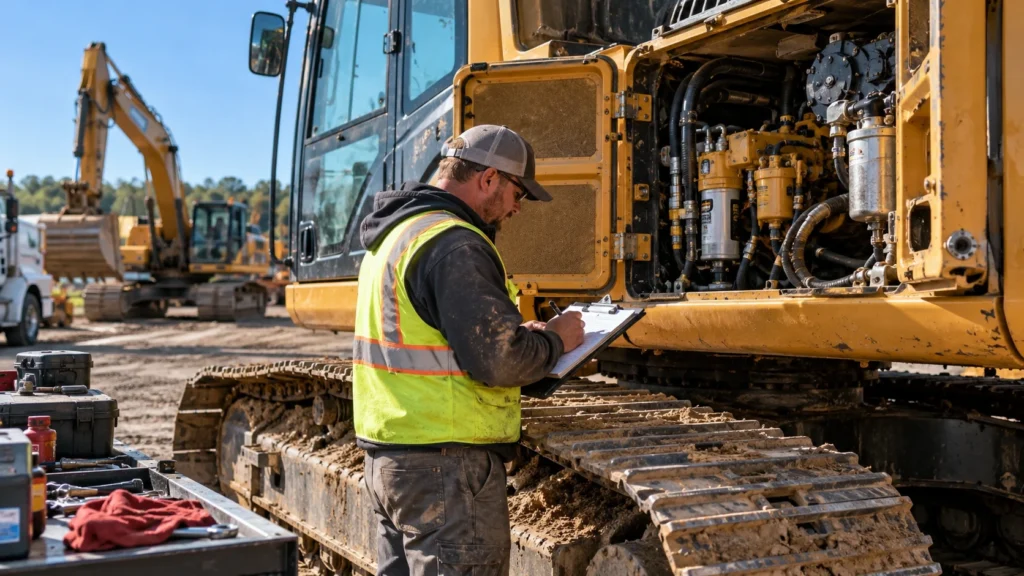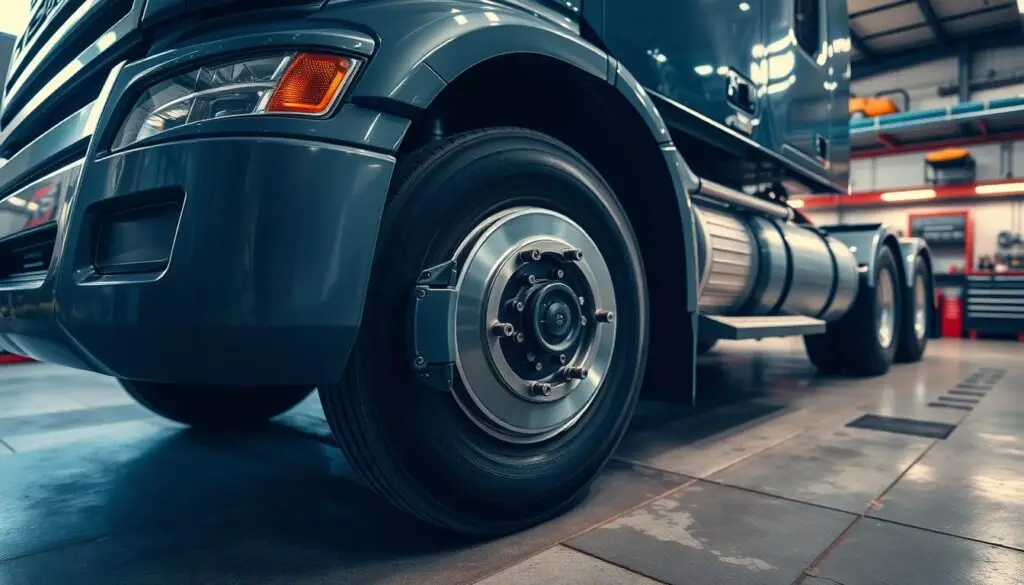
Fleet managers and owner-operators managing commercial vehicles face substantial financial decisions regarding brake system maintenance. Understanding the true cost of brake pad replacement for commercial trucks helps operators budget accurately while maintaining safety compliance across their fleets.
Professional brake pad replacement costs vary significantly based on truck classification, ranging from $320-$960 per axle for Class 4-5 medium-duty trucks to $700-$1,800 per axle for Class 8 semi-trucks. Complete tractor-trailer brake service covering all positions can exceed $5,000-$8,000 when multiple axles require simultaneous replacement.
This comprehensive analysis draws from industry-standard pricing data and real-world fleet maintenance experiences across the United States. The information provides decision-makers with actionable intelligence for budgeting brake system maintenance, from single Class 8 semis to diverse commercial fleets requiring strategic maintenance planning.
Last Updated: November 2025
Key Takeaways
- Cost Range by Class: Medium-duty trucks cost $320-$960 per axle while Class 8 semi-trucks range $700-$1,800 per axle for professional brake pad replacement.
- Geographic Impact: Labor rates vary from $75-$100/hour in rural areas to $130-$160/hour in major metropolitan markets, creating 50-80% location-based price variations.
- Prevention Saves Money: Implementing quarterly inspections and driver training programs reduces annual brake maintenance expenses by 30-50% through early detection and reduced wear rates.
Understanding Commercial Truck Brake Systems and Replacement Needs
Heavy-duty commercial vehicles require specialized brake systems engineered to handle forces exponentially greater than passenger vehicles encounter. The fundamental differences between stopping a 3,000-pound sedan versus an 80,000-pound fully loaded Class 8 truck create unique maintenance demands and substantially higher replacement costs.
Commercial brake systems incorporate air-powered technology rather than hydraulic systems found in passenger vehicles. This distinction requires additional components including air compressors, reservoirs, valve systems, and slack adjusters that don’t exist in standard automotive applications. These complex systems directly impact maintenance costs and service requirements.
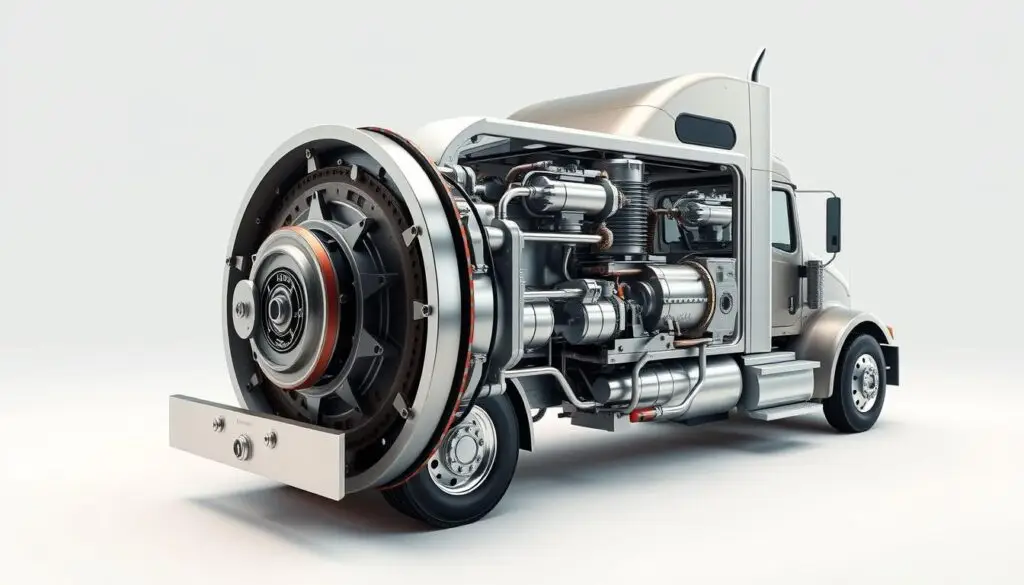
Air brake systems require specialized components and maintenance procedures that increase service costs compared to hydraulic systems.
The Federal Motor Carrier Safety Administration (FMCSA) mandates specific brake performance standards through 49 CFR 393.52, requiring commercial vehicles to maintain minimum braking force ratios. Out-of-service violations for brake defects immediately sideline trucks, resulting in lost revenue and disrupted delivery schedules that compound the direct costs of brake system maintenance.
Critical Safety Implications of Brake System Maintenance
Delaying brake pad replacement creates serious safety risks extending far beyond operational inconvenience. Worn brake pads increase stopping distances significantly—every foot matters when hauling 80,000 pounds of cargo through traffic or down mountain grades.
Brake fade represents another dangerous consequence of worn components. As pad thickness decreases, heat dissipation becomes less effective, causing temporary performance loss particularly dangerous during extended descents or repeated stops in urban traffic.
Fleet operators face substantial liability exposure from brake-related accidents. The Commercial Vehicle Safety Alliance (CVSA) reports that brake system violations remain the leading cause of out-of-service orders during roadside inspections, according to their International Roadcheck data.
Average Brake Pad Replacement Cost by Commercial Truck Classification
Commercial truck brake replacement expenses scale directly with vehicle size and system complexity. Understanding these cost variations by truck classification enables accurate budget forecasting and strategic maintenance planning across mixed fleets.
Industry data from the Technology & Maintenance Council (TMC) indicates fleet owners should budget between $5,000 and $10,000 annually per truck for comprehensive maintenance and repairs, with brake system service representing 15-25% of these expenses depending on operating conditions.
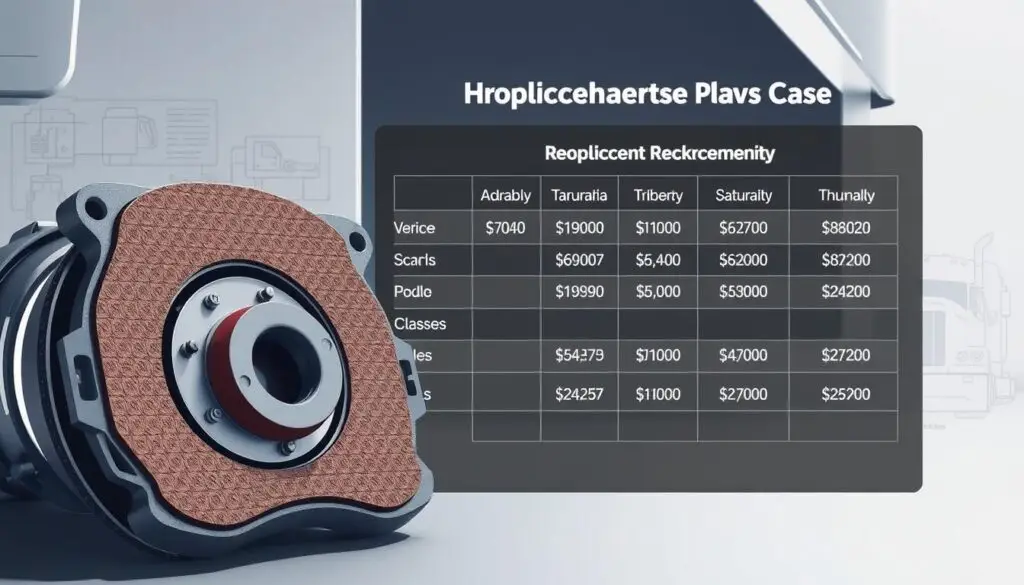
Class 4-5 Medium-Duty Trucks: Cost Analysis
Medium-duty trucks including the Ford F-450, Chevrolet Silverado 4500, and Ram 4500 operate with Gross Vehicle Weight Ratings between 14,001 and 19,500 pounds. These vehicles bridge the gap between consumer trucks and true commercial heavy-duty equipment, commonly serving landscape services, utility operations, and light commercial hauling.
Quality aftermarket brake pads for Class 4-5 trucks range from $150 to $400 per axle, while Original Equipment Manufacturer (OEM) options cost $300 to $600 per axle. Labor requirements of 2 to 4 hours per axle at rates of $75 to $150 per hour add $170 to $560 in installation costs.
Complete single-axle brake pad replacement for Class 4-5 trucks costs between $320 and $960 total. Fleet operators planning full front and rear axle service should budget $640 to $1,920 for complete vehicle service.
Class 6-7 Heavy-Duty Trucks: Service Requirements
Heavy-duty trucks in Class 6-7 categories, including the International DuraStar, Freightliner M2 106, and Peterbilt 220, operate with GVWR between 19,501 and 33,000 pounds. These vehicles serve diverse applications including delivery services, dump truck operations, and regional hauling.
Brake pad components for Class 6-7 trucks range from $250 to $650 per axle for quality replacement parts. The increased weight ratings demand thicker friction material and reinforced backing plates meeting more stringent specifications than medium-duty applications.
Installation complexity increases significantly, requiring 3 to 5 hours of labor per axle. Combined with professional shop rates, this results in $200 to $700 in labor costs. Complete single-axle brake pad replacement for Class 6-7 trucks costs between $450 and $1,350.
Stay Ahead of Industry Trends
Get expert insights, equipment reviews, and operational strategies delivered weekly.
Class 8 Semi-Trucks: Premium Service Costs
Class 8 semi-trucks represent the largest commercial vehicles on American highways, with GVWR exceeding 33,001 pounds. Popular models including the Peterbilt 579, Kenworth T680, Volvo VNL, and Freightliner Cascadia dominate long-haul freight operations.
Brake pad components for Class 8 tractors range from $400 to $900 per axle. Premium friction materials designed for long-haul applications command the highest prices within this range, reflecting extreme demands placed on braking systems stopping fully loaded combinations weighing up to 80,000 pounds.
Professional brake pad installation on Class 8 tractors requires 4 to 6 hours of labor per axle. Specialized technicians command higher rates, typically resulting in $300 to $900 in labor expenses. Single-axle brake pad replacement costs between $700 and $1,800, while complete tractor-trailer brake jobs involving multiple axles easily exceed $5,000 to $8,000.
| Truck Classification | Parts Cost Per Axle | Labor Cost Per Axle | Total Cost Per Axle |
|---|---|---|---|
| Class 4-5 Medium-Duty | $150 – $600 | $170 – $560 | $320 – $960 |
| Class 6-7 Heavy-Duty | $250 – $650 | $200 – $700 | $450 – $1,350 |
| Class 8 Semi-Trucks | $400 – $900 | $300 – $900 | $700 – $1,800 |
Key Factors Impacting Commercial Truck Brake Pad Costs
Multiple interconnected variables determine final brake pad replacement expenses for commercial vehicles. Understanding these cost drivers enables fleet managers to predict maintenance expenses accurately and identify optimization opportunities.
Vehicle Weight Rating and Load Capacity
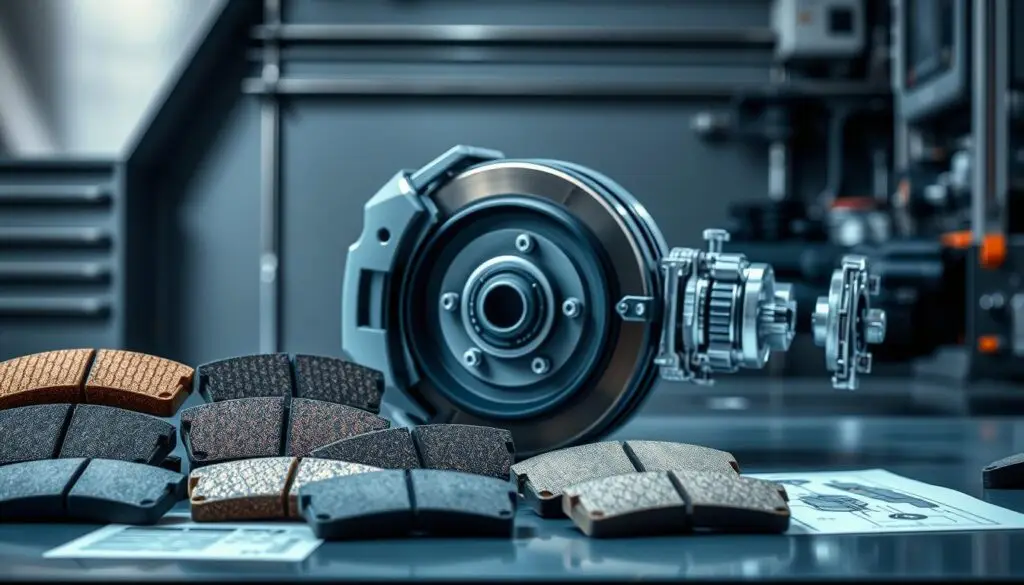
The Gross Vehicle Weight Rating establishes fundamental brake system requirements and associated costs. Heavier trucks require brake pads manufactured from more durable materials with superior heat resistance capabilities.
A Class 8 tractor operating at 80,000 pounds GVWR needs components exponentially more robust than a Class 5 truck at 19,000 pounds. Material specifications change dramatically as weight ratings increase, with heavy-duty brake pads featuring larger surface areas, reinforced backing plates, and advanced friction materials designed to withstand extreme temperatures.
Operating Environment and Duty Cycle
The operating environment dramatically affects both brake pad lifespan and replacement frequency. According to data from the American Transportation Research Institute (ATRI), trucks operating in mountainous regions experience accelerated brake wear from constant descents and elevation changes.
Urban delivery trucks face excessive wear from frequent stops at traffic lights and customer locations. Each braking event generates heat and friction that gradually wears down brake components. Highway tractors generally see extended brake life due to consistent speeds and fewer stopping events.
Heavy loads and towing operations add additional stress beyond base GVWR considerations. Trucks regularly operating at maximum capacity require more frequent service than lightly loaded vehicles, with some operations seeing brake pad life reduced by 40-60% under severe conditions.
Brake System Design: Air vs. Hydraulic
Air brake systems standard on Class 6-8 trucks involve additional complexity with compressors, air lines, and chambers. These systems generally cost more than simpler hydraulic alternatives but offer superior heat dissipation and fail-safe design features essential for heavy-duty applications.
The National Highway Traffic Safety Administration (NHTSA) requires air brake systems on commercial vehicles exceeding 26,000 pounds GVWR through FMVSS 121 standards. This regulation ensures adequate braking performance for heavy commercial vehicles.
Parts Cost Breakdown: OEM vs. Aftermarket Options
The choice between Original Equipment Manufacturer components and aftermarket alternatives represents one of the most significant cost decisions in brake maintenance. Understanding quality differences and warranty implications helps optimize parts purchasing strategies.
Premium Aftermarket Brake Pad Value Proposition
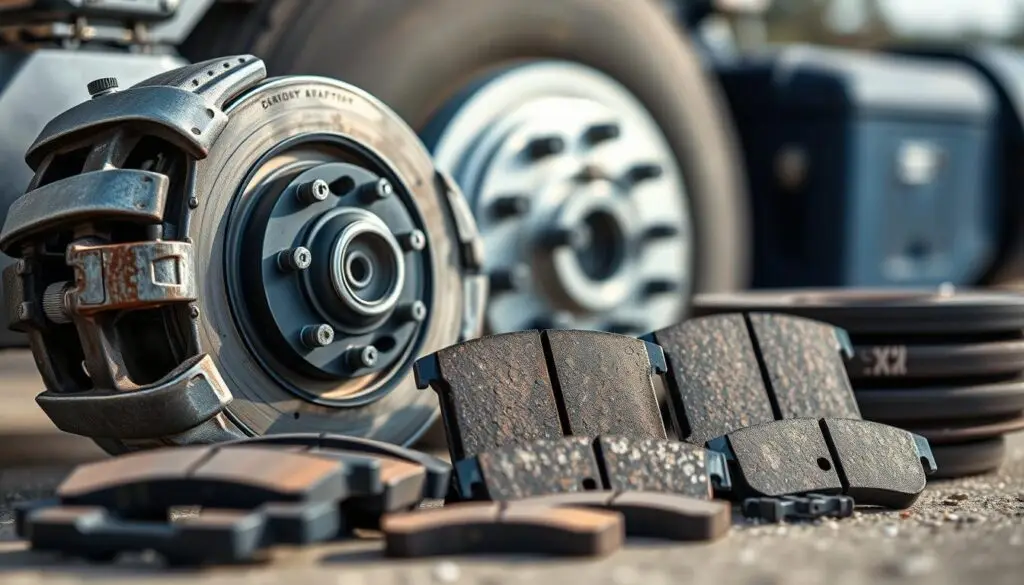
Quality aftermarket brake pads from established manufacturers like Bendix, Meritor WABCO, and Haldex offer comparable quality at substantially lower prices than OEM components. These third-party options typically cost 30-50% less while meeting or exceeding original specifications.
Premium aftermarket brands undergo rigorous testing protocols including dynamometer testing, fleet trials, and certification to Automotive Aftermarket Suppliers Association (AASA) standards. Many carry comprehensive warranties matching or exceeding OEM coverage periods.
However, budget-tier alternatives using inferior friction materials create false economy through shortened service intervals and potential safety compromises. Fleet managers should evaluate suppliers based on certification standards, testing documentation, and real-world performance data rather than price alone.
Material Composition and Performance Grades
Semi-metallic brake pads containing 30-70% metal content represent the industry standard for commercial applications. These pads cost $150-$320 per wheel position and deliver proven reliability across diverse operating conditions, typically achieving 40,000-80,000 miles in highway service.

Ceramic brake pads command 30-50% price premiums at $225-$450 per wheel position but deliver superior benefits including reduced dust generation, quieter operation, and 40-60% lower rotor wear. Long-haul tractors benefit most from ceramic technology where extended service intervals justify higher initial investment.
Specialized high-performance formulations for severe service cost $280-$500 per wheel position. These extreme-duty pads prove essential for mountain operations, refuse haulers, and heavy-haul applications where standard materials would fail prematurely.
Labor Cost Variables Across Service Markets
Labor charges often equal or exceed parts costs for commercial brake service. Geographic location, service provider type, and timing all significantly impact final labor expenses.
Regional Labor Rate Variations
Commercial truck labor rates fluctuate dramatically based on service location. Major metropolitan areas including New York City, Los Angeles, San Francisco, and Boston charge $130-$160 per hour, while rural communities in states like Montana, Wyoming, and the Dakotas see rates of $75-$100 per hour.
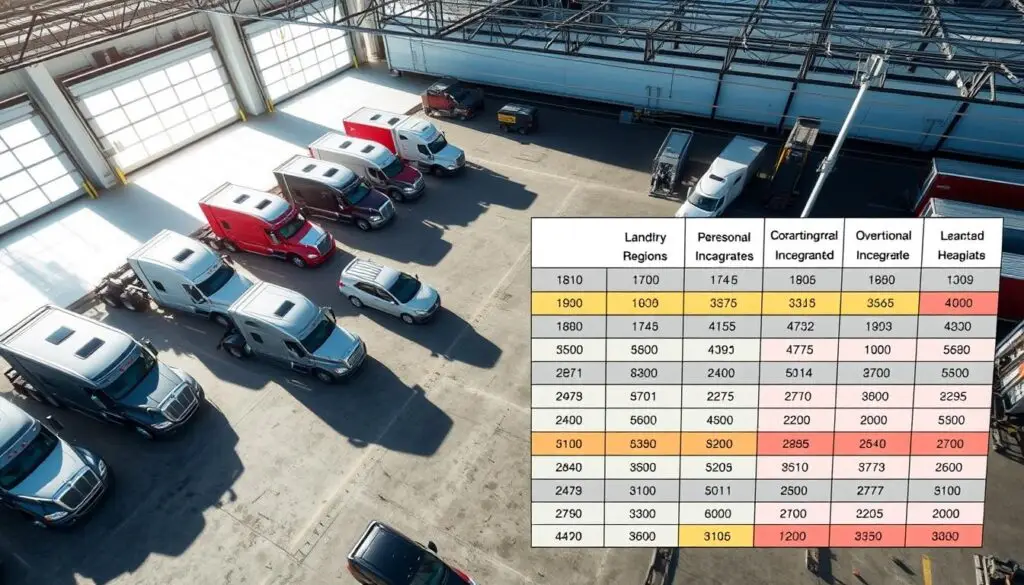
The Bureau of Labor Statistics reports median hourly wages for diesel service technicians vary by over 60% between highest and lowest cost states, directly impacting brake service pricing. An identical brake job costing $300 in labor in rural areas might require $700 in labor expenses in premium coastal markets.
Mobile Service vs. Fixed Location Facilities
Mobile mechanics typically charge $100-$140 per hour for on-site brake installation, representing a 15-25% premium over fixed-location shops. This convenience premium proves worthwhile when minimizing downtime for revenue-generating equipment.
Traditional shops charging $85-$130 per hour offer comprehensive equipment including heavy-duty lifts and extensive parts inventories. The controlled environment facilitates thorough inspections and complex repairs beyond basic pad replacement.
Emergency service commands substantial premiums, with after-hours rates adding 25-50% and holiday service potentially doubling normal labor costs. Planning preventive maintenance during standard business hours significantly reduces fleet repair expenses.
Warning Signs Your Commercial Truck Needs Brake Pad Replacement
Worn brake pads send clear signals through various symptoms that every truck driver and fleet manager should recognize. Detecting these warning signs early prevents catastrophic failures that result in accidents, expensive rotor replacement, and dangerous downtime.
Visual Inspection: Thickness and Wear Indicators
Regular brake inspections start with measuring brake pad thickness using proper tools and techniques. Brake pads should be replaced when friction material reaches 1/4 inch (6mm) or less on most commercial applications. This measurement provides the minimum safe thickness before metal-to-metal contact occurs.
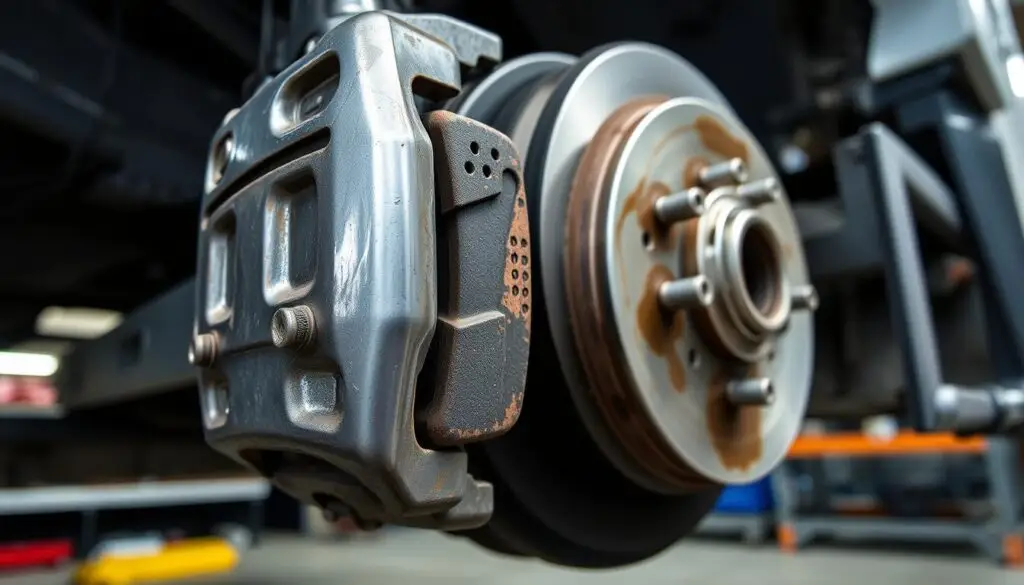
Conducting thorough visual inspections requires removing wheels to directly access brake components. Use calipers or depth gauges to measure pad thickness accurately at multiple points across the pad surface, checking for uneven wear patterns, glazing, cracks, or delamination where friction material separates from backing plates.
Audible and Performance Warning Signs
Different noises indicate specific problems requiring different response timelines. Light squealing during initial brake application typically indicates wear indicators making contact with rotors, signaling replacement is due within 1,000-2,000 miles. Grinding noises indicate the most severe situation where friction material has completely worn away.
Performance symptoms include increased stopping distances, brake pedal pulsation indicating warped rotors, vehicles pulling to one side during braking, or brake fade during heavy use. These symptoms require immediate inspection and likely replacement to maintain commercial vehicle safety standards.
Proven Strategies to Reduce Brake Replacement Costs
Implementing systematic cost reduction strategies can decrease annual brake maintenance expenses by 30-50% without compromising safety or performance. These approaches address multiple aspects of fleet operations simultaneously.
Preventive Maintenance Inspection Programs
Quarterly brake inspections measuring pad thickness and identifying wear patterns catch problems before they escalate into expensive emergencies. This proactive approach prevents secondary damage to rotors and drums while allowing strategic scheduling during low-demand periods with better pricing.
The Technology & Maintenance Council recommends brake inspections follow RP 609A guidelines for comprehensive evaluation procedures. Documentation supports warranty claims and helps identify vehicles or routes requiring additional attention.
Driver Training for Extended Component Life
Comprehensive driver training programs teaching proper engine braking and jake brake techniques reduce service brake application frequency by 40-60% in appropriate conditions. This dramatic reduction translates directly into longer brake pad life and lower replacement frequency.
Training should emphasize traffic anticipation, proper downhill descent techniques, jake brake optimization, and load-adjusted driving styles. Performance monitoring systems track individual driver behavior and identify those benefiting from additional training.
Share Your Expertise
Join Heavy Duty Journal as a guest author and reach thousands of industry decision-makers.
Strategic Parts Purchasing and Service Contracts
Fleet operators maintaining 10+ vehicles achieve volume discounts of 15-30% on parts and 10-20% on labor through structured maintenance agreements. Bulk purchasing brake pad sets for multiple trucks enables discounts of 20-35% below retail pricing.
Negotiating annual service contracts locks in favorable labor rates and secures priority scheduling. These agreements should address labor rates, parts pricing, warranty coverage, and after-hours service terms. Long-term relationships with quality repair providers yield benefits beyond contractual terms.
Warranty Coverage and Total Cost of Ownership Analysis
Understanding warranty implications and calculating true ownership costs reveals opportunities often overlooked when focusing solely on initial purchase prices.
Manufacturer Warranty Protection Terms
OEM brake pads typically include 12-month unlimited mileage coverage protecting against manufacturing defects and material failures. Premium aftermarket brands compete aggressively with 12 to 24-month coverage periods and prorated mileage protection extending to 50,000 or 80,000 miles.
Labor warranties from reputable repair facilities cover 90 days to 12 months, protecting against installation errors and comeback issues. Written warranty documentation prevents disputes and establishes clear expectations for both parties.
Calculating True Cost Per Mile
Total cost of ownership analysis reveals actual financial impacts of brake component decisions. Premium brake pads costing $350 but lasting 60,000 miles deliver lower operating costs at $0.0058 per mile compared to $200 budget pads lasting 30,000 miles at $0.0067 per mile.
Labor expense amplifies these differences substantially. If brake pad replacement requires four hours at $125 per hour, each service costs $500 in labor. Budget pads requiring replacement twice as frequently incur double the labor expense over identical mileage intervals.
Fleet managers should develop calculation templates specific to their operations, incorporating average annual mileage, typical brake pad service life, local labor rates, and downtime costs. This data-driven approach enables consistent purchasing decisions optimizing total fleet expenses.
Conclusion
Managing commercial truck brake maintenance expenses requires comprehensive understanding of cost variables and strategic planning. Fleet owners should budget between $5,000 and $10,000 per truck annually for maintenance and repairs, with brake system service representing a significant portion of these expenses.
The substantial cost variations—from $320 for medium-duty trucks to $8,000 for complete Class 8 tractor-trailer service—become manageable through proactive maintenance scheduling and informed decision-making. Regular inspections, driver training, and strategic vendor relationships reduce long-term expenses while maintaining safety compliance.
Implementing the cost reduction strategies outlined delivers measurable financial benefits without compromising safety or performance. Smart fleet managers leverage these approaches to optimize brake maintenance expenses while ensuring reliable stopping power for every mile traveled.
Frequently Asked Questions
How much does a complete brake pad replacement cost for a Class 8 semi-truck?
Class 8 semi-trucks like the Peterbilt 579, Kenworth T680, or Volvo VNL typically cost between $700-$1,800 for single-axle brake pad replacement, including parts ($400-$900) and labor ($300-$900). Complete tractor-trailer brake jobs covering all axle positions can exceed $5,000-$8,000 when multiple axles require simultaneous service. Final costs depend on parts selection (OEM versus aftermarket), regional labor rates, and whether additional components like rotors or drums need replacement.
What causes commercial truck brake pad costs to vary so much between locations?
Geographic labor rates create the most significant cost variation, with major metropolitan areas charging $130-$160 per hour while rural communities charge $75-$100 per hour—creating 50-80% price differences for identical services. States with strong union presence and higher costs of living consistently show elevated service costs. Additionally, seasonal demand fluctuations create 10-20% price premiums during peak fall maintenance periods when fleets prepare for winter operations.
Should I choose semi-metallic or ceramic brake pads for my commercial truck?
Semi-metallic pads remain the industry standard, offering proven reliability at $150-$320 per wheel position with excellent heat dissipation for 40,000-80,000 highway miles. Ceramic brake pads command 30-50% price premiums ($225-$450 per position) but deliver reduced dust, quieter operation, and 40-60% lower rotor wear with superior heat stability. Long-haul tractors benefit most from ceramic technology where extended service intervals justify higher initial investment, while urban delivery trucks typically optimize costs with quality semi-metallic pads.
How can fleet maintenance programs reduce brake replacement costs?
Fleet operators maintaining 10+ vehicles achieve volume discounts of 15-30% on parts and 10-20% on labor through structured maintenance agreements. Preventive maintenance contracts catch brake wear early before expensive secondary damage occurs. Bulk purchasing brake sets for 10-20 trucks delivers 20-35% discounts below retail. Combined with negotiated service contracts and strategic timing, these approaches reduce annual brake maintenance expenses by 25-40% compared to ad-hoc retail purchases.
What strategies reduce commercial truck brake pad replacement costs most effectively?
Preventive maintenance inspection programs deliver the highest ROI—quarterly brake inspections prevent emergency replacements with premium pricing while catching secondary damage early. Driver training in engine braking techniques reduces service brake application by 40-60%, delivering measurable savings. Strategic timing captures seasonal discounts during spring months when shops offer 10-15% promotional pricing. Combined implementation of these strategies reduces annual brake maintenance expenses by 30-50%.
When should I choose premium brake pads over standard grades?
Premium brake pads costing 25-40% more deliver optimal value for long-haul highway tractors where extended service intervals justify upfront investment—$350 premium pads lasting 60,000 miles provide lower cost per mile ($0.0058) versus $200 budget pads lasting 30,000 miles ($0.0067). Premium options also reduce labor expense frequency and offer better fade resistance. Standard-grade pads optimize costs for local delivery trucks with frequent replacement cycles where no pad formulation achieves extended life regardless of quality.
Share This With Your Heavy-Duty Network
Help fleet managers and diesel technicians discover valuable insights by sharing this article.