By Michael Nielsen, Editor & Publisher | 15+ Years in Diesel Repair
Last Updated: February 2026
📖 Estimated reading time: 24 minutes
Choosing the right truck wheel balancer represents one of the most consequential equipment decisions a commercial service facility makes. Professional tire shops and fleet maintenance operations depend on this equipment daily, and the technology selected affects everything from throughput and service quality to long-term profitability. Modern heavy-duty wheel balancers now achieve accuracy within hundredths of an ounce, a level of precision that directly translates to vibration-free performance for commercial vehicles of all sizes.
Shop owners and fleet maintenance managers face a fundamental choice between electronic and manual systems, each offering distinct advantages for heavy-duty applications. Balance technology has matured considerably over the past decade, delivering consistent results that influence customer retention and competitive positioning. This guide examines both electronic and manual systems with detailed product reviews and practical buying guidance tailored specifically for commercial truck operations rather than passenger vehicle applications.
Key Takeaways
- Accuracy matters more for trucks: Commercial wheel assemblies weighing 75-150 lbs require balancing within 0.25-0.5 oz—far tighter tolerances than passenger vehicles.
- Electronic balancers deliver 5-10x greater precision (±1 gram vs. ±5-10 grams) and complete measurements in 6 seconds compared to several minutes for manual methods.
- Manual balancers still serve specific needs: Mobile service, backup equipment, low-volume operations, and locations without reliable power.
- ROI timeline varies by volume: Mid-range electronic systems typically pay for themselves in 12-24 months through labor savings and reduced comebacks.
- Fuel and tire savings are substantial: Properly balanced wheels improve fuel economy by 2-4% and can double tire lifespan on commercial vehicles.
- Match equipment to your operation: Shop volume, truck types serviced, and customer expectations should drive the purchase decision over brand loyalty or price alone.
Why Proper Wheel Balancing Matters for Commercial Trucks
Unbalanced truck wheels create a cascade of mechanical problems that cost fleet operators thousands in preventable expenses. The weight and operational demands of commercial vehicles amplify balancing issues far beyond what passenger cars experience. A truck wheel spinning at highway speeds with just one ounce of imbalance generates destructive vibrations throughout the entire drivetrain, steering, and suspension systems.
Fleet maintenance protocols recognize wheel balancing as a foundational service that protects the substantial tire investment every operation makes. A single commercial truck tire costs between $400 and $600, and a full tractor-trailer setup requires 18 tires. When wheels remain unbalanced, uneven tire wear patterns develop within weeks rather than months. The outer edges of unbalanced tires wear faster than the center tread, reducing tire lifespan by 30 to 50 percent—replacing tires at 40,000 miles instead of the expected 80,000 miles.
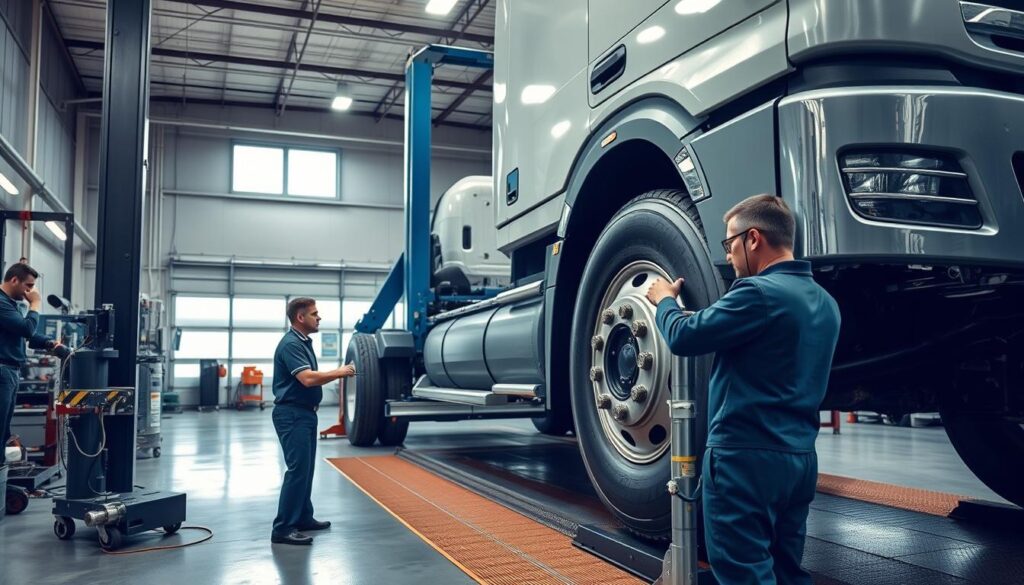
For a fleet running 100 trucks, this tire wear failure translates to hundreds of thousands in unnecessary annual expenses. According to ATRI’s Operational Costs of Trucking report, tire expenses represent one of the largest maintenance cost categories for carriers, making proper balance a direct profit protection strategy.
Safety concerns extend beyond economics. Vibrations from unbalanced wheels travel through the steering column directly to the driver. On long hauls covering 500 miles or more daily, these continuous vibrations contribute to driver fatigue and reduced alertness. Steering response becomes less precise, and the vehicle requires constant minor corrections to maintain lane position. In emergency maneuvers, compromised handling increases collision risk significantly.
Component failure represents another serious safety dimension. Unbalanced wheels subject wheel bearings to irregular stress patterns that cause premature failure. Suspension bushings wear unevenly, creating loose steering components. Ball joints and tie rod ends experience accelerated degradation from constant vibration cycles. A complete wheel bearing replacement runs $800 to $1,200 per wheel position, tie rod ends cost $300 to $500 each, and heavy-duty shock absorbers range from $400 to $800 per unit.
2-4% Fuel Economy Improvement
Properly balanced wheels reduce rolling resistance, saving an estimated 330-660 gallons of diesel per truck annually at 100,000 miles — per fleet efficiency data from the Technology & Maintenance Council.
The fuel efficiency impact compounds across fleets. Unbalanced wheels increase rolling resistance, forcing the engine to work harder to maintain speed. For a commercial truck averaging 6 miles per gallon and traveling 100,000 miles annually, a 2-4% improvement saves approximately 330 to 660 gallons of diesel fuel per year. At current diesel prices, each truck saves between $1,300 and $2,600 annually from proper balancing alone.
Technical tolerances for commercial wheel balancing differ significantly from passenger vehicle standards. The following comparison illustrates why truck-specific equipment matters:
| Specification | Passenger Vehicle | Commercial Truck | Impact of Imbalance |
|---|---|---|---|
| Acceptable Imbalance | 0.5 – 1.0 oz | 0.25 – 0.5 oz | Vibration at highway speeds |
| Wheel Weight | 15 – 25 lbs | 75 – 150 lbs | Amplified force multiplication |
| Typical Load per Wheel | 800 – 1,200 lbs | 4,000 – 8,000 lbs | Accelerated component wear |
| Operating Speed Range | 0 – 80 mph | 0 – 75 mph sustained | Continuous stress cycles |
The physics of rotational imbalance follow the formula: Force = mass × radius × angular velocity squared. For commercial applications, both mass and angular velocity factors are significantly higher than passenger vehicles, meaning even minor imbalances create enormous centrifugal forces. A truck wheel assembly weighing 75-150 pounds spinning at 500 RPM at highway speeds demands balancing equipment capable of detecting and correcting much smaller imbalances to achieve vibration-free performance.
Customer satisfaction drives repeat business in commercial truck service. Downtime for commercial vehicles costs operators between $150 and $300 per hour in lost productivity, per FMCSA hours-of-service regulations that limit available driving time. When a truck returns for vibration complaints or premature tire wear, that customer experiences not only direct repair costs but also operational losses from equipment downtime. Shops that invest in quality balancing equipment demonstrate commitment to getting the job done right the first time.
Electronic vs. Manual Truck Wheel Balancers: Core Technologies
Modern wheel balancing technology has evolved into two distinct paths, each utilizing fundamentally different methods to achieve tire balance. Understanding how each technology operates helps shop owners make informed equipment decisions that align with their specific operational requirements and customer expectations.
How Electronic Wheel Balancers Work
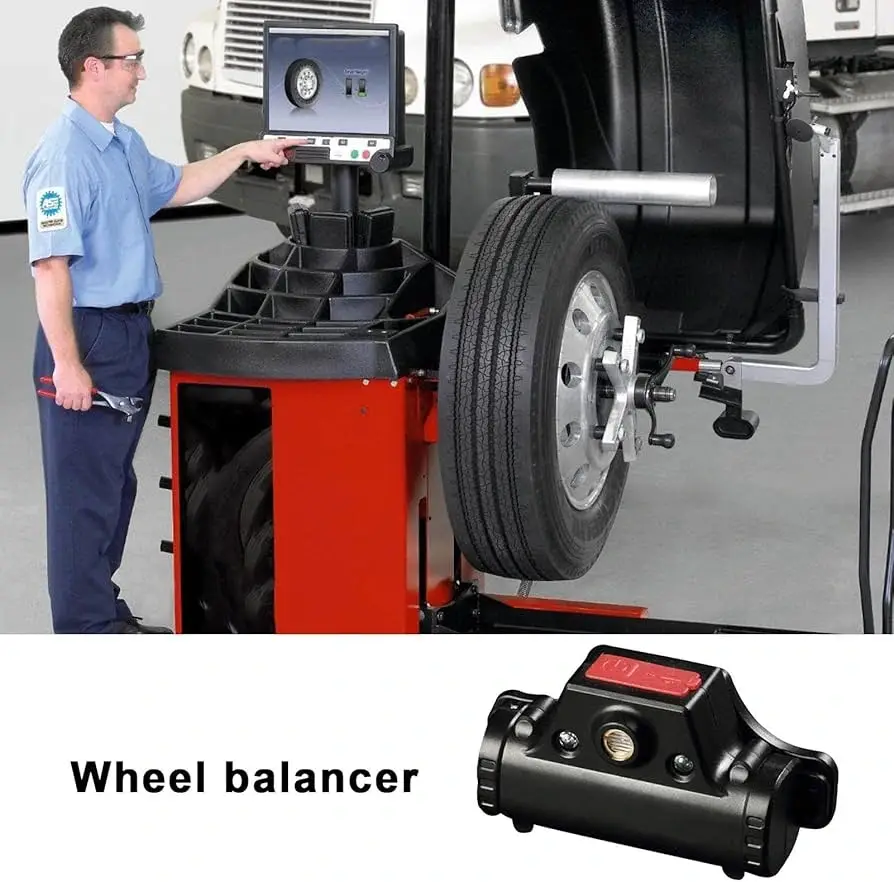
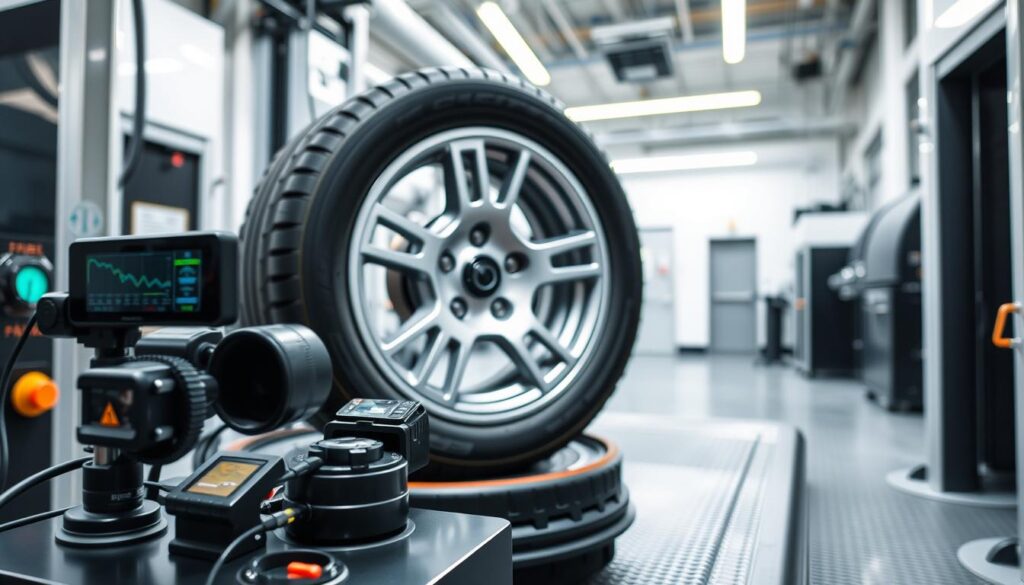
Electronic wheel balancers operate through sophisticated sensor arrays that measure dynamic forces in real-time. These systems feature direct-axis drive technology that spins the wheel assembly while piezoelectric sensors or magnetic transducer encoders detect vibrations and imbalances. Sensors measure both static imbalance (vertical forces) and dynamic imbalance (horizontal forces) simultaneously—a dual-plane measurement capability that distinguishes electronic systems from manual alternatives.
Modern electronic balancers process sensor data through microprocessors that calculate exact weight placement locations. The entire analysis takes approximately six seconds from spin to final readout. Advanced models incorporate 64-tooth encoders that double the possible weight placement positions compared to earlier 32-tooth designs, and they automatically determine the minimum weight needed for perfect balance.
How Manual Bubble Balancers Work
Manual wheel balancers operate on gravity-based mechanical principles that have remained largely unchanged for decades. A precision-machined stand with a horizontal spindle supports the wheel assembly, and a bubble level indicator at the center shows weight distribution. The heaviest point naturally rotates to the bottom, shifting the bubble away from center. Technicians add counterweights to the lightest spot until the bubble centers perfectly, achieving static balance.
Manual balancers require no electrical power and have virtually no components that can fail electronically. However, they only address static imbalance—they cannot detect or correct dynamic imbalance (side-to-side wobble). The skill and experience of the technician significantly impacts results, and the process takes considerably longer than electronic methods.
Accuracy Comparison
| Feature | Electronic Balancers | Manual Balancers |
|---|---|---|
| Accuracy Range | ±1 gram | ±5-10 grams |
| Balance Detection | Static and Dynamic | Static Only |
| Processing Time | 6 seconds | 3-5 minutes |
| Operator Skill Required | Basic training (2-4 hours) | Significant experience (2-3 weeks) |
| Diagnostic Capability | Bent rims, runout, force variation | None |
| Consistency | Virtually identical repeat results | Varies by operator technique |
For high-speed highway applications, this accuracy difference becomes critical. Even small imbalances create vibrations that compound at 65-75 mph cruising speeds. Electronic precision minimizes these vibrations, extending tire life and improving driver comfort. Manual balancers provide adequate accuracy for certain applications—agricultural equipment, construction vehicles, and other low-speed operations below 45 mph may not require sub-gram precision.
Top Advantages of Electronic Truck Wheel Balancers
Investing in electronic balancing technology yields quantifiable returns across multiple operational dimensions. Modern professional systems transform how commercial shops approach tire maintenance, delivering benefits that extend well beyond measurement accuracy.
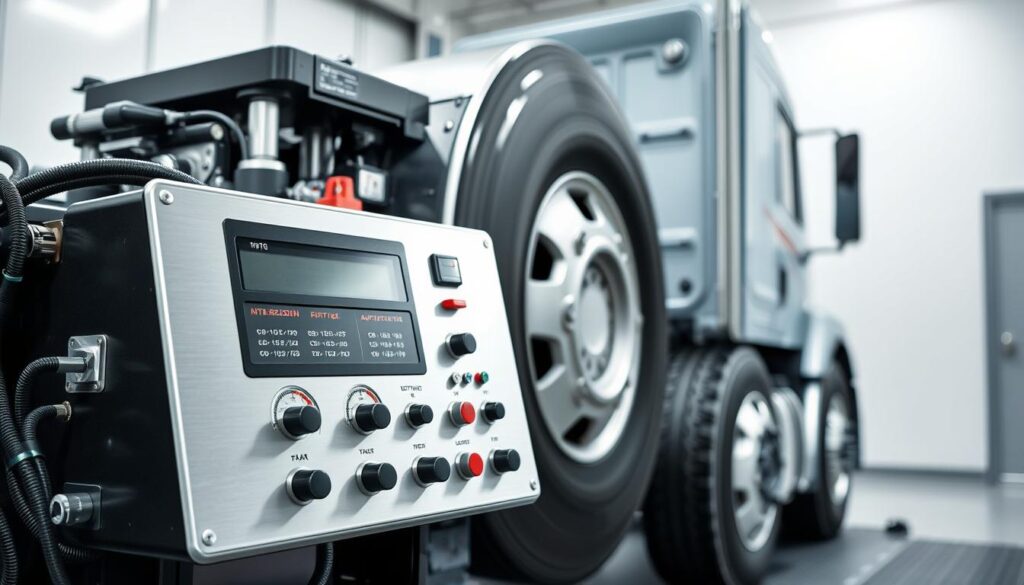
Speed improvements revolutionize shop efficiency. Electronic systems complete measurement cycles in approximately six seconds, compared to several minutes for manual methods. For a shop processing 20 truck wheel assemblies daily, this translates to saving three to four hours of labor time every day. A facility balancing 100 wheels weekly can process an additional 15-20 wheel sets per week with the same staffing levels, directly enhancing revenue potential without proportional labor cost increases.
Precision within ±1 gram ensures optimal wheel performance for demanding applications. Commercial truck operators immediately notice the difference in ride quality—reduced driver fatigue on long hauls and minimized cargo damage from excessive vibration. These tangible benefits justify premium service pricing and build customer loyalty.
| Performance Metric | Electronic | Manual | Advantage |
|---|---|---|---|
| Measurement Time | 6 seconds | 4-6 minutes | 40-60x faster |
| Daily Wheel Capacity | 30-40 assemblies | 15-20 assemblies | 100% productivity gain |
| Training Period | 2-4 hours | 2-3 weeks | Minimal skill barrier |
| Accuracy Range | ±1 gram | ±5-10 grams | 5-10x more precise |
Ergonomic and safety benefits significantly impact workplace quality. Electronic systems eliminate the repetitive physical strain associated with manual bubble balancing, reducing operator fatigue and minimizing workplace injury risks. Advanced features like automatic wheel dimension measurement eliminate manual entry errors, while memory functions store specifications for complete wheel sets.
The training advantage is especially valuable in today’s competitive labor market. Intuitive touchscreen interfaces guide technicians through each step, enabling new employees to perform professional-quality work within hours. This simplified operation reduces dependence on highly skilled technicians for routine balancing tasks, freeing experienced staff for complex diagnostic work.
Versatility across wheel sizes is critical for shops serving diverse fleets. Modern electronic balancers accommodate everything from light commercial vehicle wheels to heavy-duty semi-truck assemblies exceeding 200 pounds, including wide-base single tires and aluminum wheel configurations. Adjustable mounting systems and high weight capacity mean a single balancer handles virtually any commercial application.
When Manual Wheel Balancers Are the Better Choice
Manual wheel balancers continue to serve vital roles in commercial truck maintenance, particularly for operations where simplicity, portability, and independence from electrical infrastructure outweigh speed advantages. While electronic systems dominate large-scale service centers, numerous business scenarios make manual equipment the more rational investment.
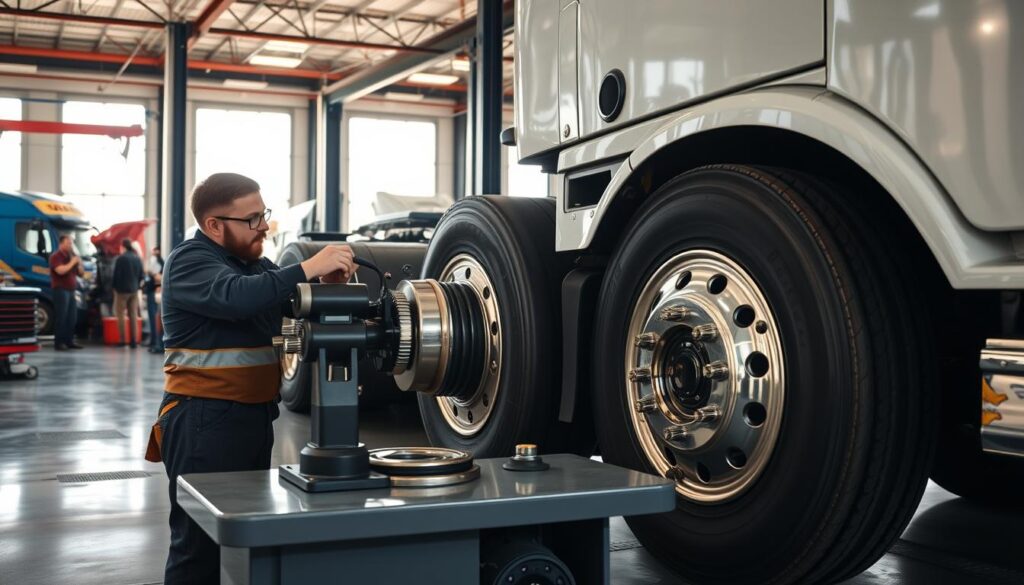
The most compelling argument centers on cost accessibility. Manual balancers typically cost between $300 and $1,200, representing just 10-20% of electronic balancer prices. This dramatic price difference creates opportunities for startup operations and budget-conscious shops to provide functional balancing services while allocating capital toward other critical equipment.
Mobile truck repair operations find particular value in portable manual systems that operate without electrical connections, making them indispensable for roadside assistance and remote service locations. Reliability stands as a defining advantage—with no electronic components, sensors, or software to malfunction, manual units operate for decades with minimal maintenance beyond periodic bearing lubrication.
Several specific business types benefit most from manual equipment: vintage truck restoration facilities with occasional balancing needs, agricultural equipment service centers handling seasonal workloads, fleet maintenance operations with predictable low-volume wheel service requirements, training facilities teaching fundamental balancing principles, and shops needing backup systems for electronic balancer downtime.
Product Reviews: Top Truck Wheel Balancers for 2025
The following reviews cover a range of equipment from premium diagnostic systems to budget-friendly manual options. Each product targets a different segment of the commercial truck service market, and the right choice depends on your operation’s volume, service mix, and budget.
Hunter Road Force Elite RFE2
Hunter Engineering’s Road Force Elite RFE2 represents the most advanced option for shops demanding diagnostic precision beyond traditional balancing. Its patented load roller technology applies pressure to the tire while the assembly spins, measuring force variations that occur during actual road contact. Traditional balancers measure static and dynamic imbalance but miss variations in tire stiffness and uniformity that cause vibration even on perfectly balanced wheels.
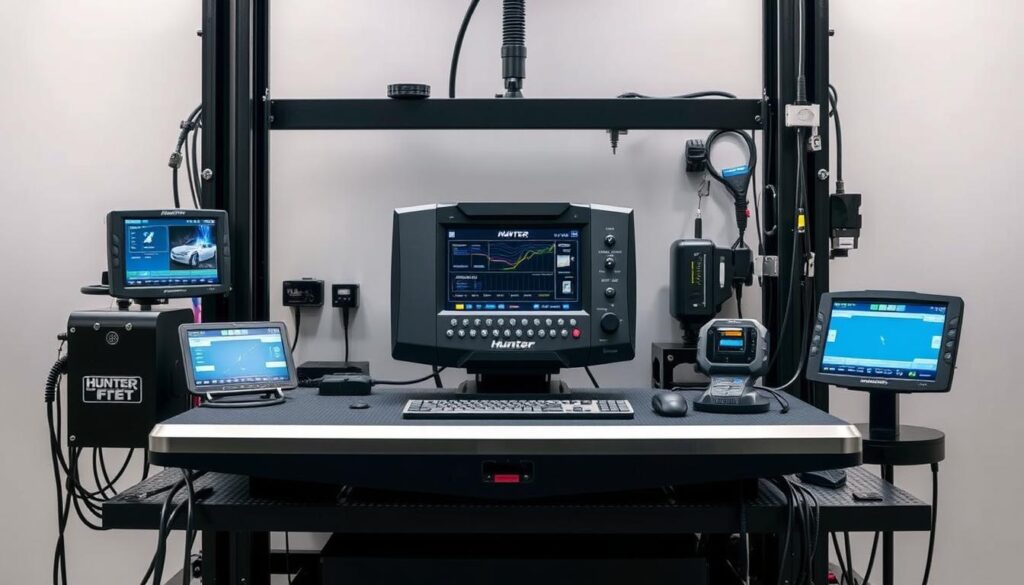
The RFE2 handles wheel assemblies up to 175 pounds with diameters reaching 32 inches, accommodating most commercial truck wheels. Measurement accuracy reaches 0.1 ounce for weight placement, and SmartWeight technology calculates the most efficient counterweight location. The touchscreen interface provides guided procedures, and the system integrates with shop management systems for documentation. Road force measurement capability reaches up to 350 pounds of applied pressure.
The comprehensive diagnostic suite identifies bent wheels, out-of-round conditions, lateral runout, and tire-to-wheel match problems—capabilities that eliminate comebacks and solve vibration issues other balancers cannot address. However, the RFE2 commands the highest price point in the truck balancer category, reaching well into five figures. It requires dedicated floor space, comprehensive operator training, and Hunter-certified technicians for service and calibration. This system makes the most sense for high-volume facilities where diagnostic capabilities directly reduce warranty callbacks and strengthen fleet customer relationships.
Coats 1500-3D Direct Drive
Coats Manufacturing, an industry presence since 1926, built the 1500-3D around direct-drive technology that connects the motor shaft directly to the spindle assembly. This engineering approach eliminates belts, pulleys, and associated components that wear over time, delivering reduced maintenance requirements and consistent measurement accuracy throughout the machine’s service life.
The 1500-3D accommodates wheels up to 42 inches in diameter and 175 pounds, with balancing accuracy of ±0.1 ounce and measurement cycles of 8-10 seconds. It runs on standard 110V single-phase power with a 2-year parts and labor warranty. The heavy-gauge steel frame withstands demanding shop environments, and Coats maintains widespread parts availability across North America.
This mid-range balancer targets operations processing 10-30 wheels daily that need professional accuracy without road force measurement capabilities. The direct-drive motor operates quietly, and vibration damping systems maintain measurement precision over years of service. The main limitations are the lack of advanced diagnostics, a functional but basic LED display compared to modern touchscreens, and manual data entry for wheel dimensions rather than automated measurement.
Ranger DST2420 Heavy Duty
Ranger Products engineered the DST2420 for shop owners who need reliable electronic balancing but face strict budget limitations. This value-focused model uses proven direct-axis drive technology delivering measurement accuracy within hundredths of an ounce—precision that matches equipment costing significantly more.
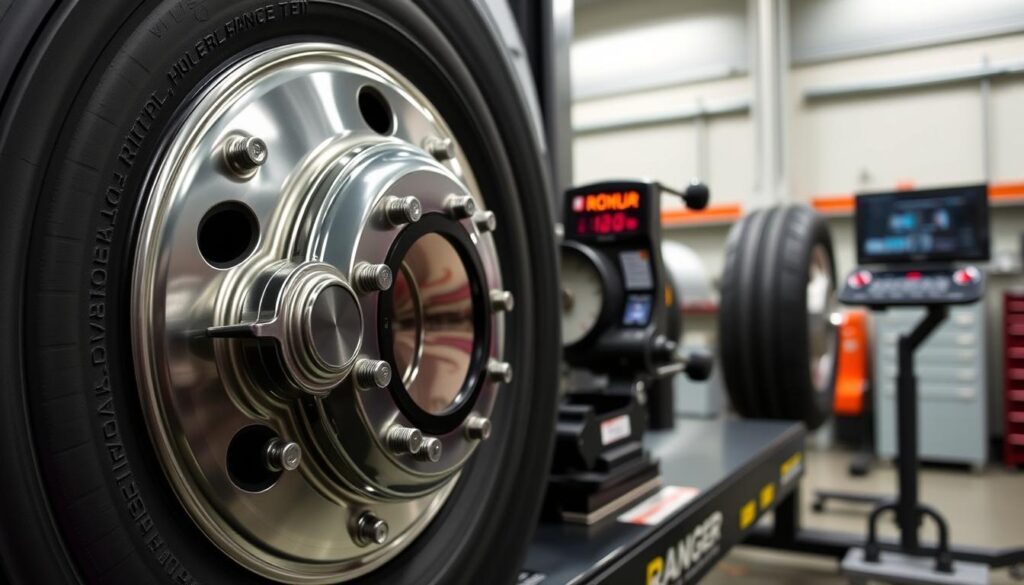
The DST2420 handles wheel assemblies up to 65 kg (143 pounds) with ±1 gram precision and six-second measurement cycles. Heavy-duty steel body construction ensures durability, and a comprehensive truck cone kit comes included—eliminating additional accessory purchases. Memory functions save measurement settings for entire wheel sets, and the compact design fits shops with limited floor space.
This balancer targets the growing segment of operations transitioning from manual bubble balancers to electronic technology. The primary trade-offs are fewer advanced features, a basic user interface compared to touchscreen systems, and potentially less extensive service network coverage than major established brands. For independent operators, startup facilities, and expanding businesses, the DST2420 delivers genuine professional capability at a fraction of premium brand costs.
Hofmann Geodyna 9900p
The Hofmann Geodyna 9900p brings European engineering precision to commercial truck balancing, designed for facilities that service mixed fleets including European commercial vehicles where factory-level accuracy matters most. Multiple sensor types work together to provide comprehensive wheel analysis, including lateral runout detection and radial force variation measurement.
The 9900p handles wheels up to 175 lbs with a diameter range of 10-32 inches and achieves ±0.5 gram accuracy in both static and dynamic modes. Digital sonar measurement with automatic data input eliminates manual measurement errors. Multiple balancing modes—dynamic, static, aluminum, and split-weight optimization—accommodate various wheel types and customer preferences. The system supports software updates via USB or network connection for compatibility with new wheel designs.
Premium pricing positions the 9900p at the high end of the market, and shops should verify local Hofmann dealer presence for service support before purchasing. The extensive feature set requires thorough operator training, and replacement parts typically cost more than domestic alternatives. Facilities with appropriate volume and premium fleet customers find these factors manageable, while shops focused solely on standard balancing may pay for capabilities they rarely use.
The HDJ Perspective
The truck wheel balancer market has matured to a point where even mid-range electronic equipment delivers accuracy that was premium-tier just five years ago. For most independent shops and fleet maintenance operations, the sweet spot sits in the $5,000-$10,000 range—equipment like the Coats 1500-3D or comparable direct-drive systems that deliver professional results without diagnostic features you may never use. Premium systems like the Hunter RFE2 make financial sense only when your customer mix includes fleet accounts that generate enough volume to justify the investment and when road force diagnostics will actually reduce comebacks. The shops we see struggling are those that either over-invest in capabilities they don’t need or under-invest and lose fleet accounts to competitors with better equipment. Match the tool to the work, not the marketing brochure.
Coats 1055 Manual Spin Balancer
The Coats 1055 demonstrates that manual balancing technology remains viable for professional operations when matched to appropriate applications. Unlike cheap manual alternatives, this unit features precision machining and quality materials that distinguish professional equipment from bargain-bin options. The robust construction withstands demanding commercial truck shop environments.
Maximum wheel weight capacity reaches 150 lbs with a diameter range of 13-24 inches. The heavy-gauge steel frame rides on precision sealed bearings for smooth, accurate rotation. The bubble level precision system provides clear visual imbalance detection, and the compact footprint requires under 4 square feet of floor space.
The 1055 fills a specific niche: low-volume truck service facilities, mobile repair operations requiring zero power requirements, remote service locations, and backup systems. Investment requirements run 80-90% lower than electronic alternatives, and mechanical simplicity means virtually nothing to malfunction. The primary limitations are operator-dependent accuracy (±5-10 grams vs. electronic ±1 gram), static-only balancing, time consumption of 3-5 minutes per wheel, and no diagnostic or documentation capabilities. Operations processing more than 10-15 wheels daily will find the manual process inefficient.
Weaver W-937 Bubble Balancer
The Weaver W-937 represents the most basic wheel balancing technology available—a gravity-based bubble level system that has been largely superseded by modern equipment. It handles wheel assemblies up to 150 pounds, weighs approximately 35 pounds for portability, and requires no electrical power whatsoever.
This device suits only the most limited applications: emergency backup, remote locations without electricity, hobby shops, farm equipment maintenance, and vintage truck restoration. Typical precision of ±10 grams or worse falls far short of modern standards, and static-only balancing ignores dynamic imbalance that causes most vibration at highway speeds. What takes six seconds on an electronic balancer requires 10-15 minutes with bubble level technology, and results vary dramatically based on operator skill.
The W-937 should be considered only as an emergency backup rather than a primary balancing solution for any operation serving commercial trucks at highway speeds. For operations where minimal investment is the paramount consideration and performance requirements remain genuinely low, it delivers functional static balancing within severe limitations.
| Model | Type | Max Weight | Best For |
|---|---|---|---|
| ✓ Coats 1500-3D | Electronic Direct Drive | 175 lbs | Best overall value for most shops |
| Hunter RFE2 | Electronic + Road Force | 175 lbs | High-volume fleet centers |
| Ranger DST2420 | Electronic Direct Axis | 143 lbs | Budget-conscious startups |
| Hofmann 9900p | Electronic Premium | 175 lbs | European fleet specialists |
| Coats 1055 | Manual Spin | 150 lbs | Mobile/backup/low-volume |
| Weaver W-937 | Bubble (Static Only) | 150 lbs | Emergency backup only |
Free Professional Fleet Tools
Cost calculators, fault code lookup, maintenance planners, and more—built for owner-operators, fleet managers, and diesel techs. No signup required.
Buying Guide: Choosing the Right Truck Wheel Balancer
Every commercial tire shop faces unique challenges when selecting wheel balancing equipment. The decision between electronic and manual systems affects productivity, service quality, and profitability for years. This framework helps you analyze your situation and make a confident investment.
Assess Your Volume and Truck Types
Weekly wheel assembly volume determines whether manual systems provide adequate capacity or electronic equipment becomes necessary. Shops handling fewer than 10 assemblies weekly can often manage with manual balancers, while operations exceeding 20 weekly assemblies benefit significantly from electronic systems. The types of trucks you service matter equally—light commercial vehicles under 10,000 pounds require different specifications than Class 8 trucks exceeding 33,000 pounds.
Analyze your customer mix carefully. Fleet customers typically bring multiple vehicles requiring consistent, documented service. Owner-operators prioritize speed and convenience. Construction and specialty equipment customers need balancers that accommodate unusual wheel sizes. Mixed-use shops serving both passenger vehicles and trucks should evaluate whether separate dedicated balancers improve workflow efficiency compared to one versatile unit.
Budget and Return on Investment
| Equipment Category | Price Range | Weekly Volume | Typical ROI Period |
|---|---|---|---|
| Manual Bubble Balancer | $500 – $2,000 | 5-15 assemblies | 6-12 months |
| Entry Electronic | $2,000 – $5,000 | 15-30 assemblies | 12-18 months |
| Mid-Range Electronic | $5,000 – $10,000 | 30-60 assemblies | 18-24 months |
| Premium Electronic | $10,000 – $20,000+ | 60+ assemblies | 24-36 months |
A $7,000 electronic balancer saving 10 minutes per assembly in a facility handling 50 monthly assemblies recovers its investment through labor savings in 12-18 months. Reduced comeback rates from more accurate balancing add additional value. Total cost of ownership extends beyond purchase price—factor in installation ($200-$1,000), training, calibration, and maintenance. Financing options spread costs over 24-60 months, with monthly payments of $150-400 often fitting operational budgets more easily than lump-sum investments.
Space and Electrical Requirements
Manual bubble balancers require 2-3 feet square with clearance for wheel manipulation. Standard electronic balancers need 4-6 feet of floor space, while heavy-duty truck models may require 6-8 feet. Most electronic balancers operate on standard 110V single-phase power drawing 5-10 amps, though some heavy-duty models require 220V circuits. Verify your electrical panel capacity and budget $200-600 for professional electrical work if dedicated circuits are needed.
Position equipment where adequate lighting illuminates wheel surfaces and sufficient overhead clearance allows lifting heavy truck wheels onto the balancer shaft. Manufacturers typically recommend placement on 4-6 inch reinforced concrete to ensure stability and prevent calibration drift. Per the TMC’s recommended practices for tire service equipment, proper equipment foundation and placement directly affect measurement accuracy over the life of the machine.
Warranty and Service Support
Standard warranties typically cover 1-3 years on major components including spindles, motors, and electronics. Nearby qualified service technicians minimize downtime to hours rather than weeks—research authorized service providers in your area before purchasing. Parts availability separates major manufacturers from lesser-known brands, with established companies maintaining extensive parts inventories with overnight shipping.
Extended warranty options covering 4-5 years cost roughly 10-15% of purchase price but eliminate major repair expenses during peak operational years. Service contracts offering preventive maintenance and priority repair response run $300-800 annually and suit high-volume operations where downtime directly impacts revenue. The CVSA’s out-of-service criteria for tires and wheels remind us that equipment downtime doesn’t just cost labor—it can mean vehicles sitting with tire issues that prevent legal operation.
Key Recommendation
Request live demonstrations before purchasing any balancer. Bring your own truck wheel assemblies to test equipment with the actual work you perform daily. Talk with current users, verify local service support, and analyze total ownership costs beyond the sticker price. A $2,000 savings on purchase price means nothing if parts take three weeks to arrive.
Frequently Asked Questions
How often should commercial truck wheels be balanced?
Commercial truck wheels should be balanced every time tires are mounted, rotated, or replaced. Beyond those service intervals, most fleet maintenance programs recommend rebalancing every 12,000 to 15,000 miles or when drivers report vibration at highway speeds. Steer axle wheels require more frequent attention than drive or trailer positions because imbalance at the steer position directly affects driver fatigue and handling precision. Any time a wheel weight is lost or a tire is repaired, rebalancing is necessary. Federal tire requirements under 49 CFR 393.75 mandate that tires be in safe operating condition, and excessive vibration from imbalance can accelerate wear to non-compliant tread depths.
What is road force balancing and when do trucks need it?
Road force balancing uses a loaded roller pressed against the spinning tire to simulate real-world driving conditions and measure force variations in the tire and wheel assembly. Standard balancing only measures weight distribution, while road force measurement detects tire stiffness variations, out-of-round conditions, and wheel-to-tire match issues that cause vibration even when weight balance is perfect. Trucks benefit from road force balancing when standard balancing fails to eliminate vibration complaints, when diagnosing persistent ride quality issues, or when mounting premium tires where maximizing tire life justifies the additional diagnostic investment.
What is the difference between static and dynamic wheel balancing?
Static balancing corrects weight distribution around the wheel’s vertical axis, addressing up-and-down bounce at speed. Dynamic balancing corrects weight distribution across both the vertical and horizontal planes, addressing side-to-side wobble in addition to bounce. Commercial trucks operating at sustained highway speeds require dynamic balancing because heavier wheel assemblies and higher loads amplify lateral forces that static-only balancing cannot address. Manual bubble balancers provide only static correction, while electronic balancers measure and correct both planes simultaneously.
How much does a commercial truck wheel balancer cost?
Commercial truck wheel balancers range from approximately $300 to over $20,000 depending on technology and capability. Manual bubble balancers cost $300 to $1,200. Entry-level electronic balancers range from $2,000 to $5,000. Mid-range electronic systems with direct-drive technology cost $5,000 to $10,000 and serve most established shops effectively. Premium systems with road force measurement exceed $10,000. When evaluating cost, calculate total ownership including installation, training, maintenance, and the labor savings that electronic systems deliver over manual methods, per guidance from the SAE’s wheel and tire service standards.
Can truck wheels be balanced without removing them from the vehicle?
On-vehicle balancing is possible using portable electronic balancers that mount to the wheel hub, but this method has significant limitations for commercial trucks. It typically measures only the tire and wheel assembly without isolating hub, drum, or rotor imbalance. Most professional shops remove the wheel for off-vehicle balancing because it provides more accurate results, allows thorough inspection of wheel and tire condition, and enables both static and dynamic correction. On-vehicle methods are generally reserved for emergency roadside situations where removal is impractical.
What causes commercial truck wheels to go out of balance?
Several factors cause commercial truck wheels to lose balance over time. Normal tire wear gradually redistributes weight as tread depth decreases unevenly. Wheel weight loss from road impacts, curbing, or adhesive degradation is common on commercial vehicles subjected to rough conditions. Tire repairs involving patches or plugs add localized weight. Rim damage from potholes creates permanent imbalance. Extreme temperature cycles affect tire compound consistency, and debris accumulation inside the tire or wheel assembly adds unpredictable weight. Dual tire installations are especially prone to balance issues from uneven wear between inner and outer tires.
Investing in the Right Wheel Balancing Equipment
Proper truck wheel balancer selection directly impacts your shop’s capability to deliver quality commercial truck service over 10-15 years of equipment life. Electronic systems provide superior accuracy and speed for high-volume operations, while manual balancers serve specific needs where simplicity and portability matter most. Your choice should align with shop volume, the truck types you service, and customer expectations rather than generic recommendations.
Shops processing significant weekly wheel volumes benefit most from professional electronic equipment like the Coats 1500-3D or Hunter Road Force Elite, where faster cycle times, diagnostic capabilities, and documentation features justify the investment. Low-volume operations or mobile services can start with manual equipment and upgrade as business grows. Whatever you choose, request demonstrations with your own wheels, verify local service support, and analyze total ownership costs. The right equipment builds your reputation for quality work and positions your operation to meet fleet customer demands.
Help a Fellow Tech or Fleet Manager
If this guide helped you evaluate wheel balancing equipment, share it with colleagues making the same decision. Good information saves shops from costly equipment mistakes.