
By Michael Nielsen, Editor & Publisher | 15+ Years in Diesel Repair
Last Updated: December 2024
📖 Estimated reading time: 18 minutes
Modern heavy-duty trucks demand more from technicians than ever before. Advanced emissions systems, electronic controls, and complex powertrains require professional credentials that prove your expertise. ASE certification for diesel technicians has become the nationally recognized standard for validating technical skills across the United States commercial vehicle industry.
This comprehensive guide walks you through every step of earning your ASE diesel credentials. Whether you’re starting your career or pursuing master technician status, you’ll find clear pathways to advancement, including test preparation strategies, specialty areas, and recertification requirements that keep your skills current.
Certified professionals enjoy measurable advantages in today’s competitive job market. According to the U.S. Bureau of Labor Statistics, the median annual wage for diesel service technicians reached $60,640 in May 2024—and certified technicians typically command higher wages than their non-certified counterparts. Employers actively seek technicians with verified skills, making your investment in professional development a strategic career move.
Key Takeaways
- Industry Standard: ASE credentials represent the nationally recognized benchmark for diesel technician competency, with over 250,000 professionals holding certifications.
- Eight T-Series Tests: Master Technician status requires passing all eight medium/heavy truck examinations covering engines, brakes, electrical systems, and more.
- Experience Required: Two years of documented hands-on diesel repair experience is mandatory, though accredited training programs can substitute for one year.
- Affordable Investment: Test fees range from $53-$59 per exam plus a $34 registration fee—typically recovered within months through wage increases.
- Five-Year Validity: All certifications expire after five years and require recertification to maintain your credentials.
- Salary Impact: Certified technicians typically earn $3-$6 more per hour than non-certified counterparts, with master technicians commanding even higher premiums.
Understanding ASE Certification for Diesel Professionals
The credentialing system in the diesel industry provides objective validation of technical expertise and problem-solving abilities. The certification process establishes clear benchmarks that separate qualified professionals from untrained workers, benefiting both technicians seeking career advancement and employers searching for skilled workforce members.
What Is ASE Diesel Certification?
ASE diesel credentials represent a nationally recognized standard for measuring technician competency in commercial vehicle repair. These certifications verify that a professional diesel mechanic possesses the knowledge required to diagnose and repair complex systems. The credential demonstrates mastery of specific technical areas through rigorous examination developed by industry experts.
The National Institute for Automotive Service Excellence operates as an independent nonprofit organization established in 1972. This institution developed voluntary testing programs to improve service quality across the automotive industry. Today, ASE administers certification examinations for multiple vehicle categories, including medium and heavy-duty diesel applications covering Class 4 through Class 8 trucks.
Why Credentials Elevate Career Prospects
ASE certification provides tangible proof of technical competence that distinguishes qualified technicians in competitive job markets. Employers use these credentials as reliable indicators of a candidate’s capability to handle sophisticated diagnostic work. The certification also demonstrates commitment to professional development and ongoing learning—qualities fleet managers actively seek when building maintenance teams.
Meeting Industry and Workplace Standards
Modern diesel industry standards increasingly require formal certification for employment at fleet operations and commercial repair facilities. Major trucking companies prioritize ASE-certified technicians when filling positions, and many dealerships require certification as a condition of employment.
| Industry Segment | Certification Preference | Common Requirements |
|---|---|---|
| Commercial Dealerships | Required for hire | Minimum 3 ASE tests |
| Fleet Maintenance Operations | Strongly preferred | Specific system certifications |
| Independent Repair Shops | Competitive advantage | Master certification valued |
| Government Fleet Services | Often mandatory | Current certification status |
ASE Certification Diesel: Complete T-Series Test Breakdown
Diesel technicians pursuing ASE credentials must navigate a detailed certification structure designed specifically for medium and heavy truck systems. The T-series test categories provide clear pathways for professionals to validate their technical knowledge across multiple specializations. Each examination focuses on critical competencies that employers actively seek in today’s commercial vehicle repair industry.
T1 Gasoline Engines
This category addresses gasoline powerplants found in lighter medium-duty trucks. Technicians demonstrate knowledge of fuel systems, ignition components, and emission controls for gas engines in commercial applications.
T2 Diesel Engines
The T2 diesel engines certification stands as the most critical credential for diesel technicians. This examination covers fuel injection systems, turbochargers, engine diagnostics, and diesel-specific repair procedures. Professionals working primarily with diesel powertrains prioritize this test above all others, as it validates core competencies essential to the trade.
T3 Drive Train
This test evaluates expertise in manual transmissions, clutch systems, differentials, and driveline components. Heavy-duty drivetrain knowledge separates qualified technicians from general automotive mechanics, covering the unique demands of commercial vehicle powertrains.
T4 Brakes
Brake system certification encompasses both hydraulic and air brake technologies. Technicians must understand antilock systems, brake balance, and safety regulations governing commercial vehicle stopping performance—critical knowledge for maintaining 49 CFR 393.40 brake system compliance requirements.
T5 Suspension and Steering
This category covers steering mechanisms, suspension components, wheel alignment, and tire systems. Commercial vehicle suspension requires specialized knowledge beyond passenger car applications, including air ride systems and heavy-duty steering gear.
T6 Electrical and Electronic Systems
Modern diesel vehicles rely on complex electronic controls and multiplexed networks. This examination tests diagnostic abilities with computerized systems, wiring diagnosis, and electronic component repair—skills increasingly essential as trucks become more technologically sophisticated.
T7 Heating, Ventilation, and Air Conditioning
Climate control certification addresses refrigerant handling, HVAC diagnostics, and environmental compliance. Commercial vehicle climate systems present unique challenges compared to smaller vehicles, including sleeper cab systems and auxiliary power units.
T8 Preventive Maintenance Inspection
This test focuses on comprehensive inspection procedures and DOT inspection requirements. Technicians must demonstrate knowledge of preventive maintenance schedules and regulatory compliance standards under 49 CFR Part 396.
Achieving Master Technician Status
Earning master diesel technician status requires passing all eight T-series examinations. This prestigious designation demonstrates comprehensive expertise across all commercial vehicle systems. Master technicians command higher salaries and receive priority consideration for advanced positions, diagnostic specialist roles, and shop leadership opportunities.
250,000+
Professionals currently hold ASE certifications nationwide — Source: ASE
Eligibility Requirements and Work Experience Standards
ASE certification prerequisites ensure that only qualified professionals with verified hands-on experience earn these industry-respected credentials. Understanding these requirements helps you plan your certification journey effectively while meeting the standards that maintain program integrity.
Documented Hands-On Experience Requirement
You must accumulate at least two years of relevant diesel technician work experience before receiving your ASE certification. This requirement applies to each specific test area you pursue. The experience must involve actual diagnostic and repair work on diesel vehicles, not just parts replacement or basic maintenance tasks.
ASE allows you to take tests before completing the full two years. However, your certification credential will not be awarded until you submit documentation proving you have met the experience requirement.
Acceptable Work Experience Documentation
Verifying your work history requires official documentation from employers. Acceptable proof includes employer letters on company letterhead, W-2 forms, pay stubs, or detailed employment records. Your documentation must specify your job duties and responsibilities related to diesel repair and diagnostics.
The verification letter should clearly describe the types of vehicles you worked on and the systems you diagnosed. Generic job descriptions without specific technical details may not satisfy ASE eligibility requirements.
Educational Substitutions and Training Programs
Completion of accredited technical training programs can reduce your work experience requirement. Graduating from a qualifying program substitutes for one year of the two-year requirement, meaning you would need only one additional year of hands-on work experience.
Qualifying programs include community college automotive technology degrees, vocational-technical school diesel programs, and certain manufacturer-sponsored training courses accredited by the ASE Education Foundation. The program must include substantial hands-on training components to qualify for experience credit.
Apprenticeship Credit Toward Eligibility
Participation in registered diesel apprenticeship programs provides a structured pathway to meet certification prerequisites. These programs combine classroom instruction with supervised work experience. The time spent in a registered apprenticeship counts fully toward your two-year requirement, allowing you to earn while you learn and prepare for certification simultaneously.
| Experience Type | Credit Toward Requirement | Documentation Needed |
|---|---|---|
| Full-time work experience | Full credit (24 months) | Employer letter, W-2 forms |
| Accredited technical program | 1-year substitution | Diploma or transcript |
| Registered apprenticeship | Full credit | Program completion certificate |
| Part-time work experience | Prorated credit | Detailed employment records |
The ASE Testing Process Explained
Diesel technicians face a comprehensive computer-based testing process designed to measure real-world competency and diagnostic skills. The testing system provides consistent evaluation standards that ensure certified professionals meet industry expectations.
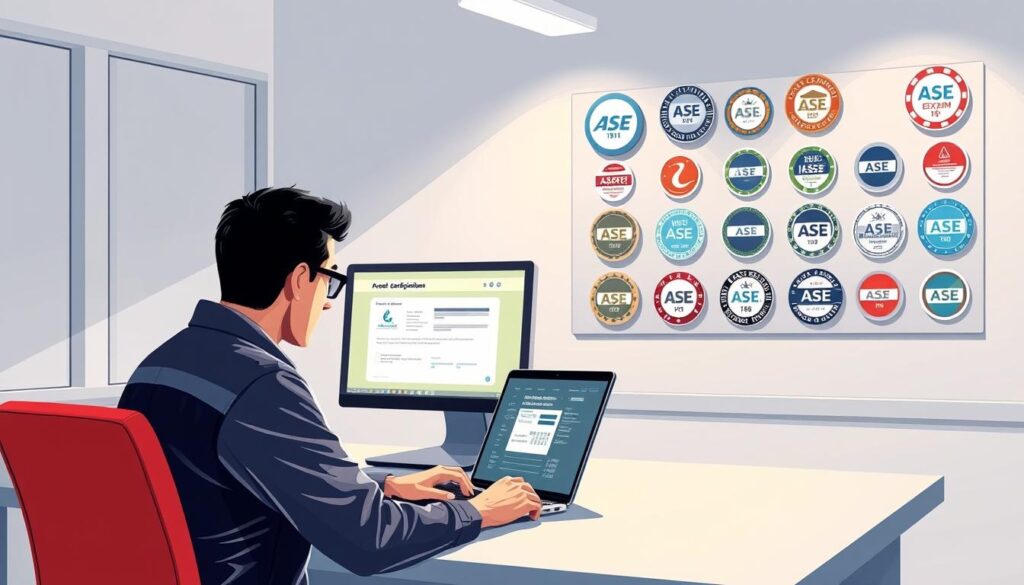
Modern Computer-Based Testing Format
ASE uses a computer-based exam system that offers immediate preliminary results and flexible scheduling. This electronic format allows candidates to receive instant feedback on their performance. The digital interface presents questions clearly and allows technicians to review their answers before submitting the test.
Question Structure and Exam Layout
Each certification test contains 40 to 60 scored multiple-choice questions covering specific task areas within the diesel category. The ASE test format includes standard questions plus diagnostic two-part scenarios that evaluate both troubleshooting logic and repair knowledge. These scenario-based questions present a realistic service situation followed by a related technical question.
Questions are developed by panels of industry experts, including educators and working technicians. All questions referencing diagnostic and repair scenarios are regularly updated to reflect current technology. Trick questions and manufacturer-specific questions are not permitted.
Registration and Testing Availability
Computer-based tests are available year-round at authorized testing facilities across quarterly registration windows. Candidates must register through the ASE website and schedule their examination in advance. When you register, you have 90 days from the date of purchase to schedule an appointment and take your test.
Prometric Testing Center Procedures
ASE exams are administered at certification testing centers operated by Prometric across the United States and Canada, with over 450 locations available. Candidates must bring valid government-issued identification to their appointment. Testing facilities provide a secure, proctored environment with computer workstations and strictly enforce rules about personal items and reference materials.
Scoring Standards and Results
ASE tests use criterion-referenced evaluation rather than norm-referenced comparison. This means performance is measured against established competency standards, not against other test-takers. Candidates receive their results immediately following testing. If you fail a test, you must wait 30 days before purchasing it again.
Stay Current on Diesel Industry Standards
Get weekly insights on certification requirements, regulatory changes, and career advancement strategies delivered to your inbox.
Effective Preparation Strategies for ASE Diesel Exams
Proper certification exam preparation requires a combination of quality study materials, practical experience, and dedicated time commitment. Diesel technicians who approach ASE testing with a strategic plan significantly increase their chances of passing on the first attempt, reducing costs and accelerating career advancement.
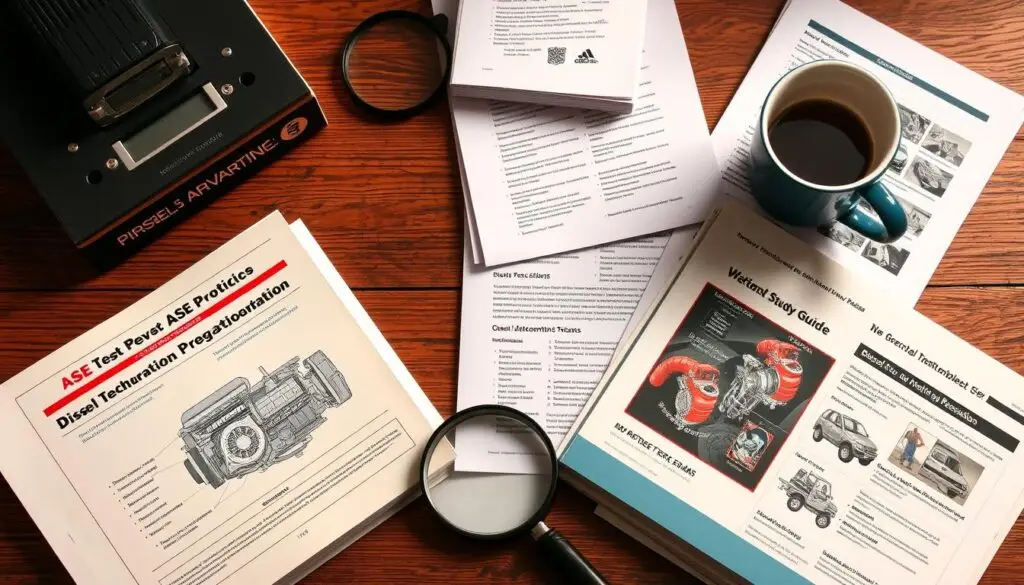
Leveraging Official Study Resources
The diesel certification study guide materials published directly by ASE represent the most authoritative preparation resources available. These official test preparation booklets contain detailed task lists that outline exactly what knowledge each exam assesses. Each guide includes sample questions that mirror the actual test format and difficulty level.
ASE develops these materials using the same framework that creates the actual certification exams. The task lists break down every skill area by percentage, showing which topics receive the most emphasis. This transparency allows technicians to focus their study efforts on the most heavily weighted content areas.
Digital Practice Examinations
ASE practice tests provide invaluable feedback on knowledge gaps before taking the actual certification exam. The official practice tests use the same question formats and difficulty levels as real exams. Third-party platforms offer additional practice opportunities with immediate scoring and detailed explanations.
These digital study materials simulate the computer-based testing environment. Regular practice with timed tests builds confidence and improves time management skills during the actual examination.
Manufacturer Documentation and Technical Bulletins
Technical Service Bulletins provide current information about real-world repair procedures and diagnostic techniques. Manufacturers regularly update these documents to reflect the latest system designs and troubleshooting methods. Reviewing TSBs bridges the gap between textbook theory and practical application.
Developing a Systematic Study Plan
A structured study schedule spreads preparation over several weeks rather than cramming before the test date. Effective plans allocate more time to weaker subject areas while maintaining proficiency in stronger topics. Most successful candidates dedicate one to two hours daily to focused study sessions.
Breaking the material into manageable segments prevents overwhelm and improves retention. Setting specific weekly goals creates accountability and tracks progress toward test readiness.
Maintaining Your ASE Certification Status
Every ASE certification comes with a built-in expiration date that demands attention and action from certified technicians. The five-year recertification cycle ensures that professionals stay current with rapidly evolving diesel technology, from new emission systems to advanced electronic controls.
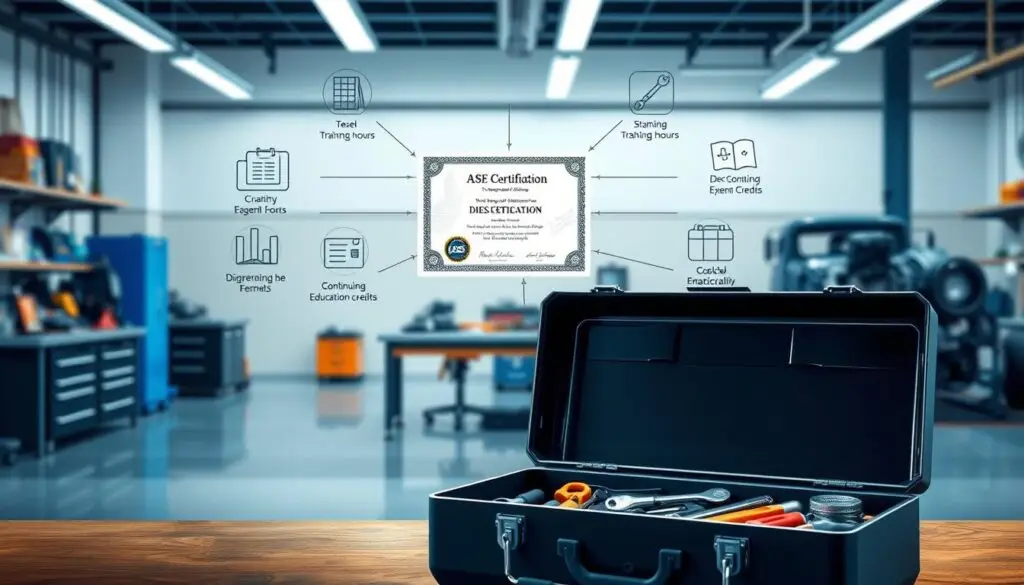
Understanding the Validity Period
ASE diesel certifications remain valid for exactly five years from the date of issue. After this period expires, the credential becomes inactive unless renewed through proper channels. Technicians must complete recertification activities before the expiration date to maintain uninterrupted certification status.
Renewal Testing Options
The most direct path to certification renewal involves retaking the certification exam. Recertification tests contain updated content reflecting current technology and repair procedures. These exams are typically about half the length of initial certification tests but maintain the same rigorous standards.
Technicians who let their credentials lapse face stricter requirements. They must meet all initial certification standards again, including the full testing process without streamlined options.
Alternative Education Pathways
ASE approves specific training programs that grant continuing education credits for recertification purposes. These courses allow technicians to maintain credentials through documented professional development rather than retesting. ASE also offers a Renewal App subscription for $48/year that delivers monthly questions to help maintain certification.
Managing Multiple Certifications
Diesel technicians often hold several certifications with different expiration dates. Effective tracking prevents unexpected lapses that could impact employment or advancement opportunities. Best practices include creating a calendar system marking each certification’s expiration date, setting reminders six months before renewal deadlines, and maintaining organized records of all continuing education activities.
The HDJ Perspective
In our conversations with fleet managers across the country, ASE certification consistently emerges as the first filter in hiring decisions. The credential has become table stakes for technicians seeking positions at major fleets and dealerships. What’s changing is how employers view master certification—it’s no longer just a credential but an indicator of a technician’s commitment to comprehensive expertise. With the ongoing technician shortage projected to continue through 2034, certified professionals have never been in a stronger position to negotiate compensation and choose their work environment. The investment in certification—both time and money—pays dividends throughout a career in ways that extend well beyond the initial wage premium.
Advanced Specialization Paths for Diesel Technicians
As diesel engines evolve with sophisticated electronics and emission controls, technicians who pursue advanced training gain competitive advantages in specialized fields. These specialization paths position professionals as experts in high-demand technical areas that command premium compensation.
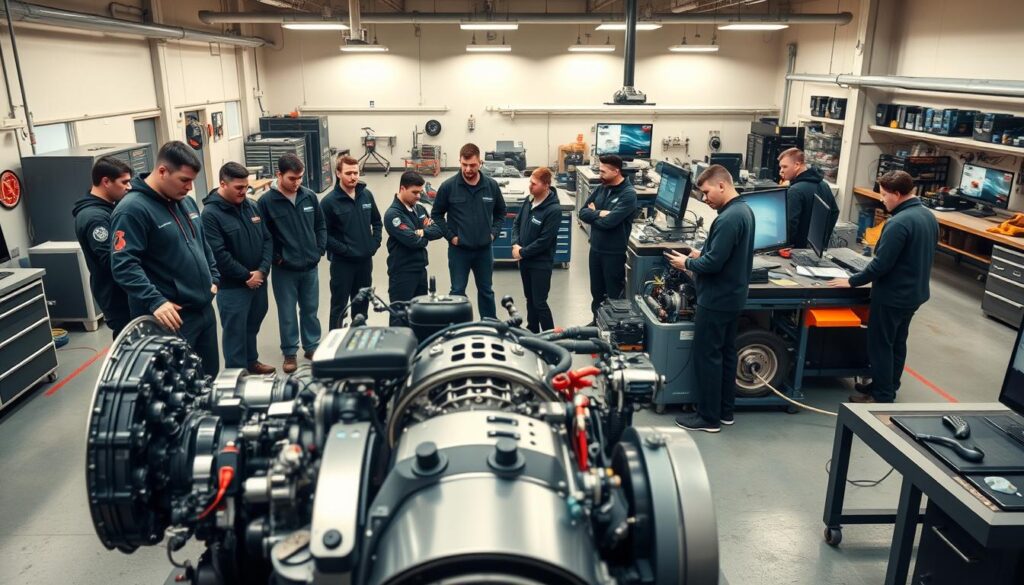
L2 Electronic Diesel Engine Diagnosis Specialist
The L2 certification represents the pinnacle of diesel diagnostic expertise. This advanced-level test identifies technicians who possess knowledge to diagnose sophisticated diesel engine performance problems on medium and heavy-duty trucks. Prerequisites include current certification in diesel engines (T2) and electrical/electronic systems (T6).
The examination covers electronic diesel engine controls, air induction and exhaust systems, fuel systems, and specialized diagnostic procedures. Many questions relate to a composite vehicle equipped with cross-sectional electronic diesel engine control technology used by all major manufacturers.
Emission Systems Expertise
Specialized emission control knowledge addresses the complex aftertreatment systems that technicians service most frequently. This specialization focuses on selective catalytic reduction (SCR), diesel particulate filters (DPF), and exhaust gas recirculation (EGR) technologies that dominate modern commercial vehicle maintenance.
Alternative Fuel and Hybrid Powertrains
Forward-thinking technicians pursue expertise in hybrid diesel systems and alternative fuel applications. This emerging specialization covers hybrid diesel-electric powertrains, compressed natural gas (CNG) conversions, and renewable diesel technologies. The ASE F1 certification addresses compressed natural gas vehicle systems specifically.
Financial Investment and Certification Costs
Financial planning for ASE certification involves understanding test fees, study materials, and potential employer support options. The certification investment remains relatively modest compared to other professional certifications in technical fields, and the return on investment typically materializes within months.
Registration and Test Fees
Each ASE diesel test requires separate fees. The current fee structure includes a $34 registration fee per order (regardless of how many tests you schedule), plus $53-$59 per individual test. Advanced-level tests (L1, L2, L3) cost approximately $106-$118 each.
| Certification Level | Number of Tests | Estimated Total Cost |
|---|---|---|
| Single Certification | 1 test | $87-$93 |
| Specialist (3 tests) | 3 tests | $193-$211 |
| Master Technician | 8 tests | $458-$506 |
| Master + L2 Advanced | 9 tests | $564-$624 |
Study Resources and Preparation Materials
Official ASE study guides typically cost between $15 and $30 per individual test area. Comprehensive preparation courses range from $100 to $500 depending on delivery format and provider. Online practice test subscriptions add to preparation expenses but significantly improve first-time pass rates.
Company-Sponsored Certification Support
Many diesel service employers recognize the value certified technicians bring to their operations. Employer reimbursement programs often cover full or partial testing and preparation costs as part of professional development benefits. Fleet maintenance departments and dealership service centers frequently sponsor certification for technicians meeting performance standards.
Career Earnings Potential and Investment Recovery
The certification ROI becomes apparent within months of achieving credentials. ASE-certified professionals typically command wage premiums of $3 to $6 per hour compared to non-certified counterparts. At a conservative $3 per hour increase, a full-time technician recovers complete test and study material costs within three to six months. Over a career spanning decades, this represents substantial financial returns.
Share Your Diesel Expertise With the Industry
Are you an ASE Master Technician or fleet maintenance manager with insights on certification and professional development? Heavy Duty Journal welcomes contributions from industry professionals.
Salary Impact and Career Advancement
ASE certification directly impacts your earning potential, with certified diesel technicians commanding significantly higher wages than their non-certified counterparts. The credential demonstrates proven competency and provides employers with confidence in your abilities.
Documented Wage Premiums
ASE certified diesel technician pay typically exceeds non-certified wages by $3 to $6 per hour, representing $6,000 to $12,000 in additional annual income for full-time employment. The premium reflects the competitive advantage that certification provides to service operations through faster, more accurate diagnostics and reduced comeback rates.
Regional Salary Variations
Diesel technician salary varies considerably based on location, with regional differences influenced by cost of living, industry concentration, and technician availability. According to BLS data, areas with robust transportation sectors or technician shortages offer above-average compensation, with some metropolitan areas exceeding $70,000 annually for experienced technicians.
Master Technician Premium
Master technician compensation reaches significantly higher levels than baseline certified positions. Technicians who achieve master status through comprehensive certification earn $5 to $10 per hour more than entry-level technicians, recognizing their ability to handle any repair complexity and mentor junior staff members.
Professional Recognition and Blue Seal Excellence
Professional credentials transform how customers, employers, and industry peers perceive diesel technicians. ASE certification provides verifiable proof of technical competency that distinguishes qualified professionals from uncertified workers.
Blue Seal of Excellence Program
The ASE Blue Seal recognition represents the industry’s highest shop-level achievement. Facilities earn this prestigious designation when at least 75 percent of their technicians hold current ASE certifications. Blue Seal shops display distinctive signage that differentiates them in local markets, with customers specifically seeking these facilities for the quality assurance the certification provides.
Industry Networking and Training Access
Professional associations such as the Technology & Maintenance Council (TMC) of the American Trucking Associations welcome certified technicians as members. These organizations provide technical bulletins, research publications, and peer support networks that enhance knowledge bases. Many manufacturers limit advanced training programs to ASE-certified professionals, ensuring continued access to cutting-edge technical education.
Frequently Asked Questions
How long does it take to get ASE certified as a diesel technician?
The timeline depends on your starting point. If you have no prior experience, expect approximately two years to meet the work experience requirement, though accredited training programs can substitute for one year. Once eligible, you can schedule and complete individual certification tests within weeks. Most technicians pursue certifications incrementally over several years while working, adding credentials as they gain experience in different systems. The testing itself takes 75-90 minutes per exam.
What is the difference between ASE T2 and L2 certifications?
The T2 certification covers fundamental diesel engine knowledge including fuel systems, turbochargers, and general repair procedures—it’s the core credential for diesel technicians. The L2 Electronic Diesel Engine Diagnosis Specialist is an advanced-level certification that requires passing both T2 and T6 (Electrical/Electronic Systems) first. L2 focuses specifically on sophisticated diagnostic skills for electronic engine controls and is designed for experienced technicians who serve as diagnostic specialists in their shops.
Do employers pay for ASE certification?
Many employers offer partial or full reimbursement for ASE testing and study materials as part of employee development programs. Fleet maintenance operations, dealerships, and larger independent shops commonly sponsor certification for technicians who meet performance standards. Some employers require passing the exam before reimbursement, while others cover costs upfront. Always discuss certification support during hiring negotiations or performance reviews—it’s an increasingly common benefit in the competitive technician job market.
Can I take ASE tests without work experience?
Yes, ASE allows you to take certification tests before completing the full two-year work experience requirement. However, your certification credential will not be issued until you submit documentation proving you’ve met the experience threshold. This approach lets you test while your knowledge is fresh from training, with the credential awarded once your experience documentation is approved. Graduates of accredited programs need only one additional year of experience.
How much do ASE certified diesel mechanics make compared to non-certified?
According to BLS data, the median annual wage for diesel service technicians was $60,640 in May 2024. Certified technicians typically earn $3-$6 more per hour than non-certified counterparts, translating to $6,000-$12,000 additional annual income. Master technicians with all eight T-series certifications command even higher premiums, often $5-$10 per hour above entry-level wages. Geographic location, employer type, and specializations also significantly impact earnings potential.
Taking the Next Step in Your Professional Journey
The diesel industry continues evolving with increasingly complex vehicle systems and stringent emission standards. ASE certification for diesel technicians positions you to meet these challenges with proven expertise, opening doors to higher wages, better positions, and greater career mobility.
Professional diesel technician development starts with a single decision to pursue excellence. Whether you’re documenting work experience for initial eligibility, scheduling your first examination, or planning recertification for existing credentials, each step builds your professional foundation in an industry that needs skilled technicians now more than ever.
Start by reviewing eligibility requirements, selecting appropriate test categories, and developing a structured preparation plan. Register through the ASE website and schedule examinations that align with your career goals. Your certification journey represents more than earning credentials—it reflects your commitment to the professional standards that define successful diesel technicians throughout the industry.
Help a Fellow Technician Get Certified
Know someone considering ASE certification? Share this guide to help them navigate the process and advance their diesel career.