

By Michael Nielsen, Editor & Publisher | 15+ Years in Diesel Repair
Last Updated: January 2026
📖 Estimated reading time: 34 minutes
Diesel mechanics and heavy equipment repair professionals face a unique challenge that affects thousands across the United States. Long shop hours, emergency callouts, and irregular schedules create constant tension between career demands and personal commitments. Achieving diesel technician work-life balance isn’t just about working fewer hours—it’s about building sustainable practices that protect your health, relationships, and career longevity in an industry facing unprecedented workforce shortages.
Industry surveys reveal that 96% of diesel service professionals value paid vacation, with many citing “no weekends” as their top job preference. Yet reality tells a different story. Over 22,000 heavy duty technician positions remained unfilled in 2023, with demand projected to climb through 2028 according to Bureau of Labor Statistics projections. This shortage places enormous pressure on existing crews to cover extended shifts, making work-life balance strategies essential for career sustainability.
This guide provides actionable strategies tested in real repair shop environments—not generic advice. You’ll discover comprehensive approaches covering time management, boundary-setting, physical health, financial planning, and career development that help you reclaim control over your schedule without sacrificing professional success or income stability.
Key Takeaways
- Industry shortage creates pressure: Over 22,000 unfilled positions force existing technicians into extended overtime, making deliberate balance strategies essential.
- Budget around base pay: Financial freedom from overtime dependency starts with building lifestyle expenses within regular 40-hour income only.
- Boundaries require communication: Document availability limits with management in writing and present them professionally before conflicts arise.
- Certifications increase leverage: ASE and manufacturer credentials improve negotiating position for better schedules and preferred employers.
- Health protection is career protection: Recognizing burnout warning signs early prevents injuries and career-ending exhaustion.
- Family time needs protection: Non-negotiable commitments serve as schedule anchors, requiring advance planning and clear communication with supervisors.
Understanding the Work-Life Challenge in Heavy Duty Repair Shops
Working in heavy duty repair shops presents unique challenges that strain both professional capabilities and personal relationships. The diesel repair industry operates under conditions that demand extraordinary commitment from technicians who keep commercial fleets running. These demands create a complex web of workplace pressures and home-life sacrifices that affect thousands of technicians nationwide.
The heavy-duty repair sector faces a crisis that directly impacts every technician’s daily experience. With over 22,000 open positions across the United States, shops struggle to maintain adequate staffing levels. This shortage transforms what should be manageable workloads into relentless schedules that consume personal time and family connections.
The Reality of Extended Shop Hours and Emergency Calls
Most heavy duty technicians work far beyond the traditional 40-hour week. Standard shifts routinely stretch to 10 or 12 hours as shops struggle to meet service demands with insufficient staff. Weekend work becomes the norm rather than the exception, particularly during peak seasons when commercial fleets require maximum uptime.
On-call rotations add another layer of unpredictability to diesel technician work hours. A breakdown doesn’t wait for convenient timing—a refrigerated trailer carrying perishable goods or a construction equipment failure on a job site demands immediate attention. Technicians find themselves responding to emergency calls at all hours, disrupting sleep patterns and family plans.
The technician shortage intensifies these demands exponentially. When shops operate with 60% or 70% of needed staff, remaining technicians absorb the workload. What one person might handle in normal circumstances becomes two or three jobs rolled into one exhausting position.
Effective shop hours management becomes nearly impossible when customer expectations clash with staffing realities. Fleet managers need their vehicles back on the road quickly, creating pressure that flows directly to technicians who already work extended shifts. This cycle perpetuates itself as burnt-out technicians leave the industry, further deepening the shortage.

How Irregular Schedules Impact Family Relationships
The unpredictability of repair work wreaks havoc on family life in ways that accumulate over time. A technician might promise to attend a child’s soccer game or school event, only to receive an emergency service call that demands immediate response. These broken promises, though unintentional, erode trust and create emotional distance that takes years to rebuild.
Marriages bear significant strain under irregular work schedules. The “I’ll be home by six” conversation becomes a painful routine when 6 PM turns into 11 PM after an unexpected breakdown requires attention. Spouses plan dinners, arrange activities, and coordinate household responsibilities around schedules that constantly shift without warning.
Consistent parenting becomes remarkably difficult when work demands fluctuate unpredictably. Children need routine and reliable presence, yet technicians often miss bedtime stories, homework help sessions, and weekend activities. The mental burden of disappointing family members compounds the physical exhaustion from long shifts.
42% of technicians report lacking necessary tools
Less than half feel respected by management—workplace frustrations that amplify home-life tensions
Effective emergency call management requires not just technical skills but also careful communication with family members. Without clear boundaries and mutual understanding, the on-call lifestyle can deteriorate relationships that took years to build.
Physical Demands and Mental Fatigue in Heavy Duty Work
The physical toll of heavy duty repair work extends beyond what most people imagine. Technicians regularly lift components weighing 50 to 100 pounds, contort their bodies into cramped engine compartments, and maintain awkward positions for extended periods. This physical strain accumulates throughout 10 or 12-hour shifts, leaving technicians exhausted when they finally return home.
Repetitive strain injuries plague the profession as technicians perform the same movements hundreds of times weekly. Wrist problems from impact wrench use, back injuries from lifting, and knee damage from concrete shop floors become occupational hazards that worsen with inadequate recovery time between shifts.
Mental fatigue compounds these physical challenges in equally debilitating ways. Modern diesel systems require complex diagnostic thinking—analyzing fault codes, interpreting sensor data, and troubleshooting electronic control systems demands intense concentration. This mental work continues for hours without breaks, draining cognitive resources needed for both work and family life.
Customer pressure adds another layer of stress that weighs heavily on technicians. Fleet managers need vehicles operational immediately, often expressing frustration when repairs take longer than anticipated. Technicians bear the responsibility of keeping entire commercial operations running, a burden that creates constant pressure and anxiety.
The combination of physical exhaustion and mental drain creates a dangerous state where technicians struggle to maintain focus. Safety risks increase when fatigue sets in, yet the industry’s demands rarely allow for adequate rest. Understanding these multifaceted challenges provides essential context for the solutions explored in subsequent sections.
Building a Foundation for Technician Work-Life Balance
The journey toward technician work-life balance starts with honest self-reflection and a clear understanding of your non-negotiable values. Heavy duty technicians who successfully manage demanding schedules don’t rely on luck or temporary fixes. They build a solid foundation based on self-awareness, realistic objectives, and a personal philosophy that guides every decision about work hours and family commitments.
This foundation isn’t created overnight. It requires deliberate effort to assess your current situation, set measurable goals, and develop a framework for making tough choices when overtime opportunities conflict with personal priorities.

Assessing Your Current Schedule and Personal Priorities
Before making any changes, you need a clear picture of where you stand right now. Many heavy duty technicians think they know how many hours they’re working, but the reality often surprises them when they track it systematically.
Start by documenting your actual work hours for one full month. Record when you arrive at the shop, when you leave, and any emergency calls that pull you away from home. Don’t rely on memory—use your phone’s calendar or a simple notebook to track every shift.
Next, identify what you’ve missed during this period. Write down family events, children’s activities, date nights, or personal commitments that fell by the wayside due to work demands. This exercise isn’t about guilt—it’s about creating awareness of the real cost of your current schedule.
Consider these key assessment questions:
- How many hours per week are you actually working versus what you’re scheduled for?
- What percentage of your income depends on overtime pay?
- Which family commitments matter most to you personally?
- When do you feel most physically exhausted or mentally drained?
- What patterns emerge in your work schedule over the past six months?
Technicians who master quality family time understand that this assessment reveals not just time spent at work, but also the mental energy consumed by the job. A technician who’s physically present at home but mentally still troubleshooting a complex repair isn’t fully available to family. Track your energy levels throughout typical workdays and weeks to identify when you feel alert versus depleted.
Setting Realistic Goals for Work Hours and Family Time
Once you understand your current reality, the next step is establishing concrete, measurable objectives. Vague aspirations like “spend more time with family” don’t create meaningful change. Specific goals with clear metrics do.
Instead of general wishes, craft precise commitments. For example: “Be home for dinner four nights per week by 6:30 PM” or “Attend at least three of my child’s soccer games each month.” These specific targets give you a clear benchmark for evaluating progress.
Technicians pursuing work-life integration recognize that goals must balance financial realities with personal priorities. If your household budget currently depends on consistent overtime, an immediate reduction to 40-hour weeks may not be feasible. Set incremental goals that move you toward balance without creating financial crisis.
Consider creating a tiered goal structure:
- Immediate goals (1-3 months): Reduce overtime by 20%, establish one protected family evening per week
- Short-term goals (3-6 months): Limit work to 50 hours weekly, attend major family events without work interruptions
- Long-term goals (6-12 months): Achieve 45-hour average workweeks, build financial buffer to reduce overtime dependency
Your goals should address both quantity and quality of family time. It’s not just about hours at home—it’s about being mentally present and emotionally engaged when you’re there.
Developing Your Personal Balance Philosophy
The final piece of your foundation is articulating a clear philosophy that guides decision-making when work demands conflict with personal priorities. This philosophy becomes your North Star when facing pressure to accept excessive overtime or when emergency calls threaten family commitments.
“We want to make sure they get their eight hours in and go home, to enjoy their family, be healthy, have longevity in life and longevity in the industry. We want fair compensation plans that make them want to not have to work 12-hour days.”
— Aaron Flett, Collision Repair Shop Owner
Your personal philosophy should answer fundamental questions about your values and priorities. What matters most to you beyond your paycheck? What legacy do you want to leave for your children? How do you define success in both your career and personal life?
Technicians who maintain healthy balance typically share core philosophical commitments: family relationships take precedence over non-essential overtime opportunities, long-term health and career sustainability matter more than short-term financial gains, quality of life enhances rather than detracts from job performance, and personal boundaries deserve respect from employers and customers.
Write down your personal balance philosophy in clear, specific language. Make it actionable rather than abstract. For example: “I will not miss my children’s major life events for routine shop work” or “I will preserve Sundays for family time except in genuine emergencies.” This philosophy becomes your framework for evaluating every overtime request, emergency call, and schedule change.
Time Management Strategies for Heavy Duty Technicians
Heavy duty technicians who take control of their schedules discover more balance without sacrificing job performance. The difference between working 50 hours per week and 65 hours often comes down to how efficiently you manage your time during regular shop hours. Smart technician overtime management starts with implementing proven strategies that reduce wasted time and increase productive work.
Most technicians lose valuable time to disorganized workflows, unclear priorities, and reactive scheduling. These problems compound throughout the week, turning manageable workloads into overtime requirements. The good news is that strategic time management can reclaim hours each day without requiring superhuman effort.
Streamlining Your Shop Operations
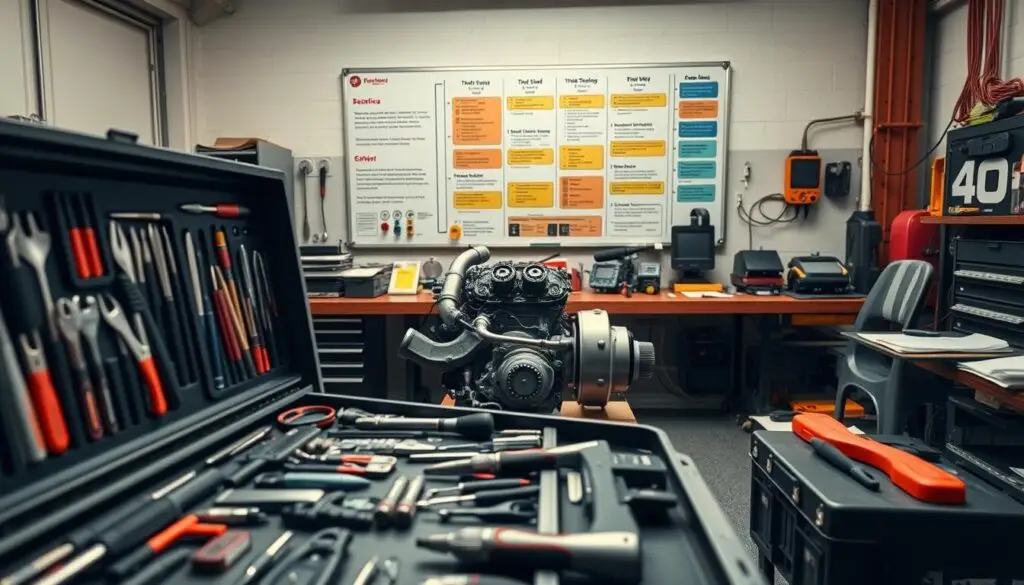
Shop workflow optimization delivers measurable results when implemented consistently. Research from successful repair facilities shows that proper workflow systems save approximately 1.5 hours per technician daily. That adds up to 7.5 hours weekly—nearly an entire workday recovered through better organization.
Start by analyzing where your time actually goes during a typical shift. Track your activities for three days, noting time spent on actual repairs versus searching for tools, waiting for parts, or dealing with administrative tasks. This baseline reveals your biggest time drains.
Implement these workflow improvements to reduce unnecessary overtime:
- Organize your toolbox and work area using a consistent system so you can locate any tool within 30 seconds
- Stage all necessary parts and tools before starting complex repairs to eliminate mid-job interruptions
- Batch similar diagnostic tasks together when possible to maintain focus and reduce mental switching costs
- Create standardized diagnostic checklists for common issues to speed up troubleshooting without missing steps
- Use downtime strategically to prep for upcoming jobs rather than waiting until they arrive
Digital Tools That Control Your Calendar
Modern scheduling technology transforms how you manage your heavy duty technician schedule. Digital work order systems, calendar blocking apps, and automated reminder tools help you take control of your time rather than letting it control you.
Calendar blocking is particularly effective for technicians. This technique involves designating specific time blocks for different types of work throughout your day. Reserve your first two hours for diagnostic work when your mind is freshest, schedule routine maintenance during mid-morning, and tackle heavy repairs after lunch.
Digital scheduling tools provide several advantages over paper-based systems: automated logging of job start and completion times creates accurate records without manual effort, real-time visibility into your workload helps service advisors set realistic customer expectations, and calendar notifications prevent forgotten appointments or scheduled maintenance windows.
A Framework for Task Prioritization
Not all repair jobs carry equal urgency, but without a clear prioritization system, everything feels equally demanding. Effective task management requires distinguishing between what must happen today and what can wait until tomorrow.
Use this decision framework when multiple jobs compete for your attention:
| Priority Level | Job Characteristics | Response Timeline |
|---|---|---|
| Urgent-Important | Safety issues, vehicle down, revenue impact | Immediate action required |
| Important-Not Urgent | Scheduled maintenance, known issues | Schedule within 2-3 days |
| Urgent-Not Important | Customer pressure without real urgency | Evaluate if truly urgent |
| Neither Urgent Nor Important | Nice-to-have improvements | Schedule during slow periods |
Communicate realistic timelines to service advisors and customers based on this framework. When customers understand that their non-urgent repair will be completed in three days rather than today, they typically accept the timeline without issue. This prevents you from feeling pressured to stay late for work that could easily wait.
Setting Boundaries Around Emergency Response
Emergency service calls represent one of the biggest challenges for technician overtime management. The expectation that technicians remain available around the clock destroys work-life balance, yet shops genuinely do face occasional true emergencies.
The solution lies in establishing clear definitions and fair rotation systems. Work with your shop management to define what constitutes a legitimate emergency versus what can wait until regular business hours. True emergencies typically involve safety hazards, completely disabled commercial vehicles with time-sensitive cargo, or situations causing significant financial loss.
Advocate for these emergency call practices at your shop:
- Implement a rotating on-call schedule so emergency responsibility spreads evenly across all qualified technicians
- Define specific emergency criteria that justify after-hours callouts versus next-morning service
- Compensate emergency calls fairly with premium pay rates or compensatory time off
- Establish a primary and backup on-call person to ensure coverage without everyone being disturbed
- Create a written emergency response policy that protects technicians from arbitrary after-hours requests
When you’re not on the designated on-call rotation, silence work-related notifications on your phone. This simple boundary protects your family time while ensuring legitimate emergencies still receive prompt attention from the scheduled on-call technician.
Establishing Boundaries with Employers and Customers
Professional boundaries protect your time, health, and family relationships while maintaining your value in the workplace. Many technicians feel pressured to say yes to every overtime request or emergency call. However, setting clear limits actually increases your long-term value to employers by preventing burnout and maintaining consistent performance.
The most successful heavy duty technicians understand that boundaries they establish with employers are built on clear communication and mutual understanding. Boundaries aren’t about being difficult or uncommitted—they’re about creating sustainable work patterns that benefit everyone involved.
Research shows shops with clearly defined technician availability policies experience lower turnover and higher productivity. When team members know their schedules in advance and can plan their lives accordingly, they arrive at work focused and energized.
Setting Clear Availability Expectations
Communicating your availability limits starts with honest self-assessment of what you can realistically sustain. Before approaching management, determine your non-negotiable time commitments. These might include specific evenings for family activities, weekend blocks for rest, or particular days for personal appointments.
Present your availability parameters in positive, solution-oriented language. Instead of saying “I can’t work late on Tuesdays,” frame it as “I’m available Monday, Wednesday, and Thursday evenings for extended shifts, but I need to leave by 5 PM on Tuesdays for family commitments.” This approach demonstrates flexibility while establishing clear boundaries.
Document your availability in writing and provide it to your service manager or shop owner. A simple email confirming the conversation creates clarity and prevents misunderstandings later. Include specific details: available for emergency calls every third weekend, regular hours Monday through Friday until 6 PM, unavailable for service calls during family vacation weeks booked in advance.

Many technicians worry that setting limits will damage their reputation or career prospects. In reality, professionals who communicate boundaries clearly often earn more respect than those who overcommit and underdeliver. Employers value reliability and consistency over unlimited availability that leads to exhaustion and mistakes.
Negotiating Sustainable Shift Patterns
Predictable scheduling represents one of the most effective flexible scheduling options for improving technician satisfaction. Traditional five-day, eight-hour schedules work well for some technicians, while others prefer compressed workweeks that provide longer periods of uninterrupted family time.
The four-day, ten-hour schedule model has gained significant traction in heavy duty repair shops. This arrangement gives technicians three full consecutive days off each week. Shop owners who have implemented this model report it serves as a powerful technician retention tool, attracting quality candidates who value extended time with family.
When negotiating schedule changes with management, present data supporting your proposal. The Technology & Maintenance Council (TMC) has documented how predictable patterns reduce no-shows, improve focus, and decrease turnover costs. Offer to pilot the new schedule for 90 days with measurable performance metrics to demonstrate its effectiveness.
| Schedule Type | Weekly Hours | Primary Benefits |
|---|---|---|
| Four 10-hour days | 40 hours | Three consecutive days off, reduced commute costs |
| Five 8-hour days | 40 hours | Traditional predictability, easier childcare coordination |
| Rotating shifts | 40 hours | Fair distribution of desirable and less desirable shifts |
Declining Overtime Professionally
Knowing when and how to decline additional hours requires both judgment and courage. Not all overtime requests deserve automatic acceptance. Evaluate each request using clear criteria: Does accepting this overtime compromise safety? Will it prevent important family commitments? Am I already exhausted from consecutive long days?
Develop a simple decision-making framework for overtime evaluation. If you’ve already worked 50 hours this week, your performance and safety are likely compromised. If the overtime conflicts with a pre-scheduled family event, declining protects your most important relationships. If you’re feeling physically or mentally depleted, rest provides more long-term value than additional income.
When declining overtime, provide brief, honest explanations without excessive detail or apology. “I need to pass on Saturday overtime this week due to a family commitment” conveys respect for the request while maintaining your boundary. Avoid lengthy justifications that invite negotiation or create openings for pressure.
Understanding Your Legal Protections
Federal and state labor laws provide important protections for technicians, though many workers remain unaware of their rights. The Fair Labor Standards Act (FLSA) requires overtime pay at one and a half times your regular rate for hours worked beyond 40 in a workweek. This applies to most technicians, though some specialized roles may have exemptions.
Meal and rest break requirements vary by state, but many jurisdictions mandate specific break periods during extended shifts. California, for example, requires a 30-minute meal break for shifts exceeding five hours and a second meal break for shifts over ten hours. New York requires similar protections with additional rest period requirements.
Several states have “predictive scheduling” laws that require employers to provide advance notice of work schedules. These laws typically mandate 14-day advance schedule posting and may require compensation for last-minute schedule changes. Oregon, Seattle, New York City, and Philadelphia have implemented various versions of these protections.
Understanding your rights empowers confident boundary-setting conversations. When you know your legal protections, you can advocate for yourself from a position of knowledge rather than fear.
Protecting Family Time and Strengthening Relationships
Strengthening family bonds while managing demanding shop schedules demands more than good intentions—it requires concrete commitments and communication frameworks that protect what matters most. Heavy duty technicians face unique challenges when balancing professional responsibilities with family needs. The unpredictable nature of emergency repairs and extended shifts can strain even the strongest relationships.
Progressive repair shops recognize the importance of supporting family time for technicians by implementing flexible scheduling and occasional early closures. Some forward-thinking shop owners have discovered that enabling employees to enjoy their families contributes directly to longevity in both life and career.
The foundation of successful work-life integration starts with establishing clear boundaries and priorities. Your family relationships deserve the same professional attention and planning you apply to complex diagnostic procedures. Without deliberate strategies, the shop will always expand to fill available time, leaving family connections to wither from neglect.

Establishing Protected Family Commitments
Non-negotiable family commitments serve as anchors in your schedule, providing stability amid the chaos of shop demands. These commitments represent the specific moments and events you refuse to compromise, regardless of work pressure. Identifying these priorities requires honest reflection about what truly matters in your family life.
Start by listing your top five family priorities. These might include attending your daughter’s soccer games, weekly date nights with your spouse, Sunday family dinners, bedtime routines with young children, or annual vacation traditions. Each commitment should have specific parameters: what it involves, when it occurs, and why it’s non-negotiable for your family’s wellbeing.
Communicate these commitments to your supervisor before they become scheduling conflicts. Present them professionally as established personal obligations, similar to how you might discuss medical appointments or required training. Most reasonable employers respect clearly communicated boundaries when established upfront rather than announced at the last minute.
Maximizing Connection During Limited Time
Demanding schedules mean quality family time must focus on depth of connection rather than duration. When your available hours are limited, every interaction carries greater significance. Strategic approaches to family time help you build stronger relationships even when quantity is restricted by shop demands.
Phone-free dinners create powerful connection opportunities. Establish a household rule where all devices go in a basket during meals. This simple ritual transforms ordinary dinners into meaningful conversations where family members actually engage with each other. Even 30 minutes of undivided attention creates more connection than hours spent in the same room while scrolling through phones.
Bedtime routines with children offer consistent touchpoints regardless of your schedule chaos. Whether you work early or late shifts, protecting this 20-30 minute window provides daily connection. Reading stories, discussing their day, or simply lying beside them in the dark creates intimacy that busy schedules often eliminate.
| Commitment Type | Scheduling Strategy | Backup Plan |
|---|---|---|
| Weekly recurring events | Block calendar 3 months ahead, request consistent shifts | Arrange shift swap partner in advance |
| Daily routines | Negotiate predictable start/end times | Video calls for unavoidable late nights |
| Annual vacations | Submit requests 6-12 months ahead | Split into smaller blocks if needed |
| Special events | Mark calendar immediately, notify supervisor promptly | Document with photos, schedule makeup celebration |
Building Transparent Spouse Communication
Your spouse or partner often bears the invisible burden of your demanding shop schedule. They manage household responsibilities, explain your absence to children, and adjust their own lives around your unpredictable hours. Effective communication about work demands prevents resentment from destroying your relationship foundation.
Establish a weekly “state of the union” conversation dedicated to discussing work-life balance. Schedule this 30-minute check-in at a consistent time, perhaps Sunday evenings or Wednesday over coffee. Use this space to discuss upcoming work demands, family needs, and any growing frustrations before they explode into arguments.
Involve your partner in decisions about overtime and career choices. When offered additional shifts or emergency calls, quickly text or call to discuss rather than unilaterally deciding. This simple practice transforms your partner from passive recipient of your schedule to active participant in household decisions.
The HDJ Perspective
After years of covering workforce issues in the diesel industry, one pattern emerges consistently: technicians who build sustainable careers treat boundaries as professional necessities, not personal weaknesses. The shops worth working for recognize that burnt-out technicians make mistakes, leave the industry, and cost far more to replace than accommodating reasonable schedules. The technician shortage isn’t just a hiring problem—it’s a retention problem that starts with how we treat the people we already have. Your expertise took years to develop; protecting your wellbeing protects that investment.
Cultivating Mental Presence at Home
Being physically present while mentally still troubleshooting that transmission problem serves no one. Mental presence represents perhaps the most challenging aspect of work-life integration technicians face. Your brain doesn’t automatically shift from diagnostic mode to family mode when you walk through the door.
Develop a deliberate transition ritual between shop and home. This might include a 10-minute drive listening to music rather than shop talk on the phone, changing out of work clothes immediately upon arriving home, or taking a quick shower to literally wash away the workday. Physical rituals help signal to your brain that a mode shift is occurring.
Practice the “mental parking lot” technique for persistent work thoughts. When shop concerns intrude during family time, mentally acknowledge them and visualize writing them on a list to address tomorrow. This technique validates the thought without allowing it to hijack your present moment.
Free Professional Fleet Tools
Cost calculators, fault code lookup, maintenance planners, and more—built for owner-operators, fleet managers, and diesel techs. No signup required.
Managing Physical Health and Preventing Technician Burnout
Your body and mind demand respect, and ignoring their warning signals will end your heavy duty technician career faster than any other factor. The physical demands of working under diesel trucks combined with irregular schedules create a perfect storm for health deterioration. Treating mechanic burnout prevention as optional rather than essential puts both your career and personal life at serious risk.
The connection between health management and sustainable work-life balance cannot be overstated. Without deliberate health strategies, even the best time management systems will eventually fail as your body breaks down.

Recognizing Early Warning Signs of Physical and Mental Exhaustion
Chronic fatigue that doesn’t improve with weekend rest represents the first serious indicator that something needs to change immediately. Unlike normal tiredness after a hard shift, this exhaustion persists regardless of how much you sleep. Your body is signaling that current recovery time isn’t sufficient for the demands you’re placing on it.
Persistent physical pain in your back, knees, shoulders, or hands that worsens over weeks rather than improving indicates cumulative damage. Many technicians dismiss this pain as “just part of the job” until injuries become severe enough to require medical intervention. Early recognition and response prevent minor issues from becoming career-ending conditions.
Changes in your emotional state provide critical information about technician mental health status. Increased irritability with coworkers, customers, or family members often appears before you consciously recognize exhaustion. Cynicism about your profession or feeling that your work no longer matters signals deeper burnout developing.
⚠️ Safety Warning
Fatigue-related workplace injuries increase dramatically when technicians exceed 50 hours weekly for consecutive weeks. If you’re experiencing difficulty concentrating, slowed reaction times, or frequent near-misses, these are urgent signals to reduce hours immediately—not push through. Your safety and career depend on recognizing these limits.
| Warning Sign Category | Specific Symptoms | Immediate Action |
|---|---|---|
| Physical Exhaustion | Chronic fatigue, persistent pain, frequent illness | Reduce hours, schedule medical evaluation |
| Mental Fatigue | Difficulty concentrating, memory problems, frequent mistakes | Take time off, implement recovery protocols |
| Emotional Changes | Irritability, cynicism, anxiety, social withdrawal | Seek professional support, reassess workload |
| Behavioral Shifts | Increased alcohol use, neglecting relationships | Professional counseling, immediate schedule changes |
Recovery Strategies After Extended Shop Shifts
Immediate post-shift recovery begins before you leave the shop with targeted stretching routines addressing areas stressed during the day. Focus on hip flexors, hamstrings, lower back, shoulders, and neck for 10-15 minutes. These brief sessions significantly reduce next-day stiffness and prevent cumulative tension buildup.
Contrast bath therapy for hands, forearms, and other inflamed areas provides remarkable recovery benefits with minimal time investment. Alternating between warm and cold water for 3-5 cycles reduces inflammation and promotes healing. This technique works especially well after days involving extensive hand tool use or repetitive motions.
Strategic sleep scheduling acknowledges that shift workers often need different rest patterns than standard schedules allow. If you work late shifts, trying to force an early bedtime rarely works effectively. Instead, align your sleep schedule with your body’s actual fatigue patterns and protect that time as aggressively as work commitments.
Active recovery activities like walking, swimming, or light cycling on off days promote circulation and healing without adding stress. Many technicians make the mistake of complete inactivity on days off, which actually slows recovery. Gentle movement helps flush metabolic waste products and reduces muscle soreness more effectively than total rest.
Exercise and Nutrition Plans for Heavy Duty Technicians
Brief high-intensity workouts completed in 20 minutes provide substantial technician physical health benefits without requiring gym memberships or extensive time commitments. Bodyweight exercises like push-ups, squats, planks, and burpees build functional strength directly applicable to shop work. Three sessions weekly deliver measurable improvements in energy and injury resistance.
Meal preparation strategies address the reality that exhausted technicians often lack energy for cooking and resort to fast food. Dedicating two hours on a day off to prepare grab-and-go meals for the week eliminates the convenience excuse. Focus on protein-rich foods that support muscle recovery and sustained energy rather than sugar-heavy options that create energy crashes.
Hydration protocols for shop environments prevent the chronic dehydration that impairs both physical performance and mental clarity. Keep a large water bottle at your workstation and aim for specific intake targets throughout the shift. Proper hydration dramatically improves fatigue resistance and reduces headaches that many technicians accept as normal.
Strategic Use of PTO and Vacation Time
Paid vacation is valued by 96% of diesel technicians, yet many accumulate unused time rather than taking the breaks necessary for burnout prevention. This tendency stems partly from financial concerns and partly from shop culture that treats taking time off as weakness. Both perspectives actively harm long-term career sustainability and personal well-being.
Scheduling vacations during traditionally slower shop periods addresses financial concerns about reduced overtime opportunities. Most repair facilities experience predictable seasonal fluctuations. Planning time off during these periods minimizes income impact while still providing necessary recovery benefits for technician mental health.
Research consistently shows that regular time off actually improves long-term productivity and significantly reduces injury risk. Technicians who take full vacation allocations maintain higher diagnostic accuracy, make fewer mistakes, and experience lower rates of back injuries and repetitive stress conditions.
Financial Planning to Reduce Overtime Dependency
Breaking free from overtime dependency starts with restructuring your financial foundation. Many heavy duty technicians find themselves trapped in a cycle where lifestyle expenses demand constant extra hours. The overtime check that seemed like a bonus quickly becomes a necessity to cover monthly bills.
This financial pressure undermines every attempt at achieving technician work-life balance. When your mortgage, truck payment, and credit card bills require 55-hour weeks, declining overtime becomes impossible. Industry leaders recognize that fair compensation plans should enable technicians to maintain quality of life without requiring 12-hour days.
The solution lies not just in earning more, but in restructuring your finances to operate independently of overtime income. Financial planning technicians can use to break this cycle focuses on three core principles: budgeting based on regular hours, building emergency reserves, and eliminating expenses that force excessive work.

Budgeting Around Your Base Pay Instead of Overtime Income
The foundation of financial freedom starts with a fundamental shift in perspective. Your household budget must be built exclusively on income from standard diesel technician work hours, treating overtime as completely nonexistent.
Calculate your true regular-hours income by taking your base hourly rate multiplied by 40 hours per week. For flat-rate technicians, use your average weekly hours flagged during slower months, not your peak season numbers. This conservative baseline protects you from financial shock when overtime disappears.
Most technicians make a critical error by budgeting based on their average total income, which includes significant overtime. When they try to cut back hours for better work-life balance, their financial structure collapses. Your lifestyle must fit within regular hours, period.
Create a zero-based budget that accounts for every dollar of your base pay:
- Housing costs: Should not exceed 28% of base monthly income
- Transportation: Vehicle payments, insurance, and fuel limited to 15-20%
- Essential living expenses: Groceries, utilities, insurance covering 25-30%
- Debt payments: Credit cards and loans taking no more than 10%
- Savings: Minimum 10% allocated before discretionary spending
- Discretionary spending: Entertainment and non-essentials with remaining funds
Creating Financial Security Through Emergency Savings
Financial vulnerability is the silent force that keeps technicians accepting every overtime opportunity. Without a savings buffer, a single unexpected expense creates panic and forces you back into excessive hours.
Building an emergency fund provides the psychological freedom to decline overtime without fear. This financial cushion transforms technician overtime management from reactive acceptance to strategic choice.
Start with achievable milestones rather than overwhelming goals:
- Initial goal: $1,000 starter emergency fund within 90 days
- Second milestone: One month of essential expenses (typically $2,500-$4,000) within six months
- Ultimate target: Three to six months of expenses (around $10,000-$20,000) within two years
Even a $1,000 emergency fund covers most unexpected repairs and prevents credit card debt. This small buffer breaks the cycle where every car repair or medical bill forces you into extra weekend shifts.
Rightsizing Lifestyle Expenses That Demand Excessive Hours
The most difficult conversation about financial planning is with yourself about lifestyle inflation. Many technicians structure their lives around peak earning years with maximum overtime, creating financial obligations that become traps.
Common expense patterns that force overtime dependency include truck payments of $800-$1,200 monthly for heavy-duty pickup trucks, recreation vehicles requiring payment, insurance, and maintenance, oversized housing purchased assuming continued overtime income, and high-interest debt used to bridge income gaps during slow periods.
According to American Transportation Research Institute analysis, operational costs continue rising industry-wide, making financial discipline increasingly important for technicians supporting commercial fleets.
Evaluate each major expense honestly: Does this expense align with my actual priorities, or is it a status symbol that costs me time with family? Strategic expense reduction doesn’t mean sacrificing quality of life—it means aligning spending with genuine values rather than social expectations.
Career Development and Long-Term Balance Strategies
Investing in professional growth and certification creates leverage that allows technicians to negotiate better working conditions and life balance. Technician career development represents more than just salary increases—it fundamentally changes your position in the labor market and your ability to choose employers who respect your personal time.
Shops that implement structured advancement paths see significantly better technician retention. A clear progression from Apprentice to B-Tech to A-Tech to Foreman gives technicians measurable goals and recognition for skill development. These defined career levels typically correlate with increased hourly rates and improved scheduling flexibility.
Research shows that 92% of diesel technicians value paid training opportunities when evaluating potential employers. This overwhelming preference reflects understanding that credentials directly translate to career options. Mentorship programs that pair experienced technicians with newer hires accelerate skill development while providing veterans with leadership recognition.
Building Market Value Through Professional Credentials
A strategic approach to technician certifications dramatically improves your negotiating position. ASE certifications remain the industry standard for demonstrating competency across heavy duty systems. Master Technician status signals expertise that commands premium compensation and respect.
Manufacturer-specific certifications offer specialized knowledge that increases your value proposition. Cummins, Detroit Diesel, Caterpillar, and other OEM training programs provide credentials that qualify you for dealer network positions. These positions typically offer more predictable schedules than independent repair facilities.
Focus certification efforts on high-demand specializations that provide maximum return on investment. Diesel electronic diagnostics, advanced electrical systems, and hydraulic systems expertise create differentiation in the job market. Technicians with these specialized skills often work regular schedules because their expertise cannot be easily replaced with overtime from less-qualified staff.
| Certification Type | Time Investment | Schedule Benefit |
|---|---|---|
| ASE Master Technician (T-Series) | 12-18 months with experience | Stronger negotiating position for schedule control |
| Manufacturer OEM Credentials | 1-2 weeks per certification level | More predictable dealer service department hours |
| Advanced Diagnostics Specialization | 3-6 months intensive training | Regular hours due to irreplaceable expertise |
| Electrical Systems Expert | 6-12 months with hands-on practice | Reduced physical demands, better sustainability |
Leadership Pathways and Supervisory Opportunities
Transitioning to shop management positions fundamentally changes your work-life equation. Roles like shop foreman, service manager, or lead technician typically shift from hourly flat-rate to salaried compensation. This change eliminates the financial pressure to accept unlimited overtime.
Management positions provide schedule predictability that floor technicians rarely experience. Supervisors typically work consistent daytime hours, even when managing evening or weekend shifts. This consistency allows for reliable family commitments and personal planning.
Developing leadership skills positions you for these advancement opportunities. Effective communication becomes essential when coordinating technician teams and managing customer expectations. Administrative competency with scheduling, parts ordering, and documentation distinguishes management candidates from purely technical specialists.
Alternative Career Models for Schedule Autonomy
Mobile technician roles offer significant schedule flexibility compared to traditional shop positions. Mobile services allow you to structure appointments around your preferred availability. Many successful mobile technicians work four intensive days weekly, preserving three-day weekends for family time.
Independent contractor arrangements provide maximum schedule control for experienced technicians. Contracting positions typically pay premium hourly rates without benefits, allowing you to work desired hours without employer-mandated overtime. This model works best for technicians with established emergency funds and healthcare alternatives.
Starting a small independent service business creates long-term schedule autonomy. Specializing in specific services like PTO repair, hydraulic systems, or mobile diagnostics allows you to build a sustainable business around lifestyle preferences. Business ownership involves additional responsibilities but provides ultimate control over your time.
Assessment Framework for Potential Employers
Evaluating shops based on work-life policies requires asking specific questions during interviews. Inquire about typical weekly hours for technicians in the position you’re considering. Request information about overtime frequency and whether it’s mandatory or voluntary. Observe whether management provides direct answers or vague responses.
Investigate a shop’s reputation within the local technician community. High turnover signals problematic working conditions that often include excessive hours and poor work-life balance. Long-tenured technicians indicate a culture that respects employee wellbeing. Connect with current or former employees through industry networks for honest assessments.
Examine benefits packages with particular attention to paid time off policies. Shops offering generous PTO demonstrate commitment to technician wellbeing. Evaluate whether vacation requests receive approval or face constant scheduling conflicts. The Owner-Operator Independent Drivers Association (OOIDA) provides resources for understanding industry standards and advocating for reasonable working conditions.
Recognize red flags that indicate poor work-life balance despite positive recruiting rhetoric. Constant overtime expectations, especially presented as normal rather than exceptional, signal problematic cultures. Shops describing themselves as “family” while demanding unlimited availability typically exploit rather than support employees.
Frequently Asked Questions
How many hours per week do most heavy duty diesel technicians work?
Most heavy duty diesel technicians work significantly more than 40 hours weekly, with 50-60 hour weeks being common in many shops. The nationwide shortage of over 22,000 technician positions forces existing crews to absorb additional workload through extended shifts and weekend work. Some technicians report working 10-12 hour days regularly, especially during peak seasons when commercial fleets require maximum uptime. The unpredictable nature of emergency service calls adds additional hours beyond scheduled shifts, making actual weekly totals difficult to predict and plan around for family commitments.
What are the best strategies for declining overtime without damaging my career?
Declining overtime professionally requires preparation and clear communication. First, establish your availability limits with management before requests arise, documenting them in writing. When declining, provide brief honest explanations without excessive detail, such as “I need to pass on Saturday overtime due to a family commitment.” Offer alternatives when possible, like coming in early the next day to complete urgent work. Use a decision framework evaluating whether you’ve already exceeded sustainable hours, whether the overtime conflicts with protected commitments, or whether fatigue compromises safety. Technicians with clearly communicated boundaries often earn more respect than those who overcommit and underperform.
How can diesel technicians reduce financial dependency on overtime pay?
Breaking overtime dependency starts with restructuring your budget around base pay only, treating overtime income as nonexistent when planning expenses. Calculate your true regular-hours income using 40-hour weeks and build your lifestyle within that amount. Housing costs should not exceed 28% of base monthly income. Build an emergency fund starting with $1,000, then expanding to three to six months of expenses, which provides psychological freedom to decline overtime without financial panic. Evaluate major expenses like truck payments, recreation vehicles, and oversized housing that may force excessive hours. Strategic expense reduction can eliminate thousands in annual costs, equivalent to eliminating 10-15 overtime hours weekly while maintaining actual quality of life.
What are the warning signs of technician burnout?
Key warning signs include chronic fatigue that doesn’t improve with weekend rest, persistent physical pain that worsens over weeks rather than healing, and difficulty concentrating or frequent mistakes during diagnostic work. Emotional indicators include increased irritability with coworkers and family, cynicism about your profession, and social withdrawal from previously enjoyed activities. Sleep disturbances like difficulty falling asleep despite exhaustion or relying on alcohol to wind down signal stress responses overwhelming your system. Behavioral shifts including increased alcohol use, neglecting personal relationships, and avoiding hobbies represent critical red flags requiring immediate attention and potential professional support before conditions become career-ending.
What scheduling alternatives should I negotiate with my employer?
The four-day, ten-hour schedule has gained significant traction in heavy duty repair shops, providing three consecutive days off each week while maintaining 40 hours. This arrangement works well for technicians with long commutes or significant family responsibilities. Traditional five-day, eight-hour schedules offer easier childcare coordination and consistent daily routines. Rotating shifts distribute desirable and less desirable time slots fairly across the team. When negotiating, present data supporting your proposal, offer to pilot the new schedule for 90 days with measurable performance metrics, and frame requests around reducing overtime costs and improving customer service through well-rested technicians rather than personal convenience alone.
How do certifications help with work-life balance for diesel technicians?
Professional certifications dramatically improve your negotiating position for better schedules. ASE Master Technician status and manufacturer-specific credentials from Cummins, Detroit Diesel, or Caterpillar signal expertise that commands premium compensation and respect. Technicians with specialized skills in diesel electronic diagnostics, advanced electrical systems, or hydraulic systems often work regular schedules because their expertise cannot be easily replaced with overtime from less-qualified staff. Certifications also qualify you for dealer network positions, which typically offer more predictable schedules than independent repair facilities. Building market value through credentials fundamentally changes your ability to choose employers who genuinely respect personal time and family commitments.
Moving Forward: Sustainable Careers in Heavy Duty Repair
Heavy duty technicians possess specialized skills that remain in high demand across an industry with over 22,000 open positions. This shortage provides real leverage for negotiating better working conditions and achieving meaningful diesel technician work-life balance that protects both careers and families.
Achieving sustainable balance requires a multi-dimensional approach. Understanding the unique challenges of heavy duty repair work forms the foundation. Building on this foundation means implementing practical time management strategies, establishing firm boundaries with employers, protecting family relationships through intentional commitment, and managing physical health proactively before problems become crises.
The journey toward balance isn’t about working fewer hours for its own sake—it’s about working sustainably while maintaining the physical health and mental clarity needed for a long career. The strategies presented throughout this guide protect the family relationships that provide meaning beyond the shop floor while ensuring you can continue serving the industry for decades rather than burning out in years.
Implementing these strategies enhances both personal well-being and professional performance. Technician job satisfaction increases when work supports rather than destroys personal life. You can achieve this balance while building a rewarding, sustainable career in heavy duty repair. Start with one strategy today—assess your current schedule, set one non-negotiable family commitment, or calculate your base-pay budget. Small changes compound into transformed lives.
Share This Guide With Your Shop Crew
Know a fellow technician struggling with balance? This guide covers practical strategies that work in real shop environments. Help spread the word that sustainable careers are possible in this industry.