By Michael Nielsen, Editor & Publisher | 15+ Years in Diesel Repair & Fleet Operations
Last Updated: September 2026
⏱ Estimated reading time: 15+ minutes
Fleet tire management is the set of systematic practices — pressure monitoring, rotation and alignment, retreading, digital tracking, strategic purchasing, and driver training — that fleets use to cut per-mile tire costs while extending service life and reducing roadside failures. Applied together as an integrated program rather than isolated maintenance tasks, these practices commonly reduce a fleet's total tire-related operating expense by double digits within the first year.
For most heavy-duty carriers, tires rank immediately behind fuel and labor as an operating expense, yet they receive a fraction of the strategic attention those two categories get — treated as a routine maintenance line item instead of the controllable cost center it actually is.
Key Takeaways
- ✓Tires were the second most-cited out-of-service violation category in CVSA's 2026 International Roadcheck — 20.9% of all vehicle OOS violations (2,914 of 13,924), trailing only brakes — which means a weak tire program is also a compliance and CSA-score exposure, not just a maintenance cost.
- ✓Pressure and rotation are the two highest-leverage, lowest-cost levers — each 1 PSI of underinflation costs roughly 0.2% in fuel economy, and disciplined rotation alone commonly extends tire life 20–30% without spending a dollar on new equipment.
- ✓Retreading only pays off if casing selection happens upstream of the retread decision — a casing pulled at the right mileage with no belt separation or sidewall damage is what makes a retread deliver 80–90% of new-tire mileage at 30-40% of the price; a casing pulled too late doesn't.
- ✓Cost-per-mile, not purchase price, is the only number that should drive tire buying decisions — a tire costing 20% more upfront routinely wins on total lifecycle cost once retread cycles and fuel efficiency are factored in.
In This Guide
- Why Fleet Tire Costs Deserve Strategic Attention
- Strategy 1: Tire Pressure Monitoring and Inflation Discipline
- Strategy 2: Tire Rotation and Alignment Programs
- Strategy 3: Retreading and Casing Management
- Strategy 4: Tire Management Software and Digital Tracking
- Strategy 5: Tire Selection and Strategic Purchasing
- Strategy 6: Driver Training for Tire-Conscious Habits
- Measuring ROI From Your Fleet Tire Management Program
- Frequently Asked Questions
Why Fleet Tire Costs Deserve Strategic Attention
Tire spend behaves differently than fuel or labor because it's spread across dozens of small transactions — a mount here, a rotation there, a casing sent out for retread — rather than one visible monthly invoice. That invisibility is exactly why fleet tire management gets treated as routine maintenance instead of the strategic lever it actually is.
Every choice about inflation, rotation timing, casing selection, and purchasing compounds across a fleet's entire tire population, and the fleets that manage tires as a system rather than a repair category consistently spend meaningfully less per mile than fleets that don't.
The regulatory exposure compounds the financial case. Tires are not just a cost center — they're a documented compliance risk. In CVSA's 2026 International Roadcheck, tire-related defects accounted for 20.9% of all vehicle out-of-service violations across North America — second only to brake systems — with flat tires, insufficient tread depth, and improper repairs cited most often.
Every one of those violations shows up on a carrier's CSA Vehicle Maintenance BASIC score, which means a weak tire program doesn't just cost more in parts and downtime; it actively raises a carrier's roadside inspection risk profile.
20.9% of vehicle OOS violations
Tires were the second most-cited category — after brakes at 24.3% — in CVSA's 2026 International Roadcheck, ahead of 20% defective brakes, cargo securement, and lighting. Source: CVSA 2026 Roadcheck Results, confirmed live as of September 2026 (cited above).
Fleet tire management costs also compound in ways that don't show up in the purchase-order total. A tire replaced early because of a slow leak nobody caught costs the same as one run to its full service life — but the fleet also loses the tread miles left on the table, plus the labor to swap it, plus whatever downtime the swap created.
According to Heavy Duty Journal's field experience across 15+ years of diesel repair, the fleets with the lowest tire cost per mile are rarely the ones spending the most on premium tires. They're the ones with the tightest inflation and rotation discipline, because those two habits alone determine how much of a tire's designed mileage a fleet actually captures.
Six interconnected strategies form the foundation of an effective fleet tire management program: pressure monitoring, rotation and alignment, retreading and casing management, digital tracking software, strategic product selection, and driver training. None of them work in isolation — a rigorous rotation schedule can't compensate for chronically underinflated tires, and the best pressure-monitoring hardware is wasted if nobody acts on its alerts.
Strategy 1: Tire Pressure Monitoring and Inflation Discipline
Tire pressure monitoring is the practice of continuously or routinely verifying that every tire on a vehicle holds its manufacturer-specified inflation pressure, and it is consistently the single highest-leverage, lowest-cost strategy in fleet tire management. Rolling resistance rises as pressure falls, and that relationship is well quantified: the U.S. Department of Energy's fueleconomy.gov guidance puts the fuel economy penalty at roughly 0.2% for every 1 PSI of underinflation.
The same rolling-resistance mechanism scales to heavy-duty applications, where a truck's larger tire footprint and higher load amplify the effect — a fleet running tires 10 PSI under spec across its drive and trailer positions is paying a real, continuous fuel penalty on every loaded mile.
What Underinflation and Overinflation Actually Cost
Underinflated tires fail in two ways simultaneously: they burn more fuel through added rolling resistance, and they wear faster because the sidewalls flex excessively with every rotation, generating heat that degrades the internal casing structure. That heat damage is cumulative and often invisible until the tire is pulled — a casing run underinflated for months may look serviceable but carry hidden structural weakening that makes it a poor retread candidate later.
Overinflation causes a different failure pattern: a smaller contact patch concentrates wear in the center of the tread, shortening tire life while reducing the traction and ride quality drivers depend on in wet or winter conditions. Neither direction is "safer" than the other — the goal is the manufacturer-specified pressure on the door-jamb placard or tire data plate, adjusted for actual load.
Manual Checks vs. Automated TPMS
Manual pressure checks require only a calibrated gauge and cost almost nothing to implement, but they only capture pressure at the moment of inspection — a tire losing 2-3 PSI a day from a slow leak runs underinflated for days between scheduled checks. Automated tire pressure monitoring systems close that gap with continuous readings and instant alerts when pressure drifts outside a set threshold.
Hardware costs commonly fall in the $50–$200 per tire position range depending on sensor type, with most fleets recovering that investment within 6–18 months through combined fuel and tire-life gains. Don't choose between manual checks and TPMS — run both: automated monitoring catches slow leaks between inspections, but a driver's hands-on pre-trip check still catches sidewall damage, embedded objects, and valve stem problems a pressure sensor alone will never flag.
Temperature swings complicate inflation management further — ambient temperature changes tire pressure by roughly 1 PSI for every 10°F shift, which means a truck correctly inflated during a warm afternoon can read meaningfully low on a cold morning without any actual air loss. Always measure pressure when tires are cold, before the vehicle has been driven that day or after it has sat for at least three hours.
Strategy 2: Tire Rotation and Alignment Programs
Tire rotation redistributes wear across axle positions that naturally degrade at different rates — steer tires wear faster on the shoulders from cornering forces, drive tires wear from torque transfer, and trailer tires generally see the most even wear of the three. Left unrotated, this differential wear means some tires reach minimum tread depth well before others, forcing early replacement of tires that still have usable miles left in a different position.
A disciplined rotation program is one of the few tire-cost interventions that costs almost nothing beyond labor time and reliably extends fleet-wide tire life by 20-30%.
Setting Rotation Intervals by Duty Cycle
Rotation intervals should track duty cycle, not a single fleet-wide default. Line-haul operations running primarily highway miles can extend rotations toward 40,000-50,000 miles, since consistent speeds and fewer turning events produce more even wear naturally.
Regional and local-delivery routes with frequent stops, starts, and turns accelerate shoulder and steer-tire wear, and typically need rotation every 25,000-35,000 miles. Severe-duty vocational trucks — construction, waste, and off-road applications — often need rotation as often as every 20,000-25,000 miles given the aggressive wear those environments produce.
Why Alignment Discipline Has to Accompany Rotation
Wheel alignment maintains the vehicle geometry that rotation depends on to work correctly — rotating tires into a misaligned axle just relocates the uneven wear rather than eliminating it. Toe misalignment produces feathered wear across the tread that generates road noise and consumes tread depth quickly; camber misalignment wears one shoulder faster than the other, often signaling worn suspension components or frame damage from a prior impact.
Left uncorrected, misalignment can cut a tire's usable life by 25-50% before it reaches minimum tread depth. Schedule an alignment check every 50,000 miles as a baseline, and immediately after any curb strike, pothole impact, or collision that could have shifted suspension geometry — waiting for visibly uneven wear to appear means the damage has already been done.
| Duty Cycle | Recommended Rotation Interval | Typical Life Extension |
|---|---|---|
| Line-Haul / Highway | 40,000–50,000 miles | 25–30% |
| Regional / Local Delivery | 25,000–35,000 miles | 20–25% |
| Severe-Duty / Vocational | 20,000–25,000 miles | 15–20% |
Strategy 3: Retreading and Casing Management
Tire retreading is the process of bonding new tread rubber onto a structurally sound used casing, and for fleets running drive and trailer positions, it's typically the single largest cost-saving opportunity in the entire tire program. A quality retread commonly delivers 80-90% of a new tire's mileage at roughly 30-40% of the purchase price.
When a casing supports a second or even third retread cycle, the total lifecycle cost per mile drops further with each cycle, since the most expensive component of the tire — the casing itself — has already been paid for once.
What Makes a Casing Retreadable
Not every removed tire qualifies for retreading, and the decisions made well before a tire reaches minimum tread depth determine whether it will. A retreadable casing needs intact steel belts with no separation or rust penetration, a crown free of impact breaks or irregular wear, and sidewalls without cuts, cracks, or weather checking.
Removing tires at the right mileage — generally once tread depth approaches 4/32", rather than running them down further — preserves casing condition and meaningfully improves retread success rates. Reputable retreaders use visual inspection alongside equipment-based testing like shearography to catch internal damage a visual check alone would miss.
Positioning New vs. Retreaded Tires
Most well-run fleets reserve new tires for steer positions, where maximum traction and predictable handling matter most for vehicle control, and use retreads on drive and trailer positions where the demands are less steering-critical. This isn't a safety compromise — it's a deliberate allocation of the newest, highest-performing rubber to the position where control margin matters most.
Fleets tracking this correctly typically land at a 40-60% retread ratio across their total tire population; a ratio well outside that range in either direction is usually worth investigating, since it often points to either overly conservative casing rejection or casings being pushed past a safe retread limit.
⚠️ Safety Warning
Never treat a casing's retread eligibility as a cosmetic call. A casing with belt separation, sidewall cracking, or unknown repair history can fail catastrophically under highway heat and load even if the tread looks acceptable. When in doubt, a casing should be scrapped, not gambled on — the cost of a blown retread on the highway far exceeds the cost of the casing itself.
Strategy 4: Tire Management Software and Digital Tracking
Tire management software centralizes every tire's history — mount date, position, pressure readings, tread measurements, rotations, and retread cycles — into a single searchable record that manual spreadsheets simply can't maintain accurately at fleet scale. Once a fleet exceeds even a few dozen vehicles, tracking hundreds of individual tires through multiple life stages by hand becomes the practical ceiling on how well any of the other five strategies can actually be executed.
What Modern Platforms Actually Automate
Integration with TPMS hardware is the foundation — real-time pressure and temperature data flowing directly into the platform eliminates the lag between a developing problem and someone noticing it. Predictive maintenance features go a step further, using accumulated wear-rate data to forecast when a specific tire will need rotation or replacement.
The reporting layer is where the financial case sharpens: cost-per-mile calculations by tire position, brand, and vehicle let a fleet manager see exactly which combinations are underperforming instead of relying on a general sense that "tires cost too much."
Fleets adopting comprehensive tracking systems commonly report cost reductions in the 15-25% range within the first year — not because the software itself does anything to a tire, but because it forces the consistent execution of rotation schedules, pressure checks, and casing decisions that were previously dependent on someone remembering to do them.
As of September 2026, most platforms in this category integrate with existing telematics hardware rather than requiring a separate sensor install, which has meaningfully lowered the adoption barrier for mid-size fleets that previously found dedicated tire-tracking systems cost-prohibitive.
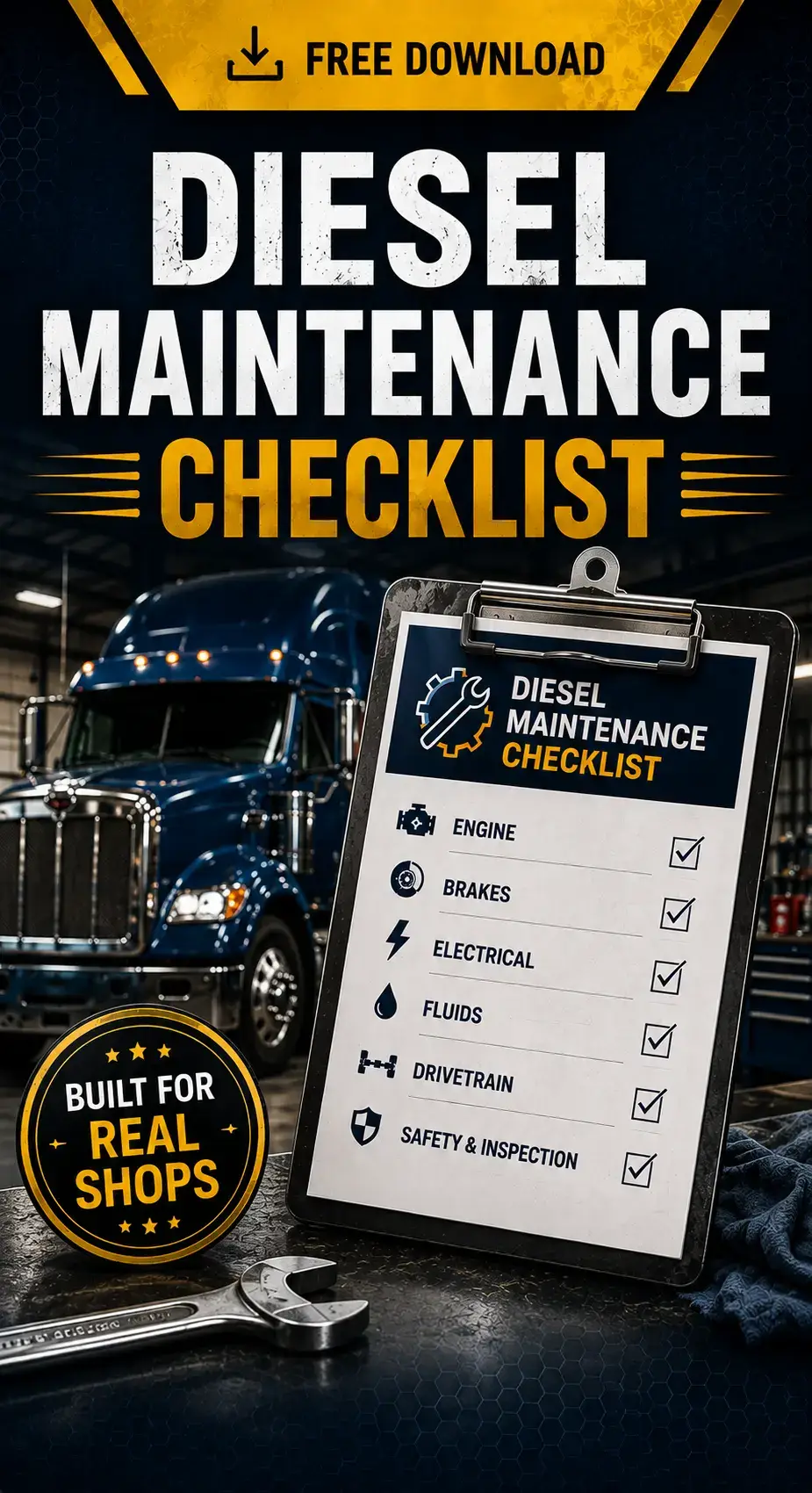
Pairing digital tire tracking with a broader preventive maintenance discipline is where the real compounding happens — a tire flagged for rotation by the software is only valuable if the shop actually has the bay time and checklist discipline to act on it. A field-tested reference is worth having on hand while building out that PM discipline alongside whatever tire-specific system a fleet adopts:
Free Diesel Maintenance Checklist
Get HDJ's free, field-tested diesel maintenance checklist delivered instantly to your inbox — print it, laminate it, keep it in the shop.
Instant PDF • 100% Free • No Spam
Strategy 5: Tire Selection and Strategic Purchasing
Tire purchasing decisions made on lowest sticker price routinely produce the highest total cost, because purchase price alone ignores expected mileage, retread eligibility, and fuel efficiency — the three factors that actually determine cost per mile. Two tires can differ by 20% in upfront price and still land on opposite sides of the value equation once total lifecycle miles are counted.
Matching Tire Specifications to the Application
A tire engineered for long-haul highway service and a tire engineered for vocational off-road duty are different products, and using either in the other's application wastes money regardless of price. Load rating has to match actual gross loads with an appropriate safety margin, tread pattern has to match the road surfaces and weather the vehicle actually operates in, and compound formulation has to balance wear life against the traction the duty cycle demands.
A softer, grippier compound wears faster; a harder, longer-wearing compound sacrifices some wet-weather grip. Low rolling resistance tire designs, where application-appropriate, can reduce fuel consumption by 3-5% on their own, independent of any inflation or rotation practice.
National Account Programs and Vendor Consolidation
Consolidating purchases with fewer tire suppliers and standardizing on a smaller number of proven products strengthens a fleet's negotiating position and simplifies inventory management — fewer SKUs means less risk of the wrong tire ending up on the wrong position.
National account programs from major manufacturers and distributors extend this further, typically offering preferential pricing, streamlined billing across service locations, and in some cases mileage guarantees that credit the fleet if a tire fails to reach its promised service life. As of September 2026, these programs remain most accessible to fleets that can commit meaningful annual volume — smaller fleets often do better pooling purchases through a regional cooperative to reach comparable pricing tiers.
Strategy 6: Driver Training for Tire-Conscious Habits
Driver behavior behind the wheel affects tire wear as much as any maintenance protocol, and no amount of pressure monitoring or rotation discipline fully offsets aggressive driving habits that grind tread away faster than any mechanical program can compensate for.
Aggressive acceleration spins drive tires and strips rubber through slippage; hard braking flat-spots tires and concentrates heat and force on the steer axle; sustained speeds above posted limits raise tire operating temperature and accelerate compound breakdown; and aggressive cornering scrubs shoulders in ways that create the exact irregular wear patterns rotation programs exist to counteract.
Building a Driver Training Program Around Tire Care
Effective driver training folds tire care into broader vehicle-operation instruction rather than treating it as a standalone topic drivers tune out. Gradual throttle application, anticipatory braking that reads traffic well ahead rather than reacting late, and following distances long enough to avoid panic stops all directly reduce tire wear while also improving fuel economy and brake life.
Pre-trip inspection training deserves particular emphasis: a driver who knows what a cut, bulge, or embedded object actually looks like catches problems before they become roadside failures, which a pressure sensor alone cannot do.
Accountability makes the training stick. Tracking tire cost per mile by driver or by vehicle assignment — and sharing that data back with drivers rather than keeping it in a maintenance-department spreadsheet — turns tire care into a habit drivers see the results of, not an abstract policy handed down from above.
Fleets that pair training with visible performance feedback consistently see 20-35% longer tire life from their driver population compared to fleets where driving behavior goes unmeasured and unaddressed.
Measuring ROI From Your Fleet Tire Management Program
Cost per mile is the single metric that ties every strategy above back to the fleet's bottom line, because it's the only calculation that accounts for purchase price, retreading, mounting and balancing, disposal, and alignment services against the actual miles a tire delivered. Tracking cost per mile monthly, with a deeper quarterly review, catches emerging problems fast enough to correct them before they become a full budget cycle's worth of overspending.
Benchmarks Worth Tracking
Beyond cost per mile itself, three supporting metrics reveal where a program is succeeding or leaking value: average removal mileage by position, the percentage of tires removed for wear versus damage or failure, and retread ratio. A high damage-removal share points to road hazards, underinflation, or handling issues worth investigating.
The table below gives directional benchmarks — actual numbers vary by region, duty cycle, and climate, so the most useful comparison is usually a fleet's own year-over-year trend rather than a rigid external target.
| Performance Indicator | Healthy Range | Investigate If |
|---|---|---|
| Steer Tire Removal Mileage | 125,000–150,000 mi | Below 100,000 mi — check inflation, alignment |
| Drive Tire Removal Mileage | 175,000–225,000 mi | Below 150,000 mi — check rotation compliance |
| Wear-Based Removal Share | 75–85% | Below 70% — road hazard or handling issue likely |
| Retread Ratio | 40–60% | Outside range — casing screening too strict or too loose |
Context matters when comparing against industry figures. The American Transportation Research Institute's operational cost analysis puts industry-average per-mile trucking operating costs at record levels as of its most recent reporting, with maintenance and repair spending — the category tires fall under — one of the fastest-rising line items in recent reporting years.
That trend makes disciplined tire cost-per-mile tracking more valuable now than it was even a few years ago, since a fleet that isn't actively managing this cost is absorbing the full brunt of that industry-wide increase instead of controlling the piece of it within its own reach.
Standardized documentation practices — the kind the Technology & Maintenance Council's Recommended Practices library exists to support across hundreds of maintenance procedures — give a fleet the consistent, comparable records needed to trust its own cost-per-mile trend over time.
This guide focuses on the day-to-day program — the checklists, inspection habits, and rotation discipline that make cost-per-mile tracking meaningful in the first place. For the financial modeling behind each strategy, including a full ROI breakdown and implementation timeline, see HDJ's companion guide on fleet tire management cost-reduction strategies.
Whoever ends up owning that number doesn't have to build the tracking spreadsheet from scratch. Between the cost-per-mile benchmarks above and a fleet's own maintenance records, most of what's needed to start measuring is already sitting in the shop's existing paperwork.
It just needs a consistent place to live and a standard formula applied to it every month rather than being recalculated differently each time someone asks — the calculators below are a fast way to put that formula in place.
Frequently Asked Questions
What percentage of fleet operating costs do tires typically represent?
Tires are commonly described as the second- or third-largest fleet operating expense after fuel and labor, though the exact share varies widely by fleet type and duty cycle. What's better documented is the compliance side: tires accounted for 20.9% of all vehicle out-of-service violations in CVSA's 2026 International Roadcheck, second only to brakes.
How much fuel economy do I actually lose from underinflated tires?
Roughly 0.2% in fuel economy for every 1 PSI a tire runs below its specified pressure, per DOE's fueleconomy.gov guidance — so a tire running 10 PSI low is costing approximately 2% in fuel efficiency on top of the accelerated wear and heat damage that shortens its service life.
How often should heavy-duty truck tires be rotated?
It depends on duty cycle: line-haul highway operations can typically extend rotations to 40,000-50,000 miles, regional and local delivery routes usually need rotation every 25,000-35,000 miles, and severe-duty vocational trucks often require rotation as often as every 20,000-25,000 miles.
Are retreaded tires as safe as new tires?
When applied to a properly inspected casing by a reputable retreader, yes — retread failures correlate far more strongly with maintenance practices than with new-versus-retreaded status. A quality retread commonly delivers 80-90% of new-tire mileage at roughly 30-40% of the price.
What's the minimum legal tread depth for commercial truck tires?
Under 49 CFR 393.75, steer axle tires must maintain at least 4/32" tread depth in any major groove, while drive and trailer positions must maintain at least 2/32". Many fleets set an internal threshold above the legal minimum, often around 4/32" across all positions, to preserve casing quality for retreading.
What's the fastest way to start reducing fleet tire costs without new equipment?
Tighten pressure-check and rotation discipline first — both cost only labor time, not capital, and both compound with every other strategy in this guide. A fleet that gets those two habits consistent before investing in hardware or software typically sees the clearest early ROI.
Fleet tire management pays off fastest when the six strategies above run as one connected system rather than six separate initiatives — a rigorous rotation schedule doesn't fully deliver its value on chronically underinflated tires, and the best casing-selection discipline in the world can't offset aggressive driver habits grinding tread away early.
Michael Nielsen's advice to Heavy Duty Journal readers stays consistent every year: start with whichever piece of your own tire program has generated the most callouts or premature removals recently — that's the fastest place to see this year's changes show up in next year's cost-per-mile number.
Pass This Along to Your Maintenance Team
If your shop tracks tire cost per mile informally — or not at all — send this to whoever owns the tire budget. The six strategies here only compound if someone is accountable for running all of them together.