

By Michael Nielsen, Publisher | 15+ Years in Diesel Repair
Last Updated: September 2026
⏱ Estimated reading time: 15+ minutes
Fleet maintenance best practices combine veteran field judgment with modern tools — AI dash cams, telematics, and structured benchmarking — to deliver safer operations, lower total cost, and steady uptime. This guide distills those field-tested practices into a clear framework any fleet can apply, regardless of size or industry.
Michael Nielsen and Heavy Duty Journal's editorial team built this guide around a principle experienced fleet leaders repeat consistently: AI is a tool, not a cure-all. Used well, it boosts coaching and decision-making through event-based feedback that supports drivers and reduces administrative load. Smart benchmarking against similar fleets, climates, and service types creates realistic targets, and aligning operations with Best Management Practices (BMPs) around the 80/20 principle — targeting high-impact tasks first — is what turns these tools into measurable improvements in safety, uptime, and cost control.
Key Takeaways
- ✓AI-assisted decisions: an AI system supports a maintenance decision and coaching but requires human oversight for the best result.
- ✓Smart benchmarking: compare against a similar fleet type and operating condition to set an achievable performance target.
- ✓Integrated BMPs: align maintenance, parts control, procurement, and accounting through a standardized best practice.
- ✓Actionable telematics: convert real-time data into a safety scorecard, idling report, and predictive maintenance alert.
- ✓80/20 focus: prioritize the 20% of a maintenance task that drives 80% of an operational improvement.
- ✓Preventive priority: design a PM program that minimizes a costly unscheduled repair and a roadside breakdown.
In This Guide
- Proven Fleet Maintenance Strategies from Field Experience
- Benchmarking and Best Management Practices
- Core Fleet Maintenance Best Practices
- AI, Telematics, and Data-Driven Maintenance
- Designing Robust Preventive Maintenance Programs
- Fleet Audits, KPIs, and Continuous Improvement
- Right-Sizing Fleet and Specifications
- Parts Inventory and Vendor Performance
- Training, Policies, and Driver Engagement
- Frequently Asked Questions
Proven Fleet Maintenance Strategies from Field Experience
Seasoned leaders treat technology as a means, not the mission. They blend a proven maintenance strategy with a simple routine, HDJ's driver coaching and safety software guide covers in more depth, and a clear goal. The result is an effective maintenance that improves safety, uptime, and fuel efficiency without adding red tape.
Leadership and Adaptability in Modern Fleet Management
Leaders set the tone by aligning tools with outcomes and rejecting the idea of a magic fix. This means a clear goal for safety, operations, compliance, and customer service, with a constant feedback loop.
An adaptive manager connects data from telematics and shop systems to daily action, translating a maintenance strategy into a plan a team can follow. They measure what matters and adjust when conditions change.
Turning Real-World Lessons into Effective Maintenance
An event-based AI dash cam from a brand like Samsara and Lytx works best as a coaching aid. Use a clip to teach smoother braking, a wider following gap, and a calm cornering — rewarding a better habit rather than using a camera as surveillance.
Link these insights to a maintenance practice that matters: adjust a PM task by duty cycle, track an idling hotspot, and close the loop on an engine fault code. When a leader rewards improvement, data becomes fuel for trust and faster change.
Prioritizing the 80/20 Principle for Measurable Results
Focus on the 20% of work that drives 80% of an outcome. Target a safety coaching, an idling reduction, and a top fault code first — these priorities cut a breakdown and trim fuel waste quickly.
Measure a result in weeks, not months. A small win builds momentum and proves the value of a systematic improvement.
| Priority Area | High-Impact Action | Expected Result | Proof Point KPI |
|---|---|---|---|
| Safety Coaching | Use event-based AI clips | Fewer harsh events | Safety score improvement |
| Idling Reduction | Set thresholds by route | Lower fuel spend | Idle percentage decrease |
| Engine Fault Codes | Triage by severity | Fewer roadside events | Road calls per 10k miles |
| PM Optimization | Align intervals to usage | Higher availability | PM-to-total ratio |
Benchmarking and Best Management Practices
Smart benchmarking turns raw data into direction. By comparing like to like, a leader applies a fleet maintenance best practice that holds up in real-world conditions. The goal is clear: optimizing maintenance while keeping service strong and cost in check.
Setting Baselines with Comparable Fleets
Define a cohort that mirrors your reality: an automated vs. manual collection, a solid waste vs. recycling operation, a terrain, and a stop density. Track availability, a PM-to-total maintenance ratio, and a cost per unit with consistent rules.
Use a seasonally adjusted mile, hour, and idle rate to guard against a false win. A winter performance differs from a summer baseline, so adjust a comparison accordingly.
Using BMPs to Align Operations and Procurement
A Best Management Practice spans a maintenance program, lifecycle planning, accounting, and parts control. Per the NAFA Fleet Management Association, aligning operations to procurement by vetting a spec before acquisition reduces wear and improves a part's predictability.
A BMP creates consistency across departments. When purchasing, maintenance, and finance speak the same language, a decision speeds up and a total cost of ownership drops.
Establishing Improvement Goals with Industry Standards
Use an audit to assess a unit operating cost, availability, vehicle use, and labor productivity. Review a PM compliance, a comeback rate, and a technician efficiency.
Benchmark against an industry norm from a municipal and private fleet, then set a staged target. Aim for a 10-15% improvement in a high-priority metric within the first year.
Core Fleet Maintenance Best Practices
Strong results come from a simple, repeatable habit. A program built on clarity and accountability keeps a vehicle safe, available, and cost-effective. The goal is turning a professional maintenance — whether run in-house or through HDJ's managed fleet maintenance guide — into a daily rhythm a team can follow.
Building a Maintenance Culture
Safety starts with a clean PM work, a documented inspection, and a quick turnaround. A team that measures what matters returns a unit to service fast and avoids the kind of costly roadside event the CVSA out-of-service criteria are built to catch.
A leader supports the shop with a part readiness, a clear work order, and a post-repair check. A recognition program reinforces quality and speed.
Creating an Actionable Fleet Maintenance Checklist
A concise maintenance checklist sets the standard for every bay. It guides a technician through a critical item and reduces a comeback:
- Safety first: brakes, tires, lights, steering, coupling points
- Reliability: fluids, filters, belts, batteries, torques
- Documentation: findings, corrections, parts used, road-test notes
A digital checklist in a fleet management software captures data automatically and flags an incomplete step before release.
Aligning PM Intervals with Usage
Set an interval from OEM guidance, then tune it to a route length, load, climate, and idle time. A high-mile tractor, an urban delivery van, and an off-road unit each need a different cadence to prevent a defect and reduce unplanned work.
Review an interval's effectiveness quarterly. If a specific asset class shows a high unscheduled maintenance, tighten a PM frequency or adjust an inspection depth.
AI, Telematics, and Data-Driven Maintenance
Smarter tools turn raw signals into a clear action for an effective maintenance. A centralized platform stitches asset, fuel, and service data into one view, freeing staff to apply a practical strategy that reduces downtime.
Leveraging AI Dash Cams for Event-Based Coaching
An AI dash cam flags a harsh braking, a following distance, and a distraction, making coaching event-based rather than constant. A brand like Samsara, Geotab, and Lytx supports a real-time prompt and a post-trip review.
This technology links driving risk to wear on a tire and brake. A gentler driving extends component life and cuts maintenance frequency.
Automating Analytics and Insights
Automation filters a large data set into a simple next step. A unified dashboard reduces clerical work and speeds an approval, providing more time for a policy update and service planning.
Connecting Fault Codes and Safety Scorecards
Link three core reports to one workflow: an engine fault code for an early repair, an idling exception report for fuel control, and a driver safety scorecard for coaching. This trio supports maintenance optimization while cutting noise.
Set an alert threshold that matters. Too many notifications create a fatigue; focus on a critical code and a pattern that predicts a breakdown.
Designing Robust Preventive Maintenance Programs
A strong PM plan keeps a vehicle safe, reliable, and ready for work. It blends data, a disciplined routine, and a clear role to make a maintenance practice meet daily execution.
Minimizing Unscheduled Repairs
Use a telematics alert from a platform like Geotab and Samsara to flag a fault code, a heat event, and a high idle time. Pair these insights with a shop observation to schedule a quick check before a failure occurs.
A predictive maintenance program reduces an emergency repair by roughly 20-30% in a well-documented deployment. Catching an issue early means fewer roadside breakdowns and a lower towing cost.
Standardizing Inspections and Documentation
Adopt a uniform checklist for a PM-A, PM-B, and PM-C tier. A standard step raises quality and speed, while a shared form makes an audit trail clean — the kind of systematic documentation 49 CFR 396.3 requires every motor carrier to maintain.
When documentation is consistent, a technician spends less time searching and more time repairing. A digital system with photo capture strengthens a record for a warranty claim and resale.
Scheduling PM Around Operational Windows
Plan an evening or overnight PM so a vehicle stays on the road during the day. Extend shop hours during peak season and align with a route time.
This approach reduces a spare need and smooths a service level. Coordination with operations prevents a last-minute surprise and keeps a customer commitment.
| PM Element | Primary Trigger | Uptime Impact | Why It Works |
|---|---|---|---|
| Condition-Based Tasks | Fault codes, temperature spikes | Prevents cascading failures | Addresses issues early |
| Tiered PM Checklists | Miles, hours, duty cycle | Balances thoroughness | Right-size work to usage |
| Night-Shift Scheduling | Operational windows | Maximizes availability | Keeps units earning |
| Priority Queues | Service level needs | Reduces disruptions | Focuses labor effectively |
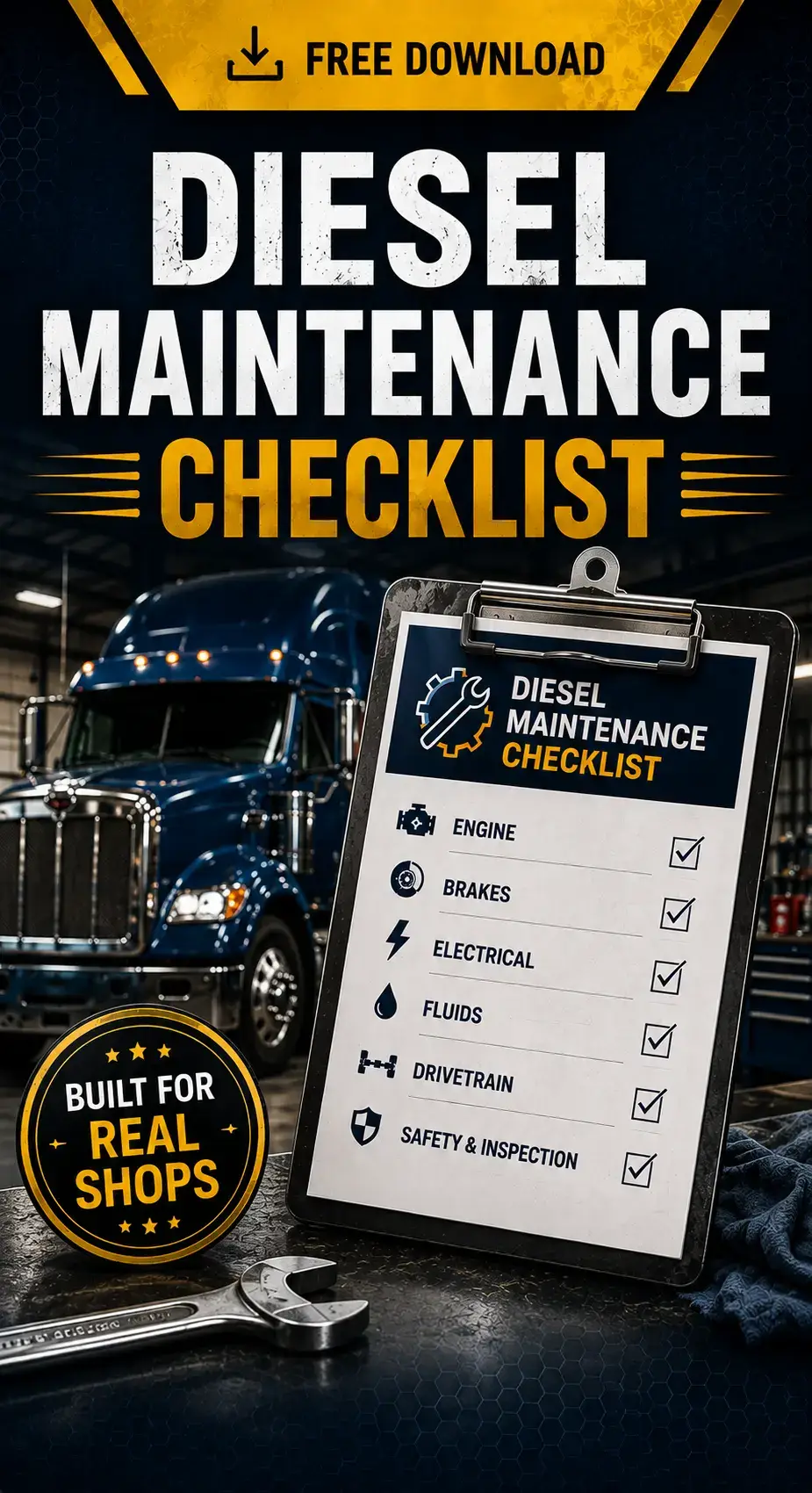
Free Diesel Maintenance Checklist
Get HDJ's free, field-tested diesel maintenance checklist delivered instantly to your inbox — print it, laminate it, keep it in the shop.
Instant PDF • 100% Free • No Spam
Fleet Audits, KPIs, and Continuous Improvement
Make an audit routine and data-driven. Use a clear KPI that aligns with a proven maintenance practice and guides an optimization effort. Track a trend, not just a snapshot, and compare against a similar fleet.
Evaluating Key Performance Metrics
Start with a cost per unit by asset class, then read the PM-to-total maintenance ratio to see if a preventive work is effective. A vehicle availability links cost, uptime, and customer service.
Review a metric monthly with leadership and quarterly with a shop team. Celebrate a win and investigate a decline with a root-cause analysis.
| KPI | Definition | Why It Matters | Audit Signal |
|---|---|---|---|
| Cost per Unit | Total operating cost/assets | Reveals cost drivers | Spikes hint at issues |
| PM-to-Total Ratio | Preventive vs. all maintenance | Balances work types | Low ratio signals risk |
| Availability | Hours available/planned | Direct uptime read | Drops show gaps |
Assessing Mechanic Productivity
Distribute work by skill and certification to lift productivity and shorten a turnaround time. Prioritize a critical unit so the right asset returns to service first.
Track labor hours billed vs. clocked and review a repeat repair. A high comeback rate signals a training gap or a part quality issue.
Right-Sizing Fleet and Specifications
Right-sizing starts with the job, not the vehicle brand. Use data, a field walk, and a driver input to choose a truck and route that fits the task. This is where a professional maintenance meets daily reality. HDJ's total cost of ownership guide covers how a right-sizing decision feeds directly into that broader cost calculation.
Matching Vehicle Specs to Routes
Choose a body and lift that matches a residential, commercial, or industrial need. Verify a tare weight and payload against a container type.
When a spec aligns with a duty cycle, you get a smoother route and fewer shop visits — protecting an engine, brake, and hydraulic from unnecessary strain.
Reducing Spares Through Smart Scheduling
Stagger a PM and light repair to a late shift so an asset returns for a morning pullout. This reduces reliance on an older spare without hurting a service window.
Blend a route start across a time band to flatten a peak and keep a mechanic focused on a planned work instead of an emergency fix.
Parts Inventory and Vendor Performance
Smart parts control ties cost, uptime, and safety together. When a team applies a systematic inventory practice, it keeps a shelf lean, fills a work order fast, and avoids waste.
Maintaining Optimal Inventory Levels
Build a min-max level from recent demand, OEM interval, and duty cycle. Review a slow mover monthly, retire an obsolete stock, and redirect capital to a fast mover.
This supports an efficient maintenance without bloating a shelf. Track an inventory turn quarterly and adjust an ordering pattern based on a seasonal demand.
Quality Assurance and Comeback Reduction
A post-repair QA catches a small error before it strands a truck. A road test, torque check, and fluid verification reduce a comeback.
Document a finding by VIN, vendor, and technician to refine sourcing and training. Share a pattern in a team meeting to prevent a repeat issue.
Training, Policies, and Driver Engagement
People, process, and data shape an effective maintenance outcome. When a team sees a clear path to grow skills and follow a smart policy, performance improves across every metric.
Upskilling Technicians for Modern Vehicles
A late-model truck packs advanced diagnostics and ADAS. Regular training on OEM procedures and a scan tool keeps a repair accurate and safe.
Upskilling boosts morale, retention, and supports an effective maintenance through a proper torque spec and software update. Partner with an equipment manufacturer for a hands-on workshop.
Telematics-Enabled Vehicle Use Policies
Telematics turns policy into action. Use a driver safety scorecard, an idling report, and a fault code alert to guide coaching.
A clear rule on speeding and a harsh event links directly to a report a driver and supervisor can see. Transparency builds accountability and trust.
Frequently Asked Questions
What is the 80/20 principle in fleet maintenance?
It means focusing on the roughly 20% of maintenance tasks — safety coaching, idling reduction, top fault codes — that drive 80% of the operational improvement. Rather than spreading effort evenly across every possible fix, a fleet targets the highest-impact items first and measures results in weeks rather than months.
How should a fleet use AI dash cams without it feeling like surveillance?
Use them as event-based coaching tools, not constant monitoring. Pull specific clips to teach smoother braking or better following distance, and reward improved habits rather than only flagging violations. Drivers accept the technology far more readily when it's framed as coaching support, not surveillance.
What's the difference between benchmarking against industry norms and against comparable fleets?
Industry norms give a general reference point, but a comparable-fleet cohort — matched on terrain, duty cycle, and collection or service type — produces a realistic, achievable target. A winter route in a cold climate shouldn't be benchmarked against a mild-climate fleet's summer numbers.
How much can predictive maintenance realistically reduce unscheduled repairs?
Well-documented deployments report roughly a 20-30% reduction in emergency repairs when telematics alerts on fault codes, heat events, and high idle time are paired with proactive shop scheduling. The gain comes from catching a developing issue during a planned visit rather than a roadside breakdown.
What KPIs matter most for a fleet maintenance audit?
Cost per unit by asset class, the PM-to-total maintenance ratio, and vehicle availability form the core set. Review these monthly with leadership and quarterly with shop teams, investigating any decline with root-cause analysis rather than treating it as a one-off.
The Bottom Line
Three pillars drive modern fleet maintenance best practices — the same discipline Michael Nielsen and Heavy Duty Journal's editorial team hold every guide on heavydutyjournal.com to: a seasoned leadership that adapts field know-how with AI and telematics; a structured benchmarking and BMP that keeps audits, specs, and budgets aligned; and a hands-on engagement through training, clear policies, and an active stakeholder network.
Focus execution with the 80/20 rule. Use an AI dash cam for a targeted safety coaching, cut idling with an exception insight, and act fast on an engine fault code. Benchmark against a comparable fleet, tighten a preventive maintenance with a standardized checklist, and right-size a vehicle to reduce a spare. The payoff is clear: safer roads, fewer comebacks, and a predictable budget.
Enjoyed This Article?
Share this post with your network and help other industry professionals stay informed.


