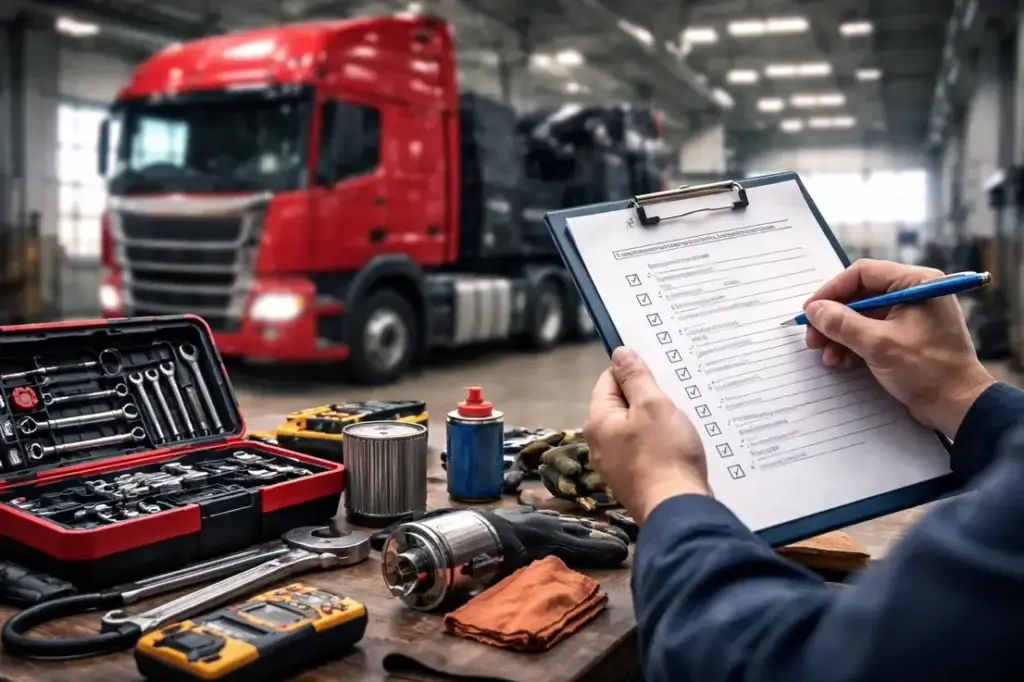

The diesel technician shortage has reached critical levels, with 65.5% of maintenance facilities operating understaffed and nearly 20% of positions unfilled across the trucking industry. Fleet operators and shop managers now face unprecedented maintenance bottlenecks, extended downtime, and rising repair costs that directly threaten service commitments and fleet uptime.
Modern heavy-duty trucks equipped with complex emissions systems—EGR, DPF, and SCR—can generate hundreds of fault codes requiring advanced diagnostic expertise. Combined with a workforce that contracted during the pandemic and hasn’t recovered, repair times have increased significantly while qualified labor remains scarce.
This analysis synthesizes recent industry data from the American Transportation Research Institute to quantify the shortage, examine root causes, and identify actionable strategies fleet managers can implement to protect uptime and maintain competitive service levels.
Last Updated: December 2025
Key Takeaways
- Critical Staffing Gap: 65.5% of maintenance shops report understaffing with nearly 20% of positions unfilled nationwide.
- Technology Complexity: Modern trucks generate 700-1,000 fault codes, extending diagnostic times and increasing skill requirements.
- Massive Workforce Need: TechForce Foundation projects nearly 1 million new technicians needed between 2024-2028 across transportation sectors.
- Training Investment: Over 60% of new hires lack formal training, requiring $8,211 and 357 hours of investment per technician.
- Strategic Priority: Decisions around hiring, partnerships, and outsourcing directly impact fleet uptime and maintenance costs.
Understanding the Diesel Technician Shortage Crisis
While employment statistics show modest growth, the operational reality reveals persistent vacancies and stretched capacity across maintenance operations nationwide. The gap between official projections and actual workforce availability continues widening.
Regional variations significantly impact shortage severity. Metropolitan areas with multiple competing employers experience higher turnover and wage pressure, while rural regions struggle with limited training program access and smaller candidate pools. Fleets operating across multiple regions must develop location-specific workforce strategies rather than applying uniform approaches.
The Bureau of Labor Statistics projects 4% employment growth for diesel service technicians from 2021 to 2031, with approximately 28,500 annual openings driven primarily by retirements and job transfers. This steady growth conceals a significant pipeline gap that threatens industry capacity.
TechForce Foundation estimates the transportation industry needs approximately 971,000 new technicians between 2024 and 2028 across automotive, diesel, collision, and aviation sectors—far exceeding current training capacity. For diesel technicians specifically, the organization projects demand for tens of thousands of new entrants annually to meet replacement needs.
65.5%
Percentage of maintenance facilities operating understaffed — ATRI 2025
The American Transportation Research Institute’s 2025 analysis confirms persistent vacancies increase recruiting costs, force existing staff into overtime, and require greater reliance on temporary labor that may lack familiarity with fleet-specific equipment.
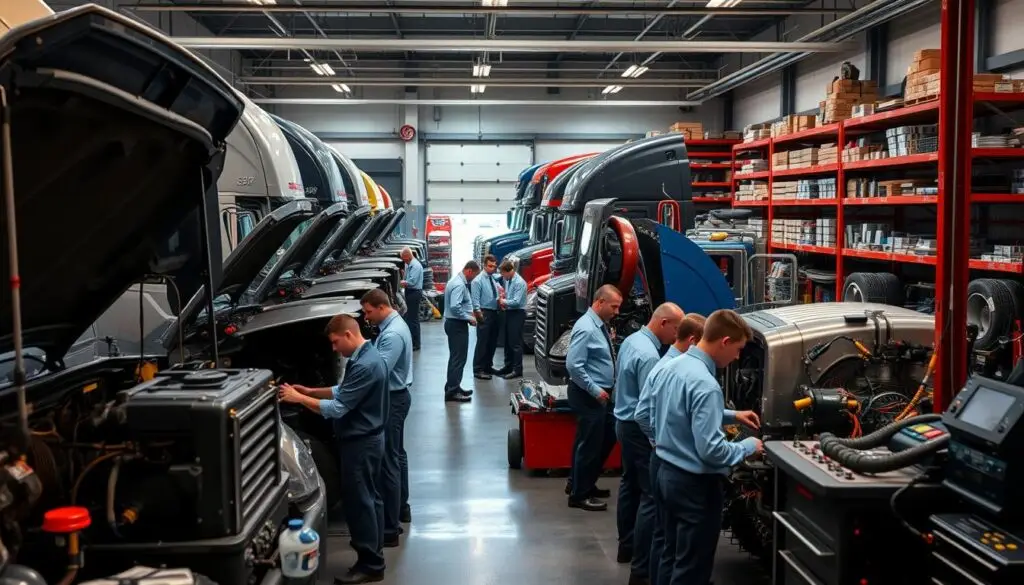
Industry data reveals widespread understaffing across maintenance facilities nationwide
Workforce Data by Source
| Metric | Source | Value |
|---|---|---|
| Projected employment growth (2021–2031) | BLS | 4% |
| Annual job openings | BLS | ~28,500 per year |
| Total technicians needed (2024–2028) | TechForce | ~971,000 all sectors |
| Shops understaffed (2025) | ATRI | 65.5% |
| Average positions unfilled | ATRI | 19.3% |
Root Causes Behind the Diesel Mechanic Workforce Gap
Declining Training Program Enrollment
Training programs produce fewer qualified graduates annually than industry demand requires. TechForce reported 11,310 diesel technician postsecondary completions in 2023—a 5% increase from 2022 but still below the 2017 peak of 12,807 graduates. Despite recent gains, enrollment remains insufficient to replace retiring technicians and fill new positions.
This supply-demand imbalance restricts the flow of entry-level technicians to shops. Industry reports show 2020 marked the first recorded decline in employed diesel technicians, with sluggish recovery in subsequent years despite increasing vehicle complexity and maintenance requirements.

The gap between technician supply and industry demand continues widening
Pandemic-Era Workforce Contraction
COVID-era exits, accelerated retirements, and career changes removed experienced technicians precisely when demand increased. This loss widened the gap for independent shops and large fleets alike, creating capacity constraints that persist today.
Early retirements during the pandemic permanently removed institutional knowledge and mentorship capacity from the workforce. Many experienced technicians who left the industry have not returned, forcing shops to rebuild expertise from scratch while training less-experienced replacements.
Inadequate Onboarding Infrastructure
Employers increasingly encounter applicants with limited hands-on training. ATRI data shows 61.8% of new hires arrive without prior training, requiring approximately 357 hours and $8,211 in training investment per employee before reaching baseline productivity. This extended onboarding stretches mentor capacity and training resources.
Even candidates with formal training demonstrate deficiencies. Research indicates approximately 30% of training program graduates show gaps across 20 core skill areas, requiring additional on-the-job instruction before performing independently.
Workforce Perception Challenges
Negative perceptions around skilled trades and competition from adjacent industries complicate recruiting efforts. Career counselors and educational systems often steer students toward four-year degrees, overlooking technical careers despite strong earning potential and job security in diesel maintenance.
Rebuilding the talent pipeline requires coordinated partnerships between employers, educational institutions, and industry associations to change perceptions and demonstrate career viability.
Stay Ahead of Workforce Trends
Get expert insights on technician recruiting, training programs, and retention strategies delivered to your inbox weekly.
How Vehicle Technology Outpaced Technician Training
Modern commercial vehicles function as mobile data centers, requiring diagnostic capabilities that exceed traditional mechanical expertise. This technological shift directly contributes to workforce challenges by widening the gap between required skills and available competencies.
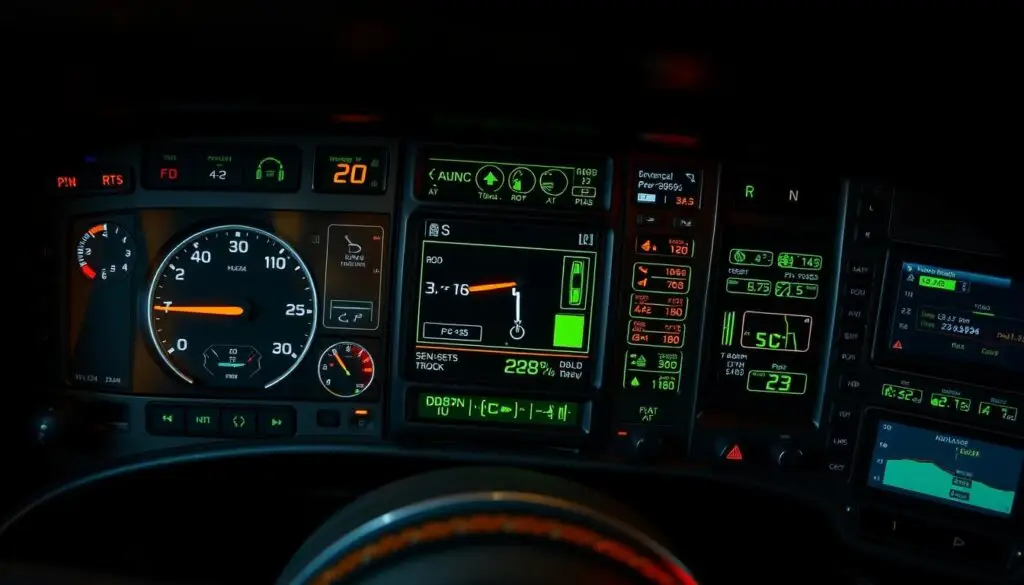
Complex emissions and electronic systems demand advanced diagnostic skills
Complex Emissions and Electronic Systems
Emissions systems including EGR (Exhaust Gas Recirculation), DPF (Diesel Particulate Filter), and SCR (Selective Catalytic Reduction), combined with integrated electronics, make vehicles increasingly data-intensive. Fleet operators report that new tractors can generate 700 to 1,000 distinct fault codes, requiring technicians to rapidly differentiate critical failures from false positives.
This complexity extends diagnostic time and demands continuous learning. Technicians must master OEM-specific software, interpret sensor data, and understand interactions between mechanical and electronic systems—skills that evolve with each model year.
Shifting Repair Cost Structures
The Technology & Maintenance Council reports that post-2004 emissions technology frequently drives the largest portion of repair bills, surpassing traditional engine and drivetrain work. This reality requires shops to adjust cost estimates, parts inventory strategies, and technician skill development priorities.
Aftertreatment system repairs demand specialized diagnostic equipment, software subscriptions, and training that exceed traditional mechanical tool requirements. Shops lacking these capabilities face reduced competitiveness and must refer complex work to dealerships or specialized facilities.
The financial implications extend beyond parts costs. Diagnostic time for emissions-related faults can exceed traditional mechanical troubleshooting by 2-3x due to the interrelated nature of sensors, actuators, and control modules. Technicians must understand both individual component function and system-level interactions to avoid misdiagnosis and unnecessary parts replacement.
Training Access Disparities
Dealerships and large fleet operators typically receive early access to training on new models and diagnostic software. Independent shops face limited access to manufacturer-specific courses, specialized diagnostic tools, and technical service bulletins that would accelerate technician skill development.
Closing this training gap matters: standardized procedures, shared knowledge repositories, and ongoing technical education reduce diagnostic time, improve first-time fix rates, and minimize vehicle downtime for fleet customers.
Operational Impact on Fleet Maintenance
Understaffed maintenance facilities amplify minor delays into multi-day service disruptions. When technician capacity is constrained, cycle times expand and scheduling flexibility disappears, creating cascading effects throughout fleet operations.
Extended Repair Times and Reduced Throughput
TMC-sponsored surveys identify hiring qualified technicians as the primary challenge for nearly half of repair facilities, with repair inefficiency ranking second. Insufficient staffing increases rework frequency, extends queue times, and reduces first-time fix success rates.
These delays cascade into dispatch operations, customer delivery schedules, and warranty costs. Limited capacity also escalates overtime expenses and burnout risk, potentially worsening retention and deepening skill gaps in a self-reinforcing cycle.

Staffing shortages create operational bottlenecks throughout service facilities
Capital Investment Requirements
Keeping pace with evolving vehicle models requires substantial investment in OEM diagnostic tools, subscription-based software, and calibration equipment. Many shops lack budget capacity to refresh tooling at required intervals, limiting their ability to service newer equipment.
Consequently, fleets increasingly outsource maintenance to reduce recruiting pressure, transfer liability, and avoid continuous equipment refresh cycles. This trend concentrates technical expertise at large service providers while reducing in-house capability development.
Productivity Losses and Financial Impact
Understaffed operations report measurable productivity degradation across key performance indicators. Cycle times averaging 20-30% longer than adequately staffed facilities translate directly to reduced vehicle availability and lower fleet utilization. Higher overtime costs, increased backlog creating multi-day delays, and decreased customer satisfaction compound the financial impact.
Lower first-time fix rates requiring rework consume additional labor hours and parts, while warranty claim delays generate customer complaints and potential chargebacks. These inefficiencies translate to higher operating costs for fleets and lower revenue potential for repair facilities, creating compound negative effects on profitability that worsen as understaffing persists.
Training Investment and Development Timelines
Bringing new hires to full productivity requires months of structured instruction and supervised practice. The financial and time investment required underscores the importance of retention strategies that protect these upfront costs.
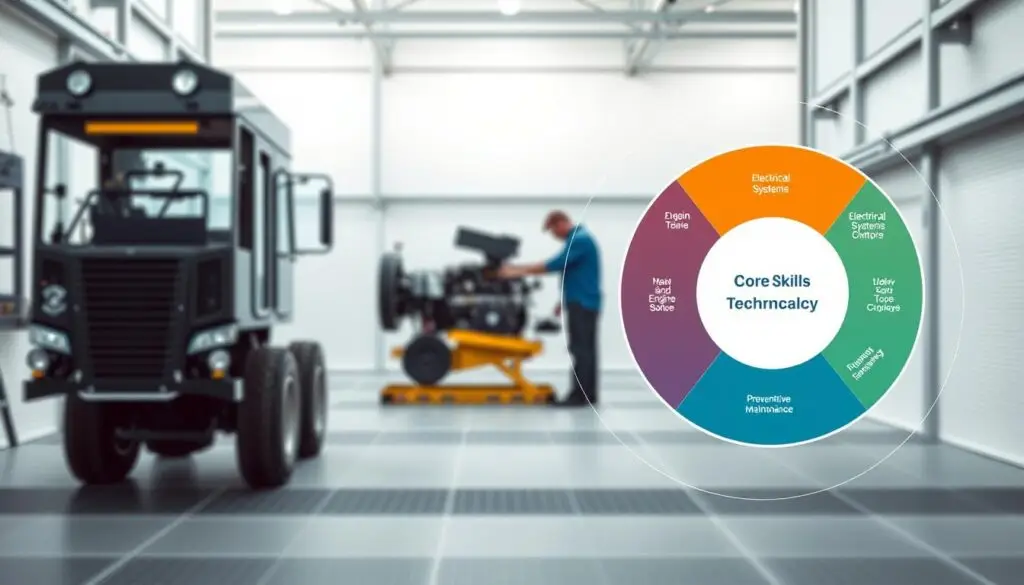
Modern technicians must master mechanical, electrical, and diagnostic competencies
Essential Competency Areas
Core competencies for diesel technicians include advanced diagnostics and systematic troubleshooting methodology, electrical and electronic systems including CAN bus networks, emissions control technology (EGR, DPF, SCR, DEF systems), hydraulic and pneumatic systems, safety protocols and OSHA compliance requirements, and customer service communication skills.
Even among candidates with formal training, approximately 30% demonstrate deficiencies across 20 core skill areas. ATRI research identifies specific competencies where additional training hours yield measurable qualification improvements exceeding 16%.
Entry Barriers Limiting the Talent Pipeline
Primary obstacles preventing entry into the diesel technician field include tool acquisition costs cited by 29% of respondents—initial investment can exceed $10,000 for professional-grade equipment. Lack of experience affects 28%, as insufficient hands-on opportunities before employment limits confidence and readiness.
Compensation concerns influence 16.1% of potential entrants, with entry-level wages lagging competing industries despite skill requirements. Inadequate mentorship affects 10.8%, reflecting limited structured guidance and career development pathways at many facilities.
| Metric | Value | Recommended Action |
|---|---|---|
| New hires without training | 61.8% | Structured classroom + shop time |
| Onboarding hours required | 357 hrs | Establish competency milestones |
| Training investment per hire | $8,211 | Budget tool stipends/grants |
| Tool cost barrier | 29% | Implement loan or stipend programs |
Retention Strategies for Heavy-Duty Technicians
Retaining skilled staff has become as critical as managing parts inventory. Shops experiencing high entry-level turnover face schedule instability, knowledge loss, and recurring recruitment costs that compound operational challenges.
Workforce demographics create additional urgency. Experienced technicians approaching retirement represent irreplaceable institutional knowledge accumulated over decades. Without structured knowledge transfer programs, their departure creates capability gaps that take years to rebuild through new hire development.
Primary Retention Challenges
ATRI research found 44% of diesel technicians in trucking consider transitioning to other mechanical roles. Common factors driving attrition include compensation levels below industry expectations and cost-of-living requirements, poor supervisor relationships and ineffective communication practices, limited task variety and unclear career advancement opportunities, and inadequate recognition for skill development and performance.
These factors erode morale and push technicians toward alternative employment offering clearer advancement paths, more diversified work, and better workplace culture. The average technician turnover rate of 16.5% increases to 18.1% at understaffed facilities, creating a reinforcing cycle of instability.
Proven Retention Programs
Structured education and continuous training change outcomes. Major fleet operators have implemented ASE-certified training programs providing approximately 40 hours of annual instruction per technician, linking skill development directly to promotion opportunities and career progression.
These investments demonstrate measurable returns through improved retention, reduced recruiting costs, and enhanced service quality. Many maintenance leaders in successful programs began as entry-level technicians within their organizations, validating career pathway effectiveness.
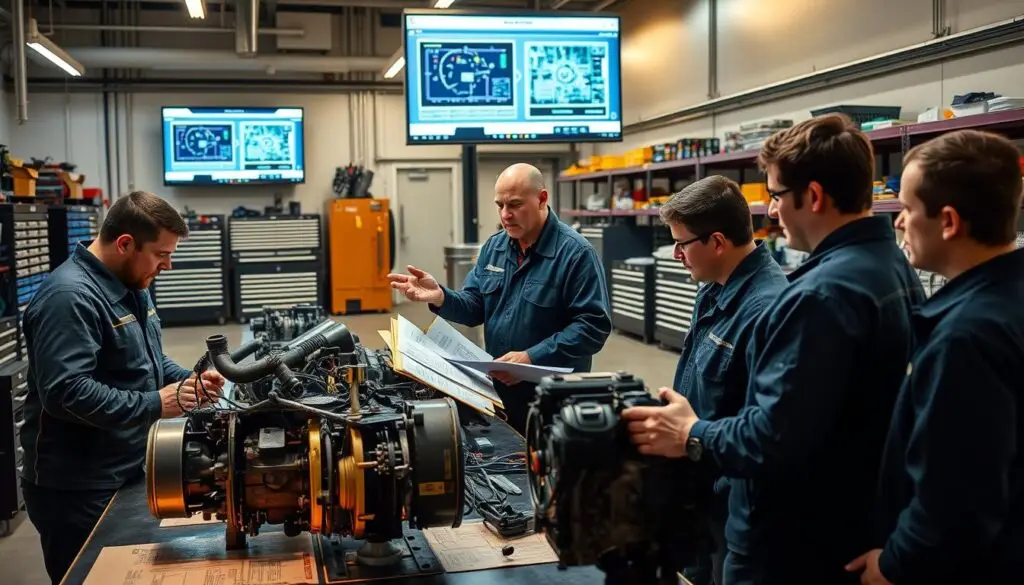
Structured training programs improve retention and build internal leadership pipelines
Actionable Retention Tactics
Effective retention strategies include establishing clear career ladders with defined progression criteria, milestone recognition, and transparent advancement timelines. Rotating assignments broadens skill sets, maintains engagement, and reduces monotonous work patterns.
Training supervisors on effective feedback delivery, equitable scheduling practices, and constructive communication improves workplace culture. Competitive compensation benchmarked against regional markets and competing industries addresses the primary retention concern. Tool allowances, certification bonuses, and tuition reimbursement tied to program completion demonstrate organizational investment in technician development.
Modern Curriculum Requirements
Effective training programs must balance multiple competency domains to prepare technicians for current fleet technology. Electrical and electronic systems diagnostics form the foundation for troubleshooting modern vehicles, while emissions controls and aftertreatment systems knowledge addresses the fastest-growing maintenance category.
Powertrain fundamentals including emerging hybrid technologies prepare technicians for fleet diversification. Software navigation and data interpretation skills enable effective use of OEM diagnostic platforms, while systematic troubleshooting methodology reduces diagnostic time and improves accuracy. Hands-on mechanical competencies remain essential despite increasing vehicle computerization.
Effective curricula also include OEM-specific training, safety protocols, customer communication skills, and documentation practices that reflect real-world shop operations and employer expectations. Programs that incorporate telematics interpretation and remote diagnostic support tools prepare graduates for emerging service delivery models.
| Initiative | Impact | Key Metric |
|---|---|---|
| Annual ASE-style training | Improved retention and skill depth | Training hours per technician annually |
| Task rotation programs | Broader competence, reduced burnout | First-time fix rate improvement |
| Supervisor coaching | Equitable scheduling, higher morale | Location-specific turnover rates |
The HDJ Perspective
The diesel technician shortage isn’t a temporary disruption—it’s a structural transformation requiring strategic response rather than reactive hiring. Fleet operators who treat workforce development as a core operational investment, rather than an HR expense, will maintain competitive advantage through superior uptime and service quality. The organizations building apprenticeship pipelines and retention programs today are positioning themselves for the next decade of industry consolidation, while those waiting for labor markets to normalize may find themselves permanently disadvantaged.
Strategic Solutions for Truck Technician Staffing
Organizations can mitigate service risk through apprenticeship development, managed maintenance partnerships, and advanced diagnostic implementation. These strategies require coordinated planning and investment but deliver measurable improvements in capacity and service quality.
Develop Talent Pipelines Through Local Partnerships
Establish targeted partnerships with community colleges and vocational schools to align curriculum with operational requirements. Create paid apprenticeship programs combining classroom instruction with supervised shop experience, ensuring graduates possess immediately applicable skills.
Implement staged training programs that progress technicians from preventive maintenance work to advanced diagnostics. Assign learners to experienced mentors and track competency development using measurable milestones. ATRI data shows shops that recruit from training programs experience lower turnover and vacancy rates compared to those without educational partnerships.
Consider participating in registered apprenticeship programs to access federal funding support, structured frameworks, and tax incentives that offset training costs.
Registered apprenticeships provide additional benefits beyond financial incentives. The structured progression framework establishes clear competency milestones, while the combination of paid work experience and classroom instruction attracts candidates who cannot afford unpaid training periods. The nationally-recognized credential provides portability that benefits both employers and employees.
Successful partnerships require ongoing communication between employers and educational institutions. Provide input on curriculum development, offer facility tours and guest instruction opportunities, and create internship pathways that convert to full-time employment. Track graduate performance to provide feedback that improves program outcomes over time.
Evaluate Outsourcing Options
Consider managed maintenance agreements when tooling requirements and rapid model updates exceed budget or training capacity. Outsourcing can stabilize uptime across mixed fleets and eliminate continuous recruiting and capital expenditure cycles.
Evaluate total cost of ownership including direct service costs, administrative overhead, and retained in-house capability requirements. Many fleets adopt hybrid models retaining core competencies while outsourcing specialty work, overflow capacity, or geographically dispersed maintenance needs.
Implement Data-Driven Diagnostics
Deploy remote diagnostic capabilities and guided troubleshooting workflows to help technicians prioritize fault codes and reduce diagnostic steps. Enhanced diagnostics reduce demand on limited staff and improve first-time fix success rates by providing decision support during complex repairs.
Standardize data capture systems to identify recurring faults, parts trends, and training gaps. Utilize shared knowledge bases and OEM service information to reduce dependency on tribal knowledge. Cloud-based platforms enable remote expert support, extending capability of less-experienced technicians while they build competency.
Telematics integration enables proactive maintenance scheduling based on actual component condition rather than arbitrary intervals. This approach reduces emergency repairs, improves parts planning, and allows shops to better manage limited technician capacity by scheduling work during lower-demand periods.
Build Competitive Compensation Structures
Market-competitive compensation remains the primary factor in both attraction and retention. Benchmark pay rates against regional competitors and adjacent industries including automotive, construction equipment, and agricultural machinery where diesel skills transfer readily.
Consider total compensation including health benefits, retirement contributions, tool allowances, and training support when evaluating competitiveness. Sign-on bonuses and retention bonuses tied to tenure milestones can offset initial recruiting costs while reducing early turnover that undermines training investments.
Investment Recommendations
Provide tool allowances, tuition support, and certification bonuses tied to program completion milestones. Stagger hiring cohorts to match available mentor capacity and realistic training timelines without overwhelming existing staff.
Combine remote support capabilities with on-the-job learning to reduce immediate repair demand while developing technician expertise. Establish formal partnerships with educational institutions, offering internships, curriculum input, and recruitment pipelines. Track retention metrics by hiring source, training program, and compensation tier to optimize investment allocation.
Measuring Workforce Strategy Effectiveness
Track key performance indicators to evaluate workforce strategy effectiveness and identify improvement opportunities. Monitor time-to-fill for open positions, cost-per-hire including recruiting expenses and training investment, and retention rates by tenure milestone (90 days, 1 year, 3 years).
Compare productivity metrics between technicians from different hiring sources—training program graduates versus experienced hires versus untrained entrants. Track first-time fix rates, diagnostic time per fault category, and customer satisfaction scores to identify training gaps and development priorities.
Regular workforce planning reviews should incorporate industry benchmark data from organizations like ATRI and TMC to contextualize internal performance and identify competitive positioning. Use data to refine compensation structures, training investments, and recruiting channel allocation.
Share Your Workforce Solutions
Have you developed effective recruiting or retention strategies? Join Heavy Duty Journal as a guest author and share your expertise with thousands of fleet professionals.
Frequently Asked Questions About the Diesel Technician Shortage
What is causing the diesel technician shortage in the trucking industry?
The shortage stems from multiple converging factors: declining training program enrollment and graduation rates that remain below 2017 peaks, pandemic-era retirements that permanently removed experienced technicians, rapidly increasing vehicle complexity requiring skills that evolve faster than training pipelines can accommodate, and workforce perception challenges that steer young people toward four-year degrees rather than technical careers. The combination creates a structural deficit where demand consistently exceeds available qualified labor.
How many diesel technicians does the industry need?
While the Bureau of Labor Statistics projects 4% growth and 28,500 annual openings, TechForce Foundation estimates the transportation industry requires approximately 971,000 new technicians between 2024 and 2028 across all sectors. This significantly exceeds traditional growth outlooks and leaves substantial positions unfilled across automotive, diesel, collision, and aviation maintenance segments.
What percentage of maintenance shops report understaffing?
Recent ATRI research indicates 65.5% of maintenance facilities operate understaffed, with an average of 19.3% of positions remaining vacant. This creates scheduling backlogs, extended repair times, increased overtime costs, and reduced service capacity across the industry.
How much does it cost to train a new diesel technician?
Industry research estimates approximately 357 hours of supervised training and $8,211 in wage investment per untrained hire before reaching baseline productivity. Even candidates with formal education require an average of 172 hours and $3,956 in additional training. When factoring tooling allowances, course fees, and lost productivity during ramp-up, total costs often exceed $15,000 before technicians reach full competence.
What retention strategies work best for diesel technician positions?
Successful approaches include structured continuing education providing 40+ annual training hours per technician, ASE certification support and recognition programs, clear career pathways with defined advancement criteria, competitive compensation benchmarked against regional markets, and formal mentorship programs pairing experienced technicians with newer employees. Task rotation programs that provide varied work assignments also reduce burnout and improve engagement.
How can smaller shops compete for diesel technician talent?
Smaller operations can join cooperative training consortia pooling resources, utilize manufacturer online modules and webinars, participate in regional TMC meetings and industry events, subscribe to diagnostic platform services providing remote support, and partner with local technical schools for shared training facilities. Some states offer workforce development grants supporting technical training investments that help offset costs.
How has modern vehicle technology affected the diesel technician shortage?
Advanced emissions systems (EGR, DPF, SCR), electronic controls, and complex drivetrains have multiplied fault codes and diagnostic requirements. Modern trucks can generate 700-1,000 fault codes, requiring expensive calibration tools, software updates, and higher-skilled staff. This technology complexity lengthens diagnostic times significantly and demands continuous training investments that exceed traditional mechanical skill development approaches.
What are the main barriers preventing entry into diesel technician careers?
Key obstacles include upfront tool costs exceeding $10,000 for professional-grade equipment, cited by 29% of respondents as their primary barrier. Limited hands-on experience opportunities before employment affects 28% of potential entrants, limiting confidence and readiness. Entry-level wages lagging competing industries discourage 16.1%, while inadequate mentorship during early career development affects 10.8% of those considering the field.
Are training programs keeping pace with technology changes?
No. While diesel technician program completions increased 5% to 11,310 graduates in 2023, enrollment remains below historical peaks and curricula often lag current OEM systems. Dealerships and major fleets typically access advanced training first, while independent shops and smaller fleets face limited access to vendor-specific instruction, creating knowledge disparities that affect service capability and customer satisfaction.
What short-term tactics help shops maintain service levels despite staffing constraints?
Facilities can triage workloads by complexity and urgency, outsource specialized diagnostics to OEM-authorized centers, optimize preventive maintenance scheduling to reduce emergency repairs, leverage remote diagnostics or subscription-based technical support services, and implement efficiency improvements through standardized procedures. These approaches preserve uptime while longer-term workforce solutions develop.
How should fleets decide between outsourcing and expanding in-house capabilities?
The decision depends on fleet scale, control requirements, geographic distribution, and total cost analysis. Outsourcing bridges immediate capacity gaps, eliminates continuous tooling refresh expenses, and transfers liability, while in-house development supports proprietary knowledge, faster turnaround, and operational control. Many fleets use hybrid models retaining core preventive maintenance and diagnostics while outsourcing specialty repairs, overflow work, or remote location support.
Addressing the Diesel Technician Shortage: Next Steps
The diesel technician shortage represents a structural challenge where demand for skilled maintenance professionals significantly exceeds available workforce capacity across fleet operations and repair facilities. Converging data from ATRI, TechForce Foundation, and BLS confirm the severity: approximately 28,500 annual job openings, nearly 1 million transportation technicians needed through 2028, and widespread understaffing signal a fundamental workforce problem requiring coordinated industry response.
Technology complexity amplifies the challenge. Vehicles generating 700-1,000 fault codes demand skills that evolve faster than traditional training pipelines accommodate. Post-2004 emissions technology drives repair costs and requires continuous learning investments that many facilities struggle to provide independently.
Immediate action priorities include investing in formal training programs with competency tracking systems, establishing clear career progression pathways linking skill acquisition to advancement, deploying remote diagnostics that extend limited technician capacity, expanding training partnerships through internships and curriculum collaboration, and evaluating selective outsourcing where it accelerates results.
Organizations that treat technician development as a strategic priority rather than an operational expense will maintain competitive advantage through superior uptime, service quality, and customer satisfaction. The workforce gap will not resolve through market forces alone—proactive intervention through training investment, retention programs, and educational partnerships determines which operations thrive despite persistent labor constraints.
Share This Guide With Your Network
Help other fleet managers and shop operators understand the scope of the technician shortage and discover proven strategies to address it.