

Connected diagnostic systems, telematics platforms, and digital service tools give heavy duty shop cybersecurity new urgency in 2025. Rising attack costs and vulnerable legacy equipment create real risks to uptime, customer data, and technician safety.
Service providers now manage sensitive information and business-critical systems that attract sophisticated threats. Connected bays and fleet management platforms expand the attack surface while legacy control systems often lack basic defenses.
Shops adopting remote diagnostics, AI-powered maintenance tools, and cloud-based scheduling must evolve security practices to match. This guide delivers actionable steps for protecting operations, from assessing vulnerabilities to implementing industry-standard controls that keep bays running and data secure.
Key Takeaways
- Critical business priority: Cybercrime costs exceeding $10 trillion and 43% of small businesses facing attacks make security essential for shop operations
- Expanded attack surface: Diagnostic ports, telematics, and IT-OT convergence create multiple vulnerability points requiring layered defenses
- Right-sized controls: ISA/IEC 62443 security levels help match protection measures to actual risk and operational needs
- People-first approach: Role-based access, training, and clear procedures reduce risk faster than technology alone
- Preparedness pays: Tested response plans, validated patches, and offline backups minimize downtime when incidents occur
Understanding the 2025 Cyber Threat Landscape
The heavy equipment service sector faces mounting pressure from evolving cyber threats. Global cybercrime costs may reach $10.5 trillion by year-end, with small businesses bearing disproportionate impact.
Recent data reveals 43% of small businesses report attacks while only 16% deploy effective security tools. This protection gap creates significant exposure for shops handling customer vehicle data, calibration files, and operational systems.

Why Attackers Target Service Providers
Threat actors focus on service businesses for clear financial incentives. Ransomware attacks lock estimating platforms and parts inventory systems. Data theft targets vehicle service records and customer information. Operational disruption hits scheduling tools and diagnostic software.
These attacks force costly overtime, delay critical repairs, and damage reputations with fleet customers who depend on reliable service delivery.
Vulnerability Factors in Equipment Service
Several structural factors increase risk exposure for shops. Fragmented operations with limited IT resources present easier targets than large enterprises. Legacy manufacturing control systems lack modern security features. Technicians working under time pressure may overlook security protocols.
Attackers probe for weak passwords, unpatched software, and flat networks before pivoting to critical systems. Human factors like clicking phishing links or using unknown USB devices often provide initial access.
From Downtime to Safety Concerns
The impact extends beyond business disruption. Which systems threaten core operations if compromised: bay scheduling, parts ordering, calibration files, or telematics integration? How quickly could operations recover after an incident?
Shop owners must evaluate both immediate operational risks and longer-term safety implications when connected systems control vehicle functions.
Vulnerability Points in Connected Shop Operations
Standardized diagnostic interfaces enable efficient vehicle service but create predictable entry points for threats. Understanding where vulnerabilities exist helps prioritize protective measures.

Diagnostic Port Exposure
OBD-II and J1939 ports provide necessary access for reading sensors and updating vehicle systems. This same access allows attackers with physical proximity to probe networks and inject commands.
Aftermarket electronic logging devices and add-on peripherals multiply connected endpoints on vehicle buses. Misconfigured units or improperly secured wireless modules can relay unauthorized commands or interfere with control signals.
Telematics and Remote Service Risks
Remote diagnostics accelerate repairs and enable predictive maintenance. However, weak authentication protocols or unencrypted communication channels expand vulnerability surfaces.
The rollout of 5G-enabled remote service capabilities will increase potential attack vectors unless providers implement strong encryption and rigorous access controls from deployment.
IT-OT Convergence Challenges
Modern bays blend information technology and operational technology. Diagnostic laptops, wireless networks, tablets, and legacy control systems often share infrastructure without proper segmentation.
Poor network isolation enables attackers to pivot from office systems into diagnostic workstations, then into vehicles during routine maintenance. This convergence demands careful network design and access control.
Safety-Critical System Implications
Research demonstrations show malicious devices inserted into vehicle networks can alter braking or transmission control signals. While most current threats require physical access and cannot achieve full remote control, they can disrupt driver safety systems and create hazardous conditions.
Practical mitigation steps include enforcing device inventory controls, restricting port access, and implementing emerging standards like J1939-91 A/B/C to prevent spoofing and unauthorized commands. For additional context, review research on insecure logging device vulnerabilities.
Right-Sizing Security with ISA/IEC 62443
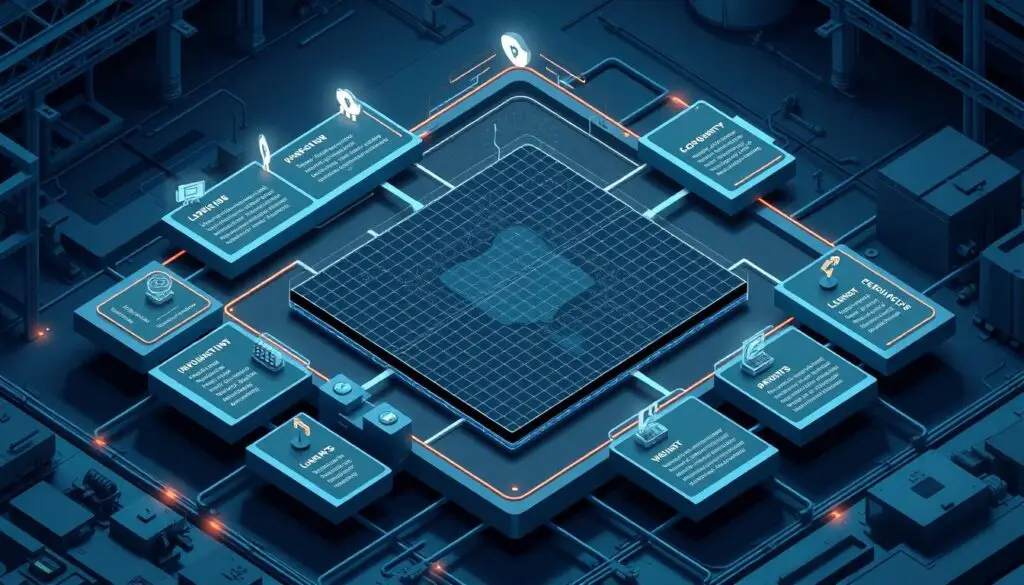
The ISA/IEC 62443 framework provides practical guidance for matching security controls to actual operational risk. Rather than applying generic IT security approaches, this standard addresses industrial control system requirements.
Assessing Operational Risk
Begin with comprehensive asset inventory covering diagnostic equipment, data flows, and critical processes. Map dependencies to identify where downtime or system failure would impact safety or business continuity.
Assign target security levels based on operation type. Independent service facilities typically target Level 1-2 controls. Multi-site fleet operations require Level 2 protections. Manufacturing and plant operations demand Level 3 rigor.
Implementing Tiered Controls
Level 1 establishes foundational security through system hardening, awareness training, and antivirus protection on diagnostic laptops.
Level 2 adds authenticated device access, network segmentation, and least-privilege account policies. These controls prevent lateral movement and contain potential breaches.
Level 3 incorporates continuous monitoring, formal change management, and strict patch validation in isolated test environments. This level suits operations where system availability directly impacts safety or production.
Vendor Collaboration Requirements
Share ISA/IEC 62443 zone and conduit specifications with equipment manufacturers and tool vendors. Establish clear security requirements for system integrations including encryption standards and audit logging capabilities.
Right-sized controls balance protection with operational efficiency. Matching controls to actual risk reduces unnecessary costs while addressing genuine threats.
| Operation Type | Target Level | Primary Controls |
|---|---|---|
| Independent service facility | Level 1 | System hardening, security training, antivirus software |
| Multi-location fleet operations | Level 2 | Network segmentation, authenticated access, credential management |
| Manufacturing and plant operations | Level 3 | Continuous monitoring, change control, OT patch testing |
Essential Cybersecurity Practices for Service Operations
Effective security starts with clear responsibilities and repeatable procedures. Consistent execution under time pressure requires well-defined roles and practical checklists rather than complex technology alone.

People and Process Foundations
Role-based access control limits technicians and parts staff to necessary systems and data. Regular phishing simulations build awareness of social engineering tactics. Required sign-in procedures for diagnostic laptops and removable media create accountability trails.
Training programs should address specific threats technicians encounter, from suspicious email attachments to unknown devices found in customer vehicles.
Network Segmentation Strategy
Separate guest wireless access from office networks and vehicle service networks using VLANs and firewall policies. Isolate telematics interfaces from corporate servers and databases.
Strong authentication requirements for diagnostic systems prevent unauthorized access. Implement J1939-91 security features where equipment supports these protocols to harden in-vehicle communications against spoofing attacks.
Patch Management in OT Environments
Maintain dedicated test environments for validating firmware and software updates before production deployment. Schedule maintenance windows aligned with operational downtime to minimize service disruption.
Document rollback procedures for every update. Prioritize security patches addressing remote code execution or authentication vulnerabilities in coordination with equipment manufacturers.
Layered Monitoring and Detection
Deploy antivirus protection on technician workstations and laptops. Configure firewalls with rules appropriate for operational technology environments. Implement anomaly detection tuned to identify unusual traffic patterns between systems and vehicles.
Real-time alerting enables rapid response to potential security incidents before they impact operations.
Vendor and Supply Chain Security
Require multifactor authentication for OEM portal access. Verify code signing on service software and diagnostic tools. Maintain approved equipment lists with periodic access reviews.
Establish security service-level agreements with critical vendors. Include requirements for vulnerability disclosure and patch timelines in procurement contracts.
Incident Response Preparation
Maintain offline, immutable backups of critical systems and configuration data. Develop simple response playbooks covering common scenarios like compromised workstations or ransomware detection.
Practice isolation procedures for containing threats mid-service without disrupting other bays. Prioritize restoration sequences that minimize rework and customer impact.
Practical implementation tips include bay-level reference sheets for secure device connection and post-service verification procedures. Train teams to recognize and immediately escalate suspicious indicators like unknown dongles, unexpected Bluetooth signals, or unapproved wireless networks.
Managing AI and Automation Security
Artificial intelligence tools transform fault detection and threat response capabilities in service environments. Understanding both benefits and risks enables safe adoption of these powerful technologies.

AI Security Applications
Machine learning models accelerate threat identification by analyzing network traffic patterns and system behaviors. Automated response capabilities enable faster containment of detected incidents. Predictive maintenance algorithms forecast equipment failures before they occur.
These capabilities reduce mean time to detect and respond to security events. However, AI systems require careful governance to prevent introducing new vulnerabilities.
Data Governance for AI Systems
Limit training datasets to non-sensitive records. Apply data masking to customer identifiers and proprietary information where possible. Document model logic and decision criteria to enable human review of automated actions.
Regular validation prevents model drift that could generate false alerts or miss genuine threats. Transparency in AI decision-making builds operator trust and enables effective oversight.
Securing Automated Operations
Automated responses like endpoint isolation or IP blocking improve containment speed. Require human approval for high-impact operations affecting vehicle systems or operational technology.
Remote diagnostic access demands certificate-based authentication and encrypted channels. Scope access tokens tightly to specific functions and time windows. Monitor all automated actions through centralized logging systems.
| AI Application | Security Controls | Operational Benefit |
|---|---|---|
| Threat detection and analysis | Access controls, change review processes | Faster incident containment |
| Predictive maintenance systems | Data governance, masked datasets | Reduced unplanned downtime |
| Remote diagnostics platforms | MFA, encryption, scoped access tokens | Secure OTA updates and manufacturer integration |
Building Resilient Service Operations
Resilience in connected service environments requires mapping specific risks to appropriate controls and training personnel to execute security procedures consistently.
Investment decisions should align with ISA/IEC 62443 security levels appropriate for operation type and risk exposure. This approach protects people, equipment, and business continuity across service lines.
Implementation Roadmap
Start with comprehensive risk assessment identifying critical assets and potential impact scenarios. Implement network segmentation separating guest access, office systems, and vehicle networks. Enforce strong access control with role-based permissions and multifactor authentication.
Validate all patches and updates in isolated test environments before production deployment. Deploy monitoring systems providing visibility across IT and OT environments.
Collaborative Defense
Effective heavy duty shop cybersecurity requires cooperation among service providers, equipment manufacturers, and software vendors. Share security requirements and telemetry data to identify and close gaps throughout the supply chain.
Industry collaboration improves threat intelligence and accelerates defensive responses. Participation in information sharing initiatives benefits individual operations and strengthens sector-wide resilience.
Immediate Action Steps
Publish bay-level security checklists covering device handling procedures. Verify diagnostic equipment integrity before and after every service job. Require multifactor authentication for all remote portals accessing parts and service systems.
Review and update least-privilege access assignments quarterly. Test backup systems and validate recovery time objectives. Update incident response playbooks as new telematics and automation technologies deploy.
Share security outcomes within the organization and across industry networks. Continuous improvement through lessons learned and threat intelligence sharing provides the most effective defense against evolving cyber threats.
Share Your Expertise
Join Heavy Duty Journal as a guest author and reach thousands of industry decision-makers.
Become a Guest AuthorFrequently Asked Questions
What are the biggest cyber threats to heavy equipment shops in 2025?
Ransomware attacks targeting operational systems, supply chain compromises, and intrusions exploiting diagnostic ports like OBD-II and J1939 represent primary threats. Attackers aim to disrupt service delivery, steal design data and customer information, or manipulate vehicle control systems. Expanding 5G connectivity and cloud integration increase attack surfaces, requiring shops to protect networks and devices while maintaining safety-critical controls.
How can an independent shop assess its risk profile?
Begin with comprehensive asset inventory covering vehicles, diagnostic tools, control systems, and third-party service integrations. Map connectivity flows between information technology and operational networks. Rate potential consequences for downtime, safety incidents, and reputation damage. Use ISA/IEC 62443 principles to assign appropriate security levels and prioritize controls where impact probability and consequence severity intersect.
What practical network segmentation steps work for a maintenance bay?
Separate administrative IT systems, guest wireless access, and vehicle service networks using VLANs and firewall policies. Isolate telematics and diagnostic interfaces from corporate servers and databases. Enforce strong authentication requirements and filter east-west traffic between workstations and operational technology devices. Simple micro-segmentation strategies reduce lateral movement opportunities and protect safety-critical systems.
How should shops handle patching for vehicle systems and tools?
Maintain dedicated operational technology test environments for validating updates before production deployment. Schedule patch windows coordinated with planned maintenance downtime and prepare rollback procedures. Prioritize security patches addressing remote code execution or authentication vulnerabilities. Coordinate update schedules with equipment manufacturers to avoid service interruptions and ensure compatibility.
Are telematics and remote service worth the risk?
Yes, when implemented with appropriate security controls. Telematics and remote diagnostics improve equipment uptime and enable predictive maintenance. Secure implementation requires encrypted communications, strong authentication mechanisms, and rigorous endpoint validation. Vet service providers for secure development practices and require comprehensive logging with role-based access controls to manage risk effectively.
What vendor management steps reduce supply chain exposure?
Require cybersecurity attestations and vulnerability disclosure policies from original equipment manufacturers and software vendors. Enforce least-privilege access for third-party diagnostic tools and monitoring systems. Monitor vendor activity through access logs and include security service-level agreements in procurement contracts. Regularly review firmware update timelines and consider multi-vendor redundancy for critical tooling to reduce single points of failure.
How do shops prepare for safety-critical attacks that could affect brakes or steering?
Treat safety-critical vehicle functions as high-consequence assets requiring enhanced protection. Implement physical interlocks, fail-safe operating modes, and segregated control paths for steering and braking systems. Conduct threat modeling exercises including human-in-the-loop scenarios. Maintain rigorous testing and certification programs for any remote control capabilities.
What role should training and culture play in shop defenses?
Personnel represent the first defensive layer against cyber threats. Provide role-specific training for technicians, parts staff, and managers covering phishing recognition, secure diagnostic tool handling, and change control procedures. Establish clear incident reporting channels and reward good security practices. Building resilient security culture through consistent reinforcement and visible leadership commitment multiplies technical control effectiveness.
Which monitoring tools are effective for mixed IT-OT environments?
Combine traditional security information and event management systems with endpoint protection platforms. Add operational technology-aware anomaly detection that understands J1939, CAN bus, and Modbus communication patterns. Deploy network-based sensors in service bays and vehicle storage areas. Tune alert thresholds to reduce false positives while maintaining visibility into both telemetry data and control-plane anomalies.
How can AI help without adding new risks?
Apply artificial intelligence for accelerated threat detection and predictive maintenance modeling while enforcing rigorous data governance and validation. Isolate AI training datasets from production systems and monitor model performance for drift over time. Limit automation capabilities for actions that modify control states without human approval. Transparency in model decision-making enables effective oversight and maintains operator trust.
What incident response steps are essential for minimizing downtime?
Maintain offline backups for critical systems and configuration files. Develop response playbooks covering common incident scenarios and conduct tabletop exercises with technicians and managers. Establish clear recovery time objectives and recovery point objectives for priority systems. Pre-authorize vendor support escalation paths and practice containment procedures. Rapid containment and prioritized restoration of safety-critical systems minimize operational impact and customer disruption.
How should shops secure diagnostic ports like OBD-II and J1939?
Enforce authentication and comprehensive logging for all diagnostic tool connections. Restrict physical access to vehicle interfaces through bay access controls. Apply J1939-91 security features where supported by equipment. Deploy gateway devices to mediate traffic and block unauthorized command sequences. Regularly scan for exposed diagnostic ports and remove unused services from vehicle networks.
What compliance frameworks should fleets and manufacturers consider?
Implement ISA/IEC 62443 for operational technology controls and governance structures. Apply NIST Cybersecurity Framework for overall security program management. Follow industry-specific guidance from SAE International and ISO standards addressing automotive cybersecurity and telematics security. Aligning with recognized standards simplifies vendor coordination, facilitates audits, and demonstrates due diligence to customers and regulators.
How do shops balance modernization with safety and security?
Plan technology upgrades with security requirements integrated from initial design. Pilot new systems in isolated test environments and conduct formal risk assessments before production deployment. Require vendors to demonstrate secure-by-design principles and provide security documentation. Prioritize solutions that reduce attack surface while delivering measurable operational improvements. Balance innovation velocity with disciplined risk management.
What immediate steps can a shop take this week to improve security?
Change all default passwords on diagnostic equipment and network devices. Segment wireless networks separating guest access from vehicle service systems. Enable multifactor authentication for remote access portals and cloud services. Create offline backups of critical configuration files and customer data. Schedule vulnerability scans of connected devices and initiate vendor discussions regarding firmware patch schedules and security update timelines.
Enjoyed This Article?
Share this post with your network and help other industry professionals stay informed.