

By Michael Nielsen, Publisher | 15+ Years in Diesel Repair
Last Updated: September 2026
⏱ Estimated reading time: 15+ minutes
Fleet insurance costs represent one of the largest controllable expenses for commercial vehicle operators, yet many managers respond to rising premiums by cutting coverage — a decision that can devastate a business when accidents happen. A single cargo claim or employee injury often costs far more than years of premium savings, leaving inadequately protected fleets financially exposed at the worst possible moment.
The smarter approach combines robust protection with strategic expense reduction. Through comprehensive risk management, technology adoption, and policy optimization, fleet managers can achieve substantial savings of 20-40% without compromising the coverage their business needs. These nine evidence-based strategies help lower fleet insurance premiums while maintaining the protection that keeps your operation financially stable.
Key Takeaways
- ✓Strategic savings over coverage cuts: Reducing protection during economic downturns increases financial risk — comprehensive coverage provides essential stability when incidents occur.
- ✓Driver training delivers highest ROI: FMCSA-approved defensive driving programs generate 5-15% premium discounts while reducing accident frequency by up to 60%.
- ✓Telematics transforms underwriting: Usage-based insurance programs reward documented safe driving with 15-25% savings compared to traditional coverage structures.
- ✓Maintenance documentation matters: Systematic preventive maintenance programs earn 8-15% premium reductions and provide critical evidence during claims investigations.
- ✓Competitive bidding is essential: Annual policy comparison combined with bundling strategies often uncovers immediate savings of 15-30% over automatic renewals.
In This Guide
- Understanding Fleet Insurance Premium Factors
- 1. Implement Comprehensive Driver Training Programs
- 2. Install Telematics and GPS Tracking Systems
- 3. Maintain a Rigorous Preventive Maintenance Schedule
- 4. Optimize Fleet Size and Vehicle Selection
- 5. Establish Strict Driver Screening and Hiring Policies
- 6. Increase Deductibles Strategically
- 7. Bundle Policies and Leverage Competitive Bidding
- 8. Develop and Enforce Comprehensive Safety Policies
- 9. Leverage Proactive Claims Management
- Frequently Asked Questions
Understanding Fleet Insurance Premium Factors
Fleet insurance premiums are determined by examining the risk assumed by the commercial insurance company. An underwriter analyzes this risk based on physical location, local laws, and numerous operational factors that vary significantly across different fleet operations.
Multiple variables combine to determine your final premium amount. Fleet size and composition significantly affect calculations — larger fleets typically face higher absolute costs, though many carriers provide volume discounts once you exceed certain thresholds. Vehicle type variations create substantial premium differences based on age, safety features, and purpose.
Driver profiles represent one of the most critical factors in premium determination. A single driver with multiple violations can spike premiums for the entire operation. Claims history serves as the most powerful predictor of future risk — frequent small claims often raise rates more dramatically than a single large claim because they indicate systemic safety issues.
Geographic location and operating conditions affect premium calculations in ways many fleet managers underestimate. Fleets operating in hazardous weather conditions or high-risk terrain regularly face elevated rates. Urban operations with heavy traffic congestion typically cost more to insure than rural routes.
1. Implement Comprehensive Driver Training Programs
Investing in comprehensive driver training delivers one of the highest returns in fleet insurance savings, with well-documented programs earning discounts between 5% and 15%. Insurance carriers recognize that properly trained drivers pose significantly lower risks, translating directly into reduced claim frequencies and lower premium costs.
All drivers regardless of experience need regular updates on regulation changes and safety protocols. Training topics should cover hazard recognition, vehicle handling, defensive maneuvers, and proper procedures for loading and unloading cargo.
The Federal Motor Carrier Safety Administration recognizes specific driver training programs that meet rigorous safety standards. Insurance companies actively seek documentation of these certified courses when evaluating fleet risk profiles. Completing FMCSA-approved defensive driving courses provides verifiable credentials that strengthen your position during premium negotiations.
Several nationally recognized programs consistently earn insurer approval. The National Safety Council's Defensive Driving Course provides comprehensive instruction on collision avoidance. The Smith System training methodology teaches drivers five key principles that reduce accidents by up to 60% according to industry studies. Other federally recognized curricula include J.J. Keller Driver Training Programs covering 49 CFR Part 391 driver qualification standards and hours-of-service regulations.
Documentation proves critical when presenting training credentials to insurance carriers. Maintain detailed records showing course completion dates, certification numbers, and renewal schedules for each driver.
Calculating Driver Training ROI
Calculating the return on investment for driver training programs requires tracking multiple cost categories beyond direct insurance savings — reduced accident frequency, lower incident severity, decreased equipment damage, and quantifiable premium reductions.
Training program costs typically range from $200-800 per driver depending on course complexity. For a 50-driver fleet with an average training cost of $400 per driver, the total investment equals $20,000. When accounting for premium reductions of 10% ($15,000 on a $150,000 annual premium), reduced accident-related repairs ($17,000), decreased vehicle downtime costs ($10,000), and fuel efficiency improvements ($9,000), the total annual savings reaches approximately $51,000 — delivering an ROI exceeding 150% in the first year alone.
2. Install Telematics and GPS Tracking Systems
Installing GPS fleet tracking and telematics systems represents one of the most impactful investments fleet operators can make to reduce insurance expenses. Modern insurers increasingly expect this technology implementation, with many carriers offering substantial premium reductions for fleets that provide verifiable safety data.
Telematics technology captures comprehensive driver and vehicle performance data through dash cameras, GPS devices, and onboard diagnostics systems. This information provides fleet managers with objective evidence of safe operations that directly influences how insurers assess risk.
Usage-based insurance programs calculate premiums based on actual driving data rather than industry averages. Well-managed operations consistently achieve 15-25% savings compared to traditional coverage structures — instead of paying rates determined by statistical risk pools, your fleet pays based on demonstrated performance.
Real-Time Driver Behavior Monitoring
Fleet telematics systems provide continuous visibility into how drivers operate vehicles throughout every shift. This real-time monitoring creates dual benefits: immediate coaching opportunities for drivers and comprehensive safety documentation for insurance purposes.
Dashboard-mounted cameras capture both road conditions and driver actions, creating irrefutable records of incident circumstances. This video evidence protects fleets from fraudulent claims while identifying coaching opportunities.
Speeding and harsh braking events serve as leading indicators of accident probability. Insurance underwriters heavily weight these metrics when calculating premiums because they correlate strongly with collision frequency.
Route Optimization for Risk Reduction
GPS-enabled route planning reduces insurance risk exposure through multiple mechanisms. Optimized routes minimize total miles driven, decreasing accident probability through reduced road time. HDJ's fleet uptime optimization guide covers telematics deployment in more depth for readers building this out.
When negotiating telematics insurance discounts, focus on metrics insurers weight most heavily — reductions in speeding violations, harsh braking events, and after-hours operation.
3. Maintain a Rigorous Preventive Maintenance Schedule
The connection between systematic vehicle maintenance and lower insurance costs is direct and measurable. Insurance underwriters evaluate maintenance programs carefully because vehicles with documented service histories present significantly lower risk profiles. HDJ's preventive maintenance ROI guide covers the full financial case for building this program out.
Modern preventive maintenance insurance discounts can reduce annual premiums by 8-15% for fleets that demonstrate comprehensive maintenance protocols. Insurers review maintenance logs during policy applications and renewals, searching for evidence of systematic care that reduces breakdown risk.
DOT Compliance and Maintenance Documentation
Department of Transportation regulations establish minimum maintenance standards that form the foundation of any compliant fleet operation. Under 49 CFR Part 396, motor carriers must systematically inspect, repair, and maintain all commercial motor vehicles under their control.
Complete maintenance documentation serves multiple critical functions beyond regulatory compliance. Insurance adjusters frequently request maintenance records during claims investigations to determine whether mechanical failure contributed to accidents.
Effective documentation systems should capture pre-trip and post-trip inspection reports with driver signatures, scheduled service completions with technician certifications, parts replacement records, annual inspection certifications, and repair work orders documenting issues and corrective actions.
65% higher crash rate
Carriers cited for vehicle maintenance violations vs. the national average, per a Volpe Center study conducted for FMCSA's Safety Measurement System review — a reminder that documented preventive maintenance is a genuine underwriting signal, not just paperwork.
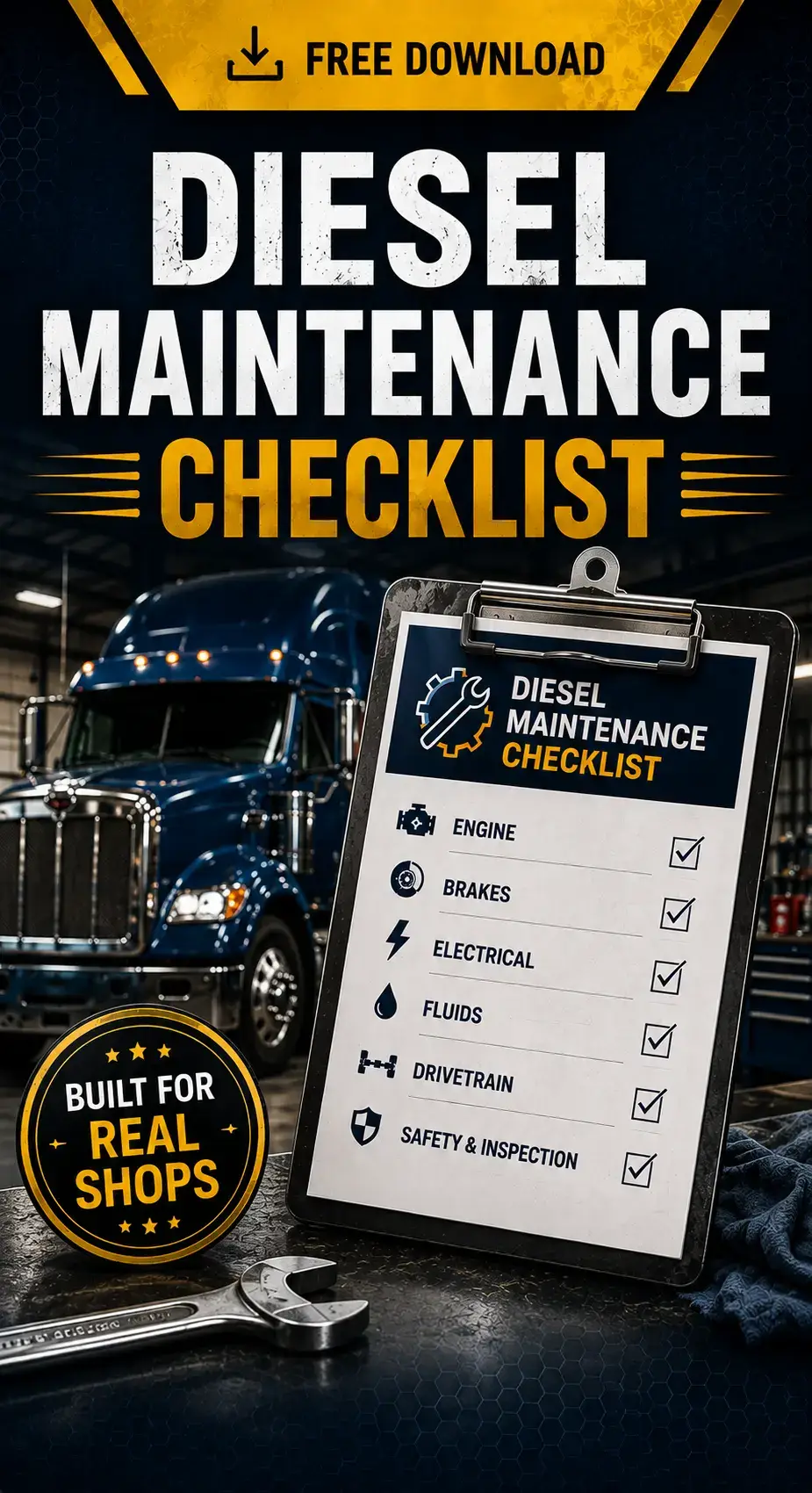
Free Diesel Maintenance Checklist
Get HDJ's free, field-tested diesel maintenance checklist delivered instantly to your inbox — print it, laminate it, keep it in the shop.
Instant PDF • 100% Free • No Spam
Tire Management and Brake System Inspections
Tire and brake failures rank among the most frequently cited mechanical factors in commercial vehicle accidents. Insurance investigators scrutinize maintenance records for these critical safety components during every significant claim.
Tire management programs should document tread depth measurements, pressure checks, rotation schedules, and replacement criteria. Brake system inspections require specialized attention — regular inspections should measure pad thickness, rotor condition, fluid quality, and system pressure.
4. Optimize Fleet Size and Vehicle Selection
Every vehicle decision — from acquisition to retirement — creates lasting impacts on your insurance budget. Fleet composition represents one of the most controllable variables affecting your premiums.
Right-Sizing Your Fleet
Not every vehicle in your fleet needs to stay. Vehicles sitting unused still generate costs in insurance, taxes, registration fees, and depreciation. HDJ's fleet right-sizing guide walks through the full utilization-audit methodology this section summarizes: track mileage, trip frequency, and operational hours for each vehicle over 90-day periods, and treat units consistently showing utilization below 60% of fleet average as candidates for elimination.
Selling or reallocating underutilized assets reduces operating costs immediately. Common justifications for excess capacity deserve scrutiny — calculate the actual cost of "backup" vehicle insurance against spot rental rates during genuine demand spikes.
Selecting Vehicles with Superior Safety Ratings
Commercial vehicle selection directly impacts insurance costs through safety performance metrics. Insurers analyze crash test results, accident statistics, and safety feature availability when calculating premiums.
Safety ratings from the Insurance Institute for Highway Safety (IIHS) and the National Highway Traffic Safety Administration provide objective benchmarks for vehicle comparison. In June 2026, IIHS launched its first-ever commercial vehicle evaluations — a meaningful development for fleet buyers, since federal safety standards for passenger vehicles have never fully applied to cargo vans and heavy-duty pickups.
The initial round tested nine models — three Class 3 pickups and six cargo vans — for five driver-protection features: standard front and side airbags, seat belt pretensioners, force limiters, and effective seat belt reminders. Only four of the nine — the Chevrolet Silverado 3500HD, Ford F-350, Chevrolet BrightDrop 400, and Ram ProMaster 2500 — passed on every measure. IIHS plans to add crash-avoidance testing for these same vehicles later in 2026, with Class 4-6 cab chassis evaluations following in 2027.
These new ratings translate directly into actuarial risk assessments that determine your premiums. Specific technologies deliver measurable premium reductions because they prevent accidents before they occur — Electronic Stability Control, Automatic Emergency Braking, and Lane Departure Warning each address a distinct failure mode. Document every safety feature on insurance applications; many carriers offer 5-15% discounts for vehicles with multiple advanced systems.
5. Establish Strict Driver Screening and Hiring Policies
The foundation of lower fleet insurance premiums starts with who you hire to drive your vehicles. Insurance carriers evaluate your entire driver pool when calculating rates, meaning every driver on your team directly impacts what you pay.
Pre-Employment MVR and Background Checks
Comprehensive driver screening must occur before any candidate operates a company vehicle. Start by obtaining motor vehicle records from every state where the applicant has held a license in the past seven years. Many drivers relocate between states, and violations may not appear on their current state record.
Your screening protocol should include criminal background checks that identify offenses affecting driver qualification. DUI convictions, reckless driving charges, and vehicular crimes represent serious red flags that most insurers consider disqualifying.
Establish clear disqualification criteria that align with insurance company expectations — most insurers recommend rejecting candidates with any DUI/DWI conviction within the past 5-7 years, two or more reckless driving incidents within 5 years, or three or more at-fault accidents within 3 years. HDJ's driver retention strategies guide covers what happens after hiring — the drivers who clear rigorous screening are also the ones worth keeping.
Continuous Driver Monitoring Programs
Pre-employment screening represents just the beginning of effective risk management. Driver behavior and qualifications change over time, requiring ongoing surveillance to maintain fleet safety standards.
Conduct MVR checks on all active drivers at least annually. Best practices call for reviewing MVRs every six months for high-risk drivers or those with previous violations.
DOT regulations mandate specific drug and alcohol testing for commercial drivers. Employers must query the FMCSA Drug and Alcohol Clearinghouse for all current and prospective CDL drivers to identify any drug or alcohol violations. Voluntary testing programs that exceed regulatory minimums demonstrate enhanced safety commitment to insurers.
6. Increase Deductibles Strategically
Fleet managers who carefully optimize their deductible structures can achieve substantial premium savings without compromising coverage quality. However, this approach requires detailed financial analysis rather than simply selecting the highest deductible available.
Analyzing Your Claims History
Your claims history provides the foundation for making data-driven decisions about insurance deductibles. Start by reviewing at least three to five years of claims data to identify patterns in both frequency and severity.
Calculate your total claims costs for each year, including both paid claims and premiums. Then model various deductible scenarios — if your fleet experiences frequent small claims under $5,000, a higher deductible might cost more than the premium savings justify.
Key metrics to analyze include average claim severity, claims frequency rate per vehicle per year, and total annual claims costs as a percentage of fleet value. Be careful not to choose a deductible amount your organization can't pay — being prepared to foot the bill for costly settlements is critical.
Self-Insurance Reserves
Establishing dedicated financial reserves is essential when implementing higher insurance deductibles. Without proper reserves, a single serious incident could strain your operating capital.
A common approach is to maintain reserves equal to at least three times your annual expected deductible payments, structured as restricted funds that cannot be used for routine operational expenses.
7. Bundle Policies and Leverage Competitive Bidding
The insurance marketplace rewards proactive fleet managers who understand that policy bundling and competitive bidding aren't optional — they're essential cost management tools. Many fleet operators continue renewing policies year after year without questioning rates, leaving substantial savings on the table.
Multi-Line Commercial Insurance Bundling
Combining multiple coverage types with a single carrier generates significant discounts that many fleet operators overlook. Fleet insurance combined with general liability, property coverage, workers compensation, and business interruption insurance typically produces savings ranging from 5% to 25%.
A Business Owner's Policy offers small and medium-sized fleets an efficient bundling option, packaging general liability, property insurance, and business interruption coverage at rates more affordable than purchasing each policy separately.
Working with Independent Insurance Brokers
Experienced brokers who represent multiple carriers deliver superior results compared to single-carrier agents. A qualified commercial insurance broker brings market access, industry expertise, and negotiating leverage that most fleet managers cannot achieve independently.
Verify that your broker maintains relationships with diverse insurance markets. Insurance markets constantly evolve as carrier appetites, underwriting criteria, and pricing structures shift — what represented competitive pricing last year may be significantly above market rates today.
Negotiation Tactics for Multi-Year Rate Locks
Strategic insurance negotiation extends beyond simply requesting lower premiums. Timing negotiations well before renewal dates provides maximum leverage — beginning discussions 90-120 days prior to expiration demonstrates professionalism while allowing time for thorough market competition.
Present comprehensive loss control documentation during negotiations. Multi-year rate guarantees provide budget predictability while protecting against market hardening — when market conditions favor buyers, negotiate rate locks extending two or three years into the future.
8. Develop and Enforce Comprehensive Safety Policies
Documented safety policies create the organizational framework that makes every other cost-reduction strategy more effective. Formal written policies demonstrate to underwriters that your organization treats safety as a systematic priority rather than an afterthought. HDJ's fleet safety program implementation guide covers this framework in full.
Written Fleet Safety Policy Implementation
Effective fleet safety programs begin with comprehensive written policies that address every aspect of vehicle operation. Vague statements like "drive safely" provide no actionable guidance, while specific requirements like "maintain three-second following distance in dry conditions" create measurable standards.
Your written policy should include mandatory pre-trip inspection requirements, accident reporting procedures with specific timeframes, and consequences for violations with escalating disciplinary actions. Policies must be formally adopted through executive authorization and distributed to all drivers with signed acknowledgments.
Distracted Driving Prevention Programs
Distracted driving represents one of the leading causes of fleet accidents and a primary concern for insurance carriers. When accidents occur due to driver distraction, liability exposure increases significantly because distraction demonstrates preventable negligence.
Complete prohibition of handheld device use while driving provides the clearest standard and strongest legal protection. Many telematics systems integrate with mobile device management platforms to block certain functions when vehicles are in motion.
Safety Incentive Programs
Positive reinforcement approaches complement policy enforcement by creating motivation beyond fear of discipline. Driver scorecards create transparency around performance expectations — measuring harsh braking events, speeding incidents, seatbelt compliance, and accident-free miles.
Insurance carriers recognize organizations with active safety incentive programs as lower risks — documentation of incentive program participation and safety metric improvements often justifies premium reductions of 5-15%.
9. Leverage Proactive Claims Management
The final strategy focuses on transforming claims handling from reactive crisis response into proactive loss control. Insurance carriers evaluate not just the number of claims your fleet files, but how professionally you manage each incident from the moment it occurs.
Rapid Incident Response and Documentation
The moments immediately following an accident establish the foundation for successful claims resolution. Your first priority must always be ensuring driver safety and protecting the public from further harm.
Equip every driver with a standardized accident response kit: a camera for capturing multiple angles of the accident scene, forms for witness information, and emergency contact numbers. Train drivers to photograph vehicle damage, road conditions, and traffic signals within minutes of the incident.
Notify your insurance carrier within the timeframes specified in your policy, typically within 24 hours for significant accidents. Delayed notification can jeopardize coverage and suggests poor risk management practices.
Accident Investigation and Root Cause Analysis
Moving beyond simply assigning blame, thorough accident investigation identifies underlying causes that can be addressed to prevent similar incidents. Systematic investigation examines driver behavior, vehicle condition, environmental factors, and potential gaps in your training or safety policies.
According to ATRI's May 2026 research on rising insurance costs, liability insurance premiums rose 18.6% to 10.2 cents per mile between 2021 and 2024 — outpacing consumer inflation by 5.4 percentage points — even as heavy-duty truck-involved crash rates fell 2.6% industry-wide. ATRI's 2026 operational cost report found per-mile insurance costs climbed further to 10.6 cents in 2025, making claims management increasingly critical for long-term cost control.
Fleets with more retained risk in their primary coverage layer and those that reduced total purchased coverage saw measurably lower combined liability losses and premium costs — outcomes ATRI attributes to a mix of premium reductions and aggressive safety-technology deployment. The long-term strategic objective extends beyond resolving individual incidents; your goal is maintaining loss ratios that support favorable insurance pricing for years to come.
Frequently Asked Questions
What is the most effective single strategy for reducing fleet insurance costs?
Comprehensive driver training typically delivers the most immediate impact. FMCSA-approved defensive driving courses translate directly into premium discounts of 5-15%, since driver behavior is the most controllable factor affecting accident frequency and severity.
How much can fleet managers realistically expect to save by implementing these strategies?
Fleet managers implementing multiple strategies systematically can achieve total premium reductions of 20-40% over a multi-year period. Telematics typically saves 10-20%, deductible increases 15-25%, driver training 5-15%, and bundling with competitive bidding another 10-30%.
How do telematics systems reduce insurance costs, and will drivers accept monitoring?
Telematics provides objective evidence of safe operations to underwriters, often resulting in 10-20% premium reductions. Framing it as protection during accident investigations — not surveillance — helps drivers accept and even value the monitoring.
Should I increase deductibles to reduce premiums?
It can significantly reduce premiums, but only after analyzing 3-5 years of claims history and confirming your organization can comfortably absorb the higher deductible via dedicated self-insurance reserves. Fleets with frequent small claims should proceed cautiously.
How often should I shop around for fleet insurance?
Conduct comprehensive competitive bidding annually, ideally 90-120 days before renewal. Many fleet managers find immediate savings of 15-25% simply by shopping systematically after years of automatic renewal.
How long does it take for safety improvements to translate into lower premiums?
Some discounts are immediate — telematics or driver training can qualify at your next renewal. Claims-history improvements typically need 2-3 years of favorable experience to fully impact premiums.
Fleet managers can significantly reduce fleet insurance expenses without compromising essential protection. The nine strategies outlined demonstrate that lower insurance costs result from proactive risk management, not coverage reductions. Each approach works best when integrated into your overall fleet management strategy.
Start by assessing your current risk profile. Fleets with recent accident histories should prioritize driver training and behavior monitoring systems. Organizations with strong safety records can focus on deductible optimization and competitive policy bidding. View fleet insurance costs as an ongoing investment rather than a fixed expense — Heavy Duty Journal covers the broader fleet-management framework this strategy fits into across its library.
The temptation to cut coverage during budget pressures puts your organization at serious financial risk. Fleets embracing safety technology and data analytics separate themselves from competitors through superior safety performance and reduced premiums — a competitive advantage extending far beyond immediate cost savings.
Know a Fleet Manager Overpaying for Insurance?
Share this guide with your safety director, operations manager, or any fleet professional still treating insurance as a fixed expense rather than a manageable risk — these nine strategies show there's a better way.


