
By Michael Nielsen, Editor & Publisher | 15+ Years in Diesel Repair
Last Updated: January 2026
📖 Estimated reading time: 19 minutes
Freezing temperatures and icy road conditions create significant operational challenges for commercial fleets across the country. Vehicles that perform reliably in moderate climates face increased stress when temperatures drop below freezing, and every major system—from batteries and fluids to tires and braking components—requires specialized attention during winter fleet maintenance season. A proactive approach to cold weather vehicle preparation protects your valuable assets, keeps drivers safe on the road, and directly impacts your bottom line through reduced emergency repairs and sustained operational efficiency.
This comprehensive fleet winterization guide provides systematic approaches to preparing every vehicle component for harsh conditions. You’ll discover detailed protocols covering pre-season inspections, battery systems, fluid management, tire preparation, cooling systems, brake maintenance, driver training, and emergency preparedness. Following these procedures ensures your operations continue smoothly regardless of weather severity.
Key Takeaways
- Start early: Begin winter preparations 6-8 weeks before first freeze—northern fleets by mid-August, mid-latitude by early September
- Battery focus: Cold cranking amps drop 35-60% in freezing temps while engines need more starting power—test and replace proactively
- Fluid management: Switch to lower-viscosity oils, verify antifreeze protection to -34°F minimum, and use anti-gel diesel additives
- Tire standards: Maintain 6/32″ minimum on steer tires, 4/32″ on drive tires—above legal minimums for safety margin
- Financial impact: A single winter breakdown costs $3,500-$11,000 total vs. $300-$700 for preventive maintenance
- Emergency readiness: Equip every vehicle with traction recovery gear, thermal protection, and 72-hour survival supplies
Understanding the Importance of Winter Preventive Maintenance
The financial and operational stakes of winter fleet management extend far beyond simple inconvenience. Every degree the temperature drops increases mechanical stress on vehicles while simultaneously reducing their ability to perform reliably. Fleet managers who understand these winter-specific challenges can transform their maintenance approach from reactive crisis management into proactive operational protection.
Winter weather creates a perfect storm of mechanical vulnerabilities affecting every vehicle system simultaneously. The compounding nature of these challenges means small problems cascade into major failures faster during cold months than any other season. This reality makes winter preventive maintenance essential for protecting bottom-line profitability.
How Cold Weather Impacts Vehicle Performance
Cold temperatures fundamentally alter the chemistry and physics that allow vehicles to operate normally. Battery efficiency drops by up to 50% when temperatures fall below freezing, requiring nearly double the cranking power to start an engine. Chemical reactions inside the battery slow significantly in cold conditions, producing less electrical current exactly when engines need more power.
Engine oil becomes significantly thicker as temperatures drop, flowing like molasses rather than the thin lubricant engines require for proper startup protection. This increased viscosity forces starter motors to work harder while simultaneously delaying critical lubrication to engine components during those crucial first seconds of operation.
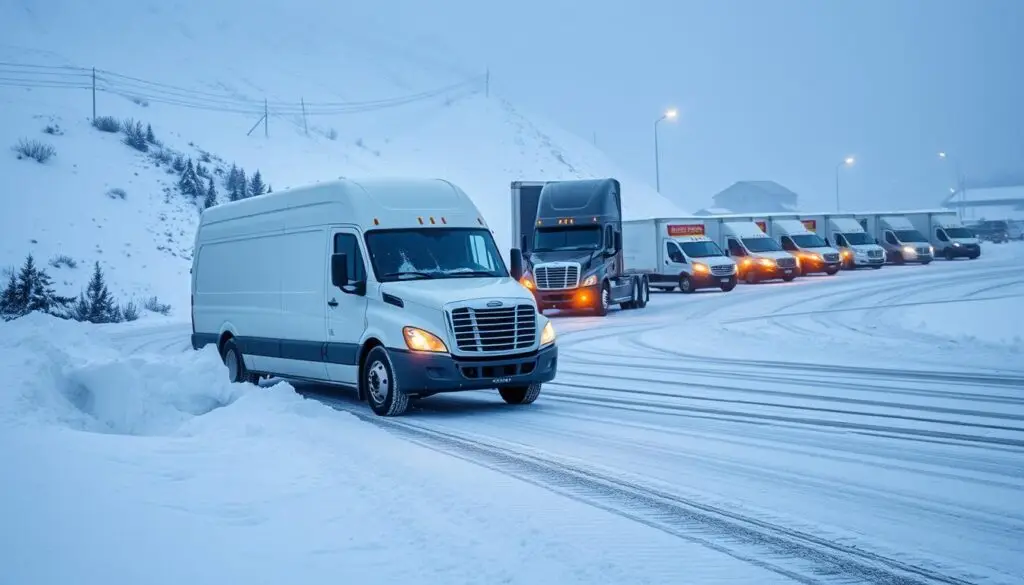
Diesel engines face additional winter challenges that gasoline engines avoid. Diesel fuel contains paraffin wax that remains dissolved in liquid form during warmer months but crystallizes when temperatures approach 10-15°F. These wax crystals clog fuel filters and prevent fuel flow, making engines impossible to start regardless of battery condition.
Tire pressure physics creates another predictable winter problem. Tire pressure drops approximately 1 PSI for every 10-degree Fahrenheit decrease in temperature. A vehicle with properly inflated tires at 70°F will have significantly underinflated tires when temperatures hit 20°F, reducing traction, increasing stopping distances, and accelerating tire wear. Rubber and plastic components throughout the vehicle become brittle in freezing conditions—hoses, belts, and seals that remain flexible during summer develop cracks and leaks when exposed to sustained cold.
Financial Costs of Winter Vehicle Breakdowns
The true costs of winter breakdowns extend far beyond the immediate repair invoice. Direct expenses include emergency roadside service, towing fees that increase with distance and weather severity, expedited parts shipping, and overtime labor charges for after-hours repairs. These costs multiply rapidly when multiple vehicles experience simultaneous failures during severe weather events.
$448-$760 per day
Average commercial vehicle downtime cost according to Element Fleet Management research
Indirect costs often dwarf the repair bills themselves. Lost productivity occurs when drivers sit idle waiting for repairs rather than completing deliveries. Missed delivery windows trigger contract penalties and damage customer relationships that took years to build. Competitors eagerly fill service gaps created by unreliable fleet operations.
| Cost Category | Reactive Breakdown | Preventive Approach | Net Savings |
|---|---|---|---|
| Emergency Repairs & Towing | $1,200 – $2,500 | $300 – $600 | $900 – $1,900 |
| Lost Productivity & Delays | $800 – $1,500 | $0 – $100 | $800 – $1,400 |
| Contract Penalties | $500 – $2,000 | $0 | $500 – $2,000 |
| Customer Relationship Damage | $1,000 – $5,000 | $0 | $1,000 – $5,000 |
| Total Per Incident | $3,500 – $11,000 | $300 – $700 | $3,200 – $10,300 |
Fleet managers who calculate the complete financial picture recognize that preventive maintenance investments deliver immediate returns. A comprehensive pre-winter inspection costing $500 per vehicle prevents breakdowns that would cost five to twenty times that amount.
Safety and Liability Considerations
Vehicle failures during winter conditions create life-threatening situations that extend legal liability far beyond normal operating circumstances. Drivers stranded on highways during snowstorms face exposure risks, while disabled vehicles blocking traffic lanes create collision hazards. These scenarios transform mechanical failures into potential tragedies with severe legal consequences.
Insurance companies and legal systems hold fleet operators to higher standards of care when operating in known hazardous conditions. Courts consistently rule that winter weather creates foreseeable risks that prudent operators must address through enhanced maintenance and preparation. Under 49 CFR Part 396, motor carriers must systematically inspect, repair, and maintain all commercial vehicles under their control.
Developing Your Pre-Winter Fleet Inspection Schedule
Successful winter fleet operations begin with a well-structured inspection schedule implemented weeks before the first freeze. Fleet managers who take a proactive approach reduce emergency repairs and minimize costly downtime during peak winter months. A systematic pre-winter inspection process ensures every vehicle receives thorough evaluation and necessary maintenance before harsh weather arrives.

Starting Early: When to Begin Winter Preparations
Winter preparation timing determines success or failure of your entire cold-weather strategy. Fleet managers should initiate pre-winter inspection activities six to eight weeks before the anticipated first freeze in their operational regions. This timeline provides adequate buffer for identifying problems, ordering parts, and completing repairs without rushing.
Early scheduling delivers multiple strategic advantages. Maintenance facilities have greater availability during early fall compared to the pre-winter rush that occurs in late October and November. Parts suppliers maintain better inventory levels before seasonal demand spikes create shortages.
| Climate Zone | Prep Start Date | Target Completion | First Freeze Average |
|---|---|---|---|
| Northern States | Mid-August | Early October | Late October |
| Mid-Latitude Regions | Early September | Late October | Mid-November |
| Southern Operations | Late September | Mid-November | Early December |
| Mountain Territories | Early August | Late September | Early October |
Building Standardized Assessment Systems
Creating comprehensive fleet inspection protocols ensures consistent evaluation across your entire vehicle population. A standardized vehicle assessment checklist eliminates variability between different technicians and maintenance locations. Every vehicle receives the same thorough examination regardless of who performs the inspection.
Your assessment protocols should cover all critical systems vulnerable to cold weather performance degradation: battery and electrical system testing of cold cranking amps and charging system output, fluid systems evaluation of engine oil viscosity and coolant protection levels, tire inspection for tread depth and pressure specifications, cooling system verification of radiator condition and heater functionality, and brake system evaluation including pad thickness and air brake moisture levels.
Strategic Vehicle Prioritization
Not all vehicles require the same level of attention during pre-winter preparation. Strategic prioritization ensures your fleet maintenance schedule allocates resources effectively based on operational criticality and vehicle condition.
Several factors determine vehicle priority levels: annual mileage indicating wear severity and probability of component failures, current condition based on recent repair history, operational criticality reflecting importance to business operations, and geographic assignment when certain vehicles operate in areas with more severe winter conditions. High-mileage vehicles over 100,000 miles, units with recent reliability issues, and mission-critical assets receive first priority. This tiered approach prevents last-minute scrambling when winter weather arrives unexpectedly.
Battery Systems and Electrical Component Winterization
Cold temperatures place extraordinary demands on battery systems and electrical components, requiring proactive maintenance strategies to prevent costly failures. Winter conditions reduce battery efficiency by up to 50 percent while simultaneously increasing the power needed to start cold engines. Electrical system failures represent the leading cause of winter vehicle breakdowns.
Cold Cranking Performance Requirements
Cold cranking amps measure a battery’s ability to start an engine in freezing conditions—the number of amps a battery can deliver at 0°F for 30 seconds while maintaining at least 7.2 volts. Winter creates a dual challenge: cold oil thickens significantly, increasing resistance when the starter motor attempts to turn the engine, while battery chemical reactions slow dramatically in freezing temperatures.
| Vehicle Type | Minimum CCA | Cold Climate CCA | Battery Life |
|---|---|---|---|
| Light-Duty Vehicles | 400-600 CCA | 650-750 CCA | 3-4 years |
| Medium-Duty Trucks | 650-850 CCA | 900-1,000 CCA | 3-5 years |
| Heavy-Duty Commercial | 900-1,200 CCA | 1,200-1,400 CCA | 4-6 years |
| Diesel Engines | 750-1,000 CCA | 1,000-1,500 CCA | 3-5 years |
Testing Procedures and Replacement Standards
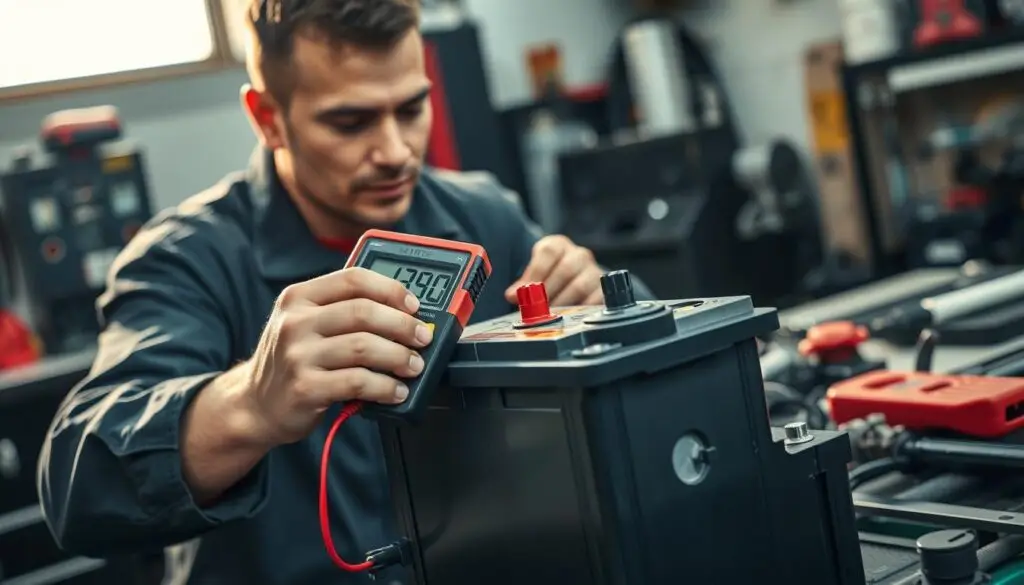
Battery load testing provides accurate assessment of actual capacity versus rated specifications. This diagnostic procedure applies a controlled load while measuring voltage response, revealing batteries that will fail under winter stress. Testing should occur in early fall before temperatures drop significantly.
Proper testing requires a 2,000 CCA tester capable of applying loads matching battery specifications. Fully charged batteries should read 12.65 volts for flooded lead-acid types and 12.85 volts for AGM batteries before testing. Load test results below 9.6 volts indicate immediate replacement needs. Establish clear replacement criteria: replace any battery more than three years old that tests below 75 percent of rated capacity, and replace after four years for standard flooded batteries regardless of test results.
⚠️ Safety Warning
Always wear eye protection and insulated gloves when testing or servicing batteries. Lead-acid batteries contain sulfuric acid and can produce explosive hydrogen gas during charging. Work in well-ventilated areas and keep sparks and flames away from battery terminals.
Charging System and Connection Protection
Winter dramatically increases electrical demands on alternators and charging systems. Test alternator output voltage with all accessories operating to simulate winter conditions—proper charging systems maintain 13.8 to 14.4 volts under full load. Readings below 13.5 volts indicate insufficient charging capacity that will drain batteries during normal operation.
Battery terminals and electrical connections face accelerated corrosion in winter conditions. Clean all battery terminals thoroughly before winter using a baking soda and water solution to neutralize acid corrosion. After cleaning, coat terminals with dielectric grease, install felt terminal washers treated with corrosion inhibitor, and apply protective covers over connections. Ground connections deserve equal attention—clean and protect chassis ground points and engine block grounds using the same procedures.
Cold Weather Fluid Management Strategies
Cold weather transforms routine fluid maintenance into a strategic necessity, demanding specific formulations and protection standards for reliable vehicle operation. Each fluid system behaves differently as temperatures drop, requiring targeted attention to viscosity grades, concentration levels, and freezing points.

Engine Oil Viscosity Selection
Engine oil viscosity selection represents a critical decision for cold-weather fleet operation. The viscosity rating system uses a two-number format where the first number indicates cold-temperature flow characteristics and the second indicates high-temperature performance. Lower first numbers mean better flow in freezing conditions, directly impacting engine protection during startup.
Cold starts create the most severe engine wear because thick oil fails to circulate quickly to critical components. For moderate winter climates, transitioning from 15W-40 to 10W-30 provides improved cold-flow properties. Fleets operating in extreme cold regions should consider 5W-40 or 0W-40 synthetic oils—these advanced formulations maintain fluidity at temperatures well below zero while resisting thermal breakdown better than conventional oils. Always consult OEM specifications before changing viscosity grades to maintain warranty coverage.
Coolant Testing and Antifreeze Protection
Coolant testing provides essential data about your fleet’s readiness for freezing temperatures. Antifreeze protection must extend well below the lowest expected ambient temperature—most fleet managers target protection levels of at least -34°F, though severe climate operations require protection to -50°F or lower.
Testing coolant concentration using a refractometer reveals the antifreeze-to-water ratio. A proper 50/50 mixture of ethylene glycol antifreeze and water delivers optimal freeze protection and heat transfer characteristics per ASTM D6210 heavy-duty coolant specifications. Water alone in cooling systems creates catastrophic risks—when water freezes, it expands with tremendous force, cracking engine blocks, splitting radiators, and popping freeze plugs. Beyond freeze protection, test pH levels: degraded coolant becomes acidic, attacking metal components and causing premature water pump and heater core failures.
Preventing Diesel Fuel Gelling
Diesel fuel gelling prevention demands proactive measures to avoid fuel system failures. Diesel contains paraffin compounds that crystallize into waxy gel when temperatures drop below the fuel’s cloud point, typically between 10°F and 32°F for summer-grade diesel. These crystals clog fuel filters, starving engines of fuel.
Winter-blend diesel fuel formulated for low temperatures provides the first line of defense. Anti-gel fuel additives prevent paraffin crystallization by modifying wax crystal structure—add these products before temperatures drop, as they cannot re-liquefy fuel that has already gelled. Keep tanks full overnight to minimize condensation, and drain water separators daily during cold weather operations.
Diesel exhaust fluid (DEF) freezing presents another challenge for modern diesel fleets. DEF consists of 32.5% urea and 67.5% deionized water, which freezes solid at 12°F. While DEF systems include heating elements to thaw frozen fluid, repeated freeze-thaw cycles can damage tanks, pumps, and injectors over time.
Tire Inspection and Winter Traction Systems
Tires represent the only contact point between your fleet vehicles and winter road surfaces, making comprehensive tire inspection and traction preparation critical for cold weather operations. Every aspect of tire performance changes in cold weather—rubber hardens as temperatures decrease, reducing the flexibility needed for optimal road grip.
Evaluating Winter Tire Needs
The decision to equip fleet vehicles with dedicated winter tires depends on multiple operational factors. Geographic location serves as the primary consideration, with regions experiencing sustained temperatures below 45°F benefiting significantly from specialized winter rubber compounds.
Winter tires differ fundamentally from all-season alternatives in three critical areas: rubber compounds contain specialized polymers remaining flexible at temperatures where conventional tires become rigid, tread patterns feature deeper grooves channeling snow and slush away from the contact patch, and sipe density—the tiny cuts across tread blocks—increases dramatically, creating thousands of additional biting edges for ice traction.
Cold Temperature Tire Pressure Management
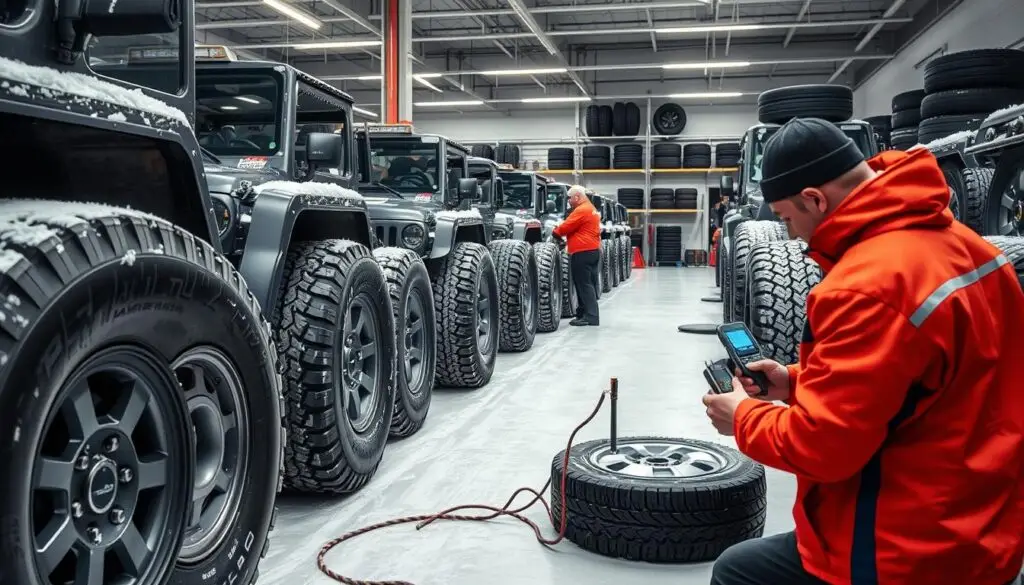
Temperature changes create predictable tire pressure fluctuations requiring regular monitoring throughout winter months. Tire pressure decreases approximately one PSI for every ten-degree Fahrenheit temperature drop. A vehicle with properly inflated tires at 70°F can experience significant under-inflation when temperatures plummet to 20°F, losing five PSI or more overnight.
Under-inflated tires create multiple operational problems: fuel economy decreases as rolling resistance increases, vehicle handling deteriorates particularly during emergency maneuvers on slippery surfaces, and tire wear accelerates unevenly. Establish protocols for tire pressure monitoring including weekly checks during winter months using calibrated digital gauges, measuring when tires are cold before vehicles travel more than one mile, and inflating to manufacturer-recommended PSI specifications on door jamb labels.
Tread Depth Standards for Winter Safety
Adequate tread depth separates safe winter operations from hazardous conditions. For safe winter operations, maintain minimum tread depths of 6/32 inch for steer tires and 4/32 inch for drive tires—more conservative than FMCSA legal minimums under 49 CFR 393.75 of 4/32 inch and 2/32 inch respectively.
The relationship between tread depth and traction becomes critical when roads are covered with snow, slush, or standing water. Shallow treads cannot channel precipitation away from the tire contact patch, leading to hydroplaning risks and loss of vehicle control. Implement systematic tread depth inspection using tire tread depth gauges at multiple points across the tire width, checking for uneven wear patterns that indicate alignment or inflation problems.
Preparing Tire Chains and Traction Devices
Tire chains preparation represents an essential component of comprehensive winter fleet readiness. Many jurisdictions mandate chains or approved traction devices during specific weather conditions or on designated mountain routes. Begin preparation with thorough inventory assessment weeks before winter: count available chain sets, verify sizing matches current tire dimensions, and inspect each set for damage or wear.
Proper chain sizing is critical for both safety and effectiveness—chains that fit too loosely can damage wheel wells and brake lines, while overly tight chains may break under load. Store chains in weather-protected locations with organized labeling systems. Driver training on chain installation cannot be overlooked—conduct hands-on practice sessions during moderate weather, covering proper vehicle positioning, correct chain orientation, fastening procedures, re-tightening protocols after initial driving, and safe removal techniques.
The HDJ Perspective
In our experience working with fleets across climate zones, the operations that navigate winter most successfully share one common trait: they treat cold weather preparation as a year-round process rather than a last-minute scramble. The most resilient fleets conduct post-winter debriefs identifying what worked and what failed, then build those lessons into their spring and summer maintenance schedules. When October arrives, they’re executing a refined plan rather than reinventing the wheel. The ROI on this systematic approach compounds over time—each winter becomes smoother than the last.
Cooling System and Engine Block Protection
Winter cooling system maintenance addresses a fundamental paradox: protecting against freezing while ensuring engines reach optimal operating temperature. Your fleet’s cooling components must prevent ice formation that can crack engine blocks while simultaneously maintaining thermal regulation for efficient operation.
Radiator Components and Thermostat Performance
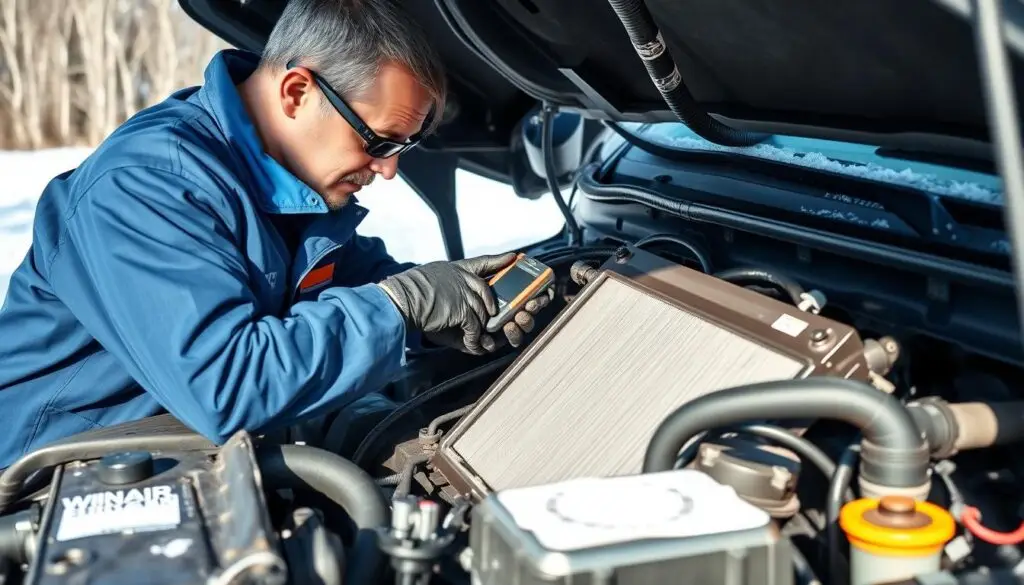
Begin radiator maintenance by conducting thorough visual inspection of all cooling system components. Cold temperatures cause rubber hoses to harden and become susceptible to cracking. Perform the squeeze test on each radiator hose—healthy hoses feel firm yet pliable, while deteriorating hoses show soft spots, excessive hardness, or bulging. Replace any hose displaying cracks, visible wear, or age beyond five years.
The thermostat controls coolant flow between the engine and radiator, making its proper operation critical for winter performance. A stuck-open thermostat prevents engines from reaching proper operating temperature, resulting in poor fuel economy, increased emissions, and insufficient cabin heating. A stuck-closed thermostat blocks coolant circulation, causing engine overheating even in cold weather. Professional thermostat testing involves removing the component and placing it in heated water while monitoring the opening temperature—replace any thermostat that fails to open within its specified range.
Heating, Defrost, and Block Heater Systems
Driver comfort and visibility depend entirely on properly functioning cabin heating and defrosting systems. Test the heater core by running the engine to operating temperature and checking heat output at maximum settings. Weak or absent heat indicates heater core blockage, coolant circulation problems, or control valve failures. Verify blower motor operation at all speed settings and test defroster vent airflow by confirming strong, consistent flow at windshield vents.
Engine block heaters provide essential cold-weather starting capability for diesel engines. An engine block heater warms coolant and engine components before startup, dramatically reducing battery drain and ensuring reliable ignition when temperatures drop below freezing. This preheating reduces engine wear during cold starts while improving fuel efficiency. Select block heater wattage based on engine size—most applications require 400-1500 watt heaters. Create driver protocols requiring block heater use when overnight temperatures fall below 32°F.
Comprehensive Brake System Winter Checks
Comprehensive brake system winter checks ensure your fleet maintains stopping power when conditions deteriorate. Cold weather introduces moisture into brake components, accelerates corrosion from road salt, and challenges every aspect of your braking systems.
Brake Pad and Rotor Evaluation
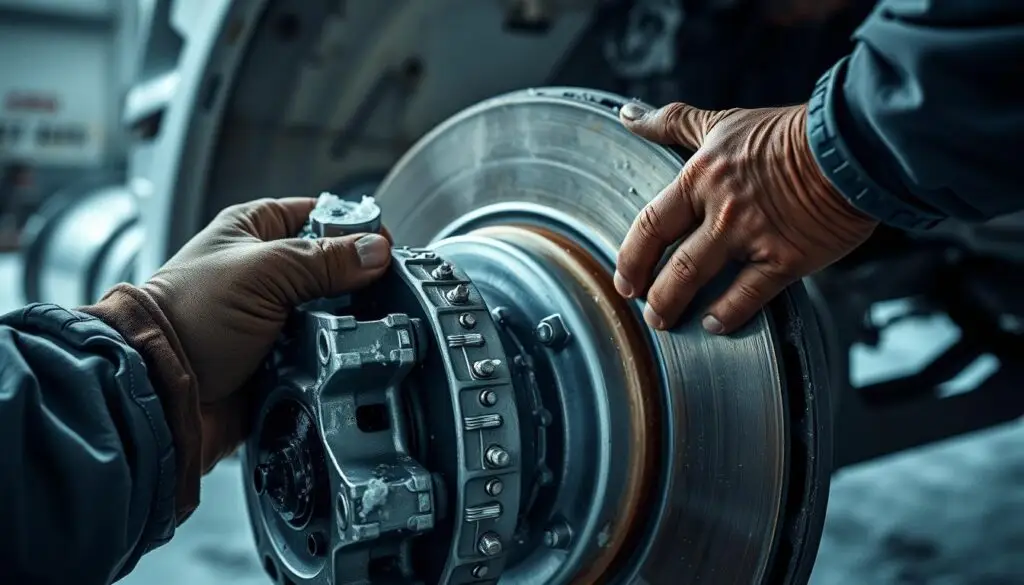
Brake pad inspection becomes critical before winter because cold weather increases braking demands. Measure pad thickness at multiple points rather than relying solely on wear indicators. Winter operations require replacing brake pads when thickness reaches 4mm—more conservative than typical 2-3mm minimums. Visual inspection reveals uneven wear patterns indicating caliper or hardware problems.
Rotor condition assessment includes thickness measurement at the thinnest point using a micrometer. Compare measurements against manufacturer minimum specifications, but consider replacement if rotors measure within 1mm of minimum thickness. Heat damage appears as blue discoloration or radial cracks—these conditions reduce the rotor’s ability to dissipate heat and maintain consistent friction.
Air Brake System Winterization
Air brake maintenance focuses on eliminating moisture that can freeze and cause complete brake failure. The air dryer serves as the primary defense against water entering brake lines, making fall air dryer cartridge replacement a non-negotiable maintenance task. Oil-coalescing air dryer cartridges provide superior winter protection compared to standard desiccant cartridges.
Daily air tank draining removes accumulated water, road chemicals, salt, and sand settling at tank bottoms. Establish protocols requiring drivers to drain all air tanks at the end of each shift during winter months. Automatic drain valves require inspection to verify proper operation. Inspect air brake chamber housings for damage or corrosion with particular attention to dust plug installation—missing or improperly seated dust plugs allow moisture and contaminants to enter chambers.
ABS Testing and Brake Line Inspection
ABS testing verifies electronic brake control systems function properly when essential for maintaining traction on ice and snow. Wheel speed sensors mounted near brake rotors accumulate road debris, salt, and moisture interfering with signal transmission. Clean wheel speed sensors using appropriate solvent and measure the air gap between sensor tips and tone rings. Diagnostic scan tools retrieve ABS fault codes—address all codes before winter operations begin.
Brake line corrosion accelerates during winter months when road salt and chemical de-icers coat vehicle underbodies. Inspect all brake lines from master cylinder to wheel cylinders, paying special attention to connection points and areas where lines contact frame rails. Surface rust appears normal on older steel lines, but deep pitting, flaking, or visible thinning indicates lines approaching failure. Brake fittings and unions require close inspection where salt accumulation causes rapid deterioration.
Free Professional Fleet Tools
Cost calculators, fault code lookup, maintenance planners, and more—built for owner-operators, fleet managers, and diesel techs. No signup required.
Driver Preparation and Emergency Protocols
The human element represents a critical component of winter fleet operations that demands comprehensive training and clear procedural guidelines. Even perfectly maintained vehicles can become unsafe when operators lack proper cold weather skills or fail to follow established protocols.
Winter Driving Training Programs
Comprehensive winter driving training programs go beyond basic defensive driving to address specific cold-weather challenges. Curriculum should cover ice and snow vehicle dynamics, proper braking techniques on slippery surfaces, emergency maneuver procedures, recognition of black ice conditions, increased following distances, and gentle acceleration techniques. Assessment of individual driver capabilities ensures appropriate route assignments during severe weather.
Vehicle Warm-Up and Pre-Trip Procedures
Modern vehicle warm-up procedures balance engine protection with idle time reduction and emissions concerns. For most modern gasoline engines, 30 seconds to one minute allows sufficient oil circulation before driving. Diesel engines typically require longer warm-up times, especially in extreme cold—at temperatures below zero degrees Fahrenheit, diesel engines may need three to five minutes of idling before operation.
Winter operations require expanded pre-trip inspection procedures beyond standard year-round checks: tire pressure verification, wiper blade condition and windshield washer fluid levels, all lights and reflectors functionality, coolant and antifreeze levels, battery connections and electrical system indicators, heating and defrosting system operation before departure, and emergency equipment including blankets, flashlights, and supplies.
Emergency Equipment and Survival Supplies
Every fleet vehicle requires a comprehensive winter emergency kit containing equipment addressing both vehicle recovery and driver protection needs. Vehicle recovery tools should include heavy-duty ice scrapers, snow brushes, traction mats, bags of sand or absorbent materials, and folding shovels. Electrical support equipment includes jump starter battery packs rated for diesel engines and heavy-duty jumper cables.
Cold weather survival gear addresses physiological dangers drivers face when stranded. Include emergency blankets rated for sub-zero temperatures, sleeping bags with temperature ratings matching regional extremes, extra winter clothing in multiple sizes, high-calorie non-perishable food items, and insulated water containers preventing freezing. Communication devices with backup power banks ensure drivers can reach dispatch during emergencies. According to the Commercial Vehicle Safety Alliance, properly equipped vehicles significantly reduce risk during roadside incidents.
Quick Reference: Emergency Kit Essentials
- Recovery: Traction mats, folding shovel, jumper cables, ice scraper
- Thermal: Emergency blankets, extra gloves/hats, hand warmers
- Visibility: DOT reflective triangles, LED beacons, flashlight
- Sustenance: 72-hour food/water supply per occupant
- Communication: Charged phone, backup power bank
Frequently Asked Questions
When should fleets begin winter preparation?
Fleet managers should initiate pre-winter inspection activities six to eight weeks before the anticipated first freeze in their operational regions. Northern states like Minnesota, Wisconsin, and Michigan should begin by mid-August; mid-latitude states like Pennsylvania, Ohio, and Indiana by early September; and southern operations by late September. This timeline provides adequate buffer for identifying problems, ordering parts, and completing repairs without rushing while taking advantage of better maintenance facility availability and parts inventory levels before seasonal demand spikes.
What battery cold cranking amps rating is needed for diesel trucks?
Heavy-duty commercial diesel vehicles require batteries with 900-1,200 CCA or higher to ensure reliable starts in severe cold. For extreme cold climates, upgrade to batteries rated 1,200-1,500 CCA. Battery efficiency drops up to 50 percent in freezing temperatures while engines simultaneously require more cranking power due to thickened oil. Replace batteries testing below 75 percent of rated capacity or any battery more than three years old before winter arrives to avoid roadside failures.
How do you prevent diesel fuel gelling in winter?
Prevent diesel fuel gelling through a multi-layered approach: use winter-blend diesel fuel formulated for low temperatures (reliable operation down to 0°F or below), add anti-gel fuel additives before temperatures drop below 20°F, keep fuel tanks full overnight to reduce condensation, and consider heated fuel systems for extreme cold operations. Anti-gel additives must be added while fuel is still liquid—they cannot re-liquefy fuel that has already gelled. Drain water separators daily during cold weather to prevent ice formation damaging fuel pumps and injectors.
What tire tread depth is safe for winter fleet operations?
For safe winter operations, maintain minimum tread depths of 6/32 inch for steer tires and 4/32 inch for drive tires—more conservative than legal minimums of 4/32 and 2/32 inch respectively. This provides crucial safety margins when roads are covered with snow, slush, or standing water. Shallow treads cannot channel precipitation away from the tire contact patch, increasing hydroplaning risks and reducing stopping power. Measure tread depth at multiple points using calibrated gauges to identify uneven wear patterns.
What emergency equipment should fleet vehicles carry in winter?
Every fleet vehicle requires a comprehensive winter emergency kit including: traction recovery equipment (commercial-grade traction mats, folding shovels, sand/absorbent materials), electrical support (jump starter battery packs rated for diesel engines, heavy-duty jumper cables), thermal protection (emergency blankets rated for sub-zero temperatures, extra winter clothing, hand warmers), visibility equipment (DOT-compliant reflective triangles, LED beacons, flashlights), and sustenance supplies (72-hour food and water for vehicle occupant capacity). Communication devices with backup power banks ensure drivers can contact dispatch during emergencies.
Protect Your Fleet Investment This Winter
Effective winter fleet maintenance transforms seasonal challenges into manageable operational tasks. The preventive maintenance benefits outlined in this guide deliver measurable returns—planned maintenance costs remain predictable and controlled at $300-$700 per vehicle, while reactive winter breakdowns create cascading expenses of $3,500-$11,000 per incident including emergency repairs, lost productivity, and customer relationship damage.
Starting your cold weather preparation checklist early provides the critical advantage your fleet needs when the first snowfall arrives. Systematic inspection of battery systems, fluid management, tire conditions, cooling systems, and brake components ensures each vehicle meets winter demands. Driver training and emergency preparedness protocols complete your comprehensive defense against harsh weather conditions. Begin your winter preparation immediately using this guide as your operational framework—the investment you make today prevents the costly disruptions that affect unprepared fleets tomorrow.
Found This Guide Helpful?
Share this winter fleet maintenance resource with fellow fleet managers, shop foremen, and owner-operators preparing for cold weather operations.


