
By Michael Nielsen, Editor & Publisher | 15+ Years in Diesel Repair
Last Updated: December 2025
📖 Estimated reading time: 22 minutes
Turbocharger failure analysis reveals that over 90% of turbo failures in heavy-duty diesel engines stem from three root causes: oil starvation, oil contamination, and foreign object damage. Understanding these failure patterns helps fleet managers and diesel technicians prevent catastrophic breakdowns that can sideline trucks for days and cost thousands in repairs.
Modern turbochargers spin at speeds approaching 200,000 RPM while managing exhaust gas temperatures exceeding 1,000°F. At these extreme operating conditions, the margin for error disappears. A momentary interruption in oil supply or a single piece of debris passing through the compressor wheel can destroy a turbocharger within seconds. Professional technicians who master turbocharger failure analysis can identify root causes through specific damage signatures, implement targeted repairs, and establish prevention protocols that extend turbo life from 250,000 miles to 500,000 miles or more.
Key Takeaways
- Oil Problems Dominate: Over 90% of turbocharger failures trace back to oil starvation, contamination, or dilution—making lubrication system maintenance the single most important prevention factor.
- Extreme Operating Conditions: Turbochargers operate at speeds up to 200,000 RPM and temperatures exceeding 1,000°F, requiring constant oil supply for stabilization, lubrication, and cooling.
- Damage Patterns Tell the Story: Distinct visual signatures—shaft bluing, bearing scoring, impact marks—reveal specific failure modes and guide root cause diagnosis.
- Prevention Through Systematic Maintenance: Following OEM oil change intervals, replacing air filters on schedule, and allowing proper cool-down periods prevent most turbocharger failures.
- Root Cause Analysis Prevents Repeat Failures: Simply replacing a failed turbo without addressing the underlying cause results in repeat failures 99% of the time.
Critical Components in Heavy-Duty Turbocharger Systems
Heavy-duty turbochargers operate under conditions that push engineering limits daily. These systems compress intake air at incredible speeds while managing intense heat and pressure differentials. Understanding their critical components helps technicians perform accurate diagnostics and implement effective maintenance strategies that keep fleets moving.
Turbine Shaft Bearings and Their Performance Role
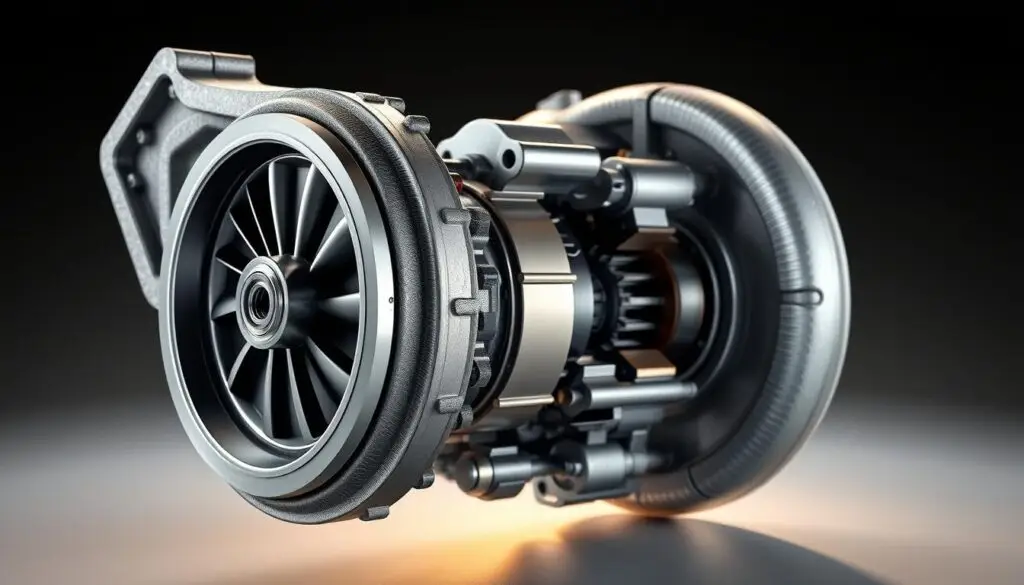
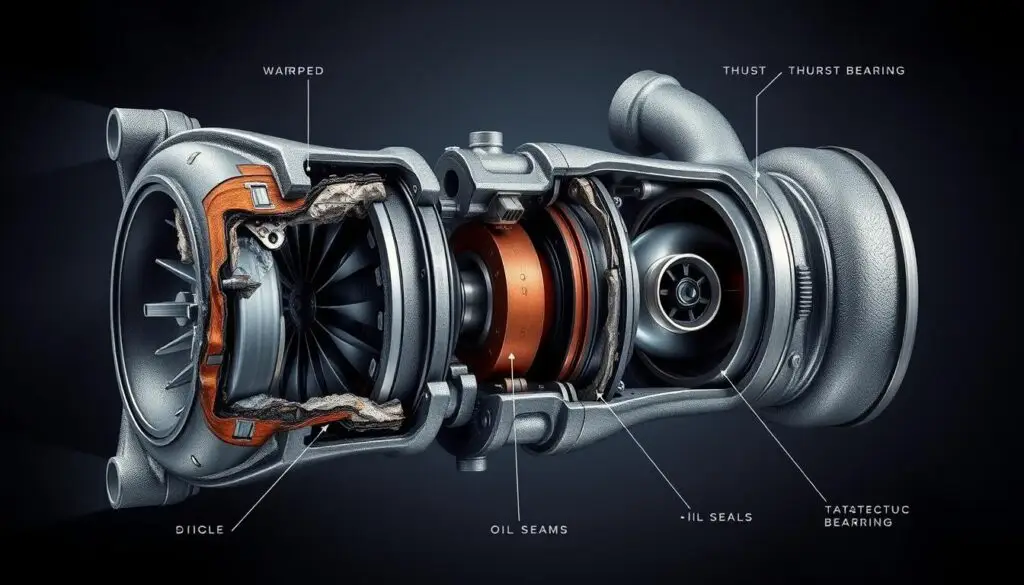
Turbine shaft bearings serve as the heart of turbocharger reliability. These precision components include axial bearing washers and radial material pairings crafted from specialized copper alloys. The bearings float on a microscopic oil film—typically six to nine microns thick—that prevents metal-to-metal contact during operation.
Axial thrust washers manage the tremendous forces created by exhaust gas flow. When exhaust back pressure builds excessively, the turbine shaft pushes against these critical washers with hundreds of pounds of force. Without proper lubrication maintaining that microscopic clearance, bearing surfaces deteriorate within minutes, leading to catastrophic failure.
Operating Conditions in Commercial Truck Applications
Commercial truck turbochargers face punishing conditions on every run. Shaft speeds can reach up to 170,000 RPM while compressed air temperatures soar to 200°C (392°F). These extreme parameters demand precise oil delivery for three essential functions: stabilization of rotating assemblies, lubrication of bearing surfaces, and heat dissipation from critical areas.
Engine oil acts as both lubricant and coolant simultaneously. In a properly functioning system, oil flows through the center housing continuously, absorbing heat from the turbine side while maintaining the thin film that protects bearings spinning at highway speeds. Temperature extremes cause oil decomposition over time, creating harmful deposits that compromise bearing performance and narrow oil passages.
Components Most Vulnerable to Failure
Several components require special attention during turbocharger inspections. Journal bearings support the shaft during high-speed rotation and show wear first when lubrication degrades. Thrust collars and backplate assemblies control axial movement and reveal damage when exhaust back pressure exceeds design limits. Center housing seal bores prevent oil leakage while maintaining proper internal pressure.
The turbine wheel endures direct exposure to exhaust gases at temperatures that can exceed 1,350°F under heavy load. The compressor wheel handles clean air delivery on the intake side. Both components spin as a single unit on the same shaft, making balance absolutely critical. Even minor damage to blade tips triggers vibration that destroys bearings within minutes of continued operation.
Oil-Related Failures: The Primary Cause of Turbo Damage
Oil problems account for the vast majority of turbocharger failures in diesel engines today. Industry data indicates that more than 90% of turbo failures trace directly to oil starvation, oil contamination, or foreign object damage—the three “turbo killers” that technicians encounter repeatedly. As BorgWarner’s Thom Miles notes, vehicle owners must follow the engine manufacturer’s recommended oil and filter change intervals to ensure the turbocharger’s lifetime corresponds to that of the engine. When oil quality or supply fails, turbo damage happens fast.
Contamination and Foreign Material Impact
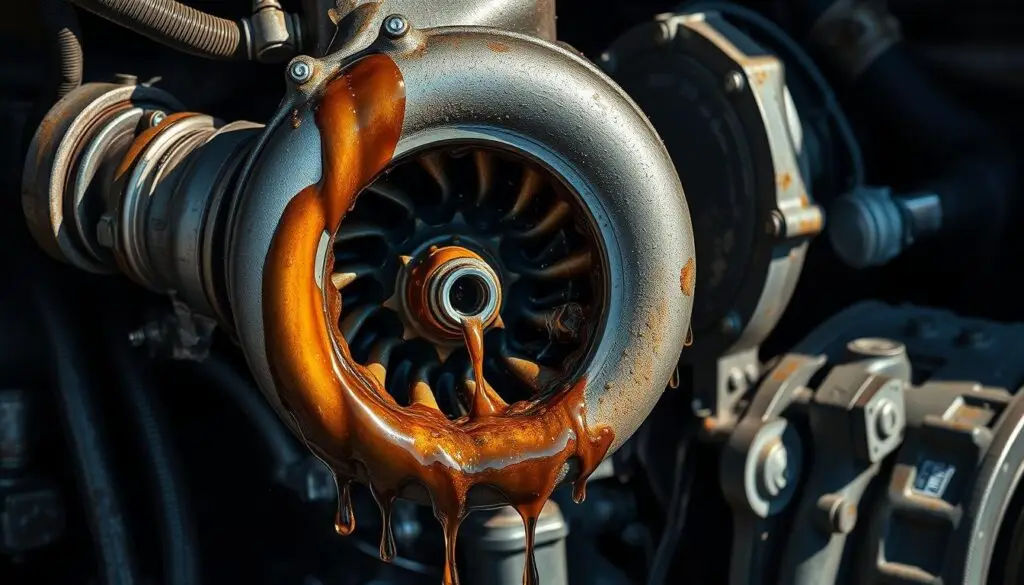
Contaminated oil acts like liquid sandpaper inside turbocharger bearings. Fine particles score bearing surfaces progressively while larger debris damages journal bearings and housing bores immediately. Common contaminants include dirt that bypasses worn air filters, metal shavings from internal engine wear, and chemical residues that accumulate when oil change intervals are extended.
Contaminated oil can lead to worn journal bearings, a damaged thrust bearing, or scoring of the shaft. The tight clearances in turbocharger bearings—measured in microns—leave no tolerance for abrasive particles. Even debris invisible to the naked eye creates cumulative damage that eventually manifests as shaft play, oil leaks, and bearing seizure.
Starvation and Insufficient Lubrication
Turbochargers need constant oil flow to survive. When oil supply is interrupted or restricted, bearings fail within seconds at operating speeds. Hot shutdown is a common cause of oil starvation—when drivers shut down engines immediately after hard operation, residual heat cooks oil in the bearing housing, creating carbon deposits that restrict future oil flow.
Common causes of oil starvation include low engine oil levels, bent or restricted oil feed lines, carbon buildup in oil passages, wrong gaskets blocking oil holes, worn oil pumps reducing pressure, and failure to prime new turbos before startup. Each of these conditions can destroy a turbocharger on the first startup attempt.
Oil Dilution Effects on Bearing Performance
Fuel mixing with engine oil creates serious problems for turbo bearings. Diluted oil loses viscosity and cannot maintain proper film thickness between moving parts. The oil film that should be six to nine microns thick becomes inadequate, allowing metal-to-metal contact at bearing surfaces.
Short trips that prevent full engine warm-up, faulty injectors that leak fuel into cylinders, and incorrect injection timing all allow raw fuel to wash down cylinder walls into the oil pan. Once fuel dilutes oil beyond acceptable limits, turbocharger bearings begin wearing immediately—even before the oil analysis comes back showing the problem.
Identifying Oil-Related Damage Patterns
| Damage Type | Visual Signs | Common Causes |
|---|---|---|
| Bearing Scoring | Deep grooves on shaft journal | Contaminated oil with abrasives |
| Heat Discoloration | Blue/purple bearing surfaces | Oil starvation, hot shutdown |
| Material Transfer | Metal deposits on bearings | Fuel dilution reducing viscosity |
| Carbon Buildup | Black deposits in housing | Oil coking from excessive heat |
Exhaust System Problems That Destroy Turbochargers
Exhaust system blockages rank among the most destructive forces affecting turbochargers in commercial vehicles. When diesel particulate filters become clogged with soot, they create dangerous back pressure that damages turbochargers through mechanisms many technicians fail to recognize until the damage is done.
The DPF’s narrow channels trap carbon deposits during normal operation, reducing exhaust flow incrementally. As restriction builds, exhaust back pressure increases until the turbine must work against tremendous resistance. This excessive pressure pushes the turbine shaft against thrust bearings with forces exceeding design limits. Once oil pressure can no longer maintain proper clearance between bearing surfaces, metal-to-metal contact begins.
Several factors accelerate DPF clogging and the resulting turbo damage: short trips that prevent proper regeneration temperatures, poor fuel quality containing water or contaminants, malfunctioning EGR systems that increase soot production, defective fuel injectors causing incomplete combustion, and aggressive driving patterns without adequate cool-down periods.
Exhaust leaks present another serious diagnostic challenge. Cracks near the turbine housing or EGR connections allow exhaust gas to escape while creating uneven pressure distribution across the turbine wheel. This imbalance accelerates shaft wear and compromises seal integrity progressively.
Professional DPF cleaning uses specialized equipment combining compressed air and ultrasonic vibration to restore flow capacity. Severely damaged filters require complete replacement to prevent ongoing turbo damage. Regular exhaust system inspections catch restriction problems before they destroy expensive turbocharger components.
Stay Ahead of Turbo Failures
Fleet maintenance insights, diagnostic tips, and industry updates delivered to your inbox. Join thousands of diesel professionals staying informed through Heavy Duty Journal.
Complete Turbocharger Failure Analysis: Diagnostic Methods
Proper diagnostic techniques help technicians identify problems before they lead to catastrophic failure. As turbo diagnostic specialists note, there’s about an 80% chance that the turbocharger itself is not at fault when engines present low boost conditions. A systematic approach to turbocharger failure analysis saves time and ensures accurate identification of underlying issues. Each diagnostic method reveals specific failure patterns that point to distinct causes.
Visual Inspection Techniques for Components
Start by examining the turbo housing for visible damage signs before any disassembly. Look for shaft bluing, which appears as a blue or purple discoloration on metal surfaces. This color change indicates extreme friction heat from inadequate lubrication, especially common in non-liquid-cooled center housings that rely entirely on oil for cooling.
Experienced technicians check for these visual indicators systematically: carbon deposits blocking oil passages, restricted cross-sections from contamination buildup, accumulated sludge in oil galleries, and physical damage to compressor and turbine wheels. Don’t be too quick to disassemble the turbocharger before reviewing all external clues that may exist.

Analyzing Bearing Wear Patterns
Different wear patterns reveal specific failure modes with remarkable consistency. Oil contamination creates scoring marks across bearing surfaces in distinctive parallel grooves. When lubrication fails completely, metal-to-metal contact leaves unique wear marks showing material transfer between components. Foreign object damage produces localized impact points rather than distributed wear patterns.
Progressive wear typically starts at journal bearings and spreads outward toward the wheels as clearances increase. Examine thrust collar wear and backplate mating surfaces for degradation signs. The location and pattern of wear tells the story of what failed and why—information essential for preventing repeat failures.
Testing Oil Pressure and Supply Systems
Oil system testing requires checking multiple components in sequence. Verify control valve operation, pump performance, and line restrictions before condemning the turbocharger itself. Measure oil pressure at various engine speeds and compare readings to manufacturer specifications.
Check oil quantity reaching the turbo by disconnecting the feed line and cranking the engine briefly. Test oil viscosity to ensure proper lubrication properties. Any deviation from manufacturer specifications indicates potential problems requiring immediate attention before a new turbocharger is installed.
The HDJ Perspective
The most expensive mistake in turbocharger repair isn’t buying the wrong part—it’s installing a replacement without identifying why the original failed. Industry data shows 99% of repeat turbo failures exhibit the same damage pattern as the original unit, confirming technicians skipped root cause analysis. Taking thirty minutes to properly diagnose failure mode saves the cost of another turbo and builds the diagnostic expertise that separates professional shops from parts changers.
Impact Damage and Foreign Object Debris
Foreign object debris stands as one of the most destructive forces in turbocharger failures. When foreign materials enter the turbo system, they create immediate and severe damage to critical components spinning at tens of thousands of RPM. Any foreign object entering the turbocharger through the air inlet or exhaust inlet affects performance immediately—and often catastrophically.
Common Sources of Foreign Material Entry
Foreign objects enter turbochargers through multiple pathways that technicians must address during any turbo replacement. Damaged air filters rank as the primary culprit, allowing dirt and debris direct access to the compressor wheel. Split intake hoses and deteriorated gaskets create additional entry points for harmful particles that accumulate over thousands of miles.
During repair and maintenance, technicians sometimes accidentally leave small items in intake systems. Washers, nuts, or bolts become supersonic projectiles when the engine starts. Engine component failures introduce another debris source—broken injector tips, valve fragments, and piston pieces travel through the exhaust system directly into the turbine housing.
Compressor Wheel Damage Assessment
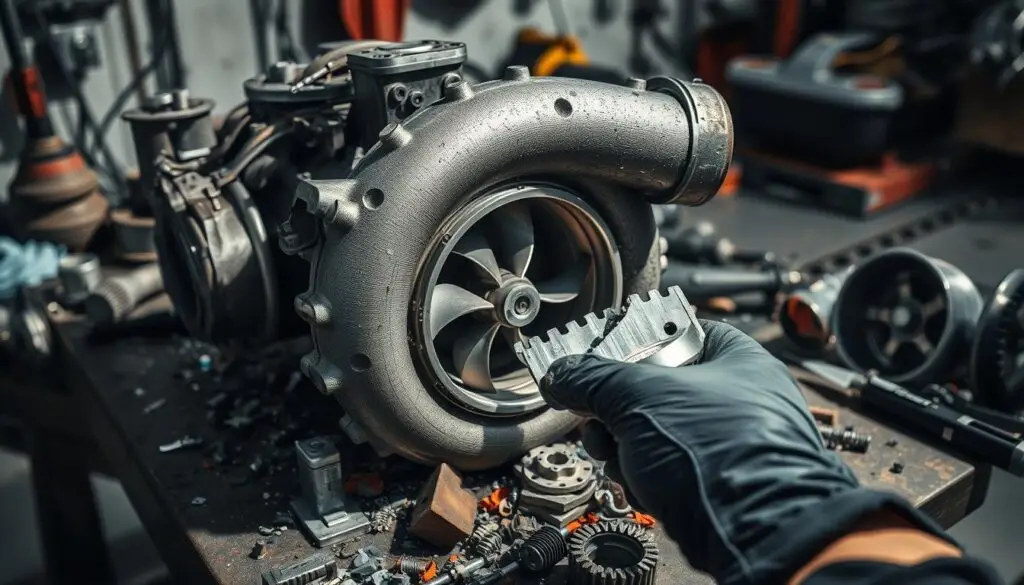
Compressor wheels show distinct damage patterns when struck by foreign objects. Bent or broken blade tips indicate impact from larger debris, while pitting and gouging reveal damage from smaller particles circulating through the housing. The leading edge of the compressor blades—called the inducer—shows impact traumas if the compressor ingested a foreign object.
Look for these telltale signs during inspection: missing blade sections or chips, scoring marks on the compressor housing, uneven blade wear patterns, metal transfer marks on blade edges, and pockmarks around the compressor cover inducer area where objects bounced before entering the wheel.
Turbine Side Impact Characteristics
Turbine wheels face extreme conditions when debris enters from the engine side through the exhaust. Heat discoloration accompanies physical damage, creating rainbow-colored patterns on affected areas from exposure to high temperatures. Blade fractures often start at impact points and propagate across the wheel as the assembly continues rotating out of balance.
Housing scoring appears as deep grooves where broken blade pieces contacted the turbine housing walls at high velocity. These damage patterns require complete turbocharger replacement since repairs cannot restore proper balance and performance. Attempting to run a damaged turbo destroys the replacement in short order.
Overspeeding and Mechanical Failures in Diesel Systems
Overspeeding remains one of the most destructive forces affecting turbochargers in commercial vehicles. When a turbocharger exceeds its designed rotational speed limits, the consequences unfold rapidly and catastrophically. Understanding the root causes helps technicians perform accurate diagnostics and prevent costly repeat repairs.
Several factors contribute to turbo overspeeding. Air intake restrictions force the turbo to work harder to maintain boost pressure—split intake hoses or clogged air filters create this dangerous condition. Engine modifications without corresponding turbo parameter adjustments lead to speed mismatches. Tampering with wastegate settings removes critical speed control protections designed to prevent exactly this failure mode.
Electronic control failures represent another major category in modern emissions-compliant engines. Variable Geometry Turbocharger (VGT) systems rely on precise actuator control to manage exhaust flow and turbine speed. When these actuators lose signal or fail mechanically, the turbo can spin beyond safe limits within seconds. This introduces a high-cost, electronically critical component that requires precise calibration and regular verification.
| Failure Type | Common Symptoms | Prevention Method |
|---|---|---|
| Worn oil pump | Low oil pressure readings | Follow OEM service intervals |
| Faulty pressure valve | Intermittent pressure drops | Replace at major service intervals |
| VGT actuator failure | P0299 code, limp mode | Verify calibration at PM intervals |
| Wastegate malfunction | Overboost conditions | Check linkage during inspections |
Mechanical failures compound electronic issues during diagnostics. Extended oil change intervals cause pump wear that reduces lubrication quality progressively. Once bearing clearances increase from insufficient lubrication, shaft orbital motion accelerates wear exponentially. This creates a failure cascade that ends in complete turbo destruction—often taking engine components with it.
Temperature-Related Failures and Prevention Strategies
Heat damage ranks among the most destructive problems technicians encounter in diesel engine turbochargers. Extreme temperatures attack turbocharger components from multiple angles, creating a chain reaction of failures that can destroy even the most robust systems. Understanding how temperature affects your turbo helps establish effective prevention measures.
Excessive Exhaust Gas Temperature Effects
Exhaust temperatures exceeding 1,350°F cause immediate damage to turbocharger internals. The turbine shaft bearings lose their protective oil film when exposed to extreme heat, leading to metal-to-metal contact within minutes. This rapid wear creates excessive shaft play that compounds quickly under continued operation.
High exhaust temperatures break down premium engine oils, transforming them into harmful deposits. These deposits accumulate in critical oil passages, restricting flow to bearings that spin at speeds exceeding 100,000 RPM. Without proper lubrication volume, bearing surfaces develop scoring patterns that accelerate component failure exponentially.
Oil Coking and Carbon Buildup Problems
Oil coking represents a serious threat to turbocharger longevity that fleet managers often overlook. When hot oil remains stationary in turbo passages after engine shutdown, residual heat transforms it into hard carbon deposits. This coking process blocks oil supply lines progressively, creating pressure drops that starve bearings of lubrication on subsequent startups.
Carbon buildup affects both ends of the turbocharger: compressor-side deposits restrict oil drainage, turbine-side accumulation blocks supply channels, center housing passages become narrowed over time, and granular carbon particles contaminate bearing surfaces. Idling the engine for two to three minutes before shutdown allows oil to carry heat away from critical areas and prevents this coking cycle.
Cooling System Integration and Maintenance
Proper cooling system maintenance forms the foundation of temperature-related failure prevention. Liquid-cooled center housings demonstrate superior heat resistance compared to air-cooled designs, but both require attention to coolant condition and flow. Regular coolant flushes remove deposits that reduce heat transfer efficiency through the water jacket.
Key maintenance practices include monitoring exhaust gas temperatures during operation using pyrometers or OBD data, allowing proper cool-down periods before shutdown on every stop, using manufacturer-specified oil grades that resist thermal breakdown, and maintaining clean air filters to prevent excessive turbo work that generates additional heat.
Share Your Turbocharger Expertise
Have diagnostic techniques or failure prevention strategies that work for your fleet? Heavy Duty Journal welcomes contributions from experienced technicians and fleet managers.
Comprehensive Prevention for Heavy-Duty Turbocharger Systems
Preventing turbo failure requires systematic attention to key maintenance areas that address the root causes identified through failure analysis. Smart fleet operators save thousands in repair costs by following proven prevention strategies. Regular maintenance protects your investment and keeps engines running at peak performance throughout their service life.
Essential Maintenance Schedules and Service Intervals
Follow manufacturer oil change intervals without exception—this single practice prevents more turbocharger failures than any other maintenance action. The Technology & Maintenance Council’s Recommended Practices provide industry-consensus guidance on maintenance procedures that help fleets maximize equipment life. Fresh oil maintains proper lubricating properties that protect turbo bearings under extreme conditions. Track service hours carefully and never extend intervals beyond recommended limits, regardless of oil appearance or analysis results.
Quality oil changes prevent most turbo failures before they start. Use only the oil grade specified for your engine and application. The viscosity requirements for turbocharger protection are precise, and substituting different grades—even premium alternatives—can reduce bearing protection at critical operating points.
Pre-Installation Checks for Replacement Turbos
Clean all oil supply lines before installing new turbos. Remove carbon deposits and sludge that restrict oil flow using appropriate solvents and compressed air. Test oil pressure at the turbo feed line to verify adequate supply volume before connecting the new unit.
Prime new turbos with clean oil during installation to protect bearings during initial startup. Pour oil directly into the oil inlet and rotate the shaft by hand to distribute lubrication to all bearing surfaces. This thirty-second step prevents the dry-start damage that destroys many replacement turbochargers on their first operation.
Oil System Maintenance Best Practices
Replace oil filters at every service interval using OEM-quality parts. Aftermarket filters may meet minimum specifications but often lack the filtration efficiency needed to protect turbocharger bearings. Check filter bypass valves for proper operation—a stuck bypass valve sends unfiltered oil directly to bearings.
Maintain correct oil levels between minimum and maximum marks consistently. Low oil levels reduce system pressure and flow volume to turbochargers. Never use silicone sealants on oil system gaskets, as fragments can break loose and block critical passages feeding turbocharger bearings.
Air Intake System Care and Filter Management
Replace air filters according to operating conditions, not just time or mileage intervals. Dusty environments, construction sites, and agricultural operations require more frequent filter changes than highway applications. Inspect intake hoses for cracks or loose clamps that allow unfiltered air entry—a single breach can introduce enough debris to damage compressor wheels.
After any turbocharger failure, clean debris from the intake system completely before installing replacement parts. Foreign material from the failed turbo often lodges in intake piping and intercooler passages, waiting to destroy the new unit on first startup. This cleaning step is not optional—it’s essential for preventing repeat failures.
Frequently Asked Questions
What are the most common causes of turbocharger failure in commercial trucks?
The most common causes include oil-related failures such as contamination, starvation, and dilution, which account for over 90% of turbocharger failures. Other significant causes include foreign object damage from debris entering through damaged air filters or intake systems, exhaust system problems like clogged diesel particulate filters, overspeeding from electronic control failures, and excessive exhaust gas temperatures. Oil-related issues dominate because turbochargers operating at speeds near 200,000 RPM require constant oil supply for stabilization, lubrication, and cooling simultaneously.
How do I perform diagnostics on my heavy equipment turbocharger?
Start with visual inspection for shaft bluing from friction heat, bearing wear patterns, and surface damage before any disassembly. Check for oil contamination scoring, metal-to-metal contact marks, and foreign object impact points on wheel inducers. Test oil pressure by verifying control valve operation, pump performance, and line restrictions. Examine bearing surfaces for progressive wear patterns, carbon deposits in oil passages, and accumulated sludge. Use a small probe with clean white rag to inspect oil inlet and drain cavities for dirt or abrasives.
What are the warning signs of turbo problems before complete failure?
Early warning signs include reduced engine power especially under load, excessive smoke from the exhaust (black or blue), unusual noises like whining, whistling, or grinding from the turbocharger area, and increased oil consumption. Physical signs include oil leaks at turbine or compressor ends, visible shaft play during inspection, and exhaust gas temperature spikes. Check engine lights indicating boost pressure faults (P0299) or turbocharger performance issues often appear before catastrophic failure if drivers respond promptly.
How can I implement effective turbocharger failure prevention in my fleet?
Follow manufacturer-specified oil change intervals using correct oil grades without exception. Replace air filters regularly based on operating conditions, not just mileage. Ensure proper gasket seals on all intake and oil system connections. Clean or replace oil inlet pipes to eliminate carbon buildup before installing replacement turbos. Check oil pressure before turbo installation and prime replacement turbos with oil during fitting. Maintain proper exhaust gas temperatures through DPF maintenance, ensure adequate cooling system function, and regularly inspect wastegate linkage for free operation. Allow two to three minute cool-down periods before shutdown.
When should I seek turbocharger repair versus complete replacement?
Repair is viable when damage is limited to replaceable components like bearings, seals, or actuators, and the housing shows no cracks or severe scoring beyond specifications. Consider replacement when shaft damage exists, wheels show impact damage or imbalance, housing bore damage exceeds manufacturer specifications, or multiple failure modes are present simultaneously. Severely clogged components with carbon buildup or extensive bearing surface degradation typically require complete replacement. Most importantly, address root cause before any repair—99% of repeat turbo failures show the same damage pattern as the original.
What causes excessive exhaust back pressure and turbo damage?
Clogged diesel particulate filters are the primary cause, as filter channels become blocked with soot and carbon deposits over time. Contributing factors include short journeys preventing regeneration temperatures, inefficient or missing regeneration systems, poor fuel quality, malfunctioning EGR systems increasing soot production, defective injection nozzles causing incomplete combustion, and insufficient air supply. Excessive back pressure forces turbine shaft displacement against axial thrust washers until oil pressure cannot maintain bearing surface separation, resulting in rapid wear and eventual seizure.
Protecting Your Fleet Investment Through Systematic Diagnostics
Understanding turbocharger failure analysis saves fleet operators thousands of dollars in repair costs while maximizing vehicle uptime. Oil-related problems remain the leading cause of turbocharger failures in commercial vehicles—contamination, starvation, and dilution create conditions that destroy bearing surfaces and shaft assemblies within minutes of adverse conditions. Regular oil changes using quality products prevent most of these failures before they occur.
Systematic diagnostics identify root causes before replacement becomes necessary and prevent the repeat failures that frustrate fleet managers and technicians alike. Visual inspection reveals telltale signs like oil coking, bearing wear patterns, and impact damage on compressor wheels. Pressure testing confirms whether oil delivery systems meet specifications. Checking exhaust back pressure helps identify clogged diesel particulate filters that strain turbo components progressively.
Prevention starts with following maintenance schedules from engine manufacturers without compromise. Replace air filters on schedule to prevent foreign object damage. Monitor exhaust gas temperatures to avoid overheating. Install quality replacement turbos using proper priming procedures. Keep intake systems clean and verify electronic controls regularly. These proven steps extend turbo life from 250,000 miles to 500,000 miles or more in properly maintained applications—protecting your fleet investment for the long haul.
Found This Guide Helpful?
Share this turbocharger failure analysis guide with your maintenance team and help other fleet professionals keep their trucks running strong.