
By Michael Nielsen, Editor & Publisher | 15+ Years in Diesel Repair
Last Updated: February 2026
📖 Estimated reading time: 23 minutes
Women in fleet maintenance leadership are transforming how organizations approach preventive service programs across the transportation industry. According to the Women in Trucking Association, women now represent 24% of the transportation workforce, and a Gupy survey documented a remarkable 229% increase in women hired for logistics positions within a single year. While women currently hold only 3% of CEO positions and 17% of senior management roles in transportation, their impact on operational excellence—from reducing unplanned downtime to extending vehicle life—is both measurable and undeniable.
This isn’t aspirational content. Across municipal, commercial, and corporate fleets, women leaders are establishing new operational standards through collaborative management approaches, data-driven decision frameworks, and systematic preventive maintenance strategies. The following examination presents concrete leadership approaches, measurable outcomes, and practical frameworks that are reshaping how organizations manage fleet service operations and achieve sustained efficiency.
Key Takeaways
- Growing workforce representation: Women represent 24% of the transportation workforce, with a 229% surge in logistics hiring demonstrating rapid industry momentum.
- Measurable operational impact: Women-led preventive service programs deliver 15-25% reductions in unplanned downtime and 20-30% vehicle life extensions beyond industry averages.
- Data-driven leadership: Collaborative management styles and systematic data collection frameworks optimize service intervals, reduce costs, and improve cross-departmental communication.
- Persistent barriers remain: Despite holding only 3% of CEO positions, women in mid-level fleet management roles exercise disproportionate influence over daily maintenance operations and safety standards.
- Technology-forward strategies: Women leaders are pioneering predictive analytics, telematics integration, and condition-based maintenance approaches that replace rigid calendar-based schedules.
The Current Landscape of Women in Fleet Maintenance
Understanding where women fleet professionals stand today requires examining hard data. These statistics provide the foundation for strategic workforce planning and diversity initiatives across the transportation sector, and they reveal both persistent challenges and unprecedented opportunities.
Industry Demographics and Employment Trends
Women currently represent 24% of the overall transportation workforce—a figure reflecting gradual but meaningful progress. Deeper analysis reveals significant variation across job categories. Only about 7% of truck drivers are women, according to Bureau of Labor Statistics employment data, highlighting concentrated gender gaps in specific roles.
The most encouraging data point comes from recent hiring patterns. A comprehensive Gupy survey documented a 229% increase in women hired for logistics positions within a single year. This explosive growth signals that workforce trends in transportation are shifting rapidly from historical norms.

Fleet maintenance has emerged as a particularly promising area for female professionals. Unlike driving positions, maintenance operations emphasize technical knowledge, analytical thinking, and team coordination—competencies that align well with skills many women bring to the workplace.
Leadership Positions Women Occupy in Fleet Operations
While representation in executive suites remains limited—only 3% of CEOs and 17% of senior managers in transportation are women—mid-level management tells a different story. Women are increasingly found as fleet managers, maintenance coordinators, preventive maintenance program directors, safety managers, compliance officers, and operations supervisors.
These roles carry disproportionate influence over daily operations. Women in these positions directly shape preventive maintenance protocols, safety standards, and team performance metrics. Their impact extends far beyond their numerical representation in the industry.
The Business Case for Gender Diversity in Fleet Operations
Research consistently demonstrates that gender-diverse teams show measurably superior performance and report higher job satisfaction levels across industries. Fleet operations are no exception. Women bring documented strengths in communication and collaboration that directly translate to improved coordination between maintenance teams, drivers, and management personnel.
Cross-departmental information flow improves significantly when diverse perspectives contribute to problem-solving. Women leaders frequently identify innovative approaches to maintenance scheduling, parts inventory management, and vendor relationship development. These operational improvements deliver concrete cost savings and efficiency gains that strengthen entire organizations.
229% increase
Year-over-year growth in women hired for logistics positions — Gupy workforce survey
Breaking Through Barriers in Fleet Maintenance
The journey toward gender equality in fleet maintenance involves dismantling misconceptions while building supportive networks that empower women to excel in technical leadership roles. While barriers remain a reality for many women professionals, the industry is experiencing meaningful transformation driven by determined individuals and forward-thinking organizations.
Challenging Industry Stereotypes
The persistent perception that fleet management is exclusively a “man’s job” creates tangible obstacles for women seeking careers in this field. This outdated belief manifests in hiring bias, assumptions about technical capability, and subtle discrimination during workplace interactions. Women often find themselves needing to prove their competence repeatedly, facing skepticism that male colleagues rarely encounter.
However, women are overcoming these stereotypes through demonstrated excellence and measurable results. Women leading preventive service programs are achieving superior fleet uptime, implementing cost-reduction strategies, and building high-performance teams. These accomplishments directly challenge misconceptions by proving that leadership effectiveness has nothing to do with gender and everything to do with skill, knowledge, and dedication.

The lack of representation in leadership has historically limited access to role models and mentoring opportunities. Yet as more women advance into fleet management roles, they create visible proof that career progression is achievable, inspiring the next generation of professionals.
Creating Inclusive Work Environments
Organizations committed to inclusive fleet operations are implementing concrete policies that address both cultural and practical challenges. These strategies include comprehensive diversity and inclusion policies, adequate facilities for all workers regardless of gender, and transparent promotion pathways that eliminate bias from advancement decisions.
Physical demands of fleet maintenance roles should be addressed through ergonomic solutions and appropriate equipment rather than used as barriers to entry. Modern lifting equipment, power tools, and workplace design innovations enable all technicians to perform essential tasks safely and effectively. Zero-tolerance policies for discrimination and harassment create safer work environments where women can focus on their responsibilities without facing inappropriate behavior.
Mentorship Networks and Professional Development
Dedicated organizations provide critical support structures that accelerate women’s career progression in fleet maintenance. Women in Fleet Management (WIFM) offers networking opportunities, industry connections, and advocacy specifically designed to advance women’s careers in fleet operations. The Women in Trucking Association (WIT) provides similar resources across the broader transportation sector.
The National Network for Transportation Workforce supports growth through mentorship programs that deliver meaningful opportunities for skill development and advancement. These networks provide more than emotional support—they offer concrete professional advantages including access to job opportunities, visibility to decision-makers, and targeted training programs.
Both formal mentorship programs and informal professional relationships accelerate career progression by providing guidance on technical skills, workplace navigation, and strategic career decisions. Overcoming barriers requires resilience and willingness to advocate for oneself and other women, but individual determination alone is insufficient. Systemic support from organizations committed to meaningful change creates the foundation for sustainable progress.
Core Principles of Effective Preventive Service Programs
Successful fleet operations depend on well-defined preventive maintenance programs that prevent breakdowns before they disrupt business. These programs create a systematic framework ensuring every vehicle receives timely attention based on proven service protocols. Women leading fleet maintenance operations have demonstrated exceptional skill in implementing structured approaches that balance operational needs with comprehensive vehicle care.
Essential Components of Preventive Maintenance
Comprehensive preventive maintenance programs consist of several interconnected elements that work together to maximize fleet reliability. Regulatory requirements under 49 CFR Part 396 establish minimum inspection, repair, and maintenance standards that form the legal foundation for any fleet PM program.
The foundation includes four critical elements. Time-based maintenance covers services scheduled according to calendar intervals or operating hours. Mileage-based maintenance involves interventions triggered when vehicles reach specific distance thresholds. Condition-based maintenance responds to vehicle diagnostics and performance indicators. Predictive maintenance uses data-driven approaches that anticipate potential failures before they occur. Each element addresses different aspects of vehicle health and operational requirements, and service intervals must align with manufacturer specifications while accounting for actual usage patterns and operating conditions.
Scheduled Inspections and Service Intervals
Inspection protocols form the backbone of any effective preventive program. Structured reviews identify potential problems during their early stages when repairs remain simple and affordable.
Daily pre-trip inspections conducted by drivers catch immediate safety concerns like tire pressure issues, fluid leaks, and lighting malfunctions. Weekly detailed examinations assess critical safety systems including brakes, steering components, and suspension elements. Monthly comprehensive multi-point inspections provide deeper analysis of vehicle condition, covering everything from engine performance to electrical systems and helping maintenance teams plan upcoming service needs.
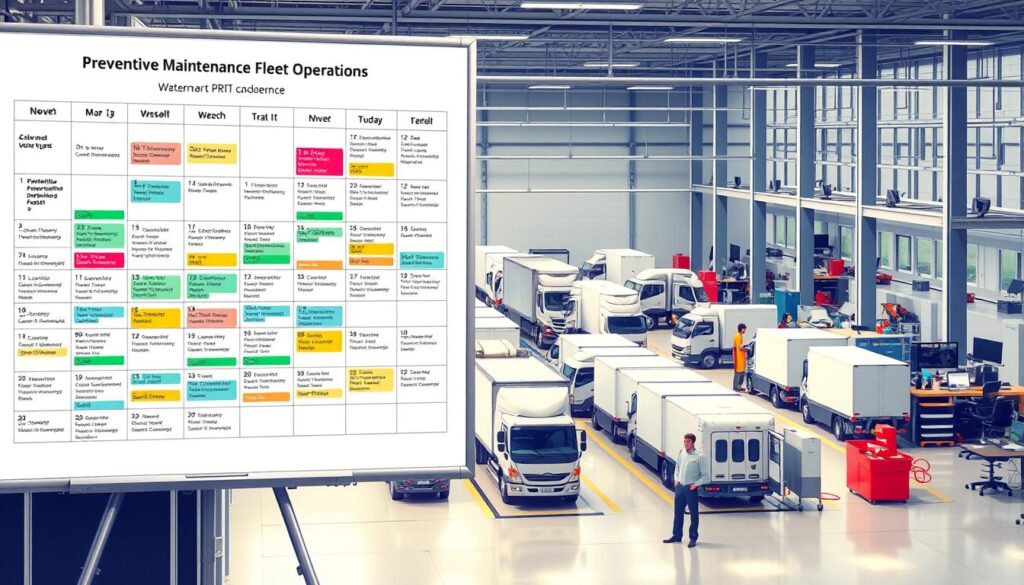
Manufacturer-recommended intervals guide major service events. Oil changes, filter replacements, brake services, and transmission maintenance follow specific mileage or time-based schedules that protect warranty coverage and ensure optimal performance.
Documentation and Record-Keeping Systems
Meticulous records transform raw maintenance activities into valuable operational intelligence. Documentation systems track every service performed, creating historical profiles that reveal patterns and predict future needs. Comprehensive documentation includes maintenance history logs, work order systems capturing detailed repair information, inspection checklists ensuring consistency across technicians and shifts, and cost tracking mechanisms identifying unusual spending patterns.
Building a Preventive Maintenance Calendar
Creating an effective preventive maintenance calendar requires strategic planning that balances vehicle needs with operational demands. The process begins with a complete inventory of all fleet vehicles and their specific maintenance requirements, then establishes appropriate service intervals combining manufacturer recommendations with real-world operational experience.
The calendar development process follows a logical sequence: document all vehicles with their unique maintenance specifications and current service status, define service intervals based on mileage, operating hours, and time-based triggers, distribute maintenance events throughout the calendar to prevent scheduling conflicts, implement automated reminder systems that alert teams before services become due, and build flexibility for urgent repairs while maintaining schedule integrity.
The most effective programs incorporate feedback loops that allow continuous refinement. As maintenance teams gather data about actual vehicle performance, they adjust schedules to optimize both reliability and efficiency. According to TMC Recommended Practices, standardized maintenance intervals serve as baselines that should be adjusted based on operating conditions and fleet-specific data.
Leadership Strategies Women Bring to Fleet Operations
Effective fleet leadership requires a blend of collaboration, data literacy, and communication skills—areas where women professionals consistently excel. These strategies transform maintenance programs from reactive firefighting into proactive systems that maximize vehicle uptime and minimize operational costs.
Collaborative Team Management
Women leaders in fleet maintenance typically emphasize team-based problem-solving rather than top-down directive management. This collaborative approach creates environments where technicians feel valued and empowered to contribute their expertise. Regular team meetings become forums where mechanics share insights about emerging vehicle issues, drivers report early warning signs, and administrative staff coordinate scheduling challenges.
Inclusive decision-making processes tap into frontline knowledge that often gets overlooked in traditional hierarchical structures. The technician who services a particular vehicle daily knows its quirks better than anyone in the office. The driver who operates the equipment understands real-world performance issues that don’t show up in diagnostic reports. Cross-training initiatives build team resilience and operational flexibility, and recognition systems that celebrate collaborative achievements reinforce the team-first culture.

As one industry leadership framework puts it, the fleet manager must communicate effectively and transmit knowledge to those involved—whether drivers or administrative professionals. A successful manager needs to be attentive to the needs of subordinates and welcome suggestions from those on the front line. This philosophy drives the collaborative approach that distinguishes high-performing maintenance programs.
Data-Driven Decision-Making Frameworks
Women leaders consistently implement systematic approaches to data collection and analysis. They establish baseline metrics for vehicle performance, maintenance costs, and operational efficiency—benchmarks that provide the foundation for measuring improvement and identifying problems before they escalate.
Tracking key performance indicators consistently across the entire fleet reveals patterns that single-vehicle focus misses. Data visualization tools transform spreadsheets into actionable insights. Root cause analysis replaces guesswork when problems occur, and resource allocation decisions rest on evidence rather than assumptions. Service intervals adjust based on actual wear patterns rather than manufacturer defaults alone, maintenance teams identify which vehicle models require more frequent attention, and replacement timing calculations use total cost of ownership rather than arbitrary age cutoffs.
Cross-Departmental Communication
Breaking down organizational silos requires intentional communication strategies. Fleet operations intersect with logistics, finance, safety, and executive leadership. Women leaders often excel at building bridges between these traditionally separate functions.
Operations teams focus on moving goods and meeting delivery schedules while maintenance teams prioritize vehicle health and preventive service—priorities that can conflict when vehicles need service during peak operational periods. Effective leaders establish regular coordination meetings where both teams share upcoming needs and constraints, define shared metrics like vehicle availability rates that align incentives, and build communication protocols for urgent maintenance needs.
Preventive maintenance programs require investment and organizational commitment. Building stakeholder engagement fleet-wide means presenting compelling business cases to senior leadership using cost-benefit analysis, engaging drivers by explaining how maintenance protects their safety, giving procurement teams advance notice about parts requirements, and ensuring customer service has reliable information about fleet availability. These communication competencies directly impact program success.
The HDJ Perspective
The fleet maintenance industry’s shift toward greater gender diversity isn’t just a social equity story—it’s an operational performance story. In our experience covering this industry for over 15 years, the most consistently high-performing preventive maintenance programs share common DNA: systematic data collection, collaborative team structures, and communication-first leadership. Women leaders tend to build these elements naturally. As the technician shortage intensifies and fleets face mounting pressure to reduce downtime costs, organizations that limit their leadership pipeline to half the available talent pool aren’t just being inequitable—they’re leaving operational performance on the table.
Cost-Reduction and Uptime Maximization Strategies
Women leaders in fleet maintenance are pioneering innovative approaches that simultaneously reduce expenses while keeping vehicles on the road. Fleet cost reduction and vehicle uptime maximization work hand-in-hand when supported by intelligent data analysis and strategic planning. The focus extends beyond simple expense cutting to encompass smart resource allocation that delivers reliability at optimized costs.
Predictive Analytics for Failure Prevention
Forward-thinking maintenance leaders are moving beyond reactive repairs and scheduled preventive maintenance to embrace prediction-based strategies. These approaches anticipate component failures before they occur, allowing teams to address issues during planned maintenance windows rather than emergency breakdowns.

Modern fleet vehicles generate continuous streams of performance information through onboard sensors and diagnostic systems. Telematics platforms capture engine performance metrics, diagnostic trouble codes, fuel consumption patterns, idle time, harsh braking events, and operating temperatures in real-time. Women leaders implement systems that transform this data avalanche into meaningful insights—monitoring engine oil condition through sensors rather than relying solely on mileage intervals, tracking battery degradation patterns to predict failure weeks in advance, detecting cooling system anomalies before overheating incidents, and tracking brake wear with precision.
Advanced analytics process historical maintenance records combined with current telematics data to identify patterns that escape human observation. These systems reveal which vehicle models develop specific problems at predictable intervals, how driver behavior impacts component longevity, which environmental conditions accelerate wear, and which early warning indicators reliably predict expensive failures.
Optimizing Maintenance Scheduling and Parts Inventory
Timing maintenance to minimize operational disruption while ensuring reliability presents complex challenges. Smart leaders use vehicle utilization data to schedule service during naturally low-usage periods and coordinate multiple services into single maintenance events. Implementing a “hot spare” rotation allows vehicles to undergo service without impacting daily operations. Vehicle uptime maximization becomes achievable when predictive analytics extend intervals for healthy components while shortening them when conditions suggest accelerated wear.
Balancing parts availability against inventory carrying costs requires sophisticated analysis. Parts inventory optimization starts with analyzing failure data to stock high-probability components while avoiding obsolete inventory accumulation. Just-in-time delivery systems work effectively for expensive components with reliable supply chains, and strategic stock of long-lead-time parts for critical vehicles prevents extended downtime during rare but impactful failures. Research from ATRI’s Operational Costs of Trucking report consistently shows that maintenance and repair costs represent a significant portion of total fleet operating expenses, making optimization in this area especially impactful.
Vendor Partnership Development
Women leaders build strategic relationships that extend far beyond transactional supplier interactions. Negotiating fleet-wide agreements provides volume discounts that compound savings across hundreds or thousands of vehicles. Establishing preferred pricing for emergency after-hours service protects budgets during unexpected breakdowns. Working with suppliers to provide technician training on emerging technologies and collaborating on warranty claim processes minimizes administrative burden and accelerates reimbursement.
Cost reduction in this context never means cutting corners or compromising safety. Instead, it represents intelligent resource allocation based on solid data analysis and strategic relationships that deliver dependable performance at optimized expense levels.
Free Professional Fleet Tools
Cost calculators, fault code lookup, maintenance planners, and more—built for owner-operators, fleet managers, and diesel techs. No signup required.
Technology Implementation in Preventive Maintenance
The integration of advanced technology platforms represents a fundamental shift in how fleet maintenance programs operate. Fleet management software serves as the central nervous system for coordinating all maintenance activities, integrating data from multiple sources and transforming reactive repair operations into proactive programs.
Fleet Management Software and Digital Work Orders
Comprehensive software platforms coordinate preventive maintenance activities by connecting vehicles, technicians, and management teams. These systems eliminate paper-based chaos—lost work orders, incomplete documentation—and provide instant access to complete vehicle histories and maintenance requirements.
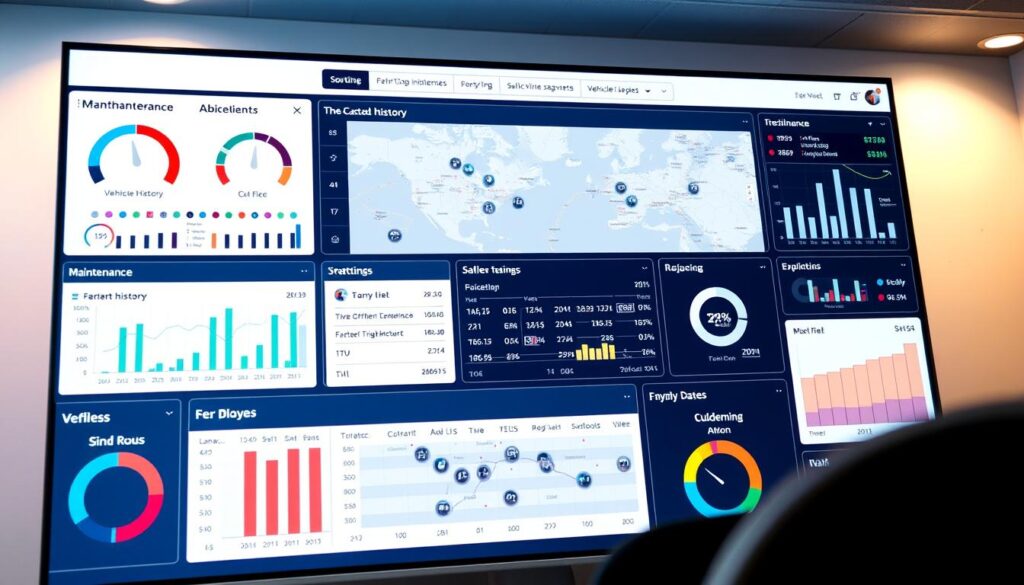
Digital work order systems automatically generate orders when scheduled maintenance comes due or diagnostic codes trigger alerts. Technicians receive detailed service procedures and specifications directly through the system. The platforms track labor hours and parts usage for accurate cost accounting, document completed work with digital sign-offs and photographic evidence, and create audit trails demonstrating compliance with FMCSA inspection and maintenance requirements.
IoT Sensors, Mobile Tools, and Digital Inspections
The expanding universe of connected sensors provides continuous vehicle monitoring capabilities. Tire pressure monitors alert to slow leaks before they cause failures. Oil quality sensors trigger changes based on actual condition rather than arbitrary mileage intervals. Temperature monitors detect cooling system problems before engines overheat. Battery management systems predict failures before they leave drivers stranded.
Smartphones and tablets have revolutionized field maintenance work. Mobile tools allow technicians to access work orders and service procedures on handheld devices, capture photos and videos documenting issues in real-time, order parts directly from the repair bay, and communicate with specialists for technical support through video calls. Drivers use tablet-based inspection forms with dropdown menus and photo capture ensuring thorough, consistent inspections. Telematics systems and in-cabin cameras help identify and correct reckless behavior before it costs money or puts lives at risk, according to CVSA North American Standard Inspection procedures.
| Technology Solution | Primary Function | Key Benefits | Impact |
|---|---|---|---|
| Fleet Management Software | Centralized maintenance coordination | Automated scheduling, complete vehicle history, compliance tracking | 30-40% reduction in admin time |
| Mobile Technician Tools | Field service enablement | Real-time procedures, instant work order updates, photo documentation | 25% faster work order completion |
| IoT Vehicle Monitoring | Continuous condition tracking | Early failure detection, condition-based maintenance, driver monitoring | 15-20% reduction in breakdowns |
| Digital Inspection Tools | Standardized vehicle inspections | Consistent documentation, automatic deficiency flagging, trend analysis | 95%+ inspection compliance rates |
Successful technology implementation requires more than purchasing systems. It demands effective change management including comprehensive user training and workflow refinement. The technology must serve operational needs rather than creating additional administrative burden.
Building High-Performance Maintenance Teams
Strong maintenance teams don’t happen by accident—they emerge through deliberate recruitment, training, and cultural development strategies. Women leading fleet operations understand that building high-performance teams requires investing in people as much as equipment.
Attracting and Retaining Skilled Technicians
Technician recruitment presents one of the most significant challenges in fleet maintenance today. The labor market for qualified maintenance professionals remains highly competitive. Effective strategies include competitive compensation packages that recognize technicians as skilled professionals and clear career progression pathways showing entry-level technicians how they can advance to lead and supervisor roles.
Retention proves more cost-effective than constant hiring. Experienced technicians who understand your specific fleet are invaluable assets. Women leaders often excel at creating respectful, communicative environments that retain skilled workers through flexibility, modern tools, and cultures built on collaboration rather than command-and-control hierarchies.
Professional Development and Certification
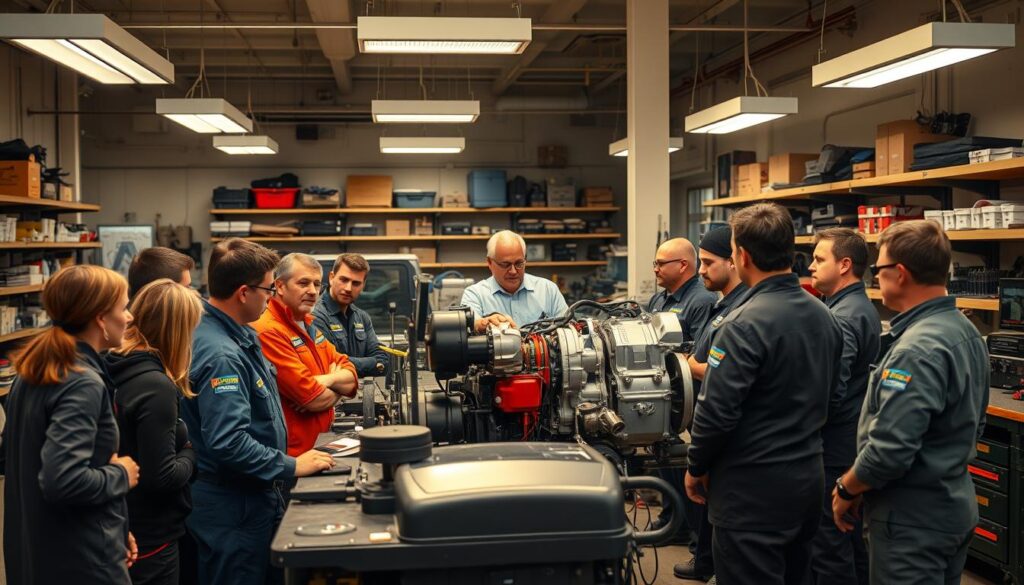
Comprehensive training serves multiple purposes: it builds technical capability, demonstrates organizational commitment to employee growth, and creates loyalty through invested development. The ASE certification program provides industry-recognized standards for technician competency covering brakes, electrical systems, engine repair, suspension and steering, and climate control. Organizations supporting technicians pursuing ASE certification through study materials, test fees, and achievement recognition see higher quality work with fewer comebacks.
Modern vehicles contain increasingly complex technology requiring specialized knowledge. Hybrid and electric vehicle systems demand specific training for safe service, and advanced driver assistance systems require recalibration after repairs. Women leaders arrange manufacturer training through online courses and on-site sessions ensuring technicians stay current with evolving vehicle technology.
Safety Culture Development
Safety culture forms the foundation of professional maintenance operations. Fleet managers must ensure teams understand and feel comfortable with equipment and established safety protocols. Comprehensive safety programs include proper personal protective equipment, adequate ventilation, hazardous material handling procedures, and lockout-tagout procedures for vehicle service.
Women leaders often approach safety culture through engagement rather than authoritarian mandate—helping team members understand why protocols matter and involving them in refining procedures builds ownership and compliance far more effectively than top-down enforcement alone.
Performance Measurement and Continuous Improvement
Effective preventive maintenance programs depend on tracking the right metrics to drive continuous improvement. Women leaders in fleet operations excel at implementing robust performance monitoring systems that transform raw data into actionable insights.
Critical Key Performance Indicators
The most fundamental measure of maintenance program success is vehicle availability rate—the percentage of time vehicles are available for service versus out of service. Planned maintenance ratio distinguishes proactive programs from reactive ones by showing what percentage of downtime represents scheduled preventive maintenance versus unplanned breakdowns. Mean downtime per event and first-time fix rate indicate operational efficiency in the maintenance shop.
Cost per mile analysis captures total fleet operating costs by dividing all vehicle-related expenses by total miles driven, including acquisition, maintenance, fuel, insurance, and administrative overhead. Tracking how this metric changes over vehicle life informs replacement decisions and fleet planning. Mean time between failures calculates the average operating time between unscheduled breakdowns—declining figures serve as early warning indicators that specific vehicles or systems need immediate attention.
| Fleet Sector | Key Achievement | Measurable Outcome | Cost Impact |
|---|---|---|---|
| Municipal Transportation | Data-driven scheduling | 22% reduction in unplanned downtime | $340,000 annual savings |
| Public Transit Systems | Predictive maintenance programs | 18% improvement in on-time performance | $520,000 annual savings |
| Long-Haul Trucking | Real-time telematics monitoring | 95% vehicle availability rate | $2.1M revenue protection |
| Delivery Fleet Operations | Driver inspection protocols | 31% reduction in roadside breakdowns | $280,000 annual savings |
| Corporate Fleet Management | Fleet electrification transition | 28% vehicle life extension | $450,000 annual savings |
Compliance Tracking and Benchmarking
Regulatory and safety metrics protect organizations from liability while promoting driver and public safety. Compliance tracking maintains documentation of required inspections for compliance audits and regulatory reporting. Preventable versus non-preventable accident tracking distinguishes between driver behavior issues and unavoidable incidents, while driver safety scores monitor high-risk behaviors requiring intervention.
Comparing performance against external standards provides essential context for interpreting internal metrics. Industry benchmarking through participation in specialized groups allows organizations to share anonymized performance data with similar fleets. Published industry averages establish realistic performance targets and identify gaps representing improvement opportunities. Women leaders typically excel at using data to drive continuous improvement conversations rather than punitive interventions—an approach that celebrates improvements while constructively addressing performance gaps.
Real-World Success Stories of Women Leading Fleet Programs
The fleet management industry features numerous examples of women who have built outstanding preventive maintenance programs delivering measurable results. These success stories span municipal operations, commercial transportation, and corporate environments, demonstrating how effective leadership transforms maintenance operations into strategic assets.
Municipal and Public Transit Fleet Excellence
Women are taking prominent leadership roles in municipal fleet management, overseeing diverse vehicle portfolios serving entire communities. These professionals manage everything from emergency response vehicles to sanitation trucks under intense public scrutiny, facing tight budgets, diverse equipment types, and the critical nature of public safety vehicles that must remain operational.
Municipal fleet leaders have implemented innovative preventive maintenance approaches delivering impressive results. They transition paper-based systems to data-driven scheduling platforms that predict maintenance needs before failures occur. Their programs achieve 15-25% reductions in unplanned downtime while maintaining transparency in public spending. City fleet managers develop apprenticeship programs building local technician capacity, while public transit leaders coordinate maintenance for large bus and rail fleets where reliability impacts thousands of daily commuters.
Commercial Transportation Leadership
Commercial fleet leadership opportunities have enabled women to revolutionize private sector operations. Sherri Garner Brumbaugh exemplifies this excellence. As CEO of Garner Trucking, she started as a truck driver and built her way to company ownership. Her preventive maintenance approach coordinates service around delivery schedules and implements driver-conducted inspections that identify issues early.
“The industry needs the skills and talents that women bring to the table. We need to break down the stereotypes and create a more welcoming environment for women in fleet management.”
— Sherri Garner Brumbaugh, CEO of Garner Trucking
Andra Rush, founder and CEO of Rush Trucking, grew her company from one truck to over 700 employees and serves on the board of directors for the Detroit Branch of the Federal Reserve Bank of Chicago. She advocates strongly for women and minority-owned businesses in the industry. Leaders like Brumbaugh and Rush use telematics to monitor vehicle health in real-time and build relationships with service providers along major routes—maximizing truck uptime in an industry where revenue stops when trucks aren’t moving.
Corporate Fleet Innovation
Women leading corporate fleet programs manage sales fleets, service vehicles, and executive transportation for major companies. These leaders implement innovations reducing total cost of ownership while improving service quality, including transitioning fleets to hybrid or electric vehicles with new maintenance requirements and implementing mobile maintenance programs. Corporate fleet managers use data analytics to right-size fleets and eliminate underutilized vehicles, with preventive maintenance programs extending vehicle life by 20-30% beyond industry averages.
Frequently Asked Questions
What percentage of the transportation workforce is women?
Women currently represent approximately 24% of the overall transportation workforce, according to the Women in Trucking Association. However, representation varies significantly by role—only about 7% of truck drivers are women, while mid-level management positions like fleet managers and maintenance coordinators show stronger female representation. A Gupy survey documented a 229% increase in women hired for logistics positions within a single year, indicating rapidly accelerating growth in the sector.
How does gender diversity improve fleet maintenance operations?
Gender-diverse fleet maintenance teams demonstrate measurably superior performance through improved communication, collaboration, and data-driven decision-making. Women leaders tend to emphasize collaborative management approaches that tap into frontline technician knowledge, implement systematic data collection frameworks that optimize service intervals, and build cross-departmental communication channels that reduce vehicle downtime. Organizations with diverse maintenance leadership report 15-25% reductions in unplanned downtime and vehicle life extensions of 20-30% beyond industry averages.
What organizations support women pursuing fleet management careers?
Several organizations provide networking, mentorship, and career development resources. Women in Fleet Management (WIFM) offers networking and advocacy specifically for fleet operations professionals. The Women in Trucking Association (WIT) provides resources across the broader transportation sector. The National Network for Transportation Workforce supports growth through structured mentorship programs delivering concrete professional advantages including job access, decision-maker visibility, and targeted training.
What are the key components of an effective preventive maintenance program?
Effective preventive maintenance programs consist of four interconnected elements: time-based maintenance scheduled by calendar intervals, mileage-based maintenance triggered at specific distance thresholds, condition-based maintenance prompted by vehicle diagnostics, and predictive maintenance using data-driven approaches to anticipate failures. These are supported by structured inspection protocols covering daily pre-trip through monthly comprehensive reviews, documentation systems creating vehicle history profiles, and strategic maintenance calendars balancing vehicle needs with operational demands.
How are women fleet leaders using predictive analytics to reduce costs?
Women fleet leaders implement telematics platforms capturing real-time engine performance metrics, diagnostic trouble codes, fuel consumption patterns, and operating temperatures. By combining historical maintenance records with current sensor data, they identify failure patterns that escape manual observation. Applications include monitoring oil condition through sensors rather than mileage intervals, tracking battery degradation to predict failures weeks ahead, and detecting cooling system anomalies before overheating incidents—shifting from rigid calendar-based schedules to flexible condition-based strategies.
Driving Fleet Excellence Through Inclusive Leadership
Women in fleet maintenance leadership are reshaping how organizations approach preventive service programs right now—across municipal, commercial, and corporate fleets nationwide. The 229% increase in women hired for logistics reflects growing recognition that gender diversity drives measurable business results, from collaborative management strengthening team performance to data-driven frameworks optimizing maintenance schedules and reducing costs. While barriers persist with women holding only 3% of CEO positions, organizations that actively create inclusive cultures, provide mentorship, and support career advancement position themselves for sustained competitive advantage. The evidence is clear: women aren’t just participating in fleet maintenance—they’re defining what operational excellence looks like.
Share This With Your Network
Know a fleet professional who’d benefit from these leadership strategies and preventive maintenance insights? Share this guide with your team and professional network.