By Michael Nielsen, Editor & Publisher | 15+ Years in Diesel Repair
Last Updated: December 2025
When your heavy-duty vehicle refuses to crank on a cold morning, diesel truck starter problems can bring operations to a frustrating halt. Commercial fleet operators and owner-operators across America face these challenging situations regularly, and the unique demands of compression ignition engines create specific starting system vulnerabilities that differ significantly from gasoline counterparts.
High compression ratios and increased electrical loads place extraordinary stress on cranking components. Cold weather compounds these challenges, making early diagnosis critical for minimizing downtime. This comprehensive troubleshooting guide addresses diesel starter motor issues affecting Ford Powerstroke, Dodge Cummins, and Duramax platforms, providing systematic diagnostic approaches that identify root causes quickly.
Key Takeaways
- Compression demands matter: Diesel engines require 200-400 amperes during cranking versus 80-150 for gasoline—making battery health and connection integrity critical.
- Battery failures dominate: Weak batteries, faulty glow plugs, and corroded connections cause most cranking failures in commercial vehicles.
- Temperature amplifies problems: Battery capacity drops to 40% at 0°F while engine cranking demands increase 220%—marginal components fail in cold weather.
- Systematic diagnosis saves time: Starting with battery voltage testing quickly isolates whether issues stem from power supply or mechanical components.
- Preventive maintenance pays: Regular battery testing, connection cleaning, and glow plug inspection reduces unexpected breakdowns and costly roadside repairs.
Understanding Diesel Truck Starter Systems
Diesel engines operate under substantially different conditions than gasoline engines, which directly impacts starter design and performance requirements. The components must withstand extreme mechanical stress and deliver considerably higher torque output to overcome compression resistance. Understanding these specialized components provides the foundation for accurate diagnosis and effective troubleshooting.
The primary distinction between diesel and gasoline starters centers on compression ratio differences that fundamentally alter starting requirements. Diesel engines typically operate with compression ratios between 14:1 and 25:1, while gasoline engines function at 8:1 to 12:1. This difference creates dramatically increased resistance during the cranking cycle.
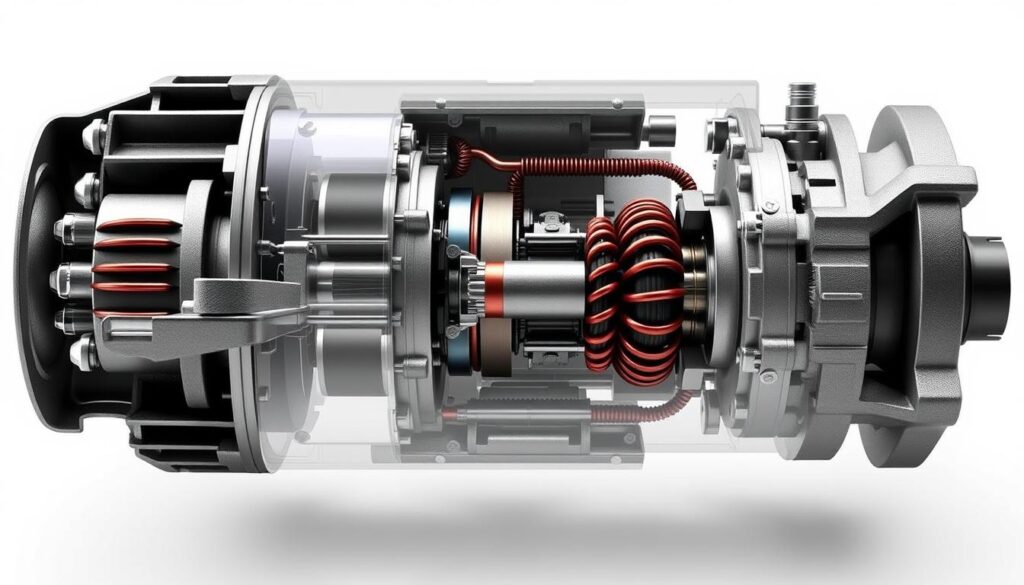
Higher compression means the starter motor must generate substantially more rotational force. Amperage requirements illustrate this performance gap clearly—diesel starters typically draw 200-400 amperes during normal cranking operations, while gasoline engine starters consume only 80-150 amperes under similar conditions. Cold weather amplifies these electrical demands further, with diesel starters drawing over 500 amperes in extreme cold.
| Specification | Diesel Starters | Gasoline Starters |
|---|---|---|
| Compression Ratio | 14:1 to 25:1 | 8:1 to 12:1 |
| Cranking Amperage | 200-400 amperes | 80-150 amperes |
| Torque Output | 2.5-4.0 kW | 1.2-1.8 kW |
| Typical Weight | 15-25 pounds | 8-12 pounds |
Key Components of a Diesel Starter System
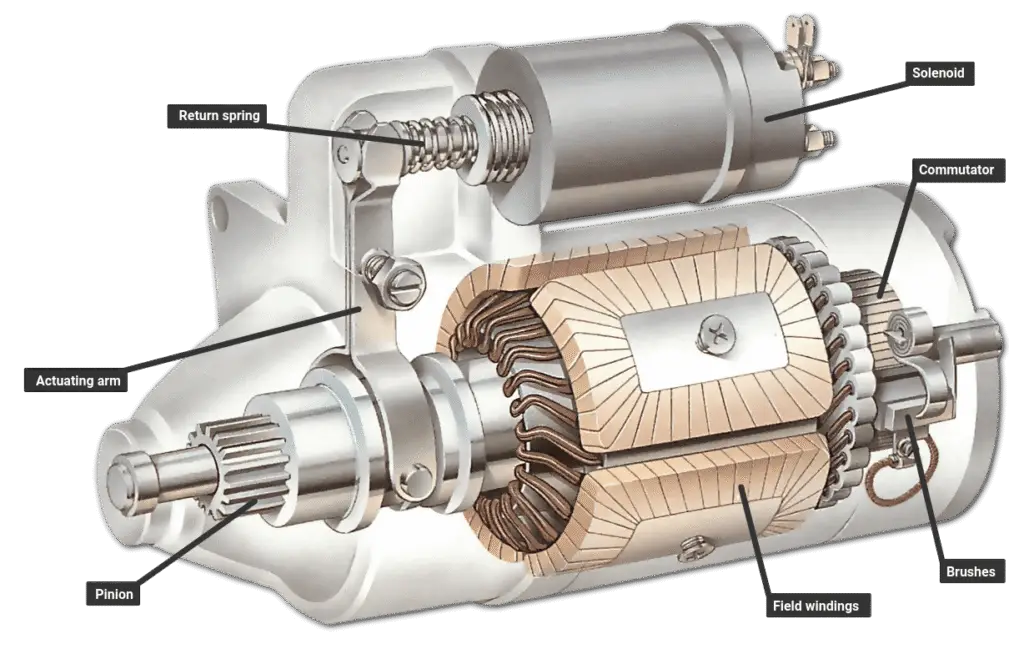
The starter motor contains multiple internal components engineered to convert electrical energy into rotational mechanical force. The armature serves as the rotating element, with electromagnetic field coils surrounding it to create magnetic fields that produce rotation when current flows. Carbon brushes maintain electrical contact with the commutator as the armature spins, transferring current from the stationary circuit to the rotating windings.
The starter solenoid performs dual critical functions. First, it acts as a high-current relay that completes the electrical circuit between battery and starter motor. Second, it mechanically engages the Bendix drive with the flywheel ring gear. When voltage reaches the solenoid control terminal, an electromagnetic coil pulls a plunger inward, which simultaneously pushes the Bendix drive forward and closes heavy copper contacts to complete the high-amperage circuit.
The starter electrical circuit begins at the battery positive terminal and flows through multiple control components. Current travels from the ignition switch through the starter relay to the solenoid, then through closed contacts into the starter motor. Ground path integrity proves just as critical as positive connections—poor grounds create resistance that reduces available voltage at the motor.
Recognizing Common Starter Failure Symptoms
When starter problems develop, diesel trucks exhibit telltale symptoms that serve as diagnostic clues for pinpointing the exact failure point. Learning to identify these warning signs helps distinguish between battery issues, electrical connection problems, and actual starter motor failures.
Slow or Sluggish Cranking
Diesel cranking problems often begin with noticeably slower engine rotation during startup. The engine turns over but lacks normal vigorous cranking speed, indicating insufficient electrical power reaching the starter motor. A weakened battery that can’t deliver adequate amperage represents the most common culprit, with cold temperatures compounding the problem by increasing oil viscosity and reducing battery capacity simultaneously.
Single Click or Rapid Clicking Sounds
A single loud click when turning the key indicates the starter solenoid is engaging successfully—the plunger pulls in and makes contact. However, nothing happens after that click because either the solenoid contacts are worn or the motor itself has seized. Rapid clicking sounds present a different scenario entirely. This machine-gun-like repetitive clicking almost always points to insufficient voltage, with the solenoid trying to engage but immediately dropping out when voltage falls below the holding threshold.
Complete No-Crank Conditions
Absolute silence when turning the key indicates problems upstream from the starter motor. A failed ignition switch prevents the start signal from transmitting, or the neutral safety switch might malfunction. Broken wiring, blown fuses, or complete battery failure can also cause this symptom. Dashboard lights and accessories failing to work provides an additional diagnostic clue pointing to battery issues.
Grinding or Whining Noises
Grinding noises during cranking attempts signal serious mechanical problems requiring immediate attention. These harsh sounds indicate metal-on-metal contact from damaged drive gears or flywheel ring gear teeth. A failing overrunning clutch within the starter drive produces similar sounds. Continuing to operate the starter with grinding noises causes progressive damage to both starter and flywheel components.
| Symptom | Primary Cause | Diagnostic Priority |
|---|---|---|
| Slow cranking | Weak battery or poor connections | Test battery voltage and cable resistance |
| Single click | Failed solenoid contacts or seized motor | Perform solenoid bypass test |
| Rapid clicking | Insufficient battery voltage | Check battery state of charge |
| Complete silence | Circuit failure upstream of starter | Verify control circuit continuity |
Essential Diagnostic Tools and Safety Precautions
Effective starter system diagnosis requires professional-grade testing equipment combined with strict adherence to safety guidelines. The high-current electrical environment of diesel truck starting systems demands respect and preparation.
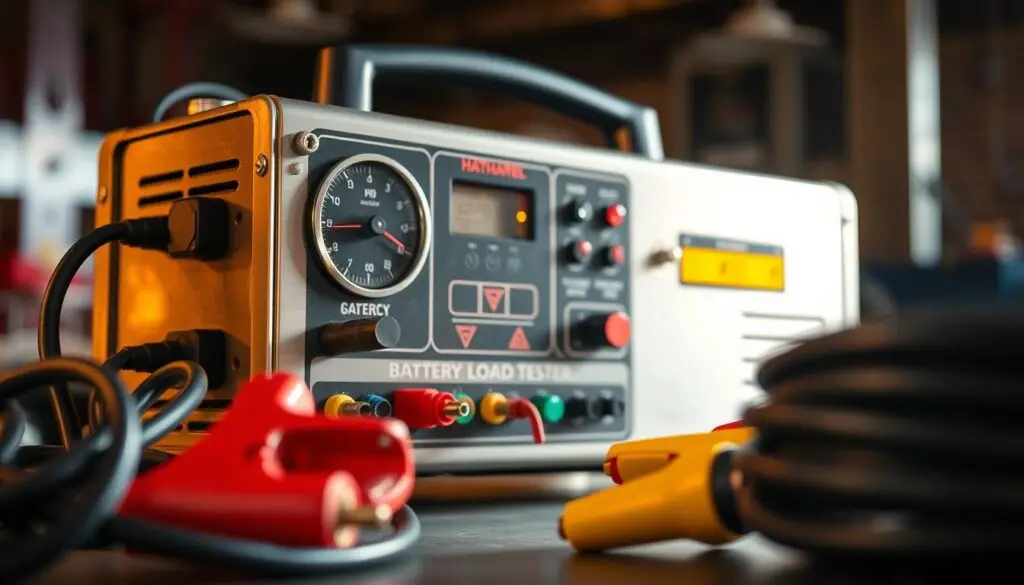
The foundation of any diagnostic toolkit includes a quality digital multimeter, a battery load tester, and a clamp-on ammeter rated for 400-600 amperes DC. A digital multimeter measures voltage, resistance, and continuity throughout the starter circuit. Load testers evaluate whether batteries can deliver the hundreds of amperes required during diesel engine cranking—static voltage measurements never tell the complete battery story.
Safety protocols are essential when working with diesel starter systems. Always disconnect the negative battery cable before removing or installing starter motors. Battery terminals carry enough current to weld metal tools and cause severe burns—remove rings, watches, and metal jewelry before working near batteries. Wear safety glasses and chemical-resistant gloves when handling batteries, as sulfuric acid causes serious burns and permanent eye damage. Battery hydrogen gas accumulation creates explosion risks when exposed to sparks or flames, per OSHA 1926.441 battery safety regulations.
Battery System Inspection and Testing
Battery system inspection serves as the foundation of any effective diesel starter troubleshooting process. The battery circuit accounts for more starting failures than any other component in diesel trucks.
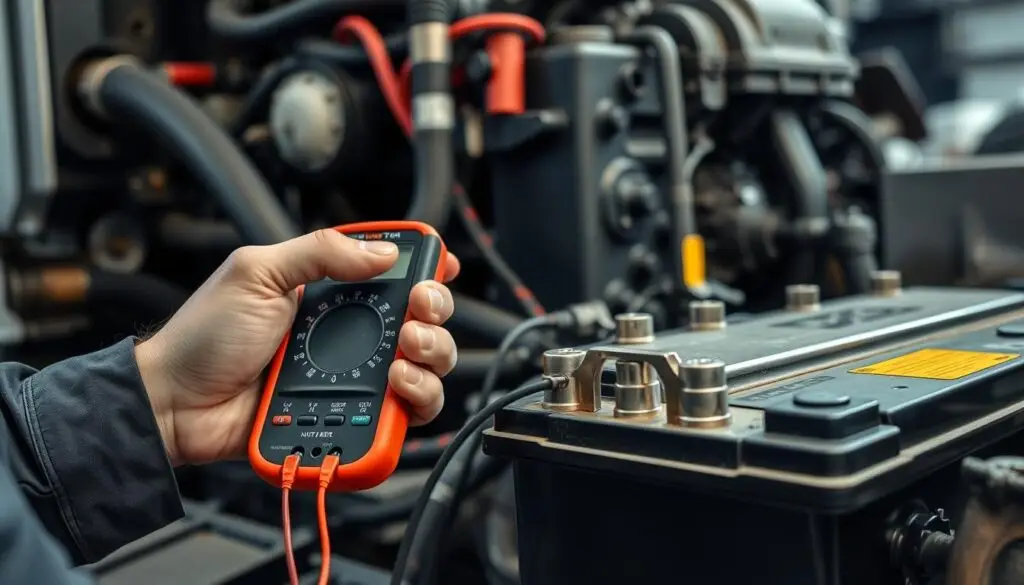
Measuring Battery Voltage and State of Charge
Voltage readings provide critical information about battery condition, but a surface charge can display acceptable voltage while the battery completely lacks cranking capacity. Allow the battery to rest without charging or electrical load for at least one hour before measurement. A healthy battery should display 12.6 volts or higher when fully charged, while readings below 12.0 volts indicate a discharged or failing battery.
Load testing remains essential because voltage alone cannot verify capacity. A battery may show 12.6 volts but fail completely under the heavy amperage demand of cranking a diesel engine. Apply a load equal to half the battery’s cold cranking amp rating for 15 seconds—voltage should remain above 9.6 volts during this test at temperatures above 70°F.
650-800+ CCA Minimum
Required cold cranking amps for most diesel pickup trucks. Larger commercial vehicles often need 1000+ CCA or dual battery configurations.
Examining Battery Cables and Terminals
Battery connections create voltage drop when resistance develops at terminals or within cables. Even minor resistance prevents full battery power from reaching the starter motor, manifesting as slow cranking, clicking sounds, or complete starting failure.
Battery cable corrosion appears as crusty deposits in white, blue, or green colors around terminals and cable ends. Even small amounts of corrosion can prevent several hundred amperes from reaching the starter. Use a wire terminal brush specifically designed for battery posts and cable clamps, then apply dielectric grease after cleaning to prevent future corrosion.
Cable gauge must handle 200-400 amperes during cranking without excessive voltage drop. Most diesel trucks use 2-gauge or larger cables for primary connections. Longer cable runs require larger wire gauge to compensate for additional resistance. Ground path integrity demands equal attention—clean both battery terminals and engine block ground points to bare metal.
Stay Current on Diesel Maintenance Best Practices
Get weekly technical insights, diagnostic tips, and fleet management strategies delivered to your inbox. Join thousands of fleet managers and diesel technicians who rely on HDJ.
Diagnosing Starter Solenoid Malfunctions
When your diesel truck clicks but won’t crank, the solenoid often holds the answer. The solenoid acts as both a mechanical switch and an electrical relay, making it one of the most stressed components in the starting system. Diesel solenoids handle 300 to 400 amperes during cranking, far exceeding gasoline engine requirements, and this extreme current flow generates significant heat at the contact points that eventually causes failure.
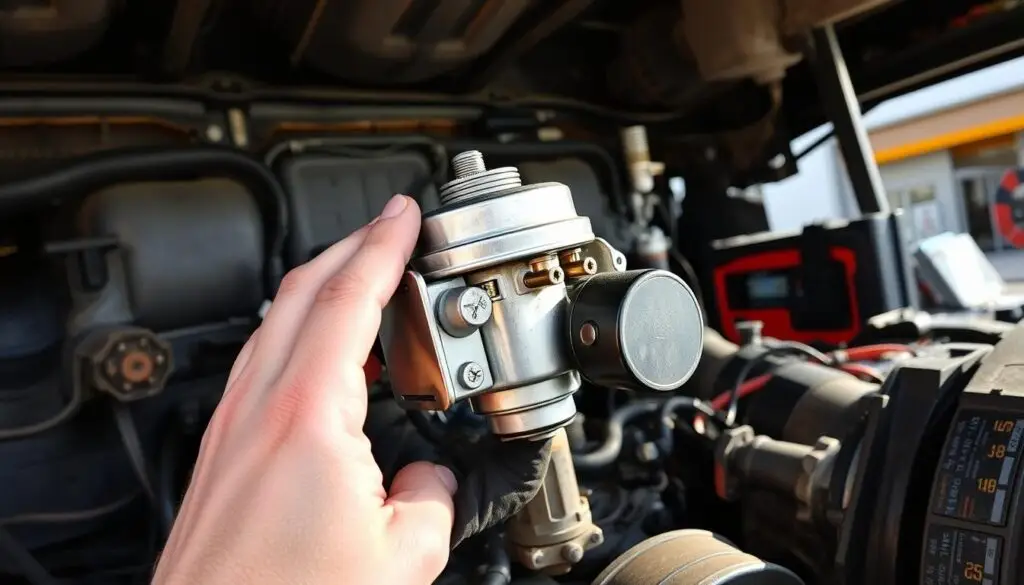
Step-by-Step Solenoid Testing
First, verify the trigger signal reaches the solenoid S-terminal. Use a multimeter set to DC voltage and connect the negative lead to a good ground. Touch the positive lead to the small S-terminal wire while a helper turns the key to start. You should see battery voltage at the S-terminal during cranking attempts.
Voltage drop testing reveals contact resistance that prevents adequate current flow. Set your multimeter to DC voltage, place the negative lead on the large battery-side terminal and connect the positive lead to the motor-side terminal. Have a helper crank the engine while you observe the reading. Voltage drop should not exceed 0.5 volts across healthy solenoid contacts—readings above 1.0 volt typically prevent the starter from receiving adequate power.
Solenoid Bypass Testing
The bypass test provides definitive diagnosis by eliminating the solenoid contacts from the circuit. Ensure the transmission remains in park or neutral with the parking brake applied. Disconnect the small S-terminal wire to prevent solenoid engagement during testing.
Use a heavy-gauge jumper cable and briefly touch from the battery positive terminal to the motor-side terminal on the solenoid. If the starter motor spins vigorously, the solenoid contacts have failed but the motor functions properly. If the motor fails to spin or turns slowly, the problem lies within the starter motor itself.
Common Diesel Starter Problems and Solutions
The majority of diesel truck starting problems stem from a handful of predictable failure modes. Understanding these common issues allows quick narrowing of the root cause and effective solutions.
Worn Starter Motor Brushes and Commutator
Internal wear of starter motor brushes represents one of the most common failure modes in high-mileage diesel trucks. These carbon brushes conduct current to the rotating armature through contact with the commutator surface. Over thousands of start cycles, friction and electrical arcing gradually erode the brush material until contact becomes inconsistent.
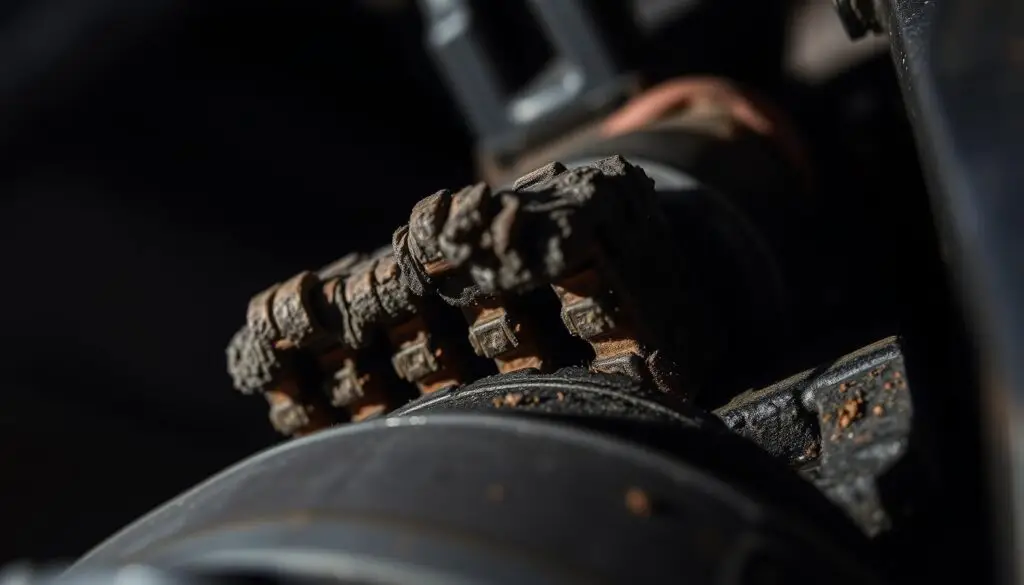
Intermittent operation ranks as the primary indicator—the starter may crank the engine normally on some attempts but fail completely on others. This inconsistency occurs because brush contact quality depends on where the armature stops rotating after each start. Additional symptoms include progressively slower cranking over weeks or months and the starter working better after sitting unused for several hours.
Damaged Bendix Drive and Overrunning Clutch
The Bendix drive mechanism extends the starter pinion gear into mesh with the flywheel ring gear during cranking, then retracts after engine start. This assembly includes an overrunning clutch that protects the starter from damage when the engine reaches running speed. Grinding, whining, or clunking noises clearly indicate mechanical failure in this system.
After removing the starter, inspect drive gear teeth for chips, cracks, or excessive wear patterns. Test overrunning clutch operation—it should spin freely one direction and lock solidly in the other. Common causes include extended cranking periods that overheat clutch components, contamination from dirt or moisture, and normal wear after 100,000+ start cycles.
Faulty Starter Relay and Ignition Switch
Starter relay problems prevent the starting circuit from delivering power to the solenoid, creating complete no-crank conditions without any clicking sounds. Verify battery voltage at the relay power input terminal with ignition off, check for trigger voltage at the control terminal when the key turns to start position, and measure voltage at the relay output terminal during start attempts. If no output voltage despite correct inputs, replace the relay.
Flywheel Ring Gear Damage
Flywheel ring gear damage occurs less frequently than starter component failures but creates similar grinding symptoms. The challenge lies in distinguishing it from starter drive problems since both produce grinding noises. However, ring gear damage typically affects a specific section of the gear rather than the entire circumference.
Access the ring gear by removing the starter and using a bright light to illuminate the flywheel area. Manually rotate the engine using a wrench on the crankshaft bolt, examining each tooth as it passes. Look for chipped or broken tooth tips, excessive wear, missing teeth, or shiny burnished areas indicating repeated improper engagement.
The HDJ Perspective
In our experience working with fleet maintenance directors across the industry, the most costly starter failures aren’t the dramatic breakdowns—they’re the gradual performance degradations that go unnoticed until a truck fails during peak season. The fleets achieving the best uptime numbers treat battery and starting system inspection as seriously as brake inspections, following TMC Recommended Practices for systematic maintenance. When technicians understand the relationship between battery health, connection integrity, and starter longevity, they catch problems before they strand drivers on cold Monday mornings.
Cold Weather Starting System Diagnosis
When temperatures plunge below freezing, diesel trucks face unique starting challenges that demand specialized troubleshooting. Low temperatures affect multiple systems simultaneously, turning minor problems into complete no-start conditions.
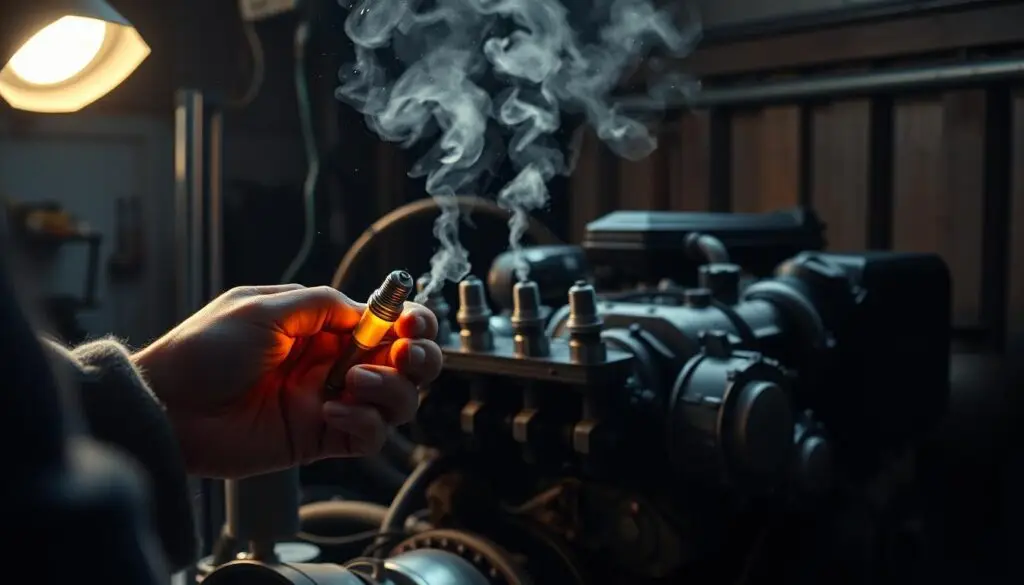
Glow Plug System Testing
The glow plug system preheats combustion chambers to temperatures between 1300 and 1900 degrees Fahrenheit, making fuel ignition possible during cold starts. Even one or two failed glow plugs can make starting difficult or impossible when temperatures drop below 20 degrees Fahrenheit.
Test voltage supply to glow plugs during the preheat cycle using a digital multimeter. Measure individual glow plug resistance by disconnecting the electrical connector and checking resistance between the plug terminal and engine ground. Functional glow plugs typically show resistance between 0.5 and 2.0 ohms, while open circuits showing infinite resistance indicate failed plugs requiring replacement.
Battery Performance in Sub-Zero Temperatures
Battery performance degrades substantially in freezing conditions because chemical reactions within the cells slow dramatically as temperature drops. A battery delivering 100 percent capacity at 80°F provides only 65 percent at 32°F and merely 40 percent at 0°F. Simultaneously, engine cranking demands increase 50-100% due to thickened oil and increased compression resistance.
| Temperature | Battery Capacity | Engine Cranking Demand |
|---|---|---|
| 80°F | 100% | 100% (baseline) |
| 32°F | 65% | 155% |
| 0°F | 40% | 220% |
| -20°F | 25% | 350% |
Consider battery age when diagnosing cold weather starting issues. Batteries older than four years show significantly reduced cold cranking performance even when they test acceptable at room temperature. Replacing aging batteries before winter prevents roadside breakdowns and eliminates diagnostic confusion.
Starter Motor Replacement and Upgrade Options
Starter motor replacement presents an opportunity to upgrade your diesel truck’s starting system with modern, high-performance components. The choices you make during replacement directly affect starting reliability, electrical system efficiency, and long-term maintenance costs.
Choosing Between OEM and Aftermarket Starters
OEM starters guarantee exact fit and performance matching original specifications, eliminating compatibility concerns but commanding premium prices. Quality aftermarket options from manufacturers like Delco Remy, Bosch, Denso, and Valeo produce components that meet or exceed original specifications through rigorous engineering and testing protocols, offering excellent value at lower cost.
Economy brands often cut costs through inferior materials, loose manufacturing tolerances, and minimal testing. These shortcuts result in premature brush wear, bearing failures, and inconsistent cranking performance. For demanding diesel applications, the premium investment pays dividends in reliability and service life.
High-Torque Gear Reduction Starter Benefits
Gear reduction starters use planetary or offset gear systems to multiply torque output while consuming substantially less electrical current than conventional direct-drive designs. This design delivers 25-40% lower current draw while generating superior cranking torque, creating multiple performance advantages including faster cranking speed, reduced electrical system stress, enhanced cold weather starting, and longer service life.
Ford 6.0L and 6.4L Powerstroke applications particularly benefit from high-torque gear reduction technology that addresses the challenging starting characteristics these engines exhibit. Cummins applications in Dodge Ram trucks show equally impressive improvements, with owners reporting dramatically improved cold starts and reduced battery strain.
Preventive Maintenance for Extended Starter Life
Preventive maintenance transforms your diesel truck’s starting system from a potential failure point into a reliable asset. A well-structured maintenance program catches problems early, prevents corrosion damage, and ensures every component operates within design parameters. The investment costs far less than emergency repairs and keeps trucks ready for work.
Monthly inspections should cover battery voltage measurement, visual examination of terminals for corrosion, cable integrity checks, ground connection tightness, and starter mounting bolt security. Quarterly inspections expand to include starter electrical connections, solenoid operation testing, and comprehensive cable inspection. Annual comprehensive testing provides the complete picture through battery load testing, starter current draw measurement, and alternator output verification under full electrical load.
Document your measurements to track degradation trends over time. Any increase in cranking time signals developing problems that will damage your starter if ignored. Extended cranking generates excessive heat in starter windings, accelerates brush wear, and stresses electrical connections. Early intervention prevents this cascade of damage. Motor carriers must maintain these maintenance records as required under 49 CFR Part 396, which mandates systematic inspection, repair, and maintenance of all commercial motor vehicles.
Share Your Starting System Expertise
Are you a fleet maintenance manager, diesel technician, or shop owner with insights on starter system diagnosis? HDJ welcomes technical contributions from industry professionals.
Frequently Asked Questions
Why is my diesel truck cranking slowly in cold weather?
Slow cranking typically results from insufficient electrical power reaching the starter or increased mechanical resistance. The most common causes include weak batteries (capacity drops to 40% at 0°F), corroded terminals creating excessive resistance, poor ground connections, or worn starter motor brushes. In cold conditions, thickened oil and increased compression resistance compound these issues, making proper battery maintenance and connection integrity absolutely critical. Start diagnosis by testing battery voltage under load and inspecting all cable connections for corrosion.
What does a single clicking sound mean when trying to start?
A single click indicates the starter solenoid is engaging and pulling in the plunger, but the motor itself fails to rotate. This typically points to failed solenoid contacts that no longer make solid electrical connection, or internal starter motor failure such as shorted windings or seized components. The definitive test involves bypassing the solenoid contacts by connecting a jumper cable directly from battery positive to the motor terminal—if the motor spins, the solenoid contacts have failed; if nothing happens, the motor requires replacement.
How do I test glow plugs on my diesel truck?
Test individual glow plugs by disconnecting the electrical connector and measuring resistance between the plug terminal and engine ground using a digital multimeter. Functional glow plugs typically show 0.5-2.0 ohms resistance, while failed plugs display infinite resistance (open circuit). Test all plugs since even one or two failures can make cold starting difficult below 20°F. Also verify the control module supplies battery voltage during the preheat cycle and energizes for the appropriate duration based on coolant temperature.
What battery CCA rating do I need for reliable diesel starting?
Most diesel pickup trucks require batteries rated at minimum 650-800 CCA (Cold Cranking Amps), with larger commercial vehicles often needing 1000+ CCA or dual battery configurations. Engine size determines specific requirements—a 6.7-liter diesel typically needs at least 750 CCA for reliable starting. CCA measures a battery’s ability to deliver starting power at 0°F for 30 seconds while maintaining at least 7.2 volts, directly correlating to cold weather starting reliability.
Should I choose an OEM or aftermarket starter replacement?
OEM starters guarantee exact fit and matching specifications but cost 50-100% more than quality aftermarket options. Premium aftermarket brands including Delco Remy, Bosch, Denso, and Valeo manufacture starters meeting or exceeding OEM specifications at lower cost. Avoid economy aftermarket brands that use inferior materials and minimal testing. For demanding applications, consider high-torque gear reduction starters that deliver 25-40% lower current draw while providing superior cranking torque, improving both performance and electrical system longevity.
Keeping Your Fleet Starting Reliably
Addressing diesel truck starter problems becomes manageable when you apply systematic diagnostic approaches. Understanding each component’s role enables accurate problem identification without unnecessary part replacement. The diagnostic process starts with basic battery testing and progresses through solenoid evaluation, starter motor assessment, and control circuit verification.
Effective preventive maintenance extends starter life and prevents unexpected breakdowns. Regular inspection schedules catch developing problems before complete failure occurs. Clean connections, proper battery care, and early intervention strategies keep trucks running reliably. For commercial operators where starting system failure costs real money in downtime and missed deliveries, implementing structured maintenance programs based on these principles protects both equipment and the bottom line.
Help Other Fleet Professionals
If this troubleshooting guide helped diagnose your starting system issues, share it with fellow fleet managers and technicians who face similar challenges.