
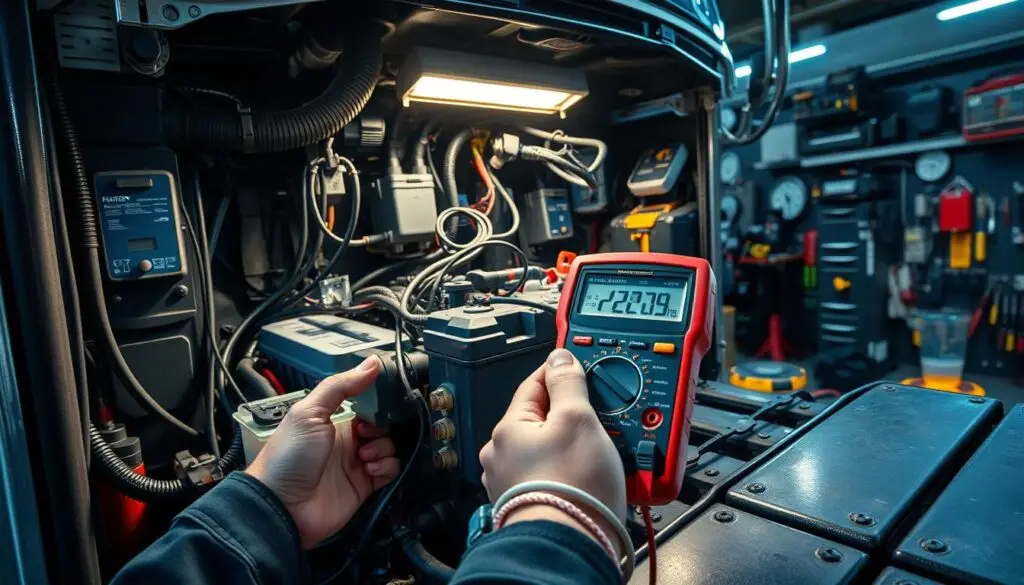
A perfectly running truck parked at night refuses to turn over the next morning. This frustrating scenario costs fleet operators across the United States thousands in lost revenue and emergency service calls every year. Parasitic battery drain strikes without warning when electrical components continue drawing power after the ignition is switched off, and heavy-duty trucks contain dozens of systems capable of silently killing batteries overnight.
Fleet managers face mounting costs from unexpected downtime, with each disabled vehicle disrupting delivery schedules and straining maintenance budgets. The average commercial fleet loses over $400 per day for every truck sitting idle in the yard waiting for a jump-start or battery replacement.
This comprehensive guide delivers proven diagnostic techniques, identifies common culprits, and provides prevention strategies that protect fleet reliability and the bottom line. Whether managing a 10-truck operation or a 500-vehicle fleet, understanding parasitic drain transforms reactive battery replacement into proactive electrical system management.
Last Updated: December 2025
Key Takeaways
- Normal vs. Problematic: Heavy-duty trucks should draw 25-50 mA when parked; sleeper cabs with amenities may legitimately draw 200-300 mA.
- Top Culprit: Improperly installed aftermarket accessories cause the majority of parasitic drain issues in commercial vehicles.
- Financial Impact: A 50-truck fleet can lose $117,500-$185,000 annually from uncontrolled battery drain problems.
- Diagnostic Essential: Wait 20-45 minutes after shutdown before testing to allow electronic modules to enter sleep mode.
- Prevention Pays: Systematic testing protocols and proper installation standards reduce battery replacement frequency by 50% or more.
What Is Parasitic Battery Drain in Commercial Vehicles?
Parasitic battery drain refers to continuous power draw from electrical components when the engine is off and the key is removed. Every heavy-duty truck experiences some level of electrical consumption when parked, but understanding the difference between normal and problematic drain is critical for effective fleet management.
Modern commercial vehicles have become increasingly complex as they integrate more electronic systems to meet regulatory requirements and driver comfort expectations. Today’s trucks operate as mobile offices and living spaces, creating electrical demands that were unimaginable just a decade ago.
Technology contributes significantly to electrical load through hotel loads that support driver comfort during mandatory rest periods. These systems include refrigerators, microwaves, entertainment centers, GPS units, climate control, and lighting—all drawing power when the truck sits idle. Manufacturers engineer electrical systems to accommodate these demands and typically specify maximum acceptable power draw levels in technical manuals.
Acceptable Power Consumption Thresholds
Determining normal versus abnormal consumption requires understanding industry-standard benchmarks for heavy-duty applications. A baseline parasitic draw of 25-50 milliamps is typically acceptable for trucks without extensive auxiliary equipment. This minimal draw maintains essential computer memory, security systems, and clock functions requiring constant power.
Commercial vehicles equipped with sleeper cabs and driver amenities operate under different parameters. These configurations may legitimately consume 100-200 milliamps or more when accounting for standby systems that remain active during rest periods.
The following systems legitimately require standby power in modern trucks:
- Engine Control Modules (ECM) maintaining learned parameters and diagnostic codes
- Body Control Modules managing lighting circuits and security functions
- Telematics devices transmitting location data and fleet management information
- Electronic Logging Devices remaining operational to record duty status per FMCSA ELD requirements
- Security systems monitoring intrusion detection and alarm circuits
- Radio memory preserving station presets and clock settings
When power consumption exceeds manufacturer specifications by 50 milliamps or more, investigation becomes necessary. This threshold indicates that a component is drawing excessive current or that a circuit has failed to enter sleep mode properly.
| Vehicle Configuration | Acceptable Draw | Investigation Threshold | Common Cause If Exceeded |
|---|---|---|---|
| Day Cab (Basic) | 25-50 mA | Above 75 mA | Module not sleeping, interior light circuit |
| Sleeper Cab (Standard) | 75-150 mA | Above 200 mA | Inverter standby draw, HVAC controls |
| Sleeper Cab (Full Amenities) | 150-250 mA | Above 300 mA | Entertainment system, auxiliary power units |
| Vocational/Specialized | 100-200 mA | Above 275 mA | Body equipment, PTO systems, work lights |
Heavy-Duty Application Distinctions
Parasitic drain in commercial vehicles differs fundamentally from light-duty automotive applications due to operational demands and electrical system complexity. Heavy-duty trucks utilize multiple battery configurations—typically four batteries in series-parallel arrangements—which provide greater capacity but also create more potential failure points.
The 24/7 nature of fleet operations means trucks cannot simply be parked and ignored for extended periods. Drivers live in sleeper cabs during mandated rest breaks, requiring electrical systems to support basic human needs without running the engine continuously. This operational reality creates legitimate power demands that would be considered abnormal in passenger vehicles.
Commercial vehicles also include extensive auxiliary systems not found in light-duty applications. Auxiliary Power Units provide climate control without idling the main engine. Inverter systems convert DC battery power to AC current for appliances and tools. Lift gate controls maintain hydraulic system readiness and safety circuits. Refrigeration units monitor temperature sensors continuously. Fleet management systems transmit data and track location constantly.
These systems blur the line between acceptable power draw and parasitic drain problems. A refrigerated trailer monitoring system drawing 80 milliamps continuously serves a legitimate purpose, even though this consumption would be excessive in a non-commercial application.
Recognizing Parasitic Battery Drain Symptoms
Early detection of electrical warning signs separates proactive maintenance teams from those constantly fighting emergency repairs. Fleet operators who understand battery drain symptoms can address problems before they cascade into costly breakdowns. Recognizing these indicators requires attention to patterns that emerge over time rather than isolated incidents.
Dead Batteries After Overnight Parking
The most obvious indicator occurs when trucks fail to start after periods of inactivity. A vehicle that operates perfectly during the day but won’t crank the next morning points directly to excessive overnight discharge. This classic symptom distinguishes parasitic draw from alternator or charging system failures.
Progressive battery depletion follows a predictable pattern in heavy-duty applications. Initially, drivers may notice slightly slower cranking after the truck sits overnight. Within days or weeks, the starting difficulty becomes more pronounced until the battery lacks sufficient charge to engage the starter motor.
Cold weather dramatically accelerates these problems. Temperatures below freezing reduce battery capacity by 30-50% while simultaneously increasing the power required for engine cranking. A parasitic drain that seems manageable in summer becomes critical when ambient temperatures drop.
Weekend shutdowns present particular challenges. Trucks parked Friday evening may start reluctantly or fail completely by Monday morning. This 60-72 hour window reveals electrical consumption rates that shorter overnight periods might not expose.
Dimming Lights and Electrical System Warnings
Subtle electrical warning signs often precede complete battery failure. Observant drivers notice interior dome lights that appear dimmer than normal or dashboard displays that flicker during startup. These symptoms indicate declining battery voltage caused by continuous electrical consumption.
Dashboard warning lights provide critical diagnostic information. The battery or charging system indicator may illuminate intermittently, especially immediately after starting. Horn operation becomes noticeably weaker, producing a lower tone or reduced volume compared to normal function.
Distinguishing between charging system problems and parasitic drain requires careful observation. Charging system failures typically manifest during vehicle operation, with warnings appearing while driving. Parasitic drain symptoms appear primarily after shutdown, when the vehicle sits idle with systems supposedly inactive.
| Symptom Category | Early Stage | Advanced Stage | Critical Failure |
|---|---|---|---|
| Starting Performance | Slightly slower cranking | Multiple attempts needed | Clicking sounds only |
| Lighting Systems | Marginally dimmer interior lights | Visible dimming on startup | Insufficient power for lights |
| Voltage Readings | 12.3-12.5V overnight | 11.8-12.2V extended parking | Below 11.8V |
| Warning Indicators | Intermittent battery light | Persistent charging warnings | Multiple system warnings |
Frequent Jump-Starts and Battery Replacements
Repeated battery failures signal underlying electrical problems rather than component quality issues. Fleet managers who find themselves replacing batteries every 6-12 months are treating symptoms instead of addressing root causes. This pattern indicates parasitic drain continuously depleting battery reserves.
Jump-starting becomes a daily ritual for trucks with significant electrical consumption issues. Drivers keep jumper cables readily available or park near other vehicles for easy assistance. This reactive approach costs valuable time and creates safety concerns as drivers work around high-current electrical connections.
Heavy-duty truck batteries typically last 3-5 years under normal conditions. Premature failures within 18-24 months warrant comprehensive electrical system investigation rather than continued battery purchases. Each deep discharge cycle permanently damages battery plates and reduces overall capacity.
The Financial Impact on Fleet Operations
Every dead battery triggers a chain reaction of expenses that multiplies the original replacement cost several times over. Parasitic battery drain represents one of the most underestimated profit drains in commercial trucking operations. The financial consequences extend throughout every layer of fleet operations, from the service bay to customer relationships.
$500-$1,200 per day
Revenue lost for each truck experiencing unscheduled downtime from battery failure
Direct Costs: Battery Replacement and Labor
Battery replacement expenses form the most visible component of parasitic drain costs. Commercial truck batteries range from $200 to $600 per unit, with most heavy-duty trucks requiring two to four batteries in their electrical systems. A single replacement event for a quad-battery configuration can exceed $2,400 in parts alone.
Labor costs add significantly to these direct expenses. Diagnostic testing to identify parasitic drain typically requires 2 to 4 hours of skilled technician time at rates between $85 and $120 per hour. Battery replacement itself adds another 1 to 2 hours depending on configuration accessibility and terminal condition.
The accelerated replacement cycle creates the most damaging financial impact. Normal battery lifespan spans 3 to 5 years under proper conditions. Parasitic drain reduces this expectancy to just 1 to 2 years, effectively doubling or tripling replacement frequency over the vehicle’s service life.
Indirect Costs: Downtime and Schedule Disruptions
Truck downtime costs represent the hidden financial killer that often exceeds direct repair expenses. Missed delivery windows trigger penalty clauses in many freight contracts. Load rescheduling requires dispatcher time and may necessitate costly expedited shipping alternatives to maintain customer commitments.
Customer service impacts carry long-term financial consequences. Reliability issues damage fleet reputation and jeopardize contract renewals. Research consistently shows that on-time performance ranks as the top factor in shipper satisfaction, making parasitic drain’s unpredictable failures particularly damaging to customer relationships.
| Fleet Size | Annual Direct Costs | Annual Indirect Costs | Total Annual Impact |
|---|---|---|---|
| 10 Trucks | $8,500-$12,000 | $15,000-$25,000 | $23,500-$37,000 |
| 50 Trucks | $42,500-$60,000 | $75,000-$125,000 | $117,500-$185,000 |
| 100 Trucks | $85,000-$120,000 | $150,000-$250,000 | $235,000-$370,000 |
| 500 Trucks | $425,000-$600,000 | $750,000-$1,250,000 | $1,175,000-$1,850,000 |
These projections assume parasitic drain affects 15% to 25% of the fleet annually, a conservative estimate based on industry data. Fleets with older vehicles or extensive aftermarket equipment installations typically experience higher incident rates.
Common Causes of Battery Drain in Heavy-Duty Trucks
Battery drain causes in commercial trucks stem from a complex network of power-consuming devices and system failures. Modern heavy-duty vehicles operate dozens of electrical components simultaneously. Understanding which components typically create parasitic draw helps technicians diagnose problems faster and reduce diagnostic time significantly.
Aftermarket Accessories and Electronics
Improperly installed aftermarket accessories represent the leading cause of parasitic battery drain in commercial vehicles. Accessories create continuous power draws that rapidly deplete batteries during overnight parking when technicians tap into constant power sources rather than switched circuits.
Common aftermarket installation problems include:
- Power inverters wired directly to battery terminals without disconnect switches
- Entertainment systems that never enter sleep mode due to incorrect installation
- Auxiliary lighting circuits connected to unswitched power sources
- CB radios drawing power for memory functions beyond acceptable levels
- GPS devices and dash cameras lacking proper power management settings
Professional installation standards require all aftermarket equipment to include proper relay isolation. Devices should either connect to switched circuits or incorporate automatic shutdown features. Testing each accessory’s standby draw during installation prevents future problems.
Factory-Installed Systems That Draw Power
Electrical component failures in factory systems create significant drain issues even though manufacturers design them for minimal power consumption. Electronic control modules should enter sleep mode within minutes of shutdown but sometimes fail to do so. Body control modules with software glitches can keep multiple circuits active indefinitely.
HVAC systems present particular challenges when blower motor relays fail in the closed position. The system continues running even after ignition shutdown, creating substantial battery drain. Electric oil pumps and fuel transfer pumps may also remain active due to faulty sensors or control module errors.
System glitches can create unexpected drain patterns. Trailer charging circuits normally close once batteries reach full charge, but circuit malfunctions keep power flowing continuously. This type of issue requires systematic circuit testing to identify the specific component maintaining the connection.
Faulty Alternators and Charging System Issues
Alternator problems rank among the most serious battery drain causes because they both fail to charge properly and actively drain batteries. Shorted diodes within the alternator allow current to flow backward through the charging system. This reverse current drain can deplete batteries in just a few hours of parking.
Voltage regulator failures prevent proper charging system operation in two ways. Undercharging means batteries never reach full capacity during operation, while overcharging damages battery plates and shortens service life. Both conditions eventually result in dead batteries and require complete alternator replacement.
Testing for alternator-related drain requires specific procedures: measure voltage output with engine running at various RPM levels, check for AC voltage ripple indicating failed diodes, test parasitic draw with alternator output wire disconnected, compare findings against manufacturer specifications, and replace alternator if backward current flow exceeds 50 milliamps.
Corroded Connections and Damaged Wiring
Wiring corrosion creates resistance that leads to both charging problems and parasitic current leakage. Battery terminals exposed to road salt and moisture develop corrosion that increases electrical resistance. This resistance prevents proper charging while simultaneously allowing small current leaks to ground.
Damaged insulation exposes conductors to metal chassis components, creating direct paths for current leakage. Road vibration and heat cycling deteriorate wire insulation over time. Junction boxes that collect moisture become prime locations for corrosion-induced power loss.
Regular inspection of electrical connections prevents most wiring corrosion issues. Applying dielectric grease to terminals after cleaning provides protection against moisture intrusion. Replacing damaged wiring sections before complete failure saves batteries and prevents more extensive electrical system damage.
Stay Ahead of Electrical System Issues
Get expert diagnostic tips and fleet maintenance insights delivered to your inbox. Our newsletter covers the latest in commercial vehicle electrical systems and preventive maintenance strategies.
Essential Diagnostic Tools and Equipment
Investing in the right diagnostic tools transforms parasitic drain troubleshooting from guesswork into precise, efficient problem-solving. Professional mechanics working on heavy-duty trucks need specialized equipment that delivers accurate measurements in demanding commercial vehicle environments.
Digital Multimeters and Amp Clamps
A professional-grade digital multimeter represents the cornerstone of any parasitic drain diagnostic toolkit. The instrument must offer a minimum 10-amp measurement range with milliamp precision to accurately detect small current draws. Auto-ranging capabilities allow technicians to capture readings without manual scale adjustments.
Critical features for heavy-duty applications include MIN/MAX recording functions that capture intermittent electrical draws occurring sporadically. These memory features prove invaluable when diagnosing problems that don’t manifest consistently during observation. Brands like Fluke, Klein Tools, and Snap-on manufacture instruments specifically designed for commercial vehicle applications.
Amp clamp measurement tools provide non-invasive current testing without breaking circuit connections. These clamps encircle individual wires to measure current flow through magnetic field detection, allowing technicians to isolate specific circuits while the electrical system remains operational.
Battery Load Testers and Conductance Testers
Battery testing tools serve a dual purpose in parasitic drain diagnosis by distinguishing between weak batteries and actual electrical system problems. A battery struggling to hold a charge may mimic parasitic drain symptoms, making proper battery assessment essential before extensive electrical testing.
Traditional load testers apply measured resistance to batteries, simulating actual starting demands while monitoring voltage response. This stress test reveals whether batteries can deliver required cranking amperage under realistic conditions.
Modern conductance testers evaluate internal battery resistance without discharging the battery during assessment. These instruments send small AC signals through battery cells and measure the response to calculate cold-cranking capacity. Results appear within seconds, allowing quick battery condition verification before beginning parasitic drain investigations.
OBD-II Scan Tools and Diagnostic Software
Electronic diagnostic capabilities have become essential as heavy-duty trucks incorporate increasingly sophisticated electrical systems. Standard automotive OBD-II scanners lack the protocols necessary for commercial vehicle diagnostics. Specialized electrical diagnostic software communicates using J1939 and J1708 protocols standard in heavy-duty applications.
Professional scan tools for commercial vehicles monitor module behavior during shutdown sequences and sleep mode transitions. These capabilities reveal which electronic control units fail to enter low-power states, directly identifying sources of excessive battery drain. Third-party diagnostic platforms like Nexiq, Noregon JPRO, and Dearborn Group offer cross-manufacturer compatibility valuable for mixed fleets.
Step-by-Step Parasitic Draw Testing Procedure
Conducting a parasitic draw test demands precision, patience, and adherence to proven diagnostic protocols that protect both technician and vehicle systems. Following a structured approach ensures safety while preserving electronic module memory and system integrity.
Step 1: Prepare the Vehicle and Ensure Safety
Park the vehicle on level ground with the parking brake engaged and wheels chocked. Verify that the ignition is completely off and all accessories are switched to the off position, including sleeper cab appliances, work lights, and entertainment systems.
Document all warning lights and existing fault codes before disconnecting batteries. Notify drivers that radio presets and clock settings may reset during testing. Verify that security systems will not trigger when battery connections are interrupted.
Allow 20 to 45 minutes after shutdown for electronic modules to enter sleep mode. Modern trucks contain multiple computer modules that remain powered for extended periods after shutdown. Testing before this settling period completes produces artificially high readings that complicate diagnosis.
Step 2: Measure Baseline Electrical Current Draw
Accurate current draw measurement requires proper multimeter connection. Connect the digital multimeter in series between the negative battery terminal and the disconnected negative battery cable. Set the multimeter to measure DC amperage, starting with a higher range to prevent meter damage from initial inrush current.
Watch the display for several minutes as readings stabilize. Individual modules powering down creates temporary fluctuations in amperage. The parasitic draw test reading should eventually settle to a steady value that represents the true baseline draw.
Readings exceeding 500 milliamps indicate problematic drain that will discharge batteries during extended parking periods. Document the stabilized baseline reading before proceeding to circuit isolation.
Step 3: Isolate Problem Circuits Through Systematic Testing
The fuse pulling method remains the most effective technique for isolating parasitic drain to specific circuits. Locate all fuse panels in the vehicle, including those in the cab, sleeper compartment, and engine compartment. Heavy-duty trucks typically have multiple fuse boxes controlling different systems.
Remove one fuse while monitoring the multimeter display for amperage changes. Document which circuit the fuse protects and any resulting current drop. Reinstall the fuse before removing the next one to maintain circuit integrity. Work through every fuse position methodically without skipping any.
When removing a fuse causes the amperage reading to drop significantly, that circuit contains the drain source. A complete return to normal readings indicates the problem component is solely on that circuit. Partial reductions suggest multiple drain sources requiring additional investigation.
Step 4: Identify the Specific Component Causing Drain
After isolating the problem circuit, technicians must narrow down to the individual component. Obtain wiring diagrams for the identified circuit showing all connected components. These diagrams reveal circuit branches, relay locations, and component connections that guide the isolation process.
Disconnect individual components on the problem circuit one at a time while monitoring amperage. Start with the most accessible devices before moving to components requiring disassembly. Aftermarket accessories often cause drain issues and should receive priority attention during testing.
Document every test result and component checked during the procedure. This record prevents redundant testing and provides valuable information if problems recur.
Troubleshooting Sleeper Cab Electrical Systems
Long-haul truckers depend on sleeper cab comfort systems that create substantial parasitic drain potential. These hotel loads keep drivers comfortable during mandatory rest periods but continuously draw power from batteries even when the engine isn’t running.
Inverters and Auxiliary Power Units
Power inverters represent one of the most common sources of battery drain in sleeper-equipped trucks. Even when no devices are plugged in, most inverters consume between 0.5 and 2 amps in standby mode. This continuous draw depletes batteries surprisingly quickly during extended parking periods.
Auxiliary power unit problems often stem from malfunctioning control modules that remain energized after shutdown commands. These units should enter sleep mode drawing less than 0.1 amps, but failed controllers can draw 2-5 amps continuously.
Proper installation of auxiliary power systems includes dedicated battery banks with isolation relays. This configuration protects starting batteries from hotel load depletion. Automatic disconnect features should engage when main battery voltage drops below preset thresholds, typically around 12.2 volts.
Entertainment Systems and Appliances
Modern sleeper cabs rival studio apartments in their entertainment offerings, but each convenience item contributes to overall battery drain. Flat-screen televisions draw between 0.05 and 0.3 amps in standby mode waiting for remote control signals. Satellite receivers consume even more power, often maintaining constant connections that draw 0.5-1.5 amps continuously.
Refrigerators present unique troubleshooting challenges because their power consumption varies with compressor cycling. A properly functioning 12-volt refrigerator draws 4-6 amps when the compressor runs but should cycle off regularly based on thermostat settings. Failed thermostats cause continuous compressor operation, dramatically increasing battery drain.
HVAC and Climate Control Components
Climate control systems consume the most power among sleeper cab comfort equipment, making them primary suspects during diagnosis. Diesel-fired bunk heaters use electronic control modules that should enter low-power sleep mode after shutdown. However, failed modules can maintain full power to monitoring circuits, drawing 1-3 amps continuously.
Auxiliary air conditioning units present similar challenges with their control relays and compressor circuits. A stuck relay keeps the compressor clutch coil energized, drawing 2-4 amps even though the compressor isn’t running.
Effective solutions include installing battery disconnect switches that drivers activate during extended parking. Solar maintenance chargers specifically sized for sleeper circuits provide continuous trickle charging that offsets normal standby consumption.
Addressing Telematics and Communication Equipment Drain
The digital revolution in commercial transportation has brought unprecedented connectivity, yet this technological advancement introduces complex electrical demands. Modern heavy-duty trucks carry sophisticated fleet management devices and compliance systems that maintain constant network connections.
GPS Tracking and Fleet Management Devices
GPS units are among the electrical conveniences that use battery power continuously. These devices maintain cellular or satellite connections to transmit real-time location data to fleet management platforms. GPS tracking power consumption typically ranges from 100 to 300 milliamps during standby operation.
Most tracking systems never enter true sleep modes because they must remain ready to report location data and receive dispatch communications. Poor installation practices compound the problem when devices connect directly to unswitched power sources.
Working with fleet management providers offers opportunities to optimize device settings without sacrificing operational visibility. Many systems support ignition-based reporting schedules that reduce transmission frequency when trucks are parked. Implementing these configurations can cut standby power consumption by 40 to 60 percent.
Electronic Logging Devices and Compliance Systems
Electronic logging devices serve critical regulatory functions by recording driver hours-of-service data. Federal regulations under 49 CFR Part 395 require these systems to maintain accurate time records and preserve driving logs. ELD electrical issues often stem from the legitimate need for continuous power to maintain clock accuracy and data integrity.
Quality ELD systems draw between 50 and 150 milliamps during standby operation. This moderate consumption becomes problematic only when combined with other parasitic loads or during extended parking periods exceeding seven days.
Diagnosing ELD electrical issues requires measuring actual current draw and comparing results against manufacturer specifications. Deviations exceeding 25 percent indicate potential problems requiring manufacturer support or device replacement.
CB Radios and Satellite Communication Units
Traditional communication equipment presents unique challenges in modern electrical systems. CB radios with memory functions maintain channel presets and settings by drawing continuous standby current. Older models with inefficient circuit designs can consume 50 to 200 milliamps even when switched off.
Satellite communication terminals maintain network connections similar to GPS devices, supporting voice calls, text messaging, and data services. Maintaining connection readiness requires 150 to 400 milliamps of continuous current draw.
Effective management involves relay-controlled power distribution that disconnects communication devices when the ignition turns off, manual disconnect switches for extended parking, and equipment selection criteria that prioritize models with documented low-power standby modes.
The HDJ Perspective
The industry’s shift toward electrification and advanced telematics is creating an interesting paradox for fleet maintenance teams. While these technologies improve efficiency and compliance, they simultaneously increase electrical system complexity and parasitic drain potential. Forward-thinking fleets are treating electrical system expertise as a core competency rather than an afterthought—investing in technician training, diagnostic equipment, and preventive protocols that will become increasingly valuable as vehicle technology continues advancing.
Resolving Lighting and Accessory Circuit Problems
Solving lighting circuit problems demands understanding how modern LED systems, work lights, and control modules interact with the vehicle’s electrical architecture. While lighting components appear straightforward, they contain multiple failure points that create continuous battery drain.
Identifying Marker and Clearance Light Circuit Failures
Marker lights and clearance lamps create parasitic drain through several distinct failure mechanisms. Failed integrated resistors within LED lamp housings represent the most common source of drain in commercial vehicle applications.
Moisture intrusion into lamp assemblies creates alternative current paths that bypass normal switching circuits. Water penetration corrodes internal connections and creates short circuits within the lamp housing itself.
Testing procedures for marker light circuits involve isolating each lamp and measuring its current draw with the vehicle completely shut down. Normal LED marker lights should draw zero current when off. Any measurable draw indicates internal lamp failure or circuit fault requiring immediate attention.
Diagnosing Work Light and Aftermarket Lighting Installations
Auxiliary lighting issues frequently stem from improper installation of aftermarket equipment rather than component failure. Work lights, light bars, and auxiliary driving lights connected to constant power sources create significant parasitic drain.
Poorly designed relay systems represent another common source of problems. Relays that fail to fully disconnect maintain partial circuit connection, allowing continuous current flow through lighting circuits even when switches indicate the off position.
Remote-control lighting systems with wireless receivers draw standby power continuously to monitor for activation signals. These receiver modules can consume 50-200 milliamps constantly. In vehicles with multiple remote-controlled accessories, combined standby draw quickly depletes battery reserves.
Testing Switches, Relays, and Body Control Modules
Switch failures create lighting circuit problems through internal short circuits that maintain partial power connection. Light switches subjected to high current loads develop carbon deposits across contact surfaces, creating alternative current paths that prevent complete circuit disconnection.
Testing light switches requires measuring resistance between terminals with the switch in the off position. Proper switches show infinite resistance when open. Any measurable resistance below 10,000 ohms indicates internal switch failure requiring replacement.
Body control modules with software faults prevent proper lighting circuit shutdown even when all physical switches indicate the off position. Diagnosing body control module issues requires specialized scan tools that read module status and output commands.
Battery Maintenance and Prevention Strategies
A comprehensive approach to battery health significantly reduces parasitic drain incidents across fleet operations. Proper care extends battery life from three to five years while minimizing unexpected breakdowns.
Choosing the Right Battery Technology
Understanding heavy-duty battery selection criteria determines system reliability from the start. Three primary battery technologies serve commercial truck applications. Flooded lead-acid batteries provide proven performance at the lowest initial cost.
Absorbed Glass Mat (AGM) batteries deliver superior resistance to vibration and deeper discharge cycles. These sealed units require no maintenance and perform exceptionally well in extreme temperatures. AGM technology costs 40-60% more than flooded batteries but offers extended service life.
Lithium-ion batteries represent the premium choice for trucks with substantial hotel loads. They weigh 60% less than lead-acid equivalents while providing faster charging and greater depth-of-discharge capability.
Capacity requirements must match total electrical loads plus a safety margin. Calculate combined amp-hour demands from all accessories, telematics, and sleeper cab equipment. Add 25% reserve capacity to prevent excessive discharge during extended parking periods.
Protecting Batteries During Downtime
Battery isolation systems prevent parasitic drain by controlling power distribution when vehicles sit idle. Manual disconnect switches allow drivers to cut power to non-essential circuits with a simple turn or pull. These mechanical devices cost $30-80 installed and provide immediate protection.
Automatic battery isolators detect voltage drops and disconnect auxiliary loads before starting capacity becomes compromised. These electronic systems activate when voltage falls below 12.4 volts, protecting the starting battery.
Sophisticated battery management systems monitor multiple batteries simultaneously and prioritize starting capability above all else. These integrated solutions track state-of-charge, temperature, and load history, sending alerts to fleet management software when batteries require attention.
Systematic Testing and Inspection Schedules
Establishing preventive maintenance schedules catches developing problems before they cause failures. Monthly visual inspections identify loose connections, corrosion buildup, and physical damage. Clean terminals with a wire brush and apply protective spray to prevent future corrosion.
Quarterly load testing reveals batteries losing capacity before they fail completely. Digital conductance testers provide accurate assessments in under 30 seconds per battery. Replace any unit showing less than 80% of rated capacity.
Annual comprehensive electrical system testing validates charging system output and identifies excessive parasitic draw. Document baseline measurements for comparison during future inspections. The Technology & Maintenance Council (TMC) recommends incorporating parasitic draw testing into standard PM procedures.
| Maintenance Task | Frequency | Required Equipment | Duration |
|---|---|---|---|
| Visual inspection and terminal cleaning | Monthly | Wire brush, protective spray | 10-15 minutes |
| Load and conductance testing | Quarterly | Digital battery tester | 5-10 min per battery |
| Parasitic draw measurement | Semi-annually | Digital multimeter with amp clamp | 20-30 minutes |
| Charging system verification | Annually | Multimeter, carbon pile tester | 30-45 minutes |
Implementing Fleet-Wide Prevention Protocols
Successful battery drain prevention requires coordinated efforts across every level of fleet operations. Individual repairs address symptoms, but comprehensive fleet maintenance protocols create lasting solutions that protect every vehicle in the operation.
Training Drivers to Protect Battery Life
Driver training programs form the first line of defense against parasitic battery drain. Drivers interact with electrical systems daily, making their habits critical to battery preservation. Well-trained drivers prevent problems before they start and identify issues early when solutions remain simple.
Effective training covers proper shutdown sequences that become second nature. Drivers should verify all accessories are switched off before exiting the vehicle, including work lights, entertainment systems, inverters, and climate controls.
Training must also emphasize reporting protocols. Drivers should report even the smallest electrical issues to the maintenance team immediately. Early detection of dimming lights, sluggish starts, or unusual electrical behavior prevents complete failures that strand trucks and disrupt schedules.
Professional Standards for Equipment Installation
Aftermarket installation standards prevent drain problems from entering the fleet in the first place. Amateur installations and driver-added accessories account for a significant percentage of parasitic drain cases. All aftermarket equipment should require professional installation by certified technicians who understand proper circuit protection, wire gauge requirements, and integration techniques.
Proper fusing and relay isolation must be mandatory for every accessory. Direct battery connections without protection create fire hazards and drain pathways. Relay-controlled circuits ensure accessories shut down completely when ignition switches turn off.
Integration testing verifies that new equipment behaves properly during shutdown. Technicians should measure parasitic draw before and after installation to confirm the addition doesn’t create excessive drain.
Maintaining Comprehensive Electrical Records
Electrical system documentation creates the knowledge base maintenance teams need for efficient troubleshooting. Every vehicle file should contain updated wiring diagrams reflecting all aftermarket additions. Standard factory diagrams don’t show the CB radios, inverters, and auxiliary lighting that modify electrical systems.
Modification logs track what equipment was installed, when installation occurred, and who performed the work. This history reveals patterns when certain accessories consistently cause problems. Recurring issue tracking identifies problem vehicles and problematic equipment types.
Scheduled Monitoring and Early Intervention
Proactive monitoring programs shift the approach from reactive repairs to preventive maintenance. Rather than waiting for dead batteries to reveal problems, scheduled testing finds developing issues before they cause failures.
Parasitic draw testing should become part of regular preventive maintenance intervals. Just as technicians check fluid levels and brake wear, they should measure current draw during vehicle inspections. This routine monitoring establishes baselines and detects changes that signal developing problems.
Battery health monitoring with predictive analytics takes prevention to the next level. Modern battery management systems track charge cycles, discharge rates, and capacity degradation, identifying batteries approaching failure and vehicles with abnormal consumption patterns.
Share Your Electrical System Expertise
Are you a fleet manager or diesel technician with insights on diagnosing and preventing parasitic drain? Heavy Duty Journal welcomes contributions from industry professionals who can share practical knowledge with our readers.
Frequently Asked Questions
What is considered a normal parasitic draw for a heavy-duty truck?
For heavy-duty trucks, normal parasitic draw typically ranges from 25-50 milliamps for basic systems. However, trucks equipped with sleeper cabs, telematics devices, and multiple electronic control modules may legitimately draw 200-300 milliamps when all systems are in standby mode. Systems requiring continuous power include engine control modules, security systems, clock/radio memory, and electronic logging devices. Any draw exceeding manufacturer specifications or preventing starts after overnight parking indicates abnormal drain requiring investigation. The key is understanding your specific truck’s configuration and comparing actual measurements against manufacturer specifications.
How long can I leave my truck parked before parasitic drain causes starting problems?
The duration depends on battery capacity, condition, and parasitic draw levels. With normal draw under 50 milliamps, fully charged commercial truck batteries should maintain starting capability for 2-3 weeks of inactivity. However, excessive draw of 500 milliamps or more can deplete batteries in just 2-3 days. Cold weather significantly reduces this timeframe since batteries lose capacity in low temperatures. If your truck consistently fails to start after sitting for a weekend or develops weak cranking after just a few days, you likely have excessive parasitic drain requiring immediate diagnosis.
Can I test for parasitic drain without disconnecting the battery?
No, accurate parasitic draw testing requires placing your digital multimeter in series between the negative battery terminal and the negative battery cable, which necessitates disconnecting the cable. However, you can use an amp clamp around individual wires to measure current flow without breaking connections once you’ve narrowed down the problematic circuit. The proper procedure involves documenting any radio presets, disconnecting the negative cable, connecting the multimeter between the cable and terminal, and waiting 20-45 minutes for all modules to enter sleep mode before taking final readings.
What is the most common cause of parasitic battery drain in commercial trucks?
Improperly installed aftermarket accessories represent the most frequent cause of parasitic drain in heavy-duty trucks. This includes CB radios, entertainment systems, power inverters, auxiliary lighting, and refrigeration units connected to constant power sources rather than switched circuits. Fleet management devices and GPS tracking systems maintaining continuous cellular connections also contribute significantly, often drawing 100-300 milliamps continuously. Many installations bypass proper electrical practices with connections tapped directly into constant-power circuits without appropriate fusing or disconnect capability.
Can telematics and ELD devices drain my truck’s batteries?
Yes, GPS tracking devices, fleet management systems, and electronic logging devices can contribute substantially to parasitic drain. These devices typically maintain constant power to preserve accurate timekeeping, maintain network connections, and transmit periodic updates even when parked. Most telematics devices draw 100-300 milliamps continuously, which is generally acceptable for trucks with healthy batteries. Problems arise when devices malfunction, fail to enter low-power modes, or are improperly installed. The proliferation of multiple tracking and communication devices can create cumulative drain exceeding battery capacity during extended parking.
How do I know if my alternator is causing battery drain?
A failing alternator can drain batteries through shorted diodes in the rectifier bridge that allow current to flow backward from the batteries when the engine isn’t running. To diagnose this, disconnect the alternator’s main output wire and retest parasitic draw—if the excessive drain disappears, the alternator is the culprit. You can also test individual diodes using a multimeter’s diode test function. Signs of alternator-related drain include batteries that test good but consistently fail to start, unusual electrical behavior, and parasitic draw measurements that significantly decrease when the alternator is electrically isolated.
Taking Control of Parasitic Battery Drain
Parasitic battery drain represents an unavoidable reality in modern commercial trucking, but its impact on fleet operations is entirely manageable. Between necessary power draws, comfort features, and occasional equipment failures, some level of drain will always exist. The key lies in minimizing its impact through systematic diagnostic approaches, preventive maintenance protocols, and proper aftermarket installation standards.
Successful management requires multiple strategies working together. Proper diagnostic procedures identify problem sources quickly. Regular testing catches issues before they cause breakdowns. Driver education prevents unnecessary power consumption. These combined efforts transform battery drain from an unpredictable problem into a controlled operational consideration that keeps trucks on the road and revenue flowing.
Help Fellow Fleet Professionals
Know a fleet manager or technician dealing with battery drain issues? Share this guide to help them diagnose problems faster and prevent costly downtime.


