
By Michael Nielsen, Editor & Publisher | 15+ Years in Diesel Repair
Last Updated: January 2026
📖 Estimated reading time: 22 minutes
When a diesel technician gets hurt on the job, fleet managers and shop owners face immediate challenges that affect both the injured worker and daily operations. Managing a workplace injury in the heavy-duty trucking industry requires quick decisions about medical care, clear communication protocols, and a structured approach to getting skilled technicians back to work safely. Without established workplace injury protocols, you risk regulatory penalties, increased workers’ compensation costs, and losing experienced team members permanently.
Federal and state regulations require employers to support injured employees throughout their recovery. You must maintain regular communication with hurt workers, provide suitable duties within their functional abilities, and follow proper documentation procedures. These responsibilities protect everyone involved while maintaining the operational continuity your fleet depends on.
Proper management of workplace incidents delivers concrete benefits for your operation. Workers’ compensation premiums stay controlled when you demonstrate effective claims management. Employee retention improves when technicians see their employer genuinely supports them during difficult times. The right approach balances employee welfare with business continuity, creating positive outcomes for injured workers, coworkers, and your bottom line.
Key Takeaways
- Legal obligations require action: Fleet managers must support injured workers through structured return-to-work programs and maintain regular communication throughout the healing process
- Proper protocols protect both parties: Established workplace injury procedures reduce liability exposure and maintain operational stability during recovery periods
- Cooperation drives successful outcomes: Effective injury management requires coordination between employers, injured workers, medical providers, and regulatory agencies
- Modified duty keeps technicians engaged: Well-designed light duty programs allow workers to contribute within their functional abilities while healing
- Prevention remains the priority: Comprehensive safety procedures and documentation systems create the foundation for avoiding future incidents
Understanding Workplace Injuries in Diesel Shops and Fleet Operations
Understanding the injury landscape in your diesel shop or fleet maintenance operation is the critical first step toward building a safer workplace. Shop safety requires recognizing patterns that lead to accidents and implementing systems that protect your team. Fleet managers who invest time analyzing injury data can significantly reduce both human suffering and financial losses.
The heavy-duty trucking environment presents distinct challenges that separate it from other industries. Heavy components, chemical exposures, and physically demanding tasks create multiple hazards daily. Diesel technicians work with components weighing hundreds of pounds, high-pressure fuel systems, and exhaust aftertreatment systems operating at extreme temperatures. Recognizing these dangers allows you to create targeted prevention strategies.

Common Types of Shop Injuries
Musculoskeletal injuries represent the most frequent category of harm in fleet maintenance facilities. These injuries develop from repetitive motions like turning wrenches, using impact tools, and reaching into engine compartments. Back strains from lifting heavy components—transmissions, engines, and wheel assemblies—cause extended recovery periods that can sideline experienced technicians for months.
Cuts and lacerations occur regularly when technicians work with sharp metal edges, broken components, and cutting tools. Burns result from contact with hot exhaust systems, turbochargers, and caustic chemicals used in maintenance operations. Crush injuries happen when equipment falls or shifts unexpectedly during repairs on commercial vehicles weighing 80,000 pounds or more.
Respiratory problems emerge from prolonged exposure to exhaust fumes, diesel particulate matter, and airborne contaminants common in enclosed shop environments. Eye injuries from metal shavings, chemical splashes, and welding operations require immediate medical attention. Hearing damage accumulates over time from constant exposure to pneumatic tools, engine noise, and impact equipment.
High-Risk Tasks and Contributing Factors
Certain activities carry significantly higher injury potential than routine maintenance work. Tire mounting operations on commercial vehicles involve extreme force and components weighing 150 pounds or more that can cause serious harm if equipment fails. Working under vehicles on lifts presents crushing hazards if safety protocols aren’t followed precisely.
Heavy component handling requires proper technique and equipment, yet production pressure often leads to shortcuts. Diesel fuel system work involves high-pressure components that can inject fuel through skin. DPF and aftertreatment system maintenance exposes technicians to extreme heat and chemical hazards. Operating hydraulic lifts and jacks capable of supporting 30,000 pounds demands constant attention to safety procedures.
Several contributing factors amplify these inherent risks. Inadequate training leaves technicians unprepared for hazardous situations. Time pressure to complete jobs quickly—especially when trucks need to return to service—encourages risky behavior. Equipment maintenance failures create unpredictable dangers. Improper or missing personal protective equipment removes the last line of defense against known hazards.
| Injury Type | Primary Causes | Typical Recovery | Prevention Strategy |
|---|---|---|---|
| Musculoskeletal Strain | Heavy lifting, repetitive motion, poor ergonomics | 2-8 weeks | Lifting equipment, job rotation, technique training |
| Lacerations | Sharp tools, metal edges, broken components | 1-4 weeks | Cut-resistant gloves, blade guards, proper tool storage |
| Chemical Burns | Battery acid, DEF exposure, coolant contact | 2-6 weeks | Protective eyewear, chemical-resistant gloves, safety showers |
| Crush Injuries | Falling parts, lift failures, improper jacking | 4-12 weeks | Lift certification, jack stands, proper blocking |
The True Cost of Workplace Injuries to Your Fleet Operation
The financial impact of workplace injuries extends far beyond immediate medical bills. Workers’ compensation insurance premiums increase substantially after each claim, sometimes doubling annual costs for several years. According to the American Transportation Research Institute’s operational costs analysis, insurance already represents one of the fastest-growing expense categories for fleet operations.
Temporary staffing costs accumulate quickly when you need replacement technicians during recovery periods. Productivity losses occur not only from the injured employee but also from disrupted workflow and team dynamics. OSHA fines can reach tens of thousands of dollars for serious violations discovered during incident investigations.
Legal expenses mount if disputes arise over claim validity or workplace conditions. The hidden costs prove equally damaging: decreased morale among remaining staff, increased turnover as employees seek safer environments, and reputation damage that affects your ability to recruit skilled diesel technicians in an already tight labor market.
Immediate Response When a Technician Injury Occurs
Workplace injuries demand immediate, decisive action from fleet managers who understand that every step taken in those first crucial minutes matters. The way you handle the initial response sets the foundation for successful recovery and protects your business legally. Establishing clear emergency response procedures before an accident happens ensures everyone knows their role when seconds count.
Your immediate priorities must balance employee safety with proper documentation requirements. Quick thinking combined with systematic workplace injury protocols creates the best outcomes for injured workers and your operation.
Administering First Aid and Calling Emergency Services
Assess the severity of the injury within the first 30 seconds. Life-threatening conditions like severe bleeding, chest pain, or head trauma require calling 911 immediately. For less severe injuries, your trained first aid responders should stabilize the situation. Every diesel shop and fleet maintenance facility needs at least two employees certified in first aid and CPR to ensure coverage during all shifts.

Minor cuts, sprains, or burns may only need basic treatment before transport to an urgent care facility. Never allow an injured worker to drive themselves to medical care—shock can set in unexpectedly even with seemingly minor injuries. Arrange transportation or call emergency services based on injury severity and your established protocols.
Securing the Scene and Preserving Evidence
Once the injured employee receives attention, immediately secure the accident area. Block off the space with barriers or caution tape to prevent other workers from entering and to preserve the scene for investigation.
Preserve everything exactly as it was when the injury occurred. This includes equipment positions and settings, tools that were in use, vehicle placement in the bay, lighting conditions, and any malfunctioning equipment or safety devices. Take photographs from multiple angles before anything gets moved. Document oil spills, cord placement, component positions, and any other contributing factors visible at the scene.
Initial Documentation and Witness Statements
Create your incident report while details remain fresh. Complete injury documentation within two hours of the accident to capture accurate information. Record the exact time, location, and circumstances surrounding the incident. Note what task the employee was performing, which equipment they were using, and the specific vehicle or component they were working on.
Interview witnesses separately to get unbiased accounts without leading questions. Ask open-ended questions like “What did you see happen?” rather than “Did you see him slip on the oil?” The injured worker’s own description of events provides critical information for both treatment and investigation purposes.
Notifying Insurance Carriers and Management
Contact your workers’ compensation insurance carrier within 24 hours. Most states require notification within this timeframe, though requirements vary by jurisdiction. Delaying this step can jeopardize your claim and create legal complications that affect both your company and the injured employee.
Inform corporate management or ownership immediately according to your company’s chain of command. Maintain detailed records of all notifications including dates, times, and the names of representatives you spoke with. This paper trail protects your business and ensures compliance with state-specific workplace injury protocols.
Navigating Workers’ Compensation and Legal Requirements
Understanding your legal responsibilities after a workplace injury protects both your employees and your business from costly complications. The legal framework involves multiple reporting systems, strict deadlines, and compliance standards that vary by location. Fleet managers must balance federal OSHA requirements with state-specific workers’ compensation laws while maintaining accurate documentation throughout the process.
Filing Workers’ Compensation Claims Promptly
Time is critical when submitting workers’ compensation claims after an injury occurs in your shop. Most states require employers to file reports within 24 to 72 hours of learning about the incident, though specific deadlines vary by jurisdiction. Missing these deadlines can result in claim denials, financial penalties, and increased legal exposure for your business.
Submit Employer’s Report of Injury forms through your state’s designated system promptly. These submissions should include complete information about the injured employee, the circumstances of the incident, witness details, and initial medical treatment provided. Many states now offer online portals that streamline this process.
Understanding State-Specific Requirements
Workers’ compensation laws differ significantly across state lines, affecting how you manage injury cases. Coverage requirements, benefit calculations, approved medical provider networks, and dispute resolution processes all depend on your shop’s location. Some states maintain monopolistic systems where the state provides all coverage, while others allow private insurance carriers to compete.
Fleet operations spanning multiple states face additional complexity. Consult with your workers’ compensation carrier and legal advisors to understand jurisdiction-specific obligations. These requirements impact everything from insurance premium calculations to the rights employees have during recovery. Staying informed about your state’s regulations prevents compliance gaps that could expose your business to penalties.

OSHA Recordkeeping and Reporting Standards
Federal OSHA recordkeeping requirements apply to most fleet maintenance operations. These standards mandate systematic tracking of workplace injuries and illnesses through specific forms and posting requirements. Employers must maintain accurate records that document safety performance and identify patterns requiring intervention.
The OSHA recordkeeping system centers on three essential documents. Form 300 serves as your injury and illness log, tracking all reportable incidents throughout the calendar year. Form 301 provides detailed information about individual incidents, including how the injury occurred and which body parts were affected. Form 300A summarizes your annual injury data and must be posted in a visible location from February through April each year.
Not every workplace injury requires OSHA documentation. Reportable incidents include those requiring medical treatment beyond basic first aid, involving loss of consciousness, restricting work activities or motion, or necessitating job transfer. Minor incidents treated with bandages, ice, or over-the-counter medications typically don’t meet the reporting threshold. Understanding this distinction prevents both under-reporting and excessive documentation.
CDL and DOT Medical Certification Considerations
For fleet operations, workplace injuries create additional considerations when the injured worker holds a commercial driver’s license. Certain injuries may affect a driver’s ability to meet FMCSA medical certification requirements, potentially impacting their CDL status beyond the immediate recovery period.
Injuries involving vision, hearing, cardiovascular function, or conditions requiring certain medications can trigger medical certification reviews. Fleet managers should coordinate workers’ compensation treatment with DOT medical requirements to ensure injured drivers can return to full duties when medically cleared. Document all medical clearances carefully and ensure treating physicians understand commercial driver medical standards.
Protecting Your Operation from Legal Liability
Legal liability protection requires consistent application of policies and procedures across all injury cases. Treating similar situations differently opens your business to discrimination claims and regulatory scrutiny. Document every decision and maintain detailed records that demonstrate fair, consistent treatment of all employees.
Never retaliate against workers who file workers’ compensation claims or report safety concerns. Retaliation includes termination, demotion, reduced hours, or creating a hostile work environment. Such actions violate federal and state laws, exposing your operation to significant legal damages and penalties. When complex legal situations arise, consult with experienced workers’ compensation attorneys before taking action.
Establishing Effective Communication with Injured Workers
Strong communication after workplace injuries strengthens trust and accelerates healing timelines. The way you connect with injured technicians directly influences their recovery experience and willingness to return. Research consistently shows that employers who maintain regular contact with injured workers see faster recovery times and smoother transitions back to full duty.
Your approach to injured worker support extends beyond legal compliance. It demonstrates your commitment to your team’s wellbeing while protecting your business interests. In an industry facing a skilled technician shortage, retaining experienced diesel techs through difficult periods makes business sense.

Making Initial Contact After the Injury
Reach out to your injured employee within 24 to 48 hours after the incident occurs. This initial contact sets the tone for your entire relationship during recovery. Express genuine concern for their health without discussing fault or blame.
Ask permission to maintain regular contact throughout their healing process. Clarify what happens next with workers’ compensation claims and medical treatment. Keep this first conversation brief and focused entirely on their wellbeing. Avoid any discussion that could be perceived as pressuring them about return timelines.
Setting Up Regular Check-Ins During Recovery
Establish a consistent communication schedule based on injury severity. Weekly check-ins work well for serious injuries, while bi-weekly contact suits minor cases. Ask your employee which method they prefer—phone calls, text messages, or emails.
Document every interaction in writing to protect both parties. Ask about their recovery progress without requesting specific medical details. Keep injured workers connected to the workplace by inviting them to safety meetings, shop events, and informal gatherings with coworkers when appropriate.
Balancing Compassion with Professional Boundaries
Show empathy and support while maintaining appropriate professional distance. Never pressure employees to return before they’re medically cleared. Respect their need for recovery time without making them feel forgotten or replaceable.
Avoid discussions that could be interpreted as pushing for premature return. Your communication should feel supportive rather than interrogative. This balance protects your legal position while demonstrating authentic care for team members.
Addressing Financial and Job Security Concerns
Many injured workers worry about paying bills and losing their positions. Address these concerns directly during your check-ins. Explain how workers’ compensation benefits work and when payments should arrive.
Reassure them that their job remains available upon medical clearance. Discuss modified duty opportunities that might allow earlier return with restrictions. If financial stress becomes severe, connect them with resources for assistance programs. Clear communication about these practical matters reduces anxiety and maintains connection throughout the recovery journey.
Managing Medical Treatment and Provider Coordination
The relationship between your fleet operation and medical providers plays a crucial role in determining how quickly and effectively your injured technician returns to work. Navigating healthcare systems, understanding medical documentation, and coordinating treatment updates requires attention to detail while respecting employee privacy. Effective medical management balances clinical judgment with practical workplace needs.
Fleet managers who establish strong provider relationships create smoother recovery processes. Understanding how the medical system works helps you advocate appropriately for your employees while maintaining realistic expectations about recovery timelines.
Working with Network Providers
Workers’ compensation systems typically require injured employees to receive treatment through authorized medical providers within established networks. Understanding these network requirements protects your operation from claim complications and ensures proper coverage.
Most states allow employees some choice in selecting providers within the authorized network. Review your workers’ compensation policy to identify available providers and the selection process. Contact your insurance carrier immediately after an injury to confirm which providers are authorized for your claim.
When employees seek care outside the network without authorization, benefits may be denied or reduced. Address these situations promptly by explaining network requirements and facilitating transfers to authorized providers when medically appropriate.
Understanding Work Restriction Documentation
Medical restrictions define what tasks injured employees can safely perform during recovery. Learning to interpret this documentation helps you create appropriate modified duty assignments and plan return-to-work strategies.
Common restriction terminology includes specific limitations that directly impact shop tasks. Lifting limits specify maximum weight restrictions. Positional restrictions limit standing, sitting, bending, or reaching overhead. Repetitive motion limits restrict repeated movements that stress injured areas. Environmental restrictions may require avoiding exposure to chemicals, extreme temperatures, or vibration—common concerns in diesel maintenance environments.

Distinguish between temporary restrictions that apply during active healing and permanent restrictions that may require long-term accommodations. Medical clearance procedures involve regular updates as healing progresses and restrictions change. Translate medical language into practical workplace applications by matching restrictions against specific job duties in your operation.
Obtaining Functional Capacity Evaluations
A functional capacity evaluation provides detailed information about an employee’s physical abilities beyond standard medical examinations. These comprehensive assessments measure actual work-related capabilities through standardized testing.
Request a functional capacity evaluation when standard medical documentation doesn’t provide enough detail for return-to-work planning. These evaluations are particularly valuable after initial healing when employees approach readiness for modified or full duty. The Functional Abilities Form completed by healthcare professionals identifies specific capacities to walk, stand, sit, lift, and perform work-related tasks.
Initiate the evaluation process through your workers’ compensation carrier. Most systems cover functional capacity evaluations as part of standard medical treatment when medically justified. Use the results to design targeted modified duty programs and establish realistic return-to-work timelines.
Maintaining Communication with Treatment Teams
Regular coordination with healthcare teams ensures you receive timely updates about treatment progress and changing restrictions. Establish communication protocols early in the recovery process.
Obtain signed medical releases from injured employees authorizing providers to share relevant information with your operation. These releases must comply with HIPAA privacy regulations while allowing necessary communication about work capacity. Request copies of treatment notes and updated restriction documentation after each significant appointment.
When job duties involve specialized physical demands, contact treating physicians’ offices with clarifying questions. Provide detailed descriptions of actual job tasks to help providers make informed restriction decisions. Maintain appropriate boundaries by focusing questions on work capacity rather than clinical treatment decisions.
The HDJ Perspective
The diesel technician shortage makes injury management more critical than ever for fleet operations. Losing an experienced tech to a preventable injury—or to poor recovery management that drives them to seek employment elsewhere—costs far more than the immediate workers’ compensation claim. Fleet managers who view injury recovery as an investment in workforce retention rather than just a regulatory obligation tend to achieve better outcomes on both the human and business sides of the equation.
Technician Injury Recovery: Phases and Realistic Timelines
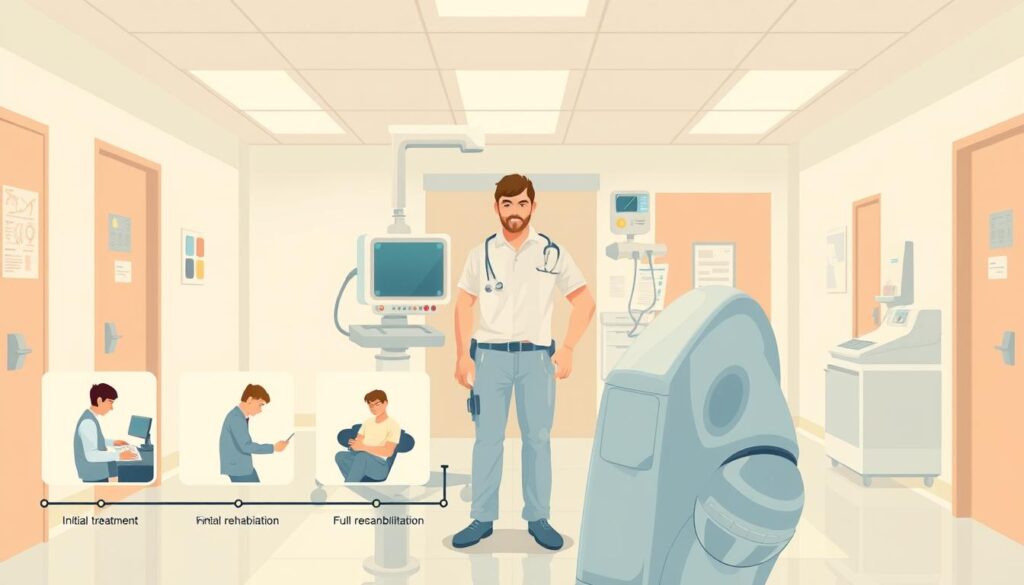
Every workplace injury begins a recovery process that progresses through well-defined rehabilitation phases with realistic timeframes. Fleet managers need clear expectations about technician injury recovery to plan staffing, coordinate modified duty assignments, and provide appropriate support. Understanding these stages helps you balance compassion with business operations while giving injured workers the time they need to heal properly.
Workers have a responsibility to get medical treatment immediately after a work-related injury and follow their healthcare professional’s recommendations. Employers need functional abilities information to help plan a safe and suitable return to work. Recovery progresses through distinct phases that require different support approaches at each stage.
Acute Recovery Phase: Immediate Post-Injury Period
The acute phase begins immediately after the injury occurs and focuses on stabilization and pain control. This critical period typically lasts from a few days to several weeks, depending on injury severity. Your primary role during this phase involves ensuring proper medical care and maintaining communication with the injured technician.
Emergency treatment starts with diagnostic procedures like X-rays, MRIs, or CT scans to assess injury extent. Medical professionals work to prevent further damage through immobilization, wound care, or surgical intervention when necessary. The stabilization period establishes the foundation for all subsequent healing.
Effective pain control allows the body to begin healing without excessive stress responses. Physicians prescribe medications ranging from over-the-counter anti-inflammatories to prescription pain relievers based on injury severity. Fleet managers should understand that pain medications may prevent workers from safely operating equipment or driving—document any medication restrictions that affect job duties.
| Injury Type | Typical Duration | Key Factors |
|---|---|---|
| Minor strains and sprains | 1-3 weeks | Rest compliance, previous injuries, job physical demands |
| Moderate soft tissue injuries | 4-8 weeks | Inflammation control, therapy adherence, tissue healing rate |
| Fractures | 6-12 weeks | Bone location, fracture complexity, age, overall health |
| Surgical repairs | 8-16 weeks | Procedure type, infection risk, rehabilitation intensity |
| Back injuries | 4-24 weeks | Spinal involvement, nerve damage, pre-existing conditions |
Active Rehabilitation Phase
The active rehabilitation phase marks the transition from passive healing to active restoration of function. During this period, injured technicians work with therapy professionals to regain strength, mobility, and work capacity. This phase typically begins 2-4 weeks post-injury for minor cases or after surgical clearance for major injuries.
Physical therapists focus on restoring movement, strength, and flexibility through targeted exercises. Occupational therapists address job-specific tasks and develop strategies to perform work duties safely. Sessions typically occur 2-3 times weekly for 4-12 weeks. Therapists design programs specific to diesel shop demands—lifting capacity, overhead reaching, prolonged standing, and tool operation.
Progressive exercise programs gradually increase difficulty as healing advances. Therapists start with gentle range-of-motion exercises and advance to resistance training and functional movements. Expect visible improvements in 2-4 week increments as tissues heal and strength returns. Setbacks occasionally occur when workers push too hard or return to activities prematurely. Patience during this phase prevents re-injury that could extend recovery significantly.
Transitional Recovery Phase
The transitional phase prepares injured technicians for actual work demands through gradually increasing activity levels. This final stage bridges the gap between clinical recovery and full job performance. Workers demonstrate improved function but may not yet handle complete job responsibilities.
Work conditioning programs simulate job tasks in controlled therapy settings. Therapists incorporate shop-specific movements like crawling under vehicles, using pneumatic tools, and lifting parts to build work tolerance. These programs typically run 2-4 weeks before full duty return.
Key markers indicate readiness for increased work responsibilities. Pain-free range of motion in injured areas shows adequate tissue healing. Demonstrated ability to perform job-specific tasks without compensation patterns confirms functional restoration. Medical clearance for increased activity levels provides official authorization for expanded duties. Psychological readiness—the worker’s confidence in their recovery—matters as much as physical capability.
Designing Effective Modified Duty Programs
A well-structured modified duty program transforms the recovery period from downtime into an opportunity for meaningful contribution. These programs keep injured technicians engaged with your operation while respecting their medical limitations. The key lies in focusing on what the worker can do rather than dwelling on their temporary restrictions.
Successful light duty work arrangements benefit everyone involved. Your operation maintains access to the employee’s knowledge and experience. The recovering technician stays connected to their workplace and continues earning income. Most importantly, suitable work accommodations prevent the isolation and anxiety that often accompany extended absences.
“Focus on what the worker can do rather than what they can’t. Suitable duties must be meaningful, within their abilities, and must not cause harm or slow their recovery.”
— Return-to-Work Best Practice Guidance
Identifying Suitable Light Duty Assignments
Every diesel shop and fleet maintenance facility has tasks that don’t require full physical capacity. The challenge is recognizing these opportunities and matching them to recovering employees. Start by surveying your operation for work that fits within typical medical restrictions.
Modified duty assignments in the administrative realm provide significant value while accommodating various restrictions. Technicians recovering from injuries can update service records, organize parts inventory systems, and create equipment maintenance logs. These tasks leverage their technical knowledge without physical demands. Additional opportunities include updating safety documentation, scheduling service appointments, and processing warranty claims.

Injured technicians possess valuable expertise that translates well to customer-facing roles. They can answer technical questions, explain repair recommendations with authority, and build customer confidence. Their credibility often exceeds that of sales-focused staff members. Parts counter duties offer another avenue—ordering components, managing parts returns, and maintaining inventory accuracy.
Aligning Tasks with Medical Restrictions
Strict adherence to medical restrictions prevents re-injury and demonstrates your commitment to employee safety. Review the treating physician’s work capacity evaluation carefully. Match available assignments to specific limitations rather than making assumptions about what seems reasonable.
Lower extremity injuries typically allow desk-based work without mobility requirements. Employees restricted from standing benefit from seated tasks at workstations or computer terminals. Upper body or back restrictions eliminate lifting requirements entirely, directing these workers toward documentation, communication, or light inspection duties.
Create a simple matrix that lists medical restrictions on one axis and available tasks on the other. This visual tool helps identify appropriate accommodations quickly and ensures compliance with healthcare provider directives.
Creating Temporary Job Descriptions
Written documentation eliminates confusion about modified duty assignments and protects all parties. Draft a temporary job description that specifies the exact tasks, work schedule, expected duration, reporting structure, and compensation arrangement.
Distribute copies to the recovering employee, your workers’ compensation carrier, and the treating physician. This transparency ensures everyone understands the arrangement. The healthcare provider can confirm the duties align with restrictions, while the insurance carrier recognizes your efforts to minimize claim costs through productive work.
Include a statement that these duties are temporary and subject to modification as recovery progresses. This flexibility allows you to adjust assignments without creating confusion or disputes.
Setting Clear Duration and Progression Expectations
Modified duty works best as a transitional phase rather than a permanent arrangement. Communicate from the outset that this is a temporary bridge back to full duty. Set specific review points—typically every two to four weeks—to assess the employee’s ability to take on additional responsibilities.
Establish milestones that mark progression toward normal duties. For example, an employee might start with four-hour shifts of administrative work, advance to six-hour shifts including light parts handling, then graduate to full shifts with graduated physical tasks. This structured pathway motivates continued recovery and rehabilitation compliance.
Free Professional Fleet Tools
Cost calculators, fault code lookup, maintenance planners, and more—built for owner-operators, fleet managers, and diesel techs. No signup required.
Developing a Comprehensive Return-to-Work Strategy
Fleet managers must develop comprehensive return-to-work programs that protect recovering employees while maintaining business continuity. A written plan creates clarity for everyone involved and documents the progression back to pre-injury employment levels. This strategic approach reduces re-injury risk while rebuilding employee confidence in their abilities.
Assessing Employee Readiness for Full Duty
A thorough work readiness assessment examines multiple dimensions beyond simple medical approval. Physical capability represents just one piece of the readiness puzzle. Critical readiness factors include medical clearance confirming no remaining physical restrictions, demonstrated ability to perform all essential job functions safely, sustained tolerance for complete work schedules without excessive fatigue, psychological confidence in performing duties without fear or hesitation, and completion of required retraining or certification updates.
Each component matters equally. An employee may be physically healed but lack the mental confidence needed for safe performance. Rushing this assessment increases the likelihood of setbacks or secondary injuries that extend the overall recovery period.
Implementing Graduated Return Schedules
Graduated return schedules provide a structured pathway from modified duty to full operational capacity. This progressive approach allows employees to rebuild stamina while monitoring their response to increasing demands. Flexibility within the framework accommodates individual recovery variations.
Begin with reduced hours to ease the transition back to regular work. Start with four to six hours daily during the first week. This initial period lets you observe how the employee handles basic tasks without overwhelming their recovering body. Increase to three-quarter time schedules during week two if no complications arise. Progress to full eight-hour shifts by weeks three or four. Monitor fatigue levels closely and adjust timelines based on individual responses.
Start returning employees with less physically demanding assignments within their job scope. Gradually reintroduce more challenging aspects as tolerance improves. Allow employees to pace themselves during initial weeks back. Schedule additional breaks and provide backup support for particularly demanding tasks.
Obtaining Medical Clearance and Release
Final physician authorization confirms readiness for unrestricted duty before full task resumption. Request written documentation specifying the employee can return to work without limitations. This clearance protects both the worker and your operation from liability concerns.
Understand the distinction between conditional and full clearance. “Return to work with restrictions” differs significantly from “return to full duty without restrictions.” Document all medical releases in personnel files for future reference and compliance purposes.
Planning the First Week Back
The initial week sets the tone for successful long-term reintegration. Welcome the returning employee formally and conduct a comprehensive safety refresher. This demonstrates your commitment to their wellbeing while ensuring they’re current on any procedural changes.
First-week best practices include assigning a mentor or buddy for guidance during the adjustment period, scheduling more frequent breaks to prevent overexertion, conducting daily check-ins to address concerns promptly, reviewing any procedural changes implemented during their absence, and monitoring workload distribution to avoid overwhelming the returning technician.
A written return-to-work plan helps everyone understand the goals and expectations. Provide the injured worker with a copy of the plan and maintain documentation for your records. Collaborate with your returning technician throughout this process—their feedback provides valuable insight into what works and what needs adjustment.
Post-Injury Safety Analysis and Improvements
Transforming workplace accidents into actionable safety improvements requires a systematic approach to incident investigation and analysis. Every injury in your diesel shop or fleet maintenance operation provides a critical opportunity to identify hazards and implement changes that protect your entire team. Effective safety management controls workers’ compensation costs while building a culture where incidents are prevented before they occur.
Performing Thorough Incident Investigations
Begin your incident investigation within 24 hours while details remain fresh in everyone’s memory. Interview the injured worker first, followed by witnesses separately to avoid influence on their accounts. This approach ensures you gather accurate information without bias.
Examine the physical environment where the injury occurred, paying close attention to equipment condition, lighting, floor surfaces, and workspace layout. Review security camera footage if available to understand the sequence of events. Consult manufacturer specifications for any equipment involved. Document your findings with photographs, measurements, and detailed notes. Focus on understanding what happened rather than assigning blame to individuals—this encourages honest reporting and meaningful improvements.
Identifying Root Causes and Contributing Factors
Distinguish between immediate causes and underlying root causes during your analysis. A technician slipping might be the immediate cause, but inadequate drainage creating standing fluid represents the true root cause that needs addressing.
Use the Five Whys technique to drill down to genuine root causes. Ask “why” five times consecutively to move beyond surface-level explanations. Contributing factors often include inadequate training, time pressure, equipment maintenance failures, unclear procedures, environmental conditions, or organizational culture issues.
| Investigation Element | Questions to Ask | Documentation Required |
|---|---|---|
| Equipment Factors | Was equipment properly maintained? Were safety guards in place? | Maintenance records, manufacturer specs, photos |
| Human Factors | Was training adequate? Was the worker rushed or fatigued? | Training records, work schedules, witness statements |
| Environmental Factors | Were lighting, temperature, or ventilation appropriate? | Environmental measurements, facility inspection reports |
| Procedural Factors | Were written procedures available and followed? | Standard operating procedures, compliance checklists |
Implementing Corrective and Preventive Actions
Develop specific action items with assigned responsibility and clear completion dates based on your investigation findings. Address immediate hazards first to prevent similar injuries while you work on long-term solutions.
Prioritize engineering controls such as machine guards, improved lighting, or better ventilation systems. These physical changes provide the most reliable protection. Implement administrative controls like revised procedures and additional training as secondary measures. Personal protective equipment serves as your last line of defense.
Updating Safety Procedures and Training
Revise your written safety procedures based on investigation findings to reflect lessons learned. Update your employee handbook and post revised procedures in relevant work areas. Conduct mandatory safety training that addresses the specific hazards identified. Hold toolbox talks to discuss the injury, implemented changes, and how employees can protect themselves.
Documentation of your investigation and implemented changes provides valuable evidence of your proactive safety culture should regulatory agencies or insurance carriers request verification. The Commercial Vehicle Safety Alliance provides additional resources on fleet safety best practices.
Maintaining Proper Documentation Throughout the Process
Maintaining comprehensive records throughout the injury recovery process is a critical business and legal requirement for fleet operations. Proper injury documentation protects your operation from liability claims, supports workers’ compensation proceedings, and demonstrates professional management practices. The documentation process begins the moment an injury occurs and continues until the employee returns to full duty or the case closes.
Complete records create an objective timeline that benefits everyone involved. They provide clarity during disputes, support insurance claims, and help identify safety improvements for your operation.
Critical Records Every Injury Case Requires
Your injury case file must contain specific documents that establish a complete factual record. The initial incident report forms the foundation, capturing details while memories remain fresh. This report should include the date, time, location, witnesses, and a detailed description of what happened. Photograph the accident scene and any equipment involved immediately.
Your complete file should include witness statements collected within 24 hours, OSHA Forms 300, 301, and 300A, all workers’ compensation claim forms and carrier correspondence, medical restrictions and work capacity evaluations, modified duty agreements with employee signatures, communication logs documenting every conversation with the injured worker, and return-to-work plans with final medical clearance documentation.
Protecting Employee Privacy
HIPAA compliance requires careful handling of medical information throughout the recovery process. Medical records must be stored separately from general personnel files in locked cabinets or password-protected digital folders. Only individuals with legitimate business needs should access these sensitive documents.
Mark all medical documents as confidential. Before sharing any medical information with insurance carriers, legal counsel, or third parties, obtain written authorization from the employee. Communicate only job-relevant restrictions to supervisors—a floor manager needs to know an employee cannot lift more than 10 pounds, but doesn’t need details about the specific medical diagnosis or treatment plan.
Record Retention Requirements
Document retention requirements vary by record type and regulatory authority. Workers’ compensation records typically must be maintained for three to five years after claim closure, though specific timeframes depend on state regulations. OSHA mandates retaining injury and illness records for five years following the year they were created.
Medical records require longer retention periods. Keep medical documentation for the duration of employment plus 30 years for cases involving potential toxic exposure or occupational illness. Create electronic backups of all critical documents. Digital copies protect against loss from fire, flood, or other disasters while making retrieval faster during audits or legal proceedings.
Supporting Psychological and Emotional Recovery
When technicians experience workplace injuries, the emotional aftermath frequently outlasts physical symptoms and requires deliberate support strategies. Fleet managers who address only medical treatment miss critical recovery dimensions that affect return-to-work success. Comprehensive employee recovery support recognizes that healing encompasses mental health alongside physical restoration.
Keeping workers connected to the workplace while they recover prevents long-lasting disability. Including injured employees in staff meetings, safety briefings, training sessions, and social activities supports psychological wellbeing and faster recovery. This connection maintains team bonds and reduces feelings of isolation during difficult periods.
Recognizing Mental Health Impacts
Serious injuries trigger psychological challenges that fleet managers must identify early. Anxiety about re-injury creates hesitation when returning to previously routine tasks. Depression often follows loss of independence and changed physical capabilities that technicians once took for granted.
Fear about job security and financial stability intensifies during extended recovery periods. Many technicians experience frustration when healing progresses slower than expected. Identity challenges emerge for professionals whose self-worth connects directly to physical competence and technical skills.
Warning signs require immediate attention. Withdrawal from regular communication indicates potential psychological distress. Expressions of hopelessness, reluctance to discuss return-to-work plans, or excessive anxiety about capabilities signal the need for intervention.
Providing Access to Support Resources
Many workers’ compensation systems include psychological support services that fleet managers should actively promote. Employee Assistance Programs offer confidential counseling at no cost to workers facing mental health challenges. These resources provide professional support during recovery transitions.
Peer support from employees who successfully returned from injuries creates powerful encouragement. Professional counseling referrals become necessary when workers show signs of clinical depression or anxiety disorders. Normalize mental health support and proactively offer resources rather than waiting for employees to request help.
Facilitating Smooth Workplace Reintegration
Effective workplace reintegration strategies begin before the employee’s first day back. Prepare the team for modified duties or capability changes the returning worker may experience. Create a welcoming environment that celebrates their return without excessive attention that might cause discomfort.
Monitor for signs of difficulty adjusting during initial weeks back at work. Some technicians struggle with confidence even after receiving medical clearance. Provide additional support through mentoring, reduced pressure situations, and frequent check-ins. Successful reintegration recognizes that complete recovery encompasses mental health and social dimensions alongside physical healing.
Building Long-Term Safety Culture and Prevention
The most effective injury prevention strategies focus on identifying and eliminating hazards before they cause harm. Fleet managers who invest in proactive safety measures reduce workers’ compensation costs while protecting their most valuable asset—their employees. Creating a sustainable workplace safety culture requires ongoing commitment, systematic approaches, and genuine employee engagement at every level.
Proactive Hazard Identification Programs
Regular workplace inspections using standardized checklists help catch problems before injuries occur. Establish monthly walkthroughs that examine equipment conditions, floor surfaces, lighting, ventilation, and chemical storage. Document findings and address issues immediately.
Create systems where employees can report hazards without fear of reprisal. Anonymous reporting options encourage technicians to speak up about unsafe conditions. Conduct job hazard analyses for high-risk tasks like brake work, aftertreatment system service, and heavy component removal. Review near-miss incidents as learning opportunities before they become injuries. Maintain equipment inspection schedules that identify mechanical issues before failure leads to harm.
Regular Safety Training and Refresher Courses
New employee orientation must cover shop-specific hazards including chemical exposures, lift operations, and proper PPE use. Task-specific training should occur before assigning unfamiliar duties to any technician. The Technology & Maintenance Council provides recommended practices for fleet maintenance safety procedures.
Quarterly toolbox talks address seasonal hazards or recent incidents relevant to your operation. Annual refresher training reinforces key safety training programs and updates employees on new procedures. Specialized training for equipment operators ensures competency with hydraulic lifts, tire equipment, and diagnostic systems. Document all training with sign-in sheets and competency assessments.
Employee Participation in Safety Initiatives
Safety committees with technician representation bring frontline perspectives to decision-making. Workers who perform tasks daily often identify risks that management overlooks. Solicit employee input during safety policy development and equipment purchases.
Recognize employees who identify hazards or suggest improvements through formal acknowledgment programs. Involve technicians in incident investigations to tap their expertise and reinforce your safety culture. Foster an environment where raising concerns earns respect rather than criticism.
Ergonomic Equipment and Tools
Strategic investments in ergonomic solutions prevent repetitive stress injuries and chronic conditions. Lift assists reduce back strain from heavy components. Anti-fatigue mats decrease leg and joint stress at standing workstations. Adjustable work platforms eliminate awkward positioning during underbody work.
LED task lighting reduces eye strain and headaches while improving work quality. Low-vibration power tools prevent hand-arm vibration syndrome from prolonged impact wrench use. These expenditures pay dividends through reduced injury rates and improved productivity. Quality tools decrease fatigue while helping technicians complete repairs faster and more accurately.
Frequently Asked Questions
How long should I hold a diesel technician’s position while they recover from a workplace injury?
Most states require employers to hold positions for the duration of workers’ compensation treatment, though specific timeframes vary by jurisdiction. Best practice is maintaining the position throughout the expected recovery period—typically 4-12 weeks for moderate injuries. Document all communications and work with your compensation carrier to establish appropriate timelines. Terminating an employee solely because of their injury claim exposes your operation to significant legal liability and potential retaliation claims.
What modified duty assignments work best for injured diesel technicians?
Effective modified duty assignments leverage the technician’s expertise while respecting medical restrictions. Administrative tasks like updating service records, organizing parts inventory, and documenting maintenance procedures provide value without physical demands. Technical support roles including customer service, warranty processing, and parts research keep technicians engaged with their profession. Service writing and diagnostic scanning may be appropriate depending on the injury type and specific restrictions from the treating physician.
Are workers’ compensation claims different for CDL holders?
The basic claims process is similar, but CDL holders face additional considerations around medical certification. Injuries affecting a driver’s ability to meet DOT physical requirements can impact their commercial driving privileges beyond the immediate recovery period. Fleet managers should coordinate workers’ compensation treatment with DOT medical certification requirements. Document all medical clearances and ensure treating physicians understand commercial driver medical standards before authorizing return to driving duties.
What are my legal obligations when a technician gets hurt on the job?
Employers must provide immediate medical care, file required reports within state-mandated timeframes (typically 24-72 hours), maintain regular communication with injured workers, and offer suitable modified duty within their functional abilities. OSHA requires recordkeeping for qualifying injuries and annual posting of injury summaries. Retaliating against workers who file claims violates federal and state laws. Document all decisions and maintain consistency across similar situations to protect against liability.
How can I reduce workplace injuries in my diesel shop or fleet operation?
Effective injury prevention requires systematic hazard identification through regular inspections, comprehensive safety training programs with quarterly refreshers, employee participation in safety initiatives, and investment in ergonomic equipment. Address root causes rather than just immediate incidents. Establish reporting systems where workers can identify hazards without fear of reprisal. Track near-miss incidents as learning opportunities before they become injuries. Build safety into your culture rather than treating it as a compliance checkbox.
Building Your Injury Management Foundation
Successful technician injury recovery depends on cooperation between all parties. Workers and employers share responsibilities throughout the healing process. This collaboration creates outcomes that benefit injured employees and fleet operations simultaneously.
Managing workplace injuries in the heavy-duty trucking industry requires viewing each incident as both a challenge and an opportunity. The challenge involves supporting an injured technician through medical treatment and rehabilitation. The opportunity lies in identifying hazards that could harm other team members and strengthening your operation’s safety culture.
Return-to-work programs represent sound business practice beyond regulatory compliance. Fleet managers who implement structured injury response protocols experience measurable benefits: workers’ compensation costs decrease, employee turnover drops, productivity remains stable during recovery periods, and your reputation as a responsible employer strengthens in a competitive labor market.
Implement these guidelines proactively rather than waiting for serious injuries to expose gaps in your systems. Review your current protocols against the frameworks outlined throughout this guide. Update documentation procedures. Train supervisors on communication best practices. Establish relationships with medical providers before emergencies happen. Your investment in comprehensive injury management protects both your team and your bottom line.
Help Your Network Improve Workplace Safety
Know a fleet manager or shop owner who could benefit from these injury management strategies? Share this guide to help them protect their technicians and operations.


