
By Michael Nielsen, Editor & Publisher | 15+ Years in Diesel Repair
Last Updated: January 2026
📖 Estimated reading time: 28 minutes
Between 1992 and 2016, construction and heavy equipment sectors recorded 285 heat-related worker deaths, representing over 36% of all occupational heat fatalities nationwide. According to Bureau of Labor Statistics data, workers in these industries face death rates of 1.13 per million—more than five times higher than the 0.22 per million rate for all workers combined. For heavy equipment technicians, effective heat stress prevention isn’t just a regulatory checkbox—it’s the difference between going home safely and becoming another statistic.
Technicians working around massive machinery encounter unique thermal challenges that compound their risk. Environmental factors like air temperature, humidity, and radiant heat sources combine with physically demanding repair tasks. Add required protective clothing, and occupational heat exposure intensifies significantly. Approximately 75% of these fatalities occur during June, July, and August, when thermal exposure reaches dangerous levels.
Whether servicing equipment on shop floors or responding to outdoor breakdowns, diesel technicians need comprehensive prevention strategies that protect their health and maintain productivity. This guide covers everything from recognizing early warning signs to implementing shop-wide prevention programs—practical knowledge that reduces workers’ compensation claims while preventing life-threatening incidents during peak summer months.
Key Takeaways
- Heavy equipment workers experience heat-related death rates five times higher than the national average for all occupations
- Technicians should drink 8 ounces of water every 15-20 minutes regardless of thirst—thirst signals appear after dehydration has already begun
- Heat stroke requires immediate 911 contact and aggressive cooling—brain damage can occur within minutes if body temperature isn’t reduced
- New workers need six to seven days of gradual acclimatization, starting at 20% workload and increasing daily
- Work-rest schedules must be modified when WBGT exceeds 82°F for acclimatized workers or 77°F for unacclimatized workers
- Engineering controls like ventilation systems and shade structures provide the most reliable, continuous protection
Understanding Heat Stress Dangers for Heavy Equipment Technicians
Heat stress represents one of the most underestimated yet pervasive occupational hazards facing heavy equipment technicians across the United States. The American Conference of Governmental Industrial Hygienists (ACGIH) defines heat stress as the net heat load to which a worker may be exposed from the combined contributions of metabolic heat, air temperature, air movement, humidity, radiant energy, and clothing. Heat strain is the overall physiological response resulting from heat stress.
The human body must maintain core temperature within 1°C (1.8°F) of normal—approximately 37°C or 98.6°F—to continue functioning properly. Construction work generates excessive metabolic heat within the body, creating significant challenges for workplace heat safety. Heavy equipment technicians often work in non-climate-controlled spaces, in direct sunlight, or near heat sources like welding torches, compounding these dangers.
Multiple Heat Sources in Repair Environments
Heavy equipment technicians encounter thermal hazards from several simultaneous sources that create uniquely dangerous working conditions. Radiant heat from engines and exhaust systems can raise ambient temperatures by 20-30 degrees Fahrenheit in immediate work zones. Confined spaces inside equipment cabins often have poor ventilation, trapping hot air and preventing natural cooling.
Hot metal surfaces on machinery frequently reach extreme temperatures exceeding 150°F during operation and repair. Outdoor ambient heat during field service operations adds another layer of risk, particularly during summer months. The physical exertion required for heavy repair work generates substantial metabolic heat that compounds external heat sources.
Washington state workers’ compensation data from 2006-2017 revealed that the construction industry had the largest number of accepted heat-related illness prevention claims. This data underscores the critical need for targeted safety measures in this sector.
Physiological Impact During Strenuous Work
The body attempts to maintain safe core temperature through sweating and increased blood flow to the skin surface. Physical labor dramatically increases metabolic heat production, forcing the cardiovascular system to work harder. When external heat combines with internal heat generation, the body’s cooling mechanisms can become overwhelmed.
Dehydration reduces blood volume, making temperature regulation progressively more difficult as work continues. The heart must pump blood to both working muscles and the skin surface simultaneously, creating significant cardiovascular strain. This dual demand explains why occupational heat exposure affects workers so rapidly during intense physical activity.

The relationship between environmental factors, work intensity, and physiological response creates a complex risk matrix that technicians face daily. Understanding these interconnected factors is essential for effective heat-related illness prevention strategies.
| Heat Stress Factor | Source in Technician Work | Physiological Effect | Risk Level |
|---|---|---|---|
| Radiant Heat | Engines, exhaust systems, hot metal surfaces | Increased skin temperature, accelerated sweating | High |
| Metabolic Heat | Heavy lifting, equipment manipulation, tool operation | Elevated core temperature, increased heart rate | Very High |
| Ambient Temperature | Outdoor field service, non-climate-controlled shops | Reduced cooling efficiency, cardiovascular strain | High |
| Humidity | Geographic location, seasonal variation, enclosed spaces | Impaired evaporative cooling, prolonged heat retention | Moderate to High |
Financial and Human Consequences
The economic burden of heat-related incidents extends far beyond immediate medical costs. North Carolina data from 2008-2010 showed that among patients aged 19-45 years, occupational heat exposure resulted in more emergency room visits than any other work-related cause. These preventable incidents create substantial financial strain on businesses and healthcare systems.
$100 Billion
Estimated annual productivity loss from heat-related absences across U.S. construction companies
Workers’ compensation claims for heat illness average $5,000 to $15,000 per incident when factoring medical treatment, lost work time, and administrative costs. Emergency room visits for severe heat stroke can exceed $20,000 in medical expenses. OSHA citations under the general duty clause can result in penalties ranging from $7,000 to $70,000 per violation, depending on severity.
Beyond financial costs, heat-related incidents damage workplace morale and increase insurance premiums. The human cost includes permanent organ damage, cognitive impairment, and in extreme cases, fatalities that devastate families and communities. Implementing comprehensive workplace heat safety programs delivers measurable return on investment by reducing these preventable costs.
Heat Stress Prevention: Identifying Heat-Related Illness Symptoms
Early detection of heat stress symptoms is the most powerful tool supervisors and workers have to prevent tragedy in hot work environments. Heavy equipment technicians face unique challenges because symptoms can develop rapidly while working on machinery in confined spaces or under direct sunlight. Heat illness recognition requires constant vigilance from both individual workers and their supervisors throughout every shift.
Understanding the progression of heat-related conditions helps create an effective response system. What begins as minor discomfort can escalate to a medical emergency within minutes if warning signs go unnoticed. Every technician should know how to identify symptoms in themselves and their coworkers.
Early Warning Signs of Heat Exhaustion
Heat exhaustion represents the body’s distress signal before conditions become life-threatening. Recognizing heat exhaustion symptoms at this stage allows for immediate intervention that prevents progression to more dangerous conditions. Technicians should never ignore these warning signs or attempt to “push through” the discomfort.
The most common early indicators include profuse sweating that soaks through clothing and creates visible wet patches. Workers may notice their skin appears pale or unusually flushed. Many technicians report feeling weak or experiencing muscle cramps in their legs, arms, or abdomen during physically demanding tasks.
Mental and physical symptoms often appear together. Headaches, nausea, and dizziness signal that the body is struggling to regulate its core temperature. Workers may feel irritable or have difficulty concentrating on routine tasks they normally complete with ease. A rapid heartbeat and shallow breathing accompany these symptoms as the cardiovascular system works harder to cool the body.
Body temperature rises slightly above normal during heat exhaustion, typically between 100°F and 104°F. The key characteristic that distinguishes heat exhaustion from heat stroke is that workers remain conscious and can respond to questions, though they may feel confused or disoriented.
Critical Heat Stroke Indicators Requiring Immediate Action
⚠️ Safety Warning
Heat stroke is a medical emergency that demands immediate 911 contact and aggressive cooling measures. Brain damage and organ failure can occur within minutes if body temperature is not reduced immediately. Every second counts from the moment symptoms are recognized.
Heat stroke involves complete failure of the body’s temperature regulation system. The hallmark sign is a core body temperature above 104°F, though field measurement may not be practical in emergency situations. More observable indicators include profound changes in mental status. Workers may exhibit confusion, slurred speech, or complete loss of consciousness. Some victims become combative or display uncharacteristic aggressive behavior.
Physical symptoms progress rapidly and dramatically. The skin may be hot and dry in classic heat stroke, but exertional heat stroke often presents with continued sweating, which can mislead observers into underestimating the severity. The pulse becomes rapid and strong, pounding noticeably. Seizures can occur as brain temperature rises, and workers may lose coordination or the ability to walk.
Supervisors must establish clear protocols that authorize any worker to call 911 without seeking permission when heat stroke indicators appear. Time is critical—every supervisor and technician should understand this authority.
Heat Cramps, Rashes, and Other Common Conditions
Less severe heat-related conditions deserve serious attention because they often precede more dangerous illnesses. Heat illness recognition includes monitoring these “minor” symptoms that indicate workers are approaching their physiological limits. Dismissing early warning conditions creates unnecessary risk in the workplace.
Heat cramps affect workers who sweat heavily during strenuous activity, causing painful muscle spasms. These cramps typically occur in the abdomen, arms, or legs and result from electrolyte imbalance as salt leaves the body through perspiration. While not immediately dangerous, heat cramps signal dehydration that can progress to heat exhaustion if not corrected.
Heat rash appears as red clusters of small blisters or pimples on the skin, usually on the neck, chest, groin, or elbow creases. This condition develops when sweat ducts become blocked and perspiration cannot reach the skin surface to evaporate. Though uncomfortable rather than dangerous, heat rash reduces the body’s cooling efficiency and increases risk of more serious conditions.
Heat syncope causes sudden dizziness or fainting, typically when workers stand up quickly after sitting or crouching for extended periods in hot environments. Blood pools in the legs, reducing blood flow to the brain momentarily. Workers who experience heat syncope should be monitored closely as it indicates cardiovascular stress from heat exposure.
| Condition | Primary Symptoms | Body Temperature | Urgency Level |
|---|---|---|---|
| Heat Cramps | Painful muscle spasms, heavy sweating | Normal to slightly elevated | Monitor and treat with rest and electrolytes |
| Heat Exhaustion | Heavy sweating, weakness, nausea, headache | 100°F to 104°F | Immediate cooling and hydration required |
| Heat Stroke | Confusion, loss of consciousness, seizures | Above 104°F | Call 911 immediately—life threatening |
| Heat Syncope | Dizziness, fainting, lightheadedness | Normal to slightly elevated | Rest in cool area and monitor closely |
| Heat Rash | Red skin irritation, small blisters | Normal | Keep area dry and cool to prevent progression |
Supervisors should maintain detailed logs of all heat-related symptoms reported during shifts, even minor complaints. Patterns emerge from this documentation that reveal which environmental conditions, tasks, or times of day create the greatest risk. Creating a workplace culture where reporting symptoms is encouraged rather than stigmatized is essential for effective heat stroke prevention.
Occupational Risk Factors for Heavy Equipment Technicians
Multiple converging risk factors make heavy equipment technicians particularly susceptible to heat stress conditions in both shop and field environments. Understanding these occupational risk factors requires systematic examination of how environmental conditions, job demands, and individual health characteristics interact to create dangerous heat exposure scenarios. Effective prevention strategies must address all three categories simultaneously to protect workers adequately.
The workplace hazards that technicians face differ significantly from standard outdoor construction environments. Shop floors and mobile service locations present unique thermal challenges that compound ambient temperature effects through radiant heat, restricted air movement, and metabolic demands of physical labor.
Environmental Conditions That Amplify Heat Danger
Shop floor environments create particularly hazardous conditions through multiple heat-generating sources operating simultaneously. Metal building structures absorb solar radiation throughout the day and continue radiating heat inward long after sunset. This thermal mass effect can elevate indoor temperatures 10-15°F above outdoor readings during afternoon hours.
Wet Bulb Globe Temperature (WBGT) measurements account for the combined impact of air temperature, humidity, radiant heat, and air movement. Unlike simple thermometer readings, WBGT provides accurate assessment of actual heat stress conditions. A WBGT reading of 85°F indicates moderate heat stress risk, while readings above 90°F require immediate implementation of protective measures.
Poorly ventilated repair bays trap heat from running engines, hydraulic systems, and welding operations. Air temperatures in these confined spaces regularly exceed 95°F during summer months. Asphalt surfaces surrounding outdoor service areas reflect additional radiant heat upward, increasing exposure by 15-20°F compared to shaded locations.
Field service locations present different but equally serious heat exposure risks. Mobile technicians often work in direct sunlight without available shade structures. Coastal and southern regions combine high temperatures with humidity levels that prevent effective sweat evaporation. This humidity factor dramatically reduces the body’s primary cooling mechanism.
High-Risk Repair Activities and Physical Demands
Specific job tasks inherent to heavy equipment repair significantly increase metabolic heat production and external heat exposure. Removing major components like transmissions, engines, and hydraulic pumps requires sustained physical exertion that generates substantial internal body heat. A technician removing a transmission may produce 300-400 watts of metabolic heat hourly.
Working in awkward positions restricts blood flow and reduces the body’s ability to transport heat from core muscles to skin surfaces for cooling. Overhead work on raised equipment compounds this effect while requiring sustained muscle contraction. These postures can increase perceived temperature by 10-15°F compared to working in neutral positions.
| Repair Activity | Metabolic Heat Rate | Additional Heat Sources | Risk Level |
|---|---|---|---|
| Engine diagnostics with equipment running | 250-300 watts/hour | Radiant heat from engine block | High |
| Welding and cutting operations | 300-350 watts/hour | Direct torch heat exposure | Very High |
| Heavy component removal | 350-450 watts/hour | Confined space heat accumulation | Very High |
| Hydraulic system repair | 200-250 watts/hour | Hot fluid exposure | Moderate |
Operating cutting and welding torches adds direct radiant heat exposure to already demanding physical tasks. Emergency breakdown repairs frequently occur during peak afternoon temperatures without opportunity to reschedule work for cooler periods. These urgent service calls often prevent implementation of standard heat safety protocols.
Research from NIOSH indicates that a high proportion of heat-related fatalities occurred during the first days on the job, emphasizing the critical importance of proper acclimatization. New technicians face elevated risk because their bodies have not yet adapted to sustained heat exposure and physical demands.
Personal Health Factors and Medical Vulnerabilities
Individual worker characteristics significantly influence heat tolerance and recovery capacity. Cardiovascular conditions reduce the heart’s ability to pump blood efficiently to skin surfaces for cooling. Diabetes affects thermoregulation through impaired sweat gland function and reduced circulation to extremities.
Obesity increases both heat production through higher metabolic rates and heat retention through additional insulation. Workers over age 65 experience reduced cooling efficiency as aging diminishes sweat gland output and cardiovascular response. Previous heat illness creates lasting vulnerability, with affected individuals showing heightened susceptibility for months or years afterward.
Certain medications interfere substantially with the body’s temperature regulation mechanisms. Workers taking the following substances require enhanced monitoring and protection:
- Diuretics reduce body fluid volume and electrolyte balance needed for effective sweating
- Beta blockers and hypotensives limit heart rate increase and blood vessel dilation required for heat dissipation
- Antihistamines suppress sweating response and reduce the primary cooling mechanism
- Antidepressants and antipsychotics interfere with hypothalamus temperature regulation centers
- Stimulants increase metabolic heat production while reducing awareness of heat stress symptoms
Workers living in homes without air conditioning face workplace hazards that extend beyond work hours. Lack of adequate cooling during evening recovery periods prevents the body from fully restoring normal temperature and electrolyte balance. High humidity in living spaces compounds this recovery deficit, leaving workers in chronic heat stress states.
Technician Heat Stress Prevention Through Hydration Strategies
Systematic hydration protocols form the essential foundation of occupational heat illness prevention for heavy equipment repair professionals. Unlike many workplace hazards that require complex engineering controls, proper fluid replacement offers an immediately accessible and highly effective intervention. The physiological demands of heavy equipment repair create substantial fluid loss that must be systematically replaced to maintain safe body temperature regulation.
Supervisors and technicians must understand that thirst is not a reliable indicator of hydration needs. Significant dehydration occurs before the thirst sensation develops. This makes scheduled, mandatory fluid intake essential rather than leaving consumption to individual discretion.
Fluid Volume Requirements for Different Work Intensities
Water intake guidelines for heavy equipment technicians vary based on work intensity and environmental conditions. Workers performing moderate-intensity tasks should consume 8 ounces of water every 15-20 minutes, which equals approximately one quart per hour. These moderate activities include routine maintenance, diagnostic procedures, parts replacement, and inspection work.
Technicians engaged in heavy physical labor require more aggressive fluid replacement. Engine removal, major component replacement, and breakdown of seized parts can demand up to one liter per hour to match sweat loss rates. During prolonged sweating lasting several hours, standard water alone becomes insufficient.
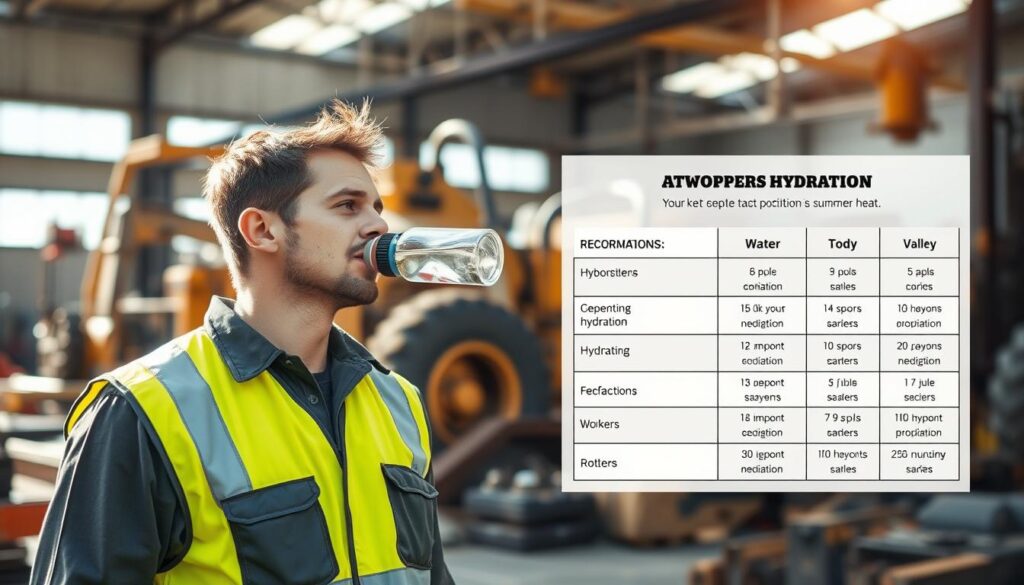
The critical principle for all work intensities remains consistent: workers must drink fluids every 15-20 minutes regardless of whether they feel thirsty. Supervisors should actively monitor and encourage fluid intake rather than assuming workers will self-regulate appropriately.
Electrolyte Balance and Beverage Selection
Proper beverage selection depends on work duration and individual acclimatization status. For work periods under two hours, plain water provides adequate fluid replacement for most technicians. The body’s natural electrolyte reserves remain sufficient for shorter exposure periods.
When sweating continues beyond two hours, electrolyte balance becomes essential. Sports drinks containing sodium and potassium should replace plain water during these extended periods. These beverages restore minerals lost through continuous perspiration and prevent dangerous electrolyte depletion.
Many commercial sports drinks contain excessive sugar concentrations. Diluting these beverages to half-strength with water provides effective electrolyte replacement without causing gastric discomfort. This approach maintains mineral replacement while improving absorption rates.
Quick Reference
- Work <2 hours: Plain water is sufficient for most technicians
- Work >2 hours: Add sports drinks with sodium and potassium
- Optimal water temp: 50-68°F for palatability and absorption
- Avoid always: Caffeine, alcohol, and salt tablets during work
Salt tablets are not recommended for any workers. These tablets cause gastric distress and do not absorb as effectively as liquid electrolyte solutions. Too much concentrated salt can actually increase body temperatures, intensify thirst, and cause nausea. Drinks containing caffeine or alcohol must be avoided during work periods—these substances promote diuresis, which increases urination and creates net fluid loss despite liquid consumption.
Implementing Accessible Hydration Infrastructure
Even the best hydration protocols fail without convenient access to fluids. Establishing convenient hydration access points removes practical barriers that prevent frequent drinking. Water coolers or hydration stations should be positioned within 50 feet of all work areas, both in shop facilities and field locations.
Water temperature significantly affects consumption rates. Cool water maintained between 50-68°F optimizes both palatability and absorption. Excessively cold water can cause gastric cramping and reduce voluntary intake, while warm water discourages adequate consumption.
Individual drinking cups or personal water bottles must be provided to prevent disease transmission. Communal drinking cups create unnecessary health risks and should never be used in professional settings. Each technician should receive their own marked container at the beginning of each shift.
Designated personnel should check and refill water supplies multiple times throughout each shift. Running out of fluids during peak heat hours represents a serious program failure. Documentation of water availability and consumption encouragement should be maintained as part of heat stress prevention records.
Implementing Effective Work-Rest Schedules
Work-rest schedules based on environmental monitoring provide mandatory protection against heat stress for technicians performing intensive physical labor. These scientifically validated protocols prevent heat-related illness by ensuring workers receive adequate recovery time during high-temperature operations. The implementation of structured work-rest cycles represents a fundamental control measure that organizations must establish to protect heavy equipment technicians from thermal hazards.
Proper scheduling balances operational productivity with worker safety. NIOSH guidelines provide specific frameworks for determining appropriate work-rest ratios based on measurable environmental conditions. These protocols adapt to changing heat levels throughout the workday, ensuring continuous protection regardless of temperature fluctuations.
Scientific Standards for Work-Rest Ratios
The American Conference of Governmental Industrial Hygienists (ACGIH) provides screening criteria that establish specific WBGT monitoring thresholds for different work intensities and rest allocations. These values represent the maximum safe exposure levels for workers performing moderate physical labor in hot environments. Organizations must implement more conservative limits when technicians perform heavy work or wear encapsulating protective equipment.
WBGT monitoring enables precise determination of when environmental conditions require modified work schedules. For acclimatized workers performing moderate work with 75-100% work allocation, the WBGT limit is 28.0°C (82.4°F). This means technicians can work continuously only when conditions remain below this threshold.

As rest periods increase within each work cycle, higher WBGT values become acceptable. When workers follow a schedule with 50-75% work allocation, the safe WBGT limit increases to 29.0°C (84.2°F). This reflects the body’s enhanced ability to dissipate heat when provided with regular recovery intervals.
Unacclimatized workers require substantially more conservative protection. These individuals have not undergone the physiological adaptations that improve heat tolerance. For unacclimatized technicians, action limits are approximately 3.0°C lower across all work-rest ratios.
| Work-Rest Allocation | Acclimatized WBGT | Unacclimatized WBGT | Practical Schedule |
|---|---|---|---|
| 75-100% Work | 28.0°C (82.4°F) | 25.0°C (77.0°F) | Continuous work with minimal breaks |
| 50-75% Work | 29.0°C (84.2°F) | 26.0°C (78.8°F) | 45 min work, 15 min rest per hour |
| 25-50% Work | 30.0°C (86.0°F) | 27.0°C (80.6°F) | 30 min work, 30 min rest per hour |
| 0-25% Work | 31.5°C (88.7°F) | 29.0°C (84.2°F) | 15 min work, 45 min rest per hour |
NIOSH guidelines emphasize that breaks should be distributed appropriately throughout each hour. Taking shorter breaks every hour provides superior heat stress protection compared to working for extended periods followed by longer breaks. This approach prevents cumulative heat buildup and maintains core body temperature within safe ranges.
Practical Implementation Using Heat Index Measurements
Many service operations and repair facilities lack sophisticated WBGT monitoring equipment. These organizations can implement effective work-rest schedules using heat index readings as a practical alternative. The heat index provides a conservative estimate of thermal conditions when proper measurement techniques are followed.
The OSHA-NIOSH Heat Safety Tool smartphone application delivers real-time heat index calculations based on current temperature and humidity. This free resource enables supervisors to obtain accurate readings at actual work locations. Technicians should measure conditions on shop floors and equipment service areas rather than relying on regional weather reports.
Indoor work environments frequently exceed outdoor ambient temperatures by 10-20°F. Heat-generating equipment, poor ventilation, and radiant heat from surfaces create substantially hotter conditions than weather stations report. Direct measurement at the work location provides the only reliable basis for heat stress management decisions.
“Heat stress management is not optional—it’s a fundamental requirement for protecting workers in hot environments. Organizations must implement work-rest schedules based on measured environmental conditions, not on subjective assessments or production pressures.”
— NIOSH Criteria for Heat Stress Standards
Strategic Task Management During Temperature Fluctuations
Effective work-rest schedules extend beyond break timing to encompass strategic task allocation throughout the workday. Prioritizing tasks based on thermal conditions and physical demands optimizes both safety and productivity. This approach recognizes that not all work activities create equal heat stress risk or require identical environmental conditions.
The most physically demanding tasks should be scheduled during morning hours before peak temperatures arrive. Heavy component removal, intensive diagnostic work, and strenuous repair operations generate substantial metabolic heat. Performing these activities when ambient temperatures remain lower reduces cumulative heat stress.
Indoor shop work provides refuge during afternoon peak heat periods when outdoor conditions become most challenging. Service managers should prioritize indoor assignments during the hottest portion of the day, typically between 2:00 PM and 6:00 PM. This scheduling strategy leverages available climate control while deferring field operations to cooler periods.
Increasing crew sizes distributes physical workload and enables rotation through high-heat tasks. When two technicians share responsibilities that one technician typically handles alone, each individual’s heat exposure decreases substantially. This staffing strategy reduces individual heat stress while maintaining service delivery capabilities.
The HDJ Perspective
After 15 years in diesel shops, I’ve seen the consequences of ignoring heat stress prevention firsthand. The shops that run safely through summer aren’t lucky—they’re disciplined. They measure temperatures at actual work locations, not weather apps. They enforce breaks even when the flatbed’s waiting. They’ve learned that a 15-minute cooldown costs far less than a workers’ comp claim or worse. The best fleet managers treat heat stress protocols like they treat torque specs: non-negotiable precision that keeps everyone going home safely.
Selecting Appropriate Clothing and Personal Protective Equipment
The clothing worn by heavy equipment technicians directly impacts their ability to stay cool while maintaining necessary protection standards. Proper garment selection represents a fundamental component of any heat stress prevention program. Understanding how different fabrics and protective equipment affect the body’s natural cooling mechanisms helps technicians make informed choices that balance safety with thermal management.
Clothing serves dual purposes in hot environments. It protects workers from sun exposure, cuts, abrasions, and workplace hazards. However, it can also limit sweat evaporation and convective cooling, which are the body’s primary heat dissipation methods.
Breathable Fabrics and Moisture Management Technologies
Standard work clothing selection significantly influences a technician’s heat stress risk. Long-sleeve shirts and pants made from woven materials add zero degrees to WBGT measurements, establishing this as the baseline for PPE heat stress calculations. Short-sleeve shirts and pants actually subtract one degree Celsius, providing slight cooling advantages.
Lightweight cotton and cotton-blend work garments offer several advantages for heavy equipment technicians. These breathable fabrics allow maximum air circulation while providing adequate protection against minor cuts and abrasions. Light-colored clothing reflects solar radiation rather than absorbing it, reducing radiant heat gain during outdoor work.
Modern moisture-wicking materials designed for athletic applications have entered the industrial workspace. These synthetic polyester blends move perspiration away from skin to the garment’s outer surface where it evaporates more quickly. Research examining fourteen separate studies found that synthetic sports textiles provided subjective comfort improvements during physical activity.
However, the same research revealed an important limitation. Most studies found no measurable difference in thermoregulation between synthetic and natural fabrics. This means that while workers may feel more comfortable in moisture-wicking synthetics, their core body temperature regulation shows no significant improvement over traditional cotton.
Garment fit matters as much as fabric choice. Loose-fitting clothing allows air circulation between the fabric and skin, enhancing evaporative cooling. Tight-fitting garments trap heat in microenvironments close to the body, reducing cooling efficiency even when made from advanced materials.
Advanced Cooling Technologies and Equipment Options
Supplemental cooling equipment provides additional protection when environmental controls and work practices alone cannot adequately reduce heat stress. Several technologies offer practical solutions for heavy equipment technicians working in extreme conditions.
Phase-change cooling vests contain materials that absorb heat during melting, typically maintaining comfortable temperatures for two to four hours. These vests work effectively in humid environments where evaporative cooling becomes less efficient. The cooling materials require freezer regeneration between uses, making them practical for predictable high-heat exposures with adequate preparation time.
Evaporative cooling vests use water-soaked fabrics that cool through continuous evaporation. These systems excel in low-humidity environments where water evaporates readily. In humid conditions, their effectiveness diminishes significantly. Technicians working in desert climates or dry indoor facilities benefit most from this cooling equipment.
| Cooling Technology | Best Environment | Duration | Practical Considerations |
|---|---|---|---|
| Phase-Change Vests | High humidity areas | 2-4 hours | Requires freezer for regeneration |
| Evaporative Vests | Low humidity conditions | 4-8 hours | Needs water for reactivation |
| Ice Vest Systems | Extreme short exposures | 1-2 hours | Weight limits mobility and climbing |
| Cooling Neck Wraps | All environments | 1-3 hours | Lightweight with minimal interference |
Balancing Protection Standards with Heat Mitigation
Certain workplace hazards require specific protective clothing regardless of heat stress concerns. Heavy equipment technicians face situations where safety requirements cannot be compromised, demanding alternative heat stress controls.
Flame-resistant clothing becomes mandatory when welding or working around hot equipment and potential ignition sources. These heavier FR garments typically add three degrees Celsius to effective WBGT measurements. Technicians wearing flame-resistant protective clothing require correspondingly aggressive work-rest schedules, enhanced hydration access, and careful heat exposure monitoring.
Chemical-resistant coveralls protect against hydraulic fluids, solvents, and other hazardous substances common in heavy equipment maintenance. Depending on material composition, these coveralls add 0.5 to 1.0 degrees to WBGT calculations. The impermeable nature of chemical-resistant materials severely limits sweat evaporation, necessitating additional thermal management strategies.
The fundamental principle governing protective clothing decisions states that safety requirements cannot be compromised to reduce heat stress. When heavy protective clothing becomes necessary, thermal management must be achieved through complementary controls including more frequent and longer rest breaks in climate-controlled areas, enhanced hydration protocols with readily available water stations, and gradual acclimatization periods for workers new to heavy protective clothing.
Free Professional Fleet Tools
Cost calculators, fault code lookup, maintenance planners, and more—built for owner-operators, fleet managers, and diesel techs. No signup required.
Engineering Controls for Temperature Reduction
When working conditions cannot eliminate heat exposure entirely, engineering controls offer the best defense against thermal hazards. These modifications target the source of heat rather than relying on worker behavior or administrative policies. As the most effective tier in the hierarchy of controls, engineering solutions provide lasting protection that operates continuously without requiring constant monitoring or enforcement.
Engineering controls for temperature reduction include mechanical systems, structural modifications, and physical barriers that lower ambient temperatures or reduce radiant heat transfer. These solutions range from permanent installations in repair facilities to portable equipment for field service operations.
Industrial Ventilation Systems and Air Movement Solutions
Proper ventilation systems form the foundation of effective heat stress management in heavy equipment repair facilities. Roof-mounted exhaust fans remove accumulated hot air from the highest points in shop buildings. This creates negative pressure that naturally draws cooler air through doors and lower openings, establishing continuous air circulation throughout the workspace.
Floor-mounted or wall-mounted supply fans introduce outdoor air when external temperatures are lower than indoor conditions. These fans work best during morning hours or cooler seasons when fresh air can effectively reduce indoor heat levels. Portable ventilation fans ranging from 24 to 36 inches in diameter can be strategically positioned to direct airflow toward specific work areas or into equipment cabins where technicians are performing repairs.
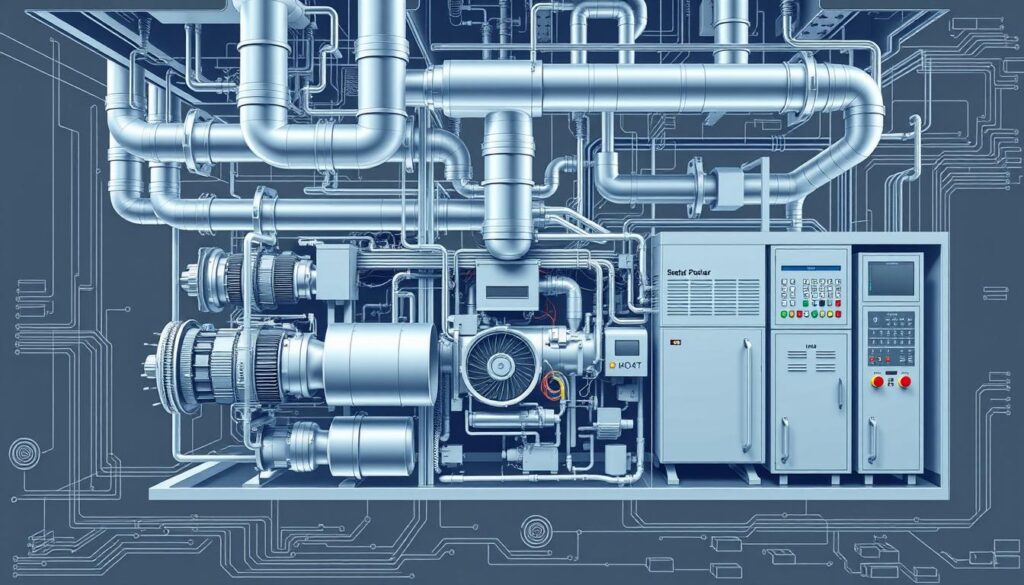
Evaporative cooling systems, commonly called swamp coolers, prove highly effective in low-humidity regions. These systems can reduce incoming air temperature by 15 to 20 degrees Fahrenheit through the natural cooling effect of water evaporation. They work best in areas where relative humidity remains below 50 percent, making them ideal for western and southwestern service locations.
Spot cooling systems deliver conditioned air directly to specific work stations rather than attempting to cool entire facilities. This targeted approach reduces energy costs while providing maximum temperature reduction where technicians need it most. The principle behind air movement centers on increasing sweat evaporation rates, which provides effective cooling when air temperature remains below skin temperature of approximately 95 degrees Fahrenheit.
However, fans become less effective and may actually increase heat stress when air temperatures exceed 99 degrees Fahrenheit. At these extreme temperatures, air movement increases convective heat transfer to the body rather than removing heat. Facilities must monitor ambient conditions and supplement ventilation with other cooling solutions during peak temperature periods.
Portable Shade Structures for Mobile Service Operations
Field service operations present unique challenges since permanent structures are rarely available at customer locations. Pop-up canopy tents measuring 10 by 10 feet or larger can be transported in service vehicles and deployed quickly at mobile service sites. These portable shelters provide immediate relief from direct solar radiation during extended repair calls.
Portable awnings that attach to service truck bodies offer another practical solution for field technicians. These awnings extend outward to create shade over work areas, protecting both technicians and equipment from sun exposure. The convenience of permanent mounting on service vehicles eliminates the need for separate setup and teardown procedures.
Reflective shade cloth materials block solar radiation while allowing air circulation beneath the structure. This ventilation prevents heat buildup that can occur under solid tarps or covers. Research data shows that shade can reduce effective temperature by 10 to 15 degrees Fahrenheit compared to direct sun exposure, significantly lowering heat stress risk during outdoor repairs.
Designated Climate-Controlled Recovery Areas
Air-conditioned break rooms maintaining temperatures between 72 and 76 degrees Fahrenheit serve as essential recovery spaces where technicians can lower their core body temperature during scheduled rest breaks. These areas must be located near work zones to minimize time spent traveling to and from cooling spaces. Extended walking distances reduce the effectiveness of break periods and discourage workers from using recovery areas.
Climate-controlled spaces should be equipped with comfortable seating, readily available hydration supplies, and first aid equipment specifically for heat-related illness. Adequate lighting and ventilation create an environment conducive to genuine rest and physiological recovery. These facilities demonstrate organizational commitment to worker safety and provide tangible relief from thermal stress.
Cold water immersion facilities offer a highly effective cooling technique for rapid core body temperature reduction. Large buckets or plastic tubs filled with cool water between 50 and 68 degrees Fahrenheit allow technicians to immerse their hands and forearms. This method takes advantage of the high blood flow through the forearms to transfer heat away from the body’s core, providing faster cooling than passive rest alone.
Building a Comprehensive Heat Illness Prevention Program
A successful heat illness prevention program requires more than good intentions—it demands formalized structures, clear documentation, and systematic implementation across all levels of your organization. Heavy equipment service operations face unique challenges that necessitate tailored approaches to worker protection. The foundation of effective protection lies in developing comprehensive safety protocols that address regulatory expectations while meeting the practical realities of shop floors and field service locations.
Employers operating in high-heat environments face potential citations under OSHA’s general duty clause, which requires workplaces free from recognized hazards. California, Washington, and Minnesota have implemented state-specific standards that establish enforceable requirements for heat stress management. Beyond regulatory obligations, a well-structured prevention program reduces lost workdays, workers’ compensation costs, and the devastating human impact of heat-related incidents.
Developing Written Heat Safety Protocols and Policies
Written safety protocols transform general awareness into concrete action steps that supervisors and workers can follow consistently. Your heat stress policy should begin with a clear statement declaring management’s commitment to preventing heat-related illness and deaths among all employees. This policy statement establishes organizational priorities and demonstrates leadership accountability.
Effective policies identify the specific individual responsible for program implementation and oversight. This designated coordinator—typically a safety manager or operations supervisor—ensures consistent application across multiple work sites. Without clear ownership, even well-designed programs fail due to inconsistent implementation.
Your written program must specify procedures for monitoring environmental heat stress. Most operations use either wet bulb globe temperature (WBGT) measurements or heat index calculations based on temperature and humidity. The OSHA-NIOSH Heat Safety Tool app provides convenient heat index calculations for field locations where dedicated monitoring equipment isn’t practical.
Action levels trigger specific interventions as temperatures rise throughout the workday. A typical framework includes enhanced monitoring at 80°F heat index, modified work-rest schedules at 90°F, and work restrictions for non-essential high-exertion tasks at 105°F.
Establishing Clear Roles and Responsibilities
Defining specific accountabilities throughout your organization ensures every team member understands their role in heat illness prevention. Ambiguous responsibilities lead to gaps where critical protections fail.
Senior management bears ultimate responsibility for providing resources, approving policies, and ensuring implementation. This includes budget allocation for cooling equipment, adequate staffing levels to permit rest rotations, and support for work delays when conditions become dangerous. Management commitment translates abstract policies into practical protection.
Your safety manager or designated heat stress program coordinator handles day-to-day implementation. This individual conducts environmental monitoring, maintains equipment and supplies, tracks training compliance, and investigates heat-related incidents. Coordinator responsibilities should include regular communication with supervisors about weather forecasts and required precautions.
Front-line supervisors carry critical responsibilities that directly impact worker safety. Supervisors must monitor weather conditions throughout their shifts, implement prescribed work-rest schedules, and observe workers for heat stress symptoms. Enforcement of hydration requirements and mandatory breaks falls squarely on supervisory personnel. Supervisors need authority to modify work plans based on heat conditions.
| Role | Primary Responsibilities | Authority Level |
|---|---|---|
| Senior Management | Resource allocation, policy approval, program funding | Ultimate decision authority for budget |
| Safety Coordinator | Daily monitoring, equipment maintenance, training | Program implementation authority |
| Supervisors | Weather monitoring, schedule implementation | Operational decisions including delays |
| Workers | Symptom reporting, schedule compliance, hydration | Self-monitoring responsibilities |
Training Programs and Worker Acclimatization
Educating workers and allowing their bodies to adapt to heat exposure represents a critical defense against heat-related illness in repair facilities. Even with the best engineering controls and administrative policies in place, heat safety training ensures that every technician understands the risks they face and knows how to protect themselves. Acclimatization procedures give workers the physiological adaptations needed to tolerate heat stress safely.
Research shows that a high proportion of heat-related fatalities occur during the first days on the job. This stark reality emphasizes the importance of proper worker education and gradual exposure schedules. Training programs must address not only the theoretical knowledge but also the practical skills needed to recognize and respond to heat hazards in real-world situations.
Comprehensive Curriculum for All Technicians
Every heavy equipment technician must receive thorough heat safety training that covers multiple critical topics. The curriculum should begin with environmental and personal risk factors for heat stress, including temperature, humidity, radiant heat sources, physical exertion levels, and the thermal burden of protective clothing. Workers need to understand how these factors combine to create hazardous conditions.
Training must explain the physiological responses to heat stress and how the body attempts to maintain safe core temperature through sweating and increased blood flow to the skin. Technicians should learn that these natural cooling mechanisms can be overwhelmed by extreme heat or inadequate hydration. Understanding these biological processes helps workers appreciate why prevention strategies matter.
Recognition of heat-related illness symptoms represents perhaps the most critical training component. Worker education should emphasize the progressive nature of heat illness, from early warning signs like heat cramps and excessive fatigue through heat exhaustion to life-threatening heat stroke. Technicians must learn to identify symptoms in themselves and their coworkers before conditions become severe.
The importance of early reporting cannot be overstated. Workers need to understand that reporting heat-related symptoms is not a sign of weakness but a critical safety action. Training should clearly communicate that employees have the right to stop work when experiencing heat stress symptoms without fear of retaliation.
Gradual Exposure Protocols for Maximum Protection
Complete heat acclimatization generally takes six to seven days, though some individuals may need longer to fully adapt. During this period, the body undergoes remarkable physiological changes: sweat production increases, salt concentration in sweat decreases, heart rate response to heat stress diminishes, and sweating begins at lower body temperatures. These adaptations provide substantial protection against heat-related illness.
Key Recommendation
New employees with no recent heat exposure should perform no more than 20% of a full shift in complete heat exposure on their first day. Exposure should increase by no more than 20% each subsequent day, reaching 100% capacity on day six. Physical fitness and training are not substitutes for proper acclimatization.
Experienced workers returning after extended absence face elevated risk because acclimatization is lost gradually over time. A decrease in heat tolerance can occur after just a few days away from work, and acclimatization can be completely lost within three weeks. Returning employees should work approximately 50% of normal heat exposure on day one, 60% on day two, 80% on day three, and return to full capacity beginning day four.
Workers returning after illness, particularly illness involving fever or dehydration, should be treated as new workers requiring the full six-day acclimatization schedule starting at 20% exposure. Documentation of acclimatization schedules ensures that protocols are followed consistently.
| Worker Category | Day 1 Exposure | Daily Increase | Full Capacity Day |
|---|---|---|---|
| New Workers (No Heat Exposure) | 20% | 20% per day | Day 6 |
| Returning Workers (1+ Week) | 50% | 10-20% per day | Day 4 |
| Workers After Illness | 20% | 20% per day | Day 6 |
| Acclimatized (Regular Schedule) | 100% | N/A | Day 1 |
Emergency Response Protocols for Heat-Related Incidents
Effective emergency heat response protocols transform potentially fatal incidents into survivable events for equipment technicians. Every minute counts when heat illness strikes, and the difference between life and death often depends on how quickly workers recognize symptoms and initiate cooling measures. These emergency protocols provide clear, actionable steps that all supervisors and technicians must know before the summer season begins.
Heat-related emergencies require the same seriousness and rapid response as traumatic injuries. The progression from heat exhaustion to life-threatening heat stroke can occur in minutes, making immediate action essential.
Immediate First Aid Measures for Heat Exhaustion
Heat exhaustion demands immediate intervention to prevent progression to more dangerous conditions. When a technician shows warning signs like heavy sweating, weakness, dizziness, or nausea, stop all work activities instantly and begin cooling measures.
Move the affected worker to the coolest available location. This might be an air-conditioned break room, a shaded area with fans, or inside an air-conditioned vehicle. The goal is to remove the worker from heat stress as quickly as possible. Have the worker sit or lie down with legs elevated. Loosen or remove heavy clothing, belts, boots, and any restrictive gear to improve heat dissipation from the body.
Provide cool water or electrolyte beverages immediately. Encourage the worker to drink slowly but continuously—approximately 8 ounces every 15 minutes if conscious and not nauseated. Avoid giving beverages to workers who are vomiting or have altered consciousness.
Apply cool, wet cloths to the forehead, neck, armpits, and groin. These areas contain large blood vessels near the surface that facilitate rapid cooling. Monitor the worker continuously, watching for improvement or deterioration. Call 911 if symptoms worsen, if the worker loses consciousness, if vomiting prevents rehydration, or if no improvement occurs within 15 minutes of initiating cooling measures.
Heat Stroke Emergency Procedures and Cooling Techniques
⚠️ Critical Emergency Action
When you suspect heat stroke—indicated by confusion, loss of coordination, very high body temperature, or altered consciousness—immediately call 911 without delay. Do not wait to see if the worker improves. Every minute of elevated core temperature increases the risk of death and permanent organ damage.
While awaiting EMS, initiate aggressive cooling immediately. Move the victim to the coolest possible location and begin rapid temperature reduction using the most effective methods available. If available, immerse the worker in an ice bath or cold water up to the neck. This is the most effective cooling technique, capable of reducing core temperature by 0.2°C per minute. Complete immersion provides maximum cooling surface area and saves lives.
When immersion is not available, implement alternative cooling techniques immediately. Remove all outer clothing and continuously apply ice packs or bags of ice to the neck, armpits, and groin while dousing the worker with cool water and fanning vigorously to maximize evaporative cooling. Apply iced bedsheets that are continuously re-soaked as they warm. Layer ice packs on top of wet sheets for enhanced cooling effect.
Continue cooling until EMS arrives unless the worker begins shivering, which indicates core temperature has dropped sufficiently. Position the worker to prevent choking if vomiting occurs. Assign someone to meet emergency medical services personnel at the entrance and direct them quickly to the victim’s location.
| Heat Condition | Primary Response | When to Call 911 | Return-to-Work |
|---|---|---|---|
| Heat Cramps | Rest, fluids, light food | If cramps persist >1 hour | After cramps subside |
| Heat Exhaustion | Cool location, hydration, monitoring | No improvement in 15 min | Medical evaluation required |
| Heat Stroke | Call 911, aggressive cooling | Immediately upon recognition | Written medical clearance |
Workers who experienced heat exhaustion should not return to work the same day. They must receive medical evaluation and clearance before resuming duties. Workers who experienced heat stroke face lasting physiological changes that increase susceptibility to future heat illness. These individuals must receive written medical clearance before returning to any work activities, regardless of how quickly they appear to recover.
Frequently Asked Questions
What temperature is too hot for heavy equipment technicians to work?
Work-rest schedules should be implemented when the Wet Bulb Globe Temperature (WBGT) exceeds 28°C (82.4°F) for acclimatized workers performing moderate physical labor. Unacclimatized workers require protection at lower thresholds, typically around 25°C (77°F). When heat index readings exceed 103°F, aggressive work-rest modifications become mandatory. At 115°F or higher, complete work cessation may be necessary for outdoor operations. The OSHA-NIOSH Heat Safety Tool provides free heat index calculations for field locations where dedicated WBGT equipment isn’t available.
How often should heavy equipment technicians drink water in hot conditions?
Technicians should drink 8 ounces of water every 15-20 minutes during hot weather operations, regardless of whether they feel thirsty. This equals approximately one quart per hour during moderate-intensity work. Workers engaged in heavy physical labor like engine removal may need up to one liter per hour. For work periods exceeding two hours, sports drinks containing sodium and potassium should replace plain water to maintain electrolyte balance. Salt tablets are not recommended because they cause gastric distress and don’t absorb as effectively as liquid solutions.
What are the first signs of heat exhaustion in a coworker?
Early warning signs include profuse sweating that soaks through clothing, pale or flushed skin, weakness, and muscle cramps in the legs, arms, or abdomen. Mental symptoms often appear alongside physical ones: headaches, nausea, dizziness, irritability, and difficulty concentrating on routine tasks. Body temperature rises between 100°F and 104°F. The key distinguishing characteristic from heat stroke is that workers remain conscious and responsive, though they may feel confused or disoriented. Never ignore these warning signs or attempt to push through the discomfort.
How long does heat acclimatization take for new technicians?
Complete heat acclimatization generally takes six to seven days, though some individuals may need longer to fully adapt. New employees with no recent heat exposure should perform no more than 20% of a full shift in heat exposure on day one, increasing by 20% each subsequent day. Workers returning after extended absence should start at 50% capacity on day one, reaching full capacity by day four. Those returning after illness require the full six-day acclimatization schedule. Physical fitness and training are not substitutes for proper acclimatization protocols.
When should you call 911 for a heat emergency?
Call 911 immediately when you suspect heat stroke, indicated by confusion, loss of coordination, very high body temperature, altered consciousness, slurred speech, or seizures. Do not wait to see if the worker improves—every minute of elevated core temperature increases brain damage risk. Also call if heat exhaustion symptoms don’t improve within 15 minutes of cooling measures, if the worker loses consciousness, if vomiting prevents rehydration, or if symptoms worsen despite intervention. Continue aggressive cooling until emergency medical services arrive.
What cooling equipment works best for diesel technicians?
Phase-change cooling vests work effectively in humid environments and maintain comfortable temperatures for two to four hours, though they require freezer regeneration between uses. Evaporative cooling vests excel in low-humidity regions but lose effectiveness in humid conditions. Ice vests provide aggressive cooling for short-duration extreme exposures but limit mobility due to weight. Cooling bandanas and neck wraps offer targeted cooling of blood flowing through carotid arteries with minimal interference to work tasks, making them practical additions for continuous use during repair operations.
Implementing Heat Stress Prevention: Next Steps
Heat-related illness and death remain entirely preventable through systematic implementation of workplace safety controls. The data is clear: 285 construction and heavy equipment workers died from heat-related causes between 1992 and 2016, and workers in these industries face death rates five times higher than the national average. With climate change driving increasing summer temperatures, effective heat stress prevention programs become more critical each year.
Protecting heavy equipment technicians requires coordinated action across multiple fronts. Management must provide engineering controls, cooling equipment, and designated recovery areas. Supervisors implement daily monitoring and enforce mandatory breaks—even when production pressure mounts. Workers follow hydration protocols, report symptoms immediately, and support their coworkers through buddy system monitoring.
The investment in comprehensive heat stress prevention programs delivers measurable returns. Organizations reduce workers’ compensation costs, maintain productivity during summer operations, and improve employee retention. Most importantly, technicians go home safely to their families every day. Start by downloading the free OSHA-NIOSH Heat Safety Tool and conducting a heat hazard assessment of your shop environment. The prevention strategies in this guide provide the framework—implementation saves lives.
Share This Safety Resource
Know a shop manager, fleet supervisor, or technician who could use this heat stress prevention guide? Share it to help protect diesel professionals during summer heat.