shop equipment calibration

Shop Equipment Calibration Guide for Fleet Maintenance Shops

Table of Contents
    Add a header to begin generating the table of contents

    By Michael Nielsen, Editor & Publisher | 15+ Years in Diesel Repair

    Last Updated: January 2026

    📖 Estimated reading time: 37 minutes

    Precision instruments and measuring tools form the backbone of every professional fleet maintenance operation. When torque wrenches drift from specification, pressure gauges read incorrectly, or diagnostic multimeters lose accuracy, the consequences ripple through every repair. Shop equipment calibration directly impacts the safety of the vehicles you send back on the road, the reliability of your repair quality, and your legal liability when problems occur.

    This comprehensive guide provides fleet managers, diesel technicians, and shop owners with actionable strategies for establishing robust calibration compliance programs. You’ll discover how to identify which tools in your maintenance shop require verification, establish optimal scheduling intervals based on your workload, maintain documentation that satisfies both DOT auditors and customer quality requirements, and manage calibration costs without compromising the precision your work demands.

    Understanding equipment calibration standards isn’t just about avoiding regulatory penalties or failed audits. It’s about building a foundation for operational excellence that protects your customers, your technicians, and your business reputation. Properly maintained instruments reduce comebacks, prevent costly warranty claims, and demonstrate the professional standards that separate successful fleet maintenance operations from shops that struggle with quality consistency.

    Key Takeaways

    • Measurement accuracy protects safety: Calibrated torque wrenches, pressure gauges, and diagnostic equipment prevent the fastener failures and system malfunctions that put drivers at risk.
    • Documentation creates liability protection: Complete calibration records with NIST traceability demonstrate due diligence when quality disputes or accident investigations occur.
    • Strategic scheduling optimizes costs: Risk-based calibration intervals based on equipment criticality and usage patterns maximize accuracy while minimizing downtime and expense.
    • Industry standards apply to fleet shops: ISO 9001, customer quality requirements, and DOT maintenance documentation obligations all connect to calibration program effectiveness.
    • Investment returns exceed costs: Calibration programs typically return $3-$7 for every dollar invested through reduced rework, eliminated warranty claims, and prevented safety incidents.

    1. Understanding Fleet Shop Calibration Fundamentals

    Calibration fundamentals form the essential knowledge base that separates guesswork from precision measurement in professional fleet maintenance operations. This systematic process ensures your torque wrenches, pressure gauges, multimeters, and diagnostic equipment deliver accurate readings you can trust when performing safety-critical repairs. Understanding these core principles protects your shop from costly errors and compliance issues that damage both your reputation and your bottom line.

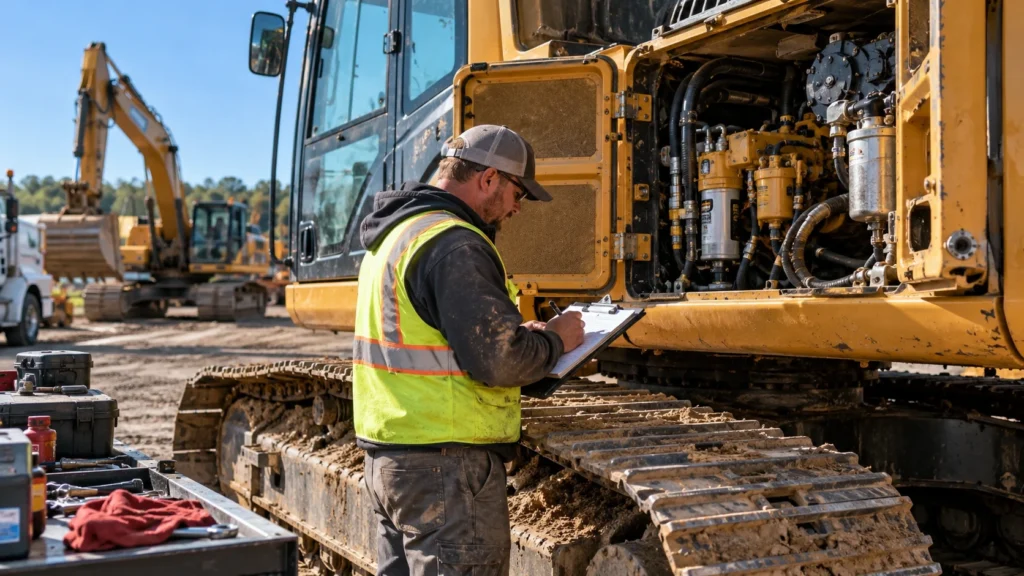
    Fleet maintenance technician calibrating precision measurement instruments in shop environment

    What Equipment Calibration Means for Fleet Maintenance

    Equipment calibration compares your measurement tools against reference standards of known accuracy. Think of it as checking your torque wrench against a certified reference to confirm it delivers exactly 450 foot-pounds when torquing wheel nuts to Class 8 specifications. This verification process establishes whether your equipment measures what it claims to measure.

    This process establishes traceability to measurement standards recognized by regulatory bodies and industry organizations. Your shop gains confidence that every torque reading, pressure measurement, and electrical test reflects true values rather than drifted measurements that accumulated over months of hard use. Equipment accuracy directly impacts repair quality, vehicle safety, and your compliance with 49 CFR Part 396 maintenance documentation requirements.

    The Science Behind Measurement Accuracy

    All precision measurement tools experience drift over time due to wear, temperature changes, vibration, and repeated use. Even high-quality torque wrenches from reputable manufacturers shift from their original specifications through normal shop operations. A click-type torque wrench used daily on wheel-end work experiences thousands of stress cycles that gradually affect its internal spring mechanism.

    Measurement uncertainty defines the range within which true values lie. When your torque wrench indicates 500 foot-pounds, the actual delivered torque might be 495 to 505 foot-pounds depending on the instrument’s uncertainty band. Calibration procedures quantify this uncertainty and document whether equipment performs within acceptable tolerance bands for your applications. Understanding these scientific principles explains why expensive professional-grade tools still require regular attention.

    How Calibration Differs from Verification and Adjustment

    Many fleet technicians confuse these distinct processes, leading to inadequate maintenance practices. Verification checks if equipment meets specifications without making changes—essentially a pass/fail check. Adjustment involves physically correcting instruments to bring them back into specification through mechanical or electronic modifications.

    Calibration encompasses both comparison against measurement standards and documentation of results. It may include adjustment when equipment falls outside tolerance, but the primary goal involves establishing and recording the relationship between your equipment and reference standards. This distinction matters significantly for compliance documentation and quality management systems. A verification that reveals acceptable performance still requires documentation of the results to maintain your calibration program integrity.

    2. Why Calibration Is Non-Negotiable for Fleet Operations

    When fleet maintenance shops treat calibration as optional, they gamble with vehicle safety, driver protection, and financial stability. The ripple effects of uncalibrated equipment touch every corner of your operation, from the service bay to the road where your customers’ drivers depend on your work. Understanding these consequences transforms calibration from a compliance checkbox into a strategic business priority that protects everything you’ve built.

    Measurement Accuracy and Repair Quality

    Every repair your shop performs depends on accurate measurements at multiple stages. When torque wrenches drift out of calibration, wheel nuts get tightened improperly—either too loose and prone to backing off, or too tight and stretching studs toward failure. A torque wrench that reads 50 foot-pounds high might seem insignificant until you consider the cumulative stress on fasteners across hundreds of wheel-end services.

    In fleet maintenance, uncalibrated diagnostic multimeters lead to misdiagnosed electrical problems that send trucks back for repeat repairs. Pressure gauges that read incorrectly cause technicians to overlook air system problems or adjust fuel system pressures to wrong specifications. The connection between calibration and repair quality is direct and undeniable for any shop serious about reducing comebacks and protecting customer relationships.

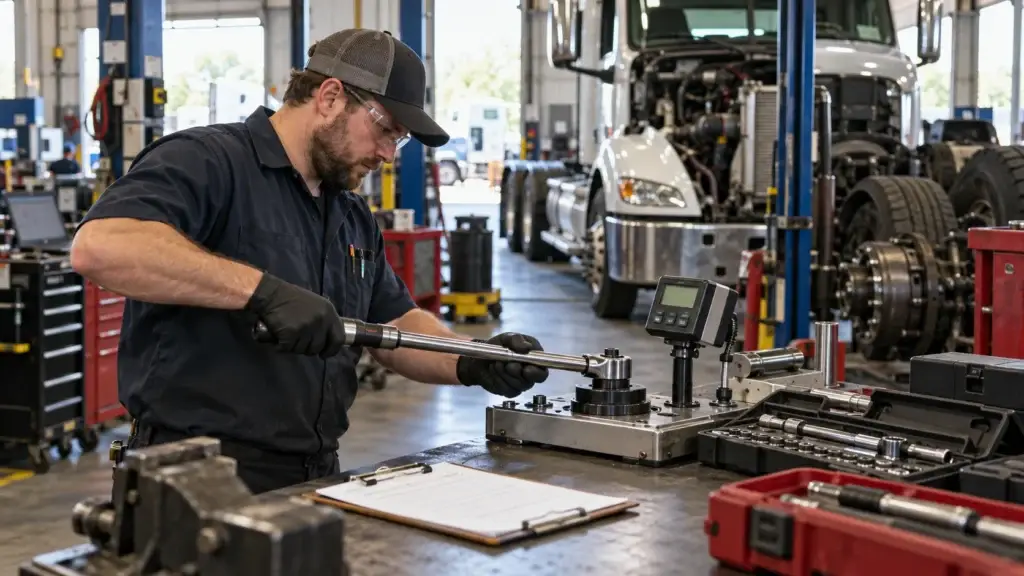
    Diesel technician using calibrated torque wrench on Class 8 truck wheel assembly

    Driver Safety and Liability Protection

    Calibrated equipment protects the drivers who depend on your work every time they climb into a cab. Pressure gauges that read incorrectly can cause air brake systems to operate at dangerous levels. Torque wrenches that drift low leave wheel assemblies vulnerable to the fastener failures that cause wheel-off incidents—among the most catastrophic outcomes in commercial trucking.

    Safety standards exist because measurement errors have historically caused preventable accidents. Your calibration records serve as evidence of due diligence in legal proceedings following accidents or equipment failures. When roadside inspections uncover problems or accidents trigger investigations, documented calibration programs demonstrate your commitment to proper maintenance practices. This liability protection becomes invaluable when plaintiffs’ attorneys start asking questions about your quality systems.

    “Calibration is not just about accuracy—it’s about creating a culture of safety and accountability that protects everyone who depends on the equipment you maintain.”

    — Technology & Maintenance Council, Recommended Practice

    Customer Confidence and Business Reputation

    Fleet customers increasingly demand proof of your quality commitment before awarding maintenance contracts. Supplier qualification processes at major carriers now commonly require documented calibration programs demonstrating measurement traceability. Without calibration certificates, you lose bidding opportunities regardless of your technical capabilities or competitive pricing.

    Your reputation depends on consistent repair quality, and calibration provides the foundation for that consistency. Customers who trust your measurements trust your repairs, creating long-term partnerships that drive business growth. In the competitive fleet maintenance market, demonstrable quality systems differentiate professional operations from shops that can’t prove their standards.

    Financial Impact of Measurement Errors

    The costs of poor calibration practices accumulate quickly and devastatingly. Consider these financial consequences that fleet maintenance operations face when equipment drifts out of specification:

    • Comeback repairs from work performed with inaccurate instruments
    • Warranty claim denials when documentation gaps appear
    • Premium labor costs for rework during already-scheduled maintenance windows
    • Lost contracts due to failed quality audits or documented incidents
    • Legal exposure when accidents trace back to measurement-dependent repairs

    A single wheel-off incident linked to improper torque application can generate liability claims reaching millions of dollars. When measurement errors go undetected, the financial damage multiplies as improperly repaired vehicles reach the road. Calibration isn’t a cost center—it’s a profit-protection investment with measurable returns that far exceed the expense of maintaining properly calibrated equipment.

    3. Critical Equipment Requiring Regular Calibration

    Establishing a comprehensive calibration program begins with identifying the specific equipment categories in your fleet maintenance shop that demand regular verification and adjustment. Professional repair facilities contain numerous instruments that directly affect measurement accuracy, repair quality, and safety outcomes. Creating a detailed equipment inventory helps prioritize calibration efforts and prevents overlooking critical devices that impact your operations.

    Your calibration inventory should include manufacturer details, model numbers, serial numbers, last calibration date, and recommended frequency based on usage patterns and industry standards. Environmental conditions, usage intensity, and the consequences of measurement errors all influence how often specific equipment needs attention in your shop.

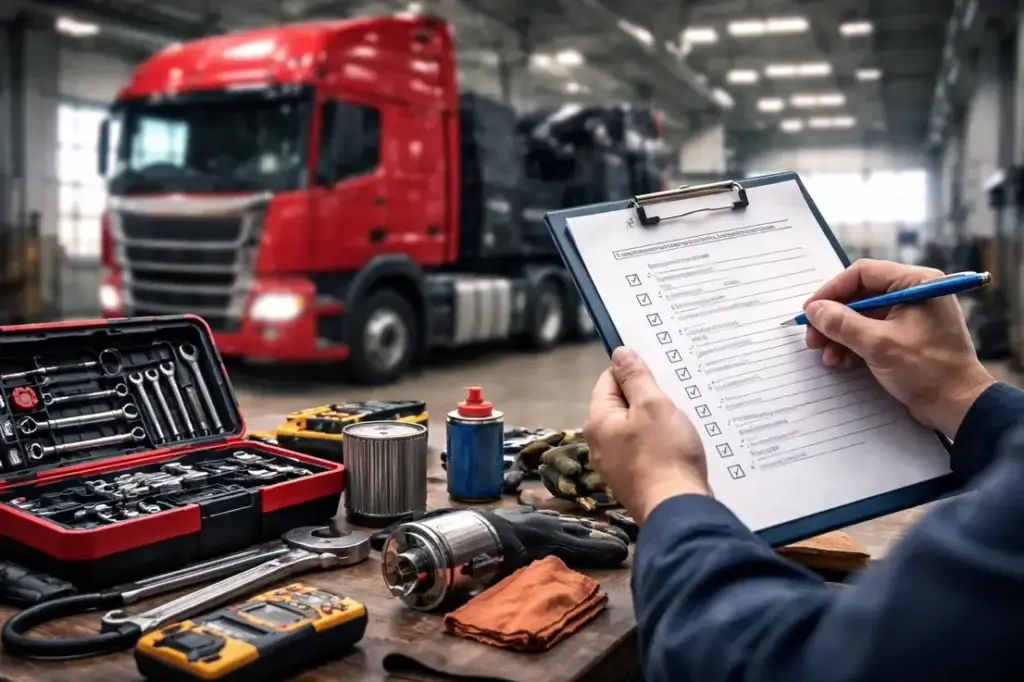
    Precision measuring tools and diagnostic equipment requiring calibration in fleet maintenance shop

    Torque Wrenches and Fastening Equipment

    Fleet maintenance operations depend heavily on accurate torque application to ensure proper fastener tension and prevent mechanical failures. Beam-type, click-type, and digital torque wrenches require regular verification to maintain specified accuracy. Torque multipliers used for high-torque wheel-end applications also need scheduled calibration to guarantee consistent results on Class 7 and Class 8 equipment.

    Torque wrench calibration should occur every 5,000 cycles or annually, whichever comes first. Click-type wrenches lose calibration faster than beam-type models due to their internal spring mechanisms. These tools are particularly vulnerable to accuracy loss from dropping, overloading beyond rated capacity, and improper storage. Shops performing high-volume wheel-end work may need quarterly verification due to accelerated cycle counts.

    The Technology & Maintenance Council (TMC) publishes recommended practices addressing torque specifications and verification procedures that fleet maintenance operations should reference when establishing their programs.

    Pressure Gauges and Air System Test Equipment

    Air brake systems, fuel delivery, and hydraulic circuits all rely on accurate pressure measurement for proper diagnosis and adjustment. Analog pressure gauges, digital transducers, and air system test equipment require scheduled verification to ensure safe vehicle operation after maintenance. Inaccurate pressure readings can mask developing problems or lead to improper system adjustments.

    Pressure gauge calibration typically follows annual or semi-annual schedules depending on operating conditions. Gauges exposed to pressure spikes, vibration, or the contaminated shop environments common in fleet maintenance need more frequent attention. Digital pressure transducers used in diagnostic procedures may require quarterly calibration to maintain the measurement integrity necessary for air brake system work governed by Federal Motor Carrier Safety Regulations.

    Electrical Diagnostic Equipment

    Modern diesel engines and vehicle electrical systems require accurate diagnostic equipment for effective troubleshooting. Multimeters, oscilloscopes, battery testers, and specialized engine diagnostic tools all need regular calibration to provide reliable readings. Inaccurate electrical measurements lead to misdiagnosis, unnecessary parts replacement, and vehicles returned to service with underlying problems.

    Diagnostic multimeters typically require annual calibration, though shops performing high-volume electrical diagnostics may benefit from semi-annual verification. Battery and charging system analyzers need calibration to ensure accurate state-of-charge and cranking capacity assessments. Engine diagnostic scan tools with measurement functions beyond simple code reading should follow manufacturer calibration recommendations.

    Dimensional Measuring Tools

    Brake drum and rotor measurements, drivetrain component inspection, and wear assessment all depend on accurate dimensional tools. Micrometers, dial calipers, dial indicators, and brake gauges verify that components meet specifications and remain within safe service limits. These instruments require calibration to ensure your technicians make correct replacement decisions.

    Micrometer and caliper calibration typically occurs annually for standard shop use, though high-volume inspection operations may require semi-annual verification. Brake measuring tools should follow schedules aligned with your shop’s inspection volume. Maintaining calibration records for dimensional tools protects against disputes over unnecessary part replacement and validates your inspection findings.

    Temperature Measurement Devices

    Aftertreatment system diagnostics, engine temperature verification, and thermal imaging for electrical troubleshooting require precise temperature measurement. Thermocouples, infrared thermometers, and pyrometers used in diesel engine and DPF diagnostics need regular calibration to ensure accurate readings.

    Infrared thermometers commonly used for aftertreatment troubleshooting need semi-annual calibration due to their optical components. Contact thermometers used for coolant system verification typically require annual attention. Temperature measurement accuracy matters particularly for diagnosing DPF regeneration issues and verifying proper EGR cooler function.

    Scales and Weight Measurement

    Parts inventory management, fluid measurement for proper fill procedures, and compliance with weight-based specifications depend on accurate scales. Bench scales, fluid dispensing systems with volume/weight measurement, and wheel scales all require calibration to prevent inventory discrepancies and ensure proper service procedures.

    Scale calibration frequency depends on usage intensity and the criticality of weight accuracy for your operations. Shops dispensing DEF, coolant, or oil by measured quantity benefit from quarterly verification of dispensing equipment. Wheel scales used for load distribution checks during fifth wheel adjustments require calibration traceable to recognized standards.

    Equipment CategoryTypical IntervalFleet Shop ApplicationsCommon Failure Causes
    Torque Wrenches5,000 cycles or annuallyWheel-end, drivetrain, engine assemblyDropping, overloading, spring fatigue
    Pressure Gauges6-12 monthsAir brake testing, fuel system, hydraulicsPressure spikes, vibration, contamination
    Diagnostic Multimeters12 monthsElectrical troubleshooting, sensor testingBattery depletion, lead damage, age drift
    Brake Measuring Tools12 monthsDrum/rotor inspection, wear assessmentPhysical damage, contamination, wear
    IR Thermometers6 monthsAftertreatment diagnostics, thermal imagingLens contamination, battery failure, age

    4. Establishing Your Calibration Schedule

    Smart calibration scheduling protects your fleet maintenance shop from measurement failures while optimizing resource allocation and minimizing equipment downtime. A systematic approach to calibration planning ensures equipment remains accurate throughout its service life without creating unnecessary operational disruptions. This strategic framework balances compliance requirements with the practical realities of keeping a busy shop running.

    Baseline Recommendations from Equipment Manufacturers

    Every precision instrument arrives with documented calibration intervals from its manufacturer. These recommendations typically specify annual, semi-annual, or quarterly service periods based on controlled testing conditions. Manufacturers establish these baselines using optimal operating environments and standard usage patterns that may differ significantly from actual fleet shop conditions.

    However, these guidelines represent starting points rather than absolute requirements for your specific operation. Your actual shop conditions—temperature swings in unheated bays, contamination from diesel and coolant, vibration from adjacent work—may demand more frequent attention. Always review manufacturer documentation as the foundation for your calibration schedule, then adjust based on your real-world usage factors.

    How Usage Patterns and Environment Impact Timing

    The frequency of equipment use directly affects calibration needs. A torque wrench used for fifty wheel-end services daily experiences faster wear than one used occasionally for engine assembly work. Operator handling practices also influence measurement drift rates significantly—technicians who properly store and handle equipment extend calibration intervals while rough handling accelerates degradation.

    Environmental conditions play an equally critical role in determining calibration frequency for fleet maintenance operations. Temperature extremes in non-climate-controlled shops, high humidity, persistent vibration from nearby equipment, and airborne contaminants accelerate equipment degradation. Portable instruments transported between locations or carried on service trucks face greater risks than permanently stationed shop equipment.

    Fleet maintenance manager reviewing calibration schedule and equipment tracking system

    Harsh operating conditions mandate shorter intervals between calibrations to maintain measurement integrity. Equipment in temperature-controlled tool rooms may safely extend standard intervals with proper documentation supporting the decision.

    Strategic Risk-Based Scheduling Approaches

    Risk-based calibration planning allocates resources according to the consequences of measurement errors rather than treating all equipment identically. This method evaluates each instrument’s impact on repair quality, vehicle safety, customer satisfaction, regulatory compliance, and potential liability exposure.

    High-risk equipment receives priority scheduling with shorter intervals, while lower-risk instruments follow extended cycles. Historical performance data reveals which tools consistently maintain accuracy and which require closer monitoring. This approach optimizes calibration budgets while protecting critical quality requirements—focusing resources where measurement accuracy matters most.

    Equipment Priority Classification System

    A structured priority matrix categorizes instruments into distinct tiers based on their operational importance to your fleet maintenance shop. This classification guides resource allocation and establishes appropriate service frequencies for different equipment classes.

    Priority LevelEquipment CharacteristicsRecommended IntervalFleet Shop Examples
    Critical (A)Safety-critical applications, regulatory requirements, daily useQuarterly or semi-annualWheel torque wrenches, air brake test equipment, reference standards
    Important (B)Diagnostic functions, moderate usage, repair quality influenceSemi-annual or annualDiagnostic multimeters, pressure gauges, engine torque wrenches
    Standard (C)General shop tools, infrequent use, minimal safety impactAnnual or biennialShop thermometers, secondary scales, backup measuring tools

    Creating a Comprehensive Annual Calendar

    Building an effective annual calibration calendar requires staggering service events throughout the year to prevent resource bottlenecks and minimize operational disruption. Group equipment by priority level and spread calibration dates across all twelve months rather than sending everything out at once.

    Dedicated calibration management software automates reminder notifications and tracks upcoming deadlines. These systems reduce human error and ensure no scheduled calibration tasks fall through administrative gaps. Coordinate timing with maintenance schedules to service equipment during planned slow periods or when backup instruments can cover temporarily removed tools.

    Your calibration schedule becomes a living document that evolves with changing business needs. Review and update the calendar quarterly to incorporate new equipment purchases, retire obsolete tools, and adjust intervals based on performance trends revealed through your documentation system.

    Stay Current on Fleet Maintenance Best Practices

    Get calibration updates, quality management insights, and practical shop efficiency strategies delivered to your inbox. Join fleet professionals who count on HDJ for actionable technical content.

    5. Navigating Calibration Standards and Regulations

    Calibration compliance requires navigating a framework of national and international standards that govern measurement accuracy in professional maintenance operations. Fleet shops working with safety-critical systems must understand which calibration standards apply to their operations and how to maintain continuous compliance. The regulatory landscape includes quality management systems, laboratory accreditation requirements, and traceability standards that work together to ensure measurement integrity.

    Quality management system documentation showing calibration compliance framework for fleet operations

    Quality Management System Fundamentals

    ISO 9001 calibration requirements appear in clause 7.1.5, which addresses monitoring and measuring resources. This standard mandates that measurement equipment must be calibrated or verified at specified intervals against standards traceable to international or national measurement standards. Shops maintaining ISO 9001 certification must maintain documented calibration schedules, retain traceable calibration certificates, and implement procedures for handling equipment found outside tolerance limits.

    The practical application involves creating a calibration inventory, establishing recall systems that track due dates, and training personnel on proper equipment handling. Quality auditors verify that your calibration system includes uncertainty calculations and environmental condition documentation when reviewing your program.

    Laboratory Accreditation Framework

    ISO/IEC 17025 establishes requirements for testing and calibration laboratories performing calibration services. Fleet maintenance operations working with safety-critical systems often need calibration services from ISO 17025-accredited laboratories to satisfy customer quality requirements or contract specifications. This accreditation demonstrates technical competence and measurement capability through rigorous third-party assessment processes.

    When selecting calibration providers for your fleet shop equipment, verify their accreditation scope covers your specific equipment types and measurement ranges. Accreditation certificates specify exactly which calibrations the laboratory can perform under their quality system—a provider accredited for pressure calibration may not hold accreditation for torque or electrical measurements.

    DOT Maintenance Documentation Requirements

    Federal Motor Carrier Safety Regulations under 49 CFR Part 396 establish maintenance documentation requirements that connect to calibration program effectiveness. While these regulations don’t explicitly mandate calibration programs, they require systematic maintenance approaches and documentation that implicitly depend on accurate measurement equipment.

    The Compliance, Safety, Accountability (CSA) program evaluates carrier safety performance through inspection data and violation records. Vehicles maintained with uncalibrated equipment may develop problems that result in roadside inspection violations affecting Safety Measurement System scores. Your calibration program contributes to the maintenance quality that keeps vehicles compliant during inspections.

    Industry-Specific Quality Requirements

    Different fleet customers impose additional layers of calibration requirements beyond general quality management standards. National accounts and major carriers increasingly require suppliers and maintenance contractors to demonstrate documented calibration programs as part of vendor qualification processes.

    Shops serving government fleets may face Federal Acquisition Regulation requirements addressing quality management systems. Private fleet maintenance agreements increasingly include audit rights that examine calibration documentation as part of quality assurance reviews. Understanding which standards apply depends on your customer base and the contracts you pursue.

    Measurement Traceability Chain

    NIST traceability establishes an unbroken chain of calibrations linking your shop equipment through reference standards to National Institute of Standards and Technology references. This traceability demonstrates that measurements are accurate and consistent with national standards. Most regulated applications require documented NIST traceability as proof of measurement validity.

    Calibration certificates must document the complete traceability chain, including reference standard identification numbers, calibration dates, and uncertainty statements. This documentation becomes critical during customer audits and quality investigations where you must prove measurement accuracy. Missing links in this chain invalidate your calibration program from a compliance standpoint.

    6. Step-by-Step Calibration Procedures

    Following standardized calibration methods protects your fleet maintenance shop from measurement errors that compromise repair quality and safety. Each phase of the calibration process builds upon the previous one to create a systematic approach that delivers consistent results. Understanding these procedures helps you execute accurate calibrations or properly evaluate external calibration services when selecting providers.

    The calibration process demands attention to detail from start to finish. Skipping steps or rushing through procedures undermines the entire effort and produces unreliable measurements that put vehicles and your shop at risk.

    Pre-Calibration Equipment Inspection

    Equipment inspection comes first because calibrating damaged or contaminated tools wastes time and resources. Begin by examining each piece of equipment for physical damage including dents, cracks, corrosion, or worn components that could affect performance. Torque wrenches should be checked for bent handles, damaged ratchet mechanisms, and worn calibration adjustment features.

    Clean all measurement surfaces thoroughly to remove diesel residue, coolant, grease, or other shop contaminants common in fleet maintenance environments. Pay special attention to pressure gauge connections and multimeter probe tips where buildup directly impacts accuracy. Check that all cables and connections remain intact and secure, then test buttons, displays, and moving parts to confirm proper function. If you discover damage during inspection, repair the equipment before attempting calibration procedures.

    Setting Up Proper Environmental Conditions

    Environmental factors significantly impact measurement accuracy during calibration. Temperature should remain stable between 68°F and 77°F, while relative humidity stays within 40% to 60% throughout the process. These conditions may require performing calibration in climate-controlled spaces rather than shop floors subject to temperature swings.

    Materials expand and contract with temperature changes, affecting dimensional and torque measurements. Allow equipment to stabilize to ambient conditions for adequate periods—sensitive instruments may require 24 hours of acclimatization after moving from different temperature environments. Control vibration, air currents, and electromagnetic interference in your calibration area to minimize measurement variability.

    Controlled calibration environment with reference standards and test equipment properly arranged

    ⚠️ Safety Warning

    When calibrating torque wrenches, secure the calibration fixture properly to prevent unexpected movement during loading. Never exceed the rated capacity of either the test equipment or the instrument being calibrated. Hydraulic calibration equipment operates at high pressures—verify all connections before applying pressure.

    Performing the Calibration Process

    The actual calibration involves comparing your equipment against known references to verify and adjust accuracy. This multi-step process requires careful execution at each stage to produce valid results that support your documentation requirements.

    Reference Standard Selection

    Your reference calibration standards must have accuracy specifications at least four times better than the equipment being calibrated. This 4:1 ratio, known as the Test Uncertainty Ratio (TUR), ensures the standard itself doesn’t introduce significant error into your measurements. Using reference equipment with inadequate accuracy undermines the entire calibration effort.

    Verify that reference standards have current calibration certificates with NIST traceability. Using expired or uncertified standards invalidates your entire calibration effort and creates compliance issues during audits. Document reference standard information on every calibration certificate you generate.

    Measurement and Comparison Methods

    Select calibration points across the equipment’s full measurement range. Typical calibration methods include zero point, 25%, 50%, 75%, and full-scale measurements to verify accuracy throughout the operating spectrum. For torque wrenches used in fleet maintenance, calibration points should include the specific settings commonly used for wheel-end, drivetrain, and engine assembly work.

    Take multiple measurements at each calibration point to identify inconsistencies that might indicate intermittent problems. Compare results against expected values to determine whether the equipment meets tolerance specifications for your applications.

    Adjustment and Correction Protocols

    Document “as found” conditions before making any changes to the equipment. This record proves the equipment’s state when it arrived for calibration and helps track performance trends over time. The as-found data becomes critical when investigating whether out-of-tolerance equipment may have affected previous work.

    Make physical adjustments only when equipment falls outside acceptable tolerances. Some tools use correction factors instead of mechanical adjustments—apply these according to manufacturer specifications. Record “as left” conditions after completing adjustments to demonstrate the equipment now meets accuracy requirements and is ready to return to service.

    Post-Calibration Verification Testing

    Verification testing confirms that adjusted equipment maintains accuracy across its complete measurement range. Run multiple measurement cycles to ensure consistency and stability after calibration procedures are complete. This final check catches problems before the tool returns to production where measurement errors would affect repair quality.

    Test equipment under conditions similar to actual shop use when possible. A torque wrench that calibrates perfectly on the bench must also perform correctly when used in the orientations and positions typical of your maintenance work. This final verification adds confidence that calibration results translate to real-world performance.

    7. In-House versus Third-Party Calibration Services

    Every fleet maintenance shop eventually confronts a critical question: should we calibrate our own equipment or hire professional calibration services? This decision significantly impacts operational efficiency, compliance posture, and long-term costs. The right answer depends on your specific circumstances, equipment complexity, calibration volume, and customer requirements.

    Most successful fleet maintenance operations adopt a hybrid approach. They handle routine calibrations internally while outsourcing specialized work to accredited laboratories that can provide the documentation and traceability certain applications require.

    Fleet maintenance shop calibration setup compared to external calibration laboratory environment

    Building Your Own In-House Program

    In-house calibration offers compelling advantages for fleet shops with sufficient equipment volume to justify the investment. Faster turnaround times eliminate shipping delays and keep critical tools in service longer. You gain immediate scheduling flexibility and can perform unscheduled calibrations when equipment readings become suspect or when tools are dropped or damaged.

    Internal programs also reduce transportation costs and eliminate damage risks during shipping. Your technicians develop deeper technical knowledge about measurement principles and equipment performance. This expertise proves invaluable for troubleshooting quality issues and understanding the capabilities and limitations of your shop’s instruments.

    However, in-house programs require significant investment in reference standards that meet the 4:1 accuracy ratio requirement, environmental controls for consistent calibration conditions, trained personnel who understand calibration procedures, and documentation systems that satisfy audit requirements. These costs only make sense when spread across sufficient calibration volume.

    Recognizing When External Labs Are Necessary

    Some situations demand external calibration through specialized accredited laboratories. Complex equipment requiring sophisticated reference standards exceeds typical shop resources and expertise. Instruments needing controlled environmental conditions—like temperature chambers or vibration isolation—rarely justify the investment for fleet maintenance operations.

    Low-volume calibrations cannot support the infrastructure costs of maintaining in-house capability for every equipment type. When customers or contracts specifically mandate ISO/IEC 17025-accredited calibration certificates, external providers become non-negotiable regardless of your internal capabilities.

    Emissions analyzers, certain diagnostic equipment, and reference standards themselves typically require external calibration. These instruments demand specialized expertise and reference equipment that general fleet maintenance shops cannot economically maintain.

    Understanding Accreditation Requirements

    Calibration accreditation separates compliant operations from those that cannot demonstrate measurement competence. ISO/IEC 17025-accredited laboratories meet internationally recognized standards for technical competence and have undergone third-party assessment of their capabilities. Regulated industries and quality-conscious customers typically require accredited calibration certificates.

    Verify laboratory accreditation through recognized bodies like A2LA, NVLAP, or IAS. Check that specific calibration parameters fall within the laboratory’s documented scope—not all accredited labs can calibrate all instrument types. A laboratory accredited for dimensional calibration may not hold accreditation for torque or pressure measurements.

    Comparing Costs and Benefits

    Cost analysis must consider total ownership expenses rather than simple per-calibration charges. In-house programs require investment in reference standards, environmental controls, trained personnel time, and documentation systems. These fixed costs spread across calibration volume, making internal capability increasingly economical as volume grows.

    External services charge per-instrument fees but eliminate infrastructure investment entirely. Calculate your annual calibration volume and compare total in-house costs against external pricing. Most fleet shops find a breakeven point where high-volume routine work justifies internal capability while complex instruments go outside to accredited laboratories.

    The strategic choice depends on your unique operational circumstances, customer requirements, and growth plans rather than universal recommendations. Many shops start with external services and gradually develop in-house capability as volume and expertise grow.

    The HDJ Perspective

    The calibration landscape for fleet maintenance has evolved significantly as customers increasingly demand documented quality systems from their maintenance providers. What was once optional—having formal calibration programs with traceable documentation—now often determines whether you can compete for desirable contracts. Shops that view calibration as a cost center rather than a competitive differentiator increasingly find themselves shut out of opportunities where quality documentation matters. The investment in proper calibration infrastructure pays returns not just through improved repair quality, but through access to customers who value demonstrated professionalism.

    8. Essential Documentation and Record Management

    The difference between a compliant calibration program and an audit failure often comes down to documentation quality. Effective record management provides verifiable evidence that your fleet maintenance shop maintains measurement accuracy and meets regulatory requirements. Without proper calibration documentation, even perfectly executed procedures cannot prove compliance when customers, auditors, or attorneys start asking questions.

    Every calibration event generates records that become part of your quality assurance foundation. These documents protect your business during audits, support customer confidence in your work, and enable continuous improvement of your calibration program. Understanding what to document and how to maintain these records is critical for long-term success.

    Certificate Elements That Meet Standards

    Valid calibration certificates contain specific information that auditors and customers expect to see. The certificate must identify the instrument completely, including manufacturer name, model number, serial number, and your internal asset identification code. This ensures no confusion about which specific piece of equipment was calibrated.

    Environmental conditions during calibration matter significantly to measurement accuracy and must be documented. Certificates should record the temperature and humidity levels present during the calibration process. These details become important if results are questioned later or if equipment behavior seems inconsistent with calibration data.

    The certificate must list all reference standards used, including their calibration status and certificate numbers establishing the traceability chain back to national standards. Results should show both “as found” and “as left” readings for every test point, along with acceptance criteria and clear pass/fail determinations.

    Comprehensive Equipment History Files

    Each calibrated instrument needs its own history file that tracks the complete lifecycle from acquisition through current status. This file should contain the purchase date, initial calibration results, and every subsequent calibration event with detailed results. Maintenance activities, repairs, incidents, and adjustments must also be recorded to provide complete context.

    Historical calibration records reveal patterns that help optimize your program. An instrument that consistently fails calibration may need replacement rather than continued repair. Equipment that always passes with excellent margins might qualify for extended calibration intervals, reducing program costs without compromising accuracy.

    Document any incidents involving equipment damage, drops, or suspected measurement problems. These notes provide context for future calibration results and help investigators understand anomalies when reviewing equipment performance history.

    Establishing the Traceability Chain

    Traceability documentation proves an unbroken connection from your working equipment through reference standards to national measurement standards maintained by NIST. This chain must be clearly documented and readily available for verification during audits or quality investigations.

    Organize traceability documentation so auditors can quickly verify the complete chain without extensive searching. Keep reference standard certificates with working equipment calibration records, or maintain a cross-reference system that connects them logically. Missing links in this chain invalidate your entire calibration program from a compliance standpoint.

    Digital Systems That Streamline Management

    Modern calibration management software eliminates many manual record-keeping challenges that burden paper-based systems. These systems automatically track due dates, send reminder notifications before equipment comes due, and generate audit-ready reports on demand. Equipment history becomes searchable and instantly accessible rather than buried in filing cabinets.

    Digital record management systems should allow certificate uploads, maintain comprehensive equipment databases, and produce compliance reports matching common audit requirements. Look for features like automated scheduling, technician assignment tracking, and integration capabilities with existing maintenance management systems your shop already uses.

    Cloud-based solutions provide access from multiple locations and automatic backup protection. However, ensure any digital system meets data security requirements and maintains audit trail functionality that documents who accessed or modified records.

    Free Professional Fleet Tools

    Cost calculators, fault code lookup, maintenance planners, and more—built for owner-operators, fleet managers, and diesel techs. No signup required.

    Explore Free Tools →

    9. Handling Out-of-Tolerance Conditions

    Equipment drifting beyond acceptable tolerance ranges isn’t a program failure—it’s proof your calibration system is catching problems before they affect repair quality and vehicle safety. When instruments show readings that exceed specification limits, you must respond with systematic procedures that protect both your operations and your customers. The way your shop handles out-of-tolerance discoveries reveals the true strength of your quality management approach.

    Identifying and Documenting Failures

    Proper identification starts with capturing “as found” data before making any adjustments to equipment. This initial measurement shows exactly how far the instrument deviated from acceptable standards. Record which specific parameters fell out of tolerance and by what magnitude they missed the specification.

    Document when the equipment last passed calibration successfully. This timeline establishes how long the tool may have been producing questionable measurements. A torque wrench that passes calibration in January but fails badly in April may have been delivering incorrect torque values for months. Complete documentation requires noting environmental conditions during testing and any observable physical conditions that might explain the deviation.

    Root Cause Analysis Procedures

    Understanding why equipment drifted out of tolerance prevents future occurrences and improves your overall program. Root cause analysis examines several potential factors systematically rather than assuming normal wear caused every failure.

    Normal wear and degradation affect all precision instruments over time, making this the most common cause for gradual drift. However, sudden failures often have specific causes. Environmental factors play a significant role—temperature extremes in non-climate-controlled shops, excessive humidity, or constant vibration can push instruments beyond specifications faster than expected.

    Mishandling represents another frequent cause of drift in fleet maintenance environments. Dropping torque wrenches, overloading them beyond rated capacity, or using them incorrectly accelerates degradation. Interview operators to determine if handling practices need improvement or if specific incidents may have damaged equipment.

    Impact Assessment on Previous Work

    Every repair performed using out-of-tolerance equipment since its last successful calibration needs evaluation. This impact assessment determines which vehicles might be affected and whether repairs meet specifications despite the measurement uncertainty. Create a list of all work performed during the suspect period using maintenance management system records.

    Determine if affected repairs can be verified through alternative methods. Sometimes you can re-inspect wheel assemblies using properly calibrated equipment to confirm torque values remain acceptable. This verification may allow you to accept repairs that were performed correctly but verified with faulty instruments.

    Make disposition decisions for each potentially affected vehicle or repair. Options include verifying work meets specifications through re-inspection, scheduling rework for repairs that cannot be verified, and documenting your assessment process regardless of outcome. Customer notification becomes necessary when safety-critical repairs might be affected—transparent communication maintains trust and demonstrates your commitment to quality.

    Corrective and Preventive Actions

    Corrective action addresses the immediate problem with the specific equipment that failed. This might involve repair, adjustment, replacement, or retirement of the instrument. These actions get the tool back into service quickly while ensuring it now meets specifications for continued use.

    Preventive actions take a broader view to stop similar problems across your entire calibration program. If calibration failure resulted from too-long intervals between checks, shorten the schedule for similar equipment. When environmental factors caused drift, improve storage conditions or relocate sensitive instruments to more stable environments.

    Staff training often emerges as a necessary preventive measure when root cause analysis reveals handling problems. Proper handling procedures, storage practices, and maintenance routines reduce the likelihood of future out-of-tolerance conditions. Document all corrective and preventive actions taken, as this record demonstrates continuous improvement to auditors and customers reviewing your quality systems.

    10. Calibration Program Costs and Budgeting

    Building a realistic calibration budget requires examining both visible expenses and hidden financial risks that inadequate programs create. Many fleet maintenance shops underestimate the total financial commitment needed for effective calibration programs while simultaneously underestimating the costs of program failures. A comprehensive understanding of all calibration costs enables better resource allocation and prevents budget surprises that disrupt operations.

    Strategic budgeting transforms calibration from a regulatory burden into a competitive advantage. Shops that accurately forecast expenses can maintain consistent quality while controlling overhead effectively.

    Direct Calibration Service Expenses

    External calibration laboratories charge fees that vary significantly based on equipment complexity, accuracy requirements, and turnaround time. Basic measuring tools like micrometers and calipers typically cost between $50 and $150 per calibration. More sophisticated equipment such as torque analyzers, diagnostic multimeters, and pressure transducers range from $200 to $500 per instrument depending on specifications.

    Expedited services add 25% to 50% premium charges when quick turnaround becomes necessary to minimize equipment downtime. Shipping and handling expenses accumulate quickly, especially for instruments requiring special packaging or heavy calibration fixtures.

    Accredited laboratory services command higher prices but provide essential traceability documentation. For shops developing internal capability, dedicated personnel time translates to labor costs that many operations overlook when comparing options.

    Equipment and Reference Standard Investments

    Establishing in-house capabilities demands substantial investment in reference standards and supporting infrastructure. High-accuracy reference torque equipment ranges from several hundred dollars for basic calibration fixtures to $10,000 or more for automated systems capable of covering your full equipment range.

    Environmental controls represent another significant expense category. Temperature-controlled calibration spaces, humidity monitoring systems, and isolated work areas ensure accurate measurements but require capital expenditure. Calibration management software streamlines scheduling and documentation but adds ongoing licensing costs.

    Reference standards themselves require periodic recalibration, creating recurring expenses that continue throughout the program lifecycle. Budget for annual recalibration of your reference equipment at accredited laboratories.

    Hidden Costs of Poor Calibration Practices

    Inadequate calibration programs generate expenses that dwarf direct service fees. Comeback repairs from work performed with inaccurate instruments create labor costs and customer dissatisfaction. Warranty claim denials when documentation gaps appear cost both immediate repair expenses and customer relationships.

    $3-$7 Return per Dollar Invested

    Properly maintained calibration programs typically deliver this return through reduced rework, eliminated warranty claims, and prevented safety incidents

    A single wheel-off incident linked to improper torque application can generate liability claims reaching catastrophic levels. When measurement errors go undetected, the financial damage multiplies as improperly repaired vehicles reach the road. Emergency calibrations disrupt schedules and force overtime. Lost contracts due to failed quality audits represent opportunity costs that compound over time.

    Calculating Return on Investment

    Effective cost-benefit analysis compares total program expenses against prevented losses to demonstrate value. Calculate annual calibration costs including services, equipment depreciation, personnel time, and software subscriptions. Document prevented expenses such as reduced comeback rates, eliminated warranty claims, and avoided compliance penalties to quantify program benefits.

    Risk management represents the most compelling aspect of calibration budget justification. While calibration programs require predictable ongoing investment, the costs of calibration failures arrive unexpectedly and devastate financial performance. Proper calibration investment functions as insurance against low-probability but high-consequence quality disasters that could threaten your business.

    11. Implementing Effective Calibration Management

    Effective calibration management combines three essential elements: intelligent tracking systems, competent personnel, and processes that evolve with your shop’s needs. Moving beyond paper logs and basic spreadsheets requires strategic implementation of technology and training that transforms compliance activities into valuable quality tools. The goal is creating a program that runs smoothly with minimal administrative burden while delivering reliable measurement accuracy.

    Centralized Software Tracking Systems

    Dedicated calibration tracking software replaces error-prone manual records with centralized databases that maintain complete equipment inventories. These systems track calibration due dates automatically, store digital certificate images, generate scheduled work orders, and produce compliance reports for audits on demand. Modern calibration management platforms eliminate the risk of overlooked deadlines and lost documentation that plague paper-based systems.

    When selecting software solutions, prioritize scalability that accommodates growth as your operation expands. Integration capabilities with existing maintenance management systems streamline operations by connecting calibration data to your broader fleet maintenance infrastructure. Mobile access for shop floor use enables technicians to update records immediately after calibration activities without returning to office computers.

    Advanced systems offer barcode or RFID scanning for instant equipment identification during calibration events. Automated certificate parsing extracts calibration data without manual entry errors. Dashboard visualizations show program status at a glance, highlighting overdue items and upcoming requirements so nothing falls through cracks.

    Notification and Escalation Protocols

    Automated alert systems prevent overdue calibrations through email notifications and dashboard warnings that reach responsible personnel before deadlines pass. Configure appropriate lead times—typically 30 to 60 days before due dates—allowing sufficient scheduling flexibility to arrange calibration without equipment shortages.

    Establish escalation paths ensuring management visibility when calibrations become overdue despite initial reminders. Progressive notification sequences that involve supervisors and managers for persistently overdue equipment create accountability that keeps your program on track. These automated systems maintain compliance without requiring constant manual monitoring.

    Personnel Competency Development

    Competent personnel prove as critical as proper equipment for program success. Required calibration training includes measurement fundamentals that explain why calibration matters, equipment-specific procedures for your shop’s instruments, documentation requirements that satisfy auditors, and software system operation for whatever tracking tools you implement.

    Training programs should address uncertainty calculations, environmental condition requirements, and proper handling of reference standards for shops developing in-house capability. Regular competency assessments verify that personnel maintain required skill levels over time. Investment in human capability ensures consistent execution of calibration activities that produce trustworthy results.

    Strategic Program Evolution

    Mature programs evolve from compliance-driven activities to strategic quality tools through continuous improvement practices. Conduct periodic program audits identifying gaps in procedures, documentation, or coverage. Analyze out-of-tolerance trends to optimize calibration intervals—potentially extending schedules for stable equipment while shortening intervals for problematic instruments.

    Benchmark your practices against industry standards and customer requirements. Solicit feedback from equipment users regarding measurement confidence and any concerns about instrument performance. These improvement strategies transform calibration management into a competitive advantage rather than merely a regulatory requirement that consumes resources.

    Frequently Asked Questions

    How often should torque wrenches be calibrated in a fleet maintenance shop?

    Torque wrenches in fleet maintenance shops should be calibrated every 5,000 cycles or annually, whichever comes first. Shops performing high-volume wheel-end and drivetrain work may need quarterly verification due to increased use that accelerates wear on internal mechanisms. Click-type torque wrenches lose calibration faster than beam-type models due to their internal spring mechanisms that fatigue with repeated use. Any torque wrench that has been dropped, overloaded beyond its rated capacity, or improperly stored should be calibrated immediately before returning to service, regardless of where it stands in the normal calibration cycle.

    What calibration documentation is required for DOT compliance?

    DOT compliance through 49 CFR Part 396 requires documented maintenance programs, which includes calibration records for measurement equipment used in safety inspections and repairs. Documentation must include complete instrument identification with manufacturer, model, and serial number, calibration dates, “as found” and “as left” readings showing equipment condition before and after calibration, reference standard traceability to NIST, and environmental conditions during calibration. Records should be retained for at least the vehicle retention period plus six months, though many shops maintain longer retention periods for liability protection.

    Can fleet shops perform in-house calibration or must they use external laboratories?

    Fleet shops can perform in-house calibration for many common tools if they invest in proper reference standards meeting the 4:1 accuracy ratio, environmental controls for consistent conditions, trained personnel who understand calibration procedures, and documentation systems that satisfy audit requirements. Routine calibrations for micrometers, calipers, and basic pressure gauges are good candidates for in-house programs with sufficient volume. However, complex equipment like emissions analyzers, coordinate measuring machines, and instruments requiring ISO/IEC 17025 accreditation for customer acceptance should go to external accredited laboratories. Most successful fleet shops adopt a hybrid approach that optimizes both cost and compliance.

    What happens if a torque wrench is found out of calibration after being used?

    When equipment is found out of tolerance, you must conduct an impact assessment covering all work performed since the last successful calibration. For torque wrenches, this means reviewing all wheel-end, drivetrain, and safety-critical fastening work during the suspect period using your maintenance management system records. Affected repairs may need re-inspection using properly calibrated equipment to verify torque values remain acceptable. Document the deviation magnitude, conduct root cause analysis to understand why drift occurred, implement corrective actions to return equipment to service, and consider customer notification if safety-critical work was affected. This systematic response creates liability protection and demonstrates due diligence.

    What is NIST traceability and why does it matter for fleet maintenance?

    NIST traceability establishes an unbroken chain of calibrations linking your shop equipment through reference standards to National Institute of Standards and Technology references. This chain proves your measurements are accurate and consistent with national standards that serve as the ultimate authority for measurement accuracy. Fleet maintenance operations working on safety-critical systems need NIST traceability to demonstrate measurement validity during customer quality audits, regulatory inspections, and legal proceedings following accidents or equipment failures. Calibration certificates must document the complete traceability chain including reference standard identification numbers, calibration dates, and uncertainty statements.

    How much does a fleet maintenance calibration program cost?

    External calibration costs range from $50-$150 for basic measuring tools to $200-$500 for sophisticated equipment like torque analyzers and diagnostic instruments. Expedited services add 25-50% premiums when fast turnaround is needed. In-house programs require substantial investment in reference standards ($500 to $50,000+ depending on equipment types and accuracy requirements), environmental controls, personnel training, and documentation systems. However, properly maintained calibration programs typically return $3-$7 for every dollar invested through reduced rework, eliminated warranty claims, avoided compliance penalties, and prevented safety incidents that would generate far larger costs.

    Building Your Calibration Program for Long-Term Success

    Successful shop equipment calibration transforms from compliance obligation into competitive advantage when approached systematically with clear understanding of both requirements and benefits. The frameworks outlined throughout this guide provide actionable pathways for fleet maintenance operations at any maturity level, from shops just recognizing the need for formal programs to operations seeking to optimize existing systems.

    Implementation begins with honest assessment of current practices against the standards your customers and regulators expect. Identify equipment requiring calibration based on safety criticality and usage patterns, establish risk-based schedules that balance accuracy with operational efficiency, and document procedures clearly for consistent execution. These foundational steps create immediate improvement without overwhelming your resources or disrupting ongoing operations.

    Measurement accuracy protects far more than individual readings—every calibrated instrument supports repair quality, vehicle safety, customer confidence, and your legal standing when questions arise. The investment in calibration best practices delivers returns through reduced comebacks, prevented safety incidents, and sustained business reputation that attracts quality-conscious customers.

    Start with your highest-risk equipment if resources are limited. Prioritize wheel-end torque wrenches, air brake test equipment, and critical diagnostic instruments first, then expand coverage systematically as your program matures. Perfect calibration compliance doesn’t emerge overnight—it develops through consistent application of sound principles and continuous refinement based on what your documentation reveals about equipment performance.

    Your commitment to measurement accuracy demonstrates professionalism that customers recognize and regulations reward. Begin your improvement journey today, and each calibrated instrument represents one more step toward the operational excellence that distinguishes leading fleet maintenance operations.

    Share This Guide with Your Team

    If this calibration guide will help other fleet professionals establish or improve their measurement quality programs, share it with colleagues and industry contacts who take maintenance standards seriously.

    Leave a Comment

    Your email address will not be published. Required fields are marked *

    Sponsored

    Emergency Breakdown?

    Find Certified Repair Shops Near You

    24/7 Mobile Service
    Verified Facilities
    Nationwide Coverage
    Find Repair Shops Now →

    Trusted by thousands of fleet operators