

By Michael Nielsen, Editor & Publisher | 15+ Years in Diesel Repair
Last Updated: January 2026
📖 Estimated reading time: 22 minutes
Fictitious pickup fraud has emerged as one of the fastest-growing threats facing fleet managers, brokers, and logistics providers in the freight industry. This sophisticated form of cargo theft involves criminals posing as legitimate carriers to secure valuable shipments—then vanishing without a trace. The numbers tell a disturbing story: these scams jumped from just 1% of all cargo thefts in 2022 to 17% in 2023, representing a 1,600% increase that has caught many transportation companies off guard.
The stakes extend far beyond stolen goods. Companies face devastating financial losses ranging from $50,000 to over $2 million per incident, damaged customer relationships, increased insurance premiums, and complex liability disputes. Fighting this threat requires understanding how these schemes work, recognizing warning signs, implementing rigorous verification protocols, and knowing exactly what to do when fraud occurs. This guide provides the comprehensive framework fleet operations need to protect their cargo and their business.
Key Takeaways
- Explosive growth: Fictitious pickup fraud increased 1,600% from 2022 to 2023, now accounting for 17% of all cargo thefts nationwide.
- Multi-layered verification is essential: Always authenticate MC/DOT numbers through FMCSA databases and independently verify contact information before assigning loads.
- Recognize red flags: Carriers avoiding phone calls, generic email addresses, below-market rates, and requests for immediate payment signal potential fraud.
- Technology amplifies protection: GPS tracking, automated verification software, and secure load boards create multiple defense layers against sophisticated scams.
- Rapid response matters: When fraud occurs, immediately halt payments, secure documentation, and file reports with both FBI and local law enforcement.
- Warehouse staff are the last line of defense: Train pickup personnel to thoroughly verify driver credentials and documentation before releasing any shipment.
Understanding Fictitious Pickup Fraud in the Freight Industry
Fictitious pickup fraud represents a rapidly growing threat that has transformed how logistics companies approach carrier verification and load security. This sophisticated form of transportation fraud exploits the trust-based relationships that have traditionally governed freight operations. As criminal networks become more organized and technologically savvy, understanding the mechanics and impact of these schemes becomes essential for every fleet manager, broker, and logistics provider.
The freight industry has historically operated on established relationships and relatively simple verification processes. However, the rise of digital load boards and online freight matching has created new opportunities for criminals to exploit system vulnerabilities. These fraudsters have developed increasingly complex methods to appear legitimate while stealing high-value cargo shipments.

How Fictitious Pickup Schemes Work
Fictitious pickup fraud occurs when criminal entities pose as authorized carriers to secure freight loads with the sole intention of stealing shipments. Unlike opportunistic cargo theft, these operations involve premeditated deception and careful planning. Fraudsters invest significant time and resources to create convincing facades that can fool even experienced logistics professionals.
This crime manifests in three primary forms that logistics companies must recognize. The first involves complete fabrication of transportation companies using false credentials, counterfeit insurance documents, and fraudulent motor carrier authority numbers. Criminals create entire fictional businesses that appear legitimate in initial screenings.
The second manifestation centers on carrier identity theft, where fraudsters impersonate established, reputable carriers. These criminals steal the identities of legitimate transportation companies, using their authority numbers and business information to book loads. The real carrier remains completely unaware until disputes arise over unpaid freight bills or missing shipments.
The third form involves fraudulent pickups using counterfeit documentation at the point of load transfer. Criminals present fake driver’s licenses, forged bills of lading, and altered truck registration documents. They successfully take possession of freight despite having no legitimate authority to transport the goods.
Financial and Operational Impact on Fleet Operations
The financial and operational impact on logistics companies extends far beyond the immediate value of stolen cargo. Freight brokerage scams create cascading problems that can threaten business viability and damage hard-earned reputations built over years of reliable service.
Direct financial losses include the full value of stolen shipments, which can range from tens of thousands to millions of dollars for high-value electronics or pharmaceutical loads. Payment disputes emerge when fraudulent carriers disappear after receiving advance payments while legitimate carriers demand compensation for services they never provided. These double-payment scenarios can devastate broker profit margins.
Insurance premiums invariably increase following fraud incidents, particularly for companies that experience multiple occurrences. Insurers view repeated victimization as evidence of inadequate security protocols, leading to higher costs or policy cancellations. Some brokers find themselves unable to obtain cargo insurance at any price after severe fraud losses.
| Impact Category | Immediate Effects | Long-Term Consequences | Financial Severity |
|---|---|---|---|
| Direct Cargo Loss | Complete shipment theft, immediate revenue loss | Insurance deductibles, claim processing delays | $50,000 – $2,000,000+ per incident |
| Business Relationships | Customer dissatisfaction, delivery failures | Lost contracts, damaged reputation | 20-40% revenue reduction potential |
| Operational Disruption | Emergency replacement shipments, expedited freight costs | Supply chain delays affecting multiple customers | 15-30% increased operating costs |
| Legal Liability | Contractual breach claims, regulatory investigations | Litigation expenses, potential FMCSA enforcement | $25,000 – $500,000 in legal fees |
Business relationships suffer severe damage when customers learn their shipments have been stolen. Shippers depend on brokers to exercise due diligence in carrier selection, and fraud incidents signal security failures. Many customers terminate contracts immediately following a single fraud event, regardless of the broker’s historical performance.
Supply chain disruptions extend beyond the immediate customer to affect end users and consumers. When a manufacturer’s production materials disappear, assembly lines may halt, causing delays that ripple through entire industries. These operational impacts damage reputations across the supply chain, making recovery difficult even after freight is replaced.
Legal liability exposure creates additional financial burdens that persist long after the initial theft. Brokers may face lawsuits from shippers claiming negligent carrier vetting practices. Regulatory agencies including the Federal Motor Carrier Safety Administration may launch investigations into brokerage procedures, potentially resulting in fines or authority suspensions.
1,600%
Increase in fictitious pickup fraud from 2022 to 2023, according to cargo theft tracking data from BSI Supply Chain Solutions and DAT Freight & Analytics
Industry Data and Emerging Threat Patterns
Current industry statistics reveal a crisis that demands immediate attention from every logistics stakeholder. Fictitious pickup fraud accounted for just 1% of cargo thefts in 2022, but that figure exploded to 17% in 2023 according to cargo theft tracking organizations. This seventeen-fold increase represents one of the fastest-growing categories of supply chain crime.
BSI Supply Chain Solutions and DAT Freight & Analytics have documented this dramatic escalation through their combined monitoring of hundreds of thousands of freight transactions. Their research indicates that strategic theft patterns are evolving, with criminals specifically targeting high-value commodities that offer maximum resale potential. Electronics, pharmaceuticals, and consumer goods lead the list of targeted freight categories.
The average value of loads stolen through carrier identity theft schemes has also increased significantly. While earlier incidents often involved opportunistic theft of available loads, current fraud operations demonstrate sophisticated planning. Criminals research load values, delivery timelines, and broker verification protocols before executing their schemes.
Geographic patterns show that fraud incidents concentrate in major freight corridors and distribution hubs. California, Texas, Florida, Georgia, and Illinois report the highest frequencies of fictitious pickup attempts. These states serve as critical nodes in national supply chains, offering fraudsters numerous high-value targets and multiple escape routes.
FMCSA data demonstrates that many fraudulent carriers use recently issued or illegally obtained motor carrier authority numbers. Some criminals steal authority numbers from dormant carriers that have ceased operations, while others create entirely fictitious entities that temporarily pass basic compliance checks. The speed at which fraudsters adapt to new security measures continues to challenge industry prevention efforts.
Criminal Tactics Behind Fictitious Pickup Scams
Criminal networks executing fictitious pickup operations employ methodical processes that blend technology manipulation with social engineering tactics. These sophisticated schemes target the freight industry’s reliance on digital communication and trust-based relationships. Understanding the criminal playbook helps logistics professionals identify threats before cargo disappears.
Freight thieves have evolved from opportunistic criminals to organized operations with technical expertise. They study legitimate carrier operations and exploit gaps in verification procedures. The result is financial losses reaching billions annually across the transportation sector.
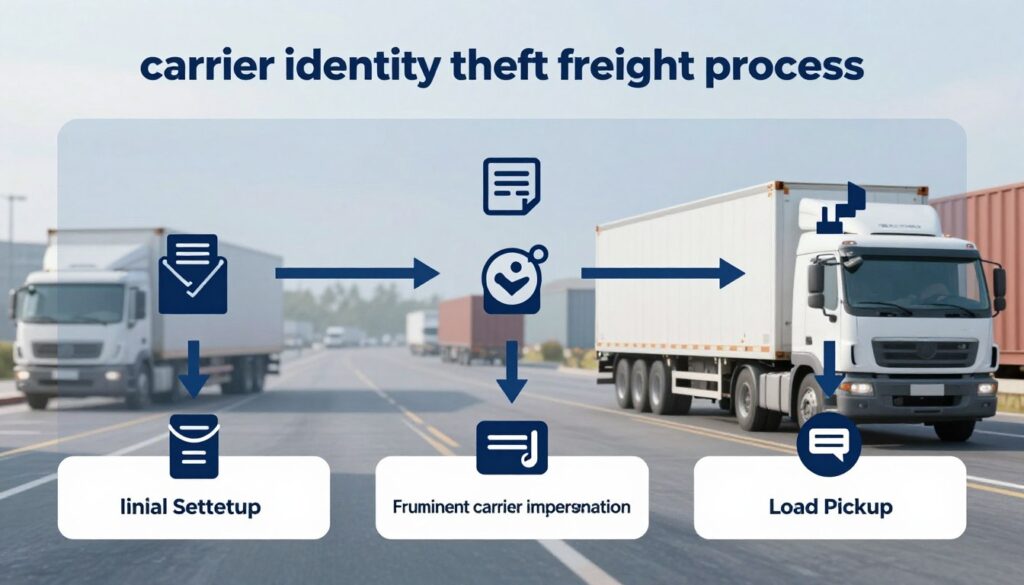
The Carrier Identity Theft Process
Fraudsters begin carrier identity theft schemes by researching reputable transportation companies with clean safety records. They access publicly available FMCSA databases to identify carriers with strong operational histories. This research phase provides the foundation for convincing impersonation.
Criminals steal MC numbers, DOT numbers, and insurance information from legitimate carriers. They monitor the targeted company’s activity on load boards to understand typical routes and pricing patterns. This intelligence gathering allows scammers to time their fraud when the real carrier might plausibly be available for similar loads.
The thieves exploit information found on company websites and social media profiles. They copy branding elements, contact information, and operational details. Some even create complete digital footprints that mirror legitimate businesses, making detection extremely difficult.
Timing plays a critical role in successful impersonation. Fraudsters strike when the real carrier is engaged elsewhere or during high-demand periods when brokers rush to cover loads. This strategic approach maximizes the chance of bypassing standard verification protocols.
Email Spoofing and Communication Deception
Modern freight scammers deploy multiple deception techniques simultaneously to overwhelm verification defenses. These tactics range from simple spoofing to elaborate social engineering campaigns. Each method exploits different vulnerabilities in the freight brokerage workflow.
Fraudsters create email addresses with subtle variations from legitimate carrier domains. A real company using “rapidlogistics.com” might be impersonated with “rapidlogistlcs.com” or “rapid-logistics.com.” These minor changes often escape notice during quick communications.
VoIP services enable criminals to generate phone numbers that appear similar to authentic carrier contact information. Many scammers avoid setting up actual answering services, relying instead on email communication to maintain their deception. When phone verification is required, they may use burner phones or spoofed caller IDs.
Social engineering techniques manipulate brokers through urgency and familiarity. Scammers reference past interactions that never occurred or claim relationships with other team members. These psychological tactics create false confidence and bypass skepticism.
Fabricated Documentation and Credential Theft
Criminals obtain authentic MC numbers and DOT numbers through various methods beyond simple copying. Data breaches targeting transportation management systems provide treasure troves of carrier information. Phishing attacks against carrier employees yield login credentials and internal documentation.
Load board fraud operations harvest carrier profiles directly from freight matching platforms. Scammers create accounts that mirror legitimate companies, complete with stolen insurance certificates and operating authorities. The stolen credentials appear valid because they are technically real—just misappropriated.
Some fraudsters engage in double brokering fraud by accepting loads legitimately, then re-brokering them to other carriers while keeping a portion of the payment. This hybrid approach uses real credentials initially, making detection more challenging until delivery issues arise.
Advanced fraudsters produce professional-looking counterfeit documents using sophisticated design software. They replicate official letterheads, insurance certificate formats, and regulatory authority stamps. These fabricated company documents often include security features like watermarks and unique numbering systems.
Falsified driver credentials accompany fake bills of lading and insurance certificates. Criminals create entire identity packages for non-existent drivers, complete with commercial driver’s licenses and medical certifications. The quality sometimes matches legitimate documents closely enough to fool casual inspection.
Anatomy of a Typical Freight Theft Operation
A complete fraud scheme follows a predictable timeline from initial contact through cargo disappearance. Understanding this progression helps identify intervention points before losses occur. Each phase presents opportunities for detection through proper verification.
The operation typically begins when fraudsters aggressively bid on high-value shipments. Electronics, pharmaceuticals, and consumer goods attract the most attention due to resale potential. Scammers often underbid legitimate carriers significantly to ensure selection, creating the first red flag.
Once awarded the load, criminals provide seemingly legitimate documentation within minutes. This rapid response should trigger suspicion, yet time-pressured brokers often appreciate the efficiency. The fraudster assigns a driver with falsified credentials and coordinates pickup details.
At the pickup location, an individual with counterfeit identification collects the cargo from warehouse staff. These personnel typically verify only basic information, unaware of the broader fraud. The freight disappears into criminal networks for resale or stripping.
Within hours of pickup, the scammer deactivates websites, disconnects phone lines, and abandons all digital footprints. Email addresses stop responding, and the supposedly legitimate carrier vanishes completely. By the time the broker realizes something is wrong, recovery becomes nearly impossible.
Red Flags That Signal a Fraudulent Carrier
Every successful fictitious pickup starts with missed red flags that, when recognized early, can stop fraudulent carriers in their tracks. The difference between protecting your cargo and losing thousands of dollars often comes down to identifying warning signs before dispatch. Understanding these indicators transforms routine carrier vetting into a powerful defense against freight scams.
While no single red flag guarantees fraud, multiple warning signs appearing together demand immediate investigation. Experienced brokers and shippers know that trusting their instincts when something feels wrong has saved countless loads from theft.

Communication Warning Signs
The way carriers communicate reveals critical information about their legitimacy. Fraudulent carriers consistently avoid direct phone conversations, preferring text messages, emails, or instant messaging platforms exclusively. When pressed for a phone call, scammers make excuses about being on the road, in meetings, or experiencing technical difficulties.
Industry expert Tony Pelli from BSI Consulting emphasizes that reticence to speak on the phone stands as one of the most reliable fraud indicators. Legitimate carriers maintain professional communication channels and willingly discuss load details by phone. Criminals avoid voice contact because it creates verification opportunities and leaves traceable evidence.
Generic email addresses from free providers like Gmail, Yahoo, or Hotmail instead of company domains raise immediate concerns. Professional carriers invest in branded email systems that reflect their business identity. When contact information differs from what appears in official databases, verification protocols must intensify before load assignment.
Additional communication red flags include aggressive urgency to secure loads without normal negotiation, inconsistent information provided across different interactions, reluctance to provide direct contact with company principals or dispatchers, poor grammar and spelling errors, and multiple phone numbers or email addresses for the same contact person.
Financial Irregularities and Payment Red Flags
Money-related anomalies often expose freight scams before cargo changes hands. Bids significantly below market rates that seem too good to be true typically are exactly that. Scammers use artificially low quotes to win loads quickly, knowing they’ll disappear with the freight rather than complete delivery.
Requests for immediate payment, fuel advances, or upfront fees before load delivery contradict standard industry practices. Legitimate carriers operate on established payment terms and don’t demand unusual financial arrangements. When supposed verified carriers suddenly request wire transfers, cryptocurrency, or prepaid cards for fuel advances, cargo theft prevention measures must activate immediately.
Financial warning signs demanding attention include last-minute changes to banking information or payment instructions, multiple payment requests for the same load from different contacts, inconsistent rate quotes that change without clear justification, pressure to process payments through unusual channels, and refusal to accept standard payment terms used with established carriers.
Documentation and Record Problems
Paper trails reveal fraud through subtle inconsistencies that careful examination uncovers. Slight variations in company names or addresses compared to official records signal identity theft attempts. Scammers often change a single letter, add “LLC” or “Inc” to registered names, or use similar-sounding business identities to deceive brokers.
Insurance certificates deserve intense scrutiny for authenticity. Documents that appear outdated, poorly formatted, or issued by unfamiliar providers require independent verification with the insurance company. Altered certificates represent common tools in the fraudulent carrier playbook, designed to pass quick visual inspections without deeper investigation.
| Document Type | Legitimate Indicators | Fraud Warning Signs |
|---|---|---|
| MC/DOT Numbers | Multi-year operational history, consistent company details, active authority | Recently registered, limited history, mismatched carrier information |
| Insurance Certificates | Recognized insurers, current dates, professional formatting, verifiable policy numbers | Unknown providers, altered dates, poor quality, unverifiable information |
| Driver Identification | Matches carrier records, professional appearance, current photos | Mismatched details, obvious alterations, expired documents |
| Bills of Lading | Security features, consistent formatting, complete information | Missing details, unprofessional appearance, inconsistent data |
Documentation discrepancies extend to spelling errors, unprofessional formatting, or obvious template modifications. Legitimate businesses maintain quality standards in their paperwork. When driver identification doesn’t match carrier information or bills of lading lack proper security features, these errors expose criminal operations attempting to appear legitimate.
On-Site and Operational Irregularities
Field-level indicators provide final opportunities to prevent cargo theft before freight leaves your facility. Drivers arriving in unmarked vehicles or trucks without proper company branding contradict the professional image legitimate carriers project. While some legitimate operations use plain equipment, this factor combined with other red flags warrants additional verification.
Inability to provide proper credentials or producing obviously falsified documents at pickup demands immediate load cancellation. Cargo theft prevention protocols must include physical document inspection by trained personnel who recognize counterfeit identification and altered paperwork. Unfamiliarity with standard pickup procedures or company protocols reveals drivers who haven’t received proper training from legitimate carriers.
Requests to modify pickup locations, delivery schedules, or load details without proper authorization through established channels indicate potential fraud. Legitimate changes flow through dispatch systems and documented communication. Last-minute alterations demanded by drivers at pickup sites often facilitate theft by creating confusion and bypassing verification protocols.
⚠️ Critical Decision Point
While individual red flags might have innocent explanations, multiple indicators appearing together warrant immediate investigation and load cancellation. The cost of delaying a legitimate shipment pales in comparison to losing entire cargo loads to criminals. Trust your instincts when warning signs accumulate, and always prioritize cargo security over schedule pressure.
Comprehensive Carrier Verification Procedures
Before assigning any load, establishing comprehensive verification protocols can save your company from devastating losses. The verification process represents your first and most critical line of defense against fictitious pickup fraud. Every legitimate carrier expects thorough vetting, while fraudsters often abandon their schemes when faced with rigorous scrutiny.
The time invested in proper carrier verification pays enormous dividends compared to the catastrophic costs of freight theft. A systematic approach to authentication creates multiple checkpoints that expose fraudulent operators before they gain access to your valuable cargo.

MC Number and DOT Number Authentication
Motor Carrier (MC) numbers and Department of Transportation (DOT) numbers serve as the foundation of carrier identification. These unique identifiers link directly to a carrier’s legal registration and operational authority. However, fraudsters frequently steal legitimate numbers from established carriers to create convincing facades.
MC number authentication requires verifying that the number exists, checking the associated legal business name, and confirming the registration date. Carriers with MC numbers registered within the past twelve months warrant additional scrutiny. New registrations may indicate legitimate startups, but they also represent a common tactic among fraudulent operators.
Similarly, DOT number verification reveals critical operational history. Access the FMCSA SAFER database to review the carrier’s safety ratings, inspection records, and business address. A DOT number with no inspection history or operational data raises immediate red flags.
The most critical aspect of this verification step is confirming that the person or company contacting you actually controls the MC and DOT numbers they provide. Fraudsters often use stolen credentials from legitimate carriers, so verification must extend beyond simply confirming the numbers exist in federal databases.
SAFER Database Analysis
The Safety and Fitness Electronic Records system provides comprehensive carrier information directly from federal transportation authorities. The SAFER system contains detailed records including safety ratings, out-of-service orders, insurance filing status, and registered business addresses.
When conducting FMCSA verification, examine multiple data points within the SAFER database. Review the carrier’s inspection history to identify patterns or violations. Check for frequent changes to business addresses, which may indicate instability or fraudulent activity.
Insurance filing status deserves particular attention. Carriers must maintain current insurance filings with the FMCSA. Gaps in insurance coverage or recently filed policies without operational history suggest potential fraud. Cross-reference the phone number provided by your carrier contact with the phone number listed in SAFER records—discrepancies often expose impersonation attempts.
Real-world fraud cases have been prevented when logistics professionals noticed that contact phone numbers differed from those registered in the SAFER system. This simple cross-reference check can immediately reveal when someone is falsely representing a legitimate carrier.
Operating Authority and Insurance Confirmation
Active operating authority status confirms a carrier’s legal right to transport freight. The FMCSA grants different authority types for various operations, and verifying the correct authority for your specific shipment is essential.
Insurance requirements vary based on cargo type and value. General freight typically requires minimum liability coverage of $75,000, while higher-value commodities demand increased coverage limits. Never rely solely on insurance certificates provided by the carrier without independent verification.
Contact insurance providers directly to confirm policy validity and coverage amounts. Fraudsters easily create convincing fake insurance documents, making direct communication with insurance companies non-negotiable. Verify that the policy covers the specific dates of your shipment and that the carrier named on the policy matches exactly with your contact information.
Independent Contact Verification
Direct communication remains one of the most powerful fraud detection tools available. The age-old advice to “pick up the phone” when uncertain about carrier legitimacy continues to prove invaluable in preventing fictitious pickup scams.
Always call carriers using phone numbers obtained independently from official databases rather than numbers provided by your carrier contact. This simple practice prevents fraudsters from directing you to accomplices who will confirm false information. Verify that company principals or dispatchers can discuss load details knowledgeably and answer specific questions about their operations.
Confirm that the person claiming to represent the carrier is actually employed there. Ask detailed questions about their fleet, typical operating regions, and dispatch procedures. Legitimate carriers answer these questions readily, while fraudsters often struggle with basic operational details.
Test whether phone numbers connect to active business lines or simply route to voicemail boxes. Some fraudsters don’t establish actual phone operations, relying instead on voicemail and text communication to avoid real-time conversations. Insist on speaking with live representatives who can provide immediate answers.
Third-Party Database Cross-Reference
Leveraging multiple verification sources creates a comprehensive authentication framework that’s difficult for fraudsters to circumvent. Established load boards that enforce strict security measures provide additional layers of carrier vetting beyond what individual shippers can accomplish alone.
Commercial carrier verification services maintain extensive fraud databases and conduct continuous monitoring of carrier activities. These services track theft patterns, identify emerging fraud tactics, and alert subscribers to suspicious carrier behaviors. Subscribing to these platforms provides access to collective industry intelligence.
Cross-reference carrier information across multiple industry databases to identify inconsistencies. When the same MC number shows different business addresses, phone numbers, or contact names across various platforms, investigation is warranted. Legitimate carriers maintain consistent information across all official registrations.
Organizations like BSI Supply Chain Solutions provide intelligence about general theft trends and tactics. The Commercial Vehicle Safety Alliance offers resources on inspection standards and out-of-service criteria that inform carrier vetting decisions. Staying informed about current fraud schemes helps you recognize new variations before they become widespread threats.
The HDJ Perspective
The 1,600% surge in fictitious pickup fraud represents more than a crime wave—it signals a fundamental shift in how the freight industry must approach trust. For decades, transportation operated on handshake agreements and relationship-based trust. That era is ending. The fleet managers and logistics professionals who thrive in this new environment will be those who embrace verification as a competitive advantage rather than an administrative burden. The extra ten minutes spent confirming carrier credentials isn’t overhead—it’s insurance that costs nothing but time and protects everything you’ve built.
Driver and Equipment Documentation Authentication
Proper documentation checks at the loading dock can stop fraudulent carriers before they disappear with valuable cargo. The moment a driver arrives to claim a shipment represents your last chance to verify legitimacy and prevent theft. Warehouse staff who implement rigorous document verification procedures create a powerful barrier against fictitious pickup schemes.
Fraudsters rely on rushed or superficial document reviews to succeed. They present counterfeit bills of lading, fabricated insurance documents, and falsified driver credentials with remarkable confidence. Your team must approach every pickup with systematic scrutiny, regardless of time pressure or driver complaints.

Mandatory Documentation Requirements
Before releasing any shipment, warehouse personnel must collect and verify specific freight documentation from every carrier. These requirements are non-negotiable checkpoints that protect your company from substantial financial losses. Establishing clear protocols ensures consistent application across all shifts and employees.
Driver identification verification serves as your first line of defense against cargo theft. Every person claiming a shipment must present a valid commercial driver’s license that undergoes careful inspection. Warehouse staff should examine the CDL expiration date to confirm current validity.
The photo on the license must clearly match the individual presenting it. Check that the license class is appropriate for the vehicle type and cargo being transported. Look for obvious signs of alteration including misaligned text, inconsistent fonts, or poor quality lamination. CDL requirements and classifications are outlined in 49 CFR Part 383 for reference.
Vehicle documentation provides critical verification beyond driver credentials alone. Current truck registration must match the carrier information provided during load assignment. The vehicle identification number (VIN) should align perfectly with registration documents.
Insurance certificates require particular attention because fraudsters frequently counterfeit them. Verify that coverage amounts are appropriate for your cargo value. Check that vehicle markings and company branding match the supposed carrier’s identity. For high-value shipments or unfamiliar carriers, contact the insurance provider directly to confirm certificate authenticity.
The bill of lading represents the legal contract for cargo transportation and requires meticulous handling. BOL details must match the load assignment exactly, including shipper, consignee, cargo description, and pickup location. Confirm that BOL numbers and reference codes align with broker or shipper records.
Security features help prevent counterfeiting and should be present on legitimate documents. Look for watermarks, security paper, or unique identifiers that are difficult to replicate. Ensure proper signature procedures with clear record-keeping of who authorized cargo release and the exact time. Any discrepancy, no matter how minor, warrants additional investigation before releasing freight.
Identifying Counterfeit or Altered Documents
Professional cargo thieves invest in high-quality forgeries that can fool untrained eyes. Training warehouse personnel to recognize falsified paperwork provides essential protection against sophisticated fraud schemes. Document examination should occur under good lighting to spot alterations or irregularities.
Look carefully for inconsistent fonts, spacing, or formatting that indicate documents were created rather than issued by legitimate authorities. Security features like watermarks, microprinting, or holograms are difficult to replicate accurately. Compare documents against known authentic versions to identify subtle differences.
Verify that document serial numbers or reference codes can be confirmed with issuing authorities. Maintain healthy skepticism about perfect-looking documents from unfamiliar carriers. One warehouse supervisor discovered a fictitious pickup attempt by noticing subtle formatting differences in an insurance certificate that otherwise appeared legitimate.
The fraudster had used slightly different font spacing than authentic certificates from that insurance company. This attention to detail prevented a significant cargo theft. When any suspicions arise, conduct further investigation including directly contacting companies to confirm document details.
Visual and Photographic Verification
On-site employees dealing with pickups should implement practical photographic documentation for every shipment release. These visual records provide powerful evidence even when fictitious pickups aren’t immediately recognized. Photograph the truck from multiple angles showing company branding, markings, and identification numbers.
Capture clear images of the driver and their commercial driver’s license. Document vehicle condition and any unusual characteristics that might aid later identification. Record license plate numbers and trailer numbers in your photographic evidence.
Create timestamped photographic records that prove valuable in investigations, cargo recovery efforts, and law enforcement actions. Even if documentation appears legitimate at the time, these pictures can be very helpful if the shipment later proves fraudulent. Modern smartphones make this process quick and effortless.
Enhanced verification protocols at pickup points ensure only authorized personnel take possession of cargo. Warehouse staff should be empowered to refuse cargo release when documentation raises any concerns. No shipment is so urgent that it justifies bypassing proper authentication procedures.
Free Professional Fleet Tools
Cost calculators, fault code lookup, maintenance planners, and more—built for owner-operators, fleet managers, and diesel techs. No signup required.
Technology Solutions for Fraud Prevention
Advanced technological solutions have become essential weapons in the fight against fictitious pickup fraud, enabling brokers and shippers to verify carriers and monitor shipments with unprecedented accuracy. Modern freight technology combines automated carrier validation with real-time monitoring capabilities that detect fraudulent activity before financial losses occur. These digital tools provide layers of protection that manual verification processes simply cannot match in today’s fast-paced logistics environment.
The integration of specialized software platforms, secure load boards, and GPS tracking systems creates a comprehensive defense strategy against carrier identity theft. Companies that invest in these technologies significantly reduce their exposure to fraud while improving operational visibility across all shipments.

Automated Verification Systems
Carrier validation software represents the first line of technological defense against fraudulent carriers attempting to secure loads. These specialized platforms continuously monitor carrier credentials against multiple authoritative sources simultaneously, flagging discrepancies that might indicate stolen identities or falsified documentation. Automated systems cross-reference FMCSA databases, insurance verification services, and industry fraud reports to build comprehensive carrier profiles in seconds.
Third-party carrier verification services maintain extensive databases tracking fraud reports and known scam operations across the freight industry. When a carrier attempts to book a load, these systems immediately check whether that company or associated individuals appear in fraud databases compiled from incidents reported by brokers, shippers, and law enforcement agencies nationwide. This shared intelligence network helps companies avoid carriers with documented histories of suspicious behavior.
Modern verification platforms analyze carrier behavior patterns to identify anomalies indicating potential fraud. Software algorithms detect unusual activities such as sudden changes to company contact information, multiple carriers operating from identical addresses, or discrepancies between stated equipment capabilities and actual fleet registrations. These pattern recognition capabilities catch red flags that human reviewers might overlook during manual verification processes.
Experts consistently emphasize that automated carrier vetting systems work best alongside manual checks rather than replacing human oversight entirely. Fraudsters have become increasingly sophisticated in leveraging stolen identities and technology to exploit vulnerabilities. The combination of automated screening and trained staff vigilance creates the most effective defense, with technology handling rapid data verification while humans assess behavioral cues and communication anomalies.
Protected Load Board Platforms
Load board security has become a critical consideration as fraudulent actors increasingly exploit online freight platforms to secure shipments. Not all load boards provide equal protection against fictitious carriers, making platform selection an important risk management decision. Established marketplaces that enforce strict security measures and rigorous carrier vetting processes offer significantly better protection than platforms with minimal entry requirements.
Secure load board platforms require multi-factor authentication to prevent account takeovers where fraudsters hijack legitimate carrier credentials. This authentication layer ensures that only authorized users can access carrier accounts and bid on available loads. Platforms implementing these security protocols make it substantially harder for criminals to impersonate legitimate transportation providers.
The most secure freight marketplaces actively monitor for suspicious activities that indicate fraudulent operations. These monitoring systems detect patterns such as duplicate load postings, rapidly created carrier accounts, or multiple accounts registered from identical IP addresses. Advanced platforms flag carriers bidding significantly below market rates, a common tactic fraudsters use to secure loads quickly before verification processes can identify discrepancies.
Quality load boards provide carrier rating systems and fraud reporting mechanisms that create transparency within the freight community. These features allow brokers and shippers to share experiences with specific carriers, building collective knowledge about trustworthy providers and flagging problematic operators. The availability of historical performance data and peer reviews adds another verification layer beyond basic credential checks.
GPS Tracking and Geofencing
GPS tracking has revolutionized shipment visibility, providing brokers and shippers with real-time location data that deters fraud and enables rapid response when suspicious activity occurs. Modern tracking devices monitor loads continuously from pickup to delivery, creating an auditable trail of shipment movements that makes cargo theft significantly more difficult. Criminals understand that tracked shipments carry higher risk, often choosing to target unmonitored freight instead.
Route deviation detection represents one of the most powerful fraud prevention capabilities GPS tracking provides. When shipments veer from planned routes toward unauthorized locations, tracking systems immediately alert stakeholders to potential problems. One logistics company using GPS tracking noticed a truck deviating from the expected route, contacted the driver immediately, and prevented a cargo theft incident that would have resulted in substantial financial losses.
Geofencing technology creates virtual boundaries around designated areas, triggering alerts when shipments enter or exit specific zones. Brokers can establish geofences around pickup locations, delivery destinations, and approved route corridors. If a tracked load leaves an approved area or enters a known high-theft zone, the system sends instant notifications enabling immediate corrective action before cargo disappears completely.
Telematics platforms provide comprehensive data beyond basic location tracking, including driver behavior metrics, vehicle performance information, and equipment status updates. This additional visibility helps verify that carriers operate professionally and maintain equipment properly. Unusual patterns such as excessive stops in unexpected locations, extended idle times at non-standard facilities, or equipment issues might indicate problems requiring investigation.
The combination of GPS tracking, geofencing, and telematics creates multiple layers of shipment visibility that significantly improve cargo recovery rates when fraud occurs. Even when criminals successfully obtain loads through fictitious pickup schemes, tracking technology helps law enforcement locate stolen freight and apprehend perpetrators.
Building a Fraud-Resistant Operating Framework
Protecting your freight operations from sophisticated scammers requires a holistic approach that combines standardized processes, secure communications, and empowered employees. A truly fraud-resistant operation goes beyond individual tactics to create systemic defenses that make fraudulent activities nearly impossible to execute. This organizational framework embeds logistics security into every aspect of your daily operations, from initial carrier contact through final delivery confirmation.
Combating fictitious pickups demands more than awareness—it requires structured protocols that ensure consistency across all personnel and shipments. When every team member follows established procedures without exception, your company creates multiple verification layers that fraudsters cannot easily bypass.
Creating Your Pre-Dispatch Verification Protocol
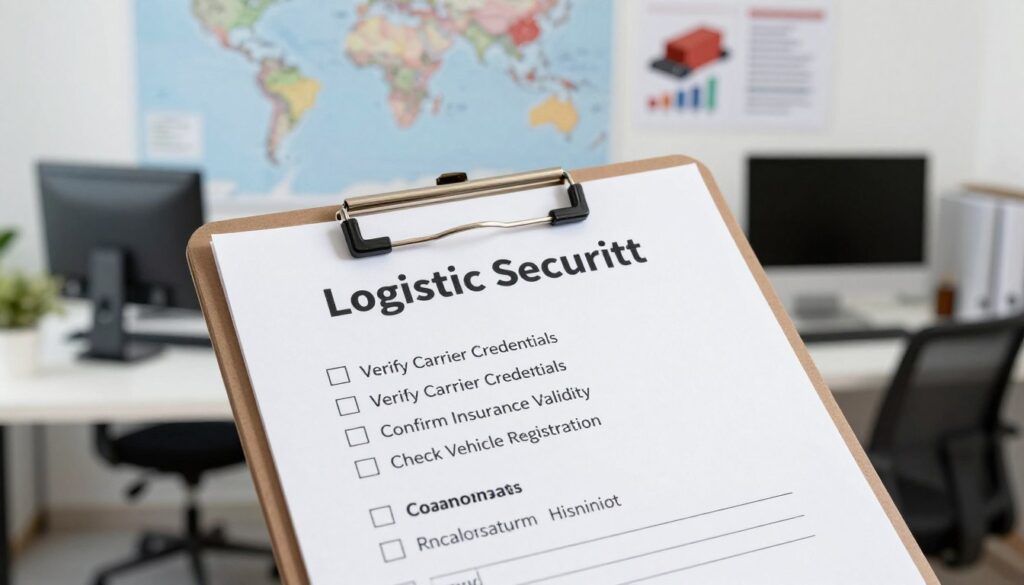
A standardized verification checklist ensures that critical verification steps never get skipped, regardless of how busy your dispatch operation becomes. This checklist serves as your first line of defense, preventing oversight and creating auditable compliance records that protect both cargo and company reputation.
Your verification checklist should include carrier credential verification confirming MC number, DOT number, active insurance certificates, and current operating authority through official databases. Independent contact confirmation requires calling the carrier using phone numbers obtained from FMCSA databases, not numbers provided in emails or texts.
Documentation review protocols authenticate all carrier paperwork, insurance certificates, and driver credentials for signs of alteration. Driver and equipment verification requires advance submission of driver’s license, vehicle registration, and recent equipment photographs. Cross-reference fraud database checks through industry fraud alert systems and intelligence networks for red flags.
Authorization level requirements establish approval thresholds based on shipment value, with higher-value loads requiring senior management sign-off. Documentation retention standards maintain complete verification records for compliance audits and potential investigations.
Real-world examples demonstrate the power of mandatory checklists. One logistics company discovered that requiring dispatch staff to complete a verification checklist before every load assignment revealed three separate fraud attempts in a single month—attempts that would have succeeded under their previous informal approach.
Secure Communication Standards
Fraudulent actors frequently intercept and alter shipment details through compromised communication channels. Implementing secure protocols for all transaction-related discussions prevents these interception attempts and ensures that only verified parties receive sensitive information.
Your communication security framework should incorporate several protective measures. Use verified contact information exclusively—always initiate contact using phone numbers and email addresses obtained from official FMCSA databases rather than information provided by carriers.
Implement email authentication protocols by deploying SPF, DKIM, and DMARC standards to prevent email spoofing and phishing attempts. Utilize encrypted messaging systems for sharing sensitive shipment details and financial information. Require verbal confirmation of changes—any modifications to contact information, banking details, or pickup instructions must be confirmed through independently verified phone numbers.
Limit information sharing timing by avoiding sharing complete shipment details until carrier verification is fully complete. Use secure document sharing by replacing email attachments with secure portal systems that track access and prevent unauthorized forwarding.
These secure protocols ensure that all load details are verified with multiple stakeholders before finalizing agreements. When communication channels remain protected, fraudsters cannot insert themselves into legitimate conversations or pose as authorized carriers.
Double-Blind Verification Systems
Double-blind confirmation systems create verification redundancy that catches sophisticated impersonation attempts. These systems require multiple parties to independently confirm critical information without coordinating their responses, preventing fraud schemes that rely on compromising a single verification point.
Effective double-blind systems incorporate dual pickup confirmation requiring both the shipper facility and the assigned carrier to confirm pickup details through separate communication channels. Independent warehouse verification means warehouse personnel confirm driver identity independently from dispatch authorization, using their own verification procedures.
Separated financial approval requires financial authorization from different personnel than operational approval, preventing single-point compromise. Multi-stage credential checks have different staff members verify carrier credentials at different operational stages, creating multiple verification touchpoints. Third-party verification services provide independent authentication separate from internal processes.
This approach recognizes that fraudsters often succeed by convincing a single employee or exploiting a single vulnerability. When verification requires independent confirmation from multiple parties who don’t coordinate responses, fraud attempts become exponentially more difficult to execute successfully.
Workforce Training and Fraud Awareness
Well-trained staff members represent your most valuable asset in fighting fictitious pickup fraud. Training personnel to verify driver identity, confirm vehicle markings, and cross-check DOT numbers adds critical defense layers that technology alone cannot provide. Employee training programs transform your workforce into an alert, knowledgeable security team.
A comprehensive employee training program should include initial onboarding training for all new hires introducing fictitious pickup recognition, prevention protocols, and verification procedures. Quarterly refresher courses every three months cover emerging fraud tactics, updated prevention strategies, and recent industry incidents. Monthly case study reviews examine real fraud attempts to illustrate tactics, consequences, and successful prevention. Bi-annual role-playing exercises practice responding to suspicious scenarios and handling verification challenges.
Clear escalation procedures ensure that anomalies are promptly investigated and addressed. Employees need to know exactly who to contact when something seems wrong and feel confident that raising concerns will be taken seriously rather than dismissed as overcautious.
Fostering a culture of awareness and vigilance within your organization helps detect and prevent fraudulent activities before they escalate. Employees involved in load assignment, dispatch, and warehouse operations should receive ongoing training that keeps fraud prevention top-of-mind during daily activities.
Encourage a culture where staff members feel empowered to question suspicious circumstances and delay shipments when verification cannot be completed satisfactorily. One transportation company implemented an incentive program rewarding employees who identified potential fraud attempts. Within six months, warehouse personnel flagged seven suspicious pickups that investigation confirmed were fraudulent schemes.
Cross-departmental training ensures that dispatch, warehouse, and finance personnel all understand their role in fraud prevention. When every department recognizes warning signs and knows proper response procedures, your organization creates a comprehensive security network that fraudsters find difficult to penetrate.
Responding to Fictitious Pickup Fraud
When fictitious pickup fraud strikes your operation, the speed and quality of your response directly determine the extent of your losses. The first hours after discovering fraud are critical. Decisive action during this window significantly impacts recovery outcomes and can prevent additional losses.
Understanding the proper response protocols protects your company financially. It also contributes to broader industry efforts to combat freight fraud through effective cargo theft reporting and investigation.
First Response Actions to Minimize Loss
Immediate action upon discovering or suspecting fraud can save thousands of dollars. Halt all pending payments to the suspected fraudulent carrier immediately. Contact your accounts payable department to freeze any checks or wire transfers that haven’t been processed.
Attempt to contact the driver or carrier through every available communication channel. Use all phone numbers, email addresses, and messaging platforms associated with the transaction. Document each attempt with timestamps and details.
If GPS tracking is available, monitor the shipment location in real-time. One broker noticed a truck deviating from the planned route and contacted the driver immediately. This quick response, combined with law enforcement notification, prevented potential cargo theft and led to full load recovery.
Notify the shipper or consignee immediately to alert them of the situation. They may have additional security measures or contacts that can assist. Time-sensitive coordination with all parties creates multiple opportunities for intervention.
Secure all paperwork, emails, and documentation related to the fraudulent transaction. This includes load confirmations, carrier verification records, communication logs, and any photographs of trucks, drivers, or driver’s licenses. These materials prove invaluable during fraud investigation processes.
Alert other departments including dispatch and warehouse staff to prevent additional transactions with the fraudulent entity. Implement immediate reviews of other recent transactions to identify whether the same fraudster secured additional loads.
Law Enforcement Reporting
Comprehensive law enforcement reporting creates an investigative network across multiple jurisdictions. Filing reports with appropriate agencies isn’t redundant—it’s essential for maximizing recovery chances and building strong prosecution cases. Cargo theft is a federal crime when it crosses state boundaries, and most fictitious pickup cases involve interstate commerce.
The FBI investigates cargo thefts meeting certain value thresholds, typically $50,000 or higher. Contact the FBI’s Cargo Theft Program through your local field office or the Internet Crime Complaint Center (IC3). Provide comprehensive information when filing reports, including shipment details, carrier information, all documentation, and a detailed timeline of events. FBI resources can assist with investigations and recovery efforts across state lines.
The FBI maintains databases and intelligence on organized cargo theft rings. Your report may connect to other cases, revealing larger criminal networks. This intelligence sharing strengthens overall enforcement efforts.
File reports with police departments in multiple jurisdictions. Contact authorities where the pickup occurred, where the carrier is supposedly based, and where the shipment was destined. Provide comprehensive documentation including photographs, communication records, and fraudulent paperwork to each agency. Obtain case numbers and investigator contact information for follow-up purposes.
Insurance Claims and Documentation
Review your policy coverage immediately to understand what losses are covered. Pay close attention to notification timeframes—delays can jeopardize insurance claims entirely.
Contact your insurance provider as soon as you discover the fraud. Provide comprehensive documentation including load confirmations, carrier verification records, communication logs, and all evidence of the fraudulent scheme. Thorough documentation strengthens your claims position.
Cooperate fully with insurance investigators and respond promptly to all information requests. Insurance companies typically require proof that you followed proper verification procedures and exercised due diligence. Companies that maintained detailed verification records consistently receive better claims outcomes.
Document all financial losses comprehensively. Include cargo value, additional transportation costs to replace the shipment, customer penalties or chargebacks, and related expenses. Maintain detailed records of all claim-related communication and submissions.
| Response Action | Timeline | Responsible Party | Expected Outcome |
|---|---|---|---|
| Halt payments and freeze transactions | Immediate (within 1 hour) | Accounts Payable, Management | Prevent additional financial loss |
| Contact carrier and monitor GPS tracking | Immediate (within 1 hour) | Dispatch, Operations | Potential load interception |
| File FBI cargo theft report | Within 24 hours | Management, Compliance | Federal investigation initiation |
| Notify insurance provider | Within 24-48 hours | Risk Management, Management | Claims process initiation |
| Conduct internal review and implement corrections | Within 1 week | All Departments | Prevention of future incidents |
Recovery and Investigation Coordination
Work actively with law enforcement as investigations develop. Provide additional information promptly when requested. Your cooperation strengthens the fraud investigation and prosecution efforts.
Monitor online marketplaces and resale channels where stolen goods might appear. Thieves often attempt to liquidate cargo quickly through various platforms. Early detection can lead to recovery and suspect identification.
Consider engaging specialized cargo recovery services. These firms track and locate stolen shipments using industry networks and investigative resources. Their expertise can complement law enforcement efforts.
Coordinate with industry associations and information-sharing networks to alert others about the specific fraud scheme. Organizations like the American Trucking Associations and the Transportation Asset Protection Association facilitate communication that prevents others from victimization.
Participate actively in prosecution efforts if suspects are apprehended. Your testimony and documentation contribute to successful convictions that deter future freight fraud.
Conduct thorough internal reviews to understand how the fraud succeeded. Implement corrective measures addressing identified vulnerabilities. This analysis transforms a negative experience into organizational improvement. Share lessons learned with industry peers through appropriate channels—collective intelligence sharing elevates industry-wide fraud resistance.
Frequently Asked Questions
What is fictitious pickup fraud and how does it differ from traditional cargo theft?
Fictitious pickup fraud involves criminals posing as legitimate carriers to secure freight loads with the sole intention of stealing shipments. Unlike opportunistic cargo theft where criminals target unattended loads, fictitious pickup schemes involve premeditated deception using stolen carrier identities, counterfeit documentation, and sophisticated social engineering. Fraudsters research legitimate companies, steal MC and DOT numbers, create convincing documentation, and present themselves as authorized carriers to brokers and shippers. This calculated approach makes detection significantly more challenging than traditional theft, which is why the industry saw a 1,600% increase in these scams between 2022 and 2023.
How can fleet managers verify carrier legitimacy before assigning loads?
Effective carrier verification requires a multi-step process. First, authenticate MC and DOT numbers through the FMCSA SAFER database, checking registration dates, safety records, and business addresses. Second, independently verify contact information by calling phone numbers listed in federal databases rather than those provided by the carrier. Third, confirm insurance coverage directly with the insurance provider using contact information from your own research, not from provided certificates. Fourth, cross-reference carrier information across multiple industry databases to identify inconsistencies. Carriers registered within the past 12 months or those with limited operational history warrant additional scrutiny and may require enhanced verification steps.
What red flags indicate a potentially fraudulent carrier?
Key warning signs include carriers who avoid phone conversations and communicate only via text or email, generic email addresses from free providers like Gmail instead of company domains, rates significantly below market value, requests for immediate payment or fuel advances, and last-minute changes to contact information or banking details. Documentation red flags include slight variations in company names compared to official records, insurance certificates from unfamiliar providers, and driver credentials that don’t match carrier records. Multiple red flags appearing together warrant immediate investigation and should trigger enhanced verification protocols before any load assignment.
What technology solutions help prevent fictitious pickup fraud?
GPS tracking provides real-time shipment visibility and enables route deviation detection through geofencing alerts. Automated carrier validation software cross-references credentials against FMCSA databases, insurance verification services, and industry fraud databases simultaneously. Secure load board platforms with multi-factor authentication help prevent account takeovers. Real-time monitoring services track credential changes during transit, alerting brokers to insurance lapses or authority suspensions. These technologies work best when combined with trained staff who verify findings and respond appropriately to alerts, creating multiple layers of defense against sophisticated fraud schemes.
What steps should I take immediately after discovering fictitious pickup fraud?
First, halt all pending payments to the suspected fraudulent carrier and attempt to contact the driver through every available channel. Monitor GPS tracking if available. Notify shippers and consignees immediately. Secure all documentation including load confirmations, carrier verification records, and communication logs. File reports with the FBI Cargo Theft Program through IC3 for shipments exceeding $50,000, and with local police in all jurisdictions involved. Contact your insurance provider within the policy notification timeframe, providing comprehensive documentation of verification procedures followed. Document every action with timestamps for investigation purposes.
How should warehouse staff verify driver identity at pickup?
Warehouse personnel should examine the commercial driver’s license for current validity, verify the photo matches the individual presenting it, and confirm the license class is appropriate for the cargo. Vehicle registration must match carrier information provided during load assignment. Insurance certificates require careful inspection for authenticity and appropriate coverage amounts. Bills of lading must exactly match load assignment details including shipper, consignee, and cargo description. Photograph trucks, drivers, and documentation for records. Any discrepancies, no matter how minor, warrant additional verification before releasing freight. Staff should be empowered to refuse release when documentation raises concerns.
Protecting Your Fleet From Freight Fraud
The battle against fictitious pickup fraud demands constant attention and comprehensive strategies from every fleet manager, broker, and logistics professional. Logistics fraud prevention requires combining technology with human oversight to create multiple barriers that deter criminals and catch fraud attempts before cargo disappears.
Your company’s defense starts with rigorous carrier verification practices. Validate every carrier through official FMCSA databases. Speak directly with dispatch personnel using independently verified phone numbers. Examine documentation carefully at pickup points. These steps form the foundation of effective cargo protection that prevents the devastating financial and operational impacts of freight theft.
Technology amplifies your security efforts when implemented properly. GPS tracking systems provide real-time visibility into shipment movements. Carrier validation software automates background checks and credential verification. Load board platforms with built-in fraud detection add another protective layer to your operations. Combined with well-trained staff who recognize warning signs and follow established protocols, these tools create a fraud-resistant framework that protects everything you’ve built.
The investment in freight security pays dividends through avoided losses and preserved reputation. Companies known for rigorous verification attract quality partnerships and maintain customer trust. Your diligence protects not only your business but strengthens the entire logistics industry against criminal exploitation. Stay informed about emerging threats, share intelligence with industry peers, and report suspicious activities to law enforcement. Your proactive stance makes the difference between vulnerability and resilience in today’s challenging freight environment.
Help Protect the Industry
Share this comprehensive guide with your operations team, dispatch staff, and warehouse personnel. When more professionals recognize freight fraud tactics, the entire industry becomes more secure.